Author: Morton Bast

  • What you would do with $1 million to inspire change in the world

    An artist's rendering of TED Prize winners past. Could you or someone you know win the 2014 TED Prize?

    An artist’s rendering of TED Prize winners past. Could you or someone you know receive the 2014 TED Prize?

    The $1 million TED Prize is a way for a passionate, motivated dreamer to put a world-changing plan into action. With nominations for the prize open through June 16, so many great ideas are circulating around the TED community — and one of them could become the 2014 winner.

    We want you — yes, you — to nominate a dynamic, passionate leader for the prize. It could be yourself, someone you know or someone whose work you admire. Need some inspiration? We started a TED Conversation, “What’s your million-dollar idea to change the world?” to get TEDsters’ brainstorming out in the open about the kinds of wishes they’d like to see enacted. Below are some of our favorite wishes that users offered on TED.com and through Facebook:

    “With one million dollars, I would endow a scholarship in perpetuity to introduce arts education to underserved communities. The arts are a powerful way to communicate complex feelings, reactions and emotions. They are also a means of relieving stress.” —Patrij Baroch

    “Inexpensive sleep pods in downtown areas to get homeless out of the elements.” —Capers Hammond

    “Require all members of the United Nations to donate an amount equal to what they spend annually on military budgets to a worldwide relief fund, to be administered publically on the web, with 100 percent clarity and accountability of how all funds are spent. Goal of the fund will be to foster health and education worldwide on an as needed basis.” — Ron Bouffard

    “To stop corruptions in my country Nigeria and make the citizens believe in democracy.” —Jude Ben

    “The way we choose employment is largely based on herd mentality. Someone posts a job vacancy, puts up a bunch of ‘skills’ necessary for the job. A few hundred respond with padded resumes that are keyword-rich to ensure HR finds them suitable. I find this system terribly outdated and broken. We need a better way to measure ourselves and measure what a job requires. A more comprehensive match between employer and employee and one that scales up so we can spot work that fits us like a glove without getting lost in the maze.” – Arun Jose

    Select positive statements only from all religious texts and combine them into one bible for one purely positive religion for all Earthlings.” — Rhona Pavis

    “Make all schools teach a class on business. A class on how the core subjects relate to the current world today.” —Thaddea Thompson

    “Stop human trafficking. Period. No one’s life has a price tag.” —Jennifer Valenti

    “End homelessness and poverty by opening up unused fed and state lands for building small off-grid homesteads that include garden space and space for raising animals, and link it to a homestead education program.” — LaMar Alexander

    Do you know someone who’s right for the 2014 TED Prize? Or do you have a wish idea that you would like to be considered? Make sure to fill out an official nomination form by June 16 »

    Get lots more information at Tedprize.org »

  • From appalled to applauding: Reactions to Meg Jay’s controversial talk about 20-somethings

    Meg-Jay-at-TED2013-2

    Meg Jay’s talk on 20-somethings from TED2013 has started some very intense conversations online. Here, excerpts. Photo: James Duncan Davidson

    Monday’s TED Talk, “Meg Jay: Why 30 is not the new 20,” has been a runaway hit: five days later, it has nearly 600,000 views and almost 200 comments on TED.com alone. Commenters of all ages have offered personal anecdotes, helpful resources and a fair dose of criticism, many writing about the hope and/or confusion and/or fear that the talk brought up for them. Meg Jay: Why 30 is not the new 20Meg Jay: Why 30 is not the new 20People are watching — and people are reacting.
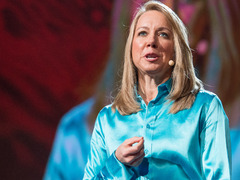
    Clearly, clinical psychologist Meg Jay has struck a nerve. As writer Thu-Huong Ha pointed out on the TED Blog earlier this week, the talk’s focus on the millennial generation has plenty of company at the moment (hello, TIME Magazine) — but still the conversation is far from over. So what’s going on? What makes “spend your 20s thinking ahead” such a provocative and polarizing message?

    It’s only a sensible piece of advice, but what it ultimately gets at is much deeper. As Jay wrote in a live discussion with the TED community on Wednesday, “Making the most of your life is a scary topic when you think about it.” No matter how old you are, there’s never anyone to tell you for certain whether you’re doing it right. When someone points to nagging worries, it generates both angst and appreciation.

    Below, some of the comments from TED’s online community, staff and extended network, expressing their wise and varied insights on this talk:

    “I don’t regret for a second that I followed Phish instead of corporate America in my 20s. I’m glad I spent my formative adult years being filled with bliss. I have colorful memories and life experiences that give me a richness beyond money. Value your 20s, don’t spend it getting corralled into being part of the herd!” – Elisa Allechant, commenting on Jay’s talk page

    “I’m a former higher education administrator and I was appalled at the dependency of college kids. Parents babied their children to the point where they didn’t learn important life skills. … Quite frankly, I think 20-somethings need to take responsibility, be held accountable and not need Mommy and Daddy until they are in their 30s. It’s pathetic.” – Adrianne Hanusek, commenting on Facebook

    “For me, Jay is really dealing with some of the most fundamental questions of philosophy: What is the good life? And how do I live it? … I think an essential part of the good life is finding satisfaction with your qualities as an individual notwithstanding relative achievements. Doing that requires perspective and doing that requires accruing experiences for their own sake.” – TEDxTalks Manager David Webber, responding to Jay’s talk via email

    “They say old people are ‘set in their ways.’ I think the implication from her talk is that this process is hugely rooted in your 20s. That’s where a somewhat self-aware person can change habits, mannerisms, how they treat people, etc. I think that’s what a lot of people miss the boat on. I started working at the local store at age 16 [and saw that] employees all fell into only two categories: young kids needing to make a quick buck, and unhappy adults who seemed dreadfully stuck where they were. Most of these people had higher aspirations. When did most of them begin working at this store? You guessed it, in their 20s. They settled for something less, thinking it was just temporary. Maybe if they had done some of the things Meg Jay was talking about, they wouldn’t still be there today.” – Ryan Ganzenmuller, commenting on Facebook

    “In this economic climate, all too often the efforts made in this decade are rendered all for naught because of some financially catastrophic event or another. The absence of job security has had many twentysomethings bounce from one short-term assignment to another. … For me and many others, 30 being the new 20 is a philosophy of survival and regrowth, not some excuse for putting off our responsibilities.” – Omar Spence, commenting on Jay’s talk page

    “There always was, is and will be a pressure of the 20s and it is indeed the defining time, at least professionally. Twentysomethings can complain of that as long as they like, say it is not fair, blah blah — it is not going to change. Most worthy employers will not have sympathy if you have not achieved anything by age 30 … If you can’t have fun and build your career and relationships while doing that — well, too bad. Up to you what will be your priority.” – Alyona Trubitsina, commenting on Facebook

    “This is really not a problem in China. From the moment you graduate, you are under the pressure to get an apartment, a car and finally a girlfriend and a wife. … Young people are pushed in way too early to their 30 age.” – 向彬 李, commenting on Jay’s talk page

    “It seems like twentysomethings are always told how great their age is and that they shouldn’t worry about major goals; Meg instead chooses to proceed with a challenging message that I think only the few open-minded individuals can truly enjoy and reap the benefits of.” – Alex Katzen, commenting on Facebook

    “As a 25-year-old woman, I find Meg Jay’s approach to relationships, love, and work to be vastly oversimplified. So much beauty and enrichment lie in the unexpected events that we cannot prepare for, if we can allow room for those events to unfold and influence the path we are taking — whether we are teenagers or senior citizens. In other words, if we plan and plot too heavily in our 20s, we may not experience as many serendipitous developments, connections and opportunities for growth.” – TED’s Projects Coordinator Cloe Shasha, responding to Jay’s talk over email

    “I’m 24. I blew the last two years living with my parents pointlessly sending out resumes. No social life. I’ve finally got an unpaid internship doing what I want, but every day I think about my life passing me by. Advice from me to other college grads: Sending out resumes is pointless! Network, network, and network some more! That’s the only way to do it.” – Michael Baxter, commenting on Jay’s talk page

    “I enjoyed your book! However, I felt the book was targeted to a very specific demographic — upper/middle class economic status, well-educated, looking for a heterosexual relationship. What are your thoughts on this?” – TED’s Customer Support Specialist Becky Chung, commenting  during Jay’s live chat with the TED community

    Jay responded to this question, and gave honest and compassionate responses to many others as well, in a TED Conversation earlier this week.  She wrote in response to Chung’s challenge, “I actually disagree. Research shows that people in all income brackets get new jobs through weak ties; that’s good advice for everyone. Both gay and straight adults do want marriages/partners/families; in fact, that’s what marriage equality is all about. And the concept of identity capital can be liberating for those who can’t afford college or who don’t do well in school; one good piece of identity capital or one lead from a weak tie can trump someone with a 4.0 from an Ivy who doesn’t know how to get in the game.”

    What’s certain is this: For twentysomethings and former-twentysomethings alike, the questions touched on in the talk are worth discussing. The surrounding conversation has been incredibly genuine and mature, and in Jay’s opinion, this is hardly by-the-by.

    “People underestimate how interested twentysomethings are in the topic. Part of the cultural myth is that they don’t care,” says Jay, defending this generation that often gets a bad rep. “It isn’t just parents emailing me their thoughts, it’s twentysomethings themselves.”

    In spite of the discomfort and uncertainty that the talk raised for some viewers, it seems to be truly forcing self-examination – an important step towards living with intent. And one of the beautiful things about these reactions is how they’ll change over time. TEDx Post-event Coordinator Tahlia Hein says that her thoughts on the topic have changed in a span of four short years.

    “If you had asked me at 23 what I thought, I’d have probably said that she had no real appreciation for being young. I would have said that those freeing experiences are an invaluable part of what it means to be young,” she says. “Now [at 27], I think I was half right: They are invaluable, but there is no such thing as the mythical ‘young.’ There’s just life.”

  • Unlikely collaborations: 5 TED Talks that reach across fields

    Architecture and microbiology may seem like an odd couple, but TED Senior Fellow Jessica Green would beg to differ. In today’s talk, she reveals what’s teeming all over the surfaces around us, and how it can help us build smarter, healthier buildings.

    As the founding director of the Biology in the Built Environment Center at the University of Oregon, Green knows that it’s time for biology to join physics and chemistry as a way for architects to study buildings. When she collaborated with architect Charlie Brown to study the microbes at UO’s Lillis Business Complex, they tracked the health benefits of the ventilation louvers that Brown had designed. The result? A wealth of information and a new approach that Green is calling bioinformed design.

    We thought this creative crossing of fields was brilliant — and also familiar. Some of the most interesting TED Talks come from a blend of the artistic and the analytical, the silly and the serious, the personal and the political. Here are five talks that make interdisciplinary magic.

    1. Mathematics meets history

    Human history has produced a lot of data – words, dates, things, people – but we don’t usually examine it with a quantitative eye. At TED2012, TED Fellow Jean-Baptiste Michel gets computational with the stuff of our past.

    2. Art meets government

    When your city has a mayor who’s an artist, he may just paint the town red … literally. And it turns out that’s not such a bad idea. Tirana, Albania’s former mayor, Edi Rama, explains why at TEDxThessaloniki.

    3. Music meets medicine

    Robert Gupta is a violinist with a mission to heal – he brings his neurobiology background into his life as a professional musician. At TEDMED 2012, he explores the way that music reaches with ease into the brain’s secret corners.

    4. Programming meets parenting

    Agile development – a system of iteration, feedback and self-management – really works. It works for software, it works for business, and at a TED@250 salon, Bruce Feiler shows how it even works for families.

    5. And, of course, dance meets science

    In one of the most inspired cross-fertilizations ever to appear at a TEDx event, John Bohannon eschews the slide deck and collaborates with the dance company Black Label Movement to explain complex ideas in physics and biology. Together they make a gorgeous case for the value of the arts.

  • A Ripple Effect: Speakers in Session 12 of TED2013

    Session12_ARippleEffectTED2013 has come to an end. Here, the final session — about the doers and givers who never stop spreading their ideas. In session 12, these speakers shared their bold words and even bolder actions. And it all built to a riveting finale.

    Here, the speakers who appeared in this session. Click on their name for a recap of their talk:

    Sometimes controversial, always practical ethicist Peter Singer stirs public debate about morality, from animal welfare to global poverty.

    Orly Wahba helps spark acts of kindness with viral cards (pass ‘em around!) and her memorable short film, “Kindness Boomerang.”

    Everything the donating public has been taught about giving is upside down, says Dan Pallotta, and he aims to transform the way society thinks about charity and change.

    Julia Sweeney is an actor and writer who does comedic solo shows that tackle deep issues: cancer, family, faith. Her next book is “If It’s Not One Thing, It’s Your Mother,” on parenting and being parented. She performs regularly with Jill Sobule, telling stories alongside Jill’s songs, in their “Jill & Julia Show.”

    After creating and conducting a worldwide virtual choir on YouTube, Eric Whitacre is now touring with an astonishing live choir.

  • Who Are We?: The speakers in Session 11 of TED2013

    Session11_WhoAreWeThe name says it all: this session  takes a look at everything that human beings do, think and know. From thoughts on what makes a civilization decline to the roots of our morality, these speakers share some of the stats and stories that point to our collective identity.

    In this session:

    Jared Diamond investigates why cultures prosper or decline. In his latest book, he suggests that technological civilization is only a fraction of the human narrative.

    Jim Flynn challenges our fundamental assumptions about intelligence.

    Daniel Reisel searches for the psychological and physical roots of human morality.

    Pulling from psychology, evolutionary theory, history and more, Daniel Ogilvie is trying to understand humankind’s deep-seated belief in the soul.

    Joshua Prager’s journalism unravels historical secrets — including his own.

  • You’re a beautiful crowd! 7 moments of audience participation from TED

    audience-shotThere are certain perils to watching a TED Talk live from the audience – occasionally you’ll be asked a stumper of a philosophical question or made the brunt of a speaker’s joke. Then again, you might be given seven and a half extra minutes to live, so it’s really a toss-up. In these talks, pulled from a range of TED and TEDGlobals, watch for audience members getting in on the fun.
    And make sure to tune into the TED Blog staring Monday, February 25, for our live coverage of TED2013. We’ll be writing about every speaker, as well as all the action on-site in Long Beach, Califorinia.

    Arthur Benjamin does "Mathemagic"Arthur Benjamin does "Mathemagic"
    Arthur Benjamin does “Mathemagic”
    Armed with standard calculators, audience members at TED2005 race mathemagician Arthur Benjamin through a dizzying maze of digits – and lose. At 8:05, he matches audience members’ DOB with the day of the week they were born.
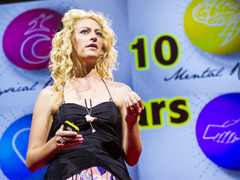
    Jane McGonigal: The game that can give you 10 extra years of lifeJane McGonigal: The game that can give you 10 extra years of life
    Jane McGonigal: The game that can give you 10 extra years of life
    Game designer Jane McGonigal’s SuperBetter helped her recover from a head injury. At TEDGlobal 2012, she passes on the healing to the audience, granting them 7.5 extra minutes of life. At 13:00, watch the life-extending action begin.
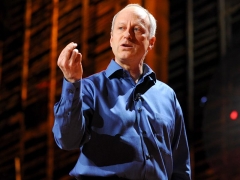
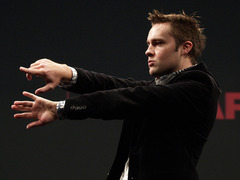
    Michael Sandel: The lost art of democratic debateMichael Sandel: The lost art of democratic debate
    Michael Sandel: The lost art of democratic debate
    For philosophy professor Michael Sandel, lively debate is the key to a strong democracy – so he calls on the attendees of TED2010 to bring it back. Throughout the talk, audience members share thoughts on Aristotle and on a then-recent Supreme Court decision.
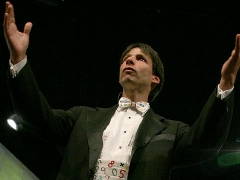
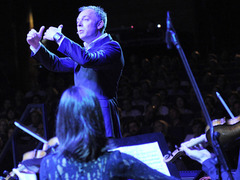
    Charles Hazlewood: Trusting the ensembleCharles Hazlewood: Trusting the ensemble
    Charles Hazlewood: Trusting the ensemble
    “Did you know that TED is a tune?” asks conductor Charles Hazlewood at TEDGlobal 2011. Starting at 8:48, he leads the audience in rousing chorus inspired by the letters T-E-D.
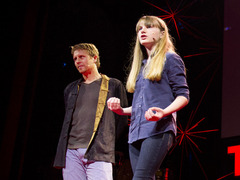
    Beau Lotto + Amy O’Toole: Science is for everyone, kids includedBeau Lotto + Amy O’Toole: Science is for everyone, kids included
    Beau Lotto + Amy O’Toole: Science is for everyone, kids included
    Neuroscientist Beau Lotto pulls the audience into some moments of playful discovery onstage at TEDGlobal 2012. In this talk about the joy of scientific inquiry, his slides show off a language gotcha!. At 12:35, he calls a fellow TED Speaker up to be experimented on.
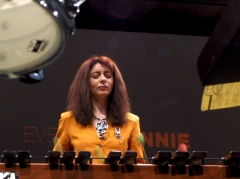
    Evelyn Glennie: How to truly listenEvelyn Glennie: How to truly listen
    Evelyn Glennie: How to truly listen
    Music can be heard with your whole body, says Grammy-winning deaf percussionist and composer Evelyn Glennie. At TED2003, she asks the audience to listen differently, to rethink music and, at 12:15, to clap the sound of falling snow.
    Keith Barry: Brain magicKeith Barry: Brain magic
    Keith Barry: Brain magic
    One after another, audience members are bedazzled and baffled by Keith Barry’s psychokinetic hijinks at TED2004. He creates phantom sensations, guesses names of ex-boyfriends and narrowly misses one very sharp object.

  • TED’s New York office rises and dances for V-Day

    The TED staff got up to dance this afternoon to celebrate V-Day. This global movement, founded by TED speaker Eve Ensler, turns 15 today and is celebrating with the One Billion Rising campaign — inviting us to stop, dance and rise against violence.

    One Billion Rising is dedicated to the 1 in 3 of the world’s 3 million women who have been the victims of violence at some point in their lives. Ensler is calling for a global strike against this staggering statistic. So what does dance have to do with it? Ensler explains in the talk below, given at TEDxWomen 2012. “Dance,” Ensler says, “is dangerous, joyous, sexual, holy, disruptive, contagious. It breaks the rules.”

    Our office danced to the V-Day anthem “Break the Chain,” as did men and women in communities around the world today. Watch some of the risings now at onebillionrising.org, and check out our moves below.

    TED-dances

  • Should I leave a comment on TED.com? A commenting manifesto

    Commenting

    You’ve just watched a TED Talk, and now you have some thoughts — about the subject, about the speaker, about life.

    In the world of TED ideas, those reflections and reactions are some of our most important resources. Yet, for every 1,000 views on TED.com, only 1 viewer writes a comment in the space below the video. Perhaps the other 999 viewers had nothing to say? Somehow we doubt it.

    What can a great talk comment do? It can provide more information, suggest an argument to the contrary, explain a personal connection to the subject matter — among other things. (See some of our favorite comments of 2012.) It’s also a great way to help us understand the impact that individual talks are having: A video share tells us it interested you, but a comment can tell us why.

    If you’d like to start commenting, we’d love to hear from you! But before you hit submit, we’d like to let you in on a little-known secret: We do enforce the TED.com Terms of Use for comments. To guarantee that your comment will find a permanent home on the site, please keep in mind these three basic guidelines.

    1. Civility. All the bold font in the world couldn’t stress this one enough. If you have even a nagging suspicion that your comment will come off as nasty and sarcastic, it probably will. We understand that some talks inspire very strong emotions, but a polite, well-worded argument communicates more effectively than rudeness — any day.

    If your comment crosses the line, our moderation team will remove it and send you an email. Don’t be discouraged — just take a step back and try again. We’re not out to get you; we’re just trying to keep the discussion respectful. If you want more information, we’re always happy to talk to you about what did and didn’t work.

    2. Substance
    . Whether you’re lavishing praise or expressing your disagreement, the more specific the better. The best comments, both negative and positive, are those which add new levels of meaning to the talk. If possible, please try to limit the number of posts you leave on a single talk — a large number of comments from one person can be mistaken for spam.

    And, of course, comments should be about the talk itself. If a TED Talk has inspired you to discuss a different but related topic, you can start a TED Conversation and let others know by tagging the talk.

    3. Style
    . Natural writer or not, native English speaker or not, please take a moment to proofread. If you’re more comfortable leaving the comment in a different language, go right ahead! We want to make sure that comments reflect the very best of the commenter, and that others who read your comment know just what you’re saying.

    So, should you leave a comment on TED.com? Yes, please! We would love to hear what you have to say, and the same goes for our speakers. Our commenting system isn’t perfect — heck, no website’s is — but with your help, we can continue to build a thought-provoking collection of member-submitted ideas, critiques, and stories around each TED Talk.

    You can contact [email protected] with feedback and suggestions. Happy commenting!