Author: Nicole

  • What is German Chocolate?

    What is German Chocolate?

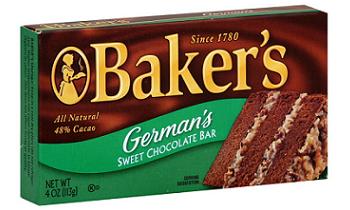
     When you hear of a German chocolate cake, your first thought is that Germany is where the cake originated – hence the name. This is one of those food items where the name is a bit deceiving, however. German chocolate cake gets its name from an ingredient it uses: German’s Sweet Chocolate. This chocolate was originated by the Baker’s Chocolate Company (now a subsidiary of Kraft Foods) in the mid 1850s and was named after it’s creator, Sam German. The story of the chocolate says that a misprint in a newspaper that included the recipe for the first German Chocolate Cake simply left out the “s” on the name, and this is why the chocolate is often known simply as “German.” The chocolate is similar to a semisweet chocolate, but has a higher sugar content to it. This means that recipes that use it tend to be a little bit sweeter than ones that don’t.

    If you’re making a recipe that calls for German’s chocolate, or German chocolate, don’t worry if you can’t find it. You can substitute semisweet chocolate and still have a great finished product.
  • Wilton Valentine Cookie Pan

    Wilton Valentine Cookie Pan

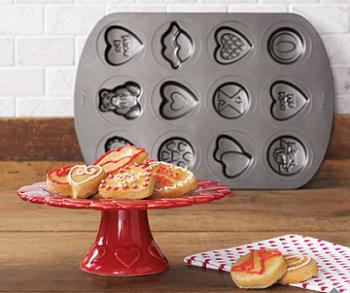
    Cookie pans seem to be getting more and more popular as time goes by. The pans allow you to stamp cookies with different designs and bake cookie dough into different shapes without picking up a single cookie cutter or rolling in. They’re reminiscent of shallow cupcake pans, with designs in the bottom of each cup. Cookie dough is dropped into the molds and bakes in place, spreading to fill out the design.

    Wilton’s Valentine Cookie Pan is a new seasonal release from Wilton. The cookie pan has some really adorable shapes, including puckered lips and a teddy bear, along with round cookies marked with Xs, Os and messages like “Be Mine.” The pan is nonstick and most cookies slide out easily. The pan will also work both with cakey cookies (might want to grease the pan a little for these, just in case) and crisp cookies, and because the Valentine’s designs aren’t quite so attached to a single holiday, these are cute enough to make all year round. No one is going to mind getting some heart-shaped cookies in summer or fall, as well as in the spring around V-day!

  • Cranberry Orange Pudding Cake

    Cranberry Orange Pudding Cake

    Pudding cake will always be one of my favorite cool-weather desserts. As good as it is all year round, you can’t beat the warmth of a sticky, gooey pudding cake fresh from the oven on a winter evening. Chocolate pudding cakes are tough to beat, but I’m a big fan of citrus pudding cakes as well. Lemon, lime and orange all get top marks from me when citrus is in season. It can be a bit boring to make the same dessert over and over again (no matter how good it is), so I’ve been experimenting with making a few additions to my pudding cakes.

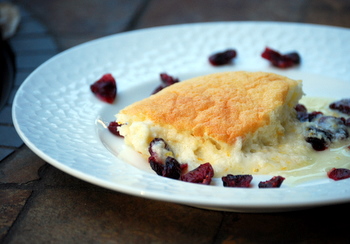
    I decided to try a Cranberry Orange Pudding Cake because I like my Cranberry Orange Breadso much. I made my usual pudding cake recipe and added dried cranberries to it. The cranberries sank to the bottom, soaked up some of the sauce from the pudding cake and became plump and flavorful during baking. If you have orange-flavored cranberries, you’ll get an even more orangy result. Whole cranberries, if you’re curious, will work out ok in this recipe, but were a bit too tart with this homey, sweet dish. A blend of whole and dried may be the ticket if you want to up the tartness in the dessert.

    The cake bakes into a light sponge layer and a thick pudding layer in the oven. You do need to put it into a shallow water bath to help the sauce portion of the cake form. Make very sure that the water in your water bath doesn’t come more than 1/2-inch up the sides of the dish with the cake in it. If you have too much water, the pudding part of the cake will not thicken and your dessert will be very runny. It’s better to have a little bit less of a very good, thick custard than to try to make it overly saucy and end up with pudding cake soup.

    (more…)

  • Pillsbury Easy Frost Frosting, reviewed

    Pillsbury Easy Frost, reviewed

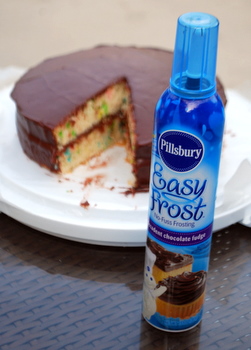
    I was pretty skeptical when I tried Pillsbury Easy Frost Frostings because I just don’t care for store-bought frostings too much. They may be easy to use, and it is certainly convenient to have a can in the back of the pantry in case of a cake-frosting emergency, but they tend to be flat and artificial tasting. They don’t compare to the flavor of a quick homemade buttercream. That said, the Easy Frost had an unusual can design to it that promised it would make both frosting and filling cupcakes a breeze because it has a built-in decorator tip on top of the can, so I couldn’t resist giving it a shot.

    I’m glad I did because it lived up to its promise of being a “no-fuss frosting.” It piped out easily onto the tops of cupcakes (much easier than any frosting that comes from a standard can!) and you can insert the applicator tip into the cupcake to add a squirt of frosting to the center. The frosting also tasted very good – not just good compared to a canned frosting, either. It was fresh and flavorful. The three varieties I tried, Velvety Cream Cheese, Decadent Chocolate Fudge and Vanilla Dream, all had good flavors and the Cream Cheese and Fudge in particular had a lot more depth to them than I have gotten from other store-bought frostings.

    One can will frost a whole two-layer cake (as pictured on my cake above), but the best use is for cupcakes because you can’t beat the convenience of the built-in pastry tip. The cupcakes will look perfect every time. Plus, the can will keep any leftovers fresh until the next time you need frosting. This is one frosting that is worth keeping in the pantry (especially if you have kids who like to decorate and bake), because while I’ll stick to homemade frostings for the most part, I wouldn’t hesitate to use a can of Easy Frost if I had some on hand.

  • Tips for getting that perfect cookie texture

    Differing Cookie Textures

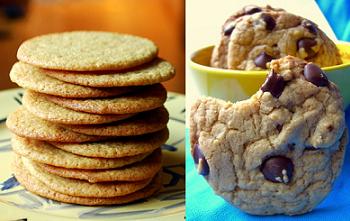
     When you like cookies with a particular texture, it’s hard to know before trying a recipe if you’re going to get the result you want. And once you’ve tried a given recipe, it’s hard to know what changes you can try making to see if you can achieve that elusive chewy cookie, or crisp cookie. Part of the fun of baking is learning how to tweak recipes (or come up with new ones) to suit your personal preferences and, when it comes to cookies, Cook’s Illustrated (Mar.07 issue) came up with a few tips to help things along. These are general rules, not guarantees that you’ll get the result you had in mind with a substitution given below. I’ve added a few tips to the rules that will help you apply them when you start to experiment.

    If you want chewy cookies, add melted butter. Butter is 20 percent water. Melting helps water in butter mix with flour to form gluten.
    More gluten will make for a chewier cookie, just as it will make for a chewier bread. Keep in mind that you’re introducing extra liquid with a substitution like this one, and the cookies may be thinner than you’d like unless you add more dry ingredients or less liquid.

    If you want thin, candy-like cookies, add more sugar. Sugar becomes fluid in the oven and helps cookies spread.
    A little extra sugar will also help you get a crisp edge on a cookie. Caramelized sugar does not always survive well in the open air. Too much sugar and your cookies will be thin and chewy, not crisp, although they should still taste great. An airtight container will help preserve their fresh-from-the oven texture.

    (more…)

  • German Chocolate Cake Brownies

    German Chocolate Cake Brownies

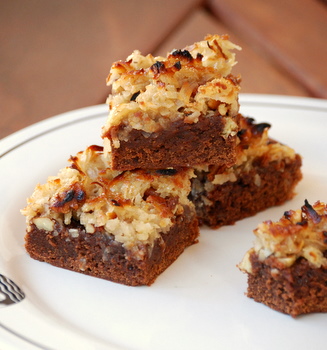
    A towering German Chocolate Cake is definitely a dessert to look forward to, but there isn’t always time – nor do I always have the desire – to construct a multi-layered cake. The solution to this little problem is a batch of German Chocolate Cake Brownies. These brownies have all the flavor of the cake, including a coconut-pecan topping that is very much like the gooey frosting that usually finished off a traditional German chocolate cake.

    This recipe comes from the Taste of Home Baking Book, a favorite of mine because it has so many classic American baking recipes in it, including cakes, cookies, pies, breads and, of course, brownies. These brownies are very rich and chocolatey with a slightly unusual melt-in-your-mouth texture that makes them seem almost like a very tender cake. They are neither fudgy nor cakey, but are a great balance somewhere in between that should appeal to all brownie fans. The brownies are also not too sweet, so they balance well with the sweet, sticky topping.

    The topping is a mixture of coconut, chopped pecans, brown sugar and butter. It is spread onto the brownies after they bake and then broiled to melt it and caramelize the top. Be careful with this step because it is easy to burn both the coconut and the pecans. Either set your oven rack a little ways away from your broiler (a middle rack instead of a top rack) or keep a very sharp eye on it, rather than setting a timer and walking away.

    These brownies keep very well and, in an airtight container, will still taste great after several days.

    (more…)

  • Rose’s Heavenly Cakes

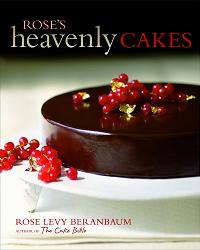
    Rose’s Heavenly CakesWhen it comes to cakes, author Rose Levy Beranbaum knows what she’s talking about. She came out with The Cake Bible in 1988 and that book has been the go-to of lots of professional bakers and serious home bakers ever since thanks to its comprehensive collection of precisely-written recipes. Rose’s Heavenly Cakes is Beranbaum’s newest venture and it is packed with many new cake recipes. One of the biggest drawbacks to the The Cake Bible is that many people find it to be intimidating because of the ultra-detailed ingredients lists, instructions and techniques used. This newer book doesn’t lose any of the precision of the previous volume, but is a lot more user-friendly right off the bat.
    The first thing you’ll notice is the photography. The book has more than 100 beautiful full-color photos illustrating just about every recipe, showing not just the appearance of the finished cake, but often the texture of the crumb so you have an idea of what you’re getting as you bake. The recipes are carefully laid out, with measurements for ingredients given by volume and by weight, and clear instructions that are easy to follow along with. While some of the cakes in the book are more difficult than others, all seem approachable. Beranbaum includes notes about variations, as well as relevant baking/ingredient tips, alongside the recipes.

    The introduction, Rose’s Rules of Cake Baking, is brief and to the point and features a list of ten important tips about ingredients and techniques. All the rest of the “technical information” is found at the back of the book where it can be used as a reference, along with references for ingredient and equipment sources.The chapters include Butter and Oil Cakes, Sponge Cakes, Mostly Flourless Cakes and Cheesecakes, Baby Cakes and Wedding Cakes. The recipes range from simple to quite complex and the selection should definitely appeal to experienced and/or adventurous bakers who get tired of seeing books intended only for novices. That said, with the excellent recipe writing, every recipe should be do-able for a baker of any skill level – although I would still suggest starting with the easier recipes and working your way up if you are just starting out on your cake baking endeavors. Otherwise, the book offers a huge variety of recipes in a wide range of flavors and with it you should have no problem turning out cakes that are indeed heavenly.

  • Panettone French Toast

    Panettone French Toast

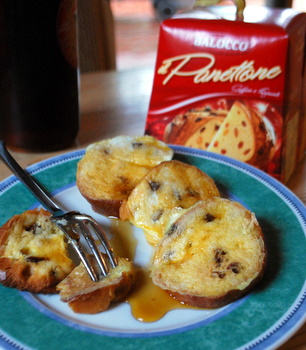
    Panettone is a popular cake around Christmas time, but what to do with a leftover loaf when the holidays are over? The easiest answer is slice it up and make french toast. You can do this with the big loaves and the miniature loaves, and it might be worth making a trip to the store to get a post-holiday panettone just to serve it up for breakfast. I would opt for the large loaves if you want to serve a crowd and get a miniature one (which is what I used for the picture above) if you just want to indulge yourself.

    Slice the bread to the thickness of regular sandwich bread, the prepare the egg and milk mixture as you would for ordinary french toast. Panettone has a sweet, buttery flavor and is studded with raisins, currants, candied citrus and other dried fruits. I didn’t add any sweetener to the egg and milk mixture in this recipe because the panettone is so flavorful on its own. It’s a bit like using cinnamon-swirl bread, where you want to be able to savor the flavors in the bread because they’re great to start out with.

    Serve this with maple syrup or honey and you can enjoy a bit of the holidays long after the holidays have past.

    (more…)

  • Meyer Lemon Bundt Cake

    Meyer Lemon Bundt Cake

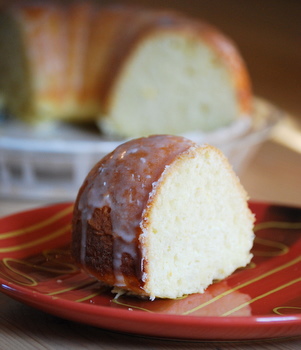
    One of the things that I look forward to in the winter is meyer lemon season. Meyer lemons are hybrid fruits, a cross between a mandarin orange and a lemon that has all the flavor of the lemon without the acidity. They’re really easy to work with and make for a nice change in recipes. In this Meyer Lemon Bundt Cake, for instance, there is a lot of lemon juice but the finished cake comes out with a smooth and somewhat mellow – as opposed to bright and tangy – lemon flavor.

    Apart from the Meyer lemons themselves, this is a fairly standard bundt cake. It is moist, with a tight crumb and is especially good with a little bit of glaze on top. I included a good amount of lemon zest to emphasize the lemon flavor and opted not to include vanilla extract so that the citrus wouldn’t have any competition for the spotlight in this cake. The cake will keep, well-wrapped or stored in an airtight container, for a couple of days, so this is a nice cake to bake on a weekend and nibble at during the week.

    Now, if you can’t get Meyer lemons, you can easily substitute regular lemon juice into this recipe and get great results. If fact, if you’re not too familiar with meyer lemons, you might want to try giving both versions a try (or simply compare the lemons side-by-side) to get a feel for the differences between the two.

    (more…)

  • Foodie New Year’s Resolutions 2010

    New Year’s Resolutions?

    What are your foodie resolutions for 2010? Cook dinner at home more? Bake the perfect batch of brownies? Eat out at that one restaurant you’ve always dreamed of visiting? Open your own restaurant?

    It’s a lot easier to make New Year’s resolutions than it is to keep them. I’ve heard statistics that say anywhere from 50 to 92% of all resolutions are not kept. They say that the trick to keeping a resolution is to break them down into smaller, more manageable goals. So, if you want to cook at home more, you might star out by cooking a big dinner once a week so that there will be plenty of leftovers for another dinner and a lunch or two. Gradually work up to more mights, or encourage yourself further by saying you’ll try a new dish or two fro a favorite cookbook.

    Last year, one of my goals was to finish a cookbook, which I did! This year, I’m just not quite sure what my big resolution is going to be, but traveling more, taking an international cooking class and baking more bread (something I’ve put on the back burner a bit) are definite goals of mine. I’d also like to hold a few more contests on Baking Bites with giveaways for all of you readers. Beyond that, I’ll have to make them up as I go through 2010!

  • Baileys and Vanilla Tiramisu

    Baileys and Vanilla Tiramisu

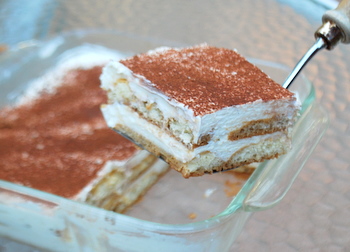
    It’s become an unofficial tradition for me to make tiramisu for New Year’s Eve. I’m not sure how it came about, but it’s definitely not a bad thing. Tiramisu has always struck me as a kind of elegant dessert, with its layers of ladyfingers and mascarpone cream. That said, it is also very easy to put together and can be made well in advance – huge plusses for just about every dessert. It also uses a bit of alcohol, which makes it fit in nicely with the usual festivities of a New Year’s Eve gathering (or even just a nice dinner), and a bit of coffee, which might give you an edge in staying up until midnight.

    It’s pretty easy to vary the flavors of a tiramisu by using different liquors. Rum and marsala wine are often featured in it. For this version, I used Baileys Irish Cream with coffee to dip the ladyfingers and I infused a vanilla bean into the cream I used to make the mascarpone cream layers. Because it is easier, I included instructions for using both vanilla extract and vanilla-infused cream with this recipe. It is also worth noting the the size of ladyfingers varies by brand, so don’t be concerned if you need more or less than I’ve called for here, as long as your dish is fully covered as you construct the dessert.

    The finished dish is delicious. It is ultra creamy and very light. I really liked the hint of Baileys in with the coffee, too. It’s easy to eat a big piece, but since it is rich it is best served in slightly smaller portions.

    (more…)

  • Trader Joe’s Buttermilk Biscuits, reviewed (refrigerated)

    Trader Joe’s Buttermilk Biscuits

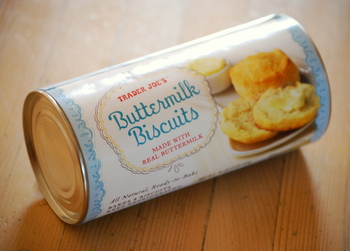
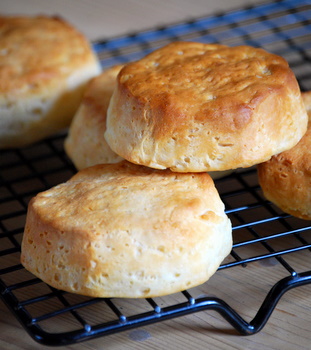
    The last time I tried biscuits from Trader Joe’s, it was a disaster. Not only were the baking directions on the package terrible, the biscuits looked and tasted bad no matter what you did. Often, TJ’s stocks very good ready-make products, but perhaps bake-from-frozen biscuits were not the way to go. I was willing to give them the benefit of the doubt where biscuits were concerned and picked up a tube of their new Buttermilk Biscuits.

    Unlike their predecessors, these were in the refrigerated section of the market and come out of the tube round and ready-to-bake, just like other brands of refrigerated biscuits. They baked up well with the directions given on the packaging, though I had a slight preference for the slightly darker color of the batch I baked at a higher temperature. They were tender and rose well, but were not particularly light or flaky. This lack of flakiness can be partly attributed to the fact that they’re made with shortening (great for tenderizing) and not butter (better for flakiness). The lack of butter also hurts these biscuits in the flavor department: they’re pleasant, but not buttery at all on their own.

    Huge improvement over the last attempt, but I still prefer my homemade biscuits – especially since they don’t take long to make. Still, these aren’t bad and make a great addition to a bowl of soup, chili or gravy in a pinch. But a little more butter flavor (which I added by slathering them with butter myself) and they’re even better.

    Trader Joe’s Buttermilk Biscuits

  • Baking Bites Holiday Cupcake Contest Winners!

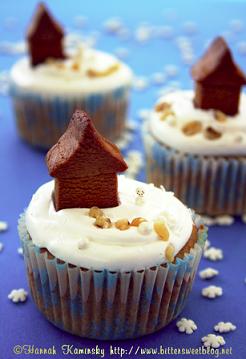
    Bittersweet’s Mini Gingerbread Cupcakes

    My favorite thing about the Baking Bites Holiday Cupcake Contest is seeing how creative everyone is with their cupcakes and their photography. Every single entry is just mouthwatering – and all of the designs and decorations can easily be recreated in your own kitchen, so I’m sure I’m not alone when I say that they really inspire me to start preparing for next year’s contest! Getting down to business, I’d like to announce the two winners (as selected by an anonymous panel of judges).

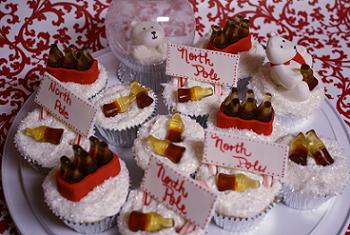
    The grand prize goes to Bittersweet’s cupcakes topped with Mini Gingerbread Houses. There is great attention to detail in these cupcakes, including a teeny tiny snowman made from dragees and some stepping stones made from chopped walnuts. The second prize goes to Tracyecakes Snowglobe Coca-cola Cupcakes. The cupcakes are actually turned upside down to serve as the base of the snowglobe. The fondant polar bears and gummy cola bottles are very cute (and will remind everyone who’s seen them of those cute polar bear holiday commercials that Coke used to put out annually. You can find a detailed how-to recreate the snowglobe effect here.

    A big thanks to everyone who participated, and a big thanks to my judges (you know who you are!) for sorting through all those cupcakes. If you haven’t already, don’t forget take a peek at the rest of the entries and see what great work everyone who participated did, and get some ideas for next year’s contest!

    Tracycake’s Cola Snowglobe Cupcakes

    Tracycake’s Cola Snowglobe Cupcakes

  • Pear and Cranberry Cobbler

    Pear and Cranberry Cobbler

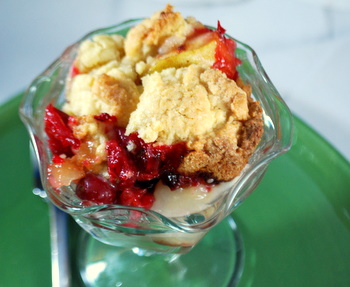
    Pears don’t always get the appreciation they deserve when it comes to baking. A ripe pear is juicy and tender, and no matter how tasty, it can be difficult to imagine a ripe pear holding up as well as an apple in a pie or cobbler or other fruit-heavy dish. But pears can really shine in baked goods, with their sweet and delicate flavor. The trick is usually just to save the very ripest pears for eating and take those that are still a little bit firm (i.e. will not squish under light pressure) and bake with those.

    I used a mixture of fresh pears and whole cranberries in this cobbler. Both fresh and frozen cranberries can be used. The combination of winter fruits in a dessert that is served hot is the perfect dish for a cold evening by the fire. The fruit mixture is lightly sweetened with brown sugar and even more lightly spiced with ground cinnamon. I didn’t want to overdo the spices to allow the great flavors of the sweet pear and tart cranberries to come through clearly. A little cornstarch helps ensure that the juices from the pears thicken up just a little during baking.

    The topping for this cobbler is similar in consistency to a cookie dough. This means that it is difficult to spread onto the fruit, unlike more cake-like batters. Instead, break the dough up into chunks with your fingers and distribute them evenly over the fruit. You should have enough to just about cover the entire cobbler and the topping will spread as it bakes, giving the dessert a “cobbled-together” appearance.
    (more…)

  • Baking Artisan Pastries and Breads

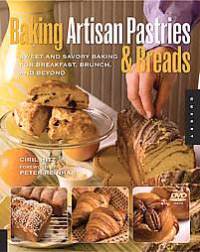
    Baking Artisan Pastries and BreadsThere are a number of good books about baking artisinal breads out there, but Baking Artisan Pastries and Breads is one that is focused on pastries – breakfast pastries, to be specific – and not the same peasant breads and baguettes that you’ll find in other artisan baking books. It’s great to have a book that is more specialized and doesn’t devote only a couple of pages to things like croissants and danishes.
    The cookbook is divided up into two primary sections – Basics and Baking – and each further divided into several chapters on Ingredients; Equipment Techniques; Quick Breads, Muffins and Scones; Enriched Dough; Laminated Dough; and Fillings, Glazes, Toppings and Spreads. The Basics section is very comprehensive and describes in-detail just about everything you might want to know to be able to make the recipes in the book. It’s a great place for beginners to start, but it’s a good reference in general. There are plenty of photos that illustrated all the steps described. The Baking section of the book is where you’ll find the recipes. They, too, are heavily illustrated. The recipes are given with metric, weight and volume measurements and are written out carefully, adding tips where necessary to ensure that you’re proceeding the right way as you bake. The recipes are detailed and easy to follow along with.

    The book also includes a DVD where many of the techniques described in the book are performed. This resource makes the book incredibly easy to use – not to mention very unique – because it is as close as you could come to taking an actual cooking class on this subject. The demos primarily cover the topics mentioned in the Basics section of the cookbook, but also include detailed information on how to make full recipes. You’ll find a tutorial for croissants, for instance, on the DVD. It will be a huge help to anyone who is a visual learner, whether you’re experienced or still a beginner.

  • What was in your Christmas stocking?

    Christmas 2009

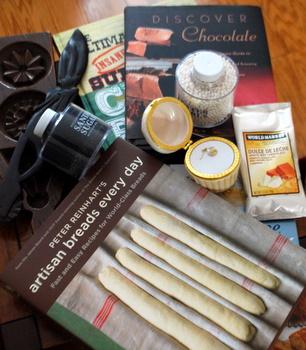
    I hope that everyone had a lovely holiday weekend with friends and family. I know that I did! And I certainly got lucky in the gift department this year. I received several outstanding cookbooks, fancy stackable sanding sugars from Williams Sonoma and a couple of antique pieces of pastry-making equipment – a pastry cutter and a moon cake/pastry mold – that a relatively thoughtfully picked up for me on a trip to Southeast Asia earlier this year. There were a fair number of chocolate bars in my stocking, and of course it was also wonderful to spend some quality time with my family.

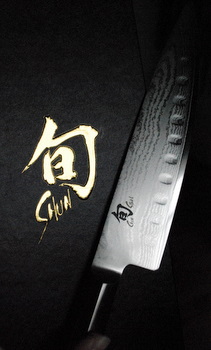
    If I absolutely had to choose, my favorite thing would have to be my new Shun Chef’s knife. I can’t say no to a good knife and, in addition to being a fantastic instrument, it looks gorgeous. Now, I just need to put a knife block on my wish list for next year!

    Since we’re sharing, what did everyone else get for Christmas? Books, baking equipment, homemade goodies? I certainly hope that a copy of The Baking Bites Cookbook made it under a few trees, too!

    New Shun Knife

  • Merry Christmas from Baking Bites!

    Cupcake Christmas Tree

    Merry Christmas, everyone!

    I hope your holiday is filled with good cheer and good food. And I have no doubt that it will be.

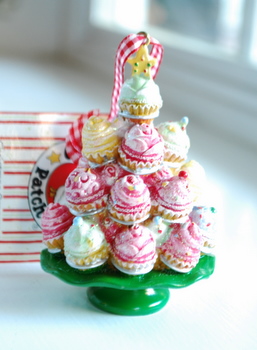
    This morning, I wanted to share one of my favorite ornaments from this year, my adorable Cupcake Tree Christmas Tree. You can actually recreate the look by placing a cupcake stand on top of a cake plate – preferably a green one. Just don’t forget to get a star to poke into the top cupcake to finish off the look! You can still buy these online and, while it’s a bit late to start adding to your tree today, it’s never to late to put a little present away for yourself for next Christmas.

  • Browned Butter Shortbread

    Browned Butter Shortbread

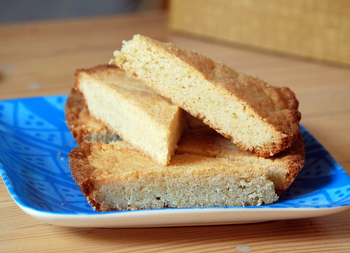
    It’s hard to resist a good shortbread. It shouldn’t be too crumbly or too crisp, and it must have a rich butter flavor. This recipe makes just a small batch of shortbread that is pretty close to that good, middle-of-the-road shortbread that is well balanced, flavorful and should appeal to absolutely everyone.

    This shortbread uses melted butter, which I browned on the stovetop to give it a toasty, nutty flavor that adds a lot of richness to the finished cookies. To be honest, skipping the browning step doesn’t hurt the shortbread too much, but it doesn’t take much time and the results are well worth it. The recipe was inspired by  some Dutch shortbread I had, which a Dutch friend made and shared with me. After a little bit of research, I was able to find some recipes similar to the shortbread she made online and used those as a starting point for my version. The browned butter was an element that I couldn’t resist adding to enrich the overall flavor.

    This shortbread is baked in a pie or tart pan and is cut into wedges to serve. It is good right away, but will also keep well in an airtight container for a couple of days.

    (more…)

  • What is stollen?

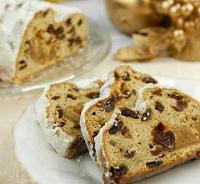
    StollenStollen is a traditional German Christmas bread. Sometimes, because the bread has such a rich texture and is so packed with fruit, it is described as a cake or a fruitcake. It starts with a  yeasted dough that is sweetened with sugar or honey and enriched with butter, to give it a soft texture. Spices or fruit zest are often added to the dough, as are nuts, dried fruits and candied fruits. The dough is wrapped around a log of marzipan before baking. It is traditionally shaped into a oblong loaf, but as stollen become more popular (as gift items, here in the US), you can sometimes see them in other shapes. The finished loaf is generously dusted with confectioner sugar before being sliced and served.
    Stollen is sweet and rich, but not as sweet as a regular Christmas cake or a plate full of sugar cookies. Unlike another traditional Christmas bread, panettone, it can be quite heavy, so it is best served in smaller slices where you can enjoy all the flavors in the loaf without being overwhelmed by too much marzipan in one go.

  • Candy Cane Angel Food Cake

    Candy Cane Angel Food Cake

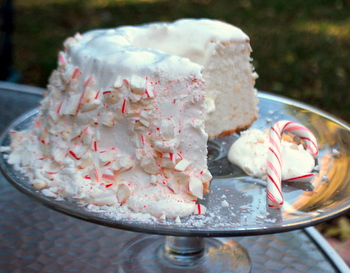
    I got my first glimpse of this cake on the cover of Sunset Magazine about three years ago. With crushed peppermints enveloping the entire cake, it was quite a sight to behold – and so festive for the holiday season! I saved the picture and have been meaning to make it ever since. With my surplus of candy canes this year, I knew it had to be on my list.

    I baked an angel food cake using my Perfect Angel Food Cake recipe and set it aside to cool completely. This cake isn’t exactly frosted. It is actually covered in whipped cream. Whipped cream, made from scratch, is a great way top top off an angel food cake. It is very light, like the cake itself is, and so it doesn’t weigh it down. It is also not too sweet, and since angel food cakes are on the sweet side to begin with, this makes for a good balance. I whipped up the cream right before serving this cake and recommend that you do the same, as even with refrigeration it is not a particularly stable topping (meaning it can’t be made a day in advance). I didn’t find this to be much of a problem because the cake is very light and easy to eat in large pieces, so as long as you have a crowd you should get through it in no time at all.

    The candy canes are crushed and pressed gently into the whipped cream. Sunset covered the entire cake, while I opted just to do the sides. The more red your candy canes are, the more contrast you’ll have in the finished cake.

    A storebought angel food cake will work in a pinch if you don’t have time to make one from scratch. I suspect that you could also get away with using thawed whipped topping (i.e. Cool Whip) in place of the whipped cream. I would not recommend using canned whipped cream because it is not stable enough. Starting from scratch with heavy whipping cream is the way to go.

    (more…)