Author: NJ

  • Can I Get My Traction Pillow In A Smaller Size?

    Arc4life’s cervical linear traction neck pillow is one of the most popular neck pillows on the market today. It helps with a variety of symptoms such as neck pain, neck ache, stiff neck, herniated disc, bulging disc- it provides for a more comfortable and quality sleep.

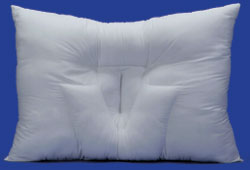
    The traction pillow really only comes in a medium or standard size. The dimensions are 20 inches by 26 inches. Well I won’t say that any longer, we now also offer a large size traction pillow (21″x33″) too. Unfortunately it does not come in a small because to make the “V” section we need more room and space for material. If someone is shorter than about 5’1” or has a very short neck we recommend the linear gravity small pillow. If someone is taller than 6’2” the large traction or large linear gravity may be a better support.

    That being said, the majority will find that the standard size traction pillow will be the right fit for them. If for some reason it’s uncomfortable at first, start using the other side which is the support side.

    Additional Reading Resources

    Visit Arc4life.com for your online selection of cervical support neck pillows, orthopedic pain relief products and Home traction units. Products for pain relief. Add to Technorati Favorites Delicious Bookmark this on Delicious Stumble It!


  • What Is The Pillow Dust Cover?

    The dust cover that is now available has been an extremely helpful addition to a number of the pillows we carry. It easily slips onto the pillow and zips closed. It’s made of a soft material that is easily washable. It will preserve the life of your pillow, not only protecting it from additional dust or allergens but also protect it from the wear and tear of sleeping or extra washing.

    It is an extra layer that protects your pillow from chemicals in hair gels and shampoos, and you can take it off, and wash it versus having to wash the pillow itself. Place the cover over your pillow, zip it up and put it in your normal pillow case that matches the bed spread.

    It is also protects against additional allergens which is especially important to allergy sufferers. There are a lot of people prone to certain allergy triggers; some may not even know they have allergies or at least the extent of them. For those individuals we highly recommend the special dust cover.

    Visit Arc4life.com for your online selection of cervical support neck pillows, orthopedic pain relief products and Home traction units. Products for pain relief.

    Add to Technorati Favorites Delicious
    Bookmark this on Delicious

    Stumble It!


  • The Multi-Functional Bed Wedge Positioning Cushion

    The Bed Wedge is often called the reading pillow or husband pillow. This pillow is a nice product to have. My spouse and I often read for a few minutes in bed at night and I always use my wedge. Basically you stand it up and put it against the wall or headboard. I used to lay on my back and hold a book up but my arms were tired in a matter of minutes. Then you end up putting it on your stomach or knees with your head in extreme flexion. Shortly after, that becomes uncomfortable, so you lay on your side with your head cocked to the side. That is also short lived so you roll on your stomach with your forearms under your chin or upper body…And you guessed it, that doesn’t last long either. Now you are wide awake and have lost your page multiple times.

    Then I discovered a simple cure – the Bed Wedge. Not only is it a must for others who like to read in bed like myself, I has a couple other great uses too. Lay it down so the angle isn’t steep but long and it will help you stay propped up. This is especially helpful in acid refux disorders or if you have a hiatal hernia. I have also had patients who suffer with dizziness use the bed wedge to stay more upright while sleeping. You can buy a craft-matic mattress (one that has a remote to elevate it) and spend thousands, or just use the bed wedge pillow.

    Yet another great use is as a knee elevator. Place it under the knees for releasing tension in the low back. Flexion in the legs keep the hamstring, gluteus muscles, and lower back muscles relaxed, which is why so many people like this. The triangular shape allows your legs to rest comfortable instead of fighting to get a regular pillow in the right spot.

    Additional Reading Resources:

    Add to Technorati Favorites Delicious Bookmark this on Delicious Stumble It!

    Visit Arc4life.com for your online selection of cervical support neck pillows, positioning products and Home cervical traction units. Products for pain relief.


  • Shoveling Snow in the Winter strains the back and the heart

    Well we are in the full swing of winter here in CT. I look outside my window and know that in a few hours I will have to go out and shovel my driveway…again. Shoveling snow is an activity that needs to be done properly so as not to injure your back. Turns out it can also injure your heart: it can strain the heart, particularly since the cold weather narrows blood vessels.

    We have all heard the signs and symptoms of a heart attack. According the American Heart Association they are:

    • Chest Discomfort – Imagine an like uncomfortable pressure, squeezing, fullness or pain. Most heart attacks involve discomfort in the center of the chest that lasts more than a few minutes, or that goes away and comes back.
    • Pain and Discomfort in other parts of the parts of the body such as: arm pain (in one or both arms, back pain, neck pain jaw pain, or even stomach pain
    • Shortness of Breath
    • Breaking into a Cold Sweat
    • Nausea
    • Lightheadness

    According to Dr. Holly Anderson, director of education and outreach at the Ronald O. Perelman Heart Institute of New York-Presbyterian Hospital “Frigid air causes blood vessels to constrict as the body tries to prevent heat loss”.

    This is a natural response that can also put people with heart conditions and those involved in strenuous exercise at greater risk of having a heart attack ,” Andersen said.

    The narrowing raises blood pressure and can reduce oxygen flow to the heart. Combined with a strenuous activity, such as shoveling snow, this can strain the heart, triggering a heart attack in those at risk.

    Though women may also experience pain, they are more likely than men to experience shortness of breath, nausea or vomiting and back or jaw pain

    Precautions should be taken if you have a weak or compromised heart. A heart attack can be easily mistaken for a pulled muscle. This is why it is important to be on the lookout for certain symptoms after you finish shoveling snow.

    Dr. Anderson suggests that certain precautions be taken during the winter season to prevent a heart attack:

    • As with any activity, don’t forget to stretch. Jumping out of bed without warming up to shovel snow is not a good idea. Limber up by stretching or walking before you start.
    • Dress appropriately. Wear windproof and waterproof outer garments, place a scarf over your mouth and nose to warm up the air before you breathe it in and wear layers. Bundling up will help maintain your body heat. Ski socks are a good idea.
    • To avoid overexertion, try the less strenuous technique of pushing the snow with the shovel rather than lifting it. Also, take frequent breaks — shovel for 15 minutes, then rest for 15.
    • If you’re over 50, overweight, not active, are a smoker or have suffered a previous heart attack, consult a doctor before shoveling snow. Your risk is higher for a heart attack than the average joe. You may want to hire a local landscaping company to handle your driveway for the season.

    Source: Heart attacks more common in winter; tips to lower your risk

    Additional Reading Resources:

    Visit Arc4life.com for your online selection of cervical support neck pillows, orthopedic pain relief products and Home traction units. Products for pain relief.

    Add to Technorati Favorites Delicious Bookmark this on Delicious

    Stumble It!


  • Why Didn’t my Doctor tell me my Neck has no Curve

    At this point I’ve seen numerous patients who had neck s-rays requested by their MD. They were sent to the radiology center or the imaging floor of the hospital.

    What typically takes place is the films are taken and a radiologist reads them. The doctor then looks at his report and makes his diagnosis. At the hospital they are mainly looking for major, life-threatening findings: fractures, cancer, etc … When spinal shifts are spotted they are often neglected or sometimes overlooked.

    More and more nowadays radiologists and MD’s have learned the importance and significance of spinal misalignments. However, I still find that many patients are not being made aware of these findings and told everything looks ok.

    Spinal misalignments are significant! Especially a complete loss of your neck curvature or a reversal of the curvature. However, chiropractor, physical therapist, or physiatrist can often even detect possible alignment issues through posture analysis, ranges of motion, or palpation.

    Keep in mind that your MD doesn’t actually read your x-rays, he’s got many other things to do, and doesn’t have the time. The radiologist reads the x-rays and will send the report to your MD. So there often can be some subjectivity when the pictures are read as well as the report. Also, when I say your MD I’m referring to your primary care doctor. Radiologists are MD’s too, and if your doctor is a specialist; orthopedist, neurologist, or D.C. for example, they often read the images themselves as well.

    In conclusion, take charge of your own health. Spinal shifts are not normal and you shouldn’t be told everything’s fine when there are significant abnormalities. An inadequate or abnormal neck curve is a big one, and shouldn’t be discounted anyway.

    Happy New Year Everyone! Wishing everyone a Happy, Prosperous and Healthy 2010 ! – NJ

    Additional Reading Resources:


  • The Difference Between a Travel Pillow and a Neck Pillow


    Often people call a travel pillow by the name neck pillow, however it’s not correct. A neck pillow is a pillow for sleeping that helps relieve pain and improve spinal posture by having a built-in neck roll that supports your neck. They are often called support pillows or orthopedic pillows. They help maintain the correct curvature in your spine on your back and keep the spine in alignment when on your side.

    A travel pillow is a U-shaped pillow that you can use for neck support when on a plane, traveling by bus, or a car. You can call it a travel neck pillow, but calling a travel pillow a neck pillow or calling a neck pillow a travel pillow is not technically correct.

    So to make sure you don’t make a mistake when trying to find, order, or recommend one of these, you now will know what a true neck pillow is versus a travel pillow.

    Visit Arc4life.com for your online selection of cervical support neck pillows, orthopedic pain relief products and Home traction units. Products for pain relief.

    Additional Reading Resources:


    Add to Technorati Favorites Delicious
    Bookmark this on Delicious

    Stumble It!


  • How can Increasing my Water Intake Help with my Neck Pain?

    Our Bodies Are Made Mainly Of Water

    Great question, and a very important question. If you didn’t already know, increasing your water intake helps lubricate joints of the neck. Water intake helps with the flow of fluid in the joints, as well as into the discs.

    The real key is not only to increase your water, but getting motion in the neck and putting it into proper alignment. Normal alignment allows everything to communicate and flow as it should. Motion in the neck from exercises, neck tractioning, or stretches helps mobilize the water and lubricate the joints better.

    Throughout the day discs become dehydrated because the weight of the head from gravity weighs on the spine pushing water out of the discs. Moving the head back into extension helps create a vacuum affect in the spine, pulling water into the disc.

    Keeping the discs hydrated is extremely important because they create a space or hole (foramen) for the nerve roots to travel out of. Keeping that space open equals no nerve pressure; allowing it to close down (stenosis) equals nerve pressure and because of this Pain will follow.

    Visit Arc4life.com for your online selection of cervical support neck pillows, orthopedic pain relief products and Home traction units. Products for pain relief.

    Add to Technorati Favorites Delicious
    Bookmark this on Delicious

    Stumble It!


  • Recent Study Shows that Biofreeze Reduces Pain and Blood Flow & Increases Muscle Function

    Biofreeze is Natural Pain Relief Gel that Reduces Pain and increases muscle functionFor tight muscles, sore muscles or tender trigger points, on treatment option is to use a natural pain relief gel like icy hot, bengay, or biofreeze.

    A recent University of Louisville study compared Biofreeze and ice, and their effect on pain, blood flow, and muscle function.
    While they both reduced blood flow, Biofreeze Natural Pain Relief Gel actually did it much quicker. Both the ice and Biofreeze reduced pain. The one difference was that Biofreeze showed significant increase in muscle function where the ice did not.

    Biofreeze works similar to ice in how it helps to heal. Ice therapy initially constricts local blood vessels and decreases tissue temperature. This constriction decreases blood flow and cell metabolism, which can limit hemorrhage and cell death in an acute traumatic injury.
    The fact that Biofreeze was able to help restore muscle function was significant because allowing muscles and ligaments to work like they should reflects that nerve function is also better.

    In our Central CT office, we use ice after muscle therapy and sometimes following adjustments, or we give home icing instructions. We also do the same with Biofreeze. The reason is to speed the healing process. We have found both to be natural means of getting our patients better faster. One of the nice things is that you don’t need to be in the office to use them; both can be utilized right at home.

    Additional Reading Resources:

    Visit Arc4life.com for your online selection of cervical support neck pillows, orthopedic pain relief products and Home traction units. Products for pain relief.

    Add to Technorati Favorites Delicious
    Bookmark this on Delicious

    Stumble It!


  • The Cervical Traction Neck Pillow Makes it To Goa India

    The Cervical Traction Neck Pillow Makes it To Goa India
    Arc4life ships its pain relief products all over the world. Beautiful destinations like India, Thailand, even Kenya. Recently we received feedback from a husband that purchased the cervical linear traction neck pillow for his wife. They live in Margoa, Goa India:

    “My wife suffers from degeneration of the C 5,6,& 7 discs and was in constant pain.One night she gasped and said “I rather die than have such pain”. The Cervical Linear Traction pillow is a miracle cure. It took just 30 minutes for the pain to dissipate.My wife asked me to post this as a token of her appreciation for the product and the relief it brought. We are forever indebted to Arc4life.”

    – Edgar & Emma Soares – Margao – Goa – India


    Additional Reading Resources

    Visit Arc4life.com for your online selection of cervical support neck pillows, orthopedic pain relief products and Home traction units. Products for pain relief.

    Add to Technorati Favorites Delicious
    Bookmark this on Delicious

    Stumble It!


  • I See A Chiropractor, But My Neck Still Hasn’t Improved?

    This can often happen if heor she hasn’t prescribed you with any traction or exercises. The key to getting rid of the neck pain is taking pressure off the nerves.

    Essential to relieving nerve pressure is putting the spine in alignment. The chiropractic adjustments often do this temporarily, but without stretching the ligaments and strengthening certain muscles, it won’t hold.

    So the best bet to not only relieve the pain, but also correct the alignment, is to utilize some adjustments but also have a regimen of cervical traction. My recommendations for best results are to 1) use the traction pillow at night, 2) work up to 10 minutes – 20 minutes of the posture pump home neck traction 3-5 times per week in the beginning and 3) see your chiropractor periodically or as recommended.

    There are some other options out there as well. You may find one chiropractor works better for you than another, you may discover another doctor that helps you correct the spine, reduce stress, and improve your health. But the two best tools I have found thus far to help hold your adjustments and/or maintain your neck alignment are the cervical traction pillow and the cervical traction posture pump.

    Visit Arc4life.com for your online selection of cervical support neck pillows, orthopedic pain relief products and Home traction units. Products for pain relief.

    Add to Technorati Favorites Delicious
    Bookmark this on Delicious

    Stumble It!


  • Need a Pain-in-the-Neck Cure? Arc 4 Life’s Soft-Yet-Effective, Polyester-Filled (Non-Memory-Foam), Cervical Linear Traction Pillow


    Introduction (feel free to skip ahead):

    Sitting before a PC monitor now and again prompts many a computer user to lean forward more than they should. I know that’s been the case with me. Compounding the problem is the fact that the configurations of many chairs don’t encourage the sitter to hold his/her neck in an optimal position. The same could be said regarding car seats. And then there’s the fact that the (more or less) conventional pillow on which a sleeper typically rests his head might very well exacerbate the problem.

    These are likely only a few reasons why some folks–including me–eventually begin to experience a pain in the neck (and I’m not speaking figuratively). Such discomfort can also extend into the shoulders. Starting in the mid nineties I began using one or more versions of those ubiquitous “neck” pillows, some of which were made with cheap, low-grade foam, and one of which used ostensibly high-quality “memory” foam. The latter pillow had seemed to suffice; however, after using it for more than three years, I belatedly noticed that its foam had gradually collapsed to the point of being scarcely better than nothing.

    Thus it was that two months ago I woke up with “suddenly” serious neck pain and stiffness, which got so extreme that I was pretty miserable for several days. I initially ran, er, drove to Wal-Mart and impulsively bought a couple of relatively cheap memory-foam pillows: one in a smallish, “neck-support” configuration, and the other in a larger, “traditional” configuration. Neither of those items seemed to help much (though they were at least slightly better than the worn-out memory-foam “neck” thingy I’d been using).

    It was then that I went searching online and fortuitously found the subject of this review.

    Arc 4 Life’s “Cervical Linear Traction Neck Pillow”

    Where to buy it?

    Though you could certainly order this “Cervical Linear Traction Neck Pillow” via Amazon.com (if not still other third-party vendors), I myself ordered it directly from Arc 4 Life via their website (arc4life.com). [Note: Although nearly any conventional pillow slip would surely suffice, I simultaneously ordered the matching white-cotton, zippered pillow slip that Arc 4 Life’s site mentioned vis-a-vis this pillow. That slip fits perfectly and looks and feels fine. Incidentally, once you’ve got a pillow slip installed over this unusual pillow, you’ll scarcely discern the middle “V” (“traction” area) that’s so conspicuous in the above photo. (But you’ll still gratefully feel it.)

    The pillow (together with the slip) was protectively packed in a box and delivered via FedEx (Connecticut to Kansas City) after only a few days. The pillow came cleanly enclosed in clear plastic.

    In case you’re wondering, this product comes with Arc 4 Life’s “30 day money back guarantee.”

    Dimensions & contents:

    This “non-allergenic” pillow measures (by my own, hands-on inspection) approximately 23 x 15 x 3 inches and weighs 2 pounds, 2.5 ounces.

    One of its two sewn-in labels indicates that this pillow’s permanent cover comprises 65% polyester fiber and 35% cotton, while its “hand-stuffed,” “all new” filling is 100% polyester fiber. (There are no foam, rubber or latex fillers.)

    Regarding “care,” the other sewn-in label states:

    “This pillow will last you a long time if you wipe it clean with a mild solution of soap and water instead of soaking or machine washing it. And if you let it dry naturally or tumble dry at the warm temp setting for 10 minutes tops. That’s all the care this pillow needs if it ever gets soiled.”

    How does it work?

    Another customer reviewer has aptly asserted that such “linear traction” benefits the neck by opening up the cervical disc spaces and removing pressure from the nerves while putting the neck into optimal alignment. The Arc 4 Life website itself asserts this pillow will stop your neck pain and improve your posture while you sleep. From my own experience over the past two months, I basically agree; however, I want to emphasize that such relief might not occur during the first night or few; moreover, for all I know, some individuals might not experience the same degree of benefit–if any.

    A Tale of Three Pillows (in one):

    The “support” side

    You can opt to rest your head and neck upon this pillow’s so-called “support” or “neck pillow” side (i.e., edge) simply by keeping the pillow flat upon your mattress while rotating it 180 degrees from its more conspicuous V-shaped “side.” Actually, I myself virtually never use this “support” part of the pillow. For, while I don’t exactly dislike it, its configuration and feel strike me as being fairly comparable to those ubiquitous “neck pillows” that you could easily find at neighborhood bricks-and-mortar stores–including Wal-Mart–for less money. [Well, to be fair, those cheaper “neck pillows” are generally fashioned from basic “foam rubber”–or a low grade of “memory foam”–that doesn’t really match the comfort or longevity of this pillow’s touted “top quality, hand-stuffed, polyester fiber;” thus, even if you only use this (arguably least significant) “side” of the pillow, you’ll still likely end up feeling you’ve gotten your money’s worth.]

    Perhaps if I were a full-time “back sleeper” I’d be using that “support” side of the pillow pretty regularly (alternating its use with that of the “traction” side). But, frankly, I didn’t shell out sixty bucks for this pillow merely to have it emulate the common “neck” pillow; nay, I bought it primarily for its V-shaped (“traction”) side, which–along with the two adjacent “wings” (for “side sleeping”) that I’ll discuss shortly–is the portion of this pillow I myself actually use nightly.

    The “V-shaped” (“traction”) side

    Whenever you’re lying on your back and looking directly at the ceiling (i.e., with your head properly nestled in the primary, “V-shaped” area), that’s when this pillow is at its best. Mind, you don’t necessarily have to be staring directly at the ceiling (though that’s likely the optimal–most beneficial–position); you can, instead, somewhat turn your head left or right, such that you’re looking upward at this or that angle. Again, keep in mind that (regardless of the slightly forbidding appearance of the above photo) that V-shaped part of the pillow is actually quite soft and reasonably “forgiving” whenever you turn your head somewhat leftward or rightward.

    That said, I should stress that the middle “V” does pretty effectively and admirably encourage you to hold your head in such an “optimal” (“balanced” or “centered”) position that your neck’s cervical structure is more or less naturally, correctly aligned.

    After having fully adjusted to this pillow’s special configuration more than about six or seven weeks ago, I myself do find its V-shaped portion (and the “perfectly-centered-neck” position) to be suitably comfy. Nevertheless, my innate nature is such that I can only remain in that ostensibly “optimal” position for a while–not for the entire night. But methinks even some “cervical centeredness” is better than none. In any case, whenever I’m not thus “back sleeping” (using the “V” portion of this pillow), you can rest assured I’m instead “side sleeping” (using either the left or the right “wing” portion of this pillow.

    The two “wings”

    Indeed, regarding this pillow’s left and right “wing” areas (on either side of the middle “V”), I do use them continually throughout each night as I alternate sleeping on my back with sleeping on either of my sides. Those “wings” feel very satisfying and comfortable, even if they do sort of seem to constitute a mere “adjunct” to this pillow’s raison d’etre (i.e., its middle “V” or “cervical traction” portion). Using either of the “wings” (for side sleeping) generally necessitates that I slide the pillow a few inches leftward or rightward (so that my head is no longer upon the middle, V-shaped area). But this is very easily–and, by now, virtually habitually–done.

    How quickly can it help ease neck/shoulder pain?

    Again, don’t necessarily expect miracles immediately. Although I myself adapted easily to this pillow after only two or three nights, some people might need up to several weeks before they feel fully comfortable with this pillow’s “traction” side; and still other people (presumably a small minority) might never be able to use it. During your first night or few, you might want to use the ” traction” side of this pillow for only an hour or so, allowing your neck vertebrae gradually to adjust to the “optimal” alignment.

    CAUTION: You likely won’t read this anywhere else, but please be careful not to use this pillow on a “slick” mattress with nothing “behind” (in back of) it, such that this pillow can slide (more or less) entirely off of the mattress while you’re tossing and turning. This could result in your waking with your neck and head in an awkward, painful position, sort of dangling off the upper edge of the mattress. That actually happened to me when I’d initially experimented by using this pillow on a brand-new, four-inch-thick, memory-foam mattress that I’d temporarily placed on a carpeted floor. After that unhappy experiment, I temporarily placed a couple of concrete blocks directly “behind” that same memory-foam mattress (and simultaneously behind this pillow) so that the pillow couldn’t slide off again. But, in more recent weeks, I’ve abandoned that memory-foam mattress altogether and have instead been using this pillow upon a conventional, high-quality, coiled-spring mattress whose proximity to a bedroom wall conveniently keeps this pillow from sliding off the bed. Since then, all has been going rather well, and my neck-and-shoulder discomfort is now greatly diminished.

    “User manual”

    I’d be remiss not to mention that a modestly illustrated, eight-page, black-and-white booklet is included with this pillow. Whatever pertinent information isn’t sufficiently conveyed at the Arc 4 Life website is more than adequately explained (and illustrated) in this helpful (albeit obviously rather cheaply printed) little instruction booklet.

    The upshot:

    This unique pillow–once you’ve obscured its significant “V” by covering it with Arc 4 Life’s matching pillow slip (or, for that matter, virtually any conventionally sized pillow slip of your own)–has an outwardly traditional size and shape that should appeal to consumers of a certain age who wistfully recall the “old-fashioned,” full-size pillows of their youth but who now sorely need something better.

    Regarding my neck discomfort that flared up two months ago, though it’s by no means “100%” absent, it’s now (knock on wood!) much more tolerable, such that I only occasionally notice it. I should note that this improvement is surely partly because I’ve simultaneously made some changes involving my body’s daily “ergonomic” positioning (e.g., whenever I’m using this computer), plus I’ve dropped the bit of surplus weight that I’d recently regained, etc. But I do think this Arc 4 Life pillow has played a significant part in making me feel so much better. In any case (no pun intended), this pillow’s more likeable than any other type I’ve tried, and I fully expect to stick with it hereafter.

    After two months of nightly use (not to mention the occasional after-lunch nap), the middle “V” section of this pillow feels–agreeably–a bit softer than it did at first. Nevertheless, the modest, V-shaped depression (into which the back of the head comfortably nestles whenever you’re on your back) remains effectively prominent in relation to the adjacent surface areas. Likewise, both of the contiguous, left-and-right “wings” continue to feel soft-yet-resilient whenever I’m using this pillow in either (left or right) “side-sleeping” mode.

    Assuming that this pillow does last at least a year or few before evincing seriously significant wear, I’ll likely be ordering an identical replacement when the time eventually comes. After all, isn’t it well worth sixty bucks to be rid of a royal pain in the neck?

    I wish you good health and blissful sleep!

    Recommended:
    Yes

    Source: Epinions Contributor Mike, Olathe, KS USA November 1, 2009

    Visit Arc4life.com for your online selection of cervical support neck pillows, orthopedic pain relief products and Home traction units. Products for pain relief.

    Add to Technorati Favorites Delicious
    Bookmark this on Delicious

    Stumble It!