China Law Prof blog posts Prof. David Kelly's translation of Chinese human rights dissident, Liu Xiabo's final statement: I have no enemies in his blog.
Author: Oiwan Lam
-
China: Upgrading a four star hotel
How to up-grade a four star hotel into a five star one? The answer is blowing it up and it can push up the China GDP as well. Here is the Chinese report. Photos and brief English explanation is in ESWN.
-
Japan: Favorite fruit ranking
Mari Kanazawa highlights an interesting survey on Japanese favorite fruit ranking.
-
South Korea: Citizenship
Ask a Korean! explains the South Korea policy on dual citizenship.
-
Japan: For a military base-free Okinawa
TenThousandThings from Kurashi blogs about the weekend rally attended by 6000 people demanding a military base-free Okinawa.
-
China: Race and racial conflicts
C. Custer from ChinaGeeks interviewed famous Chinese blogger Hecaitou on race issue in China.
-
Japan: Tokyo underground
Pink Tentacle blogs about the six major rumors / urban legends surrounding the huge underground subway under Tokyo city.
-
China: Why cover up Weixian mining disaster
ESWN translated a China Youth Daily story about the rationality of local government officials who attempted to cover up a mining disaster.
-
Hong Kong: Five District Referendum campaign
DM from Learning Cantonese blogs about his observations on the five district referendum campaign in Hong Kong.
-
China: Survey on Chinese Twitter users
Kenengba conducted a Chinese Twitter user survey on Jan 27 2010. Apart from mapping out the background of Chinese twitterers, the blogger wants to find out why Chinese netizens take all the trouble to get around the Great Fire Wall for getting access to Twitter. He received around 1,000 responses and posted the finding in his blog.
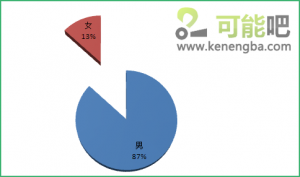
数据显示13%的受访者为女性,87%为男性。这与大多数人的预测基本吻合,中文Twitter圈子阳气过重,男性推友应该鼓励身边的女性朋友上Twitter,不然,按照这个比例,在Twitter上找到女朋友的几率不会很大。
According to the data, 13% of the respondents is female and 87% is male which is consistent to most people's observation. Chinese Twitter circle is too masculine. Male twitterers should encourage your female friend to use Twitter or else chance for meeting girl friend here would be very low.
数据显示大多数推友的年龄在21-29岁之间,这部分推友占了将近70%的比例。…在接受调查的推友里,年龄最小的是12岁,最大的为55岁。下面是年龄分布直方图,很明显地,推友的年龄呈正态分布…
70% of the twitterers is between 21-29, the youngest twitterer is only 12 and the oldest is 55. Below is a bar chart on the age distribution. It is in normal distribution.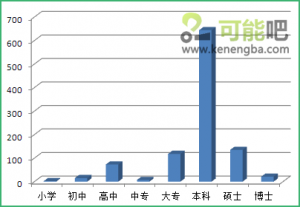
持有或即将持有本科学历的占了中文Twitter用户的绝大部分,硕士学历的推友是Twitter中文圈的第二大群体,接下来是大专学历的推友。
同时我们也应该注意到,一群高中生正在向Web2.0拥抱。
若干年前,有着自由思想的大学生做了一件轰动的事。现在,掌权者怎么可能轻易让大学生上Twitter?
The majority of the users has bachelor degree and the second largest group is master degree holders followed by twitters with tertiary education background.We should notice that a group of high school students is running towards Web 2.0.
Many years ago, liberal minded university students marked our history, the authority will never allow undergraduate using Twitter.
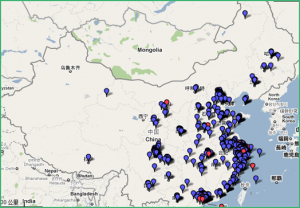
将近一半的受访推友来自北京、上海、广东三地,接下来分别是:浙江、江苏、福建。。。这6个地区的推友占了总数的67%。从地图上看,这6个地区都位于沿海地区,经济相对比较发达。
More than half of the respondents come from Beijing, Shanghai and Guangdong followed by Zhejiang, Jiangsu and Fujian… The 6 regions constitute 67% of the respondents. They are located along the coastal line and economically more well off.从数据里可以看到,学生推友占了将近30%,然后是“计算机软、硬件”行业15%、“互联网产品相关”12.5%。如果将后两者归类为IT行业,那学生和IT人士占了推友的50%以上,他们是Twitter的主力军。
The data shows that about 30% of the respondents are students followed by computer software and hardware sector (15%) and then Internet related production sector (12.5%). If we group the two into I.T industry, then we can see that students and I.T professionals are the key player in Twitter community as they together constitute more than 50% of the respondents.As for the question on why they choose to take all the trouble for getting access to Twitter, here is a list of their answer:
1、了解真相,开拓视野
2、用微博客随时随地记录生活、分享生活
3、获取资讯,关注民主政治
4、因为饭否被关了
5、每周要给火星同事扫盲(误),把twitter作为各种八卦消息来源
6、开始是为了follow喜欢的球星,后来渐渐喜欢上twitter的一切!
7、觉得twitter的交流方式很有趣
8、在这里信息无审查,信息最原始的传递逻辑得以在twitter保留
9、打发时间
10、看腿叔(@kcome)
11、我从可能吧知道这个东西,我觉得作为一名党员应该尽可能的多了解世界。
12、在这儿我想说什么就说什么。而不用去考虑,这句话我该不该说,该怎么说。会不会说过了而触犯了什么“法律”。 这就是自由的味道,我喜欢这种味道。
13、在政治灌输很严重的军校,Twitter让我能保持独立的公民意识。
14、大学老师介绍
15、这里说谎的人少
16、工作需要
17、新闻系学生的必然选择
18、仅凭对新技术的热爱
19、最早是因为某暗恋的女生在上Twitter,所以我也…
20、为什么不上twitter?1. To know the truth and open the horizon
2. To record and share my life
3. To get information and show my concern about democracy
4. Because Fanfou has been shut down
5. To get all the gossips in order to clear information for my colleagues who live in Mars
6. Follow the planet that I like and later fall in love with everything in Twitter
7. The exchange in Twitter is very interesting
8. No censor here and we can preserve the primary mode of communication here
9. To kill time
10. To follow uncle leg (@kcome)
11. I learn about twitter from kenengba and feel that as a party member I should learn more about this world
12. I can say what I want here without considering whether I should say this or how I should say this. Whether or not I would violate any law. This is the taste of freedom that I enjoy.
13. In an army school where ideological control is very strict, Twitter allows me to keep my independent citizen conscious.
14. University teacher introduces me here
15. Less liars here
16. Job requirement
17. An inevitableness choice for journalist student
18. Passion for new technology
19. At first I come here because I have a crush with a girl who is using Twitter…
20. Why not? -
China: Anti-peaceful evolution and information freedom
Geremie R. Barmé from China Beat contextualizes the recent debate between China and U.S on Internet freedom around Google incident under the CCP's struggle against the peaceful evolution of its political system back in 1959 and 1989.
-
Japan: Sit-In Protest against US Helipads in Okinawa
TenThousandThings from Kurashi blogs about a sit-in protest against the construction of US Helipads in Yanbaru Forest, a mountainous region full of biodiversity in the northern part of Okinawa.
-
Japan: Micro-gardens
Palmsundae from Tokyo Green Space blogs about the micro-gardening practice in old Tokyo neighborhood.
-
South Korea: Why do Koreans like cute things?
Ask a Korean! tries to answer the question on why Koreans like cute things.
-
China: Animal cruelty law
Joel Martinsen translates the mainstream media's discussion on drafting of animal cruelty law. The new law may ban the selling and eating of dog and cat's meat.
-
Japan: Peace walkers
TenThousandThings from Kurashi reports on a 4-month peace walk from Okinawa to Tokyo calling for the abolition of nuclear weapons and other weapons of mass destruction.
-
Japan: The Japan-China-U.S. trade relation
MTC from Shisaku shows the changes among Japan, China and U.S relation with a statistical illustration on foreign trade.
-
Japan: Website Localization
Motoko discusses the need for foreign websites to be localized into Japanese: If your website is not in Japanese, it would have little to no chances of being found in the search results in Japan.
-
South Korea: Mediact to be dismantled
Mediact, South Korea's first public media center, will be dismantled in 1st of February under the Lee Myung Bak's government (more from interlocals). A petition has been launched to save the center.
-
China: Sexism in Han Han’s Film Review?
C. Custer posts the question on whether Han Han, a famous Chinese writer, is using sexist language in his comment on the woman director of the recent movie Confucius.