Author: Pan-Afro-Man

  • Russia’s Population Now Increasing?

    http://prbblog.org/?p=90

    Russian Prime Minister Vladimir Putin has long advocated a rise in Russia’s very low birth rate. In 2007, with his bidding, the government took the dramatic step of providing women with a $9,000 payment for the birth of a second child. The incentive certainly seems to have worked. In 2007, births jumped nearly 9 percent over 2006 and, in 2008, by 6.4 percent over 2007. Russia’s total fertility rate (TFR) now stands at 1.49 (2008), up from its nadir of 1.16 in 1999. And several other developments may combine so that Russia’s population size avoids the decline begun in 1995. This was not lost on Mr. Putin, who has been widely quoted celebrating the prospect of a year with no decrease.

    Official demographic data have been released by the state statistical bureau, GOSKOMSTAT, for January 2009 through November (Russia releases vital statistics very quickly). Those show an increase in births for the January-November 2009 period of 2.8 percent, lower than the previous two years but still an increase. At the same time, deaths dropped by 3.7 percent so that natural decrease, birth minus deaths, was “only” -224,310. I say only because that figure was an astounding -958,000 in 2000. So for population to grow in 2009, net international migration will have to offset that -224,310. That certainly seems to be well within reach since net immigration from January to October was reported as 210,446, much of it from Central Asia and other former Soviet republics which the Russians often refer to as the “near abroad.” Based on typical migration patterns in Russia in November and December, about 250,000 net immigration can be expected. So, population-watchers, look for some celebrations in Russia later this month.

    But, hold the phone. The Russian TFR, at about 1.5 is still very low and the country still depends upon non-Russian migration to keep its head above water. But there’s more and it’s even more important. Russia’s age-sex pyramid took a body blow during the period of high natural decrease. The number of young people moving up the age ladder into the prime childbearing ages is much less than those now in the childbearing years. As of January 1, 2009, there were 6.2 million females in the age group 20-24. The 15-19 age group was only 4.5 million and both the 5-9 and 10-14 age groups taken together totaled 6.5 million. As those younger age groups begin childbearing, births will certainly decline even if the TFR rises. Beyond that, deaths will rise as the elderly population grows significantly in size.

    It may be a short party.

  • Dance moves

    Just showing some relation of African Diaspora dance moves to African’s.

    African American dance moves

    Cakewalk Dance
    http://www.youtube.com/watch?v=7sDnVIeSn_k

    Tap dance
    http://www.youtube.com/watch?v=8HDjfbkiduY

    Lindy hop
    http://www.youtube.com/watch?v=o5T8XauYhlU

    Swing Dance
    http://www.youtube.com/watch?v=HD_Bs9egsS4

    The Charleston (90’s version)
    http://www.youtube.com/watch?v=UFSyBBglmpI

    Disco (Early Disco)
    http://www.youtube.com/watch?v=cIojbjDb6Bg

    Poppin & Lockin (The Origin not that acrobatic stuff you see to day)
    http://www.youtube.com/watch?v=5uEdGuOKawQ

    The Robot
    http://www.youtube.com/watch?v=Mj71HPMSOsY

    I don’t know what this is but I love the soul train line
    http://www.youtube.com/watch?v=uOAHKmfwpZ0

  • Black population becomes the majority in Brazil

    http://en.mercopress.com/2009/04/25/…rity-in-brazil

    Black population becomes the majority in Brazil

    Brazil and its almost 200 million population is no longer a country of white majority. The credit now belongs to the 49.6% black or mulatto population compared to the 49.4% defined as white and this is set to increase in coming years with that percentage increasing to 54, according to a recent report from the Rio do Janeiro Federal University.

    Professor Antonio Paixao from the Rio University’s Economy Institute believes that since Brazil is no longer a white majority country, “we need a policy of diversity”, which is a great challenge for the political establishment.

    The black birth rate is also higher than that of the whites or Europeans descendents, so the big question is whether Brazil is prepared to face the fact that blacks and mulattos are becoming a solid majority, and how this will influence legislation, asks Paixao.

    But current reality shows another picture, with a considerable degree of discrimination for the blacks: the basic food basket for a black person demands 76 hours of work compared to the average 54 hours for a white person.

    Similarly illiteracy among blacks runs as high as 20%, but only 6% for whites.

    Since Brazil was the last country in the region to grant slaves freedom in 1888, blacks have always been at a disadvantage in education and work opportunities, points out Paixao.

    Similarly, access to tertiary education for blacks is far more up road, since most of them are condemned to work to subsist, while white families can afford to pay for their children’s education.

    The administration of President Lula da Silva is credited with having invested heavily in the social and economic integration of the black people, for example by imposing a policy of quotas for blacks in universities.

    Nevertheless power in Brazil rests in the whites who hold the strategic posts in politics and the economy.

    But some blacks have had outstanding careers, mainly in sports and the arts. One of them is the world famous former football star Pelé and another the musician-composer Gilberto Gil. Both have held cabinet posts, but as a white initiative towards supporting diversity.

  • African Gas Stations?

    When will America start seeing African gas station in America because I’m really getting tired of the mistreatment of Black Americans in the non-black corner stores & gas stations? How big is the playing field for Africans in the Oil business
  • Favorite African Centered Books!

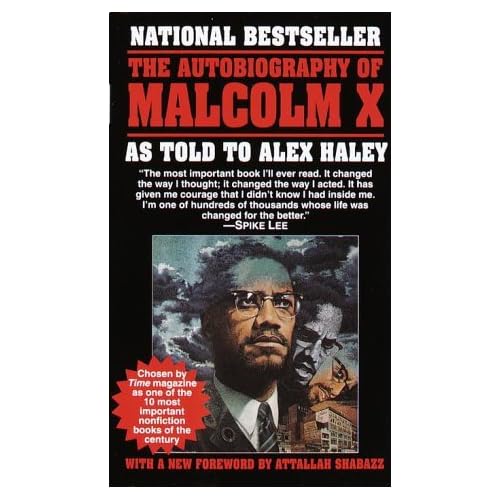
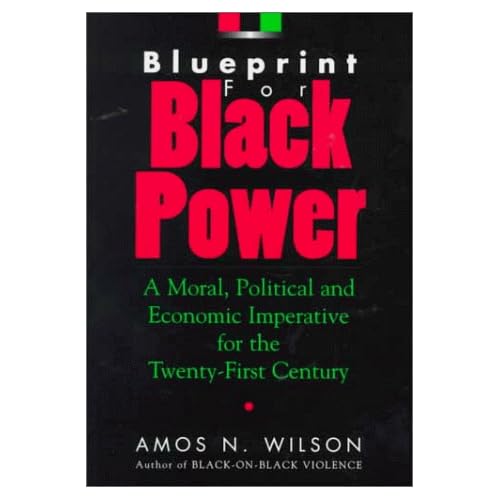
    This Book I will be sharing with my future children & hopefully they will do the same. I love this book!

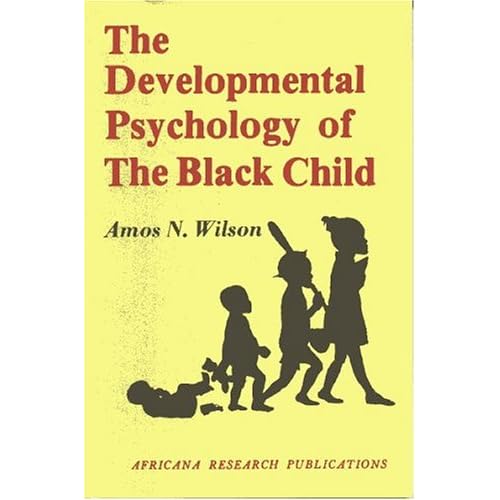
    This Book was actually Ban By the FBI for 30 years… I stole my copy from my father lol

    This is my favorite comic book character! Seriously the Comic book hero is better than BLADE! Plus the story is 2x’s better than most comics! Its won several awards

    So whats your Favorite Books?