Author: RLMiller

  • Reading tea leaves on a climate bill: Democrats grow spines?

    BREAKING out! Small spines on Democratic Senators! Having said “yes” to virtually every demand to water down the climate bill, the Democrats most in favor of the climate bill are finally beginning to say “no.” And not a moment too soon, as Senators John Kerry (D-MA), Lindsey Graham (R-SC), and Joseph Lieberman (I-CT) prepare to release their bill within the next two weeks.

    Rumor has a climate bill being written during spring recess and introduced in mid-April. Lots of meetings have taken place over the last few weeks. Senate leaders huddled on Tuesday and Senate leaders huddled more on Wednesday, with bland official statements of “progress being made.” Although rounding up all the leaks, spins, and flat-out falsehoods on the climate bill is a daunting job, some truths have begun to emerge.

    1. Timing and Politics:

    After healthcare reform, financial regulation bill is in the batter’s box. On deck: climate or immigration? Early reports of Charles Schumer (D-NY) arm wrestling Kerry for priority seem to have dissipated. It’s smart politics to take up climate first. The politics of the climate bill are as regional as they are ideological. Pass a potentially controversial climate bill now so that people have time to forget, or get outraged by the next big thing, over the next six months. And in the fall, a big push on immigration will energize Latino and other voters while exposing the teabagging right’s hard white underbelly of xenophobia and racism.

    Last Tuesday, Senator Tom Udall and 21 other Senators petitioned Reid to move forward on the climate bill. The fact that the letter was written is mildly interesting. The fact that the letter was signed by a number of moderates and fence-sitters is arguably more interesting. Mark Begich (D-AK), Sherrod Brown (D-OH), Maria Cantwell (D-WA), Debbie Stabenow (D-MI), and Jon Tester (D-MT), all considered “fence sitters,” signed. (All descriptions of Senators are taken from the E&E list (2 pg pdf).)

    2. Senators Say No to Republican Demands, Part I: Showdown in the Arctic Averted

    A couple of weeks ago Lisa Murkowski (R-AK) floated the idea of drilling in the Arctic National Wildlife Refuge. Reaction was immediate: a nonstarter, said Lieberman. (I’ve previously speculated that Murkowski made her demand so that her fallback position — a vast expansion of Arctic offshore drilling — would appear reasonable in contrast. Keep that in mind as you read on.)

    3. Senators Say No to Republican Demands, Part II: No to Offshore Oil Expansion?

    Last Tuesday, a group of ten coastal state Senators who support the climate bill warned that they would oppose a climate bill if it greatly expands offshore drilling. The ten Senators in need of carrots are both Senators from Oregon, Wyden and Merkley; Bill Nelson of Florida; and representing the northeast, Robert Menendez (D-NJ), Sheldon Whitehouse (D-RI), Barbara Mikulski (D-MD.), Ben Cardin (D-MD), Frank Lautenberg (D-NJ), Ted Kaufman (D-DE), and Jack Reed (D-RI).

    Finally, Democrats show spine instead of acting like doormats for Republican ideas of clean coal and more drilling!

    The Sierra Club’s new leader, Michael Brune, is helping the Senators flex their spines by warning the Senate that the Club might pull its support if the final bill contains unaccpeptable provisions, such as expansion of offshore drilling and gutting of the Clean Air Act’s authority.

    4. Structure and Substance of the Bill

    Cap and trade is dead, reads the NYT’s eulogy. (Just like healthcare reform died in January?) The final bill may incorporate elements of the Cantwell-Collins cap and dividend CLEAR plan in which permits are auctioned off (not given away) and partial rebates given back to consumers. For that consumer-friendly approach, AARP has announced its support for CLEAR.

    Per anonymous sources at Reuters, last Friday night’s news dump contained details: free permits, $10 billion to encourage “clean coal” (note that this is actually a fairly cheap unicorn to chase), and replacement of the renewable energy standard with a clean (renewable plus nuclear) energy standard.

    And today, Politico leaks more details: a carbon tariff, which midwestern Democrats consider essential (but Obama opposed last year), a carbon tax on gasoline (which Graham satys won’t hurt consumers because they’ll get those CLEARish rebates), and preemption of California and other states’ emissions standards.
    It must be emphasized, especially with anonymous sources, that these details may or may not be accurate when the final bill is unveiled. Today, Climatewire reports that permits won’t be free — instead, the food fight over allocations is just beginning, and is expected to go down to the wire. Either Reuters or Climatewire is right on permits/allocations, but not both.

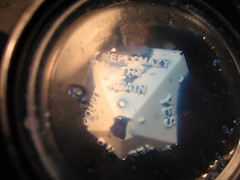
    5. So will a bill be passed this year? Consult the Magic 8 ball ————>

    Who’dathunk that passing healthcare reform would be so good for the orthopedic health of Democratic Senators?

  • Hike On! Stewart Udall’s Legacy from Sea to Shining Sea

    Secretary Stewart Udall with President John F. Kennedy

    Stewart Udall, Secretary of the Interior under Presidents Johnson and Kennedy, passed away at the age of 90 on Saturday. Rather than repeat obituaries’ biographic details, this diary pays photographic tribute to his life’s passion, our wild public lands.

    Although a quintessential Westerner who began public life as an Arizona member of Congress, one of his first successes in Washington in 1960 was in New Jersey. He championed citizens who wanted to replace Newark Airport with a larger one, and the creation of the Great Swamp National Wildlife Refuge was the result.

    As Secretary of the Interior, Udall is credited with helping to pass the Wilderness Act in 1964. Legalese can make for dry, dusty reading, but the Wilderness Act’s definition verges on poetry:

    A wilderness, in contrast with those areas where man and his own works dominate the landscape, is hereby recognized as an area where the earth and community of life are untrammeled by man, where man himself is a visitor who does not remain.

    Great Swamp National Wildlife Refuge, New Jersey

    During the Kennedy and Johnson administrations, public lands expanded immensely, with more than 60 additions to the park system totalling 3.85 million acres, thanks to Stewart Udall. He oversaw the creation of remote Guadalupe Mountains National Park, the highest point in Texas, featuring stark contrasts between mountain and desert and the world’s finest example of a fossilized reef.

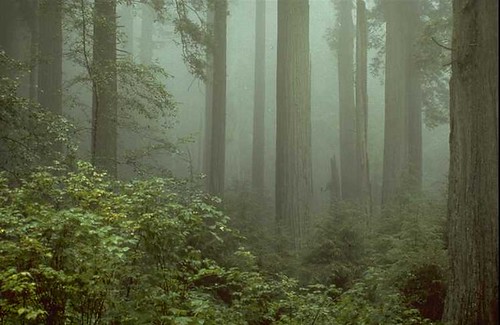
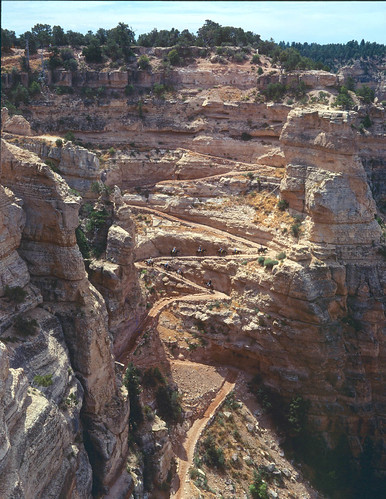
    North Cascades National Park, with its high cold peaks and glowing turquoise lakes, is part of his legacy. So are the misty, mystical Redwoods National Park in California, home of the world’s tallest trees (below). He also deserves credit for expanding types of units (beyond national parks and monuments), such as the National Trails System (including the Appalachian Trail) established in 1968; the country’s national seashores, including Point Reyes, Cape Hatteras, Padre Island, and Cape Cod National Seashores; and national recreation areas such as the Santa Monica Mountains National Recreation Area in Los Angeles (which keeps me sane). The Land and Water Conservation Act of 1965, which funds parks as big as the Grand Canyon and as small as your kid’s soccer field from federal oil lease money, shows legislative ingenuity.

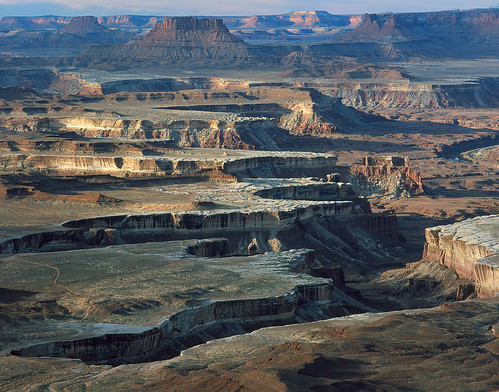
    The vast, gorgeous, rugged labyrinth of Canyonlands National Park was established with his help.

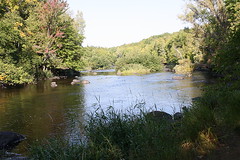
    The next time you take a whitewater rafting trip on the Rogue River in Oregon, salute Stewart Udall. If you’d prefer to fish for sturgeon on the Wolf River in Wisconsin (shown) or float the Verde River in Arizona or the Merced River in Yosemite Valley, thank him too for his role in passing the Wild and Scenic Rivers Act.
    Not content with reshaping the great wild lands of the United States, he also helped to save Carnegie Hall from destruction.
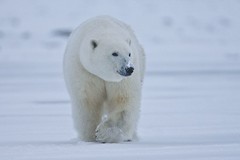
    He played a role in the National Wildlife Refuge System Administration Act of 1966, arguably the most significant refuge law since the Migratory Bird Act of 1929 first codified refuge administration. Without that law, there would be no Arctic National Wildlife Refuge, no Key West National Wildlife Refuge, nor 56 refuges between, all established during his tenure.

    President Obama’s statement:

    For the better part of three decades, Stewart Udall served this nation honorably. Whether in the skies above Italy in World War II, in Congress or as Secretary of the Interior, Stewart Udall left an indelible mark on this nation and inspired countless Americans who will continue his fight for clean air, clean water and to maintain our many natural treasures. Michelle and I extend our condolences to the entire Udall family who continue his legacy of public service to this day.

    In honor of work by him and his brother Morris Udall, both patriots who loved their country from sea to shining sea, the easternmost and westernmost points in the country bear their names.

    Two details stand out from the New York Times obituary on a life well lived, priorities in order, optimistic, resilient and relevant to the end. From his last Grand Canyon whitewater trip, he hiked from the river to the canyon rim, refusing a mule, 10 strenuous miles uphill, to enjoy a well-deserved martini. At the age of 84. And a recent letter to his grandchildren urged them to focus on “trying to transform our society to a clean energy and clean job society.”

    Tags: , , , , , ,

  • Why Does Congress Want to Raid Our Best Carbon Bank?

    On its face, the bill is my-eyes-glaze-over routine: H.R. 2099 and companion bill S. 881 “will provide for the settlement of certain claims under the Alaska Native Claims Settlement Act, and for other purposes.” The bill will permit an Alaskan Native corporation, Sealaska, to complete lands selection process granted under a 1971 law. Sealaska needs the Congressional decision because it wants to choose lands outside the original boundaries of the Act. If the bill passes, Sealaska will be permitted to log 80,000 acres of the Tongass National Forest.

    Or, rob our best carbon bank of 80,000 acres of carbon storage.

    As background, the Alaska Native Claims Settlement Act of 1971 resolved all claims of Alaskan Natives by creating 12 regional corporations, including Sealaska in the southeast. Sealaska owns 290,000 acres in Southeast Alaska, making it the largest landholder in the Juneau-Ketchikan region. The pending legislation is portrayed as tying up of loose ends by giving Sealaska certain lands not within the original 1971 law. Sealaska wants lands on the north side of Prince of Wales Island within the boundaries of the Tongass National Forest.

    At first blush, this is purely an internal Alaskan story. Some local residents oppose the bill because it would make private certain public lands currently being used for subsistence living. Others opine that the bill is fair. Mudflats exposed the attitude, by one state legislator who also happens to sit on the board of the Sealaska Corporation, toward conflict of interest: “turn over the trees and no one gets hurt.”

    However, the land at question is currently part of the Tongass National Forest, the nation’s largest national forest. A new Wilderness Society study lists the Tongass ninth on a list of top carbon-storing national forests, or carbon banks. The thick, wet forests of the Pacific Northwest, including the Tongass, store 1 1/2 times as much carbon as the entire amount of carbon dioxide burned in fossil fuels throughout the country each year. Old, wet cool temperature forests such as the Tongass top even the tropical forests of Indonesia and Brazil for storing carbon.

    Timber harvesting has been the cornerstone of Sealaska’s economic enterprise. Sealaska’s wholly owned subsidiary, Sealaska Timber, boasts that it’s the largest timber supplier in Alaska and North America’s seventh largest exporter of timber (in other words, its wood is shipped overseas). Although Sealaska portrays S. 881 as a struggle to obtain a small fraction of Native lands, residents are convinced that Sealaska will log whatever land it gets from S. 881. Once land is transferred out of the Tongass National Forest to Sealaska, it’s no longer part of any forest management plan (or national politics of same) and its trees can be harvested at will.

    The Wilderness Society asks for action to oppose S. 881 and H.R. 2099. The House Natural Resources Committee will hold a hearing next Wednesday, March 17.

    The need to do right by Alaskan Natives needs to be balanced against the need to do right by the planet. Rather than a simple no vote, Congress could consider the concept of reducing emissions from deforestation and degradation (REDD) in the bill. If we’re willing to consider paying Indonesia and Brazil not to cut down their tropical forests, perhaps a similar solution for any land transferred to Sealaska can be found close to home? The Wilderness Society believes that the economic realities in the Tongass work in favor of conservation, recreation, and carbon sequestration, and against logging. Or, as any Goldman Sachs banker knows, it’s better to keep assets in the bank than to give away parts of the bank to a raider.

    Tags: , , , , , , , ,

  • Endangered Sage Grouse Loses to Energy Interests

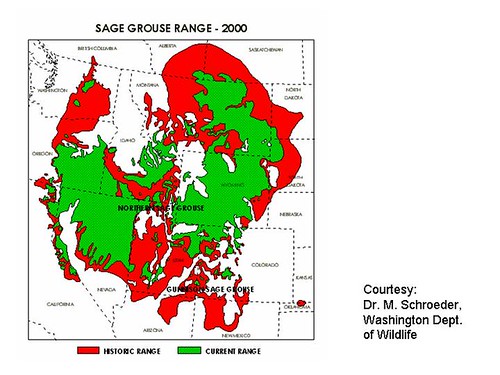
    The Fish & Wildlife Service has just announced that the sage grouse is a candidate for listing as an endangered species, but its listing will be precluded because its habitat overlaps with oil, gas, and wind development across the West.
    As Representative Jason Chaffetz (R-UT-03) states, classily:

    The only good place for a sage grouse to be listed is on the menu of a French bistro.

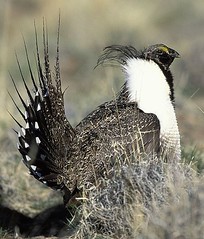
    The sage grouse, also known as sagehen, is well known for its courtship rituals. Male birds strut, flex, preen, puff up their pecs, and grunt like Muscle Beach bodybuilders.

    The sage grouse lives in cowboy country — the sagebrush, plains, and high deserts across the West, from California’s Owens Valley to the Dakotas. One bird needs a lot of territory — it’s sensitive to any activity within four miles of its nesting grounds. And its territory has been covered by an intricate spiderweb of humans and their accoutrements: roads, pipelines, cattle, sheep, prairie fires, invasive plants such as cheatgrass, oil derricks, and (mostly proposed) wind turbines. The grouse is considered a keystone species, meaning that its health indicates the health of an entire landscape. It’s almost no surprise that its numbers have dropped from 16 million to a few hundred thousand.

    The bird is no stranger to litigation. The Bush administration refused to list the bird following a petition. The Western Watersheds Project won a lawsuit in which the judge held (this is a shocker!) that a senior political appointee illegally tampered with the scientific determination whether to list the species. The Bush administration then decided to -run out the clock- engage in further studies until Obama took office. The listing has been described as a litmus test for conservation in the Obama administration.

    Today, the Obama administration announced a compromise in which the bird is listed as “warranted, but precluded” by higher priorities:

    The Interior Department says it won’t list sage grouse as endangered or threatened but will classify the bird among species that are candidates for federal protection.

    The finding is good news for the wind energy and oil and gas industries, which will still face scrutiny in grouse habitat but will have more leeway than if the bird were listed.

    As the New York Times editorialized earlier this week, the “warranted-but-precluded” status holds out the promise, or threat, of more stringent regulations, and requires good faith efforts from affected state governments and the Bureau of Land Management.

    The Fish & Wildlife Service press release spins it as “expanding common sense efforts” to preserve its habitat, hoping for voluntary conservation by private landowners “while ensuring that energy production, recreational access and other uses of federal lands continue as appropriate.”

    In other words, the sage grouse is likely to join the pika. Poor silly bird never had a chance, going up against our energy needs.

    Tags: , , , , , ,