I recently wrote about some strange but awesome Windows 8 ads geared towards the Japanese market. It appeared that people across the internet were pretty down on them as the ads didn’t say anything about the OS. My point in the article was to show that there are different types of advertising and sometimes companies need to get our attention in some pretty unusual ways.
I’ve been very critical of Microsoft’s advertising approach with Windows 8 and especially Surface. Although the company has increased the frequency of its advertising and is advertising more of its products, there was one area in particular where it was lacking: a strong focus on features against competitor products. None of this was more apparent than its approach with Windows 8 and Windows tablets. I previously wrote,
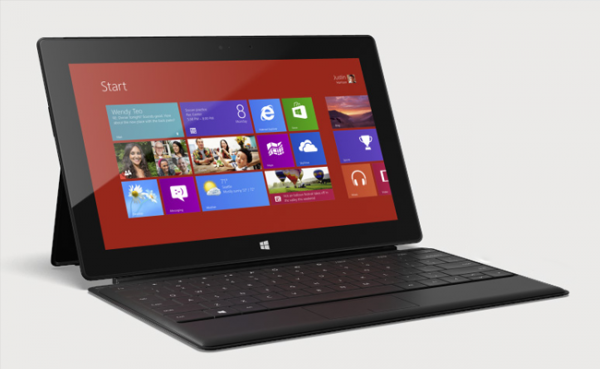
I’d still like to see Microsoft focus more specifically on features of these products that make them better than the competition. Take the Surface commercials for example. I absolutely loved the way Microsoft first introduced us to the product: remember the commercial with the dancing school girls? Loved it. And now the company is running a slightly different twist on that with dancing business users to introduce the Surface Pro. Almost six months on the market and all we know about the Surface is that it clicks…and you can dance with it.
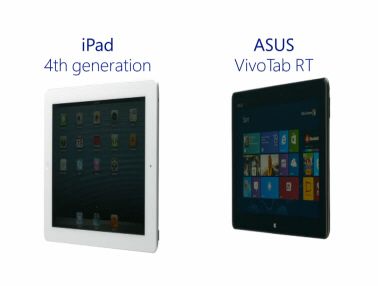
Microsoft wasn’t saying much about why the typical consumer should choose the Surface or any Windows 8 mobile device above the iPad. Until now. This week two commercials were uploaded to YouTube. Both completely focus on features and clearly explain why consumers should choose Windows devices over an iPad. One of the ads, which my colleague Wayne Williams looked at yesterday, is quite funny as it uses Siri to take shots at iPad weaknesses, and the other, embedded below, simply pits the iPad against the ASUS VivoTab RT and compares thickness, weight, suitability for work use, multi-tasking, external connections, and the ability to print. Naturally the VivoTab wins hands down.
For those of you who don’t like the fact that Microsoft is taking a dig at Apple, I remind you that this is precisely the approach that Apple took to get attention for Mac OS. Remember the “I’m a Mac” switcher campaign? I thought so.
So what do you think? Is Microsoft on track with these? Will these convince consumers to go out and buy Windows devices?
On May 21, Microsoft unveiled its next-generation game console, the Xbox One. This hour-long sneak preview into what’s coming soon for the entertainment platform gives us a pretty good picture into how serious Microsoft takes the living room. While the devices-and-service company struggles in mobile and other computing devices, it has pretty good head start in the living room, and the message to competitors: We’re ready for a fight.
Microsoft positions the new console as a serious player in the living room. Xbox One shucks tradition to the wind as evidenced by the fact that the very first demo showed off its multimedia prowess: Fast app switching, made capable by three operating systems; deep Skype integration and a drastically improved natural interface layer powered by Kinect.
Instead of telling the same story as Apple TV, Roku, and Boxee by playing in a market dominated by devices that connect TVs to other services like Netflix, Hulu Plus, and many others, Microsoft decided to tell its own story and change the conversation. Deep integration into the live TV experience opens up the floodgates for all sorts of new usage scenarios and interactive TV experiences.
The little Microsoft has shared so far is quite compelling. What we don’t know is how much it will cost; what the developer story will be; how gaming platform enables new experiences (i.e. real-time multiplayer multi-device gaming) and a host of other questions. Microsoft did show enough to let competitors know that it will not cede this space easily. In enabling live TV through the console, making the content interactive and the device natural to use, Microsoft effectively changes the conversation in living room entertainment.
Amazon is said to be entering this space. What remains to be seen is whether the retailer will create a small Roku-like box that provides easy access to its content and other connected services. Regardless, no one seems to be even close to the media capabilities of the Xbox One. Is the Xbox One a game changer? I don’t know. However, I definitely think it’s a conversation changer.
This is how you sell a tablet. Tuesday evening of May 14, Microsoft debuted a new commercial for the Surface RT that finally explained the benefits of the tablet. No dancers. No super cool music. Just Microsoft talking about why the Surface RT is the next device you should own. The company emphasized the included USB port, kickstand, keyboard, and the single biggest sell of Surface RT, the included Office 2013 install. It sold the Surface as the power of a computer in the package of a tablet.
Is this not precisely what I called on Microsoft to do in my previous article about those odd (but awesome) Windows 8 ads? In that article I told the story about a guy who was working in a coffee shop on his Surface when someone walked up to him and said, “Is that the tablet that clicks?” He recognized the product from the commercials, but seemed to be unaware of anything other than its clicking. I wrote,
This situation underscores the reality that people just aren’t aware of what the Surface actually is and how much more it is than just a tablet. If Microsoft can get this message out by focusing on features against competitor devices like the iPad, people will continue to be confused.
This commercial will easily solve the problem that consumers have of trying to understand the value of the Surface. I have not seen the commercial since, so it was probably just a trial run by Microsoft just to test the waters. I for one am impressed and Microsoft definitely needs to create more of these commercials for the Surface Pro as well as Windows 8 in general.
I tried finding this commercial on YouTube but was not successful. If you find it, let me know and I can update this post.
Have you seen this commercial? Do you think it properly sells the advantages of the Surface RT?
Creating original content is the big trend with major tech companies like Netflix and Hulu. But recently, others such as Amazon and Microsoft have thrown their hats into the original content creation ring. Nancy Tellem, a former CBS executive, will oversee the creation of original entertainment content for Xbox Live. Tellem will be in charge of a new studio in Los Angeles. Microsoft is already rumored to be reviving the canceled Heroes series. This is not a bad idea as we already know that Netflix has revived the popular Arrested Development TV show that was canceled by Fox.
This week a few shows that were popular in the LGBT community were canceled: Smash (NBC), New Normal (NBC) and Happy Endings (ABC). The last one, Happy Endings, is rumored to be picked up by the USA network. This would be a perfect show for Microsoft because while Heroes is one of those shows that certainly fits the traditional Xbox demographic, Happy Endings is one of those shows that can appeal to the existing demographic as well as a new one.
The show has been described by some as a modern take on the popular program Friends. The show is about the daily antics of a diverse group of friends. While not exclusively about gays, it does include a gay character that plays one of the main roles.
Happy Endings will allow Microsoft to appeal to a more diverse demographic, something they need as the Xbox enters a new era of competition among TV connected devices and services. Xbox will face some serious competition in the living room this year, and Microsoft should be as aggressive as possible in creating original content. Picking up canceled TV shows that had a popular cult following (as Happy Endings) is a great start.
There’s more than one way to advertise a product and while I am a big fan of the approach that specifically focuses on features, I understand there is a need for other approaches. Sometimes you just need to go for the pure emotional response. In the case of the ads released by Microsoft today which focus on the Asian market that seems to be what they were going for. Take a look.
I’ve been a critic in the past of Microsoft’s approach to advertising its various products. I’ve always felt they never did enough advertising and didn’t advertise at the right time (popular prime-time TV shows or big sports events) but that has changed. I’ve seen Surface, Bing, Windows Phone, Windows 8 and Outlook.com commercials during primetime, during the NBA playoffs, and even at random times on random networks on cable TV. Microsoft has definitely increased the frequency of its advertising.
However, I still have one problem. I’d still like to see more focus specifically on features of these products that make them better than the competition. Take the Surface commercials, for example. I absolutely love the way they first introduced us to the product: remember the commercial with the dancing school girls? Loved it. And now they are running a slightly different twist on that with dancing business users to introduce the Surface Pro. Almost six months on the market and all we know about the Surface is that it clicks — and you can dance with it.
I think the general public is well aware that the Surface exists and if these commercials are primarily aimed to introduce us to it, then I believe they have so far succeeded. What we need now is not more dancers. What we need is to know why we should buy the Surface instead of an iPad. Tell us specifically in words why Surface is better.
The Amazon Example
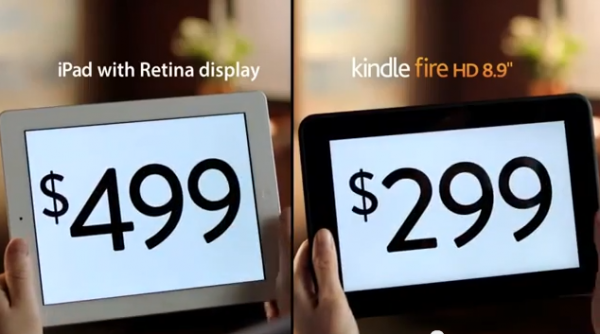
This Amazon commercial may be one of my favorite iPad competitor commercials. In it, they focus on the displays between the two devices. They don’t say their display is better (because it isn’t from a technical perspective). Instead, they focus on the fact that the average person can’t tell the difference between retina and non-retina displays. Just as you’re about to say, “why would I buy a Kindle Fire?” they hit you with this:
See for yourself:
Why is the Fire better? Price alone is a major reason at $200 cheaper than an equivalent iPad. Amazon emphasizes the features that the general public can understand, screen and price.
Microsoft, It’s Time
Microsoft should step up and start advertising on features more. Windows Phone is doing this with the Smoked By commercials. They really should be running those around the clock in tandem with the new switcher ads. As they continue their transition into this new era of mobile [link to prev article], this becomes all the more important.
I heard a guy telling a story at work one day about how he used his Surface at a coffee shop and someone walked up to him and said, “Is that the tablet that clicks?” Incidents like this show that Microsoft is getting the word out. But people don’t quite know why the Surface is better. I had a conversation with a friend about Surface and why he should consider buying one, and his response was, “I already own a tablet to surf the Internet with”. When I told him why the Surface is not just a tablet, his perception completely changed.
This situation underscores the reality that people just aren’t aware what Surface actually is and how much more it is than just a tablet. If Microsoft can get this message out by focusing on features against competing devices like the iPad, people will continue to be confused. Even though Surface Pro is not even in the same computing category of an iPad, to the general user, it is.
Microsoft’s marketing is pretty good these days, but a slight change could result in a lot more sales of its mobile devices and really put it on the road towards dominating the next phase of mobile computing.
Many people want Microsoft to die, and the sooner the better. I’m not in that group, although I understand that years upon years of letdowns through viruses, DLL hell, BSODs (Blue Screens of Death) and a myriad of other problems lead many in the tech world (and consumer world, too) to walk away from everything Microsoft. Add to that the growth of the Internet and mobile devices as well as slumping PC sales, and you can see why so many wait with baited breath to see the company go away for good.
Nevertheless, quarter after quarter Microsoft continues to prove that it still has life and isn’t going anywhere anytime soon. In fact, in 2011, CEO Steve Ballmer explained how the company intends to reinvent around devices and services. Seeing that the growth of mobile devices and the services that support them represent the future of computing, Microsoft responds yet again to the changing world of computing.
I say, “yet again” because this is not unusual behavior for Microsoft. The company often is chided for being slow and out of touch with current technology trends but I’m not convinced that’s always the case. Microsoft was there when the personal computer took off. The company was there when it became clear that television would be a major growth area. And Microsoft was there when mobile devices first became a big deal.
Personal digital assistants (PDAs) were introduced in the mid 1980s by Psion. These devices paved the way for the pocket PC where Microsoft was able to gain significant market share with Windows Mobile. Also popular during this time was the Palm Pilot and devices from other manufacturers like Blackberry, HP, Dell and Compaq.
While Palm was very effective at making inroads into the consumer world, it wasn’t until 2007 that things really took a turn. Apple introduced the iPhone. This wasn’t Apple’s first foray into the world of mobile computing. The Newton was a PDA device that was introduced to the world back in 1992 but wasn’t a blockbuster hit.
The iPhone quickly became a smash hit (once the price lowered). It was so successful I sometimes get the impression people believe Apple created a new market, which isn’t true. The transition of mobile devices to the consumer arena was well underway when the first iPhone was introduced. What Apple did do was take an idea that already existed and make it a million times better. Microsoft did this in gaming with the Xbox.
Apple was able to get a huge lead against its competitors in the consumer space. How was this possible? I believe competitors saw the iPhone as just another “me-too” mobile device. However, Apple understood something that either its competitors didn’t or they simply were too slow to act on it and that is, the world was shifting to simple software backed by compelling user experiences. If consumers weren’t looking for it in 2007, the time would come where they definitely would. It just so turns out that consumers (young people) were actually ready for the shift.
The Computing Shift
I previously wrote about how I believe Windows 8 represents an understanding by Microsoft that there is a cultural shift happening that was affecting the way people use computing devices: a shift to a simplified experiences economy and this is the basis for why people are a bit confused and vexed by its Jekyll and Hyde interface.
A similar thing happened in 2007 with the iPhone. The economy of computing was in process of shifting from being services (not to be confused with software services as commonly used today) based to experiences based. In that article I explain what this means:
In a services economy an individual cares about goods but more importantly about the services surrounding those goods.
In an experience economy, services become the stage and goods are the props used to engage the individual in a conversation and immerse them in a story. Services are not enough because they are not as memorable as experiences. Goods and services all remain outside the buyer while for the first-time experiences allow companies to get inside buyers and manipulate them emotionally to purchase their products. Experiences are inherently personal. Through an experience an individual can be engaged not just on an emotional level, but on a physical, intellectual or maybe even a spiritual level. Experiences remain with the individual for some time to come.
Apple saw it coming and made the right moves. Its competitors didn’t.
Another Shift
I believe there is another shift on the horizon. In this shift experiences are still important but they are simpler. I previously wrote:
Windows 8 tells a story that is more representative of a new way of thinking about computing habits and behavior. It is representative of a shift towards an experience economy but more specifically it represents a shift to a new kind of experience economy: a simplified experience economy.
This simplified experience economy would be characterized by (1) a reduction in the number of devices consumers need to carry with them, (2) powerful (think processors) mobile computing, and (3) will be deeply personal.
Simplified Experience Economy
I believe we’re moving towards a computing culture where users will do most of their work on one device. Let me explain.
The current mobile world is dominated by devices that are extremely limited in terms of computing capacity and processing power. These devices are mainly used for consuming content. To create content, users need more powerful devices like a laptop/desktop. Currently users have to carry around a phone/tablet device and a laptop or sit at a desktop to get all their computing tasks (consuming/creating) done. I’ve said before that the zenith of computing nirvana is to be able to not only consume content on today’s super thin mobile devices but create content on them as well, with no compromises. The result is that we carry fewer devices, which greatly simplifies our computing experiences. We’re not there yet, but Microsoft with Surface Pro has gotten us closer than anyone else in the market.
What makes this new computing economy deeply personal? The pervasiveness of more natural ways of interacting with these devices. If you’ve been reading my articles long enough you know I am a huge fan of natural user interface (NUI) technology. The more naturally we can interact with our devices the more personal they become. The ability to switch between input methods based on the real life situation or interface on the screen makes using devices so much easier. I often use the example of my Xbox 360. My couches love to eat my remote controls. So having the ability to use my voice to navigate the interface has been a big plus. A device that once had limited input is made easier to use by expanded input capabilities.
The simplified experience economy will be one where we can consumer and create on devices that can be interacted with in more natural ways. All of this will be made possible by extremely power processors.
Mobile Phase 3?
I am convinced that we are entering a new phase in mobile computing. The first phase saw the introduction of the phone and PDAs. The second phase is characterized by the introduction of the iPhone. The third phase will usher in mobile devices with powerful processors capable of creating and consuming content and multiple input methods (mouse/keyboard, speech, touch, touchless gestures). All is made possible by a cultural shift to a simplified experience economy.
It appears that we are on the precipice of phase 3. With Windows 8 we are now starting to see the appearance of hybrid devices that operate as both a tablet and a full PC. These devices look like a laptop but the screens are detachable. Windows is the perfect operating system to run on these devices. It’s Jekyll-and-Hyde nature, while ridiculed by many, may be its greatest strength. What other OS on the market is capable of allowing users to consume content and create it all within the same device using powerful applications like Photoshop? None.
Surface Pro, while not particularly a hybrid device, is definitely a different take on the tablet. It by far is the best stage for Windows 8 and this new shift in computing. All of these devices allow users to work when they want, for as long as they want, wherever they want and however they want. Perhaps this is what Microsoft means when they call Windows 8 a system with no compromises.
Microsoft on Mobile
Microsoft was a key player in phase 1, wasted away phase 2 and is well positioned for phase 3. I’m not at all declaring a winner especially since there is a lot to be said about the dominant position of both Android and iOS these days. But unless Google and Apple position themselves for phase 3, it’s not a far-gone conclusion that they could be playing catch up to Microsoft.
As we survey the current landscape of mobile computing it’s clear the market for computing devices is in transition from traditional computing devices like laptops and desktops to mobile devices like smartphones and tablets. It is in this current market that Microsoft is struggling to make sales. I often have been critical of the company and its apparent slowness to respond to the competition. However, I now consider the possibility that perhaps Microsoft sees something that most of us does not.
Microsoft officials have said that they see mobile as a long-term play, something more akin to a long journey. That doesn’t sound like the kind of language that should come from a company that believes the clock is ticking on a death watch. It’s quite possible that Microsoft sees the next phase of mobile and wants to get out ahead by giving time to develop and connect newly-built platforms. I don’t have a problem with this at all and in fact I think it’s a great strategy if in fact that really is the case.
There’s no way Microsoft can take down iOS and Android by creating devices and services that merely match parity with today’s market. Some may be more optimistic about Microsoft’s chances in today’s market, but I’m not. As I’ve argued before, the company needs to go beyond today’s offerings in order to really grab the attention of consumers with highly differentiated devices. Microsoft can win round 3 by improving the developer platform by getting as close as possible to write-one-run-anywhere, which should lead to better and more high profile apps, and finally through improving Windows Phone marketing. The new campaign, “Don’t Fight. Switch” is a great start!
Microsoft can win the hearts of consumers. It hasn’t yet but I am pretty optimistic that if the company stays the current course, it will. It just won’t happen overnight. Today if you give people a choice, they most likely will not choose Microsoft. The next phase of computing is coming and for a company that traditionally does some its best work during a crisis, I’m not ready to say it doesn’t have a chance.
The web is now the next great application development platform. Webkit is by far the most popular development “platform” among the web development community. Many are calling for Microsoft to ditch Trident (the rendering engine in Internet Explorer) and replace it with Webkit. I personally think that would be a huge mistake and apparently Google feels the same way or it wouldn’t be forking Webkit as the basis of its own rendering engine.
Nevertheless, the web development community is uber focused on non-Microsoft technologies for development. This presents a big problem for Microsoft and ability to hold on to its development community. I believe Microsoft can overcome this threat if by making a few key moves.
1. Increase involvement in the open-source web development community. Microsoft is already doing a lot of work in this area. But the company can really begin to change negative impressions by contributing tools to make development easier on projects like SASS and Compass, for example. There are many projects Microsoft contributes to. I merely suggest the company thinks about specific tools to make development faster.
2. Be more aggressive at getting Internet Explorer ahead of the competition in standards compliancy. It’s pretty amazing how at version 10 Internet Explorer still lags the competition. Microsoft needs to move a lot quicker to get the browser to at least match the competition. But matching the competition is not enough. I believe the company needs to move ahead of the competition in supporting key features of HTML5/CSS3. Internet Explorer should become the model of standards-compliant browsers.
3. Make HTML5/JS a first-class programming citizen. I think one of the best moves Microsoft made last year is to allow apps on Windows 8 to be developed using HTML/JS. This is a big deal because Microsoft needs to hold on to as many developers as possible and make it very easy for new developers to transition to its platforms. The ability to use languages that are in widespread use today is a major plus for Microsoft.
4. Write once, deploy everywhere. The ability to write an app one time and deploy it across any platform is the nirvana of app development. We seem to be a long ways off from this. I’d love the ability to write an application in HTML/JS one time and have it automatically adjust itself for the desktop, laptop, tablet, phone and TV screen. Some believe this to be a pipe dream. Perhaps so. However, the closer we can get to it, the better.
Those are my top-four picks for what I think Microsoft can do to hold on its developers. What do you think? Is Microsoft in a crisis with developers or is everything easy peasy and the company has nothing to worry about?
Xbox is due for a refresh this year and it’s a good time to write my wishlist. I’ve been accused of being a Windows fanboy, which I’m not. I’ve also been accused of being a Windows Phone fanboy. No again. But I’ve never been accused of being an Xbox fanboy, which I absolutely am.
With the Xbox, Microsoft has a stellar platform on its hands. The console has gone from a third place alsoran to a major player in the console wars: a strategy Microsoft desperately needs to adapt to Windows Phone, but that’s a different article. As the world of computing shifts to mobile, so is gaming, allowing companies like Apple to get into the business. What do vendors that build consoles need to do to adjust their strategy? I can’t say much for Sony or Nintendo because I don’t use those platforms anymore. For Microsoft, here’s my wish list for the next Xbox platform update that I think will allow it to remain a major gaming industry player despite the shift to mobile computing.
Fix Xbox Music/Video
This has to be my single biggest disappointment from the Xbox team. As a fan, I have never felt more let down then when this turd released. Zune worked very well, despite some key features like cloud music, or playlist syncing between devices. Xbox Music as it stands right now is almost useless and for those of whom were former Zune users, Microsoft owes an apology. Music match barely works. Playlist syncing issues/complaints/support requests go unanswered by Microsoft.
Xbox Music should be the service that takes down all the other players in this space. My wish is for a social component that lets me see what my friends are listening to and be able to share playlists with them. But here’s the problem with that. There aren’t that many people out there who actually use Xbox for music. None of my friends do. Almost all of them are on Spotify. So how do they get around this? Perhaps, hook into the Spotify service (assuming the API is open and will allow this) and expose what my friends are listening to or perhaps do it through Facebook for those friends who publicize their listening habits through that service.
Also, I wish for Microsoft to release a cloud music locker that allows me to stream my music to whatever device I am using. Fix playlist syncing because right now it doesn’t work. If I create a playlist on my PC it should automatically sync to my phone, Xbox or tablet.
For Xbox video, please release a service that allows videos I purchase on one device to be playable on others. Enable more SmartGlass capable content and make them easily discoverable, and if you need to charge a dollar more for it, that’s fine, but please add more content.
Can we get a subscription service for video? I realize Hollywood content producers are the major barrier here so I understand if this is a pipe dream that will never happen. But something has to be done to differentiate Xbox Video from all the other services out there.
Microsoft has officially announced that it is moving into producing their own content for Xbox. Hopefully this means the console will gain more TV-like services such as the ability to record live TV like a DVR. I would wholeheartedly welcome this. Netflix nailed it with House of Cards and producing content is the future for platforms that want to be taken seriously in the video space.
Make Skype Available
I don’t understand why there is no Skype app on the current console. Hopefully this is coming in 2013. But I don’t just want to be able to call my friends on their consoles, phones and other devices. I want you to take it up a notch and call another Xbox/PC/tablet in my own home. This would be awesome for a parent who needs to get in touch with a kid in another room to come eat dinner.
Let Xbox “See” More
Here’s what I mean. The console currently works very nicely as a PlayTo and SmartGlass enabled device. But for the content that I don’t necessarily have uploaded to SkyDrive, Xbox should be able to see and play all my content in the My Music and My Videos and My Pictures folders on all my PCs/Devices. I know I can currently on Windows 8 use PlayTo and shoot this content to my Xbox. But I don’t think the PlayTo interface in the desktop is the easiest interface to use.
Release a Smarter Xbox
The natural user interface in the current Xbox platform enabled by Kinect is a great feature that I actually use on a regular basis. Do I use it every day? No. There’s no way I would sit in front of my TV gesturing to it. As much as I use my Xbox, this would get really tiring. However, when I need it, the feature is there and ready to work. And it works quite well for me. This is what makes technologies like Kinect so “natural”. When I lose my remote, as I often do, I usually just end up talking to the console.
However, I understand this is not exactly ideal when you find yourself in a situation where you can’t find your remote but your room is so loud, there’s no way Xbox will accurately hear you. While gesturing is available, if you need to get to an app or a TV, the arms can tire quickly. A smarter Xbox will allow me to use my phone or other mobile device as a microphone to talk to my Xbox. This would reduce interference from other sources and allow the Xbox to clearly understand my commands.
A smarter Xbox will also allow me to control other wifi enabled devices in my home. Perhaps devs can write apps that hook into such devices.
Wouldn’t it be great if the console understood my usage behavior and adjusted the interface accordingly? Let me explain. Let’s say every day after I get home around 4:30pm the first thing I do is turn on my Xbox and open the HBO GO app, because I’m watching Game of Thrones Season 2. A smarter Xbox would observe this pattern and ask if I wanted this automatically done for me, so that when I get home it’s already cued up to the next episode or the spot where I left off. But what if for some reason, I’m working late one day. I wouldn’t want the console turned on and sucking up unnecessary electricity. To get around this, the console could enable the ability to log into my Xbox account online and turn off or reprogram it for another time.
Expand Kinect
Kinect should pushed to other platforms like Windows (Bill Gates has said this is coming) but my point in this article is about the console. If the Xbox team decides to release other devices (more on that next) these devices should include Kinect capabilities whether they be in gaming related scenarios or navigating the interface or both.
Not only should Kinect expand to other platforms, it should be improved for natural language scenarios. It’s time for Microsoft to put all that speech data it’s been collecting since the release of Kinect to work. It’s 2013 and computing devices like Xbox (or any other Xbox-enabled device) should be able to understand natural language. This capability should be made available to app developers as well.
Bring out More Devices
A 7-inch gaming/media consumption device should come from the Xbox team. It should be the ultimate smart device and should allow me to control my console and vice versa. This device should permit me to play games with others who are on the console (more on this later). It should have access to all the Xbox media apps, including apps from the Windows Phone and Windows stores. This device should cost no more than $200 and could potentially be sold in a bundle with the new Xbox.
Besides a 7-inch tablet device, the console needs a small TV streaming media only device with integrated Kinect. I love my console, and I have one in every room, but $300 is a lot to spend for a media device. Release a $99 (or less) media device that has access to all the media apps available on the console and also includes Skype and the ability to push/pull content from all Windows devices (phones, pc’s, tablets).
Open the App Platform
Apple is a serious threat. I know many people don’t think so but here’s why guys like Gabe Newell are correct about Apple in the living room. Apple already has a massive platform in iOS and the app catalog as far as gaming goes is tremendous. If all the company did in 2013 was open up Apple TV to developers and their app gaming catalog, that’s enough to do some serious damage to Microsoft’s living room strategy.
Xbox should get out ahead of this and open the app platform up to all developers for a nominal registration fee. This should not just be for gaming but for media apps as well. Xbox should be able to run on a new apps platform that gets as close to write-once-run-anywhere as humanly possible. A company like HBO should be able to write one app and have it be able to run on any sized screen from a phone all the way up to a TV screen.
This would require the Xbox having the same core as other Windows devices (phones/PC/tablet) but the rumor is that this is most likely going to happen (or why else would you move the NT guy to the Xbox team?) and I cannot help but think that one of the benefits of this is a more unified app development platform.
Create a Real-time Multi-player Multi-device Gaming Platform
I saved this for last because even if Microsoft does not come through on any of my other wishes, this is the one that I think will set the Xbox platform apart from any platform available today. Microsoft has already demoed the ability of a Windows Phone to interact with the console. Remember the YouTube video of the person sitting on the couch with a Windows Phone interacting with the Kinect dodge ball game while a guy in the same room played the game from the console?
What we have so far is pause/resume across devices. Skull of the Shogun is the best example of this. This game can be purchased on Windows Phone, Windows 8 (PC/tablet) and the XBOX. Users can play on one device, pause and continue play on another. While this is great, what is really needed is a way for users in games like Halo or Call of Duty can play multiplayer in real-time regardless of device. There are definitely challenges to this when you are on a screen the size of a phone, but that doesn’t mean those players have to be left out of the game. Perhaps players on the phone can operate in support roles.
There are other games that are great for this scenario: racing games. We already play them on phones and they would be perfect for a new platform like this. Can you imagine Forza on Windows Phone? Microsoft already is seriously lacking in its attempts to push the Xbox platform to Windows Phone. I think it’s absolutely embarrassing that they have not successfully turned Windows Phone into a stellar gaming platform. You have the most successful game platform in the United States and you cannot leverage that onto your struggling mobile platform? Unacceptable.
Conclusion
So there you have it. My Xbox wish list for this year. I intentionally left off this list is specific games and media apps (like Spotify and Amazon Music) as I am sure Microsoft will come up with some pretty amazing solutions in this area. I’m sure there’s something you can add to this to make it even better. What do you think should be added to this list?
Update: As I was writing this article, GameLoft released a racing game for Windows Phone 8 called Asphalt 7. This game includes real-time multiplayer with other phone devices. This is a great start! Hopefully Microsoft plans more releases like this that are expanded to other devices as well.
Late last month, I wrote about how NUI (natural user interface) technology is Microsoft’s Trojan horse to draw consumers to the company’s latest and upcoming devices. I definitely see a key technology strategy, but is it enough?
Kinect got the attention of many consumers, who were not considering the Xbox, and it sold a ton more consoles. But did Kinect keep consumers interested? How many people actually continue to regularly use the controller? In the same way, if Microsoft integrates deep natural language voice-controlled interfaces and camera-based gesture inputs into its next round of products and services, the company could easily get consumer attention and sell more phones and Surface tablets. That’s not enough. What must Microsoft do to ensure these consumers remain interested in their new devices and services?
What’s Needed Now
I have a few ideas.
1. Market like crazy. Do so in a way that shows benefits. I have a problem with the current Surface commercials, including those for the model running Windows RT. While they appeal to me and I think Microsoft does a great job at airing commercials often, dancing office people and school girls is not enough to convince anyone to spend my money on Surface rather than an iPad.
Samsung and Amazon do a fantastic job at showing why their products are better. Surface marketing needs to be more direct. I’d like to see advertising across all products focus on specific features in comparison to Microsoft’s biggest competitor in that category.
I don’t want to sound all doom and gloom. Microsoft should be applauded for its marketing efforts so far. It’s refreshing to see the large numbers of the commercials (even Outlook.com!) during some of the biggest TV watching times of the year. Marketing this way shows users who have already adopted the product why their purchase was the right one and those who are sitting on the fence why they need to buy already.
2. Open up Xbox gaming. This could be an article all by itself and probably should be. (Editor: Don’t tease us, write it.) Gaming is a big deal and could be the major way Amazon, Google and Apple take the living room from Microsoft. It’s Microsoft’s place to lose anyway. But the company doesn’t have to lose anything — if it opens up gaming/apps platform to all devs. Xbox currently allows indie devs to create Xbox games at $99/yr. Microsoft needs to go further and allow devs to create media apps as well.
Finally, I think it’s time Microsoft turn on pause/resume/play anywhere gaming. Skulls of the Shogun is a great peek into the future of gaming on Microsoft’s platforms — takes advantage of pause/resume across a Windows PC, Phone, Surface and XBOX console. But other platforms already do this. The true nirvana of gaming would be real-time, multi-player, multi-device gaming.
3. Release a smaller Windows tablet. Surface RT and Surface Pro are great devices, and I wholeheartedly agree with Microsoft’s decision to not sell them for $300 or $600, respectively. That would have been a death spiral to the bottom. However, I think Microsoft definitely needs a device or two at the 7-inch screen size and $200 price point. This device should be able to handle gaming and media consumption and allow for content creation.
Why content creation for a device this size? Well, I’m not saying that content creation on small-screen devices is ideal. It’s not. While content creation is possible on small screen devices (I create Word and Excel docs on my Windows Phone quite often), perhaps a more relevant solution is for such a device to be dockable.
Let me explain. Microsoft entering the 7-inch slate space with a Surface RT device would not be enough. To differentiate, the company needs a device that is not only awesome at consuming content but can be docked with a Surface station that allows the user to take advantage of desktop apps like Office. Then you would have a 7-inch device that costs $200 and clearly would be a market differentiator. Who knows, maybe this device could even run a version of Windows 8 Pro.
4. Update apps faster. I don’t have a problem with companies releasing beta products to the masses. Apple did with Siri, and now Microsoft does so with Xbox Music and other apps within Windows 8, but without calling them betas. Considering how abysmal they are to use, they must be beta products. Especially Xbox Music.
If you were a Zune user and subscriber like myself, you know full well the uselessness of Xbox Music right now. But this product launched almost four months ago and has only seen minor bug fixes and performance updates. For Microsoft to compete in this new consumer music space, the company must provide feature updates at a much faster pace. Once-a-year updates is not enough for a company trying to fight its way into the consumer market. Updating Windows once-a-year makes sense. However, updating Xbox Music, Internet Explorer, and other apps once-a-year is simply not going to cut the mustard.
5. Win back developers. Microsoft has lost developers. App development is not happening on Microsoft’s platforms as it should, and this is a problem. How can Microsoft fix it? Copying what Apple and Google are doing is not enough. Microsoft can differentiate app development by enabling developers to write an app one time and allowing that app to run on the phone, PC, tablet, and even the Xbox. I cannot imagine how many developers would jump at the opportunity. Microsoft’s development tools are already some of the easiest to use compared to other platforms, but the mobile device story is quite lacking right now.
A Higher Standard
Microsoft no longer deserves a pass. When you’re the underdog and you make it known that you want to enter the mobile computing fight for the hearts and minds of consumers, you cannot release devices and services that look like you’re merely playing catchup. Either piss or get off the pot. Microsoft has shown that it is capable of producing stellar hardware (Surface), and a rapid update cadence (SkyDrive). Microsoft must leverage this across the entire organization, and consumers deserve to see the results this year.
I personally will no longer give Windows platforms a pass for lack of apps. In fact, Microsoft deserves to be held to a much higher standard than Apple, Google and Amazon. The company has the resources, the money and the smarts to produce stellar devices and services. It’s time for Microsoft to put its money where its mouth is.
Microsoft cannot go through another year releasing me-too products. Windows Phone needs to surpass anything Google and Apple offers from a feature-by-feature comparison, as well as hardware and app development perspective. Xbox needs to establish itself as the media brand for music and video and all other living room entertainment. Windows needs to evolve the world of computing and change the way we interact with devices and access our content.
An OS that allows me to create, and consume, that is married to compelling hardware, is a good start and definitely differentiates Windows 8 on Surface Pro from anything on the market. With Surface Pro and Windows 8, Microsoft may have created a new category of computing called the super-tablet.
I love a good underdog story. And I love rooting for underdogs. But I won’t hold my breath on this one. NUI gets consumers’ attention, but Microsoft needs to execute in other key areas to gain traction in the consumer space. Hopefully the company can pull it off in 2013.
What else do you think Microsoft needs to do besides NUI?
I don’t know about you but as a lover of technology and the world around it, I find these times to be quite compelling. Apple, Google, Amazon and Microsoft (the big four) are setting the stage for an epic battle for tech dominance. The many articles and blog posts calling Microsoft dead in the water are way too premature. We are way too early in this new world of mobile computing to call Microsoft out of this game.
However, I will say this: If any of the four previously mentioned companies are in the most danger of failing at the consumer market, it’s Microsoft. The company better figure out how to get things together and quickly as time is not on the leadership’s side and their competition is hitting on all cylinders.
A Good Foundation?
Whatever you think about the Windows 8 devices (including phones and Surface RT/Pro), the bottom line is that they represent a transition to the future Microsoft. They offer a peek into what will become the New Microsoft. Are there remnants of the “old way” still around? Of course. There are myriads of examples but let’s look at two:
1. The slow pace at which Windows 8 apps like Mail, Calendar, and the Xbox Music service are fixed is mind boggling. It’s unacceptable. These apps are barely usable, and the fact that they are apps implies they can be updated on a much quicker pace. I’m not talking about performance and bug fixes. I’m talking about features.
Xbox Music is probably the biggest failure of them all. Microsoft deserves a class action suit for how it bungled this mess. The company advertises features that barely work. Customers are left hanging on support sites with no answer to legitimate issues they are experiencing with this pooch screw of a music service. Spotify has its issues, but at least the service does what it is advertised to do.
2. Windows Phone early adopters are treated worse than slaves on a plantation. So Microsoft announces an upgrade for early adopters called Windows Phone 7.8 and then proceeds not to say anything else about it for months. They also announced a special program where fans of the phone can get early access to updates. Nothing else has been said about this either. Way to treat your fans/early adopters Microsoft!
Despite these issues, Windows 8 and its supporting services (SkyDrive, Bing, Skype etc.) all represent the solid foundation that Microsoft needs to leverage in order to get the attention of consumers, because let’s face it, right now, Microsoft is not really at the forefront of the consumer mindset.
To compete as a complete ecosystem and player, the company needs to have a way for customers to work/play wherever and whenever across all device types. SkyDrive, Office, and Skype allow us to work whenever and wherever on PC, tablet, phone and TV. SkyDrive, Xbox Music/Video and Xbox Live allows us to play whenever and wherever. Admittedly the “play” aspect of Microsoft’s current ecosystem needs work but at least the foundation is in place.
Microsoft really is the underdog of the big four, and I love rooting for the underdog. So how can this underdog claim its rightful place among the big four and secure its position for the future of mobile computing? I have a few ideas.
NUI
Natural user interfaces is an area that Microsoft has invested heavily over the past several years. The company has teased us with all sorts of amazing videos from its research division. However, what have we seen so far? Kinect. Great start, but not enough to increase consumer adoption across its consumer product portfolio. So what can they do beyond Kinect?
1. Expand Kinect to other platforms. I use Kinect on Xbox regularly. I mostly use the voice controls, because I am always losing my piece-of-crap Xbox media remote, and it’s just a lot faster to navigate the interface this way rather than click on a remote. Providing the ability to use the proper or more natural input device based on the moment is what makes regular consumers like myself feel at ease; instead of having to adjust to the device, it adjusts to me.
Kinect is a powerful technology, and when Microsoft released it on the Xbox — I believe strongly (and I could be wrong here) — the controller is the one thing that catapulted the consold to the #1 spot here in the United Stated. If Microsoft can leverage this technology across other devices/platforms like Windows, Windows Phone and Surface, it will differentiate its products from others in the mobile space and get consumer attention as well.
Bill Gates has already said that Microsoft platforms will support multiple input types (read keyboard, mouse, touch, voice and camera-based gestures) but we don’t know when. Perhaps this is the killer feature of the “Blue” wave of updates.
2. Get TellMe to the masses. We’ve seen the videos of the TellMe service using natural language, a la Siri and Google Now. So we know that whenever Microsoft finally gets off its rear-end and releases something similar we can’t say it’s just copying competitors. But then again, in this Apple-obsessed tech culture, we all know what will definitely happen. Releasing an upgraded TellMe service that simply returns movies, weather and traffic info is not enough.
This is no different than what’s currently on the market today. Microsoft needs to go much further and release a product that allows a user to navigate an entire computing interface. For example, a user should be able to control an entire phone by voice by saying, “Show me my text messages from Brian Rains” or “Take me to Williams Sonoma dot com and show me their latest cookware”.
Perhaps I could even tell my Windows Phone to cue up Hulu Plus at 4:15 p.m. so that when I get home, it’s already up and running on my Xbox. Maybe I’m living in a pipe dream, but this would certainly differentiate an upgraded TellMe service.
3. Bring NUI to the web. I don’t see why not. Microsoft is already heavily committed to advancing web technologies like CSS and HTML5. Microsoft has a major in by recommending new HTML specs that leverage voice and camera-based gestures. Web development in large part is not taking place on Microsoft platforms, and one way the company can win over web developers is by creating new technology that’s easy to integrate into our existing solutions and is open source. As someone who works on web-based business applications, the ability to create interfaces that allow users to use whatever input method they want would be a huge win.
In the same way that this technology reinvigorated the Xbox, I believe NUI can reinvigorate Microsoft’s other platforms as well. It seems to be the one technology that the others in the big four are working on but don’t appear to be all that serious about right now.
Google’s approach seems to be about besting Apple. While Siri is an interesting product, it’s hard to tell where Apple wants to take it. It seems way too gimmicky right now while Google Now actually feels useful. But none of these approaches are as pervasive as what is needed to really take computing to the next level.
How important is NUI to Microsoft’s future? I think it is one of the most important technologies the company could ever invest in. But what do you think? Is NUI Microsoft’s Trojan Horse or is it something else?
 I recently wrote about some strange but awesome Windows 8 ads geared towards the Japanese market. It appeared that people across the internet were pretty down on them as the ads didn’t say anything about the OS. My point in the article was to show that there are different types of advertising and sometimes companies need to get our attention in some pretty unusual ways.