Author: Romain Dillet

  • Amazon Expands X-Ray Feature To TV Shows On Kindle Fire With Data From IMDb

    kindle fire hd

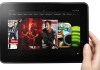
    Amazon just announced that it is adding its X-Ray feature to TV shows. The feature already worked with movies thanks to data from IMDb, but the company will now use this very same data for other video content. All the Kindle Fire family will receive the feature. The Amazon Instant Video app on Wii U will get is as well.

    As a reminder, X-Ray allows you to discover more about the content you are reading or watching. It first appeared with books, it shows you the different characters, where they appear in the book and how they are related to the story. Then Amazon added X-Ray to movies back in September 2012. In that case, watchers can instantly know the name of an actor in a scene. IMDb is an Amazon company, allowing the Kindle team to tap into a very comprehensive movie database. As IMDb provides data for TV shows as well, adding TV shows to X-Ray was just a matter of time.

    The idea is to make the video experience unique on Amazon’s devices, making people want to buy those tablets and stay in the Amazon ecosystem. It’s been known that Amazon doesn’t make much profit from selling hardware. Instead, it wants people to use the Kindle Fire tablets to buy content.

    Of course, the X-Ray feature only works with videos you buy or rent from Amazon Instant Video or videos from the Amazon Prime collection. X-Ray could be one of those little features that make you choose Amazon over Netflix or iTunes.

    In addition to providing the X-Ray feature to Kindle Fire users, the feature will make its way to Amazon Instant Video’s Wii U app. This little fact shows that what matters for Amazon is that people consume content from Amazon, no matter the platform. X-Ray for movies and TV shows may eventually come to Android and iOS.

    If the experience is not compelling enough, customers will neglect their tablets and Amazon won’t make any money from those users. That’s why Amazon cut the price of the Kindle Fire HD 8.9″ as well from $299 to $269 for the base model. Amazon now wants to get the best tablet they can make in everyone’s hand so that people can start reading and watching content — Amazon content.

    Developing…

  • Nike+ Selects Ten Finalists For The Accelerator Program Powered By TechStars

    screen-shot-2012-12-10-at-12-03-18-pm

    Back in December, Nike unveiled the Nike+ Accelerator program, powered by TechStars. After going through hundreds of applications, TechStars and Nike selected ten finalists. They will now begin a three-month program and take advantage of the Nike+ API and SDK to develop and release new companion products for the Nike FuelBand or Sportswatch.

    The teams will relocate to Portland — next to Nike’s headquarters — where they will exchange ideas and information with mentors, such as Nike’s Vice President of Digital Sport Stefan Olander, founder and CEO of TechStars David Cohen and co-founder of Foursquare Naveen Selvadurai. By being selected, finalists received $20,000 of funding.

    Here’s the full list of finalists:

    • FitDeck: Digital decks of exercise playing cards that deliver ever-changing workouts for fitness and sports.
    • GoRecess: Helps users find, book and review fitness activities.
    • Chroma.io: An indie game studio that creates virtual worlds tied to real-world activity.
    • CoachBase: Provides a digital sports coaching platform.
    • GoFitCause: Leverages fitness data as a means of raising money for charities.
    • HighFive: Ad network for health and fitness apps that helps people achieve their goals by rewarding them along their journey.
    • Sprout At Work: Provider of corporate wellness solutions leveraging social and gamification tools to inspire employees and empower employers.
    • GeoPalz: An interactive gaming and rewards platform for kids and families.
    • Incomparable Things: Creates activity-driven fantasy sports leagues.
    • RecBob: Offers a platform that makes recreational sports easy by organizing play.

    When it comes to creating an accelerator program, there are three key advantages for Nike. Even though the details of the deal with TechStars are unknown, the program is a cheap way to imagine and develop new use cases for the Nike+ product line. Instead of paying 20 to 40 engineers for three months, Nike chose to create an incubator and give $20,000 to each team. It is clearly not a money-losing venture. Nike could even hire some of the participants at the end of the process, without having to hunt for those engineers.

    Second, Nike counts on a long tail effect. If one or two teams make an incredibly successful product, it will entice developers around the world to develop for the Nike+ platform. Success stories are a powerful communication tool among developers.

    Finally, fostering entrepreneurship is a trendy thing to do. It makes Nike look like an innovative company, not afraid of encouraging new ideas and up-and-coming companies. Entrepreneurship could become a brand attribute to differentiate the company from its competitors, which could drive sales.

    TechStars gains a bit of mainstream recognition and press coverage by partnering with Nike. It is a well-known incubator that knows how to create and organize an accelerator program. The Nike+ Accelerator represents a new revenue stream for TechStars as well.

    What’s next for the finalists? They are now working hard on their ideas and will pitch investors, journalists and Nike executives during the demo day in June. It will be interesting to see what comes out of the first batch of finalists of the Nike+ Accelerator program.

  • Amazon Drops Kindle Fire HD 8.9″ Price From $299 To $269, Releases It In Europe And Japan

    kf_hd_89

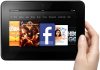
    Amazon just announced that it would be dropping the price of the 8.9-inch version of its Kindle Fire HD. The tablet will now cost $269 for the Wi-Fi only version and $399 for the Wi-Fi and LTE version. The Kindle Fire HD 8.9″ is now available in the UK, Germany, France, Italy, Spain and Japan as well.

    Developing…

  • The Philips Hue Is The Perfect Minecraft Accessory To Track The Day/Night Cycle

    Minecraft Hue

    It’s hard to find a compelling use case for the Philips Hue. But Jim Rutherford and his son hacked the wireless LED lightbulbs to be in sync with the day/night cycle in Minecraft. It creates an immersive setup and is actually useful as creepers start appearing at nighttime.

    In Minecraft, 24 hours go by in 10 minutes. It’s therefore fairly easy to program the Hue to progressively change color. But Rutherford had to find a clever implementation to sync time between the game and the light.

    He developed an iPad app to adjust the position of the sun or the moon in the sky according to the game. You just have to pan your finger across the screen. Then, the app handles the interface to the lightbulb. You can see how it pans out at the end of the video.

    At $199 for the Philips Hue starter pack, it sure is an expensive accessory. Only the existing Hue owners or hardcore Minecraft players should consider replicating this setup.

    Rutherford said that he will release the app in the App Store so that everyone will be able to enjoy Minecraft’s virtual sunset. For now, you can have a look at the source code.

  • Remember webOS? LG Acquires webOS From HP, But Only Plans To Use It In Smart TVs

    Image (1) rsz_webos-20.jpg for post 175804

    Troubled operating system webOS isn’t defunct yet. According to CNET, LG just acquired software, licenses and the team working on webOS from HP. LG plans to implement it in its smart TVs — not in its phones. In yet another surprising event, Palm’s OS will experience a third (or fourth) life.

    While LG states that it will only use webOS for its smart TVs, it’s a good strategic move to obtain an independent mobile operating system. Samsung has become overwhelmingly dominant when it comes to the Android ecosystem. webOS could be a fallback OS.

    The financial terms of the deal weren’t disclosed, but webOS now has a very small user base, making it less valuable. LG effectively acquired a dying yet beloved operating system.

    Back in January 2009, Palm stole the show at CES by showcasing its brand new and surprisingly good-looking mobile operating system called webOS. But the Palm Pre and later models failed to catch the attention of potential buyers, leaving the company in a bad shape.

    HP acquired Palm for $1.2 billion in July 2010. At the time, the company wanted to get into the tablet business, and use Palm’s operating system as a foundation.

    But the TouchPad was a failure. HP experienced some leadership troubles on its own. Then-CEO Leo Apotheker announced that it would sell HP’s PC business — including its webOS assets — before reconsidering this move.

    Instead of getting rid of webOS, HP just let it slowly die by open-sourcing it. With no official hardware to support it and no company standing behind it, the webOS community had no choice but to fall appart.

    WebOS fans, your last hope now resides in LG’s TV land. While the app ecosystem is not as essential on a TV as on a smartphone, webOS remains very resource intensive and unknown to most developers. Most of the webOS team left HP long ago. But letting an operating system die three times is no fun when you can let it die four times.

    Update: CNET just pulled its original story. Here’s a cached version while we await LG’s confirmation.

  • TV Maker Loewe Shares Jump 45 Percent After Apple Buyout Rumors

    Loewe_Individual_Compose

    German luxury brand Loewe experienced a roller coaster day. A trader commented that “Apple supposedly wants to bid 4 euros a share for Loewe,” which sent Loewe shares up as much as 44.5 percent to 3.93 compared to yesterday’s closing price of 2.72. The German stock exchange closed today with Loewe shares trading at 3.35, representing a one-day increase of 23.16 percent.

    In May 2012, rumors surfaced on AppleInsider that the company was interested in the German TV manufacturer. Even though Loewe denied the rumor and Apple declined to comment, a buyout wouldn’t be a big risk for Apple. Loewe’s market capitalization is around $58.6 million (€43.58 million).

    Yet, Apple would have to convince major shareholders. Sharp now owns 28.8 percent of shares, Loewe’s executives 14 percent and hard-drive manufacturer LaCie 11.2 percent. The German company reported $39 million (€29 million) in losses in 2012. Selling the company to Apple or anyone else would be a way to exit the tedious luxury TV market.

    The company is currently trying to cut 1,000 jobs, as well, in order to reduce costs. TV sets remain Loewe’s core product, but the company now manufactures Blu-ray players, DVD recorders, hard-disk recorders, multiroom systems, speakers and racks.

    For Apple, Loewe could represent another small strategic acquisition. Yesterday, Tim Cook said that the company closes a deal every other month.

    But analysts and traders may be reading too far into the rumors, which were alone responsible for Loewe’s share increase today. It remains to be seen whether those analysts are too excited by Apple’s rumored TV plans or whether they are actually hearing talks between the two companies.

  • OUYA To Launch Soon, But Where Are The Games?

    Ouya_Family_1024x1024

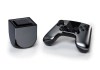
    With less than two months before OUYA’s launch, it’s time to tell the truth — its future doesn’t look promising. The OUYA is starting to feel like a gaming console without the games. Publishers and developers aren’t promoting OUYA games because there’s nothing to promote — nothing that was specifically developed for the launch line-up. Even worse, Final Fantasy III will be the flagship launch title, a game that has been available on countless gaming systems for years. OUYA isn’t the gaming revolution that backers expected.

    Earlier today, Darrell Etherington reported that the Android-based gaming console would launch in-store in June. The more than 68,000 backers to its Kickstarter campaign will get their consoles in March. While the company is still planning to ship on time, that was only half of the launch challenge.

    Gamers buy a new gaming system based on two key elements: launch games and who is making the console. As the OUYA is not coming from an established company, the team is facing an even harder task — selling enough good games to make the console interesting.

    You may say that the OUYA is an Android-based console and that many titles will be ported to a TV screen and OUYA’s gaming controller in minutes. Yet, there is no way you could compare an Android game with what gamers expect from a traditional gaming console. Even the Nintendo Wii U with its pretty weak launch line-up could count on ZombiU, Assassin’s Creed 3 or New Super Mario Bros. U. Angry Birds (or an equivalent game) and Final Fantasy III won’t convince an experienced gamer. You don’t need a dedicated device to play Canabalt.

    Moreover, Best Buy or Target customers don’t care about Android. When they’ll walk into a store and see the Android logo, it won’t mean anything to them. Normal people, those who don’t usually back projects on Kickstarter, they buy a Samsung phone, not an Android phone made by Samsung. That’s why average consumers do not line up to buy Nexus phones. Without its Kickstarter video, the OUYA is uninteresting.

    When it comes to games, even though OUYA claims to launch with 200 games, most of them are just Android ports or come from inexperienced developers. There is no big system-seller that may convince undecided gamers. And if you backed the console for its emulating capacity, you’ll be part of a very tiny minority.

    Vevo, XBMC or TuneIn are nice additions, but are already available on most TV boxes or support equivalent apps. The Roku, the Apple TV or even the Xbox 360 and the PlayStation 3 have long been hooked up to everyone’s TV, ready to stream content. The OUYA will not sell en masse for these apps alone.

    Before the end of the year, OUYAs will gather dust on store shelves, next to Boxee devices and other products that promised to revolutionize TV or gaming without actually achieving this status. The OUYA won’t be the first to disappoint, and there will certainly be other gaming consoles in the future that will end up in the attic in no time.