Author: Samuel Maina

  • Kenya: Massive Flooding in Samburu as Ewaso Nyiro River Bursts its Banks

    STE Research Camp under water

    STE Research Camp under water

    At dawn on Thursday, 4 March 2010, a massive flash flood hit Samburu in northern Kenya destroying 6 tourist lodges, some wildlife research camps and leaving thousands marooned on roof tops and on trees. This wave of rushing water came from the Ewaso Nyiro River which has burst it's banks following heavy rain around Mount Kenya.

    The Ewaso Lions blog writes:

    Around 5am this morning [4 March], a giant flashflood came down the Ewaso Nyiro river, washing away lodges and camps. Our friends at Elephant Watch and Save The Elephants [STE] managed to reach high ground, but the camps were wiped out. Elsewhere, people were on treetops and roofs waiting for help. The British Army, Tropic Air, and others spent the day evacuating people out of the area.

    Paula Kahumbu shares on the Baraza blog a communication from the Save the Elephants whose research base was destroyed:

    Today we woke up to reports from our guys at the research centre that Samburu is under water! The whole of Samburu is flooded! All our tents have been washed away! Our research camp as we know it is gone! Luckily all our guys are safe but hanging from trees and at hilltops waiting to be rescued by helicopter!

    Paula's blog post says, “As of now the flood waters are apparently receding but all the camps in Samburu and Shaba have been evacuated.” This is in anticipation of more rain that is likely to come. The Ewaso Lions bloggers say, “What’s especially frightening is that a lot more rain is expected.”

    The Ewaso Lions posted some photos – together with an appeal – which were sent by their blogger, Shivani, who's currently in Samburu.  The appeal urges people to donate through the blog or to contact their Nairobi office (for those in Nairobi and wishing to give food and clothes). WildlifeDirect has also posted an appeal using the same photos.

    One of Kenya's independent TV stations NTV has uploaded a You Tube video of the devastation.
  • Opposition Mounts over Tanzania and Zambia Ivory Proposals to CITES

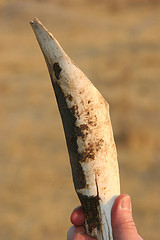
    Broken elephant tusk found in Hwange National Park in Zimbabwe, by Terry Feuerborn

    Broken elephant tusk found in Hwange National Park in Zimbabwe, by Terry Feuerborn

    Opposition is mounting against Zambia's and Tanzania's proposals to be allowed by CITES, the Convention on International Trade in Endangered Species of Wild Fauna and Flora, to sell their government held ivory stockpiles.

    With Kenya being the perennial opposition for any trade in ivory, it is no surprise that most opposition is coming from conservation groups in this country. Additionally, Kenya has renewed their push to have a 20 year moratorium on the sale of ivory after this same proposal resulted in pushing the moratorium for only 9 years after the 2008 one-off ivory auction by four southern Africa states. Kenya's media has picked up the story. NTV Kenya has a video on YouTube titled, Wildlife Worries.

    The Baraza blog published the content of the proposals that Zambia and Tanzania have put forward and Kenya's opposing proposal. Maina explains on Baraza

    On the one hand is the anti-trade range states consisting of Congo, Ghana, Kenya, Liberia, Mali and Sierra Leone. On the other hand, each with it’s own proposal is Zambia and Tanzania, who want to be allowed to sell their ivory stockpiles come the March 13-25 Doha  meeting – the 15th CITES  Conference of Parties (CoP15). Both sides have sent their proposals to the CITES secretariat and the secretariat has generously posted the proposals on their website.

    In a different blog post on Baraza, Paula writes about the UK's resolve to vote against the two proposals:

    The UK has said no to ivory sales. Environment Secretary Hilary Benn said last night: “At the CITES meeting in March, the UK will vote against the proposals from Tanzania and Zambia to sell ivory stocks, and we would urge other countries to vote against such a sale.

    Paula writes on Ban Ivory – a new blog at WildlifeDirect dedicated to the campaign against ivory – asking “Are elephants worth more than their teeth“. She asks: ”Are elephants just a source of a valuable commodity, ivory? Or do elephants deserve special treatment?”

    Paula points out that inspite of all the support that Africans can expect from outside, the battle for the elephant will have to start with Africans. She says:

    At the end of the day the protest against the trade in ivory will have to be led by Africans if the rest of the world is to take any notice which makes Kenya’s campaign so powerful. But as long as the Chinese and other Asians markets continue to provide markets for ivory trinkets and refuse to implement domestic enforcement, a renewed ban on trade in ivory will fail and we will continue to lose elephants.

    A group known as the Kenya Elephant Forum is leading the Kenyan civil society in the protest against ivory trade resumption and have produced fact sheets on the issue. Harvey Croze, blogging on the Amboseli Trust for Elephants pages says

    ATE is against the trade. We have been working with like-minded NGOs and individuals under the aegis of the Kenya Elephant Forum (KEF) to provide strategic information to a body of sympathetic African elephant range states called the African Elephant Coalition (AEC).

    In this blog post, Harvey has included links to the KEF Fact Sheets that you may want to read in order to understand the ivory problem and the likely implication of the Tanzania/Zambia proposals.