Author: Samya

  • Teaching Life Science with Children’ Literature: S is for Save the Planet

    planet.jpg

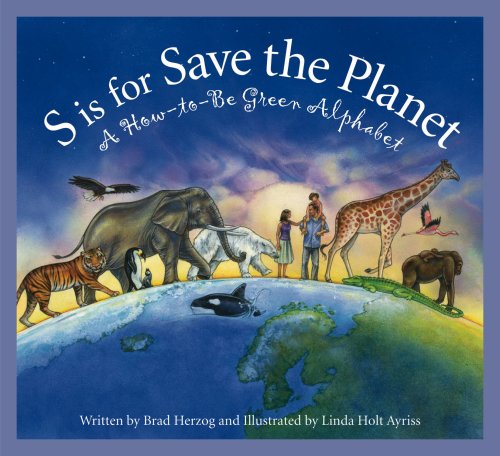
               S is for Save the Planet, written by Brad Herzog and illustrated by Linda Holt Ayriss, is a How-to-be Green Alphabet that sparks students’ enthusiasm for saving our environment. Published in 2009, S is for Save the Planet includes up-to-date information on the biggest problems facing our environment and the simplest ways that we can help!  The beautiful illustrations not only depict the beauty in the environment, but also students in action. Displaying students who are completing these environmentally friendly acts makes each task seem more feasible. The short, rhyming poem accompanying each letter of the alphabet is perfect for younger readers, while the side excerpts explore the topic in greater detail. The two paragraphs chock full of factual information are great resources for the curious student or the advanced reader. Students will absolutely love this book and hopefully share the new stra they learn with their families and friends!

    Curriculum Connections 

    Although this book is very much environmentally-focused it is still largely connected to Life Science. The effect of human interaction in ecosystems including human land use and ecosystem stability is a major topic within Life Science. Since populations within ecosystems are interdependent, these disturbances have a ripple effect on the environment. (LS.12b,d,e) General factors that decrease population sizes and the effects of climate change on communities, populations, and organisms are all environmental issues addressed in this book. (LS.11c)  

    Additional Resources

    • There is a 27 page teacher’s guide available full of vocabulary, pictures, and all kinds of fun, relative activities including lab experiments! This guide also includes a lot of creative and meaningful writing prompts to challenge students.  Xeriscaping, a type of landscaping that conserves water, is just one of the many new topics students can explore.
    • This fun interactive site offers a treasure hunt, recycle game, cool videos, and new articles for kids all introduced by Otis the otter!
    • The Wisconsin Dept. of Natural Resources brings us EEK! (Environmental Education for Kids) Students can research animals in the Critter Corner, discover the history of maple syrup in Nature Notes,  and test their knowledge with riddles of the month. EEK! even provides descriptions of careers in the environmental industry!

    General Information 

    Book: S is for Save the Planet

    Author: Brad Herzog

    Publisher: Sleeping Bear Press

    Publication Date: 2009

    Pages: 36

    Grade Range: 3-6

    ISBN: 1-58536-428-2
  • Teaching Economics with Children’s Literature: The Promise Quilt

    promise.jpg

    The Promise Quilt, written by Candice F. Ransom and illustrated by Ellen Beier, takes place in the rural South during the Civil War. When Addie loses her father to the war, her mother stuggles to feed the family and Addie’s dreams of attending school have to be put on hold. When the war was over, the school had no money to purchase books for the children and was going to close down. Addie’s mother has a brilliant idea to earn money: she stitches a quilt to auction off for money in town. There is one problem: there is not enough material to finish the quilt. Addie makes the difficult decision to  surrender her father’s red shirt that she loves to the quilt. Although she lost her beloved memory of her father, she was able to afford to get books for the school.

    Curriculum Connections
    This story is a good introduction to the idea of making decisions and the opportunity cost associated with choice. There is also an example of using money in smart ways. Addie finds one of her father’s silver coins and instead of spending it carelessly or saving it as a memory she chooses to buy seed that will feed her family. Addie learns the lesson that she can’t have everything she wants.
    SOLs: K.7,  1.8,  2.9

    Additional Resources
    Incorporate this story in a math lesson!

    Book: The Promise Quilt
    Author:
    Candice F. Ransom
    Illustrator:
    Ellen Beier
    Publisher:
    Walker & Company
    Publication Date:
    1999
    Pages:
    26
    Grade Range:
    K-3
    ISBN:
    0-8027-7648-5

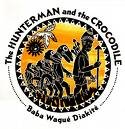
  • Teaching Ancient Civilizations with Children’s Literature: The Hunterman and the Crocodile

    hunterman2.jpg

     Introduction and Summary

    There’s a lesson to be learned from the folktale, The Hunterman and the Crocodile, written and illustrated by Baba Wague Diakite. This tale involves the relationships between man and nature, and the importance that respect plays in these relationships. When the crocodiles ask Donso, a West African hunterman, to take them to the river, Donso is skeptical because of the way the crocodiles have acted towards man in the past but he agrees to take them anyway. Once in the river, the crocodiles turn on Donso and ask why they shouldn’t break their promise and eat him? Donso calls to many animals for help, but they all refuse saying “Man does not respect others” and “Man does not deserve my help.” Finally a rabbit decides to help him, but when he finds himself in another predicament he must call on the crocodiles for help and make a compromise. By the end of the tale, the hunterman learns “the importance of living in harmony with nature and the necessity of placing Man among -not above- all living things.”

    The Author’s Note at the back of the book includes an excerpt about the author’s native town and life in West Africa. He recalls how the traditional stories she was told as a child have influenced his life.  Baba Wague also adds some fun translations from his native language, Bambara. For example, “Wague” means “Man of Trust” and
    “Awnithe” means “Hello”!

    Curriculum Connections

    This book would be a fun read for second and third graders learning about the storytelling in West African Mali civilizations. This tale also incorporates a simple Civics topic such as respect for society and your neighbors.

    SOLs

    History   3.2   The student will study the early West African empire of Mali by describing its oral tradition (storytelling)

    Civics 
       2.10  The student will explain the responsibilities of a good citizen, with emphasis on (e) practicing honesty and trustworthiness

    Additional Resources

    Learn about West African instruments here, and if you’re feeling crafty, try making your own intruments!

    If the students find ancient african civilizations really interesting, then try including the Kingdom of Kush, the Iron Capital of the Ancient African World!

    General Information

    Book: The Hunterman and the Crocodile
    Author: Baba Wague Diakite
    Illustrator: Baba Wague Diakite
    Publisher: Scholastic Press
    Publication Date: 1997
    Pages: 26
    Grade Range: 2nd-3rd Grade
    ISBN: 0-590-89828-0

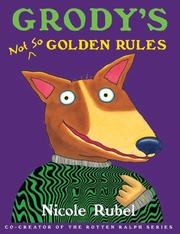
  • Teaching Civics with Children’ Literature: Grody’s Not So Golden Rules


    grody.jpg

    Introduction and Summary

    Grody’s Not So Golden Rules, written and illustrated by Nicole Rubel, is a funny story of a boy/dog who imagines what life would be like if he followed his own set of rules. As Grody lists his rules, the reader is clearly shown the consequences of such bad behavior. The creative, hilarious illustrations make this a fun read for kids, while cleverly promoting core values. By the end of the story, the children will see the reasons behind the rules we have at school and at home.Grades K-2 would really enjoy this book!

    Curriculum Connections!  

               SOLs K.8 and 1.10 are covered by this book.

    Respect, responsibility, and rules are the three “R”s that Grody reveals the importance of throughout the story. This is necessary knowledge for good behavior in and out of the classroom.

    Additional Resources!

    • Activity: Have the students make a table where they can write each of Grody’s rules, the consequences of that rule, and what the students believe to be the right thing to do!

    General Information!

    Book: Grody’s Not So Golden Rules

    Author: Nicole Rubel

    Illustrator: Nicole Rubel

    Publisher: Harcourt Books

    Publication Date: 2003

    Pages: 30

    Grade Range: K-2

    ISBN: 0-15-216241-0