Author: Sandy T

  • Teaching Earth Science with Children’s Literature: The Little House

    the-little-house-book-cover-image.jpg


    Once upon a time
    there was a Little House
    way out in the country.
    She was a pretty Little House
    and she was strong and well built.

    Virginia Lee Burton’s classic, The Little House, was the winner of the prestigious Caldecott Medal in 1943. The pretty Little House sat on a hill and watched the countryside around her.  The whimsical and detailed artwork and lyrical and nostalgic wording brings the Little House to life as she becomes the main character of this story of change over time.

    She watched the sun rise in the morning
    and she watched the sun set in the evening.
    Day followed day,
    each one a little different
    from the one before…….

    We experience the changes of the sun, moon, and seasons, and the change of her surroundings as the lights of the city grow closer to the Little House.  Eventually a road is built in front of the house. This is followed by gasoline stations, roadside stands, and more little houses. “ Everyone and everything moved much faster now than before.”  Then the countryside was changed as apartments and tenement houses, schools, and stores began to spread over the land.  It became so crowded that she couldn’t tell when Spring, Summer, Fall, or Winter came.

    Then one day the great-great-granddaughter of the man who built the Little House sees the house and remembers stories that her grandmother told about living in just such a house, far out in the country. When the great-great-granddaughter discovers that it is the same house, she arranges to have her moved out of the city, to a hill in the country.

    Once again she could watch
    The sun and moon and stars.
    Once again she could watch
    Spring and Summer
    And Fall and Winter
    Come and go.

    Curriculum Connections

    The Little House can be used to introduce and/or enhance many of the earth science Standards of Learning.  The students can observe the countryside slowly change with the seasons through both the words in the story and the wonderful pictures.  (VA SOL 1.7 & 2.7).  The book has a wonderful illustration of the cycle of the sun rising and setting in the sky that can illustrate the basic patterns and cycles occurring in nature, such as day and night.  Simple phases of the moon are also illustrated, including a simple calendar illustration of the moon cycles. (VA SOL 3.8a)  Earth Resources can be investigated as the story explores how human influences affected the area around the little house and connect that to animals & plant life that may have lived around the house and how they may have been affected by these changes. (VA SOL 3.10)

    Additional Resources

    General Information

    Book: The Little House
    Author/Illustrator: Virginia Lee Burton
    Publisher: Houghton Mifflin Company
    Publication Date: 1942
    Pages: 44
    Grade Range: PreK – 3
    ISBN-10: 039525938X
    ISBN-13: 978-0395259382
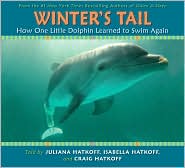
  • Teaching Life Science with Children’s Literature: Winter’s Tail: How One Little Dolphin Learned to Swim Again

    winters-tail-book-cover-image.jpg

    Winter’s Tail: How One Dolphin Learned to Swim Again, told by Juliana Hatkoff, Isabella Hatkoff, and Craig Hatkoff, is a heartwarming book that chronicles the amazing true story of Winter, a three-month old Atlantic bottle-nosed dolphin who lost her tail after becoming entangled in a crab trap.  The book contains the actual photographs as Winter was rescued from Mosquito Lagoon (near Cape Canaveral) by Hubbs-SeaWorld Research Institute.  She was then transported to the Clearwater Marine Aquarium, a rescue, rehab, and release stranding center for marine animals.

    Winter’s journey at Clearwater Marine Aquarium was not an easy one at first.  But Winter persevered and eventually was able to swim on her own.  The problem was her tail was so injured that it fell off.  Without her tail, she swished her tail stump from side to side like a fish, instead of the up-and-down tail action of a dolphin.  “Winter had taught herself an entirely new way to swim!”  But her trainers were concerned this would damage her backbone.  As Winter adapted to her new home & not having a tail, it became even more apparent that she needed to learn how to swim like a dolphin to avoid further injury and develop muscles properly.

    Luckily Kevin Carroll, a premier creator of prostheses, heard about Winter’s dilemma and believe he could help.  Working with a team of experts, and despite many obstacles, they were eventually able to create a new, innovative prosthetic tail for Winter.  This new tail helps to keep her backbone healthy and her body flexible.  It also resulted in these innovations crossing over to bring more advanced technology to prosthetics for humans.

    The book goes on to say that Winter and her visitors seem to have a special connection…

    From children who have prostheses, to veterans who lost a limb fighting in a war, to one little girl who didn’t want to wear a hearing aid until she met Winter, people saw how Winter learned to adapt and are inspired by her story.

    Beyond all expectations, Winter has thrived and has become an inspiration to the disabled and able-bodied alike.  Winter’s inspiring story uses narrative writing and fantastic photographs to deliver an important message of hope, adaptation, friendship, and universal acceptance.

    Curriculum Connections

    Winter’s Tail: How One Little Dolphin Learned to Swim Again can be used to introduce and/or enhance many of the life science Standards of Learning. Winter’s ability to adapt to her new environment at the aquarium and to her prothetic tail can show the key concept of behavioral and structural adaptions when investigating how animals in an ecosystem interact with one another and the nonliving environment.   (VA SOL 4.5a)  Looking at how the crab trap placed in the water by humans caused the dolphin to become entangled and injured can be an example of possible negative influences of human activities on ecosystems. (VA SOL 4.5f)  Concepts of Winter’s instinct and learned behavior can be explored.  (VA SOL 3.4b) The student can investigate the physical characteristics (body coverings, body shape, appendages, and methods of movement) of the Atlantic Bottlenose dolphin and explore the importance of the dolphin’s tail as an appendage that allows a dolphin to survive in the wild. (VA SOL 1.5b).

    Additional Resources

    General Information

    Book: Winter’s Tail: How One Little Dolphin Learned to Swim Again
    Author: Jauliana Hatkoff, Isabella Hatkoff & Craig Hatkoff
    Illustrator: n/a
    Publisher: Scholastic Press
    Publication Date: 2009
    Pages: 40
    Grade Range: PreK – 6
    ISBN-10: 0545123356
    ISBN-13: 978-0545123358

  • Teaching Physical Science with Children’s Literature: Elephants Aloft

    elephants-aloft-cover-image.jpg

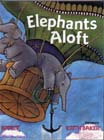
    Elephants Aloft, written by Kathi Appelt and illustrated by Keith Baker, is a beautiful children’s picture book that uses just one word on most pages to tell the story of the young Asian elephants’ travels to visit their Auntie Rwanda in Africa.  Before the cover page, the book begins with a letter written to Rama and Raja from Auntie Rwanda,

    Dear Rama and Raja,
    I miss you!
    Please come
    for a visit.
    Love,
    Auntie Rwanda

    The book cleverly and simply continues with one preposition word on each page.  It allows the beautiful illustrations, done in colorful acrylic, to tell the story of Rama and Raja’s travels in a hot air balloon to see their Auntie Rwanda.  They get “In” the hot air balloon basket, then they fly “above” the Asian town, and “beside” one of the domes of the Taj Majal.  After they fly “through” the clouds, they go “between” the rock pillars, “behind” the waterfall, “across” the ocean, at night they float with balloons attached to their feet “below” the basket & the moon, in the morning they go “around” a snow capped mountain, the elephants go “under” the water in their basket as they bathe, “beyond” the rainbow, “over” an African village, “out” of the basket as they finally land their balloon, and “into the arms of Auntie Rwanda”.  A simple concept beautifully done to clearly illustrate these positions words.  Young children and students will love to travel along with these adorable elephants as they learn position words.

    Curriculum Connections

    Elephants Aloft can be used to introduce and/or enhance the physical science standard of learning that states a student will investigate and understand that the position of an object can be described.  (VA SOL K.4e) It contains six of the position words contained within the VA SOL K.4e (over/under, in/out, and above/below) as well as several other position words.  The Kindergarten student will be able to “read” the pictures in order to describe one object in relation to another object and according to its motion.  While looking through the illustrations, the student can also describe the colors of the objects in the story.  (VA SOL K.4a)

    Additional Resources

    General Information

    Book: Elephants Aloft
    Author: Kathi Appelt
    Illustrator: Keith Baker
    Publisher: Harcourt Brace & Company
    Publication Date: 1993
    Pages: 36
    Grade Range: PreK – 2
    ISBN: 015225384X

  • Teaching Process Skills with Children’s Literature: Digging Up Dinosaurs

    digging-up-dinosaurs-cover-image.jpg


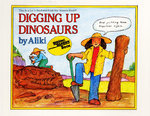
    Did you ever wonder how we know that dinosaurs existed?  How do we know what they were like, how big they were, what they ate?  Digging Up Dinosaurs, written and illustrated by Aliki, is a very interesting and fun story that allows students to discover how science helps us answer these and many more questions about dinosaurs.

    Have you ever seen dinosaur skeletons in a museum?
    I have.
    I visit them all the time.

    This is how the story begins as a little girl takes us through the dinosaur exhibit in a museum.  The beginning pages show more dinosaurs in the museum, and the crowds of people viewing them.  We get to experience what one may think and say while visiting dinosaurs in a  museum like this through the clever use of dialogue in balloons.  Then, the little girl goes on to very clearly explain how these dinosaur skeletons, that people did not even know existed until about 200 years ago, got into museums.  After explaining how and where dinosaur fossils were first found, she goes on to tell us about the team of experts that work together: paleontologist, geologist, draftsman, workers, photographer, and specialist.  She explains how they find the fossils, dig them out, safely transport, and study the fossils.

    They compare the bones to other bones.
    They compare them to the bones of other animals.
    They try to figure out what size and shape the dinosaur was.
    They try to figure out how the dinosaur stood and walked, and what it ate.

    Then they put the skeletons together again inside museums, to look just like the dinosaurs of millions of years ago, “And many people can spend hours looking at them, the way I do.”.

    The illustrations are colorful and fun.  The dialogue in balloons make the story very funny and relatable, and the texts of extra information (that give the appearance of being written notes) are filled with interesting facts.  This is a great book to inspire future young scientists or even satisfy the curiosity of the inquisitive child who needs to understand how and where these “bones” came from.

    Curriculum Connections

    Digging Up Dinosaurs can be used to introduce and/or enhance many of the Standards of Learning for elementary students.  There are many process skill SOLs covered within this book.  The student can apply what is in the book to help understand scientific reasoning, logic and nature of science by planning and conducting investigations in which: observations are made from multiple positions to achieve different perspectives, as they first view, uncover, photograph, and display the fossils (VA SOL K.1b, 1.1b); simple tools are used to enhance observations as they excavate, preserve, and study the fossils (VA SOL 1.1d, 4.1c); a question, or in this case many questions, are developed from one or more observations of the fossils (VA SOL 1.1g, 2.1a), examining the dinosaur teeth is an example of inferences being made and conclusions drawn about what the dinosaur ate (VA SOL 3.1j, 4.1a, 5.1i).  It is simply a great illustration of the varied process skills used to explore something that was not ever even heard of until 200 years ago.

    Additional Resources

    • National Geographic Xpeditions offers a great lesson plan called The Science of Digging Up Bones.  The lesson plan is geared towards Grades 6-8, but can be changed to accommodate younger grades.  This lesson has students trace the steps of a paleontologist from determining where to look for dinosaur fossils to studying the completed dinosaur skeleton for clues about the dinosaur’s behavior, diet, and anatomy.
    • Digging Up Bones A WebQuest of a Dinosaur Excavation is another fun lesson plan idea related directly to the book.  It is a hands on activity allowing the students to work as teams as the paleontologist, a worker, a draftsman, and a photographer in order to identify fossil models made by the teacher based on dinosaur teeth information at this Enchanted Learning website.  This site gives a little more detail to the same lesson plan.
    • To add a fun hook to a lesson plan that will have the kids laughing (and probably keep everyone singing the tune all day), have the students watch the I Am a Paleontologist video from the Here Comes Science album by They Might Be Giants.
    • TVO Kids has a fun online game called Dino Dig.  The student can be the paleontologist and use tools to uncover fossils.

    General Information

    Book: Digging Up Dinosaurs
    Author: Aliki
    Illustrator: Aliki
    Publisher: HarperCollins Publishers
    Publication Date: 1988
    Pages: 32
    Grade Range: K-3
    ISBN-10: 0064450783
    ISBN-13: 978-0064450782


  • Teaching Economics with Children’s Literature: Ox-Cart Man

    ox-cart-man-book-cover-image.gif

    In October he backed his ox into his cart
    and he and his family filled it up
    with everything they made or grew all year long
    that was left over.

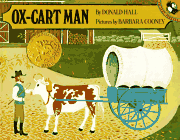
    Thus begins the wonderfully simple Ox-Cart Man, written by Donald Hall and illustrated by Barbara Cooney.  This story clearly tells the tale of an 18th century New England farming family as they pack up the goods the family produced and do not need for their own survival.  Using lyrical and repetitive language, the author lists the items the family produced.  Some of these items include:  a bag of wool he sheared from a sheep, a shawl his wife wove on a loom, mittens his daughter knit, birch brooms his son carved with a borrowed kitchen knife, the potatoes they dug from their garden (after he counts out what they will need to eat and seed), and a bag of goose feathers his children collected from the barnyard geese.   The man takes the goods to the market and sells everything including his ox cart, ox, yoke, and harness.  “With a pocket full of coins, he walked through Portsmouth Market” where the man takes the money to buy the things the family will need.  He buys an iron kettle, an embroidery needle for his daughter, a knife for his son, and wintergreen peppermint candies for the whole family.  When the man returns home the cycle continues as the family produces more goods.

    and his daughter took her needle and began stitching.
    and his son took his Barlow knife and started whittling.
    and they cooked dinner in their new kettle.
    and afterward everyone ate a wintergreen peppermint candy.

    The story continues to list all of the things the family produces the next year, cleverly ending with

    and geese squawked in the barnyard
    dropping feathers as soft as clouds.

    It is easy to understand why this book won the 1980 Caldecott Medal.  The illustrations are realistic and give a great feeling for the time period.  They do an excellent job of showing the story through the pictures.  A beginning reader could certainly use the pictures to tell the story and any reader could use them to visualize the life style and other things that are unfamiliar to many people today.

    Curriculum Connections

    The Ox-Cart Man can be used to introduce and/or enhance many of the Virginia Standards of Learning for elementary students.  Related to Economics, it clearly shows the goods the farming family produces and portrays them in the role of both producer and consumer (VA SOL 1.7).  It can be used to illustrate that people work to earn money to buy the things people want (VA SOL K.7b).  It is also a good example of how people cannot produce everything they want, so they specialize in what they do best and trade for the rest (VA SOL 3.8).  Some other curriculum connections related to social studies include being able to describe the past ((VA SOL K.2) and comparing the changes in community life over time (VA SOL 2.3).

    Additional Resources

    • Reading Rainbow featured Ox-Cart Man on one of their episodes (episode #18).  It has provided teacher activities that offer many great topics for discussion, curriculum extension activities, classroom, and home activities.
    • KidsEcon Posters has a suggested lesson plan related to consumers to use along with the Ox-Cart Man under the Literature Connections section.
    • School Improvement in Maryland has lesson plans and activities related directly to this book and corresponding younger elementary school economics standards.
    • Progeny Press provides activities related to Ox-Cart Man including an As-you-read chart and vocabulary ideas.


    General Information

    Book: Ox-Cart Man
    Author: Donald Hall
    Illustrator: Barbara Cooney
    Publisher: Viking Press
    Publication Date: 1979
    Pages: 40
    Grade Range: K-3
    ISBN-10: 0140504419
    ISBN-13: 978-0140504415

  • Teaching Ancient Civilizations with Children’s Literature: Ancient Rome and Pompeii

    magic-tree-house-ancient-rome-book-cover-image.jpeg

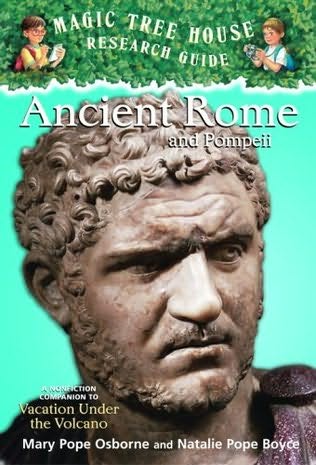
    Magic Tree House Research Guide #14: Ancient Rome and Pompeii: A Nonfiction Companion to Vacation Under the Volcano, written by Mary Pope Osborne and Natalie Pope Boyce, illustrated by Sal Murdocca is an excellent way to supplement teaching Ancient Roman history.  It simply and clearly gives a basic overview of ancient Rome.  It has great attention to detail and provides many important facts that are pertinent to an elementary school student.  It does this in a way that is interesting and fun.  It is a companion research guide to Magic Tree House #13 Vacation Under the Volcano, but can certainly be read on its own.  It has many facts and descriptions about Roman life and culture.  The book begins with the legend of Romulus and Remus.  Then continues

    The real story of ancient Rome is a bit different.  Rome was actually founded over 3,000 years ago.  Farmers and fishermen settled on hills near the river Tiber in what is now Italy.  These small hill settlements grew into a town.

    It then goes on to describe how the ancient Roman government evolved over time, including clear descriptions of a republic as “a form of government where no one person has complete control”.  Many of the important contributions of Roman architecture are also discussed.

    Roman buildings often had strong, rounded arches and beautiful domes.  The Romans also built sturdy bridges, roads, and tunnels.

    There are sections that describe the Colosseum and aqueducts and their uses and importance, including photographs of both.  Other information covered includes:  Roman military, roads, language, important people, Pompeii and the eruption of Mt. Vesuvius, a great description of daily life in ancient Rome, and more.

    The book includes maps, drawings, photographs (of artwork, Roman sites, etc), Latin word meanings, and other bits of important and interesting information that would also be relevant to a student.  At the end, the authors list many different sources that can be used to do more research.  These included tips on how to properly do research from a book, museum research tips and particular exhibits, videos, DVDs, CD-ROMs, and internet resources.

    Curriculum Connections

    This book can be used to introduce and/or reinforce Third Grade Standards of Learning regarding Ancient Rome.  It clearly describes a Roman Republic form of government, architecture (including the Colosseum and aqueducts), and Roman art (including mosaics, sculptures and paintings).  (VA SOL 3.1)  A map in the book shows the vast borders of the Roman Empire surrounding the Mediterranean Sea in the third century.  It also describes the physical characteristics of Rome being next to a river and built on many hills.  It discusses that Romans were farmers, road builders, and traders.  (VA SOL 3.4)  Topics covered in this book can also lead to economics discussions related to ancient Roman culture (VA SOL 3.7 & 3.8).

    Additional Resources

    • Kidipede – History and Science for Kids has a great article that clearly and simply provides information about the ancient Roman government, making connections to our government today.  Or you can find ideas on how to make a mosaic with your classroom.
    • Roman Empire has a lot of information including color photographs of Roman buildings (e.g. Colosseum, Pantheon, and aqueducts).  These are great primary sources to share with the students.
    • The BBC Learning has an excellent website to use as a way to integrate technology into learning about ancient Rome.  There are fun games, facts, and photographs.  There is also a link with teacher resources that includes worksheets, activities and videos.
    • Random House has the official Magic Tree House site with activities and information for all of the books in the Magic Tree House series.

    General Information

    Book: Magic Tree House Research Guide #14: Ancient Rome and Pompeii: A Nonfiction Companion to Vacation Under the Volcano
    Author: Mary Pope Osborne and Natalie Pope Boyce
    Illustrator: Sal Murdocca
    Publisher: Random House Books for Young Readers
    Publication Date: 2006
    Pages: 128
    Grade Range: 2nd-5th
    ISBN-10: 0375832203
    ISBN-13: 978-0375832208