Author: Sopheap Chak

  • First Cambodian Women Web Portal

    The first ever women web portal in Cambodia was one of the women programs initiated by the Open Institute in 2006 which aimed to promote gender equality in a society where women can exercise their rights and  be empowered to participate in the economic and sociopolitical spheres. This women web portal attempts to bring women issues and their rights empowerment in the global discussion through the use of three Information Communication Technology (ICT) tools: Blog, Online Forum, Gender Mailing List.

    Though the internet penetration in Cambodia is still low of which overall usage figure in 2009 survey is 9.8 percent and up to 18.8 percent in the capital, the portal is trying to make information available in Khmer language and creating platforms where women from various backgrounds ranging from commune council members, government officials, organization's representatives, teachers, students, and the youths in general can get their voices heard.

    Sokhayouk Prak, Women Program's Coordinator and also active blogher whose blog aims to raise awareness on women rights gives a comprehensive introduction about the women web portal:

    វិបផតថល​ស្ដី​អំពី​ស្ត្រី  គឺ​ជា​បណ្ដុំ​ព័ត៌មាន​​អេឡិចត្រូនិក ​​ជា​ភាសា​ខ្មែរ​ដ៏​សម្បូរ​បែប​​​ ទាក់ទង​នឹង​ឯកសារ​ច្បាប់ សិទ្ធិ យេនឌ័រ បច្ចេកវិទ្យា គមនាគមន៍ ព័ត៌មានវិទ្យា ​​សកម្មភាព និង​ភាព​ជោគជ័យ​​នានា​របស់​បណ្ដាញ/​អង្គការ​ស្ត្រី និង ឯកសារ​ជា​ច្រើន​ទៀត​ទាក់ទង​នឹង​សេដ្ឋកិច្ច និង​ការ​អភិវឌ្ឍន៍។

    វិបផតថល​ស្ដី​អំពី​ស្ត្រី​​ គឺ​ជា​វិបផតថល​ជា​ភាសា​ខ្មែរ​ស្ដី​អំពី​ស្ត្រី​មុន​គេ​បង្អស់​ដែល​​ត្រូវ​ បាន​បង្កើត​ឡើង​ និង​បង្ហោះ​ជា​ផ្លូវការ​នៅ​ខែ​តុលា ឆ្នាំ ២០០៧ ​ក្នុង​គោលបំណង ផ្សព្វផ្សាយ​ព័ត៌មាន​ទាក់​ទង​ស្ត្រី​និង​សិទ្ធិ និង​សម្របសម្រួល​ការ​ប្រាស្រ័យ​ទាក់ទង​​នានា​។

    Women Web Portal is  the first women portal made available in Khmer language with various documents related to applicable laws,  rights,  gender issues, ICT, social and economic development. This portal officially launched in October 2007 aims to provide spaces of women related issues and platform of discussion for the common goal of gender equality in Cambodia.

    From its 2009 report, there are graphs showing the majority of shared content portion and the dramatic increase of visitors which indicate the great participation of their targets.
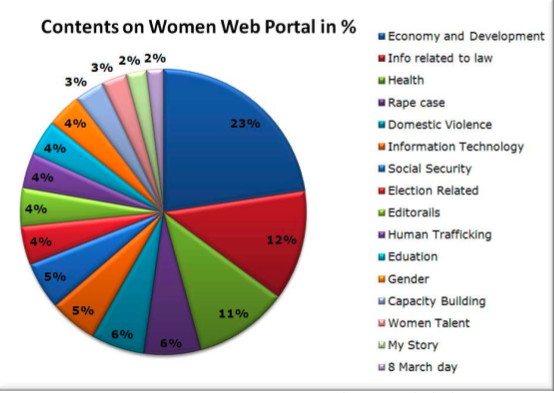
    graph showing the portal's information content
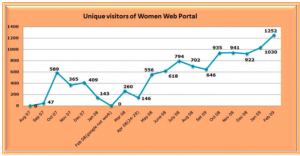
    graph showing the portal's information content

    The increasing trend of web visitors

    The increasing trend of web visitors

    Via e-mail interview with Manavy Chim, Open Institute's Executive Director who previously spent more than 20 years working with the Ministry of Foreign Affair and International Cooperation and later joined the civil society with the hope for a greater liberty to work with local people to solve various social problems, emphasizes the great benefit of ICT in women empowerment.

    Question: Why did you personally become involved in this women project?

    Manavy: I want to explore more about women problem and to see what I can do to be of help. Information on legal document and document related to women rights in Khmer that can help women with problem or without problem is not easy to find. Women are facing many problems including violence against women (rape, domestic violence, human trafficking) poverty, and discrimination.

    But women dare not to speak out. It is good that we provide women information they need, spaces and opportunities for women to break silence and speak out , to share with us what do they think about themselves and their future, and what is their concern. Hope this contribute to women life’ satisfactory.

    Q. What have been the results?

    Manavy: The Women web portal, the first and a single web portal in Khmer language in Cambodia that provides people a larger amount of information on gender, women rights and development issues. The portal was ranked by the Google Page Rank 5/10 among other web sites around the world, as a web site with meaningful, useful information and attractive to visitors. The women web portal gets more than 2000 unique visitors per day and there are more than 10000 pageviews since it was launched on late 2007.

    This is not only a channel for information sharing but also provides an open space for discussion to address their concern, and also as space for women organizations to share about their organizations. There are communication tool made available through the women web portal such as blog and online forum. Take Back The Tech (TBTT) is one among an attractive way of information sharing on violence against women among young people by using and controlling technology.

    The women program does not work alone, but we cooperate with the Association of Progressive Communication (APC), an international organization pioneering the use of Information Communication Technology (ICT) for social justice that has more than 100 member organizations around the world. We work together on the MDG3 ( Millennium Development Goals) project on strengthening the strategic use of ICT by women to combat violence against women (VAW) in which involve women from  12 countries in the regions of Asia, Africa and America Latin.

    Meanwhile, very good collaboration has been made through an MOU between the Open Institute and the Ministry of Women Affairs signed on July 2009. Through the program, the Ministry and the Open Institute has started coordinating government and civil society on the response to Violence Against Women, by creating forum for the discussion and coordination of the implementation of the National Action Plan to Prevent Violence on Women, which will meet several times to attempt to create a joint strategy. These actions will be supported by all the means of dissemination of the Ministry and the Open Institute, which include websites, bulletins, radio, a Guidebook for Women, and public meetings.

    Q. What are the biggest obstacles to your success?

    Manavy: ICT is new thing to many Cambodian people, particularly women. To promote the use of ICT by women is not yet in the agenda of the government, in most of the NGOs and of the private sectors. While world wide, women organizations and network are using online resources, web sites, to share experiences, to mobilize support for specific actions and develop global action strategies, not many Cambodian women are aware of the use of ICT. At the same time, ICT use in general, much less awareness of how ICT can be strategically used to combat VAW, is very limited in Cambodia.

    Q. How do you plan on overcoming these obstacles?

    Manavy: We came up with a strategic planning that involves NGOs, government institution and private sector in a systematical way. This will be collaboration and a collective solution that involve experts from our partners (the APC and MDG3 project) from other countries. This is a series of actions including capacity building to women organizations and relevant institutions both government and NGOs on ICT global knowledge and skills. The movement will be linked to the consultation meetings to discuss the interaction between VAW&ICT, the participation and how ICT can be used in the implementation of the National Action Plan to Prevent VAW.

    This will help women organizations and the government to identify the issues and the need of using ICT for a better status of women. Recommendation for the regulation/policy supportive for the use of ICT for women empowerment and to enhance women rights will be made during the meetings.

    Skill on e-advocacy also will be provided to our target group through the trainings. The training will guide participants on how to use our women web portal and how to get benefit from advance technology. Small grant will be made available to support the project on the use of ICT to combat VAW.

    Q. What is your message to the public?

    Manavy: It is imperative that women are able to draw on available resources to combat VAW. Access to ICT can be seen as central issue concerning empowerment of women. Women should be empowered by enhancing their skills, knowledge and access to information technology. Without knowledge provided to women, any attempt to promote the use of ICT by women in Cambodia would be incomplete. Key players in the society including the government, the private sector and NGOs should pay more attention on promoting and encouraging women to use and control ICT.

    This should be started from education sector which provide ICT’s knowledge and skills, encourage female student take part in computer science study, ensure for ICT market and employment and the involvement of women at decision making level in such employment.  The lower price of internet access is also one among other factors to encourage people to use it.

    Women should always make themselves fresh in relation to capacity building, well equipped to adopt with the rapid change of globalization and the ICT revolution, if not women will be kept behind such change.

  • Cambodia’s Great Internet Firewall?

    The plan of the Cambodian government to have a state-run exchange point to control all local internet service providers in order to strengthen internet security against pornography, theft and cyber crime is finally underway. However, there seems to be no clear-cut policy on the extent to which Telecom Cambodia, a state-owned company granted with powers to control the internet exchange point, would be able to block access to individual websites.

    According the the latest report by Phnom Penh Post, there have been mixed assertions on the authority of the TC. There is also a question whether Cambodia will follow its neighboring countries where internet censorship is being practiced. While the TC's deputy director reportedly claimed that the body can control internet sites, other ministers including the Minister of Information does not endorse this assumption.

    If any Web site attacks the government, or any Web site displays inappropriate images such as pornography, or it’s against the principle of the government, we can block all of them. If TC plays the role of the exchange point, it will benefit Cambodian society because the government has trust in us, and we can control Internet consumption,” said Chin Daro, TC's deputy director.

    In contrast to this claim, the Minister of Information Khieu Kanharith questioned the authority of TC and he echoes the position of the government:

    “I don’t know what authority they’re saying that under […] although the government is capable of blocking access to Web sites, it has no intention of doing so, and that there are unresolved questions about whether censorship policies should be implemented […] Who should decide what should be filtered?” We have the technology, but we don’t think it’s appropriate to filter content.”

    Regardless of this controversy, there have been attempts in the past to control the internet which mainly targeted artists. There have been crackdowns on websites which are critical against the government or those which revealed family information and business associations of the Prime Minister and his family members. Websites and blogs showing pornography or sexy images were also pulled down including reahu.net which were only accessible to internet users outside Cambodia.

    With the current progress of the government plan to control the internet, facebook users promptly demonstrated their objection. Tauch Norin expressed his disagreement over the proposed internet censorship. For him, this approach is totally incompatible with a free market system and freedom of expression. Cambodia's move is following the model of China where it adopts a “Great Firewall.” In his status update where the story of State-run Web hub would filter sites is linked, Norin posted:

    “Little brother always follows what his big brother”

    “little brother refers to the Cambodian government, whereas big brother refers to China. Our government intends to put their control on internet ….it is the exercise for internet censorship which have been practiced in China,” elaborated Norin via e-mail interview.

    Similarly, 28-year old blogher, Sidaroth Kong who had actively worked for more than 7 years with various NGO sectors that promote ICT projects for social development and gender mainstream, voices her concern over the government plan for web monopoly. In her facebook's status, she suggests:

    “Government officials should not have a mindset of wanting to control over the sectors of their responsibility but to regulate a free and open environment for the real benefits of their people.”

    Via chat interview, Kounila Keo, a prominent blogher whose blog covers various sociopolitical issues, voices her concern that the government's move will pose a threat to blogosphere.

    Question: What is your opinion about the government's plan to have a state-run exchange point to control all local internet service providers?

    Kounila: I really don't like the fact that one Cambodian official says that pornographic sites as well as sites critical of the government will be banned through the process. A few other officials interviewed by the Post try to hide this agenda. In fact, there seem to be two dimensions of this attempt. First, the government secretly want to make more money and second, it rises out of the national security interest.

    Q: Have there been any discussion among bloggers?

    Kounila: I've talked to a few bloggers about it..and many don't like them…

    Q: What will be the impact on the local blogosphere?

    Kounila: If this internet control were to be successful, it would pose a threat to the blogosphere…The reason is that the state-run company who could control the exchange point would have the power to censor content critical of the government or whatever shows critical comments or ideas from bloggers. Even though this idea hasn't been clearly voiced by the government, at least some hint (provided by one or two officials and even contradictory answers by two different officials) has caused uncertainty and fear among bloggers who like to express their opinions over governance, politics and social issues.

    Q: Do you think Cambodia will follow the China model on internet control?

    Kounila: I hope that Cambodia would not head its way like China…Cambodia needs a lot of development in every sector..and people's opinions should be really highly appreciated or valued. Criticism by bloggers or political commentators should be taken into consideration rather than condemned. We should look at it this way because both the government and the people involved all want Cambodia to move fast forward. This is the only way we can improve our country. But if the internet control were to be successful, I suspect Cambodia would fall into the domino effect that a few neighbouring countries have fallen to.

    In early February, Detail are Sketchy rebutted the government's initiative to filter internet content under the claim of national value and morality.

    “Details of the initiative are still sketchy. But like most efforts of the morality police, this one too seems destined to become a monument to bureaucratic folly. Considering the fact that prostitution is rampant throughout the country, efforts to censor short-shorts in cyberspace seems more than just a bit misguided. It’s a wonder they even bother trying.”

  • Cambodia: Valentine’s Day Sparks Controversy

    Celebrating Valentine's Day is relatively a recent phenomenon in Cambodia. It was only in the past decade when Valentine's Day was celebrated in the country. Though Valentine's Day has gained much popularity among the younger generation, its definition and practice remain controversial. They spark an alarming attention especially on the wrong practice associated with this global occasion.

    Many writers regret that the meaning of Valentine's Day has been misinterpreted. Chhay Sophal, in his article on ” ប្រយ័ត្ន​ទិវា វ៉ាឡិនថាញដេ ក្លាយ​ជា​ទិវា​ស្នេហ៍កម្មជា​ទិវា​នៃ​ក្តី​ស្រឡាញ់” [Be Warned of Valentine's Day to Become a Regrettable Eve], emphasized that the youth have confusingly transformed the meaning of Valentine's day:

    ដោយ​ឡែក​នៅ​កម្ពុជា ​វប្បធម៌​នេះ​ក៏​មាន​ប្រជាប្រិយ​ផង​ដែរ​ចាប់តាំង​ពី​ឆ្នាំ ២០០០ មក​ពិសេស​ក្នុង​ចំណោម​យុវវ័យ។ អ្វី​ដែល​គួរ​ឲ្យ​កត់​សំគាល់ គឺពួក​យុវវ័យ ​មួយ​ចំនួន​បាន​យក​អត្ថន័យ​នៃ​ទិវា​នេះ​ទៅ​ជា​ទិវា​មួយ​សម្រាប់​គូស្នេហ៍​ទៅ​វិញ ដោយ​បក​ប្រែពាក្យ វ៉ាឡិនថាញ ដេ (valentine day) ថា​ជា​ទិវា​សង្សារ​ទៅវិញ ដែល​ធ្វើ​ឲ្យ​ពួក​យុវវ័យ​ខ្មែរ​យល់​ខុស​វក់​នឹង​សង្សារ មិន​បាន​គិត​ពី​មិត្តភក្កិ​ដទៃ ពិសេស​ឪពុក​ម្តាយ​បង​ប្អូន​របស់​ខ្លួន។

    Valentine's Day has become popular among young generations in Cambodia since 2000. Strikingly, some young people have wrongly defined this Valentine's Day as the “Eve for Lovers” instead of “Eve for Love” with the latter referring to love for parents, relatives and friends in general.

    Sophal also highlighted the negative impact resulting from the misinterpretation of Valentine's Day. This includes sexual misconduct among young lovers, which is a violation of Cambodian culture, especially for unmarried couples. Another impact is the possible harm on the reproductive health of young women.

    ជា​ការ​ពិត យើង​មិន​ទោមនស្ស​នឹង​ក្តីស្រឡាញ់​របស់​យុវវ័យ​នោះ​ទេ ប៉ុន្តែ​អ្វី​ដែល​យើង​ព្រួយបារម្ភ​នោះ​គឺ​ស្រ្តី​វ័យ​ក្មេង​អាច​បាត់បង់​កិត្តិយស អាសោច​កេរ្តិ៍ដោយ​តែ​បាត់​បង់​ភាព​បរិសុទ្ធ។ ជាង​នេះ​ទៅ​ទៀត ពួកគេ​អាច​ប្រឈម​នឹង​ការ​មាន​ផ្ទៃពោះ​ដោយ​ចៃដន្យ ប្រសិន​បើ​ការ​រួមភេទ​ជា​មួយ​បុរស​ជាសង្សារ​នោះ​មិន​បាន​ប្រើប្រាស់​ស្រោម​អនាម័យ​ឲ្យ​បាន​ត្រឹមត្រូវ ហើយ​ការ​មាន​ផ្ទៃ​ពោះ​នេះ​គឺ​ឈាន​ទៅ​ធ្វើ​ការ​រំលូត​កូន ដែល​ប្រការ​នេះ​ពិត​ជា​ធ្វើ​ឲ្យ​ស្រ្តី​វ័យ​ក្មេង​ប្រឈម​នឹង​បញ្ហា​សុខភាព​បន្តពូជ​ទៅ​ពេល​អនាគត។

    Though we do not mind about the youth's love affairs, we are much concerned about young women whose dignity will be damaged given the fact of their lost virginity. Even worse is that they may be pregnant and it may lead to abortion. This will be harmful to women reproductive health.

    Sophal further emphasized that young women are more prone to HIV/AIDS  if their sexual partners do not use condoms. They can also be victimized by pornography scandals that may jeopardize their future and the reputation of their family. Thus Sophal warns young women to be careful not to fall into the love trap during this Valentine's Day. He advised that the youth will be in a better position to celebrate this occasion with their beloved parents, relatives or friends in a proper manner.

    These observations have been shared by Vutha Morn who questioned the link of culture identity and cultural preservation while Sidaroth Kong wrote in her Facebook status that “Valentine's Day and Controversy Khmer Culture: Is sleeping with your partner the only way to show that you love him?”

    According the a cross-sectional research on “Love and Sexual Relationship: Experiences and Plans of Middle Class Young People Regarding the Upcoming Valentine's Day In Phnom Penh in 2009″ done by Soprach Tong, who surveyed 458 youths aging from 15 to 24, majority of them do not understand the background of Valentine’s Day. Asked if the middle class young people in Phnom Penh plan to be sexually active on the upcoming Valentine’s Day, Soprach found that:

    “In the results, 12.4 percent of all respondents answered that they expect to be able to have sex on the upcoming Valentine's Day, and more than 14.3 percent of young people in a couple answered that they expect to be able to have sex with their sweethearts on that day too, and a few couples plan not to use a condom. Meanwhile, more than a third (39.5%) of the young people in a couple surveyed (n=38) stated that it will be the first time for them to have sexual intercourse. And the other two thirds (66.6%) of young males in couple (n=25) will pressure or force their girlfriend on having sex using many devices, if they do not agree. And at least seven percent of young males who answered that they expect to be able to have sex are open to being involved in Bauk [Gang rape, a slang term occurs after one (or two) youth(s) negotiate a price with a sex worker, or solicit a woman’s affection and arrange a proposed destination for sexual intercourse. Then the woman is taken to a hotel or guest-house, where numerous other young men are waiting, or will soon arrive] on the upcoming Valentine’s Day”

    From this result, the author urged for attention on sexual consent, sexual reproductive health and HIV/AIDS programs which target young people in the urban areas of Cambodia.

    Given these alarming facts and concerns, the Cambodian Ministry of Women's Affairs, initiated five-minute spots educating the teenagers about the “meaning of the Valentine's day” in order that the young will be encouraged to expresses their love to family first, followed by teachers and then friends. This educational spot which aims to warn Cambodian teenagers against engaging in promiscuous sex has been welcomed by majority of students, teachers, and bloggers.

  • Cambodia: Mixed Views on Freedom of Expression

    Surya Subedi, the human rights envoy of the United Nations to Cambodia noted the progress of human rights issues in the country during his second visit in January 2010. Asked by reporters following his talk with Prime Minister Hun Sen, Subedi highlighted the general picture of human rights situation in Cambodia:

    “We discussed a wide range of human rights issues. We have been making progress on freedom of expression and the NGO law, land evictions and the cooperation between civil society and the government.”

    Unlike his predecessors who were harshly criticized by the Cambodian government, Subedi is apparently more acceptable to government officials including Om Yentieng, a top adviser to Hun Sen and the chief of government's human rights committee, who urged UN officials not to continue the “old way” of criticizing the Cambodian government on human rights issue. Om Yentieng reportedly claimed that the government is working hard to solve and improve the human rights situation in Cambodia. He offered an interesting notion on human rights situation in Cambodia by saying:

    ប្រទេស​កម្ពុជា​មិន​មែន​ជា​ឋាននរក​ ហើយ​កម្ពុជា​ក៏​មិន​ទាន់​ក្លាយ​ជា​ឋាន​សួគ៌​មួយ​នៃ​សិទ្ធិ​មនុស្ស​នោះ​ដែរ។

    “We are not a hell [like UN reports have mentioned] and we have not yet become a heaven of human rights.”

    However, a human rights organization, ADHOC, recently released its 2009 report on “Human Rights Situation” by marking the year 2009 as the year when restriction on the freedom of expression increased. The usual targets were politicians and activists who are critical to the government. The report noted that the sorry state of freedom of expression in 2009 is comparable to 2005 when a number of human rights activists were arrested.

    “At least twenty-two complaints were filed by government officials against dissident politicians and civil organization representatives, with an additional twenty-five complaints against journalists. This year, the situation can be compared to 2005; although there has been a slight improvement in relation to sentencing in defamation cases. No one who has been accused of defamation charges has been jailed and the accused of other charges have been given more chances to escape overseas comparing to 2005. Notably, it has become a tendency to restrict this freedom right after the general elections and the formation of a new government. With new elections looming, the situation has been loosen. We expect, this time, similar tendency would be repeated.”

    The report raised the alarm on the increasing number of threats against human rights defenders over the past three years. Compared to 2008 when 164 prosecutions were conducted, the figure jumped dramatically in 2009 when 235 human rights defenders were charged. Of this 2009 figure, 147 were arrested with 89 granted bails and 58 remained in custody while the remaining 88 have managed to escape questionable arrest warrants. ADHOC also raised additional concern given the fact that many threats against human rights defenders are channeled through the courts. This trend is similar to the charges against journalists who were sued for defamation, misinformation and related issues.

    Coincidentally, on the same day of the news release of ADHOC's report, an activist from the Cambodian Centre for Human Rights reportedly appealed for intervention against an alleged death threat issued by members of an army unit after he took a photograph of soldiers cutting down fruit trees on a disputed land in Chumkiri district of Kampot Province.

    This concern is not only raised by human rights institutions and activists, but also discussed in the blogosphere. Morn Vutha, following the chat with a student journalist, was asked an ordinary but crucial question: Are you afraid of threat warning?

    “It is because that I talked more about corruption, bribery and extortion. Therefore, she asked me if I am afraid of writing articles about these issues.”

    Vutha , who proclaimed his dream to own a personal blog where he can voice his opinion and disseminate news to friends, posted his reply to the question by highlighting the importance of freedom of expression through blogging.

    “What I wrote about is the true things happening in the current society. I cannot shut up my mouth. I just want to share the real issues to all of you and other readers over the world […] The truth is the truth. We cannot hide it forever. In general, those who criticize the government are always getting life threat from unidentified people, especially human rights workers and politicians[…] Blog created is a good tool for sharing my own thoughts and opinions with all of you.

    This sentiment is also shared by Kounila, in her post on “Politics You View in this World,”. She declared that Cambodian society might continually stay under suppression. It is just like domino effect where the old generation living in the dark period of genocide were traumatized to stay in silence and this had great impact on the younger generation who were told to follow only instructions without questioning.

    “They [the old generation] are afraid to tell their real feelings. They are scared to be asked to give judgments about anything. Later, their children are taught to follow authority without questions, and after all they learn to do the same. No politics is blurted out at school or at home since their parents can blame or shoo them about any topic related to politics they talk about anywhere,” wrote Kounila.

    Without letting this effect continue, Kounila started arguing with a friend and teacher about politics. Acknowledging that people perceive politics as dangerous and no ordinary person wants to be involved with politics, Kounila wonders why politicians dare to kill each other. Regardless of the threat in the political stage, Kounila still perceives that people need to act out in order that politicians will not be controlled by only a so-called elite group. She emphasizes that politics is for the people's welfare, it is therefore necessary for people to get out of political trap.

    “Don’t let politics control you. You control it! Power is intoxicating but it doesn’t last long, just a blink if you think hard,” urged Kounila.

    While there are mixed views on the state of freedom of expression in Cambodia, there is a subsequent tendency of internet censorship. The government plans to have a state-run exchange point to control all local internet service providers in order that internet security including pornography, theft and cyber crime can be censured. This has sparked another fear about the declining state of freedom of expression and access to information in Cambodia.
  • Japan: Snow Candle Sparking Hope for Haiti

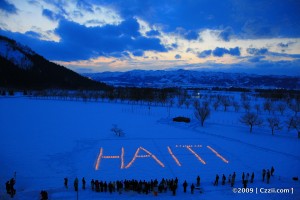
    In a freezing winter at International University of Japan (IUJ), located in Niigata Prefecture of Japan, over 100 students from different countries joined together to build a snow ball in lighting the candle of hope for Haitians who have been suffering from the earthquake devastation since January 12th.

    The snow candle event initiated by the IUJ's Global Concerns Forum and the Photography Club is the culmination of the fund raising efforts which targeted approximately 100,000 YEN (US Dollar 1,000) to contribute to Red Cross of Japan for Haiti Relief Effort.

    All students representing their own country in IUJ were invited to build a small igloo-type structure using snow balls and provide the candles necessary to light them up in the letter shape of “HAITI.” Regardless of the cold weather at 0 to 1 degree, students collaborated to build the snow ball so that the candle light can be seen at the same time of sunset which makes a perfect moment for a silent prayer.

    The video below captures the Snow Candle Lighting event with messages from students representing different countries. The common message of IUJ's students is that: “Haitian people are not alone, the world is praying and supporting you!”

    Interestingly, students from a number of countries including Myanmar, Indonesia, Philippines, and China expressed their deep sympathy for Haiti due to the fact that these countries experienced much devastation from natural disasters in recent years. Their message for Haitian victims is emotionally and precisely clear: “During crisis, our countries got help from the world, it is time that we turn our duty to help you.”

    At the end of the event, students were holding each others hands surrounding the Haiti Snow Candle showing international solidarity for the common cause: Do not Give Up Haiti!

    Snow Ball under Sunset

    Snow Ball under sunset

    HAITI Snow Candle

    HAITI Solidarity

    HAITI Solidarity