
Author: Steve O’Hear

  • Shaka Is A Wind Meter Device For iOS With Gustier Ambitions

    shaka-wind-meter-hand

    After reading about WeatherSignal, a new project from London startup OpenSignal which makes use of the latest sensors in smartphones such as the Samsung Galaxy S4 to crowdsource weather information, I was reminded that I recently caught wind of Shaka, an Estonian startup that has built a wind meter accessory for iOS.

    Due to start shipping next month, the battery-free Shaka Wind Meter plugs into an iPhone, iPod touch, or iPad’s headphone socket, and combined with the existing onboard sensors of Apple’s hardware and the startup’s own app/service, measures, records and displays wind-specific weather data such as current and average wind speed, maximum wind gust, ambient temperature, and wind direction — all mapped to a location via GPS.

    The device’s inspiration and intended use-case was to enable people who take part in wind-related sports, such as windsurfers and kitesurfers, to find good wind conditions. “Forecasts are often inaccurate and the coverage with stationary and connected stations is not good enough,” says Shaka co-founder Raigo Raamat. “We wanted to simplify the process of sharing good wind conditions inside the community.”

    But when he and his two other co-founders — Jens Kasemets and Mihkel Güsson — embarked on the project as far back as 2011 they soon realised “many more communities” could benefit from a device that enabled a smartphone or tablet to be transformed into a “connected weather station” for either private use or for contributing to and accessing real-time crowdsourced weather data. These range from academia, agriculture, emergency services, to golfers and motor sports. “The problem for all these use cases differ, but all need local weather measurements as input,” says Raamat.

    To that end, Shaka has gustier ambitions beyond just a wind meter. Longer term, the startup and graduate of the harware-focused accelerator HAXLR8R (which also provided seed funding), plans to build what Raamat’s calling a platform for the world’s smallest weather station. “We’ll add barometric pressure and humidity sensors to achieve that and also support Android devices,” he says. The startup’s ultimate target is expensive and non-connected legacy handheld weather stations.

    Today the company is monetizing on the hardware only — the accompanying app is free — but in the future it will offer additional paid-for services, along with opening up the platform to partners who want to develop apps on top of Shaka that target various weather-related communities.

  • Where Have All The Physical QWERTYs Gone?

    bbq10-5

    It’s approaching three years since I emailed and got a reply from the late Steve Jobs. The topic of my caffeine-fueled missive that sunny day in June 2010 was the industry’s move towards touch-based interfaces and, specifically, Apple’s one-size-fits-all approach regarding the iPhone’s lack of a physical QWERTY keyboard.

    I have a disability that can make touch and other physically demanding interfaces more challenging, I explained to Jobs, and whereas the mouse-driven GUI that he helped usher in with the Macintosh had inadvertently put me on a level playing field, were touch to ever become the dominant mode of input, it had the potential to turn that world upside down.

    “That’s obviously a bit dramatic”, I wrote on TechCrunch at the time. “There will always be lots of different products on the market, but it’s a possibility nonetheless.” Fast forward to 2013 and what was only a possibility has all but become a reality. Survey the mobile landscape and it’s filled with people fondling their giant slabs of touch, happily typing away on glass.

    At this point I know I’ll likely get ripped apart in the comments. In the battle of the physical vs virtual QWERTY, the market has spoken, they’ll say, and those who don’t favour touch are squarely out of touch. And sadly, the evidence is heavily stacked on their side of the argument.

    Survey the mobile landscape and it’s filled with people fondling their giant slabs of touch, happily typing away on glass

    In the first few years of the iPhone’s existence, a ton of hybrid physical QWERTY/touch smartphones from competitors entered the market, ready to differentiate themselves from Apple by talking up their superior typing experience. But they failed to stop the Cupertino juggernaught. Typing on glass, while not ideal, was good enough. Arguably it wasn’t until Android OEMs ditched their, largely, clunky slide-out keyboards and wholesale copied and then supersized Apple’s all touch form-factor, did they begin to turn back the tide.

    Meanwhile, continues the argument, the likes of Nokia fell by the wayside, plagued by an antiquated user interface that, in a desperate and confused attempt to respond to the market, tried and failed to crowbar in touch before the company finally jumped onto Microsoft’s Windows Phone platform, sans physical QWERTY.

    Furthermore, BlackBerry, which seemingly built its whole business off the back of its physical QWERTY-touting credentials, chose to release its first comeback device as the BB10-powered Z10, another all touch grey slab, rather than the Q10, which combines touch with a physical QWERTY in the best BlackBerry candybar tradition. It’s also been suggested that the Canadian handset maker may even view the Q10’s hybrid approach as a way to wean its traditional customers off a physical keyboard entirely, a gateway device if you will.

    So yes, putting aside the fact that the market can only speak to what is put in front of it — I can’t recall a single candybar QWERTY powered by Android that was anything more than a mid-tier or low end device — it would seem that the market has indeed spoken.

    But it may not have had the final word yet.

    That’s if — and it’s a big if — the BlackBerry Q10, when it finally hits the market next month, surprises everybody and sells in sufficient numbers to smash through the totalitarian all touch screen. And just like the Mac had ensured before it, for this hack and others like me, 2013 won’t be like 1984 after all.

  • Click & Grow Turns To Kickstarter To Seed Its 2nd Gen “Smart Herb Garden”

    7hsCJWNHcpPZH1x-SvWW36xuzBqciwBm1cAgmOW-teg

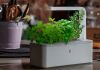
    Another established hardware startup is turning to Kickstarter to help fund its next wares. This time it’s the turn of Click & Grow, maker of the smart garden that lets you grow a plant indoors with little or no intervention. After selling over 50,000 units of its first device, the Palo Alto, U.S. registered company with an R&D lab in Estonia, is launching a crowdfunding campaign to get its second generation product — the Smart Herb Garden — off the ground.

    Hoping to raise a minimum of $75,000, the money will be used to turn a functioning prototype into something production-ready, with a shipping date loosely pegged for September. The Smart Herb Garden builds on Click & Grow’s first product, but with several improvements following feedback from customers; namely that people want to grow more than one plant at a time and that the amount of natural light available in a person’s home is often not enough for healthy plant growth. The new improved version features a built-in LED light, as well as a change in the plant pot part of the design to make it easy to grow three different plants simultaneously, with the same ‘smart’ technology taking care of the heavy lifting. It also plugs into a power socket rather than relying on four AA batteries, while the new design negates the need for a pump or sensor.

    The aim of Click & Grow’s smart garden system is to automatically provide the correct water and nutrient balance needed for indoor plants to grow. The company claims that 3 years of R&D has gone into the Smart Herb Garden, of which the core technology is the growth medium, a nanotech material engineered to “supply plant roots with the right amount of oxygen, water and nutrients at any time”. This is supported by the newly incorporated LED light. In practice, you simply insert the supplied cartridges and fill the reservoir with water. Then power the thing on and — bingo — in a matter of weeks you should see green shoots of awesomeness. If plants are your thing, of course.

    “Very few can afford to launch a new product and fail”

    The Smart Herb Garden starter kit will come with cartridges for basil, thyme and lemon balm. Refills will be available for various herbs, lettuce, mini tomato, chili pepper, and even strawberries, apparently.

    Once it finally reaches market, the Smart Herb Garden is expected to retail for $79 but Kickstarter backers can bag it for $39 for a white model, or at the top tier, $1,000 for a “next generation interactive model”, though the latter is short on details.

    As for why a VC-funded startup would choose to go down the crowdfunding route — Click & Grow has raised over €1.5 million from backers WNB and Primo Holding — founder Mattias Lepp tells TechCrunch that “for makers of novel hardware, Kickstarter is the best place to sense check your ideas before you start assembly lines”.

    It’s hoped Kickstarter will enable the company to validate the market for its new product and get feedback on prices and colour options, dimensions, and the plants that people want to grow. “So I’d say it’s first and foremost a market insights platform,” he says. “And of course, the money also helps at our stage.”

    For hardware companies like Click & Grow who have already had some success and raised funding, it’s not that they can’t afford to start manufacturing a new product, it’s that “very few can afford to launch a new product and fail”, says Lepp.