Author: Steve Spires

  • ACORN Cracks, Barack Obama Signs Health Reform and More in Capital Eye Opener: March 23

    Your daily dose of news and tidbits from the world of money in politics:

    acorn-logo.jpgACORN DEFUNCT: The Association of Community Organizations for Reform Now, otherwise known as ACORN, will be defunct as of April 1, reports the New York Times. The organization has attracted controversy and encountered money trouble ever since conservative activist James O’Keefe secretly videotaped an encounter between himself, posing as a pimp, getting unscrupulous advice from ACORN employees. The group spent a record $120,000 on lobbying the federal government in 2009.

    FINANCIAL REFORM HEADS TO SENATE FLOOR: Coming hot on the heels of the House’s passage of health reform, the Senate Banking Committee yesterday approved Sen. Chris Dodd’s (D-Conn.) financial regulatory reform bill on a party line vote, sending it to the full Senate for consideration. In a surprise move, Republicans on the committee decided to offer no amendments, deciding instead to try to amend the bill before the entire Senate. Dodd — who is retiring — has been working for months to get a bipartisan bill and will likely need a few Republican votes to get his last major piece of legislation passed. The House passed its reform bill last December. According to a CRP analysis, finance, insurance and real estate companies have already contributed more than $100 million at the federal level this campaign cycle. In the House of Representatives, the average Republican has received about $6,300 more than the average Democrat, but in the Senate, the average Democrat has received about $76,000 more than the average Republicans.

    historic-victory-health-obama.jpgHEALTH CARE LOOMS OVER MIDTERMS: Today, President Obama will sign
    the comprehensive health care reform bill passed
    by the House on Sunday
    , and the Senate will began considering the
    associated reconciliation bill. With the main bill passed, many groups
    have now turned their attention to how it will affect the midterm
    elections in November. Some Republicans have decided to run on a promise
    of repealing the bill, while Democrats are trying to emphasize the
    benefits to the voters, according to the Washington
    Post
    . Outside groups are also focusing on the issue. Major
    labor unions have already made clear they will discontinue supporting
    lawmakers who voted against the bill, and may even support primary
    challengers, The
    Hill
    reports. Labor
    unions
    contributed nearly $75 million to federal candidates and
    committees during the 2008 election cycle, mostly to Democrats.
    According to Politico,
    groups on both sides of the abortion debate also plan to support — or
    stop supporting — candidates based on the health vote. Opponents
    and supporters
    of abortion rights contributed a combined $4.6 million during the 2008
    campaign, according to a Center for Responsive Politics tally.

    Have a news tip or link to pass along? We want to hear from you! E-mail us at [email protected].

  • ‘Citizens United’ and Marital Bliss, Student Lenders Get Reconciled and More in Capital Eye Opener: March 17

    Your daily dose of news and tidbits from the world of money in politics:

    Supreme Court small.jpgWIFE OF SUPREME COURT JUSTICE AIMS TO GAIN FROM CITIZENS UNITED: The Supreme Court shook up the world of money-in-politics when it opened the doors to increased corporate spending in the case Citizens United v. Federal Election Commission. One woman who could take advantage of that new channel of money happens to be the wife of one of the justices who sided with the majority to strike down the restrictions on corporation independent expenditures. Virginia Thomas — the wife of Supreme Court justice Clarence Thomas — recently co-founded a non-profit lobbying firm to “organize activism around a set of conservative ‘core principles,’” she told the Los Angeles Times. The Tea Party-inspired group — Liberty Central, Inc. — plans to take donations from individuals as well as corporations, the Times reported. While it is rare to see the spouse of a judge so politically involved, it is not without precedent. Democratic Pennsylvania Gov. Ed Rendell is married to a federal appellate judge.

    According to a Center for Responsive Politics analysis, Virginia Thomas contributed $500 last year to the primary campaign of Marco Rubio, who is challenging Gov. Charlie Crist in the Republican primary for Florida’s open U.S. Senate seat. Rubio is a favorite among conservatives who view Crist as too moderate. Thomas also contributed $500 to Virginia Republican George Allen’s successful 2000 Senate campaign and $500 to the Republican National Committee back in 1992, the year after her husband was nominated to the high court.

    STUDENT LENDERS CRY “NATIONALIZATION”:
    The health care reconciliation process is dominating Capitol Hill, and talk of attaching a package of reforms affecting the student loan industry to the reconciliation legislation have student lenders up in arms, reports The Hill. The Obama administration and many congressional Democrats want to end subsidies to the student loan industry and instead issue more loans directly to students and their families. The bill passed the House in September over the protests of the industry, as Capital Eye previously reported, but the Senate has yet to act on it. The industry and its lobbyists are fighting tooth and nail to keep what they call a “government takeover” out of the reconciliation bill. SLM Corp — the biggest student lender, and parent company of Sallie Mae — spent $3.48 million federal lobbying last year, and dozens of smaller companies such as the Education Credit Management Corp spent millions more as well. Then entire finance and credit industry spent more than $35 million on lobbying last year.

    Thumbnail image for sunshineweeklogo.jpgWEDNESDAY SUNSHINE: Yesterday, Rep. Steve Israel (D-N.Y.) introduced the Public Online Information Act, which would require the executive branch to make public information available on the Internet. Besides making information permanently available to the public, the bill would allow private citizens to file “POIA requests,” shaped after Freedom of Information Act (FOIA) requests. The Center for Responsive Politics joined 26 other organizations in signing a letter urging Congress to consider the bill. Check out this video by the Sunlight Foundation for more info on POIA.

    Have a news tip or link to pass along? We want to hear from you! E-mail us at [email protected].

  • Google, Facebook Among Young Tech Companies Firing Up Lobbying Efforts

    firecomputer.jpgIn 2003, the first year that Internet company Google began lobbying the federal government, it spent a paltry $80,000 — a tiny fraction of what major computer and Internet companies that year spent.

    A mere six years later in 2009, Google spent more than $4 million on federal lobbying, an increase by a factor of 50 that vaulted it into the rarefied realm of seven-figure federal lobbying clients.

    “We established a Washington presence because we felt like it was important to give our users a voice in Washington,” Google spokeswoman Mistique Cano told Capital Eye. “Technology can be complicated. We absolutely believe taking the time to help people understand our business is a worthy investment. Technology is only going to become a bigger part of our lives and the economy.” 
     
    Google’s exponential increase in federal lobbying is representative of many Internet companies. And few industries have grown as quickly as the computer and Internet industry has.

    The industry experienced a meteoric economic rise during the 1990s, culminating with the “Tech Bubble” in 2000. Even after the bubble burst, the industry quickly rebounded to become the premier American business success story — and as profits rose, so did expenditures on federal lobbying.

    The industry spent $38.8 million on federal lobbying in 1998 and $56 million two years later, at the height of the Tech Bubble. By contract, in 2009, the industry spent nearly $120 million. In the last decade, computer and Internet companies spent more than $1 billion on federal lobbying, the fourth highest amount of any of the more than 120 industries the Center for Responsive Politics tracks.

    This increase in lobbying activity by computer and Internet companies is predictable, said Steven Schier, a political science professor at Carleton College in Minnesota.

    “As the economy changes, so does the world of interest groups,” he explained. “As more firms have emerged in that sector and become more economically successful they have a bigger stake in how the government affects them. So really it’s inevitable.”

    Ten years ago, 925 lobbyists represented 201 computer and Internet industry clients.

    Now, more than 1,350 lobbyists represent more than double the number of industry clients — 427. 

    In 2009, the industry employed the third most lobbyists of any industry — only the pharmaceutical and education industries employed more lobbyists. That means that computer and Internet industry lobbyists outnumber members of Congress more than 2-to-1.

    The computer and Internet industry is different from most other industries because of the large number — literally hundreds — of small- and medium-sized companies that populate it. Many of these companies individually spend very little on lobbying, but taken together they account for the industry’s increased clout.

    The top 20 computer and Internet-related companies and organizations in 2009 in terms of federal lobbying expenditures are:

     Company / organization  Federal lobbying, 2009
    Microsoft $6,720,000
    IBM $5,420,000
    Oracle $5,100,000
    Entertainment Software Association $4,604,000
    Google $4,030,000
    Intel $3,899,260
    Hewlett-Packard $3,710,000
    Dell $2,925,000
    SAP Aktiengesellschaft $2,887,087
    UC Group Ltd. $2,770,125
    VeriSign $2,400,000
    Information Technology Industry Council $2,106,107
    Intuit $2,010,000
    Yahoo! $1,970,000
    eBay $1,841,400
    Amazon.com $1,810,000
    Texas Instruments $1,790,000
    Business Software Alliance $1,650,000
    Computer Sciences Corp. $1,590,000
    Technology Association of America $1,570,900


    Newer companies enter the fray every year. In 2009, the popular social networking site Facebook spent more than $207,000 on federal lobbying — the first year it ever lobbied at the federal level.

    Facebook’s Public Policy Director Tim Sparapani says the company did not lobby directly on any legislation, but was primarily involved in education and advocacy.

    “Every time you have a new technology, there is always going to be concern from people that it might be used inappropriately or be confusing for people,” Sparapani said. “And its important for us to tell the great Silicon Valley story about Facebook and its innovations, so they understand where the company came from and where it’s going and how it’s changing communication.”

    Of course, there are also companies that undertake massive lobbying efforts.

    In addition to Google‘s $4 million in 2009, IBM spent $5.34 million, and Microsoft spent the most, with $6.72 million in federal lobbying expenditures for the year.

    Much of the increased lobbying can be tied to increased legislative and regulatory action.

    “How many committees are involved in cyber security? Homeland security, foreign affairs, judiciary, energy and commerce — you have more and more committees taking a look at what’s going on, on the Internet,” said Martha Johnston, GoDaddy’s director of government relations. “The legislation passed made it easier for GoDaddy to identify illegal and nefarious activity, and any tools that Congress can give us to help, we want that.”

    The Go Daddy Group — owner of the popular website domain registrar GoDaddy.com — expanded its lobbying effort from $45,000 in 2005 to $460,000 in 2006. In 2009, the company spent $715,000.

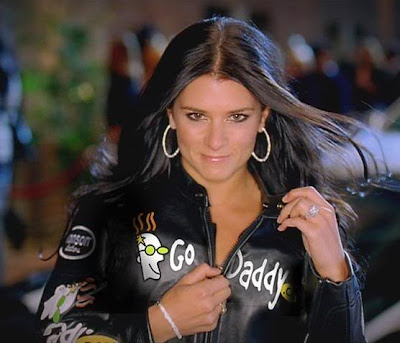
    The company, which has recently gained notoriety for its racy television advertisement campaign featuring IndyCar driver Danica Patrick, lobbied primarily on issues regarding privacy, cyber security and online child protection.

    One of Johnston’s primary roles, as she sees it?

    “To educate and make sure Congress understands what it’s looking at and what it’s proposing to do,” she said. “The impact of that is very important to Internet companies. With this administration you have more involvement … so there’s more work to be done.”

    “If you’re not here and they start talking about you, you have trouble,” Johnston said.

    The sharp increase in lobbying seems to have netted positive results for some companies.

    For instance, one major winner was Intuit Inc., the maker of TurboTax, the do-it-yourself tax software.

    Intuit doubled its federal lobbying effort from around $1 million to $2 million between 2006 and 2009. According to the Center for Responsive Politics’ research, most of Intuit’s lobbying efforts during the time was devoted to ensuring the IRS would prohibit taxpayers from directly filing their taxes electronically, thus requiring them to use software like TurboTax. The company ultimately succeeded.

    Intuit did not return messages requesting comment.

    “One of the primary motivations of any interest group is defense,” said Schier, the political science professor. “They have big material interests that can be greatly affected by government. This [lobbying] is a necessity for any mature sector of the economy. As new players come on, they’re dealing with a lot of unknowns.”

    For example, VeriSign — owner of top dot-com and dot-net Internet domains — increased its lobbying effort from $468,000 in 2005 to nearly $7 million in 2006, the year the company renewed many of its contracts with the Commerce Department. VeriSign’s lobbying expenditures have remained far above 2005 levels ever since, totaling $2.4 million in 2009. Messages requesting comment for this story were not returned.

    But the fight over “net neutrality,” which aims to regulate companies seeking to restrict access to Internet content, applications and services, best displays the growing influence of the computer and Internet industry. Internet regulations such as net neutrality being considered by Congress and the FCC are strongly opposed by large Internet providers — telecom giants like AT&T, Verizon and Qwest Communications — but supported by many computer and Internet companies.

    Historically, telephone utilities such as AT&T have had tremendous influence on policy makers. But net neutrality has a fighting chance of passage largely because of the support from the computer and Internet industry.

    This could represent a tectonic shift in political influence. Consider that the computer and Internet industry now spends the most money on lobbying of any industry within the broad communications/electronics sector. Computer and Internet companies in 2009 ultimately spent more on federal lobbying than all telephone utilities and telecom services and equipment companies combined.

    While the industry as a whole continues to exercise increasing influence in Washington, the dynamic within the industry’s lobbying front is clearly shifting.

    Over the past three years, the lobbying expenditures of large and well-established companies like Microsoft, IBM and Texas Instruments have been steadily decreasing. On the other hand, the expenditures of relatively new companies have been skyrocketing.

    There is plenty of potential for newer Internet companies to continue to gain ground on the more established companies.

    “The relative size of our office compared to Microsoft or Google, we’re a tiny fraction of their size,” Facebook’s Sparapani said.

    Johnston and Schier also predict the industry will only continue to increase its lobbying.
     
    “For Internet companies, we’re just getting started. The other companies have been here for decades. We’re still feeling our way,” said Johnston. “I think you’ll see more of it, companies you haven’t thought of before having D.C. offices. Some are small some are large.”

    Said Schier: “They [computer and Internet companies] are going to be a major interest player for a long time.”

  • Barack Obama’s Debt Commission Appointees No Strangers to Cutting Checks for Big Political Contributions

    DollarSign.jpgPresident Barack Obama announced new appointees to the Bipartisan National Commission on Fiscal Responsibility and Reform on Friday. All of the nominees are successful and influential in their respective fields, as well as politically connected and well acquainted to the world of money-in-politics.

    Combined, Obama’s six appointees to the commission have contributed nearly $750,000 to federal candidates, parties and political action committees over the last two decades, the Center for Responsive Politics has found.

    In mid-February, Obama appointed former Sen. Alan K. Simpson (R-Wyo.) and former White House chief of staff and Democratic senate candidate Erskine Bowles as co-chairs of the debt commission.

    His appointments Friday round out his six slots on the panel. The new nominees include Honeywell chief executive David Cote, businesswoman Ann Fudge, Brookings Institution senior fellow Alice Rivlin and Service Employees International Union Presindet Andy Stern.

    Co-chair Erskine Bowles and his wife, Crandall, have contributed nearly $464,000 to federal candidates, parties and committees since 1989, the Center for Responsive Politics has found. Ninety-seven percent of that sum went to Democrats. Only $200 went to Republican candidates, and the rest went to political action committees such as EMILY’s List.

    Bowles, who was President Bill Clinton’s White House chief of staff, contributed (along with his wife) $17,300 to Hillary Clinton’s various senatorial and presidential campaigns. Crandall Bowles also contributed the legal maximum of $4,600 to Obama’s 2008 campaign.

    The Bowles are true patrons of the Democratic Party, having contributed a combined total of $202,500 to the Democratic National Committee, Democratic Senatorial Campaign Committee and Democratic Congressional Campaign Committee over the last two decades.

    In addition, they have contributed $1,000 or more to nearly five-dozen Democratic politicians since the mid-1990s, a Center for Responsive Politics analysis found, including former Senate Majority Leader Tom Daschle ($16,000), Rep. John Spratt of South Carolina ($11,900) and former U.S. Sen. John Edwards of North Carolina ($6,500).

    Alan Simpson, the other co-chair of the commission, became a registered lobbyist after retiring from Congress. He passed through the revolving door to become a partner with Tongour Simpson Group, a lobbying firm run by one of his former staffers.

    Since 1991, Simpson has contributed about $30,500 to federal candidates, parties and PACs, the Center for Responsive Politics has found. Ninety-seven percent of this sum went to Republicans. Only $250 went to Democratic candidates.

    The biggest recipient of Simpson’s contributions has been the Republican Party of his home state of Wyoming, which received $10,650. Simpson contributed a combined $2,200 to George W. Bush’s presidential campaigns and about $2,800 to the various campaigns of Rep. Barbara Cubin (R-Wyo.).

    Another nominee, SEIU President Andy Stern, contributed $750 to Obama’s presidential campaign and has contributed nearly $5,000 to the SEIU’s political action committee over the last two campaign cycles, a Center for Responsive Politics analysis found.

    The union’s PAC also aided Obama with more than $31 million in independent expenditures during the 2008 presidential campaign. And individuals and PACs associated with the SEIU contributed more than $2.2 million to Democrats during the 2008 cycle, including nearly $75,000 to Obama.

    Since 1989, Stern has contributed almost $12,000 to federal candidates, parties and PACs. The top recipient of his campaign cash has been Louisiana Democrat Willie Landry Mount, to whom he gave $5,000 in 2004. Stern was also a registered lobbyist for the SEIU until 2006.

    Appointee David Cote, the chief executive officer of Honeywell International, is no stranger to the White House. Last year, he was selected by Obama to co-chair the U.S.-India CEO Forum. The president also recently namedropped Cote as one of his favorite CEOs, as Capital Eye reported. And Cote has previously dined at the White House with Obama and other business leaders.

    Cote has contributed around $35,000 to federal candidates, parties and PACs since 1989, the Center for Responsive Politics has found.

    Cote is a Republican who contributed $2,500 to George W. Bush’s 2000 campaign, but has nonetheless only given 25 percent of his contributions to Republicans. The other three-quarters have gone to the political action committees of his employers.

    Since 2002, Cote has contributed nearly $10,500 to Honeywell’s PAC. Previously, he contributed $10,300 to General Electric’s PAC and $6,000 to TRW’s PAC, a Center for Responsive Politics analysis has found.

    Honeywell’s PAC handed out more than $3.2 million during the 2008 campaign cycle, with a fairly even split between Democrats and Republicans. The PAC is currently the fifth most generous committee to candidates in the 2010 cycle, having contributed more than $1.4 million to federal candidates, 61 percent to Democrats. During the 2008 election cycle, employees of Honeywell contributed nearly $45,000 to Obama.

    Appointee Alice Rivlin is Harvard-educated economist, and she is currently a senior fellow at the Brookings Institution. She is a former vice chair of the Federal Reserve Board, and was also the first director of the Congressional Budget Office and director of the Office of Management and Budget under President Clinton.

    Rivlin has contributed more than $125,000 to federal candidates, parties and PACs since 1989, the Center for Responsive Politics has found. Of this sum, 83 percent went to Democrats. The remainder went to political action committees such as EMILY’s List, which has been the largest recipient of her contributions over time (at $18,500).

    Rivlin contributed $4,600 to Obama’s 2008 presidential campaign — the maximum amount allowed by federal law. She also contributed $4,800 to Hillary Clinton’s senatorial and presidential campaigns.

    Furthermore, Rivlin contributed $2,000 to the unsuccessful 2004 senate campaign of debt commission co-chair Erskine Bowles, a Center for Responsive Politics analysis has found. Rivlin has also contributed $7,900 to the DNC and $2,000 to the DSCC.

    Obama’s final pick, Ann Fudge, is the former CEO of advertising firm Young & Rubicam Brands. She worked previously for General Mills and Kraft Foods. Fudge was also a campaign finance committee member for Obama’s 2008 presidential campaign, and a bundler who brought in between $100,000 and $200,000 in contributions.

    Fudge and her husband Richard have contributed more than $78,000 to federal candidates, parties and PACs over the last two decades, the Center for Responsive Politics has found. Of this amount, 97 percent has gone to Democrats; among their itemized contributions, not a single dollar went to Republicans.

    The Fudges each donated the maximum $4,600 to Obama’s 2008 campaign, and they also contributed more than $50,000 to the DNC.

    The debt commission, established by executive order, will have 18 members total — six chosen by the Senate leadership, six by the House leadership, and six chosen by the President.

    Senate Majority Leader Harry Reid (D-Nev.) already made his three appointments: Sens. Kent Conrad (D-N.D.), Max Baucus (D-Mont.) and Dick Durbin (D-Ill.).

    Below is a chart of all federal political contributions by each of Obama’s appointees to the debt commission, along with how much of that cash has gone to Democrats, Republicans and non-party affiliated groups, as well as President Obama and President Bush.

     Name Total Party-Coded $ to Dems $ to GOP $ to Obama $ to Bush Not Party-Coded
    Erskine & Crandall Bowles $463,933 $450,533 $450,333 $200 $4,600 $0 $13,400
    Alice M. Rivlin $126,550 $106,050 $105,300 $750 $4,600 $0 $20,500
    Ann M. & Richard E. Fudge $78,210 $76,134 $76,134 $0 $6,900 $0 $2,076
    David M. Cote $36,668 $9,600 $0 $9,600 $0 $2,500 $27,068
    Alan K. Simpson $30,474 $29,724 $250 $29,474 $0 $2,200 $750
    Andrew L. Stern $11,998 $7,150 $6,750 $400 $750 $0 $4,848
    Total $747,833 $679,191 $638,767 $40,424 $16,850 $4,700 $68,642

    CRP senior researcher Douglas Weber, researcher Carolyn Sharpe and money-in-politics reporter Michael Beckel contributed to this report.

  • Politicians Have Numerous Options for Unused Campaign Cash After Leaving Elected Office

    moneycat.jpgCorrection: This article originally stated that Rep. Steve Buyer is under federal investigation. It is unknown whether this is true. While the Office of Congressional Ethics acknowledged it has received the complaint filed against Buyer by Citizens for Responsibility and Ethics in Washington, a spokesman declined to confirm or deny whether an active investigation is taking place. When asked if the Office of Congressional Ethics or the Internal Revenue Service (with which CREW also filed a complaint) had contacted Buyer’s office about an investigation, Buyer spokeswoman Anjulen Anderson stated: “Not that I know of. Not to my knowledge.”

    The recent retirement announcement of U.S. Sen. Evan Bayh (D-Ind.) shook Capitol Hill.

    Bayh had been polling strong and was expected to win re-election to a third term. He has also been fund-raising like he was running for re-election, generating nearly $9 million since his last election in 2004. His campaign committee boasts nearly $13 million in cash on hand. But Bayh had had enough of electoral politics, he said. 

    So now that Bayh is leaving elected office when his term ends early next year, where does all that money go?

    “The bottom line is no personal use, obviously,” Judith Ingram, a Federal Election Commission spokeswoman, told Capital Eye. “In addition, he can donate it to charity, or contribute it to the national party committee. He can contribute up to $2,000 to another candidate’s committee, put it into a PAC, convert his campaign committee into a PAC. He could do nothing with it … if he decided to run again he could dip back into it.”
     
    After retiring — or losing an election — politicians are not required to close down their campaign committees; they may keep them running indefinitely. Sometimes they do this to pay off campaign debt, or, to keep their war chest full if they were to ever seek office again. After paying down any debts, money is often spent to “wind down” the committee and pay off any office expenses.

    For those who still have cash on hand, the FEC sets guidelines regarding how candidates’ committees may spend campaign funds. Other than the prohibition on personal use, there are few limitations. Punishments for violating the prohibition on personal use range from substantial fines to possible prison time.

    “The overarching rule is that it can’t be converted to personal use, but that it can be used for any other lawful purpose,” Campaign Legal Center attorney Paul Ryan explained.

    Despite the many options open to retiring members, national party committees will almost certainly pressure Bayh and other retirees to transfer a significant portion of their leftover campaign funds to the party coffers. The law allows candidates to transfer unlimited amounts of money to national party committees such as the Democratic National Committee and the Republican National Committee, as well as party campaign committees such as the Democratic Congressional Campaign Committee and National Republican Congressional Committee.

    Such money can be substantial.

    According to a Center for Responsive Politics analysis, the 25 senators and representatives who have so far announced their retirement have a combined $31 million in cash on hand: The 11 retiring senators have $24 million, while 14 representatives hold the remaining $7 million.

    Democrats control far more of this “leftover” money than Republicans, $25.4 million compared to $5.5 million. A large portion of the Democrats’ advantage, however, comes from Bayh’s impressive $13 million war chest, though even without it they beat the GOP in cash by more than 2-to-1.

    In contrast to the clear restrictions on campaign committee funds, rules regarding Leadership PACs are far less restrictive.

    Of particular note: the issue of personal use.

    “The ban on personal use does not apply to Leadership PACs once the individual leaves Congress,” Ryan said. The law “only applies to principle campaign committees, not Leadership PACs. The FEC for years has been saying the personal use ban should be expanded to all committees. House and Senate rules arguably ban any use of personal funds, but once they leave…they are not subject to House or Senate rules.”

    According to a written legislative recommendation by the FEC to Congress, “no corresponding provision covers individuals who convert contributions received by party committees, separate segregated funds, leadership PACs and other political committees, to their own personal use.”

    The FEC recommended an amendment to “remedy this growing problem.”

    “It [the law] is not explicit …Our regulations don’t cover all possible violations … All these things we would look at on a case-by-case basis. If someone files a complaint the commission would look into it,” the FEC’s Ingram said.

    This lack of clear regulation raises major questions surrounding the use of Leadership PACs.

    “They have become just big slush funds … A very small amount of the money in leadership PACs is passed on to other candidates. They have been abused in this manner since the mid to late 1990s,” said Ryan.

    Of the 25 congressional retirees-to-be, 18 have leadership PACs, which when combined, today have $850,000 in cash on hand, according to the Center’s analysis.

    The biggest PAC by far is Bayh’s All America PAC, with $439,500 in cash on hand. The second largest PAC, the White Mountain PAC belonging to Sen. Judd Gregg (R-N.H.), has $72,722 cash on hand.

    The House member with the most PAC money on hand is Rep. Steve Buyer (R-Ind.). His Storm Chasers PAC has nearly $43,500 remaining.

    As Capital Eye previously reported, Buyer has had ethics complaints filed against him.

    Bayh’s press office declined to comment on what the senator may do with his surplus campaign cash, referring Capital Eye to Bayh’s public statements regarding his remaining campaign money:

    “Well, I haven’t decided yet. I’m going to take some of it to help whoever our nominee is in Indiana. I think we have got a good chance to win that election. And so I’d like to be very supportive financially … Number two, I would like to help like-minded Democrats,” Bayh told CNN’s Wolf Blitzer soon after announcing his retirement. (Read the transcript here).

    Another of Blitzer’s questions — and Bayh’s response — demonstrate how complicated and convoluted the campaign cash issue is:

    “How much can you give that nominee legally?” Blitzer asked.

    “Well, I don’t know. That’s a job for the lawyers,” Bayh replied.

    Phone messages and e-mails left with the offices of Buyer and Gregg requesting comment for this story were not returned.

  • Blue Dog Democrats Display Stronger Than Average Fund-Raising in 2009

    bluedog.jpgWhether it was health care reform, cap and trade climate proposals or financial regulatory reform, Blue Dog Democrats were often at the center of Congress’ top legislative fights.

    This caucus of 54 moderate and conservative House Democrats was also at the center of political fund-raising in 2009, the Center for Responsive Politics has found.

    Members of the Blue Dog Coalition raised at least $10 million overall each quarter last year, for a total of nearly $41.5 million raised.

    These lawmakers collectively spent nearly $18.5 million, and they ended the year with $43.25 million in cash on hand, a CRP analysis has found.

    Blue Dogs raised an average of $768,000 in 2009, spent almost $342,000 and ended the year with an average of more than $800,000 in cash on hand, the Center for Responsive Politics has found. The median amount raised by Blue Dogs was about $651,000 — with a median of about $260,000 spent and about $703,000 in the bank at the end of the year.

    By comparison, the average non-Blue Dog Democratic House member raised about $693,000 last year. That is, Blue Dogs on average raised about 11 percent more — nearly $75,000 — than the average non-Blue Dog Democrat in the House, the Center for Responsive Politics has found.

    That disparity is even greater when median amounts raised are compared: The median Blue Dog netted nearly $125,000 more than the median non-Blue Dog House Democrat — a difference of about 25 percent more for Blue Dogs.

    As a whole, all House Democrats raised an average of about 12 percent more than their GOP counterparts in 2009, and House Democrats overall ended the year with about 17 percent more cash on hand on average than House Republicans, the Center for Responsive Politics has found.

    Total Raised Total Spent Cash on Hand
    Blue Dog Dem Total $41,468,941 $18,448,430 $43,252,486
    Blue Dog Dem Average $767,943 $341,638 $800,972
    Non-Blue Dog Dem Total $140,043,424 $86,770,146 $145,510,682
    Non-Blue Dog Dem Average $693,284 $429,555 $720,350
    All Dems Total $181,512,365 $105,218,576 $188,763,168
    All Dems Average $709,033 $411,010 $737,356
    House GOP Total $112,286,654 $63,297,862 $111,974,664
    House GOP Average $634,388 $357,615 $632,625

    As Capital Eye has previously reported, Blue Dogs have typically received more campaign cash from health insurers than non-Blue Dog Democrats. They have also received more money from Wall Street interests as well.

    In 2009, the biggest Blue Dog fund-raisers were:

    • Freshman Rep. Scott Murphy (D-N.Y.): Murphy was elected in a special election in March 2009, and he raised the most of any Blue Dog, by far, at $3.25 million. The vast majority — more than $2.15 million — was raised during the first quarter, when Murphy participated in the special election to fill Kirsten Gillibrand’s seat after she was appointed to the U.S. Senate. Murphy won the election by only a few hundred votes. He ended the year with $720,000 in cash on hand, a bit below average for the group.
    • Rep. Charles Melancon (D-La.): Despite raising absolutely nothing during the first two quarters of the year, Melancon ended 2009 as the second biggest fund-raiser among Blue Dogs and as the Blue Dog with the most cash on hand at the end of the year, at more than $2 million in the bank. Melancon is challenging incumbent Sen. David Vitter (R-La.) in a U.S. Senate bid this fall. And it’s shaping up to be an expense race: Vitter currently has over $4.5 million on hand.
    • Rep. Patrick J. Murphy (D-Penn.): Murphy, the first veteran of the Iraq War elected to Congress, won a narrow victory to Congress in 2006. In 2009, he raised nearly $1.5 million. He also spent $700,000 and ended the year with around $850,000 cash on hand. Several Republicans are vying to challenge Murphy this November, in what could be a potentially competitive re-election contest.

    Like Melancon, Rep. Brad Ellsworth (D-Ind.) has signaled a desire to serve in Congress’ upper chamber. Ellsworth is running for retiring Sen. Evan Bayh’s old seat in Indiana. Ellsworth was already facing a tough re-election, and could face an even tougher battle for the Senate. He raised a below average $464,000 in 2009, only spent $179,000 and has $518,000 left in his war chest. Blue Dog compatriot Rep. Baron Hill (D-Ind.) is also mulling a bid to replace Bayh. Hill raised $896,000 in 2009, spent $168,500 and ended the year with $729,000 in cash on hand.

    Many of the Blue Dogs are also among the most vulnerable incumbents going into the 2010 midterm elections, including several from Republican-leaning districts where the Democratic agenda has faced strong opposition. Some of the potentially most vulnerable Blue Dogs are some of the most conservative members of the group, including:

    • Rep. Bobby Bright (D-Ala.), who raised $750,000 in 2009, and ended the year with $560,000 in the bank — far less than the average Blue Dog;
    • Rep. Walter Minnick (D-Idaho), who raised an above-average $1.16 million for the year, and has $816,000 in cash on hand;
    • Rep. Frank Kratovil (D-Md.), who also raised an above average $1.08 million in 2009, and has $855,000 in the bank; and
    • Rep. Travis Childers (D-Miss.), who raised a slightly above-average $822,000 after experiencing a particularly weak fourth quarter. He has a below-average $550,000 on hand.

    All four of these lawmakers voted against the House’s comprehensive health care reform bill, as well as President Barack Obama’s first budget proposal last year. All but Childers voted against the stimulus (although Kratovil joined Childers in supporting the stimulus after it emerged from a conference committee). All but Kratovil voted against the cap-and-trade climate bill. Bright was also one of 27 Democrats to oppose the Democrats’ financial regulatory reform bill, while the other three supported it.

    The Blue Dog PAC — which aims to help vulnerable coalition-members — has also gained influence in recent years, more than doubling the amount of money it raised between the 2006 and 2008 election cycles. In 2006, the PAC raised $1.2 million; in 2008, $2.6 million. So far, during the 2010 cycle, the PAC has raised another $1.4 million, and currently has more than $1.6 million in cash on hand. Among its top corporate PAC contributors are a host of well-known pharmaceutical companies and health care associations, electrical utilities, and banks and financial firms.

    Blue Dog PAC Treasurer Rep. Mike Thompson (D-Ca.) had a good fund-raising year, too. He collected $900,000 and ended the year with more than $1.4 million in the bank.

    One Blue Dog also made headlines in 2009 when he bolted from the coalition. Freshman Rep. Parker Griffith (R-Ala.) switched parties and joined the GOP at the end of last year. In 2009, he raised more than the average Blue Dog, about $965,200, spent about $300,000 and ended the year with nearly $715,000 on hand. Griffith’s party switch prompted a mass resignation of his staff, and also caused ire among many of his Democratic donors, including Democratic Congressional Campaign Committee Chairman Rep. Chris Van Hollen (D-Md.). Griffith promised to return campaign contributions, but has clarified that only donations given this cycle will be returned, saying that funds given in 2008 have already been spent.

    Below is a table of the total amounts raised and spent by all Blue Dog Democrats, along with their cash on hand balance at the end of 2009.

    You can download a spreadsheet of this information, including breakdowns on fund-raising and expenditures each quarter, for yourself here: *Blue Dogs 2009.xls. (Remember, if you use these data, be sure to credit CRP.)

    Name Total Raised Total Spent Cash on Hand
    Rep. Jason Altmire (D-Pa.) $1,267,457 $301,836 $979,140
    Rep. Michael Arcuri (D-N.Y.) $704,334 $320,449 $415,292
    Rep. Joe Baca (D-Calif.) $347,654 $295,142 $115,286
    Rep. John Barrow (D-Ga.) $935,274 $281,353 $678,160
    Rep. Marion Berry (D-Ark.) $430,464 $322,294 $572,803
    Rep. Sanford D Bishop Jr (D-Ga.) $415,007 $388,884 $337,618
    Rep. Dan Boren (D-Okla.) $473,533 $198,846 $1,387,679
    Rep. Leonard L Boswell (D-Iowa) $583,397 $223,753 $462,193
    Rep. Allen Boyd (D-Fla.) $1,039,029 $793,959 $1,402,778
    Rep. Bobby Bright (D-Ala.) $752,061 $232,926 $561,967
    Rep. Dennis Cardoza (D-Calif.) $487,851 $293,336 $481,948
    Rep. Chris Carney (D-Pa.) $681,581 $230,312 $483,746
    Rep. Ben Chandler (D-Ky.) $571,909 $107,714 $1,587,636
    Rep. Travis W Childers (D-Miss.) $822,777 $251,814 $550,303
    Rep. Jim Cooper (D-Tenn.) $298,937 $131,979 $440,784
    Rep. Jim Costa (D-Calif.) $499,586 $222,583 $586,233
    Rep. Henry Cuellar (D-Texas) $625,830 $345,903 $536,962
    Rep. Kathleen Dahlkemper (D-Pa.) $903,317 $213,824 $683,890
    Rep. Lincoln Davis (D-Tenn.) $403,890 $202,552 $220,265
    Rep. Joe Donnelly (D-Ind.) $720,090 $253,893 $751,133
    Rep. Brad Ellsworth (D-Ind.) $464,213 $178,879 $518,101
    Rep. Gabrielle Giffords (D-Ariz.) $1,191,376 $264,634 $1,596,239
    Rep. Bart Gordon (D-Tenn.) $557,657 $338,429 $1,239,633
    Rep. Jane Harman (D-Calif.) $456,834 $240,806 $354,461
    Rep. Stephanie Herseth Sandlin (D-S.D.) $518,597 $254,753 $362,406
    Rep. Baron Hill (D-Ind.) $896,143 $168,478 $728,732
    Rep. Tim Holden (D-Pa.) $353,256 $196,177 $674,088
    Rep. Frank M Kratovil Jr (D-Md.) $1,081,941 $243,519 $855,253
    Rep. Mike McIntyre (D-N.C.) $496,071 $241,796 $854,898
    Rep. Betsy Markey (D-Colo.) $1,179,796 $332,169 $869,217
    Rep. Jim Marshall (D-Ga.) $247,965 $112,187 $475,311
    Rep. Jim Matheson (D-Utah) $715,378 $176,152 $1,241,721
    Rep. Charles Melancon (D-La.) $1,962,860 $740,071 $2,000,448
    Rep. Mike Michaud (D-Maine) $482,380 $220,876 $520,836
    Rep. Walter Clifford Minnick (D-Idaho) $1,163,561 $353,887 $816,077
    Rep. Harry E Mitchell (D-Ariz.) $837,788 $205,442 $766,310
    Rep. Dennis Moore (D-Kan.) $460,532 $192,102 $443,115
    Rep. Patrick J Murphy (D-Pa.) $1,490,439 $704,598 $847,753
    Rep. Scott Murphy (D-N.Y.) $3,255,765 $2,534,116 $721,648
    Rep. Glenn Nye (D-Va.) $1,095,879 $276,623 $852,210
    Rep. Collin C Peterson (D-Minn.) $526,478 $404,153 $619,667
    Rep. Earl Pomeroy (D-N.D.) $1,153,664 $428,033 $1,368,524
    Rep. Mike Ross (D-Ark.) $1,068,743 $581,788 $1,117,855
    Rep. John Salazar (D-Colo.) $676,561 $294,216 $847,099
    Rep. Loretta Sanchez (D-Calif.) $719,807 $278,779 $905,923
    Rep. Adam Schiff (D-Calif.) $552,429 $422,686 $1,782,571
    Rep. Kurt Schrader (D-Ore.) $698,098 $184,255 $563,246
    Rep. David Scott (D-Ga.) $365,903 $268,906 $99,564
    Rep. Heath Shuler (D-N.C.) $563,822 $237,311 $1,270,216
    Rep. Zachary T Space (D-Ohio) $1,309,288 $354,276 $1,206,177
    Rep. John Tanner (D-Tenn.) $463,001 $415,545 $1,421,766
    Rep. Gene Taylor (D-Miss.) $238,949 $213,612 $225,779
    Rep. Mike Thompson (D-Calif.) $907,693 $609,309 $1,410,223
    Rep. Charlie Wilson (D-Ohio) $352,096 $166,515 $439,603
    Total: $41,468,941 $18,448,430 $43,252,486
    Average: $767,943 $341,638 $800,972

    CRP Senior Researcher Douglas Weber and Money-in-Politics Reporter Michael Beckel contributed to this report.

    Reblog this post [with Zemanta]

  • Rep. Patrick Kennedy Headlines Week of Prominent Political Retirements

    patrickkennedy.jpgThis week has seen a string of high-profile retirements in Washington D.C., including Rep. Vernon Ehlers (R-Mich.), Rep. Lincoln Diaz-Balart (R-Fla.) and lobbyist Billy Tauzin, the president of Pharmaceutical Research and Manufacturers of America (PhRMA). In addition, Rep. Steve Buyer (R-Ind.) last month announced his retirement under allegations of ethics transgressions.

    To cap the week off, Rep. Patrick Kennedy (D-R.I.), son of the late Sen. Ted Kennedy, announced today in a video on his website that he would not seek re-election after 16 years in the U.S. House.

    His retirement means that come next year, Congress will be without a Kennedy for the first time since 1962, when his father was first elected to the Senate. Except for 1960-1962 — when JFK vacated his Senate seat to become president — there has been a Kennedy in Congress since 1946, the year JFK was first elected to the House.

    So far, Kennedy is the 14th Democrat to announce his or her retirement this year. Eighteen Republicans have also announced their retirement.

    Kennedy was first elected to the House in 1994 and represented Rhode Island’s 1st District, where he was repeatedly re-elected by comfortable margins. Recent polling, however, indicated he was facing his toughest re-election bid yet in 2010, according to Politico. He was, however, still favored to win.

    During his congressional career, Kennedy’s biggest campaign contributors were lawyers and law firms. The industry contributed nearly $1.52 million to his campaigns.

    Other supportive industries include real estate ($536,128), health professionals ($528,577) and securities and investment firms ($457,025). Over the course of his career, Kennedy raised more than $14 million in campaign contributions. He is retiring with around $450,000 of campaign cash remaining on hand. (For more information on how he may spend this money, see Federal Election Commission rules here.)

    Kennedy also has a leadership PAC, Rhode Island PAC, which spent $186,000 during the 2008 election supporting Democratic candidates. Top industries contributing to his PAC include casinos/gambling, building trade unions and law firms.

    While in the House, Kennedy has been a strong advocate for the mentally ill and people afflicted with depression and addiction. He also is a major supporter of health care reform, as his father was. Kennedy’s crowning legislative achievement was helping to push through legislation to improve health insurance for those with mental illness, he recently told Rhode Island Monthly in an interview.

    Along with carrying his famous surname, Kennedy publicly battled with personal problems including depression, a drunk driving accident outside the U.S. Capitol and alcohol addiction that landed him in rehab.

    Kennedy’s retirement is expected to set off a fierce primary in the solidly Democratic district.

    Reblog this post [with Zemanta]

  • Nuke Commission Nominee William Magwood Faces Questions About Energy Industry Ties

    williammagwood.jpgGovernment watchdog and environmentalist groups are accusing William Magwood, President Barack Obama’s nomineee to the independent Nuclear Regulatory Commission, of conflicts of interest that may complicate his appointment.

    Magwood faces a confirmation hearing Tuesday before the Senate Environment and Public Works Committee, where lawmakers will question him on whether he’s fit to serve on the commission, which is tasked with protecting public health, safety and the environment where nuclear energy issues are concerned.

    Magwood certainly has experience in the nuclear energy field. He was the federal government’s top nuclear technology official from 1994 to 2005, working as director of the Department of Energy’s Office of Nuclear Energy, Science and Technology. After leaving the DOE, he founded Advanced Energy Strategies, an energy consulting firm, in 2006. He was also the president of Secure Energy Inc. for four years.

    But watchdog groups worry that a pro-nuclear energy advocate and former industry consultant would not be an effective regulator of the same industry, where his role would be to promote public safety — not the industry’s well-being.

    Critics cite the NRC’s focus on safety as a major point of contention.

    “The NRC is a regulator, you really don’t want a conflict of interest or appearance of a conflict of interest. Nuclear power is extraordinary dangerous. It [Magwood’s nomination] doesn’t speak to a proactive regulatory regime,” said Mark Floegel, a researcher for the environmental group Greenpeace, which opposes Magwood’s nomination.

    The White House and Magwood did not respond to messages requesting comment for this article.

    In an October press release, the Nuclear Energy Institute’s senior vice president and chief nuclear officer Tony Pietrangelo said Magwood, and another nominee, George Apostolakis, “are qualified leaders on nuclear technology issues and have the breadth of experience necessary for an agency that effectively oversees the nation’s commercial nuclear industry.”

    The press office of the NEI, an industry trade association, this week refused to comment further.

    Magwood will almost assuredly have to regulate former employers.

    For example, before working at the DOE, he was employed for a decade at Westinghouse Electric, which has applied to the NRC for certification of a new nuclear reactor design. The NRC challenged aspects of the application submitted by Westinghouse last year, saying the company had not demonstrated that “certain structural components” of its nuclear power plant shiled building were safe. The case is still pending, said Eliot Brenner, an NRC spokesman.

    Toshiba Corp., the parent company of Westinghouse, spent $1.8 million on lobbying in 2009, and records show the company directly lobbied the NRC.

    While working at Westinghouse, Magwood was also manager of nuclear programs for the Edison Electric Institute, a trade association representing electric utility companies. EEI spent $10.5 million on federal lobbying in 2009, and has spent more than $120 million on lobbying over the last decade.

    There are also questions as the whether Magwood’s nomination violates Obama’s pledge — reiterated in his State of the Union address last week — to stop the “revolving door” relationship between outside interests and the federal government, and to reduce conflicts of interest and industry influence.

    “President Obama said he would not have lobbyists in the top of his administration … but it’s telling that someone who has made a career promoting the nuclear industry is being put into the role of regulator,” Floegel said. “A regulator needs to be impartial.”

    On the other hand, Magwood has been praised for his technical expertise and experience in the area of nuclear energy, which his supporters say make him an excellent, well-qualified nominee.

    Industry groups like the Nuclear Energy Institute — as well as the influential U.S. Chamber of Commerce’s Institute for 21st Century Energy — have been supportive. The nuclear industry spent $11.9 million on federal lobbying in 2008, according to CRP analysis.

    The NEI spent nearly $2.4 million on federal lobbying in 2008, a steep increase from the $1.3 million it spent in 2007. Records show the NEI also directly lobbied the NRC.

    Center for Responsive Politics researcher Matthias Jaime contributed to this report.

    Reblog this post [with Zemanta]

  • Citizens Against Citizens United, Contractors to the Moon and More in Capital Eye Opener: February 3

    Your daily dose of news and tidbits from the world of money in politics:

    citizensunited.jpgNEW POLL SAYS CITIZENS DISAGREE WITH CITIZENS: A new poll out on Tuesday said that 65 percent of people surveyed disagreed with the Supreme Court’s decision in Citizen’s United v. Federal Election Commission, while only 17 percent agreed and 18 percent were undecided. The poll, conducted by Angus Reid Public Opinion, found that attitudes toward the ruling transcended the political spectrum, with 67 percent of Democrats, 63 percent of Republicans, and 72 percent of independents disagreeing with the Court. The poll also found that 75 percent — with little variation across partisan affiliations — support regulations on corporate expenditures for political advertisements, such as requiring shareholder approval, having a company’s CEO appear at the end of the ad saying, “I approve this message,” and placing spending constraints on companies that receive federal contracts or bailouts. These numbers may give some momentum to Democrats in Congress who are hoping to pass campaign finance legislation this year.

    CITIZENS UNITED HEARD ON THE HILL:
    On Tuesday, the Senate Rules Committee held a hearing on last month’s controversial Supreme Court case Citizens United v. Federal Election Commission. During the hearing, Sen. John Kerry (D-Mass.) expressed his support for a constitutional amendment to trump the ruling, reported The Hill, while other senators outlined support for legislative responses. Sen. Chuck Schumer (D-N.Y.), who presided over Tuesday’s hearing, is leading an effort for new legislation in the Senate, as is Rep. Chris Van Hollen (D-Md.) in the House. You can see the archived webcast of the hearing here. Center for Responsive Politics Executive Director Sheila Krumholz also submitted a statement to the committee. Today, the House of Representatives’ Committee on House Administration and Subcommittee on the Constitution, Civil Rights, and Civil Liberties will both hold hearings. Meanwhile, David Bossie, the president of Citizens United, calls these outraged lawmakers hypocritical in an op-ed in Politico.

    CHAMBER OF COMMERCE OUTSPENDS PARTIES: With the campaign finance world still trying to sort out the aftermath of Citizens United v. FEC, Marc Ambinder over at The Atlantic makes an interesting observation about the potential for corporate spending to surpass that of political parties. Using Center for Responsive Politics data, he points out that the U.S. Chamber of Commerce spent more on lobbying and grassroots efforts in 2009 — a record $144.5 million — than the amount of money spent by the Democratic National Committee or the Republican National Committee.
    The Chamber’s expenditures are almost as much as the DNC and RNC
    combined. Their spending in 2009 is roughly in the neighborhood of what
    the congressional and senatorial campaign committees spent
    during the 2008 election cycle. Even more shocking: the Chamber spent
    over half of last year’s $144.5 million in the last three months of the
    year — spending about $79.2 million in the fourth quarter, according
    to CRP analysis.
    This push in spending coincided with high-profile legislative battles
    over health care, climate change and financial regulatory reform, which
    the Chamber opposes. Many expect associations like the Chamber to
    increase their expenditures on campaign activities and advertising post-Citizens United.

    nasa.jpgNASA BUDGET GROUNDED:
    The White House budget released on Monday didn’t please the National
    Aeronautics and Space Administration. In an effort to save
    money, the White House terminated NASA’s “Constellation” program, which
    aimed to return man to the moon by 2020, according to the Washington Post.
    However, this doesn’t mean the end of space travel. NASA’s new budget
    would include about $6 billion in “seed money” for private companies to
    develop spacecrafts, and on Tuesday, NASA announced the private
    companies that would receive initial money, according to the Post. They include the well-known Boeing Company and Blue Origin, a small aerospace company headed by Amazon.com founder Jeff Bezos. The other companies are Sierra Nevada Corp., United Launch Alliance, Orbital Sciences Corp. and Paragon Space Development Company. Boeing, the largest of the
    group, contributed $2.3 million to federal candidates and parties
    during the last election cycle and spent $16.85 million on lobbying last year. During the 2008 election cycle, the defense aerospace industry as a whole made $8.8 million in campaign contributions, and spent $58 million on lobbying in 2008.

    Have a news tip or link to pass along? We want to hear from you! E-mail us at [email protected].

  • Rep. Steve Buyer to Quit House Amid Accusations of Ethics Transgressions

    stevebuyer.1.jpgEmbattled Rep. Steve Buyer (R-Ind.) announced at a press conference today that he would not seek re-election. Buyer, first elected to the U.S. House in 1992, comes from a heavily Republican district and was expected to easily win re-election.

    In announcing his retirement, Buyer cited his wife Joni’s recent diagnosis with an “incurable autoimmune disease” and a need to “de-stress” his life for his family.

    Buyer, however, has also been hit recently with numerous accusations of ethics transgressions stemming from an academic scholarship foundation he founded in 2003, the Frontier Foundation, and he is also facing scrutiny from the federal government.

    The Frontier Foundation has not given out a single scholarship, but has collected hundreds of thousands of dollars in donations, most of it from pharmaceutical companies and lobbyists, reported USA Today and the Indianapolis Star. Pharmaceutical company Eli Lilly donated $75,000 to the Frontier Foundation over a three-year period, and trade association Pharmaceutical Researchers and Manufacturers of America (PhRMA) donated $200,000, according to the Indianapolis Star.

    Compounding the situation, Buyer is a member of the powerful House Energy and Commerce Committee, which formulates health care policy that directly affects the same pharmaceutical companies donating to the Frontier Foundation. Over the course of his career, health professionals and the pharmaceutical industry have donated far more to Buyer’s campaign committee than any other industry, with nearly $1 million combined in campaign contributions, a Center for Responsive Politics analysis indicates.

    Much of the money raised by the Frontier Foundation has gone to paying for golf tournaments in the Bahamas and other fundraising events that were frequently attended by industry lobbyists and Buyer himself, according to the Star. Foundations funds also paid for Buyer’s travel expenses to and from these events.

    In addition, the Frontier Foundation shares an address with Buyer’s campaign office, and many of his campaign staff and close friends — including his son and daughter — have been on the Foundation’s board at some point. Stephanie Mattix — until recently the only paid staffer at the Foundation — is also on the payroll of Buyer’s political action committee, Storm Chasers.

    Buyer denies all allegations of wrongdoing.

    In 2008, the PACs of pharmaceutical giants Pfizer and Eli Lilly & Co. both contributed $10,000 to Storm Chasers, while Merck and GlaxoSmithKline contributed $5,000 each, the Center for Responsive Politics’ research shows. Additionally, PhRMA’s Vice President Steve Tilton contributed $2,000 to the PAC.

    Melanie Sloan, the president of Citizens for Responsibility and Ethics in Washington, which filed an ethics complaint against Buyer, released a statement today calling on the ethics investigation to continue despite Buyer’s decision to not seek re-election.

    “Not only do the particularly egregious facts in this case merit inquiry,” Sloan wrote, “it is also important for the [Office of Congressional Ethics] to make clear to other members that the House will not tolerate such unethical conduct.”

  • Wiretap Gone Wrong, DCCC Cash Advantage and More in Capital Eye Opener: January 27

    Your daily dose of news and tidbits from the world of money in politics:

    landrieusmall.jpg

    ANTI-ACORN ACTIVIST ARRESTED IN FAILED ATTEMPT TO WIRETAP SENATOR: Conservative activist and filmmaker James O’Keefe and three others were arrested Monday during a failed attempt to wiretap the New Orleans office of Sen. Mary Landrieu (D-La.), the New Orleans Times-Picayune reported. The four men apparently posed as utility repairmen. O’Keefe gained notoriety last year when he dressed up like a pimp and secretly filmed his interactions with ACORN employees giving him unscrupulous advice. One of O’Keefe’s accomplices is also reportedly the son of an acting-U.S. Attorney. O’Keefe was reportedly in New Orleans to give a speech at the libertarian Pelican Institute on the “role of new media” and “effective investigative reporting.” The title of the event was “Exposing Truth: Undercover Video, New Media and Creativity.” Media Matters additionally notes that 31 House Republicans led by Rep. Pete Olson (R-Texas) co-sponsored a resolution to honor O’Keefe last fall after his anti-ACORN expose.
    DCCC HITS THE JACKPOT: Despite a string of high-profile retirements and several increasingly tough re-election races, there remains one bright spot for Congressional Democrats: the Democratic Congressional Campaign Committee reportedly raised $55.6 million in 2009, giving the DCCC a significant edge over its Republican counterpart, according to Politico. The National Republican Congressional Committee, meanwhile, the newspaper reports, raised about $33 million. On the Senate side, the Democratic Senatorial Campaign Committee out-raised the National Republican Senatorial Committee, $43.5 million to $41.2 million. Of course, money alone does not an election victory make. Yet with the primaries just around the corner, the Dems’ hefty war chest could give them an early edge on the GOP. As Politico notes, the DSCC aims to hit Republicans hard early in the campaign season. 
    DAILY SHOW TAKE-AWAY: On Monday night, The Daily Show with Jon Stewart weighed in on the Supreme Court’s high-profile campaign finance ruling Citizens United v. Federal Election Commission. According to Stewart, the Court’s majority opinion declares that “corporations and unions, they’re people just like you and me, only without mouths…so they can only talk through their wallet cords.” Sidekick John Oliver took advantage of the ruling by forming his own corporation for the sole purpose of insulting Stewart. Another hilarious highlight: the E-Trade baby starring in a mock anti-abortion ad aimed at Sen. Dianne Feinstein (D-Calif.). Stewart and crew raised legitimate points that are sure to be further legislated — and litigated — in the next few months and years. To what extent should corporations and unions have the same First Amendment rights as people, and what effect will the ruling have on the campaign-related spending of corporations? 
    The Daily Show With Jon Stewart Mon – Thurs 11p / 10c
    Supreme Corp
    www.thedailyshow.com
    Daily Show
    Full Episodes
    Political Humor Health Care Crisis
    Have a news tip or link to pass along? We want to hear from you! E-mail us at [email protected].