Author: Sufiy

  • China and Lithium: Electric cars to get a lift up from new policy measures TNR.v, CZX.v, LMR.v, RM.v, WLC.v, SQM, FMC, ROC, LI.v, F, NSANY, BYDDY, FXI

    China has a very high ambitions in electric car space. Among advantages are relatively cheap qualified working force of literally thousand engineers devoted to Lithium ion batteries and Electric Cars in BYD alone. It is not a surprise that Chinese companies are so active in Australia securing supply of Lithium, whether they will be coming after Japanese companies to Argentina, Nevada and Canada we will see in the nearest future.
    We have now a Chinese perspective on the potential for the market for Electric cars, China’ ambitions and its clear understanding of Lithium as a strategic commodity for ongoing Green Mobility Revolution. They are talking about the same “Golden Triangle” of Lithium as Rick Mills did in his recent report and Lithium ABCs:”

    Electric cars to get a lift up from new policy measures

    By Lan Lan (China Daily)
    Updated: 2010-04-08 10:02

    Beijing: Chinese automakers are set to benefit from a much-awaited government stimulus plan that encourages production of fuel-efficient vehicles, said industry sources.

    The green auto plan, currently awaiting government approval, is expected by industry players to be unveiled in the next couple of months.

    According to the plan, electric cars that qualify for subsidies are those that have received government’s production license and are assembled in China, regardless of whether made by domestic or joint-venture firms.

    The industry sources said that imported electric cars would have little hope of benefiting from the policy in the initial stages.

    Private buyers in five chosen cities could obtain incentives, with potential limits of up to about 60,000 yuan ($8,788) or 50,000 yuan per car.

    Miao Wei, vice-minister of the Ministry of Industry and Information Technology has said the government planned to launch the incentives for private purchases of new energy vehicles in March. However, the plan has since been postponed.

    Zero emission pure electric cars would be the preferred technological paths for new energy cars in China, which would be reflected in the stimulus plan, said sources. Other technical options include hybrid, fuel cells and hydrogen fuel new energy vehicles.

    “The government’s stimulus policy, which will be released soon, will focus mainly on promotion of pure electric cars,” said Xu Changming, a senior economist of State Information Center, a thinktank under the National Development and Reform Commission.

    Pure electric cars could eliminate dependence on oil and provide an opportunity for Chinese automakers to catch up with global carmakers, which already have a head start in the electric car market. For other technologies such as hybrid, Xu said it still requires advanced engine and transmission technologies, but such advancements are lagging behind at the moment.

    China’s roadmap for new energy cars for current period is “giving priority to pure electric cars, and taking hybrid cars as complement”, said Zhang Jinhua, vice-secretary general of China’s Society of Automotive Engineer, who is also an official for the national 863 research program on energy saving and new energy vehicles.

    Fuel cell and hybrid vehicles were targeted as the priority for new energy vehicle development in China’s 11th Five Year Plan (2005-10), but the authority’s mainstream opinion has shifted to cars powered by pure electricity, and hybrid and fuel cell technologies would mainly be applied on commercial vehicles, said analysts.

    “In the long run, commercialization of new energy cars cannot only rely on government’s stimulus,” said Frank Liao, chief engineer of Chery’s automobile engineering research institute.

    “The contest for new energy vehicles will last for decades and which technology path would prevail in the competition is up to market forces,” Liao said.

    Related readings:
    Electric cars to get a lift up from new policy measures Daimler, BYD in China electric car partnership
    Electric cars to get a lift up from new policy measures China Qinyuan seeks to boost electric car sales in US
    Electric cars to get a lift up from new policy measures China to lead the way in electric cars, says Bain
    Electric cars to get a lift up from new policy measures China drives on green wheels amid crisis

    The first round of competition for the electric cars market share would mainly be between medium and small-sized domestic, private automakers, as large State-owned domestic automakers have acted sluggishly in the electric car research and development.

    A batch of pure electric cars has rolled-off from the assembly lines at BYD, Chery, ChangAn and Zotye. BYD Auto launched its plug-in hybrid car F3DM at the end of March and tiny Zhejiang-based Zotye Auto launched its 2008 EV in January.

    “Big State-owned automakers didn’t take the development of electric cars seriously five years ago and now they are feeling the sense of urgency as the smaller rivals have marched in advance,” said Wang Zhenpo, an associate professor at the electric vehicle center of Beijing Institute of Technology.”

  • Renault-Nissan-Daimler Officially Announce Cooperation on Electric Cars, Smart EV coming in 2013 TNR.v, CZX.v, LMR.v, RM.v, WLC.v, LI.v, CLQ.v, SQM,

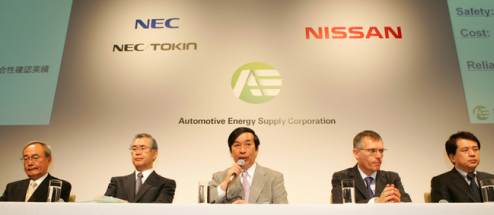
    This alliance is very important for our EV mass market, Nissan has the most advanced lithium batteries at the moment from NEC which they are going to use in Nissan Leaf and Renault EV models. Daimler with Mercedes is a brand for the luxury car in a lot of markets, EV from Daimler will make it a premium mass market play very fast. Not so long ago Mercedes signed a deal with BYD: they are buying time and access to the markets – the EV game must be taken very seriously now. NEC on its side is very aggressively rumping up production of lithium batteries.
    NEC is the lithium-ion batteries suppler for Nissan. After today’s Nissan Leaf announcement on pricing we have another confirmation of a very robust demand for Electric Cars in this pricing range. NEC rumping up batteries production means only one for our Lithium Demand expectations that this bottleneck will be even more crucial for Electric Cars roll out in a mass market fashion – we expect more deals from Japanese trading houses to secure Lithium supply from upcoming developers in the sector.


    gas 2.0:

    Renault-Nissan-Daimler Officially Announce Cooperation on Electric Cars, Smart EV coming in 2013

    Yesterday I brought you rumors of an impending tie-up announcement by Renault-Nissan and Daimler. Surprise, surprise. The companies have today made it official… and provided some more tidbits about what the cooperation actually means.

    Chief interesting bits among them: technology sharing on upcoming fully electric versions of the Renault Twingo (very popular in Europe) and the Smart ForTwo as well as diesel engine sharing for both models.

    The companies have sealed the deal with a largely symbolic 3.1% cross-shareholding of each partner’s equity capital. Reportedly, brand identities will not be affected.

    “Our skills complement each other very well,” said Dieter Zetsche, Chairman of the Board of Management of Daimler AG and head of Mercedes-Benz Cars. ”Right away, we are strengthening our competitiveness in the small and compact car segment and are reducing our CO2 footprint – both on a long-term basis. We know that we can make brand-typical products based on shared architectures. The individual brand identities will remain unaffected.”

    Electric Cars and Small Car Platforms

    The three companies will work together on developing a common small car platform that will form the basis of the next generation Smart ForTwo and Renault Twingo. The new platform will retain the rear wheel drive of current Smart cars and the companies are targeting 2013 as an official launch date for them. To avoid direct competition between the brands, Daimler’s Smart will be a two door car and Renault’s Twingo will be a four door.

    The Renault-Nissan-Daimler Alliance (can I call it that now?) says that both vehicles will also be available in electric drive from the moment they launch… although it’s unclear if the electric drive versions will be RWD like the conventional versions. But that would be sick to have all the torque of an electric motor applied to the rear wheels in a tiny car! Talk about friggin fun.

    Fuel Efficient and Large Engines

    Renault-Nissan will also provide 3 and 4 cylinder engines to Daimler for Daimler’s as yet unnanounced lineup of Mercedes-Benz compact cars. Renault-Nissan says that they will benefit from the deal by “improving their capacity utilization” (read “cranking their factories up to full tilt”). In return, Daimler will provide their larger diesel and gasoline Mercedes-Benz engines to Nissan’s luxury brand, Infiniti. The companies have also agreed to work together to develop future gasoline and diesel engines.

    Light Commercial Vehicles

    In the wake of the Ford Transit Connect’s global success, Renault-Nissan-Daimler will cooperate to bring an entry level light commercial vehicle to the market under the Mercedes-Benz brand by 2012 and will also design a larger midsize commercial vehicle at some point in the future. No word on whether this light commercial vehicle would also have a jointly developed electric powertrain, but it would only make sense given that the Transit Connect comes in such a platform now too.

    Source: Renault-Nissan”

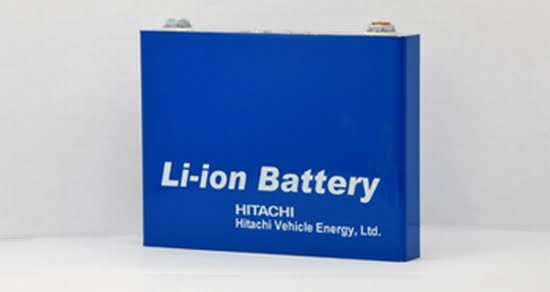
  • Lithium:Hitachi claim breakthrough will give ten years battery life TNR.v, CZX.v, LMR.v, RM.v, WLC.v, SQM, FMC, ROC, LI.v, HEV, AONE, F, NSANY, SNE,

    Technology will bring necessary safety, capacity, specific power and durability to lithium ion batteries. With billions coming into the sector and Asian power houses securing the advance we can expect very rapid development on this front. Mass production will be the key to the cost of the batteries and it is very important to remember that, according to FMC, cost of the Lithium in the battery end price is below 1%. With advancing demand price of Lithium can move very fast without affecting end users.

    Time is to write about Revolutions, transformation technology and disruption in the market place.
    Ideal market situation for the new disruptive technology to create a life time investing opportunity is when Demand for product or service is already there and you are able to deliver it in a new way, which will be more appealing to Existing consumers of this product or service. You have a dramatic shift in consumer preference and are gaining a market share in a tidal wave fashion by shifting consumers from existing providers to the new product or service place. You do not have to teach the market and prove that they need this product – you just need to prove that the new technology you are putting in place is viable to deliver the Better Experience.”

    V3.co.uk Iain Thomson in San Francisco

    Hitachi claim breakthrough will give ten years battery life

    Hitachi has said it has achieved a breakthrough in the design of lithium-ion batteries that will extend their lifespan for up to 10 years and lower production costs.

    Skip related content

    Researchers at the company report that they have come up with a new design of cathode which combines manganese and cobalt with other substances to increase the lifespan of the battery and lower the cost of manufacture.

    In addition the electrolyte in the battery has been improved to lengthen the life of the battery and the company is researching other changes to electrolytes to further extend the potential lifetime of batteries.

    However, the company said that laptop and phone users wouldnt be the first to see these improvements. Hitachi is concentrating its efforts initially on industrial-grade batteries and storage using the new technology.

    The new battery technology was developed in association with the New Energy and Industrial Technology Development Organization (NEDO), which was set up by the Japanese government to invest in power research.”

  • EVs mass market: Spain invests in electric cars TNR.v, CZX.v, LMR.v, RM.v, SQM, FMC, ROC, WLC.v, LI.v, HEV, AONE, F, NSANY, BYDDY, RNO, FCX, FXI, GOOG

    National governments will make this process even more destructive for margins: they will support by all means national automakers and once success for EVs will be apparent moves in the affordability could be very dramatic. It will be extremely positive for our Next Big Thing and development of EVs’ Value Chain as a whole, but shareholders in these companies could wait for a long time to be actually rewarded. Brands which can position itself with pricing power could be the answer: Tesla and Fisker once public could be an example, but they will not be able to achieve economy of scale on the other hand. Once initial excitement for EVs will be settled and sales and profits will matter again you will have to do a very good homework in order to separate winners from the losers.

    Spain invests in electric cars

    By Associated Press
    Tuesday, April 6, 2010

    MADRID — Spain says it will invest $790 million in promoting and developing production of electric cars over the next two years.

    Prime Minister Jose Luis Rodriguez Zapatero said Tuesday that Spain hoped to have 20,000 electrical and hybrid vehicles by 2011, 50,000 by 2012 and 250,000 in circulation by 2014.

    Automaker Renault agreed last year to make the Spain’s first electrical car in 2011 at its Valladolid plant.

  • TNR Gold Proposes to Exercise Back-In Right for Los Azules Copper Project TNR.v, MAI.to, CZX.v, GG, FCX, LUN.to, NEM, AUY, BVN, BHP, RTP, ABX, FXI,

    Press Release Source: TNR Gold Corp. On Thursday April 1, 2010, 8:11 pm EDT

    VANCOUVER, BRITISH COLUMBIA–(Marketwire – April 1, 2010) – TNR Gold Corp. (“TNR” or the “Company”) (TSX VENTURE:TNRNews) has informed Minera Andes Inc. that it proposes to waive the production of a feasibility study and exercise its right to acquire 25% of the northern half of the properties for Minera Andes’ Los Azules Project. Minera Andes is contesting TNR’s legal right to waive the production of a feasibility study and exercise its option, and has filed a statement of claim in British Columbia Supreme Court seeking a declaration nullifying any back-in notice delivered by TNR. TNR will be filing a statement of defence and will vigorously oppose any such declaration.

    The Los Azules project is an advanced exploration project currently reporting a National Instrument 43-101 compliant Inferred Resource. TNR has previously announced that Minera Andes has commenced a diamond drill program of approximately 8,800 metres at the Los Azules Project. Please refer to Minera Andes’ news release dated January 12, 2010 for further details on the exploration program and to their news release dated April 1, 2010 for details of their position with respect to TNR’s exercise of its back-in right.

    The terms of TNR’s back-in right are currently the subject of a legal dispute with Xstrata. In that litigation, TNR is also seeking confirmation of its ownership of the Escorpio IV property, which is located adjacent to the Los Azules Project, and a declaration that the Escorpio IV property is excluded from the Exploration and Option Agreement.

    ABOUT TNR GOLD / INTERNATIONAL LITHIUM CORP.

    TNR and ILC are diversified metals exploration companies focused on exploring existing properties and identifying new prospective projects globally. TNR has a portfolio of 18 active projects, of which 9 will be included in the proposed spin-off of International Lithium Corp. For further details of the spin-off please refer to TNR’s April 27, 2009 news release or visit http://www.internationallithium.com.

    The recent acquisition of lithium, other rare metals and rare-earth elements projects in Argentina, Canada, USA and Ireland confirms the companies’ commitments to generating projects, diversifying its markets, and building shareholder value.

    On behalf of the board,

    Gary Schellenberg, President”

    Minera Andes Rejects TNR Gold Corp.’s Claim of Back-in Right

    Press Release Source: Minera Andes Inc. On Thursday April 1, 2010, 2:09 pm EDT

    TORONTO, ONTARIO–(Marketwire – 04/01/10) – Minera Andes Inc. (“Minera Andes”) (TSX:MAINews)(OTC.BB:MNEAFNews) has filed a Statement of Claim in the Supreme Court of British Columbia against TNR Gold Corp. and its subsidiary, Solitario Argentina S.A (together, “TNR”).

    In recent conversations and correspondence with Minera Andes, TNR has asserted that they have an immediate right to back into the Los Azules project (the “Project”).

    MINERA ANDES REJECTS THE ABILITY OF TNR TO BACK-IN TO ANY PART OF THE LOS AZULES PROJECT.

    By way of background, the Project was, until the fall of 2009, subject to an option agreement between Xstrata Copper (and certain affiliates, “Xstrata”) and Minera Andes. In the fall of 2009, Xstrata elected not to exercise its option to back-in to the Project and subsequently transferred all properties then held by Xstrata (and forming part of the Project) to Minera Andes. Minera Andes now owns 100% of the Project.

    Certain of the Los Azules properties (the “Subject Properties”) formerly held by Xstrata and transferred to Minera Andes following the termination of the option agreement however remain subject to an underlying option agreement between Xstrata and TNR (the “TNR Agreement”), whereby TNR has the right to back- in to up to 25% of the Subject Properties, exercisable by TNR upon the satisfaction of certain conditions within 36 months of Xstrata exercising its option, including the completion of a feasibility study. It is important to note that the Subject Properties comprise the northern half of the Project, and does NOT represent 25% of the Los Azules deposit by area or resources identified.

    The 36-month period following the exercise of the option expires on or about April 23, 2010 and no feasibility study has been completed on the Project.

    The TNR Agreement is the subject of a legal dispute between Xstrata and TNR, commenced by TNR against Xstrata in the Supreme Court of British Columbia. The dispute surrounds the validity of the 36- month time limit described above. In particular, TNR claims the 36-month time frame, although clearly stated in the TNR Agreement, was added by Xstrata, overlooked by TNR (and their lawyers) when signed, not discovered for a number of years, and in any event not the commercial intention of the parties.

    According to communications between Minera and TNR, TNR seeks to waive the condition that a feasibility study be completed on the Project prior to TNR being entitled to exercise its back-in right. It is Minera Andes’ view that TNR’s back in right is dependent upon the production of a feasibility study which has never been produced. Further, Minera Andes disputes the legal ability to waive this condition.

    Although not party to the litigation between TNR and Xstrata, Minera Andes is seeking a declaration that any back-in notice delivered by TNR prior to April 23, 2010 will be null, void and of no force and effect. We have attached a copy of our statement of claim as Appendix “A” to this news release.

    As an additional point of clarification, Minera Andes wishes to confirm that notwithstanding references by TNR to “its Los Azules” project, that the Project remains 100% owned by Minera Andes and Minera Andes has no agreement or working relationship with TNR.

    We look forward to informing you of TNR’s response.

    Minera Andes Reports Full Year Results

    In other news, for the year ended December 31, 2009, net income in accordance with Canadian GAAP was $4.1 million ($0.02 per share basic and diluted) compared to a net loss of $4.0 million ($0.02 per share) for the year ended December 31, 2008. This increase was primarily due to an increase in the income recorded on our 49% owned investment in Minera Santa Cruz SA who owns the San Jose Mine from $4.7 million in 2008 to $9.3 million in 2009. In addition, we recorded an income tax recovery of $1.6 million and total expenses in 2009 declined by $1.8 million compared to 2008.

    For full details, please refer to our audited annual financial statements and management’s discussion and analysis for 2009 filed on SEDAR and our Form 40-F filed on EDGAR.

    About Los Azules

    Los Azules is a large copper porphyry system located in western San Juan province of Argentina in a belt of porphyry copper deposits that straddles the border between Chile and Argentina. This belt contains some of the world’s largest copper deposits, including Codelco’s El Teniente and Andina mines, Anglo American’s Los Bronces mine, Antofagasta PLC’s Los Pelambres mine and Xstrata’s El Pachon project, among others. San Juan province is one of the most mining-friendly regions in Argentina.

    Los Azules has an inferred mineral resource of 922 million tonnes grading 0.55 percent copper and containing 11.2 billion pounds of copper at a cut off grade of 0.35 percent copper. There is high-grade, near-surface core of 161 million tonnes grading 0.87 percent copper and containing 3.1 billion pounds of copper at a cut off grade of 0.70 percent copper. The known resource covers an area approximately 3.7 kilometres by 1 kilometre in size and is open at depth and laterally.

    About Minera Andes

    Minera Andes is an exploration company exploring for gold, silver and copper in Argentina with three significant assets: A 49% interest in Minera Santa Cruz SA who owns the San Jose Mine which is a large primary silver producer, which produced 4,998,000 million oz silver and 77,070 oz gold in 2009; 100% ownership of the Los Azules copper deposit; and, a portfolio of exploration properties in the highly prospective Deseado Massif region of Santa Cruz Province in southern Argentina. Minera Andes continues to be well funded and have no bank debt.

    This news release has been submitted by Nils Engelstad, Vice President – Corporate Affairs.”

  • Lithium Demand: NEC to Spend $542 Million Raising Lithium-Ion Output TNR.v, CZX.v, LMR.v, RM.v, LI.v, WLC.v, SQM, ROC, FMC, HEV, AONE, F, NSANY, BYDDY


    NEC is the lithium-ion batteries suppler for Nissan. After today’s Nissan Leaf announcement on pricing we have another confirmation of a very robust demand for Electric Cars in this pricing range. NEC rumping up batteries production means only one for our Lithium Demand expectations that this bottleneck will be even more crucial for Electric Cars roll out in a mass market fashion – we expect more deals from Japanese trading houses to secure Lithium supply from upcoming developers in the sector.


    BusinessWeek:

    “Bloomberg

    NEC to Spend $542 Million Raising Lithium-Ion Output

    March 30, 2010, 4:42 AM EDT

    By Jason Clenfield(Closes share price in fifth paragraph.)

    March 30 (Bloomberg) — NEC Corp., Japan’s largest maker of personal computers, will invest more than 50 billion yen ($542 million) to expand production of parts used in lithium- ion batteries supplied to Nissan Motor Co.

    The money will be spent over the next 12 months, NEC spokesman Chris Shimizu said today by telephone. Nissan, Japan’s third-largest carmaker, starts domestic production this year of its Leaf electric car and in the U.S. in 2012.

    NEC, which supplies electrodes to a battery-making venture it has with Nissan, is looking to tap into a growing market for electric cars amid rising fuel prices and concern that conventional vehicle emissions worsen climate change. Morgan Stanley has forecast 52 percent compound annual growth for global auto battery demand from 2012 to 2018.

    The Nikkan Kogyo newspaper reported the planned investment earlier today, citing an interview with Nobuhiro Endo, incoming president for the Tokyo-based company. Shimizu confirmed the report.

    NEC climbed 2.9 percent to close at 282 yen after rising as high as 283 yen on the Tokyo Stock Exchange. Japan’s benchmark Nikkei 225 Stock Average rose 1 percent.

    –Editors: Dave McCombs, Aaron Sheldrick

    To contact the reporter on this story: Jason Clenfield in Tokyo at [email protected]

    To contact the editor responsible for this story: Young-Sam Cho at [email protected].”

  • Nissan Leaf electric car will start at just $25,000, with federal assistance TNR.v, CZX.v, LMR.v, RM.v, Li.v, WLC.v, FMC, ROC, SQM, HEV, AONE, BYDDY,

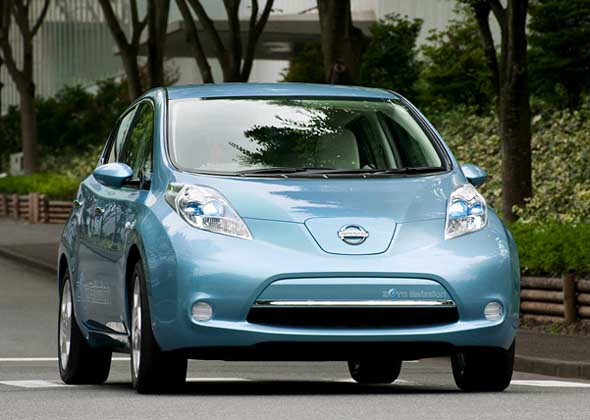
    Nissan Leaf will become a game changer – with this kind of pricing Electric Cars mass market will become a reality very fast. Now all Electric Leaf will be in the pricing range as Toyota Prius and much cheaper than Chevy Volt. It will put price competition on the market much sooner than we have been expecting and will be crucial to development of the iPod moment in our Next Big Thing: when existing consumers of this service – mobility will be moving into the new market paradigm in a wave shifting fashion. Need is there already, customers are there – you just need to provide the new incentive to shift them from existing providers: to make it cheaper, with improved functions and make them feeling better about themselves. Today we have an important confirmation on price for this event to happen in the nearest future:

    C.S. Obama is calling for an action, financial situation of the State is close to desperate and middle class, the backbone of our society, is struggling to survive. It is a time of change and we have an opportunity to capitalise on this dramatic shift.
    Time is to write about Revolutions, transformation technology and disruption in the market place.
    Ideal market situation for the new disruptive technology to create a life time investing opportunity is when Demand for product or service is already there and you are able to deliver it in a new way, which will be more appealing to Existing consumers of this product or service. You have a dramatic shift in consumer preference and are gaining a market share in a tidal wave fashion by shifting consumers from existing providers to the new product or service place. You do not have to teach the market and prove that they need this product – you just need to prove that the new technology you are putting in place is viable to deliver the Better Experience.


    Examiner.com:


    “Nissan Leaf electric car will start at just $25,000, with federal assistance

    March 30, 1:48 PMAutos ExaminerBrady Holt

    The 2011 Nissan Leaf all-electric four-door hatchback will have a base price of $32,780, a sum that federal tax credits reduce to just over $25,000, the automaker announced today.

    Further tax credits are available from a few states, and others are considering their own incentives for purchasing electric cars.

    When the 2011 Leaf when goes on sale later this year, this price will be competitive with the gas-electric Toyota Prius — a car that minimizes but does not eliminate gas consumption. The Prius has a base price of $22,000.

    The Leaf’s price also compares favorably to the 2011 Chevrolet Volt, a plug-in hybrid that can travel 40 miles on an electric charge before a gas-powered generator kicks in to recharge the battery. The Volt is expected to cost $40,000, or $32,500 after the federal tax credit.

    Leaf customers will also be expected to pay around $2,200 for a home charging unit, but another tax credit will likely remove nearly all of that cost.The Leaf’s 100-mile electric range easily bests the Chevrolet’s, but Volt drivers can drive hundreds of miles more if they are too far from a plug.

    However, note that neither car will have wide availability any time soon. Both are supposed to go on sale late this year, but only with limited production.

    Nissan will begin taking refundable $99 reservations for the Leaf on April 20.”

  • EVs mass market: FedEx Rolls Out Its First All-Electric Van in USA TNR.v, CZX.v, LMR.v, LI.v, RM.v, WLC.v, SQM, ROC, FMC, HEV, AONE, F, GM, NSANY, SNE

    Commercial fleets will be the launch grounds for mass market for Electric Cars. with increased volume cost of Lithium batteries will go down and it will allow the mass adoption of electric cars. FEDEX is one of the most active Electrification Coalition members:

    More than a dozen business leaders — including Carlos Ghosn, President & CEO of Nissan Motor Company; David W. Crane, President & CEO of NRG Energy; and Frederick W. Smith, Chairman, President & CEO of FedEx Corporation

    EV World:

    29 Mar 2010 HEADLINE
    FedEx delivery van is entirely battery powered.
    FedEx delivery van is entirely battery powered.

    FedEx Rolls Out Its First All-Electric Van in USA

    Source: FedEx
    Class: PRESS RELEASE

    SYNOPSIS: Four Navistar/Modec-built electric trucks will be deployed in Los Angeles area starting in June 2010.

    CHICAGO — FedEx Corp. today announced the expansion of its alternative-energy vehicle fleet with the first all-electric FedEx parcel delivery trucks in the United States. Four purpose-built electric trucks–optimized for electric operation from the wheels up–are slated to hit the road in the Los Angeles area starting in June 2010, joining more than 1,800 alternative-energy vehicles already in service for FedEx around the world.

    “FedEx has a history of changing what’s possible, both in the innovative services we offer customers and in the way we offer those services,” said John Formisano, vice president, Global Vehicles, FedEx Express. “In 2004, we were the first global company to invest in hybrid-electric commercial trucks, and now we’re introducing the even cleaner all-electric parcel delivery truck. We’re making these investments, and invite others to join us, so that together we can speed the transition to a cleaner transportation system.”

    Rather than creating its own proprietary technology, FedEx is again turning to the marketplace to spur solutions that can rapidly be scaled up to provide affordable and reliable service to a wide range of delivery truck operators. It is purchasing its first North American all-electric vehicles from two different suppliers to evaluate the robustness of this technology for demanding daily FedEx Express deliveries in the Los Angeles area and provide information to help guide future FedExvehicle purchases.

    Two of the new all-electric trucks come from Navistar, and are being assembled in Indiana. These are based on the Modec design already operated by FedEx in Europe. Ten such Modec vehicles serve FedEx routes in London and five more are on order for Paris.

    Another pair of electric vehicles is being purchased from a different manufacturer for delivery to the Los Angeles area later in 2010. Both sets of electric vehicles are designed with a range that allows many FedEx Express couriers to make a full eight-hour shift of deliveries before their vehicles need recharging.

    A FedEx-branded prototype all-electric truck from Navistar is being unveiled today at an event in Chicago to kick-off a demonstration tour of the technology. The vehicle will be operated for FedEx customers, employees, and local officials in several stops along historic Route 66 between Chicago and Los Angeles.

    The “Charge Up Route 66” tour is intended to pay homage to America’s transportation past and the facilitation of inter-city commerce furthered by development of early highways such as Route 66. The electric truck demonstration tour is also designed to underscore a national initiative advocated by Frederick W. Smith, president, chairman and CEO of FedEx Corp., in testimony to a U.S. Senate subcommittee last month. Smith called for a comprehensive program to encourage affordable electrification of local transportation to foster more domestic energy production, less reliance on imported petroleum, and an overall reduction of greenhouse gas emissions.

    Once in California, the Navistar electric truck will be demonstrated at the FORTUNE Brainstorm Green conference, an environmental leadership event scheduled April 12-14 and featuring a presentation by Mitch Jackson, vice president, environmental affairs and sustainability, FedEx Corp. To track the vehicle’s route, visit http://www.fedex.com/electric.

    “Electric trucks are still in their infancy, but we think they have a bright future in the mix of alternative energy vehicles,” Jackson said. “Reliability and maintainability is critical for FedEx because of our commitment to superior customer service, so we’ll be giving these trucks a real workout, helping the manufacturers refine their future offerings. Down the road, we see the possibility of charging electric vehicle fleets with low- or zero-emission electricity generated on site by such innovations as solar electric arrays, like those at FedEx locations in California, New Jersey and Germany, or the Bloom Energy Server, another new technology we’re helping to pioneer through evaluating it at our solar-powered hub in Oakland.”

    By the end of June, the FedEx alternative energy fleet will have grown to 1,869 vehicles in service around the world, helping to diversify and expand the all-electric and hybrid-electric vehicle market around the globe. Beyond the nine new electric trucks to be deployed in Los Angeles and Paris, FedEx has purchased ten additional hybrid-electric vehicles that will be added to its California fleet throughout the spring, based in Oakland.

    FedEx currently operates the largest hybrid fleet in the transportation industry, along with one of the largest alternative energy vehicle fleets, and is committed to improving its overall vehicle fuel efficiency 20 percent by 2020. In conjunction with Environmental Defense Fund, FedEx led the launch of the development of the first commercial-grade hybrid-electric delivery vehicles. That hybrid-electric technology has now been adopted by more than 100 fleets, and the FedEx hybrid vehicle fleet recently passed the five million mile mark in daily service–the equivalent of 200 trips around the Equator. FedEx also works closely with organizations like CALSTART, North America’s leading consortium dedicated to the growth of a clean transportation technologies industry, to encourage the development of market-ready alternative energy commercial vehicles. John Formisano is currently the chairman of the CALSTART board after five years of service as a board member.

    About FedEx Sustainability

    FedEx is committed to connecting the world responsibly and resourcefully. We have set long-term goals to reduce aircraft emissions 20 percent by 2020, increase FedEx Express vehicle efficiency by 20 percent by 2020, and expand on-site renewable energy generation and procurement of renewable energy credits. FedEx works to achieve these ambitious goals through EarthSmart–the FedEx roadmap for operating in an increasingly sustainable way and engaging our team members, customers, business partners, and the circle of influencer communities to help us reduce the environmental impact of our daily business operations. FedEx has been recognized for its sustainability commitment through inclusion in the Dow Jones Sustainability Index–a global list of the world’s largest, most sustainable organizations–and ranks #93 in Newsweek’s 2009 Top 500 Greenest Companies.

    About FedEx

    FedEx Corp. (FDX 92.13, +0.78, +0.85%) provides customers and businesses worldwide with a broad portfolio of transportation, e-commerce and business services. With annual revenues of $33 billion, the company offers integrated business applications through operating companies competing collectively and managed collaboratively, under the respected FedEx brand. Consistently ranked among the world’s most admired and trusted employers, FedEx inspires its more than 280,000 team members to remain “absolutely, positively” focused on safety, the highest ethical and professional standards and the needs of their customers and communities. For more information, visit news.fedex.com.

  • Electric Cars: Chevy Releases Volt Specs TNR.v, CZX.v, LMR.v, RM.v, LI.v, WLC.v, SQM, ROC, FMC, F, GM, DAI, BMW, AAPL, NSANY, BYDDY, RNO, GOOG, HEV,

    Chevy Releases Volt Specs

    Monday, March 29, 2010 2:59PM – By Chris Weiss

    Chevy Volt Chevy Releases Volt Specs

    The Chevrolet Volt is hands-down one of the most interesting vehicles on its way out of post-public-loan GM, and today Chevy provided some additional numbers on the extended-range EV. They may be preliminary, but they’re impressive nonetheless.

    The Volt will put out 150 horses and 273 lb-ft through the combination of 1.4-liter four-cylinder flex-fuel engine and electric motor. The motor will derive power from a 16 kWh lithium-ion battery pack.

    On the road, that system will deliver a practical top speed of 100 mph while offering 300 miles worth of range on a full tank of gas and 40 miles of electric-only driving. Chevy provides the 0 to 60 mph at 9 seconds. [via egmCarTech]”

    As you can see from specs – Chevy Volt is not an Electric Toy, but a proper Electric Car with full functional utilities of a “normal” car with CE. Realisation of this fact and Chevy Volts on the streets will bring revaluation to the whole Electric Car Value Chain and particularly to Lithium sector.

    One out of four consumers say they would be willing to consider a plug-in electric car next time they are shopping for a new vehicle, Consumer Reports says one of its polls found. Seven percent said it is “very likely” they would buy one.”

  • Lithium Batteries Are Included in KB Home and BYD’s Solar House TNR.v, CZX.v, LMR.v, RM.v, LI.v, WLC.v, SQM, FMC, ROC, F, DAI, BMW, NSANY

    Energy storage will play a very important role in cleantech applications like solar and wind power. It is very encouraging to see the use of Lithium-ion batteries for domestic use in this collaboration between BYD and KB Homes. Earlier Panasonic has announced similar program for Japanese house builders. 16 kWh battery is almost the same like in electric cars (16-24 kWh) and this integration will allow to use solar and wind power for domestic use with smart connection to the grid, when you can sell expensive energy during the day and recharge your Electric Car and/or battery during the night. Mass scale adoption of distributed energy storage by domestic batteries and/or electric cars plugged in to the grid will allow Utilities to integrate domestic wind and solar power on the mass scale into the grid and perform much more efficient grid energy management optimising the load and generation of power. For our Lithium demand it means another wide open market application with a very fast adoption rate which will be generated by lower battery prices and upcoming mass scale production volume will allow to lower prices further in its turn.

    Batteries Are Included in KB Home and BYD’s Solar House

    Lancaster solar house

    PHOTO CREDIT: SUNPLUGGERS.COM

    California’s KB Home and China’s BYD Co. teamed up to showcase solar homes of the future, complete with batteries to store electricity.

    Published March 26, 2010

    The home of the future – with solar-electric modules on the roof and a lithium-ion battery in the garage – may have a welcome mat out sooner than expected.

    The California-based builder KB Home and China’s BYD Co., which makes plug-in cars, batteries and solar equipment, have partnered to build modestly priced homes in Lancaster, Calif., that will go a step further than other new solar housing developments by including battery storage of the solar electricity.

    Off-grid solar owners for many years have used battery banks to store their generated electricity for later use, but the plan for the KB Home development – smack in the middle of a grid-tied suburban subdivision – could help alter the trajectory for adoption of both solar electricity and plug-in vehicles.

    “The energy produced by the solar panels during the peak time is stored in the battery system and can be used later at night for the home,” said Bill Wang, business development director for BYD America Corp., at a press conference to announce the partnership in Lancaster, a city about 70 miles north of Los Angeles.

    Solar panels

    PHOTO CREDIT: SUNPLUGGERS.COM

    Bill Wang, business development director of
    BYD America Corp., explains how the energy
    from the home’s solar array will be stored.

    Unlike homemade off-grid battery banks, which have typically used traditional lead-acid batteries, the storage system that KB Home and BYD showed off packages the lithium-ion battery packs in sleek, dark-tinted cabinets with flashing LED lights that continuously display the system’s – and perhaps the future homeowner’s – status.

    The battery packs may store as much as 16 kilowatt-hours of electricity. A typical Southern California household uses about 20 kwh a day. The lithium-ion ferrous phosphate battery packs will be the same type used in plug-in vehicles that BYD expects to roll out in Los Angeles later this year.

    Thomas C. DiPrima, executive vice president of KB Home’s Southern California division, said the plan is to offer the solar-and-battery combinations first in one model home and four production homes in West Lancaster at no extra cost to the buyers, then to offer the systems as an option in the same subdivision and others. The West Lancaster houses have starting prices that range from about $210,000 to $257,000.

    “Our long-term goal is to get to where we can do this nationwide,” Mr. DiPrima said. “Our hope and our goal is to make it so affordable that it can be offered in a new home as a standard feature,” he added, noting that solar PV is becoming cost-effective as a retrofit for many existing homes. Because the approach is a new one, it could be years before such a system is standard in a new KB home, he said.

    Until now, it was thought that battery storage of solar electricity would not even begin to be an option for typical urban and suburban solar owners until years in the future.

    Automakers in recent years have been outlining the future potential deployment of used batteries from plug-in cars to store solar electricity. Because automotive battery packs are expected to have typical lifetimes of about seven years and 100,000 miles, and large-scale manufacturing of electrified vehicles is still about two years away, it appeared that widespread use of used batteries in residential garages would not begin until 2018 to 2020.

    But the plan described by KB Home and BYD to install new lithium-ion battery packs in garages changes a scenario that was already evolving rapidly. The plan meshes with the accelerating installation of new digital meters at households throughout the nation.

    “Smart” meters make it easier for homeowners and utilities to monitor electricity use, and allow for time-of-use pricing, under which electricity costs more at times of peak demand – typically around breakfast and in the afternoon and early evening – and less during off-peak periods.

    Solar photovoltaic systems produce electricity only during the daytime, and their early afternoon peak production often coincides with rising air-conditioning loads. The electricity that utilities buy for distribution at such times generally costs much more than does off-peak production. Traditionally, households have paid a predetermined, average price per kwh for electricity. Time-of-use rates permit pricing that more closely reflects real-world usage and generation patterns.

    The plan to use new lithium-ion battery packs in residential garages could open up a range of potential opportunities for owners of solar-electric systems and plug-in vehicles. For the first time, they could have significant control over their generation, storage and use of electricity, moving it from a solar array to a car battery, into the home or into a storage battery, depending on their needs and the electricity’s price at a particular time.

    The battery pack also could pull low-cost electricity off the grid at night for use during higher-priced peak periods, either in the home or in the grid. The system’s operation could be programmed with cellphones, PDAs or computers, or could be automated.

    Another potential benefit: the end of blackouts. If a power outage occurred on the grid, a homeowner with a digital meter, a solar-and-battery combination, and perhaps a plug-in vehicle, could be unaffected. Grid-tied systems are designed at present to shut down automatically when grid power goes out, but that is likely to change as the technology develops.

    If this use of new lithium-ion batteries were to become very popular, it would likely drive down the cost of such batteries for use both in homes and in vehicles more rapidly than expected through economies of scale in manufacturing.

    PHOTO CREDIT: SUNPLUGGERS.COM

    Lancaster Mayor R. Rex Parris, right, said
    the new approach “redefines how Americans
    are going to use energy in their houses.”
    With Mr. Parris are Thomas DiPrima,
    executive vice president of KB Home’s
    Southern California division, and Stella Li,
    senior vice president of BYD.

    Reducing the cost of solar and battery technologies is a key part of the plan. Using energy more sparingly and efficiently, and saving money for consumers, is the ultimate goal. KB Home plans to study the usage patterns of those who buy the solar-and-battery homes.

    “All we’ll ask of the homeowners is that they’ll share with us their energy bills so we can see what the actual savings are in a home,” said Mr. DiPrima.

    The city of Lancaster, which has a population of about 145,000 people, is in the Mojave Desert’s Antelope Valley, in northern Los Angeles County. The city waived municipal development fees for the homes to be outfitted with solar-and-battery systems, and has fast-tracked the permitting process. The first solar model home is expected to be completed in three or four months.

    R. Rex Parris, the mayor of Lancaster, said at the press conference that petroleum is a finite energy source.

    “The price of energy is just going to go up and up and up,” he said. “If we can reduce the amount of energy we’re using and the cost of it, it becomes much more affordable to live for all the hard-working families in the Antelope Valley and everywhere else.”

    Mr. Parris said the new approach “redefines how Americans are going to use energy in their houses.”

    BYD became prominent in U.S. investment circles when Warren Buffett’s Berkshire Hathaway Inc. bought 10 percent of the company in 2008. It started as a low-cost producer of cellphone batteries, and only recently began manufacturing automobiles, lithium-ion battery packs for plug-in vehicles, and solar equipment. Wang Chuanfu, BYD’s chairman, is believed to now be the wealthiest person in China.

    Stella Li, senior vice president of BYD, said at the press conference that the goals of the partnership to build the solar-and-battery-equipped homes are to help people “save money and make a cleaner planet.”

    Mr. DiPrima of KB Home said he expects homeowners to have some reservations about the new technology at first.

    “I think the biggest concern will be, ‘How difficult will it be for me? Do I have to go throw a switch? Do I have to program a computer?’ And the fact that the system does that will probably take some of the fear away,” he said.

    Unlike some new solar-home developments that are installing tiles that blend in with a roof, KB Home and BYD plan to use stand-off modules of the type commonly added as retrofits to existing buildings. Modules with air space beneath them operate at higher efficiency because of the cooling effect, but are more visible than tiles.

    “We are not seeing the aesthetics of solar being a deterrent,” Mr. DiPrima said. “In fact, in California we’ve found that people want to show off their solar panels.”

    He added that because some people do prefer the look of solar tiles, KB Home works with local officials on the type, style and aesthetics of equipment, as it does with other elements of home designs.

    “We’re not looking at aesthetics as being a challenge,” Mr. DiPrima said. “We’ve got to make sure that the system is as easy to operate as possible. The less they have to do, the better.”

  • EVs mass market: One out of four consumers interested in electric vehicles TNR.v, CZX.v, LMR.v, RM.v, LI.v, WLC.v, SQM, FMC, ROC, F, NSANY, BYDDY, DAI

    Do you remember our “Big IF“? What if people will decide that it is cool to drive Electric Cars? It is coming…

    As usual, there will be more talks than action in the beginning. Then we will have an equipment supply lead time up to 30 months, add here technology development, project management and ISO certification. We are looking at least 5 years out into any meaningful Li-ion batteries production on a mass scale. Another surprise will come when new coming battery producers will be scrambling for Lithium supply to keep their production lines running. In brine production lead time can be up to 4-5 years and in hard rock mining 5-7 years. It is time now to move aggressively intoLithium supply chain”

    USA Today:

    One out of four consumers interested in electric vehicles

    One out of four consumers say they would be willing to consider a plug-in electric car next time they are shopping for a new vehicle, Consumer Reports says one of its polls found. Seven percent said it is “very likely” they would buy one.

    A year from now, they should start seeing some choices. General Motors is bringing the Volt extended-range electric (meaning it has a gas engine to back up the electric power) and Nissan’s all-electric Leaf. Virtually all other major automakers have their own electric cars in the works just in case the technology takes off.

    CR found, based on its survey of 1,752 adults, that most consumers would like a range of 89 miles for daily driving. About 45% said they would be satisfied with a range of less than 75 miles. Another 29% would consider less than 49 miles to be ideal. All this range stuff could be problem since the range of early electrics expected to be fairly limited.

  • SinoLatin Capital Releases Its Latest White Paper ‘Is Lithium the 21st Century’s Oil?’ TNR.v, CZX.v, LMR.v, RM.v, WLC.v, LI.v, SQM, FMC, ROC, F, GOOG,

    We have now a Chinese perspective on the potential for the market for Electric cars, China’ ambitions and its clear understanding of Lithium as a strategic commodity for ongoing Green Mobility Revolution. They are talking about the same “Golden Triangle” of Lithium as Rick Mills did in his recent report and Lithium ABCs:

    Rick Mills has put together a very good overview of the Lithium sector, production cycles and basic economics for Lithium Brines and Hard Rock Lithium mining. For us it is interesting to use his check lists to evaluate properties of International Lithium Corp. in Lithium Brines and Hard Rock Lithium. Mariana project in Argentina fits very well into described model for Lithium Brine Deposit. Company has put in a new presentation its own exploration models for Mariana Salar in Argentina and its Brine Lithium projects in Nevada.

    SHANGHAI, March 25 /PRNewswire/ — In a recent white paper, Shanghai-based SinoLatin Capital spotlights the lithium industry and how the anticipated explosive global demand for this silvery metal will lead to a surge in acquisitions by Chinese firms in Latin America.

    The white paper reports that lithium, which is a key ingredient in the majority of consumer electronics, including cell phones, laptops, cameras and PDAs due to its ability to store more energy longer, will become significantly more important from a geo-economic standpoint. As the world’s leading economies race to develop better hybrid or all-electric vehicles in an effort to reduce dependence on fossil fuels and combat climate change, countries with significant lithium deposits will become extremely important. China today is at the forefront in its efforts to develop these electric vehicles and will seek to position itself early in securing the necessary raw materials (such as lithium) to further advance the industry.

    According to SinoLatin Capital CEO Erik Bethel, who authored the white paper, “From our vantage point in Shanghai, we believe that China will be a global leader in developing and producing electric cars running on lithium-ion batteries. But in order to be competitive, China needs to go outbound to secure enough lithium. And a huge portion of the best lithium is located in Latin America‘s Lithium Triangle.” Mr. Bethel, who leads SinoLatin Capital’s metals and mining practice, advises both Chinese firms and Latin American firms on acquisitions and strategic investments.

    The white paper provides an in-depth description of South America‘s “Lithium Triangle” — Argentina, Bolivia and Chile — where 70-75% of the world’s salt lake lithium deposits are found. Although Chile is the world’s largest producer, neighboring Bolivia, which does not currently produce any lithium, purportedly has the world’s largest known reserves. In a short time, the Lithium Triangle will have enormous geopolitical significance as the world’s major economies continue to shift their focus towards alternative fuels.

    Additional whitepapers and further details of ‘Is Lithium the 21st Century’s Oil?’ can be freely downloaded fromhttp://www.sinolatincapital.com/White.asp. Alternatively please contact Erik Bethel at [email protected], telephone +(8621) 6109-9568.

    Located in Shanghai‘s financial district, SinoLatin Capital is the first merchant bank focused exclusively on cross border transactions between China and Latin America. The Firm has two core businesses: financial advisory and private equity.

    SOURCE SinoLatin Capital

  • Lithium and REE: GM Unveils EN-V Concept: A Vision for Future Urban Mobility TNR.v, CZX.v, LMR.v, RM.v, WLC.v, LI.v, HEV, AONE, NSANY, GM, BYDDY, F,

    Here it comes: design utilising the most promising use of Electric Drive – engineers are not restricted anymore to traditional components and can use build-in motors incorporated into the wheels. Basically this technology works in a normal 4 wheel car – GM has made here even more futuristic proposition. All EV is based on four major components: passenger compartment, energy storage (Lithium-ion batteries as announced by GM), power controlling system and Powertrain in the form of Motors incorporated into the wheels. Bill of materials will be the same as in EVs: Lithium for batteries and REE for powerful electric motors. We think that the future of electric cars will be in adoption of normal utility based cars like GM Volt, Nissan Leaf and others. If in the future urbanisation will lead to adoption of this kind of EVs our most optimistic forecast for Lithium and REE demand could be proven wrong – you can place literally double the amount of these kind of vehicles compare to normal cars. Every EV will need a battery and electric motors. Maybe it will be the only way to bring mobility to hundred millions of Chinese and Indians in the future.

    2010-03-24

      • Radical Change in Mobility to Address Growing Urbanization Issues
      • Convergence of Electricity and Connectivity Redefines Automobile DNA
      • EN-V Concepts to be Showcased at World Expo 2010 Shanghai

      Shanghai – By 2030, urban areas will be home to more than 60 percent of the world’s 8 billion people. This will put tremendous pressure on a public infrastructure that is already struggling to meet the growing demand for transportation and basic services.

      General Motors and its strategic partner, Shanghai Automotive Industry Corp. Group (SAIC), share a common vision for addressing the need for personal mobility through a radical change in personal urban transportation. They are exploring several solutions for tomorrow’s drivers. Among the most promising is a new vehicle form called EN-V.

      A Promising Solution

      EN-V, which is short for Electric Networked-Vehicle, maintains the core principle of personal mobility – freedom – while helping remove the motor vehicle from the environmental debate and redefining design leadership. EN-V is a two-seat electric vehicle that was designed to alleviate concerns surrounding traffic congestion, parking availability, air quality and affordability for tomorrow’s cities.

      Three EN-V models were unveiled today in Shanghai. They represent three different characteristics that emphasize the enjoyable nature of future transportation: Jiao (Pride), Miao (Magic) and Xiao (Laugh). The concepts will be showcased from May 1 through October 31 at the SAIC-GM Pavilion at World Expo 2010 Shanghai. Shanghai is expected to become one of the epicenters for the establishment of personal mobility solutions for the future.

      “EN-V reinvents the automobile by creating a new vehicle DNA through the convergence of electrification and connectivity. It provides an ideal solution for urban mobility that enables future driving to be free from petroleum and emissions, free from congestion and accidents, and more fun and fashionable than ever before,” said Kevin Wale, President and Managing Director of the GM China Group.

      Breakthrough Technology

      EN-V’s platform has evolved from the platform of the Personal Urban Mobility and Accessibility (P.U.M.A.) prototype that was developed by Segway and debuted in April 2009. Segway has worked collaboratively with GM to develop and deliver multiple copies of the drivetrain platform that seamlessly connect to and power the various EN-Vs.

      EN-V is propelled by electric motors in each of its two driving-mode wheels. Dynamic stabilization technology empowers EN-V, giving it the unique ability to carry two passengers and light cargo in a footprint that’s about a third of a traditional vehicle. It can literally “turn on a dime” within its own operating envelope. In addition, everything in EN-V is drive-by-wire, supporting its ability to operate autonomously or under manual control. The motors not only provide power for acceleration, but also bring the vehicle to a stop.

      Power for the motors is provided by lithium-ion batteries that produce zero emissions. Recharging can occur from a conventional wall outlet using standard household power, allowing EN-V to travel at least 40 kilometers on a single charge. EN-V can also improve the efficiency of the public electric infrastructure since the vehicle can communicate with the electric grid to determine the best time to recharge based on overall usage.

      By combining the Global Positioning System (GPS) with vehicle-to-vehicle communications and distance-sensing technologies, the EN-V concept can be driven both manually and autonomously.

      Its autonomous operating capability offers the promise of reducing traffic congestion by allowing EN-V to automatically select the fastest route based on real-time traffic information. The concept also leverages wireless communications to enable a “social network” that can be used by drivers and occupants to communicate with friends or business associates while on the go.

      This combination of sensing technology, wireless communication and GPS-based navigation establishes a technology foundation, pieces of which could migrate from the EN-V concept and potentially lead the way to future advanced vehicle safety systems.

      The ability to communicate with other vehicles and with the infrastructure could dramatically reduce the number of vehicle accidents. Using vehicle-based sensor and camera systems, EN-V can “sense” what’s around it, allowing the vehicle to react quickly to obstacles or changes in driving conditions. For example, if a pedestrian steps out in front of the vehicle, EN-V will decelerate to a slower and safer speed and stop sooner than today’s vehicles.

      GM has been a leader in developing autonomous vehicle technology, having worked alongside students and faculty at Carnegie Mellon University in the U.S. city of Pittsburgh, Pennsylvania. This collaboration created “The Boss” Chevrolet Tahoe, which brought autonomous vehicle operation to life in 2007. EN-V takes the lessons learned in “The Boss” and offers mobility to people who could not otherwise operate a vehicle.

      “The EN-V concept represents a major breakthrough in the research that GM has been doing to bring vehicle autonomy to life,” said Alan Taub, Global Vice President of GM Research and Development. “The building blocks that enable the autonomous capabilities found on the EN-V concept such as lane departure warning, blind zone detection and adaptive cruise control are being used in some GM vehicles on the road today.”

      EN-V has been designed for the speed and range of today’s urban drivers. It weighs less than 500 kilograms and is about 1.5 meters in length. By comparison, today’s typical automobile weighs more than 1,500 kilograms and is three times as long. In addition, today’s automobiles require more than 10 square meters of parking space and are parked more than 90 percent of the time. EN-V’s smaller size and greater maneuverability mean the same parking lot can accommodate five times as many EN-Vs as typical automobiles.

      Smaller, Smarter Design

      While EN-V leads the way in terms of efficiency and technology, it also sets a new benchmark for vehicle design. For its debut, GM had design teams around the world provide their vision of what future mobility will look like. Xiao (Laugh) was designed by GM Holden’s design team in Australia, while the look of Jiao (Pride) was penned by designers at GM Europe and Miao (Magic) was designed at the General Motors Advanced Design Studio in the U.S. state of California.

      Each EN-V has a unique design theme to showcase the flexibility of the propulsion platform. The design gives each EN-V its own personality, with a unique opening, elegant interior and innovative color, lighting and seat technology. Xiao offers a more lighthearted appeal, with its “gumball blue” paint and nautical-inspired design. Miao takes most of its design cues from the consumer electronics industry, as evidenced by its sleek, masculine looks. Designers also used Miao to display innovative lighting solutions, including extensive use of LED accent lighting. With its clean lines and bright paintwork, Jiao takes its design influence from bullet trains and Chinese opera masks.

      “EN-V incorporates significant technology and material innovation, which has given the design team a whole new world to explore,” said Clay Dean, Director of Advanced Design for GM North America. “Because of the lightweight structures, materials and integrated controls, we created unique surface forms not traditionally found in automotive applications.”

      The body and canopy of EN-V are constructed from carbon fiber, custom-tinted Lexan and acrylic, materials that are more commonly used in race cars, military airplanes and spacecraft because of their strength and lightweight characteristics. The ability to work with such innovative materials provided a learning opportunity for GM’s design teams to study the feasibility of future traditional automotive applications.

      EN-V’s compact size makes it ideal for use in densely populated cities thanks to its use of advanced safety and propulsion technologies. But good things come in small packages, as witnessed by EN-V’s innovative interior design, which provides maximum visibility to the world outside. A simple interface for activating Wi-Fi-based technologies keeps occupants connected to the outside world.

      “The future of how we move around in urban areas like Shanghai can combine the best of personal mobility and public transit. There is a better solution and it is called EN-V. It demonstrates that we have both the knowledge and the ability right now to create a way to move people that not only ensures a ‘better city’ but also offers people a ‘better life,’” said Taub.

      General Motors, one of the world’s largest automakers, traces its roots back to 1908. With its global headquarters in Detroit, GM employs 204,000 people in every major region of the world and does business in some 140 countries. GM and its strategic partners produce cars and trucks in 34 countries, and sell and service these vehicles through the following brands: Buick, Cadillac, Chevrolet, GMC, GM Daewoo, Holden, Jiefang, Opel, Vauxhall and Wuling. GM is the joint global automobile partner of World Expo 2010 Shanghai along with Shanghai Automotive Industry Corp. Group (SAIC). More information on the new General Motors can be found at www.gm.com.


    • Lithium ABCs by Rick Mills

      Rick Mills has put together a very good overview of the Lithium sector, production cycles and basic economics for Lithium Brines and Hard Rock Lithium mining. For us it is interesting to use his check lists to evaluate properties of International Lithium Corp. in Lithium Brines and Hard Rock Lithium. Mariana project in Argentina fits very well into described model for Lithium Brine Deposit. Company has put in a new presentation its own exploration models for Mariana Salar in Argentina and its Brine Lithium projects in Nevada.

      Company has posted new presentations for TNR Gold and International Lithium from PDAC in Toronto in March 2010. Interesting to note here is that REE Big Beaverhouse property is presented in TNR Gold portfolio – can we expect company activities to be centered around REE after lithium assets spin out?
      TNR Gold Corp. is employing the project generator model. For those of you who may not know what a project generator model is, a word of explanation is in order. “Project generators” are companies that pick up early stage exploration ground when there are historical or scientific reasons to believe a property is prospective for a given mineral. Because these properties are obtained at an early stage of development, the cost of obtaining them is very low.As a project generator,TNR then uses its intellectual capital rather than hard currency capital to add value to its shareholders. By carrying out relatively low cost early exploration work, it demonstrates with greater confidence, the potential for a given property to host an economically viable mineral deposit. At that point in time, TNR hopes to bring in other companies that are willing and able to spend considerably more money to explore and advance those prospects toward production. TNR will generally retain a carried interest in those prospects into the future or at least a Net Smelter Return on any future production from the property. The prospect generator model is in theory a less risky model because, if other companies are spending considerable amounts of money, they can reduce the number of shares issued to raise capital.”
       

      Lithium ABCs

      Contributed by Rick Mills

      As a general rule, the most successful man in life is the man who has the best information

      The Puna plateau sits at an elevation of 4,000m, stretches for 1800 km along the Central Andes and attains a width of 350–400 km. The Puna covers a portion of Argentina, Chile and Bolivia and hosts an estimated 70 – 80% of global lithium brine reserves.

      The evaporate mineral deposits on the plateau – which may contain potash, lithium and boron – are formed by intense evaporation under hot, dry and windy conditions in an endorheic basin – endorheic basins are closed drainage basins that retain water and allow no outflow – precipitation and inflow water from the surrounding mountains only leaves the system by evaporation and seepage. The surface of such a basin is typically occupied by a salt lake or salt pan. Most of these salt lakes – called salars – contain brines which are capable of providing more than one potentially economic product.

      This Puna Plateau area of the Andean mountains – where the borders of Argentina, Bolivia and Chile meet and bounded by the Salar de Atacama, the Salar de Uyuni and the Salar de Hombre Muerto – is often referred to as the Lithium Triangle and the three countries mentioned are the Lithium ABC’s.

      a Brine “Mining” Business Model

      The salt rich brines are pumped from beneath the crust that’s on the salar and fed into a series of large, shallow ponds. Initial 200 to +1,000 parts per million (ppm) lithium brine solution is concentrated by solar evaporation and wind up to 6,000 ppm lithium after 18 – 24 months.

      The extraction process is low cost/high margin and battery grade lithium carbonate can be extracted. The cost-effectiveness of brine operations forced even large producers in China and Russia to develop their own brine sources or buy most of their needed raw materials from brine producers.

      The major lithium producers, from brine, are the “Lithium Three”: Sociedad Quimica y Minera (SQM), Rockwood/Chemetall and FMC.

      The Lithium Three are all extracting lithium from Puna Plateau salar brines. The majority of lithium produced today comes from brines in Chile, Argentina and Nevada.

      These brines are considered primarily potash deposits with lithium as a by-product.

      The above diagram was designed to show that several commercial products can be recovered from typical brine and that the recovery takes place in a series of steps over the entire evaporation process. Note that the final product in each step may require processing in a specialized plant. Also please note that the actual sequence of process steps may vary from brine to brine, and as such, the process steps shown above may not be in the correct order for any specific brine.

      SQM’s Atacama brine deposits have the highest lithium content on the Puna – yet just 11% of its 2009 revenues were from lithium – 70% of SQM’s revenues are from fertilizers. SQM is the world’s largest producer of lithium and lithium is SQM’s highest gross margin product at +50%.

      Potash is Fuel for Food

      According to the United States Geological Survey (USGS) Canada has the world’s largest reserves of potash – roughly 50%. Coming in second is Russia with just over 25% and trailing a distant third is Belarus at 9% of world reserves.

      In a presentation at the 2010 Prospectors and Developers Association Conference in Toronto Ontario, Canada, T.D. Newcrest minerals analyst Paul D’Amico forecast significant growth of offshore potash demand. D’Amico said the potash supply situation is complicated by the fact there hasn’t been a green field potash development in 30 years. D’Amico also estimated that global annual potash demand growth will average 3% compounded annually.

      Potash is used as a major agricultural component in 150 countries but the largest importers of potash are China, India, the US and Brazil.

      Potassium sulfate is commonly used in fertilizers, providing both potassium and sulfur. Potash is the common name for potassium chloride.

      Because the financial markets crashed and the economy contracted in 2008 farmers put off buying potash – potash use fell 20%, phosphate fertilizer use declined 10% and the price per tonne of potash dropped by two thirds. This lack of fertilization drastically depleted the soil nutrient base and global soil nutrient levels need to come back to the trend line.

      “Failure to feed the fields is a trend that can’t last for long, while the global recession severely impacted fertilizer demand, the science of food production has not changed. The significant volumes of potash and phosphate that have been mined for crop production must be replaced to sustain the productivity of the soil.” Potash Corp.

      The basic fundamentals of the global potash market are hard to ignore:

      • An increasing global population – the world’s population is steadily increasing and is expected to reach +9 billion people by 2050. The United Nations Food and Agriculture Organization (FAO) reported they think that the total world demand for agricultural products will be 60 percent higher in 2030 than it is today.

      • Increasing incomes in developing countries will lead to more people being able to afford protein rich diets – a western style diet heavy in meat – which means more grain consumption.

      • Decreasing arable land – arable land is being lost at the rate of about 40,000 square miles per year. Land is being used for production of bio-fuels, topsoil is eroded away by wind and water and the agriculture land base is being paved over as we become more and more urbanized. Farmers need to produce more food on less land. There is only one way this can be done and that’s with an increase in the use of fertilizer.

      The current potash market is estimated at 50 million tonnes annually and is projected to grow at a compounded annual rate of 3-4%. Potash is a crucial element in fertilizer and has no commercial substitute. Quite simply, we have to grow more food on less land.

      There are several ways farmers can get increased yields, Genetically Modified Organism (GMO) seed, pesticides, fertilizers, and satellite (GPS) farming.

      Improved seeds, pesticides and new farming techniques are all going to be needed, improved and used. But the nutrients in soil are soon used up by ever more intensive farming – and Mother Nature can’t replace them fast enough. These nutrients need to be replaced or you have land where crops cannot grow.

      Lithium

      The world’s future energy course is being charted today because of the ramifications of peak oil and a need to reduce our carbon footprints.

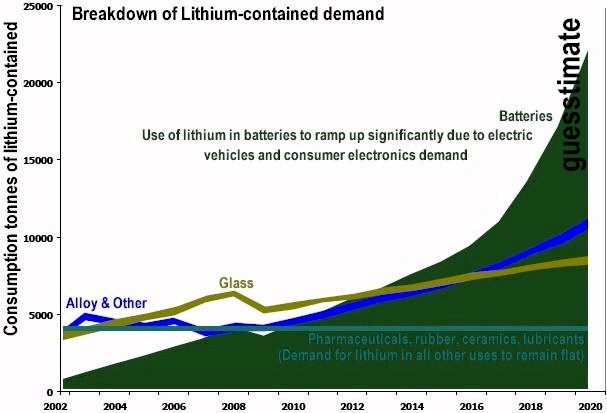
      A whole new industry – a global wide automotive and industrial lithium-ion battery industry – is going to be built. As a result of lithium-ion battery demand for hybrid-electric and electric cars the increase in demand for lithium carbonate is expected to increase four-fold by 2017.

      Lithium-ion batteries have become the rechargeable battery of choice in cell phones, computers, hybrid-electric cars and electric cars. Chrysler, Dodge, Ford, GM, Mercedes-Benz, Mitsubishi, Nissan, Saturn, Tesla and Toyota have all announced plans to build lithium-ion battery powered cars.

      Demand for lithium powered vehicles is expected to increase fivefold by 2012. The worldwide market for lithium batteries is estimated at over $4 billion per year.

      Lithium carbonate is also an important industrial chemical:

      • It forms low-melting fluxes with silica and other materials
      • Glasses derived from lithium carbonate are useful in ovenware
      • Cement sets more rapidly when prepared with lithium carbonate, and is useful for tile adhesives
      • When added to aluminum trifluoride, it forms LiF which gives a superior electrolyte for the processing of aluminum
      • Lithium carbonate can be used in a type of carbon dioxide sensor.

      Demand today is in the range of 120,000 tonnes of lithium carbonate equivalent (LCE) annually. Lithium is not traded publicly – and is usually distributed in a chemical form such as lithium carbonate (Li2CO3) – instead it’s sold directly to end users for a negotiated price per tonne of Lithium carbonate (Li2CO3).

      Production figures are often quoted in lithium carbonate equivalent quantities. By weight approximately 18.8% of lithium carbonate is lithium. Therefore 1kg of lithium is the equivalent of 5.3 kg of lithium carbonate.

      “We are projecting 40% Li demand increase by 2014, with batteries accounting for 34% of use, the largest single end-use segment.” Jon Hykawy, analyst Byron Capital Markets

      Lithium-ion batteries are quickly becoming the most prevalent type of battery used in everything from laptops to cell phones to hybrid and fully electric cars to short term power storage devices for wind and solar generated power. At present, 39 per cent of lithium-ion batteries are produced in Japan, 39 per cent in China and 20 per cent in South Korea.

      “With forecast 10% to 20% penetration rates by 2020 for pure and hybrid electric vehicles, we expect an incremental increase in demand of 286,000 tonnes of lithium carbonate equivalent, significantly outstripping current supply.” Canaccord Adams analyst, Eric Zaunscherb

      “Our electric vehicle investment is not one-car innovation, it is a new way of looking at our industry. This is the beginning of the story.” Carlos Ghosn, Nissan chief executive officer

      Sodium Chloride (rock salt or halite)

      The principal use for salt is in the chemical manufacturing business – chloralkali and synthetic soda ash producers use salt as their primary raw material.

      Salt is used in many applications and almost every industry:

      • Cooking
      • Manufacturing pulp and paper
      • Setting dyes in textiles and fabric
      • Producing soaps, detergents, and other bath products
      • Major source of industrial chlorine and sodium hydroxide

      Global demand for salt is forecast to grow 2.5 percent per year to 305 million metric tons in 2013.

      Solar evaporation is the most popular and most economical method of producing salt. China is the world’s largest consumer of salt – other than the dietary needs of 1.3 billion people – there’s an enormous chemical manufacturing industry being built in China.

      Boron

      Boron combines with oxygen and other elements to form boric acid, or inorganic salts called borates.

      Borates are used for:

      • Insulation fiberglass
      • Textile fiberglass
      • Heat-resistant glass
      • Detergents, soaps and personal care products
      • Ceramic and enamel frits and glazes
      • Ceramic tile bodies
      • Agricultural micronutrients
      • Wood treatments
      • Polymer additives
      • Pest control products
      • Boron is an essential component in the manufacture of borosilicate glass used in LCD screens

      Boric Acid uses:

      • As an antiseptic/anti-bacterial compound
      • Insecticide
      • Flame retardant
      • In nuclear power plants to control the fission rate of uranium*
      • As a precursor of other chemical compounds

      *Boric acid is used in nuclear power plants to slow down the rate at which fission occurs. Boron is also dissolved into the spent fuel cooling pools containing used fuel rods. Natural boron is 20% boron-10 which can absorb a lot of neutrons. When you add boric acid to the reactor coolant – or to the spent fuel rod cooling pools – the probability of fission is reduced.

      The first half of 2009 saw a sharp drop in demand for borates, but in the second half of the year markets for both textile-grade fibreglass and borosilicate glass recovered.

      World production of borates remains mostly concentrated in the US and Turkey – these two countries account for 75% of supply.

      Chinese boron – both in terms of quantity and grade – is inadequate to meet domestic demand so the country is now the largest importer of both natural borates and boric acid.

      Silly Putty was originally made by adding boric acid to silicone oil. J

      Considerations – may I see junior’s grades?

      The key factors that determine the quality, economics and attractiveness of brines are:

      · Potassium content
      · Lithium content
      · Presence of contaminants ie magnesium (Mg)
      · Porosity
      · Net evaporation rate
      · Recoverable by-products
      · Infrastructure – or lack thereof
      · Country risk
      · 100% control over production
      · Low capex, low production costs, high margin products

      A common industry axiom says that the ratio of Mg to Li in brines must be below the range of 9:1 or 10:1 to be economical. This is because the Mg has to be removed by adding slaked lime to the brine – the slaked lime reacts with the magnesium salts and removes them from the water. If the ratio is 1:1 in the original brine, then the added cost (due to today’s present cost per tonne of slaked lime) is $180/tonne of lithium carbonate produced. If the Mg to Li is 4:1 than the cost of removing magnesium is $720.00 per tonne of lithium carbonate.

      The porosity of a rock is expressed as a percentage and refers to that portion of the rock that is void space – rock that is composed of perfectly round and equal sized grains will have a porosity of 45%. Fluids and gases will be found in the void spaces within the rock.

      Ten million cubic metres of brine bearing rock with a porosity of 10% will contain one million cubic metres of brine fluid. A cubic metre is equivalent to a kilolitre.

      Salar de Atacama apparently has a porosity of about 8%. By oil and gas standards 8% is quite low, but brines are less viscous than hydrocarbon fluids and will flow more easily through rocks with lower porosity and permeability characteristics.

      A major factor affecting capital costs is the net evaporation rate – this determines the area of the evaporation ponds necessary to increase the grade of the plant feed. These evaporation ponds can be a major capital cost. The Salar de Atacama has higher evaporation rates (3200 mm pan evaporation rate per year (py) and >

      Contributing to efficient solar evaporation and concentration of the Puna Plateau brines are:

      • Low rainfall

      • Low humidity

      • High winds

      • High elevations

      • Warm days

      Though its evaporation rate is only about 72 percent of Atacama’s, Salar de Hombre Muerto is still commercially successful because costs are low and are further offset by the sale of recoverable byproducts like boric acid.

      Rockwood Holdings recover moderate tonnages of potassium chloride as a co-product at their Chile operation. SQM recovers potassium chloride, potassium sulphate and boric acid.

      According to FMC’s website they have:

      • High concentrations of lithium – reportedly between 680 and 1210 ppm Li

      • High in potassium – concentrations from 0.24 to 0.97 wt% K

      Chile and Argentina supply 78% of global lithium carbonate and hold more than 90% of the proven lithium carbonate reserves.

      The Salar de Uyuni (Bolivia) has the lowest average grade of Li at .028 and has an extremely high ratio of Mg/Li at 19.9

      Uyuni’s higher rainfall and cooler climate means that its evaporation rate is not even half that of Atacama’s. The lithium in the Uyuni brine is not very concentrated and the deposits are spread across a vast area. Bolivia also has limited infrastructure – compared to that of Chile, Argentina or the US – and they lack free access to the sea.

      Consider also the high “country risk” factor companies face doing business in Bolivia. Evo Morales, Bolivia’s President, has already nationalized the oil and gas industry – who’s next?

      The state doesn’t see ever losing sovereignty over the lithium. Whoever wants to invest in it should be assured that the state must have control of 60% of the earnings.” Morales at a March 2009 press conference

      The previous imperialist model of exploitation of our natural resources will never be repeated in Bolivia. Maybe there could be the possibility of foreigners accepted as minority partners, or better yet, as our clients. ” head of lithium extraction Saul Villegas

      In 1990 hunger strikes and massive protests forced US based Lithco out of a $46 million investment into Bolivia’s Salar de Uyuni. The company set up operations at Argentina’s Salar de Hombre Muerto, and eventually became part of FMC.

      It’s not surprising to this author that while Chile and Argentina have thriving lithium and potash production Bolivia lags far behind.

      A company should have 100% control over the production rate from their salar. It’s possible an aquifer can become diluted – over producing can impact the brine’s salt concentrations and chemical compositions – or depleted by too many wells sucking up more brine than should be produced.

      If two or more companies have straws (wells) into the same salar legal battles might result over the sharing of the resources.

      Lithium production via the brine method is much less expensive than mining. Lithium from minerals or ores costs about $4,200-4,500/tonne (€2,800-3,000/tonne) to produce, while brine-based lithium costs around $1,500-2,300/tonne to produce.” John McNulty, analyst Credit Suisse.

      Global lithium production was dominated by the US – until the 1980s – with hard rock mining from spodumene. The better economics of the Chilean/Argentine salars priced hard rock lithium mining out of the markets.

      There are exceptions – Talison Minerals has its Greenbushes operation (a combined tantalum and lithium mine) in Australia. This is the largest, highest grade lithium (spodumene) pegmatite deposit in the world and recent price increases have enabled them to sell their production to China for transformation into lithium carbonate. Two other producers of lithium ore concentrates are mostly concerned with the glass industry.

      Hard rock lithium miners have two large problems facing them when competing with brine economics – firstly most have large capital (capex) costs for start up and secondly their production cost is roughly twice what it is for the brine exploitation process. These higher production costs are because of the different extraction processes used.

      When lithium chloride reaches optimum concentration – using nothing more than sun and wind – the liquid is pumped to a recovery plant and treated with soda ash, precipitating lithium carbonate. The carbonate is then removed through filtration, dried and shipped.

      In the case of production from pegmatites the process is:

      · Mining

      · Concentration to a higher grade

      · Calcination at 1100 degrees Celsius to produce acid-leachable beta spodumene

      · Treated with sulphuric acid at 250 degrees Celsius

      · conversion of the lithium sulphate solution with sodium carbonate

      This author believes investors will see development financings and start-up capital flow towards advancing the easier, quicker to production and cheaper to produce brine deposits rather than the higher start up cost and more expensive to produce hard rock mining situations.

      There is room in the market for first mover juniors now positioned with quality salar packages in Argentina and Chile. Competition in these markets will not hurt margins for any company, old or new, due to the potential for exponential demand growth of potash and lithium.

      But

      The prime candidates have to be the lowest cost producers from both a capital (land package costs and capex) and variable (ie removal of contaminents) cost point-of-view.

       
      (Rick Mills has put information about some junior mining companies with an important disclaimer, we did not verify information about those companies and do not know them apart from Orocobre story, please, visit the article with the link at the headline – S.)

      Conclusion

      “We think lithium-ion batteries for electric vehicles are the best technology.” Don Walker, CEO Magna International Inc.

      “Magna wants to be on the leading edge of any new technology, and so we jumped on this technology a few years ago. The high-cost is the battery. So, working on the supply chain, getting the price down, and working on new composites for the battery are all things we are working on.” Ted Robertson, Magna’s chief technical officer

      We seem to be going through an Eco-Energy Revolution – consider the ongoing nuclear renaissance, the surge towards energy retrofitting, cleaning up the environment and billions of dollars being given out to develop the technology behind the lithium-ion battery for the electrification of our transportation system.

      This energy revolution is a serious investable long-term trend and we, as investors, have to take advantage of the opportunities being presented. We’d be smart to get in early, ahead of the herd, to take advantage of the coming global rush to electricity – generated by nuclear power and stored in lithium-ion batteries.

      “The power of population is indefinitely greater than the power in the earth to produce subsistence for man”. Thomas Robert Malthus

      The U.N. calls the global food crisis a “silent tsunami” and faith in the ability of local and global commodity markets to fill 6.6 billion bellies, never mind the projected 2.7 billion more by 2050 (U.N. projections say the world’s population will peak at 9.3 billion in 2050) has been shaken.

      Are the words of Thomas Malthus coming back to haunt us?

      In order for a plant to grow and thrive, it needs a number of different chemical elements. Three of these are the macronutrients nitrogen, phosphorus and potassium (a.k.a. potash, the scarcest of the three). Potassium makes up 1 percent to 2 percent of any plant by weight and is essential to metabolism. The availability of nitrogen, phosphorus and potassium in the soil, in a readily available form, is the biggest limiter to plant growth.

      “Strong farmer returns, a depleted distributor pipeline and the agronomic need to replace soil nutrients have kick-started a potash rebound from 2009 lows.” Potash Corp. CEO Bill Doyle

      Potash Corp – the world’s largest fertilizer maker – issued cautious guidance in January saying it expects first-quarter earnings to be between $1.30 and $1.50 per share which is well above its previous forecast of .70 – $1.00 per share.

      “The upward revision reflects a sharp rebound in potash demand that is expected to drive a record quarter for North American sales volumes and strong offshore shipments,” the company said in explaining the revision.

      This Brine “Mining” Business Model should be on every investors radar screen.

      Is it on yours?

      Richard (Rick) Mills”

    • Lithium Demand: The total Li-Ion battery market demand in 2020 will require about 200 GWh capacity TNR.v, CZX.v, LMR.v, RM.v, WLC.v, LI.v, SQM, FMC –

      As usual, there will be more talks than action in the beginning. Then we will have an equipment supply lead time up to 30 months, add here technology development, project management and ISO certification. We are looking at least 5 years out into any meaningful Li-ion batteries production on a mass scale. Another surprise will come when new coming battery producers will be scrambling for Lithium supply to keep their production lines running. In brine production lead time can be up to 4-5 years and in hard rock mining 5-7 years. It is time now to move aggressively into Lithium supply chain.

      PRTM Analysis Finds Li-ion Battery Overcapacity Estimates Largely Unfounded, with Potential Shortfalls Looming; Total Market Demand in 2020 Will Require 4x Capacity Announced To Date

      22 March 2010

      Prtmcapacity1
      PRTM concludes that the large format Li-ion battery market could be under-supplied by nearly 10% by 2016. Click to enlarge.

      Recent market reports have predicted that the global market for large format lithium-ion batteries—such as those used in plug-in vehicle applications—will see a substantial overcapacity in the coming years, with some predicting an excess of more than 100% in 2015. (Earlier post.)

      However, Oliver Hazimeh, Director and Head of Global E-Mobility Practice at global management consulting firm PRTM, asserts that the notion of overcapacity is largely unfounded, and that, in fact, significant additional capacity may be needed to support the long-term growth of the electric transportation market. PRTM’s assessment, based on what it called a thorough review of the operational market dynamics, found the following:

      • Under a “Most Probable” scenario, battery manufacturing capacity will hit a shortfall by 2016. Additional capacity investments beyond those recently announced by battery manufacturers will be required to avoid a Li-Ion battery shortfall of 30% by 2017.

      • The total Li-Ion battery market demand in 2020 will require about 200 GWh capacity, which is 4x the 50 GWh capacity that has been announced to date.

      • A global footprint assessment of top battery manufacturers suggests that the United States and Europe are facing a shortfall in cell manufacturing capacity—the largest value-added step in battery production and a rapidly increasing source of global competitive advantage. Approximately 70% of the value of a Li-Ion battery pack resides in the Li-Ion cells, and low labor needs make manufacturing investments strategically sound.

      • Asia has been the center for consumer electronics-based Li-Ion battery manufacturing to date. As many countries worldwide consider building out automotive cell manufacturing to meet rising demand in the electric transportation sector, Asia is positioned to remain a leading net exporter of automotive battery cells under their current level of investment. Under-investments in cell manufacturing in the US and Europe to date—while offshore investments continue to rise—have wide-ranging consequences in global competitiveness. These outcomes include an inability to capitalize on an automotive battery market estimated to be $60 billion in 2020. The risks also include missing high-quality job creation opportunities in this sector.

      PRTM’s assessment includes the following key aspects:

      1. All manufacturers will base future capacity investment on market demand. While battery companies are making initial investments slightly ahead of the market to optimize cost and scale, future investments will be made only when the market conditions justify such an investment.

      2. Capacity expansions will not take place in one tranche—they will be rolled out in several phases, through 2015 and beyond. Many companies plan to build large facilities capable of supporting future volume, but initial machinery capex will remain relatively small.

      3. Companies funded through US DOE stimulus may be incented to build ahead of the market, however stimulus-funded investment represents only 1/3rd of planned global capacity expansion—the remaining 2/3rds will remain driven purely by market demand.

      4. Previous reports matching market growth to planned capacity were relatively bullish on capacity expansion while being bearish on market growth. Moreover, large format cells can also be used in utility applications, which are not included in most market growth forecasts. This combination almost definitely would lead to an overcapacity projection.

      5. There are only a handful of capable and qualified suppliers of the capital equipment required for a Li-ion battery manufacturing facility. PRTM believes that lead-times are currently in the range of 18-30 months, significantly impacting the rate at which capacity can be installed.

      Prtmcapacity2
      PRTM finds that the US and Europe have under-invested in cell manufacturing capacity, which could lead to a potential shortfall in domestic Li-Ion cell supply. Click to enlarge.

      PRTM analysis finds that EVs and plug-in hybrids (PHEVs) could account for nearly 10% of the global market by 2020, assuming significant barriers are addressed first.

    • EVs mass market: Chrysler announces electric Fiat 500 for the U.S. in 2012 TNR.v, CZX.v, LMR.v, RM.v, WLC.v, LI.v, SQM, FMC, ROC, HEV, AONE, F, NSANY

      One more model of electric car will be coming on the roads in 2012, today it is EV Fiat 500. It is with lithium based battery and our iPod moment in Electric Cars is coming fast. With every new model and announced production decision strategic value of Lithium and REE will be coming on the radar screens of investors.

      Washington is slowly getting into the Lithium and REE issues. TREM 2010 which held its place in the capital has provided an alarming set of facts to the government authorities and has issued a set of recommendations for implementation. Will there be any action taken? – you never know with politicians, but this move is a first sign of recognising the importance of secure strategic supply of materials for the new economy based on clean tech, electric cars and smart grid systems. Question is rather simple in nature: who will finance companies involved in Lithium and REE supply chain like International Lithium Corp and TNR Gold American companies, Japanese, Koreans or Chinese? Only one North American company – Canadian Magna has been involved in strategic Lithium deal in Argentina recently in a sharp contrast to aggressive move of Chinese companies in Australia and even more aggressive approach of Japanese Trading Houses in Argentina, Canada and Nevada”.

      Chrysler announces electric Fiat 500 for the U.S. in 2012


      By Jim Frenak

      Chrysler plans to develop an electric vehicle for the U.S. starting in 2012 based on its Fiat 500 small car, it announced today. It will look pretty much like the Fiat 500EV that it showed off at the big auto show in Detroit in January.

      “”The Fiat 500 is a small, lightweight platform perfect for integrating electric-vehicle technology,” said Scott Kunselman, senior vice president of engineering for Chrysler.

      Chrysler had planned to market three electric vehicles before Fiat became the controlling owner during its bankruptcy reorganization last year. Fiat shelved those plans, but today’s announcement makes it clear that electric cars are clearly in Chrysler’s future. Why?:

      The great thing about electric vehicles is that they really aren’t that complicated: The Fiat 500EV powertrain consists of a high-power electric motor, advanced lithium-ion battery and an EV control unit to manage power flows. The problem is usually cost, especially for the batteries.

      Though the Fiat is an Italian car, all of the powertrain engineering and vehicle development will take place at Chrysler Group headquarters in Auburn Hills, Mich. Pricing will be announced closer to launch, but Chrysler vows it will be competitive with similar electric vehicles in the market.

      The gasoline version of the 500 is due in the U.S. at the end of the year.

      Chrysler already has a head start on electric vehicle development. It has 140 plug-in electric Ram pickups for a three-year demonstration project that includes various geographic and climatic locations across the USA.”

    • Rare earth minerals critical U.S. national security issue ‘with potentially severe consequences’-House Rep. Coffman TNR.v, CZX.v, LMR.v, RM.v, WLC.v,

      Washington is slowly getting into the Lithium and REE issues. TREM 2010 which held its place in the capital has provided an alarming set of facts to the government authorities and has issued a set of recommendations for implementation. Will there be any action taken? – you never know with politicians, but this move is a first sign of recognising the importance of secure strategic supply of materials for the new economy based on clean tech, electric cars and smart grid systems. Question is rather simple in nature: who will finance companies involved in Lithium and REE supply chain like International Lithium Corp and TNR Gold American companies, Japanese, Koreans or Chinese? Only one North American company – Canadian Magna has been involved in strategic Lithium deal in Argentina recently in a sharp contrast to aggressive move of Chinese companies in Australia and even more aggressive approach of Japanese Trading Houses in Argentina, Canada and Nevada.
      “TREM 2010 is the most important event that will present the information on how technology and rare earth metals are crucial parts of the national security supply chain and necessary mechanism of a green economy. The event will serve as the best forum for mining companies, prominent trade associations, defense and cleantech companies, consultancies and financial institutions. The important substances like Lithium, Rare Earth Metals, and other Technology Metals are required to be observed by policy influencers and decision makers. The event will offer the chance to operate the policies that shape the method America produces, imports and uses technology metals. TREM 2010 is the best location to congregate with principal personalities from the US Departments of Defense, Energy, Interior, Commerce and State.”


      Assistant Secretary Sandalow Announces New Initiative

      The inaugural policy summit of TREM is truly a unique event. At our proceedings on March 17, 2010, Assistant Energy Secretary David Sandalow has announced a new initiative.

      “I am today announcing that the Department of Energy will develop its first-ever strategic plan for addressing the role of rare earth and other strategic materials in clean energy technologies. The plan will apply the approaches described above and draw on the strengths of the Department in technology innovation. We will build on work on these topics already underway, including in DOE’s national labs, and work closely with colleagues from other agencies throughout the U.S. government. We will solicit broad public input, including from the stakeholders and experts here in this room.”

      Full text in the following document.

      Sandalow Rare Earth Speech – final.pdf

      Congressman Coffman Announces RESTART Bill Introduction

      In keeping with the high impact of our event, on March 18, 2010 Congressman Mike Coffman (CO-6) reported on the new Rare Earth Supply-chain Technology and Resources Transformation Act (RESTART Act) introduced the day before in Congress.

      The Act would require that the United States develop a policy to:

      “take any and all actions necessary to ensure the reintroduction of a competitive domestic rare earth supply chain, to include the reintroduction of the capacity to conduct mining, refining / processing, alloying and manufacturing operations using domestic suppliers to provide a secure source of rare earth materials as a vital component of national security and economic policy.”

      The full text of the proposed act is in the following document.

      RESTART Act hr4866.pdf


      Securing America’s Technology Metals Supply

      Lithium, Rare Earth Elements and other technology metals are critical ingredients in the world’s most sophisticated devices, ranging from advanced weapons systems to renewable energy and clean technology applications. Despite the strategic importance of these elements, and domestic availability, America is almost entirely dependent on a few foreign sources.

      TREM ’10 will not be a standard industry gathering.

      TREM ’10 is a gathering of senior government policy makers and influencers, technology companies from the minerals, defense, energy and automotive sectors. Together, they will discuss and change the policies that affect the way America imports, produces and uses technology metals. This is your best opportunity to influence the policies that will enhance the security and diversity of lithium, rare earth metals, and other technology metals.

      You will explore and understand the implications of America’s growing dependence on imported technology metals and help craft a roadmap outlining the steps to ensure their security and diversity of supply. This roadmap will be distributed to Senate, Congress and US Government agencies to help formulate policies to secure the nation’s supply and enhance domestic production.

      Be a part of the TREM Process

      UNDERSTAND the technology metals needed for national security and clean energy

      INFLUENCE the policies that affect the way America produces, imports and uses technology metals

      INTERACT with key figures from the US Departments of Defense, Energy, Interior, Commerce and State

      JOIN executives from mining companies, prominent trade associations, defense and cleantech companies, consultancies and financial institutions

      CONTRIBUTE to the recommendations and roadmap distributed to Congress

      SECURE America’s reliable and diverse supply chain for national security and clean energy


      POLITICAL ECONOMY

      TRADE ACTION SOUGHT IN CHINA REE MICRO-MANAGEMENT

      Rare earth minerals critical U.S. national security issue ‘with potentially severe consequences’-House Rep. Coffman

      U.S. House committees and representatives are getting serious about the U.S. rare earths supply chain, China’s plan to create a Rare Earth OPEC, and reviving domestic rare earth mining and exploration.

      Author: Dorothy Kosich
      Posted: Friday , 19 Mar 2010

      RENO, NV

      Rep. Mike Coffman, R-Colorado has introduced legislation in the U.S. House of Representatives aimed at developing a domestic supply of rare earth minerals that are vital to the manufacture of critical advanced technologies such as wind turbines, hybrid vehicles and missile guidance systems.

      The House Subcommittee on Investigations and Oversight of the House Committee on Science and Technology is already moving full speed ahead on the lack of a domestic supply of rare earth minerals and the lack of an REE policy for the U.S. in general.

      Subcommittee Chairman Brad Miller, D-North Carolina, said, “The United States not so long ago, was the world leader in producing and exporting rare earths. Today, China is the world’s leader. If we intend to foster a home-grown capability to make the devices that provide wind energy, we need to rebuild America’s capability to supply its own needs in rare earth materials.”

      The U.S. Geological Survey says between 2005 and 2008, 91% of U.S. REE consumption came from China, which is now reducing its exports of rare earth materials. Worse for U.S. manufacturers, China is working to leverage its REE deposits to bring the manufacture of the high-value added products using rare earths to China Inner Mongolia Region.`

      “We need to learn how to compete in attracting and retaining manufacturing firms that need access to rare earth elements in light of China’s near monopoly, and their willingness to use their monopoly power to our disadvantage,” Miller said.

      Among the proposed solutions: increasing domestic REE exploration; finding new overseas suppliers; research to find substitute materials; research to reduce the amount of rare earths needed; and increased recycling of REE materials.

      In a news release Thursday, National Mining Association CEO Hal Quinn said, “The march 17 announcement by DOE that it will cooperate with the Department of Defense to investigate the use of these minerals in sophisticated weapons systems is especially welcome in view of China’s virtual monopoly on worldwide supplies of these materials and recent indications that China will limit exports to meet its growing domestic needs.”

      Terrance P. Stewart, managing partner of the Washington D.C. law Stewart and Stewart, is so concerned about China’s combination of both export duties and export quotas to limit rare earth exports, he is calling for a trade action against China.

      “The fact that in 2010 China has exposed export taxes on 329 product categories, including 23 rare earth categories, creates a strong case of violation by China on the export taxes alone,” he told the House Subcommittee this week.

      An expert on U.S.-China trade law, Stewart suggested, “China’s rare earth industry has three serious problems: overcapacity, disorderly competition, and cheap exports on a large scale. It is of great urgency that we protect our rare earth resources and establish our reserve system.”

      China’s Ministry of Industry and Information Technology (MIIT) 2009-2015 Plan “aims to micro-manage the rare earth industry, strengthen the control of strategic resources, and strictly control production capacity by both administrative and market means,” Stewart advised the House Subcommittee.

      “In the next six years, no rare earth mining permit will be approved, separation of newly formed rare earth smelting companies will be strictly reviewed, and existing rare earth companies will be eliminated [by judging their performance] in three areas of technology and equipment, environmental protection, and management,” he explained.

      China will promote merger and reorganization of companies, strengthen and enlarge its rare earth industry, form leading REE companies, establish a China Rare Earth OPEC, and “form companies with absolute dominating power in the market so that China can be the leader in controlling the international market place,” Stewart warned.

      In his testimony Stewart suggested Congress advocate a report for the civilian sector on whether the stockpiling of rare earth materials is appropriate or feasible.

      Critical to the domestic future of rare earths is the fate of mining law reform, Stewart advised. “Certainly, the Congress will want to make sure that any legislation balances our needs for access to critical raw materials with other concerns prompting legislative modifications.”

      Representative Coffman’s legislation, H.R. 4866, the Rare Earths Supply-Chain Technology and Resources Transformation Act of 2010 (RESTART Act) would, through a series of assessments and specific programs, attempt to reestablish a competitive domestic rare earth supply chain.

      “There is no rare earth element mining taking place in North American and with worldwide demand growing exponentially the situation is only going to get worse,” Coffman warned. “It is a critical national security issue with potentially severe consequences.”

      The RESTART Act would establish a federal REE working group to assess and monitor strategic needs, create a national stockpile, evaluate international trade practices, facilitate loan guarantees for U.S, supply-chain development, and support innovation and workforce development to support the industry.

      Coffman’s bill would require the Secretaries of Commerce, Defense, Energy, Interior and State to appoint an Executive Agent at the Assistant Secretary level to serve on the interagency REE working group. That body would be required to establish a baseline for REE supply-chain vulnerability. The legislation also requires the Secretary of Defense to establish a national stockpile for rare earth materials.

      The U.S. Trade Representative would be required to initiate “a comprehensive review of international trade practices of the rare earth materials market.” The review would include dumping, export quotes and other mechanisms used by foreign REE producers to manipulate the rare earth market.

      The Secretary of Energy would be required to establish loan guarantees for the rare earth industry under the American Recovery and Reinvestment Act of 2009, Energy Efficiency and Renewable Energy.

      The Secretaries of Commerce, Defense, Energy and Interior would also be required to provide basic R&D funding to academia, government labs, corporate research and development, not-for-profit research and development, and industry associations for REE projects.”

    • TNR Gold/International Lithium Enters Into Option Agreement on the Company’s Rare Metals Forgan Lake Project, ON TNR.v, CZX.v, LMR.v, WLC.v, NG.to, F

      We have a very important news for this ambitious Junior involved in Lithium and REE exploration and development play. Now it confirms its project generator model and its ability to advance its extensive portfolio of properties by J/V deals. Looks like International Lithium will concentrate its resources on its lithium brine project in Argentina and its Nevada lithium brine early stage exploration targets. This first J/V deal on one of the smaller Lithium hard rock exploration targets in Ontario provides a new valuation matrix to the whole portfolio of this junior just before International Lithium Corp. to be spin out.
      Company has posted new presentations for TNR Gold and International Lithium from PDAC in Toronto in March 2010. Interesting to note here is that REE Big Beaverhouse property is presented in TNR Gold portfolio – can we expect company activities to be centered around REE after lithium assets spin out?
      TNR Gold Corp. is employing the project generator model. For those of you who may not know what a project generator model is, a word of explanation is in order. “Project generators” are companies that pick up early stage exploration ground when there are historical or scientific reasons to believe a property is prospective for a given mineral. Because these properties are obtained at an early stage of development, the cost of obtaining them is very low.As a project generator, TNR then uses its intellectual capital rather than hard currency capital to add value to its shareholders. By carrying out relatively low cost early exploration work, it demonstrates with greater confidence, the potential for a given property to host an economically viable mineral deposit. At that point in time, TNR hopes to bring in other companies that are willing and able to spend considerably more money to explore and advance those prospects toward production. TNR will generally retain a carried interest in those prospects into the future or at least a Net Smelter Return on any future production from the property. The prospect generator model is in theory a less risky model because, if other companies are spending considerable amounts of money, they can reduce the number of shares issued to raise capital.”
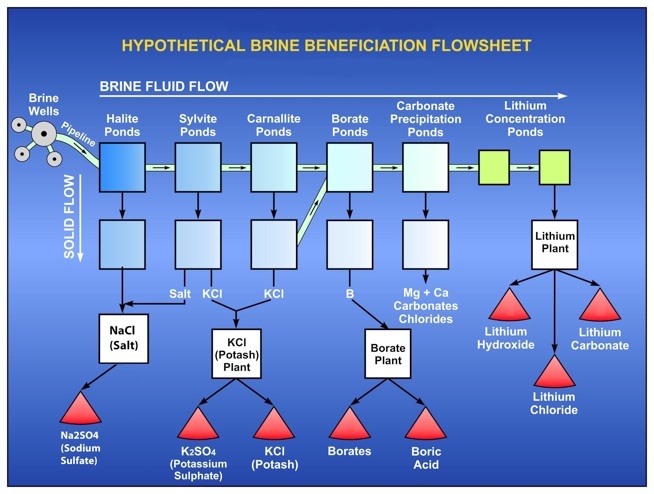
      We have a position in this company, please, do not consider anything as an investment advise as usual on this blog.


      TNR Gold/International Lithium Enters Into Option Agreement on the Company’s Rare Metals Forgan Lake Project, ON

      Press Release Source: TNR Gold Corp. On Monday March 15, 2010, 4:47 pm EDT

      VANCOUVER, BRITISH COLUMBIA–(Marketwire – March 15, 2010) – TNR Gold Corp. (TSX VENTURE:TNRNews;TNR” or the “Company”) and wholly-owned International Lithium Corp. (“ILC“) are pleased to announce the Company has entered into a letter agreement dated March 11, 2010 (the “Agreement”) with Cricket Capital Corp. (“Cricket”), a capital pool company (“CPC“), on the Company’s 100% owned Forgan Lake property (“Property”) located 125 km northeast of Thunder Bay, Ontario.

      Transaction Key Point Summary:

      – Cricket can acquire an undivided 60% interest in the Property;

      – By incurring a total of $1,000,000 in exploration expenditures on the Property over four years;

      – By making cash payments to TNR totalling $300,000 by the third year anniversary; and

      – By providing share issuances to TNR totalling 600,000 shares by the third year anniversary.

      Property Key Point Summary:

      – 6 pegmatite dikes identified through exploration carried out by Lun-Echo Gold Mines in the 1950s;

      – 4.23% Li2O over 7.5 m in channel sample reported by Lun-Echo at Pegmatite No. 1; and

      – 2.57 wt% Li2O over 4 m in channel sample reported by TNR at Pegmatite No. 1.

      “The Forgan Lake property has the potential to develop into a stand-alone rare metals project based on observations from our 2009 field season in conjunction with historical work performed by Lun-Echo,” states Gary Schellenberg, President and CEO of TNR Gold, and continues, “The entering into a joint venture arrangement with Cricket to further explore TNR’s Forgan Lake property is a successful application of our core business model and we welcome them as a joint venture partner.”

      Proposed Joint Venture Transaction

      Under the terms of the Agreement, Cricket can acquire an undivided 60% interest in the Property by incurring a total of $1,000,000 in exploration expenditures on the Property as follows: a minimum $250,000 in expenditures on the Property to be incurred by the first year following the date of execution of the Agreement, a minimum $250,000 in expenditures by the second year, a minimum $250,000 in expenditures by the third year, and a minimum $250,000 in expenditures by the fourth year. In addition, Cricket must make cash payments to TNR of $25,000 on the date of Exchange acceptance (“Exchange Acceptance”) of the Agreement, $50,000 on the first year following the date of execution of the Agreement, $75,000 on the second year and $150,000 on the third year as well as issue to TNR 50,000 shares of Cricket on Exchange Acceptance, 100,000 shares by the first year following the date of execution of the Agreement, 150,000 shares by the second year following the date of execution of the Agreement and 300,000 shares by the third year following the date of execution of the Agreement.

      The Property is subject to a 2% net smelter returns royalty (“NSR“), of which one-half of the NSR (1%) may be purchased for $1,000,000 by Cricket.

      Completion of any and all transactions contemplated by the Agreement is subject to, among other things, acceptance by the Exchange and all other necessary regulatory approvals.

      Forgan Lake Property

      The Forgan Lake Property, which is comprised of a 256 hectare claim block (16 units), is located 125 km northeast of Thunder Bay, Ontario. The Property, which hosts six known rare-metal pegmatites, is part of the Georgia Lake pegmatite field, an area of considerable lithium and other rare-metals (e.g., tantalum, cesium, rubidium etc) exploration since its discovery in the mid-1950s.

      Of the six-pegmatite dikes (1 through 6) on the Property, four (1-4) were part of a drilling campaign carried out in 1955 by Lun-Echo Gold Mines Limited (“Lun-Echo”). Of the 39 diamond drill holes drilled by Lun-Echo in the Forgan Lake area, 33 holes were bored on the Property.

      The No. 1 Pegmatite dike has been traced on surface for about 274.3 m at an average width of 9.1 m. It contains 30% medium to coarse-grained spodumene (lithium mineral) and sporadic black tantalitecolumbite crystals (tantalum-niobium minerals) up to 3.8 cm long. Historical channel sampling averaged 2.57% Li2O (lithium oxide) over 6.4 m, 4.23% Li2O over 7.5 m, and 1.98% Li2O over 7.6 m. A composite of channel sample taken across an old trench from this pegmatite during TNR’s 2009 field program, returned 2.57 wt% Li2O over 4 metres in a range of 1.69 to 3.4 wt% Li2O supporting the values reported from the historical work (Company News Release – October 5th 2009).

      The No. 2 Pegmatite, which is similar in composition to No. 1, has been traced in outcrop for 45.7 m with an exposed width of 13.7 m.

      The No. 3 Pegmatite, located northwest of the No. 1 pegmatite, has been traced for 320.0 m with an averaged exposed width of 6.1 m. The No. 3 Pegmatite contains approximately 25% spodumene. Lun-Echo explored this pegmatite with 10 diamond holes, totaling 832.1 m, at intervals of 30.5 to 61.0 m. The best intersection averaged 1.78% Li2O over 1.52 metres.

      The No. 4 Pegmatite has been traced on surface for approximately 243.8 m with an average surface width of 4.6 m. The pegmatite contains 10-15% fine to medium-grained spodumene.

      Ike Osmani, P.Geo, is the Company’s qualified person on the project as required under NI 43-101 and has reviewed the technical information contained in this press release. To help understand the technical aspects of Lithium and other Rare Metals please visit TNR’s website at www.tnrgoldcorp.com.

      ABOUT TNR GOLD / INTERNATIONAL LITHIUM CORP.

      TNR and ILC are diversified metals exploration companies focused on exploring existing properties and identifying new prospective projects globally. TNR has a portfolio of 18 active projects, of which 9 will be included in the proposed spin-off of International Lithium Corp. For further details of the spin-off please refer to TNR’s April 27, 2009 news release or visit http://www.internationallithium.com.

      The recent acquisition of lithium, other rare metals and rare-earth elements projects in Argentina, Canada, USA and Ireland confirms the companies’ commitments to generating projects, diversifying its markets, and building shareholder value.

      On behalf of the board,

      Gary Schellenberg, President

    • Lithium Demand: Honda’s Low-Cost Hybrid Strategy: Lithium Ion Batteries TNR.v, CZX.v, LMR.v, RM.v, LI.v, CLQ.v, SQM, FMC, ROC, HEV, AONE, BYDDY, NSANY

      The most important news for us here is that eventually all automakers are expected to move into Lithium based batteries. Recent troubles for Toyota now seems to be a very important step in the development of Lithium based electric cars and hybrids: competitors like Honda will take larger market share. It will be important for the Lithium Demand as Honda is basing its technology on Lithium rather then Nickel batteries as older Toyota hybrids. On another hand opportunity to address such crucial safety issue as Unintended Acceleration and ability to stop safely at any time any hybrid or EV now, when hardly any EVs are on the road, will provide a solid launch base of the new technology on the roads. Can you imaging such a problem arising when EVs will be in their advance market penetration stage? If it happen to be the major fault in Toyota’s hybrid drive technology remedy will be found and automakers will implement solid technical foolproof safety measures in EVs, like full power cut to the drive train and mechanical brakes which will override any computer based energy recuperation systems.
      With Oil price moving above 100 USD/barrel again question about Electric Cars and their adoption rate will move from: “Do we like it?” and into “Where can we get it?” very fast.”


      “Honda’s Low-Cost Hybrid Strategy: Lithium Ion Batteries

      In about two years, the Honda Civic Hybrid could start using lithium ion batteries. Despite views to the contrary, the move to lithium from nickel batteries could reduce the price premium for Honda hybrids.

      While the high cost of next generation lithium ion batteries is viewed as an obstacle to adoption of pure electric cars, lithium might be the key to making conventional hybrids more affordable.Bloomberg reported today that Honda—which has focused its hybrid marketing strategy on making hybrids nearly as affordable as gas-powered cars—is swiftly moving to put lithium batteries in the Civic Hybrid and its other hybrids.

      Honda hopes that shifting its hybrid battery technology to lithium ion—which packs more power in a smaller space—will help the company gain an advantage over Toyota. In addition to moving to lithium batteries, Honda is planning to increase hybrid production in small and large cars and to introduceAcura luxury hybrids.

      Solar

      Toyota’s recent safety troubles have created an opportunity for other producers of hybrid cars. Honda hybrid sales have been lagging in recent years. Yet, February 2010 sales of the Honda Insight and Civic Hybrid increased by 54 percent and 37 percent respectively, compared to the previous month. Sales of the Toyota Prius dropped by 6 percent in February—although the model still dominates the US and Japanese hybrid markets. Koichi Kondo, Honda executive vice president, told Bloomberg that Honda could put lithium ion batteries in the Civic Hybrid “within the next two to three years.”

      By contrast, Toyota believes that lithium batteries do not justify the higher cost, and that current hybrid battery technology—nickel metal hydride—is best suited for conventional hybrids. The company came to that conclusion last fall after conducting three years of “secret tests” on 126 Toyota Priuses equipped with lithium ion batteries.

      In a Twist, Lithium Ion Is Cheaper

      While similarly sized lithium ion batteries may cost 30 percent more than the current nickel metal hydride batteries, carmakers could use lithium batteries to reduce battery costs by building smaller packs. In an interview with HybridCars.com in December, John German—who worked as an environmental engineer for Honda for 11 years and is now a senior fellow for the International Council for Clean Transportation—said the next wave of lithium ion batteries will help conventional hybrids hit the mainstream.

      “Lithium ion batteries will reduce the cost of the battery pack for conventional hybrids, but they’re not going to reduce the cost of the battery pack for plug-in hybrids and electric vehicles,” German said.

      Power vs. Energy

      A quick refresher course on the difference between power and energy, and why it matters.

      German believes lithium ion batteries will alleviate the need for automakers to make hybrids with oversized nickel-based battery packs. The packs are currently sized for delivering enough power rather than for storing sufficient energy. German said, “The reason they’re oversized is that with nickel metal hydride, you’re limited in how fast you can take energy in and out of a battery without causing significant deterioration.” As a consequence, today’s hybrid batteries hold a lot more energy than they need to, and are therefore more expensive than they need to be. “With the new high-power lithium ion batteries, they can cut them down to their actual energy requirements and still get all the power they need,” German said.

      Eventually, all carmakers are expected to make the shift to lithium ion batteries for hybrids. If Honda’s strategy works, and other carmakers start using smaller more affordablelithium ion hybrid batteries, the higher purchase price of gas-sipping hybrid gas-electric cars could be slashed, dramatically increasing their popularity.”