Author: sys_anon

  • Leaders and Laggards in Agency Open Government Webpages

    Complying with requirements of the Open Government Directive (OGD), federal agencies launched transparency pages on their websites Feb. 6. The content and functionality of the pages varied from non-compliant to barely compliant to above and beyond expectations. OMB Watch conducted an assessment of the webpages between Feb. 15 and 22, based on factors that make for sound accountability and transparency.

    <!–break–>

    The OGD required agencies to create open government webpages as the first step toward Open Government Plans, which are required by April 7. The transparency webpages are intended to serve "as the gateway for agency activities related to the [Directive]." A standard for these webpages was set at www.[agency name].gov/open.

    OMB Watch’s review sought to be more expansive then the administration’s grading through the White House’s recently launched Open Government Dashboard. The dashboard assesses the state of progress on initial deliverables required by the OGD. The dashboard does not grade the quality of the products produced by the agencies; instead, it is simply a check-off on whether the agency has complied. Thus, for the requirement to establish the open government webpage, the dashboard simply indicates whether the agency has a webpage and does not provide any information about the quality or usefulness of the page. The administration did issue some content recommendations for agency open government webpages, but it remained limited in specifics and has not evaluated the agencies’ performance on content. OMB Watch’s assessment is the first to review how well the agencies did in creating their pages.

    Methodology

    Since the administration has offered agencies limited guidance on what components should be included in an open government page, OMB Watch developed criteria that cover basic information that should be provided in a central space on an agency’s openness page. We have included all requirements of the OGD, such as the designation of a Senior Accountable Official for the quality of spending data. Additionally, OMB Watch included some items that were not specifically identified by the administration but that fall within a reasonable and logical application of the OGD. Therefore, OMB Watch identified several basic disclosure functions that would make agency open government pages more useful to the public.

    In assessing the information available to the public, OMB Watch utilized a simple method of locating specified information on the site. First, the information must be accessible from the agency.gov/open page and not require the use of a search engine to find. Second, the information must be located in an intuitive manner, requiring no more than three mouse clicks to access. If those requirements were not met, then the website was deemed to not have the information and received no points. An agency could receive half points for the criteria if it attempted to comply. For example, if the agency did not list the Senior Accountable Official for the quality of spending data on the website, but did list another contact person, it would receive half points. The maximum score an agency could receive was 57.5.

    Leaders

    While agency scores varied greatly in the review, some agencies made clear efforts to go beyond the required minimum stated in the OGD. The top five open government webpages were the National Aeronautics and Space Administration (NASA), the General Services Administration (GSA), the State Department, the Department of Education, and the U.S. Agency for International Development (USAID) (see Table 1 below). These agencies scored highest because they attempted to integrate the new open government webpages into each agency’s existing disclosure policies and activities.

    Table 1. Top Five Open Government Webpages – Scores

    Agency Score
    National Aeronautics and Space Administration 40.5
    General Services Administration 37
    State Department 36.5
    Department of Education 35.5
    U.S. Agency for International Development 35

    For example, all five lead agencies had easy links from new open government pages to their already existing agency-wide contact systems that allow users to find any employee and get his or her contact information. Some agencies, such as the U.S. Environmental Protection Agency, had such an employee locator feature but did not make it easy to find from the open government page. Linking to pre-existing reports, such as Inspector General reports, budget justifications, and reports to Congress, were other areas that many of the higher-scoring agencies seemed to gain ground over their counterparts.

    Some agencies led in specific areas, garnering points that almost no other agencies received. For instance, NASA is the only agency that has communication and disclosure policies easily found from its open government page. Similarly, USAID was the only agency that not only included a summary of where agency funds were spent but provided information on top vendors, as well as spending by program area. Additionally, the Nuclear Regulatory Commission, though low-scoring in the review overall, was the only agency to not only link to Freedom of Information Act (FOIA) reports and plans but to also list the FOIA requests received in the last month. Further, some, such as the State Department and the Department of Health and Human Services, even went so far as to list information on their records management and declassification programs, as called for in the OGD.

    Laggards

    While agencies did generally meet the minimum requirements of the OGD for the new webpages, several scored particularly low in this review. The bottom five agencies, excluding those that failed to put up any open government page, were the Office of Management and Budget (OMB), the Department of Agriculture, FDIC, the Department of Health and Human Services, and the Department of Justice (see Table 2 below). These agencies scored poorly for the exact opposite reason the leaders succeeded – failure to integrate the new open government page into existing agency information and activities – or not having adequate information on their pages. For instance, none of the bottom agencies’ have Inspector General reports, a link to Recovery Act data, reports to Congress, budget justifications, or performance results that can be easily found from the new webpages. Similarly, several laggard agencies, including FDIC, Department of Health and Human Services, OMB, as well as others, failed to link to public participation tools for collecting input and open government ideas as mandated by the OGD.

    Table 2. Bottom Five Open Government Webpages – Scores

    Agency Score
    Office of Management and Budget 6
    Department of Agriculture 15
    FDIC 16.5
    Department of Health and Human Services 18.5
    Department of Justice 18.5

    In some cases, however, agencies lost points and fell behind others because the information provided was outdated. The Defense Department’s backlog report for its FOIA responsibilities is from the 2008 fiscal year, not from Fiscal Year 2009. Further, the Department of Veterans Affairs presented both outdated performance and financial reports. This could represent a significant problem if the administration is not considering the quality and timeliness of information disclosed when determining if the agencies are meeting OGD requirements.

    The OMB and White House webpages are somewhat unique. Even though OMB is charged with overseeing much of the OGD, it is not clear whether the agency views itself as covered by the requirements of the directive. It does have an open government webpage and done a dashboard for its regulatory work.  But, OMB has no directory of its employees, and its openness webpage is sparse, at best. In fact, it doesn’t even link to its own regulatory dashboard.  The White House does not view itself as an agency and has used its openness webpage to describe what all agencies are doing and to blog on progress on the OGD. The White House may produce an Open Government Plan, but no official decision has been made yet.

    Missing in Action

    Some federal agencies are lacking openness pages entirely. These include the National Transportation Safety Board, the Federal Election Commission, and the Consumer Product Safety Commission. These offices all collect data, the public release of which could benefit citizens.

    There were some areas of information that were omitted by almost all agencies throughout the government. This included communications policies that govern how information can be disclosed by employees, senior officials’ calendars that would offer a window into the agency’s priorities, lists of FOIA requests received that indicate demand for information, and visitor logs that would indicate with whom agencies are meeting. Many agencies also fail to provide the public with basic organization information such as organizational structure or employee and leadership contact information.

    Several items reviewed are ones that are not required by the OGD but that each agency can easily undertake to enhance the usefulness of its openness portal to the public. Oftentimes, information that is important to the public was buried in other sections of an agency’s website, requiring tedious searching to locate. Instead, the openness pages should serve as easy-to-use portals to information of public interest.

    Ultimately, these issues reinforce the paramount importance of public participation in the OGD implementation process. The agencies utilize a collaborative online tool to solicit public input in their progress. Through this tool, the public is able to push the administrative agencies to further their efforts to be more open.

    Editor’s Note: This article has been modified since its original publication date to clarify the White House’s role in the OGD.

  • FDA Announces New Approach to Inspections of Imported Products

    On Feb. 4, the Food and Drug Administration (FDA) announced a new approach to regulating imported products – including food and medical devices – to enhance the agency’s ability to respond to the increased globalization of commerce. The new risk-based approach to inspections and product tracking will be in place nationally in 2010.

    <!–break–>

    Dr. Margaret Hamburg, FDA’s commissioner, announced the new approach in a speech at the Center for Strategic and International Studies, a Washington, DC, policy and research organization. The new safety strategy shifts the agency from one that reacted to problems after they occurred to one that tries to prevent product safety problems.

    During the Bush administration, FDA was criticized for its inability to respond to crises afflicting the public because the number of imported products outstripped the agency’s ability and willingness to protect the public. Although the Obama administration has increased the budget for FDA, "FDA-regulated products are currently imported from more than 150 countries, with more than 130,000 importers of record, and from more than 300,000 foreign facilities. This year, we expect that nearly 20 million shipments of food, devices, drugs, and cosmetics will arrive at U.S. ports of entry. Just a decade ago, that number was closer to 6 million, and a decade before only a fraction of that," according to Hamburg’s speech.

    FDA has fewer than 500 inspectors to handle the 20 million shipments. As a result, the agency inspects less than one percent of imported products and only about eight percent of foreign drug manufacturers, Hamburg said. FDA has begun to shift its approach to the growing burden it faces by, for example, setting a goal of dramatically increasing inspections of overseas food facilities and hiring new inspectors.

    The plan that Hamburg described in her speech has several dimensions. First, FDA’s overall strategy to import safety is changing. Hamburg described it this way in her speech:

    To assure the safety of imported products and fulfill our public health mission in a global age, the FDA must adopt a new approach … an approach that takes into account the entire supply chain and its complexity; and an approach that will address product safety by preventing problems at every point along the global supply chain … from the raw ingredients … through production … and distribution … all the way to U.S. consumers.

    Second, FDA has developed several new objectives. The agency is focusing on point of production issues by working with manufacturers, suppliers, and foreign governments to create collaborative networks and build the regulatory capacity of countries without well established regulatory infrastructures. According to Hamburg, for example, "We now have permanent FDA offices in Beijing, Shanghai and Guangzhou, China, in New Delhi and Mumbai, India, in San Jose, Costa Rica, Mexico City, Santiago, Chile, and—soon—Amman, Jordan." FDA now has more than 30 agreements with countries with more sophisticated regulatory systems to share information and provide inspection data.

    FDA also intends to hold importing companies responsible for their supply chains by requiring them "to effectively demonstrate that safety, quality and compliance with international and U.S. standards are built into every component of every product and every step of the production process," Hamburg said.

    To maximize its inspection resources, Hamburg announced that FDA is putting in place a new system called PREDICT (the Predictive Risk-Based Evaluation for Dynamic Import Compliance Targeting). This new risk assessment tool will allow the agency to rank the public health risks posed by various products so FDA can target more carefully its inspections to those products. PREDICT has been used in Los Angeles and is being implemented in New York. Hamburg said FDA intends to have it implemented nationwide by the end of summer.

    According to materials prepared for industry and available on FDA’s website, the new ranking tool will use compliance histories, shipper and producer information, inspection results, and other entry data to identify which products pose fewer risks, thus allowing goods to be imported more quickly. If sufficient information is not available, or if anomalies appear that could indicate fraud, FDA will require additional information before products are released for shipment throughout the U.S.

    The shift by FDA to a preventative approach is consistent with food safety legislation Congress is debating. The Food Safety Enhancement Act of 2009 (H.R. 2749) establishes risk-based preventative controls and hazard analyses while giving FDA expanded authority to set high-risk triggers and issue regulations in a range of food safety areas. The House passed the bill in 2009 and referred it to the Senate, which has not acted.

  • Commentary: Celebrating One of the Recovery Act’s Legacies: Transparency

    Feb. 17 marked the one-year anniversary of the American Recovery and Reinvestment Act, commonly called the Recovery Act. Both political parties celebrated the occasion with partisan attacks. Democrats heralded the act as having saved the nation’s economy, while Republicans savaged it for being an expensive government program with little to show by way of jobs. While the two parties can argue over how effective the act actually has been, both can agree on one thing: the lasting legacy of the Recovery Act’s transparency provisions.

    <!–break–>

    While the act might have included too many tax cuts, too few tax cuts, or not enough infrastructure projects, or the Democrats might have undersold the stimulus, or oversold it, the one thing that cannot be denied is that the act has substantially advanced the cause of fiscal transparency. While the act is far from perfect, without it, advocates would have nothing to gripe about. The debate would be stuck on whether timely recipient reporting is a feasible goal or not.

    In this sense, the Recovery Act provided a convenient pilot program for fiscal transparency. Now, one year later, the act has not only proved that broad-based recipient reporting is feasible, it has shown that the reporting is useful. By showing how multiple levels of recipients (although not all levels of sub-recipients) have used their federal funding, the Recovery Act has provided the government and its citizens an unprecedented ability to see where its money has gone.

    There are also the Agency Reports, which provide weekly updates of spending levels for every Recovery Act program. These reports have received very little attention and are largely overshadowed by the recipient reports. But these agency reports, along with the agency and program plans, provide citizens with a timely snapshot of what the federal agencies are doing. These reports, if they were presented better and expanded to include all federal spending, could evolve to become powerful transparency tools by linking spending and performance measures.

    This is not to say that the act is without flaws. As mentioned before, the reporting requirements only extend to second-tier recipients, not all recipients, limiting the reach of the act’s transparency. Despite new guidance from the Office of Management and Budget (OMB), recipients are still left to decide what constitutes a "full-time equivalent" job, making it difficult to compare jobs across states and industries. Moreover, due to the way the data are collected, it is next to impossible to add reports from one quarter to another, making it extremely difficult to track cumulative spending or jobs. Add in that Recovery.gov does not effectively display the recipient reports, nor does it link the recipient data to other federal spending data sources such as USAspending.gov. Finally, beyond the information collected about jobs, there is little in the way of performance data or information about who benefited from the stimulus spending.

    More importantly, the act is hobbled by bad data quality, a problem which plagues many government datasets. The first round of recipient reporting resulted in many news articles about bad data, from phantom congressional districts to recipients who did not understand how to count jobs created or saved under the act. But the problems with data quality go further than that and include issues such as incorrect addresses, bad unique company identifiers, erroneous dollar amounts, and other data entry issues. These data quality problems can serve to undermine support for the act itself and future federal spending if the public believes the government is being less than fully honest about how it spends taxpayer dollars.

    Transparency under the Recovery Act is also hobbled by limited disclosure. Only about one-third of stimulus spending is disclosed. None of the details about the $288 billion in tax breaks or the $224 billion in entitlement spending will be disclosed through Recovery.gov. We will never know who benefited from the tax cuts, for example.

    Despite these problems, the act has shown that there is a demand for spending transparency. At its height, Recovery.gov, the act’s homepage, had millions of visitors a day and still receives significant levels of traffic. Journalists and analysts, in addition to average citizens, routinely use the site as a resource. The site could benefit from improvements, but it is a marked departure from the status quo and will serve as the starting point on the road to better fiscal accountability, following a pattern established by USAspending.gov.

    The Federal Funding Accountability and Transparency Act of 2006, which created USAspending.gov, helped advance federal spending transparency. When FedSpending.org, OMB Watch’s first attempt at a federal spending website and the basis for USAspending.gov, was first released, it relied solely on existing databases that were out of date; now, USAspending.gov has more timely spending data from many federal agencies and is an important part of federal fiscal transparency. Appropriately, the focus for USAspending.gov has shifted to improving data quality and complying with the law’s requirement to collect sub-recipient information. Indeed, only four years after its authorizing legislation, USAspending.gov will certainly be a vital part of any spending transparency reform that comes from President Obama’s recent Open Government Directive.

    As time passes, and the transparency community moves on from the Recovery Act to new challenges, open government advocates from both sides of the aisle will likely look back at the act as continuing USAspending.gov’s transparency mission. The act is not perfect, and it may be a contentious political issue, but its effect on the drive for an open, accountable government is a real reason for celebrating its anniversary.

    Open Government Directive


    For Updated News and Information:

  • Citizens United: Additional Legislative Responses

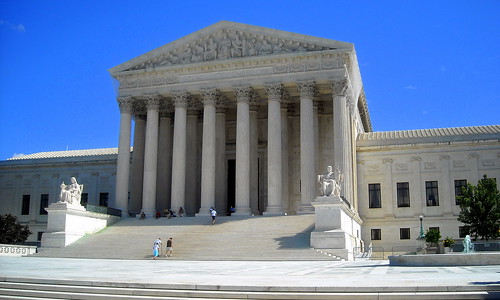
    Multiple legislative responses have followed the U.S. Supreme Court’s ruling in Citizens United v. Federal Election Commission, a decision that permits independent election spending by corporations, including certain nonprofit organizations. Following three rigorous congressional hearings, lawmakers have expressed a sense of urgency and the intent to continue working on legislation to curtail the impacts of the ruling, even as some critics charge that reaction to the decision is inflated.

    <!–break–>

    On Feb. 11, Sen. Chuck Schumer (D-NY) and Rep. Chris Van Hollen (D-MD) released a summary of their proposed legislation to address issues raised in the hearings. Reportedly, Schumer and Van Hollen will introduce their bill during the week of Feb. 22.

    Schumer and Van Hollen’s extensive proposal includes a ban on expenditures by foreign interests, as well as corporations that have federal contracts and those that received funds through the Troubled Asset Relief Program (TARP). They also call for new disclosure rules on corporate spending, both to the government and to shareholders.

    Specifically, the Schumer-Van Hollen bill would:

    • Ban corporations from spending money on U.S. elections if they have a foreign ownership of 20 percent or more, a majority of their board of directors is foreign principals, or their U.S. operations are under the control of a foreign entity.
    • Prohibit government contractors, including TARP recipients, from making political expenditures.
    • Require corporations that release political ads to have their CEOs appear on camera to say they "approve this message." The "top funder" of the ad must also record a stand-by-your-ad disclaimer, and the top five contributors that donate for political purposes will be listed on the screen at the end.
    • Require the creation of separate "political broadcast spending" accounts and require that the finances of these accounts be reported to the Federal Election Commission (FEC). All funds spent or transferred from the accounts would have to be publicly reported to the FEC.
    • Require all political expenditures made by a corporation to be disclosed within 24 hours on the corporation’s website and to be disclosed to shareholders in quarterly reports and in the corporation’s annual report.
    • Require federally registered lobbyists to disclose information on all campaign expenditures over $1,000.
    • Strengthen current coordination rules for House and Senate campaigns by banning coordination between a corporation or union and candidates on ads referencing a congressional candidate within 90 days of the beginning of the primary-through-general election season. For all federal elections, coordination would be prohibited, regardless of timing, when the ads promote, support, attack, or oppose a candidate.

    While it remains to be seen if the Schumer-Van Hollen plan will receive bipartisan support, there is a very real possibility that certain provisions could be challenged in court. For example, if the proposal moves forward to ban political commercials paid for by corporations that receive government funding, it may face a constitutional challenge.

    Other criticism of the Schumer-Van Hollen proposal abounds from both opponents and supporters of the Citizens United decision. Some consider it only an initial step and offer suggestions for improvement. The Sunlight Foundation, while expressing pleasure that many of its "disclosure-related recommendations appear to have been embraced," also highlights the inefficiencies of the FEC reporting structure and the need for lobbyist disclosure to go further.

    "The enhanced disclosures of lobbyists’ campaign expenditures is a good start, though again we would note that to be meaningful, the disclosures must be in real time, online and publicly available and a user-friendly, searchable database," said the Sunlight Foundation in a recent blog post. The post further stated that "while the Schumer/Van Hollen framework rightly strengthens the ban on coordination to prevent such anti-democratic behavior, without a new disclosure requirement mandating that lobbyists report who they met with, there is no effective way to discern the possibility that such coordination took place."

    An editorial in the Washington Post warns, "The prohibition on government contractors is so broadly worded as to sweep in nearly every major corporation that sells goods to the government; at the very least, some significant dollar threshold should be applied here."

    In a press release from the Center for Competitive Politics (CCP), CCP President Sean Parnell expressed further concerns, saying that "[a]ny legislative attempt to dismantle the Court’s ruling in Citizens United must be narrowly tailored and backed up by evidence of a compelling government interest." Parnell further stated that "[t]his rush to ram a bill through before such a record could possibly be established does neither."

    Some of the proposals in the Schumer-Van Hollen legislative framework have been introduced already as standalone bills. Between the Jan. 21 ruling and today, 14 bills have been introduced in the House, including two proposed constitutional amendments, and three in the Senate to address the Court’s decision.

    With regard to disclosure requirements for independent campaign spending:

    • The Corporate and Labor Electioneering Advertisement Reform (CLEAR) Act (H.R. 4527), sponsored by Rep. Steve Driehaus (D-OH), would require communications related to campaigns to include a statement identifying the corporation’s CEO or the president of the organization.
    • The Stand By Your Ad Act of 2010 (H.R. 4583)," sponsored by Rep. John Boccieri (D-OH), would require that campaign-related communications paid for by certain tax-exempt organizations or political organizations include a statement naming their five largest donors."

    Bills that seek to limit corporations receiving government funding from spending money on elections include:

    • No Taxpayer Money for Corporate Campaigns Act of 2010 (H.R. 4550), introduced by Rep. Niki Tsongas (D-MA), would prohibit corporations from using any federal funds to contribute to political campaigns or participate in lobbying activities.
    • H.R. 4617, sponsored by Timothy Walz (D-MN), would prohibit TARP recipients from using any TARP funds for political expenditures or electioneering communications.

    The Pick Your Poison Act of 2010 (H.R. 4511) introduced by Rep. Alan Grayson (D-FL), would prohibit corporations that employ registered lobbyists from making expenditures or disbursements for electioneering communications.

    A few bills call for shareholder approval before a corporation spends money on any campaign-related message:

    • H.R. 4487, also introduced by Grayson, would "require the approval of a majority of a public company’s shareholders for any expenditure by that company to influence public opinion on matters not related to the company’s products or services."
    • Similarly, Rep. Michael Capuano (D-MA) introduced H.R. 4537, which amends the Securities Exchange Act to require the authorization of a majority of shareholders before a company makes political expenditures.
    • In the Senate, S. 3004, introduced by Sen. Sherrod Brown (D-OH), requires that political expenditures be approved by the shareholders of a public company.

    Multiple bills introduced echo President Barack Obama’s publicly expressed concerns regarding the possible role of foreign-controlled corporations making independent expenditures. Seven bills, five in the House and two in the Senate, have been introduced to address these concerns. All of them seek to "amend the Federal Election Campaign Act of 1971 to apply the ban on contributions and expenditures by foreign nationals to domestic corporations" in certain circumstances. The circumstances covered in the different bills include when foreign principals have control or an ownership interest, when shareholders include any foreign principals, and when domestic corporations are subsidiaries of foreign principals. One bill specifically seeks "to protect Federal, State, and local elections from the influence of foreign nationals."

    Examples of these bills are:

    • H.R. 4510, another Grayson bill, would "amend the Federal Election Campaign Act of 1971 to apply the ban on contributions and expenditures by foreign nationals to domestic corporations in which foreign principals have an ownership interest."
    • H.R. 4517, introduced by Rep. John Hall (D-NY), would "amend the Federal Election Campaign Act of 1971 to apply the ban on contributions and expenditures by foreign nationals to domestic corporations which are owned or controlled by foreign principals, to increase the civil penalties applicable to foreign nationals who violate the ban, and for other purposes."
    • S. 2959, introduced Sen. Al Franken (D-MN), would "amend the Federal Election Campaign Act of 1971 to protect Federal, State, and local elections from the influence of foreign nationals."

    Legislators have also proposed two amendments to the U.S. Constitution. H.J.Res.68, sponsored by Rep. Leonard Boswell (D-IA), would prohibit "corporations and labor organizations from using operating funds for advertisements in connection with any campaign for election for Federal office." H.J.RES.74, sponsored by Reps. Donna Edwards (D-MD) and John Conyers (D-MI), would permit "Congress and the States to regulate the expenditure of funds by corporations engaging in political speech."

    See the Jan. 27, 2010, OMB Watcher articleCitizens United: The Supreme Court Decision and Its Potential Impacts


    See the Jan. 27, 2010, OMB Watcher article Citizens United: Nonprofit Calls to Action and the Legislative Response

    For Updated News and Information:

  • For Regulatory Agencies, Intrigue in an Otherwise Bleak Budget

    President Barack Obama’s proposed budgetary spending freeze would have varying impacts on the regulatory agencies responsible for protecting public health and welfare. Oversight of industry and solving new and neglected problems may dwindle as environmental and consumer safety regulators are forced to operate in a constrained fiscal environment.

    <!–break–>

    On Feb. 1, the White House Office of Management and Budget (OMB) released Obama’s proposed budget for FY 2011, which begins Oct. 1, 2010. The budget calls for an overall spending freeze for all discretionary non-defense and non-security programs. The president said he will continue to propose the freeze through FY 2013.

    Obama’s proposed budget cuts funding for programs at the U.S. Environmental Protection Agency (EPA) and the U.S. Fish and Wildlife Service (FWS). It gives only modest increases to consumer programs at the Food and Drug Administration (FDA) and the U.S. Department of Agriculture (USDA), as well as the Consumer Product Safety Commission (CPSC) – the regulator of consumer products including everything from toys to toasters.

    However, because Obama has proposed an overall cap, as opposed to a line-item-by-line-item freeze, the administration can shift funds to reflect its priorities. Other regulatory agencies fare relatively well under the FY 2011 budget, including those at the Department of Labor.

    In a statement, OMB Watch criticized the overarching message Obama is sending by limiting non-defense discretionary spending, which represents just over ten percent of the overall federal budget: "His three-year freeze on non-security discretionary spending to reduce the deficit and debt is like attempting to empty the ocean with a teaspoon. It misses the major structural problems: entitlement spending and health care, in particular, as well as growing tax expenditures."

    For years, regulatory agencies have suffered without adequate funding and staff. As a result, agencies have been unable to respond promptly to public needs, unable to enforce regulations already on the books, and unable to balance the views and needs of both the public and industry. The consequences have been clear: toys coated in lead paint, food contaminated with E. coli and salmonella bacteria, greenhouse gases pumped into the atmosphere, and banks violating customer rights while jeopardizing global financial stability. Most recently, with questions about the safety of some Toyota cars, there has been speculation about government’s regulatory capacity.

    The resource constraints appear more pointed when compared to the size of the regulated communities. Agencies like the FDA and USDA must keep tabs on a food supply that is not only growing in size but coming from an increasing number of foreign nations. Worker protection agencies are responsible for the regulatory needs of an evolving workforce.

    Regulatory agencies are among the numerous interests jockeying for position in a vast federal budget, which under Obama’s FY 2011 proposal would top $3.6 trillion; their share of the overall budget is minor by federal standards. Of the major regulatory agencies, EPA’s budget is the largest at approximately $10 billion – less than three-tenths of one percent of all federal spending.

    The EPA’s budget illustrates the complications of the federal budgeting process and presidential priorities. The budget proposal cuts EPA’s overall budget $278 million, or 2.8 percent, in FY 2011 after a monumental $2.7 billion increase in FY 2010. But while the overall budget declines, funding for clean air and climate change programs – high priorities for the Obama administration – increases dramatically at both the federal and state levels. Funding for climate change research is also on the rise at other agencies.

    Funding at the Occupational Safety and Health Administration (OSHA) may also mirror the president’s priorities. The budget for OSHA’s rulemaking division rises to $24 million from $20 million while cutting $3 million, or about 4 percent, from compliance assistance programs.

    Despite the increase, OSHA’s overall staffing level is expected to drop in FY 2011 – from 2,419 to 2,368 full-time employees. Obama’s budget states, "The 2011 Budget builds on the 2010 Budget policy of returning worker protection programs to the 2001 staffing levels, after years of decline." (Budget information for other Labor Department agencies is available in the chart below.)

    The toll of Obama’s discretionary spending freeze on regulatory budgets may once again fall heavily on the CPSC. The agency has had significant spending boosts after years of cuts, but the agency is shortchanged in Obama’s budget proposals. In both FY 2010 and FY 2011, Obama proposed minimal increases for the long under-funded agency, including a paltry $400,000 increase for FY 2011.

    After an auspicious start to his administration, Obama’s commitment to food safety has also been questioned. His 2009 Food Safety Working Group set forth an ambitious agenda for the administration to follow, and the FY 2010 budget pledged significant funding and staffing increases for FDA’s food safety efforts. However, Obama’s budget requests have been less attentive toward the needs of the Food Safety and Inspection Service (FSIS) within USDA, the regulator of meat, poultry, and eggs.

    FDA’s overall budget, which covers non-meat foods, pharmaceuticals, medical devices, and tobacco regulation, receives another increase in FY 2011. Obama’s budget raises the agency’s budget by about $500 million, including industry-paid licensing and registration fees, also known as user fees. That figure does not include an additional $289 million in new user fees currently under consideration in Congress, most of which would go toward food safety. Obama’s budget increases the existing food safety line item to $848 million, from $784 million.

    But again in FY 2011, Obama’s budget proposes a more modest increase – $18 million, or 1.6 percent – for FSIS. The agency is required by law to inspect and approve all meat, poultry, and egg products destined for human consumption, a resource-intensive task. While food consumption has risen in the U.S., especially poultry consumption, FSIS staffing levels have fallen, from almost 10,000 in the early 1980’s to less than 9,200 in 2007. The decline has resulted in high vacancy rates among the inspectorate in FSIS’s field offices. In recent years, the situation has improved moderately, and Obama’s FY 2011 budget projects more than 9,600 full-time employees.

    Because the president proposed a three-year spending freeze, worry over resources for federal agencies is likely to continue. "The president does little to fund fully the vital national programs that help financially stabilize families and protect all Americans from harm caused by contamination of the environment, our food supply, and consumer goods," OMB Watch says.

    Congress has begun the months-long process of hearings and votes on individual parts of the budget proposal. Although budget priorities will likely change as this process goes forward, both the administration and Congress have expressed support for rebuilding agencies responsible for consumer products, workplace safety, and addressing some key environmental issues. Balancing that support with calls for curbing spending is always the challenge.

    Regulatory Agency Budgets, FY 2009 – FY 2011. (All values in millions)

    Agency FY 2009 (enacted) FY 2010 (enacted) Change, 2009-2010 FY 2011 (proposed) Change, 2010-2011
    U.S. Environmental Protection Agency (programs)1 $2,575 $3,078 19.5% $2,969 -3.54%
    U.S. Fish and Wildlife Service2 $1,474 $1,445 -2.0% $1,418 -1.9%
    Food and Drug Administration3 $2,671 $3,233 17.1% $3,743 15.77%
    Food Safety and Inspection Service4 $1,107 $1,140 3.0% $1,158 1.6%
    Occupational Safety and Health Administration5 $521 $561 7.7% $575 2.5%
    Mine Safety and Health Administration6 $348 $359 3.2% $363 1.1%
    Employment Standards Administration7 $455 $542 19.1% $613 13.1%
    National Highway Traffic Safety Administration8 $127 $140 10.2% $133 -5.0%
    Consumer Product Safety Commission9 $108 $122 12.96% $123 0.8%

    1Budget authority for Environmental Programs Management account, Environmental Protection Agency.
    2Budget authority for Resource Management account, Fish and Wildlife and Parks, Department of the Interior.
    3Budget authority for Salaries and Expenses account, Food and Drug Administration, Department of Health and Human Services.
    4Budget authority for Food Safety and Inspection Service account, Food Safety and Inspection Service, Department of Agriculture.
    5Budget authority for Salaries and Expenses account, Occupational Safety and Health Administration, Department of Labor.
    6Budget authority for Salaries and Expenses account, Mine Safety and Health Administration, Department of Labor.
    7Budget authority for Salaries and Expenses account, Employment Standards Administration, Department of Labor. In FY 2010, the Employment Standards Administration was dissolved into its four major sub-components: Office of Worker’s Compensation Programs; Wage and Hour Division; Office of Federal Contract Compliance Programs; and Office of Labor Management Standards. The figure for FY 2011 is the aggregate of those four agencies.
    8Operations and Research account, National Highway Traffic Safety Administration, Department of Transportation.
    9Salaries and Expenses account, Consumer Product Safety Commission, Other Independent Agencies.
    All data taken from Budget of the U.S. Government: Appendix, FY 2011. Available at www.whitehouse.gov/omb/budget/Appendix/.


    Image in teaser by flickr user zebble, used under a Creative Commons license.

  • Annual Cost-Benefit Report Gives Clues to Regulatory Changes

    The Office of Management and Budget’s (OMB) annual report to Congress on the costs and benefits of federal regulations provides clues to the changes the Obama administration will seek in the regulatory process. While the report includes some important changes to the way agencies might approach calculating the impacts of new rules, it does little to suggest that major changes to the central role OMB plays in the process are likely.

    <!–break–>

    OMB’s annual report to Congress is mandated by the Regulatory-Right-to-Know Act and summarizes regulatory agencies’ estimates of the costs and benefits of regulations over ten years. The report is written by the staff of OMB’s Office of Information and Regulatory Affairs (OIRA), the government office charged with overseeing federal regulatory activity; OIRA has issued the report annually since 1997.

    The aggregate numbers in the annual reports are unreliable measures because of the wide range of assumptions and methodologies employed by agencies in measuring costs and benefits. Aggregating those estimates as OIRA does for these reports exacerbates that unreliability. Nevertheless, the reports consistently show that the benefits of regulations exceed the costs, especially for environmental regulations.

    On Jan. 29, OIRA issued the latest report, entitled 2009 Report to Congress on the Benefits and Costs of Federal Regulations and Unfunded Mandates on State, Local, and Tribal Entities. The 2009 report aggregates the estimated costs and benefits of major regulations over ten years and provides estimates for both annual and some program activity for fiscal year 2008, the last full fiscal year of the Bush administration.

    The 2009 report is the first to be directed by President Obama’s choice to lead OIRA, Cass Sunstein, an ardent supporter of cost-benefit analysis (CBA) and a critic of the effectiveness of the way agencies employ CBA. Changes to the approaches used by agencies are part of the recommendations for reforms mandated by the act. The report’s value is in the chapter outlining these reforms and, if implemented, may represent significant improvements in the use of CBA in agency regulatory impact analyses, the formal analyses that accompany all major rules.

    The first reform included in the report is using behavioral approaches to regulation. The emphasis on human behavior takes advantage of social science research that challenges the traditional assumptions of neoclassical economics – that humans make decisions based only on efficiency, rationality, and utility. The behavioral approaches the report recommends that agencies consider acknowledge that people are influenced by a range of factors other than strict rationality. Examples of behavioral approaches include disclosing information to consumers, such as information about nutrition, tire safety, and the level of pollution emissions, and the use of “opt-in” and “opt-out” rules to influence consumer choices. In the words of Sunstein, these types of solutions can “nudge” people’s behavior.

    The second recommendation is focused on improving regulatory impact analyses. “Regulation should be data-driven and evidence-based, and cost-benefit analysis can help to ensure a careful focus on evidence and a thorough consideration of alternative approaches,” the report states. The emphasis on data and facts is consistent with Obama’s call for agencies to restore scientific integrity to their decision making processes after years of politics superseding science. It is also consistent with Obama’s emphasis on using performance measurement as a means for determining which programs government should continue or discontinue.

    Evidence-based analysis continues the trend toward increased quantification in regulatory analyses, but the report makes clear that not all variables can be quantified or monetized. It also recognizes that other analytical tools may be appropriate and seems to give agencies the flexibility to use them. Several times, the chapter includes declarations such as, “We continue to explore methods for handling the most difficult challenges posed by efforts to specify the likely effects of regulation.”

    More importantly, the report states that other considerations largely ignored by CBA (as currently used) should be part of agency calculations. “It is clear that a full accounting of the costs and benefits of rules must include, rather than neglect, the interests of future generations,” the report states. The emphasis on future generations may presage a change in the use of discounting in regulatory impact analysis, an economic technique used in CBA that decreases the value of lives in the future.

    “Nor does sensible regulation ignore distributional considerations. If regulation would impose serious costs on the least well-off, or deliver significant benefits to them, regulators should take that point into account in deciding how to proceed,” according to the report. The emphasis on distributional considerations would also be a significant change in the way impact analyses are conducted by, for example, allowing agencies to place greater value on the impacts of rules on vulnerable or susceptible populations.

    The third recommendation put forward by OIRA is “that regulatory impact analysis should be seen as a central part of open government.” This recommendation is consistent with the president’s emphasis on transparency and public participation in government. By making the assumptions and information accessible to the public and actively seeking new information in the course of designing regulations, “we can greatly improve our practices,” the report states. “A general goal is to connect the interest in sound analysis with the focus on open government, in part by promoting public engagement and understanding of regulatory alternatives.”

    The reforms could provide agencies with greater latitude and discretion during the regulatory process and make that process more transparent. There is no indication in the report whether OIRA intends to modify or replace the existing directive to agencies on the use of CBA.

    The report implies that OIRA will not change its approach to issues such as implementation of the data quality issues, peer review, and OIRA’s review of agency guidance documents, leaving in place much of the power OIRA appropriated during the Bush administration.

    Nor is there any indication that broader, more far-reaching changes to the regulatory process are coming despite the administration’s call for comments from the public and from agencies about changes to the current regulatory executive order (E.O. 12866). Obama issued a memorandum to executive department heads and agencies on Jan. 30, 2009, calling for a revision to the principles guiding the federal regulatory process. OMB Watch recently called on the president to complete this process by issuing a revised executive order.

    The annual report to Congress, the Analytical Perspectives section of the president’s budget, and other signals from the administration now make it appear that Obama will not revise or replace the Clinton-era executive order, thus missing a major opportunity to rebuild the structure of federal rulemaking to make it more responsive to public problems.

  • OMB Watch Calls on the Obama Administration to Revise Regulatory Process

    <!–break–>

    PRESS RELEASE
    -For Immediate Release-
    January 29, 2010

    Contact: Brian Gumm, (202) 683-4812, [email protected]

    OMB Watch Calls on the Obama Administration to Revise Regulatory Process

    WASHINGTON, Jan. 29, 2010—President Barack Obama issued a memorandum to executive department heads and agencies on Jan. 30, 2009, calling for a revision to the principles guiding the federal regulatory process. The memo required agencies to submit within 100 days recommendations for a new executive order. The memo also precipitated a call for public comments by the Office of Information and Regulatory Affairs (OIRA) to gather the public’s ideas for reforming the regulatory process. At the one-year mark of his administration, OMB Watch calls on the president to complete this process by issuing a revised executive order.

    OMB Watch further urges the administration to ensure that the revised order provides agencies greater flexibility and a more streamlined process for engaging in rulemaking and seeking White House review. Political interference, delay, and numerous procedural requirements have often limited federal agencies’ ability to issue crucial public protections under the current centralized review process.

    "President Obama is defaulting on his commitment to bring greater transparency and accountability to the regulatory process," said OMB Watch Executive Director Gary D. Bass. "The president should sign – as soon as possible – an executive order that helps federal agencies fulfill their missions and that promotes a regulatory agenda that actively works to protect the public," Bass said.

    The need for a flexible process grew more urgent this week amid news that the president will limit discretionary spending increases at federal agencies. The spending cap threatens to aggravate an already serious problem: for years, agencies have seen resources drained, undercutting their ability to write and enforce regulations that protect consumers, workers, and the environment.

    "In light of anticipated tightening of agency budgets, the administration must do everything it can to help agencies make efficient use of their time and resources," Bass noted. "Any regulatory reform effort should limit political review of agency regulations and reduce delay." Currently, agencies are required to perform any number of analyses before writing new standards, including the notoriously unreliable cost-benefit analysis.

    OMB Watch has been a staunch critic of the regulatory process, raising concerns about the bias against regulation, the length of time it takes to publish a final rule, the quality of regulations that have been published, the interference of OIRA in the substantive work of agencies, politics superseding science, and the lack of energy behind enforcement of existing rules. OMB Watch has urged the Obama administration to restructure the relationship between OIRA and rulemaking agencies, to respect the rulemaking authority that Congress has delegated to agencies, to make the process more transparent and accessible to the public, to streamline the regulatory process, and to restore the importance of science in decision making.

    Summaries of OMB Watch’s recommendations for reforming the regulatory process can be found on our website at http://www.ombwatch.org/protecting_the_public.

    # # #

    OMB Watch is a nonprofit government watchdog organization dedicated to promoting government accountability, citizen participation in public policy decisions, and the use of fiscal and regulatory policy to serve the public interest.

  • FDA Shifts Position on BPA but Says Its Hands are Tied

    In its long-awaited decision on the dangers of bisphenol-A (BPA) exposure, the Food and Drug Administration (FDA) announced that it believes there is some concern about the effects of BPA on children. This is a shift from the agency’s recent position that BPA is safe. The agency says its ability to regulate the chemical, however, is limited by FDA’s outdated regulatory authority.

    <!–break–>

    On Jan. 15, FDA announced the results of a year-long review process of scientific studies on low-dose exposure to BPA. The agency expected to announce the results of that review in November 2009 but delayed the announcement until this month. FDA and other federal agencies are still assessing the dangers of exposure to the chemical, which is most commonly found in hard plastics and metal food containers. Products that can contain BPA include baby and water bottles, medical equipment, non-metal dental fillings and sealants, thermal paper used for receipts, and more.

    In its announcement of the policy shift, the agency said, "FDA shares the perspective of the National Toxicology Program that recent studies provide reason for some concern about the potential effects of BPA on the brain, behavior, and prostate gland of fetuses, infants and children." As a result, FDA is taking several interim steps:

    • Working with industry, FDA is supporting efforts to reduce exposure to BPA by searching for substitutes for its use and minimizing the amount of the chemical in use currently.
    • FDA is seeking "a shift to a more robust regulatory framework for oversight of BPA."
    • The agency is seeking more scientific information to help address the uncertainties it believes exist. According to the announcement, FDA will open a docket on Regulations.gov to ask for public comment and submissions for agency consideration.

    In addition, the Department of Health and Human Services (HHS), the National Institutes of Health, and FDA announced a new website for parents to learn more about BPA and its effects. The message provided on the website is confusing. It states, "While BPA is not proven to harm children or adults … newer studies have led federal health officials to express some concern about the safety of BPA."

    The website encourages parents to take several actions to "minimize your infant’s exposure to BPA." Discarding scratched baby bottles and cups and avoiding the overheating of formula or food placed in polycarbonate containers are some of the steps suggested.

    Several other government agencies are stepping up research on the effects of BPA. According to the HHS website, FDA and the Centers for Disease Control and Prevention (CDC) are conducting new research on the chemical’s health effects. The U.S. Environmental Protection Agency is preparing action plans for a variety of chemicals, including BPA. The action plans will summarize scientific studies on BPA and propose a plan for addressing the risks associated with exposure to the chemical, according to a Dec. 17, 2009, BNA article (subscription required).

    The National Institute of Environmental Health Sciences is providing $30 million over two years for private and public research. The agency also held an October 2009 meeting of scientists receiving government funding to launch an integrated research effort on BPA.

    The federal research focus constitutes a change from prior years in which FDA argued, as recently as August 2008, that BPA was safe. Other research from multiple sources led other governments and private corporations to change their policies and practices regarding BPA. Bottle manufacturers like Nalgene and retailers such as Wal-Mart began to find alternatives to BPA-laced plastic and pulled products from commerce. Health Canada conducted a risk assessment that concluded there was concern about neurological development problems from exposure of infants and small children to BPA. As a result, Canada banned the use of BPA in baby bottles and infant formula cans.

    According to FDA’s Jan. 15 announcement, BPA is considered a food additive and is subject to regulations issued more than 40 years ago. Under this framework, "Once a food additive is approved, any manufacturer of food or food packaging may use the food additive in accordance with the regulation. There is no requirement to notify FDA of that use. For example, today there exist hundreds of different formulations for BPA-containing epoxy linings, which have varying characteristics. As currently regulated, manufacturers are not required to disclose to FDA the existence or nature of these formulations," the announcement adds.

    If FDA wished to regulate BPA, it would have to initiate a new rulemaking. Any regulatory decision would have to be based on clearer scientific evidence than the agency believes exists currently. Although FDA cannot compel industry to submit data on the chemical, it intends to ask manufacturers to voluntarily submit information about food contact uses. For years, industry has ignored questions from Congress and refused to turn over information to FDA, according to a Jan. 17 Milwaukee Journal Sentinel article.

    Dr. Joshua Sharfstein, Principle Deputy Commissioner of FDA, told the Journal Sentinel that the agency may need to ask Congress to provide it with the necessary authority to collect data on BPA uses and impacts before the agency issues standards. There is frustration within the agency with the antiquated regulatory framework that applies to BPA, especially when the agency has had the ability to regulate new food additives since 2000.

    According to the Journal Sentinel, the agency’s inability to regulate should help convince Congress to pass new legislation. The article quotes John Peterson Myers, Chief Scientist of Environmental Health Sciences, who favors banning BPA, as saying, "Industry always uses the argument that the chemical is regulated … This shows that it is not. State and federal lawmakers need to consider that. They can’t rely on this agency to regulate it if they don’t have the tools to do so."

    Several bills have been introduced in Congress either to ban BPA in certain uses or to label products containing BPA so that consumers are free to choose which products to buy. The bills remain in committee.

    Read FDA’s announcement on BPA here.

    For Updated News and Information:

  • Citizens United: The Supreme Court Decision and Its Potential Impacts

    The long-awaited decision in Citizens United v. Federal Election Commission was issued on Jan. 21. With a 5-4 ruling, the U.S. Supreme Court decided that corporations and unions may now directly and expressly advocate for the election or defeat of candidates for federal office, as long as they do not coordinate their efforts with campaigns or political parties. Many predict the impacts of the decision will be immense and far-reaching, both for nonprofit voter engagement and political discourse as a whole.

    <!–break–>

    The majority opinion authored by Justice Anthony Kennedy argued that limits on so-called "independent expenditures" by corporations violate the First Amendment right to free speech. The Bipartisan Campaign Reform Act (BCRA), which the Citizens United decision partially invalidated, prohibited corporations (including nonprofit organizations) and labor unions from airing any "electioneering communications" – broadcast messages that refer to a federal candidate 30 days before a primary election and 60 days before a general election. Older law also barred corporations from using monies from their general treasuries for "express advocacy," to directly urge the election or defeat of a candidate for federal office.

    The opinion stems from a controversy caused by a clash between Citizens United, a 501(c)(4) nonprofit organization, and regulations crafted by the Federal Election Commission (FEC). The nonprofit group wanted to release a film on a cable TV video-on-demand service about former Democratic presidential candidate Hillary Clinton during the 2008 presidential primary. The group also wanted to promote the film with several ads. The critical movie was partially funded by corporate contributions, in violation of BCRA and FEC regulations.

    Before the Supreme Court ruling, Hillary: The Movie and the ads promoting the film were considered a prohibited electioneering communication. Citizens United challenged these campaign finance laws, charging that the provisions enforced by the FEC were an unconstitutional violation of the organization’s free speech rights. The group also felt it should not be subject to donor disclosure and disclaimer requirements for its 90-minute film.

    The case was first heard by the Court in March 2009. A few months later, the Court decided to not only rehear the case, but to expand the scope of the review to include broader First Amendment concerns. The new briefs had to address whether the 1990 decision in Austin v. Michigan State Chamber of Commerce, as well as parts of the 2003 decision in McConnell v. Federal Election Commission that dealt with BCRA, should be overturned. Both of those opinions held that restrictions on direct corporate and union spending in campaigns were justified and upheld the government’s right to limit corporate expenditures on electoral activity. The Supreme Court met in special session on Sept. 9 for the second hearing of Citizens United, and since then, many had fervently anticipated how the Court would rule.

    After months of waiting and speculation, the Court overturned long-standing precedent, ruling that banning corporations from using money from their general treasuries for express advocacy was an unconstitutional violation of First Amendment political free speech rights. The majority opinion also struck down the electioneering communications rule as it applies to corporations. As a result, corporations and unions may now spend as much as they want on independent expenditures, in a way that could help the candidate of their choice, right up until Election Day.

    This historic decision specifies that the First Amendment protects corporations and unions the same as individuals with regard to the ability to spend money to influence elections. Kennedy wrote that there was "no basis for the proposition that, in the context of political speech, the Government may impose restrictions on certain disfavored speakers."

    Citizens United argued that its film was not electioneering because it did not advocate for or against any particular candidate, but rather that it was simply a documentary about Clinton. However, the Supreme Court agreed that the film was in fact an electioneering communication and "contained pejorative references to her [Clinton’s] candidacy." Kennedy wrote, "The movie, in essence, is a feature-length negative advertisement that urges viewers to vote against Senator Clinton for President."

    While the Court did not agree with Citizens United’s argument that the film and its messages were not electioneering communications, it ruled that applying such prohibitions to corporations is censorship and a "ban on speech." The Court affirmed that such rules constraining speech are unconstitutional. The Court opinion stated, "The law before us is an outright ban, backed by criminal sanctions."

    The Court rejected the argument that corporate money in elections will distort the political debate. It also found that regulations meant to level the playing field are not enough to justify campaign finance laws that restrict certain corporate campaign spending.

    Justice John Paul Stevens wrote a scathing 90-page dissent, joined by Justices Stephen Breyer, Ruth Bader Ginsburg, and Sonia Sotomayor. Stevens wrote that the "ruling threatens to undermine the integrity of elected institutions across the Nation. The path [the Court] has taken to reach its outcome will, I fear, do damage to this institution." In a Jan. 26 speech, former Justice Sandra Day O’Connor also cautioned that the ruling may impact state judicial elections, allowing corporations to increasingly influence those who are supposed to be unbiased arbiters of the law.

    Importantly, the decision does keep in place disclosure and disclaimer requirements. All of the justices except Clarence Thomas ruled against Citizens United’s challenge to disclosure rules. These requirements involve reports that have to be filed with the FEC on electioneering communications, and the ads themselves must carry a disclaimer stating who is responsible for the content. The opinion states that "transparency enables the electorate to make informed decisions and give proper weight to different speakers and messages."

    Kennedy said disclosure and disclaimer provisions regarding those funding such ads are constitutional unless there is a specific threat of harassment of donors. This may leave open the possibility for future court challenges and ultimately reverse the disclosure provision if a group can successfully prove that donors did face mistreatment.

    Nevertheless, the Court’s endorsement of the Internet and meaningful disclosure is something to applaud. According to the opinion, "[With] the advent of the Internet, prompt disclosure of expenditures can provide shareholders and citizens with the information needed to hold corporations and elected officials accountable for their positions and supporters."

    Unfortunately, as the Sunlight Foundation notes, "The disclosure system they describe doesn’t yet exist. The current disclosure system is insufficiently ‘rapid and informative’ and does not make effective use of modern technology."

    Additionally, some predict that to protect their image with consumers and to avoid being associated with a particular candidate, corporations may now contribute more to trade associations or 501(c)(4) organizations to fund campaign advertising. This may ultimately weaken the disclosure argument that the Court makes, considering that Internal Revenue Service (IRS) rules and Supreme Court precedent provide for donor confidentiality for such tax-exempt organizations.

    Reaction to the decision was swift and often passionate. Shortly after the opinion was released, OMB Watch issued a press release that stated, "The corporate voice will now be more powerful than ever." Lateefah Williams, a nonprofit speech rights analyst at OMB Watch, added, "Our fear is that the voices of large portions of our citizenry and the charities that advocate on their behalf will be drowned out in the process."

    President Obama criticized the ruling, calling it "a green light to a new stampede of special interest money in our politics. It is a major victory for big oil, Wall Street banks, health insurance companies and the other powerful interests that marshal their power every day in Washington to drown out the voices of everyday Americans."

    The FEC issued a press release announcing that it will be "considering the impact of the opinion on its existing regulations, as well as its ongoing enforcement processes, and will be providing guidance to the public as soon as possible regarding what steps will be taken to comply fully with the opinion."

    Many nonprofits are working to respond to the Citizens United decision, with various strategies either to shape legislation or craft other reforms to campaign finance regulations. Lawmakers have also reacted with ideas for addressing the impacts of the decision.

    The ruling will certainly alter corporate and union spending on future elections, most immediately the 2010 midterm elections and the 2012 presidential election. Just how large of an impact the case will have remains to be seen, but many advocates and election law experts warn that the impending influx of corporate money could go far beyond the exercise of free speech and ultimately allow moneyed interests to wield disproportionate influence on both elections and the lawmakers whose campaigns such corporate spending will supplement.

    Image in teaser by flickr user NCinDC, used under a Creative Commons license.

    See the Sept. 15, 2009, OMB Watcher article Supreme Court Rehears Citizens United Case; Decision Could Impact Nonprofits

    For Updated News and Information:

  • Bite Taken Out of Chemical Secrecy

    <!–break–>

    The U.S. Environmental Protection Agency (EPA) announced on Jan. 21 a new practice that will prevent chemical manufacturers from hiding the identities of chemicals that have been found to pose a significant risk to environmental or public health. The policy is a small step to increase the transparency of the nation’s chemical laws, and it highlights both the problem of excessive secrecy and the power of the executive branch to make government more open – even without action by Congress or the courts.

    The new practice, which took effect immediately upon publication, changes how the agency handles information submitted by chemical companies under the Toxic Substances Control Act (TSCA), the primary statute regulating chemicals. Under TSCA Section 8(e), chemical companies must notify EPA of any information indicating a chemical substance or mixture presents a substantial risk of injury to health or the environment. In numerous cases, EPA has allowed companies to hide the identity of the chemical in these reports as a trade secret. Under the new policy, EPA will reject confidentiality claims for a chemical’s identity if the name is already publicly disclosed on TSCA’s inventory of chemicals in commerce (a list of more than 83,000 chemical substances). The TSCA inventory does not include chemical substances subject to other statutes, such as food additives, pesticides, drugs, and cosmetics.

    Businesses submitting information to the agency are allowed to claim all or part of the information as confidential business information (CBI). Information labeled CBI by companies is kept secret from the public by EPA. As reported in the previous Watcher, by hiding chemical information from the public, and even from other EPA offices, the agency greatly hinders the research and accountability needed to ensure public safety and protect the environment.

    Although the agency’s action is a step in chipping away at excessive secrecy, the move should not have been necessary based on a reading of the existing CBI regulations. According to the rules already on the books, a company can legitimately claim information is CBI only "if the information is not, and has not been, reasonably obtainable without the business’s consent by other persons … by use of legitimate means." In other words, the identities of chemicals publicly available in the TSCA inventory should never have been allowed to be hidden in the "substantial risk" reports.

    Moreover, health and safety data are prohibited from being hidden as CBI. When evaluating the health and safety of chemicals, the identities of the chemicals are crucial data. EPA has repeatedly confirmed this in its TSCA regulations, stating, "Chemical identity is part of, or underlying data to, a health and safety study," and also stating, "Chemical identity is always part of a health and safety study." Despite these proclamations, EPA has allowed the labeling of chemical identities as CBI for years.

    The agency’s regulations under TSCA do exempt from disclosure information in the health and safety data category that would "disclose processes used in the manufacturing or processing the chemical substance or mixture" or "disclose the portion of the mixture comprised by any of the chemical substances in the mixture." Despite EPA’s previous practices to the contrary, this does not exempt chemical identity.

    To address the handling of alleged trade secrets, EPA has the authority to issue a "class determination," which defines certain types of business information as either public or entitled to confidential treatment. Such determinations would reduce the time and resource burden on the agency caused by case-by-case evaluations of CBI claims. The agency’s recent action seems to lack the force of a class determination.

    It is difficult to quantify the impact of illegitimate CBI claims or the impact this new agency practice will have on reducing those claims. According to Chemistry World, "The new policy covers the approximately 63,000 chemicals that are on the public portion of the TSCA inventory. Approximately 17,000 chemicals are on an undisclosed, confidential list." EPA has not disclosed the extent of CBI claims, what types of information are labeled as such, how many times the agency has challenged a CBI claim, or the results of such challenges.

    Proponents of greater chemical disclosure have criticized the chemical industry for abusing the trade secrets provisions in TSCA by submitting excessive and illegitimate claims of CBI. A recent report from the nonprofit Environmental Working Group found that in the first eight months of 2009, industry concealed the identity of chemicals in more than half the reports submitted under TSCA Section 8(e). Without enforcement of the rules and without penalties for illegitimately making confidentiality claims, businesses have felt free to label information as secret that should be disclosed. EPA states that its change in handling CBI claims is "part of a broader effort to increase transparency … by identifying programs where non-CBI may have been claimed and treated as CBI in the past."

    The new practice restricting CBI claims is limited to one statute – TSCA – and to only health and safety data submissions under one section of that statute. However, EPA receives information with CBI claims under numerous other statutes as well, such as the Clean Air Act, Clean Water Act, and the Federal Insecticide, Fungicide, and Rodenticide Act (the statute regulating pesticides). It is unclear if EPA will review CBI policies under these statutes as well.

    In the announcement of the TSCA CBI changes, the agency stated, "In the coming months, EPA intends to announce additional steps to further increase transparency of chemical information." No further details about the pending actions were released.

    Among the other transparency problems afflicting TSCA is the difficulty accessing the data. According to EPA’s website, the TSCA inventory changes daily and "EPA does not provide searches of the non-confidential TSCA Inventory." The inventory data must be purchased as a CD-ROM from the National Technical Information Service (NTIS) for $360, with an updated version available every six months.

    For Updated News and Information:

  • Comparing Projected Budget Deficit with Savings from Discretionary Spending Freeze

    OMB Watch has put together a simple chart that compares the projected federal budget deficit with the projected savings from President Obama’s proposed three-year freeze on non-defense discretionary spending. The chart is in miniature at right, with the red bar representing the projected deficit and the blue bar representing the savings from the spending freeze. OMB Watch’s Fiscal Policy Director, Craig Jennings, has more, including a full-size version of the chart.

    <!–break–>

  • U.S. Supreme Court Unleashes Money Pit by Striking Down Corporate Spending Limits in Citizens United Ruling

    <!–break–>

    PRESS RELEASE
    -For Immediate Release-
    January 21, 2010

    Contact: Brian Gumm, (202) 683-4812, [email protected]

    U.S. Supreme Court Unleashes Money Pit by Striking Down Corporate Spending Limits in Citizens United Ruling

    WASHINGTON, Jan. 21, 2010—The long-awaited decision in Citizens United v. Federal Election Commission was issued today. With a 5-4 vote, the U.S. Supreme Court overturned a 20-year-old precedent, which had stated that corporations can be prohibited from using money from their general treasuries to pay for their own campaign-related advertisements. Justices also struck down parts of the Bipartisan Campaign Reform Act, also known as the McCain-Feingold bill, which prohibited unions and corporations from running issue ads before primary and general elections. OMB Watch is disappointed in today’s decision and fears it will lead to moneyed interests drowning out the voices of citizens and smaller advocacy organizations.

    More specifically, the Court determined that current campaign finance regulations on corporate spending violate the First Amendment protection of political speech. The opinion applies only to independent expenditures and leaves in place a prohibition on direct corporate contributions to candidates and national party committees. It also upholds disclosure requirements for organizations that conduct advertising campaigns that promote or oppose candidates.

    Justice Anthony Kennedy wrote in the majority opinion, "The censorship we now confront is vast in its reach." However, prior to today’s decision, corporations were not stripped from political speech entirely during campaigns. Rather, corporations and unions could pay for federal election spending through political action committees. The ruling will certainly alter corporate and union spending on future elections.

    This decision will have a profound impact on the 2010 midterm elections and 2012 presidential election. Lateefah Williams, a nonprofit speech rights policy analyst at OMB Watch who specializes in nonprofit voter engagement issues, said, "It will allow corporate interests to significantly impact those races by funneling massive amounts of money to support or oppose candidates." Williams noted that the corporate voice will now be more powerful than ever. "Our fear is that the voices of large portions of our citizenry and the charities that advocate on their behalf will be drowned out in the process," stressed Williams.

    In response to the Supreme Court’s ruling, Williams said that charities and foundations should make policy and civic engagement a priority so that all voices can be heard in elections and public policy debates. OMB Watch also called on President Obama and Congress to remedy the situation by controlling the corrupting influence of money in politics with public financing of elections and other solutions.

    # # #

    OMB Watch is a nonprofit government watchdog organization dedicated to promoting government accountability, citizen participation in public policy decisions, and the use of fiscal and regulatory policy to serve the public interest.

  • Did You Miss our “Obama at One Year” Webcast Series? Check Out Our Webcast Archive!

    <!–break–>

    If you missed our “Obama at One Year” webcast series, an archive is available for you to explore at your leisure. Our webcast archive page includes full-length videos, individual opening remarks, and a link to a still photo gallery. Click over to www.ombwatch.org/webcastarchive today!

  • Chemical Secrecy Increasing Risks to Public

    Excessive secrecy prevents the public from knowing what chemicals are used in their communities and what health impacts might be associated with those substances, according to a recent analysis of government data by the nonprofit Environmental Working Group (EWG). The growing practice of concealing data alleged to be trade secrets has seemingly hobbled regulators’ ability to protect the public from potential risks from thousands of chemicals.

    <!–break–>

    Calling the situation "a regulatory black hole, a place where information goes in – but much never comes out," EWG’s analysis, Off the Books: Industry’s Secret Chemicals, criticizes the nation’s primary chemical statute, the Toxic Substances Control Act (TSCA), and highlights excessive secrecy as one of the law’s biggest flaws.

    By literally locking up the data within a few offices at the U.S. Environmental Protection Agency (EPA), the agency prevents researchers, in and out of government, from identifying risks and problems with the use of the rapidly growing number of chemicals in commerce. Moreover, without the information, the public is unable to make informed decisions regarding the safety of everyday activities – from what cleaning products to use to what bedding to sleep on.

    The data obtained by EWG under the Freedom of Information Act (FOIA) partially reveals the extent to which EPA is allowing chemical manufacturers to hide chemical names, the chemicals’ characteristics, and often even the identity of manufacturers. EWG also found that for two out of every three chemicals that entered commerce in the past 30 years, their identity remains secret. Of the more than 83,000 chemicals in commerce, information on 20 percent is kept secret. These secret chemicals include substances that have shown a substantial risk of injury to health or the environment. The list of secret chemicals also includes those used in products specifically designed for children.

    The 33-year-old TSCA includes provisions to protect information that manufacturers claim would hurt their profits if it were disclosed. Businesses can claim that such information is confidential business information (CBI) when they submit it to the agency. If the government does not raise an objection to the claim, it must protect the information from disclosure. Many offices don’t have sufficient staff to review all of the CBI claims made by companies in their submissions. In the case of chemicals, the EPA does not share information claimed as CBI with other agencies, state or local officials, emergency personnel, or even within EPA itself, except under certain, highly restricted circumstances.

    The use of CBI claims by chemical companies has been increasing. The EPA data show that secret chemicals make up a much greater proportion of widely used chemicals than they did 15 years ago. Secret chemicals increased five to six times by volume produced from 1990 to 2006.

    According to the EWG report, "Hiding the identity of these chemicals could significantly delay or completely prevent actions to reduce exposures to compounds that by definition require an open and transparent evaluation of their risks."

    The refusal to disclose chemical information can have serious consequences for public health. In 2008, a spill of fluids used in natural gas drilling sent a drilling worker to the hospital. The worker recovered quickly, but one of the nurses treating him was also exposed to the chemicals on the worker’s boots, and her health gradually deteriorated. As the nurse’s health declined, her physicians struggled to get the needed information on the drilling chemicals she was exposed to because the information was considered a trade secret.

    The EWG study did not evaluate how frequently EPA challenges claims of CBI or what outcomes such challenges produce. However, a 2005 report by the Government Accountability Office (GAO) stated that only about 14 CBI claims were challenged per year, and that in almost every instance, the industry capitulated and agreed to disclosure of the information. The GAO report found that 95 percent of manufactures’ new chemical registrations with EPA contain some information alleged to be trade secrets.

    Back in December 2000, the EPA began a process to revise its regulations for dealing with confidentiality claims throughout the agency. This agency effort was geared to replace a 1994 attempt, which was abandoned due to "the complexity of the issues raised in the public comments." The 2000 initiative was also abandoned before completion.

    There is some indication that the Obama administration may take action to reduce the amount of secrecy that prevents the public from understanding what chemical threats surround them. In July 2009, shortly after assuming leadership of EPA’s Office of Prevention, Pesticides, and Toxic Substances, Assistant Administrator Steve Owens ordered the disclosure of 530 identities of substances produced in large amounts. Also, in a recent Washington Post article, Owens stated, "People who were submitting information to the EPA saw that you can claim that virtually anything is confidential and get away with it."

    Although the EWG report focuses on the treatment of alleged trade secrets under TSCA, the use of CBI claims allows EPA to hide other types of industry data, such as information about pesticides, which are regulated under a different law. Recently, EPA concealed information on the inspection and enforcement histories of coal ash impoundments. These impoundments contain billions of tons of toxic waste generated from burning coal for electricity. In December 2008, the catastrophic failure of one such impoundment sent 5.4 million cubic yards of toxic coal ash flowing over 300 acres and into rivers in Tennessee. The EPA also manages alleged trade secrets under the Clean Air Act, Clean Water Act, Safe Drinking Water Act, and many other statutes.

    Advocates for greater transparency of chemical information have offered numerous suggestions for reforming what they and the EPA recognize to be excessive and harmful levels of secrecy. The CBI regulations under TSCA have helped create an agency culture that is geared toward secrecy, with criminal penalties for unauthorized disclosure of CBI by agency personnel and the imposition of huge resource burdens if the agency attempts to challenge a company’s trade secrets claims. Among other changes, reformers call for a narrower, clearer definition of what information may legitimately be claimed as a trade secret, greater up-front substantiation of the claims, and periodic reviews to remove outdated or unjustified CBI determinations.

    For Updated News and Information:

  • Hundreds of Rules May Be Void after Agencies Miss Procedural Step

    Regulatory agencies are routinely violating federal law by not submitting final regulations to Congress, according to a recent Congressional Research Service (CRS) report. Any rule agencies have not submitted to Congress could be susceptible to a lawsuit.

    <!–break–>

    According to CRS, in FY 2008, 28 federal agencies and cabinet departments failed to send copies of 101 final rules to the Government Accountability Office (GAO), the investigative arm of Congress. As of Oct. 26, 2009, 96 of the 101 rules still had not been submitted, raising questions about their legality.

    The rules in question cover a broad range of regulatory policy issues. Among the 96 rules still not submitted:

    • A February 2008 regulation changing the rules for leasing and management in the Alaska National Petroleum Reserve.
    • A June 2008 rule changing procedures for employee drug and alcohol testing in the transportation sector.
    • Multiple habitat preservation rules for species covered under the Endangered Species Act.

    Typically, when agencies publish final rules in the Federal Register, they also identify a future date when the rule will take effect, often 30 or 60 days after the publication date. When the rule takes effect, it is considered to have the full force of law. However, the Congressional Review Act (CRA), passed in 1996, added another step that requires that final rules "shall be submitted to Congress before a rule can take effect." The act also requires submission to the Comptroller General, the head of GAO. The law’s intent is to give Congress an opportunity to review regulations. If Congress objects to the regulation, the act spells out procedures for congressional disapproval of the rule.

    According to the CRS report, agencies’ failure to submit rules to Congress was not limited to FY 2008. On five separate occasions from 1999 to 2009, the GAO compared its log of submitted rules to those published in the Federal Register and found significant discrepancies. For example, in 2005, GAO identified 460 regulations that had been published but that GAO had not received. Overall, "GAO said that it (and presumably Congress) did not receive more than 1,000 final rules during 7 of the past 10 years," the report says.

    CRS more recently reviewed GAO’s data for the early part of FY 2009 and identified 22 rules that had not been submitted. GAO’s log of rules it has received is available online at www.gao.gov/fedrules.

    The repeated failure of agencies to submit rules raises questions as to why a seemingly simple problem has not been rectified. Agencies should be aware of the problem: GAO has regularly transmitted its findings to past administrations, according to the CRS report, and has mentioned the problem in congressional testimony.

    After each of its five reviews, GAO wrote to the Office of Information and Regulatory Affairs (OIRA), a branch of the White House Office of Management and Budget (OMB) in charge of executive branch regulatory policy. The letters discussed the implications of CRA compliance and included lists of rules not submitted to GAO.

    Although OIRA oversees agency rulemaking activity, it has failed to respond to GAO’s concerns. "GAO and OIRA officials said they were not aware of any effort by OIRA to contact federal agencies regarding the missing rules during the time periods covered by" four letters sent between 1999 and 2008, the CRS report says.

    The most recent GAO-to-OIRA letter was sent May 26, 2009, and included the list of 101 rules not submitted to GAO during FY 2008. When contacted by CRS, OIRA denied having received the letter. "Subsequently, however, on November 12, 2009, the Deputy Administrator of OIRA sent an e-mail to federal agencies saying that it ‘had come to my attention that your agency may not have submitted final rules to Congress and to [GAO] as required by the Congressional Review Act,’" the report says. "He urged the agencies to ‘contact the GAO to determine which rules they have not yet received from your agency’," but did not include the list of rules prepared by GAO.

    OMB spokesperson Tom Gavin told BNA news service (subscription required), "We take very seriously our statutory responsibilities and encourage agencies to follow the law, including the Congressional Review Act. Agency compliance is not something we have direct control over. When we do hear of problems, we try to encourage agencies to follow the law."

    The fate of rules that have been published in the Federal Register but not submitted to Congress is uncertain. Under the CRA, agencies’ responsibility and ability to submit a rule does not expire. Submitting the rule now, even if it had been published years earlier, should, from a purely legal standpoint, cause it to go into effect immediately.

    However, if agencies fail to submit rules, they will be susceptible to judicial review. Because of the plain language of the act, any regulated entity could make a case that it need not comply with a rule that has not been submitted to Congress. Regulated entities could also use an agency’s failure to submit a rule as an argument for defying enforcement action, such as a fine or lawsuit, under that rule.

    Despite the requirement that rules "shall be submitted to Congress before a rule can take effect," a separate section of the CRA injects confusion into judicial review of the effectiveness of a rule. Section 805 of the act states, "No determination, finding, action, or omission under this chapter shall be subject to judicial review."

    Case law for the act is both limited and inconsistent. At least two U.S. district courts, citing Section 805, have ruled that courts may not decide whether a rule can be enforced based on its submission status under the act. However, a different court rejected those courts’ interpretation and found that the judicial review exception does not apply to an agency’s failure to submit a rule to Congress. That court placed a greater weight on congressional intent, citing a statement by then-Sen. Don Nickles (R-OK) printed in the Congressional Record after passage of the bill; the statement says, "The limitation on judicial review in no way prohibits a court from determining whether a rule is in effect." (For further discussion, see the May 2008 CRS report, Congressional Review of Agency Rulemaking: An Update and Assessment of The Congressional Review Act after a Decade, available at, www.fas.org/sgp/crs/misc/RL30116.pdf).

    According to the CRS report, "The issue of whether a court may prevent an agency from enforcing a covered rule that was not reported to Congress has not been resolved conclusively."

    The CRS report, Congressional Review Act: Rules Not Submitted to GAO and Congress, was written by specialist Curtis W. Copeland and published on Dec. 29, 2009. A copy of the report obtained by OMB Watch (with an incomplete appendix) is available at www.ombwatch.org/files/regs/PDFs/CRS122909.pdf.

    Download the CRS report here.

    For more information about the regulatory process, visit OMB Watch’s Regulatory Resource Center.

    For Updated News and Information: