Author: TED

  • Click Your Fortune: TED-Ed’s choose-your-own-adventure look at career options

    By Logan Smalley

    Many of today’s top jobs didn’t exist ten years ago. According to this study from the U.S. Department of Labor, 65% of school-aged students will work in jobs and industries that haven’t been invented yet. Preparing students for their future careers is certainly not the sole purpose of education, but teachers and guidance counselors do strive every day to empower students in understanding and anticipating their post-graduation-options. But how? How can teachers help prepare students for careers that don’t exist yet? How do guidance counselors help students understand the jobs that are already available? And how do students, educators or counselors find out what jobs might be options in the future?

    There are many answers to these questions, and schools and education organizations have become increasingly resourceful in developing methods to set students up for 21st century success. However, according to many teachers and students in the TED-Ed community, there’s still work to be done to bridge the knowledge gap between what happens in school and what happens in the modern workplace.

    With this challenge in mind, TED-Ed set out to design an interactive, open-ended series that helps young learners find out more about careers they’re potentially interested in … and careers they simply never knew existed.

    The series is called “Click Your Fortune,” Above, check out the introduction….

    Click Your Fortune was created in the style of “choose-your-own-adventure.” Each video features four professionals (selected from among the awesome attendees of TEDGlobal 2013, as well as some TED speakers) reading career-related questions submitted directly by students. Once all four questions are read, the viewer can click the path that most relates to their interests.

    Students can also suggest questions, participants and careers to be featured in future videos. Yes, this series is a work in progress — because we believe it has to be. Career options change fast, and we want to ensure that the series is serving the actual, and always evolving, curiosities of young learners.

    The TED-Ed team is excited to get feedback from teachers and guidance counselors regarding the usefulness of this series’ approach. We’re also extremely excited to see some brave students already suggesting content for the next batch of Click Your Fortune Videos!

  • Op-Ed: Moving beyond dropout statistics and toward solutions

    John Legend at TED Talks Education

    John Legend hosts TED Talks Education—tonight, May 7, on PBS at 10/9c. Patricia Harrison, the CEO of the Corporation for Public Broadcasting, shares why this event is so vital. Photo: Ryan Lash

    By Patricia Harrison

    When I attended the taping of TED Talks Education last month at the Brooklyn Academy of Music, I knew I was witnessing an innovative collaboration with the potential to make a difference in the lives of many young people.

    This milestone collaboration between TED, WNET, PBS, and the CPB American Graduate “Let’s Make it Happen” initiative moves us beyond the terrible statistics — that one million young people fail to graduate every year (see more stats in the infographic below) — and toward solutions. It’s the first TED event to be broadcast on television and, with it, public media has affirmed its commitment to investing in lifelong learning in every area we serve and given power to the notion that caring communities can make a difference.

    So many of us had a school experience different from that of students today. I grew up in Brooklyn, NY, where, at the time, everyone in my community played an important role in keeping kids on track. Our parents and our neighbors wanted to know how we did on our report cards. If I brought home a “B+” my parents, aunts and uncles wanted to know who got the “A” and then asked, “Why wasn’t it you?” Everyone from the candy store owner on the corner to the man at the newsstand had an opinion about our activities and behavior — and conveyed this information to our parents. As a kid, I remember it as very annoying, but in hindsight, it was very effective. We knew they cared, so we had to care too.

    This is a very different time. During TED Talks Education, you’ll hear the stories of high school students who have dropped out — or who considered it, but ultimately decided not to. You will find that in most of these cases, what made the difference was a student having someone in their corner — a champion who cared. Establishing a culture of caring about our young people and education is essential and it all begins at a community level.

    Education and the relationship with each community has always been a core value for the more than 1,400 locally owned and operated public media stations that are dedicated to ensuring all Americans have free access to educational, commercial-free programming. Over the past two years, more than 75 public media stations in 33 states have worked in partnership with 1,000+ community and national organizations to create content that engaged with their communities. They also provided classroom resources through American Graduate to help young people stay on the path to a high school diploma.

    During TED Talks Education — which airs on public media stations tonight — we will hear from students and teachers, plus business and community leaders, who show us how we can be champions for America’s young people and turn the statistics below around.

    Grad-by-numbers-graphic-300

    Patricia-HarrisonPatricia de Stacy Harrison is the president and CEO of the Corporation for Public Broadcasting (CPB), the leading funder of public radio and public television programming in the United States. In 2011, she created American Graduate: Let’s Make It Happen, a nationwide public media initiative to help communities across the country identify and implement solutions to the high school dropout crisis. 

  • The story behind my new TED Talk: Giving teachers what they deserve

    Bill-Gates-at-TED-Talks-Education

    Bill Gates speaks on teachers’ need to get better feedback. Watch his talk during our first television special, TED Talks Education, airing Tuesday, May 7 at 10/9c on PBS. Photo: Ryan Lash

    By Bill Gates

    I spend a lot of my time working to help improve America’s schools. I’m also a big fan of TED Talks. So when TED’s Chris Anderson asked me to give a talk as part of a special TED session on education, I jumped at the chance. The show premieres on PBS this Tuesday, May 7, at 10 p.m. Eastern/9 p.m. Central. (Here’s a preview. And you can find your local broadcast time.)

    John Legend hosted the show and did a fantastic job. John cares a lot about improving education and is investing a lot of his own time on the issue. I first met him when we were both involved with the documentary Waiting for Superman, and I could tell right away that he was an impressive and well-informed guy, in addition to being a super-talented musician. It’s great that he’s using his fame to draw attention to the need to improve our schools.

    We taped the TED show last month in a beautiful hall at the Brooklyn Academy of Music in New York City. I was very impressed with the lineup of speakers. One of the great things about the TED format is that it can accommodate lots of different kinds of speakers, from energetic storytellers to more analytical people like me who are hardcore about numbers and systems. That helps the audience look at the topic from lots of different angles.

    In this case, they had education experts like Geoffrey Canada, who runs a terrific program called the Harlem Children’s Zone, and Dr. Angela Lee Duckworth, whom I’ve met with a few times as part of my own learning about education. They also had several passionate teachers from around the country. One of them, a chemistry teacher named Ramsey Musallam, startled everyone with video of himself blowing stuff up in class. John brought the house down with a beautiful performance.

    For my part, I talked about what I think is the most powerful idea in education today: getting teachers the feedback they deserve so they can improve their practice.

    It’s amazing to think about how much coaching is given to, say, professional athletes. I have a coach who gives me feedback too. (You’ll have to watch the show if you want to know why.) But most teachers get almost no feedback at all. And the vast majority of countries that outperform us in education have some formal way to give their teachers feedback. So this is an area where innovation and investment can make a big difference for teachers and students in this country.

    As always, the TED team put together a great show, and I’m happy to have been a part of it. I hope you get a chance to watch it.

    Find out more about TED Talks Education, airing on Tuesday at 10/9c on PBS »

    And stayed tuned to TED.com on Wednesday, May 8, when we will post a full-length version of Bill Gates’ inspiring talk. Curious about his favorite talks in the meantime? Watch his TED playlist »

  • Does documenting your life online keep you from actually living it?: An excerpt from the new TED Book, Our Virtual Shadow

    Our-Virtual-Shadow-coverBy Damon Brown

    The morning of our wedding, my wife and I only had one major discussion: Should we bring our cell phones? She loved Facebook as much as I loved Twitter, and since we’ve lived and made friends all across the country, the social networks made it easier to stay connected to our loved ones far away. We wanted those who couldn’t make it to the wedding to feel connected, too. But we decided to put the smartphones away. Our decision turned out to be the right one: I can honestly still remember every single moment of the ceremony. I was fully present.

    A few months later, my favorite uncle shared some good news: He had pictures — hundreds of pictures — from our wedding day. He’d gotten some gorgeous shots, he said, and he couldn’t wait to send them to us. He also told me that he couldn’t wait to get the official video, since he’d been distracted and missed a lot. He was excited to watch a recap of what had happened because he had been busy trying to capture the beautiful moments as they were actually happening.

    At this point, the discussion usually veers into our overly plugged-in society — the subsidized cell phone industry makes photo-ready smartphones really cheap, the prevalence of phones encourages everyone to take more pictures, our phones encourage us to use them every time they buzz, etc. But let’s throw that red herring back into the digital river. Our need to capture our memories certainly didn’t start with Instagram.

    The decisions I, my wife, and my uncle faced are part of the same conflict humans have had throughout time: how do we capture and save a potentially significant moment? It is the prehistoric caveman making images on the wall, the elementary-school class creating a time capsule, every man in an army platoon getting the same tattoo right before a battle. Each moldy Polaroid, FourSquare check-in, and uploaded YouTube video creates a breadcrumb trail back through our lives. We want these archives, whether digital or physical, to point back to the very real experience we had, or, just as importantly, to give us insight into someone else’s experience. Silicon Valley tech culture expert Paul Philleo calls these mementos anchors of memory.

    If you picture all the experiences in our lifetimes as drops in the ocean, anchors of memory are those manmade landmarks reminding us that something of note is located there. Without them, we risk forgetting our most important moments in a sea of mundane recollections. For instance, the first time you visit the Statue of Liberty, you may create an anchor of memory that is physical, like writing a passage in your diary, or an anchor of memory that is virtual, like checking into the location on an app. The physical anchor of memory takes up physical space and requires physical maintenance: keeping your diary dry, finding a safe place to store it, etc. A virtual anchor of memory takes up virtual space and requires time maintenance: making sure your account is active, managing relationships on the check-in service, etc. The physical anchors of memory represent the stuff we make the space to own, which constitute our possessions; our virtual anchors of memory represent the stuff we make the time to upload, which create our virtual shadow. In both cases, we’ve reserved a spot for a particular symbolic gesture in our life.

    To better understand the anchors of memory, let’s look at them as what a programmer would call them: pointers. A pointer is an empty object whose sole purpose is to represent something else with actual content. The Polaroid doesn’t contain your 1978 family reunion, but it points to the memory of that event in your mind. A Twitter status is 140 organized symbols that, for you, trigger a particular idea. Or, in more physical terms, a city mile marker is merely metal with scribbles on it, but it shows you where you have to go to get to that particular place.

    But what happens if the pointer, this empty piece of symbolism, aims at something that is inaccurate, incomplete, or, worse, not of value at all?

    This essay has been excerpted from the new TED Book Our Virtual Shadow: Why We Are Obsessed with Documenting Our Lives Online, by culture writer Damon Brown, creator of the app Quote Unquote and author of more than a dozen books, including Porn & Pong: How Grand Theft Auto, Tomb Raider and Other Sexy Games Changed Our Culture. His new TED Book takes a look at what happens to us as individuals in a world of infinite status updates, constant tweeting, obsessive Instagraming. It answers the question: Does documenting our lives keep us from living them? And more important: How can we use social media tools, which satisfy a real need to be heard and remembered, to help us stay present in actual life?

    Our Virtual Shadow” is available for the Kindle, Nook, or through the iBookstore. Or download the TED Books app for your iPad or iPhone. Read more »

  • The language of photography: Q&A with Sebastião Salgado

    SebastiaoSalgado_QABy Ryan Lash

    I’ll never forget the first images of Sebastião Salgado’s that I ever saw. At the time, I was just getting into photography, and his images of the mines of Serra Pelada struck me as otherworldly, possessing a power that I had never seen in a photo before (or, if I’m honest, since). Sebastião Salgado: The silent drama of photographySebastião Salgado: The silent drama of photographyIn the twenty years that I’ve been photographing, his work has remained the benchmark of excellence. So it was with great trepidation that I sat down with him at TED2013, where he gave the talk “The silent drama of photography,” for a short interview. After all, what does one ask of the master?

    I have so many questions — I’m a great admirer of your work. But let me begin with: why photography?

    Photography came into my life when I was 29 — very late. When I finally began to take photographs, I discovered that photography is an incredible language. It was possible to move with my camera and capture with my camera, and to communicate with images. It was a language that didn’t need any translation because photography can be read in many languages. I can write in photography — and you can read it in China, in Canada, in Brazil, anywhere.

    Photography allowed me to see anything that I wished to see on this planet. Anything that hurts my heart, I want to see it and to photograph it. Anything that makes me happy, I want to see it and to photograph it. Anything that I think is beautiful enough to show, I show it. Photography became my life.

    You started as a social activist before you were a photographer. Is that how you think of yourself still — as an activist?

    No, I don’t believe that I’m an activist photographer. I was, when I was young, an activist — a leftist. I was a Marxist, very concerned for everything, and politics — activism — for me was very important. But when I started photography, it was quite a different thing. I did not make pictures just because I was an activist or because it was necessary to denounce something, I made pictures because it was my life, in the sense that it was how I expressed what was in my mind — my ideology, my ethics — through the language of photography. For me, it is much more than activism. It’s my way of life, photography.

    You do these very large, long-term projects. Can we talk a bit about your process at the beginning of a project? How do you conceive of it? How do you build it in your mind before you start?

    You know, before you do this kind of project, you must have a huge identification with the subject, because the project is going to be a very big part of your life. If you don’t have this identification, you won’t stay with it.

    When I did workers, I did workers because for me, for many years, workers were the reason that I was active politically. I did studies of Marxism, and the base of Marxism is the working class. I saw that we were arriving at the end of the first big industrial revolution, where the role of the worker inside that model was changed. And I saw in this moment that many things would be changed in the worker’s world. And I made a decision to pay homage to the working class. And the name of my body of work was Workers: An Archaeology of the Industrial Age. Because they were becoming like archaeology; it was photographs of something that was disappearing, and that for me was very motivating. So that was my identification, and it was a pleasure to do this work. But I was conscious that the majority of the things that were photographed were also ending.

    When I did another body of work, Migrations, I saw that a reorganization of all production systems was going on around the planet. We have my country, Brazil, that’s gone from an agricultural country to a huge industrial country — really huge. A few years ago, the most important export products were coffee and sugar. Today, they are cars and planes. When I was photographing the workers, I was looking at how this process of industrialization was modifying all the organizations of the human family.

    Now we have incredible migrations. In Brazil, in 40 years, we have gone from a 92% rural population to, today, more than 93% urban population. In India today, more than 50% of the population is an urban population. That was close to 5%, 30 years ago. China, Japan … For many years of my life, I was a migrant. Then after that, I became a refugee. This is a story that was my story. I had a huge identification with it and I wanted for many years to do it.

    My last project is Genesis. I started an environmental project in Brazil with my wife. We become so close to nature, we had such a huge pleasure in seeing trees growing there — to see birds coming, insects coming, mammals coming, life coming all around me. And I discovered one of the most fascinating things of our planet — nature.

    I had an idea to do this for what I think will be my last project. I’ve become old — I’m 69 years old, close to 70. I had an idea to go and have a look at the planet and try to understand through this process — through pictures — the landscapes and how alive they are. To understand the vegetation of the planet, the trees; to understand the other animals, and to photograph us from the beginning, when we lived in equilibrium with nature. I organized a project, an eight-year project, to photograph Genesis. I talked about how you have to have identification for a project — you cannot hold on for eight years if you are not in love with the things that you are doing. That’s my life in photography.

    When you do these large projects, how do you know when it is finished?

    Well, I organize these projects like a guideline for a film — I write a project. For the start of Genesis, I did two years of research. When this project started to come into my mind, I started to look around more and more and, in a month, I knew 80% of the places that I’d be going and the way that we’d be organizing it. We needed to have organization for this kind of thing, so I organized a kind of unified structure. I organized a big group of magazines, foundations, companies, that all put money in this project. And that’s because it’s an expensive project — I was spending more than $1.5 million per year to photograph these things, to organize expeditions and many different things. And then I started the project. I changed a few things in between, but the base of the project was there.

    Given the changes in digital media, if you were to start a new project now, do you think you’d still go through photography? Or would you try something different?

    I would go to photography. One thing that is important is that you don’t just go to photography because you like photography. If you believe that you are a photographer, you must have some tools — without them it would be very complicated — and those tools are anthropology, sociology, economics, politics. These things you must learn a little bit and situate yourself inside the society that you live in, in order for your photography to become a real language of your society. This is the story that you are living. This is the most important thing.

    In my moment, I live my moment. I’m older now, but young photographers must live their moment — this moment here — and stand in this society and look deeply at the striking points of this society. These pictures will become important because it’s not just pictures that are important — it’s important that you are in the moment of your society that your pictures show. If you understand this, there is no limit for you. I believe that is the point. As easy as this, and as complicated as this.

  • 9 documentaries that you need to see this year

    Documentaries

    By Marianna Torgovnick

    Some documentaries show us the strange, the exotic and the unfamiliar; others make us feel anew about something so everyday, we barely thought about it before. Some of my favorite TED Talks are built around great documentary films, like Deborah Scranton’s chilling “War Tapes” and Nathaniel Kahn’s moving search for “My Father, the Architect.”

    Last week, I attended the Full Frame Documentary Film Festival in Durham, North Carolina, a four-day bash featuring more than a hundred documentaries — new, classic, and invited — many of which will show theaters over the next year.

    Below, find my nine favorite films from the festival, which no documentary fan should miss.

    1. Stories We Tell (director Sarah Polley, 2012)
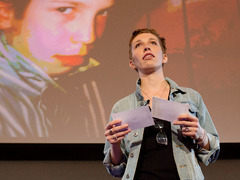
    An invited film that has shown at festivals in Toronto and New York, Sarah Polley’s gorgeous documentary is structured liked a mystery in which trap doors keep opening. Once an actress, the still-young Polley has directed two feature films: Away from Her, and the enigmatic Take this Waltz. Stories We Tell literally turns the camera on Polley, her family and her friends in a quest to find the truth about her mother, who died of cancer when Polley was eleven. The youngest child in her family, Polley’s questions interrogate the meaning of love, marriage, parenting, fidelity, the meaning of fatherhood, and the possibility of creative chaos. If that sounds like a lot, it is. But this beautiful and cunningly structured film is not just wonderfully crafted — it is also haunting and evocative as Polley’s family history becomes a metaphor for, well, the stories we tell and what we mean when we tell them. Part documentary, part fictional recreation of the past, this film is 100% worth seeing.

    2. Muscle Shoals (director Greg “Freddy Camalier, 2012)
    A new documentary that has the impact of a musical freight train, Muscle Shoals chronicles the men and stars behind Fame Recording Studios in the small Alabama town called Muscle Shoals. Narrated by Bono (watch his talk, “The good news on poverty”), Keith Richards, Percy Sledge, Aretha Franklin, Alicia Keys and others, the film features interviews with founder Rick Hall and his surprising back-up band, The Swampers, a group of local white teenagers. They looked, as the film says, like they worked at Walmart, but found within themselves the miraculous ability to endow singers like Franklin – not to mention bands from the Stones to Traffic — with a missing ingredient called soul. The Swampers eventually become Hall’s rivals, but the film wraps the whole story in glorious music and feel-good imagery. This Southern place exudes a special charm keyed to the rhythms of the Tennessee River and its green fields. Less known than it should be to music lovers, Muscle Shoals documents a center of the music scene that rivals Motown.

    3. Our Nixon (director Penny Lane, 2013)
    If you could have been a fly on the wall in the Nixon White House, what would you have seen? Our Nixon answers that question by culling recently available home videos made by Doug Chapin, H.R. Haldeman and John Ehrlichman, all indicted during the Watergate scandal, all forced to resign from office and all (who knew?) avid cameramen. We don’t really see a more nuanced and likeable Nixon than popular lore records, but we do see and hear him more intimately than ever before. In one tiny image, he’s slumped into an armchair, his suit enveloping him as though it’s three sizes too big, in a way that epitomizes how this hard-working — and even talented — President was consummately a man lacking charm and grace. Near the end, Haldeman, who has resigned and is facing prison, calls a lonely Nixon, who is facing impeachment. “I love you boy. I love you like a brother,” Nixon says. You realize that this band of men, deservedly under the shadow of a history they failed to understand, had friendship and bonds of love rarely seen before in public.

    4. The World According to Dick Cheney (Showtime, 2012)
    Political junkies at the film festival moved on from Our Nixon to The World According to Dick Cheney, which revisits some of the most disastrous events of the George W. Bush presidency and documents the rift between Cheney — once an unchallenged force within the White House — and the President as his popularity plummeted. Part apologia, part expose, I list it as a must-see that will be available soon both on Showtime on Demand and on Netflix.

    5. Manhunt (director Greg Barker, 2013)
    An HBO Documentary Film that will be shown in May, Manhunt is not so much the anti Zero Dark Thirty as it is an alternative version. Taking a longer historical view, it focuses on the CIA’s twenty year search for Osama Bin Laden from the time when his disturbing messages first began arriving via video to his death in May 2011. It includes statements that most Americans never heard as a way of suggesting that Bin Laden’s death, rather than a cause for celebration — as it was for crowds in front of the White House that day — has left many questions unanswered. Two of the CIA agents shown — women in roles parallel to Jessica Chastain’s in Bigelow’s film — have since left the agency and participated in the documentary because, as one said at the Q&A after the screening, “History should not be dictated from the top.” A must-see for an informed public that remembers the World Trade Center attack of 2001, the invasion of Iraq in 2003 and everything that has happened since.

    6. American Promise (directors Michèle Stephenson and Joe Brewster, 2013)
    The directors began filming their 5-year-old son, Idris, when he enrolled at the prestigious Dalton School along with his childhood friend, Seun. Both African American and from solid middle class Brooklyn families, the boys seem at first to experience bumpy rides at a mostly white school, adjusting unevenly to diversity. But the film rather quickly moves beyond race to raise questions about the parents’ frenetic belief that every quiz, every paper is a make-or-break moment in their son’s rise to a productive adult life. One boy stays at Dalton; the other goes to a self-defined all-black private school instead. As it follows both families and their sons through 13 years, the film manages not just to raise questions about the families and their choices — but also to make you really care.

    7. Cutie and the Boxer (director Zachary Heinzerling, 2012)
    Hard drinking and hard hitting Japanese artist Ushio Shinohara is turning 80 and is a reformed alcoholic as this film opens in New York, where he shares an apartment with his much-younger wife, Noriko, also an artist. Their relationship has had its ups and downs, illustrated both through home videos and shots of the couple and their adult son in their messy apartment and studio — where the rent is, it seems chronically, overdue, despite Ushio’s success. We see them negotiate with the Guggenheim and mount an exhibit of Ushio’s latest work — a stylistic breakthrough — and of Noriko’s cartoon series based on their marriage, where the character named Cutie is Noriko herself. A tribute to marriage, love and the power of personal growth within a long-term relationship, this is a handsome and well-made film that is a portrait of two artists as well as of marriage.

    8. The Record Breaker (director Brian Mc Ginn, 2012)
    At just 25 minutes, this hilarious and well-made film is less than a feature and more than a short. It wins hands-down as the funniest documentary of the year. With affection and good humor, the film chronicles the daffy and obsessive activities of Keith Furman, who renamed himself Ashrita when he began to break records in the Guiness Book to honor his guru, Sri Chinmoy. We see Ashrita catch malt balls in his mouth and then catch malt balls in his mouth while riding an elephant. We see him slice apples with a samurai sword and other hilarities, aided and abetted by a group of pals who cannot resist his child-like energy and zeal. Most of all we see him train to climb to Machu Picchu on stilts, a feat most people find challenging enough on foot. The authorities ultimately turn him back but Ashrita remains, as his father (who once disowned his son but now embraces him) says, “the happiest person I know.” Whether the malt balls or the samurai sword get you most, this film should make your day.

    9. A Will for the Woods (directors Amy Browne, Jeremy Kaplan, Tony Hale, Brian Wilson, 2013)
    Hard to see and hard to take, this documentary has the potential to affect not just individual viewers but the American way of death. Smart, articulate psychiatrist Clark Wang is dying of lymphoma and knows it when he attempts to arrange a “green burial”: no embalming, no vault-like coffin, no institutional feel or machines—just a grave in an open, protected landscape so that he can perceive his coming death and decay as part of a natural process and it can unroll that way in real time. The documentary visits “green cemeteries” in the U.S. which preserve landscapes and make the conservation of the land in perpetuity a gift of the burial. In some extremely painful sequences, we see Clark die and his wife wash his body. Then we witness burial in a simple wood coffin and a hand-filled grave topped by natural greenery in a patch of North Carolina woods that are a protected part of a more traditional cemetery run by a caring and committed woman. Small now, the movement seems destined to grow. Their elders owe the young filmmakers a debt for making this difficult but must-see documentary that will be available online at AWillfortheWoods.com if it does not find distribution. Rather than being a downer, the film won — perhaps surprisingly — the Audience Choice award.

    Marianna-TorgovnickMarianna Torgovnick is a Professor of English at Duke University and the director of the Duke in New York Program. Author of the books The War Complex and Gone Primitive, you can read much more of her work at MariannaTorgovnick.com.

  • My Year of TED: How 54 talks changed a life

    Kylie Dunn embarked on a mission to change her life by emulating TED Talks. Here, illustrations of her "30 days of fashion" and "30 days of drive" activities. Illustrations: Matthew Dunn

    Kylie Dunn embarked on a mission to change her life by emulating TED Talks. Here, illustrations of her “30 days of drive” and “30 days of fashion” activities. Illustrations: Matthew Dunn

    By Kylie Dunn

    What do you get when you cross a 39-year-old perfectionist with 54 TED Talks and far more honesty than any person probably needs to experience? You get my Year of TED.

    I’ve been inspired by TED Talks for years, and felt the urge to do something noteworthy and challenging to ring in my fortieth year on the planet. Matt Cutts: Try something new for 30 daysMatt Cutts: Try something new for 30 days Inspiration struck when I watched Matt Cutts’ talk, “Try something new for 30 days.” Something in this talk reminded me of A.J. Jacobs’ “My Year of Living Biblically” — and the seed was sown. I decided to develop a list of new-to-me activities based on TED Talks, and to try each one of them in my life for 30 days.

    How did it work? On the 1st of the month, I’d start one new activity, and then roll out another on the 15th — so at any given time I was doing two activities that were new to me.  Some activities were practical (30 days with less meat), others more philosophical (30 days of vulnerability). To plan out a year’s slate of 23 activities, I listened (or re-listened) to around 200 TED Talks. The whole list took a couple of months to plan out, and I left a few gaps in case there were any new talks during the year I really wanted to include. I pledged to blog the full experience, being completely vulnerable as I wrote.

    I also decided to contact each of the speakers whose talks inspired my activities, to let them know just how much their talk resonated with me. Many of them wrote back — I cannot tell you how it feels to open your inbox and find emails from Seth Godin, Alain de Botton, Barry Schwartz, JD Schramm, Susan Cain, Derek Sivers and Richard St. John. Their words were powerful, and many were generous with support and encouragement, too. Jessi Arrington: Wearing nothing newJessi Arrington: Wearing nothing newCarl Honoré and Sheena Iyengar tweeted about the project, which gave the blog a massive boost; David Logan had a lengthy email chat with me about leadership.

    On November 1, 2011, I started the year-long challenge. My first activity was 30 days of fashion, inspired by Jessi Arrington’s talk “Wear Nothing New.” I thought this would be a fun, easy way to start the project — to break free from my standard black, white and gray wardrobe and do some strategic shopping at secondhand clothing stores to make my appearance more colorful. But by the end of day two, I was feeling incredibly exposed to the world. When it comes to clothing, my subconscious mantra had always been  ”just don’t stand out.” Not caring whether people thought I was a little odd for dressing a certain way?Graham Hill: Why I'm a weekday vegetarianGraham Hill: Why I'm a weekday vegetarian It felt like a big change.
    I realised that this entire project would be harder than I ever imagined.

    By Activity 4, in mid-December, I had a pretty good routine down: think through the activity, then set up practical steps to put it into action. And by Activity 9, I was pleasantly surprised to find that 30 days of less meat was an easy challenge. For the month of February, I became a weekday vegetarian, as suggested in Graham Hill’s talk. Not only was this activity inspiring, but I liked the change in my diet … and in my weekly grocery bill. I’ve kept it up ever since.

    Year-of-TED2

    “30 days of choice” and “30 days of compassion.” Illustrations: Matthew Dunn

    As I got into the second half of the year, my Year of TED became a struggle. The last six activities were all so introspective that I’m surprised I made it to the end of October. Barry Schwartz: The paradox of choiceBarry Schwartz: The paradox of choice 30 days of choice was based on three talks — Barry Schwartz’s “The paradox of choice,” Sheena Iyengar’s “The art of choosing” and Alain de Botton’s “A kinder, gentler philosophy of success.” This activity involved putting a magnifying glass on my choices — being aware of what was driving my choices, setting boundaries to limit my choices when I could, and recognizing that there is no such thing as a perfect choice. I also took time to think about what success means to me — writing this out helped me understand myself better and gave me vital information to help inform future choices. That said, who enjoys looking at themselves on paper in the third person? I wasn’t always proud of how I dealt with past choices.

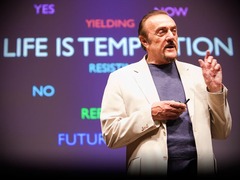
    Speaking of being unprepared, the 30 days of time activity brought a revelation that helped me understand some of my not-so-good perceptions of myself. Based on the talk “The psychology of time” by Philip Zimbardo, I took a careful inventory of how I think about the past, present and future. Philip Zimbardo: The psychology of timePhilip Zimbardo: The psychology of timeI found that what Zimbardo calls “past negative” weighs heavily on my mind. I thought hard about what I needed to do to shift my focus.

    My complete list of activities, in order: fashion; thanks, praise and mindfulness; better listening; living the 3 A’s; an Asian diet; drive; slowing down; simplicity; less meat; more happiness; preconceptions; letters; starting a movement; choice; being wrong; vulnerability; time; compassion; and balance.

    By the end of October 2012, I had completed 21 activities and one project — the development of the Do-Pad, a notepad for people who like to doodle, based on Sunni Brown’s “Doodlers, unite!” I learned so much about my strengths, my weaknesses, my hopes and, most of all, what I really want in this world. I am extremely proud that I finished the full year.

    These activities were emotional, particularly since they coincided with the stresses and demands of day-to-day life. At times, they helped me get through hard times — I’m so glad that I was working on “more happiness” when we visited my father-in-law for the last time. At other times, these challenges made my life so much more difficult. I spent way too much time on “choice” and “being wrong” when I was far too busy with work.

    Overall, here are the main lessons that I’ve taken away from this project:

    • You never really know what you are capable of until you try. I’m stronger than I thought I was — certainly more so than I ever thought I could be.
    • Being open about imperfections is important. It has deepened my connections with so many others.
    • There is a power in simply doing something. Really, don’t underestimate it.
    • Sometimes you can be too introspective, to the point that it is not good for your mental health.
    •  If you are going to try something like this, you need to build in time to be kind to yourself.

    In the end, I’ve developed a new appreciation for my capacity to be courageous. I’ve always known that I am a survivor, and that I usually come out the other side of life challenges as a better person – if not a little more scarred and cynical. I always thought of strength and courage as things I wanted in my life, but wasn’t quite sure how to harness them. Now I see that this is already inside of me. It’s just one of the realisations this project allowed me to discover, and which I’m still trying to process.

    I’d like to thank TED for providing me with such a fantastic source of inspiration. And I’d love to thank the speakers who inspired me to take action and think differently. Most important, though, I couldn’t have done this without the love and support of my partner, my family (particularly my wonderful brother for his artwork, featured above) and my close friends. Hopefully it wasn’t too onerous.

    Read Kylie Dunn’s Year of TED Blog »

    See nore artwork from Matthew Dunn »

  • Putting the public back in public interest design: The making of an exhibit at TED2013

    Jane-Chen-in-Autodesk-exhibit

    The exhibit Public Interest Design gets set up at TED2013. Here, a look at Embrace Nest, an affordable alternative to an incubator, aimed to provide the 20 million low birth-weight and premature babies born each year with critical warmth. It was created by students at Stanford. Photo: Michael Brands

    By Courtney E. Martin and John Cary

    Editor’s note: designer John Cary and journalist Courtney E. Martin are the curatorial brains behind the show, “Public Interest Design: Places, Products, & Processes,” which opened at the Autodesk Gallery in San Francisco last October. The entire exhibit has been reinstalled at TED in Long Beach, and we invited the duo to give us a sense of the thinking behind the installation.

    Momentum is building at the intersection of design and social justice, or what is called “public interest design”—akin to public interest law and public health. In recent years, there has been a real proliferation of high-profile exhibitions, books, and events. Back in 2007, for instance, museum goers began flocking to the Cooper-Hewitt National Design Museum’s “Design for the Other 90%” exhibition series; in 2010, “Small Scale, Big Change” was installed at the MoMA, also in New York. Meanwhile, books like Design Like You Give a Damn and its recent sequel, by 2006 TED Prize winners Cameron Sinclair and Kate Stohr of Architecture for Humanity, as well as events such as the 2012 Clinton Global Initiative (CGI) Annual Meeting on “Designing for Impact,” led by 2007 TED Prize winner Bill Clinton, underline the growing interest in this important topic. Next month even sees the first-ever Public Interest Design Week.

    We joined the curating fray last October, working with the Autodesk Gallery team to assemble an exhibition focused on covering the most provocative and interesting areas in the space. In doing so, we aimed to be very intentional about filling in some of the gaps in earlier attempts at displaying and explaining this burgeoning field. We tried to break new ground in a few key ways.

    Jane Chen: A warm embrace that saves livesJane Chen: A warm embrace that saves livesFirst and foremost, we wanted to put people at the center of the show, focusing on stories of those who were impacted by design as opposed to the stories of the designers themselves. The design itself, after all, is ultimately a means to an end. We wanted to be clear and transparent about the effect and influence of this work.

    For example, among the products on display, is the Embrace Nest infant warmer, pioneered by TED Senior Fellow Jane Chen. Many families in India wait to name their babies until nine months after they are born. The reason? High infant mortality rates, caused in part by the inability of low-birth-weight babies to regulate their own body temperature. One mother, Shivamadamma, from a farming family in rural India, gave birth to a premature baby boy weighing only 3.5 pounds. Keeping her baby in the Neonatal Intensive Care Unit was impossibly expensive. Fortunately, doctors were able to provide thermal support to Shivamadamma’s baby with the Embrace Nest infant warmer. Now nine months old and feeding well, the baby is ready for his naming ceremony.

    Public Interest_MASS Butaro Hospital

    The Butaro Hospital is a 150-bed, 60,000 hospital built in the Burera District of Rwanda by MASS Design Group in association with and operated by Partners in Health. Photo: Iwan Baan.

    Also included is the Butaro Hospital by MASS Design Group and Partners in Health in rural Rwanda, which sets a new standard for healthcare design, not just in the global south, but beyond. Opened in January 2011, it is a 150-bed, 60,000-square-foot world-class hospital, bringing health care to a district of 400,000 people who previously had to travel long distances to access even the most basic of health services. The building, created from local materials with local laborers—employing 4,000 people over the course of its construction—became something of a symbol of the renaissance of health care in Rwanda. As Neal Emery, writing last week at Atlantic.com, explained it, “Amidst the barrage of stories about failing states and civil wars that characterize the dour American media coverage of the developing world, the reinvention of Rwanda offers hope. Since the genocide with which its name is still synonymous in the United States, Rwanda has doubled its life expectancy and now offers a replicable model for delivery of high quality health care with limited resources.”

    The exhibit also deliberately includes products, places, and processes. To be honest, this last category was the hardest to curate. It’s challenging to explain the critical nature of systems in our lives and the lives of the most vulnerable citizens—both domestically and abroad. In some ways, this is the invisible category of design. We hold and touch products. We work, live, and learn in buildings. Both are physical and tangible. Systems, on the other hand, affect our quality of lives in profound ways, but are often difficult to conceptualize, and most certainly, to display.

    Key_A

    Home for Good, a multi-organization initiative to end chronic homelessness among veterans in the Los Angeles area, redesigned and streamlined the process of the number of days and steps it takes to get people off the streets and into housing. Graphic by Megan Jett, courtesy of Autodesk.

    We drew inspiration from projects like Annie Leonard’s Stories of Stuff and Purpose’s unPAC, which increase systemic literacy with crystal clear, highly visual communication. That’s not always easy to come by, we understood, after trying to figure out a way to demonstrate the efficacy of Community Solutions and Home for Good for the exhibition. These organizations have collaborated to develop a process to get homeless Los Angelenos off the street. Before, it took an average of 47 steps and 168 days for a homeless veteran to get into permanent housing. Since their intervention, the average has dropped to 21 steps and 93 days, with an ultimate goal of 10 steps in 10 days. Our Santiago-based designer Megan Jett worked through at least a dozen iterations before we were convinced that our graphic installation really showed the innovation at the heart of the process.

    Ultimately, our aim was to communicate something not about design, per se, but about dignity. Environmental psychology tells us that the moment we are born, the world around us—the rooms we sleep in, the classrooms we study in, the outdoor spaces we have access to, the bureaucracies we see our parents wrestle with—signals something about our own identity, our own worth, what we can expect from life. In this way, we are a reflection of the design we experience in our lives. Which leads us to the critical question: how do we make a world that is more hospitable and healthy for all of us, that signals back to us that we belong, that we deserve beauty and functionality and dignity? And in instances where design, be that of products, places, or processes, is less than ideal, what changes can be made quickly, simply, easily, or painlessly?

    Courtney E. Martin is the author multiple books, including Do It AnywayJohn Cary is an architect, author, and the founding editor of PublicInterestDesign.org. They are also members of the TED Prize team and co-leads ofThe City 2.0, the 2012 TED Prize focused on the future of cities.

  • Saving for a rainy day: Keith Chen on language that forecasts weather — and behavior

    Keith-ChenBy Keith Chen

    How are China, Estonia and Germany different from India, Greece and the UK? To an economist, one answer is obvious: savings rates. Germans save 10 percentage points more than the British do (as a fraction of GDP), while Estonians and Chinese save a whopping 20 percentage points more than Greeks and Indians. Economists think a lot about what drives people to save, but many of these international differences remain unexplained. In a recent paper of mine, I find that these countries differ not only in how much their residents save for the future, but also how their native speakers talk about the future.

    Keith Chen: Could your language affect your ability to save money?Keith Chen: Could your language affect your ability to save money?

    In late 2011, an idea struck me while reading several papers in psychology that link a person’s language with differences in how they think about space, color, and movement. As a behavioral economist, I am interested in understanding how people make decisions. Could a person’s language subtly affect his or her everyday decisions? In particular, could the way a person’s language marks the future affect their propensity to save for the future?

    In a nutshell, this is precisely what I found. After scouring many datasets with millions of records on individual household savings behavior—along with a number of peculiar health performance metrics like grip strength and walking speed—I find that languages that oblige speakers to grammatically separate the future from the present lead them to invest less in the future. Speakers of such languages save less, retire with less wealth, smoke more, practice more unsafe sex and are more obese. Surprisingly, this effect persists even after controlling for a speaker’s education, income, family structure and religion.

    Back when my first paper on this topic circulated, many linguists were appropriately skeptical of the work. Their concerns are concisely explained in two well-thought out posts (here and here) by the linguists Mark Liberman and Goeffrey Pullum on the blog they founded, Language Log. Mark and Geoffrey also invited me to write a guest post explaining the work. In that post, I discuss which of their possible concerns are unlikely given the patterns I find across the world in people’s savings and health behaviors, and also try to clarify which of their concerns I was not yet able to address.

    This exchange prompted a broad set of discussions as to what different types of data, analyses and experiments could, in principle, answer the questions raised by the patterns I find. Cross-disciplinary discussions took place in a subsequent post by Julie Sedivy and followup posts by Mark Liberman, and also at the Linguistic Data Consortium’s 20th Anniversary Workshop. Several new avenues of investigation and work came out of these interactions, three of which are now ongoing projects.

    One new idea that I’ve begun to explore entails measuring a language’s time reference by scraping the web—to search for natural patterns in language—in addition to using linguistic classifications. This led me to search the web for the simplest form of writing about the future I could find: weather forecasts. Why weather forecasts? Well, forecasts rarely talk about the past, so they’re a natural place to look for speech about the future. Weather forecasters also generally communicate in natural, straightforward language, and often convey similar content across different settings. Can patterns in weather forecasts measure how languages structure the future, and can these differences predict how people save for the future? Amazingly, they do.

    A team of linguistics and economics students assisted with this analysis, and managed to scrape the web for weather forecasts in 39 languages from around the world. The figure below summarizes what we found: wide variation in how often, when talking about future weather, forecasts in a particular language grammatically mark the future as something distinct from the present. In English, for example, this comes down to the relative frequency of sentences like:

    Rain is likely this weekend.                (present tense “is”)

    It will likely rain this weekend.          (future tense “will rain”)

    What’s surprising is that when I repeat the statistical analysis I did in the paper, I find an incredibly strong relationship between how forecasters talk about weather and how much people choose to save.  Essentially, a 20 percentage point increase in the frequency of future tenses results in 1% more of GDP saved. This finding holds even after taking into account a country’s level of development, rate of growth, demographics, social security protections and major religions.

    What does this mean? I don’t believe it demonstrates extreme weather forecaster persuasion. Rather, I think it shows that many different ways of measuring how languages mark time share a strong and striking relationship with how speakers of those languages save. In short, I believe more than ever that the data suggests a strong and robust relationship between linguistic and economic data, a relationship that leaves us at an exciting crossroads: one where economists have a tremendous amount to learn from linguists.

    The figure below measures the percent of time weather forecasts use future vs. present tenses (download a larger version as a PDF). See the paper here for details.

    Graph of Future Tense Use

  • The Wild West of the Internet: Reflections on The New York Times hack

    Hacked--The-New-York-Times-and-Dalai-Lama

    By Shyam Sankar and Gabe Rosen

    The Internet is the new Wild West, a frontier big enough for every pioneer and outlaw to roam free. Today, The New York Times revealed that hackers in China had spent the last four months infiltrating its computer systems and pilfering employee passwords. As in the old West, it’s not a question of if you’ll be hit — but when and how. Online, primitive DDOS attacks rain down like arrows, while artful hackers can steal the data equivalent of 5,000 head of cattle before any breach is detected. There’s no choice but to defend the homestead as best you can – and retreating to civilization is no longer an option.

    According to Mandiant, the infosec firm that conducted the investigation, the Times was first compromised on September 13. The attackers established at least three backdoors and installed 45 pieces of malware, only one of which was detected by Symantec security software. After two weeks, the attackers found the domain controller that contained all staff passwords. Times executive editor Jill Abramson maintains there is “no evidence that sensitive emails or files” were accessed, yet the investigation found that the attackers “created custom software that allowed them to search for and grab [Times journalists] Mr. Barboza’s and Mr. Yardley’s e-mails and documents.”

    As the TED Blog recently recounted, we know a bit about this sort of thing at Palantir. Our platform was used to investigate “GhostNet”, a Chinese cyber espionage network. In 2008, an unnamed country received an email from China warning them not to host the Dalai Lama for a scheduled visit. The email was startling because this visit was not public knowledge. The country sought to find out how this sensitive information had been leaked. Not only the Dalai Lama’s personal computer been hacked, but 1,300 computers across the globe had been infected in the same way. This network had been operating for two years without notice.

    Naturally, when we heard about The New York Times hack today, we looked for parallels. The Dalai Lama’s office was infiltrated by “spear phishing” — where hackers research a person and create an email, with an attachment, that looks like it came from a confidant. Spear phishing is suspected, though not confirmed, in the Times attack. Like GhostNet, the Times attackers covered their tracks through intermediaries in numerous countries, and employed remote access tools (RATs) and malware. The attacks also appear related to Chinese political sensitivities, though the exact loyalties in play are murky.

    While it’s important to resist easy conclusions, Occam’s razor and common sense shouldn’t be ignored. The difficulty is that positive attribution is rare in cyber warfare, so when something looks like the work of someone who was never actually identified, it may not be exceptionally meaningful. As open-source sleuth Jeff Carr points out, there are several doubts. Beijing’s time zone includes numerous other cities. The attacks were ultimately traced to Chinese IPs, though their geo-locations encompass millions of people. The attackers used RATs, but these are widely available and hardly confined to China. According to Richard Bejtlich, Mandiant’s chief security officer, “When you see the same group steal data on Chinese dissidents and Tibetan activists, then attack an aerospace company, it starts to push you in the right direction.” Given the vast spectrum of potentially interested parties, it’s a very general direction – but it’s a start nonetheless.

    The lack of clear answers notwithstanding, Mr. Bejtlich is certainly correct that cyber defense “requires an internal vigilance model.” You have to sleep with one eye open, and preoccupation with one mode of attack leaves you vulnerable to others. As in the old West, it’s essential to make common cause with your neighbors, however distant. During the recent spate of suspected Iranian DDOS attacks, two global Top 20 banks shared threat data in real time with each other as well as US law enforcement, and collaboration across public/private lines is essential to countering the matrix of state and non-state combatants.

    Above all, we need to adopt a Wild West approach of our own. The sheriff’s only hope is to become as swift, resourceful, and adaptive as the outlaws.

    Shyam Sankar is the Director at Palantir Technologies. He gave the TED Talk “The rise of human-computer collaboration” at TEDGlobal 2012, as well as the talk embedded above at TED2010. Gabe Rosen works in Business Development at Palantir.

  • How Malawi is improving a terrible maternal mortality rate through good design

    Butaro2

    A mother and baby in a sunny ward at Butaro Hospital. Photo: John Cary

    By Courtney E. Martin & John Cary

    Pregnancy is supposed to be about life. And yet, every day, 800 women across the globe die from preventable causes related to pregnancy and childbirth. In Malawi, which has one of the worst maternal mortality rates in the world, a shocking 1 in 36 pregnant women die rather than become proud mothers.

    But could this oversized problem be tackled through design? Malawi’s new president, Joyce Banda, certainly believes so.

    More and more, global health experts are teaming up with designers to tackle daunting challenges like food scarcity, water contamination and, yes, maternal mortality — be they environmental, product, or systems design challenges. David Kelley on human-centered designDavid Kelley on human-centered design Using what IDEO.org calls “human-centered design” — essentially putting the user at the center of a deeply iterative process — some of the most cutting-edge thinkers in public health are seeing old problems in new ways. Design is no longer just a tool of the global elite; it’s increasingly becoming a lever for the poorest, most vulnerable people in the world.

    Two activists with a deep-seated interest in how design can transform lives, we spent the first two weeks of the year doing fieldwork in Malawi. Despite the fact that it is considered one of the world’s least-developed countries, leaders in Malawi are looking to dignifying design. Banda, who came into office in April after her predecessor passed away, has pledged her precious time in office to emulating places like Rwanda, where human-centered design has improved the lot of many rural poor. Banda faces her first official election on May 19, 2014, giving added urgency to her efforts.

    The Aspen Institute’s Global Leadership Council on Reproductive Health coordinated our visit to the country, and is also marshaling resources and support Banda’s way. She is the second female president in Africa, following in the footsteps of Liberian Nobel Peace Prize winner, Ellen Johnson Sirleaf. (Watch Sirleaf’s Q&A on the TEDWomen stage in 2010.) The two are allies and perhaps symbols of a new dawn of women’s leadership on a continent that has long suffered from the corruption and violence.

    One of Banda’s first acts in office was to double-down on a Presidential Initiative on Maternal Health & Safe Motherhood, focused on reducing maternal mortality from its current rate to 115 or less per 100,000 live births. She aims to do this by 2015.

    Above, Michael Rosenblatt asks “How can we stop death during childbirth?” at TEDMed 2011.

    One idea to this end: getting more women to give birth in clinics staffed with health providers and equipped to handle complications. In countries like Malawi, women have historically given birth in their homes with traditional birth attendants. This can be extremely dangerous. Should something go wrong, most traditional birth attendants aren’t trained to respond; many are also known to encourage women to push too fast, one cause of the scourge of fistula in the country.

    So what is a country to do when 85% of its population, including women of child-bearing age, live in rural settings far afield of the few equipped clinics and hospitals in the country? It’s a question ripe for a design approach. The Malawian government has pledged to build as many as 150 “maternal waiting homes” near clinics where rural women can stay in advance of their due dates. One waiting home is already in service in Northern Malawi and seven more are currently under construction.

    Jane Chen: A warm embrace that saves livesJane Chen: A warm embrace that saves lives

    Blueprints for these brick and concrete structures were developed by the Ministry of Health, taking two forms — a 24-bed version and a slightly larger 32-bed structure. Each is projected to cost between $70,000-$80,000, and will be funded by Malawi’s private sector and outside philanthropic support. These waiting homes have the opportunity to become beacons of hope in a country caught between natural beauty and devastating poverty.

    But it’s not just bricks-and-mortar that Banda is using to change women’s lives; it’s also a human-centered design for the healthcare system — too long understaffed and disproportionately urban. The Presidential Initiative on Maternal Health & Safe Motherhood, for example, is already training tribal chiefs in the importance of clinic birth for rural women, recognizing that their influence will largely determine what kinds of healthcare options women feel compelled to access. Once the chiefs have encouraged women to get to clinics, they will be met by new community midwives (Banda aims to train over 1,000 by 2014) and training opportunities at the “waiting homes.” Indeed, the Malawian women we interviewed expressed that they would love to gain new skills and knowledge while they wait for their babies to arrive.

    Resource-limited settings, like the rural villages of Malawi, seem like unusual places to find this kind of systemic and environmental design. But there are important precedents. For example, the breathtaking Butaro Hospital in Rwanda, designed by MASS Design Group and operated in January 2011 by Partners in Health (PIH).

    Above, Marika Shioiri-Clark talks “Empathic Architecture” at TEDxStellenbosch, describing Butaro Hospital.

    Perched on a hilltop once home to a military base, the Butaro Hospital proves that “if it can happen here, it can happen anywhere,” as Dr. Paul Farmer of PIH is known to say. Farmer is referring to the fact that this world-class hospital is found in a setting where there was no basic electricity until the advent of the hospital. But Farmer is also referring to a unique design imagined by professionals embedded in the community they sought to serve — rural villagers, doctors, and nurses. Further, the hospital was built by local community members using primarily local materials. Thousand of people were employed in making the facility’s exquisite lava rock walls, virtually all of them gaining new skills that may improve their livelihood in the future.

    Many details at the Butaro Hospital tell a story about the ways that humans really heal. Rather than being a fortress of internal hallways and small, secluded rooms, like so many American hospitals, it is characterized by open-air external walkways and big, collective spaces with beds directly facing bright windows with beautiful views. Ernest Madu on world-class health careErnest Madu on world-class health care There are also countless places to gather and sit outside — including a beloved koi pond. Color-coded signage paired with the color of wards is bright and easy to understand for potentially anxious visitors, unlike the bureaucracy and bad lighting one finds too often in stateside clinics.

    If all goes well, Malawi, like Rwanda before it, will have the potential to teach the so-called developed world something about dignifying design. It’s what many cutting-edge development and design experts are calling South-to-North strategies — where Western countries look to the Global South for the next, big innovations. It’s a refreshing reversal of fortune and a huge opportunity. Not just for the mothers of Malawi, but for all of us.

    Courtney E. Martin is the author multiple books, including Do It Anyway: The New Generation of Activists. John Cary is an architect, author, and the founding editor of PublicInterestDesign.org. Together, they traveled to Malawi and Rwanda this month with a delegation from The Aspen Institute’s Global Health & Development program. They are also members of the TED Prize team and co-leads of The City 2.0, the 2012 TED Prize focused on the future of cities.

    Malawi2

    Mothers and children await care at health clinic in the Doa district of Malawi. Photo: John Cary

  • Gallery: iO Tillett Wright examines the 50+ shades of gay

    Venus - New York. Venus is one of my favorite characters in the "grey" movement. She doesn't confine herself within any labeled sexuality, but she is loud and proud of everything that she is. Venus is a well known DJ and party promoter, and she's made a name for herself within the hip hop world, which she is helping evolve into a more accepting place.

    Venus – New York. Venus is one of my favorite characters in the “grey” movement. She doesn’t confine herself within any labeled sexuality, but she is loud and proud of everything that she is. Venus is a well known DJ and party promoter, and she’s made a name for herself within the hip hop world, which she is helping evolve into a more accepting place.

    iO Tillett Wright remembers the moment she decided to start living as a boy — age 6 when the kids at school barked at her that girls weren’t allowed to play basketball. As a teenager and adult, Tillett Wright went on to fall in love with a woman, and then to fall in love with a man.

    iO Tillett Wright: Fifty shades of gayiO Tillett Wright: Fifty shades of gayAs she reveals in today’s bold talk, while marriage was far from her mind in 2008 when California’s Proposition 8 sparked a national debate over gay marriage, the conversation still struck her like a punch.

    “I was shocked by the fact that America, a country with such a tarnished civil rights record, could be repeating its mistakes so blatantly,” says Tillett Wright. “This powerful awareness rolled over me that I was a minority. In my own home country based on one facet of my character, I was legally and indisputably a second-class citizen … I was plagued by the question: how could anyone vote to strip the rights of the vast variety of the people that I knew? … Had these people consciously met a victim of their discrimination? Did they know who they were voting against?”

    Tillett Wright had an idea: could she photographically introduce people against the idea of gay marriage to the vast number of people in the United State who consider themselves somewhere along the LBGTQ spectrum? She embarked on a series of photographs called Self-Evident Truths. The first two weeks of shooting in New York City were funded by the Human Rights Campaign, and the first 300 portraits spawned a video that quickly went viral. The project only exploded from there.

    Now, Tillett Wright has set out to shoot 10,000 portraits for Self Evident Truths. So far, with the help of everyday donors, she has photographed about 2,000 people.

    To hear more about Tillett Wright’s fascinating childhood, and about her hopes and dream for Self Evident Truth,  watch her powerful talk. And in this gallery, Tillett Wright shares some of her favorite images from Self Evident Truths — along with the back story.

    Jodi - Wichita Falls, Texas. Jodi's family disowned her when they found out she was gay. She struck me as such a normal, average American girl -- she works as an Abercrombie model at the mall, and was in her third year of college -- but when a friend outed her, her religious parents kicked her out of the house, took her photos of the wall, quit paying her tuition, and started telling people her brother was an only child. Jodi suffers from arthritis, but her parents had her removed from their insurance despite that. It was such a powerful revelation for me, to understand the power that religion has within people -- that it could drive them to legally divorce their own child.

    Jodi – Wichita Falls, Texas. Jodi’s family disowned her when they found out she was gay. She struck me as such a normal, average American girl — she works as an Abercrombie model at the mall, and was in her third year of college — but when a friend outed her, her religious parents kicked her out of the house, took her photos of the wall, quit paying her tuition, and started telling people her brother was an only child. Jodi suffers from arthritis, but her parents had her removed from their insurance despite that. It was such a powerful revelation for me, to understand the power that religion has within people — that it could drive them to legally divorce their own child.

    Brian - New Orleans, Louisiana. When Brian showed up to the shoot, it was this big discussion about which one of the assistants was going to have to go and see if he actually knew what he was being photographed for, because he looked like such a straight manly man. But on his release form he put down "100% GAY", and we all had to eat our stereotypes. Brian fell in love in high school, and lived with his partner for 20 years in Texas, until they broke up, about a year before this photo was taken. He had taken everything he owned and moved to New Orleans to start a new life, and was working at Mardi Gras zone. When he talked about his former lover his eyes would well up, and he referred to him as his "true love". Brian taught me so much about how stereotypes of gay men as effeminate are a bunch of naive hogwash.

    Brian – New Orleans, Louisiana. When Brian showed up to the shoot, it was this big discussion about which one of the assistants was going to have to go and see if he actually knew what he was being photographed for, because he looked like such a straight manly man. But on his release form he put down “100% GAY”, and we all had to eat our stereotypes. Brian fell in love in high school, and lived with his partner for 20 years in Texas, until they broke up, about a year before this photo was taken. He had taken everything he owned and moved to New Orleans to start a new life, and was working at Mardi Gras zone. When he talked about his former lover his eyes would well up, and he referred to him as his “true love”. Brian taught me so much about how stereotypes of gay men as effeminate are a bunch of naive hogwash.

    Alyss - Little Rock, Arkansas. Alyss, who identifies herself as pansexual, is the descendant of a long line of Pentecostal ministers, from a tiny little town in Arkansas. When she put on her MySpace that she thought she was bisexual, her mother grabbed her by the forehead and started praying over her in tongues. Alyss was told that she was no longer her parents' daughter, and wasn't welcome in their house anymore, and eventually, because she couldn't stand being away from her family, she went back into the closet. Alyss was one of the most vibrant characters we met on our Southern tour.

    Alyss – Little Rock, Arkansas. Alyss, who identifies herself as pansexual, is the descendant of a long line of Pentecostal ministers, from a tiny little town in Arkansas. When she put on her MySpace that she thought she was bisexual, her mother grabbed her by the forehead and started praying over her in tongues. Alyss was told that she was no longer her parents’ daughter, and wasn’t welcome in their house anymore, and eventually, because she couldn’t stand being away from her family, she went back into the closet. Alyss was one of the most vibrant characters we met on our Southern tour.

    Reverend Jill - Knoxville, Tennessee. Reverend Jill came to the Knoxville shoot with her long-time partner. They pulled me aside and told me how important it was that people know you can have a strong relationship with God, and still be gay. I thought that took tremendous courage, not only to be openly gay in a state like Tennessee, but to take on the religious battle as well. I had a lot of respect for them.

    Reverend Jill – Knoxville, Tennessee. Reverend Jill came to the Knoxville shoot with her long-time partner. They pulled me aside and told me how important it was that people know you can have a strong relationship with God, and still be gay. I thought that took tremendous courage, not only to be openly gay in a state like Tennessee, but to take on the religious battle as well. I had a lot of respect for them.

    Chip - Atlanta, Georgia. Chip is a scientist and a skater. Again, when he started filling out his form, I almost wanted to double check that he knew what he was there for. It turns out he had gotten in touch with us weeks before, hoping we'd come and shoot in Atlanta. Chip was the only skateboarder who had ever come to be photographed, which kicked off a really interesting discussion about homophobia within the macho world of skateboarding, and how we could all help to reduce it.

    Chip – Atlanta, Georgia. Chip is a scientist and a skater. Again, when he started filling out his form, I almost wanted to double check that he knew what he was there for. It turns out he had gotten in touch with us weeks before, hoping we’d come and shoot in Atlanta. Chip was the only skateboarder who had ever come to be photographed, which kicked off a really interesting discussion about homophobia within the macho world of skateboarding, and how we could all help to reduce it.

    Shannon & Willow - Denver, Colorado. Shannon came to the shoot with what I believe was her partner, and their two children, one of whom was in the arms of her biological father. The three adults had figured out a way to maintain a really healthy relationship with each other, and the kids were ecstatic, beautiful children. People come all the time asking to be photographed with the things that they are most proud of in their lives, so it makes me extremely happy when people bring their beautiful children and show that other than straight parents can do a damn good job too.

    Shannon & Willow – Denver, Colorado. Shannon came to the shoot with what I believe was her partner, and their two children, one of whom was in the arms of her biological father. The three adults had figured out a way to maintain a really healthy relationship with each other, and the kids were ecstatic, beautiful children. People come all the time asking to be photographed with the things that they are most proud of in their lives, so it makes me extremely happy when people bring their beautiful children and show that other than straight parents can do a damn good job too.

    Carrie - Athens, Georgia. Carrie waited in a long line of people to be photographed in Athens, with long brown hair and glasses. We took a few photos and then she stopped me and asked if she should take her wig off. As soon as I saw her head, and what she was inclined to hide, I told her I thought she looked so powerful and beautiful without her wig. Instantly she straightened, planted her feet and came into her own skin. It was such a testament to the act of standing proud of who you are, be it about sexuality, or otherwise, and I'm really happy to have been able to see that in her.

    Carrie – Athens, Georgia. Carrie waited in a long line of people to be photographed in Athens, with long brown hair and glasses. We took a few photos and then she stopped me and asked if she should take her wig off. As soon as I saw her head, and what she was inclined to hide, I told her I thought she looked so powerful and beautiful without her wig. Instantly she straightened, planted her feet and came into her own skin. It was such a testament to the act of standing proud of who you are, be it about sexuality, or otherwise, and I’m really happy to have been able to see that in her.

    Jamison - Dallas, Texas. Jamison truly just smacked me in the face with my own stereotypes about people. Before meeting him, and many like him, I had some preconceived, narrow view of what gay people looked like, (especially men) -- even if it was a broad view by most standards. Jamison, a big, statuesque trucker from Texas taught me that I don't know s*** from Christmas -- other than straight people come in every shape and size possible. Jamison was a marker of growth for me.

    Jamison – Dallas, Texas. Jamison truly just smacked me in the face with my own stereotypes about people. Before meeting him, and many like him, I had some preconceived, narrow view of what gay people looked like, (especially men) — even if it was a broad view by most standards. Jamison, a big, statuesque trucker from Texas taught me that I don’t know s*** from Christmas — other than straight people come in every shape and size possible. Jamison was a marker of growth for me.

    Lauren - Knoxville, Tennessee. Lauren was so excited to participate in Self Evident Truths. A basketball player at the University of Tennessee, she sat on a curb for several hours during our first shooting day, and brought several of her teammates to be shot as well on the second. I gave a lecture at the school on the last day, and Lauren was there with an entire row of friends. After we left, we got an email from her saying that she had spent a lot of time trying to figure out how to contribute to society, and maybe it had to do with a public persona. Via the project she realized her contribution could have to do with her pride in her true self. She was so proud of coming into her own. Sadly, a few weeks later, we got an email from someone in the UT athletics department, telling us to take down all the images of their players.

    Lauren – Knoxville, Tennessee. Lauren was so excited to participate in Self Evident Truths. A basketball player at the University of Tennessee, she sat on a curb for several hours during our first shooting day, and brought several of her teammates to be shot as well on the second. I gave a lecture at the school on the last day, and Lauren was there with an entire row of friends. After we left, we got an email from her saying that she had spent a lot of time trying to figure out how to contribute to society, and maybe it had to do with a public persona. Via the project she realized her contribution could have to do with her pride in her true self. She was so proud of coming into her own. Sadly, a few weeks later, we got an email from someone in the UT athletics department, telling us to take down all the images of their players.