Author: Terrence Murray

  • Rentech, ClearFuels Secures $23M DOE Loan Guarantee for Biomass Project

    Rentech, a developer of biomass gasification technology, has scored a $22.6million loan guarantee from the Department of Energy to support construction of a biomass gasifier at its Denver technology center. Rentech  jointly secured the funding with ClearFuels Technology, of which it owns a 25 percent stake.

    The two companies are developing biomass-fired gasifiers that produce natural gas from biomass feedstocks such as sugar cane bagasse and various wood wastes. They will use the grants to construct a 20 ton-per-day biomass gasification demonstration project.

    Earlier this month the two companies said they would be working with BNP Paribas to secure debt financing to construction of multiple biomass gasification plants in the U.S. and abroad.

  • Bill Gates Invest in Vinod Khosla’s Renewable Energy Fund [Video]

    In an interview published Sunday, Microsoft founder and Chairman Bill Gates tells Cnet News’s Ina Fried that he has invested in Vinod Khosla’s renewable energy fund, Khosla Ventures.

    About Khosla, Gates says:

    He is backing some great entrepreneurs. I get some exposure to them as part of that. Innovation is called for in a big way.


    Gates other renewable energy investments have been in algae fuel company Sapphire Energy. Along with former Microsoft Chief Technology Officer Nathan Myhrvold, he’s also backing TerraPower, a developer of breakthrough nuclear power plants, according to Cnet News.

    Watch:

    When it comes to clean tech, Khosla, who back in September closed two new funds with more than $1 billion in capital commitment, tends to go for the cutting-edge. It currently backs LS9, a developer of enzymes-based diesel fuel. It’s also invested in HCL CleanTech, which has developed a process that turns cellulosic biomass into fermentable sugars. Last month it led a $13.2 million investment in Danotek Motion Technologies, a maker of generators and components to supply wind energy to the power grid.

    It’s not been smooth sailing for all of Khosla Ventures’s investments. Earlier this month AltaRock Energy, a geothermal developer that’s also backed by Google, gave notice to the Department of Energy that it would abandoned its Geysers drilling project.

  • Better Place Raises $350M in HSBC-Led Series B Funding Round [Video]

    Better Place, a Palo Alto, Calif.-based provider of electric vehicle services, announced today that it  has raised $350 million in a Series B funding round led by HSBC. The deal values Better Place at $1.25 billion.

    Joining HSBC, as new investors are Morgan Stanley Investment Management, and Lazard Asset Management.  Returning investors include Israel Corp., VantagePoint Venture Partners, Ofer Hi-Tech Holdings, Morgan Stanley Principal Investments, and Maniv Energy Capital.  HSBC led the round with an investment of $125 million and takes a 10 percent stake in the company.

    Better Place, founded by software executive Shai Agassi, is developing an electric car network where customers will be able to lease batteries for a monthly fee and instead of fueling up at gas stations, they will be able to charge their batteries at home for free or swap out batteries at various designated locations.  The company says it’s on track to launch two test projects in Israel and Denmark in 2011.

    PeHUB reports that in October 2007 Better Place raised $200 million. The company says it will use the financing to expand into new markets in Europe and Asia.

    Watch:

  • China to Rich Countries: Where’s The Money?

    Indian Environment Minister Jairam Ramesh, left, shakes hands with his South African counterpart Buyelwa Sonjica, second right, China's chief climate change official Xie Zhenhua, second left, and Brazil's Minister for Environment Carlos Minc.

    Remember Copenhagen? It seems so long ago.

    As we wrote the Copenhagen United Nations Climate Change Conference ended with a disappointing, non-binding agreement that left China in the driving seat as the de-facto spokesman of the lesser-developed G77 nations.

    China not only ensured that it and the developing nations would not have to sign the dotted line of a global climate change agreement.  It also got the industrialized world to commit to a $10 billion fund to help it and the poor nations it spoke for deal with the effects of climate change.

    A little more than a month since the end of Copenhagen, China and the rest of the BASIC countries (Brazil, India and South Africa) are asking the industrialized world to make do on its funding commitment and show them the money.

    On Sunday, meeting in New Delhi, China, South Africa and Brazil urged the industrialized world to start distributing the money, which they said should first go to the world’s least developed nations, including small island states and African countries, report the Associated Press.

    In turn, as was agreed in Copenhagen as part of the so-called Copenhagen Accord, China, South Africa and India say they will submit to the UN this week their voluntary emissions cutting plans.

    The Copenhagen Accord requires all poor countries to propose voluntary actions plans to cut CO2 and GHG, not just the BASIC nations.  “We have the obligation to be the first to submit the action plans,” South Africa’s Environment Minister Buyelwa Sonjica told reporters on the side of the New Delhi conference.

    China has said it would cut its carbon intensity by 20 percent by 2020 and India by up to 25 percent over the same time period. Carbon intensity is a measure of CO2 emissions per unit of production.

    Photo Credit: AP Photo/Mustafa Quraish

  • This Week in Green Energy: Sen.-elect Brown and the Future of Climate Change Legislation

    Will Sen.-elect Scott Brown (R-Mass.) vote "aye" on climate change? That's the big unknown.

    Senator-elect Scott Brown’s (R-Mass.) stunning victory in Massachusetts over Martha Coakley was a shot heard across the country. Although the impact this victory will have on climate change legislation remains hard to assess, most agree that when it comes to issues like climate change (or healthcare…), Tuesday’s surprise win is not a positive. “It’s going to be an uphill climb,” one Democrat Hill staffer told GER earlier this week.

    Even before Brown’s election, the prognosis on President Obama signing a climate change bill into law by the end of this year was not good. But the reality is that the Senator-elect Brown’s climate change position is hazy. As ClimateWire reports, when it comes to climate change (and green issues in general), little is actually known on his stance.

    On another cornerstone issue for the Obama administration – healthcare reform – Senator-elect Brown has pointed out that he could be the 41st senator that Republicans need to block Democratic initiatives. Brown’s not divulging how he would vote on that issue, but as ClimateWire points out, his stance on health care could offer some indication on what his intentions are in regards to climate change and cap-and-trade.

    What’s also true is that the little bipartisanship we’ve seen in the 111th Congress has benefited climate change.  Case in point: Senator Lindsey Graham (R-S.C.) has attached his name to the Kerry-Boxer legislation, which is one of the two climate change bills with some form of cap-and-trade provision now making its way through the Senate. Senator John Kerry (D-Mass.), in a statement emailed Thursday to GER, says he’s confident an issue like global warming will convince key Republicans to cross the aisle in support of his bill.

    Kerry told us:

    It doesn’t have to be polarized. Just listen to a conservative like Senator Graham or business leaders from across the ideological spectrum. This is the single best opportunity to create jobs, reduce pollution, and stop sending billions overseas for foreign oil from countries that would do us harm.

    While U.S. politicians continue to debate the validity of human-made climate change, and in doing so paralyze any chance of passing meaningful legislation, the rest of the world is forging ahead. Just this week, Ontario, Canada’s most populous province, saw a massive C$7 billion ($6.65 billion) investment announced in wind and solar power from a South Korean consortium made up of Samsung C and T and Korea Electric Power. The 2,500-megawatt power project is set to create 16,000 new jobs over six years and is one of the largest announced to date in North America. What clinched the deal? The Korean consortium says it was the province’s Green Energy Act, passed last spring, and its generous feed-in tariff, as well as a package of generous tax subsidies, that have engendered some controversy.

    Not all feed-in tariffs are equal. In Ontario, they are helping attract large investments, but in Europe, pressed by stagnating growth, key markets are cutting these generous subsidy programs. Last week, France said it would slash its solar subsidies by 24 percent and this week Germany, the world’s largest solar market, announced a 15 percent cut in its feed-in tariff. The move by Chancellor Angela Merkel’s conservative government had been widely expected and the cut was actually less than the 25 percent to 30 percent Germany’s leading Christian Democratic party had been pushing for.

    The slower market in Germany, France, and across Europe could spell trouble for companies like thin-film PV maker First Solar which generates a majority of its revenues in Germany, although growing markets like the U.S. and China could actually offset that.

    To conclude, let’s look offshore and in particular to a scientific study released this week that shows that fish and crabs actually thrive around offshore wind turbines. The U.S. lags behind Europe in developing its offshore potential and the news that offshore wind turbines (along with used New York City subway cars) make for good reefs could be a game changer for an industry that’s (ironically) struggling with its eco-image.

    ——————————————-


    GER’s  Weekly VC Radar:

    Data released Friday by the PricewaterhouseCoopers, the National Venture Capital Association and Thomson Reuters show venture capitalists invested $17.7 billion into 2,795 deals for U.S.-based companies in 2009, a 37 percent decrease from 2008, and the lowest volume since 1997.

    Double-digit declines in investments were spread across almost every industry including clean technology, life sciences and software.

    Venture capital investment in clean technology experienced a significant decline in 2009 with $1.9 billion invested in 185 deals, a 52 percent dollar decrease from 2008 when $4.0 billion was invested and a 31 percent decrease in deal volume from the previous year. Clean Technology investing accounted for 11 percent of all venture capital dollars in 2009 compared to 14 percent in 2008.

    Specifically, this week saw a steady flow of VC investments supporting smart grid and wind turbine companies. One of this week’s largest was FloDesign Wind Turbine, a manufacturer of high efficiency wind turbines which closed a $34.5 million Series B funding round led by Kleiner, Perkins, Caufield and Byers. In Toronto, Ecobee, a smart grid technology company, raised $6.73 million. Backers included Ontario Emerging Technologies Fund (OETF), JLA Ventures, and Tech Capital Partners. Ambata Capital, founded by former Credit Suisse investment banker Michael Philipp, announced an (undisclosed) equity investment for “a significant” minority stake in geothermal developer Reykjavik Geothermal.

    Data Source: The MoneyTree Report by PWC and NVCA; Data: Thomson Reuters

  • NRG Sells California Wind Developer to Enel

    New Jersey power company NRG Energy has sold its wind generation development unit Padoma Wind Power to Enel North America (ENA), the U.S. renewable energy subsidiary of Italian power company Enel.

    Based outside San Diego, in La Jolla, Calif., Padoma Wind has a 4,000-megawatt project pipeline. The whole Padoma development team is moving to Enel.

    As part of the deal, NRG also gets to keep a 33 percent stake in a portfolio made up of three Texas wind farms that combined generate nearly 350 megawatts of electricity.

    Also, NRG will have first dibs on becoming an equity partner in any Padoma Wind projects. Enel and NRG might also work together developing other renewable energy power projects in North America.

    In a prepared statement issued yesterday, Francesco Starace, president of ENA’s parent company, Enel Green Power, said:

    Padoma’s current pipeline in California and the experience of its development team will further strengthen our position in the United States and provide us with solid opportunities to grow in attractive markets in the future. Padoma adds depth to our North American development capabilities and provides key geographical diversification to our wind pipeline.

    In effect, the deal allows NRG to spread the project development risk and cost, while still keeping skin in the game and benefit from any potential upside.

    NRG has been growing its renewable energy portfolio. Last fall it acquired offshore wind developer Bluewater Wind. The company says it’s open to selling an equity stakes in the Bluewater projects.

    In November, NRG bought a 21 megawatt solar photovoltaic power project in Blythe, Calif. from First Solar.

    A year ago, NRG invested $10 million in eSolar for the right to use the startup’s technology to develop and operate three utility-scale solar power projects in the western U.S.

    ENA generates 406 megawatts of wind power in New York, Minnesota, Texas, Kansas and the Canadian provinces of Newfoundland and Alberta.

    The two companies did not disclose the acquisition price.

    Photo Credit: Enel North America

  • Solar Systems Installer SolarCity Secures $60M Tax Equity Financing

    SolarCity, a Foster City, Calif.-based provider of solar energy systems, has closed a $60 million tax equity investment deal with Pacific Venture Capital, a subsidiary of San Francisco power company Pacific Gas and Electric (PG&E).

    Until the great recession and the credit crisis, tax equity financing was a common source of funding for cleantech developers. But these days, deals like SolarCity’s are rare.

    Here’s how the deal works: SolarCity installs the PV systems on commercial and residential properties. The property owners make lease payments to SolarCity, who owns the systems. This makes SolarCity eligible for  the 30 percent federal investment tax credit. However, in this deal,  SolarCity passes the tax credit on to Pacific Venture Capital in exchange for the $60 million investment and a share of the lease revenues.

    The two companies did not disclose expected revenues.

    SolarCity plans to use the cash to finance the installation of more than 1,000 solar systems, mostly in California and the U.S. Southwest.

    In a prepared statement Rand Rosenberg, senior VP of corporate strategy at PG&E, said:

    Equally significant, [this investment] enables us to take an initial step toward gaining valuable experience with a technology and a marketplace that may become increasingly important in the future.

    Last spring SolarCity closed on a tax equity  investment (of an undisclosed amount)  with Greystone Renewable Energy Ventures, an affiliate of  private investment firm Greystone & Co.

  • France Says it Will Have a Revised Carbon Tax Bill by Summer

    France’s quest to become one of the first G7, industrialized countries to tax carbon hit a roadblock last month when the country’s Constitutional Court ruled against the landmark tax for being too easy on polluters.

    The court said the law’s numerous loopholes benefiting carbon-dependent industries rendered it ineffective.

    On Wednesday, the French government said it planned to submit a revised version of its carbon tax legislation to parliament on July 1st.

    The major change in the law would be the extension of the tax to 1,000 highly polluting industrial sites, including power stations, oil refineries and cement works, notes Dow Jones.

    What doesn’t change are some of the loopholes benefiting energy and carbon-dependent industries and the tax rate, which stays put at 17 euros ($24.38) per ton of carbon-dioxide emissions. The new bill will include the input of businesses and environmentalists.

    The Medef, France’s leading business lobby, has called on the government to postpone implementation of the tax to 2011.

    On a parallel track, aware that the carbon tax could hurt the competitiveness of French businesses, the French government is also seeking to level the playing field by lobbying for a European Union-wide carbon tax on imports entering the EU, reports the AFP.

    Sweden, Denmark and Finland have implemented carbon taxes of their own. France would be the biggest economy to apply such a measure.

    Photo Credit: AFP via France24.com

  • Wind Turbine Startup FloDesign Raises $34.5M

    FloDesign Wind Turbine, a manufacturer of high efficiency wind turbines that use technology initially developed by the aerospace industry, has closed a $34.5 million Series B funding round led by returning investor Kleiner, Perkins, Caufield and Byers.

    New investors in this second round include a unit of Goldman Sachs, as well as cleantech-focused venture capital funds Technology Partners and VantagePoint Venture Partners.

    The Wilbraham, Mass.-based company was also recently awarded an $8.3 million grant from the U.S. Department of Energy’s Advanced Research Projects Agency – Energy (ARPA‐E) program.

    FloDesign plans to use the cash it raised from its investors and the money it secured from the government to scale production as it transitions from a research and development company into a full-scale manufacturing company.

    To oversee this growth, FloDesign has hired Vestas executive Lars Andersen as its new CEO. He replaces company founder Stanley Kowalski, who stays on as a vice president. At Vestas Andersen was president of the Danish wind turbine manufacturer’s Chinese subsidiary. He officially started work at FloDesign on January 4th.

    In a prepared statement Andersen said:

    I am very pleased with the prominent venture investors who are backing this company. It will be an exciting journey to build a world‐class company applying leading edge technology in the wind sector.

    Andersen has also worked with ABB Power Generation in Switzerland and for engineering group Black and Veatch in the US.

  • Scott Brown Election Dims Prospect for Climate Change Legislation

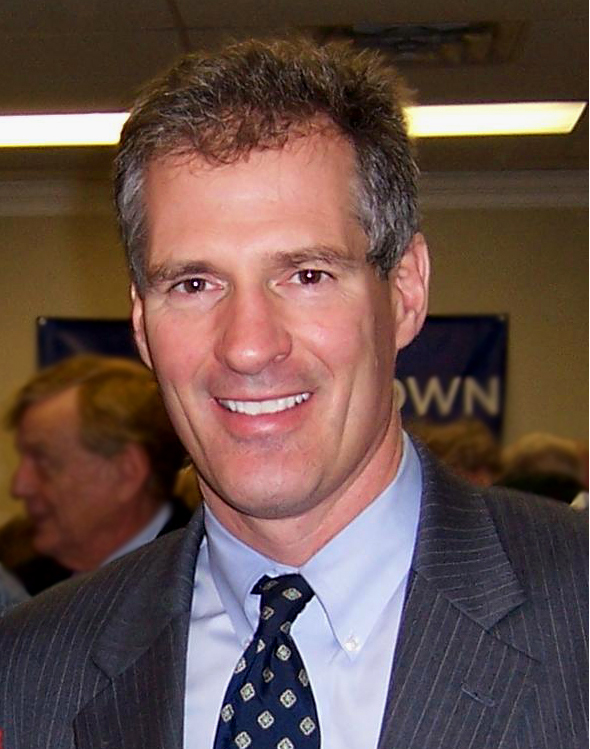
    Senator-elect Scott Brown (R-Mass.)

    Is climate change legislation dead? Not quite, but it does face a new and unexpected hurdle called Senator-elect Scott Brown (R- Mass.).

    Staffers on Capitol Hill suggested to GER that last night’s stunning reversal is a game changer. “It is certainly going to be an uphill climb to get a strong climate change bill passed,” one staffer with the Senate’s Committee on Energy and Natural Resources tells us. “Democrats are moving forward with their agenda, but Brown’s election is complicating things,” adds another Democrat Hill staffer.

    For starters, Brown’s win over Martha Coakley destroys the Democrat’s filibuster-proof majority. That could sink climate change legislation — or at least one with a cap-and-trade provision — into never ending Republican-led filibusters.

    As it stands, last summer the House passed the Waxman-Markey bill with its cap-and-trade provision. On the Senate side, three separate energy and climate change bills are being considered. Two (the Kerry-Lieberman-Graham proposal and the Cantwell-Collins CLEAR bill) have some form of cap-and-trade system. One, authored by Senator Jeff Bingaman (D-N.M.), is an energy bill that seeks to spur investments in cleantech. That bill does not have a cap-and-trade provision.

    Senator John Kerry (D-Mass.) remains optimistic (officially) on getting the Senate to vote and pass some form of climate change legislation this year. He says the issue transcends politics and should get Republicans to cross the aisle. One already has, Senator Lindsey Graham (R-S.C.).

    In a statement emailed to GER by his staff, Senator Kerry says:

    There’s overwhelming public support and this can be a bi-partisan issue. It doesn’t have to be polarized. Just listen to a conservative like Senator Graham or business leaders from across the ideological spectrum.  This is the single best opportunity to create jobs, reduce pollution, and stop sending billions overseas for foreign oil from countries that would do us harm. Sell those arguments and you’ve got a winning issue.

    Will Senator Graham be the only Republican willing to make climate change (and cap-and-trade) a “winning issue?” Things don’t look good considering that the bi-partisanship invoked by Kerry has been none-existent since President Barack Obama’s swearing-in, just a year ago today.  The reality is that despite Graham’s support, Republicans are hesitant to back a climate change bill or anything that seeks to cut or price CO2.

    Just yesterday, Senator Lisa Murkowski (R-Alaska) said that she would introduce a Congressional Disapproval Resolution that would block enforcement of the Clean Air Act for greenhouse gases. She introduced a similar amendment in September that failed.

    As we wrote yesterday, this would in effect prevent the Environmental Protection Agency (EPA) from regulating and cutting down emissions of CO2 and other greenhouse gases, a step EPA Administrator Lisa Jackson recently said the agency was willing and able to take.

    Ironically, the threat of a tighter and stricter regulatory regime led by EPA, a prospect that’s been described as a “bureaucratic nightmare,” could actually convince some Republicans to come around in support of the more flexible and compromise-friendly legislative route.

    Will cap-and-trade make it into climate change legislation supported by Senate Republicans? Maybe, but then expect carbon-dependent industries to get lots of free emissions permits. More importantly, can we even expect a Senate vote this year?

    “The ball is in Majority Leader Harry Reid’s (D-Nev.) court,” says the Energy and Natural Resources staffer, who points out that Reid controls the agenda. It remains to be seen whether he will feel he has the votes to present the bill for a full Senate vote.

    Photo Credit: Wikimedia

  • VC Updates: Toronto Smart Grid Developer Raises $6.73M; Ember Secures $5M Debt Financing

    Ecobee, a Toronto-based developer of smart grid technology, has raised $6.73 million in a Series B financing round.

    Backers include the Ontario Emerging Technologies Fund (OETF), JLA Ventures, and Tech Capital Partners. OETF is an investment vehicle administered by the Ontario Capital Growth Corporation (OCGC), an agency of the Ministry of Research and Innovation.

    In a prepared statement released Wednesday Ecobee CEO Stuart Lombard said:

    This investment represents a strong endorsement for our company and our traction in the Smart Grid space.

    The company says it will use the cash to expand its  sales and marketing network. It closed its inaugural Series A funding in October 2007.

    Also in Boston, Ember, a provider of wireless smart meter technologies, has raised $5 million in venture debt funding from Wellington Financial, a bridge financing and venture fund headquartered in Toronto.

    Ember previously raised around $89 million in venture capital funding from Chevron Technology Ventures, Stata Venture Partners, Polaris Venture Partners, GrandBanks Capital, RRE Ventures, Vulcan Capital, DFJ ePlanet Ventures, New Atlantic Ventures, and WestLB Mellon Asset Management, reports PeHUB.

  • Exxon Mobil’s Biofuel Pointman Says Carbon is Here to Stay

    Exxon Mobil is in Abu Dhabi this week at the World Future Energy Summit, preaching its ” in a green world, carbon is king” gospel.

    The Arlington, Texas company — and its competitors — have long argued that a green, carbon-free world is an elusive pipe dream. Energy demand from key developing nations like China and India, they say, is too big to rely on carbon-free fuels alone.

    That’s the message Exxon’s Emil Jacobs, vice president of research and development, had for the delegates at the World Future Energy Summit.

    He said:

    Meeting our many energy challenges requires a multidimensional approach. We need to put in place programs and policies that help us find new energy supplies, increase energy efficiency, and discover the innovations that can reduce the environmental impact of greater energy use.

    Jacobs’s call to find “new energy supplies” is a loose term that means several different things. It includes not only investments in renewable biofuels, but also in traditional oil and gas exploration and production.

    Of note: At Exxon, Jacobs oversees the company’s ongoing $600 million investment in algae-based biofuel developer Synthetic Genomics.

    On algae-based biofuel, Jacobs said that significant work and years of research and development remain before production goes commercial,  giving oil and gas production plenty of room to grow.

    Underscoring this pro-carbon stance was Exxon’s acquisition in December of natural gas exploration and production company XTO Energy in an all-stock deal valued at $31 billion.

    Exxon is not alone in propping up its hydrocarbon business. At BP, CEO Tony Hayward has cut his company’s investments in renewable energy, using all available cash to prop-up its core oil and gas business.  “Our industry must continue to find and develop new sources of oil and gas,” Hayward said in a speech last year.

  • Lisa Murkowski, The Power Utilities’ Woman in Washington

    Lisa Murkowski

    Congress’s likely failure to pass a comprehensive climate change legislation this year is paving the way for a stricter and probably less corporate-friendly regulation regime to be  administered by the Environmental Protection Agency (EPA).

    Last month’s landmark announcement by EPA administrator Lisa Jackson that green house gas and CO2 emissions represent a public health danger, was a clear indication that her agency would not shy away from using its regulatory gauntlet to advance President Obama’s climate change agenda, if the legislative route failed.

    Not surprisingly, lobbyists for energy and power companies have been storming Capitol Hill to ensure that the EPA stays put. One steady ally in that fight has been Senator Lisa Murkowski (R-Alaska), a member of the Senate’s Energy and Natural Resources Committee. Last year she submitted an amendment — partly drafted by industry lobbyists, according to the Washington Post — that would have blocked the EPA from regulating CO2 and greenhouse gas emissions.

    Senator Murkowski has been rewarded for her timely advocacy. According to data compiled by the Center for Responsive Politics, she received $157,000 from the nation’s electric utilities last year and more than $244,000 since 2005, making her Congress’s top recipient of campaign contributions from the power sector.

  • Colbert Report’s Stephen Colbert Takes On Big Coal [Video]

    Spin-buster extraordinaire Stephen Colbert of the Colbert Report hosted University of Maryland scientist Margaret Palmer, the author of a study that says wind, solar and other renewables will provide coal-dependent communities the sort of  jobs  that, over the long-term, will be good for their environment and their pocket books.

    Her study concludes that “mining permits are being issued despite the preponderance of scientific evidence that impacts are pervasive and irreversible and that mitigation cannot compensate for losses.”

    Watch:

    The Colbert Report Mon – Thurs 11:30pm / 10:30c
    Coal Comfort – Margaret Palmer
    www.colbertnation.com
    Colbert Report Full Episodes Political Humor Economy

  • Details Trickle On Ambata Capital Partners Geothermal Play

    Nick Sangermano, chief operating officer at Ambata Capital Partners, emailed GER from Abu Dhabi, where he is attending the World Future Energy Summit.

    He wrote that Ambata Capital, founded by former Credit Suisse investment banker Michael Philipp, is taking “a significant” minority stake in geothermal developer Reykjavik Geothermal, declining to provide more details on the ownership stake or how much money it is forking out for that equity position.

    Reykjavik Geothermal and Ambata Capital say they plan to jointly develop and operate utility scale geothermal power generation in emerging markets in the Middle East and Africa.

  • Ontario’s 21,000 Megawatts Offshore Potential

    A report recently released by renewable energy developer Trillium Power Wind in Toronto highlights that Ontario’s energy regulators have so far received applications for offshore wind projects that combined could generate almost 21,000 megawatts of power.

    Trillium has skin in the game with its own plan for a 710 megawatts wind farm offshore Lake Ontario.

    Quoting the report the Globe and Mail writes that in Ontario offshore wind could generate more than C$250-billion ($243 billion) of economic activity over 15 years.

    On shore or off shore, renewable energy companies like Ontario’s investor- friendly energy legislation. The Green Energy Act, voted into law last spring, includes a generous feed-in tariff system that sets the price the government will pay for wind or solar power. This allows developers to enter long-term power purchase agreements with provincial utilities knowing in advance what they would earn over the lifetime of the projects.

    Specific to off shore power, the Green Energy Act has set a high price of 19 cents a kilowatt-hour, which is more than double the current retail rate, reports the Globe and Mail.

    Trillium says the Great Lakes’ mix of high winds, relatively shallow water, and access to existing transmission lines make it an attractive area to develop offshore wind farms. Research firm Emerging Energy Research North America’s first offshore wind farm won’t be built until 2012.

    The U.S. lags behind in developing its offshore potential. Emblematic of that is Cape Wind, a Boston-based developer, which for the past seven years plan for a 420 megawatts offshore wind power project off shore Cape Cod has been snarled by opposition from local residents and bureaucratic red tape.

    Until a few weeks ago the project, after numerous setbacks, seemed on track to start negotiating terms of a crucial long-term power purchase agreement with local utilities. Yet, that’s been put on hold with the recent decision by the National Register of Historic Places to grant the Nantucket Sound eligibility to be listed in the National Register of Historic Places. The decision could lead to more delays as it ensures that significant archeological research are undertaken as part of this already long permitting process.

    Photo Credit: GridServer.com

  • Vinson & Elkins Opens Palo Alto Office to Go After Renewable Energy Deals

    International law firm Vinson & Elkins sees untapped billable hours in renewable energy and is therefore opening a new office in Palo Alto, Calif., to capture  a slice of this growing market.

    The office is opening with three partners and will be managed by Boyd Carano who has moved to Northern California from the firm’s Houston office. Kyle Fox and Margaret Sampson of Austin have also joined Carano in Palo Alto. Fox has extensive experience advising early-stage companies and Sampson is a partner with Vinson & Elkins’s intellectual property practice.

    Carano tells us that the firm could add a partner and three or four associates by the end  of the year.

    Law firms have been staffing up with environmental/greentech lawyers, (see here and here), although a lot of the hiring has been in Washington, which these days is the epicenter of cleantech funding, with the Department of Energy overseeing nearly $40 billion in dedicated funds.

  • Ambata Capital Partners to Develop Large Geothermal Projects

    Geothermal developer Reykjavik Geothermal has entered into a partnership with Ambata Capital Partners, a renewable energy-focused private equity firm founded by investment banker Michael Philipp, the former head of Credit Suisse for Europe, Africa and the Middle East.

    Terms of the investment were not disclosed. In a prepared statement Reykjavik Geothermal and Ambata Capital said they would jointly develop and operate utility scale geothermal power generation in emerging markets.

    We contacted officials at Reykjavik Geothermal and Ambata Capital by phone and email and we will post their responses when we get them.

    On the Ambata investment Reykjavik Geothermal CEO Gudmundur Thoroddson said:

    Our partnership with Ambata will be highly accretive as we execute on our plans. With their deep experience in our target markets – particularly the Middle East and Africa – combined with their sector expertise and capital raising abilities, Ambata is uniquely qualified to accelerate our strategic plans globally.

  • Ocean Power Technology CEO Resigns

    The PowerBuoy

    In a surprising development, Ocean Power Technologies (OPT) has announced that CEO Mark Draper is leaving the company  less than a year after taking the top position from company founder Dr. George Taylor, citing personal reasons.  AIM-listed OPT, which has developed the PowerBuoys generator, a water buoy that capture waves to generate electricity, has appointed Chief Financial Officer Charles Dunleavy to replace him.

    Mr. Dunleavy, 60, joined OPT in 1994 and has served as CFO since 2001. He has been a company director since 1990. The Company says it will appoint a new CFO.

    Last November OPT received A$66.46 million ($60.65 million) grant from Australia’s Resources & Energy Ministry to finance construction of a 19 megawatts wave power project on the Indian Ocean.

    OPT has also deployed 10 PowerBuoys generators off Spain’s Atlantic Coast as part of a 1.39-megawatt project it’s developing with Iberdrola and is working on a utility-scale initiative with Lockheed Martin off the Oregon coast. Back in Europe, OPT is developing Wave Hub, a 20-megawatt project, in Cornwall, England.

  • Chinese Firm Looking to Raise $400M for Renewable Energy PE Fund

    Nature Elements Capital, a Chinese investment firm, aims to raise up to $400 million for a private-equity fund that will invest in renewable energy opportunities in China.

    The firm is looking to raise cash from both Chinese and U.S. investor, reports Dow Jones. Last week the fund recently signed a memorandum of understanding with the Hangzhou government, which will become a sponsor and has committed to invest CNY100 million ($14.64 million).

    The fund will have both Chinese yuan and U.S. dollar components. The firm aims to raise about CNY1 billion (US$146 million) and between $150 million to $200 million. KK Chan, the firm’s founder, said The U.S. dollar and yuan funds might invest in tandem or individually, depending on the investment opportunity.

    China is poised to become one of the world’s largest cleantech market. According to the American Wind Energy Association, China added some 6,300 megawatts in wind capacity. The International Energy Agency estimates the country needs to increase its total generation capacity by 800 gigawatts by 2030 to meet demand — roughly double its current capacity.

    A report, released last year, estimates that the country’s green energy market, which includes everything from wind and solar farms and battery-powered automobiles, could be worth between $500 billion and $1 trillion a year.

    Chan was formerly managing director and head of investments for Greater China at Climate Change Capital. He was also managing director at CLP Renewables, where he oversaw the clean energy division for Asia Pacific.