Category: News

  • The Text of Lieberman’s ‘Don’t Ask, Don’t Tell’ Repeal

    I didn’t have it when I put my piece to bed last night, but here it is. It’s short and straightforward. Repeal only takes effect after the Pentagon working group on implementing a “Don’t Ask, Don’t Tell” repeal delivers its recommendations in December and the president, the secretary of defense and the chairman of the Joint Chiefs of Staff give their assent to how that internal Pentagon process will proceed.

    Sen. Joe Lieberman (I-Conn.) will introduce this language into the Senate Armed Services Committee’s mark-up of the fiscal 2011 Defense Authorization Act on Wednesday. He has the support of chairman Carl Levin (D-Mich.); Rep. Patrick Murphy (D-Penn.) for a complementary measure in the House version of the bill during this week’s floor debate; and, finally, the White House.

    But while the press today might be writing that the White House deal means the fight is effectively over, “Don’t Ask, Don’t Tell” repeal activists are just gearing up for a grueling week. As I wrote in my piece, the Human Rights Campaign is putting millions of dollars and tons of locally based effort around the country into urging wavering senators on the committee to vote for Lieberman’s text and for the House amendment. Michael Cole of the Human Rights Campaign noted to me yesterday that “even though we have some outstanding congressional leaders, our issues are continually ones that require education and making sure members understand these issues and why it’s important to protect the community.”

    Here’s the text of the Lieberman amendment:

    Committee Amendment Proposed by Mr. Lieberman
    At the appropriate place in title V, insert the following:

    SEC. [ARM10802]. DEPARTMENT OF DEFENSE POLICY CONCERNING HOMOSEXUALITY IN THE ARMED FORCES.

    (a) COMPREHENSIVE REVIEW ON THE IMPLEMENTATION OF A REPEAL OF 10 U.S.C. § 654.—
    (1) IN GENERAL.—On March 2, 2010, the Secretary of Defense issued a memorandum directing the Comprehensive Review on the Implementation of a Repeal of 10 U.S.C. § 654 (section 654 of title 10, United States Code).
    (2) OBJECTIVES AND SCOPE OF REVIEW.—The Terms of Reference accompanying the Secretary’s memorandum established the following objectives and scope of the ordered review:
    (A) Determine any impacts to military readiness, military effectiveness and unit cohesion, recruiting/retention, and family readiness that may result from repeal of the law and recommend any actions that should be taken in light of such impacts.
    (B) Determine leadership, guidance, and training on standards of conduct and new policies.
    (C) Determine appropriate changes to existing policies and regulations, including but not limited to issues regarding personnel management, leadership and training, facilities, investigations, and benefits.
    (D) Recommend appropriate changes (if any) to the Uniform Code of Military Justice.
    (E) Monitor and evaluate existing legislative proposals to repeal 10 U.S.C. § 654 and proposals that may be introduced in the Congress during the period of the review.
    (F) Assure appropriate ways to monitor the workforce climate and military effectiveness that support successful follow-through on implementation.
    (G) Evaluate the issues raised in ongoing litigation involving 10 U.S.C. § 654.

    (b) EFFECTIVE DATE.—The amendments made by subsection (f) shall take effect only on the date on which
    the last of the following occurs:
    (1) The Secretary of Defense has received the
    report required by the memorandum of the Secretary referred to in subsection (a).
    (2) The President transmits to the congressional defense committees a written certification, signed by the President, the Secretary of Defense, and the Chairman of the Joint Chiefs of Staff, stating each of the following:
    (A) That the President, the Secretary of Defense, and the Chairman of the Joint Chiefs of Staff have considered the recommendations contained in the report and the report’s proposed plan of action.
    (B) That the Department of Defense has prepared the necessary policies and regulations to exercise the discretion provided by the amendments made by subsection (f).
    (C) That the implementation of necessary policies and regulations pursuant to the discretion provided by the amendments made by subsection (f) is consistent with the standards of military readiness, military effectiveness, unit cohesion, and recruiting and retention of the Armed Forces.

    (c) NO IMMEDIATE EFFECT ON CURRENT POLICY.— Section 654 of title 10, United States Code, shall remain in effect until such time that all of the requirements and certifications required by subsection (b) are met. If these requirements and certifications are not met, section 654 of title 10, United States Code, shall remain in effect.

    (d) BENEFITS.—Nothing in this section, or the amendments made by this section, shall be construed to
    require the furnishing of benefits in violation of section 9 7 of title 1, United States Code (relating to the definitions of “marriage” and “spouse” and referred to as the “Defense of Marriage Act”).

    (e) NO PRIVATE CAUSE OF ACTION.—Nothing in this section, or the amendments made by this section, shall be construed to create a private cause of action.

    (f) TREATMENT OF 1993 POLICY.—
    (1) TITLE10.—Upon the effective date established by subsection (b), chapter 37 of title 10, 18 United States Code, is amended—
    (A) by striking section 654; and (B) in the table of sections at the beginning of such chapter, by striking the item relating to section 654.
    (2) CONFORMINGAMENDMENT.—Upon the effective date established by subsection (b), section ARM10802 S.L.C. 571 of the National Defense Authorization Act for Fiscal Year 1994 (10 U.S.C. 654 note) is amended by striking subsections (b), (c), and (d).

  • Insanity In Australia: ING Says Thanks to Capital Appreciation, Paying Principal on Mortgage Loans is Unnecessary

    Myths that home prices rise forever and interest rates stay low forever are alive and well in Australia. Please consider this amazing story of corporate insanity as described in the Sunday Telegraph – Revealed: The home loan that could save you a fortune.

    ING Direct, Australia’s fifth largest lender, is preparing to sell loans that have no fixed term and no requirement to repay any capital along the way.

    At current rates, the interest-only loans would cut repayments on a $300,000 mortgage by $5000 a year.

    “People are needlessly being denied the chance to buy a property while prices spiral rapidly out of their reach” ING Direct CEO Don Koch said. “There is an urgent need to provide more affordable options and borrowers should be able to choose whether they want to repay the capital, or not.”

    Mr Koch wants to position the bank as a “mortgage partner for life”, with borrowers carrying the same interest-only loan from property to property for as long as they wish, accumulating equity from rising house prices as they go.

    Then, as they near retirement, they could sell their property for a big enough profit to pay off the original loan and buy a smaller place outright, leaving them mortgage-free. Or, they could keep the mortgage going and repay the original capital from their estate, after death.

    Banks already offer interest-only loans, but borrowers often are allowed to keep them only for five to 10 years. Then they must start paying the capital.

    But ING says this preoccupation with paying off the loan is unnecessary.

    “There is no economic reason for banks to insist on regular capital repayment,” Mr Koch said. “It just makes the loan more expensive for the borrower.

    Financial comparison website InfoChoice CEO Shaun Cornelius said the move was a welcome innovation: “Depending on the size of the loan, it could add hundreds of thousands of dollars to a borrower’s cash flow over their lifetime.”

    Economic Idiocy

    Koch’s proposal, seconded by CEO Shaun Cornelius of InfoChoice, is economic idiocy at its finest. No one “saves” anything by not paying down mortgages, the money is simply spent (most likely wasted) elsewhere. Moreover, home prices do not perpetually go up.

    The US housing market has without a doubt proven both statements.

    Ask any homeowner in the US who is headed for retirement and severely underwater on their home what they think of Koch’s hypothesis.

    With so many underwater mortgages, only a complete fool think estates would be in a position to repay the original capital from their estate, after death, especially in countries where the bubble has not yet popped, such as Australia, Canada, and China.

    Of all the proposals to keep the housing bubble alive in Australia, especially in light of what has happened in the US, this idea from ING needs to go straight to the top of the idiotic ideas list.

    ING Direct CEO Don Koch is testament to the idea “there is always the greater idiot who never learns a thing from history, who instead proposes to do something that the market has recently proven preposterous.”

    Simple Questions

    By the way Mr. Koch, I have a few simple questions for you:

    Are you aware of what interest rates were in the 1970’s and 1980’s?

    “What happens when interest rates rise, perhaps even double, and your borrowers struggle to make even the interest payments?”

    Alternatively, “Are you dumb enough to offer low rates forever?”

    Either way. Mr. Koch, you and your banks are screwed, and it should not take a genius to figure that out.

    This guest post previously appeared at the author’s blog, Global Economic Analysis >

    Join the conversation about this story »

  • BOLT upgrades browser to version 2.1

    Might this be the last stand for the BOLT browser for BlackBerry? RIM figures to debut OS 6.0 next month when AT&T releases the Bold 9800 slider, which brings along with it a Webkit browser. From what we’ve seen so far, it looks like a pretty significant improvement over the current default browser, and might make life tougher for third party browser developers. BOLT has created a quality BlackBerry browsing experience, and has continually pumped out new and improved versions. Their latest, version 2.1, continues on those improvements. I just wonder if it will hold up once RIM has a better native browser.

    (more…)

  • The Nido EV prototype unveiled by Pininfarina

    Nido-EV-prototype.jpg
    Yet another EV in the automotive market with a clean and green act, the Nido EV is here, by Pininfarina. This is the first baby to roll out of the Nido Development Program by the Pininfarina Style and Engineering Centre of Cambiano in Turin. The car is a prototype, and uses a 30 kW, 125 N·m (92 lb-ft) synchronous permanent magnet motor. To power this up, the Nido EV uses a 21.2 kWh, 278V Zebra Z5 Ni-NaCl battery. With a charge time of just 8 hours, the car has a drivable range of 140 km (87 miles). The needle goes all the way up to 120 km/h (75 mph) with just 6.7 seconds required to accelerate from zero to 60kmph.

    The Nido uses a tubular steel frame and a structure adaptable to four different vehicles, a 2-seater, a 2+2, a pickup and a light van. Two more versions, a bit larger than the prototype will crop up too, one with a front engine and rear motor and the second with an electric front motor. The Nido EV is yet another green car for a greener drive.

    Nido-EV-prototype2.jpg

    [GreenCarCongress]

  • Economists Fear Europe May Overdo Austerity Measures

    Economists fear that, due to market pressures, some heavily indebted European nations may adopt excessive austerity measures on the back of aid packages intended to help the countries recover from the global recession.  Olivier Blanchard, the chief economist for the International Monetary Fund, said “there is indeed a risk that, under market pressure, some countries overdo austerity,” and furthermore that, “That would be a mistake.”

    The austerity measures adopted by Greece on the back of the joint Euro-IMF bailout, due to the severity of Greece’s debt problems, have been purported to be quite severe; however, Blanchard believes that other indebted European nations, such as Italy and Spain, should not need to impose such severe measures.

    “Markets tend to lump a series of countries in the same basket. In fact, other European countries don’t need to take the same draconian measures as Greece to reduce their budget deficits,” said Blanchard.  “They are more credible to start with, with less debt, and they can afford a more gradual adjustment to limit the negative impact of consolidation on short-term growth.”  One interesting question could be asked on the back of this: was it not the IMF that imposed such severe austerity measures on Greece in the first place?

    Related posts:

    1. Greeks Riots Could Damage Tourism
    2. Renewed Fears Over Greek Economy, Asian Shares Drop
    3. Euro Bounces Back, But Investors Still Cautious

  • LG Shows Off 84-Inch 3DTV With 3,840 x 2,160 Resolution [3dTv]

    LG’s 47 and 55-inch 3DTVs haven’t even gone on sale yet, but already they’re taunting us with an 84-inch ultra high-definition 3D screen with massive 3,840 x 2,160 resolution. More »


    TelevisionArts and EntertainmentBacklightSonyArts

  • Jamie Lynn Spears College-Bound

    Miley may not be interested in all the merriment that comes along with being on a college campus, but Jamie Lynn Spears is defying the teen mom odds and pursuing her dream of a higher education. Word on the Curb is Jamie Lynn’s mom, Lynn, met with Real Housewives star Jill Zarin — whose daughter Ally is college-bound this fall — for advice on the application process.

    Jamie Lynn, 18, is the mom of daughter Maddie — who is almost two.


  • Google Launches New Course-Scheduling System – Wired Campus – The Chronicle of Higher Education

    Last week was a big one for Google fans in higher education. Google Wave opened its doors, and Google Voice now lets students get calls forwarded from their old numbers to their new phones.

    Google made one more announcement last week—about a new course-scheduling system, CloudCourse—that could potentially have implications for higher education.  CloudCourse is integrated with Google Calendar and allows users to schedule classes, look up user profiles, and sync the service’s data with internal university systems. CloudCourse was built entirely on Google’s App Engine, which allows users to build and host Web apps. Google hopes that CloudCourse can serve as an example of how to use the App Engine.

    via Google Launches New Course-Scheduling System – Wired Campus – The Chronicle of Higher Education.

  • Google’s Pac-Man Ruins Work Productivity

    Google went with an unprecedented move on Friday by celebrating the Pac-Man’s 30th birthday with a fully functional game on the Google homepage. The move proved a huge success, prompting the company to continue to offer the Pac-Man custom homepage at a permanent location. It was such a huge success, apparently, that people forgot about their work a… (read more)
  • Spanish Domestic Law of Universal Jurisdiction

    by Kenneth Anderson

    In the extensive and sometimes heated arguments over universal jurisdiction, Judge Baltasar Garzon, and national courts such as those of Spain, often missing is much scholarly information on the actual evolution and state of Spanish domestic law on universal jurisdiction, certainly in English and accessible to English language scholars.  Ignacio de la Rasilla del Moral, a Spanish academic (apparently currently in the US), has put up on SSRN a discussion of the evolution – rise and fall – of universal jurisdiction law in Spain, up to mid-2009 and proposed revisions to the Spanish law.  The Swan Song of Universal Jurisdiction in Spain, 9 International Criminal Law Review (2009) 777-808.  I have various disagreements with the way that the article treats international law aspects of crimes subject to universal jurisdiction, but overall it is a very helpful addition to the scholarship for English language scholars seeking to understand what it means inside domestic Spanish law.  The abstract is below the fold.

    On 29 April 2009 the Spanish National Court opened a cause against the “perpetrators, the instigators, the necessary collaborators and accomplices” of alleged tortures at the Guantanamo camp and other overseas detention facilities. Before examining how these and other causes currently opened in Spain under the principle of universal jurisdiction enshrined by Art. 23.4 of the Organic Law of the Judicial Branch (LOPJ) are likely to be affected by the legislative reform of that very provision approved by the Spanish Congress of Deputies on 25 June 2009, we will first examine the sinuous – and now dramatically indicative in retrospect – jurisprudential evolution of the treatment of the principle of universal justice by Spanish Courts since the Constitutional Court enshrined a doctrine of unconditional universal jurisdiction in its widely celebrated Guatemala Genocide case in June 2005. Th is is complemented by an overview of the cases that, jurisdictionally based on the principle of universal justice enshrined by Article 23 of the LOPJ, are still currently open (from e.g., Tibet to Rwanda or Gaza) before Spanish Courts.

    In addition, set against the background provided by the release of the four so-called “torture memos” by the Obama Administration in April 2009, there is a brief examination of the possibilities of jurisdictional prosecution of both the perpetrators and those who formulated the legal guidance authorizing the “enhanced interrogators techniques” in both the U.S. domestic law system and international legal jurisdictional settings, including at the ICJ level. Eventually, an examination of the hasty procedure through which the new relevant Spanish provision in this area has been adopted and the legal effects, with reference to cases currently opened before the Spanish courts, of the newly reformed article give place to a brief reflection on the prospects of international law in the age of an emerging new international judiciary in view of thestructural deficit of mechanisms of participatory democracy on the domestic plane with relevance in the international realm as dramatically epitomized at this juncture by the Spanish legal system.

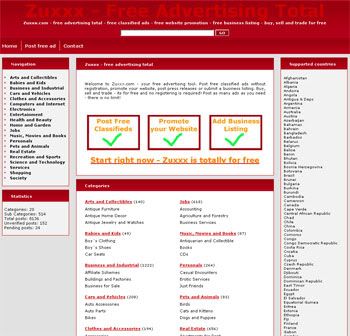
  • Types of Free Classifieds

    World Free classifieds ads advertising

    Classifieds are important especially for people who intend to buy and sell stuff. Classifieds can sometimes act as advertisements for individual who intends to sell stuff so that the prospective and interested buyer can view the details of the products and the potential of transactions might occur because of this classified. There are different types of classifieds that are currently available and some of the most common one is the newspaper classifieds and the online classifieds.

    Some classifieds are charged but there are some newspapers or websites are offering free classifieds for the registered user or subscribers to post the classifieds. The most common types of free classifieds that can be usually viewed are the car classifieds where registered users of websites or magazines’ subscribers can advertise the car for sale at zero cost. One reason why free car classifieds are preferred because usually the seller is selling his car for another one. So it will not make sense for people to pay for a service which might cost more than the selling price.

    Another free classifieds that we always see is the real estate classifieds. People also preferred using free real estate classifieds service because real estate is expensive and it might takes quite a while before there is any potential transaction.

    Finally, there are also job classifieds where companies who have intention to hire new staff can advertised the posts available in these companies and interested potential employee can read about the jobs requirement and then apply for the post.

    Tags: World, Free, classifieds, ads, advertising, buy, sell, second hand, cars, real estate, personals, pets, animals

  • Motorola Shadow found in corporate Verizon gym

    Alright, so it’s one thing to leave your highly confidential unreleased phone in a bar after a night of drinking because its your birthday and you want to forget your woes, but leaving it in a Gym?  What, you worked out so hard you became euphoric and it slipped your mind?  That’s what Gizmodo is saying happened with the latest yet-to-be-released device they’ve uncovered.  The device in question is what we’ve been referring to as the Motorola DROID Shadow.  It has also been known as the Nexus Two in the past and is said to have the following specs:

    • 4.3-inch capacitive touchscreen
    • 8MP Camera with autofocus
    • microSD up to 32GB
    • Android 2.2 
    • Wi-Fi 802.11 b/g/n
    • Bluetooth 2.1

    According to the story, the gym employee who (was snooping around) found the device confirmed that it comes with 16GB of internal storage, a Snapdragon processor, HDMI port, 8MP camera and 4.3 inch touchscreen.  So far it’s looking like the information above is lining right up.  As you might expect the device mysteriously became locked not long after the gym employee found it, but he managed to scope out a text message that somehow confirmed it was an unreleased device before that happened.

    I’m not really sure what to think of all these people “leaving behind” their secretive devices, so why don’t you just tell me what to think in the comments!

    Via Gizmodo


  • Head Back to School In Style With a Free iPod touch

    While those who recently graduated may be missing their Apple discount, those who are going to be heading back to school this fall can take advantage of Apple’s standard college student discount with the added bonus of a free iPod touch.

    Similar to “Back to School” promotions offered by Apple every summer, college students as well as faculty and staff members of any K-12 school or college in the U.S. are eligible for the promotion. Simply head into an Apple Store, purchase any Mac (except a Mac mini or refurbished Mac) and buy an iPod at the same time. The rebate is for $199, so even if you are coveting that awkwardly classic 160GB iPod or a larger iPod touch, you can still get it, though you’ll only get $199 back. Unfortunately, the offer doesn’t apply to iPhones or iPads.

    The promotion runs from May 25, 2010 through September 7, 2010. Traditionally, these promotions have served as an effective way for Apple to clear out its remaining inventory of iPods, so you can pretty much plan for new iPods to be released around the first week of September. These promotions also tend to move a lot of Macs and iPods out the door, so this quarter for Apple will probably look pretty rosy.

    If you’re considering the switch to Mac, this is one of the best times to save the most money on switching. From the lucrative discounts on hardware (ranging from $50 on the entry-level MacBook to $200 on the MacBook Pros) to the $100 rebate that you get when buying an eligible printer with your Mac, you can seriously save some cash. Add in a MobileMe subscription for $30 off retail and a free iPod touch ($199), why wouldn’t you switch? Oh, by the way, if you were wanting iWork with your new Mac, you can get that for $30 off too.

    For those looking to learn more about their Mac, including iWork and iLife, check out our 101 series of screencasts (subscription required).

    However, there are a few disclaimers. Unfortunately, the Back to School promotion is only available to U.S. customers. If you are wanting to buy a new Mac, but will require some custom configurations, such as different graphics cards or hard drives, you’ll need to complete your entire purchase online instead of in the store. For more details on any of these promotions, visit Apple’s promo website.

    Even if you already have an iPod touch or printer, if you’re in the market for a new Mac, find a college student and go save some money. If you end up selling your printer or iPod touch on eBay, you’ll still come out ahead. Have you been waiting for this promotion to switch to the Mac or upgrade your current setup? Do you really need one more iPod or Mac in your family? Tell us your thoughts!


    Atimi: Software Development, On Time. Learn more about Atimi »

  • Marshall celebrates broadband success

    This week the Marshall Independent started a series of “stories that looks at where Marshall and the area stands when it comes to broadband Internet service, where it could go in the future, and what that future holds for businesses and residents alike.”

    Yesterday’s story starts with a definition of where they are today…

    A survey of local Internet services shows seven different Internet providers in Marshall, several offering download speeds greater than one Megabit per second (Mbps). A recently-enacted Minnesota law calls for broadband download speeds of 10 Mbps by 2015.

    … and looks at the concerted effort it took to get there…

    The first steps toward better Internet service in the Marshall area were taken more than 10 years ago, said DeCramer and Marshall Community Services Director Harry Weilage. It took a lot of community education and teamwork to build network infrastructure when the Internet was just starting to gain prominence, they said.

    And the efforts have paid off; the area around Marshall (think Windom) is one of the best wired areas in the state. It’s interesting to hear the historical perspective. They didn’t get fiber because they were lucky, they got it because they planned. No accident there. It will be fun to read the rest of the series.

    What that did strike me was the impact of the Minnesota Broadband Bill on communities that are currently well poised to be broadband powerhouses – as seen in the first quote from the article. In the spirit of planning ahead – maybe focusing on the 10 Mbps in 2015 isn’t the right goal for them. I think that goal is better reserved for folks who have nothing now. The folks who are doing well should reach higher.

    Over the weekend Mike Horwath from ipHouse sent me an article that puts our speed goals in perspective – the title says it all “US happy with 4Mbps baseline; Europe demands 30Mbps for all”. Maybe Marshall needs to follow the European standard – or shoot for the US premium plan of 100 million U.S. homes have affordable access to actual download speeds of at least 100 Mbps and actual upload speeds of at least 50 Mbps by 2020. In some ways I do see Marshall doing just that. Southwest Minnesota received an ARRA grant to boost broadband and I know Marshall is slated for DOCSIS 3.0.

    Maybe it’s a good time to take a page from Marshall’s history and go for it!

  • Microsoft Entertain and Devices Division re-org in the offing

    Shake up The Wall Street Journal reports that Microsoft is soon to undertake a major re-organization of their Entertainment and Devices Division, the home of Windows Phone, Zune and the XBox 360.

    Apparently on part precipitated by the likely departure of J Allard, CTO of the group, the division’s poor performance against rivals Apple and Google could see a much wider reshuffling of responsibilities in the area, with Wall Street Journal suggesting even Robbie Back, President for the group, may be at risk.

    Devices have become an expected front in the OS war, after Microsoft successfully fended off challenges in the desktop, netbook and server front from OS’s like Linux and  OSX.

    Hopefully the re-organization would be a sign of a renewed focus by Microsoft, and also hopefully it will not result in another lengthy delay while Microsoft reboots all its efforts.

    Read more at Wall Street Journal here.

    Via Engadget.com


  • Self Flagellation- Michigan Addition

    Quick update- the University of Michigan has released it’s decision regarding self-imposed sanctions for it’s football program this morning, including a request for two years probation, a loss of quality control staffing, and a letter of reprimand for coaches, including Coach Rodriguez.

    Details are here, Coach Rodriguez’ response is here.

    More reflection, commentary, and schadenfreude forthcoming.

  • U.S. Stock Falls Over N. Korea Situation

    After North Korea threatened to take military action against its southern neighbour, some large banks as well as industrial stocks fell over concerns that a conflict with N. Korea might halt the global economic recovery.  The Neo-Stalinist country’s threat comes after an alleged North Korean torpedo attack on a South Korean vessel, which spurred the South along with the United States to take part in some naval muscle flexing close to North Korean waters.


    Among those firms and institutions which saw drops amid the tense situation were Bank of America Corp, which fell by 3.1 percent; and Alcoa Inc., which fell by over 5.1 percent.  According to Art Hogan, chief market analyst at Jefferies & Co in New York, the situation sits as such:  “We have got another round of taking off the risk trade going on around the world, and we’re doing it in pretty dramatic fashion.”

    Furthermore, fears over a conflict with North Korea have also led to similar financial troubles in South Korea; the South Korean government apparently held an emergency session to discuss ways of soothing the fears of investors.

    Related posts:

    1. South Korea Accused North Korea for Firing Torpedo that Killed 46
    2. South Korean-, North Korean situation from the point of view of the U.S.
    3. Clinton warns North Korea that the attack will have its punishment

  • Germany’s Response To Market Weakness: Expand The War On Shorts

    Andrea Merkel

    Well, the recent ban on naked short-selling so well, so… guess what: the ban is being expanded.

    ForexLive cites Reuters headlines saying that a blanket ban on naked short-selling in Germany is coming.

    We don’t think any further comment is necessary.

    Join the conversation about this story »

  • Orders for 2011 Jeep Grand Cherokee are 30-40% higher than initial expectations

    2011 Jeep Grand Cherokee

    A key reason why Chrysler added a second shift at its Jefferson North Assembly Plant was because dealer orders for the redesigned 2011 Jeep Grand Cherokee have exceeded expectations by about a third.

    “Initial orders are 30-40 percent higher than initial expectations,” Jeep brand CEO Michael Manley said on the sidelines at the ceremony. However, the Auburn Hills automaker refused to say what their volume expectations were for the vehicle.

    Click here to get prices on the 2011 Jeep Grand Cherokee.

    At the launch of the 2011 Jeep Grand Cherokee production on Friday, Marchionne said a total of 1,080 employees will staff the second shift with nearly all new hires.

    Chrysler sold a total of 50,328 Jeep Grand Cherokees in 2009, down 32 percent from 2008. The vehicle’s sales peaked at 300,031 in 1999.

    Refresher: The 2011 Jeep Grand Cherokee will go on sale next month and will be available 3 models: Laredo, Limited and Overland. The 2011 Jeep Grand Cherokee Laredo 4×2 model starts at $30,995, while the 4×4 Grand Cherokee Laredo model starts at $32,995. Prices for the 2011 Grand Cherokee Limited 4×4 start at $39,995, while the Overland 4×4 model start at $42,995. All models will be powered by a 3.6L Pentastar V6 unit making 290-hp delivering up to 23 mpg and over 500 miles on one tank of gas. Optional features include a 360-hp 5.7L V8 and a Trailer Tow Group.

    2011 Jeep Grand Cherokee:

    – By: Omar Rana

    Source: Automotive News (Subscription Required)


  • The Top 10 Cities With the Best Broadband

    The company behind the broadband speed testing site Speedtest.net is ready to go beyond testing broadband quality and into the data game. Ookla, the three-year-old company based in Seattle that’s behind the online speed service, introduced a broadband index today that tabulates the results from the more than 1 million speed tests done each day around the world. The global broadband speed is 7.69 Mbps while the U.S. speeds average out at 10.12 Mbps.

    Mike Apgar, co-founder and managing partner of Ookla, said the indexes will measure broadband speeds, ping times and jitter [COULD WE HAVE A DEFINITION OF JITTER?]. His goal is to move the testing beyond the tech-savvy market (we use it!), so as to get a better sense of how broadband speeds really play out across the world. The FCC is encouraging consumers to use the sites (Ookla also runs a site that tests jitter and packet loss at pingtest.net) as part of its nationwide testing goals, and many of Ookla’s ISP customers also offer the test to their customers and host Ookla’s servers.

    Providing tests for ISPs is actually most of Ookla’s business. The next plank of the business strategy is the index data: Ookla hopes to provide the information for free to academic researchers, but it also plans to charge ISPs, analysts and governments for it. Ookla has no debt or venture capital, and is profitable.

    The company also today released a list of the top worldwide and U.S. cities based on their broadband speeds. It measured only cities with more than 75,000 people connecting for more than three months using a 30-day rolling average. The results are subject to change, and given that no place in the U.S. ranks in the global Top 10 (the first U.S. city is San Jose, which is ranked 18), I hope the results do shift.

    Here are the top 10 U.S. cities and their corresponding 30-day average speeds:

    1. San Jose, Calif. 15.02
    2. Saint Paul, Minn. 14.53
    3. Pittsburgh, Pa. 14.18
    4. Oklahoma City, Okla. 12.12
    5. Brooklyn, N.Y. 12.10
    6. Tampa, Fla. 12.05
    7. Bronx, N.Y. 12.01
    8. New York, N.Y. 11.85
    9. Denver, Colo. 11.68
    10. Sacramento, Calif. 11.34

    The global top 10:

    1. Seoul, South Korea 34.49
    2. Riga, Latvia 27.88
    3. Hamburg, Germany 26.85
    4. Chisinau, Republic of Moldova 24.31
    5. Helsinki, Finland 20.58
    6. Stockholm, Sweden 19.97
    7. Bucharest, Romania 19.68
    8. Sofia, Bulgaria 18.99
    9. Kharkov, Ukraine 18.15
    10. Kaunas, Lithuania 17.46

    Related GigaOM Pro Research (sub req’d): Big Data Marketplaces Put a Price on Finding Patterns


    Atimi: Software Development, On Time. Learn more about Atimi »