Category: News

  • Video: 2011 Porsche Cayenne “Utility Redefined” commercial

    2011 Porsche Cayenne "Utility Redefined" Commercial

    Commercials for the 2011 Porsche Cayenne are making their ways onto our television sets and here is the first one, called “Utility Redefined.”

    Just like the man in the commercial, if we had a 2011 Cayenne in our garage, we would hardly be able to sleep.

    Follow the jump to see the commercial.

    Refresher: Prices for the base 300-hp 2011 Porsche Cayenne start at $46,700. The 400-hp 2011 Cayenne S will have a starting price of $63,700, while the Cayenne S Hybrid will start at $67,700. The range-topping 500-hp 2011 Porsche Cayenne Turbo will start at $104,800. Big news for 2011 is the 2011 Porsche Cayenne S Hybrid, which is powered by a 333-hp 3.0L supercharged V6 gasoline engine mated to a 47-hp electric-motor. The system allows the SUV to produce 380-hp and a maximum torque of 427 b-ft. Porsche says that that allows the same performance level of a V8 engine while increasing fuel-economy by 20 percent.

    2011 Porsche Cayenne:

    The new Cayenne: Utility redefined:

    2011 Porsche Cayenne:

    – By: Kap Shah


  • Phoenix Mars Lander, RIP

    Like this release hot from the inbox explains, the Phoenix Mars Lander exceeded its planned useful life by a gigantic margin.

    The release:

    Phoenix Mars Lander Does Not Phone Home, New Image Shows Damage

    PASADENA, Calif., May 24 /PRNewswire-USNewswire/ — NASA’s Phoenix Mars Lander has ended operations after repeated attempts to contact the spacecraft were unsuccessful. A new image transmitted by NASA’s Mars Reconnaissance Orbiter (MRO) shows signs of severe ice damage to the lander’s solar panels.

    (Logo: http://www.newscom.com/cgi-bin/prnh/20081007/38461LOGO)

    “The Phoenix spacecraft succeeded in its investigations and exceeded its planned lifetime,” said Fuk Li, manager of the Mars Exploration Program at NASA’s Jet Propulsion Laboratory in Pasadena, Calif. “Although its work is finished, analysis of information from Phoenix’s science activities will continue for some time to come.”

    Last week, NASA’s Mars Odyssey orbiter flew over the Phoenix landing site 61 times during a final attempt to communicate with the lander. No transmission from the lander was detected. Phoenix also did not communicate during 150 flights in three earlier listening campaigns this year.

    Earth-based research continues on discoveries Phoenix made during summer conditions at the far-northern site where it landed May 25, 2008. The solar-powered lander completed its three-month mission and kept working until sunlight waned two months later.

    Phoenix was not designed to survive the dark, cold, icy winter. However, the slim possibility Phoenix survived could not be eliminated without listening for the lander after abundant sunshine returned.

    The MRO image of Phoenix taken this month by the High Resolution Imaging Science Experiment, or HiRISE, camera on board the spacecraft suggests the lander no longer casts shadows the way it did during its working lifetime.

    “Before and after images are dramatically different,” said Michael Mellon of the University of Colorado in Boulder, a science team member for both Phoenix and HiRISE. “The lander looks smaller, and only a portion of the difference can be explained by accumulation of dust on the lander, which makes its surfaces less distinguishable from surrounding ground.”

    Apparent changes in the shadows cast by the lander are consistent with predictions of how Phoenix could be damaged by harsh winter conditions. It was anticipated that the weight of a carbon-dioxide ice buildup could bend or break the lander’s solar panels. Mellon calculated hundreds of pounds of ice probably coated the lander in mid-winter.

    During its mission, Phoenix confirmed and examined patches of the widespread deposits of underground water ice detected by Odyssey and identified a mineral called calcium carbonate that suggested occasional presence of thawed water. The lander also found soil chemistry with significant implications for life and observed falling snow. The mission’s biggest surprise was the discovery of perchlorate, an oxidizing chemical on Earth that is food for some microbes and poisonous to other forms of life.

    “We found that the soil above the ice can act like a sponge, with perchlorate scavenging water from the atmosphere and holding on to it,” said Peter Smith, Phoenix principal investigator at the University of Arizona in Tucson. “You can have a thin film layer of water capable of being a habitable environment. A micro-world at the scale of grains of soil — that’s where the action is.”

    The perchlorate results are shaping subsequent astrobiology research, as scientists investigate the implications of its antifreeze properties and potential use as an energy source by microbes. Discovery of the ice in the uppermost soil by Odyssey pointed the way for Phoenix. More recently, the MRO detected numerous ice deposits in middle latitudes at greater depth using radar and exposed on the surface by fresh impact craters.

    “Ice-rich environments are an even bigger part of the planet than we thought,” Smith said. “Somewhere in that vast region there are going to be places that are more habitable than others.”

    NASA’s MRO reached the planet in 2006 to begin a two-year primary science mission. Its data show Mars had diverse wet environments at many locations for differing durations during the planet’s history, and climate-change cycles persist into the present era. The mission has returned more planetary data than all other Mars missions combined.

    Odyssey has been orbiting Mars since 2001. The mission also has played important roles by supporting the twin Mars rovers Spirit and Opportunity. The Phoenix mission was led by Smith at the University of Arizona, with project management at JPL and development partnership at Lockheed Martin in Denver. The University of Arizona operates the HiRISE camera, which was built by Ball Aerospace and Technologies Corp., in Boulder. Mars missions are managed by JPL for NASA’s Mars Exploration Program at NASA Headquarters in Washington.

    For Phoenix information and images, visit:

    http://www.nasa.gov/phoenix

    Photo:  http://www.newscom.com/cgi-bin/prnh/20081007/38461LOGO
    PRN Photo Desk [email protected]
    Source: NASA

    Web Site:  http://www.nasa.gov/

  • Deal of the Week: Avatar Games and Gear


    This weeks Deal of The Week is actually multiple deals designed to give your Xbox LIVE Avatar more fun. The following deals are available for Xbox LIVE Gold members.

    The below Xbox LIVE Arcade games all support Xbox LIVE Avatars and are each 50% off:

    Lazy Raiders

    Band of Bugs

    Madballs Babo: Invasion

    PLUS, the Xbox LIVE Indy Game Avatar Wave Snowball Fight is 67% off


    Lazy Raiders® Band of Bugs MadBalls in… Babo: Invasion© 


    Need something to keep your Avatar busy? The below props are on sale:


    Three Arcade games, one Indy games and three props are specially priced for Xbox LIVE Gold Members for this week only. Here is the complete list showing the savings:


    Normal Price

    DOTW Price

    Savings

    Lazy Raiders 800 400 50%
    Band of Bugs 800 400 50%
    Madballs Babo: Invasion 800 400 50%
    Snake Prop 240 160 33%
    Pom Poms Prop 160 80 50%
    Basketball Prop 160 80 50%
    Avatar Wave Snowball Fight 240 80 67%


  • HP TouchSmart 600 Entertainment PC giveaway!

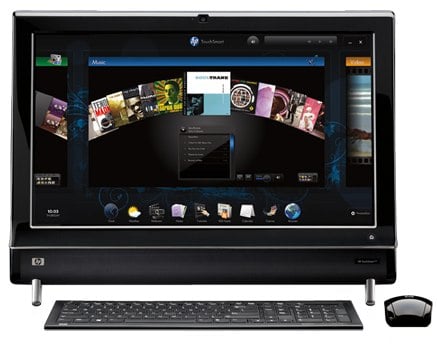
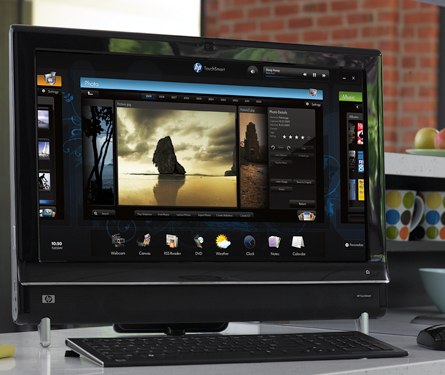
    HP TouchSmart 600 apps

    Hot on the heels of our HP TouchSmart 600 review, we’ve got a contest for you guys where we will be giving a brand new TouchSmart 600-1055 away to one of you! In case you didn’t read the review, the HP TouchSmart 600-1055 is an entertainment all-in-one PC that rocks Windows 7 64-bit, 4GB RAM, 750GB hard drive, and supports Blu-ray playback as well as HDTV tuning and DVR functions. So, how do you enter to win this bad boy? Here’s your answer:

    1. If you don’t have one already, sign up for a Twitter account
    2. Follow the Andru Edwards Twitter account
    3. On Twitter, post this tweet about our contest:

      “Hey @andruedwards hook me up with that @gearlive HP TouchSmart 600! http://bit.ly/touchsmart-600” (Click here to tweet this now)

    That’s it! You must be following the Twitter accounts listed, because we will be sending the codes to the winners on Twitter via DM, and if you aren’t following, we can’t DM you. Simple as that. We will be choosing a winner at random next Monday, so you’ve got a week. Get your entry in before then!


    Tags:
    ,
    ,
    ,
    ,
    ,
    ,
    ,
    ,

    HP TouchSmart 600 Entertainment PC giveaway! originally appeared on Gear Live on Mon, May 24, 2010 – 1:15:49


  • Electric Cars are Coming, But Where are the Fast Chargers?

    In the brave new world of electric cars, charging is perhaps the most critical element of the equation. For early adopters, almost all of it will be done from the comfort of your own garage in the wee hours of the morning, and it will take no more effort than plugging in your cell phone at night.

    But when it comes to “fast charging” while on the road, the charging world gets more than a little murky.

    (more…)

  • Conservation legend Russell Train to Senate: Protect the Clean Air Act

    by David Roberts

    Russell E. TrainThe legendary Russell Train was, among many other things, the second administrator of the EPA, serving from 1973-1977 under Nixon and Ford. He was instrumental in making environmental protection a top-line item on the presidential agenda. Later he went on become president of the World Wildlife Fund and in 1991 was awarded the Presidential Medal of Freedom for his work on conservation. Train is now 90 years old, but he’s still involved in current debates and still sharp as a tack.

    Today he sent a letter to the Senate urging it to reject Sen. Lisa Murkowski’s effort to gut the Clean Air Act by overturning its endangerment finding on greenhouse gases. His defense of the EPA and its Clean Air Act authority is one of the most informed and eloquent I’ve read. Here it is:

    ———

    Dear Senators Reid and McConnell:

    I am writing as former EPA Administrator under the Nixon and Ford Administrations to urge the Senate to oppose any legislative proposals that would undermine the Clean Air Act. In particular, I ask the Senate to reject the Resolution of Disapproval offered by Senator Lisa Murkowski of Alaska (S.J.Res.26), which would prevent the EPA from acting on that agency’s endangerment finding and the cause or contribute findings for greenhouse gases.

    For 40 years, the Clean Air Act has protected the health and welfare of the American people, saving hundreds of thousands of lives while vastly improving the quality of the air we breathe. The economic benefits provided by the Act have exceeded its costs by between 10 to 100 times over.

    Despite the law’s impressive track record, S.J.Res.26 would rollback Clean Air Act protections and prevent the EPA from regulating greenhouse gas emissions, notwithstanding the agency’s scientific determination that these pollutants endanger human health and welfare. If passed, this resolution would fundamentally undermine the Clean Air Act, overturning science in favor of political considerations.

    Supporters of S.J.Res.26 argue that Congress did not mean to regulate greenhouse gases under the Clean Air Act. This argument is inconsistent with the history of the law as it has been applied for the past 40 years and misconstrues the original intentions of Congress. Precisely because existing knowledge was so limited at the time, Congress broadly defined the term “air pollutant” and relied on the experts at EPA to evaluate individual pollutants. Congress also clearly established that the sole criterion triggering EPA action was to be a scientific one: whether a pollutant “may reasonably be anticipated to endanger” human health or welfare.

    In my own tenure as EPA Administrator, our most pressing challenge was reducing airborne lead pollution from the burning of leaded gasoline in motor vehicles. Like greenhouse gas pollutants, airborne lead was nowhere specifically addressed in the Clean Air Act. However, the scientific evidence strongly suggested that it was resulting in severe health effects, particularly in children. Under the law, the EPA was compelled to issue an “endangerment finding”, which established a risk to human health or welfare and obligated the agency to begin regulating lead in automobiles.

    In 1973, I adopted health-based standards to reduce airborne lead levels by more than half in five years. I did this in spite of some lingering scientific uncertainty and over the strong objections of industry. In 1975, the D.C. Circuit Court of Appeals upheld my decision, arguing that the law “would seem to demand that regulatory action precede, and, optimally, prevent, the perceived threat.”

    In 1977, Congress itself explicitly endorsed this reasoning when it amended the Clean Air Act, emphasizing “the Administrator’s duty to assess risks rather than wait for proof of actual harm” and broadening the criteria for action under the law from “will endanger [human health or welfare]” to “may reasonably be anticipated to endanger”. The intention of Congress was clear: to empower the EPA to respond to threats that had not yet arisen or had yet to be perceived. This is precisely what the EPA is doing today in acting to regulate greenhouse gas pollutants.

    In its 2007 ruling, Massachusetts v. EPA, the Supreme Court affirmed the EPA’s authority to regulate greenhouse gases, declaring that these emissions “fit well within” the Clean Air Act’s definition of an “air pollutant”. The subsequent endangerment finding, based on the conclusions of scientists in both the Obama and George W. Bush Administrations, determined that greenhouse gases endanger human health or welfare and must therefore be regulated under the law.

    In executing her responsibilities, the current Administrator appears to have taken a measured approach and demonstrated a sensitivity to economic concerns, proposing a schedule under which regulations would not kick in until 2011 and then only for the largest and dirtiest polluters. Additional permitting requirements would not come into play before 2016, giving the Senate ample time to address the issue through legislation.

    It was not until 1990 that Congress took legislative action to ban lead in gasoline, nearly 20 years after the EPA first recognized the danger it posed and took steps to begin regulating it. Because of the Clean Air Act, the EPA saved many more lives than would otherwise have been the case. In other words, the Act worked just as Congress had intended. S.J.Res.26 would reject this science-based decision-making process and undermine a law that has successfully protected Americans for four decades.

    The country would be better served if, rather than attempting to fix what is not broken, the Senate instead focused its energies on finalizing legislation to limit greenhouse gas pollutants and move the United States towards cleaner energy sources. As part of these efforts, the Senate should retain the essential tools provided by the Clean Air Act.

    Certainly, the Senate should oppose any proposals to undermine the essential protections that the Clean Air Act provides. Such proposals are driven not by science but by political considerations – to stall action on an emerging threat and shield elected officials from having to make difficult but necessary decisions. But as Congress itself has made clear, the Clean Air Act was not written to protect politicians; it was written to protect the American people.

    I urge the Senate to reject S.J.Res.26 and any other legislation that would weaken the Clean Air Act or curtail the authority of the EPA to implement its provisions.

    Sincerely,

    Russell E. Train
    EPA Administrator, 1973-1977

    Related Links:

    Coal’s dirty secret

    Battle of the carbon titans

    Big Oil’s friends on Capitol Hill block spill liability increase


  • Microorganisms: For Good Health or Ill

    Microorganisms in the body, also termed as human microbiome, play a role in human health and disease. A study, Human Microbiome Project (HMP), is dedicated in finding out what microorganisms contribute to good health and what cause certain diseases.

    The project, in its initial stage, has in its data base analyses of 178 microbial genomes. It is then used as a standard to identify microorganisms in samples collected from healthy human bodies and those that have illnesses. Samples are found in the digestive tract, mouth, vagina, nose, and skin. Microbial DNA with distinct signature is matched with the genetic sequences found in the project’s database. This is one of the primary goals of the study and a new genomic technology makes this possible. Genomes found in microorganisms can be traced if they already exist.


    As a result, out of 16.8 million microbial sequences found in public databases, 62 genomes are similar with 11.3 million sequences in the HMP collection, 6.9 million of which matched the sequences in the database. It shows how complex and diverse microorganisms are claimed Dr. Jane Peterson, Associate Director, HMP leader.

    “We are only at the very beginning of a fascinating voyage that will transform how we diagnose, treat and ultimately, prevent many health conditions,” said Dr. Francis S. Collins, Director, National Institute of Health.

    This initial study focused mainly on bacteria and will delve into more microbes and viruses in the future.

    Related posts:

    1. Bacteria in Hands May be Used as Forensic Evidence
    2. The Comeback of the Female Condom
    3. Jim Carrey is a grandfather at 47

  • HP TouchSmart 600 review

    HP TouchSmart 600 review

    The TouchSmart 600-1055 is an attempt at bringing together computing and entertainment in a way that hasn’t really been done before. Incorporating the 64-bit flavor of Windows 7 Home Premium with a 1080p high definition display, HDTV playback, and integrated Blu-ray player, you begin to see the potential and possibilities that you have at your fingertips with the TouchSmart 600. Oh, right, and it also has a multi-touch capable LCD touch display, and a bunch of apps optimized for touch interaction. So, does it live up to the challenge of meeting your every need as your entertainment hub? Join us after the break as we find out. Oh, and we are giving one of these bad boys away as well. Here are the details on how you can win the HP TouchSmart 600!


    Continue reading HP TouchSmart 600 review

    Tags:
    ,
    ,
    ,
    ,
    ,
    ,
    ,
    ,
    ,
    ,
    ,
    ,
    ,

    HP TouchSmart 600 review originally appeared on Gear Live on Mon, May 24, 2010 – 1:14:02


  • Passenger Accused Of Groping Sleeping Woman On Continental Flight

    A 63-year-old New Jersey man has been charged with abusive sexual contact after he was allegedly caught reaching under a sleeping woman’s blanket on a recent Continental flight from Hong Kong to Newark. Passengers seated behind the man say they saw him reaching under the blanket, so they kicked the woman’s seat to wake her, at which point she alerted the flight crew.

    “NJ Man Allegedly Assaulted Sleeping Woman On Plane” [WCBS TV] (Thanks to GitEmSteveDave!)

  • Axelrod: Oil spill adds urgency to passing energy and climate bill – Reid: “Weaning ourselves off of oil is a hard fact for us to face.”

    White House senior advisor David Axelrod has not been viewed as a friend to climate legislation by enviros.

    Indeed, I’ve been told by multiple sources he is one of the reasons why high-level administration figures so rarely talk about the threat of global warming.  Sadly, he is among those who have been duped by bad polling analysis into thinking it is not a winning issue.

    So his remarks today are somewhat heartening:

    “I would like to think that this will increase the sense of urgency in Congress, because it underscores the value in developing alternative sources of energy,” the senior advisor said during an appearance on MSNBC. “So I hope that it will give added impetus to Congress to come up with and pass a comprehensive plan.”

    … “I’m hopeful that they will do that, and we’re going to press very hard,” he said.

    The key phrase is “comprehensive plan,” which is I suspect about as close as Axelrod going to come to say energy and climate bill.

    If Obama is going to pivot in June from the BP oil disaster to the climate bill, Axelrod would have to sign off on it, so this may be a signal that the inside-the-Beltway buzz is correct.  Given how catastrophically the administration failed to develop a narrative on the economy and health care, it is doubly urgent they get one on oil and energy (see Is progressive messaging a “massive botch”? Part 2: Drew Westen on how “The White House has squandered the greatest opportunity to change both the country and the political landscape since Ronald Reagan”).

    Majority leader Harry Reid went to the Senate floor today to deliver his take on the connection:

    “It’s been nearly five weeks since oil started spewing into the Gulf of Mexico and onto our shores.  Millions of gallons, miles of polluted coastline and more than a month later, the consequences of our oil addiction are as clear as the Gulf’s waters once were.

    “It’s also become clear that the companies responsible for this spill were poorly prepared for this possibility.  There’s no question that they failed to adequately invest in the technology necessary to respond to such a catastrophe.

    “Days have turned into weeks while the experts continue to experiment with ways to stop the spill.  We still don’t know when the end will come so the clean-up can begin.

    “Every year, these companies rake in record profits.  Then they turn around and spend that money on trying to find more oil.  It’s time they also find safer ways to drill for it and handle it.

    “The five top oil companies have made three quarters of a trillion dollars in profits alone over the past decade.  But the amount they’ve invested in cleanup technologies is negligible.

    “And they’ve invested embarrassingly little in alternative fuels that would make us more secure both at home and abroad.  I don’t mind oil companies or any other company making money.  But these multibillion-dollar corporations are getting rich at the expense of our national security, our economy and our environment.

    “Every day we pay unfriendly regimes to feed our oil addiction is a day we are less safe.   Everyone who stands in the way of diversifying our economy makes it harder for businesses to recover, for the unemployed to find work and for our communities to prosper.  And every time we see precious water and wildlife coated in crude oil, the threat to our environment is impossible to ignore.

    “Weaning ourselves off of oil is a hard fact for us to face.  We consume more 20 percent of the world’s oil, but produce less than 3 percent of it.  It’s not a change we can make overnight.  But if we don’t start, the next disaster could make the current one look like a drop in the bucket.

    “I’m tired of waiting for oil companies to get the message.  America needs clean alternatives more urgently than ever.  In the meantime, those responsible for this spill must foot the bill, and I will do everything I can to make sure they do.  Taxpayers will not pick up the tab.

    Great message guys.  Now I have two words for you, “global warming.”

    Related Post:

  • Toyota Prius compact MPV to be called Alpha, coming in March 2011

    Toyota FT-CH Concept

    We’ve been hearing about a Toyota Prius MPV (multi-purpose vehicle) for ages now. Well, according to insiders, the compact Prius minivan is in the final stages of development and will be called the “Alpha.” The model will be the first hybrid in the Prius lineup to adopt lithium-ion batteries when it hits markets in March 2011.

    The Toyota Prius Alpha MPV will be built on the current Prius sedan platform and will get a third row. The overall length of the Alpha will be extended by at least a foot and the wheelbase will be increased by under an inch.

    Click here to get pricing on the 2010 Toyota Prius.

    The Prius Alpha will be a 7-seater and insiders say a 5-seater version is also in the works.

    On a side note, Toyota is also working on a hybrid version of the Toyota RAV-4.

    Click here for our review of the 2010 Toyota Prius.

    Review: 2010 Toyota Prius:

    All Photos Copyright © 2010 Omar Rana – egmCarTech.

    – By: Kap Shah

    Source: WOT


  • One year olds allowed swimming lessons, doctors say

    In Chicago, Dr. Jeffrey Weiss of Phoenix Children’s Hospital is recommending a policy allowing one year old children to take swimming lessons provided some safety rules are observed. Connie Harvey, head of Aquatics Development, American Red Cross, suggests that classes should comply with water safety and a guardian or parent should accompany the child when in the water. There should be one instructor in ten students. Also, pools should be fenced including those that are inflated. Kids can get drown when they rest on the soft sides of inflated “pools.” Hairs and hands can get sucked into the drain, thus, it should be covered or has a filter-equipment.

    What can get kids into trouble, Dr. Weiss warns, is improper supervision. It may be an advantage when kids know how to swim to avoid drowning. But then this policy is not applicable to all since parents should know when their toddlers are ready.

    Related posts:

    1. CDC Finds Public Pools Highly Unsafe
    2. CDC recommendations in swimming pools and water parks
    3. The Danger of Public Swimming Pools

  • In (Partial) Defense of Obama's Spending Cut Gimmick

    President Obama has asked Congress to give him the authority to pare down spending packages and toss them back to Congress for a quick up or down vote. This would let the president burnish his frugal bona fides and give the White House some ammunition when Republicans accuse them of Big Government.

    It is a small step toward thrift, but don’t expect hosannas from the deficit birds on either side of the aisle. Conservatives are chuckling at the idea that a soft edit of the budget will significantly rein in spending. They’re right, it won’t. Liberals will no doubt kvetch that with consumer spending weak and unemployment high, it isn’t the time to reduce spending. They’re right, it’s not.

    At the risk of sounding like the platonic ideal of a TNR column, both sides are right for the wrong reasons. The president has spoken out against the deficit, as if it’s a real enemy (he knows it’s not). He also knows that 2010’s deficit will almost certainly surpass a key emotional threshold for Americans of one trillion dollars. As a result, he has no choice but to fill his deficit-fighting arsenal with water guns and Nerf arrows designed to (1) look like real weapons and (2) not rein in the deficit.

    If passed, the proposal might eliminate some dumb earmarks and retain the vast majority of spending approved by Congress. On the whole, that’s a good thing. It’s hard to find folks stepping up to praise an admittedly gimmicky and probably inconsequential face-saving gesture by the administration. But having acknowledged that it’s admittedly gimmicky, probably inconsequential, and face-saving, I don’t mind it, for precisely that reason. Ideally, the admin would get its nice optics, and states would get their stabilization funds. This year’s deficit should still be higher, and this act wouldn’t stop that.


    Email this Article
    Add to digg
    Add to Reddit
    Add to Twitter
    Add to del.icio.us
    Add to StumbleUpon
    Add to Facebook


  • The Continental: Nissan Leaf Details, Alfa Shows the Past, Porsche Talks About the Future

    Each week, our German correspondent slices and dices the latest rumblings, news, and quick-hit driving impressions from the other side of the pond. His byline may say Jens Meiners, but we simply call him . . . the Continental.

    This Monday, we flew to London to learn a little more about Nissan’s big bet, the Leaf, which is designed to spearhead the switch to electric cars. The compact four-door has 120 hp, is governed at 90 mph, and can supposedly go 100 miles on a charge. The Leaf will cost about as much as a Toyota Prius or a lavishly equipped VW Golf 1.6 TDI. It shares components with Nissan’s B-platform vehicles, such as the upcoming Juke. Pierre Loing, Nissan Europe’s VP for strategy, tells us that the batteries will last for a long time—retaining 80 percent of their capacity after five years and 70 percent after ten. Commonality with Renault’s electric cars, such as the only slightly bigger Fluence sedan, is not impressive; both companies work on their own cars, and Nissan takes some pride in the fact that its Leaf is a dedicated EV, while the Fluence is just an electrified conventional vehicle.

    Nissan’s sub-€30K price is made possible only by various government subsidies, with a scope that is somewhat surprising given Europe’s current economic woes. When will governments start taxing electric vehicles like conventional cars, and what happens to the Leaf then? Nissan didn’t have an answer to that one.

    1930 Alfa Romeo 6C 1750 Gran Sport

    While Nissan talked about the Leaf this week, Alfa Romeo invited a few journos to the Balocco, Italy, proving grounds for a drive of some of the most awesome racers from the company’s 100-year history. Most impressive: the 1930 6C 1750 Gran Sport, the 1952 Disco Volante C52 1900, and the 1965 TZ2. In the distance, there were camouflaged Chryslers and Jeeps all over the proving grounds. Remember how we weren’t impressed with the “Chrysler” Delta that was trotted out at the most recent North American auto shows? Rebadging whimsical Italian cars won’t be enough for the U.S., and we hear the memo has been received by Fiat’s management.

    Toyota Auris HSD

    Toyota is launching the hybrid version of its Auris, which is basically a European Corolla. The Auris HSD is a five-door hatchback that uses the Prius’s hybrid drivetrain. Not particularly blessed in the looks department, the Auris blends right into traffic, and your neighbors will never know just how much you care about the planet. On paper, the Auris HSD is extremely efficient; in real life, it will be interesting to see how well it stacks up against the same car with Toyota’s own diesel, which is a powerful and competent engine that puts the Auris ahead of many competitors. The Auris HSD is about €2500 cheaper than the Prius—apparently that’s the price of bragging rights. But just think of all the solar panels this money could buy.

    This €2500 premium won’t be enough to bridge the gap between the utterly satisfying Porsche Panamera V-6 and the upcoming hybrid version, which will use the same system that is used in the Cayenne and the VW Touareg. It consists of Audi’s supercharged 3.0-liter V-6, an electric motor, and a heavy pack of batteries. Forgive us if we think the regular V-6 will be at least as much fun as the hybrid, despite the latter’s 80 or so more horsepower. Porsche is considering a diesel-powered Panamera for Europe, and the most likely engine to be offered is Audi’s 3.0-liter V-6 TDI of A8, Q7, and Cayenne fame. It’s a powerful enough engine, and while it doesn’t ooze racing heritage, it will help potential buyers to get their Panamera past the corporate bean counters.

    Porsche is not forgetting about its traditional buyers either. We would not at all be surprised to see a Panamera Turbo S, which would make at least 550 hp. If you are set on a Turbo, there is no reason to hold off, but a Turbo S would be sure to give Porsche’s four-door sedan a mid-term boost down the road.

    Porsche engineers are convinced that the upcoming, fantastic 918 Spyder needs to be able to drive electrically. We are told that 918 buyers will want to drive short distances on batteries alone, and they will want to tell their neighbors about their responsible choice. For this, they will gladly take a weight penalty of several hundred pounds. Really? We think most 918s will be driven right into their owners’ collections, while others will be taken to the track for serious action. Driving to Starbucks on batteries would not have been on our list of priorities, but it shows you just how much effort and funds electric mobility has hijacked in corporate R&D centers even now.

    Autobahn Tested

    Having spent more time at airports than behind the wheel—such is the life of the Continental at times—we can only report on the frugal Renault Clio Grandtour Diesel this time around. This Le Car successor has an 85-hp, 1.5-liter turbo-diesel, and what you feel is not 85 hp, but 162 lb-ft of torque. Keeping up with bigger boys doesn’t require much effort, and while we were underwhelmed by the style of this strictly economical device, we were glad to have it as a reliable partner for the week.

    Related posts:

    1. Nissan Leaf Pricing Clarified (Somewhat)
    2. Nissan Leaf Priced at $32,780—Or Less
    3. 2011 Nissan Leaf – Feature
  • AppMakr adds features, now free for a limited time

    We covered AppMakr a few months ago and found that they were a fairly cool way to make simple iPhone/iPad/iPod Touch apps with a minimum of fuss. They’ve just announced that they hit 1 million downloads onall of their custom apps and have also announced a number of improvements to the service.

    The service, to recap, allows you create simple apps consisting of RSS feeds and other pieces of data. You create the app online and “publish” it either privately or with their help.

    AppMakr has served as the app development tool for iPhone Apps built by Newsweek, US Congressional Committees, MacLife, National Geographic, Harvard Business Review, Seth Godin, Guy Kawasaki and thousands of others. AppMakr is an app-building service, which allows companies and individuals to make native mobile apps. The service is entirely web-based and lets users see a preview of the app as a fully-compiled, native iPhone app before it’s built.

    The company just launched a number of improvements including an “App Quality Index” which allows you to squeak through the Apple approval process as well as push notifications and photo galleries.

    You can create your app right here and publish it yourself. You’ll need to create an Apple Developer Account, but AppMakr will take care of most of the details. This offer is apparently for a limited time – they’re not announcing an end date – but, generally, it may be worth giving it a go if you’ve been thinking of creating a basic app.


  • Lame: The iPad is banned at Yankee Stadium

    Bad news, Yankees fans. Apparently the winningest team in the history of sport doesn’t want you sitting inside the stadium with an iPad on your lap. That’s right: the iPad is banned at Yankee Stadium! So says a poster on one of the IGN messageboards. The Bronx is burning.

    The deal is that the poster attempted to walk into the stadium a few days ago, only to find the security guy saying, “Sorry, you can’t take that in here.” The poster was completely refused entry.

    No worry: the poster went over to another entrance, slipping the iPad inside her jacket. She was then able to enjoy the game just fine.

    The iPad ban is part of the stadium’s “no laptop” policy. I don’t know if you can argue with the security guard at the gate the nuance, the difference, if you will, between an iPad and a laptop.

    This, of course, leaves the question: why do you need to bring the iPad to a baseball game? Shouldn’t you be watching the game? Oh: maybe you want to check out the MLB App while there. That I can understand.

    But still, you’re asking for trouble. Just leave your magical and revolutionary device at home for the day. Problem solved!


  • Twitter, Twitter, Little Star (Chart) [Infographics]

    Cosmic 140 is the star chart of the Twitter universe, its 140 most influential people. At its center, Evan Williams and Jack Dorsey. In the outer systems, much less important people, like Bill Gates, Tim Berners-Lee, and Conan O’Brien. More »


  • Amusing: Renault pressured to change name of Zoe EV by woman named Zoe Renault

    Filed under: , , , , , ,

    Renault Zoe Z.E. concept – Click above for high-res image gallery

    Any marketing person will tell you that coming up with the right name is one of the most difficult aspects of launching a new product. Big companies will spend millions of dollars researching names to make sure that they aren’t already trademarked or have strange or offensive meanings in other countries.

    Renault, however, has a slightly different problem with the name of one its upcoming electric vehicles. The Zoe Z.E. is a compact, urban commuter due to be launched in 2012. Renault is not an uncommon name in France, wit its namesake, Louis Renault having begun building cars in the late 19th century. Unfortunately for a certain Parisian woman, having both her first and last names associated with a new car is apparently just too much. Thus, according to Autocar, Zoe Renault is threatening to sue Automaker Renault unless it changes the name of its forthcoming EV.

    While we can certainly sympathize with Ms. Renault, her complaint here seems to be a bit of a stretch. The automaker apparently chose the name Zoe because it means “life” in Greek. Unless automakers start using nothing but made up or alphanumeric names, there is bound to be someone, somewhere that will have an issue with just about every name. It’s time to get over it.

    [Source: Autocar]

    Amusing: Renault pressured to change name of Zoe EV by woman named Zoe Renault originally appeared on Autoblog on Mon, 24 May 2010 15:57:00 EST. Please see our terms for use of feeds.

    Permalink | Email this | Comments

  • Get Your Complaints Solved With One Simple Question

    It’s like “The Secret” for CSRs: by asking reps reps this one question, you can get many of your customer issues resolved faster and go on to live a life with less stress and more laughter.

    NYT’s “The Haggler” polled his readers for their best customer service hacks. One that captured my eye with its grace and sophistication was the asking of the simple question, “What would you do if you were in my situation?” Apparently, this polite query often results in the customer service rep providing a really good tip that gets the customer on their way to getting real results.

    Brilliant! Streamlined and sophisticated, and it defuses the potentially adversarial relationship. I love it.

    A Guide to Complaints That Get Results [NYT via Lifehacker]

  • Egypt hides more ancient tombs

    Another discovery gives archaeologists clues to Egypt’s glorious and religious past.

    South of Cairo in Lahoun, Faoum, 57 ancient Egyptian tombs were found, reveals Egypt’s Supreme Council of Antiquities. Fifty-three stone tombs were excavated last year. Some of the oldest tombs originated from the first and second dynasties in Egypt, around 2750 B.C., whereas others came from the 18th dynasty. Decorative markings of ancient deities called Horus, Hathor, Khnum, and Amun were found in 31 tombs dating back 030-1840 B.C. One of the oldest tombs remains intact with what is called a wooden sarcophagus – an elaborately decorated coffin – and inside is a preserved mummy wrapped in linen cloth and adorned with religious inscriptions. These texts found in the Book of the Dead, it is believed, make the dead pass through the underworld. Distinguished people, like the pharaohs, are usually mummified.

    Contributing archaeologists are Zahi Hawass and Abdel Rahman El-Ayadi, archaeological mission head.

    Related posts:

    1. Noah’s Ark Found – Evidence and Facts
    2. Police Chief’s dead body found in North Mexico
    3. George Whitefield, a Forgotten Founder in America