Category: News

  • Understanding Data Center Commissioning and Its Benefits

    Michael Donato, QCxP, LEED AP BD+C, is on the team at Emerson Network Power, Electrical Reliability Services.

    MichaelDonato-tnMICHAEL DONATO
    Emerson Network Power

    Commissioning has existed as a discipline of the building construction industry for nearly three decades, yet it is continually evolving. Despite widely available standards, there is still considerable difference of opinion as to the definition of commissioning and the processes involved. As a result, commissioning is generally misunderstood and some of the most valuable commissioning processes are underutilized.

    In the data center world, many owners don’t seem to have a clear picture of the purpose and value of this important quality assurance program. Commissioning is most often used to ensure a new data center process, system or expansion meets the owner’s needs. Specifically, the American Society of Heating,
    Refrigerating and Air-Conditioning Engineers (ASHRAE) asserts that the focus of commissioning is “verifying and documenting that the facility and all of its systems and assemblies are planned, designed, installed, tested, operated and maintained to meet the needs of the owner.”

    Because commissioning activities always tie back to meeting the owners’ needs, the owner is the best person to oversee the commissioning process. However, rarely does the owner have the time or expertise to fill this role, particularly in the middle of a large project. This is why owners typically hire a Commissioning Authority (CxA), such as Electrical Reliability Services (ERS), to provide building commissioning services, and oversee and execute the entire commissioning process.

    Unlike a Commissioning Agent, who has legal authority to make decisions on behalf of the owner, the CxA does not have any decision-making power on the project. However, a quality CxA will offer the expertise, guidance, and direction the owner needs to make informed commissioning decisions. Another way to think of the CxA is as a quality assurance professional that keeps the project focused on the goals of the owner, from start to finish, in order to realize the following benefits.

    Less Unplanned Downtime and Fewer Repairs

    Preventing or greatly reducing the possibility of unplanned downtime, which can be devastating to a business, is perhaps the greatest value commissioning provides for data center facilities. Commissioning activities ensure that mission-critical equipment is properly installed and that systems are fully integrated. The process checks for redundancy and single points of failure. It includes comprehensive system testing to verify availability in all operating modes. These activities help identify potential system-related problems so they can be resolved before leading to major equipment damage or a disruption of service. Commissioning can also ensure a well-trained and well-equipped operations and maintenance (O&M) staff that is less likely to make mistakes that lead to system failure.

    Reduced Life Cycle Costs

    Done properly, commissioning improves system performance throughout the life cycle of a data center. Better system performance not only optimizes data center performance, it also decreases operation and maintenance costs and cuts down on energy consumption for smaller utility bills.

    Fewer Change Orders and Delays

    Under the oversight of the CxA, projects experience fewer change orders, delays, and rework, avoiding the considerable costs of late occupancy, liquidated damages, extended equipment rentals, and other costs associated with delays.

    Cost-Effective Problem Resolution

    The commissioning process helps identify system-related problems early in the project when it is most economical to correct the issues. For example, design problems can be identified during design reviews as opposed to late in the construction process when it is much more time consuming and costly to correct them. Installation issues are pinpointed before system startup, and O&M process problems are noted before a component fails.

    Full System Integration

    For maximum data center availability, all critical systems – power, cooling and IT infrastructure – must function together as a fully integrated system. Historical approaches to testing and startup verified only that each individual system components functioned independently. Today, a CxA employs more sophisticated processes and tests to verify that components work together as an integrated system.

    Informed Workforce

    One of the outcomes of the commissioning process is a robust knowledge base about the new system or process, which can be translated into quality training activities, training materials, and O&M resources. Involving the CxA in the training process and Systems Manual preparation ensures that the O&M staff is well prepared and well equipped to operate and maintain the newly commissioned system. In addition, both veteran staff and new hires will have quality references for future training, refreshers, or troubleshooting.

    Benchmarking Data

    Commissioning creates extensive documentation for benchmarking system changes and trends. The data can be used to identify future problems with the system or process, maintain optimal operations, and evaluate future maintenance decisions.

    Improved Efficiency

    If efficiency features have been designed and built into the new system, commissioning activities can verify that the features function as intended. Commissioning can also ensure that the O&M staff has the training and operating resources it needs to fully leverage the design efficiencies, thus realizing the resulting energy cost savings.

    Enhanced Safety and Compliance

    The commissioning process produces a safer data center and reduces owner liability by uncovering safety problems throughout the design, construction, and occupancy phases of a project. Commissioners can ensure that owners and O&M staff receive proper education on safe operating and maintenance procedures pertaining to electrical and mechanical equipment.

    LEED Certification

    Commissioning is a requirement for Leadership in Energy and Environmental Design or LEED certification. Projects attempting the certification must complete fundamental commissioning activities and can complete enhanced commissioning activities for optional credit. LEED projects must involve the CxA mid-way through the design phase or earlier. Involving your CxA will help ensure your project is commissioned per LEED requirements.

    Return on Investment

    The benefits of commissioning often create a return on investment that far exceeds the cost of the commissioning project itself. In all recent ERS projects, cost/benefit analyses of key issues discovered and corrected during the commissioning process revealed value for the owner well beyond the cost of commissioning. These analyses took into account only material and labor costs and did not factor in the cost of data center downtime that likely would have occurred had the identified issues not been resolved.

    Despite the differences of opinion in the data center industry as to what the commissioning process should entail, commissioning is verifiably a critical step in the design and build of a new facility, system or addition. Ultimately, commissioning leads to greater availability, safety, and efficiency while reducing project and operating costs throughout the life cycle of the data center.

    Industry Perspectives is a content channel at Data Center Knowledge highlighting thought leadership in the data center arena. See our guidelines and submission process for information on participating. View previously published Industry Perspectives in our Knowledge Library.

  • GrubHub, Seamless merge, creating one giant online delivery service

    Chances are you’ve contemplated late-night pizza or Thai food delivery, you’ve run into GrubHub or Seamless (or both, depending on your city). Chicago-based GrubHub is the largest of the e-commerce engines that power independent restaurants’ delivery and takeout orders, and New York’s Seamless is among GrubHub’s biggest challengers.

    Now the two have decided to merge and build the mother of all delivery and takeout portals. The companies said combined GrubHub and Seamless will have a presence in more than 500 cities and more than 20,000 restaurant clients. In 2012, the companies said they processed a combined $875 million in gross food sales, bringing in $100 million in revenue (though neither has taken the unusual step of accepting Bitcoin as payment like competitor Foodler.)

    The companies didn’t reveal any financial terms of the deal, nor did they unveil a name for the combined the company. GrubHub co-founder and CEO Matt Maloney will become CEO of the merged entity, while Seamless CEO Jonathan Zabusky will become President.

    Related research and analysis from GigaOM Pro:
    Subscriber content. Sign up for a free trial.


  • Neverware Raises $1M To Keep Schools’ Computers Quick Like Lightning

    neverware_logo

    There is no sadder moment than the one where you realize it’s time to upgrade your computer. The load times are too slow, the battery no longer holds a charge, and it’s just too damn heavy. Now, imagine a school with dozens of outdated computers, and think just how bad that moment of realization can really be.

    Neverware, a company based out of NY, is aiming to change all that with a turnkey solution that automatically boosts performance of old computers for a low monthly fee. Obviously, demand for this type of service is high, especially in the education industry, which is why Neverware has just closed a $1 million round from investors that include Thrive Capital, Khosla Ventures, General Catalyst, Collaborative Fund, and Nihal Mehta.

    Founder Jonathan Hefter started Neverware back in 2011 and launched in January 2013 with around $600K in seed funding. Since then, the company has been working to evangelize the product to NYC schools, and the response has been great. According to Hefter, Neverware’s latest seed round is somewhat of an emergency raise, considering that the demand from schools is much higher than expected.

    Hefter explained that they expected to sign on with between five and seven schools for the first semester, starting in January. However, they’ve blown way past that number and seen around 3x the customer sign-ups. According to Neverware, most of the new seed round will go toward smart engineering hires, as Hefter looks to double the seven-man team with more employees who care about what Neverware is doing.

    Neverware works by setting up a Juicebox 100 in the schools. That piece of hardware integrates with the school’s network to bring automation and intelligence to the system. The Neverware virtualization technology then boosts performance to each computer, giving kids the access they need to actually get things done.

    Schools pay an adjustable fee per month, per computer, and the Juicebox comes free.

    “There is a huge challenge in deploying software on appliances across a wide variety of networks that we do not control,” said Hefter. “In order to be a reliable solution, we engineer an incredible amount of intelligence and automation into our system that allows it to function in many types of network environments that schools might have and recover from a wide range of network-related issues, without any associated downtime. These are engineering challenges that you simply don’t face when you’re running a website on uniform Amazon instances in the cloud.”

    For now, Neverware is focused on expanding within the greater New York area, and will eventually expand beyond that into new regions.

  • Marissa Mayer: Some Tumblr users “may never come to Yahoo,” and that’s OK

    Yahoo may have acquired Tumblr for $1.1 billion, but Yahoo CEO Marissa Mayer stressed in an investor call Monday morning that Tumblr will continue to operate as a separate business — aided by Yahoo infrastructure but not hindered by the larger company. The stock market’s reaction to the deal has, so far, been tepid, with Yahoo shares settling to where they started after a brief surge at the opening bell.

    “Part of our strategy here is to let Tumblr be Tumblr,” Mayer said. In fact, Tumblr CEO David Karp wasn’t on the morning’s call: He was at an all-team meeting. (“Instead of calling his all-company meetings ‘all-hands,’ he calls them ‘all-team,’”Mayer noted. “I think in the future we’ll call meetings at Yahoo ‘all-team’ meetings.”)

    “When you look at the best and most-successful billion-dollar acquisitions in the tech space — eBay and Paypal, Google and YouTube — there’s a meme that emerges,” Mayer said. “The best acquisitions…allow the two brands and the two products and services to evolve somewhat separately.”

    Yahoo has “well over” 700 million users, Mayer said, while Tumblr has 300 million — but these audiences overlap so little that the companies can count their combined user base at over a billion.

    The difference in user demographics, Mayer acknowledged, means there’s “a type of user that will always prefer Tumblr and may never come to Yahoo” — and that’s fine. Yahoo can “provide search seamlessly in the background” for Tumblr, but it could be existing and future Yahoo users that benefit most from the Tumblr acquisition: “As we pull Tumblr content into our news feeds and our media experiences, it will cause the core Yahoo properties to become that much more interesting and that much richer,” leading more users to the site even if they are from “very different [demographic] profiles from people coming to Tumblr.”

    Tumblr users should get ready for more ads

    Tumblr will remain a separate site, but that doesn’t mean its users won’t notice a few changes — particularly on the advertising front. “There’s a number of different places where we think we can monetize in a way that’s meaningful and really additive to the user experience,” Mayer said. Tumblr is already including a few ads in its dashboard, but ”we would like to look at that and understand how we can introduce ads — a very light ad load where the impact is really created because the ads fit the user’s expectation and follow the form and function of the dashboard.”

    In addition, Mayer said that Yahoo might allow individual Tumblr users to enable ads on their blogs, “but that would always be done with the blogger’s permission.”

    So what about Tumblr CEO Karp’s well-known dislike of advertising? “David talks wistfully about the ads that he saw as a child, that would make him want to go see a movie or own a particular type of car,” Mayer said. “He says the current state of internet advertising doesn’t aspire to be as good as the content itself. We think that should change…we’re aligned in those ideals. When you hear us talk about native ads, where the ads are every bit as good as the content, and maybe even make the content better — that’s what we are aiming for. We want the ads themselves to create that aspirational feel that, for example, television ads or movie ads do.”

    So, uh, what about Flickr?

    In 2005, Yahoo acquired photo-sharing service Flickr. That acquisition, long before Mayer’s time, is widely viewed as a big failure — one that ruined the Flickr experience because Yahoo tried to integrate it, then largely abandoned it.

    On Monday afternoon, though, Yahoo is expected to announce updates to Flickr. Could we see a resurgence in that platform, as part of Yahoo’s new “don’t-screw-it-up” acquisition philosophy? Mayer was cautious: “In terms of how Tumblr evolves, it really depends on the creators,” she said. But when it comes to Flickr, “I think it is noteworthy that a lot of the posts on Tumblr are graphical. There’s some obvious synergies between Flickr and Tumblr, in that regard,” and it’s “probably something we’ll turn our attention to in the future. Flickr could provide great storage for albums or slideshows, things like that. We’ll see.”

    Related research and analysis from GigaOM Pro:
    Subscriber content. Sign up for a free trial.


  • Yahoo Is Going To Put Ads Into Your Tumblr Feed

    As you probably know by now, Yahoo is acquiring Tumblr. Why would they buy it if they weren’t going to monetize it?

    Tumblr users can expect some ads to be hitting their streams.

    “In terms of working together, Tumblr can deploy Yahoo!’s personalization technology and search infrastructure to help its users discover creators, bloggers, and content they’ll love,” said Yahoo CEO Marissa Mayer in her announcement of the deal. “In turn, Tumblr brings 50 billion blog posts (and 75 million more arriving each day) to Yahoo!’s media network and search experiences. The two companies will also work together to create advertising opportunities that are seamless and enhance user experience.”

    Business Insider has more from the conference call about the acquisition:

    Mayer says that Yahoo released “Yahoo Stream Ads” in May, which take text ads and put them in the news stream on Yahoo.com. She says you can expect more of that on Tumblr. On Tumblr, there is the dashboard, which is like Facebook’s News Feed or inbox. Today, Tumblr does some advertising there. Yahoo would like to “introduce a very light ad load” there. Yahoo also might work with some bloggers who want ads on their blogs. That would only be done with permission. Mayer says the ad units will be native and follow the form and function of Tumblr. She says that you can tell interests of users.

    As the animated GIF in Yahoo’s announcement says, “Don’t panic.”

    Still, many are panicking. It doesn’t take long to see an overwhelming amount of negative reactions about the deal with a quick “Yahoo” search on Tumblr.com.

    And of course, someone has already set up a “Yahoo Staff” parody account under the “Yahoo-Overlords” handle, with the initial post:

    hello friends we are excited to ruin your website have a nice day

  • Jolla’s Software Chief Says Co-Creation Is What Makes The MeeGo Startup’s Phone Hardware So Special

    Jolla

    Jolla, a Finnish startup formed in response to Nokia’s decision to ditch MeeGo in favour of Windows Phone, has finally taken the wraps off the smartphone hardware that will be paired with its “unlike” Sailfish UI. Being a startup is challenging enough in any business sector but Jolla is seeking to compete in the fiercely competitive smartphone space, going up against giants Samsung and Apple who hold the majority of the market in a pincer grip. So it’s hard not to dismiss their efforts as too late. But it’s a lot harder to accuse them of doing too little.

    Jolla’s strategy for fighting the mobile industry’s Goliaths is all about standing out by doing things different. Today’s hardware underlines how this startup is hoping to disrupt the concept of a single flagship device — such as the Samsung Galaxy S4 — that’s hankered after and owned by millions yet with only a little variation in case colourings to tell the difference between each one.

    In seeking to break down software homogeneity with its Sailfish UI and a business model that encourages working with third parties to develop new types of smartphone experience that loop in others’ data, Jolla is also taking aim at hardware commoditisation via a cross-over feature in its debut device that it’s calling the Other Half. The Other Half refers to removable hardware shells that snap on to the back of the handset and can be changed and customised by the user. But the feature goes further than interchangeable shells — which is not at all new, dating back in spirit to early Nokia mobile phones of the 1990s with their removable facias, and more recently to a device like Nokia’s Lumia 820, which has a coloured and swappable backplate.

    Jolla’s Other Half isn’t just decoration but links to the software on the handset — using an unconfirmed bridging technology that sounds to my ear like NFC — allowing content on the phone to be tied to the addition of a new shell, or even for new physical features to be incorporated and supported.

    Jolla’s Marc Dillon, now head of software but until recently CEO, gave some examples of how the Other Half feature could be used — noting that this is about opening up the back of the device for others to come in and augment.

    “You have the processor side of the device, the power side, the engine, and then the Other Half is about adding to that. This is a new kind of media where it could be anything from your favourite artist could release their latest album on the other half of the Jolla device, and then when the user buys this they have a physical thing from their favourite artist then when they snap it on to the other half of their Jolla device, then everyone can see it, that they support and love their artist and then on the inside they could get the content. They could get maybe special content, that could only be released in this format like videos or links to websites or tickets or special offers, things like that but because of this interface between the two halves,” he told TechCrunch.

    “It can not only be media, it can be very simple things — so maybe you have a colour palette, so when you go out of an evening you might have a different colour depending on your outfit and that colour then carries through to the software updating the Ambience of the device. So you might have — if you have a green dress, you might have a green device and then you have green icons and green Ambience [Sailfish UI theme] on your phone. But it can also be more interesting — you can add features. Like the camera is a good example, the native camera of course has a flash but maybe you’re going to a party and you want to have a big flash so you can take pictures in the dark at a nightclub. So really the imagination is the only limit here.”

    “Instead of having a device with some bulky things attached to it or some things sticking out the side of it to extend the capabilities of the device, or to add content, we’re giving a new way for users to actually design and co-create with us new ways of using the device,” Dillon added.

    “Of course we will be offering a choice of Other Halves for the user to buy but this is a place where we want to see others get involved. Designers can design Other Halves for the device, engineers or hackers or techies can design new interfaces and maybe add physical hardware features that they wish they had on their device but might have a smaller market than to deserve having a whole entire device,” he said. “We talked about 3D printing them today. So it could be those kinds of things, but really we’re offering a new kind of interface for a device so that people can really take their imagination, and I believe there will be a lot of third parties and a lot of people who have a lot of great ideas in order to help you use the Other Half of the Jolla device.”

    The Other Half may be a bit of a clumsy name but it’s a savvy move that taps into the custom hardware trend that’s growing off the back of the rising profile of 3D printing. That said, it does of course remain to be seen how much interest Jolla can spark for others to get involved in co-creation with only one device to its name and that device not launching for another six months. It will need enough traction to get the co-creation party started.

    The idea to link the hardware and software has been part of Jolla company discussions and plans since the beginning, according to Dillon. “It’s been something that we’ve been planning and working towards the whole time. The Ambience was a hint of how this can come together,” he noted, adding: ”Hardware like many things, it’s become a commodity, so the problem with commodities is it generally forces things down — things become kind of lowest common denominator… We set out to make the greatest device that we could, and we understood that the software and the user experience is key because that’s where the value comes from in the device and the hardware is the realisation of that, it’s a productisation of the software.

    “So we kind of took this tack, then of course the hardware has to be fantastic it has to support the software and support the user and be something the user can be proud of and my belief is that when people see the Jolla device they want to see what’s inside.”

    “This iteration, the direct stuff here, has been about a year in development. It started getting really good for me about six months ago and I’ve been using the device for a while now, and it’s really started to feel fantastic, when the hardware and the software have come together. They were done by the same designers and the same people so it has been kept in mind that the two go together, that the two have a synergy the entire time. We’ve had a roadmap the entire time as well so we’ve had a set of hardware specifications to work with,” he added.

    It’s worth flagging that Jolla is not the only mobile maker to take an interest in 3D printing and custom hardware, even if it’s taken that further by creating a link between custom hardware and phone content. 3D printing is something Nokia has done with the Lumia 820 shell, for instance. Dillon said Jolla may also look to open source the 3D design of the Other Half, telling TechCrunch “I could see that happening”.

    Asked specifically about the bridging technology between the hardware shell and the software, Dillon declined to give specific details, saying: “There’s a number of options here but there is a connection between the Other Half and the software. And of course all of that needs to be open as well.”

    Asked whether the device will launch in the U.S. he said Jolla is looking at other markets but opting for Europe and China first. ”We’re starting with Europe and China and we will be extending to other markets as we go. We’re in the delivery phase at the moment so we’re building the infrastructure, and the logistics in order to be able to deliver and care for the users of the device, and we’re of course going to look at other markets as we go.”

    “It’s the target to get the Christmas market in Europe, Chinese New Year. That’s the big milestones,” he added. “The most important thing is we come out with a fantastic product… When we’re shipping at the end of the year if it’s a fantastic product then it’s really going to resonate and I think we’re really going to have a lot of demand.”

  • Powerball Jackpot Winning Ticket is Out There, Somewhere

    As the Powerball Jackpot hit nearly $600 million this weekend, a jackpot winner has finally been found. An unidentified winner from Florida matched numbers in Saturday’s draw.

    According to the Florida Lottery, a jackpot-winning Powerball ticket was sold in Publix grocery store in Zephyrhills, Florida, a city Northeast of Tampa. The ticket was a “Quick Pick” and is worth $590.5 million. The ticket matched all five winning numbers (10, 13, 14, 22, 52) and the “Powerball,” which was 11.

    “This is Florida’s sixth Powerball jackpot winner, adding to our record of the most Powerball winners of any state since the game was introduced in Florida in January 2009,” said Cynthia O’Connell, Florida Lottery Secretary. “It is also a big win for public education. This series of POWERBALL jackpot rollovers generated more than $40 million for the Educational Enhancement Trust Fund.”

    The winner, who has not yet come forward, will now have 180 days from Saturday to claim the prize money. To claim the prize money as a lump sum, the winner must file a claim within 60 days.

  • LG to unveil 5-inch unbreakable and flexible OLED display this week

    lg-logo-3598

    The Society for Information Display’s annual show is taking place this week in Vancouver, Canada and LG something special to unveil. For the first time in public, they will show off a 5-inch unbreakable and flexible OLED panel for mobile devices. The flexible part is cool, but the unbreakable part might actually be more meaningful right now. Replacing panels on phones and tablets can be pretty costly.

    We have been hearing about similar products from Samsung as well, but LG is expected to trump Samsung by bringing this new technology to market quicker. Many people were hoping that the Galaxy Note III would sport something flexible, but Samsung just isn’t in a position to make that happen yet. Depending on the jumpstart, LG could put a dent into Samsung’s mobile market share.

    Hit the break for the full press release.

    Seoul, Korea (May 20, 2013) – LG Display [NYSE: LPL, KRX: 034220], a leading innovator of display technologies, will showcase the latest TV, mobile, and other products representing the future of display technology at the Society for Information Display’s (SID) Display Week 2013. Underscoring its leadership in OLED technology, the company will introduce both a curved 55-inch OLED TV and a 5-inch plastic OLED panel. Also exhibited will be mobile panels applied with Oxide Thin Film Transistor (TFT) which is viewed as the next generation TFT technology.
    “Recent trends indicate that the small- and medium-sized display market is moving towards high resolution and low power consumption, and the large panel market to OLED and Ultra HD,” said Dr. Sang-Deok Yeo, CTO and Executive Vice President of LG Display. “With the resulting rapid need for new display advancements, LG Display, at the forefront of these trends, is well positioned to lead the market with its differentiated and cutting-edge technologies.”

    Industry Leadership in OLED

    LG Display will demonstrate its industry leadership in OLED technology by showcasing a curved 55-inch OLED TV, as well as its award-winning standard 55-inch OLED TV at SID 2013. Based on the same WRGB OLED technology as the standard set, now widely adopted as the most effective OLED application for large-sized panels, the new curved 55-inch OLED TV offers a glimpse into the future of TV design.

    In addition, for the first time to the public, the company will unveil an unbreakable and flexible 5- inch plastic OLED panel for mobile devices. The development comes at a crucial time when smart devices are being used more than ever and at increased risk for damage from drops, hits, and other accidents.

    Next Generation TFT LCD Method

    LG Display will also introduce 5-inch and 7-inch HD LCD panels based on Oxide TFT, seen as the next generation TFT technology as it offers high investment efficiency in producing thin, high transparency, and low power consumption displays. LG Display, which utilized this technology in its large-sized OLED displays for the first time in the world, will expand its expertise to LCD panel development thereby leading the market.
    The 5-inch HD panel will feature 1.0mm bezel allowing production of borderless smartphones that are lightweight and emit significantly less heat. The 7-inch HD LCD panel is equipped with touch function-embedded technology enabling superior touch functionality in thin and lightweight mobile products.

    Superior High Resolution for Monitors and Tablets

    LG Display, which was first to introduce an 84-inch Ultra HD TV, now advances the high-definition trend further with the world’s first Ultra HD panel for 23.8-inch monitors. In addition, the company will showcase a 14-inch Quadruple HD (2,560X1,440) panel for laptops, and the world’s first 7-inch Full HD panel for tablets that exceeds 300 pixels per inch (PPI).

    Other Innovative Advancements on Exhibit

    LG Display will also present a new type of LCD which can depict the highest level of color reproduction ratio for implementation across various industries. Products, on exhibit, applying this technology include a transparent 47-inch LCD panel for refrigerators featuring a 15% increase in transparency while maintaining NTSC 72% or the same as generic HDTVs, a 12.3-inch Full HD LCD panel for automotive dashboards with 800nit high brightness and 85% color reproduction ratio, and a 24-inch Adobe RGB monitor panel for professionals with 100% color reproduction ratio.

    The company will also spotlight it’s commitment to heightened design standards based on borderless technology with a 5-inch HD LCD panel for smartphones with 1.0mm bezel, as well as products boasting the world’s most narrow bezels including a 13.3-inch Full HD LCD Neo Edge panel for laptops with 1.5mm bezel, a 23.8-inch Full HD LCD Neo Blade panel for monitors with 3.5mm bezel, and a 55-inch LCD panel for video walls with 5.3mm bezel.

    SID Display Week 2013

    SID Display Week 2013 will be held in Vancouver, Canada from May 19 to 24. LG Display’s products will be showcased at Booth #1012, and allow visitors to experience the latest offerings from the world’s leading display company.

    In addition to product exhibits, LG Display will also present its distinguished technology with 17 major dissertations on a variety of display topics. Also, Dr. In-Byung Kang, Senior Vice President and Lead Laboratory Chief of LG Display, will be recognized with a special achievement award for his work in FPR 3D and IPS LCD technology.

    Come comment on this article: LG to unveil 5-inch unbreakable and flexible OLED display this week

  • Can Windows 8 thrive on small tablets? Acer thinks so, debuts 8.1-inch Iconia W3

    Folks looking for a Windows 8 companion can find it in Acer’s Iconia W3, an 8.1-inch tablet running Microsoft’s operating system. The Iconia W3, spotted on Acer’s Finland site by SlashGear, doesn’t appear to have a confirmed price tag or availability just yet.

    Iconia W3 landscapeWhile Microsoft Windows 8 tablets have generally been sized at 10.1-inches or larger, the company is rumored to be working on a smaller Surface tablet. That would mean it relaxed the hardware requirements an allow for a device such as the W3, which will offer an optional keyboard to help with text input. Will the market support these smaller slates?

    I’m not sold on the full Windows 8 Pro experience on such a small device. Yes, the formerly-known-as-Metro touch interface should be fine — quite good, in fact — on the Iconia W3; after all, the same design is great on smaller screens using Windows Phone 8. The bigger challenge is the Windows desktop and legacy app support, which is one of the three major points Acer calls attention to: “The Iconia W3 comes with Microsoft Office so you can edit Word, Excel and PowerPoint docs on the go,” for example.

    With the 1280 x 768 resolution, running Office and other apps designed for Windows will present a challenge to most. The smaller screen and relatively lower resolution means smaller touch points, for starters. For maximum productivity in the desktop environment, a mouse will be the better option because the Windows 8 Desktop environment is similar to the Windows desktops of yesterday. Simply put, while Metro has evolved for touch and smaller screens, the Windows desktop hasn’t.

    windows-7-samsung-umpcI could be wrong about this, but I do have a few years of experience that tells me it’s not likely. I used 7-inch touchscreen tablets running Windows XP and 7 on several UMPCs, often as a full-time computing device.

    It took a ton of patience to make the systems work because apps weren’t designed to fit and run on them. These were the precursors to netbooks, and to a degree that’s what the Iconia W3 reminds me of: A cross between a modern UMPC and a netbook. Like those devices, Acer is using an Intel Atom to power the W3.

    I’m sure to hear contrary opinions on this, but what would make the W3 more appealing would be for the tablet to run only the Metro interface and apps. (Ironically, none of the W3 product images even show the desktop, which I think is telling.) Of course, Microsoft doesn’t offer a Windows 8 license with just that part of the platform. I wish it did and did so at a reduced price since one would give up access to legacy Windows apps. In that case, and at the right price, I’d be far more interested in the W3.

    Sure, one could buy the device and simply ignore the desktop completely. But you’re paying for it in the product price, which includes the cost of a Windows 8 Pro license. If Microsoft wants to allow partners to make small tablets, a better strategy would be to go Metro only at a lower license cost and truly embrace the touchscreen tablet market.

    Related research and analysis from GigaOM Pro:
    Subscriber content. Sign up for a free trial.


  • Teens Arrested after Posting Rape Video on Facebook

    Three Chicago-area teens are facing charges of aggravated sexual assault after they allegedly raped a girl and posted the video on Facebook.

    Justin Applewhite, 16, Kenneth Brown, 15, and Scandale Fritz, 16, are named in the attack. According to prosecutors, Fritz lured a 12-year-old girl to his home, took her into the basement, and sexually assaulted her. Reports indicate that he then took Brown and Applewhite to the basement, where they all forced the girl to engage in sex acts.

    According to the Sun-Times, the girl refused for a while, but eventually gave in because she knew the three teens were gang members and feared for her life if she continued to refuse.

    The video allegedly shows the rape, complete with the waving of guns and the flashing of gang signs. One of the assaulters, Fritz, apparently turned the camera around on his own face, giving police a nice big image of who was perpetrating the crime.

    The video eventually wound up on all of the attackers’ Facebook pages.

    All three teens are being held on charges of aggravated criminal assault, and will return to court on June 6th. Sometimes, you just have to sit back and ask “wtf are people thinking?” Sadly, this is not the only serious crime that teens have committed and then posted to Facebook in recent memory. Last year, three teens were charged with first-degree murder after reportedly beating a disabled man to death and then uploading the video to Facebook. Earlier this year, two girls (14, 15) landed in hot water after they posted a video involving their attack on a 13-year-old girl to Facebook.

  • Soccer, ah football, comes to Windows 8

    It may not be ‘America’s pastime’, but Microsoft still proudly announces that it is making a deal with Major League Soccer to bring the sport to its Windows 8 customers.  The sport known as soccer in the US, but football to most of the rest of the world, joins the National Basketball Association, Major League Baseball and the National Hockey Leagues on Microsoft’s latest operating system.

    The announcement came at yesterday’s game between the Los Angeles Galaxy and New York Red Bulls held at Red Bull Arena. The MLS Match Day app is not new, only “improved”. This new version features exclusive content and this season’s schedule, standings, highlights, play-by-play, roster lineups, game stats, goals, cards and substitutions.

    There is also Live Tile integration that allows users to customize to their favorite team in order to see updates of news, current scores and more.

    “MLS supporters are young and active, and technology plays a central role in their lives,” says Kathy Carter, president of Soccer United Marketing, MLS’ commercial arm. “This new partnership with Windows 8 will allow MLS fans to interact with best-in-class software, new devices and apps that will super-serve their fandom” she goes on to point out.

    In addition to giving soccer fans, who happen to be Windows 8 customers, a new experience, Microsoft has another motive in this partnership. Fans will be able to try out Windows 8 on the Microsoft Surface tablet in-stadium at more than 40 games during the course of the season.

    With the NBA, MLB, NHL and MLS all on board it seems time for the NFL to get into the internet era. The league still remains a holdout on game-streaming, despite other leagues embracing the concept. Instead, users must rely on third-party services, such as ESPN to get scores.

    Photo: KatAlekStudio/Shutterstock

  • Quincy: Data Centers Bloom Where Beans Once Grew

    Some of the filtration tanks inside Microsoft's water treatment plant at its data center in Quincy, Washington. The company will lease the facility to the city for$10 a year as part of a partnership to develop a more sustainable water supply in Quincy.

    Some of the filtration tanks inside Microsoft’s water treatment plant at its data center in Quincy, Washington. The company will lease the facility to the city for$10 a year as part of a partnership to develop a more sustainable water supply in Quincy.

    QUINCY, Wash. – Beans once grew on the land where Microsoft’s data centers now stand. Quincy was a small farming community that has grown into a town. As you arrive in Quincy, you can see the changes brought by the arrival of a cluster of huge Internet data centers.

    Driving through town, something stands out: the fire station. Instead of a one-engine company, the fire station for the town looks state of the art, rivaling the best fire stations in the biggest cities. It’s one thing Microsoft and other providers have helped bring to the community through its investment in Quincy and its community.

    Quincy’s motto is “Where Agriculture Meets Technology.” There are 200,000 acres of farmland surrounding Quincy, which is known for its rich soil and food processing plants. It’s also almost a perfect location for data centers. The Columbia River provides low cost power . The land was dirt cheap when Microsoft and Yahoo first purchased property here. A strange thing happened in this small community 20 years ago: the mayor decided to invest heavily in dark fiber. The citizens, by all accounts, thought this was crazy.

    The Economic Benefits of a Data Center Cluster

    Not any more. The combination of cheap power, cheap land and dark fiber set up the perfect storm. Now, thanks to Microsoft and others like Yahoo locating here, property values are rising, new houses and stores are everywhere. There is always new construction in town, which has grown from 5,400 residents in 2007 to more than 6,200 today.

    While just 35 to 50 people work on the Microsoft Quincy campus, the arrival of data centers has meant much more than just jobs. The town has benefited in a variety of ways, from a surge in construction to being able to get 100mbs internet connections for 20 bucks a month.

    After receiving $700,000 in sales taxes in 2005, Quincy’s tax revenue grew to $1.5 million in 2006 and nearly tripled to $4.3 million in 2007 due to data center construction by Microsoft and Yahoo. Those two Internet giants were followed by new data center projects from Intuit, Sabey Corp., Dell and Vantage Data Centers.

    On the Technology Frontier

    In the process, Quincy has become home to two of the world’s most advanced data centers. Both Microsoft and Yahoo have deployed cutting edge designs featuring pre-fabricated components and using fresh air for cooling, placing them among the most efficient facilities in the industry.

    The phased buildouts at Microsoft and Yahoo reflect the maturation of the data center industry. The first phase of Microsoft’s Quincy facility (known as Columbia 1 and 2) is a  typical colocation facility. It has 36-inch raised floors, and the roofs were painted white because it meant less heat and better energy efficiency. A UPS room has 20 minutes of capacity for the switchover to generators. Generators are always ready – Microsoft has patents in how it pre-heats them. Outside, diesel fuel is contained in glass lined containers, with enough onsite to operate for days and all the agreements in place for more. The generators are tested every month.

    With its latest phase, Microsoft has shifted to lightweight enclosures filled with servers, known as ITPACs, housed on concrete slabs. They are self-contained data centers, assembled in days, housed on a concrete slabs and attached to a power “spine” supplying connections to the grid and the Internet.

    Down the street, Yahoo has seen a similar transformation. Its first phase, built in 2007, features a relatively traditional concrete shell data center. Next to the building sit several new “computing coops,“  prefabricated metal structures measuring about 120 feet long by 60 feet wide. Each of the coops has louvers built into the side  to allow cool air to enter the computing area.

    Water Plant: A Model of Infrastructure Sharing

    Microsoft has also built a water processing plant for cooling, which showcases the relationship between the town and its data centers.  In a move that will save millions of gallons of potable water for the local community, Microsoft and Quincy have teamed to retool the city’s water treatment infrastructure. The multi-million dollar water treatment plant built by Microsoft to support its data center will be leased to the city for just $10 a year. The plant will be retrofitted and expanded to support the water reuse initiative, which will allow other nearby businesses and data centers to benefit.

    The relationship between the town and its data center has not been without controversy. A tiff between Microsoft and the local utility over power usage quotas made the New York Times in 2012. The growing number of diesel generators to provide emergency power for the data centers generated debate in 2010 when Microsoft applied to add more generators for the second phase of its campus.  The Washington State Ecology department conducted an evaluation of the health risks from diesel engine exhaust particulates, and found that the Microsoft expansion, viewed in isolation, was not likely to impact public health. An independent board later supported that ruling.

    In an era when it’s not always easy to quantify the economic bottom line of data center development, Quincy has emerged as the most prominent example of the two rationales for incentives: that landing one major data center will attract others and form a “cluster,” and that the collective impact of the cluster will have an economic benefit for the community.

  • Bottle Hits Singer At Riverrock Festival

    A bottle thrown from the crowd at the Riverrock outdoor music festival on Saturday night hit Toots and the Maytals singer Frederick Hibbert, sending him to the hospital.

    The bottle was apparently thrown by 19-year old William Lewis who was arrested and charged with aggravated assault and public intoxication. Investigators say they are looking into how Lewis got hold of the bottle–which was a heavy vodka container–and say they believe he stole it from an open bar area.

    “We believe it was stolen from the mixed-beverage sales area and not brought in from the outside,” Jack Berry, executive director of Richmond Venues, said. “We will of course debrief the incident and determine whether there are any improvements we can make to our security procedures.”

    Hibbert staggered offstage after the bottle hit and had to be rushed to the hospital to close up a laceration on his head. The performance was cut short by about 15 minutes.

    “Dominion Riverrock is a wonderful event for our community, but unfortunately this edition has been marred by the actions of one individual…This was one individual who committed a horrible act,” Berry said.

  • Sony Xperia UL officially announced for Japan

    Sony_Xperia_UL

    Last month we heard about the Sony Xperia UL, and now it’s official. It includes a 5-inch 1080p display, a 1.5GHz quad-core Snapdragon S4 Pro CPU, 2GB of RAM, 16GB of internal storage, an Exmor RS 13.1MP camera with the ability to capture 15 frames per second, 2300mAh battery, NFC, IR blaster, and Bluetooth 4.0. It’s also water (IPX5/8) and dust resistant (IP5X). It will be available in white, black or hot pink on May 25 on Japan’s KDDI network. Hit the break for video highlights

    Click here to view the embedded video.

    source; Sony

    Come comment on this article: Sony Xperia UL officially announced for Japan

  • Samsung Galaxy S 4 Active outed for your viewing pleasure

    Samsung_Galaxy_S_4_Active_Leak


    We have certainly heard about the Samsung Galaxy S 4 Active before, but we finally have a concrete idea of what to expect upon its imminent release in the immediate future. The design will not exactly be similar to the Galaxy S 4 smartphone, as it will feature an appealing and sporty red and black profile, as well as hard buttons below the display (sigh). Additionally, the device will feature a Snapdragon 600 1.9GHz quad-core processor + Adreno 320 GPU and a 5-inch 1080p Super AMOLED display.

    Unfortunately, there are still no other details regarding the device’s specs, nor are there concrete dates on when the device will be released (though we suspect it will be sometime in July), but here’s hoping we see something revealed sooner than later.

    source: GSM Arena

    Come comment on this article: Samsung Galaxy S 4 Active outed for your viewing pleasure

  • Google Announces ‘Open Bidder’ Real-Time Bidding Platform

    Google introduced a new real-time bidding platform called Open Bidder at Google I/O. It’s currently in beta status, and requires users to apply for testing.

    It’s described as a customizable toolkit for building real-time bidding applications, and combines Google Cloud Platform with DoubleClick’s real-time bidding.

    Google’s Open Bidder Team says in a blog post, “Currently, companies interested in building their own real-time bidding technology face significant barriers to overcome, including: Development and maintenance of a scalable and secure infrastructure for their bidder; Development of a robust system to apply bidding logic to incoming bid requests; Development of a bidder with sufficient latency at scale to meet real-time bidding requirements.”

    “Open Bidder removes these barriers by providing a customizable bidder toolkit with a reference implementation that developers can adapt to plug in their own bidding logic and data,” the team explains. “Additionally, we provide an administration console for managing bidder and load balancer instances within Google Compute Engine. With Open Bidder buyers can significantly lower the latency of their bidders by leveraging Google Compute Engine’s scale, speed, and proximity to DoubleClick Ad Exchange. Now buyers can focus on developing new and innovative bidding logic instead of worrying about the complexity of scaling to over 250,000 qps while responding in under 100ms.”

    Google has been working on the project for over year, and has been testing it in the alpha phase, but it’s now it’s ready for beta. If you want in on it, you can apply here.

    Documentation for Open Bidder is available here.

  • Here’s The Full 5-Minute Batman: Arkham Origins Trailer

    On Friday, Warner Bros. Games revealed a short teaser trailer for Batman: Arkham Origins that showed a small preview of Batman facing off against Deathstroke. Now the full trailer is out, and those looking for nearly five minutes of a pre-rendered Batman fighting a pre-rendered Deathstroke are in for a treat.

    Here’s the official synopsis from WB Games:

    Batman: Arkham Origins features an expanded Gotham City and introduces an original prequel storyline occurring several years before the events of Batman: Arkham Asylum and Batman: Arkham City. Taking place before the rise of Gotham City’s most dangerous villains and assassins, the game showcases a young, raw, unrefined Batman as he faces a defining moment in his early career as a crime fighter that sets his path to becoming the Dark Knight. As the story unfolds, witness identities being formed and key relationships being forged.

    You can argue that prequel stories sometimes don’t work out, but Batman has a pretty good track record when it comes to origin stories. Even if the game does nothing to stand apart from its predecessors, the story told in Arkham Origins has the potential to be pretty good.

    Batman: Arkham Origins will be out on October 25 for Xbox 360, PS3 and Wii U. A spin-off title called Arkham Origins Blackgate will launch the same day for the 3DS and Vita.

  • Sony Xperia Tablet Z finally hits the shelves

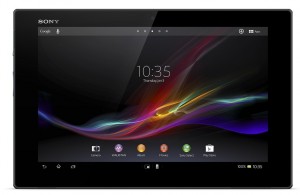
    Four months after Sony unveiled the Xperia Tablet Z, the Japanese maker announced that the fondleslab is now finally available to purchase worldwide through online and brick and mortar stores. Despite the fact that the Xperia Tablet Z hits the shelves later than initially planned — March 1 — the company says that this hasn’t affected consumer demand.

    “Xperia Tablet Z has received an incredibly positive response since it was announced and this is demonstrated by the strong pre-orders the product has received”, says Sony’s Tomokazu Tajima. The tablet touts some attractive specifications, namely the IPX5/7 and IP5X ratings for waterproofing and dustproofing, respectively, the low weight of only 495 grams and the 6.9 mm thickness.

    The Xperia Tablet Z sports a 10.1-inch TFT display with a resolution of 1920 by 1200. Power comes from a 1.5 GHz quad-core Qualcomm Snapdragon S4 Pro processor backed by an Adreno 320 GPU (Graphics Processing Unit), 2 GB of RAM and a 6000 mAh battery. The tablet ships with 16 GB or 32 GB of internal storage and a microSD card slot which can extend the storage capacity by a further 32 GB (for a total of 48 GB or 64 GB).

    An 8 MP back-facing camera capable of 1080p video recording is available on the back, while on the front the Xperia Tablet Z sports a 2.2 MP shooter that can also record 1080p video. Other noteworthy specs include 4G LTE cat3 (100 Mbps download and 50 Mbps upload speeds) and HSPA+ cellular connectivity. The device measures 266 x 172 x 6.9 mm.

    The Xperia Tablet Z goes for $499.99 in 16 GB trim and $599.99 for the 32 GB version. Available colors include black and white, however the latter can only be had on the more expensive model.

  • Justin Bieber Booed at Billboard Awards Show

    Justin Bieber has been getting some bad press for the past few months, starting with his “diva-like behavior” while touring in London. Now, it appears that the music world may have begun to turn on him as well.

    This weekend at the Billboard Music Awards, Bieber was awarded the first ever Milestone Award. The award, which was sponsored by car manufacturer Chevrolet, was meant to go to an artist who had demonstrated “musical ingenuity and innovation” over the past year. Bieber was nominated for the award along with Taylor Swift and Bruno Mars.

    When Bieber took the stage to accept the award, the crowd reaction was mixed, with a large contingent of boos that could easily be heard. The pop singer seemed to react to the jeers, rambling on in his acceptance speech about how he should “be taken seriously.”

    “And basically, from my heart I really just want to say it should really be about the music,” said Bieber. “It should be about the craft, the craft that I’m making. This is not a gimmick, I’m not – this is not a gimmick. I’m an artist and I should be taken seriously and this, all this other bull should not be spoken of.”

  • Brady Bunch Reunion At Ohio Amusement Park

    A “Brady Bunch” reunion took place at an Ohio amusement park over the weekend to mark the 40th anniversary of the episode that took place there in the ’70s.

    The famous episode was filmed at King’s Island, which is not far from Cincinnati. Barry Williams, Christopher Knight, and Susan Olsen showed up to celebrate with some roller coaster rides and also held four shows during their stay, where they answered fans’ questions and reminisced about the good old days.

    The episode was one of the most popular for the show, up there with the family’s vacation to Hawaii. Audiences seemed to enjoy seeing the Bradys get out of their oddly-built house (can we say “no toilets”?) and into real-world situations.

    “I think everybody, at some point in their life, wanted to be a Brady,” Williams said. “Their whole family seemed so perfect. They were so nice. I think it resonates with the child in all of us to want to be Brady.”