Category: News

  • Dow Off Triple Digits, As German Short-Selling Restrictions Officially Go Into Effect Until 3/31/2011

    Deutsche Mark coin germany

    This is starting to look like a gigantic unforced error on the part of Angela Merkel.

    The new short-selling restrictions are out, and apparently they extend all the way until March 31, 2011 as a response to volatility in the bond market.

    We really have no idea what Angela Merkel is thinking, but if the idea was to reduce volatility, it seems safe to say that it’s already failed badly.

    The Dow is off about 100. The NASDAQ is off 38.

    Next up the euro crashes through 1.22.

    Join the conversation about this story »

    See Also:

  • Tea-party movement

    The Bush legacy

    This is a response to “Stirring the pot,” Pacific Northwest magazine, May 16.

    Viewing some of the signs shown: What freedoms have been taken away? What are the new taxes that have taken effect? What about the deficit that George W. Bush left?

    Bush gave the rich nearly $10 billion in tax cuts and started two wars. The war in Afghanistan cost $70 billion — and we left it to start a war in Iraq, which caused more than 100,000 Iraqi civilian casualties.

    Where were the demonstrations about the mess the Bush administration left behind?

    — Anne & Bill Dillon, Kent

    Carender late to the game

    Where was Keli Carender when the Bush administration started a horrendous pre-emptive war without paying for it?

    Where was her outrage when it was spending $1 billion a month for the occupation of Iraq —much of it in bundles of cash — to out-of-control “defense” contractors?

    In my book, war profiteering is treasonous. I wonder what Carender thinks about the new U.S. embassy in Baghdad, also courtesy of the Bush administration, which is larger than Vatican City and built at U.S. taxpayers’ expense.

    Of course, all of this happened in conjunction with tax cuts and deregulation. Populism could be a wonderful thing, but when it is based on ignorance or willful disregard for the facts, it is frightening.

    — Nancy Anderson, Seattle

    Do your homework

    The tea-party movement exemplifies the United States —land of the free, home of the protester. But if you are going to protest, at least do your homework.

    The hyperbole from this group makes for good sound bites, but much of its logic baffles the mind. Taking statements of national tea-party movement leaders and using them as facts to form your own opinion would likely come back to haunt you. While the movement claims to have no organized leadership there are, in fact, a few high-profile figures who are using this movement to further their own political agenda and careers.

    We are in our current financial mess not because of high taxes, but because of poor decisions made by previous administrations. The first, allowing deregulated mega-financial institutions to gamble, practically risk-free, with our money. The second, maneuvering us into two extremely expensive wars.

    Changing our elected leaders, the supposed purpose of the tea-party movement, would change nothing. Our system is corrupt. Until we devise a system that does not rely on contributions —in most cases, legal bribes —to fund elections, we will get what Will Rogers called “the best government money can buy.”

    If you do a little more homework, you would find that a U.S. Senate race, for example, costs $12 million on average. Divide that by the number of days in a Senate term, 2,190, and you would find that a U.S. senator must raise more than $6,000 every day he or she is in office in order to run for re-election.

    This is accomplished with the help of a friendly lobbyist. Washington, D.C., has more than 17,000 of them. I know — I’m a retired lobbyist.

    — John Creed, Seattle

  • The Alaskan Way Viaduct

    Fix it

    This is a response to “McGinn on tunnel: worth it ‘at all costs’?” [page one, May 14].

    The city is out of money. The county is out of money. The state is out of money.

    How could we afford all the expensive transportation projects being planned?

    If you are unemployed, in debt and underwater on your mortgage, you do not rebuild and re-landscape your home — you make do. That is what we need to do with the viaduct.

    We need to fix the viaduct, not replace it.

    — Connie Knudsen, Ballard

  • Weighing Greenland

    by Seth Shulman

    .series-head{background:url(http://www.grist.org/i/assets/ucs/header.gif) no-repeat; height:68px; text-indent:-9999px;} h3.subscribe-head{padding-left:5px;background-color:black;color:#ff8400;} dl.series-nav{margin-top:-15px;}

    Scott Luthcke weighs Greenland—every 10 days. And the island has been losing weight, an average of 183
    gigatons (or 200 cubic kilometers)—in ice—annually during the past six
    years. That’s one third the volume of water in Lake Erie
    every year. Greenland’s
    shrinking ice sheet offers some of the most powerful evidence of global
    warming.

    Luthcke is a scientist at NASA’s Goddard Space
    Flight Center
    in Greenbelt, Maryland. He specializes in space geodesy, a
    branch of earth sciences that monitors Earth from space by measuring changes in
    the planet’s shape, orientation, and gravitational field.

    Lutchke “weighs” Greenland by processing and
    interpreting data from one of the most sophisticated gravitational “scales”
    ever built: the U.S.-German satellite mission called GRACE—the Gravity Recovery
    and Climate Experiment.

    GRACE consists of two satellites which orbit
    Earth in tandem at a relatively low altitude (450 to 500 kilometers). The pair operate in much the same way as a
    scale that uses a spring to gauge weight.
    “If you use a spring scale and attach a bucket full of tennis balls to
    it, the spring expands,” explains Luthcke. “When you take some of the balls out
    of the bucket, the spring correspondingly contracts and you can measure that
    variation.”

    The two GRACE satellites can measure the
    distance between them with remarkable accuracy. Even though the satellites
    travel 220 kilometers (137 miles) apart from each other (roughly the distance
    from Philadelphia to Washington, D.C.), their sophisticated ranging systems,
    developed by NASA’s Jet Propulsion Laboratory, can detect variations in that
    distance down to a micron-or one-hundredth the width of a strand of human hair.

    The GRACE ranging system functions as a giant
    scale by measuring variations in the gravitational pull of different land
    masses. Big land masses such as mountains exert a slightly stronger
    gravitational pull upon the satellites, causing minute fluctuations in their
    speed as they fly over.

    For example, the two GRACE satellites fly
    over Greenland several times each day. As the
    first satellite approaches, the island’s mass causes the satellite to
    accelerate and thereby move slightly away from its trailing companion. Over
    time, the Grace mission carefully records fluctuations in the distance between
    the two satellites each time  they pass over
    Greenland. 

    By examining the GRACE data, Luthcke can
    monitor subtle changes in the gravitational pull that the land mass exerts on the
    satellites to get a reliable measure of Greenland’s
    shrinking mass. The system, says Luthcke, is accurate enough to “detect the
    loss of just a centimeter of ice over an area the size of Delaware.”

    Luthcke says he got
    hooked on space geodesy when, as a physics major in college, he landed a summer
    job at NASA. He never left, working his way “up from the mailroom” and contributing
    over the years to many NASA missions. “Space geodesy is a fantastic field,” Luthcke says. “I love my work because not only do I
    get to help develop and refine new space-borne sensors, but I get to be
    involved in using them to gather useful information. It is the best of both
    worlds.”

    Because so many important decisions are
    likely to rest on his data, the key for Luthcke is accuracy. The challenge, he
    says, is being sure to “carefully analyze how well we know all the steps
    involved to turn the satellite’s raw observations into usable data.”

    Luthcke strives to come up with a usable,
    regional calculation of the size of Greenland’s
    ice sheet. To do so, he uses sophisticated techniques to correct for “errors” that
    can creep into the data due to localized variations in mass or to other factors
    such as solar radiation pressure on the satellites themselves.  “My goal is to do everything I can to minimize
    the uncertainties involved in these measurements,” he says. “It’s a good job
    for me because I’m a cautious person by nature who always wants to know how
    things will stand up under scrutiny.”

    The good news for Luthcke is that a separate
    team using an entirely different method has come up with measurements of
    Greenland’s melting ice that, he says, are almost identical to his GRACE data.
    The bad news, of course, is that both sets of measurements make it all the more
    certain that Greenland’s ice is melting faster
    than anyone expected.


    This is the second installment of America’s
    Climate Scientists: A series from the Union
    of Concerned Scientists
    .

    Click here to read all the climate scientist profiles.


    Related Links:

    Battle of the Carbon Titans

    American PRIDE – alternative to the Lieberman-Kerry Disaster

    Finding evidence of climate change in the caves of the American Southwest


  • Gameboy-up your iPad

    Yup, a Gameboy iPad sleeve. This is about the best thing you’re going to see on the internet today. [etsy via Likecool]


  • Forget Car-Jacking: Car-Hacking Is the Crime of the Future | 80beats

    CarSharkSticking accelerator pedals were just the beginning. Soon you might lose control of your car not because of a technical failure, but because someone hacked into it from afar.

    Tomorrow at a security conference in California, Stefan Savage and his team will present their research showing how they used the computer systems that oversee different systems in a car to break in and take control—braking and accelerating against the driver’s will.

    The researchers concentrated their attacks on the electronic control units (ECUs) scattered throughout modern vehicles which oversee the workings of many car components. It is thought that modern vehicles have about 100 megabytes of binary code spread across up to 70 ECUs [BBC News].

    The software Savage’s team created, called CarShark, took advantage of the fact that ECUs must communicate between different systems. Electronic Stability Control, for instance, must talk to the brakes, accelerators, and wheels; Active Cruise Control and systems that parallel park the car for you also rely on communication across many systems. The team inserted fake packets of data into the lines of communication to seize control of a car, Savage says.

    He and co-researcher Tadayoshi Kohno of the University of Washington, describe the real-world risk of any of the attacks they’ve worked out as extremely low. An attacker would have to have sophisticated programming abilities and also be able to physically mount some sort of computer on the victim’s car to gain access to the embedded systems. But as they look at all of the wireless and Internet-enabled systems the auto industry is dreaming up for tomorrow’s cars, they see some serious areas for concern [BusinessWeek].

    Savage said he and his team wanted to get a head start on the problem of car-hacking, which is sure to arise when hackers get the chance, especially with more wireless access. In small ways it has already started: A couple of months ago an Austin, Texas, man who was fired by a car dealership broke into the remote system that the dealer used to torment people who were delinquent on their payments by honking the horn or otherwise annoying them. About 100 people found their cars inoperable, or honking like mad, after his hack.

    The researchers said they did not address the question of the defenses the cars might have against remote access, but said the experience of the PC industry, which did not have extensive security problems until computers became networked, was worth remembering. “To be fair, you should expect that various entry points in the automotive environment are no more secure in the automotive environment than they are in your PC,” Mr. Savage said [The New York Times].

    Car companies should probably address this issue before they offer us the networked “road trains” of the future.

    Related Content:
    80beats: Reports: Chinese Hackers Stole Indian Missile Secrets & the Dalai Lama’s E-mail
    80beats: Massive Spanish Botnet Busted, But Hacker Mastermind Remains Unknown
    80beats: Code Protecting 80 Percent of Cellphone Convos Finally Cracked
    80beats: In the Commute of the Future, Drivers Can Let a Pro Take the Wheel

    Image: Savage et. al.


  • Keep installed software up-to-date with UpdateStar

    updatestar-grab.gifMany freeware applications that are downloaded and installed are updated on a regular basis, 
    monthly or, in some cases, weekly. Obviously not all of these updates are hugely significant, but they can
    make applications
    more stable and it may be worth your while downloading and installing them. If you don’t regularly visit download or software
    publisher’s sites, there’s no way of telling if an app has been updated.
    A useful and convenient way of keeping software
    up-to-date is to use an auto-update tool, this enables you to save time as you don’t have to check
    manually.

    UpdateStar
    5.2

    is a popular auto-update tool that automatically finds updates for any
    applications installed on your PC. This latest v5 is more likely to
    find updates for installed applications than previous versions, but that’s not to say it will find updates for everything you have installed.  

    UpdateStar
    5.2
    link.

  • Kendra Wilkinson Sex Tape DVD Cover

    Kendra Wilkinson is inching closer to becoming the web’s next overexxxposed reality star…whether she likes it or not.

    FOX.com’s PopTarts Column has obtained an advance copy of the cover of the married mommy’s racy X-rated video — Kendra Exposed — which reportedly features the former “Girl Next Door” in a variety of compromising positions with multiple partners.

    Vivid Entertainment is forging ahead with plans to release the saucy footage later this month, despite Kendra’s argument that she never signed a release permitting the tape to be distributed.


  • This Sarcasm-Detecting Algorithm Is a Really Good Idea [Algorithms]

    For once, I’m not being sarcastic. You don’t have to bother running your sarcasm-detecting algorithm over that headline, students at the Hebrew University in Jerusalem. Because it’s true! More »


  • Tomohiko Kawanabe es una de las primeras voces que se levanta en contra de los coches eléctricos

    Honda ev-n.jpg

    Si os habéis comenzado a preguntar quién demonios es Tomohiko Kawanabe, pues es nada más y nada menos que el presidente del departamento de investigación y desarrollo de Honda Motor Co. Creo que tiene cierta autoridad para decir lo que dijo: Honda no le tiene confianza al coche eléctrico, ya que el consumidor no podrá adaptarse a las limitaciones que todavía ofrecen.

    A pesar de todo, Honda sigue desarrollando motorizaciones eléctricas (Honda EV-N), como lo ha reconocido el mismo ejecutivo de la marca. Sin embargo es más por presión del mercado norteamericano que por propios deseos de Honda de poner en las calles un coche eléctrico en el futuro inmediato.

    Es cuestionable si los consumidores aceptarán las limitaciones de un rango limitado de conducción y tener que pasar tiempo recargándolos. Ciertamente, estamos haciendo investigaciones sobre motores eléctricos, pero no puedo decir firmemente que los recomiendo.

    El verdadero objetivo maestro de Honda, dentro del campo de los combustibles alternativos, parece ser el desarrollo de motores a hidrógeno, a pesar de que la infraestructura es casi nula. El paso inmediato de la marca, será insistir con los coches híbridos, como los actuales modelos del Civic y el Insight.

    Vía | Automotive News


  • GM announces OnStar-Google partnership, will show more at Google IO

    Chevy Volt Android Application

    General Motors this morning announced it is adding even more Android to the upcoming Chevy Volt — and we’ll check it all out this week at Google IO.

    We’ve already seen the Chevy Volt app for Android when it debuted at CES in January, and it’ll be upgrated later this year to add Google Maps features, including voice search and Google Maps Navigation, wich we’ve enjoyed on Android 2.0 and up for a while now.

    What we’re really itching to see is what OnStar has up its sleeve in regards to Android.

    “While OnStar will never lose sight of our core focus on safety and security, this relationship is an example of how we’re evolving our leadership position in connected vehicle technology,” Chris Preuss, OnStar president, said in a news release. “What we’re talking about today is only the beginning.”

    Indeed. More this week as we get it. [via GM] Thanks to everyone who sent this in.

  • This Morning’s Housing Sales: A Nine Month Streak Of More Builds Than Sales Came To An End

    This morning the Census Bureau released the “Quarterly Starts and Completions by Purpose and Design” report for Q1 2010.

    The first graph shows the NSA quarterly starts intent for four categories since 1975: single family built for sale, owner built (includes contractor built for owner), starts built for rent, and condos built for sale.

    Condo starts in Q1 were just above the all time record low last quarter (4,000 vs 3,000 in Q4 2009).

    Read the full post at Calculated Risk >

    Join the conversation about this story »

  • Sengoku Basara: Samurai Heroes official site for UK now live

    Just a quick FYI guys (and this one’s for the ladies (qjnet/news/women-love-sengoku-basara.html) as well), the official UK site for Sengoku Basara: Samurai Heroes (or Sengoku Basara 3 in Japan) is now live.

  • Leaning forward: Why the American Power Act is worth fighting for

    by David Roberts

    The Kerry-Lieberman climate bill is out now, and with it comes a fateful decision for the political left in the U.S.

    If the left’s institutions and messaging infrastructure succumb to internal squabbling or simple indifference; if the public is not actively won over and fired up; if President Obama and Senate Majority Leader Harry Reid (D-Nev.) stick their fingers in the wind to see which way it’s blowing … the bill will fail. The default outcome now is failure. Very few people in Washington, D.C., today believe the bill has a chance of passing.

    The odds are long, but the bill could be saved if the left—and I mean the whole left, not just environmentalists—pulled together and fought like hell. What’s needed is concrete political pressure. That means tracking who’s for it and against it; relentlessly pressing for commitments; actively organizing in a few key Republican and centrist Democratic states; pressing establishment pundits and media figures to cover it; calling out those who stand in the way of progress; and never, ever letting Obama and Reid have a moment’s peace until they fulfill their promises.

    The left hasn’t shown itself particularly capable of that kind of single-minded campaign. And there’s no guarantee it would succeed even if attempted. Without it, the bill’s failure is all but inevitable.

    So is it worth doing? Is the bill worth fighting for with the kind of passion that was brought to health care or even the presidential election?

    I believe the answer to that question is an absolute, unqualified, overwhelming yes. However flawed and inadequate, Kerry’s bill would represent a sea change in American life. It would lend desperately needed momentum to the global fight against climate change. Failure would be a tragedy and passage a huge, vital victory.

    I know many of my fellow travelers on the left disagree. Some have convinced themselves that not only is the bill flawed, it’s worse than passing nothing at all; many others view it with distaste or resignation. Both left and right have attacked the bill relentlessly since its inception in the House, and for the vast muddled middle the lesson has been simple: if both sides hate it, it must not be worth supporting. A climate bill has come to Congress and it has almost no passionate supporters.

    Nevertheless, the fact remains: It’s overwhelmingly important to pass the damn thing. I’ll argue as much in my next few posts, but to begin with I want to emphasize two reasons we ought to have an overwhelming bias toward immediate action, even compromised, inadequate action. One is physical, one political.

    The physical argument in favor of immediate action

    Geographically, CO2 reductions are fungible—from the climate perspective, a reduction here is as good as a reduction there; the source is irrelevant. However, the same is not true temporally. Present and future CO2 reductions do not have equal value. A ton of reduction today is worth more than a ton of reduction 10 years from now.

    The reason is simple: For every molecule of CO2 added to the atmosphere today, future emission rates must be slashed more to return to safe levels in time. (This is the point of the famous bathtub analogy.) Every bit of delay makes the ultimate task more abrupt, difficult, and expensive. Neither the public nor policymakers seem to understand this ineluctable fact of atmospheric physics, but it is absolutely central to climate policy. Here’s a visual representation:

    “A slow start leads to a crash finish.”Science: Doniger, Herzog, Lashof

    The longer action is postponed as we wait for a sufficiently ambitious climate bill, the more ambitious it needs to be—the target recedes. Getting started quickly, even with less force than most climate campaigners would like, makes the hill less steep and every future battle easier.

    The political argument in favor of immediate action

    By almost all projections, Republicans are going to clean up in 2010. Democrats’ current large majorities are anomalous and unlikely to return any time soon. (They couldn’t even hold on to 60 in the Senate for a full session.) Meanwhile, the remaining Republican moderates are being vigorously purged from the party by the teabaggers. It’s hard to see Republicans getting sensible on climate any time soon, when every internal dynamic is pushing the other way. If this bill doesn’t pass this year (and the filibuster remains in place), it could be another four to eight years before it comes up again, likely in weaker form. That’s 10 to 20 percent of the time left between now and 2050, at which point emissions in the U.S. ought to be getting close to zero. Meanwhile the bathtub keeps filling up.

    If the American Power Act dies, state cap-and-trade programs will still proceed. The administration will do what it can through executive branch action at the Department of Energy and elsewhere. The EPA will wade into greenhouse-gas regulations (and a fog of lawsuits). But without a declining carbon cap in place, the market won’t get the 20-to-40-year predictability sought by large energy investors. There won’t be the massive shift in private capital needed to kickstart a green economy. It won’t be enough.

    Meanwhile, the international climate process, which has effectively been idling for 12 years as it waits for the U.S. to get its act together, could well fall apart. Maybe it can limp along if the U.S. is allowed to count non-carbon-market reductions toward its Copenhagen commitments—Obama could probably hit America’s tepid 17 percent by 2020 target through executive action alone. But it will send an unmistakable signal to other countries. If you thought Copenhagen was difficult, with the U.S.  insisting it might pass legislation, wait until Cancun after it’s clear the U.S. won’t. We can say goodbye to leverage, or good faith, or the ability to look Tuvalu’s representative in the eye.

    Leaning forward

    Donald Rumsfeld was wrong about the problem but right about the posture: When it comes to greenhouse-gas reductions, we should be “leaning forward.” Our bias should be toward action, even if it means making unpleasant policy or political concessions in the short term. As I said earlier:

    Right now, policy is being made out of fear: fear by the private sector that decarbonization will be a crushing burden; fear by consumers that their energy prices will skyrocket; fear by politicians that the project will prove electorally unpopular. Campaigners can organize marches, think tanks can put out reports, scientists can issue dire warnings, but ultimately, that fear simply can’t be overcome in advance. The only way to overcome it is through experience.

    Does the American Power Act get us started? Yes: it’s got mandatory targets. In my mind, that alone gives it an overwhelming presumption of support. It would have to contain a lot of extremely bad stuff to overcome that presumption, and while there’s certainly some lamentable provisions, I don’t think any of them are bad enough to meet that threshold. More on that soon.

    Related Links:

    The American Power Act and California’s AB 32

    Battle of the Carbon Titans

    Big Green and little green clash over the American Power Act


  • Protect Unemployment Benefits & Housing Funding!

    As the Jewish community heads into the holiday of Shavuot, the
    House and Senate are expected to vote this week on the American Jobs, Closing Tax
    Loopholes, and Preventing Outsourcing Act, a job creation bill that
    will likely include $1 billion for the National Housing Trust Fund
    (NHTF) and an extension of unemployment benefits through the end of
    2010. The inclusion of these measures is crucial to the economic
    security of millions of unemployed workers and low-income families.


    Take action now! Urge your Members of Congress to ensure that the American Jobs, Closing
    Tax Loopholes, and Preventing Outsourcing Act (HR4213) includes funding
    for the National Housing Trust Fund and an extension of unemployment
    benefits through the end of 2010. You can call the Capitol Switchboard at
    202.224.3121 or send a quick email by clicking on the links below:

    Thanks for your support – and don’t forget to spread the word to friends and family who care about issues of economic justice.

  • PalmCast Live Tonight, 8pm Eastern

    PalmCast Live is coming atcha tonight – Dieter and Keith will talk up the AT&T Palm Pre and plenty more, so tune in at 8pm Eastern.

    Got questions? Tweet them with the  #palmcast hashtag for our lightning round.

    Since summer is coming up, we don’t want y’all to go scratching your screen with sand when you hit the beach, so we’re going to give away a pack of Smartphone Experts Screen Protectors for the Palm Pre or Pre Plus.

  • Monks to Release Foxconn Suicide Souls From Purgatory [Foxconn Suicides]

    Foxconn—one of Apple’s main providers—is so worried about employee suicidal rate that they’ve hired 100 counsellors to help. Their concern isn’t only about the living, however: They’re bringing 30 Buddhist monks to release the suicide souls from purgatory. More »


  • Strangers on a Train

    Baker Street

    Baker Street underground station, London, 1959

    Everyone who walks the busy streets of a city takes imaginary snapshots. For all I know, my face glimpsed in a crowd years ago may live on in someone’s memory the same way that the face of some stranger lives on in mine. Of course, out of the hundreds of people we may happen to see in a day, we become fully aware of only a select few, and often not even that many if we have too much on our minds. Then it happens.

    All the poets who loved colorful street life, starting with Whitman and Baudelaire, knew that the unforeseen was one of the inherent qualities of the beautiful. We come face to face with someone, or we catch a peek at them from the corner of our eye and the camera in our heads clicks, suspending the image. Here is a tall, well-dressed young woman with a look of utter despair in her eyes and an incongruous smile on her lips. In the next instant, she’s gone and we forget her as we busy ourselves with other things, except she may reappear later that day to haunt us, or in a month, or even years after, like some snapshot we found in the shoebox in the attic that we can’t stop looking at because we no longer remember who that person in it was or when or where it was taken.

    Why do we remember some faces and not the others? One meets all sorts of interesting-looking people in the city: confident, bursting with health, sickly, preoccupied, seemingly lost or thoroughly defeated, so how come so few stick in our memory? No doubt it’s because something about them cheers or troubles our spirit. At times, compassion and fear make us identify with them. We find ourselves in their shoes for a moment, living a life we have read in their faces. I recall seeing, for example, a pale, middle-aged man in an inconspicuous gray suit, sitting on the subway with his gray hat, gray moustache, collapsing cheeks and empty watery eyes as the uptown local rattled along.

    For some reason, the memory of his face is more vivid to me than many far more momentous encounters and occasions in my life that I ought to remember with greater clarity. I keep his face in my secret photo album, the one I would not show to anyone, even if I could, because the pictures in it would most likely mean nothing to them. And yet for me, and I’m sure for others, this sort of collection of random images is a kind of unintended autobiography. When I hear people say that “every human being carries around a secret,” this is what I think they are talking about.

    Fifty years ago sitting in Washington Square park one warm spring day, I overheard a story on this very subject. Two old men were chatting about different kinds of women they knew in their life, and the various way in which they drove both of them crazy, when one said that his father told him before he died that the most beautiful woman he ever saw in his life was getting off the Staten Island Ferry just as he was getting on. Their eyes met and that was it. His father even remembered the exact date and the time of day, which as I recall was in the month of May in 1910. Of course, after he fell silent, I turned around to sneak a better look at the man who was telling the story, but today, no matter how hard I try, I can only bring back his words and nothing else. Evidently, to remember a face, it helps if one’s mind is blank and not busy thinking about some story one has just heard.

  • Palm OS Quickies: Acceca PDA32, DGOS

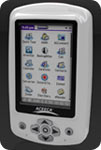
    acceca pda32 pda
    Classic Palm OS 5.x (aka Garnet OS) fans are going to have to wait a bit longer to get their hands on the first new Palm OS PDA since 2005’s Palm TX and Z22. The Aceeca PDA32’s preliminary release date of April 10th has unfortunately come and gone with no additional news of availability. Tam Hanna, who has done a great job of keeping us all abreast of Aceeca news, reported on May 9th that he should hopefully know a bit more about Aceeca’s status in a “few weeks worth of time!”.

    In related Palm OS news, programmer hero Dmitry Grinberg is still plugging away at his Palm OS-compatible OS, DGOS. His most recent blog post is nearly two months old but as of last month Dmitry did indicate that he is still working on DGOS but is sadly pressed for time due to his new employer. The full plans for DGOS are discussed in our past coverage.


  • New Jennifer Aniston SmartWater Ad

    Jennifer Aniston and her bodacious abs remind us that 40 is the new 30 in the latest ad for SmartWater.

    Spotted@