Category: News

  • Louisiana Oil Spill to Seriously Impact Marine Life and Fishing Communities in the Gulf; Federal Government Must Act Swiftly

    The ocean ecosystems and fishing communities in the Gulf of Mexico face potentially catastrophic impacts as a result of the 5,000 barrels of oil a day spewing out of the sub-seabed and into the waters off the coast of Louisiana. Oil moving throughout vast expanses of Gulf waters and ocean habitat and coming ashore on the massive Gulf Coast wetlands directly threatens not just the reef fish, oysters, crabs and shrimp that actually live there, but also many other species that use the reefs, marshes and other wetlands as nurseries, or that depend upon them for prey which lives or develops there.

    Read the full post »

  • LG Ally commercial leaks, Verizon launch pending soon

    A new Iron Man 2 promo featuring the upcoming LG Ally has been leaked on YouTube. The commercial shows a group of friends using the new LG Ally as Iron Man flies around in the background. Iron Man 2 is scheduled to launch May 7th, so we could see this phone on Verizon in a couple of weeks.

    Why would Verizon launch another Android phone so close to the Droid Incredible? Early rumors suggest the LG Ally might feature a 1 GHz cpu, but we now hear this phone will be targeted at the mid-range. A source who wishes to remain anonymous told us the Ally will include a 600 MHz ARM11 CPU (my guess is the Qualcomm MSM7227).

    More details should be coming today. At the end of the video users are directed to visit LG.com/ally, which redirects to lgim2.com. The Iron Man 2 site says, “Check back on April 30th for the complete LG Iron Man 2 experience”.

    Related Posts

  • How to help wildlife threatened by the oil spill

    heron in Lousisiana

    (Photo: Yahoo! News / AFP / Mark Ralston)

    A massive oil slick caused by the BP oil drilling platform explosion in
    the Gulf of Mexico has reached the U.S. Gulf Coast. Efforts are already
    underway to protect sensitive ecological areas.

    Many organizations are preparing to mobilize along the coast from
    Louisiana to Florida to help rescue animals and wildlife. The oil poses a
    serious threat to fishermen’s livelihoods, marine habitats, beaches, wildlife,
    and human health.

    Although BP has publicly stated the company will pay for
    all damages from the oil spill, many organizations still rely on donations to
    protect wildlife from this type of impact. For example, Greenpeace stated
    that it has opened support lines to report oiled wildlife, discuss oil-related
    damage, and for volunteer recruitment, and the group relies on donations from
    individuals for this type of work.

    Click on the organizations below to donate or volunteer to help the
    wildlife and areas threatened by the oil spill.


    Coalition to Restore Coastal Louisiana
    Building a list of volunteers prepared to help with this response including wildlife recovery, monitoring and photographing oil movement, and providing a boats and drivers for response activities. Donate to Coalition to Restore Coastal Louisiana. Register to volunteer with Coalition to Restore Coastal Louisiana.


    Defenders
    of Wildlife

    Urging the public to help prevent another drilling disaster through
    advocacy. Donate to Defenders of Wildlife. Find volunteer opportunities with Defenders of Wildlife.


    Emerald
    CoastKeeper

    Gathering volunteer crews ready to help clean-up efforts. Donate to Emerald CoastKeeper. Find volunteer opportunities with Emerald CoastKeeper.


    Greenpeace
    USA

    Defending our oceans and protecting our environment from toxic pollution
    like the recent oil spill. Donate to Greenpeace USA. Find volunteer opportunities with Greenpeace USA.


    Louisiana
    Wildlife Rehabilitators Association

    Advocates for preserving Louisiana’s battered coastal ecosystem. Donate to Louisiana Wildlife Rehabilitators Association.


    Wildlife
    Sanctuary of Northwest Florida

    Ready to mobilize and provide appropriate care to injured or orphaned
    indigenous wildlife. Donate to Wildlife Sanctuary of Northwest Florida. Find volunteer opportunities with Wildlife Sanctuary of Northwest
    Florida.


    Check out Yahoo! Green on Twitter and Facebook.

  • Helping Haiti

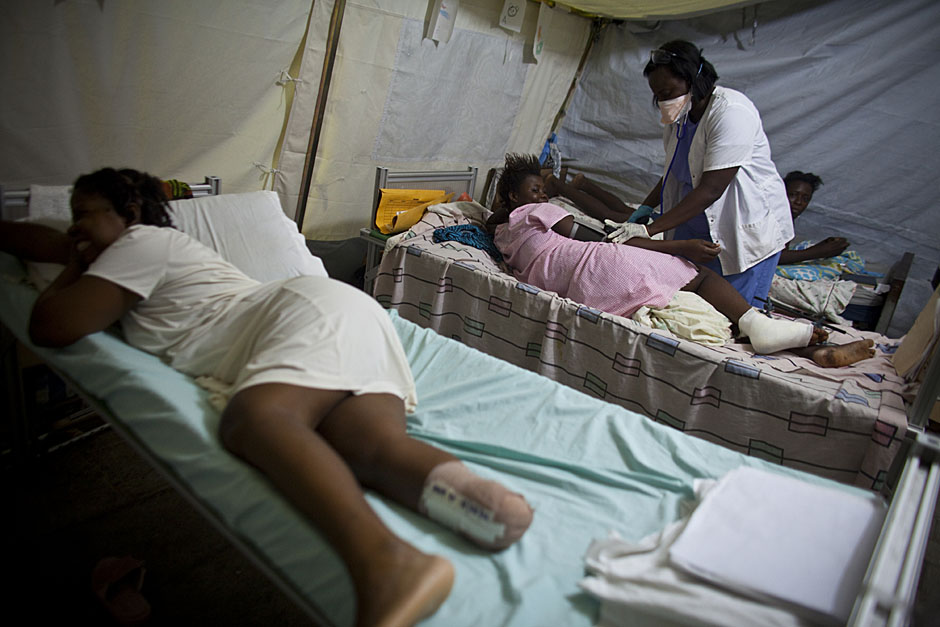
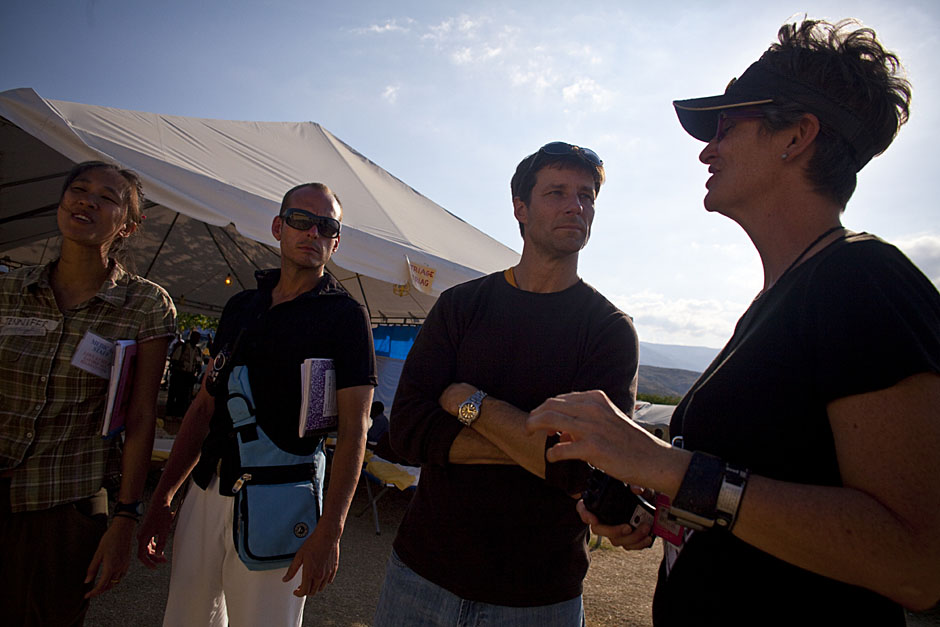
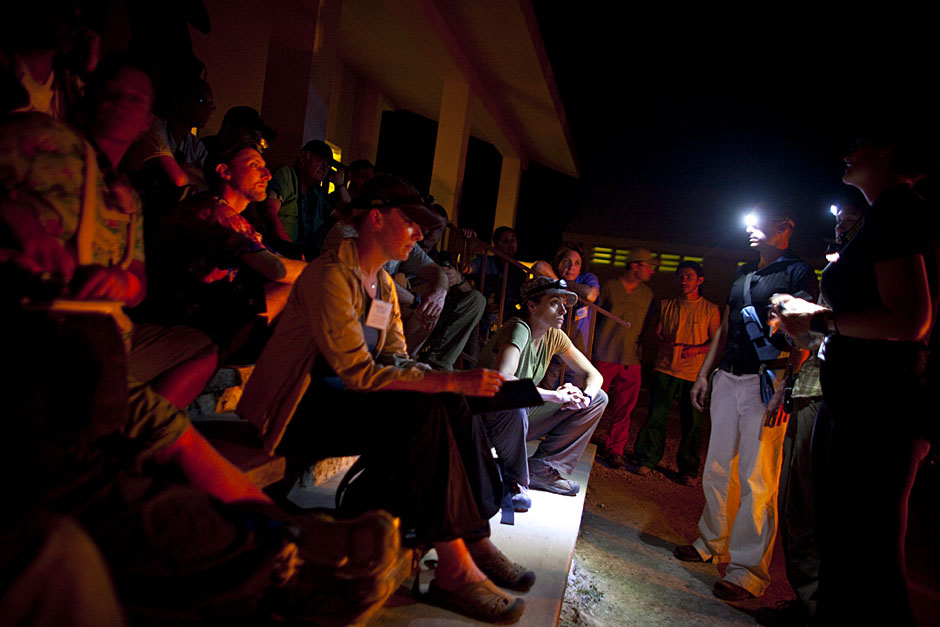
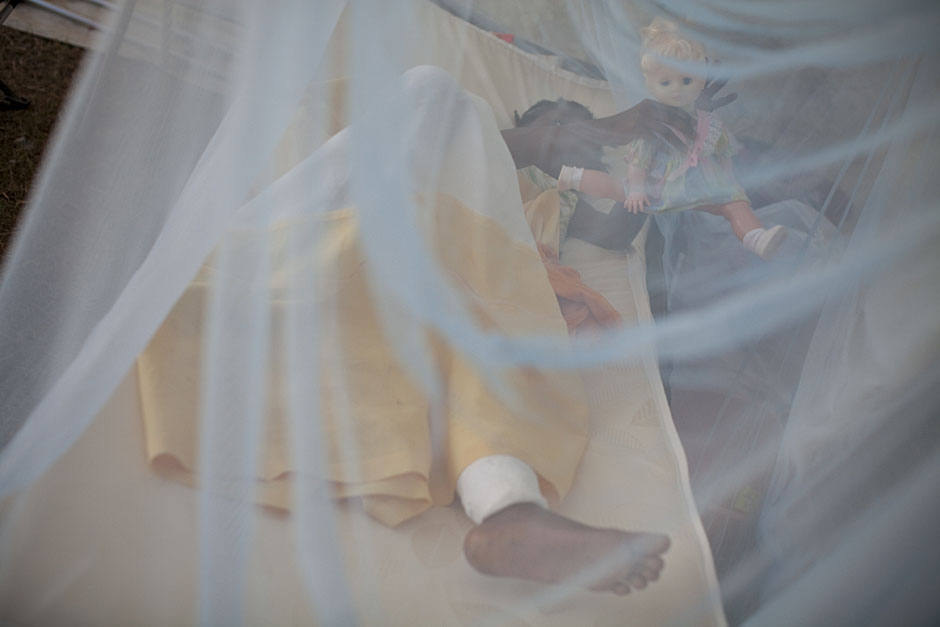
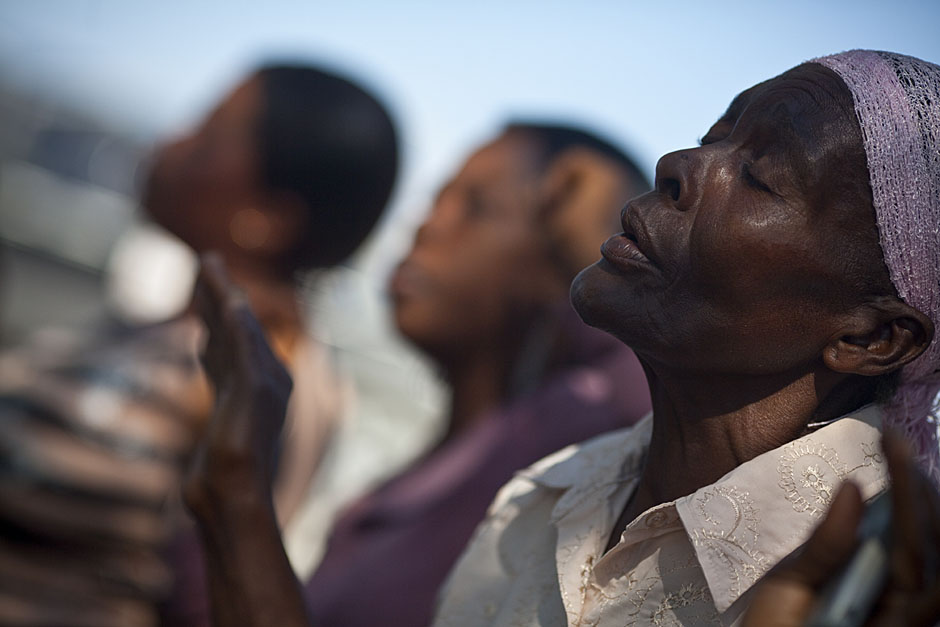
    The world mobilized to help Haiti after that country suffered the deadliest earthquake in this hemisphere in over a century on Jan. 12, 2010. Faculty, staff, and other members of the Harvard community, including affiliates of Partners In Health and the Harvard Humanitarian Initiative, played a pivotal role in the worldwide effort to provide aid.


  • Emmert to leave UW for NCAA

    President’s departure sign of crisis for public universities

    Editor, The Times:

    As someone who has spent most of her communications career at two large public universities, I share The Seattle Times’ sadness regarding University of Washington President Mark Emmert’s departure from the institution [“Emmert the rainmaker,” Opinion, April 29].

    While the vast majority of public universities in today’s incredibly competitive universe suffer from greatly reduced state appropriations and subsequent calls to stop being elitist while also ceasing any feeding at the public trough, the loss of a master fundraiser, negotiator and visionary such as Emmert is more keenly felt than many students, faculty, alumni and donors might initially realize.

    But Emmert’s departure should not surprise anyone. Given the many problems facing most public universities, it has become very difficult to recruit and retain people of his stature to assume university presidencies. It takes one who must be completely and utterly dedicated to the notion of public universities to take on the often thankless tasks of constantly raising money, dealing with athletics problems, absorbing never-ending faculty and student complaints, always needing to explain a university’s reason for existence to state legislators and assuaging sometimes overbearing and overly critical donors and alumni.

    Emmert’s leaving should alert public universities and legislators everywhere about the real crises facing something the United States has always considered one of the jewels of our society: a quality public university system.

    — Mary Stanik, Minneapolis

    Can’t cut work force without cutting higher education

    I too commend Mark Emmert; he has been a remarkable leader and true visionary. Yet, I believe The Times reflects some hypocrisy. It slams the Legislature for reducing the University of Washington’s state funding by 33 percent.

    While I agree and have stressed that the Legislature has long underfunded higher education, particularly the UW, a key fact is ignored. As the 2010 Legislature worked to plug an $11 billion biennial budget shortfall, The Seattle Times editorial board repeatedly called for us to balance the budget on the backs of state workers. More than 41 percent of our state’s employees are working for our institutions of higher education, which amounts to the lion’s share of state workers. Comparatively, human-service employees make up 33 percent of our work force.

    Because of its size, you cannot cut our state work force without cutting higher education — especially as it is completely (and unfortunately) discretionary. These destructive cuts and corresponding increases in students’ tuition will continue until we address our regressive, outmoded tax structure that is unsustainable and overly dependent on the sales tax.

    — Sen. Jeanne Kohl-Welles, Seattle

  • RIM ousts Motorola, becomes fourth largest phone maker

    RIM HQ

    Over the past year or so, BlackBerry bashin’ has become a very popular hobby for users of all other mobile platforms. The aged OS and redundant hardware has kept many consumers disinterested and yawning rather than on their toes and excited.

    Nonetheless, throughout the constant hounding and pitch fork conventions, RIM has continued to show steady growth. This time around, RIM has made its way into the top five phone manufacturers worldwide. Preceded by the obvious phone manufacturing giants Nokia, Samsung, and LG (1, 2, and 3 respectively), RIM settles in for fourth seat, passing Sony Ericson by a mere 100,000 phones. The research by IDC (International Data Corporation) reveals that between January and March Nokia sold 107.8 million, Samsung sold 64.3 million, LG sold 27.1 million, and RIM sold 10.6 million devices. All these phones together come to produce a 21.7% year-over-year total increase.

    As for here in the US, Apple is leading the pack with 8.75 million iPhones sold, closely being trailed by Motorola with their 8.5 million phones sold. This is a pretty impressive feat considering Apple only sells one style phone versus Motorola’s various smartphones, feature phones, and basic flip phones.

    This is all very interesting considering the headlines we all follow. Motorola has been within the top five manufacturers since IDC started researching back in 2004. There’s a reason RIM is referred to as the “Sleeping Giant”, but it looks like it will be a long time before anyone catches the top three.

    Via: BGR


  • To protest firing of 447 teaching assistants, strike could start Monday

    Revenge of the TAs

    I read in The Daily that the University of Washington plans to fire 447 teaching assistants (TAs) next year as part of their cost-cutting process, and that the teaching assistants are organizing a strike to protest this unfortunate decision. In a school that is already burdened with large classes, I would like Seattle Times reporters to answer the following questions:

    • The University raised more than $2.5 billion dollars in a capital campaign. Where has this money gone?
    • The top eight officials at the UW make exorbitant salaries. Why don’t they take a 50-percent salary cut to support their TAs?
    • Why won’t the state Legislature allow the UW to increase tuition so it could pay for more teachers?

    The alumni watching from the outside are very puzzled by the actions of the UW and the state Legislature. If the UW is a teaching institution, why is it not supporting its own teachers and students?

    — Glenna Burmer, Seattle

  • Signature privacy in petitions

    Congress should protect privacy in right to petition

    In my civics classes, we learned about the sacredness of the secret ballot, which freed voters to express their opinions privately at the ballot box. [“Support signature privacy,” Opinion, April 28.]

    In my mind, signing a petition is a means of casting a vote for consideration on the proposed issue. It should be covered by this same principle.

    Secret ballots prevent exposure of one’s political preferences from public scrutiny and political pressures. The current Freedom of Information case exposes opinions on what? Gay rights? Homophobia? Democratic process?

    As a voter, I might believe that an issue should be submitted to a vote and I might or I might not be in favor of or against the issue. Signing a petition is a citizen’s constitutional right. Names and addresses are rightly given to allow checking the legitimacy of voting registration —not to provide mailing lists or exposure of signers’ identities. This checking is witnessed and certified, not copied and distributed.

    Without specific information from the voter on motivation for signing, those seeking names and addresses could quickly harass the signer for an unknown motive. What counts is not who signs a request for a legal process, but if approved for citizen consideration, the secret ballots of all voters at the polls.

    The Supreme Court should protect the secret-voting rights of its citizens, including the right to petition.

    — Roger Ferris, Shoreline

  • Pleas to felony charges could close strip clubs down for good

    Clubs still symbol of exploitation

    I was happy to see the story on the closure of local strip clubs linked to prostitution and racketeering in the Seattle area [“Proposed plea deal may close Colacurcio strip clubs,” page one, April 23].

    My question is: Why are we allowing these clubs to open? A new club opened just a month ago in Renton, an area that had remained free of this blight on our landscape. Recently, Seattle gave the OK for a new club to open near Safeco Field. This is an area that many of our children frequent. Is that the message we want to pass on to our children, that sexism is OK?

    Throughout history, women have been exploited, held down the social ladder, held as property and killed with no regard. Sexist extremism is more rampant in our history and today than racism ever was.

    Between 1400 and 1800, roughly 7 to 11 million women were killed and tortured during the European witch hunts. It is sad that in today’s “enlightened” society, the exploitation of women is allowed to continue in these clubs. How would you feel if your daughter were working in one of these clubs?

    — Timothy Finch, Renton

  • SCO Says Jury Didn’t Really Mean What It Said… And Judge Should Order Novell To Hand SCO Unix Copyrights

    SCO really is quite the zombie of a company, isn’t it? It just never dies. It’s been a month since getting smacked down yet again and having a jury declare that Novell still owns the Unix copyrights, and they were never transferred to SCO (after a judge had already said the same thing). And yet, as Slashdot alerts us, SCO has now told the judge he should order Novell to hand over the copyrights anyway. Talk about getting desperate. When will SCO finally be put out of its misery?

    Permalink | Comments | Email This Story


  • Immigration law in Arizona draws criticism

    Attention, snow birds

    This is a response to “Opposition mounts in reaction to Arizona’s immigration law” [News, April 30].

    I am fortunate to be married to a beautiful, dark-skinned lady who is a U.S. citizen of European descent. We love going to Sun City Grand, Ariz., each winter for a month or two.

    My question for Arizona Gov. Jan Brewer is this: If my wife runs into a golf cart and the “Gestapo” show up, should she carry her passport or passport card every time she leaves her home? The next thing Arizona would do is give out patches that dark-skinned U.S. citizens would wear when they leave their home. The Star of David unfortunately was used once.

    — Tom McArt, Edmonds

    Peg employers hiring undocumented immigrants

    For all the heated controversy about illegal immigration, the debate should really shift to the real culprit: employers who hire undocumented immigrants.

    Congress mandated that all employers must check and verify the Social Security numbers of all new hires. Where is the enforcement? Why would undocumented workers risk crossing our borders if they knew they could not hurdle this employment roadblock?

    Corporate America, with free-trade agreements, has successfully shrouded the issue in a fog of deception and through its political power. Yes, we have a nationwide unemployment rate of more than 10 percent and it is easy to get angry and blame all those “illegals” who are taking away a good portion of those fantastic, minimally paid jobs at fast-food joints, picking agriculture, mowing lawns and cleaning hotel rooms.

    Higher-paying jobs have fled outside our borders at the great cost of keeping Americans employed manufacturing goods. The cost to hire someone in India, China, etc. is a tenth of the cost to assemble and produce many of the more expensive and technical gadgets we are consumed with these days.

    — Timm Stone, Lake Tapps

  • Raising license fees on adult-family homes

    Caretakers already trying to cope with cuts

    I am responding to The Times editorial “Raise license fees on adult-family homes” [Opinion, April 30].

    Many Adult-family homes for the disabled, such as the one my 32-year-old son resides in, have had a 4 percent across-the-board cut in Medicaid compensation this year.

    On top of that, the state Department of Developmental Disabilities has cleverly changed the assessment formula on the how it compensates for care. Suddenly, the compensation to our caretaker for the same level of care for my son and five other residents was drastically cut. There was no new fee or tax, but a loss of about $2,000 per month in cash flow to our caretaker.

    Now The Times is calling for a $900 increase in licensing fees at the same time our adult-family home is projecting a $24,000 cut per year in income. It does not sound like Olympia got outmaneuvered after all.

    With that kind of savings, the state could afford to increase its oversight on poorly run adult-family homes. While well-meaning, The Times did not do its homework and unfortunately, our disabled will be the ones who suffer from it.

    — Ken Kerr, Normandy Park

    Paying oversight costs in assisted-living arrangements drastically different

    Thanks for the editorial concerning state oversight costs for assisted living and nursing homes monitored by the state. It is too bad adult-family homes only pay 4 percent of their oversight costs while boarding homes and nursing homes pay nearly 80 percent.

    The Times did not mention or investigate what these costs actually are. If it had, we would see that adult-family homes receive significantly less in payments — most patients are usually on Medicare —than these of other types of homes, while still being required to provide similar staffing levels. Perhaps we could investigate a little more to see why these differences exist.

    — Rich Zywiak, Spokane

  • Piezoelectric Promise: Charge a Touch-Screen by Poking It With Your Finger | 80beats

    piezoelectricImagine a day in the future when you can charge your cell phone using your sneakers, or charge a touch-screen device merely by rolling up the flexible screen. New devices that take advantage of the piezoelectric effect–the tendency of some materials to generate an electrical potential when they’re mechanically stressed–are taking us one step closer to that reality.

    Ville Kaajakari of the Louisiana Tech University harnessed this effect by developing a tiny generator that can be embedded in a shoe sole. The tiny smart device is part of “MEMS” or “micro electro mechanical systems,” which combine computer chips with micro-components to generate electricity [EarthTechling]. Each time the sneaker-wearer goes for a stroll, the compression action would power up the circuits in the generator and produce tiny bits of usable voltage. “This technology could benefit, for example, hikers that need emergency location devices or beacons,” said Kaajakari. “For more general use, you can use it to power portable devices without wasteful batteries” [Clean Technica].

    For now, the amount of energy produced is very small, but the generator could theoretically be used to power sensors, GPS units or portable devices that don’t require a large amount of energy [Clean Technica]. The scientist hopes that the technology can be developed further to charge common devices like mobile phones.

    Meanwhile, Samsung and a research team from Korea have figured out a way to harvest energy from touch-screens.

    In a paper published this month in the journal Advanced Materials, the researchers describe how they combined flexible, transparent electrodes with an energy-scavenging material to produce a thin film. Their experimental device sandwiches piezoelectric nanorods between highly conductive graphene electrodes on top of flexible plastic sheets [Technology Review]. This film can be used in touch screens of common mobile devices, wherein pressing the screen would generate about 20 nanowatts per square centimeter–that is, enough power to help run part of the device. On the flexible touch-screen the researchers developed, you could help charge the batteries just by rolling up the screen.

    Scientists hope that the power produced by the touch-screen should one day be enough to toss our batteries into the bin. Study coauthor Sang-Woo Kim added: “The flexibility and rollability of the nano-generators gives us unique application areas such as wireless power sources for future foldable, stretchable, and wearable electronics systems” [Technology Review].

    Related Content:
    80beats: New “Nanogenerator” Could Power Your iPod With Your Own Movements
    80beats: The World’s Smallest Motor Could Propel a Medical “Microbot” Through Arteries
    80beats: Rubbery Computer Screens Can Be Bent, Folded, and Even Crumpled
    80beats: Nanotubes Could Provide the Key to Flexible Electronics
    Discoblog: Can Chatting on Your Cell Phone Cause It to Recharge? Researcher Says Yes

    Image: LTU


  • QUOTE: I teach the way that I wish I was taught.

    I teach the way that I wish I was taught.

    —Sal Khan, Khan Academy

  • Interpol – Lights

    Interpol fans have been eagerly anticipating new material from the band and now have it with the new single “Lights”. The track is reminiscent of the sound the band produced on their flawless debut “Turn on the Bright Lights”, dense and murky. You can download the single for free in exchange for your email address via the embedded player after the jump.

    Source: Prefix


  • OMG! Bob Rubin Sex Scandal!

    Bob Rubin

    Iris Mack, a former quant trader and one of the “Ladies of the Financial Crisis,” published a first-person account on HuffPo (via Gawker) that appears designed to destroy both her reputation and former Treasury Secretary Bob Rubin’s.

    It reads so absurdly that it really seems like a joke.  Except that both parties are quite real.

    Here’s a taste:

    I also remember teasingly inquiring as to whether he’d flown in on a Citigroup jet again. (He’d called me from one in December.) “It’s one of the perks,” he replied a bit sheepishly.

    Things were much more relaxed by the time I walked him back to the Ritz – which was along the way to my South Beach condo. When we passed a homeless man along the way he made a bit of a show of opening up his fat leather billfold and producing a dollar — “There but for the grace of God…” he remarked melodramatically — and I gave him a lot of heat for that, because who exactly did he think he was kidding? I said give the man a job. Heck, you’re the head of a bank! But when we reached the hotel entrance, the tension returned. He got this funny look on his face, and asked:

    “Do you want to go upstairs and…cuddle?”

    So that’s what this is about.
    For a moment I was totally speechless and had to dig into my Harvard trained PhD brain to figure out what the hell he meant by “cuddling”! What can I say; once a teetotaling math geek, always a bit slow to pick up on signals from the menfolk. So the former Treasury Secretary had a “crush” on me! And not long afterward the former Treasury Secretary had his tongue down my throat and hands everywhere sort of like an octopus. But as soon as the thought entered my mind — the former Treasury Secretary has his tongue down my throat?! — I came to my senses a bit and awkwardly went back home before we both got too carried away. This is to say, I said to myself that there would be no other former Treasury Secretary appendages entering any other of my orifices.

    Based on the rest of the account, Bob Rubin will be able to follow the example of his friend Bill Clinton and say “I did not have sex with that woman.”  But if any of this is remotely true, life probably won’t be happy in the Rubin household for a while.

    (Headline by Felix Salmon)

    Iris Mack

    Join the conversation about this story »

  • Legal threats used to silence an inconvenient truth in Peru

    Pundit’s view: When human health, nutrition and food security is on the line, finding the truth is more important than protecting faulty ideas from criticism.

    Press Release from South America:
    The Peruvian Association for the Development of Biotechnology – PeruBiotec

    Public Pronouncement
    We warn the citizens about a serious attempt to stifle and censor scientific criticism and opinions. The Sixth Criminal Court of Lima made a grave mistake when admitting to process a criminal action for aggravated defamation submitted by Dr. Antonietta Ornella Gutiérrez Rosati, Head Professor at La Molina National Agricultural University, against Dr. Ernesto Bustamante Donayre, well-known scientist, member of this Association, who has a track record in academic and private areas both domestic and international.


    Dr. Gutiérrez felt her honor offended after Dr. Bustamante questioned, in academic forums and in the media, press and radio, the methodology, conclusion and results of a scientific investigation. Nonetheless, this criticism was not directed to her person but exclusively to the quality of her research work, which is a universal and common scientific practice. This unfortunate and unprecedented judicial act would imply the future silencing of free scientific discussions in Peru as a result of intimidation. Free criticism and discussions of scientific methods and results are a common practice among scientists in the world and constitute an essential requirement for the free development of knowledge through the continuous search for truth. It is our responsibility as scientists to defend such freedom.

    This wrongful action completely violates Article 133 of the Criminal Code of Peru, which exempts literary, artistic and scientific criticism from being characterized as defamation. The prestigious international scientific publication Nature Biotechnology published on its February 2010 issue that this occurrence affects the capacity of free scientific debate and is incompatible with the content of the American Convention of Human Rights—which Peru has signed—and with the 1995 pronouncement made by the Inter-American Commission on Human Rights. This attempt against free scientific expression is already generating the frightening effect of preventing the scientific and technical development of the country.

    We respectfully request the Judicial Power to put an end to this outrage by dropping the action, providing an absolutory resolution and filing it due to its improperness. This action would be in benefit of the whole Peruvian society, as scientists would be freed from their fears of expressing themselves due to the stifle that would be imposed on them after long and illegal criminal actions for expressing discrepancies on matters of science and technology.

    Translated versión of the Public Pronouncement of PeruBiotec published in El Comercio of Lima, Peru, on
    Monday 01 March 2010. See: http://elcomercio.pe/impresa/edicion/2010-03-01/ecas010310a24/08

    (Sent by Dr. Ing. Javier Verástegui, Member of PeruBiotec Association, Consultant – Biotechnology, Science, Technology and Innovation, Calle Severini 102, depto 302, San Borja, Lima 41, Perú.)

    [For more details see next posting at GMO Pundit]

    Pundit’s comments

    Dr. Bustamante deserve strong support from fellow scientists after becoming a victim of the legal process while making measured, normal scientific criticisms in public. It is is now a worryingly frequent occurrence world-wide for legal threats to be used to stifle inconvenient criticism of bad scientific and pseudo-scientific arguments that frequently emerge in public debate. On more than one occasion, critics of biotechnology have responded with threats of legal action when their erroneous reasoning or factual errors are displayed in public debate. Such resort to legal redress instead of logical rebuttal is scientifically unethical.

    On such issues a strong reliance on  professional peer-reviewed evidence (which entails considerable private elimination of mistakes) makes public criticism of scientific errors largely redundant. A good example of how this works out to avoid public criticism  is the 2005 CSIRO GM pea episode, where there was no public criticism of CSIRO’s dramatic findings by the scientific community at the time of its announcement. Further constructive refinement of their interpretation was carried out via measured and respectful commentary in the peer-reviewed literature.

    But when the publically silent scientifically normal process of private peer-review is completely by-passed, as it was in the case of the ill-fated Austrian mouse reproduction tests, with Dr Arpad Pusztai’s GM potatoes (first aired on the BBC), and Dr Irina Ermakova’s soybean experiments with rodents, there is a need for  public criticism of any flawed science. This is essential because robust debate minimises public harm from wrong advice and promotes scientifically robust public policy. When human health, nutrition and food security is on the line, finding the truth is more important than protecting faulty ideas from criticism.

  • Apple May Be Gunning for Open Source Codecs

    The latest indication that Apple is trying to strong-arm publishers to adopt HTML5 and H.264 came today, as Steve Jobs reportedly claimed by email that a patent pool was being assembled to “go after” Ogg Theora and other open source codecs. That news comes just a few weeks before Google is expected to release its VP8 codec as open source, and could come as a big blow to the search giant’s plans to offer an alternative to H.264.

    The whole thing began today after Hugo Roy, an intern at the Free Software Foundation Europe, published an open letter to Steve Jobs. In that letter he responded to Apple CEO’s “Thoughts On Flash,” in which Jobs wrote that the future of web video would be driven by HTML5 and H.264. Roy argued against Apple’s adoption of H.264 because the codec is not open, but covered by patents and licensed by MPEG LA.

    Well Jobs wrote back, warning that open source codecs like Ogg Theora may soon be taken to court for infringing on others’ patents:

    “All video codecs are covered by patents. A patent pool is being assembled to go after Theora and other “open source” codecs now. Unfortunately, just because something is open source, it doesn’t mean or guarantee that it doesn’t infringe on others patents. An open standard is different from being royalty free or open source.”

    The email comes as a fight is brewing between major players over the future of web video. For Apple, that future is driven by HTML5 and H.264 encoding, in contrast to Adobe, which is pushing its proprietary Flash player for video playback. However, while most browser makers agree with HTML5 support, not everyone is fully on board with H.264 encoding.

    Apple’s Safari, Microsoft’s IE9 and Google’s Chrome all support H.264 encoding for HTML5 video, but the Firefox and Opera web browsers refuse to get behind it, due to potential licensing issues. Even though H.264 licensing body MPEG LA announced in February that it was extending its royalty-free licensing for web video using H.264 through 2016, that was little consolation for Mozilla and others that are committed to supporting open standards.

    Google was hoping to stem that divide by making VP8 open source and thus providing a high-quality and open alternative to existing codecs. Google’s plans to open-source the codec have been widely expected ever since it announced plans to acquire On2 in August 2009, and speculation intensified after the deal closed.

    But without Apple and Microsoft on board, Google may have a tough time getting VP8 adopted by media publishers. And now that Apple’s CEO has confirmed plans for patent infringement suits against Ogg Theora and other open source codecs, Google may have even more issues to deal with.

    Related content on GigaOM Pro: What Does the Future Hold For Browsers? (subscription required)

  • State adviser wants McCormick Place privatized

    Posted by Kathy Bergen and Ray Long at 4:09 p.m.

    The General Assembly’s chief adviser on
    McCormick Place delivered a
    sweeping blueprint for change Friday, calling for privatization of
    convention center management and a state-imposed easing of restrictive
    and costly show-floor work rules. An interim legislature-appointed
    czar would oversee the transformation.


    The proposal, if ultimately approved, would lead to the ouster of Juan
    Ochoa, chief executive officer of the Metropolitan Pier and Exposition
    Authority, the state-city agency known as McPier that owns and operates
    McCormick Place and Navy Pier. And it would reduce McPier to a
    stripped-down caretaker role, reducing its payroll from 400 to somewhere
    around 35 or 40 employees.

    "Chicago has to show it’s
    changing the way it does business in the convention and trade show
    industry in fairly major ways," said Jim Reilly, the adviser who briefed
    legislative leaders on his recommendations Friday. "There are half a
    dozen shows potentially on the bubble and they’re not going to wait …
    if another five or six left, it’s over for Chicago."


    Reilly’s
    recommendations will be studied over the weekend by a House-Senate
    committee co-chaired by House Speaker Michael Madigan and Senate Pres.
    John Cullerton, both Chicago Democrats. The panel is expected to propose
    legislation early next week.


    Senate Minority Leader Christine
    Radogno, R-Lemont, said she is not prepared to sign off on the measures
    because no specific legislation has been presented, and she hasn’t
    talked to her GOP caucus about the issues, said Patty Schuh, Radogno’s
    spokeswoman.

  • 4 OS X Screenshot Tools

    Taking screen captures in OS X is pretty simple and powerful. Today I’ll explain how to use the built-in screen capture functionality, the included application Grab, and a couple of third-party options that offer extra functionality.

    Built-in OS X Functionality

    • Command + Shift + 3

      This keystroke results in a full screenshot and saves the resulting file as a PNG, to your desktop. The file is named with the date and time it was captured.

    • Command + Shift + 4

      Pressing these keys initially brings up a cross hair on screen that displays the coordinates of the cursor. Click and drag to select the area you want to capture. When you release the mouse button, the capture will be saved to the desktop as previously mentioned.

      If you press the spacebar while the crosshairs are visible, it changes into a camera icon that you can position over a specific window that you may wish to capture. (That window must be visible when you initiate the keystroke.)

      During both modes you may hold the Control key at the time of capture. Doing so will save the resulting shot to the clipboard rather than a file on the desktop.

    Grab

    The Grab application resides in the /Applications/Utilities folder. It’s pretty simplistic, and essentially duplicates the functionality of the built-in OS X feature, albeit, with a couple of small differences. After you’ve taken the screenshot, it is displayed for you to review at which time you must explicitly save it, if it is indeed what you wanted. This also allows you to choose where you’re going to save the file. There’s a Preferences window where you can choose from eight cursor images to be captured in the resulting image. Otherwise, things are pretty much the same. The keystrokes are different, as you’ll see next.

    • Command + Shift + A

      This keystroke results in a crosshair on screen that displays the coordinates of the cursor. Click and drag to select the area you want to capture.

    • Command + Shift + W

      This keystroke allows you to move windows around to select the one you’d like to capture.

    • Command + Z

      This keystroke results in a full screenshot.

    • Command + Shift  + Z

      This keystroke results in a full screenshot after a 10 second timer elapses.

    Skitch

    Skitch is developed by the rockstars at Plasq. It’s super powerful and really easy to use. You get to edit size, crop, draw nondestructively, there’s multi-format export, web upload, copy to clipboard, review history and much more. The best part is, it’s 100% free to use!

    • Command + Shift + 5

      Pressing this keystroke brings up the (now familiar) crosshairs to select the region of the screen you wish to capture. The image is then opened into Skitch for further editing and use — this is the same for each key combo.

    • Command + Shift + 6

      This keystroke results in a full screen capture.

    • Command + Shift + 7

      This keystroke brings up a frame that you can resize to capture a portion of the screen. Initially this may seem to be the same as the crosshair — the difference is, the frame retains its dimensions each time, allowing you to capture uniform shots multiple times.

    LittleSnapper

    LittleSnapper is developed by RealMac Software. It approaches screenshots from an iPhoto perspective, allowing you to catalog, group, and tag your shots for later use. There’s a built-in browser for grabbing all or a portion of a webpage. The export feature allows you to save a webpage to a PDF file, or any screen capture to multiple image formats. There’s also an editor for tweaking the shots once you’ve captured them. With all this functionality comes a price — it’s $39. There’s also a free trial to see if it’s a good fit for you.

    • Command + Option + 3

      This keystroke produces a full screen capture. Once captured, it is loaded into the LittleSnapper gallery for further editing and use — this behavior is consistent with all key combos.

    • Command + Shift + Option + 3

      Similar to Grab, this gives you a short timer before the full screen image is captured.

    • Command + Option + 4

      This keystroke gives you the crosshairs to choose the region of the screen to capture.

    • Command + Option + 5

      This keystroke captures a specific window on screen. At least a portion of the window must be visible before initiating the keystroke.

    So depending on your screenshot needs, there’s an app for that (sorry, I couldn’t help myself). The built-in tools are great and produce nice results. I personally opt for Skitch almost daily as it provides the level of control I need, but can see where something like LittleSnapper would be ideal for the designer types. There are plenty of other options out there too, if you want to get your Google on. But hopefully we’ve armed you with a little more knowledge today, to get that perfect screenshot the next time you need one.