Category: News

  • Plane clips Toyota Prius during crash landing, pilot flees scene [Video]

    A pilot making a crash landing at a small airport managed to clip the rear of a Toyota Prius – with two sight-seeing occupants inside – before continuing on to hit a utility pole, sheering off the wing and coming to a halt. Then, without hesitation, the pilot grabbed a large bag and fled the scene.

    With the conclusion of the introduction to this story we have now apparently witnessed the advent of a new type of crime: the fly and run – according to the Prius driver that smoke with Daily Camera.

    The pilot, flying a small single-engine plane, reportedly came into contact with the ground prior to reaching the runway. After making contact, the plane quickly changed directions and headed straight for a Prius that was parked watching the planes land and take off.

    According to the Prius driver, Ken Marcoux, once he saw the plane was heading straight for him he had only an instant to smash his gas pedal and accelerate just enough to keep the plane from likely killing his wife in the front passenger seat. Because of the few feet Marcoux managed to cover, the wing tip ended up breaking the rear window and smashing the rear quarter panel on its way to continue to the field beyond.

    The plane then smashed into a utility pole, removing one wing, and then came to a stop. It was at that time that the pilot quickly exited the plane, grabbed what was described as a large, black satchel and then quickly fled the scene by foot.

    The pilot eventually – some four to five hours later – called the FAA to properly report the incident. The incident has sparked a debate over jurisdiction between federal and local authorities, and at this time no charges have been filed against the pilot as the investigation is on-going.

    References
    1. ‘Plane hits cats at Boulder…’ view


    Source: Leftlane

  • AP Wants To Negotiate Mobile, Wireless Deals for Members, News Industry


    AP Mobile iPhone App

    During its annual meeting today, the Associated Press board conducted the usual business—adding Washington Post Publisher Katharine Weymouth and New York Times Co. Vice Chairman Michael Golden to the board, agreeing to a July rollout of its News Registry, approving a new college football vertical with member rev share. It also took an unusual step: it authorized management to negotiate business models and develop platforms with content distributors, search engines, device manufacturers and others on behalf of members and the news industry. That mandate does not include pricing.

    That’s a major shift from the AP negotiating only for the use of its content and services, and speaking primarily on behalf of its own members. AP Chairman Dean Singleton, chairman and CEO of MediaNews Group, explained the decision to paidContent in an interview following the meeting: “AP and the AP board have concluded that it’s important for somebody to speak for the industry as we enter into business relationships on mobile and other wireless applications, including the iPad and others. The analogy that was used is you wouldn’t have 32 NFL teams individually negotiating for a broadcast agreements, you’d work together.” (Yes, he does know the teams negotiate for local rights.)

    The idea isn’t limited to mobile but, with all of the movement in that space and the potential for new revenue, that is the primary focus.  Publishers have been outspoken about frustration with device-driven deals, high revenue share and lack of control over customer relationships. Many also lack the resources to develop their own apps or negotiate broader deals.

    Why AP? Singleton said the news co-op is “uniquely qualified” to speak for the news industry given its 24/7 content sharing agreements, its customer base and its business/technology relationships, unlike trade associations lacking a commercial mission. “We need one voice, not only to work on business relationships but also new products that we might do together and also application frameworks so we decided AP should speak for the industry and work for the industry.”

    That doesn’t mean members have to participate in whatever the AP negotiates or use any of its templates. “Obviously, any member can decide whether to participate or not but my sense is most will.” What about his own MediaNews? “For new applications going forward, I think we will very much depend on AP to help set the table for us. It does not in any way keep us from doing our own deals if that’s advantageous.

    He added, “As we figure out how to format new applications, to the extent we can have an industry standard probably makes it easier to do. To the extent we can share technologies, that makes sense for many of us. Certainly there will be those companies that will do their own thing and they can but for the vast majority of the industry, we need to speak and plan and develop with one voice.”

    Asked about Amazon (NSDQ: AMZN) and Kindle or Hearst-backed Skiff as examples, Singleton explained: “We will want AP to negotiate the business terms for an industry relationship. We may want AP to develop a format that we can all follow or you can choose not to. It makes more sense if you’re putting together a business model for new applications. it’s much easier to have AP negotiate a model for the industry than it is for 1,400 newspapers to do 1,400 models. AP can then say, hey, we’ve worked out a very good plan for this particular function for all who want to work with us on it, let’s do it.”

    Singleton said the vote was unanimous. “We need the board’s total support, not only agreeing that we will begin speaking with one voice but also to fund the cost of doing this. There’s technology costs, software costs, power costs.” He wouldn’t provide details but said the investment will be “sizable.”

    This investment comes after 10 percent job cuts and revenue losses due to AP’s decision to give back more than $85 million in assessment fees to members during the tough economy. The AP annual report released Thursday showing a drop in revenue to $676 million, down nearly 10 percent from 2008 and a significant drop in profit, down nearly 68 percent to $8.1 million from $25 million in 2008.

    At the same time, the board approved the development of shared services and capabilities that could be used by members and others, along with the creation of white-label mobile apps for members to develop local products.

    Would AP deal with paywall vendors like Journalism Online? “We could. One of the things we might do is negotiate with one or two or three vendors and negotiate a model for the industry for certain vendors, then let newspaper companies choose what they use based on the business rules we negotiate. We certainly won’t do any exclusive deals with anybody.”

    When I brought up last year’s efforts by fellow publisher Walter Hussman and NAA to form some industry-wide approaches to paywalls, Singleton replied: “I love Walter, but the discussions that were had a year ago didn’t really have any portfolio or muscle behind it. It was ‘let’s sit around and get in a circle and look at our navels’ together.” AP is the only organization. he added, that has content, business or technology agreements with most of the newspapers in the world. “The NAA or an ad hoc group can’t do that.”

    Here’s the AP release on the vote and on the board election.

    Related


  • Hydrogen gets moving: rally Berlin-Stolpe-Hamburg.

    The Clean Energy Partnership (CEP) in Berlin brings the everyday usability of hydrogen vehicles and infrastructure to life:  a rally with hydrogen vehicles from Berlin to Hamburg via Stolpe will demonstrate this while creating a symbolic bridge to CEP’s new site in Hamburg. On the same date a new high-tech hydrogen fuelling station will be opened in Holzmarktstraße, Berlin. The rally is taking place only days before the opening of the World Hydrogen Energy Conference in Essen that will feature an opportunity for the general public to Drive and Ride and the vehicles.   More info on the rally of Clean Enegy partnership, CEP, website.

  • Twin Blades game preview for Windows Phone 7

    Frogz.ft has uploaded this preview of the Twin Blades game, currently available on the iPhone, ported to Windows Phone 7.

    The game is by BulkyPix and is heavily anime inspired.

    Read more at Frogz.fr.


  • Opera at Italy’s La Scala live on Turkish movie screens

    DENİZ İNCEOĞLU, Hürriyet , Wednesday, April 21, 2010

    Turkish art lovers will have a chance to see a live opera at the famous Italian La Scala Theater. On April 29 legendary Spanish tenor Placido Domingo will be live on screen at Cinebonus movie theaters in Istanbul, Ankara and İzmir with one of Verdi’s most important operas, ’Simon Boccanegra’

    Cinebonus movie theaters in Istanbul, Ankara and İzmir will show a live opera from Italy’s famous La Scala Theater on April 29. One of Verdi’s most important operas, “Simon Boccanegra,” which features politics and love, will appear on stage.

    The opera, starring the legendary Spanish tenor Placido Domingo and one of the world’s best known opera artists, Italian Ferruccio Furlanetto, will be led by the world-renowned conductor Daniel Barenboim, who was presented the Lifetime Achievement Award by the Istanbul Foundation for Culture and Arts, or İKSV, last year.

    Jose Placido Domingo Embil, better known as Placido Domingo, who is known for his strong and dramatic tenor voice, will play baritone Simon in the opera.

    Domingo, who turns 69 this year, debuted on stage March 28, 2008, for the 128th time, giving him more roles than any other tenor. He has since extended his hold on the record. Domingo is also an orchestra conductor and spoke about Verdi and La Scala.

    ‘Artists should know La Scala’s history’

    He has seen many opera buildings throughout his career, and when asked about the difference between La Scala and these buildings, Domingo said each opera artist who performs at La Scala should know about its history. “The premiers of all Italian composers and other foreigners have been made at La Scala over the last 200 years, and hundreds of master opera artists, dancers and chefs worked there. The significance of the history of this stage can intimidate a person but inspire at the same time. You want to do your very best performance there,” he said.

    Domingo said Verdi holds a special place in his heart and repertoire, adding that he was the best past composer. He said he had so far performed almost all tenor roles in Verdi’s operas. “I also performed some parts of the lead tenor Gabriele Adorno in the opera ‘Simon Boccanegra,’ but the leading hero of this opera is baritone Simon. This role is one of the most important ones of Verdi’s repertoire. I have dreamed of performing this role for years although he is a baritone. Now I am on stage to play this role.”

    Speaking about the difficulties of performing an aria as a baritone, Domingo said there were some difficulties but all of Verdi’s leading roles have difficulties that need to be overcome. “Simon is a very complicated character in terms of psychology. The person who plays this role should understand what kind of a man he is,” he said.

    Domingo has so far performed many roles, and there are also many other roles he wants to play. “But they are far from me,” he said.

    This year Domingo will perform in “Simon Boccanegra” in the United Kingdom and Madrid and will also perform Sigmund in “The Valkyrie” in Los Angeles. Domingo offered his thanks to the cinema project in Turkey, adding that thousands of people who have not had a chance to come to La Scala would be able to see him on stage, which makes him very excited.

    Tickets for live opera

    Ticket prices for the live opera are 45 Turkish liras at Cinebonus movie theaters in Istanbul and 35 liras in Ankara and İzmir. Tickets are available through www.cinebonus.com.tr and Cinebonus box offices.

    The Cinebonus movie theaters that will screen the live opera will be: Kanyon in Levent, Nautilus in Kadıköy, Capacity in Bakırköy, Gmall in Maçka, Palladium in Kozyatağı, Panora in Ankara and Kipa in İzmir.

    Simon Boccanegra

    Simon Boccanegra is an opera with a prologue and three acts by Giuseppe Verdi and an Italian libretto by Francesco Maria Piave. It is based on a play with the same name by Antonio García Gutiérrez in 1843 and was first performed at Teatro La Fenice, Venice on March 12, 1857. The opera is set in Genoa, Italy, in the 14th century. In the play, the leaders of the plebeians are conspiring to name the former pirate Simon Boccanegra as “doge” (chief magistrate). He accepts because he hopes to marry a woman named Maria. However, she has died, and the illegitimate child she and Boccanegra had has disappeared.

  • Ask Umbra’s pearls of wisdom on biking

    by Umbra Fisk

    Dearest readers,

    Ready to shed the chill of winter and dust off your
    10-speed? (Yes, cold-weather bike warriors, I’m aware that your bike never
    collects dust.) We all know biking is better for the environment than jumping
    behind the wheel (not to mention less expensive and healthier, assuming you follow the rules of the road). So I
    cruised through the Ask Umbra archives in search of some inspiration to offer the
    bike-curious among you. Where does your bike take you? Let me know in the
    comments below.

    Appetite for
    destruction.

    Sounds nutty to me, but even biking can get a bad rap sometimes—including complaints
    about biking being a dirty industry and bikers gobbling more calories, thus
    increasing their carbon forkprint. Let’s start with the charge that biking is a
    dirty industry. Based on the Carnegie-Mellon Economic Input-Output Life Cycle Assessment model, which calculates the environmental impacts of different manufacturing
    sectors by dollar value, the production of bicycles is more carbon intensive
    than the production of cars (0.912 metric tons of carbon equivalent, OR MTCO2E,
    versus 0.628 MTCO2E per $1,000 of manufacturing costs). However, when we look
    at the total value of bikes versus cars, hands down, bikes win. Next up: that problem of a hearty cyclist’s
    increased caloric intake and the greenhouse gases associated with
    meat production
    , which we can neatly sidestep this one. Why would you improve
    your fitness and overall health by biking 20 miles a day, and then eat four
    steaks? Don’t eat more meat. It’s not good for your health, and it’s not good
    for the planet. If you must add foods due to your insatiable bike-derived
    hunger, let them be vegetable-based. Even on a 100 percent ground beef diet (ick),
    a person driving a car emits 730 kilograms of carbon equivalent per 1,000
    miles, while a cyclist will emit 410 kg over the same distance. More
    reasonably, if the person is fueled by the typical American diet, those
    emissions shift to 670 and 87, respectively. Get the full Ask Umbra
    answer
    .

    Highway to helmet.
    Indeedy, most bike helmets are made of petroleum-based plastics, but please continue to wear your helmet and
    replace it after each crash. Cut the straps of your old helmet and write
    “crashed” on it with a permanent marker, and then throw it in the
    garbage. A lightweight helmet made out of plastic is a fairly innocuous object
    on the environmental scale. As we have learned over the years, plastic is evil
    due to the raw materials from which it is made and the eons that will pass ere
    it degrades. On the bright side, helmets are light, and hence do not require
    overly much fuel on their trip to the bike store or the landfill. Some
    companies are even tinkering with eco-friendly
    helmets
    . And you could always save your used helmets for some kind of trash
    sculpture. A hospital visit has the potential for much more ecological impact
    than your discarded helmet. Your fitness level keeps you (hopefully) from
    general ill health, and hence reduces the need for greenhouse-gas emitting
    trips to the doctor. More important, of course, the helmet protects you from
    serious head injury and/or death, both of which are far more environmentally
    costly than a piddling nine-ounce helmet. Get
    the full Ask Umbra answer
    .

    Xtra-ordinary.
    Even people who have much to haul and live in fickle-weather places are able to
    shed their cars and replace them with bikes. It just requires planning ahead and buying a
    bike like the Xtracycle in a design
    suited to your needs. It may be a tad expensive, but certainly cheaper than a
    car in the long term. And handy: The rear tire on the Xtracycle is farther back
    and lower than on a traditional bike, configured for a long, hearty rack able
    to hold people, four panniers, musical instruments—basically whatever you
    might imagine. Xtracycle offers a conversion kit for traditional bikes, too.
    The best news, though, is not that the Xtracycle exists and is apparently
    great, but that it is not the only specialty bike out there. Bikes are a form
    of transport, and bike hauling is its own established transport activity with
    appropriate technology to suit. It’s not that we must weigh down our inner
    Lance Armstrong with unwieldy baskets and trailers; rather, we are updating the
    rickshaw. If you want to haul stuff on a regular basis, there is a bike or
    bike-expanding attachment for you. Get the full Ask
    Umbra answer
    .

    Skirting the issue.
    Want to don your best skirt, dress, or utilikilt but still commute by bike? Not a problem, ladies and gents. You should be able to hunt down a small-scale
    bike fabricator or repair shop that could build custom skirt and chain guards.
    I would start by looking for a few small bike shops with that punkish, bike
    messengerish attitude and asking them what the options are around town. It
    might be that these stores actually know where to buy pre-made guards. You may
    already have come across my second manufacturing-related suggestion, which
    seems to be all over the web: Make your own skirt guard out of fabric, cable ties or wire, and
    a pair of scissors. Get
    the full Ask Umbra answer
    .

    Banana seatly,
    Umbra

    Related Links:

    Take note, companies: Young workers want urban jobs

    Shape shifting bike trailer-cart-strollers.

    Ask Umbra on fertility awareness, grilling, and Earth Day pledges


  • Ford Xplor rethinks traditional SUV design with all-electric transmission

    ford xplor_1

    Eco Factor: Zero-emission all-electric SUV concept.

    With massive gas-guzzling engines under the hoods, SUVs are far from being green. Industrial designer TJ Vaninetti is trying to better the credentials of SUVs with an all-electric concept dubbed the Ford Xplor. The Ford Xplor is designed to run on in-wheel electric motors.

    (more…)

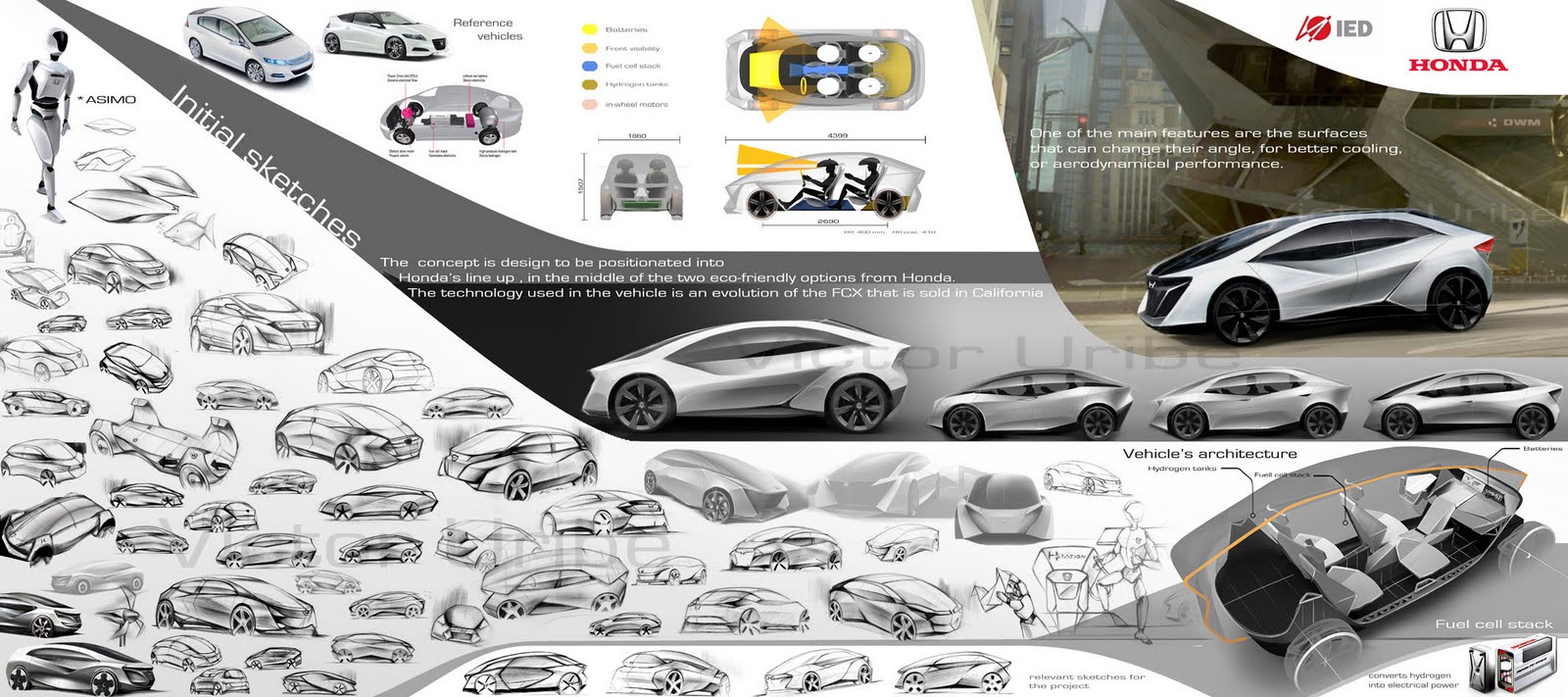
  • HONDA CONCEPT

    So,the other day we had a pre-presentation, just to see how the project is going on. i still have to refine some details, but overall, is coming out nicely.

  • High school students build hydrogen-powered vehicle

    hice car

    Eco Factor: Vehicle powered by a hydrogen internal combustion engine.

    Students of the Los Altos Academy of Engineering in Hacienda Heights east of Los Angeles have developed a one-of-a-kind vehicle that runs on a hydrogen internal combustion engine. The vehicle uses a four-stroke engine that has been converted to burn hydrogen without the use of gasoline.

    (more…)

  • Surging Rail Volumes Show Why Interest Rates Can Stay Low

    Grand Canyon Train Rail

    Latest traffic data from the Association of American Railroads says much about a rebound in tangible economic activity within the U.S. as well as lingering overcapacity in the economy.

    Journal of Commerce:

    The Association of American Railroads said the seven top-tier Class I railroads in the U.S. and Canada, plus some regional lines that also report traffic through the trade group, originated 387,283 new carloads of bulk commodities and equipment for the week ending April 24, up from 384,252 units a week earlier.

    Their new intermodal pickups of 264,375 were almost even with the 264,593 they had in the April 17 week. But for just the five U.S.-owned Class Is and a few others, intermodal loadings of 212,347 units in the latest week were the highest so far this year.

    In all, the continent’s major railroads loaded 13.9 percent more containers and trailers last week than for the same week last year, and 16.5 percent more cargoes in bulk railcars. That put intermodal traffic up 9.9 percent for the first 16 weeks of 2010, while carloads were up 7.6 percent.

    Those latest gains, and the steady increases that have persisted throughout the spring, are prompting many rail industry officials to say the economy is finally on firm footing. But they point out that traffic remains well below the levels of just two years ago, before the worst of the recession kicked in, and that is keeping lots of rail equipment sidelined.

    It’s an example of how economic activity is picking up… but U.S. interest rates can be kept low since there is still a substantial output gap in the U.S. economy, ie. we’re not bumping up against the economy’s full output based on current capacity yet. Yes, this is just rail, but it’s an example of what is going on in many other industries — growth, less overcapacity, but continued overcapacity nonetheless.

    Join the conversation about this story »

  • San Diego’s Under-the-Radar Funding: Four Startup Deals in March Worth Less Than $1 Million

    Erin Kutz wrote:

    Back in November, Bruce gave San Diego readers a preview of our list of “under-the-radar” deals—startup transactions worth less than $1 million, based on data provided to us by private company intelligence platform CB Insights. We’ve been tracking them in our other cities for months, but we didn’t see much activity in San Diego again until February, when there were enough of those smaller deals to merit a story. Good news: we’re back again this month with a roundup of March’s under-the-radar funding.

    In March, the San Diego area also saw four under-the-radar deals, ranging from $250,00 to $750,000. Three transactions were based in debt, and one was an equity offering ($450,000 that went to BeamOne, a provider of electron beam sterilization services for medical and pharmaceutical companies). All four financings went to companies in the healthcare space.

    The number of under-the-radar financings in the San Diego area in March remained fairly constant, compared to February. In contrast, both Boston and Seattle had under-the-radar lists that ballooned compared to February, while the number of startup deals they inked that were worth more than $1 million shrunk for the month. So we’re seeing a degree of consistency in San Diego for February and March not seen in Seattle and Boston.

    San Diego’s top under-the-radar deal, at $750,000 in an offering of debt, options, and warrants, went to Tracon Pharmaceuticals, a company whose website says that they’re developing treatments for cancer and age-related macular degeneration. The under-the-radar lists in other cities have often attracted startups that are too young and stealthy to have put out any information on themselves yet. One such company showed up on the San Diego list: Digital Healthcare Systems. I couldn’t find a website for the startup, but the SEC filing for the deal says it was incorporated in 2009 and used to be called MyAfterCare.

    The one familiar startup on the list was Novocell, a biotech company that Denise wrote about in October when it attracted a $20 million award from the California Institute for Regenerative Medicine to fund its developing of cell therapy for type 2 diabetes. The San Diego-based company raised $304,242 in debt and warrants funding.

    Below is the full breakdown of San Diego’s under-the-radar funding in March.

    Tracon Pharmaceuticals San Diego, CA A developer of treatments for cancers and age-related macular degeneration Debt* $750,000
    BeamOne San Diego, CA A provider of electron beam sterilization services for medical and pharmaceutical customers Equity $450,000
    Novocell San Diego, CA A developer of stem cell engineering technology designed to treat diabetes and other chronic diseases Debt* $304,242
    Digital Healthcare Systems San Diego, CA A stealthy company formerly named MyAfterCare Debt $250,000

    *Includes some options or warrants

    UNDERWRITERS AND PARTNERS


  • Lexus’ Hybrid Bicycle Concept to debut at Great British Bike Ride

    lexus hybrid bicycle_1

    Eco Factor: Hybrid bicycle assisted by a 240W electric motor.

    Lexus has announced the details of its innovative Hybrid Bicycle Concept that will debut at the Great British Bike Ride this weekend. The carbon fiber hybrid concept features a 240W electric motor and includes an eight-speed transmission. The motor is fueled by a 25.9V lithium-ion battery and includes a regenerative braking system as well.

    (more…)

  • 1 million Super Street Fighter IV shipped worldwide

    Super Street Fighter IV is hitting hard with the numbers. Capcom has released an official statement earlier today, stating that they have now shipped a million copies worldwide literally just three days since its launch.


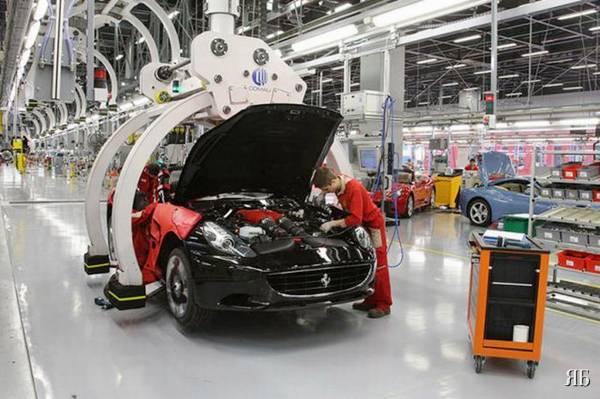
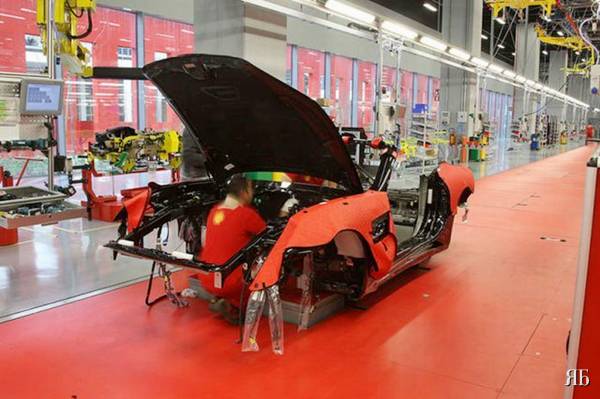
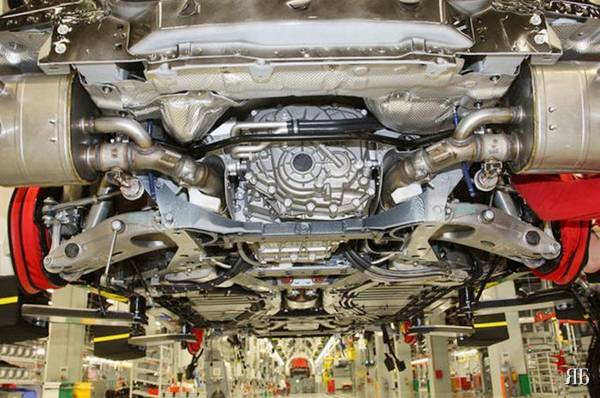
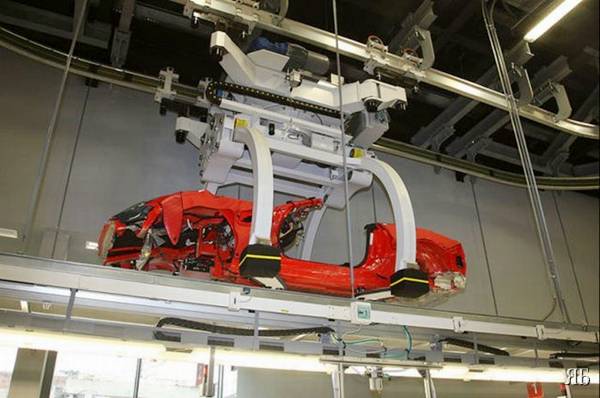
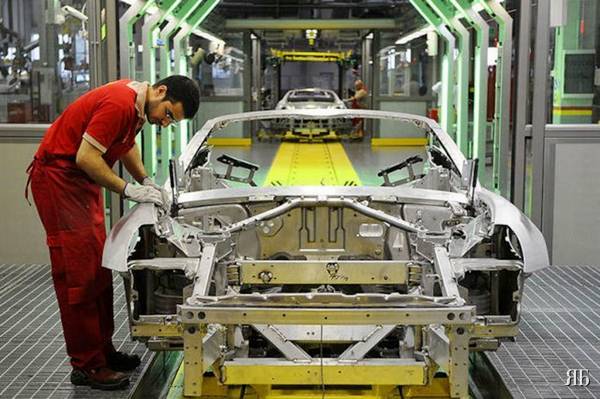
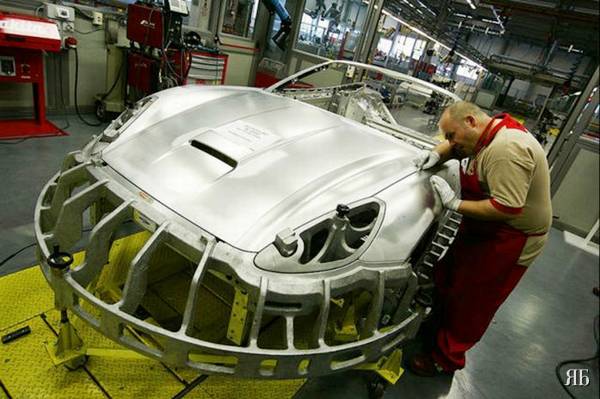
  • How to build a Ferrari. Ferrari’s Factory

    How to build a Ferrari. Ferrari’s Factory

    Ferrari S.p.A. is a sports car manufacturer based in Maranello, Italy. Founded by Enzo Ferrari in 1929 as Scuderia Ferrari, the company sponsored drivers and manufactured race cars before moving into production of street-legal vehicles in 1947 as Ferrari S.p.A..

    Throughout its history, the company has been noted for its continued participation in racing, especially in Formula One, where it has enjoyed great success

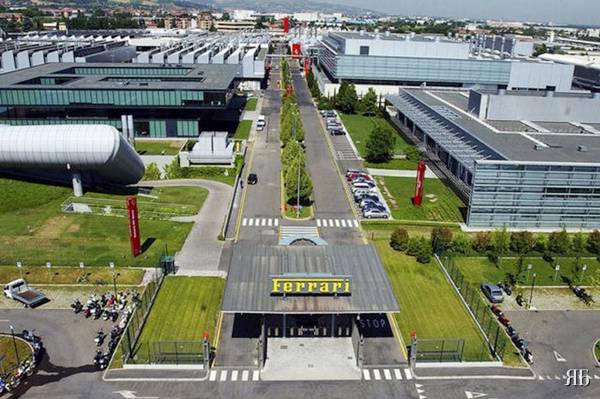
    Maranello is a town and comune in the region of Emilia-Romagna in northern Italy, 18 km from Modena, with a population of 16,841 as of 2009. It is best known as the home of Ferrari S.p.A. and the Scuderia Ferrari Formula One racing team. Maranello was also home to coachbuilding firm Carrozzeria Scaglietti, now owned by Ferrari.

    Maranello has been the location for the Ferrari factory since the early 1940s, when Enzo Ferrari transferred operations from the Scuderia Ferrari Garage and Factory in Modena, which had been his base of operations dating back to Scuderia Ferrari’s days as an arm of Alfa Romeo, due to bombing during World War II.

    Initially the factory in Maranello was a base not only for Scuderia Ferrari but also for Auto Avio Costruzioni, the machine tool manufacturing business started by Enzo to tide the company over whilst Alfa Romeo’s ban on Enzo Ferrari’s making cars bearing the Ferrari name was in force.

    Ferrari Factory – view from inside, photo gallery

    The public museum Galleria Ferrari, which displays sports and racing cars and trophies, is also located here. The Ferrari 550 Maranello and Ferrari 575 Maranello are named after the town. Maranello Kart, an Italian kart chassis, is also named after the town.

    Near Maranello is the town of Fiorano Modenese where the Fiorano Circuit is located, a private track owned by Ferrari for its car testing. (from Wiki)

    Thank you Cris for the email!

  • Piezoelectric generator creates power from shoes

    Could a tiny piezoelectric generator provide convert enough energy from walking to power y...

    Could walking or running generate enough energy to power your cell phone or GPS device? Dr. Ville Kaajakari has developed an innovative piezoelectric generator prototype small enough to be embedded in the sole of a shoe that’s designed to produce enough power to operate GPS receivers, location tags and eventually, even a cell phone…
    Continue Reading Piezoelectric generator creates power from shoes

    Tags: ,
    ,
    ,

    Related Articles:


  • Chile Gets New Copyright Law: Some Good, Some Bad

    We recently wrote about how India had proposed changes to its copyright law that included a few surprisingly good ideas (and a few really bad ones). However, some other countries have been changing their copyright laws as well. Earlier this year, a friend involved in these things told me to keep an eye out for Chile’s new copyright laws, suggesting that I would be pleasantly surprised. Michael Scott points us to a brief description of the recently approved changes to copyright law in Chile… and, like India, it looks like a mix of good and bad. And, contrary to what I had hoped for, the bad seems to outweigh the good. To be fair, the summary is very cursory, so perhaps there’s more to the changes than what’s written. But the report highlights three changes, and from the summary, it seems like one change is good, one is bad and one is probably neutral.


    The changes that will soon go into effect can be divided into three groups: the establishment of a new framework of exceptions and limitations to copyright and related rights, the incorporation of new offences, increased penalties and the consecration of new tools intended to prosecute crimes against intellectual property, and an extensive chapter on the liability of Internet Service Providers (ISP).

    The first one is obviously the “good.” More and better exceptions — a la fair use — is an unquestionably good thing. But, looking at the few details provided, it doesn’t look like broad fair use-style exceptions were added. Instead, the exceptions look pretty limited:


    For example, extending the framework of action for libraries and nonprofit archives in terms of the reproduction, translation and digitization of a particular work allows for it to be used for criticism, illustration, teaching or research purposes and also expands the use of works that aim to benefit a person with visual or hearing impairment.

    Those are good exceptions, but those a pretty small subset of the type of exceptions that any good copyright law should have.

    The “bad” is the second one. Increasing penalties makes little sense when penalties for violating copyright law are already way out of line with the “harm” done. The “neutral” one is the last one, concerning liability for service providers. Creating good safe harbors for service providers, so they’re not blamed for the actions of their users, is definitely a good thing. But the devil is very much in the details — and what the requirements are for a service provider to qualify for those safe harbors. While the report says “the ISP must meet certain requirements in order to be exempted from liability,” it does not detail what those “certain requirements” are.

    Permalink | Comments | Email This Story


  • Whirlpool debuts energy and water conserving kitchen in Milan

    whirlpool greenkitchen_6

    Eco Factor: Prototype kitchen saves energy and water.

    Whirlpool has unveiled a green kitchen prototype at this year’s edition of the Eurocucina kitchen showcase at Milan Design Week. Dubbed GreenKitchen the prototype features an impressive set of water and energy saving fixtures.

    (more…)

  • Natural GMOs Part 63. Fungus genes make aphids pink.

    Photo credit – Prof David Stern, Princeton. Coloration is important in survival. Creatures like aphids signal to their predators about their suitability as food through the visual cue of colour. There are green aphids, red aphids and in between color aphids. These little animals have gained the ability to make their own pink coloration which comes from chemicals called carotenoids. They learnt this chemical ability by capturing genes for the synthesis machinery from fungi. This incredible story of trans-kingdom gene movement from “plants” to “animal” has been reported recently in a story appearing in Science 30 April 2010


    Lateral Transfer of Genes from Fungi Underlies Carotenoid Production in Aphids
    Nancy A. Moran and Tyler Jarvik

    Carotenoids are colored compounds produced by plants, fungi, and microorganisms and are required in the diet of most animals for oxidation control or light detection. Pea aphids display a red-green color polymorphism, which influences their susceptibility to natural enemies, and the carotenoid torulene occurs only in red individuals. Unexpectedly, we found that the aphid genome itself encodes multiple enzymes for carotenoid biosynthesis. Phylogenetic analyses show that these aphid genes are derived from fungal genes, which have been integrated into the genome and duplicated. Red individuals have a 30-kilobase region, encoding a single carotenoid desaturase that is absent from green individuals. A mutation causing an amino acid replacement in this desaturase results in loss of torulene and of red body color. Thus, aphids are animals that make their own carotenoids.

    “A survey of the draft aphid genome identified more than 10 genes of lateral transfer origin. However, the carotenoid synthetic genes were overlooked because the survey was designed to detect bacterial genes in the eukaryotic genome. In comparison with prokaryote-prokaryote and prokaryote-eukaryote lateral gene transfers, less attention has been paid to eukaryote-eukaryote lateral gene transfers. Although such transfer events might have been relatively rare, the recent explosive accumulation of eukaryotic genome information opens a new window to lookinto unexplored dynamic evolutionary processes.”

    Science 30 April 2010:
    Vol. 328. no. 5978, pp. 624 – 627
    DOI: 10.1126/science.1187113

    PERSPECTIVES, EVOLUTION:
    A Fungal Past to Insect Color
    Takema Fukatsu

    Many animals recognize and respond to the environment, foods, and enemies by making use of visual cues. Hence, animal body color is an ecologically important trait, often involved in prey-predator interactions through mimicry, aposematism (colors that warn), and crypsis (camouflage) (1). In the pea aphid Acyrthosiphon pisum, an insect that destroys plants by feeding on the sap, red and green color insects frequently coexist in natural populations (see the figure). Among its major natural enemies, lady beetles preferentially attack red aphids on green plants (2), whereas parasitoid wasps deposit eggs in green aphids more frequently (3). It has been hypothesized that these opposite predation and parasitism pressures maintain the color variation in natural aphid populations. This represents one of the classical views on the evolutionary ecology of animal color polymorphism (1). On page 624 of this issue, Moran and Jarvik (4) report an unexpected layer interwoven under this well-known evolutionary scenario: Genes transferred from a fungus to the aphid genome underlie the red and green coloration.

    National Institute of Advanced Industrial Science and Technology (AIST), Tsukuba 305-8566, Japan.

    Science 30 April 2010:
    Vol. 328. no. 5978, pp. 574 – 575
    DOI: 10.1126/science.1190417

    The Pundit’s thoughts:
    Golden Rice, Golden Sorghum, Golden Banana, and now the Natural Golden Aphid.

  • Closing Time: Octavio Dotel gets the vote of confidence, Evan Meek gets the save

    According to the Bible, the meek are supposed to inherit the earth. But it doesn’t say anything in there about the ninth inning of a close ballgame.

    Embattled Pirates closer Octavio Dotel(notes) got a vote of confidence Thursday from manager John Russell, and Dotel also got the night off at Los Angeles. Dotel could use the rest: he’s allowed 14 hits and 13 runs over his last six appearances, pushing his ERA up to 10.61. Some of the damage occurred in non-critical spots and Dotel only has two blown saves on the year, but that’s no just excuse – despite a zesty 12 strikeouts on his resume, he’s been a mess over the last two weeks.

    Of course if you ask Dotel, those non-save appearances shouldn’t be held against him.

    "I understand that I have to get my work done, but I’ll be honest, I hate that," Dotel said. "I don’t have the same intensity. I don’t have the same adrenaline. I don’t have the same feeling for the game. I shouldn’t be that way because it is my job. I’ve got to come and do my job."

    If and when Russell decides he wants to do something about the struggling Dotel, Evan Meek(notes) is ready in waiting. The unheralded Meek has been superb in 11 appearances this year (one run allowed over 15 innings), and Meek retired the Dodgers in order Thursday for his first save of the year. Casey Blake(notes) popped up, James Loney(notes) grounded out, Ronnie Belliard(notes) struck out, and no one made solid contact. Nice closing debut from someone who had six career saves entering the night – all in the minors.

    At 6-0 and 225 pounds Meek doesn’t look imposing on the mound, but he’s got the other things you look for in a closer. He’s striking out a batter per inning – 15 whiffs in 15 frames. His average fastball this year checks in at 94.5 miles per hour. Meek’s control was an issue earlier in his career but he’s only walked four men this season. Home runs, no worries – he’s given up just five in 75 career innings (Dotel has already yielded three this year).

    If you’re hedging against Dotel or just looking for another quality reliever and possible saver down the line, Meek is someone you want to audit Thursday night and Friday morning. While we’ll take Russell at his word and assume that Dotel will get the next Pirates save chance, closers don’t come with infinite leashes, especially closers on one-year contracts. Losing leads in the ninth inning has an emotional effect on a team. And it’s been three weeks since Dotel had a scoreless inning. Be proactive, gamers.

    There’s your appetizer from the Thursday baseball schedule. I’ll be back a little later to finish this story, filling in another 1,000 words or so.