Category: News

  • KOCH Carton formers

    The KOCH carton formers are employed for production of a huge number of varying boxes by application of a stamped carton blank made of solid fibre board or corrugated cardboard. The carton blank is picked out of a magazine by vacuum suckers. Afterwards the carton blank is placed into guide rails. Horizontal, oblique or pallet magazines are available depending on demand. Individual tracks or dots of hot glue are applied on the glued joints during feed via forming tool.

    After reaching the stopper the carton blank is pressed through the forming tool by a forming tappet, moulded in and glued together. The finished boxes are transported out of the machine via outfeed conveyor belt rising laterally or frontally out of the machine. The glue tracks are controlled via machine control. The adjustments for different formats can be entered directly on the user interface. Furthermore it is possible to employ crimp tools to form the carton blanks without using hot glue.

    Advantages of this machine technology

    – Different sizes and performance ranges allow the optimal selection of a carton former depending on particular demand.
    – Change of forming tools is not required, because the tools are equipped with adjustable spindles. Only the forming tappet must be changed.
    – Quick format change
    – Drives via servomotor, resulting in easy adjusting on the control monitor and format optimized motions.
    – State-of-the-art control technology via industrial PC with convenient operator guidance via touch screen. Optionally Siemens S7.
    – Telephone connection for remote diagnosis

  • New, short wavelength digital Infrared Thermometer

    LumaSense Technologies, a leading provider of infrared thermography, non-contact temperature and gas sensing solutions, announced the release of its IMPAC IGA 320/23 Infrared Thermometer (Pyrometer).

    LumaSense Technologies offers a broad variety of modern pyrometers. The IGA 320/23 Pyrometer is the first model of the latest offering from LumaSense Technologies’ IMPAC product line, especially designed for temperature measurements of metallic surfaces, graphit or ceramics.

    With both analogue-output and digital RS485 interface, the pyrometer suits for the monitoring and recording of process data. It is to be characterised especially by its measurement speed (response time min 2 ms), high accuracy and wide temperature range between 75…1800°C. These features are essential for process control and optimization.

    The built-in LED pilot light allows easily to measure object at target distance up to 800 mm. With the optionally available high quality conversion lenses, very small spot sizes of minimum 0.25 mm can be achieved.

    Another outstanding feature are the very small housing dimensions. The diameter of only 25 mm and an external thread enable its use in nearly all environments. The robust stainless steel housing of the instrument accordingly to IP65 standard guarantees high operational safety even in rough industrial environments.

    Due to all these properties the IGA 320/32 is very reliable and efficient. Moreover, special software for data analysis and reporting is available.

    About LumaSense Technologies™
    LumaSense Technologies is a global leader in providing temperature and gas sensing solutions to industrial, energy, medical and clean technology markets. We design and manufacture sensors for end-user and original equipment manufacturers (OEMs) applications. LumaSense Technologies has proven expertise in developing state of the art infrared and fiber optic temperature sensors, radiometric thermal imagers, and gas analyzers. A common theme in our sensors is the use of infrared (IR) light to provide robust, accurate sensors for demanding environments, applications and customers. Worldwide offices located in Asia, Europe and the Americas.

    For more information contact:
    LumaSense Technologies GmbH
    Kleyerstraße 90
    60326 Frankfurt
    Ph: +49 69 973 73 0
    Fax: +49 69 973 73 167

  • IP69K Position Sensors with Super Shield Housing

    The new Temposonics® RS and GS sensors with super shield housing ensure long-term linear position measurement in harsh environments, making them ideal for outdoor use, as well as applications requiring high-pressure wash-down cleaning. Hermetically sealed with a housing completely made of stainless steel, they meet the requirements of protection modes IP68 and IP69K and are reliably shielded against corrosion and penetration of dirt and water.

    The robust, rod-shaped Temposonics® sensors have been developed for measuring lengths of 50-7600 mm. Due to non-contact measuring technology, sensor integration into a hermetically sealed housing is possible. A position magnet moves along the outside of the pressure-resistant sensor pipe and marks the position without mechanical contact. For level measurement, an optional float can be used. The modular sensor cartridge design enables the customer to choose the specific sensor output configurations to be installed within the super shield housing to best fit their application requirements. The measuring accuracy and all technical data correspond to the features of the sensor selected inside the housing. A wide choice of interfaces (Analog, Profibus, SSI, CANbus, DeviceNet, EtherCAT, POWERLINK) is available. Moreover, integration of ATEX-certified and intrinsically safe sensors is possible with the protective housing.

    By combining Temposonics® R- and G-Series sensors with this unique housing, MTS has developed a cost-effective solution to utilize their proven non-wearing, trouble-free technology in the harshest environments. This is of particular advantage with outdoor applications, waterworks and hydroelectric power stations, off-shore wind mills, steel mills or chemical engineering.

  • Reduce your man-hours per ton!

    Manual marking out and measuring belongs in the past with new V808M plasma beam coping system

    The revolutionary V808M fully automatic coping system not only copes profiles using plasma, but is now also capable of applying marking layout lines and information to all four sides of a profile. Manually marking of position for example connection plates with this system are a thing of the past. This results in huge cost savings on labour, better accuracy and higher error free. The fitter / welder now knows exactly the position of each connection plate. This provides you a cost saving of at least 1 man-hour per ton of steel.

    The V808M is designed and built using an industrial robot, which has the flexibility to cut all possible copes, contours and produce layout marks on steel profiles. This provides not only an enormous freedom to design and produce structures with the most complex connections and copes, but also a significant increase in production speed.

    Flexible and accurate

    The CNC controlled beam coping systems of Voortman are the only robotic systems in the world today combined with a roller feed measuring system for total flexibility and accuracy. The advantages of a roller feed measuring system includes space saving, the possibility to produce beams with an unlimited length, higher production speed with significant time savings.

  • New technology developed by the N.N. Zoubov Engineers research center !!!

    Technology developed by the N.N. Zoubov Engineers research center has the following features:

    v Reduction of emission of CO2 by 12% ;
    v Energy saving by 15% ;
    v Increased cement grade ;
    v Efficiency increase by 50% without installing new machinery.
    The presented technology is commissioned in two producing plant in 2007.

    Technology Outline:

    There are two stages:

    Stage I:

    Identification of the site of the deposit (volcanic, magmatic rock) from which the added materials is obtained and added into the clinker. For cost efficiency, the deposit site preferably is to be within the range of 150 km from the cement plant. Then flour composition is formulated based on the constituents of the input.
    Here is an example of calculus performed for the cement plant.

    The furnace in the initial stage has the following parameters:

    • Flour load: 210 ton per hour;
    • Gas consumption: 13500 cubic meter per hour.

    Clinker output is calculated as 210 x 0.6 = 126 ton per h for 0.6 coefficient.
    For the obtainment of the Portland cement in concern, the following changes have been made:

    • Flour load: 227 ton per hour;
    • Gas consumption: 12352 cubic meter per hour.

    Reaction capacity of the clinker has increased by 0.3% (or the coefficient is 0.03) after addition of the rock into the flour. The clinker calculation is then performed by 0.6 + 0.03 = 0.63 coefficient. Thanks to the added material’s inner property, the part of the dust (averagely 4 ton) is entered into the clinker thus increasing its content.

    So, by applying this technology, we get the following amount of clinker: 227t x 0.63 = 143t + 4t of dust = 147t. The difference is 147 – 126 = 21t or 18% increase of output rate.

    The consumed gas (as per the ton) is:

    • Conventional technology: 13500 m3 : 126 T = 107,14 m3 per ton;
    • New technology: 12352 m³ : 147T = 84,027 m³ per ton ;
    • Difference: 107,14 m³ – 84,027 m³ = 23,113 m3 or 20% of gas saving.

    Stage II:

    To the obtained clinker a corresponding additive is selected and calculated (dunite, peridotite, diatomite, serpentinite, etc.) which later loaded into cement mill. The output rate of the ball mill is increased up to 15% by appropriate selection of the assortment of balls.

    The obtained Portland cement strictly corresponds to specifications.

    …..

  • New AG Series sinker EDMs feature no flush and no electrode wear technology

    Sodick’s new AG Series sinker EDMs are a precision EDMing solution for small to large size medical device, aerospace, energy-related parts and die/molds that require close tolerances, fine surface finishes and deep rib machining.

    Both EDMs feature new technology which further improves machining production while cutting labor cost. The high acceleration and fast axis speed of the linear motor drives creates its own natural and even flushing condition. The machining result does not vary from an operators experience and there is no need to machine flush holes into the electrode. The new zero wear circuit further reduces labor cost by eliminating electrode wear which saves on electrode production cost.

    New absolute glass scale feedback guarantees machining accuracy and reduces set-up time, since the operator no longer has to home the machine after it has been powered down. The X,Y,Z linear motor drives have no backlash and are backed by Sodick’s 10 year positioning accuracy guarantee.

    AG40L Sinker EDM

    Sodick’s new AG40L sinker EDM machine axes travels are 15″ x 11″ x 10″, maximum workpiece weight of 1,200 lbs. and the inner worktank dimensions are 29″ x 24″ x 13″. The AG40L replaces the AQ35L sinker EDM.

    AG60L Sinker EDMAG60L Sinker EDM

    The AG60L sinker EDM is a larger version of the AG40L machine. The axes travels are 23″ x 16″ x 14″, maximum workpiece weight of 3,300 lbs. and the inner worktank dimensions are 37″ x 29′” x 17″. The AG60L replaces the AQ55L sinker EDM.

  • KAISER S2 4×4 GATOR

    Specialist for applications in wet and marshy terrain

    The special steering of the front drive wheels permits a wide range of applications in marshy terrain and in deeper water. The special rig form ensures very low driving resistance. The machine can be raised extremely high for large wading depths.

    Features

    •Low driving resistance when driving in mud
    •Triple steering mode: Leg and wheel steering at front and rear
    •Low ground pressure
    •Wide spread driving and steering with permanent all-wheel drive
    •Maximum stability even on soft ground

  • largest and heaviest slewing bearing aboved 6.0M exported to Europe

    As the largest and heaviest slewing ring exported from China, the outer diameter is over 6000mm and the weight is over 13 metric tons.
    THe structure is triple row cylindrical roller type with external gear.
    In order to have the best and stable mechanical property, the 3 rings are forged and each ring is unitary.
    In order to guarantee the hardened depth on the raceway, a test was made before the induction hardening.
    The slewing ring has been exported to Europe, being used on a ship, as the bottom of cable basket.
    The cages of 1st and 2nd row of rollers are made of aluminium alloy. Nylon cages are also available.
    The cages of the 3rd row of rollers which is called”spacer” are made of nylon.
    During the final assembly and before the packing, the slewing ring is lubricated by Lithium grease.

  • The new Airless gun “no needle”

    Binks, its experience in manual and automatic guns, has developed a new product “no needle”, making maintenance incredibly simple.
    These gun utilise a unique fluid valve which totally eliminates the traditional needle valve/packing design resulting in a very light trigger pull, reduced operator RSi risk, and much lower maintenance than traditional airless spray guns. With gun bodies made from durable forged aluminium they are built to outlast the competition, and operators will feel the difference thanks to the contoured handle design. A quality range of tungsten carbide twist tips and fixed flat tips are available which provide superb atomisation and spray performance.
    The extra long in-built fluid filter provides 20% more filter surface to prevent paint blockages and reduce the frequency of filter cleaning and changes. A3500 & A7500 Airless Guns are augmented with a wide range of quality accessories to tackle all airless spray applications.

    Further, four finger models offer lower trigger pull and better leverage.

    Guns A3500 (241 bar) and A7500 (517 bar) are particularly for Contractor industry – Interior/exterior, Marine and Ship Building, Off Road vehicles, Offshore Gas/Oil Industry and Corrosion Protection, Industrial Metal Structures, Skips & Dumpsters.

    Choose Binks Airless Guns for the ultimate in spraying performance and comfortable design with built in durability and an extended working life.

  • New DX80 from Banner Engineering

    WIRELESS NETWORK PROVIDES MONITORING AND CONTROL OF SENSORS, PUMPS AND OTHER DEVICES AT UP TO 56 REMOTE LOCATIONS
    New DX80 from Banner Engineering replaces costly wiring in wide area installations

    A scalable wireless network that can monitor and control I/O functions or provide serial communication at up to 56 locations has been introduced by Banner Engineering. The new SureCross DX80 product line replaces costly wiring in a wide range of industrial, agricultural, power generation, water supply and waste disposal applications. Discrete, serial and analog devices that can be controlled by the network include ultrasonic and photoelectric sensors, pumps, counters, thermocouple and RTD temperature sensors.

    The remote nodes gather data and/or transmit control commands between the sensors or other devices and a central Gateway. The Gateway maps inputs from the remote nodes and interfaces with a PLC or HMI via RS-485 modbus or Ethernet/IP.

    Designed for applications where wiring is impractical or unaffordable, DX80 nodes and the devices they monitor can be powered by 10 – 30V dc, battery or solar panels. This capability can eliminate the need for power wiring as well as control wiring, providing significant cost reduction and ease of installation in situations that cover wide areas. Banner’s unique power management capability and low power consumption enable a node and sensor to operate for years on a single battery power supply.

    All units have industry standard robust IP67 housings. Models with Intrinsically Safe and Class I Division 2 approvals are available for extreme environments. Node to gateway transmission range using license-free radio is 3 km at 2.4 GHz or 10 km at 900 MHz (line of sight). The signal range can be extended or rerouted around natural obstacles by adding DataRadio modules as repeaters.

    The DX80 SureCross wireless network is appropriate for a wide range of applications including:
    – Monitoring tank levels and controlling remote pumps to assure efficient and reliable supply in gravity-fed water systems.
    – Monitoring of level, flow, temperature and gas emissions on landfills; activate pumps for leachate extraction.
    – Monitoring tank fill levels and valve position in water treatment and chemical processing plants to assure that materials are maintained at desired quantity.
    – Maintaining proper soil moisture and temperature and air humidity for plant growth.
    – Continuous remote monitoring and logging of compost temperatures so rows can be turned at the ideal point. This insures that harmful bacteria are killed while minimizing risk of contamination through human measurement operations.
    – Achieving optimal work flow in factories employing automatic guided vehicles.
    – Monitoring valve temperatures in steam power plants to identify energy losses and schedule repairs.

    Banner Engineering is one of the world’s leading manufacturers of vision sensors, photoelectric and ultrasonic sensors, fiber optic assemblies, indicator lights, machine guarding systems, precision measurement and inspection systems and wireless network products. The company provides local application support worldwide.

  • NEW BALL BEARING IS OPTIMISED FOR EXTREME-DUTY APPLICATIONS

    NEW BALL BEARING IS OPTIMISED FOR EXTREME-DUTY APPLICATIONS

    * extends equipment uptime in harshest processing applications such as aggregates, cement, paper, wood, metal …

    Baldor Electric introduces a new Dodge-brand mounted ball bearing that offers extended life in automation equipment designed for the most extreme industrial power transmission applications, including aggregates, cement, paper, wood and metal processing.

    Designated Dodge Extreme Duty, the new bearings feature a patented new sealing system and a ball retainer, for superior protection and reduced maintenance, providing outstanding performance in demanding applications where increasing equipment uptime is critical to success. These bearings, available in a variety of housing styles, use a 65 degree spacing for setscrews. This unique design offers an optimum balance between locking force and inner ring stress.

    The new sealing system, QuadGuard, consists of two patented features: a triple lip seal and a rubberised flinger. The triple lip seal offers three points of contact, keeping the lubricant in and contaminants out. This unique design maximises sealing with a minimal amount of drag. The rubberised flinger, the industry’s first and only patented design, is a moulded nitrile rubber component that is bonded to the flinger surface and provides an additional barrier to contaminants. The rubber baffled design on the external surface of the flinger enhances the removal of liquid as it rotates, while grease chambers on the internal surface of the flinger prevent lubricant from exiting the bearing.

    A new two-piece ball retaining cage, Maxlife, creates a grease compartment around each of the rolling elements. The compartments provide constant contact between ball and grease so an oil film always exists to prevent wear, and minimise friction and heat. The compartmental construction holds in the grease and prevents it from being washed out. This exclusive design extends the life of the bearing and requires less frequent relubrication than standard designs.

    For additional protection, the housings are machined with a groove to accept a snap-on polymer end cover to cover exposed, rotating shafts and create safer working conditions. These covers incorporate a drain hole to prevent moisture build-up.

    Dodge Extreme Duty ball bearings also utilise the latest synthetic grease technology to provide lower operating temperatures, and extend grease life and the interval between relubrication operations. The range is available in a wide range of imperial sizes plus metric sizes from 20 to 85 mm.

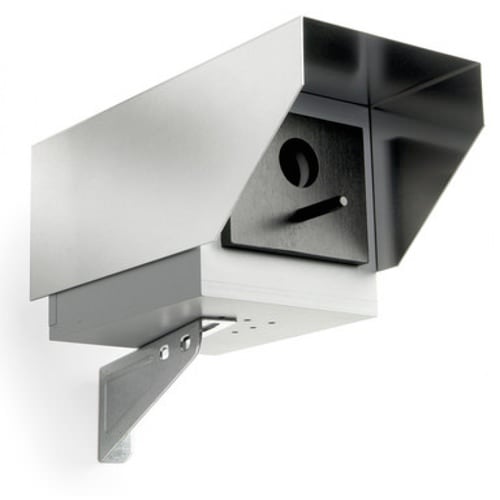
  • Wolfgang S Birdhouse puts your neighbors on high alert

    Wolfgang S BirdhouseWith the Wolfgang S Birdhouse designer Dennis Nino Clasen has killed two, ahem, birds with one stone.  Not only does it allow you to trick your neighbors in to thinking you are watching their every move but it also puts an aesthetically-entertaining roof over the heads of your feathered friends.  While it may not keep your neighbor from tossing their raked-up leaves over the fence and into your yard for very long, it will provide a little extra ambiance for the exterior of your house during the spring and summer months.


    Tags:
    ,
    ,
    ,
    ,
    ,
    ,
    ,
    ,
    ,

    Wolfgang S Birdhouse puts your neighbors on high alert originally appeared on Gear Live on Thu, April 29, 2010 – 12:59:45


  • Toyota resumes sales of the Lexus GX 460, announces update for stability control system

    2010 Lexus GX 460

    Toyota announced today that it has started selling its 2010 Lexus GX 460 SUV once again after coming up with an update for its vehicle stability control system. Toyota suspended sales of the model after Consumer Reports test results show there is danger of the SUV rolling over during aggressive driving.

    “I’m happy to announce that an update for the 2010 GX 460 vehicle stability control system is now available at Lexus dealers nationwide,” said Mark Templin Lexus Group Vice President and General Manager. “Our dealers began contacting customers yesterday offering to make arrangements to perform the update, and we expect them to get in touch with most GX owners within one week.”

    “As previously announced, we will continue to provide a courtesy vehicle to anyone who has purchased a 2010 GX 460 and has concerns about driving it until the recall work has been completed.

    Customers who have any question regarding the Lexus GX can contact their local Lexus dealer or Lexus Customer Satisfaction at 1-800-25LEXUS or 1-800-255-3987.

    – By: Omar Rana


  • United And Continental To Announce Mega-Merger Monday (UAUA, CA)

    united airlines

    United Airlines and Continental could announce a merger Monday to become the world’s biggest airline, the WSJ reports.

    The combined airline would be based in Chicago and retain United’s brand, according to the report. (Not sure if that means it’ll also retain the Continental brand, or only use United.)

    WSJ: The United board is meeting Friday, while Continental’s board is meeting Friday and Sunday to discuss the deal, these people said.

    These people cautioned that negotiations could fall apart at the last minute as they did in 2008, when Continental backed away. But after a hiccup over pricing the transaction, the talks appear to be on track, they said.

    United is in a much different position than two years ago. Earlier this week, United narrowed its first-quarter loss to $82 million, compared with a year-earlier loss of $382 million. Revenue rose by 15%, to $4.2 billion.

    Join the conversation about this story »

    See Also:

  • Lindsey Graham says, “yeah,” there’s a chance for climate to move forward this year – On the bipartisan bill he wrote with Kerry and Lieberman: “I really believe in this product. I think it’s a damn good solution.”

    WashPost’s Ezra Klein has posted an interview with Sen. Lindsey Graham (R-SC) about the immigration and climate bills.  Since my Monday post, it’s been hard to tell whether the Senator has been principled or petulant — or perhaps a bit of both.

    I’ll excerpt the parts of his interview with Klein about the climate bill and you can decide:

    EK: You told Talking Points Memo that you would filibuster your own climate change bill if immigration moves this year.

    LG: Yeah, I was asked a question. They said, “You would vote against your own bill?” And I said yes. I care equally about immigration and climate change. But if you stack them together this year you’ll compromise climate and energy. You’ll compromise my ability to get votes on climate change. When I told everyone I would do climate, in fact, I was assured we also wouldn’t be doing immigration….

    EK: So what allows climate to move forward now? What do you need to hear from Reid?LG: Here’s the problem with climate. Do you have any chance of bringing it up and getting 60 votes in this environment? There’s a controversial provision in the transportation section. We have done as good a job as we can to get oil and gas companies to pay for their pollution. Some of that cost will be passed onto consumers. But it’s not a gas tax. I need Harry Reid to say I agree with you. I support that. I won’t introduce a bill and have the majority leader, who I have less than a strong bond with, say, “I can’t support that gas tax.” There was also a Fox News article where the White House said they couldn’t support Graham’s gas-tax gambit. I will not let this get blamed on me. It would be the worst thing in the world to take the one Republican working with you and make him own the one thing you don’t like.

    I must say this is a semi-lame excuse.  First, this was a Fox News White House blog report!  Presumably one can’t entirely trust them to get the story exactly right.  It might be the case that there are people in the administration who are not thrilled at going forward with the climate bill and might have said something like what the story says.

    BUT the story clearly quotes a White House spokesperson on the record saying “The Senators don’t support a gas tax, and neither does the White House.”  What else is there to say?

    EK: So what you need isn’t just an assurance on immigration. It’s an assurance that if you’re going to do the dangerous things on climate reform, you won’t be hung out to dry on it.

    LG: Right. Ask yourself: Why did they leak the story to Fox News? That told me they weren’t committed to this issue. Why let a story start on a venue that would hurt your partner the most?

    Again, since when do people in the White House “leak” stories to Fox News?  LG ain’t making a compelling case here.

    EK: Have you asked the White House?

    LG: Yeah. They say, “Oh, we didn’t do it.” And it’s true: Rahm and David didn’t. But somebody involved in energy and climate there did. They’ve always worried about being in a bad spot on this. So someone pretty clever said, “Okay, we’re going to get on the record against this.”

    Uhh, how about three other theories.  First, Fox News basically spun this non-story up out of nothing.  Second, maybe they spoke to somebody who doesn’t really follow the issue closely, and doesn’t realize all the ins and outs about what you all are doing in the transportation sector.  Third, maybe they spoke to somebody who doesn’t want a climate bill, a view that doesn’t represent that of the President or Rahm.

    EK: Do these assurances go in the other direction, though? You want to make sure the Democrats don’t leave you hanging on this. But they’re worried that this bill comes out, and you’re with them, but 40 other Republicans are hammering them for supporting what they’ll call a gas tax, cap-and-tax.

    LG: This is exactly what they’re going to say. I have never suggested they won’t. And they’ll say it about me, too. So we have to hold hands so I can make a credible argument, alongside business, saying it’s not a gas tax. But you can’t make this into my idea alone. It wasn’t my idea.

    EK: Do you think there’s a chance for climate to move forward this year?

    LG: Yeah.

    EK: And for more Republican support on it?

    LG: Maybe if business gets involved. It’s all about business. I can say I changed the face of the debate. This is no longer about economy-wide cap-and-trade. The business community is on-board with this proposal and they were against Waxman-Markey. I’ll sit down with my colleagues: If you believe we need more domestic energy supply, we’ve got offshore drilling. We preempt the EPA from regulating carbon. That’s a big get for business. About 80 percent or 90 percent of our caucus believes nuclear power is the way to go. We triple the current program of loan guarantees, do regulatory reform to make building plants easier. T. Boone Pickens’s plan is in here.

    And what do we give the other side? A cap on emissions from utilities. It takes four years to come into play so they have time. On the transportation side, we take them out of cap-and-trade but they pay a fee, it’s their idea this fee, and the money helps you solve the overall problem. It goes into the transportation trust fund, or goes back to the consumer, or to business people, because that’s where all the money goes. The money will be passed on just like the cost of cleaning up an oil slick is passed on. It could be up to 15 cents a gallon, but not for many years. I really believe in this product. I think it’s a damn good solution.

    Hard to know exactly where this is going to go.  It’s pretty clear that both the President and Reid doubt a bill could make it to the Senate floor even by the election.  So I remain somewhat hopeful Graham will join the effort before the bill gets back from EPA analysis in June.

  • Microsoft and Intel Are the Biggest Losers in HP-Palm Deal

    HP’s proposed $1.2 billion acquisition of Palm, is so far being lauded as a win-win: HP, which had only ever dipped a toe in the smartphone space with a few “me-too” devices, will now be able to jump into the deep end of the handset pool. And based on comments from HP executives, Palm will continue to mature the webOS platform it built from the ground up for the Pre and Pixi handsets. But this deal is about more than just smartphones — it’s about multiple devices on a “mobile computing platform”, according to Tom Bradley, EVP of HP’s Personal Systems Group. Such a statement spells trouble for the mobile ambitions of two of computing’s largest incumbents: Microsoft and Intel.

    Both are on the outside looking in when it comes to mobile computing. Microsoft had and then lost its smartphone lead when it failed to adapt its Windows Mobile platform to meet the needs of the mobile Internet, allowing younger, more nimble upstarts to create brand-new mobile platforms from scratch and snap up market share. Intel, meanwhile, realizing that its power-hungry processors weren’t equipped to run handheld devices all day long, created the low-voltage Atom CPU in 2008. It’s been tweaking the Atom for use in phones ever since, but few smartphone manufacturers have abandoned power-efficient ARM chips to use Intel’s Atom. Ironically, Intel once powered early Windows Mobile devices with its Xscale ARM chips, but sold that division in 2006 to Marvell for $600 million. So what are Microsoft and Intel doing about slowly getting brushed aside in the mobile space and how will the HP-Palm deal hamper those efforts?

    Microsoft is taking a fresh new approach with its mobile operating system for smartphones. Early looks at Windows Phone 7, due out on devices this holiday season, show a clean, touch-friendly user interface that focuses on the mobile activities people engage in most on a phone — social networking updates, email, media consumption and creation, and web browsing. We’ll never know if HP had planned any new smartphones built on Windows Phone 7 — if it did, you can rest assured those plans are already in the trash can.

    That’s just one minor way Microsoft is potentially losing out. The bigger elephant in the room is that HP Slate shown off by Steve Ballmer at the Consumer Electronics Show in January. This marks the fourth year that Microsoft has partnered with hardware makers to create a consumer market for a slate device running Windows. The past three years didn’t see many of the UMPCs, or ultra-mobile personal computers, be sold, however, and the few that were bought were created by brands that most consumers here wouldn’t recognize — Samsung being a notable exception. But with the HP name, a Windows-powered slate has instant brand recognition that might get more people to consider such a device. Unfortunately, mobile devices don’t work well with desktop operating systems —  a lesson that wasn’t lost on Apple, which uses the iPhone OS on its iPad tablet.

    The burning question now is: Will HP even go forward with the Slate? I suspect it will, only because it’s already invested time, effort and other resources in the device. And trying to quickly re-jigger webOS in the existing slate design would be a challenge due to chip architecture differences — the Slate is powered by an Intel Atom chip — and a screen resolution for which webOS isn’t equipped. But now that HP has its own mobile platform in webOS  it can create a different slate tablet without having to pay anyone else licensing fees. Bradley made this point clear in yesterday’s conference call, saying, “HP plans to release smartphones, tablets and maybe even netbooks using webOS.” And therein lies the rub for Intel.

    WebOS isn’t made to run on Intel’s chips that use the x86 architecture, so unless HP decides to port the operating system to run on x86 chips — and I see no good reason why it would — webOS devices will continue to run on ARM chips. That slams the door on a major mobile hardware partner for Intel. Other popular mobile platforms all run on non-Intel chips — Apple, Google, Research in Motion and Symbian all work with the ARM architecture, not with Intel’s. And this isn’t news to Intel; in order to carve out it’s own niche in the mobile space, Intel has partnered with Nokia on the MeeGo operating system for handhelds and netbooks.

    With the mobile space already crowded, there may not be room for a MeeGo to save Intel and a lackluster HP Slate effort isn’t what Intel needs right now. And HP certainly won’t be helping Microsoft with its big Windows Phone 7 launch. The way I see it, HP’s gain from the Palm deal is mainly Microsoft’s and Intel’s loss.

    Related research on GigaOM Pro (sub req’d):

  • Einstein Should Be Grateful He Didn’t Have Email | Cosmic Variance

    I’m reading an interesting new book, Bursts by Albert-Laszlo Barabasi. It’s just released today, but I scored an advance copy by virtue of sharing the same publisher. The basic idea is simple: human behavior obeys power laws! That is, things we occasionally do tend to be clustered together, rather than simply occurring with uniform probability. I can’t vouch for either the truth or usefulness of the claims put forward in the book; we all know that power laws can be slippery things. But the stories related along the way are pretty amusing. (And there’s a very spiffy web page.)

    I’ll admit that I jumped right to a chapter in the middle that relates the correspondence between Einstein and Theodor Kaluza in the year 1919 and thereabouts. Kaluza had just come up with the idea that electromagnetism could be unified with gravity by hypothesizing an extra dimension of space — a scenario now known as Kaluza-Klein theory, which underlies all the contemporary excitement about extra dimensions of space. Many crackpots like to assert that our contemporary system of scientific publishing is overly ossified and hierarchical, and that a modern-day Einstein would never be appreciated; the truth is close to the opposite, as back in those days you really needed endorsement from someone established to get your papers published. So Kaluza wrote to Einstein, who was originally enthusiastic about the idea, and they had a flurry of correspondence. Eventually (as I now know) Einstein cooled on the idea, and Kaluza left physics to concentrate on pure mathematics. A couple of years later, after getting nowhere with his own attempts to unify gravity and E&M, Einstein turned back to Kaluza’s approach, and wrote him again, offering to present his paper to the academy.

    The book’s interest is actually in the “burstiness” of the correspondence — a flurry of letters back and forth in 1919, then silence, then the conversation resumed in 1921. I was struck by this paragraph, relating the growth of Einstein’s celebrity after the eclipse expedition of 1919 provided evidence supporting general relativity.

    [Einstein’s] sudden fame had drastic consequences for his correspondence. In 1919, he received 252 letters and wrote 239, his life still in its subcritical phase, allowing him to reply to most letters with little delay. The next year he wrote many more letters than in any previous year. To the flood of 519 he received, we have record of his having managed to respond to 331 of them, a pace, though formidable, insufficient to keeping on top of his vast correspondence. By 1920 Einstein had moved into the supercritical regime, and he never recovered. The peak came in 1953, two years before his death, when he received 832 letters and responded to 476 of them.

    Can you imagine what Einstein would have faced in the email era? One thing is for sure: he was a champion correspondent. He composed approximately 14,500 letters, more than one per day over the course of his adult life.

    Not for the first time, Einstein makes me feel like a slacker.


  • Illinois House votes down redistricting reform

    Posted by Ray Long and Michelle Manchir at 3:46 p.m.

    SPRINGFIELD — House Democrats today failed to muster enough votes to put on the November ballot a new set of ground rules for how lawmakers redraw their district boundaries after every once-a-decade census.

    The Democratic version of redistricting reform got 69 votes — two shy of the number required for approval.


    Redistricting is one of the most contentious and personal issues in Springfield because careers can be made or broken when the lines are drawn a block or two one way or another. That was reflected in today’s debate.

    House Majority Leader Barbara Flynn Currie, D-Chicago, urged lawmakers approve the Democratic proposal so that voters could consider the measure on the November ballot in the form of a proposed amendment to the Illinois Constitution.


    The measure called for a multi-step process for determining how to draw boundary lines, but a key feature would eliminate the current constitution’s provision that calls for a deadlock to be resolved by drawing a name of either a Republican or Democrat out of a stovepipe hat, a replica of one worn by Abraham Lincoln. The result is that district boundaries end up slanted toward the party whose name was drawn.


    “This is clearly an improvement over the current constitution,” Currie said. “It gets rid of the tiebreaker.”


    House Minority Leader Tom Cross, R-Oswego, lashed out at the Democratic proposal, saying it failed to take the redistricting process away from the legislature or put it into the hands of the citizens. He compared the current redistricting process to the Berlin Wall of politics in Illinois and the attempts to defeat the plan to President Ronald Reagan’s call for Soviet leader Mikhail Gorbachev to tear it down.


    “The status quo isn’t working,” Cross said. “It is broken. It is time to break from the past. The wall has got to come down.”


    Cross saw a Republican proposal, one supported by the League of Women Voters and other reform-oriented groups, fail in a Democratic-controlled committee, and Senate Republicans suffered the same fate in the Democratic-controlled Senate.


    Cross argued his plan established a commission that gave more of a voice to the public, but Democrats contended their proposal gave more protection to minority rights.


    Rep. Will Burns, D-Chicago, argued the Democratic map set a higher standard to help the rights of people of color live legislative districts among their communities of common interests, and it will work to ensure they won’t be split apart to dilute their voting strength.


    “Redistricting is a serious, serious issues,” Burns said. “This amendment reflects the best of Illinois and our commitment to racial justice and to continuing the efforts of the civil rights movement.”


    The Democratic proposal called for each house to set up a 10-member commission of legislators and non-legislators to make recommendations of new district boundaries. Lawmakers then could try to send to the governor a single map for both the House and Senate. If they deadlocked, the House and Senate could draw their own, separate maps. A three-fifths approval would be needed for both houses under that provision.


    Further stalemate sends the issue to the commissions to craft the maps. If they still can’t agree, a special referee would be chosen by the two senior justices from Republican and Democratic parties sitting on Illinois Supreme Court. If the special ref cannot his the deadline, the issue goes back to lawmakers to try again.

    The House vote came after Gov. Pat Quinn today broke with his fellow Democrats on their redistricting plan.

  • Which Are You More Loyal To: Your Employer Or Your Soda?

    Reuters recently conducted a new poll in an attempt to understand those things that Americans are most loyal to. Not surprisingly, the top of the loyalty list was country. But of some interest is that more respondents said they were loyal to their favorite brand of soda than said they were loyal to the company that currently employs them.

    Of course, it’s generally easier to be more loyal to something that gives you even a small amount of pleasure than it is to something that many people do out of pure necessity.

    And it’s much easier to be tempted away from your current job by more money or better benefits (or even something like a shorter commute) than it is to be lured into giving up your favorite fizzy drink.

    That being said, we want to hear from you:

    Americans more loyal to brands, country than company [Reuters]

  • 80 Condo Owners In Redmond, WA Just Voted To Mass Default

    (This is a guest post from the author’s blog.)

    80+ proud owners in the Riverwalk at Redmond Washington condo complex have had enough and are ready to bail, en masse.

    I received news of this event from Matthew who writes …

    Hi Mish

    I am good friends with an owner in the Riverwalk at Redmond condo complex and I also used to rent there, which is how I got wind of this story.

    It turns out the developer sold out the complex, dissolved his LLC, and is living somewhere in the Caribbean. Meanwhile, unit owners are in the hole by as much as 50% of their purchase price, not counting needed repairs of as much as $50,000 per unit.

    There are major defects that require about $4.1 million in renovation work to address underlying ‘envelope’ issues that cause leaks and mold issues in 11 units. The consultants said the exterior on the entire complex had to be replaced.

    The home owners association (HOA) discussed five alternatives.

    1) Sue the developer. Since the developer left the country so there’s no one to sue.

    2) Pay the $4.1 million maintenance with a loan. However, no bank will issue a loan because the HOA fund has a high delinquency rate and not everyone is paying their dues nor are they paying on time.

    3) Make each home owner pay approximately $45,000. Who would be willing to do that when everyone’s mortgage is seriously underwater?

    4) Liquidate the entire complex, forcing everyone into foreclosure.

    5) Opt for Band-Aid fixes. Go into each unit, rip it apart and fix the problem. However, the consultants have said that the damages will eventually spread to all units because the problem is structural. The HOA has gone this route in the past but the problems in 11 units keep coming back.

    Unwarranted Hope and Begging the Mayor for Help

    In a followup email Matthew writes “As of the last HOA meeting they’ve narrowed it down to option 4 and a new option… beg the local government for help. So they’re sending a letter to the Mayor of Redmond”.

    I read the letter but it did not disclose much more that what is shows above. My general comment on the letter is it is a useless waste of time.

    Mayor Marchione would be a fool to do anything more than send his sympathies. Of course there are countless government fools, but in this case 80+ homeowners are nothing compared to the complaints the mayor would get if he helped such a small select group.

    Furthermore, if the mayor were to bail out this complex, there would be 10,000 more requests. The mayor understands this without a doubt, thus there is absolutely no chance the mayor can do anything other than write a nasty letter to the developer. That would be a waste of time and money, while building unwarranted hope.

    Here’s the deal. Under the circumstances presented, it seems foolish to make another mortgage payment or another homeowner’s association payment.

    If you own a unit in that complex, your best choice of action is to consider walking away

    Caution: Before Walking Away Consult An Attorney. There are a lot of potential snags to consider if you go it alone.

    If you live in that complex (or any complex with similar issues), please seek legal help before you waste another cent on dues or mortgage payments.

    By the way, assuming every owner walks, and assuming those loans are widely spread out among lenders, it will be impossible to sell those units. The entire building could be worthless.

    Join the conversation about this story »