Category: News

  • Gut Flora and Your Healthy Immune System

    bacteriaLast week, I discussed the importance of gut flora in the digestion of food while briefly touching on its role in early immunity, including the development of asthma and eczema – both of which are immune issues that appear to be exacerbated or caused by disrupted gut flora in children. But it goes much further than “just” asthma and eczema. Our gut flora plays a massive role in mediating our entire immune response. Think about this little factoid: the human gastro-intestinal tract houses the bulk of the human immune system, about 70% of it. And foreign gut flora actually aids and abets our innate immune response system by improving the function of our mucosal immune system and providing a physical barrier to invading microbiota. Before I get into that, though, let’s go over what we mean by immune system.

    Some time back, I wrote a post discussing the three tiers of the human immune system:

    1. Anatomical barriers – Skin is the basic line of defense, along with mucus membranes and other physical responses like sweat, tears, and salivation, against the intrusion of foreign bodies and antigens.
    2. Innate/non-specific immune system – The innate immune system is the broad, generic response to bacteria and viruses that have made it past the anatomical barriers. Imagine bacteria entering through an open wound and the resultant inflammation, which is pretty much the body’s attempt at a catch-all response. Technically, the physical barriers are included in the innate system.
    3. Adaptive/specific immune system – The immune system can learn and improve its response to specific microbes over time and with repeated exposure; this is the adaptive immune system, and it’s only present in jawed vertebrates.

    It’s generally accepted that gut flora affects and informs our immune systems, and how it does so, though a complicated, multi-faceted process, is beginning to be teased out by researchers.

    Intestinal flora helps determine the quality of our mucosal immune system in several ways. First, it provides a physical barrier to colonization by foreign, deleterious microbes. As I mentioned earlier, infants receive the lion’s share of their gut flora from the mother (and surrounding environment) during birth and for the first year or so. This is a crucial time, because the first bacteria to gain a foothold are able to establish a long-lasting, mutually beneficial relationship with the host (that’s us). Good bacteria settles in and keeps bad bacteria out – for life (ideally, barring disruption of the population by poor diet and excessive antibiotic usage), which is why early intestinal colonization is so incredibly important for healthy function later in life. Though we’re talking tiny, invisible organisms, living quarters in the gut are still finite, and there are limits to how many microbes can be established. Compromised gut flora populations, for example, can allow harmful yeasts and bacteria to flourish. Healthy gut flora populations protect against invading microbes by simply taking up space and generally being more proficient at obtaining nutrients than the intruders. They’re playing defense, and informed, experienced defenders who know their way around always have the advantage.

    Next, intestinal flora communicates with certain features of the immune system to help them focus on invading microbes. Ever wonder how our immune systems determine which bacteria to attack and which to ignore? After all, foreign microbes are foreign microbes, and immune cells aren’t “intelligent.” There’s got to be a mechanism behind it, some sort of “safe word” that causes immune cells to pass over the trillions of foreign bacteria residing in the gut. Good bacteria talks to the lymph nodes and provides a safe word, and the lymph nodes’ stromal cells produce “normal cell” antigens that tell the immune system not to attack the good bacteria. This conserves resources and improves the immune response by making it more efficient.

    Intestinal flora can even influence the growth and formation of organs crucial to proper immune function. Take the thymus, for example, the primary function of which is to produce T-lymphocytes, also known as T-cells. T-cells are a type of white blood cell that has two functions. Killer T-cells destroy the body’s own cells that have been infected by viruses or bacteria; this prevents the offending microbe from replicating and causing more damage. Helper T-cells stimulate the production of antibodies. Both are vital, and both are made possible by the thymus. The thymus, in turn, is dependent on intestinal flora: formula-fed infants have smaller, less productive thymuses than breastfed infants. Okay, but how do we know that it’s the bacteria in breast milk making a difference? What’s one big thing that sets breast milk apart from formula? Beneficial bacteria, specifically Bifidobacteria, which is only present in breast milk. One recent study confirmed the effect of bacteria on thymus size when it compared thymus sizes in breastfed infants, standard formula-fed infants, and infants fed a fermented formula populated with Bifidobacteria. Infants given standard formula had smaller thymuses than infants in the other two groups; thymuses in infants given the fermented, bacteria-rich formula were similar in size and function to breastfed infants.

    The study (PDF) of germ-free mice offers clear evidence that the presence of intestinal microbiota impacts the development of immune systems. Mice raised in isolation chambers, completely free of gut flora, exhibit a host of immunodeficiences: systemic lymphopenia, or low levels of lymphocytes, a kind of white blood cell extremely important to immune function; hypoplastic, or underdeveloped, lymphoid structures with compromised immune function; and poorly formed high endothelial venules, which are crucial pathways for the normal immune cell response. Colonization of germ-free mice with normal levels and species of gut flora, for the most part, normalizes immune function and structure.

    90% of cells in the human body are microbial; a mere 10% are “human.” Perhaps it’s time we start redefining exactly what it means to be human. We couldn’t function without foreign gut flora. We’d be quivering and helpless, chronic hypochondriacs by necessity. Any variance in diet would probably immobilize us, and the mildest, gentlest pathogen would have its way with our tender bodies. It would be a bad scene all around.

    Every organism – at least the larger, multi-cellular ones – has similar relationships with foreign microbes. The difference with humans is that we are consciously aware of their existence, and we devise methods to eliminate them from our bodies and our environment. Wild animals do not fret about such things; they live in ignorance of the teeming bacterial hordes handling the internal machinations. Oh, they may have protectionist instincts, like shying away from harmful or spoiled food, but they aren’t making the conscious decision to avoid bacteria. We have antibiotics, and soap, and surgical gloves, and gas masks. Our entire modern existence can perhaps be described as the avoidance of nature. Nature’s a scary place, with dark, dismal caves, dangerous predators, poisonous plants, and uncertainty, so we built walls, planted crops, tamed animals, and discovered fire. Humans are of “mother nature,” but we number in the billions only because we rejected and excluded her. And that’s the tricky part of being human, isn’t it?

    Clearly, the best path for proper immunity is the early establishment of a healthy population of gut flora, ideally initiated immediately after birth. If you’re reading this, you’ve most likely been born, probably for quite some time now, but that doesn’t mean you should throw in the towel. On the contrary, we adults, more than anyone else, need to know the importance of gut flora. If we have children, it’s up to us to ensure they receive the proper exposure to beneficial bacteria. As for adults, the avoidance of sugar, vegetable oils, and lectin-rich grains and legumes to the inclusion of animal fat, protein, Primal starches, and leafy vegetables is a safe way to promote a healthy gut. Eating fermented foods and trying probiotic supplements may also help.

    For anyone who’s still interested in this subject, I’d strongly advise you check out Dr. Art Ayer’s fantastic blog, Cooling Inflammation. Art suggests chronic, systemic inflammation stemming from disrupted gut flora as the root of most, if not all, diseases. He may be onto something here.

    Let me know your thoughts in the comment board. Thanks for reading!

    Get Free Health Tips, Recipes and Workouts Delivered to Your Inbox

    Related posts:

    1. 10 Things You (Likely) Don’t Know About Your Immune System
    2. Dear Mark: Sugar as Immune Suppressant
    3. What’s Up With Your Gut? – Beneficial Bacteria and Good Digestive Health

  • Kerry says climate bill is not dead

    by Agence France-Presse

    WASHINGTON—Sen. John Kerry (D-Mass.) said late Monday that efforts to craft sweeping, comprehensive legislation to combat climate change were still “very much alive.”

    “We’re still pushing, we’re still talking, we’re still fighting, it’s very much alive—and I won’t quit,” Kerry said in a post on Talking Points Memo.

    His comments came after Republican Sen. Lindsey Graham (S.C.), who had been working on the bill with Kerry and Sen. Joe Lieberman (I-Conn.), backed away from it in protest over a decision by Democratic Senate Majority Leader Harry Reid to move first on an immigration bill.

    “It’s practically a rite of passage. No serious legislation ever makes it very far in Congress before it’s declared dead—at least once, sometimes two or three times,” Kerry said.

    Kerry praised Graham for having “invested enormous amounts of time” in the effort to do “the hard, grinding work” on the compromise legislation.

    The House of Representatives passed its version of the bill last year, creating a cap-and-trade program that would set a limit on greenhouse-gas emissions and create a market for trading pollution rights.

    The Senate bill was to have set a price on carbon pollution and promoted offshore oil drilling, new nuclear plants, and development of renewable energy sources and other “clean” technologies to wean the United States off oil imports.

    Related Links:

    Senate Dem leader vows action on both climate and immigration

    14 buildings compete to be the Biggest Loser (of energy waste)

    Engineers plan underwater dome to contain Gulf oil spill


  • World War

    World War™. It’s the year 2012. A nuclear war has broken out. 5 countries have emerged as the major superpowers in the devastating war. Which one will you be? Massively Multiplayer ONLINE War Game! Join over 2.8 million players! Battle other players LIVE!

    Price: Free

    Place your code in the comments below! AndroidTapp.com is playing too add us: F4JWB9

    AndroidTapp.com Android Game Review:

    Pros & Cons:

    Pros

    • Fun and addictive game loaded with features
    • Hours of on-going strategic play
    • Multi-player against other World War players, plus invite others

    Cons

    • May not be initially intuitive, poke around and complete missions to learn more (or read/watch this review)

    Features:

    World War Android Game is a fantasy role play game where you start out a soldier and work your way up the ranks completing military missions assigned to you. Promote ranks and reputation by attacking other World War players, buying Units; military personnel, bunkers, defense towers plus land, air and sea war crafts. Buy Buildings that either help Energy, Defense points or earn cash from income. Invite friends to join your army by sharing your code. What may seems non-intuitive initially turns out to be a fun and addictive game that spans days of game play!

    As you advance levels it becomes more difficult and even time consuming to continue advancing so use your cash and Honor points wisely. Watch your Health, Energy and Ammo; you can pay the infirmary boost health, show The President loyalty and he can refill Energy, Stamina or Health from the Honor Points you collect. Don’t keep too much cash on you, if attacked by another player and you lose you could lose some money too. Either invest in units, buildings or deposit in the bank (note: 10% fee will be taken from deposits). Battle other players/countries to gain more money and battle stripes.

    Video Review: World War

    http://www.youtube.com/watch?v=0W7nTbc0Yqk

    World War Splash Screen
    World War Briefing Room
    World War Dashboard
    World War Missions
    World War Battle
    World War Units
    World War Buildings
    World War Recruit
    World War Health
    World War President Honor Points
    World War Skills
    World War Vault

    Fun Factor & Addictive:

    For many, the game is fun and addictive (a good time-waster)… evident with nearly 3 million players globally. FRP style games by natural receive an unusually high following.

    Graphics:

    The game board has a cool theme, however it is not intuitive in some navigation. The best way to learn it is to poke around and tap every option to find out what it does. Don’t worry, if you play this game you’ll have time to discover as advancing with low energy or stamina is not possible unless you wait out some of the timers below each.

    Accelerometer, Vibration & Sound:

    The game has sound effects which can be toggled.

    AndroidTapp.com Rating

    AndroidTapp.com Rating!AndroidTapp.com Rating!AndroidTapp.com Rating!AndroidTapp.com Rating!AndroidTapp.com Rating! (4.4 out of 5)

    Should you Download World War? Yes! Conquer Enemies and Gain the Respect of The President!

    Algadon Free Online RPG. Fully Mobile Friendly.

  • GLEE to the Googlers

    Somebody found this blog by googling, “mud mambo mushrooms.”  I suspect somebody did it just to have fun with me. Thanks, I’m touched. Somebody also found this blog by googling, “Scaletta waste hauling.” They must have heard about my exclusive litter box duties since my wife is pregnant. Let me tell you, it’s no picnic… even if both are sometimes invaded by ants. And somebody found the blog by googling “Mamba Point Book,” and now we are cooking with oil. Click through to the Mamba page to find out more about that. It now features its first blurb quote, from a bestselling author.

    Now, on the flip side, I get google alerts for “Kurtis Scaletta” that are Italian bloggers and entertainment sources talking about Glee, a show I confess to watching. There’s a young man named Kurt on the show and since “scaletta” seems to be Italian for “playlist” (which just makes me wish Kurtis was Italian for “infinite” — rather, it is Indian for “shirts”), one supposes that those Italian Glee fans might stumble across these muddy mambas trying to figure out what songs Kurt will sing on Glee tonight. So I googled back at the problem to find out what the moppet would be singing tonight, and have learned via Vanity Fair that it’s “kind of a political song from thr 1980s.” All right, folks, you have approximately 8 hours to speculate about what that song will be. 99 Luftbalons? Relax, Don’t Do It? Nineteen? Land of Confusion? First We Take Manhattan? World Leader Pretend? Ooh, how about Everybody Wants to Rule the World?

    You tell me.

    Filed under: Miscellaneous Tagged: GLEE

  • Settlement Over Seroquel Reached for $520M with Dept. of Justice: Report

    AstraZeneca has agreed to pay the U.S. government $520 million to settle charges over Seroquel, resolving a federal probe that accused the drug maker of illegally promoting their popular antipsychotic medication for non-approved uses.  

    The settlement over Seroquel is expected to be announced Wednesday by the U.S. Department of Justice (DOJ), according to a report by the New York Times. AstraZeneca will not admit to wrongdoing in the settlement, and will enter into a corporate integrity agreement with DOJ.

    Seroquel (quetiapine fumarate) is an atypical-antipsychotic that is a top selling drug for AstraZeneca, generating nearly $5 billion a year in sales. Originally approved by the FDA in 1997 for the treatment of schizophrenia, it has been frequently prescribed off-label for uses that were not approved as safe and effective at the time, such as anxiety, obsessive dementia, compulsive disorders and autism.

    While doctors are free to prescribe approved medications for non-approved uses, drug makers are barred from promoting or encouraging such “off-label” use. Since it was approved, Seroquel has been used by more than 19 million people worldwide, and some people have estimated that at one time as much as 70% of all seroquel prescriptions were for unapproved uses.

    According to internal company documents uncovered through Seroquel litigation, off-label promotion of the drug has been a key marketing strategy for AstraZenca since at least 2000. During pretrial proceedings in lawsuits over Seroquel filed by consumers who developed diabetes and other health problems after using the drugs, company papers were released that had the stated objective to “continue to encourage off-label use of Seroquel for the treatment of bipolar disorders through publications presented at major congresses,” even though treatment of bipolar disorders was not approved at the time.

    The company first announced it had reached an agreement in principle to settle the Seroquel case with the DOJ in a November filing with the U.S. Security Exchange Commission (SEC).

    In addition to the federal probe, AstraZeneca faces an estimated 26,000 Seroquel lawsuits in state and federal courts throughout the United States involving allegations that the drug maker failed to adequately warn about the risk of serious side effects. In November 2009, a federal judge presiding over thousands of cases ordered both sides to meet with a mediator to see if there is any possibility for a settlement of Seroquel injury cases before individual trial dates are scheduled in federal district courts throughout the United States.

  • Bret Michaels’ Dad: Rocker Sounds “A Little Slow” But Doing “Fine” After Brain Hemorrhage

    Extra TV caught up with the father of ailing ock idol Bret Michaels outside his Pennsylvania home this week. While Wally Sychak admitted that the ex-Poison frontman is still hospitalized in the ICU of an Arizona hospital after suffering a brain aneurysm on Friday, the older man says his famous son is moving his limbs a little and seems to be on the road to recovery.

    “Well, the fact that he was talking to me, and giving me information, I thought that was great. I understood that this was a terrible ordeal that he was going through. We’re not getting information right now. I guess no news is good news,” said Sychak. “He sounded a little slow, but fine. He was talking, not as cheerful as he usually is. But I guess he is under sedation. But he understood what he was saying and knew me. Everything seemed good that way.”

    Visit msnbc.com for breaking news, world news, and news about the economy


  • US Cellular and Samsung announce the Exec

    Samsung Exec

    Yesterday U.S. Cellular, the nation’s sixth largest wireless provider, announced the addition of the Samsung Exec to their line of Windows Mobile smartphones.  The Exec is geared toward multitaskers who often use their mobile devices for both personal and professional productivity. 

    Here are some of the specs the device offers:

    • Windows Mobile® 6.5 Standard
    • Stereo Bluetooth®
    • 2.0 Megapixel Camera/Camcorder
    • Optional External Memory Up to 32GB
    • CDMA – 1x EVDO
    • Dimensions: 4.61” x 2.36” x .45” inches
    • Weight: 3.7 ounces
    • Display: 2.4” 320 x 240 TFT
    • Talk Time: 8 hours
    • Standby Time: 450 hours
    • User Memory:
      • Program: 79.8MB
      • Data Storage: 123MB
    • Processor speed: 667MHz
    • Autonomous GPS with Bing™

    According to Ed Perez, Vice President of Marketing and Sales for U.S. Cellular, “Many of our customers are multi-taskers who want smartphones that helps them get their work done even when they’re out of the office.  The Exec delivers on this need and most important, keeps them connected with family and friends.”  The Exec is available now for $300 off-contract, or $100 after a two-year agreement and a $70 rebate.  For more information, see the press release below.


    Samsung Mobile and U.S. Cellular® Launch the Samsung Exec™
    April 26, 2010

    Feature-Packed Smartphone Equipped with Windows Mobile 6.5 Platform
    DALLAS – April 26, 2010 – Samsung Telecommunications America (Samsung Mobile)1 the No.1 mobile phone provider in the U.S.2, and U.S. Cellular announce the availability of the Samsung Exec™ (SCH-i225). The Exec is a slim, power-packed smartphone that offers users functionality and a wide array of features.
     
    “Many of our customers are multi-taskers who want smartphones that helps them get their work done even when they’re out of the office,” said Ed Perez, vice-president of marketing and sales for U.S. Cellular. “The Exec delivers on this need and most important, keeps them connected with family and friends.”
    Equipped with a Microsoft Windows Mobile 6.5 platform, Exec users can access personal and corporate email through Microsoft Office Outlook® ActiveSync. The Exec also features other Microsoft Office programs including PowerPoint Mobile and WordMobile to increase mobile productivity at work or home. The Microsoft Windows Mobile 6.5 platform on the Exec allows users to personalize their phone with the Windows Mobile® Device Center, which synchronizes their favorite music, pictures and videos.

    The high-speed HTML browser and spacious full QWERTY keyboard on the Exec offers users a powerful entertainment and social networking feature set, including one-touch access to all the latest Widgets and social networking sites like Facebook™, MySpace™, Twitter and Flicker®. The Samsung Exec also has an array of messaging features including text and picture messaging and access to instant messaging through Windows Live™ Messenger.

    The 2.0 megapixel camera with camcorder enables users to take photos and videos in an instant, while Bluetooth® capabilities offer users seamless hands-free communication. Additionally, the Exec is equipped with a built-in music player and optional external memory up to 32GB. 
    Key features of the Samsung Exec include:

    Windows Mobile® 6.5 Standard
    Microsoft Office Outlook® ActiveSync
    Microsoft Internet Explorer ®
    Microsoft Windows Live™Messenger
    Microsoft Windows Media® Player
    Microsoft Windows Marketplace
    Adobe Reader LE 2.5
    Stereo Bluetooth® Connectivity
    2.0 Megapixel Camera/Camcorder
    Text, Picture and Video Messaging
    Personal Tools: Calendar, Alarms, Anniversary Reminder, Tasks
    Optional External Memory Up to 32GB
    Up To Talk Time: 8 hours
    Dimensions: 4.61” X 2.36” X .45” inches

    The Samsung Exec is available at U.S. Cellular retail locations or atwww.uscellular.com. For additional information about the Samsung Exec visitwww.samsung.com.


  • Eye-Fi Adds Hotspot Coverage, Special Mac Version

    The Eye-Fi is one of those simple yet incredibly useful gadgets. Pair an SD storage card, which is compatible with many cameras, with the ability to send images (and videos) over integrated Wi-Fi and you have the Eye-Fi. The Eye-Fi fits in compatible cameras and works as a typical SD card, but eliminates the need to pop the card out of the camera and plug it into the destination computer. You can shoot recorded images from the Eye-Fi to the destination without touching it.

    The folks behind the Eye-Fi have let us know they’ve expanded the hotspot partnerships to include Devicescape. This means Eye-Fi owners can transfer images over thousands more hotspots globally. By the end of May, Eye-Fi owners will have more functionality, such as these features (per Eye-Fi):

    • Eye-Fi users with a personal hotspot subscription to a Wi-Fi hotspot provider, such as Boingo, BT Openzone, T-Mobile, SFR, Orange and Vodafone, can add their existing credentials to their Eye-Fi account to upload in these supported locations, and potentially expand their hotspot upload coverage to millions of hotspots.
    • Eye-Fi users at schools and universities across the world can now add their campus Wi-Fi network credentials to their Eye-Fi account.
    • Eye-Fi users will be able to automatically upload through hundreds of thousands more open hotspots because the Eye-Fi card now navigates through splash screens.

    Mac owners should note that a new model of the Eye-Fi is coming just for you. The Eye-Fi Geo X2 will be sold exclusively through Apple, and will work with the Macs like no other Eye-Fi. Images recorded on the Eye-Fi Geo X2 can upload photos directly into MobileMe and iPhoto. Direct uploading is supporting on over 20 other online sites, too.

    The new Eye-Fi also supports geo-tagging photos, which is integrated with iPhoto ’09 to allow locating photos by places. The card also features auto-cleaning, freeing up storage space when photos are uploaded. It features Class 6 performance for fast uploads. The Eye-Fi Geo X2 will be available in a 4 GB capacity for $69.99 from Apple in May.

  • Details emerge on study of cancer near U.S. nuclear plants

    The Nuclear Regulatory Commission recently asked the National Academy of Sciences to study cancer risk for people living near nuclear power plants and other nuclear facilities, and details of that research were discussed at yesterday’s meeting of the Academy’s Nuclear and Radiation Studies Board.

    Share/Bookmark

    The research request came in response to “recurrent stakeholder concerns,” said Brian Sheron, director of NRC’s Office of Nuclear Regulatory Research.

    The study will look at nuclear power plants as well as nuclear fuel facilities. It comes as the Obama administration is encouraging the expansion of commercial nuclear power.

    The NRC currently relies on a 1991 study by the National Cancer Institute that found no link between nuclear plants and cancer. However, that study has been criticized for focusing on cancer deaths rather than cancer incidence. At the time the research was conducted, few states collected data on cancer incidence, which is why the NCI focused on mortality.

    In addition, the earlier study looked at data on the county level — an approach that could obscure health problems occurring closer to nuclear facilities. Sheron noted that advances in geographic information systems will allow researchers to pinpoint more relevant populations for study.

    Sheron said the research would occur in two phases. The first, set to be completed next summer, would review off-site radiation doses, evaluate cancer mortality and incidence data, pinpoint areas of study and determine how best to conduct the epidemiological research.

    The second phase, which would begin immediately after the first and last two to three years, would analyze incidence of and deaths from radiation-related cancers near nuclear facilities. Both phases would conclude with a written report to the public.

    At yesterday’s session to discuss the study, the NRSB heard from a number of stakeholders who urged that the research be carefully designed for maximum reliability.

    They included a representative from the office of Congressman Ed Markey (D-Mass.), who has raised concerns about recent studies documenting health problems near operating nuclear reactors.  Others who spoke included a representative from the office of U.S. Sen. James Inhofe (R-Okla.) — an advocate of the energy industry — and the industry’s own Nuclear Energy Institute.

    Arjun Makhijani, president of the Institute for Energy and Environmental Research and a nuclear power critic, urged the NRSB to look at what besides nuclear facilities might be located in study areas, since industrial installations tend to be clustered in certain communities. He pointed out that this raises environmental justice concerns, since the communities where polluting facilities are located tend to be rural, poorer and have higher concentrations of minorities.

    He specifically encouraged the NRSB to take a look at the Southern Company’s Plant Vogtle in Burke County, Ga. The plant is located near the Savannah River Site nuclear weapons facility, and concerns have already been raised about cancer in the surrounding area, where there is widespread radioactive pollution. The Southern Company has already secured $8.3 billion in taxpayer-backed federal loan guarantees to build two new reactors at the site, doubling its power output and thus increasing radioactive emissions.

    Also addressing the NRSB was Dr. Steve Wing, an epidemiologist at the University of North Carolina at Chapel Hill whose own research documented a rise in cancers near the Three Mile Island nuclear plant in Pennsylvania following the 1979 partial meltdown.

    “Knowledge about this topic can be most effectively advanced by studying childhood cancer incidence and in utero exposures,” he said. Developing fetuses are known to be especially sensitive to radiation, and focusing on children rather than adults will largely eliminate interference from occupational exposures.

    Wing also pointed out that a number of epidemiological studies carried out near nuclear facilities in the U.S. and abroad found elevated cancer rates, but the authors dismissed the possibility that they were related to the nuclear plants because the radiation doses were assumed to be too low.

    “The evidence produced was not believed,” Wing said. “Why conduct a study if the results cannot be interpreted as providing support for the hypothesis?”

    The meeting closed with an opportunity for public comments, and the first person to speak was Sarah Sauer, who was diagnosed with a malignant brain tumor nine years earlier to the day at the age of 7. At the time her family was living in Minooka, Ill. near Exelon’s Dresden nuclear power plant. They had never considered the possibility that the plant could be connected to Sarah’s illness until learning about numerous other cancer-stricken children in the area.

    They eventually discovered through records from the Illinois Department of Public Health that the infant mortality rate in surrounding Grundy County doubled from 1995 to 1999, while the rate of childhood cancers increased almost 400% during the same period. They also learned that the plant had leaked radioactive tritium into the environment — some of which had seeped into water supplies used by the Sauers and other area residents.

    “I hope in this study you will remember who you are doing this for,” Sarah said.

  • Kyrgyzstan interim government charges ousted president with murder

    [JURIST] Officials in Kyrgyzstan’s interim government said Tuesday that ousted former president Kurmanbek Bakiyev has been charged with mass murder, for which he will be tried in absentia. The charges stem from an April 7 incident in which police fired on a crowd of anti-government demonstrators, killing more than 85 people. The crowd eventually overwhelmed security forces, ultimately overtaking the Kyrgyz government and forcing Bakiyev into exile. Bakiyev maintains that police only shot at the protesters after the crowd began firing on Kyrgyz government headquarters. Interim leader Roza Otunbayeva has pledged to bring Bakiyev and other members of the former government to justice, but the government has so far succeeded in securing only the arrest of former defense minister Baktybek Kaliyev and the extradition Bakiyev’s interior minister from Russia. Officials in Belarus, where Bakiyev currently resides, have not said whether they plan to return him to Kyrgyz custody. Interim government officials maintain that Belarus is obligated by treaties between former Soviet states to extradite Bakiyev.
    Otunbayeva launched the new government after Bakiyev fled the capital earlier this month. Interim officials have had difficulty securing the nation in the wake of Bakiyev’s ouster, facing pro-Bakiyev protests and questions about the new administration’s legitimacy. Last week, Kyrgyzstan interim deputy leader Omurbek Tekebayev announced that the country will hold a referendum on a new constitution this summer. That same week, Human Rights Watch (HRW) urged the interim government to conduct an investigation into the violence that resulted in Bakiyev’s overthrow. UN Economic Commission for Europe (UNECE) Executive Director Jan Kubis said earlier this month that Kyrgyzstan needs international support in order to continue democratic reforms. The new government has received support from both the US and Russia.

  • Seems appropriate

    Saw this in the Make Magazine Facebook feed. Seemed like I should post it here.

  • Supreme Court To Hear Case About Constitutionality Of Anti-Violent Video Game Law

    Over the past few years, at least ten states (probably more, but we’ve lost track) have tried to pass laws banning the sales of violent video games to children. And every single one of them (yes, every last one) has been ruled unconstitutional, as a violation of the First Amendment. And yet, some states keep trying. In California, it’s particularly ironic, given that the main supporter of the bill is The Governator himself, Arnold Schwarzenegger, who became famous starring in violent movies that are quite similar to the violent video games he now seeks to attack. As with every other state, the original law was found to be unconstitutional in both the district court, and again on appeal. Not surprisingly, The Governator has continued to waste taxpayer money on legal costs fighting for this bill (despite the state being massively cash-strapped), and now it appears that the Supreme Court has agreed to hear the case.

    This could be a big deal. Since there’s been near unanimous agreement among district and appeals courts that these sorts of laws are unconstitutional, the fact that the Supreme Court is taking the case, despite the lack of a circuit split, could mean that it feels that all these courts decided incorrectly. Hopefully, that’s not the case, and the Supreme Court rules on this issue and finally closes the door on these questionable laws.

    Permalink | Comments | Email This Story


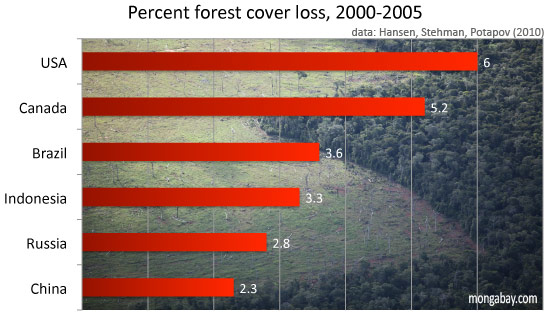
  • Energy and Global Warming News for April 27: US & Canada lose higher percentage of forests than Brazil; Business groups say climate impasse undermines clean energy

    http://photos.mongabay.com/10/0426_gfcl_percent.jpg

    US & Canada Lose Higher Percentage of Forests Than Brazil

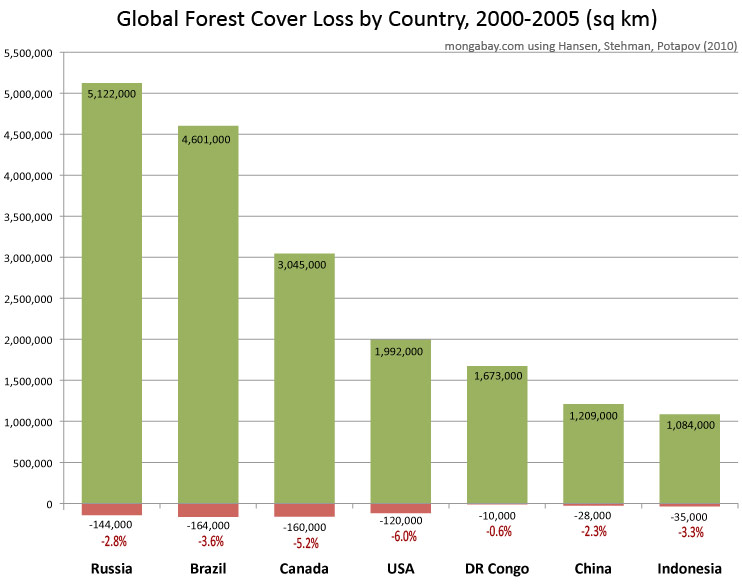
    All I can say is wow! Mongabay is highlighting a new study in the Proceedings of the National Academy of Sciences which reveals that between 2000 and 2005 over one million square kilometers of forest were chopped down worldwide, with both the United States and Canada losing a greater percentage of forest than the poster children of tree destruction, Brazil and Indonesia.

    Brazil Has Highest Area Loss, But Average Percentage

    There is a little bit of stats parsing going on here: Looking at the seven nations which have more than one million square kilometers of forest still remaining–that’s Brazil, Canada, China, Democratic Republic of Congo, Indonesia, Russia, and the United States–Brazil still led the pack in terms of area cleared, with about 33,000 square kilometers of both rainforest and tropical dry forest cleared per year, for a total of 165,000 square kilometers lost. That represents 3.6% of it’s total forest cover at the start of the period examined.

    However, though Canada and the United States lost less forest cover by area (160,000 and 120,000 square kilometers, respectively), in percentage terms Canada lost 5.2% of it’s total and the US lost 6% of total forest cover.

    Keep in mind, the global average for the time period was 3.5%.

    The main drivers of forest loss in the US during this time period were fire and better infestation in Alaska and the western states, “large-scale logging in the southeast, along the western coast, and in the Midwest.”

    US Southeast Among Highest Rates of Global Deforestation
    The report concludes,

    The often publicized phenomenon of forest conversion within the humid tropics is observed in our results, but significant [gross forest cover loss] is evident in all biomes. For example, rates of GFCL in regions such as the southeast United States are among the highest globally.

    Read more, about the distribution of forest loss by ecosystem: Mongabay

    Here’s the original paper: Quantification of global gross forest cover loss

    See also “Is human-caused climate change killing the great forests of the American West?

    Business Groups Say Climate Impasse Undermines Clean Energy

    The Capitol Hill politics bogging down a climate bill in the Senate are also hobbling investments in low-carbon energy and prompting calls from some business groups for action.

    President Barack Obama is scheduled to travel Tuesday to a Siemens Corp. wind turbine facility in Fort Madison, Iowa, Tuesday as part of the White House effort to tout the economic, environmental and national security benefits of clean energy investments. The company expanded the plant, adding more than 600 jobs with capital from the stimulus package and tax credits.

    Siemens, a unit of the German parent company Siemens AG, is representative of thousands of companies looking to capitalize on a carbon-constrained economy. It is building a range of products that would be attractive if there was a cost for emitting carbon. Besides efficient motors and generators, they are also developing technology to capture emissions from coal plants, have a retro-fitting business that installs energy-efficient equipment in buildings, and plan to expand their solar power unit in the U.S.

    Nearly every sector of the energy industry is in some way affected by Congressional deliberations on climate and energy policy, whether it is makers of wind turbines and solar plants, utilities planning nuclear power projects or companies that make natural-gas generators and clean-coal technology. While some want to see a carbon market that will create demand for their products, others say they want to get clarity on how the new emission rules will affect their plans.

    May the Trimmest Building Win

    The Environmental Protection Agency has announced an energy efficiency contest to help buildings around the nation trim their consumption.

    Called the National Building Competition, it is patterned after “The Biggest Loser,” an NBC show that spotlights overweight contestants trying to lose weight. The competitors include an office building in Midtown Manhattan, a department store in Southern California, a medical center in Cleveland and elementary schools in Colorado and New Jersey.

    “We came up with the idea that most everyone could relate to the idea of losing weight, and that having U.S. buildings try to shed their energy waste made sense,” Maura Beard, a spokeswoman for the E.P.A.’s Energy Star program, said in an e-mail message. “We felt people could follow the contestants, relate to their efforts and encourage similar changes in buildings across the country.”

    The 14 contestants, selected from among 200 applicants, will be encouraged to improve their efficiency by taking simple steps like turning off lights, unplugging power charges and switching to automated temperature controls.

    The New York City participant, a 23-story building built in 1896 at 522 Fifth Avenue, at 44th Street, is owned by Morgan Stanley.

    Cape Cod Project Is Crucial Step for U.S. Wind Industry

    More than 800 giant wind turbines spin off the coasts of Denmark, Britain and seven other European countries, generating enough electricity from strong ocean breezes to power hundreds of thousands of homes. China’s first offshore wind farm, a 102-megawatt venture near Shanghai, goes online this month, with more in the pipeline.

    But despite a decade of efforts, not a single offshore turbine has been built in the United States.

    Experts say progress has been slowed by a variety of factors, including poor economics, an uncertain regulatory framework and local opposition.

    When the Obama administration announces a decision this week on the most prominent project — Cape Wind, off the coast of Massachusetts — it could have implications from Long Island to Lake Erie. An approval from Interior Secretary Ken Salazar might well nudge the project to completion as the nation’s first offshore wind farm. On the other hand, some developers say a thumbs-down could gut America’s offshore wind industry before it ever really gets started.

    “It is imperative that Cape Wind gets built — we need the momentum,” said Peter Giller, chief executive of OffshoreMW, an upstart developer with ambitions to build two 700-megawatt projects off the shores of New Jersey and Massachusetts.

    At least half a dozen offshore wind projects that could provide electricity for hundreds of thousands of customers have already been proposed in the shallow waters off the East Coast and the Great Lakes. Even more are in the paper-napkin stage, including a project that would place a bank of turbines about 13 miles off the Rockaway peninsula in New York.

    Although offshore wind farms are roughly twice as expensive as land-based ones, developers and advocates say offshore projects have several advantages. Sea and lake breezes are typically stronger, steadier and more reliable than wind on land. Offshore turbines can also be located close to the power-hungry populations along the coasts, eliminating the need for new overland transmission lines. And if the turbines are built far enough from shore, they do not significantly alter the view — a major objection from many local opponents.

    The National Renewable Energy Laboratory has estimated that about 90,000 megawatts of electricity could be extracted from offshore winds in United States coastal waters less than 100 feet deep, the easiest and most cost-effective depths. Most of that potential lies in New England, the mid-Atlantic and the Great Lakes.

    If the handful of American projects on the drawing board are built as planned, they would produce some 2,500 megawatts, according to the American Wind Energy Association, or about as much as two midsize nuclear power plants.

    The Cape Wind project would place 130 turbines, each 440 feet tall, over 24 square miles of Nantucket Sound at a likely cost of more than $1 billion.

    Opponents have argued that the venture is too expensive and would interfere with local fishermen, intrude on the sacred rituals and submerged burial grounds of two local Indian tribes and destroy the view.

  • China gets golden LG Incite

    GT500s LG has launched another TD-SCDMA smartphone for the nascent Chinese market running Windows Mobile 6.5.

    The LG GT500s has a 3 inch WQVGA, 3 megapixel camera and the usual collection of GPS and FM-Radio, but lacks WIFI, a common restriction in China.

    The handset also features a striking gold shell and an improved styling to the similarly specified LG Incite.

    Via Mobile-Review.com


  • A further step towards “Expert of Solids”

    Granulation is one of the most important processes in the production of solid dosage forms. The Pharma Service at OYSTAR Hüttlin will therefore be focusing on this aspect during the second part of its “Expert of Solids” seminar series that is being held for the third time. The three-day seminar entitled “Granulation – From Powder To Tablet” will be taking place from May 4 in Schopfheim, Baden-Württemberg. The attendees will be familiarized with the theoretical basic principles and methods of the granulation process and will at the same time have the opportunity to gain knowledge of their practical application on the high shear mixer granulator and the fluid bed granulator in OYSTAR Hüttlin’s own experimental laboratory. The goal of the seminar is to assist the participants in dealing skillfully with various granulation technologies and to familiarize them with important process parameters.

    OYSTAR Hüttlin is holding the four-part “Expert of Solids” seminar series to provide in-depth process technology know-how and present the latest technologies. Participants attending all four seminars will gain the “Expert of Solids” qualification. It is, however, also possible to attend just individual events only. With two additional seminars on the subjects of “scale-up” and “Process Analytical Technology (PAT)”, attendees are also able to gain the “Master of Solids” qualification. The seminar series is open to all specialists involved with the development and production of solid dosage forms.

    The “Statistical Design Space Development” seminar was already held at the beginning of the year. The first part of the seminar series on “Validation of Cleaning” will be taking place in October, and part three on the subject of “Coating” will follow in November.

  • New universal swivel lifting ring of CODIPRO!

    CODIPRO enlarges its range by the new universal swivel lifting ring MegaDSS.

    Especially developed for heavy loads, the swivel shackle MegaDSS allows lifts and turnings of loads up to 50 tons per lifting ring.

    Thanks to its ergonomic design, it offers a high WLL by reduced place. Furthermore the swivel shackle MegaDSS has been developed to be used directly with the hook of the traveling crane. As all our swivel lifting rings the MegaDSS also has the safety factor 4, is in accordance with the directive on machinery 2006/42/EC and can be made to measure (thread and length of axis) within a short delivery time.

    Our sales team will be available for any further information: +352 26 81 54-1 or [email protected]

  • PIPE SCRAPERS KIT PATENTED BY RITMO for HDPE – PP – PVDF

    TURBO is the new pipe scrapers Kit patented by RITMO for pipes and fittings ranging from Ø 20 to 63 mm SDR 6 to 11. TURBO is simple and easy to use. This incredible pipe scraper can work in confined spaces substantially reducing working times, especially during repair operations.

    The rotating tool allows fast and precise scraping, without defects. Its blades also allow the perfect facing of the pipe ends which have been roughly cut due to a situation which makes the use of a pipe cutter difficult, like narrow spaces.

    Six different sizes of the TURBO are available, according to the pipe size. TURBO has to be used with a cordless driver.

    – Models:
    Turbo 20
    working range Ø 20 mm; scraping lenght 45 mm

    Turbo 25
    working range Ø 25 mm; scraping lenght 45 mm

    Turbo 32
    working range Ø 32 mm; scraping lenght 45 mm

    Turbo 40
    working range Ø 40 mm; scraping lenght 55 mm

    Turbo 50
    working range Ø 50 mm; scraping lenght 55 mm

    Turbo 63
    working range Ø 63 mm; scraping lenght 55 mm

    RITMO S.p.A.
    Via A. Volta, 7 35037 Bresseo di Teolo (PD) ITALY
    Ph. + 39 049 9901888 Fax: +39 049 9901993 www.ritmo.it – [email protected]

  • OYSTAR offers seminar series for “Experts of Solids”

    In order to make process technology know-how available, the Pharma Service at OYSTAR Hüttlin is holding a series of seminars. The series began with the seminar entitled “Statistical Design Space Development – From DoE To Granules”. Twenty attendees acquired theoretical knowledge on Design of Experiment (DoE) and subsequently had the opportunity to put this know-how immediately into practice in OYSTAR Hüttlin’s own laboratory, where the participants themselves performed and analyzed granulation trials.

    The goal of the seminar instructors was to assist the participants in dealing skillfully with the latest methods of Design of Experiment. Pascal Wehrlé, professor at the University of Strasbourg, thus first of all familiarized the participants with the basic concept of “Quality by Design” for quality assurance during the product and process design phase. Prof. Wehrlé then rounded off the subject with a talk on the theory of Design of Experiment. Marcus Knöll, head of Pharma Service at OYSTAR Hüttlin, used FMEA to provide a detailed overview of the influencing factors in fluid bed granulation. In preparation for the practical part of the seminar, Erik Johansson, senior application analyst at Umetrics, expounded the subject of “full factorial designs”. Then the seminar participants developed their own case studies with the help of the MODDE software and went directly into the laboratory with them for the practical implementation on the fluid bed granulator. Wehrlé began the second day of the seminar with an introduction to the SPC (Statistical Process Control) methodology for optimized process stability. Erik Johansson continued with the subject of “fractional factorial designs”. Afterwards, Andrea Hartung, a staff member of the Pharma Service at OYSTAR Hüttlin, presented real process data from a granulation of the angiotensin converting enzyme (ACE) inhibitor Enalapril obtained with the help of DoE.

    Following on from this first seminar, three further events will take place in 2010 to complete the series and will cover the areas of cleaning and validation as well as granulation and coating. Participants attending all four seminars will gain the “Expert of Solids” qualification. It is, however, also possible to attend just individual events only. With two additional seminars on the subjects of scale-up and Process Analytical Technology (PAT), attendees are also able to gain the “Master of Solids” qualification.

  • Kitchen island on wheels

    Materials: STENSTORP kitchen island NOK 3.250,-, 4 wheels ca. NOK 1200,-, drill, hammer

    Description: A couple of years ago I bought a STENSTORP kitchen island. Because we have little space, I wanted to have put wheels on it for more flexibility. We did the makeover this winter and it works so well!

    My sister is a handy woman and did most of the work. I took pictures, and chopped of the legs, actually sawed them!

    The item has shelves on one side (now called backside). On the reverse side there is an open space so you can use it as a bar, with stools (now called front side). The two parts are divided by a wall, which serves as the back of the shelves.

    First we took the top of the kitchen island.

    Then we sawed of the horizontal planks that are holding the front side legs. Then we shortened all legs.

    We took the legs from the front side and fasten it to the vertical plank that is holding the wall.

    Then we took horizontal planks and fasten it under the legs, and fasten the wheels in them.

    In the end we put the top back on!!!

    Voila! And good luck!

    ~ hildeovedia, Oslo, Norway


  • Microsoft Imagine Cup 2010: Students Take On Big Problems With Tech [Ideas]

    The U.S. finals of Microsoft’s Imagine Cup, an annual competition that encourages students to tackle big problems with technology, were held yesterday. One winning solution: combining cameraphones and powerful software to detect diseases in developing areas of the world. More »