Category: News

  • Why Is UNESCO Supporting Locking Up Information?

    Today may be World Intellectual Property Day, but this past Friday was also apparently World Book and Copyright Day (quite a bookended weekend for government monopolies on knowledge!). Bas Grasmayer points out that UNESCO, the United Nations Educational, Scientific and Cultural Organization, which is supposed to be focused on “promoting international collaboration through education, science, and culture” oddly chose Friday’s “World Book and Copyright Day” to launch an “anti-piracy observatory.”

    This is bizarre for all sorts of reasons. An organization focused on encouraging education and international collaboration seems like the last place that would be supporting locking up information through government-granted monopolies. This “observatory” appears to have little interest in determining whether or not stronger copyright actually promotes international collaboration through education, science and culture — and simply assumes it must. Given that the actual evidence on this particular topic — especially in developing nations where you would think UNESCO would be most concerned — suggests exactly the opposite, it’s quite troubling that UNESCO would take this particular position. It’s a position that harms developing nations solely to benefit a few corporations. That doesn’t seem like a position UNESCO would support.

    Permalink | Comments | Email This Story


  • Will Foursquare Badges Really Help Newspapers?

    The Wall Street Journal, which has waded into a fierce battle for local New York readers with the New York Times, has turned to the uber-hip social networking service Foursquare for some reinforcements. The Journal announced today that readers can get news and reviews about local spots in the Big Apple through a partnership with Foursquare, and can win special badges that have been created for the newspaper, including the “Urban Adventurer” and “Lunch Box” badges. It seems like an interesting extension of the Journal’s core mandate to deliver news and information, but the important question is whether it will help the paper in any tangible way.

    The news and review items are tagged by the Journal with specific locations, so that when a user checks in at that spot with Foursquare, they appear as related “tips.” A recent visit to the Journal’s page on Foursquare showed that news items included one about the George Washington Bridge:

    Police were told to stop and search would-be subway bomber Najibullah Zazi’s car in Sept. 2009 as he drove up to the bridge — but waved him across without finding two pounds of explosives hidden inside.

    There was also one about a local restaurant called Aureole:

    For lunch, served from noon to 2:30 p.m. Monday through Saturday, the most popular entrees are the miso Alaskan black cod ($26) and the grilled burger with bacon and pickled ramp dressing ($19)

    And local attractions such as Citi Field:

    Watch out for the Mets’ power-hitting outfielder Jason Bay: He’s one of the 10 streakiest hitters in baseball, either very hot or ice cold — and, so far this season, the latter.

    Interesting links, but are they relevant to users of Foursquare? That’s hard to say. The restaurant news was 12 hours old, and the George Washington Bridge item appeared to be about something that happened a year ago. There were also items about new events at the Lincoln Center, how Alex Rodriguez is the slowest runner on the New York Yankees, some info about The Mark Hotel’s financial woes and some SEC financial news tagged to the headquarters of Goldman Sachs.

    This isn’t the first partnership Foursquare has formed with a news outlet; earlier this year, it signed a deal with Metro News International to provide news items related to local venues in Toronto, and more recently the location-based social networking provider did a deal with the Financial Times to offer points to students who check in at specific locations (Harvard, the London School of Economics, etc.) which can later be redeemed for access to articles behind the paper’s paywall.

    The Journal’s experiment with Foursquare is worth applauding, if only because there is so little experimentation coming from some traditional media outlets. But it’s still an open question as to whether it will have tangible results for the WSJ. Are Foursquare users potential Journal subscribers? Will the paper pursue potential advertising connections with Foursquare locations in addition to offering reviews and/or news? That might be better done via Foursquare or Yelp, since they are in that space already — and so what kind of payoff does the Journal get from these partnerships apart from looking cool and hip? Perhaps that is enough for owner Rupert Murdoch.

  • Motorola’s 3D Android phone appears again

    New images have leaked of what could be Motorola’s first 3D Android phone. A similar device was spotted last week which looked more like a prototype, but these new images appear to be final hardware. We say this because the new phone (MT810) now sports the China Mobile logo.

    The speculation of a 3D-capable device stems from Motorola’s recent patent application for a three dimensional display.

    A section of the patent reads:

    “An optical element is disposed, for example, molded or laminated, within the first housing. The optical element allows light to pass through, from the display to a side of the housing for viewing. While the display present images in two dimensions, the optical element changes the image viewed therethrough to appear as three dimensional. The optical element is a plurality of lens, preferably made of polymer lenticule, but may also be other types of optical structures, for example, electro-wetting lenses or parallax barriers.”

    As you can see from the images below, this new Motorola phone has a transparent cover on top of its display. If you read through the entire patent, many of the features they describe match up nicely with the form factor of this device.

    Nintendo is planning to launch their 3D handheld gaming system this year, so it wouldn’t be that much of a stretch to see Motorola do the same. The 3D effects for the Nintendo 3DS are speculated to be based on autostereoscopic imagery generated by LCDs with parallax barrier technology, which is the same material mentioned in the Motorola patent.


    Related Posts

  • Courtesy Of Whirlpool, More Proof That Europe Is The Sick Man Of The World (WHR)

    it’s not just debt crises on the European periphery that the continent has to worry about.

    The economy still really sucks.

    This slide from Whirlpool’s (WHR) latest earnings presentation — the earnings report that pushed the stock to an all-time high — is rather telling.

    Basically the world looks like: Asia and Latin America are hot. North America’s coming back modestly and Europe remains dormant.

    chart

    Join the conversation about this story »

    See Also:

  • Solis Spreads Blame for Mine Blast, Vows Reg Reforms

    Speaking at a labor conference in Washington today, Hilda Solis went after Massey Energy for the company’s role in the explosion that killed 29 miners in Montcoal, W.Va., earlier this month. But the Labor secretary also laid some of the blame for that tragedy on federal regulators and policymakers for failing to enforce the safety measures that Massey has such a long history of violating.

    “The science is there, the technology is there. But it’s about the employer,” Solis said at the Fairfax hotel near D.C.’s Dupont Circle. “And yes, it’s also about the regulations and the enforcement.”

    Here we are in the 21st Century, and these things are still going on. … We have to have teeth that will encourage people to take care of employees in the work place.

    After the speech, a handler whisked Solis away before I could ask any questions about what teeth she had in mind.

  • Dream Essentials Sweet Dreams Contoured Sleep Mask

    Light as a feather, slim-line and very stylish, the Sweet Dreams Sleep and Relaxation Mask is a molded contoured sleep aid that offers full comfort without any pressure to the eyes. Mask features concave eye pockets to keep the sleep mask away from your eyes and allow for normal blinking and air circulation. Conveniently folds up into a complimentary 4 x 6 satin drawstring pouch with a pair of soft foam Earplugs. Mask Construction: Molded soft foam, surrounded by a polyester interlock fabric. Mask fastens with an adjustable velcro strap Care: Hand wash in cool water. Lay flat to dry.

    View Dream Essentials Sweet Dreams Contoured Sleep Mask Details

  • Stop Snoring Mouth Piece – Anti Snore Device Sleep Apnea Cessation Aid

    Snore-Ex’s anti snoring mouthpiece is an oral appliance also referred to as a Mandibular Advancement Device. The simple custom-fit mouthpiece positions and holds the jaw, opening airways for maximum airflow, thus reducing or eliminating snoring vibrations. More specifically, it provides a forward-positioning for the tongue, which is connected to the lower jaw. This increases airflow and minimizes the most common snoring cause – soft palette vibrations in the rear of the mouth. This is for adults only. Actual color of the travel case may vary (blue or white).

    View Stop Snoring Mouth Piece – Anti Snore Device Sleep Apnea Cessation Aid Details

  • Links Restored

    Most links out there in the blogosphere to entries on my old blog will now redirect to their proper pages here. It’s funny how a guy can waste hours trying to do something in htaccess, finally relying on a smarter guy for help, and then a guy does something trickier in .php and does it on the first ok, second try.

    :blows on fingers:

    Filed under: About this Site

  • Time: NASCAR struggles to get its groove back

    Filed under: ,

    Bristol Speedway is among the most well-known tracks in America, and an all-time favorite of NASCAR fans. In fact, the track sold out 55 straight times beginning in 1982. But that streak came to an end in March, and the NASCAR news only gets more depressing from there. According to Time, NASCAR has seen its television audiences drop by a knee-wobbling 25 percent since 2005, and last year alone, attendance was down 10 percent.

    So has NASCAR turned off its core audience – or has the economy put the hurt on the official sport of the south? Apparently the answer is a little of both, as Time reports that the struggling economy may be only part of the problem. A big issue could be that NASCAR isn’t the dangerous, crash-tastic, post-race fist fighting affair that it once was. NASCAR has encouraged its drivers to get a bit more confrontational in 2010 to help win back some fans, but even that idea seemed to backfire after Carl Edwards intentionally crashed into Brad Keselowski back in March to settle a score. Drivers are also less likely to engage in reckless behavior due to the fact that many drivers are sponsored by wholesome, family-oriented brands like Tide and Cheerios.

    To get NASCAR back into the hearts and minds of the American people, both the sport and its leader, Brian France (above), are looking to make changes. Among the changes, the left turn circuit is looking into are tweaking the way drivers earn points, shortening the length of races and even changing the formation of cars during cautions to encourage more passing. Whether you love NASCAR or you hate it, the Time article is a very interesting read. NASCAR is even looking for fans to chime in with ways to improve the sport, so feel free to head into the comments to come up with ways to make the sport more interesting. And try to come up with something more clever than “mix in an occasional right turn.”

    [Source: Time | Image: Jason Smith/Getty]

    Time: NASCAR struggles to get its groove back originally appeared on Autoblog on Mon, 26 Apr 2010 18:28:00 EST. Please see our terms for use of feeds.

    Read | Permalink | Email this | Comments

  • Introduction to the topic

    The topic is plane geometric shapes or basic geometry and the selected resources listed and briefly summarized below are directly related to accomplishing the learning objectives provided by the VA SOLs.  Grade 1 is the level and the associating SOLs are 1.12 and 1.13.  Additionally, solid geometric shapes such as the sphere, cube, cone, cylinder, pyramid, and rectangular prism will be explored to show similarities and differences when comparing, relating, and recalling prior knowledge of plane geometric shapes. 

  • Want The Gold Standard? Ok, Then You Like How Things Are Going Down In Greece

    Peter Schiff and economist James Galbraith showed up on CNBC today for a somewhat maddening debate about the seriousness of the US deficit. We say maddening because the two are so far apart on the issue that debate is impossible, and both of them are largely informed by ideology rather than a rational debate about what’s happening right now.

    Bottom line: Galbraith has absolutely no fear about the deficit because we can print, and he notes that long-term rates are low. Schiff says the US government is a subprime borrower.

    What’s interesting is when they talk about Greece. Schiff says the US is the next Greece. Galbraith says the difference is that Greece is a member of the euro and doesn’t control its currency (it can’t print).

    The key line though is when Schiff says: “The fact that Greece can’t print money is a good thing.”

    This is the aha line that reveals Schiff’s true ideology. It’s better to have an inflexible currency where you’re forced to default, rather than have the ability to print and inflate. Essentially Greece is under a modern version of the gold standard — it doesn’t have a currency, it just has a supply of euros that it doesn’t control, much like any country would be if its currency were gold.

    Join the conversation about this story »

  • Steve Goodman post office bill passes House; Senate next

    below, release from Quigley….

    Quigley Bill to Name Post Office for Steve Goodman Passes House
    Songwriter created “City of New Orleans,” “Go Cubs Go,” devoted life to Chicago, music

    WASHINGTON – Today, a bill introduced by Congressman Mike Quigley (D-IL) to name a Chicago post office for the late songwriter Steve Goodman passed in the U.S. House of Representatives. The bill now moves to the Senate for consideration.

    Quigley’s effort to memorialize and celebrate Goodman’s life at the Lakeview Post Office, located at 1343 W. Irving Park Road, has the full support of the Illinois Congressional delegation, the Old Town School of Folk Music, and a growing list of local and nationally known recording artists.

    In advance of this evening’s vote, Quigley delivered the following remarks on the House floor:

    “I rise today in support of H.R. 4861, a resolution to name the Post Office at 1343 West Irving Park Road after Steve Goodman.

    Steve Goodman was a true Chicagoan, a legendary folk singer and songwriter, and a faithful Cubs fan.

    Sadly, Goodman succumbed to leukemia in 1984 at the young age of 36 after a courageous 15-year battle with the disease.

    Over the course of his illness, Goodman wrote some of the most enduring American folk songs, including “The City of New Orleans,” for which he won one of his two Grammy awards, and the great Chicago tune “Lincoln Park Pirates.”

    Goodman’s career was inexorably intertwined with Chicago’s Old Town School of Folk Music, where he learned his craft and befriended folk music luminaries such as Roger McGuinn of The Byrds, Bob Gibson, Bonnie Koloc, and John Prine.

    While older Goodman fans are no doubt aware of his connection to the Cubs, best exemplified by his song “A Dying Cubs Fan’s Last Request,” in recent years younger generations have come to know Steve Goodman as the writer and performer of “Go, Cubs, Go,” the anthem played at Wrigley Field following Cubs’ wins.

    Steve’s spirit lives on after every Cubs home win, as thousands of fans happily head home from Wrigley singing, “Go, Cubs, Go…”

    With the passage of this legislation, it’s possible that the strains of this happy tune will be heard on the steps of the Steve Goodman Post Office, not a mile up Clark Street from Wrigley Field.

    Naming the Post Office at 1343 West Irving Park Road after Steve Goodman is a small but fitting way to honor the life and work of a man whose music was always imbued with emotions and scenes of everyday life.

    I urge the swift passage of this legislation.”

    Quigley’s resolution now moves to the Senate for consideration. Once the measure is approved, Quigley is planning a “musical” unveiling event at the post office for the community this summer, in collaboration with the Old Town School of Folk Music. More details will be made available as plans progress.

    Steve Goodman Biography
    Steve Goodman is perhaps best known by Chicagoans and Cubs fans as the writer and performer of “Go Cubs Go”, the song that plays at Wrigley Field following Cubs’ wins. But while this song may bring him notoriety, Steve Goodman’s life was an inspiration for many other reasons. Be it the courage and perseverance that characterized his 15-year battle with leukemia, his celebrated contributions to American folk music, or the general enthusiasm and good humor with which he approached life, Steve Goodman was a great Chicagoan by all accounts.

    Goodman’s career in folk music featured both exemplary writing and performance. Besides his Cubs-related music, Goodman released 10 albums of folk music and five albums of his work have been released posthumously. He received two Grammy Awards, both posthumously, for his writing of the hit “City of New Orleans” and his album Unfinished Business. In fact, “City of New Orleans” was a top-20 hit for Arlo Guthrie in 1972, and a number one country music hit for Willie Nelson in 1985, the year that Goodman won his first Grammy.

    Goodman’s singing career was centered largely around the folk music clubs of Chicago, and Goodman wrote and performed many classic songs about the city, including two well known songs about the Chicago Cubs – “The Dying Cub Fan’s Last Request” and “Go, Cubs, Go.” Other great Chicago-related songs of Goodman’s include “The Lincoln Park Pirates,” about the notorious Lincoln Towing Company, and “Daley’s Gone,” eulogizing the late Mayor Richard J. Daley.

    The Old Town School of Folk Music played a major role in Goodman’s music career. He studied at the School in the 1960s with folk music luminaries such as Roger McGuinn of the Byrds, Bob Gibson, Bonnie Koloc, and his good friend John Prine. Along with these artists, Goodman helped build the School’s reputation as home to many of folk music’s greatest writers and performers.

    Most remarkable, however, is that Goodman crafted such an illustrious music career while battling leukemia for 15 years until his death at age 36. He endured his fight with courage and good humor – it’s said that he nicknamed himself “Cool Hand Leuk” – and tragically died in 1984 just eleven days before his beloved Cubs played their first playoff game at Wrigley Field since 1945. Goodman had been asked to sing the “Star Spangled Banner” before that game, but Jimmy Buffett filled in and dedicated it to his friend. Goodman’s ashes were later spread at Wrigley Field, and his memory lives on every time the Cubs win a home game and thousands happily sing along to “Go Cubs Go.”

    ###

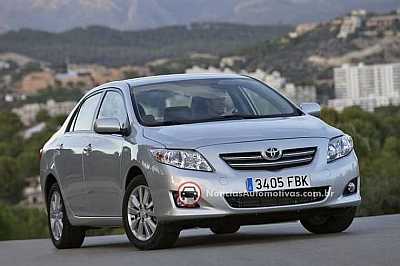
  • Corolla 2008 em diante será chamado para verificação do tapete

    A Toyota concordou em fazer o recall do Corolla em todo o país. Depois de ser proibida de vender em Minas Gerais e pressionada a fazer o recall a nível nacional, a marca vai começar a chamada individualmente.
    Todos os modelos produzidos a partir de Abril de 2008 serão chamados para verificação e orientação da fixação correta do tapete no veículo.
    A Toyota, no entanto, não divulgou quantas unidades serão chamadas, mas números da Fenabrave revelam que desde aquela época foram vendidos 102.890 exemplares do Corolla.
  • The Price of Water: A Comparison of Water Rates, Usage in 30 U.S. Cities

    Across the country there is wide variation in use and price for water consumption in major urban areas, with residential rates being lowest in the Great Lakes region, according to a Circle of Blue survey.

    Milwaukee is actually looking to increase water use because of its spare infrastructure capacity and ample supply.By Brett Walton
    Circle of Blue

    A first of its kind survey of residential water use and prices in 30 metropolitan regions in the United States has found that some cities in rain-scarce regions have the lowest residential water rates and the highest level of water use. A family of four using 100 gallons per person each day will pay on average $34.29 a month in Phoenix compared to $65.47 for the same amount in Boston.

    The survey, conducted by Circle of Blue over the last several months, also found that average daily residential water use ranged from a low of 41 gallons per person in Boston to a high of 211 gallons per person in Fresno, Calif.

    The Circle of Blue survey includes data on water rates and water usage from the 20 largest U.S. cities, according to the 2000 Census, and ten regionally representative cities to gain a broad view of urban water pricing. The survey comes as municipal water departments and their customers across the country contend with the ironic and unintended consequence of the economic recession and water conservation. In most major cities water use is declining while rates charged to residential customers are rising.

    The effect of the crossing trends is less severe in Chicago, Detroit and Milwaukee, where municipal water is supplied by the lakes and prices range from $24.12 to $28.36.

    “The reason why rates are so low in the Great Lakes region is proximity to abundant water,” said Nick Schroeck, executive director of the Great Lakes Environmental Law Center in Detroit. “Moving water takes an extraordinary amount of energy. Energy costs are higher in arid regions where water has to be brought from far away. For us, you look at the larger cities, and they are right on one of the lakes. It’s easy to get water to the population centers.”

    Even though prices are comparatively low, rates in the Great Lakes region have increased in recent years because of declining consumption. Most of that decrease is attributed to the loss of industrial activity, though shrinking urban populations and personal frugality are also factors.

    “For more than 20 years industry has been moving south looking for cheaper labor, I’m hoping that now they’ll start coming back looking for cheaper water.”
    -Richard Meeusen, WAVE Founder

    Falling demand is a concern for Carrie Lewis, the superintendent of Milwaukee Water Works, because the utility’s revenue comes from water sales, so less use means higher rates. In an interview, Lewis described a downward-sloping graph showing the decrease in water sales over the last three decades. Sales in Milwaukee dropped 41 percent from 1976 to 2008, primarily because water-intensive breweries and tanneries went out of business or left town.

    “That’s a frightening graph if you make money selling water,” Lewis said.

    As a result, water conservation is not a big part of Milwaukee’s agenda. Milwaukee Water Works (MWW) rejected a suggestion from the state public service commission to institute a block tariff rate structure, which would have raised prices for high-volume users to encourage using less water. The city is actually looking to increase water use because of its spare infrastructure capacity and ample supply.

    “MWW could double its customer base without having to build new facilities,” Lewis said. “There’s no capital cost to avoid by increasing water use.”

    To that end, some Milwaukee businesses want the city to fish for industry with the lure of cheap water, according to an article from the American Water Works Association. Business owner Richard Meeusen started the group Water Attracting Valued Employers (WAVE) to lobby for a discounted industrial water rate.

    “For more than 20 years industry has been moving south looking for cheaper labor, I’m hoping that now they’ll start coming back looking for cheaper water,” Meeusen told the AWWA.

    Water demand in Milwaukee is similar to urban areas across the United States. Per capita water use is dropping in nearly every city surveyed, and total water use has fallen or remains steady in some cities despite population bulges.

    Infographic: Water Use Comparison of 5 U.S. Cities

    BarGraphs590

    Graphic by Trevor Seela

    Water in the Southwest
    Declines in demand are especially notable in arid cities of the Southwest and southern California. These regions binged in the 20th century on relatively abundant supplies brought from afar, using water to leverage growth. But as populations have disproportionately grown in comparison to the available supply, cities are cutting back to avoid building costly desalination plants, investing in diversion schemes or buying expensive water through market exchanges.

    Per capita use in Santa Fe has dropped 42 percent since 1995 and total use is down nearly 30 percent, while Phoenix consumes the same amount of water now as it did 10 years ago despite adding roughly 400,000 residents. Figures released two weeks ago from the Los Angeles Department of Water and Power show that it supplied less water in February than any time in the last three decades, according to the Los Angeles Times.

    Las Vegas has significantly cut outdoor water use by prohibiting front lawns for new houses since 2003. As a result, water deliveries from the Southern Nevada Water Authority, which supplies Las Vegas, dropped by 20 billion gallons from 2002 to 2003–enough water to cover the annual residential needs of a city of 150,000.

    People living in the Southwest are often excoriated for their water use, but critics neglect the necessity for water, argues Stephanie Duer, water conservation program coordinator for Salt Lake City Public Utilities.

    “I never hear people complain about Alaska or Connecticut using too much heating oil,” Duer said in an interview. “It seems to me that since we’re in a dry region we will be using more water.”

    Water use needs to be weighed against the other benefits it provides, Duer added. “I hear people say ‘Why don’t you plant native species’ Well, We don’t have a single shade tree that would grow at this elevation. Do you want to live in a city without trees? We want to keep the urban forest for quality of life and keeping shade helps to reduce energy use in the summer. We’re working hard to find that balance in water use.”

    “Water use is generally not publicized much outside of droughts. Water sort of has a technical side that often doesn’t get communicated well to the public.”
    -Drew Beckwith

    Though water supplies are precious in these places, the price of water for residential customers is relatively cheap. A family of four using 100 gallons per person each day will pay on average $32.93 a month in Las Vegas compared to $72.95 for the same amount in Atlanta, which has more than ten times the amount of average annual rainfall as Las Vegas, according to National Weather Service statistics. While many factors contribute to water pricing, such as the energy used to pump water, the price of chemicals for treatment costs, recent infrastructure projects and operations efficiency–the difference in several Western cities can partly be explained by government subsidy.

    “In the West there was massive federal investment in major water infrastructure,” said Heather Cooley, a researcher for the Pacific Institute’s water program. “Those states and cities didn’t have to pay the capital cost. California’s Central Valley Project is an example of that. The capital cost not including interest still hasn’t been paid, and that was built over 50 years ago. The subsidies create an artificial price.”

    Water delivered via the Central Valley Project, a federal initiative led by the Bureau of Reclamation, is primarily directed toward agriculture. The same federal support helped build the Central Arizona Project, a canal that connects water from the Colorado River to Phoenix, Tucson and other cities in three Arizona counties.

    Residents of those cities who benefit from this lifeline channeled through the Sonoran Desert are paying only 45 percent of the project’s $3.6 billion cost. The difference is a national burden.

    The Central Arizona Project, Hoover Dam, California’s State Water Project, Colorado’s Big Thompson Project are all water supply diversions paid for in part by federal or state tax funds. But when new supply projects are financed by customers directly, higher water rates are the consequence.

    Take Santa Fe, for example.

    The city has the highest overall rates in the survey and the highest rates for high-volume users. Because water is scarce and current groundwater use is unsustainable, the city is building the $217 million Buckman Direct Diversion to tap water from the San Juan-Chama diversion. It is a non-federal project, and the $187 million after-grant cost is being jointly paid by the city and the county.

    Full Survey Graphics
    allstats-165

    While Santa Fe’s supply project meets current needs, high-growth areas typically levy a one-time connection fee on new development to place the burden on newcomers for acquiring anticipated supplies or building treatment. In Las Vegas, for example, residents buying new houses would pay $1,440 to the Las Vegas Valley Water District and $4,870 to the regional supplier, the Southern Nevada Water Authority.

    “Most of the infrastructure is paid for by new customers,” said Doug Bennett, SNWA’s conservation manager. “There’s not a lot of infrastructure dollars in the water rate.”

    Growth in Las Vegas has slowed in the last few years because of the economic crisis and the housing bubble implosion. Water utilities are not getting many connection fees-–down to 1,139 in 2008 from a high of just over 24,000 in 2005. Slower expansion means the city does not have to worry about meeting constantly rising demand.

    “Instead of worrying about meeting next year’s capacity, now there’s plenty,” said Matt Thorley, principal financial manager for LVVWD.

    The Future of Water Prices
    In many cities, residents lean on infrastructure investments made in the years following World War II. The strain shows. According to the Environmental Protection Agency, 240,000 water main breaks occur each year. Leaky pipes lose billions of dollars of treated water annually, and sewer overflows cause outbreaks of disease.

    Last year the EPA estimated that $335 billion would be needed to fix the country’s aging water supply system in the next few decades, according to the New York Times. But where that money will come from is unknown.

    According to Jack Moss, an advisor to Aquafed, the international water industry association, cities have to decide whether to make improvements through taxes or tariffs. The problem is that neither government spending nor higher water bills gather much voting support.

    Despite the hand wringing over prices, water in the U.S. remains cheap. In most cities surveyed by Circle of Blue a family of four can buy enough water for its indoor needs–50 gallons per person per day for washing, drinking, cooking and flushing–for less than $25 per month, which is a relatively small portion of a family budget.

    “Water is very reasonably priced,” said Doug Bennett, conservation manager for the Southern Nevada Water Authority. “[As a result], it’s not a major expense on people’s radar screen.”

    Meanwhile when prices come up for discussion there are always social justice concerns about access for the poor. However, with a few exceptions such as Detroit, most cities have adequate financial assistance programs to ensure in-home access for all.

    One barrier to better water management is communication between utilities and customers–a common chorus amongst water rate researchers interviewed for this article.

    “Water use is generally not publicized much outside of droughts,” said Drew Beckwith, a water specialist with Western Resource Advocates. “Water sort of has a technical side that often doesn’t get communicated well to the public.”

    Another problem may be habit. Water has generally been so cheap for so long, that people have become anchored to the past price, not realizing that sustainability costs money to achieve.

    Prices will undoubtedly rise in the near future. But the question of whether the increase comes via higher taxes or tariffs remains because bearing the price of doing nothing would be much worse.

    Note: Water rate information was gathered from the website of each city’s water utility and based on single-family residential rates. It is current as of April 1. Average prices for cities with seasonal rates were calculated using seasonal weighting. For water use information, Circle of Blue asked water departments directly the daily per capita usage for single- and multi-family residential customers.

    Brett Walton is a reporter for Circle of Blue. This is the second part of his investigation on U.S. urban water rates–read the first installment here as well as a profile on water pricing issues in Detroit here. Reach Walton at [email protected]. All graphics were created by Trevor Seela. Reach Seela at [email protected].

  • Text annotations

    “The Greedy Triangle” by Marilyn Burns and illustrated by Gordon Silveria“Three Pigs, One Wolf, and Seven Magic Shapes” by Grace Maccarone and illustrated by David Neuhaus“The Silly Story of Goldie Locks and the Three Squares” by Grace Maccarone and illustrated by Anne Kennedy“Cubes, Cones, Cylinders, & Spheres” by Tana Hoban“Discovering Shapes, Circles” by Sandy Riggs and art by Richard Maccabe

    The five books included to directly foster student learning of basic geometry are:

    • “The Greedy Triangle” by Marilyn Burns and illustrated by Gordon Silveria
    • “Three Pigs, One Wolf, and Seven Magic Shapes” by Grace Maccarone and illustrated by David Neuhaus
      • This book is of a modern day tale of the three little pigs and the big bad wolf.  Students will be pleasantly surprised as the story unveils an interestingly happy ending!  The book is a great resource for exploring geometric shapes, transformations, and understanding that shapes can be made from other shapes.  Interactive tangram ideas are provided in the back of the book. 
      • AMAZON link:  http://www.amazon.com/Three-Seven-Shapes-Scholastic-Reade r/dp/0590308572
    • “The Silly Story of Goldie Locks and the Three Squares” by Grace Maccarone and illustrated by Anne Kennedy
    • “Cubes, Cones, Cylinders, & Spheres” by Tana Hoban
      • Throughout this book, photographs of familiar objects found in our everyday lives depict a variety of shapes.  The picture book is great for guiding a class discussion on solid shapes and their attributes.  Vocabulary terms will be reinforced by students through discussion and exploration of other objects found in our environment.  This book is great for all students and especially for LEP students or for those who require additional support. 
      • AMAZON link:   http://www.amazon.com/Cubes-Cones-Cylinders-Spheres-Hoban/dp/0688153259   
    • “Discovering Shapes, Circles” by Sandy Riggs and art by Richard Maccabe
      • This resource book provides activities and fun facts that reinforce various concepts of circles in past and present times.  The hands on activities engage students in that the natural learning process is encouraged.  The teacher can evaluate student understanding through observations and interactions during activities and through class discussions exploring various concepts such as congruency, circumference, and using the circle to draw shapes.  Activities include Compass Creations, Drawing Circles, Are Circles Important, and more.  Answers and a glossary are provided. 
      • AMAZON link:  http://www.amazon.com/Circles-Discovering-Shapes-Sandy-Riggs/dp/0761404589/ref=sr_1_1?ie=UTF8&s=books&qid=1272266226&sr=1-1
  • Post-It Assault Rifle: Not a Good Idea [Post-its]

    I’m sure this concept design for a Post-It note dispenser shaped like a rifle is a joke, but I don’t get it. I mean, how are you supposed to kill someone with Post-It notes?? It makes no sense! [Yanko Design] More »


  • New One-Pawed Bandit phones!

    We like to give stuff away.  Because let’s be honest – without you, we wouldn’t be here.  To that end, we’ve added new phones to the One-Pawed Bandit game!  Special thanks to the gang at Best Buy Mobile for hooking us up with these devices!

    Here’s what we’ve added:

    1. Two (2) Motorola CLIQ XT devices
    One is being used as a review device.  Features include:

    • Android 1.5
    • 3.1-inch touchscreen
    • MOTOBLUR

    2. Two (2) HTC myTouch 3G devices with 3.5mm jack (black)
    Both of the devices are brand new in the box!  Features include:

    • 3.2-inch touchscreen
    • Android 1.5
    • 3.5mm headphone jack


    3. Two (2) LG Rumor Touch devices
    Both are being used as review devices.  Features include:

    • 3-inch touchscreen
    • 2.0-megapixel camera
    • microSD card slot


    What are you waiting for?  Head on over to the One-Pawed Bandit and play today!


  • The iPhone 4 Saga: Police raid Gizmodo editor’s home

    According to multiple published reports – including one on Gizmodo itself – California’s Rapid Enforcement Allied Computer Team raided Gizmodo editor Jason Chen’s home last Friday. Six computers and other equipment was reportedly taken by police, who acted under authority of a search warrant, while Chen was out to dinner. The warrant was issued as part of an ongoing investigation into to Apple iPhone prototype that Chen was formerly in possession of and covered extensively last week on Gizmodo.

    While Gizmodo has published legal documents as well as Chen’s own account of what happened Friday night and parent company Gawker Media’s legal response to the police, the police themselves have yet to detail any specifics as to what exactly they’re looking for in and on the equipment seized, and who may be charged with what crimes. The San Mateo County judge who issued the warrant has been quoted as saying Chen’s belongings “may have been used” to commit a felony, however.

    Apple has not responded to requests for comment from various media outlets.

    And you? What say you about the goings on of the past week or so in iGizPhoneModoGate?

    Via: Gizmodo, SF Chronicle, Seven Sided Cube


  • Feirões são cancelados porque bancos aumentaram os juros

    Uma reunião do Banco Central essa semana e analistas de mercado prevendo uma taxa Selic 1% mais alta, fizeram os bancos correrem atrás de um prejuízo que ainda nem tiveram.
    Todos estão aumentando as taxas de juros para financiamento de veículos. Assim, pelo menos um banco já forneceu novas tabelas para revendedores.
    A medida fez com que dois importantes feirões que seriam realizados no último final de semana fossem cancelados, já que não houve acordo com os bancos.
    Taxas de juros maiores vão afugentar muitos consumidores das lojas, o que logicamente vai reduzir as vendas do setor automotivo como um todo.  
  • Supercars are on track


    Illuminati Motor Works

    Members of the Illuminati Motor Works team hoist their Seven automobile onto
    a flatbed trailer for the trip from their Illinois garage to X Prize trials in Michigan.
    Nate Knappenburger holds Seven in place while Thomas Pasko secures a wheel.


    After months of technologizing and tinkering, dozens of next-generation automobiles are converging on a Michigan speedway for the first round of on-track tests leading to $10 million in prizes. For some teams, this may be the end of the road.


    “It’s certainly possible that some teams may not make it all the way through shakedown,” Eric Cahill, senior director of the Progressive Insurance Automotive X Prize, told me today from the Michigan International Speedway in Brooklyn, Mich.


    Twenty-eight teams from around the world – ranging from high-school and college students to backyard inventors and honest-to-goodness automakers – are bringing 36 super-fuel-efficient vehicles to the speedway for this first phase of the X Prize competition.

    …(read more)