Category: News

  • Chineses copiam Porsche Cayenne

    porsche cayenne

    Que o mercado chinês vem crescendo dia após dia, ninguém pode negar, além disso, ultimamente os chineses vêm fazendo sua própria personalidade.

    Mas o que chamou a atenção na China essa semana não foi à personalidade própria do design chinês, mas sim uma cópia idêntica ao Porsche Cayenne na sua penúltima geração, lá denominado de “B35”.

    O modelo também se parece bastante com o Hyundai Santa Fé na sua parte lateral. Na dianteira o modelo também é quase idêntico ao Porsche Cayenne.

    O B35 será apresentado oficialmente no Salão de Pequim, no próximo dia 25. Mas paparazzi chineses já fizeram o serviço pra gente, antecipando o novo modelo chinês.

    Fonte: Auto Esporte


  • The coming of the Confederate X132 Hellcat

    Clockwise from top left: P120 Fighter, F131 Hellcat, C3 motor, and B120 Wraith

    We have developed a fondness for delightfully eccentric companies here at Gizmag, and the Confederate Motor Company is about as avant-garde as it’s possible to be. The company is just about to release its fourth motorcycle, and indications suggest a landmark vibration-canceling technology is on the cards for its new big V-twin. No images have been released of the complete bike, but it is expected to be as visually challenging as its predecessors (pictured). The X132 Hellcat will use a new motor (also pictured) developed in collaboration with S&S Cycle and you can see quite clearly that there’s some considerable space been devoted to the “revolutionary” engine mounting system. ..
    Continue Reading The coming of the Confederate X132 Hellcat

    Tags: ,
    ,
    ,

    Related Articles:


  • Germans Are Reluctant To Give Greeks A Financial Weapon

    Will it backfire?

    Wednesday, April 21st saw Reuters publish not one, not two, but six articles on the Greek debt mess.

    Basically, they discussed what could be an amusing procedural hiccup for the planned Greek bailout. Papandreou’s “gun on the table” strategy could jam, ironically because of a German political dilemma.

    The German Chancellor Angela Merkel faces some pretty stiff opposition to bailing out what many Germans consider to be a rogue spending state. (Surprise!)

    Both the (left leaning) opposition party and the Bavarian sister of the (right leaning) governing party have expressed the desire to drum up some opposition. The Bavarians for ideological and financial reasons and the opposition for political opportunism, as they face an upcoming election race in the state your editor was born in.

    The amusing thing about all this springs from the fact that Angela doesn’t want to commit to a bailout until after the election:

    “If Germany pledged aid immediately after the election, that would leave 10 days to secure parliament’s approval before a key trigger event for markets tracking Greece’s efforts to manage its debt – the May 19 refinancing of an 8.5 billion euro bond.”

    “They’re really playing it close. What they need is the money a few days before the bond comes due” on May 19, said Christian Keller, a strategist at Barclay’s Capital.”

    Supposedly there is a serious risk that the German political process could be drawn out enough to make the Germans turn up late to the bailout party. Not to worry, the French and the IMF will save the day. With “177 billion Euros in debt coming due over the next 5 years”, it’s going to be a blast, to say the least.

    But what of the Greeks themselves? The crisis is about them after all.

    They are apparently too busy protesting to pay their taxes:

    “Hundreds of dockworkers blocked passenger vessels at Greece’s largest port, Piraeus, on Wednesday to protest the austerity measures.”

    Maybe there were German taxpaying tourists on the boats, who wanted to see for themselves where their money would be going. They may just get to see what they are looking for on a grand scale:

    “About half a million Greek civil servants are planning another 24-hour strike on Thursday.”

    Wow, half a million civil servants! And those are just the ones protesting!

    Run for the hills – the lender is coming

    The most concerning news of the week was when the IMF reported that everything was A-OK and the world would grow by over 4% this year. When the IMF says that, it’s time to run for the hills. Having ruined many developing nations with their loans, the IMF now has its fingers in the Greek pie as well.

    2 bubbles remain

    The Australian housing bubble seems to be getting a lot of press lately. The World Socialist Web Site (WSWS) has thrown a real left ball* with its article on the matter:

    “Household debt in Australia is now a higher percentage of GDP than in the US. If Australia has so far dodged the worst effects of the global crisis, this is because its private sector has not yet-in stark contrast to the rest of the world-deleveraged, that is, reduced its ratio of debt to assets. Such a development could be triggered by a significant fall in house prices, the first signs of which might be now emerging. Despite the housing bubble, the number of mortgages entered into by owner-occupiers (as opposed to investors) fell for a fifth consecutive month in February and was 22 percent down from the June 2009 peak.”

    * cross between “coming out of left field” and “throwing a curve ball”

    Wednesday’s Daily Reckoning pointed out that even the heroic International Monetary Fund has decided to have its two cents on Australian property:

    “In its Global Financial Stability Report published last night Australia time, the IMF wrote that, “The dramatic rise in residential property prices in recent years, especially in Australia, Ireland, the Netherlands, Spain and the United Kingdom has heightened concerns of an asset price bubble and thus the likelihood of a sharp price correction.”

    A more reliable evaluation comes from Jeremy Grantham, who has done a detailed study of bubbles and concluded that two remain: The UK and Australian housing bubbles. Check out an interview of him here – but be warned the interviewer is awful. Grantham also has some harsh words for central bankers, which makes the interview doubly worth watching.

    Gen Y is coming to their property buying senses and may be the first to stop buying into the sucker’s game of relying on capital gains and ignoring cash flows. But it may not be by choice. The Age reports:

    “More young Australians see themselves as lifelong renters as the dream of home ownership fades, a new survey has found.

    “The prospect of onerous debt has soured the hopes of more than half of generation Y members surveyed in a poll of new home buyers and perspective purchasers this month.”

    Regardless of whether it’s a rational response to unaffordable housing, or just the end of a bubble, homeowners could soon be hit hard if Gen Y doesn’t start buying. Especially overleveraged and invested “home” owners. Funnily enough, gen Y might find themselves with relatively affordable housing when it’s all over. Hopefully the bubble mentality will have disappeared for good.

    But poor Steven Keen will already have done his walk to “Kossie-oscar“. Perhaps we will see an Australian version of this musical soon.

    What’s on the horizon?

    To make sure the media focused its attention on financial reform and not the apocalyptic volcanic dust cloud, the Democratic majority of the U.S. Securities and Exchange Commission (SEC) decided to sue Goldman Sachs last Friday. It did so in time to gain some attention for the passage of the Dudd, sorry Dodd Bill, a financial reform piece of legislation authored (sort of) by the retiring Senator from Connecticut, Christopher Dodd. The SEC move caused an impressive sell off in the market and a lot of anxiety about the future exposure of banks and brokerages to similar lawsuits.

    Daily Reckoning regular Eric Fry reported on Tuesday that, when “you shine a light on a cluster of cockroaches, they scatter and hide. But when you shine a light on a cluster of investment banking con men, they simply stare back and reply, “The SEC’s charges are completely unfounded in law and fact and we will vigorously contest them and defend the firm and its reputation.”

    Dan explained what happened here. Not that it’s much of a revelation.

    “The product was new and complex,” explained Robert Khuzami, a director from the SEC’s Division of Enforcement, “but the deception and conflicts were old and simple.”

    The implications for several other investment banks, which happen to have very similar cases against them in progress already, could be huge. Why Goldman Sachs gets all the press isn’t entirely clear. Especially considering that their case deals largely in CDSs, not CDOs, which means there has to be a counter party betting the opposite way and clients would have known this. The fraudulent aspect still stands though.

    Who is really getting bailed out?

    Something that has been lost on the press and their readers is the nature of a bailout. When a company, or a country, requires a bailout, they aren’t getting the money for themselves. That money goes to the creditors. Otherwise they wouldn’t need a bailout.

    Kris Sayce in our sister publication, Money Morning, pointed out where the UK taxpayer’s money went in the Royal Bank of Scotland bailout:

    “It turns out that of the billions of dollars the UK taxpayer gave to Royal Bank of Scotland, USD$841 million of it went to Goldman Sachs to pay for the losses incurred by the bank from its investment in the collateralised debt obligation (CDO) structured by… the “fabulous” Fabrice Tourre.”

    Can you guess who AIG’s single largest creditor was? Yep, Goldman Sachs. So AIG gets bailed too. And the Treasury Secretary just happened to be a former Goldman Sachs CEO…

    When you bail out a company (or country), you pay their creditors. The attention should be on them.

    Are you wondering who Greece’s creditors are yet? We know Goldman is involved in Greek CDSs again, which they used to help hide Greece’s debt levels.

    Yu’an us to Revalue?

    The focus of Dan’s Tuesday article wasn’t volcanic ash or fraud. It was the process of turning Australian dirt into Chinese steel. Obviously, the engineering side isn’t terribly relevant to the Daily Reckoning. Besides, in a free market that takes care of itself once you have demand for steel. So that is what the Chinese government went about doing – creating demand. Communist planning, capitalist execution. But how is it working out for them?

    Quite well so far… Just like with subprime up until 2007. So Dan reckons it’s just a question of timing:

    “The basic economic question at stake is how long can you keep producing things in excess of demand for a political objective?”

    Funnily enough, American congressmen don’t want to wait and find out. They want the unfair subsidy of currency manipulation to end now. “I want, I want!”

    Everyone is telling them that the Chinese don’t respond well to pressure. Maybe President Obama should make a statement outlining how cleverly China has managed to build up such huge dollar reserves. Then the Chinese could happily make a return gesture and use the reserves to bid up the Yuan.

    But reverse psychology doesn’t come with much political glory when it’s successful. And political glory is the Holy Grail for a politician. (Surprise!) Playing golf apparently comes a close second.

    We wish Barack Obama would do nothing but play golf and leave the people to their tax day tea parties. But when it comes to elections, image is everything and actions mean little. Some politicians are so good at creating an image of themselves in people’s minds, they can even act directly contrary to their supposed values without destroying their image.

    A few are so good at this that they manage to be remembered for their image, despite having enacted laws that directly contradict what they supposedly believed in. Ronald Regan and Herbert Hoover are two of these. Supposedly both free market, low debt enthusiasts, they did the opposite in office. But they are still remembered for their rhetoric, not their policies.

    Shopping for Banking Regulations in Basel

    The Basel Committee has got the Big Four bank’s knickers in a twist. Actually, it’s more their capital that’s being twisted. Because Aussie banks hold large amounts of mortgages without securitising them, they cannot be sold quickly, creating liquidity issues. This makes them different from those successful banks in the UK and US. (Another eight US banks failed last weekend.)

    So having been shown up by the financial crisis, the Basel Committee is having another go. Dan discussed it here.

    But why not tie banks to the mortgages they make? That would stop them from making stupid ones… Oh, that’s right, the banks pay the campaign bills.

    Back to the Boomers

    According to Tim from Canada, the Baby Boomers blamed for many countries abysmal fiscal finances were in fact victims, not villains:

    “With the greatest respect, the baby boomer generation did not start this collapse into the abyss.

    “Again, with the greatest of respect, the Roosevelt generation perfected what was created during the era of the creation of the Federal Reserve.

    “The baby boomers, because of our sheer size, merely paid for the mistakes of the Roosevelt generation. Social Security and Medicare, the twin monster which will destroy America, were not created by the baby boom generation. However, the baby boom generation did get to pay to keep the Roosevelt generation in a manner they could not afford and never could. The Roosevelt generation grew old and died on the backs of the baby boom generation.

    “The baby boomer generation have made their share of mistakes, but the creation of the abyss facing your great nation was created during the generation of one of your most revered Presidents, Franklin D. Roosevelt.”

    For the theorists

    The article introducing the gold and silver fraud to our readers has generated some interest. A UK reader wrote in wit the following:

    “Dear Mr. Hubble,

    “Your comments about Andrew Maguire are interesting. In Britain we found it curious that after the hit and run accident to Mr. and Mrs. Maguire the driver had two other collisions in his anxiety to get away from the scene. The police, using a spotter helicopter, finally apprehended the driver but much to everyone’s fascination, refused to release the driver’s name, or that of his employer. The driver now seems to have disappeared without being charged???”

    There is a movement in America that believes President Obama is not constitutionally eligible to be President. The claim is that he wasn’t born in America, banning him from the position. But now the Arizona state government is onto the case:

    “The Arizona House on Monday voted for a provision that would require President Barack Obama to show his birth certificate if he hopes to be on the state’s ballot when he runs for re-election.”

    Oh … bummer.

    Have a great weekend.

    Nickolai Hubble.
    The Daily Reckoning Week in Review

    Similar Posts:

  • Beijing 2010: First Auto Works Red Flag limo is fit for government work

    Filed under: , , , ,

    FAW Red Flag – Click above for high-res image gallery

    Beijing-based First Auto Works has long been the provider of the official transportation for the hierarchy of the People’s Republic of China. Back in the 1950s, FAW started off building a localized version of the standard Soviet parade car, and over the past half century, they have evolved. FAW has also built licensed stretched sedans based on Audi and Lincoln vehicles.

    Here at the Beijing Motor Show, FAW is showing off a new limo that is a modern interpretation those original models from the 1950s, but with a greenhouse and door array that looks more like a contemporary Rolls-Royce Phantom. We couldn’t find any press materials written in English, but we have reason to believe that this machine is powered by a V12 engine that looks suspiciously like the one from the BMW 7 Series V12 of the late-1980s.

    Photos by Sam Abuelsamid / Copyright (C)2010 Weblogs, Inc.

    Beijing 2010: First Auto Works Red Flag limo is fit for government work originally appeared on Autoblog on Fri, 23 Apr 2010 20:26:00 EST. Please see our terms for use of feeds.

    Permalink | Email this | Comments

  • Novo sistema: Porta que “some”

    A porta não some necessariamente, mas se não prestar atenção, alguns podem pensar que a porta some mesmo.

    O vídeo não passa de um sistema inovador de abertura de portas. Um sistema assim deixa muito mais simples tarefas do dia a dia.

    Quem nunca estacionou no shopping ou supermercado, e veio um engraçadinho e parou bem do lado do seu carro que você custa passar de lado e muito menos consegue abrir a posta. Pois é, se você tivesse um sistema assim, aposto que você não teria que puxar o freio de mão do carro para ele descer para você poder abrir a porta do tanto que dê para entrar.

    No começo, você pode achar até engraçado, mas imagina se esse estilo de sistema se torna-se padrão no mercado brasileiro, iria ser uma “mão na roda” para muitas tarefas do dia a dia.

    Fonte: Blog Motor


  • GM rice can be healthier than non-GM rice

    Postprandial glycaemic and insulinaemic responses to GM-resistant starch-enriched rice and the production of fermentation-related H2 in healthy Chinese adults.
    Li M, Piao JH, Tian Y, Li WD, Li KJ, Yang XG.

    Institute of Nutrition and Food Safety, Chinese Center for Disease Control and Prevention, 29 Nan Wei Road, Xuanwu District, Beijing 100050, People’s Republic of China.
    Abstract
    Consumption of resistant starch (RS)-enriched foods is associated with decrease in the postprandial glycaemic and insulinaemic responses, accompanied by the production of fermentation-related gases in the large bowel. The present study aimed to determine the postprandial glycaemic and insulinaemic responses to the GM RS-enriched rice and the fermentation-related production of H2 in young and healthy Chinese adults. A total of sixteen young adults (nine men and seven women) were recruited and divided into three groups. Their postprandial glycaemic and insulinaemic responses to 40 g glucose, carbohydrates of RS or wild-type (WT) rice were tested by a crossover model with a washout period of 7 d. The concentrations of blood glucose and insulin as well as breath H2 were measured before and after food intake. Although the mean concentrations of fasting blood glucose, insulin and breath H2 were similar, consumption of the RS rice significantly decreased the values of glycaemic index (GI) and insulin index (II), as compared with the intake of WT rice (48.4 (sem 21.8) v. 77.4 (sem 34.9) for GI, 34.2 (sem 18.9) v. 54.4 (sem 22.4) for II, P < 0.05), respectively. Conversely, intake of the RS rice meal significantly elevated the concentrations of breath H2, as compared with WT rice (38.9 (sem 17.6) v. 10.5 (sem 3.7) parts per million for peak levels of breath H2, P < 0.05) through a period of 16-h tests. Consumption of the GM RS-enriched rice meal decreased the postprandial glycaemic and insulinaemic responses and promoted RS fermentation-related production of H2 in the large bowel of young and healthy Chinese adults.

    Br J Nutr. 2010 Apr;103(7):1029-34. Epub 2009 Nov 24.

  • It’s Been Five Years Since The First YouTube Video Was Uploaded [YouTube]

    YouTube may have been born on February 14, 2005, but the very first time a video was uploaded to the site was on April 23, 2005, five years ago. This was that video. More »


  • TreeFrog copier paper spares the trees

    TreeFrog copier paper is made entirely from sugar cane waste and salvaged bamboo (Photos: ...

    It’s no secret that paper production and deforestation go hand-in-hand. Long before we ever knew of the evils of styrofoam cups, drift-net fishing, or any of a thousand other ecological no-no’s, we knew that using paper meant killing trees. Recycled paper is a step in the right direction, but it still involves the harvesting of trees early in the process. Now, however, TreeZero paper products is offering up TreeFrog copier paper – it’s made with absolutely no wood fiber, just sugar cane and bamboo…
    Continue Reading TreeFrog copier paper spares the trees

    Tags: ,
    ,

    Related Articles:


  • Video: 1955 Agoura Hill Climb is baffling, yet wonderful

    Filed under: , , ,

    Jaguar XK120M racing to the top – click above image to watch the video

    First let us deal with the baffling part. Having grown up just miles from Agoura, California we can attest that, with the exception of Mike Cimo’s Bar Mitzvah, nothing of any interest has ever happened there. Not during our lifetime at any rate. However, it turns out that back in the mid-1950s, Agoura was quite the place to be, assuming you’re of the gearhead persuasion, of course.

    Now for the wonderful part. In the following video you will see an Austin-Healy 100, a Jaguar XK120 and a Ford Thunderbird all jamming their hardest to run up a dirt hill as fast as possible. More incredibly, there were 160 entrants and 2,000 spectators, so says West Coast Sports Car Journal. Amazing figures for something as non-sanctioned as a hill climb.

    Sadly, not included int he video is the winning Eliminator Model T that’s now supposedly owned by none other than Brock Yates. Nor do we get to see the second place place car, a Cad-Allard J2X. This hill climb took place on February 6, 1955 and not only can’t we imagine anyone running cars this pretty in the dirt, but anything 1/10th as joyous taking place in Agoura ever again. Make the jump to watch the video.

    [Source: The Chicane]

    Continue reading Video: 1955 Agoura Hill Climb is baffling, yet wonderful

    Video: 1955 Agoura Hill Climb is baffling, yet wonderful originally appeared on Autoblog on Fri, 23 Apr 2010 20:02:00 EST. Please see our terms for use of feeds.

    Permalink | Email this | Comments

  • PSN US video content update – 04/23

    Head up, PlayStation movie fanatics! This week’s PlayStation Video Store content update is now up and it includes a bunch of new movie deals, a Universal Giveaway promo and the HD arrival of James Cameron’s Avatar.
     

  • Android Market unofficially passes 50,000 apps

    Androlib unofficially has the Android Market surpassing 50,000 applications, quite a leap from the 38,000 figure Google used last week during its first-quarter earnings call. In fact, when we asked Google for an official figure, we were told:

    "We’re sticking to 38,000 for now. We’ll announce when we do our next formal count."

    That said, 50,000 items in the Market is a real possibility, but let’s be honest here: How many of those "applications" are (a) actual "applications" and (b) something you’d actually want to download? We still think Steve Jobs is being overly childish when he tells people to go to Android if they want porn, but we still think there’s a lot about the Android Market that needs to be fixed.

  • Teaching Addition and Subtraction Facts in First Grade

    This post is meant for first graders learning basic addition and subtraction facts suited for VA SOL 1.5:  The student will recall basic addition facts with sums to 18 and the corresponding subtraction facts.  The following books may be useful in teaching this topic to students.

    Text Annotations:

    11820944.jpg

    The Action of Subtraction by Brian Cleary and illustrated by Brian Gable is a kid friendly resource that describes to students the meaning of subtraction by giving several examples which are easy to understand.  The text explains that “Subtraction is an action that will make your total less.”  It explains the term “minus,” and that “is” means “equals” in their number sentences. 

    19731529.jpg

    Mission Addition written and illustrated by Loreen Leedy provides excellent pictures and child friendly examples.  It explains the terms “addends” and “sum” in simple language.  This resource asks students questions throughout and the answers are provided at the end of the book.

    55302772_a.jpg

    You Can, Toucan, Math written by David Adler and illustrated by Edward Miller, is a colorful fun book for kids.  This resource reviews addition, subtarction, multiplication, and division.  This text provides examples of addition and subtraction for children utilizing problems involving toucans, pelicans, and hens.

    19614952.jpg

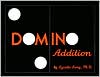
    Domino Addition by Lynette Long, would be an excellent resource for teachers who have lesson plans involving dominos.  This text would be a great way to introduce domino use in the classroom.  It demonstrates how adding the amounts on the top and bottom half of dominos can give kids the total number.

    14600594.jpg

     Math Potatoes, written by Greg Tang and illustrated by Harry Briggs, is a highly interactive text for students.  The author offers riddles which pose a problem to the students, offering them helpful hints along the way.  Students who find ways to group numbers will find their answers much easier!  At the end of the text, the author provides answers and tells students helpful ways to solve each problem. 

    Web Annotations:

    Basic Addition Facts Exercise: This website provides an interactive game for students in which they count how many bugs, snails, etc on two leaves.  The the animals move to the third leaf and the students add to get the total.

    UFO Mystery: This interactive game for students ask them to click on a UFO on the right side and then click the right answer.  After students answer all the items correctly they see what is hidden.

    Balloon Addition Activity: This website tells students to add the numbers on the red balloons and click the green balloon with the correct answer.

    Hidden Picture: This interactive game provides students with answers to addition equations and asks them to select the appropriate number sentence to reveal a hidden picture of an iceberg.

    Ruffie Wrap: This site allows for two different levels.  It asks students to select the numbers that will add up to fill up the box before the whole screen is covered in numbers.

    Additional Resources:

    Add it Up Lesson Plan: This lesson plan is designed to teach students to use manipulatives to solve addition problems while recognizing the symbols of addition and equal value.

    Center Activities: This website provides students the ability to practice their addition and subtraction skills by participating in center activities.  This link reviews several activities teachers can utilize as well as all of the attachments needed for each one.

    Math on a Roll: This link provides activities with which students can utilize dice to build their math skills.

  • Apple Does Not Play

    image

    In our pursuit to bringing you the latest in news before anyone else, we do things that are not always construed as right and it seems one site is living in a nightmare. Recently Gizmodo received an iPhone 4 prototype, and it seems it was acquired illegally(stolen… and bought by Gizmodo with this knowledge. The whole story can be read here), and Apple was not too happy about it, and are going after them.

    This story comes from Cnet, who are telling the story of Apple recently reporting this incident to the Silicon Valley police, and them beginning investigating Gizmodo today to confirm if anything illegal was conducted and if charges will be filed.

    This is a very sad case. I cannot believe someone could get in this much trouble for just doing their jobs, but I guess their job description doesn’t include reporting on stolen property. I sincerely hope nothing bad comes to the editors at Gizmodo, but this shows how serious apple is about their products.

    Do you think this should be happening? What Should happen to them? Do you feel any sadness for them? comment below.

    Well that’s all the iPhone related news you will hear from me. This was so! serious that I thought I should let you guys know about it.

    Thanks for the tip sybil ann


  • Confused Users Keep Racking Up Ridiculous 3G Bills, Wireless Carriers Keep Helping Them

    We’ve seen no limit to stories over the years about wireless customers (including a few semi-famous ones) who wind up with fairly insane wireless broadband bills for any number of reasons. Usually the stories involve someone traveling overseas and not understanding the roaming charges and overages involved, though sometimes the users don’t even need to leave port to find themselves hit with a $27,000 3G bill. The latest story of this type (via the Consumerist) involves a user getting a $7,865.84 Verizon Wireless bill after taking his Mifi portable 3G hotspot on a business trip to Tel Aviv. In this case however, the user called Verizon before the trip, studied the overage penalties, and still wound up using 350,000 kb of bandwidth before concluding it was Verizon who screwed up:

    "The ugly truth is that upon investigating the issue, I found a number of things could have been done by Verizon to protect me as a consumer. They may not mention them outright, but they are there. The fact that these things were not done can only lead me to assume that Verizon would rather their consumers "understand" as little as possible about their TOS.‘"

    Except as a consumer, it’s his responsibility to read the find print on his contract and understand the limitations and penalties of his plan. The user studied the charges, spoke with representatives — even seemed to have at least a base understanding of what he was going to be charged per kilobyte — and then chose to use expensive 3G data on an overseas trip anyway. Consumer responsibility and research plays a big part of the equation.

    That said, we’ve been saying for a long time now that these bills demonstrate the fact that carriers aren’t doing a particularly good job making service limits clear or educating customers. Many consumers (more than you would think) can’t tell the difference between a kilobyte and a lemur, and Verizon’s math skills on this front aren’t always reliable to begin with. While most carriers have some kind of mechanism in place to help notify users of excessive usage, carriers haven’t done a great job notifying users when their bill starts to go nuclear (like many credit card companies do when a large charge appears on your card) or making overages clear. Fortunately, carriers often agree to slash these bills — but usually only after they receive media attention.

    In the UK, where they’ve seen the same kind of insane 3G bills, regulators have jumped in and addressed the problem by first capping roaming charges — but then by also requiring (as of July 1) that carriers allow users to set a monthly maximum cap that limits how much they can spend on data each month. Consumers get an automated alert as they approach 80% of that total, then their service is temporarily suspended when the user crosses the spending cap. If users don’t choose a limit, a limit of $68 per month is set for them (that’s only data and doesn’t include voice minutes or other bill totals). Of course here in the States carriers aren’t going to want to voluntarily employ tools that reduce how much money they can make off of confused users, and will fight any regulation that limits how much they can charge. So nothing changes, and story after story emerges about users whose phone bills resemble the GDP of small countries.

    Permalink | Comments | Email This Story


  • What if nobody wants Palm?

    By Scott M. Fulton, III, Betanews

    Banner: Analysis

    A process of elimination which has, apparently since February, cast aside a who’s-who of possible suitors, has left Lenovo as the only prospective suitor for Palm, Inc. still standing, after everyone else told Reuters no. It could mean Lenovo is genuinely interested, though it could also mean the only ones giving Palm any positive value…are in the press.

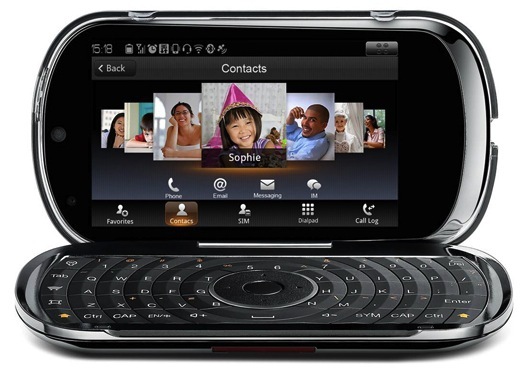
    The thing about Lenovo is, it already has a smartphone. In fact, it debuted in its home country of China just last Tuesday, and it’s no slouch: It has a stupid name — LePhone — but it features the astounding 1 GHz Snapdragon processor that’s at the heart of HTC’s latest models, a widescreen AMOLED display, Wi-Fi, and an eye-catching QWERTY display with the D-pad in the middle. It was running Android 1.6 at CES in January, though reviewers say it should be running Android 2.x today. Arguably, Lenovo already has a phone that could defeat a Palm Pre Plus in a comparison test in its home country. And though analysts have said Palm could give Lenovo an entry point into the US market…wouldn’t it be more sensible to enter the market with the phone you’re already making?

    The Lenovo LePhone, based on Qualcomm's Snapdragon processor

    If Lenovo’s phone is as groundbreaking as reviewers say it is, you might think the company wouldn’t need to purchase Palm even to remove a competitor from its midst. But NPD’s best analyst on the subject, Executive Director of Industry Analysis Ross Rubin, still sees a scenario where Palm could benefit Lenovo’s portfolio.

    “Palm needs cash, time, and access to high-volume manufacturing resources; Lenovo could provide all of these as well as significant IP that it owns from the ThinkPad line,” Rubin told Betanews Friday evening. “Perhaps the best thing about Lenovo from a Palm product perspective is that it has been particularly early to announce a smartbook. WebOS could power such a device or be an alternative ‘quick boot’ operating system for ThinkPads, but these are not particularly strategic products or features for the company. Palm would open doors for Lenovo in the US handset market, but Linux rules the Chinese handset market, and PC makers getting into handsets tend to license the OS as they do with computers.”

    As for the reciprocation — what Lenovo could do for Palm — Betanews Contributing Analyst Carmi Levy doesn’t see much of a payback. But that doesn’t mean Palm can afford the alternative: going it alone.

    “I firmly believe Palm has exhausted its ability to fly on its own, and needs to be acquired in some capacity before it slips off the back of the mobile technology market treadmill,” Carmi told us today. “But the company can’t afford to simply say yes to the first suitor that waves enough dollars — or Euros, or Yen — in its face. The key issue here is fit, and I’m not convinced Lenovo would know what to do with Palm if it managed to win its corporate heart.

    “The key criteria is core competency in building developer support and evolving the strategy beyond the hardware. While Lenovo certainly needs a way to extend its offerings beyond the PC market, and in that capacity would see Palm as a quick route to mobile bliss, it isn’t the top player on the developer front and as such would be a poor complement to Palm’s needs.”

    Huawei is the Chinese telecom manufacturer that was first on many people’s lists to make the deal with Palm, with HTC a close second. However, Reuters apparently learned of Huawei’s interest in Palm when it learned from its source that it was no longer interested in Palm, after two months of negotiations no one knew about. Still, Carmi believes it’s too early to take HTC or Huawei out of the picture.

    “HTC has been playing in this pond both directly and indirectly in bringing OEM and its own-branded handsets to market. It has a significantly shorter learning curve than Lenovo and stands a much more realistic chance of bringing to the table the kind of beyond-hardware competencies that Palm so desperately needs,” said Rubin. “Huawei is the dark horse here, but perhaps the one that offers the most compelling out-of-left-field story. It’s certainly the hungriest of the potential buyers, and as such would see a Palm buy as a global seal of credibility. It would probably be more willing than the others combined to invest whatever it takes to make Palm relevant again.”

    Ross Rubin disagrees; although from his vantage point, there may have been at least something to a Huawei + Palm tie-up, the better names were probably taken off the table months ago. If there’s any hope left, he believes it’ll come from someone who’s both a dark, dark horse and a bright, white knight.

    “Palm could be an asset to Huawei, but it is rather removed from the core business; Palm likely would not receive the kind of attention and expertise it needs within such a company,” Rubin told Betanews. “From a product fit perspective, RIM could have been a good suitor for Palm. It has strong market share in Palm’s native market, great access to the enterprise, a relatively open philosophy, and low barriers to application development, an area where RIM needs help. Like Palm, RIM has pursued vertically integrated portfolio diversification. But next week will likely bring news of the future of BlackBerry OS, to which RIM is committed, and there would have been cultural conflict.

    “Developing and supporting a homegrown advanced operating system is an expensive undertaking. Microsoft, Google, and Apple can invest because the handset OS supports other vested interests the companies have. It’s often the case in instances like this that an unexpected buyer swoops in late in the game; all of the obvious candidates seem to lack the financing, flexibility, or fortitude.”

    Copyright Betanews, Inc. 2010


    Add to digg
    Add to Google
    Add to Slashdot
    Add to Twitter
    Add to del.icio.us
    Add to Facebook
    Add to Technorati


  • Nokia Slashes Prices After Delaying New Smartphone OS


    Apple Versus Nokia

    Nokia (NYSE: NOK) said yesterday it was delaying the release of new smartphones loaded with the latest Symbian operating system to the third quarter because it was not meeting quality requirements.

    Now the handset-maker is also slashing prices of its cellphones with some smartphones being discounted by as much as 10 percent, reports Reuters.

    The delay comes at the wrong time. Already, the largest handset maker in the world has had a hard time competing against other smartphone makers, such as Apple (NSDQ: AAPL), RIM (NSDQ: RIMM), or manufacturers developing phones based on Google’s Android. The company has already been forced to drop prices. In the first quarter, it charged on average 155 euros for a smartphone, down from 190 euros in the third quarter—or much lower than Apple’s average selling price of $622 per iPhone.

    Nokia’s smartphone shipments are also not growing as fast as others. It said during the first quarter, smartphone sales jumped 50 percent compared to the same period a year. During the same time period, for comparison, Apple saw iPhone sales jump by 131 percent.

    The latest phones, based on the updated Symbian operating systems, will now be announced sometime before June, and rolled out in the third quarter. The update is expected to improve the user interface, which up until now has been criticized as offering a clunky experience. Carolina Milanesi, an Egham, U.K.-based analyst at Gartner told Bloomberg that Nokia’s smartphone reputation is suffering: “Unfortunately it’s not Mercedes-Benz or BMW that I think of when I think of them today. Ford is what comes to mind. Reliable, not expensive, and I get a bit more than I paid for.”

    Related


  • Green Party To Meet Saturday; Seeking To Fill Ballot Slots For Attorney General, Treasurer, Comptroller, Others

    The Green Party of Connecticut will be holding a convention Saturday to fill slots on the ballot in November.

    Based on state law, the party has ballot lines for 2010 for attorney general, secretary of the state, comptroller, and treasurer. But since the party lacked the necessary 1 percent of the vote in the 2006 governor’s race, the party does not have an automatic ballot line for governor in 2010.

    Cliff Thornton ran on the Green Party line in 2006 and captured 9,585 votes, which translates to 0.85 percent. He polled ahead of Joseph Zdonczyk of the Concerned Citizens Party, which received 0.50 percent of the vote. Republican M. Jodi Rell won the race with 63.2 percent, compared to 35.42 percent for Democrat John DeStefano of New Haven.

    Tim McKee, a Green Party spokesman, says the party hopes to have 12 to 20 candidates for the state legislature, as well as Congressional races. The party has ballot lines in the 1st, 2nd, and 3rd Congressional districts because they have reached the necessary voting levels for ballot access. The Green Party is not on the ballot in areas where the party has less strength – the 4th Congressional district in Fairfield County and the 5th Congressional district in Litchfield County.

    The party’s meeting Saturday will be held at the Portland Senior Center at 7 Waverly Avenue in Portland, starting at 11 a.m.


    Scott Deshefy, an attorney in Hartford, will be the party’s nominee in the 2nd Congressional District against U.S. Rep. Joseph Courtney, a former state legislator in Hartford who is now serving in Washington, D.C. 
     
    Ruthann “Rae” Johnson is already a candidate for the party in the 9th State Senate district, which covers Rocky Hill, Middletown, Wethersfield, Newington, and Cromwell. She would be running against incumbent Sen. Paul Doyle, a Democrat from Wethersfield. 
      
    Further details are at www,ctgreens.org 

  • White House: Auto bailout worked, but we’ll still lose money

    Filed under: , ,

    One year ago, the U.S. auto industry was at the weakest point in its history. To make matters worse for the both the industry and the Obama Administration, the majority of Americans wanted nothing to do with a bailout, having just undertaken an even pricier propping up of the country’s lending institutions. But President Obama and the Auto Task Force made the difficult decision to push General Motors and Chrysler through bankruptcy while providing $50 billion in loans to keep the doors open at the two companies. The administration estimates that the move staved off an estimated 1.1 million lost jobs, but the political and fiscal cost was high.

    Last year, the Congressional Budget Office and the Treasury Department estimated that the U.S. government would likely lose $30 billion in the long term. The Detroit News reports that one year later there is a lot more optimism at the White House about the industry and our money. A five-page report released by the Obama Administration points to Chrysler’s first quarter operating profit and the fact that GM paid off its government loans early shows that the auto bailout was a success. The report adds that “the contrast between where these companies, and the American auto industry, are today and the situation President Obama faced when he took office is stark.” And that projected $30 billion loss? The latest projections by the Treasury Department and the DOT are for a much smaller loss of $8 billion.

    The next step towards the U.S. government getting our money back comes when GM executes its initial public offering, which is rumored to be happening as soon as this June. Uncle Sam currently owns 60.8 percent of The General.

    [Source: The Detroit News | Image: Jeff Swensen/Getty Images]

    White House: Auto bailout worked, but we’ll still lose money originally appeared on Autoblog on Fri, 23 Apr 2010 19:22:00 EST. Please see our terms for use of feeds.

    Read | Permalink | Email this | Comments

  • Daily U-Turn: What you missed on 4.23.10

    First Ride: 2010 Honda Shadow RS – Just another Harley imitator, or something better?

    Touring bikes aren’t our thing, but Honda’s newest Shadow proves that relaxed, two-wheeled trekking isn’t for poseurs.

    Lord of the ‘Ring: Ferrari breaks the 7-minute Nurburgring barrier

    How fast is the 599 GTO? Quick enough to lap the Nurburgring in under seven minutes without breaking a sweat… or anything else.

    Daily U-Turn: What you missed on 4.23.10 originally appeared on Autoblog on Fri, 23 Apr 2010 19:20:00 EST. Please see our terms for use of feeds.

    Permalink | Email this | Comments