Category: News

  • Paid apps back in Europe

    App CatalogIt was a brief scare, but we always like it when it wraps up with a happy ending. Palm and O2 have whipped up a fix and brought paid apps back to the European App Catalog. If you can think back all the way back to yesterday, you may recall that a second phantom webOS 1.4.1 update was pushed out in Europe, with the intention of helping move users with issues to the newer operating system. Unfortunately, it also hid all paid apps from European users, thought at least any installed apps were still there on affected phones. Thankfully, well within the promised 48-hour time frame, Pre owners on O2 can get back to the downloading of paid applications. Hugs all around.

    Thanks to Martin for the tip!

  • Levin Committee Slams Ratings Agencies

    The Senate Permanent Subcommittee on Investigations, headed by Sen. Carl Levin (D-Mich.), held its third hearing on the financial crisis today, and up to bat were the credit ratings agencies. These companies — just three players, Moody’s, Fitch and Standard & Poor’s, dominate the market — take financial products issued by banks and other financial firms, perform thorough investigations and assign a rating to them based on the chance that the product will default. Or, at least, that’s how it’s supposed to work.

    In practice, “[the] agencies allowed Wall Street to impact their analysis, their independence and their reputation for reliability,” Levin said this morning. “They did it for the money.” In short: The banks gamed the ratings agencies, and did it well. Here’s from the summary of the Levin report:

    “Investors trusted credit rating agencies to issue accurate and impartial credit ratings, but that trust was broken in the recent financial crisis,” said Levin. “A conveyor belt of high risk securities, backed by toxic mortgages, got AAA ratings that turned out not to be worth the paper they were printed on.  The agencies issued those AAA ratings using inadequate data and outmoded models.  When they finally fixed their models, they failed for a year — while delinquencies were climbing — to re-evaluate the existing securities.  Then, in July 2007, the credit rating agencies instituted a mass downgrade of hundreds of mortgage backed securities, sent shockwaves through the economy, and the financial crisis was on.  By first instilling unwarranted confidence in high risk securities and then failing to downgrade them in a responsible manner, the credit rating agencies share blame for the massive economic damage that followed.”

    From 2002 to 2007, the credit rating agencies earned record profits, reporting $6 billion in gross revenues in 2007.  They also allowed the drive for profits and market share to affect ratings.  Knowing that Wall Street firms might take their business elsewhere if they didn’t get investment-grade ratings for their products, the agencies were vulnerable to pressure from issuers and investment bankers.  As one Moody’s executive wrote in October 2007: “It turns out that ratings quality has surprisingly few friends: issuers want high ratings; investors don’t want rating downgrades; short-sighted bankers labor … to game the rating agencies.”

    The credit rating agencies still, three years into the crisis, have a conflict of interest at the heart of their business. The financial firms that produce the financial products, not the financial firms that buy them, pay for the supposedly independent ratings. In a released email, one S&P employee describes colleagues in the company’s mortgage unit: “They’ve become so beholden to their top issuers for revenue they have all developed a kind of Stockholm syndrome which they mistakenly tag as Customer Value creation.” The Dodd bill creates an office of credit ratings within the Security and Exchange Commission, and increases oversight. But it does little to change the underlying problem.

  • Last Stop – Sea Breeze, NC

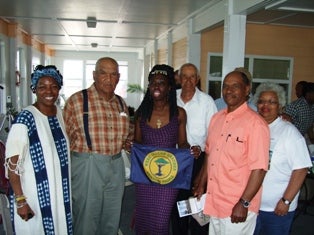
    During the past few months the Gullah/Geechee Sea Island Coalition and EDF have held listening sessions with African-American fishermen in the South Atlantic – from South Carolina to Florida and Georgia. The sessions provided us with the opportunity to listen and document the concerns of these fishermen working in commercial and subsistence fisheries. Our series of listening sessions concluded last weekend in Sea Breeze, North Carolina. Fitting of its name, Sea Breeze once hailed as a popular beach destination for African-Americans in the Wilmington area.

    Read the full post »

  • Twitter Buys Cloudhopper To Manage Billions Of Text Messages


    TwitterPeek

    Twitter has acquired Cloudhopper after working with the startup for the past eight months to manage the billions of text messages it sends worldwide.

    Terms of the deal were not disclosed. On Twitter’s blog, it said it processes close to a billion text messages a month worldwide, and has bought Cloudhopper to help further scale that business. Over the years, Twitter has had a love-hate relationship with SMS. While Twitter was designed to be mobile because it limits messages to 140 characters, it can be costly. In 2008, Twitter stopped sending messages in the UK, claiming that it could cost $1,000 a year per to support each user.

    It’s unclear how Cloudhopper will help, but Twitter said the company will enable Twitter to connect directly to mobile carrier networks in countries all over the planet. Cloudhopper was founded by Joe Lauer in late 2008. Previously, Lauer was the Founder and VP of Simplewire, which was acquired by Qpass in 2006. The company is now known as OpenMarket, and is a division of Amdocs (NYSE: DOX) (which purchased Qpass). OpenMarket is in the similar business of SMS aggregation.


  • Two-headed lizard whose heads hate each other discovered in Australia

    two-headed-bobtail-lizard.jpg
    Photos via Metro

    Check out this bizarre two-headed bobtail
    lizard that was discovered a couple of days ago in Perth Australia! Also, it turns out that the
    heads hate each other, and the larger one keeps attacking the smaller
    one.

    The bobtail lizard is a type of skink lizard commonly known as a
    Shingleback in the great down under. Occurrences of two headed large vertebrates surviving in the wild are infrequent to say the least — the lizard’s two heads are the result of a rare genetic mutation.

    It’s been rescued and is being
    cared for at a reptile park in Henley Brook. The
    wildlife biologists say it’s doing well, but note that two-headed
    lizards don’t typically have very long life expectancies. You know,
    because of the whole two head, one body thing. Here’s an x-ray of
    the creature:

    two-headed-lizard-x-ray.jpg

    The BBC has
    more details
    : the two headed lizard “apparently eats
    from both heads but the larger head has also tried to attack the
    smaller one, and its movement is difficult as both heads control its
    back legs. It also has a healthy sibling without any mutation. Bobtails
    give birth to live offspring, rather than laying eggs.”

    two-headed-lizard.jpg

    Given that we just had Earth Day, we’re all aware that global climate change is
    continuing largely unabated. Deforestation may have slowed some but is
    still a colossal issue, endangered species are dropping like flies and
    water is running out all over the place.

    But this two-headed lizard is still neat-looking.

    Brian Merchant covers politics for TreeHugger,
    where a version of this post originally appeared.

    More
    from TreeHugger

     Check out Yahoo! Green on Twitter and Facebook.


  • Lawsuit: Hotel Obliged Guest’s Requests For Whites-Only Service

    Are you a racist looking for a luxury hotel in Florida? Then the Ritz Carlton in Naples might just be the place for you. A lawsuit filed this week claims that when guests of the hotel asked to not be served by “people of color” or with “foreign accents,” the management agreed to their demands.

    The suit, filed by a Haitian-born waiter at the Ritz Carlton, alleges that a British couple who were staying at the hotel made such a request with regard to the staff attending to them.

    According to the plaintiff, the request was noted in the hotel computer, adding that the couple is “very very” prejudiced. The request for whites-only service was then relayed to other members of staff, including the plaintiff who says in the suit that on March 12 he was attempting to do his job when “he was prevented by his immediate supervisors from doing so… because they [the guests] did not want to be waited on by a black person per the instruction of [the hotel’s director].”

    Not shockingly, the hotel wouldn’t talk to the press about the lawsuit but did say, “The Ritz Carlton Hotel Company does not tolerate discrimination from our employees or our guests.”

    Here’s a PDF of the lawsuit

    Waiter sues Ritz-Carton Naples, claiming discrimination [News-Press.com]

  • Will iPhone 4’s Audio and Video Chat Finally Break the Voice Calling Scam? [IPhone]

    A front-facing iPhone camera means video calling, but it’s also a sign of something bigger. Combined with other recent leaks, it means that Apple is bringing iChat to the iPhone. Everything about voice calling may be about to change. More »


  • Cultures of foreplay

    Photo by Flickr user LLima. Click for sourceI’ve just read a fantastic article in the Journal of Sex Research on culture and how we decide what is a sexual disorder or ‘paraphilia’. It has a fascinating section where it talks about cultural variation in common or acceptable sexual practices and it touches on how foreplay differs between societies.

    Kissing during foreplay, it seems, is not universal and seems to be a particular fetish of Western lovers.

    Finally, in most cultures, sexual intercourse is preceded by some degree of foreplay—that is, sensory and sexual stimulation intended to induce arousal. This stimulation may be visual, tactile, or otherwise. When visual, it may be the sight of the partner or parts of his or her body or clothing, but these may vary across cultures (Bhugra, 2000). Kissing as part of sexual foreplay is common in the West but virtually unknown in other parts of the world (Ford & Beach, 1965). There are some cultures where penetration was the key element to intercourse, and neither foreplay nor afterplay was recorded. Ford and Beach pointed out that physical pain and biting are sometimes permitted as part of sexual foreplay and, therefore, such behaviors are likely to be readily incorporated into the sexual repertoire. Thus, individuals learn about methods of sexual arousal and sexual activity from their cultural habits and, in order to avoid being labelled and treated as deviant, they conform to prevalent and expected mores.

    Unfortunately, the article is locked behind a paywall. Undoubtedly for your own good though. Imagine what would happen if you started to deviate from culturally accepted foreplay practices. Anarchy. And then where would we be?

    Link to PubMed entry for article.

  • New “Twilight Eclipse” Trailer Premieres On “Oprah”

    O loves Twi-Hards. The new and final trailer for the next film in The Twilight Saga, Eclipse, premiered on The Oprah Winfrey Show on Friday.

    Watch as Kristen Stewart, Robert Pattinson, and Taylor Lautner battle their continuing love triangle and an army of vampires.

    Twilight Eclipse bares its fangs to take a bite out of the box office on June 30.


  • Blippy Caught in Apparent User Privacy Breach

    UPDATED Users who sign up for Blippy, the service that encourages sharing personal transactions online, do so with the expectation of becoming more open about their purchase data. But they don’t expect their credit card numbers to be posted online, which is what seems to have happened. If you search Google using the terms “site:blippy.com + ‘from card,’” you’ll see what appear to be a set of transactions at Starbucks, Exxon Mobile, Kroger’s and other stores. Many of them are in Michigan and many of them appear to be from a single credit card.

    To be clear, there are only 196 results for that search query. But Blippy has yet to speak up for itself, more than three hours after VentureBeat’s Owen Thomas tweeted about it, and in the meantime “Blippy Users’ Credit” has become a trending topic on Twitter. Blippy’s privacy page promises to tell users of security breaches “in the most expedient time possible and without unreasonable delay.”

    Update: Blippy founder Philip Kaplan has now posted on the company blog and spoken to at least one reporter about the breach. He said the credit card numbers shared belonged to a total of four users who had been early beta testers. Blippy had since cleaned up its data but Google was still caching it.

    Kaplan wrote:

    We take security seriously and want to assure Blippy users that this was an isolated incident from many months ago in our beta test, and doesn’t affect current users.

    While it looks super-scary and certainly sucks for those few people who were affected, and is embarrassing to us, it’s a lot less bad than it looks.

    He gave further detail to the New York Times,

    Mr. Kaplan said that early on, Blippy started disguising the raw transaction data behind the scenes, but it did not know about the breach until today. He added, “This still looks pretty bad.”

    Blippy is a brand-new startup that just raised $11.2 million in new funding at a valuation of $46.2 million — and yesterday was the recipient of a New York Times writeup about the new age of personal information sharing online. What the company doesn’t need is the perception that it’s cavalier with user data. A little breach goes a long way against user trust — and the service is on the hook for a lot of growth to live up to that new funding.

  • Deepwater Horizon Oil Drilling Rig Explosion Lawsuits Filed by Two Families

    Following an explosion Tuesday night on the British Pretroleum (BP) oil drilling rig known as Deepwater Horizon in the Gulf of Mexico, at least two families have filed lawsuits against BP and the rig’s builders alleging negligence caused the disaster.

    Eleven of the 126 crewmembers of the Deepwater Horizon were still missing Friday morning, after the BP drilling platform exploded and caught fire for reasons that are still unknown. The platform burned until Thursday morning, when it collapsed and the massive oil rig plunged into the waters of the Gulf.

    There were 115 people on the rig who have been confirmed to have escaped by life boat. At least seventeen of the rescued workers were injured, with three in critical condition. The wounded were flown by air ambulances to hospitals in New Orleans, Louisiana and Mobile, Alabama.

    On Thursday, the family of missing worker Shane Roshto filed a lawsuit over the Deepwater Horizon drilling rig explosion against BP and Transocean Ltd. in the U.S. District Court for the Eastern District Court of Louisiana. The lawsuit accuses the companies of negligence and failing to meet federal regulations. Another Deepwater Horizon lawsuit was also filed against the companies on behalf of worker Karl Kelppinger Jr. in state court in Harris County.

    Officials have indicated that the explosion and sinking oil rig may unleash a catastrophic oil spill in the already environmentally fragile Gulf of Mexico. Coast Guard officials on the scene say it does not appear that such a spill has occurred yet, but they are monitoring the drill’s wellhead and will continue to do so. The Coast Guard warns that if the wellhead does rupture, it could release up to 8,000 barrels of crude oil a day.

    The Coast Guard has detected a sheen of oil on the water across a five mile area, but has determined that the oil was blown out by the explosion.

    The Deepwater Horizon platform was constructed and owned by Transocean Ltd., and was under lease to BP. The rig was 50 miles off the coast of Louisiana performing exploratory drilling. Officials from Transocean said that workers who escaped the burning platform feared that the 11 missing workers were too close to the initial blast, and may not have escaped.

    The potentially deadly explosion comes a few months after the U.S. Occupational Safety and Health Administration (OSHA) fined BP $77.4 million for safety problems at its Texas oil refinery. A blast in 2005 at the refinery killed 15 people and injured 170 others. OSHA has issued 270 safety notifications in regards to problems at the BP refinery, noting that there were 439 instances of “willful and egregious” safety violations at the facility.

  • New Study Shows Gene Patents Stifle Innovation And Put People At Risk

    Following the recent ruling in the Myriad Genetics case, that gene patents are invalid, it was amusing (if it a bit frightening) to watch some patent attorneys, who specialize in the field, react as if the world had been turned upside down, and that major scientific advances in health and medicine were all going to collapse into a giant blackhole. Of course, they had no evidence to back that up. As we’ve seen time and time again, the evidence suggests exactly the opposite — and now there’s even more evidence, specifically when it comes to patents on genes and related processes. Justin Levine points us to an Economist article highlighting a series of recently released studies that found that gene patents are quite damaging:


    Even more striking is the claim made by the Duke researchers that patent exclusivity is not necessary to spur innovation in genetic testing. Dr Cook-Deegan argues that testing, unlike pricey drug development, has low barriers to entry and is relatively cheap, so a monopoly is not required to lure investors. As evidence, he points to the case of cystic fibrosis: unlike breast cancer, no monopoly patent blocks access to the relevant gene, and dozens of rival testing companies flourish.

    The research also found that thanks to gene patent monopolies, many people may suffer in being unable to get access to important tests, and worse (as was the case in the Myriad suit), the monopoly kills off the potential of getting any sort of second opinion — which can be incredibly important in properly judging the situation. Of course, I fully expect the typical group of patent attorneys to ignore this evidence yet again. The full set of studies, led by Robert Cook-Deegan, at Duke University can be read online. It was done in response to a request from the US Dept. of Health — so perhaps the US gov’t is finally starting to look at actual evidence in figuring out patent policy as well. The different studies look at the impact of patents on a variety of different diseases. The results definitely differed depending on the case study, but it’s difficult to see any evidence of patents helping with innovation in any of the studies.

    Permalink | Comments | Email This Story


  • ‘Rose’: a flower among the thorns

    Benedict Nightingale, reviewing the new London theater season for the New York Times in 1999, put his finger on the big trouble with Rose, Martin Sherman’s one-woman play about an 80-year old Holocaust survivor sitting on a park bench in Miami and remembering the high and low points of her extraordinary life.

    Wendy Westerwelle stars in "Rose"“Rose’s life sometimes seems too exemplary to be true,” Nightingale writes. “Add some convenient coincidences to her tale — like meeting a bitter old shopkeeper in the Arizona desert and realizing he is the spouse she thought she had lost to Dachau — and Rose could easily be a case study rather than a character.”

    But Nightingale also saw beyond Sherman’s desire to embrace the entirety of the post-Holocaust Jewish dilemma in a single overstuffed play, instead championing the drama’s extraordinary heart and the quietly stunning performance of its star, Olympia Dukakis — “the permafrost beneath the surface, the Siberia in her soul.”

    He praised Rose for its “always lively, often distressing, sometimes hauntingly strange observation,” and concluded: “If you think that sedentary bravura is a contradiction in terms, this should change your mind.”

    England liked Rose. It was nominated for the Olivier Award for best new play, and moved in 2000 to New York, again with Dukakis, where its reception was chillier. Bruce Weber, also writing in the New York Times, reacted like this: “(H)er story resonates on the tired frequency of a lecture about the wages of forgetting the past. If you are not of a certain age, you may react to her as a child to a relative who has overtaken one too many family gatherings: Yes, Grandma. Now can we go out and play?”

    Then, echoing a theme sounded by several reviewers, he lamented the script’s streaks of jokiness amid the general despair: “Either Mr. Sherman is talking through her, or else in the year it took Rose to become fluent in English, she assimilated a lifetime of Borscht Belt humor.”

    Well, maybe. But then, Rose is 80 years old when she sits shiva on that park bench, and she’s lived in America for most of her adult life. And Borscht Belt humor doesn’t come just from the Catskills. The Catskills are only a pipeline to older places and older times, where that peculiarly Jewish humor of survivors’ exaggeration was born and nourished before it immigrated to summer camps on American lakes. So Rose couldn’t be a little funny? So she shouldn’t be a little funny? Jews have been laughing about the unlaughable for a long, long time. It’s one way you get through.

    About that other point, the “wages of forgetting the past”: Rose and Sherman are guilty as charged. Except, you should pardon the expression, I’m not sure why that’s something to feel guilty about. We do forget the past. Forgetting is disastrous. One can remind without being a nag. Even then, in the orbit of Jewish comedy, the old nag, the busybody, the yenta, is a stock character. You hear, you nod, you shrug, you laugh. Rose is not exactly a yenta and not exactly a nag: her complaints are visceral and rooted in real horrors, not imagined or exaggerated slights. And Rose is not a tale of elegant construction and beautiful words, like Jerzy Kosinsky’s (or whoever actually wrote it) The Painted Bird. So be it. Rose is not an elegant woman. But she’s memorable.

    All of which is an extremely long way around to pointing out that Triangle Productions‘ Portland version of Rose, featuring Wendy Westerwelle and directed by Don Horn, is nearing the end of its run (final performances are 7:30 p.m. Friday and Saturday and 2 p.m. Sunday at CoHo Theater) and well worth your time. No, it’s not a perfect play. But it’s an intense, intelligent, funny and deeply moving play, and Westerwelle inhabits it with remarkable restrained passion.

    Before the show opened I talked with Westerwelle about it and then wrote about our conversation here. It was obvious she’d made an enormous commitment to the role, and it shows on stage. She delivers a terrific performance, technically smart and emotionally vivid and precise.

    I suspect her performance is very different from Dukakis’s: This Rose is not a permafrosted soul. People who know Westerwelle from past performances as varied as her Sophie Ticker show Soph: A Visit With the Last of the Red Hot Mamas and the old Storefront Burlesques know her as an extrovert, an outsized personality, an ambassador of the broad gesture. In Rose, she doesn’t reject that so much as she channels it to the sobering realities of the life of a woman who endured and survived some of the worst atrocities the 20th century threw at the world.

    From a Ukrainian shtetl to the Warsaw pogroms to the postwar detention camps to her almost magical-realist transformation to freedom and eventual wealth in the United States, Rose relates the story of a woman bobbing on the waves of vast historical movements, trying to find ground. Her losses and occasional gains are intensely personal, and that is part of Sherman’s point, which Westerwelle and Horn so ably bring home: Great cultural tragedies are intense private tragedies, too. Small, common lives are ripped apart, and in the process, become uncommon. Yes, Rose is a survivor, with the guilt and the scars that go with it. And, yes, she leavens the horrors she relates with some wry jokes. Wouldn’t you?

    So, I forgive the play its sometimes awkward leaps, its desperation to tell everything, its occasional ungainly coincidence. Those are small potatoes compared to what it achieves. Rose speaks truth about history, and hope about surviving it, and looks forward as well as back: It carries Rose’s story into the ongoing tragedy of the Israeli-Palestinian conflict, lamenting that victims have also become victimizers. That final chapter is bound to anger a few people in the audience. But from Rose’s (and, presumably, Sherman’s) perspective it resounds with emotional and spiritual truth. Enough with the slaughter. Time for life.

    *

    “Looks like you’re the only goy who stayed for the talkback,” a friend commented after the post-show discussion on the afternoon I saw the play. Her comment surprised me: I hadn’t thought of it in those terms at all. I had noticed that I was one of only a few men in the audience, but only because a couple of women in front of me were joking about it as we walked from the lobby into the theater. Jew, goy — yes, it’s a Jewish story, but it’s a story for and about all of us. History has a way of drawing us together as well as pushing us apart.

    In addition to Westerwelle and Horn, the post-show talk included Eva and Les Aigner, both Jewish and both Holocaust survivors. Their stories were simple and profound: stories of luck, stories of delivery. Stories of what these days we call post-traumatic stress. Les told of his 15 years of nightmares, of the job he held for decades in Oregon without ever telling anyone about his background. They told about how having each other made things easier, and how having children gave them a future. And Eva revealed why they finally decided it was time to start telling people their stories. It was when the Holocaust denial movement started gathering steam, she said. It just made them angry. How could anyone say it hadn’t happened? They were there. So they began to speak.

    Sometimes, theater really is about life.

    *

    ILLUSTRATION: Wendy Westerwelle as Rose. Photo by Mark Larsen.

  • Farm Dog & Cat Owners: Watch out for popular mulch

    small scale farming with petsMICRO FARMING HOW-TO: Many of those involved in small scale farming and micro farming utilize various organic mulches. If you own a farm dog or cat, you may want to avoid cocoa mulch, an otherwise excellent mulch widely available.

    It’s made from the shell waste caused by the extraction of chocolate from cocoa beans. It contains the same lethal pet ingredient called ‘theobromine’ that chocolate contains, which can cause sometimes deadly cardiac complications, including a racing or irregular heartbeat. — www.MicroEcoFarming.com

  • Deal On Judges Blows Up; Judges and Judicial Funding Would Be Tied To Overall Agreement on $19 Billion Budget

    One day after an agreement to approve nine new judges in return for providing enough funding to prevent the closure of any state courthouse, the deal hit a major roadblock Friday afternoon.

    Senate President Pro Tem Donald Williams, the highest-ranking senator, said he does not want to approve the judges and the funding for the courts until the entire $19 billion budget is approved. Legislators are scrambling to approve the budget before the legislative session ends at midnight on May 5, but no fiscal deal has been reached.

    “I want to see the entire budget for 2011 resolved, not just to resolve it piece meal as to one branch, one agency,” Williams told reporters after a meeting of the top legislative leaders and Republican Gov. M. Jodi Rell in her Capitol office. “I think it needs to be part of the entire budget package. We need to resolve it all, not just one branch at a time.”

    The latest development is part of an ongoing stare-down among all three branches of government: the executive, legislative, and judicial. Rell, in her final months as governor, is pushing to get nine judges appointed to the bench, but that cannot happen without approval by the Democratic-controlled legislature.

    Some lawmakers noted that the deal Thursday between the Rell administration and the judicial branch included only the legislature’s powerful judiciary committee. That agreement never included an agreement between the full Democratic legislative leadership – including Williams – and Rell.

    Senate Republican leader John McKinney of Southport criticized Williams, saying there is no reason to hold up the approval of the judges in order to reach an overall budget deal.

    “Today’s meeting, while good in many ways, was one step forward, two steps back,” McKinney said outside the governor’s office as Williams stood a few feet away.

    The legislature, McKinney said, will be essentially handcuffed for the next two weeks if bills related to funding cannot be passed until the entire budget is resolved. Lawmakers, for example, could not vote on the University of Connecticut’s plans for improvements to the financially troubled health center in Farmington because that involves money, he said.

    “Today’s action is a big step backwards in getting an overall budget deal,” McKinney said.

    McKinney hopes an arrangement can be reached in the coming days to avoid a showdown where Williams was “holding those judges hostage to try to get a budget settlement, and that would be extraordinarily unfair to those nine individuals – and unprecedented.”

    Hiring the new judges is necessary, according to Rell and Republicans, because there could be as many as 31 vacancies in the Superior Court by the end of the year.

    Under the funding deal that was announced Thursday, three courthouses that would have closed will now remain open. Those are the juvenile courthouses in Norwalk and Willimantic, as well as the state Superior Court in Bristol. The law libraries in Bridgeport, Hartford, and Litchfield – which were slated to close on July 1 – would now remain open.

    The law libraries in Milford, Norwich, and Willimantic, which were all closed on April1, will be reopened under the original deal.

    When asked if the judge-nominees are being held hostage, Rell said, “I have heard that comment, but I will tell you, obviously, everything is working around the budget. … We’ll deal with it, and that includes judges.”

    For the nominees, becoming a judge would be the crowning achievement of their legal lives.

    “I’ll give the benefit to the majority party that they would not play games with people’s lives,” Rell said outside her office. “I don’t think anything is held up or should be held up because we don’t have a budget.”

    The original deal, announced Thursday, between the Rell administration and the judicial branch was designed to prevent the threatened closings of three courthouses. The courts were never closed, but three law libraries were closed as of April 1 because of budget cuts as the state faces its worst fiscal crisis in decades.

    As such, the deal would essentially limit the budget-cutting powers of the governor regarding the judicial budget.

    “We would have to print it as it’s presented to us,” Rell said of the judicial budget.

    In another development Friday, lawmakers discussed whether the proposed early retirement program would need approval from the state employee unions.

    “The best course of action would be to have their blessings,” Rell said.

    House Speaker Christopher Donovan, a longtime union supporter, said that having union support “would be the preferable way to do it.”

    “With regard to the early retirement, it is my opinion that it can be done without the unions’ consent, if you will, because it is not a concession,” said House GOP leader Lawrence Cafero of Norwalk. “I’ve read some case law that would allow that to be offered to them without the unions’ check-off.”

  • Hayden Panettiere Haircut Pics

    On Thursday, Hayden Panettiere — the Heroes animal rights activist, who’s been blonde, brunette, and cropped to a bob in recent months — arrived at The Green Carpet and Home Tree Earth Day celebration at The JW Marriott in Los Angeles, accompanied by her boxer BF Vladimir Klitschko and sporting a new short mane of sunkissed tresses!

    How Rihanna of her — but we kinda like it. What do you think? Hate it or Love it?


  • Big Fat Greek Bail-Out

    A beautiful island in Greece was the setting for an ugly pronouncement from Prime Minister George Papandreou today :   His country is broke and wants to activate a bail-out deal arranged with the European Union and the International Monetary Fund…to the tune of 60 billion dollars.

    “The moment has come, since markets aren’t giving us time,” Papandreou said, “to make the decision, so that Greece can have support.”

    The move came as fears rose that Greece would not make the deadline for refinancing its debt next month, that its money woes were bigger than feared, and that it could even face default.

    It also came as public workers conducted more strikes effecting everything from ferries to hospitals as the Greek government implements  needed economy moves.

    “The IMF will be demanding austerity measures that are politically unpopular,” Terry Roth of Dow Jones told Fox News, “we could see more public protest.”

    Those protests have already gone violent and there could be more trouble.   The current bail-out package will only be enough, we are told, to get Greece through this year. There are more cuts to come.  

    While there is resistance from Germany and others to helping Greece, the risk of not helping and seeing problems grow and spread, is even bigger.

    “Everybody, despite some concerns and opposition,” economist Vassilis Vlastaklaris of Beta Securities is quoted as saying, “will be convinced there is no way around ‘solving’ Greece.”

    As for why the US should care about and help rescue Greece, analysts tell us it’s already had an effect on our markets, it could have a “knock-on effect” for other European (and US-allied) countries, and might even cast a shadow over American state and municipality efforts to raise their own funds.

     It IS a “small world” after all.

  • The Banks’ Unfair Fight Against Derivatives Reform

    Blanche Lincoln

    Sen. Blanche Lincoln (D-Ark.) has written an aggressive proposal to regulate the derivatives market. (WDCpix)

    This week, Sen. Chris Dodd’s (D-Conn.) financial regulatory reform bill moved to the floor of the Senate. And with that bill close to passage, Wall Street and lobbyists turned their attention to Sen. Blanche Lincoln (D-Ark.) and the Senate Agriculture Committee’s proposal to regulate derivatives, a $450 trillion market and a major source of investment-banking profits.

    Image by: Matt Mahurin

    Image by: Matt Mahurin

    Derivatives are essentially a type of financial insurance. They let two parties trade a contract derived from the price of some underlying security, currency or commodity. For instance, say you were a major airline. You might go to your bank to purchase a derivative locking in the price of gas, just in case a summertime oil shortage pushed up prices at the pump. In this case, you would be an “end user,” meaning you actually take delivery of the good. About 90 percent of the derivatives market involves financial firms trading derivatives like credit-default swaps back and forth for profit — and just 10 percent involves end users, non-financial firms using derivatives to mitigate risk.

    Still, end users have become the unlikely center of the fight on derivatives legislation. With the reputation and credibility of big financial firms weak, companies in industries from agriculture to aviation came forward to say that this legislation might not only dampen big business’ profits but also hurt them. On Tuesday, the U.S. Chamber of Commerce and other business lobbies — via a group called the Coalition for Derivatives End-Users — took to the Hill for a flurry of meetings between corporate representatives of those worried end users and members of Congress.

    “The legislation has the potential to take hundreds of billions of dollars out of the economy through margin and capital requirements,” says Cady North, a lobbyist at Financial Executives International and a member of the Coalition for Derivatives End-Users’ steering committee. “We estimate that the bill could require up to $900 billion in capital expenditures.” Moreover, the Coalition argues, the bill will increase the cost of derivatives for end users. (The Coalition declined to provide a list of participating executives or their companies, or a list of the legislators or assistants with whom they met, and the Chamber of Commerce did not respond to repeated requests for comment.)

    But there’s just one problem. The Lincoln bill forces financial firms to put up collateral and use clearinghouses when they trade derivatives, but specifically exempts end users from those requirements. Banks are using their end-using clients as proxies to help kill off the legislation, lawyers and lobbyists contend. And for most end users, the opposition to the bill makes little sense.

    Other lobbying organizations representing end-using white-collar companies said they had no issues with the legislation. For instance, Michael Griffith, a legislative analyst at the Association for Financial Professionals, which represents 16,000 of “the folks that manage your average companies’ money,” says he has no issues with it. “We’re pretty happy with what the Agriculture Committee approved,” he says. “It has a broad end user exemption on it, and we haven’t had many complaints from our members.”

    “I know the banks are screaming about it,” says Brian Kalish, the director of AFP’s finance practice. “[My members are] getting panicky emails from their bankers. But [of] my members, no one’s panicking.”

    But this week, some end users got more than panicky emails from their banks. Lawyers and lobbyists say that banks clearly misled companies about how the legislation might impact their business costs. In one case, a derivatives broker told a company that the legislation would force it to pay the same fees and put up the same collateral as financial firms, even where it explicitly would not.

    “I’ve heard of a few folks who use derivatives [as end users who] called up their banks to talk about the legislation,” another lobbyist said. “Of course, their bankers told them to expect the whole market getting disrupted, price increases, collateral calls. Now, for most of them, they’re buying swaps to hedge. The legislation specifically exempts them.”

    Legislators this week repeated the concern. Senate Banking Committee Chairman Dodd said he sees evidence of the bankers’ influence when end users lobby him. “The end users have been basically used by the major investment banks,” he told the Huffington Post’s Ryan Grim on Tuesday.

    Indeed, Lincoln took pains to ensure most end users are not impacted by the legislation. Some firms with “captive finance entities” — financial-products divisions within big, diversified companies, like Cargill — might not qualify as end users on some transactions, and might have to post collateral when they use derivatives to speculate rather than hedge. But they represent a small proportion of end users, who represent a small portion of derivatives users.

    Furthermore, the legislation might eventually drive end-users’ costs down. Many derivatives experts — off of Wall Street, at least — believe that Lincoln’s reforms will increase competition and transparency, reducing prices. Robert Litan, a derivatives expert at the Brookings Institution, explains, “In a world of nontransparency, the world the derivatives market is in right now, the way I understand it, if you try to call four or five dealers, to shop around, none give you a real price. They might quote you an indicative price. If you commit, then they give you pricing information.”
    The White House concurs. Jen Psaki, the deputy communications director, recently argued, “The unregulated OTC derivatives markets were at the center of the recent financial crisis. The Wall Street banks that dominate this market want to keep it unregulated so they can make money off regular firms.”

  • SIRIUS XM Radio App Due in May

    SIRIUS XM Radio has announced that an official application will be available next month, providing over 120 channels of sports, news, and commercial-free music to customers.  We get the feeling this will require Android 2.1 as the press release continually refers to the app being designed for Droid and Nexus One handsets.  The app will be available as a free download and provide customers a 7-day free trial to SIRIUS XM Premium Online.

    The SIRIUS XM App will allow users to:

    • Listen to over 120 channels of SIRIUS XM Premium Online programming on the go, even while surfing the web or checking email.
    • Bookmark SIRIUS XM Premium Online channels for fast, easy access through a “Favorites” function.
    • View the current channel plus what is playing on all other available channels via the “Lookaround” function.

    If you are interested in signing up for notifications, there’s a page for that!

    Might We Suggest…


  • VW shows Milano Taxi Electric Vehicle Concept

    Volkswagen's Milano Taxi Electric Vehicle concept

    The era of the electric vehicle is drawing nearer (albeit excruciatingly slowly) and with Volkswagen set to get its first EV into showrooms in 2013, its latest EV concept indicates how the world’s third largest auto maker is reading the market. Dubbed the Milano Taxi, the concept is a long overdue shot at getting a purpose-built electric cab into major cities. The 115 PS vehicle can reach 74 mph, travel 186 miles between charges and be recharged to 80 percent of capacity in just over an hour…
    Continue Reading VW shows Milano Taxi Electric Vehicle Concept

    Tags: ,
    ,
    ,

    Related Articles: