Category: News

  • Gas-Pump Video Staged? Looks Like It.

    Last week, The Tonight Show aired a segment in which a couple was approached by a surprise newscast at a gas pump, which began talking to them, and got them to sing karaoke. Passed off on the show as a genuine encounter, the video went viral. Here it is, in case you haven’t seen it:

    And here’s the second part:

    It appears that the whole thing was staged, which is apparently a surprise to some people who can’t believe that anything on the Tonight Show would actually be staged. The Smoking Gun was on the case, and reported:

    Will and Monifa are both trained actors who founded a theater company in Chicago before relocating to Hollywood. Monifa, whom Chicagoist once described as a “Chicago actress of some reknown,” previously won a nationwide dramatic auditions contest by the cable network TNT.

    More importantly, the “Tonight Show” never bothered to mention that Monifa appeared in a “Pumpcast News” segment broadcast more than two years ago.

    In the original segment, Sims is seen at the same Burbank gas station where she was filmed singing with her husband. In fact, Monifa conversed with Stack both times while parked at pump number 16, the area used for the “Pumpcast News” bits. On both occasions, Monifa was in the same Chrysler sedan (she drove during the first taping, while her husband was at the wheel during the recent shoot). Additionally, she is seen wearing identical workout pants in each segment.

    Uproxx posted the YouTube video of the original appearance, which interestingly has since been taken down by the user. Good thing The Smoking Gun still has a non-YouTube version of the video. They also point to a Facebook status update where Monifa asked her friends if they saw her on Jay Leno (in March of 2011). It looks like that might have been deleted as well.

  • Nvidia Shield Launches This June For $350

    At CES 2013, Nvidia announced Project Shield – an Android-based handheld that could also stream PC games onto its 5-inch display. Now it’s been five months since its reveal, and Nvidia is almost ready to unleash its stab at the dedicated Android gaming machine market.

    Nvidia announced today that Project Shield is now simply called Shield. The GPU maker also announced that it would be available this June for $350. For the price, you’ll be getting what is essentially a luxury item among Android devices.

    So, has anything changed from when Nvidia first announced the device? Not at all. Here’s the full spec sheet from Nvidia:

  • Tegra 4 – The world’s fastest mobile processor delivers rich graphics and unbeatable performance thanks to 72 GPU cores, four CPU cores and 2GB of RAM
  • Console-grade controller – Precise control thanks to dual analog joysticks, a full-sized D-Pad, left and right analog triggers, full-sized bumpers and A/B/X/Y buttons
  • Multi-touch display – 5-inch, 720p retinal multi-touch display for high-fidelity visuals
  • Integrated speakers – Custom, bass reflex, tuned port audio system – we think this is SHIELD’s sleeper feature
  • Wi-Fi – 802.11n 2X2 MIMO game-speed Wi-Fi for game streaming
  • Pure Android – Latest Android Jelly Bean operating system from Google, for access to Android games and apps
  • There’s more – We put into SHIELD everything we would want in a premium mobile gaming device: 16 GB memory, GPS, Bluetooth 3.0, a mini-HDMI output, micro-USB 2.0, a microSD storage slot, a 3.5-mm stereo headphone jack.
  • The high specs make for a device that will be able to handle pretty much anything developers can throw at it. In fact, Nvidia has lined up a few major titles for its new handheld, including Double Fine’s Broken Age and Costume Quest. The former will also be available on the competing Ouya Android console, but the latter will be making its Android debut on Shield.

    Shield is available for pre-order now for those who are on Nvidia’s mailing list. For everybody else, pre-orders will open on May 20 on Nvidia’s online store as well as Newegg, GameStop, Micro Center and Canada Computers.

  • Data center space in parts of New Jersey is 4 times the cost of space in Manhattan

    Companies want to pay $600 or more per square foot to locate their gear close to high-priority data centers in New Jersey that host the Nasdaq and the New York Stock Exchange, a rate four times the cost of square footage across the river in Manhattan, according to the New York Times, which covered the price differential as part of a story on Equinix and other data center operators.

    The story shows that, like in all real estate, finding a home for your servers is all about location, location, location. In this case, it’s not school districts or an urban core drawing customers — it’s proximity to data. As we’ve explained, there are benefits to locating auxiliary data and services in close proximity to big repositories of financial data. It can keep latency (and bandwidth costs) low, while making big-money trades as speedy as possible and rapid data analytics as close to real time as can be.

    The law of data gravity at work in New Jersey, where major data center construction and expansion has been forecast, has also played out to some extent in northern Virginia, where Amazon Web Services’ US East infrastructure runs, as well as in New York, even with the superstorm Sandy.

    Beyond reporting the New Jersey phenomenon, the Times shows that the circumstances are ripe for data center operators such as Digital Realty Trust and Equinix to function as quasi-utilities, even though they are not regulated as utilities. They negotiate power deals with utilities and then resell power to customers that want to run servers inside the data centers. And the data center companies can post robust profits when customers agree to pay for, say, double the amount of power they typically use.

    As much as those profits might bode well for Equinix and their ilk, power could turn out to be an issue. Energy costs could increase, and outages can happen, but also, as the article points out, demand for power, in New Jersey and elsewhere, could keep increasing beyond the capacity of the data centers, which means that the data center companies might not be able to use their facilities completely effectively.

    It could be that data gravity begets data center construction. If that’s the case, places such as New Jersey could see data center construction for years to come.

    Related research and analysis from GigaOM Pro:
    Subscriber content. Sign up for a free trial.


  • Apple sued over faulty power button on iPhone 4

    A Florida woman is seeking more than $5 million from Apple on behalf of thousands of iPhone owners who allegedly bought phones with defective power buttons that would not lock or turn off.

    In a class action suit filed in San Jose, California, Debra Hilton claims that Apple knew about a defect in a flex cable that controls the on-off button, but chose to stay quiet about it so as to sell more phones.

    As evidence, she points to Apple discussion forums viewed by hundreds of thousands of visitors on which users complain of “wiggly” power buttons. Hilton also points to a fix-it video on YouTube and comments by a self-described iPhone repairman who says the power button defect is prevalent on the iPhone 4 which went on sale in 2010.

    Apple did not immediately return a request for comment.

    The lawsuit claims that the defect typically arises shortly after one year at which point the warranty has expired, forcing consumers to pay $149 for repairs.

    Hilton is suing under the RICO statute, a federal racketeering law that has become a vehicle for national class actions. The lawsuit also accuses Apple of violating California’s unfair competition laws.

    You can read the complaint for yourself here:

    Apple Power Button Lawsuit


    Related research and analysis from GigaOM Pro:
    Subscriber content. Sign up for a free trial.


  • New Books from HBR Press for May

    Check out these new and forthcoming books from HBR Press:

    What You’re Really Meant to Do: A Road Map for Reaching Your Unique Potential
    By Robert Steven Kaplan

    How do you create your own definition of success — and reach your unique potential? Building a fulfilling life and career can be a daunting challenge. It takes courage and hard work. Too often, we charge down a path leading to “success” as defined by those around us — and ultimately, are left feeling dissatisfied. Each of us is unique and brings distinctive skills and qualities to any situation. So why is it that most of us fail to spend sufficient time learning to understand ourselves and creating our own definition of success? Are you doing what you’re really meant to do? If you’re ready to face this question, this book can help you change your life.

    The First 90 Days, Updated and Expanded: Proven Strategies for Getting Up to Speed Faster and Smarter
    By Michael D. Watkins

    Transitions are a critical time for leaders. In fact, most agree that moving into a new role is the biggest challenge a manager will face. While transitions offer a chance to start fresh and make needed changes in an organization, they also place leaders in a position of acute vulnerability. Missteps made during the crucial first three months in a new role can jeopardize or even derail your success. In this updated and expanded version of the international bestseller The First 90 Days, Michael D. Watkins offers proven strategies for conquering the challenges of transitions — no matter where you are in your career.

    Breaking Out: How to Build Influence in a World of Competing Ideas
    By John Butman

    How do you gain influence for an idea? In Breaking Out idea developer and adviser John Butman shows how the methods of today’s most popular “idea entrepreneurs”–including dog psychologist Cesar Millan, French lifestyle guru Mireille Guiliano (French Women Don’t Get Fat), TOMS founder Blake Mycoskie, and many others–can help you take an idea public and build influence for it.

  • Google Glass could be the start of a $6 billion ecosystem

    Google Glass app marke
    The arrival of Google Glass, along with smartwatches from Apple, Samsung and LG, could help the wearable-computer market swell to become a $6 billion industry by 2016, Bloomberg reported. Companies and independent developers have been quick to adopt these new platforms and are looking to get a head start on the next big app market.

    Continue reading…

  • Google Must Remove Defamatory Autocomplete Suggestions Says German Court

    Google’s autocomplete results are not suggestions straight from the brains of Googlers, pecking away on their keyboards. When you type something and Google attempts to finish your thought for you, it’s simply throwing up the most popular searches for that string of word. It’s an algorithm, not manually determined – everything that appears has been previously typed by another Google user.

    But that hasn’t stopped plenty of people from going after Google when they don’t like what they see appearing next to their names or businesses. And sometimes successfully, I might add. The latest case to spring from a disputed autocomplete result comes from Germany and is bad news for Google.

    A German court has ruled that Google must manually remove autocomplete results if they are determined to be defamatory. This wide ruling could have an effect on not only cases in Germany, but in other countries who could use the decision as a model.

    As the AP reports, the case stems from an unidentified plaintiff, only known as “R.S,” whose company sells nutritional supplements. R.S. filed a complaint when they saw that Google autocomplete results associated the name of the company with “fraud” and “Scientology” – both of which they considered defamatory.

    A lower court dismissed R.S.’ claim, but the Federal Court of Justice overruled. According to the ruling, Google isn’t being directed to turn of autocomplete or even interfere preemptively, only required to eliminate defamatory autocomplete suggestions when they are brought to the company’s attention.

    This isn’t the only case in Germany involving Google’s autocomplete to make headlines. Last year, former German First Lady Bettina Wulff claimed that Google destroyed her reputation with their autocomplete suggestions. Wulff, who has battled rumors that she worked as an escort prior to marrying former German president Christian Wulff, has her name associated with “escort” and “prostitute” in multiple languages in Google autocomplete.

    Of course, those suggestions only exist because of the high volume of Google searches. But this new ruling could affect that case, which is still pending.

    In April, Google lost a case in Japan over their autocomplete function. A man sued Google over suggestions relating to criminal activity – activity he denied. A Japanese court ruled that Google must alter their results and they also issued a 300,000 yen fine (roughly $3,100).

    Google has also faced autocomplete complaints in France.

  • 7 talks that will encourage you to talk to strangers

    Maria-Bezaitis-at-TED@IntelIn today’s talk, Intel engineer Maria Bezaitis brings up a fascinating point: why is the phrase “don’t talk to strangers” such a part of our cultural zeitgeist?

    Maria Bezaitis: The surprising need for strangenessMaria Bezaitis: The surprising need for strangeness “When we’re at our best, we reach out to people who are not like us because when we do that, we learn,” says Bezaitis, in this talk given at TED@Intel. “In today’s digital world, strangers are quite frankly not the point. The point we should be worried about is how much strangeness are we getting?”

    To hear what she means by this, watch the talk. And below, check out more talks on the great things that can happen when we talk to people we don’t already know.

    Hannah Brencher: Love letters to strangersHannah Brencher: Love letters to strangersHannah Brencher: Love letters to strangers
    Hannah Brencher doesn’t just start casual chats with strangers – she writes them intimate, handwritten letters. In this talk from the TED@NewYork salon, Brencher explains how she lifted herself out of her post-college depression by leaving letters for strangers to find – and how this grew into a worldwide initiative intended to give anyone who needs it a boost.
    Frank Warren: Half a million secretsFrank Warren: Half a million secretsFrank Warren: Half a million secrets
    PostSecret.com is a place that uses the anonymity of the internet to allow strangers to tell each other their deepest secrets — the things they would never dare to tell loved ones. In this talk from TED2012, Frank Warren shares how he developed this site, and reveals just a few of the half-million therapeutic secrets that have been sent to him.
    Robin Chase: Excuse me, may I rent your car?Robin Chase: Excuse me, may I rent your car?Robin Chase: Excuse me, may I rent your car?
    Sure, you might give directions to a stranger if they ask you on the street. But would you loan them your car? In this talk from TEDGlobal 2012, Robin Chase of Zipcar outlines her latest idea – Buzzcar, a French startup that lets people rent their cars to others, including people they don’t know, in a protected, good-for-all-involved way.
    Rachel Botsman: The case for collaborative consumptionRachel Botsman: The case for collaborative consumptionRachel Botsman: The case for collaborative consumption
    Human beings are wired to share. And a new slate of online businesses are providing avenues to match “Person A’s haves with Person C’s wants,” says Rachel Botsman. In this talk from TEDxSydney, she shares the underpinnings of this new economy that depends on a wide network of strangers cooperating.
    Jane McGonigal: Gaming can make a better worldJane McGonigal: Gaming can make a better worldJane McGonigal: Gaming can make a better world
    Strangers gather to play online games like World of Warcraft for a total of three billion hours a week. In this talk from TED2010, game designer Jane McGonigal shows how that collaborative power could be used to tackle real-world problems like poverty, climate change and obesity. (Here, read about 10 online games with a social purpose.)
    Hyeonseo Lee: My escape from North KoreaHyeonseo Lee: My escape from North KoreaHyeonseo Lee: My escape from North Korea
    In this powerful talk from TED2013, Hyeonseo Lee explains how a stranger helped her bail her family out of jail as she helped them escape from North Korea. She says, “The kind stranger symbolized new hope for me – and for the North Korean people when we needed it most.”

    Bonus: In the TED Book, How Did You End Up Here?: The Surprising Ways Our Questions Connect Us, Davy Rothbart compiles 100 brilliant questions to help you break the ice with strangers. In this interview with the TED Blog about the book, the creator of Found magazine answers the question, “What do you think we gain from posing questions to people we don’t know?”

  • Skype arrives on Blackberry Z10

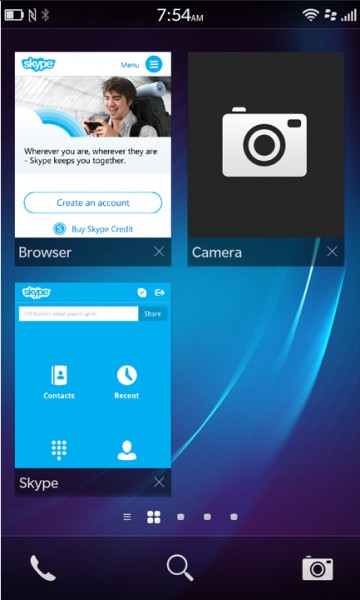
    Microsoft has been busy with its Skype toy recently, and today announces that it’s bringing the popular communication service to yet another mobile platform — BlackBerry’s new Z10 handset.

    Microsoft released a preview version of the app for the Q10 back in April, but now with Blackberry 10.1 rolling out to Z10, owners of this device can begin using that Preview version as well. Microsoft’s Linda Summers announces the company is “working closely with BlackBerry to give users the best possible Skype experience on the Z10, just as we have for the Q10”.

    The app, while being a beta, is full-featured and integrates with the phone book and the BlackBerry Hub. Once your Z10 receives the new 10.1 update then you can download Skype from BlackBerry World.

    Summers points out customers should “remember this release is still in preview version. We will continue working with BlackBerry over the next months to refine the performance of the Skype app. So keep an eye for any new Skype updates on BlackBerry World for your device”.

    The app is free, currently at version 3.1.439.21, and requires version 10.1 of the mobile OS. Customers can use it to place voice and video calls to users on any mobile platform or on Mac and Windows.

  • Beyonce Cancels Show Amid Pregnancy Rumors

    Pop superstar Beyoncé is currently in the midst of a world tour called “The Mrs. Carter Show.” Despite the fact that an unnamed source close to her and her husband, Jay-Z, has denied it, rumors of the singer being pregnant are beginning to persist. The couple already have one child, a one-year-old daughter named Blue Ivy.

    Now, Beyoncé’s health is once again in the spotlight as her tour hits a snag. The singer was scheduled to go on stage tonight in Antwerp, Belgium, but has cancelled the show. According to an Associated Press report, the show was cancelled due to the singer’s “dehydration and exhaustion.” She has reportedly been ordered by doctors to get some rest.

    The cancellation was announced via Beyoncé’s Facebook page, where ticket-holders were encouraged to hold on to their tickets for a rescheduled show:

    Beyoncé

    Belgium

    Unfortunately tonight’s show has been canceled.

    Please keep your tickets for the rescheduled show.

    Our sincerest apologies for the late notice and stay tuned for the new show date announcement.

    Beyoncé’s world tour is scheduled to hit much of Europe for the rest of May before continuing on to cities in the U.S. and Canada throughout June and July. The singer’s statement to the AP made it clear she is waiting for Doctors’ advice before continuing on with the tour.

  • 500 Startups announces latest batch of accelerator companies

    500 Startups plans to announce Tuesday that it’s picked the 28 companies (about the same number that launched last summer) that will make up its newest class for the summer of 2013. The group got started in mid-April, and will have July demo days in Mountain View, San Francisco, and New York.

    Dave McClure’s incubator launched back in February 2011 after 500 Startups had already invested in about 100 companies, and the group is set to hit its namesake number of investments this year, between the incubator and outside companies. This summer group will be the sixth batch of companies to go through the incubator.

    The full list of the 28 companies can be found on AngelList, which is now required for companies applying to the program, beginning on Tuesday.

    Apart from the list of companies, here are a few facts about the latest bunch:

    • Eight of the 28 companies, or about 28 percent, has a female co-founder, and two of those women are CTOs for their companies.
    • Two-thirds of the companies, or 20 of the 28, are international, continuing a longstanding 500 Startups penchant for investing overseas. The companies come from a variety of countries including Brazil, Chile, China, Ghana, India, Israel, Japan, Jordan, Mexico, Spain, Switzerland, Taiwan, Ukraine, and Vietnam. 500 Startups recently added a partner in China.
    • One of the companies called Dropifi is the group’s first investment in an African companies, and two of them, Dakwak and Tamatem, are the first Middle Eastern accelerator companies.

    Our coverage of the fifth batch that launched in February can be found here, and we’ll be covering the demo day for this batch in July.

    Related research and analysis from GigaOM Pro:
    Subscriber content. Sign up for a free trial.


  • Ain’t Too Proud to Beg: Pricing Lessons from the Rolling Stones

    Earlier this month the Rolling Stones kicked off a brief 2013 tour celebrating their 50th anniversary. The Stones have always been aggressive in setting ticket prices, and it appears they’ve pushed too hard this time. With arena seats reaching $600 and general admission packages in the “Tongue Pit” (close to stage) topping out at $2,000, ticket sales are reportedly tepid. As a result, tour promoters are on the verge of a “19th Nervous Breakdown.”

    I have a particular interest in this topic, because I attend concerts frequently. (Over the last thirty years, I’ve seen Jimmy Buffett nearly 120 times.) I also have a professional interest because concert tickets are a great way to understand pricing — whether it’s the role of scalpers, the use of dynamic pricing, or concerns about whether high prices hurt a musician’s brand. In fact, I wrote my PhD dissertation on rock concert ticket prices.

    The situation faced by the Rolling Stones — sagging sales due to high prices — is one that all companies are susceptible to. Quite simply, sometimes you overshoot. When this occurs, the challenge for a premium company is how to discount in a manner that doesn’t damage their brand nor anger customers who paid full price. Here are some tips to help front man Mick Jagger, as well as managers in the same situation, profitably navigate out of this mess.

    Add Value. The most common remedy to this malady is to maintain price but add value, so customers feel they’re getting more for their money. Guitarist Keith Richards could casually drop in an interview that this may very well likely be the band’s last tour (the “hedge” in the wording is intentional). Or, as the band did at its opening gig in L.A., they could bring in special guests such as Gwen Stefani and Keith Urban. These additions make the experience more memorable, so customers value it more.

    Lower Value to Justify a Lower Price. At every tour stop, the Rolling Stones made available a limited number of “for the fans” $85 tickets that instantly sold out. The catch to these discounted tickets is you don’t know where you will be sitting until show time — you could be in the “Tongue Pit” or row ZZZZ. This hurdle was designed to identify price sensitive customers. Fans who are willing to pay more (those entertaining clients, for instance) are less likely to purchase these tickets due to the chance of ending up in nosebleed seats. Now, as seats remain unsold, promoters can release more of these $85 seats, explaining that additional seats opened up due to production issues. This could be true or, of course, an excuse to make available more discounted tickets.

    Manufacturers and retailers play similar games to lower costs without creating a perception that the product is less valuable. For instances, high-end appliance manufacturers can deliberately inflict cosmetic blemishes on excess inventory to then discount at a “scratch and dent” sale. While this tactic sounds strange, it can make sense by preserving the value of the brand while finding a justifiable reason to lower prices.

    Sell Via a Different Distribution Outlet. Why not use scalpers to sell excess inventory? To avoid tarnishing their brand, bands often sell the best seats via scalpers (so that fans blame scalpers, not the bands themselves, for inflating prices). In a different twist, the Stones could offer bulk discounts to scalpers — who would then sell at low prices — thus shielding the band from looking weak. Analogously, this is why premium brands often sell discounted merchandise at outlet stores.

    Tell a White Lie. Within each ticket price category, say the $600 one, there are thousands of tickets that vary in quality. The remaining tickets in each category (thus, the less desirable ones) can be discounted under the guise of “newly released seats.” Similarly, salespeople can tell clients that they have been “authorized” to offer loyalty discounts to their best customers.

    Tell the Truth. As long as there is an explanation, it’s possible for premium companies to discount without damaging their brands. The Ritz Carlton in the Cayman Islands, for instance, drastically lowers room prices during the summer because of hurricane season. This rationale doesn’t damage the Ritz’s brand, and it allows the company to charge hefty premiums in-season. The Rolling Stones should simply admit: “We blew it.” Following this admission, prices can be cut for less desirable shows held on Sunday to Thursday evenings. This discount could lure in aging boomers who had refrained from purchasing due to the pressure of working the next day.

    Offer Mixed Bundles and Volume Discounts. Customers expect discounts if they buy a mixed bundle (a lower price for buying 2 or more products: a McDonald’s Value Meal, for instance) or in large quantities. Discounts can be offered for buying, say, a Rolling Stones/Paul McCartney bundle or a Family Pack (buy 3 tickets, get the fourth for free). In this case, the rationale for employing these tactics is to provide an explanation for the price drop.

    The funk that the Rolling Stones are in the midst of is yet another reminder of why pricing is such an important strategy for companies. Aside from being a key driver of profits, a misfire can have serious ramifications. The Rolling Stones invested 50 years of hard work to be crowned the “greatest rock and roll band.” It’s a shame that due to poor pricing decisions, the Rolling Stones are closing out their career amidst allegations of greed, headlines reporting on poor sales, and the taint of desperation from employing tacky discounting methods.

  • Google Gets A Gaming Backbone

    Taking cues from Apple’s Game Center (which in turn likely took cues from Microsoft’s Xbox), Google appears to be adding a system-level gaming service to its Android operating system. Leaked late last week, the Google Play Games service, rumored to be officially announced at Google I/O, should add leaderboards, achievements, cloud saves and more.

    With a variety of Android-powered gaming devices like the OUYA and Gamestick on the horizon, a solid gaming service could help legitimize Android as a gaming platform. Of course console and PC gamers won’t be shocked by any of the rumored features—they’ve been enjoying many of them for years on their respective systems, but that doesn’t make them any less welcome. Here’s what you could expect from these features on your Android device:

    Cloud saves

    Yes your app purchases are backed up—you can register any Android device and re-download any purchases—but your progress is not. Right now, anything you unlock on Temple Run 2 on your phone will have to be earned again if you pick up the game on your tablet. Cloud saves make it easier to transition between devices—plus acts as an incentive to own more than one Android-powered device.

    Notifications & Leaderboards

    Know when your friends are playing certain games and receive invites to join them. Get a notification when someone beats your high score and knocks you down the leaderboard.

    Achievements

    Microsoft popularized the achievement system with the Xbox. Some form of achievements have made their way into almost every gaming platform available. Now instead of getting awards on a game-by-game basis, they could be system-wide and easier to compare with others.

    In-game chat & matchmaking

    With high-quality, console-like multiplayer games coming to Android, in-game chat and matchmaking are a must. Making this part of the gaming services backbone and not leaving it up to developers should help standardize matchmaking and make it easier to implement into games that otherwise wouldn’t have it.

    These features might seem like relatively small additions to the OS, but they’re an excellent foundation for Google to build on. Together with Chrome and cross platform Chrome to Android games, Google could become its own, truly mobile, device agnostic, gaming platform.

    If the rumors are true, we’ll hopefully see the game services update sometime this summer.

  • Sponsored post: Hasta la vista desktop – introducing Ektron Responsinator

    Responsive web design is all the craze when it comes to making websites look great on a multitude of devices. This is the must do marketing technology of 2013 — for web designers and marketers too.

    Imagine if you could increase your mobile leads by over 350 percent and reduce development efforts. It’s time to get started. All you need to do is register for the Ektron Responsinator and plug in your company website URL. Ektron simplifies the creation, management and delivery of digital experiences for global organizations that are looking to drive revenue growth and improve customer satisfaction. Ektron helps companies deliver customer experiences to their audiences through digital channels by using content to engage consumers and drive business outcomes.

    Go ahead . . . test it out . . . it’s free. 


  • Check Out This Gameplay Trailer For Pokemon X And Y

    After years of derivative sequels, GameFreak and Nintendo are finally ready to take Pokemon into some new territory with Pokemon X And Y. Nintendo has already revealed a few details about the new title, but a new gameplay trailer reveals much more.

    Besides the 3D visuals, the game will be bringing a number of new features to the long-running series. The biggest addition are the cinematic 3D battles that are reminiscent of Pokemon Stadium on the Nintendo 64. The title will also apparently let trainers ride larger Pokemon. Whether this means that Pokemon will finally be as large as their Pokedex entries state remains to be seen.

    Pokemon X and Pokemon Y will be available exclusively on the Nintendo 3DS in October.

  • Microsoft confirms Windows 8.1 name, will give it away for free

    On Monday I said Windows 8’s ‘failure’ is still a win for Microsoft and talked about the upcoming update — codenamed Windows Blue — speculating that it would be priced cheaply like a Mac OS-style upgrade, rather than be given away for free.

    Turns out I was wrong. Today Tami Reller, Windows division CFO announced at the JP Morgan Technology, Media & Telecom Conference in Boston that the update will be called Windows 8.1 and be entirely free for existing Windows 8 users, as a download through the Windows Store.

    The official name comes as no surprise. Windows Blue was only ever a codename (and far too much of a reminder of the infamous Blue Screen of Death) and as my colleague Alan Buckingham pointed out at the time, the leaked Windows Blue build 9374 referred to itself as Windows 8.1 in the Computer Properties window.

    As well as sharing these two nuggets of information about the highly anticipated update to the divisive OS, Tami says that Windows 8.1 will help Microsoft to “deliver the next generation of PCs and tablets with our OEM partners and to deliver the experiences customers — both consumers and businesses alike — need and will just expect moving forward”. She didn’t say whether the update would include a Start button, Start menu, or the option to skip the Modern UI altogether, but it’s a fair bet we’ll see at least some changes in that direction.

    A public preview of Windows 8.1 will be released on June 26, timed to coincide with the Build developer conference in San Francisco, and be available for both Windows 8 and Windows RT.

    The fact that Windows 8.1 will be a free upgrade is interesting. Is it a move designed to help overcome much of the negativity that exists regarding Windows 8, or will all future Windows 8x/9x updates be available for free, as System Packs have been in the past? Time will tell.

    What are you hoping to see in Windows 8.1?

  • Google’s new Android boss says software like Facebook Home could be blocked

    Facebook Home Blocked
    Android will likely always be open source, but just how open the platform will remain is an ongoing question. In a recent interview with Wired, Google’s new Android boss covered a lot of bases. He discussed the future of Android and dispelled speculation that it might merge with Chrome OS, but he also gave a somewhat unexpected answer to a question that many industry watchers have pondered for some time now: Just how open will Android be in the future?

    Continue reading…

  • BlackBerry expands its World: New Q5 phone and promises of BBM on iOS, Android

    BlackBerry Q5What a difference a year makes. At last year’s BlackBerry World event, the company was still working on its mobile hardware and software, trying to keep developers interested in the platform. This year, it’s a whole different story: There is new hardware, more apps for consumers and updated software for the BlackBerry 10 platform.

    Although it may be too late given the rise of successful third-party messaging apps, BBM is also going cross-platform. Surely, the company is gaining momentum, however, it still seems that for now, it’s competing for third place against Microsoft’s Windows Phone platform.

    Here are some of the highlights coming out of BlackBerry World taking place in Orlando:

    • The BlackBerry Q5. This handset with full keyboard and 3.1-inch touchscreen is targeted at select markets in Europe, the Middle East, Africa, Asia (including the Asia Pacific region) and Latin America when it launches in July. It’s really a budget device for emerging markets, but the company can’t ignore this important segment. The current Z10 and Q10 are a bit too high-end (read: high-priced) for these growth areas, and I think the Q5 is a smart play.
    • BlackBerry 10.1 software for the Z10. We had hints of this update coming and it adds some nice features to current Z10 handsets: PIN to PIN messaging, an HDR camera mode, improved cursor control and support for custom notifications. Should these have been in the Z10 on launch day? Probably, but BlackBerry was under the gun to deliver and this is a solid follow up.
    • BlackBerry Messenger for iOS and Android. This long-rumored expansion of BBM is now reality, or will be later this summer when it rolls out. At first, the software will support the basics: Messaging and Groups. Later, however, a full suite of BBM tools — already available on BlackBerry 10 — will arrive with screen-sharing and voice calls. Is it too little too late though: If you’re using iOS or Android now, how many friends or contacts do you know that use BBM? BlackBerry says that BBM has more than 60 million monthly active users now but that’s well below some popular third-party messaging services.

    BlackBerry is also making inroads with apps, claiming 120,000 are now available for the platform. Bear in mind that a good portion of those are Android apps and not native to BlackBerry; for some that won’t matter. If customers can get the mobile apps they want on the platform, they’ll be happy and so too will BlackBerry.

    The company is really in the second inning of its BlackBerry 10 ballgame and picking up steam. I don’t expect BlackBerry sales to rival those of iOS or Android any time soon, but they could present a bigger challenge to Microsoft’s Windows Phone than some have thought. I didn’t see much light at the end of BlackBerry’s tunnel last year; however, the company continues to drive forward with everything it needs to compete.

    Related research and analysis from GigaOM Pro:
    Subscriber content. Sign up for a free trial.


  • Google Ventures invests in OpenCoin, the firm behind Bitcoin exchange Ripple

    This virtual currency thing just got another piece of validation: in the wake of Bitcoin’s spectacular rise, fall and wary stabilization, Google Ventures has decided to invest in OpenCoin, the company behind the Ripple distributed currency exchange.

    (Quick note: We’ll be hosting some Bitcoin experts at the San Jose Tech Museum on Thursday, May 16, from 6-9pm, so be there if you’re into this stuff.)

    Ripple, billed as “the world’s first open payment network”, may lack the rebel allure of Bitcoin itself, but its distributed model could patch one of Bitcoin’s chief weaknesses, namely its reliance on a few sometimes less-than-transparent exchanges. Of course, Ripple will be usable for the exchange of other currencies, too, and it arguably sits alongside other new financial technology startups such as Transferwise.

    In April, OpenCoin received investments from Andreessen Horowitz, FF Angel IV, Lightspeed Venture Partners, Vast Ventures and Bitcoin Opportunity Fund. The new angel round, just one month later, comes courtesy of Google Ventures (who we hear put in less than $200,000) and IDG Capital Partners.

    In a statement, IDG’s Feng Li said his firm was “excited about the prospect for a global payments system that powers instant, free and secure transactions in any currency.” OpenCoin CEO Chris Larsen, meanwhile, promised using Ripple would be “as easy as sending an email.”

    Speaking of emails, OpenCoin recently sent some to those who had signed up to receive “ripples”, which will be a sort-of-currency in themselves but which will mainly be used as transaction tokens on the network, to try to stop attackers from flooding the network with tiny transactions. The company promised that those who signed up before May 9 would get given free ripples by the end of the month.

    Other recent investments in this space include $5 million from Fred Wilson’s Union Square Ventures for Bitcoin transaction platform Coinbase, and a $6 million Peter Thiel-led round for Transferwise (which, it should be noted, is engaged in the global payment platform space but doesn’t deal in Bitcoin). And more money seems set to flow: also on Tuesday, New York’s Liberty City Ventures announced a $15 million fund specifically for Bitcoin-related endeavors.

    Related research and analysis from GigaOM Pro:
    Subscriber content. Sign up for a free trial.


  • With Square Stand, Jack Dorsey & Co. reimagine the cash register

    They say all revolutions start out small. Jack Dorsey’s Square is no different.

    It started off with a modest card reader, turned into a little app and now the company has developed and launched Square Stand, a point of sale system that reinvents the idea of cash register with help from Apple’s iPad and Square’s software, allowing the San Francisco-based company further spread its wings in the payments business. And if there were any doubts that the company was going after payments incumbents such as NCR and Verifone, Square Stand puts it to an end.

    SquareStandLaunches

    The company announced the Square Stand at an event in a coffee shop near its offices this morning. Square Stand, simply put, is a point of sale system that allows merchants (big and small) to plug in their iPads (2 or 3, but not the 4th generation) into a stand that comes with a swivel base (so they can turn it around for you to sign for your purchase), a credit card reader and a USB hub that can in turn allow merchants to plug in everything from a scanner to a printer (for printing receipts), a cash register (the Square Stand doesn’t hold cash, just works with other devices) and even the backend ordering system into the stand. In February this year, Square introduced its Business-in-a-Box package, but this is a much simpler and is targeted at larger establishments including restaurants.

    When asked why the company was making the initial device with support for only the iPad 2 and iPad 3, Dorsey pointed out that a majority of their customers were using these two devices and as a result they had to make sure they provided the biggest support. The support for iPad 4 (the newest model available, sold as just “iPad”) will come in subsequent models. The company had launched Square Register for iPad app in March 2012 and has made subsequent upgrades to the app.

    Sexy cash registers?

    SquareStand_Swipe_300dpi

    “We have taken something that is ugly and mechanical and made it look like a consumer product that is very sexy,” said Dorsey, chief executive of the four-year-old Square, which is based in San Francisco and has raised $340 million in funding from the likes of Khosla Ventures, Citi Ventures, Starbucks, Visa and Chase. The company is part of a growing number of players including eBay and GroupOn that are looking to reinvent the offline retail business.

    It hinted at its grander ambitions when it hinted at its desire to take on the likes of Foursquare and Yelp. Square said that as of today it is processing over $15 billion in payments on an annualized basis, excluding Starbucks, up from processing $5 billion on annualized basis a year ago.

    Weighing in at about five pounds, the stunningly beautiful device is pristine white and is made of moulded plastic. The USB and other accessories (called the Toolkit) are perfectly matched to the stand. It will used by 13 merchants in 30 locations. The package is going to cost $299 and and is available for pre-order.

    When I first saw the Square Stand, it elicited an involuntary gasp. From packaging to the final product, it is something one would expect from the Apple dream factory; but in saying so, I don’t do justice to Dorsey and his design team. While there are many companies who are following the Apple aesthetic, to me Square Stand represents a perfect harmony of hardware, software and service.

    Digital receipts and mobile payments are the way of the future, but Square also recognizes that people pay with cash and credit cards, the company said at the press conference Tuesday morning. The support for third party peripherals will make this into an ecosystem. It will be on sale in July at Best Buy and other retailers.

    Do small merchants care enought about how their point-of-sale devices look and will they spend money to replace their existing systems? “More important than how it looks is how it works. It is about making it work simply,” Dorsey said Tuesday.

    Completing the sale

    The Stand has been under development at Square for quite sometime. Dorsey said that reinventing the register and rethinking the whole retail experience has been part of company’s thinking from its earliest days. If the Square’s original card reader made it possible for mom-and-pop businesses to access the credit card payment infrastructure, with the launch of this device, Square can start to look at tapping into the big brick-and-mortar commerce ecosystem.

    “Whenever people got Square (Register) on iPad, the first thing they needed was a stand. So we made one, and one that works seamlessly in a way that allows merchants to move people through the queue really quickly,” Dorsey said. “We wanted to build hardware that was high quality.” The speed of processing payments has been a key driving force behind the design of this device, Dorsey explained.

    Square is one of the handful of companies that understands that there is a lot of money to be made in building this new kind of retail system. And it might have started out small, but now it doesn’t have much choice to get real big, real fast. After all it has to live up to is massive $3.25 billion valuation.

    SquareStand_Environment_300dpi

    Related research and analysis from GigaOM Pro:
    Subscriber content. Sign up for a free trial.