Category: News

  • First Grade Math: Counting Money

    Introduction:This mathematical concept is meant for first graders who are learning about money and its value.  Students need to understand that 5 pennies equal a nickel, 10 pennies equal a dime, etc.  Also, they need to learn what amounts and types of coins add up to 100 cents or less. In this plan I intend to help students learn the value of different coins and how they can add up to 100 cents (a dollar) in a variety of ways through a book, centers and certain websites with games they can play either in centers or at another time.  I also want them to see the importance of money in the real-world and realize that their parents probably use some form of these coins daily.The actual SOL is:SOL 1.10 The student will a) identify the number of pennies equivalent to a nickel, a dime, and a quarter; b) determine the value of a collection of pennies, nickels,and dimes whose total value is 100 cents or less.Text Annotations:51bxvuecopl_sl500_aa300_.jpgHow Much is $1? 
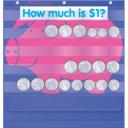
    • This book seemed like a great resource for showing students what coins, in different combinations, can add up to one dollar. It even came with a Pocket chart with a piggy-bank stencil plus a storage pocket for money cards. Can be used for K-3, but in this case it would of course be used for first grade and specifically for SOL 1.10.
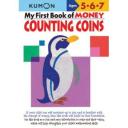
    51olmh6fql_sl500_aa300_.jpgMy First Book of Money

    • This book,”My First Book of Money”, seems to be a great way to introduce students to the way money works and how it relates to counting in general. It shows students examples of how to count coins in various ways.

    54369389jpg.jpegOne Cent, Two Cents, Old Cent, New Cent

    •  I think this book by Dr. Seuss would be a great way to get students thinking about money, how it works, and the fact that it is something used all over the world. In addition, it is written in the typical way of Dr. Seuss, which students would enjoy.

    51k34mtgol_bo2204203200_pisitb-sticker-arrow-clicktopright35-76_aa300_sh20_ou01_.jpgFind Out Reader: Counting Money 

    • This book is fairly short but packs quite a bit of information into it and shows the equivalencies and values of coins and money in general. It is easy for first graders to read and helpful in getting them to grasp concepts such as different coins’ values. 

    51jh67flonl_bo2204203200_pisitb-sticker-arrow-clicktopright35-76_aa300_sh20_ou01_.jpgThe Penny Pot

    • This is a fun book for students to read because it is about a teacher who paints children’s faces at a carnival for 50 cents. Students must face the dilemma of not being able to get their faces painted because they have made other purchases; if they want to, they have to wait until the penny pot has been filled by other students. The book shows multiple types of children having to learn to count money and understanding that money is limited and one can’t buy everything he or she wants.

    Web Annotations:Counting Different Coins

    •  I really liked this lesson plan idea (and some of the other ones on that site) because it helps students realize that money is connected to the real world and I feel the students would enjoy it.

    Money Worksheets With Pennies, Dimes, Quarters

    •  I thought this website could be useful for its worksheets in assessing students’ understanding of money; I especially liked the worksheets where students work with either pennies, dimes, quarters, etc. such as this one .

    Webquest: Counting Money

    • This is an awesome webquest about counting money for grades K-2 with many different activities for students, ranging from videos about coins and what each coin looks like to various worksheets.

    Counting Money

    •  This is an interactive activity/game where students are presented a certain combination of coins and have to type in the total amount of cents shown. The game tells the students whether they are right or wrong and also shows the front and back of coins so that students learn what the coins look like from both sides.

    Math Money

    •  This website had a ton of games and activities for students to participate in when trying to learn about money.  I thought this would be a great resource to have on hand for extra practice for students as well as for students who might finish a math activity early in class.

    Additional Resources:Smartboard–Making Change

    • This is a link to a great smartboard created b another teacher where students must figure out how much change needs to be given back to buy, for example, a Hershey bar.   It even has an example where the student’s have to deal with a “cashier” and figure out how much change they would get back.

    Suggestions for Manipulatives and other Resources for the SOL

    • Under 1.10B, there are suggestions for manipulatives that I would like to use in my instructional resource set; real money, objects with price tags, and money bingo.  There are also great suggestions for books, technology resources, and other resources.

    Math Worksheet Generator

    • This website is a great resource for teachers to use to create worksheets for addition, subtraction, fractions, etc.  In my case, there is a worksheet generator to create a 100’s chart which can be used to help students understand counting money.  The site takes you step by step through what you want on your worksheet and comes up with a finished product at the end.

    Counting Activities

    • This link has a whole host of activities linked to the 1.10 SOL for learning to count money. This could be a good resource to have handy for students who finish their work early or for students who need extra practice either in the classroom or at home if they have computer access.

    Counting Game

    • This is a great game for students to play to reinforce learning to count money.  One great thing about it is that it has easy-medium-hard levels so all students can play it comfortably no matter what their ability level is.

  • Financial Regulatory Reform Bill Reduces Deficit

    The Congressional Budget Office has released its review of Sen. Chris Dodd’s (D-Conn.) financial regulatory reform bill. It says the bill reduces the deficit by $21 billion over 10 years, with the money raised coming mostly from charging banks to pay into a fund available to the government to liquidate failing firms.

    Additional items of note:

    • The bill increases revenues $32.4 billion from now until 2015 and $75.4 billion between now and 2020. It increases spending over those period by $25.8 billion and $54.4 billion, respectively.
    • The bill would start reducing the deficit by slight amounts as soon as it is implemented.
    • The creation of the Consumer Financial Protection Agency would cost $3.2 billion between 2011-2020. The CBO estimates it will require 515 staffers.
    • The bill would increase fees the SEC collects from financial firms by $650 million over five years, and fees firms pay to other regulators by $500 million.

    Of course, the gains here are minuscule when viewed through the lens of the federal budget. But the value of preventing another widespread financial crisis, costing millions in jobs and trillions in household wealth? Priceless.

  • We Remember the Past, We Have Faith in the Future

    Every year since we launched Cleantech Blog this week marks a massive inflow of green press releases, phone calls, announcements and interview requests.  It always seems oddly out of place, and anything important we have to say always just seems lost in the press of Earth Day.

    In reality this week is a week for remembrance, introspection, and then a pause before looking forward to an always brighter future. 

    My remembrance always starts a day earlier.  Yesterday, April 21st was Aggie Muster, the day that thousands of Aggies around the world hold the roll call for the absent, where a family member answers”here” for those former students who have died in the previous year and cannot answer for themselves.  The roots of Muster date back over a hundred years, and we have formally held Muster since 1922 all around the world. 

    Softly call the muster, softly call the roll.  We do remember.

    And today, the day after is Earth Day, now 40 years old, the day we remember our planet, think about what we should be doing better, and recently, make our New Earth Year’s resolutions for what we will do better.

    We will remember, we will do better.

    And in both cases, look forward to the next year and a bright future standing on the shoulders of those who have gone before.

    Here’s hoping that when we are gone, future generations will hold both their history and their planet dear, will have a reason to mark what we did with our time on Earth with reverence, and will still be working and looking forward to an even brighter, cleaner future for the generations to follow them.

    Neal Dikeman is a partner at Jane Capital Partners, Chairman of Carbonflow and Cleantech.org, and a 3rd generation Texas Aggie Class of ’98.

  • Ask Umbra’s Earth Day book giveaway

    by Umbra Fisk

    Dearest readers,

    Happy Earth Day! How are you celebrating? Perhaps by
    tweeting your little heart out about all the hopeful things going on in the
    environmental movement (don’t forget to add #hopen)? Well, since you’re on there anyway,
    why not participate in my little book giveaway? That’s right! Free stuff! Woot! I’m giving away two
    copies of this month’s Ask
    Umbra’s Book Club
    selection, Diet for a
    Hot Planet
    by Anna Lappé,
    and two copies of Talking Dirt: The Dirt
    Diva’s Down-to-Earth Guide to Organic Gardening
    by Annie Spiegelman.

    There are two ways you can enter for a chance to win:

    Answer the following question in the comments section below,
    or follow my tweets @AskUmbra and respond to the question on
    Twitter (include @AskUmbra and #giveaway in your response—no need to include the
    question—so I’ll be sure to see it):

    What can you commit to doing—not just as an individual in
    your own home, but in your community, neighborhood, apartment building, school, or
    office—to work toward a brighter green future?

    Then at 4 p.m. PDT, I’ll pick two entries from the comments
    and two from Twitter to win the books. I’ll email the winners for their
    addresses after the contest is over.

    Givingly,
    Umbra

    Related Links:

    Win a signed copy of ‘In the Empire of Ice’!

    Scientists show ‘growing’ fuel is waste of energy

    Jamie Oliver on parents, nuggets, ‘luminous drinks,’ and school lunches


  • Amonix has real solar news instead of Earth Day idiocy

    by Todd Woody

    I’m waving the green flag of surrender, crushed by the organic
    cotton-gloved fist of the enviro-public relations-industrial complex.

    I will write an Earth Day column, my resistance broken by
    the ceaseless pitches from corporate PR people to include “in your Earth Day
    coverage” everything from how to “go green between the sheets [and] make your
    love life sustainable,” to a certain multinational beverage company’s
    LEED-certified bottling plant, to a defense contactor’s environmental initiatives.

    It just won’t be a column about any of those things.

    As I fruitlessly explained to those who wouldn’t take their
    deleted pitches and unanswered phone calls as a sign of my lack of interest,
    every day is Earth Day for environmental reporters. 

    Photo courtesy of AmonixSo I’m going to write about something that in the pre-blog
    era was known as news. On Earth Day eve, a Southern California solar company
    called Amonix announced that it had raised $129.4 million from a group of
    investors led by Kleiner Perkins Caufield & Byers, one of Silicon Valley’s
    most prominent venture capital firms and a leading green tech investor.

    It’s a big chunk of change—one of the largest green tech
    deals of the year—and a sign that investors continue to see a significant potential
    payoff in solar technology, even one that has been in development by Amonix for
    the past 20 years.

    That’s right—two decades. That’s several lifetimes in VC
    years.

    Amonix makes concentrating photovoltaic power plants, known
    in the business as CPV. Plastic lenses—other companies use mirrors—concentrate sunlight on tiny and expensive, but highly efficient solar cells.

    Conventional solar panels concentrate the sun one time;
    Amonix’s CPV panels—and those of some rivals—concentrate the sun 500
    times. That solar intensity coupled with what is called a “multi-junction”
    solar cell allows Amonix’s systems to generate more electricity than standard
    solar panels in regions that receive intense direct sunlight.

    (But you won’t be seeing Amonix’s CPV Solar Power Generator
    on rooftops. Each unit is as tall as a five-storey building and generates 72
    kilowatts of electricity.)

    “CPV is hands down the most cost-effective for hot and sunny
    desert environments and will outperform other solar technologies,” says Brian
    Robertson, Amonix’s chief executive.

    But only some 19 megawatts of CPV have been installed
    worldwide, compared to thousands of megawatts of conventional photovoltaic
    systems.

    “If you look at the history of CPV as a technology, it has
    been around several decades but the industry hasn’t taken off,” says Ben
    Kortlang, a partner at Kleiner Perkins who formerly was the co-head of Goldman
    Sachs’ alternative energy investment division.

    High costs and technological challenges—such as keeping
    the units cool—as well as bankers’ skittishness about financing bleeding edge
    technology—limited CPV’s commercial appeal, according to Kortlang and
    Robertson. But those obstacles appear to have been largely overcome and the
    technology is starting to be deployed in the United States.

    Robertson said Amonix has built 13 megawatts’ worth of CPV
    power plants, mostly in Spain, which had offered generous subsidies for solar
    power. Competitor SolFocus, a Silicon Valley startup, last month began
    construction of a one-megawatt CPV farm at Victorville Community College in the
    Southern California desert and this week announced that it would supply its
    technology for a 300-kilowatt array to be built at Alice Springs Airport in
    Australia.

    “Amonix has removed the key challenges that have held the
    CPV back,” says Kortlang. “We’re now seeing Amonix on a rapid commercial ramp
    up.”

    If that holds true, CPV could be a big boost to distributed
    generation and change the calculus of deploying massive solar thermal power
    plants in the desert Southwest. (Solar thermal farms use thousands of mirrors
    spread over thousands of acres of land to focus the sun on liquid-filled
    boilers that create steam to drive electricity-generating turbines.)

    Robertson says Amonix plans to build small-scale solar farms
    that generate between one and 20 megawatts and that can be plugged directly
    into existing transmission lines.

    Some solar thermal power plant projects have been stalled by
    disputes over their impact on wildlife, the landscape and limited water
    supplies. And while large-scale photovoltaic farms don’t consume water to
    generate electricity, their lower efficiency requires huge areas of land for
    the deployment of solar panels.

    Amonix and other CPV companies sidestep some of those
    pitfalls as the technology’s higher efficiency means a smaller footprint. No
    water is consumed to generate electricity and less water is used to clean the
    units as one can produce the same amount of power as hundreds of solar panels.
    An Amonix solar farm also can be built on terrain that is not flat, unlike
    other solar thermal and photovoltaic power plants.

    Robertson claims the capital costs of manufacturing Amonix’s
    arrays is about one tenth of those incurred by photovoltaic competitors, an
    advantage as the solar business becomes increasingly competitive with the entry
    of Chinese companies into the U.S. market.

    One potential problem for Amonix could be the sheer size of
    its 77-foot by 50-foot solar arrays, which track the sun and which will be
    visible for long distances in the desert. Environmental groups already have
    objected to the impact of solar thermal projects on desert “view sheds.” 

    But Robertson said so far he’s received no complaints. “To
    be honest, we’ve seen the opposite,” he said. “It’s about the gaudiest, most
    gigantic statement you can make if you want to do solar.”

    Related Links:

    Save Bette Midler, er, Mother Nature! [VIDEO]

    Hipster habits that annoy the Earth [SLIDESHOW]

    40 people who are redefining green


  • Another look at inadequate Copenhagen pledges

    Joeri Rogelj and others argue that Copenhagen Accord pledges are paltry in a Nature Opinion,

    Current national emissions targets can’t limit global warming to 2 °C, calculate Joeri Rogelj, Malte Meinshausen and colleagues — they might even lock the world into exceeding 3 °C warming.

    • Nations will probably meet only the lower ends of their emissions pledges in the absence of a binding international agreement
    • Nations can bank an estimated 12 gigatonnes of Co2 equivalents surplus allowances for use after 2012
    • Land-use rules are likely to result in further allowance increases of 0.5 GtCO2-eq per year
    • Global emissions in 2020 could thus be up to 20% higher than today
    • Current pledges mean a greater than 50% chance that warming will exceed 3°C by 2100
    • If nations agree to halve emissions by 2050, there is still a 50% chance that warming will exceed 2°C and will almost certainly exceed 1.5°C

    Via Nature’s Climate Feedback, Copenhagen Accord – missing the mark.

  • Gartman: Share Prices Will Continue To Rise Over The Next Few Years

    rocket tbi

    Today’s performance notwithstanding Dennis Gartman remains optimistic about the price of stocks over time.

    Shares will rise for “very long while into the future.” Thank liquidity programs from central banks like the Fed for this wild Bull market. Dow 13,000 is impossible.

    But the days of so-called “market leader” stocks like Goldman Sachs and Apple may be coming to an end. Gartman notes that while Apple’s earnings the other day were enough to light the stock on fire, it did not sufficiently move the market as a whole.

    Bears should realize that “fighting the tape has proven ill-advised” and if you can’t beat the market, join it.

    Join the conversation about this story »

  • IRC Podcast with Kurt Braunohler

    Yesterday, I uploaded episode #10 of my improv podcast. This week my guest is Kurt Braunohler. I really enjoyed this conversation. We began by talking about how one goes about teaching Harold, but we quickly moved on to other topics like solo improv, image streaming and viewpoints. Finally we talked briefly about Caligula, an exercise that we talked about in the Susan Messing podcast.

    Kurt is a teacher and performer at the People’s Improv Theater. He can be seen performing with Big Black Car and The Faculty. He is also a stand up comedian and performs at various venues around NYC. Several of his shows have appeared at the Upright Citizens Brigade Theatre. He has also appeared at the Edinburgh Festival Fringe with his comedy partner, Kristen Schaal.

  • Alisha John, ESFB President 2010

    by Derrick Bean
    COE Public Affairs Writer

    Alisha John has many goals as your 2010-11 Engineering Student Faculty Board (ESFB) president. John’s overall objective is to increase recruitment and retention rates at the college. To do so, she wants to help create new events, and get more people to volunteer at each event. But John says she can’t do it alone.

    “I feel that as students of the College of Engineering it is our duty to help ensure that it is as successful as possible now and in the future,” says John. “I believe that collaboration between students and student organizations helps to enrich the college experience of all those involved and leads to better results.”

    John says she ran for ESFB president because she is passionate about what the board aims to accomplish. “I believe that effective lines of communication between students, student organizations, faculty and staff are essential if a university is to provide the best possible education for its students,” she says. “I want to do my part to ensure that the College of Engineering provides not only an excellent academic experience to its students, but a great life experience as well.”

    The ESFB president-elect presided over her first board meeting — the last of the semester — Wednesday, April 14, one week after being elected.

    John, a soon-to-be chemical engineering senior, seemed comfortable in her new position. She says she gained leadership skills as president of Tau Beta Pi, the Engineering Honor Society, this past school year. “I am able to run more effective and efficient meetings, delegate tasks and promote success within a group,” she says. “In addition, I gained new contacts through interaction with administration, faculty, staff and my fellow students. I believe that these contacts will help my term as ESFB president be a successful one.”

    John isn’t new to creating programs. “One specific program I would like to continue and improve upon is the Freshman Outreach Program that I started last fall which aimed to aide incoming Freshman with their transition into the university setting,” she says.

    John has been involved in many campus activities in the past year. She started the fall 2009 semester off with a bang by volunteering as a victim in the dunk tank event during the Welcome Back Picnic. John took part in an on-campus a cappella choir called SYNCS (Singing Young New-age College Students). She also points to her drive, tact and “excellent communication skills” as further qualifications.

    Vanda Ametlli, former ESFB president, says a good ESFB president needs to be a “good leader,” noting that her “communication with student organizations’ leaders is a major factor in ESFB’s success this past year.” She adds that assigning tasks to other board members will allow her to accomplish more goals. But Ametlli’s “most important” piece of advice is to “assure that student needs are addressed,” she says.

    John says she is grateful to be given the opportunity to give back to the College of Engineering. “I am looking forward to this coming year and hope that ESFB will continue to be successful under my lead,” she says.

  • ARM Boss Pours Cold Water On Apple Bid Rumours After Shares Soar


    Woman with iPhone

    By Katie Allen: ARM Holdings and Apple (NSDQ: AAPL) go way back, and on Thursday the market was taking the view their relationship could be about to become even tighter.

    Shares in the Cambridge-based chip designer soared to an eight-year high as rumours continued to circulate that Apple may have ARM in its sights as an acquisition target.

    But before speculators get too carried away, Arm’s chief executive Warren East reminds everyone to look at the economics…

    With ARM’s market capitalisation at more than £3 billion, why fork out a fortune to own it when Apple and others can license the designs at a fraction of that?

    “Exciting though it is to have the share price pushed up by these rumours, common sense tells us that our standard business model is an excellent way for technology companies to gain access to our technology. Nobody has to buy the company,” East told The Guardian.

    At the root of the rumours, ARM’s microchips can be found in most of the world’s mobile phones, including Apple’s iPhone. As consumer demand for smartphones grow and as the devices get smarter, they will need more of Arm’s designs. Having said that, Apple now owns its own chip designer – PA Semi.

    The talk left ARM’s shares up 8.4p, or 3.4 percent, to 258.9p, the highest since April 2002 and made them the day’s top performers on the FTSE 100.

    Robert adds: Yesterday’s rumours mostly ignored the fact that Apple owns a slice of another UK chip licensing company – Imagination.


  • Berlin Reed

    by Grist.

    Berlin Reed

    The Ethical Butcher
    Portland, Ore.

    Berlin Reed, 27,
    took an unlikely path through vegetarianism and even “militant”
    veganism before embracing his new profession whole hog—literally. He now styles himself The Ethical Butcher.
    He gets all of his meat from small, local farms and visits every one
    to meet the farmers and see first-hand how their animals are raised.
    He’s converting people to the cause of sustainable meat through what
    he calls The Bacon Gospel,
    curing bacon with flavors like watermelon-basil and
    horseradish-lemon-turmeric, as well as through the Heritage Breed
    Supper Club, where people not only eat well but learn the story behind
    what they’re eating. Reed is also writing a book, developing a video
    series on sustainable meat, and planning a tour of cities along the
    East and West coasts to share his philosophy and highlight the work of
    others fighting to change the meat industry. 

    Watch Reed talk about his work and slaughter a pig:

    Meet more people who are redefining green.

    Next »    

    Related Links:

    Small slaughterhouses on the chopping block, ag research constrained, pushing GMOs

    Hardcore hip-hop for vegans

    Ask Umbra’s Book Club: Local or organic?


  • R.I.P. Nate "nnenn" Nielson, LEGO Spaceship Builder Extraordinaire [Lego]

    Nate “nnenn” Nielson was a father, husband, artist, and teacher. He also popularized the “Vic Viper” LEGO spaceships that took the AFOL community by storm. He died in an accident early this month. A few of my favorite nnenn designs: More »


  • 2010 Beijing: Ford Start Concept carries 3-cylinder EcoBoost, subcompact design

    Ford Start Concept

    No this is not another Audi A1 concept, in fact this is a Ford. At the 2010 Beijing Motor Show, FoMoCo unveiled the new Ford Start Concept – the first concept put together by the Dearborn automaker in more than three years.

    “Our ambition with the Ford Start Concept was to design a car that goes beyond the practical realities of commuting in these mega cities, to go beyond just dressing the technology. We wanted to design a car you would also love,” explained Freeman Thomas, Design Director, FoMoCo.

    Ford Start Concept

    Besides the crisp, smooth exterior shell constructed with lightweight composite body panels that snap-fit on an aluminum structure and the innovative interior (put together by Ford’s Irvine, California Strategic Concepts Group Studios), the model features a 3-cylinder EcoBoost. Power for the Ford Start Concept comes from a 1.0L 3-cylinder EcoBoost engine that delivers power and torque that comparable to a normally-aspirated I-4 powerplant.

    We have no tech specs nor do we have any fuel-economy figures, but we’re guessing this concept hints at Ford’s future expansion of the EcoBoost engine range along with hints at subcompact cars for emerging markets (seeing as it debuted in China).

    Check out the press release and high-res gallery after the jump.

    Ford Start Concept:

    Press Release:

    The Ford Start Concept Shows the Newest EcoBoostTM Engine

    The Ford Start Concept is the first concept car created by Ford in more than three years. The car made its debut April 22, 2010, at the Beijing International Auto Show, also marking the first time Ford has unveiled an all-new concept vehicle a China show. The Start Concept is more than simply a design study. It previews a fuel-efficient three-cylinder EcoBoost engine with 1.0 liter of displacement and the power of a larger I-4 engine.

    The Ford Start Concept was inspired in part by a growing global trend toward mass urbanization. The world’s top 20 mega-cities are home to consumers whose needs, attitudes and expectations may have more in common with mega-city dwellers in other nations than with their own countrymen. While these consumers share the challenges of living in an urban society, they also increasingly seek out product solutions that bring the best the world has to offer.

    Today, more than 50 percent of the world’s population lives in an urban area. By 2050, that number is expected to skyrocket to more than 70 percent. Already, congested highways, space for parking, concerns over fuel efficiency as well as the availability and price of fuel are driving automakers to look at vehicles and personal transportation more differently than ever before.

    Living in a mega city poses unique challenges and inspires unique lifestyles and attitudes. Just as traffic congestion issues are common in these geographic areas, the answers to solve the issues of a new generation of future small cars for these urban markets may also be found in the Ford Start Concept.

    Powertrain

    Ford powertrain engineers previewed something very real and close to being reality under the hood of the Ford Start Concept car. It’s an all-new and compact addition to the advanced Ford EcoBoost engine family. Consistent with Ford’s long-range goals to provide more power though sophisticated turbocharging and spark-ignited, direct-injection fuel management systems, the 1.0-liter Ford EcoBoost engine delivers power and torque comparable to a normally-aspirated I-4 powerplant. It is expected to have CO2 emissions under the 100 gm/km threshold.

    This engine is coupled with a six-speed manual transmission which permits gear spacing to deliver performance without sacrificing fuel economy. The transmission easily handles the higher torque levels of the 1.0-liter Ford EcoBoost engine and together with the sporty handling of the Ford Start Concept, delivers the fun-to-drive characteristics that are at the core of the Ford brand DNA.

    Connectivity

    Located at the top of the console is a port to connect to the MyFord Mobile concept technology, which provides a seamless driver interface conducive to safe driving practices with personal handheld devices.

    Without a smart phone, car-related functions including heating, ventilation and air conditioning, engine diagnostics and passenger airbag on/off function can be easily viewed and adjusted while driving through either voice activation or toggle and scroll controls located on the console. A wide, six-inch screen provides visuals.

    As an added feature, when the driver inserts a smart phone in the docking station when the vehicle is in motion, access is available via the MyFord Mobile Concept to phone contacts and navigation tools through voice activation, as are all messaging, direction and communication features.

    If the smart phone device is docked and the vehicle is parked and powered off, both the vehicle functions and icons from the user’s device are available via the MyFord Mobile Concept. Icons are displayed on the large screen through Bluetooth transfer. Car functions and the speaker system also are controlled through voice activation.

    MyFord Mobile Concept restricts certain functions, such as texting, while driving.

    Design

    “With the Ford Start Concept, we didn’t set out to design some sort of utilitarian concept to save the world, nor were we interested in following the competitive trend toward an overly noisy design language. What we did set out to do was design a personality driven car that exudes warmth, charm and aspiration…to design a car worth bonding with,” said J Mays, Group Vice President Design and Chief Creative Officer, Ford Motor Company.

    Crisp highlights are incorporated into a smooth exterior shell constructed with lightweight composite body panels that snap-fit on an aluminum structure.

    Ford’s trademark kinetic trapezoidal grill moves upward onto the rounded, sleek form, reducing the number of prominent openings from two to one and creating a face that’s both sporting and efficient. The entire exterior surface of the Ford Start Concept has been designed with flush-mounted aerodynamic features designed to cheat the wind – providing a minimal amount of drag while achieving maximum fuel efficiency.

    The innovative hybrid aluminum, high-strength steel body construction features a lightweight aluminum safety cell that provides a rigid attachment structure for the glass and roof, as well as housing side curtain air bags. All exterior body panels are made from deformable, pre-colored recyclable composites.

    Slim, laser-cut LED headlamps provide high-intensity light through trapezoid tubes. Two sets of running lamps, including a pair located in the headlamp design and a pair of lower running lamps, provide nighttime illumination.

    Created by a global team of designers working at Ford’s Irvine (Calif.) Strategic Concepts Group Studios, this sporty, futuristic concept combines near-production Ford EcoBoost engine technology, slick aerodynamics and low weight in an environmentally friendly package with reduced greenhouse emissions, all wrapped in an exciting design.

    – By: Omar Rana


  • Earth Day at 40

    earth_flag.jpgDate of first Earth Day celebration: 4/22/1970

    Share/Bookmark

    Rank of the United Auto Workers union among the largest financial contributors to the first Earth Day: 1

    Estimated number of demonstrators who took part in the first Earth Day: 20 million

    Estimated number of people who will take part in today’s Earth Day events: 1 billion

    Number of countries that observe Earth Day: 175

    Rank of Earth Day among the largest secular events in the world: 1

    Barrels of crude oil spilled on the California coast in a 1969 offshore oil platform blowout that helped inspire U.S. Sen. Gaylord Nelson to organize Earth Day: at least 80,000

    Estimated barrels of crude oil currently pouring out each hour from an offshore oil drilling rig that exploded earlier this week in the Gulf of Mexico: more than 300

    Number of workers still missing following that blast: 11

    Date on which the Obama administration announced plans to expand offshore drilling to new areas along the South’s Atlantic coast and the Gulf of Mexico: 3/31/2010

    Year in which demonstrators blocked a shipment of PCB-contaminated soil to a landfill in a predominantly African-American community in North Carolina, sparking the Environmental Justice Movement: 1984

    Percentage of residents living within two miles of commercial hazardous waste facilities today who are African-American: 56

    Date on which environmental justice leaders called on the Environmental Protection Agency to take action to better protect low-income communities and people of color: 10/27/2009

    Rank of Atlanta, Georgia among America’s most toxic cities: 1

    Increase in the average annual temperature in the Southeast since 1970: 2 degrees F.

    Amount by which average temperatures in the region are expected to rise by the 2080s, even if steps are taken to curb carbon emissions: 4.5 degrees F.

    Amount by which average temperatures in the region are expected to rise in that period if carbon emissions are not curbed: 9 degrees F.

    Rank of the South among least energy-efficient regions of the U.S.: 1

    Rank of the 2008 coal ash spill from TVA’s Kingston plant in eastern Tennessee among the largest industrial waste spills in U.S. history: 1

    Minimum number of states where water supplies have been contaminated by coal ash: 23

    Date by which the EPA promised to release a proposed regulation for coal ash, which is currently not overseen by the federal government: 12/31/2009

    Date on which EPA announced it was delaying the rule’s release amid heavy lobbying by utilities: 12/17/2009

    Number of months after the first Earth Day that EPA began operations: 7

    (Click on number to go to the original source.)

  • A Play-By-Play Guide To America’s Coming Deflationary Debacle

    Bubble Flow

    The Japanese scenario haunts the U.S. economy.

    The idea that all the government spending the U.S. has used to bring the country back from recession may not prevent the economy from crumbling under the weight of its own debts lives in markets today.

    There have been signs that the U.S. may differ from Japan’s balance sheet recession. The Federal Reserve’s quick response, the size of that response, and the current growth experience suggests that the U.S. may avoid the worst of Japan’s balance sheet recession.

    But a lot of the data explaining Japan’s experience matches up with U.S. economic data, and when you look at those charts side-by-side, its fearfully revealing.

    Japan Commercial Land Values

    Japan Commercial Land Values

    Source: Japan government paper, “The Asset Price Bubble and Monetary Policy

    Japan Residential Land Values

    Japan Residential Land Values

    Source: Japan government paper, “The Asset Price Bubble and Monetary Policy

    Japan Land Values

    Japan Land Values

    Source: Japan government paper, “The Asset Price Bubble and Monetary Policy

    U.S. Land Prices

    U.S. Land Prices

    Japan Asset Prices

    Japan Asset Prices

    Source: Japan government paper, “The Asset Price Bubble and Monetary Policy

    U.S. Asset Prices

    U.S. Asset Prices

    Japan Interest Rates

    Japan Interest Rates

    Source: Japan government paper, “The Asset Price Bubble and Monetary Policy

    U.S. Interest Rates

    U.S. Interest Rates

    Japan Money Supply

    Japan Money Supply

    Source: Japan government paper, “The Asset Price Bubble and Monetary Policy

    U.S. Money Supply

    U.S. Money Supply

    Japan Loans Outstanding

    Japan Loans Outstanding

    Source: Japan government paper, “The Asset Price Bubble and Monetary Policy

    U.S. Loans Outstanding

    U.S. Loans Outstanding

    Source: Japan government paper, “The Asset Price Bubble and Monetary Policy

    U.S. Bank Profits

    U.S. Bank Profits

    Japan Bank Profits

    Japan Bank Profits

    Source: Japan government paper, “The Asset Price Bubble and Monetary Policy

    Japanese Markets vs. The World

    Japanese Markets vs. The World

    Source: Japan government paper, “The Asset Price Bubble and Monetary Policy

    Japan Stock Values

    Japan Stock Values

    Source: Japan government paper, “The Asset Price Bubble and Monetary Policy

    U.S. DJIA Values

    U.S. DJIA Values

    Japan GDP

    Japan GDP

    Source: Japan government paper, “The Asset Price Bubble and Monetary Policy

    U.S. GDP

    U.S. GDP

    Look familiar. California for Tokyo, perhaps?

    Look familiar. California for Tokyo, perhaps?

    Source: Japan government paper, “The Asset Price Bubble and Monetary Policy

    Don’t believe us? Check out Richard Koo’s presentation saying the U.S. is the next Japan.

    Don't believe us? Check out Richard Koo's presentation saying the U.S. is the next Japan.

    See Richard Koo of Nomura’s presentation here >

    Join the conversation about this story »

  • Blame it on Rio

    Blame Brazil for the underperformance in emerging market stocks so far this year, says Geoffrey Dennis, an analyst at Citigroup Capital Markets.

    While global equities have climbed 4.6%  so far in 2010, emerging market stocks as a whole, are up 4.3%, due primarily to poor performance in Brazil, where the country's top benchmark is down -0.2%. Indeed, Brazil is the second worst-performing emerging market in 2010.

    "These trends are a reversal of 2009, when Brazil outperformed Latin America, which outperformed emerging markets, which outperformed the [world stocks]," Mr. Dennis said.  

    He said some common arguments thought to explain emerging market underperformance don't add up. In particular, the earnings forecasts in 2010 has been equally strong in developing and developed markets. Meanwhile, emerging countries that have raised rates in this cycle – Israel, Malaysia and India – are outperforming this year.

    The fact that the U.S. dollar is barely higher in 2010 also does not explain the emerging market underperformance.

    Arguments focused on Brazil, one of the three bigges emerging markets, do hold water, however.  Mr. Dennis said Brazil has been hit hard by nerves ahead of October elections, the focus on the next rate cycle, which has been compounded by the mistake of not tightening in March, and the poor performance of oil and gas giant, Petrobras that has fallen 11% due to concerns of an upcoming equity issuance.

    If Brazil is excluded from performance figures, Latin America is up 7.6% year-to date, emerging markets are up 5.3% and world stocks are up 4.9%.

    "We remain long-term positive but continue to look for only modest gains in 2010 in Latin America (15-20%)," Mr. Dennis said. 

    "We would buy the ‘latest dip’ in markets and expect the underperformance of Brazil, Latin America and GEMs to ease as the year proceeds."

    David Pett

  • Peak oil and the mainstream economist

    Michael Giberson

    Kate MacKenzie at the FT Energy Source blog asks, “Are policymakers, economists and peak oilists starting to speak the same language?

    A rash of papers, comments and interviews have made us think this recently. It’s not as simple as ‘policymakers are waking up to peak oil’, but that all those groups — and indeed, industry — are increasingly talking about the same issues looming in fossil fuel production, even if they’re using different terminology.

    Later:

    We’d venture that several things have kept talk of peak oil apart from the mainstream: a disagreement over the effect of price on demand, and a perception that many interested in peak oil simply predict overly dramatic, armageddon-style trajectories that sober-minded policymakers see as overblown.

    And she concludes:

    The debate is beginning to converge around a few central issues: how will economies that developed on cheap, abundant oil deal cope with the transition to expensive, scarcer oil? What will it mean for the emerging economies hoping to emulate those growth patterns? And finally, how will this play out in terms of pollution and climate change?

    MacKenzie’s link included above is to James Hamilton’s excellent 2005 post, “How to talk to an economist about peak oil.” Comments at Hamilton’s Econobrowser and responses at peak oil blog The Oil Drum revealed that economists and peak oilers were not communicating well in 2005. I’m not as convinced as MacKenzie seems to be that we’re doing much better in 2010.

    Personally, I like the undulating oil plateau.

  • White House chef Christeta Comerford speaking at Northwestern on Friday

    WASHINGTON–White House executive chef Christeta Comerford keynotes an evening of culinary mastery and healthy living” at Northwestern University on Friday, hitting the Evanston campus. Obamafoodorama explains more over here; Northwestern provides details of the Comerford event, sponsored by NU’s Filipino Student Association; co-Sponsored by Multicultural Student Affairs, ECO, Food Health Initiative (FHI), One Book One Northwestern, SEED.

  • Dutch court acquits Arab group of hate speech over Holocaust cartoon

    [JURIST] The Netherlands Utrecht District Court on Thursday acquitted members of the Arab European League (AEL) of hate speech charges resulting from the posting a cartoon on their website that insinuated that the Holocaust was fabricated. The criminal complaint against the group alleged that the cartoon violated Article 137c of the Dutch Penal Code, which punishes individuals for making discriminatory and defamatory statements against certain groups. The AEL argued that they do not actually deny the historical facts of the Holocaust, but that the cartoon was posted to call attention to what they saw as a double standard in the distribution of Danish cartoons depicting the Prophet Mohammed. The court held that the cartoon was offensive, but that, in light an accompanying disclaimer and subsequent statements regarding its purpose, it was nevertheless protected under Article 10 of the European Convention on Human Rights:
    Although the cartoon, in the opinion of the court, is in very bad taste and very hurtful for Jews and others, the right to make this statement is ensured given its specific context and purpose. In light of the case as a whole, an infringement on that right in the form of a criminal conviction is not proportional to the objective to which it serves. Prosecutors had sought for the court to consider the fact that Jewish groups were not involved in the creation or distribution of the Danish Mohammed cartoons, but the court refused.The Danish cartoons depicting Mohammed were originally published in a Danish newspaper in 2005, leading to worldwide protests and lawsuits for those who reprinted the cartoons including suits in Yemen, France and Jordan. The Danish government did not press criminal charges against the Danish newspaper that originally printed the articles. Last month, US citizen David Headley plead not guilty to 12 counts of federal terrorism, including charges related to an alleged plot against the Danish creator and publishers of the controversial cartoons.
