Category: News

  • First Grade Math: Number and Number Sense

    Here are some books that can assist with the instruction of numbers and number sense.  All of them are easy to read and provide excellent images to help students obtain a better understanding of numbers and their relation to place value.
    images-1.jpg

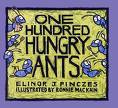
    One Hundred Hungry Ants  written by Elinor J. Pinczes and illustrated by Bonnie Mackan is a story about one-hundred ants on their way to eat the food at a picnic.  While traveling to the picnic one ant decides they will get there much faster if they divide into two rows of fifty.  After walking for a short time the ant decides they should divide into four rows of twenty-five then five rows of twenty and finally ten rows of ten.  This book is a good resource for a lesson introducing base-10 blocks

    images-2.jpg

    Greater Estimations  by Bruce Goldstone is a picture book that asks students to estimate how many items are in each picture.  The beginning of the book shows rubber duck in groups of ten and all the ducks lined up in a row of one-hundred. This book also uses popcorn kernels and groups of sky divers to give students a better understanding of number sense.
    images-3.jpg

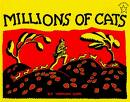
    Millions of Cats by Wanda Gag is a story about a man who ventures out into the countryside to find a cat for his wife.  Once there he finds hundreds and thousands of cats and decides to bring them all home.  The cats get to his house and start to fight over which one of them is the prettiest and after all the fighting only one cat is left.  This book is perfect for showing students how big and small numbers can be and the language is very easy to read.

    images-4.jpg

    More M&M’s Math written by Barbara Barbieri McGrath and illustrated by Roger Glass asks students to drop the candies out of their bag and use a graph to count the number of each color they have.  This book is excellent for teaching ordinal numbers.
    images-5.jpg

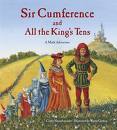
    Sir Cumference and All The King’s Tens written by Cindy Neuschwander and illustrated by Wayne Geehan is a story about Sir Cumference and his wife Lady Di preparing to have a surprise birthday party for King Arthur.  But things get out of hand when so many guests show up that they have trouble counting them all.  They decide to make the guests stand in rows and columns to make the guests easier to count.  The guests are then placed in tents with each tent representing a place value.  This is a great book to read to students before a lesson on place value.

    Websites for Kids

    Hacker’s Numbers is a interactive online game that challenges students to make larger numbers than Hacker.  The student must place a number in the hundreds, tens and ones.  This game is allows students to practice place value.

    The Cats in Line is an online activity that asks students to identify the ordinal number of the orange cat in a line of gray cats.  This site is good for helping students gain an understanding of ordinal numbers and their relation to a set of objects.

    The “Less Than” Lake Maze is a game that challenges students to help a monster cross a lake by jumping from one numbered stone to another stone with a lower number on it.  If the students move to a larger number the monster falls in the lake.

    Guess the Number is a game where the students can pick a number range (i.e. one to fifty) and then guess which number the computer has selected.  With each turn the computer tells the student higher or lower and then provides a smaller range.  The object of the game is to see how many turns it takes the student to guess the right number.

    Enter Your Number is and interactive online math activity that allows students to enter any number then want that then have the computer tell them the place values of the numbers within the number.  This site also has the option of generating a number for the student to challenge them.

    Additional Resources

    Bring It is an awesome online resource to support instruction for teaching one-to-one correspondence and other early elementary math skills such as addition, subtraction and even skip counting.  This activity also offers a two player mode for students working in teams.

    Estimation Exploration is an offline activity that asks student to estimate the amount of items in a jar or other container.  This activity assists students with gaining number sense and uses physical objects such as shells, jelly beans or foam balls.

    Counting Votes is another offline activity where the teacher asks students to help him/her create a list of vegetables on a large piece of paper.  Then using small cups and counter chips the students get to vote for which vegetables are their favorites.  The teacher writes the number of votes next to each vegetable and the students get to count their total number of votes for each vegetable.

  • The Big Bad Bite of the Apple

    In October 1997 Michael Dell, CEO and founder of Dell Computer when asked about what would he do to fix Apple, he quipped: “What would I do? I’d shut it down and give the money back to the shareholders.”

    Well after posting record revenues and record profits yesterday, at the end of trading day today Apple had a market capitalization of $235 billion (roughly $259 a share) behind only Exxon and Microsoft. Dell, in sharp contrast ended the day with a market capitalization of $33 billion. Look who’s laughing now!

    Nokia, another company whose executives mocked Apple now has a market cap of $55 billion. As for Google – it ended the day at $175 billion. Palm, another company that doubted Apple’s renaissance is up for sale and is worth about $820 million on the stock markets. Which makes me wonder if Microsoft, whose CEO once dismissed an iPhone as a toy will be lapped by Steve Jobs & Co?

    Related: GigaOM Interview with Michael Dell.

  • PS3 firmware 3.30 incoming *UPDATE*

    Head’s up to all PS3 owners, Sony has announced that a new software update for the PlayStation 3 will be available shortly.
     
    *UPDATE*
    PS3 firmware 3.30 is now live.

  • Google Store View is Coming [Google]

    It’s official: Google is adding store interiors to Street View. Next, presumably, is them photographing all humans individually for their database. Heck, I trust ’em! [Google LatLong] More »


  • Put Firefox into Hyperdrive with Pale Moon

    palemoon-ico [Windows Only] What is Pale Moon? It’s an open source project that takes the Firefox web browser code and recompiles it to run faster in Windows.

    Here’s what the author says about it:

    Why settle for a basic build of your Firefox browser on Windows Operating Systems when you can have one that performs 25% faster? Mozilla does not provide optimized browser packages for Windows, while many Linux users get the advantage of a browser built specifically for their system. That needs to change! So, here is the Pale Moon project: Custom-built and optimized Firefox browsers for Windows Operating Systems.

    pale-moon-browser

    I have been using Pale Moon for a few days now, and I did notice a performance boost in comparison with my usual Firefox installs. I would have to say that Pale Moon is a winner.

    There are no drastic differences other than the name. All of your old addons should continue to work. You’ll just get around the web a little faster. The author of Pale Moon claims that only real differences are that it doesn’t support the accessibility features or parental controls. Since I don’t use either one, I don’t know what I’m missing.

    There’s even a Pale Moon persona (theme) available on the home page that makes it look very cool.

    Download and try Pale Moon

    Techie Buzz Verdict:

    The only major drawback to using Pale Moon is that it may sometimes be a release or two behind Mozilla Firefox. Other than that, there’s not much difference from what I can tell. I can’t think of a good reason why I shouldn’t recommend it for every Firefox user running Windows.

    techiebuzzrecommendedsoftware1

    Techie Buzz Rating: 4.5/5 (Excellent)

    Put Firefox into Hyperdrive with Pale Moon originally appeared on Techie Buzz written by Clif Sipe on Wednesday 21st April 2010 11:19:24 PM. Please read the Terms of Use for fair usage guidance.

    Don’t miss these Related Posts:

    Join Techie Buzz on Your Favorite Social Networking Sites


  • We Are Our Own Worst Enemy

    Ken Heebner’s CGM Focus Fund was the best US stock fund of the past decade. It rose 18% a year, beating its nearest rival by more than three percentage points. Yet according to research by Morningstar, the typical investor in the fund lost 11% annually! How can that happen?

    It happened because investors tended to take money out after a bad stretch and put it back in after a strong run. They sold low and bought high. Stories like this blow me away. Incredibly, these investors owned the best fund you could own over the last 10 years – and still managed to lose money.

    Psychologically, it’s hard to do the right thing in investing, which often requires you to buy what has not done well of late so that you will do well in the future. We’re hard-wired to do the opposite.

    I recently read James Montier’s Value Investing: Tools and Techniques for Intelligent Investment. It’s a meaty book that compiles a lot of research. Much of it shows how we are our own worst enemy.

    One of my favorite chapters is called “Confused Contrarians and Dark Days for Deep Value.” Put simply, the main idea is that you can’t expect to outperform as an investor all the time. In fact, the best investors often underperform over short periods of time. Montier cites research by the Brandes Institute that shows how, in any three-year period, the best investors find themselves among the worst performers about 40% of the time!

    It seems strange. Great chefs don’t cook bad meals, but the best investors routinely make a hash of things. Shocking as it may seem at first, it makes sense in the context of markets. “If everyone else is dashing around trying to guess next quarter’s earnings numbers,” Montier writes, “and you are exploiting a long-term time frame, then you may well find yourself staring at the wrong end of a bout of underperformance.”

    The point being you can’t worry too much about short-term performance. Investing is a game won by determined turtles, not hares. That means you have to stick with solid ideas, instead of trying to catch what the hottest thing is.

    Another chapter I like is “Keep It Simple, Stupid.” It illustrates another key point about the nature of investing: It pays to focus on a handful of essential details and ignore the rest. Montier shows us experiments in which people made worse decisions when given more information. For example, in one instance, researchers asked people to choose the best of four cars given only four pieces of information on each car. (In the examples, one car is noticeably and objectively better than the others.) People picked the best car 75% of the time. When given 12 pieces of information, their accuracy dropped to only 25%. The added information was more than just extraneous; it made their choices worse.

    In the context of investing in stocks, it’s better to focus in on key variables that clearly matter and ignore the rest. My investment process aims to do that by boiling down the many details of investing in a company into four major areas. Too many details spoil the broth, but most investors haven’t learned this. “Our industry is obsessed with the minutia of detail,” Montier writes.

    I certainly would agree. I read quite a bit of investment research in any given year and I am always amused at the detailed modeling (and forecasting) that goes on. If an idea depends on such finely tuned analysis, then odds are it is not such a great deal.

    Throughout the book, Montier reveals and validates many ideas essential to smart investing. He also quotes liberally from scores of investing luminaries from Benjamin Graham to Sir John Templeton. There is a lot of wisdom here. Though repetitive at times, digesting these ideas is like eating your vegetables. They keep your portfolio healthy.

    Chris Mayer
    for The Daily Reckoning Australia

    Similar Posts:

  • Mobile Advertising Quick Hits 04.21.2010


    IAB Mobile Buyer's Guide

    »  Jumptap is rolling out a feature that lets consumers manage their own profiles for “a more personalized brand experience.” The feature, which will come mid-year, is in reaction to consumers wanting to be more selective about brands they want to interact with. Jumptap also partnered with Medialets and Crisp Wireless. Release.

    »  Hipcricket has expanded its mobile ad network for brands and media companies to reach consumers via SMS and mobile display ads in applications and on the mobile Web. When originally launched in 2008, the network was focused on driving sales to Hispanics. Release.

    »  Nexage has launched a metrics report that looks at mobile eCPMs during the month of March. It found that eight out of 11 ad networks fluctuates as low as 37 percent and as high as high as 89 percent of an unspecified maximum eCPM. Report.


  • Key Lime Pie With Avocado: A Healthy, Vegan Recipe

    Filed under: ,

    What do avocado, lime, almonds and a bit of creativity have in common? Well, when you toss them all together, you’ve got the makings of a rich, creamy, vegan key lime pie. The inspiration for the following recipe came from a mouth-watering photo on … Read more


    Permalink | Email this | Linking Blogs | Comments

  • Are Conservatives Misusing Geoengineering? | The Intersection

    This is the second in a series of guest posts by science writer Eli Kintisch, author of Hack the Planet: Science’s Best Hope–or Worst Nightmare–for Averting Climate Catastrophe, and climate change reporter for Science magazine. We’ve invited Kintisch to contribute regular guest posts at the Intersection on the topic; my take on his excellent book, just out from John Wiley, is here. In this latest post, Kintisch has contributed a small excerpt from Chapter 10 of his book, on the subject of how conservatives are exploiting geoengineering. Some lines have been edited for clarity in this shortened form, and the full chapter quotes this essay by Alex Steffen. Why do some of the same people who believe human activities are not warming the globe—or that climate change isn’t a crisis—feel that geoengineering is required to fix the problem?… Like a climate policy Swiss Army knife, geoengineering has proven useful to support a number of talking points on the subject. First, the promise of geoengineering as a technical fix to the problem has allowed conservatives to present a solution to global warming instead of being seen as simply blocking liberals’ proposed carbon regulations. Furthermore, …

  • Android on the iPhone? Finally, a compelling OS on an Apple device

    Dayum! Kinda surprised this hasn’t happened before now, but there you go. Android on a first-generation iPhone. What you see here isn’t quite something you’d want to use every day (though it’s further along than we thought it might be). And you know how these ports go: Once the water starts flowing over the damn, there’s very little that can stop it. We’re gonna watch this one like a hawk. [linuxoniphone.blogspot.comThanks to everyone who sent this in.

  • Sedition Or Difference Of Opinion?

    The double standard that is liberalism apparently knows no bounds, for now liberal pundits are effectively calling prominent conservatives criminals because of their disagreement with the policies of the Barack Obama administration.

    On NBC’s The Chris Matthews Show on April 18, Time columnist Joe Klein all but accused former Alaska Gov. Sarah Palin and Fox News’ Glenn Beck of sedition.

    “I did a little bit of research just before this show—it’s on the napkin here. I looked up the definition of sedition which is conduct or language inciting rebellion against the authority of the state. And a lot of these statements, especially the ones coming from people like Glenn Beck and to a certain extent Sarah Palin, rub right up close to being seditious.”

    According to Klein, the legal definition of sedition is “a revolt or an incitement to revolt against established authority.”

    John Heilemann one-upped Klein, invoking the name of Rush Limbaugh as someone else who is seditious, because he calls the Obama administration the Obama regime.

    So that’s where we are now in the political discourse?

    Prior to and during the Revolutionary War, many of our Founding Fathers spoke and wrote privately and publicly about the tyranny of the British government. Today, we consider them heroes. To the British they were seditious.

    In the 1960s blacks and some whites marched and held peaceful demonstrations—despite violent efforts to silence them—in order to secure equal rights for the black race. Today we consider them heroes. To many, they were seditious.

    In the 1970s a group of radical students with communist ideologies bombed 25 sites in the United States—including the Pentagon—and murdered two New York police officers and Brinks truck driver in a botched robbery attempt. They were called The Weather Underground, and their manifesto said, “Our aim is to disrupt the empire… to incapacitate it, to put pressure on the cracks.”

    Was that sedition?

    One of the members of that group is William Ayers. He’s an Obama mentor and in all likelihood the ghost author of Obama’s Dreams from My Father: A Story of Race and Inheritance.

    During the administration of George W. Bush, liberal activists protested Bush’s every move. A play was even written and performed which celebrated Bush’s assassination. Sedition? None of the liberal media thought so.

    But speak out against the Marxist redistributionist policies of the Obama administration and call it a regime—as liberal pundits did to Bush during his administration—and you are somehow being seditious.

    Thomas Jefferson once said, “I tolerate with the utmost latitude the right of others to differ from me in opinion without imputing to them criminality.”

    Liberals apparently can’t do that. Of course the reason and wisdom of Jefferson and the rest of Founders is as foreign to today’s liberals as the reasoning behind Mao Zedong’s murderous policies is to conservatives.

    Perhaps that’s why political discourse has taken such an ugly turn.

  • Crimes Amendment (Child Pornography and Abuse Material) Bill 2010

    On behalf of Family First I speak on the Crimes Amendment (Child Pornography and Abuse Material) Bill. The object of the bill is to amend the Crimes Act 1900 to change the law as it relates to child pornography so that the defence relating to material produced for child protection, scientific, medical, legal, artistic, or other public benefit purposes will no longer be available, and the law is generally more consistent with Commonwealth offences relating to child pornography.

    The bill also amends the Criminal Procedure Act 1986 to provide for the use of random sample evidence in proceedings for a child abuse material offence. It also seeks to amend the Criminal Procedure Act to extend to a witness in sexual offence proceedings the same protection as those afforded to a complainant in the proceedings in cases where it is alleged that the accused person has committed a sexual offence against the Crimes Amendment (Child Pornography and Abuse Material) Bill 2010 witness that is not the subject of the proceedings concerned.

    In its 2008 report, “Penalties relating to Sexual Assault Offences in New South Wales”, the New South Wales Sentencing Council recommended that artistic purposes be removed as a defence to child pornography charges. In addition, the Sentencing Council recommended the establishment of a Child Pornography Working Party to evaluate and report on these issues.

    In late 2008 the Government established its working party and appointed Judge Peter Berman, SC, as its chair. The working party included representatives across a broad range of government departments and interested parties.

    The working party was asked to consider a number of issues that had arisen in the prosecution of child pornography offences, and in particular how to remove the artistic purposes defence from child pornography offences in the Crimes Act 1900 without infringing upon the rights of journalists and artists to depict valid situations involving children.

    Under the recommendations, artistic merit can no longer be used as a defence for the use of images of children deemed to be pornographic. If the recommendations of the working party become law, any person producing, distributing or possessing such material could still argue artistic merit, but once the material is ruled to be pornographic the defence would lapse. The New South Wales Attorney General, the Hon. John Hatzistergos, said:

    The working party’s report suggests that once such material has been found to be unlawfully pornographic, whether or not it is intended to be art is irrelevant. Instead, the report recommends adopting Commonwealth provisions, which require that once a court has considered arguments that certain material is art and reached the determination that it is nevertheless unlawfully pornographic, no further defence of artistic merit is available.

    The definition of child pornography was recently broadened by the Crimes Amendment (Sexual Offences) Act 2008, which commenced on 1 January 2009. Child pornography is now legislatively defined as:

    material that depicts or describes (or appears to depict or describe), in a manner that would in all the circumstances cause offence to reasonable persons, a person who is (or appears to be) a child:

    (a) engaged in sexual activity, or
    (b) in a sexual context, or
    (c) as the victim of torture, cruelty or physical abuse (whether or not in a sexual context).

    In addition, a new section was inserted that specifies any material that contains or displays an image of a person that has been altered or manipulated so that the person appears to be a child. During the second reading speech on the bill, the Attorney General explained the reasoning behind the further broadening of the definition when he said:

    Images can also be manipulated to make innocent photographs of children appear in a pornographic context, or to make a person in a sexual context appear to be a child However, the Government makes no apologies for ensuring that all child pornographic images, whether real or pseudo, are covered by this legislation

    Furthermore, it is important to reduce the amount of this abhorrent material available to anyone with access to a computer.

    I commend the Attorney General for explaining that reasoning in such a way. I support the recommendations of the Child Pornography Working Party, given that this is a huge community concern for families and that children must be protected from such material. The working party recommended, “material that is otherwise offensive because of the way in which it depicts children should not be protected because its creator claims an overriding artistic purpose for it”.

    The working party was of the opinion that the defence of artistic merit led to the impression that material that would otherwise constitute child pornography could be acceptable if the material was produced whilst acting for a genuine artistic purpose. The working party also recommended that in defining child pornography the legislation provide a list of factors that must be taken into account in determining whether material is offensive, and that the defences be amended to mirror existing Commonwealth legislation.

    The bill now removes the stand-alone defence of artistic merit and, in its place, reworks the definition of child abuse material to include a list of factors that must be taken into account when determining whether material is offensive, which includes, amongst others, the existence of any artistic merit. The bill abolishes the artistic merit defence to a charge of producing, possessing or disseminating child pornography.

    This corrects a major defect in the law that has allowed material depicting children in a manner that is offensive to reasonable persons to be openly circulated on the grounds of its alleged artistic merit. The change will make a very clear statement that would be endorsed by New South Wales families: Art is not an excuse for child pornography.

    The bill also allows for random sample evidence in circumstances in which the quantity and gravity of child pornography makes it undesirable to adduce to the court in its entirety. The random sample evidence limits the exposure of those associated with the proceedings to viewing unnecessary amounts of child pornography but still allows them to understand a representative sample of the material.

    The bill also extends certain protections currently afforded to complainants in sexual offence proceedings to witnesses in the proceedings who also allege that the accused person has committed a sexual offence against him or her.

    I ask the Attorney General to consider taking the opportunity presented by the bill to improve the law on child pornography by amending the definition of a child for the purpose of these offences from “a person who is under the age of 16 years” to “a person who is under the age of 18 years”. There are several reasons to make such a change.

    First is consistency with other offences in the Crimes Act 1900. While the general age of consent for engaging in consensual sex is 16, there are several sexual and other offences for which a child is defined as a person under the age of 18 years. This includes child prostitution, section 91C; sexual intercourse with a child under special care, section 73; recruiting a child to be involved in a criminal activity, section 351A; persistent sexual abuse of a child, section 66EA; and aggravated sexual servitude, sections 80C and 80D.

    Each of those offences rightly recognises that a child is in special need of protection by the law until the age of 18. Child pornography should be considered to be one of those offences for which all children up to the age of 18 are in need of protection by the law. It is one thing for a child aged 16 or 17 to consent to sex; it is another thing for offensive pictures of a 16- or 17-year-old child to be taken in a sexual context and circulated. Such pictures may remain permanently available on the Internet. The bill would then bring New South Wales laws on child pornography into substantial agreement with Commonwealth law.

    As pointed out by the Minister when introducing the bill, this substantial agreement would facilitate law enforcement, as offences involving computers and carrier services may overlap the Commonwealth and State jurisdictions. It is important that the same material be considered as child pornography in both jurisdictions. However, the Commonwealth offences treat any person under 18 as a child.

    Therefore, I recommend that the Attorney General raise the age in New South Wales from 16 to 18 years. The bill provides a defence to an offence of child pornography if the material has been classified other than as “refused classification” under the National Classification Scheme. The definition of a child for the purpose of the National Classification Scheme is a person under 18. I believe this bill would be greatly improved if the age were lifted from 16 to 18 years.

    In conclusion, Family First believes that children have a right to innocence. They have a right to grow up without any pressure of being sexually exploited in any way. It is fundamentally for this reason that I support the Crimes Amendment (Child Pornography and Abuse Material) Bill and I commend it to the House.

  • The 1½ Cent Healthcare For Recessionary Times

    Now that the healthcare reform bill has been signed into law, and Americans are justifiably worried that health insurance premiums will increase, there is a 1½ cent answer to rising premiums.

    We’ve all been told that the new healthcare reform law was supposed to lower insurance premiums by 14 percent to 20 percent—thereby making health insurance more affordable for everyone. But if you check the fine print reduced insurance premiums apply only to those who decide they want to keep the low-value, “skimpier” kinds of policies.

    The general consensus is that the new law virtually guarantees that health insurance premiums will rise even more—instead of becoming more affordable. The Congressional Budget Office itself stated that insurance premiums for people buying their own coverage would go up by an average of 10 percent to 13 percent.
     
    Based on the forecasts of other analysts, premiums will rise even higher—to the tune of 30 percent to 45 percent. Imagine what YOU would be paying if your insurance premiums increased by that much.
     
    Americans are sharply divided on the new healthcare law, but one thing is for certain: Many provisions in the healthcare law carry with them serious consequences. And we won’t know their full effect until the provisions start in the year 2014.

    For instance, the law cuts Medicare by $500 billion, and 10 million seniors who get their coverage through Medicare Advantage’s private plans (about 22 percent of Medicare enrollees) will be stripped of their coverage… or will have their Medicare benefits reduced.

    But that may not matter much because the Obama administration itself has forecast that Medicare—the trust fund that pays hospital bills for elderly Americans—is expected to run out of money in 2017. Many believe that Medicare is already broke now—and that unbeknownst to the American public, the government has begun using the general Federal tax funds to pay for senior citizens’ Medicare benefits.

    What’s even more alarming is that according to many sources, the Social Security trust fund, which has been forecasted to completely run out of money in 2037, is already running a deficit. And there’s no telling how long the government will be able to continue providing Social Security benefits and services.

    One glaring aspect that’s missing in the new healthcare law is that nothing has been done to fix the double-digit upward spiral in healthcare costs… and that in itself is a recipe for disaster.

    What would we do if there comes a time when we can no longer rely on Medicare and Social Security? And what if you’re a senior citizen who’s already SICK … and you have no income to pay for healthcare? What would happen if doctors and hospitals turned you away at the door because they have no assurance they’ll get paid for services that they’ll provide you?

    It’s a terrifying thought… but one that every American over the age of 40 must consider and find a solution for.

    In the coming years, average citizens can never be sure that their future healthcare needs will be met. Neither will they have any control as to whether or not they will receive healthcare benefits from the government… or how much insurance they will have to pay.

    The only thing they can exercise control over is their health.

    This begs the question: What good is health insurance anyway—even if you could afford the premiums? Having adequate health insurance (or being covered by public healthcare) only means that the cost of your medical care will be covered in the event that you get sick. Wouldn’t it be infinitely better if you didn’t get sick at all?

    There is a simple therapy used by 15,000 European health practitioners to heal millions of patients of virtually all diseases. This therapy has been used successfully for more than 170 years, and could be the best way to ensure your good health, especially in these uncertain economic times. It also protects you against rising health insurance premiums, and will keep you from having to rely on a healthcare system that may not adequately cover your needs.

    This scientifically proven therapy, which involves the use of a natural oxygenating substance, creates an environment within the body where disease cannot thrive. This then enables the body to cure itself of practically any disease. For instance, studies have shown that cancerous tumors shrink in the presence of this natural oxygenating substance, and this substance inhibits the growth of other tumors and disease tissues as well.

    One reason healthcare costs continue to escalate out of control is that current medical research is focused on the wrong causes of disease. Some claim that viruses, microbes, germs or harmful bacteria are the cause of cancer, diabetes, heart disease, Alzheimer’s, arthritis and other diseases. Others say it’s the toxins in the food we eat, the air we breathe and the substances we consume. And still others say it’s our genes or stress that cause us to acquire disease.

    Because this wide array of theories has proliferated for centuries, the process of “curing” disease—and health maintenance in general—has turned into a complex and expensive proposition. And consequently, health insurance premiums have escalated as well.

    Madison Cavanaugh, author of The One-Minute Cure: The Secret to Healing Virtually All Diseases, claims that the primary physical cause of all diseases is linked in one way or another to oxygen deficiency. She says that when the human body is supplied with abundant amounts of oxygen, all cancer cells, viruses, harmful bacteria, toxins, pathogens and disease microorganisms are killed because they cannot survive in a high-oxygen environment.

    The natural therapy she recommends stimulates the movement of oxygen atoms from the bloodstream to the cells to a dramatically greater degree than is usually reached by other means. Because the therapy costs only 1½ cents a day to self-administer at home, it may be the most affordable health insurance anyone can have.

    —Danica Collins

  • Mint automatic floor cleaner prepares for kitchen duty

    The Mint Automatic Floor Cleaner in its native habitat

    Robot floor cleaners designed to free us from the drudgery of keeping the house clean are nothing new. Robotic vacuum cleaners, such as the Roomba, Electrolux Trilobite and Neato XV-11, have already found a place patrolling the carpet in many homes, and now the Mint Automatic Floor Cleaner that was first announced at CES in January is nearly ready to report for duty on hard surface floors. ..
    Continue Reading Mint automatic floor cleaner prepares for kitchen duty

    Tags: ,
    ,

    Related Articles:


  • Earth Day Tips, Singledom Sanity and More

    Filed under:

    Each morning, we dish out a few links we love.

    Happy Earth Day! Show your love for the environment today by being kind to it — here are some easy tips to get you started.

    Does being single make you crazy? The Taiwanese health minister thinks … Read more


    Permalink | Email this | Linking Blogs | Comments

  • Parliamentary Electorates and Elections Amendment Bill 2010

    Family First supports the Parliamentary Electorates and Elections Amendment Bill 2010. The previous speaker has outlined all the details, particularly concerning the various options to enable vision-impaired voters to cast a secret vote. I will not go through all the provisions of the bill except to say that we support them without question.

    We understand, however, that the previous attempt to cater for this need among visually impaired people by producing Braille voting forms was a costly exercise and really overkill because of the lack of numbers of persons who want to vote using the Braille voting form. The development of e-voting and i-voting is very important and I believe a lot more could be done in this way.

    In the United States of America I attended the voting for the last presidential election, which elected Barrack Obama, and through a friendship with a person who was in charge of one of the local regional voting centres I investigated how electronic voting works in the United States. In fact, I was even given the opportunity to cast a vote for the various local representatives in the area based on the spurious evidence that for 22 years I have been an adjunct professor of an American university and they assumed somehow or other that I was an American citizen.

    I used the electronic voting systems and found them really helpful. I believe we in Australia have to move from the paper ballot to other forms of electronic and i-voting very quickly. We are being left behind in this field. I think it would be so much quicker in every way.

    The most important issue relates to people who cannot use normal systems because of lack of vision, but I would also include people with other disabilities such as those who cannot write, cannot read, or who suffer from disabilities such as dyslexia. Members have heard me speak on this issue many times in this House. We have taken steps and made some significant achievements in the Department of Education and Training in helping children and others with learning disabilities.

    Only last night I spoke about the Macquarie University programs to help people gain accessibility, particularly those people who cannot speak, write or read. The bill is a step in the right direction. It is important for democracy that all persons in society have access to voting. It is essential that people with disabilities are treated fairly. Therefore I support this bill on behalf of Family First.

  • What Makes You Happy? Knowing is the Key to a More Joyful Life

    Filed under: , ,

    James Baraz, co-author (with Shoshana Alexander) of Awakening Joy: 10 Steps That Will Put You on the Road to Real Happiness, believes that happiness is a choice we can all actively make. Here, he discusses the connection between Buddhist principles … Read more


    Permalink | Email this | Linking Blogs | Comments

  • Dell Looking Glass tablet features Tegra 2

    Engadget obtained a leaked Dell Mobile roadmap which resulted in quite a few new Android devices. We already previewed the Flash, Smoke, and Thunder phones and now we learn of a new tablet codenamed the Dell Looking Glass.

    The Looking Glass is actually the big brother of the Dell Streak 5 and it comes with a 7 inch WVGA display. The tablet will run Android 2.1 on a 1 GHz nVidia T20 processor. The nVidia Tegra 2 is impressive because it is based on an ARM Cortex-A9 multicore processor design. Other spec highlights include 1.3 megapixel front-facing camera, 512 MB ROM and 512 MB RAM, and 802.11n WiFi.

    Optional accessories for the Looking Glass include a 3G modem (mini card type) and a digital TV module.

    Expect the Looking Glass to launch in Q4 2010 on AT&T. Early renders for the device show U-Verse integration, which is AT&T’s fiber optic network.

    Related Posts

  • The Real John Paulson Story: He’s A Raging Bull Now On Housing And The Economy

    race starting line runner

    Hedge fund manager John Paulson held two conference calls over the last couple of days with investors, and most of the attention has been paid to what he said about the Goldman Sachs (GS) fraud charges.

    For what it’s worth, he hasn’t been charged, but he’s been defensive anyway.

    What’s interesting though is that the man who was famous for betting against the economy is now a snorting bull.

    MarketWatch has the details.

    “I’m not concerned about that at all today,” he said. It’s more likely there could be a V-shaped recovery, Paulson elaborated.

    House prices have stabilized and could climb 8% to 10% nationwide in 2011, he added.

    Corporate earnings are coming in ahead of expectations, the stock market is stronger and there’s a “vibrant” credit market. With the “final leg” of a rising housing market, “the outlook for 2011 could be very strong,” Paulson said.

    Paulson has been betting on reflation and financials for awhile — and doing quite well at it — but these are new comments in terms of feeling good about residential housing, corporate profits, and the general sustainability of the comeback.

    Join the conversation about this story »

  • The Deadliest Place In the Solar System Is Beautiful [Space]

    This is the deadliest place in the solar system, photographed as never before by NASA’s new Solar Dynamics Observatory. It’s one of the first humbling, terrifying, and beautiful images returned by the spacecraft. The video is equally impressive in HD: More »