Category: News

  • The history of Infiniti

    The history of Infiniti

    Infiniti is an upscale automaker from Japan. Though most of its vehicles are related to those sold by parent company Nissan, Infiniti looks to achieve a premium status by infusing its cars and SUVs with spirited performance and additional luxury content.

    The Infiniti brand was launched for the 1990 model year. Its purpose back then, as it is now, was to create and sell premium vehicles in America that wouldn’t have otherwise fit in with Nissan’s more mainstream image.

    In its first full year, Infiniti started out with two luxury cars, the Q45 and the M30; the entry-level G20 was introduced soon after. Initially, the brand’s sales were disappointing, a fact many attribute to some of Infiniti’s poorly received advertising at the time.

    The company’s initial campaign aimed to bring about brand awareness with Zen-influenced spots that focused on nature.

    However, the ads didn’t show the actual cars, and many believe this omission did no favors for a company that was hoping to have buyers recognize and clamor for its vehicles.

    As the 1990s moved along, Infiniti slowly added more vehicles to its lineup. The Q45 found its market (though it was still outsold by competing offerings from Lexus). The car’s 278-horsepower V8 was class-leading in its day.

    On top of that, the Q45 offered cutting-edge technology; it was the first vehicle to offer an active suspension system. By the late ’90s, Infiniti had rolled out the QX4, an SUV that was based on the Pathfinder. The sport-ute’s unibody platform gave it a leg up in on-road ride comfort and handling compared to competing truck-based luxury SUVs.

    Sales across the Infiniti lineup grew steadily throughout the ’90s. Still, by the end of the decade, the marque fell short of both Lexus and Acura in terms of popularity.

    The early 2000s saw Infiniti making a determined effort to sharpen its focus and upgrade its products. Its stated intention was to create vehicles of exceptionally high quality and performance.

    The Q45 was redesigned with this goal in mind, but it was the introduction of the entry-level G35 in 2003 that finally gave Infiniti the kick-start it sorely needed. Based on the FM platform, the car, in both sedan and coupe versions, met with immediate sales success. The FX35/FX45 soon followed, a crossover SUV that emphasizes performance, mating sports-car handling with the utility of a wagon.

    Today, Infiniti still trails competing marques like BMW, Audi and Lexus in brand recognition and popularity. However, recent improvements in its product line have not gone unnoticed, and the brand has won the respect and praise of buyers and automotive journalists alike.

    New Infiniti Essence Concept

    via

  • 2012 Porsche 911 GT2 Facelift Finally Spied in Germany

    2012 Porsche 911 GT2 Facelift 5

    The 2012 Porsche 911 GT2 facelift is being developed quite secretly given the fact that there wasn’t a single spy shot of the scorcher available until date. The 2012 model which will go on sale next year and will remain in production until the release of the Porsche 991 was spotted for the first time by spy photographers in Germany. The commuter will get slight modifications on the outside while under the hood will be a direct injection engine boosting power to 550 PS which is way better than the previous 911 models. The facelifted model will also sport a new bumper as well as a new front splitter. [via WCF]


  • How to Break Up the Banks?

    Senators agree that the banks are too big. But multiple bills and possible amendments circulating on the Hill offer different solutions to that problem. Here is a primer on the main proposals.

    The American Financial Stability Act: Sen. Chris Dodd’s (D-Conn.) financial regulatory reform proposal is due to be taken up next week. It imposes “tough” new capital and leverage requirements that “make it undesirable to get too big.” (Dodd has not specified any numbers, leaving that up to regulators.)

    It also creates a Financial Stability Oversight Council, to keep an eye on big banks. The Federal Reserve and FSOC can force a bank (or a non-bank financial institution, like an investment bank) to slim down if the regulators determine it poses a danger to the financial stability of the country. But this is only a “last resort.” Additionally, the Dodd bill looks to implement a version of the Volcker Rule — stopping banks from speculating with their own funds, or “prop trading.” But this rule will not be finalized or implemented until FSOC completes a study of it.

    The Wall Street Transparency and Accountability Act: Sen. Blanche Lincoln’s (D-Ark.) derivatives reform bill passed out of committee today and will be merged into Dodd’s bill. It makes derivatives trading a less lucrative enterprise by forcing many over-the-counter derivatives trades into clearinghouses, improving price and volume transparency and encouraging competition. The bill helps to limit bank size by forcing financial firms that have access to the Fed discount window to stop trading in swaps, a currently unregulated form of derivative.

    The Safe Banking Act: Sen. Sherrod Brown (D-Ohio) and Sen. Ted Kaufman (D-Del.) introduced a new bill to break up the banks today. They say they hope to offer it as an amendment to the Dodd proposal. It mandates hard leverage and size caps on banks and non-banking financial institutions. It limits commercial banks’ assets to 2 percent of GDP, and non-banks’ assets to 3 percent. It also prevents banks from holding more than 10 percent of insured deposits. Finally, it imposes a 16-to-1 leverage cap.

    The Return of Glass-Steagall: Sen. Maria Cantwell (D-Wash.) has said she will reintroduce Glass-Steagall-type provisions as an amendment to financial reform. (Glass-Steagall is a Depression-era rule, rescinded in 1999, that banned banks from combining commercial and investment banking functions.) She has the backing of Sen. John McCain (R-Ariz.). Republican Senators Richard Shelby (Ala.), Johnny Isakson (Ga.) and John Cornyn (Texas) have also said they support repealing the repeal of Glass-Steagall.

  • QUOTE: Another thing they don’t teach you in design s

    Another thing they don’t teach you in design school is what you get paid for…Mostly, designers get paid to negotiate the difficult terrain of individual egos, expectations, tastes, and aspirations of various individuals in an organization or corporation, against business needs, and constraints of the marketplace…Getting a large, diverse group of people to agree on a single new methodology for all of their corporate communications means the designer has to be a strategist, psychiatrist, diplomat, showman, and even a Svengali. The complicated process is worth money. That’s what clients pay for.

    Paula Scher [via TJ]

  • Video: Lexus GX recall remedy in action

    Filed under: , , , ,


    Click above to watch video after the jump

    Toyota announced a voluntary recall on Monday for some 9,400 Lexus GX 460 SUVs for wheel slippage that could occur during high speed turns. The company acted quickly in stopping sales of the GX after Consumer Reports gave the SUV a Do Not Buy rating following its own tests that showed the big SUV had trouble maintaining composure during high speed maneuvers. Toyota’s press release at the time stated the recall involves reprogramming software in the Vehicle Stability Control (VSC) system. We weren’t sure how long it would take Toyota to develop a software patch, but apparently it didn’t take long at all.

    The main culprit appears to be the fact that the fuel tank is located on the left side of the vehicle. A full tank of gas plus the weight of a driver in left-hand-drive vehicle could result in some hairy handling when taking right turns at high speed. That is, at least, before Toyota’s software fix for the VSC system.

    Follow the jump to see the effect a little reprogramming has on how a vehicle behaves. In the video, two Lexus SUVs take a right turn at 59 miles per hour. One puts on an impromptu drifting session and the other makes it through just fine. We’ll let you guess which one had its VSC reprogrammed.

    [Source: The Lexus Enthusiast]

    Continue reading Video: Lexus GX recall remedy in action

    Video: Lexus GX recall remedy in action originally appeared on Autoblog on Wed, 21 Apr 2010 14:28:00 EST. Please see our terms for use of feeds.

    Read | Permalink | Email this | Comments

  • The Problem with Senator Lincoln’s Mandatory Clearing

    The Senate Agricultural Committee passed its Chair Blanche Lincoln’s (D-AR) bill to revamp the derivatives market today. It will now take the place of the derivatives section in the Banking Committee’s broader reform legislation. Lincoln’s bill is the most aggressive attempt to date for reforming the shadowy world of Wall Street’s most complex securities. It seeks to cast light in some of those dark corners so that investors and regulators can better understand the derivatives market. The sentiment is sensible, but not all of the ideas contained in the bill are as uncontroversial as they appear. One problematic suggestion: requiring virtually all derivatives to be cleared.

    Currently, several clearing houses exist for derivatives. They act as sort of middle men that net out derivative obligations and ensure that all parties eventually get what they’re owed, depending on how the derivatives perform. This might sound great, but mandatory clearing will impose a cost on the market.

    The problem can be understood through an analogy. A clearing house is kind of like a bookie that takes bets, but doesn’t set odds. Let’s say Nick wants to bet that the New York Knicks will beat the Miami Heat. But another guy, Heath, thinks the Heat will win. They both contact a bookie named Clarence. If Nick knows Heath, then they could just bet each other, without Clarence’s help. But if they make the bets through Clarence, then he will ensure that each party gets its winnings. A clearing house makes a similar promise to both investors in a derivative.

    Now a bookie like Clarence probably has ways of dealing with people who don’t pay up if they lose. For example, he might work with a thug who can track down a deadbeat gambler to make sure that Clarence gets what he’s owed. After all, if the loser doesn’t pay up, Clarence will have to pay the winner out of his own pocket.

    Mandatory clearing would sort of force all investors to use a bookie for their derivative trades. But unlike Clarence in the example above, a clearing house doesn’t have the benefit of a thug to break both of an investor’s arms if he can’t pay.

    While this example might seem silly, it brings up a serious problem. Currently, not just anyone can utilize a clearing house for derivative trades. The parties must have strong credit quality, so that the clearing house has little worry that parties will default and not be able to cover their obligations. Otherwise, the clearing house will lose money and potentially default if the losses are high enough.

    If clearing is mandatory, however, not only can anyone use a clearing house for their trades, they will be required to. This puts the creditworthiness of the clearing house in peril, and could jeopardize the stability of all the trades it clears. This problem is also touched on in this post about a separate new policy that would require Fannie Mae and Freddie Mac to clear their interest rate swaps.

    There are certain ways clearing houses could attempt to deal with this problem. Perhaps they will require riskier investors to post more collateral to cover potential losses; perhaps they will require risk-based fees for clearing services. Lincoln’s legislation doesn’t appear to prohibit such possibilities, so the market would likely incorporate such changes if clearing becomes mandatory.

    The result would probably be a little less liquidity and a little more expense in trading derivatives. That will likely stengthen big banks/investors and hurt smaller ones. Whether that’s a good or bad thing depends on your perspective. But it does illustrate that clearing all derivative trades will come at a cost.


    Email this Article
    Add to digg
    Add to Reddit
    Add to Twitter
    Add to del.icio.us
    Add to StumbleUpon
    Add to Facebook


  • Open Graph, Facebook a la conquista de la web

    Api social Google

    Tienen en Facebook la fe del converso. Hace años su planteamiento era el de levantar los muros más altos posibles entre su servicio de redes sociales y el resto de la web, con una mezcla de soberbia y desconexión de la realidad que perdura en alguno de sus competidores: sólo con Facebook basta. Con el tiempo despertaron de este sueño y lo que han anunciado hoy en la f8 Conference es fruto de ese “aggiornamiento”: la experiencia online es distribuida, los datos son nuestros. Porque eso sí que no ha cambiado en la estrategia de Facebook, saber más y más de sus usuarios como leitmotiv de cada nueva funcionalidad que ofrecen.

    Open Graph y el “Me gusta” en la web

    Esta filosofía se traduce en lo que han venido a llamar “Open Graph“, que viene a ser una ampliación a lo grande de lo que empezaron con Facebook Connect. Si otras webs podían integrar el login, escribir en el newsfeed del usuario y consultar sobre contactos (si el usuario da permiso, claro), el nuevo paso es añadir las interacciones propias de Facebook.

    Lo más interesante es la extensión del “Me gusta” por como plantean desde la red social la relación: si somos una web de música que integra esta funcionalidad y un usuario indica que “le gusta” cierta banda, esto se publica en su perfil con enlace a la web. El incentivo para esta web integre el “me gusta” de Facebook es directo: tráfico. Eso y poder hacer más social y personalizado su web, con funcionalidades del tipo “los artículos que han votado tus amigos”: a muchos que llevamos tiempo trabajando en “hacer sociales las publicaciones” se nos ha quedado la sonrisa congelada. ¿Qué gana Facebook? Un perfil mucho más detallado y, sobre todo, estructurado de sus usuarios. Personalización de la publicidad, comercio electrónico, el buscador más personal que se puede hacer… el potencial es enorme.

    Docs.com, barra, social plugins

    Zuckerberg ha hecho más anuncios (blog oficial), desde una barra que los sitios pueden integrar (sí, de esas odiosas barras del pie de tantas webs) hasta “social plugins” que vienen a ser una suerte de widgets más potentes que el actual “hazte fan”. Ambos van en la dirección de facilitar a las webs que no van a invertir en desarrollo para integrar su API y Open Graph el que los usuarios puedan dejar información y acceder a lo sus contactos han hecho en esa web.

    También hay que mencionar Docs.com, movimiento dedicado con toda la intención contra Google y su Google Docs: Microsoft y Facebook aliados en la ofimática online para compartir documentos y trabajar de forma colaborativa en la web. Puede uno imaginarse a la gente de Facebook regodearse tras tantos movimientos de Google en “lo social” para contrarrestarles, desde Open Social hasta Buzz.

    ¿Estamos creando un monstruo?

    Cada integración de Connect y de Open Graph es un refuerzo de su liderazgo en la lucha por la identidad online, les da visibilidad, datos y tráfico. A cambio Facebook recompensa – y esa es la clave de la adopción por parte de otras webs – con tráfico… pero el resultado global es que entre todos se cede parte de la naturaleza distribuida de internet a un actor que concentra y centraliza y, poco a poco, se está constituyendo como el facilitador de lo social en la web. ¿Cuánto tardaremos en ver entrar a Facebook en los mercados de tantas webs que ahora lo alimentamos?

    Más información en blog de desarrolladores Facebook, CNet, Giga Om, Techmeme.


  • Supreme Court hears arguments on meaning of ‘mistake’ in civil procedure case

    [JURIST] The US Supreme Court heard oral arguments Wednesday in Krupski v. Costa Crociere on the appropriate construction of “mistake” in Federal Rule of Civil Procedure 15(c)(1)(C). The rule permits an amended complaint to “relate back” for statute of limitation purposes when the amendment corrects a mistake concerning the proper party’s identity. The US Court of Appeals for the Eleventh Circuit held that the rule does not apply to substitution of the correct defendant for a related corporation with a similar name where the plaintiff has imputed knowledge of the identity of the added defendant prior to filing suit. Counsel for the petitioner argued that the rule should apply when substituting the correct defendant. Counsel for the respondent argued that there can be no mistake where the plaintiff knows all the facts. There is a circuit split on the issue.

  • Reach Logitech Executive Customer Service

    If you have a Logitech customer service issue, warranty repair request or otherwise just need to kick your issue to the top because regular customer service isn’t doing it for you, here is a gal to contact:

    Nancy Morrison, VP of Corporate Communications, United States and Worldwide
    510-713-4948
    [email protected]

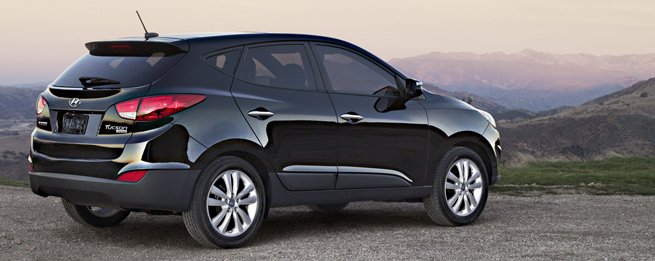
  • 2010 Hyundai Tucson

    2010 Hyundai Tucson

    In theory, the SUV was a sensible choice: more room for your cargo, more ground clearance when roads are snowy or unpaved, and more traction when climbing slippery hills.

    It’s the trade-offs that make traditional midsize SUVs a less ideal choice: poor fuel economy, high purchase price, and difficulty maneuvering and parking.

    Small CUVs were a response to these trade-offs, but they went to the other extreme and created trade-offs of their own: cramped interiors, a lack of refinement and a general lack of ruggedness.

    To differentiate the Hyundai Tucson from the small CUVs on the road, Hyundai engineers decided the Tucson needed to offer the best of both worlds, combining the rugged utility of an SUV with the maneuverability and refinement of a car. Once you experience it, you’ll understand why the Tucson is the right vehicle for our times.

    via Hyundai Official Website

  • DeMint Support = Fast Cash

    Just yesterday, Sen. Jim DeMint (R-S.C.) announced his decision to endorse Indiana Senate candidate Marlin Stutzman, who faces multiple challengers in the May 4 GOP primary. DeMint told FOX News yesterday, “We can raise some money and we’re going to do that with a money bomb over the next week, try to draw some attention.”

    Well, that was fast.

    DeMint’s PAC, Senate Conservatives Fund, wasted no time assisting Stutzman. The PAC kicked things off yesterday by spending $6,500 for a web ad and email list usage to benefit Stutzman’s campaign. And that’s just Day 1…

  • A Life-Extending Coup: Flies That Can’t Smell Food Live 30 Percent Longer | 80beats

    sn-aging-thumb-200xauto-306In today’s edition of far-out science, researchers have found evidence that the wafting aroma of food has an effect on an organism’s lifespan–and they’ve demonstrated that interfering with a fruit fly’s sense of smell causes it to live a longer, healthier life. While there’s no guarantee that the trick would work for humans, optimistic researchers suggest that certain odors—or drugs that block us from sensing them—might one day help prevent disease and extend lives [ScienceNOW].

    In the past decade, scientists have established a clear connection between extremely low-calorie diets and extended lifespans; studies have demonstrated that yeast, fruit flies, mice, and monkeys on these diets live longer than their peers. While the exact mechanism at work isn’t yet clear, researchers suspect that a near-starvation diet causes an organism’s metabolism to slow down, and triggers other changes that evolved to help organisms survive in times when food was scarce. Now scientists say it may not be just what a creature eats, but also what it smells that has an effect on how long it lives.

    In one 2007 study, molecular biologist Scott Pletcher and his colleagues found that completely eliminating fruit flies’ sense of smell caused them to live nearly 20 percent longer than normal flies. They also found that wafting the smell of yeast, a tasty treat for fruit flies, towards flies that were on a low-cal, live-extending diet hastened the death of those flies. This led the scientist to hypothesize that specific odors might be influencing the flies’ lifespans. Luckily, other scientists had identified a receptor in a group of neurons that enable fruit flies to smell carbon dioxide, which signals the presence of a good meal of tasty yeast [ScienceNOW]. So, Pletcher and his team set out to find if the CO2 had anything to do with the duration of the flies’ lives.

    For the new study published in PloS Biology, Pletcher eliminated the fruit flies’ ability to smell carbon dioxide, while keeping the rest of the olfactory system intact. Even on a standard, full-calorie diet, the flies that couldn’t detect CO2 lived up to 30 percent longer than other flies. The researchers suggest that the absense of CO2 may have indicated to the altered flies that food was scarce in the environment, prompting them to snap into survival mode. Oddly, however, the life-extending effect was only seen in female flies–male flies gained no such benefit. The smell-deprived female flies also seemed healthier and stronger by several measures: They stored extra fat, produced more offspring, and proved to be more resistant to oxidative stress than normal flies.

    Pletcher isn’t sure how the inability to smell CO2 extended the females’ lifespans, but he says the findings open up fascinating new areas for studies of human aging. He suggests that there might be certain smells or drugs that would block certain odors, and which could give humans a bit more time before we shuffle off our mortal coils. Matt Karberlein, an aging expert who wasn’t involved in Pletcher’s research, was cautiously optimistic about that possibility, saying: “We definitely undergo physiological changes in response to smelling food – I’m getting hungry just thinking about it – so I think it’s possible” [New Scientist].

    Related Content:
    80beats: A Single Genetic Tweak Gives Mice Longer, Healthier Lives
    80beats: Low-Calorie Diet Staves off Aging & Death in Monkeys
    Not Exactly Rocket Science: Low-calorie diets improve memory in old age
    DISCOVER: In Worms, a New Theory on Aging

    Image: Scott Pletcher / University of Michigan, Ann Arbor


  • Can You Become Addicted To Tanning?

    A few weeks back, Consumerist readers voted overwhelming in favor of requiring parental consent for children using tanning beds, and a new study linking regular tanning to addictive behavior may back up your sense of caution on the matter.

    In a study published in Archives of Dermatology, researchers say that, much like with other addicts, there are some people who will continue to tan even after experience the negative effects of too much tanning.

    Researchers talked to 229 students who use indoor tanning beds and around 30-40% of those polled met the psychiatric diagnostic criteria for addiction. In addition to feeling compelled to tan, the study found that these people also claimed to have more symptoms of anxiety and admitted to a higher level of alcohol and marijuana use.

    “I think there’s growing evidence that it can be addicting for a minority of individuals,” says Catherine Mosher, a clinical psychologist and one of the study’s authors. “Addiction is a very complex phenomenon, and it will take evidence from multiple sources to validate the idea that it is an addiction.”

    ABC News spoke a 27-year-old woman whose uncle died from skin cancer but who continued to tan regularly until she was diagnosed with a melanoma:

    “I absolutely believe that I was addicted to tanning,” said 27-year-old melanoma survivor Kristi Setzer, who said she began a tanning regimen to look good for her wedding in 2006.

    “I felt that I would look thinner and not blend in with my wedding dress,” Setzer, now a law student, recalled.

    After going tanning, she estimates, almost every day for a year before her wedding, she continued afterward, despite better than average knowledge of its possible effects.

    “I knew that melanoma had serious consequences,” Setzer said. “My uncle actually died after a battle with melanoma, but even though I knew that, I felt compelled to go tan.

    “Even after my wedding I continued indoor tanning until August of 2008, when I received my diagnosis of melanoma,” she said.

    Despite the anecdotal data, many doctors are cautious to label tanning as addictive without further research.

    “It takes a long time to formally classify something as an addiction,” said Suzette Glasner-Edwards, a clinical psychologist and researcher at UCLA. “Typically it takes a lot of research studies to see if all the symptoms… really conform to how we understand addiction to other things. It’s a pattern of progressively losing control over a behavior… If they don’t have impairment in their life as a result of it, then they won’t get that diagnosis.”

    Study Shows Links Between Tanning and Addictive Behavior [ABC News]

  • IN Senate Race: What’s old is “news”

    What’s your definition of news?

    Is it information that’s 2 1/2 months old?

    It was for Dan Coats last night.

    In a five-candidate race, Coats is considered a slight favorite in the May 4th Indiana Republican primary for the US Senate seat being vacated by Democrat Evan Bayh. After Tuesday night’s televised GOP Senate debate, Coats told reporters he had an announcement to make, before taking questions.

    Coats said, “Lemme just pass on some news that I’d like to give you here. I’m really pleased to announce tonight that uh…in fact I just got off the phone with Mike Pence. He’s given me his unqualified endorsement and support for this race which I’m thrilled to have. He said some very good things about me when I indicated my intention to run. He’s been supportive but uh…to say he’s given me now his unqualified support is…is…is very important to me and I’m very appreciative.” (You can watch Coats says this for yourself on the video linked to this story.)

    The endorsement announcement was bigger than anything that happened in the debate. Congressman Mike Pence is very influential among Indiana Republicans. In the minds of many Hooiser GOP’ers only Governor Mitch Daniels endorsement would be bigger. (And Daniels in not endorsing. He says he’ll back the primary winner.)

    Wednesday morning, on Coats’ campaign FaceBook page, the status trumpeted the Pence endorsement:

    Dan Coats for Indiana Big News! Congressman Mike Pence has given Dan his unqualified endorsement for the U.S. Senate!

    The thing is…Pence’s backing was old news. That’s how Pence’s chief of staff Bill Smith described it when  contacted by Fox News.

    In early February, a statement of support for Coats candidacy was issued. This was shortly after Coats’ announcement that he intended to join the race. The Pence statement was picked up by some DC media outlets.

    Roll Call on February 3rd ran the following quote attributed to Pence:

    “I am very excited about the possibility that former Senator Dan Coats may run for the United States Senate in 2010 and I sincerely hope he does it,” Pence said in a statement. “His integrity and conservative record would make him the ideal candidate for Hoosiers. If he runs, I will support him.”

    Fifteen days later, Coats filed to run in the Indiana Senate election.

    Smith says since that February statement, “The Congressman has not been hesitant” to tell reporters who asked that he was a Coats-backer. Smith made it clear in a telephone interview that while the February statement did not contain the word ‘endorsement’, it was certainly considered one by Pence.

    Still, there was at least some confusion about Pence’s backing of Coats. Some supporters had contacted Pence’s offices asking who the Representative liked in the primary. Smith says all who inquired were told the same thing, “Coats”.

    But it shouldn’t have been confusing for people who visit Coats campaign website. On a page titled “What They’re Saying” a Pence quote sits atop the list:

    Congressman Mike Pence: “His integrity and conservative record would make him the ideal candidate for Hoosiers.” (Congressional Quarterly, 2/3/10)

    So, did Coats just plain get it the timing wrong with his post-debate “news” announcement?

    Apparently.

    Kevin Kellems of the Coats campaign sent an e-mail this morning which reads in part:

    “Cong. Pence called Dan after the debate.  I don’t speak for him, but I believe the reason the Congressman reached out to Dan was to make it clear that his statement of support that came very early on was indeed an endorsement.”

    So, Coats did have Pence’s endorsement all along…even before Coats was officially in the race. And certainly a lot of people missed it (including this reporter). But was Coats post-debate announcement last night “news” as he said?

    As we says around here at Fox, “You decide.”

  • Shooting Challenge: H to the D to the R [Photography]

    For this week’s Shooting Challenge, the topic will be something I’ve been looking forward to for a long time…something our photographic community has proven expansive and adventurous enough to tackle: HDR (high dynamic range) photography. More »


  • 2010 Audi R8 V10

    2010 Audi R8 V10

    One of the best gets even better, as Audi introduces a monster V10 engine for its already stunning R8.

  • Ubuntu 10.04 Lucid Lynx Hit By Major Memory Leak Problem

    With less than about a week left till the final release and a day till the Release Candidate, Ubuntu 10.04 Lucid Lynx has been hit by a very serious memory leak problem involving X.Org.

    Last week, the Lucid repository received an update for X.Org Server to enable GLX 1.4. This update in X.Org Server resulted is some crashes and as a result another patch was introduced to fix the crash. This update to fix the crash has resulted in a major memory leak which causes the system to get slower and slower until it becomes completely sluggish and unusable.

    This problem is currently being considered “Urgent” and the attempts by the Ubuntu developers to fix this issue has been unsuccessful so far. In order to fix the problem in time for the final release, the developers are considering rolling back the patches, including the one which enables GLX 1.4. This will mean going back to GLX 1.2.

    [via ubuntu-dev mailing list]

    Ubuntu 10.04 Lucid Lynx Hit By Major Memory Leak Problem originally appeared on Techie Buzz written by Ricky Laishram on Wednesday 21st April 2010 03:18:56 PM. Please read the Terms of Use for fair usage guidance.

    Don’t miss these Related Posts:

    Join Techie Buzz on Your Favorite Social Networking Sites