Category: News

  • PBS MediaShift starts publishing ebooks; first topics: cord cutting and self-publishing

    PBS’s digital media initiative MediaShift is launching a line of ebooks. The launch is part of a larger experiment with PBS, which is also planning to publish its own ebooks this year.

    MediaShift’s first two titles are How to Self-Publish Your Book (80 pages, $3.99) and Your Guide to Cutting the Cord to Cable TV (50 pages, $2.99). (I have to point out here that GigaOM’s also got a cord-cutting ebook, written by our own Janko Roettgers.) The titles are available through Kindle and the iBookstore for now and will eventually be available through Nook; print-on-demand editions will also be released, priced at $4.99 to $6.99.

    Mark Glaser, the executive editor of MediaShift, says he’s planning on releasing 10 to 20 ebooks this year, depending on how well the first titles sell. “This is a test for us and PBS,” he said, “so we will learn as we go and adjust prices, length, subject matter and more.”

    Related research and analysis from GigaOM Pro:
    Subscriber content. Sign up for a free trial.


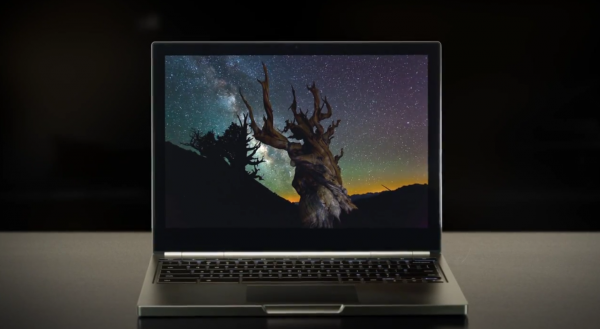
  • Why I love Chromebook Pixel

    Seventh in a series. When I reported the original iPhone launch in June 2007, there was sense of history among the people waiting to buy. Several shared similar sentiment: That we would all look back in five or 10 years and see the mobile as a defining moment in computing. They were absolutely right. I feel similarly about Chromebook Pixel, not that as many people appreciate what it represents compared to the larger number of folks rushing to purchase Apple’s smartphone.

    Google’s computer is an acquired taste, and so delish you don’t easily go back. But there’s a Vegemite quality. Most people wouldn’t eat the spread, but ask those who do — they can’t live without it. Likewise, Chromebook Pixel isn’t for everyone, but is for me and possibly could be for you, if given a chance.

    Before continuing, this post is part of BetaNews’ “Why I love” series, which commenced on Valentine’s Day. Among the others (in order, so far): Surface Pro; Kindle; Chromebook; Windows 8; Lumia 920; Raspberry Pi. I’m to blame for Surface Pro and Chromebook.

    Pixel Paradigm

    You might wonder why I write a love story to Pixel, if I already professed my heart for Chromebook. Simple answer: I love Google’s touchscreen computer more and could never go back to plain-Jane Chromebook. I could imagine going sideways to MacBook Pro, using Chrome browser as my primary user experience. But anything less would be letdown. The high-resolution display is magnificent, and touch makes for better user experience.

    To love Chromebook Pixel, you must change your mindset, particularly if a long-time computer user. The browser is the user interface. You mainly use web apps, and there is surprisingly good selection available from the Chrome Web Store.

    However, while Google makes the operating system UI more like Linux, OS X or Windows with each iteration, local apps are generally laughable by comparison. File manager, photo editor and music player are examples of basics gone bad; they offer too little compared to rival platforms. But browser satisfies and the experience will improve as Google and third-party developers release more “packaged apps“, which work offline.

    Critics balk at the whole browser-as-UI concept. They just don’t get it. True innovation isn’t improving what you have but providing what you don’t know you need. That’s the vision driving Chromebook Pixel, like iPad, which also received cool, early reception (me among the fools). Comparisons to the existing way are meaningless in this context. As cloud services proliferate and people spend more time in browsers, rather than apps, something like Pixel makes more sense.

    Related: The computer embodies a design philosophy that captures Google’s culture DNA and vision for the digital lifestyle of the contextual cloud computing era. If you are dependent on some business process that requires software like Microsoft Office or Adobe Photoshop, Pixel isn’t for you. I don’t require either, nor do many other people who think they do. The paradigm is the browser.

    Tasty Treat

    In September, I explained how “Chromebook changed my life“. Please refer to that story for the broader explanation of the basic benefits of the computer category and Chrome OS.

    Google’s first laptop transcends OEM partner products. Pixel is the MacBook Pro of Chromebooks. There is strong design aesthetic, metal enclosure and stunning screen, which 2560-by-1700 resolution outdoes the Apple Retina Display’s 2560 by 1600. As I explained in February, Google means Chromebook Pixel for people considering MBP.

    The best products make you feel good, regardless of benefits or shortcomings. I really enjoy using Chromebook Pixel. While not as behavior-changing as I anticipated, the touchscreen improves the overall user experience, and display resolution is beyond spectacular. The keyboard is about the best I’ve ever used, making writing fast and furious. Overall performance satisfies, too.

    The key advantages are resolution and touchscreen. No Mac comes with the latter, although some Windows machines do. But no Windows laptop in this size or price class offers nearly as much resolution.

    Chromebook Pixel specs: 12.85-inch touchscreen, 2560 x 1700 resolution, 239 pixels per inch; 1.8GHz Core i5 processor; Intel HD graphics 4000; 4GB DDR3 RAM; 32GB or 64GB of storage; HD WebCam; backlit keyboard; dual-band WiFi 802.11 a/b/g/n 2×2; 4G LTE (on one model); Bluetooth 3.0; mini-display port; two USB ports; Chrome OS. Measures: 297.7 x 224.6 x 16.2 mm. Weighs: 1.52 kg (3.35 pounds). Cost: $1,299 (32GB WiFi); $1,449 (64GB WiFi/4G LTE). 1TB Google Drive storage is included free, for three years.

    Lover’s Lament

    Nearly 12 months have passed since I started using Chromebook as my primary PC. Except for a few weeks in February, when I reviewed Surface Pro, Chromebook is my only computer — Pixel for two months now (please see my review for much more).

    That said, I could get many of the benefits, short of touch, running Chrome browser on MacBook Pro with Retina Display. Plus, I could easily run traditional software while taking advantage of web apps. But there is something about how tight is the whole package, thanks to Google software and services. If the search and information giant doesn’t provide most of what I need, some other developer does.

    But as expressed earlier, Chromebook Pixel is an acquired taste. Even for me. Much as I love the computer, my mindset needs more adjustment — to pull away from app-centric thinking to looking from a task-perspective. That’s the direction Pixel is headed, but the apps aren’t there yet, nor is Google’s UI. The potential is obvious, but software is still a work in progress.

    The point: I may love Chromebook Pixel, but it doesn’t always love me.

    Google’s developer conference commences in two days, and there Chrome OS is sure to get some attention, and even Pixel. I ask myself: Will the love last? That’s a question to answer after Google I/O and Apple’s Worldwide Developer Conference and Microsoft’s BUILD in June.

    By the way, I won’t attend I/O as expected, due to a family situation. Sigh, there’s always next year, eh?

  • Apple’s Trojan Horse

    Last week Apple’s Tim Cook made fleeting reference to “new product categories.” Bloomberg West called it “tantalizing.”

    There are a couple of candidates in Apple’s “big thing” category. One is an iWatch, but I think the one to monitor is the other, Apple TV.

    The current Apple TV, as it stands, is a set top box that enables an end-run around the cable companies and lets us pipe movies and TV into our living rooms. But an Apple-produced television has the potential to be so much more.

    As I’ve written in my previous two blog posts, our first inclination is usually to play down the potential impact of a new technology. It’s the safe and emotionally comforting thing to do. But we should be more future-sighted. Let’s imagine, for instance, how Apple TV could change the world.

    The new Apple TV will have the form factor of TV but its real and revolutionary purpose will be telecommuting so good it’s going to feel like teleportation. The Apple TV will whisk us to work, to school, to conferences, to the city, to Second Life, to our memory palace and virtual library, to shared worlds like Eve and Halo. The Apple TV will be a portal to worlds now accessible only by planes, trains and automobiles. Apple TV will turn our offices and living rooms into portals.

    This Apple TV will give us signal from which virtually all noise has been extracted, a “retina display” with so much pixel density that we are no longer feel we’re taking transmissions from a distant planet, and, probably, another species. We won’t believe our eyes and ears.

    The consequences will be something to behold. So let’s behold them. At a minimum, this Apple TV could change education, hospitality, work, and travel. It may even change the city. Now that we’re done, or nearly done, disintermediating old media like the newspaper, and supply chains like the book store, it’s time to solve that vexing problem of having to get ourselves from one place to another. It’s expensive, time consuming, fraught with inefficiencies, and punctured by indignities we put up with because we have no choice. (Have you flown lately?) The moment we do have a choice, it’s good bye to all that.

    Let’s think about the travel industry. What should it do to get ready for Apple TV? It might consider taking the advice of NASA’s Charles Bolden Jr. who, when asked what we should do if a 50 foot meteor of the kind that hit Russia recently were to strike New York City, said, “Pray.”

    The effects could be catastrophic. Direct spending on business travel by domestic and international travelers totaled $249 billion in 2011. It turns out that roughly $99 billion of this is spent on meetings and events. Let’s say, for the sake of argument, that we will protect this expenditure, because for some events we need to be there in-person to circulate, network, meet new people, and eat with friends we only get to see once a year.

    That leaves $150 billion on the table. Let’s be really optimistic and suppose that $100 billion survives, at least in the short term, out of inertia, and because there will always be moments when McKinsey must meet with clients face to face. Let’s say the Apple innovation merely takes $50 billion out of the industry. Ooph! This must mean the death of several airlines, the loss of thousands of hotels and restaurants, the disappearance of millions of tax dollars, and the dissipation of nearly a half million jobs (assuming that we are going to lose 20% of the 2.2 million people who now work in the industry. [PDF])

    We can recover tax dollars through the reform of education. Jobs will not be replaced and these workers will likely join the permanently displaced people identified recently by Brynjolfsson and McAfee. The real damage comes to airlines and hotel chains, the former never robust at the best of times. I have written admiringly of Richard Anderson at Delta. But even great management cannot protect these airlines. While we are imagining college campuses littered with tumble weeds, think of an airport that looks like a mall down on its luck, underfunded, understaffed and struggling to keep up its former grandeur.

    There are three questions here. Will this new tech happen? How fast will it happen? What will it mean when it happens?

    Will it happen? It will. Perhaps not as an Apple TV, or perhaps not as the innovation that Cook was hinting at for Q3 this year. But this is not a “wild card” — something too large to ignore but so improbable that it is not worth thinking about. Telepresence will happen. And if it were being driven by someone other than Cisco and HP, it would have happened by now.

    We wouldn’t dream of going backwards on any of the new technologies, from a laptop to a typewriter, from a mobile phone to a rotary one, from email to an answering machine. Once we have traveled by Apple TV, we won’t go back. Put it this way. We’ll be able to get to Singapore by turning on our Apple TV — no walking to the special web-presence-enabled room powered by Cisco, even. Or would you rather take an hour to plan the trip, an hour to get to the airport, two hours to wait there, 22 hours of flight time, an hour to get through customs, an hour to get to the hotel, and then, for our trouble, a case of jet lag so vicious all we want to do is crawl into a corner of the boardroom and pass out?

    Since when did the corporation care about our jet lag? Wait until someone puts together the numbers: $8,000 for the business ticket to Singapore, $1000 for room and board, another $1000 for this, that and the other thing. Multiply this by 8 trips a year times 60 consultants and even a very expensive telepresence system starts to pay for itself in almost no time.

    How fast will it happen? Pretty darn. (Rough estimate.) To be sure, it’s a tipping point calculation. No one wants telepresence until everyone has to have it. What is called for is someone with deep pockets and marketing savvy. Enter Apple the company with $137 billion in cash reserves and a genius for making us need things we already have. Once Apple is in on the game, the future is no longer, in William Gibson’s phrase, “just not very evenly distributed.” It’s sitting in our den.)

    What will it mean, more broadly? This is the tough question. We are capable of grasping the change as a literal shift in technology and even as a shift in the way we travel. We are less good at seeing the unintended consequences. Now we are up against our very human inclination to suppose parts of the world are somehow immune from change. This is simultaneously a failure of the intellect and the imagination, and it is a point of great vulnerability.

    We can’t see some dangers, not because they are invisible, but because they so resist the status quo and our experience of the world that they are difficult to think about. Let’s look for a moment more about the implications of Apple TV. It’s not so hard to imagine a college campus that stands empty, depopulated by Apple TV-powered MOOCs. It’s a little harder but still possible to imagine an airport fallen on hard times. But when it comes to seeing the implication of Apple TV for the city, well, that’s hard. I mean, cities are a kind of geographical boilerplate. We presume their existence. They are the great machines of human existence. They are the way we got to the present day. But they don’t have to exist. There are facts and there are “accomplished facts.” These latter are so manifest and material that we come to believe, without thinking about it, that they are not just true of the moment but true of the world.

    What happens when someone works out that the corporation only needs about half its current footprint in Manhattan (now that is that everyone can work from home half the week)? Multiply this by even a third of the corporations and there’s trouble in New York City. Throw in a diminished hospitality industry (hotels and restaurants), a mayor or two without Bloomberg’s managerial chops, and a return to the 1970s is not unthinkable. The ’70s were a terrible time when “mean streets” drove the flight of corporations which narrowed the tax base which diminished both social programs and police forces which made streets even meaner, and the cycle began again. It was a fall so precipitous some began to talk of the city’s “irreversible decline.” But even if it isn’t the 1970s all over again, Manhattan would become a shadow of its former self.

    As we prepare for Apple TV, this is not the time to be ruled by our assumptions. There is nothing necessary about a city. It’s like the book, shaped by technological requirements, historical accidents, and several critical paths. It doesn’t have to look like this. Like the book, it doesn’t have to exist at all. As Nicholas Negroponte told us in Being Digital, one of the structural effects of the digital revolution is the distribution of things once centralized. The city may merely be one of these.

    Apple has made a practice of producing Black Swans the way some people farm Ostriches. (Hard at first, then increasingly routine.) We need to get better at spotting and tracking swans.

    Apple TV could make the early days of our digital transformation look mere. Yes, we digitized the analog. Yes, we disintermediated the channels of culture, communication, and distribution. And yes, we changed the economics of, um, economics. But the reformation of education and the transformation of the city, these may be still more spectacular. Apple TV may not come this fall. It may not come finally from Apple. But in some form, from someone, it must come eventually. Look for a Trojan horse in your living room and on your desktop.

  • Top carriers raked in $202 billion in profit last year, but growth is slowing

    Global Wireless Carrier Revenue 2012
    It’s good to be king, but ensuring your kingdom continues to expand is always a top priority. According to a recent report from ABI Research, the world’s top-10 wireless carriers — which include Verizon Wireless (No.2) and AT&T (No.4) — took in a combined $202 billion in gross profit last year. That 2012 total is up 4.2% compared to the prior year, but high plan prices and growing subscriber bases aren’t drumming up the growth rates they used to. “As the underlying lift from accumulating subscribers has matured, carriers are starting to cast around for additional revenue streams that don’t just boost revenues but also profitability,” said ABI analyst Jake Saunders. “There is still tremendous income to be generated from mobile services; the Top 10 Mobile Carriers alone generated US$202 billion in gross profit, up 4.2 % year-on-year in 2012.” According to the research firm, IP-based value-added services are now a big focus for top carriers as they look elsewhere for growth opportunities.

  • Monster Jam Toyota Tundra Visits Sandy Hook

    Want to cheer up a devastated community? Send in the BIG boys like the super-sized Toyota Tundra of Advanced Auto Parts Monster Jam Monster Truck Series. This truck brought a lot of smiles to the kids faces.

    Monster Jam Toyota Tundra Visits Sandy Hook

    The Monster Jam Toyota Tundra was part of the event at Sandy Hook Fire and Rescue. From left are Pat Summa, Rebecca Kowalski, and Steve Zion at the Sandy Hook Volunteer Fire & Rescue main station on Saturday, May 4. Photo Credit, The Newtown Bee.

    According to The Newtown Bee, four monster trucks were at the Sandy Hook Volunteer Fire & Rescue main station on Saturday May 4. The event was put together by Pat Summa of the truck series and Sandy Hook Volunteer Fire & Rescue Firefighter Pete Barresi. Helping to also put together the event was Steve Zion of Toyota Wallingford who said he wanted the children to know “something good is happening here, rather than the tragedy that did happen here.”

    Click here to view the embedded video.

    The event was presented with no charge for visitors and T-shirts were sold to raise money for the Chase Kowalski Memorial Fund – a student who died in Sandy Hook shootings.

    Pretty cool!

    Related Posts:

    The post Monster Jam Toyota Tundra Visits Sandy Hook appeared first on Tundra Headquarters Blog.

  • CITIC, Temasek Group Offers $900 Million for U.S.-Listed Asiainfo: Sources

    A consortium comprising China’s CITIC Capital and Singapore state investor Temasek Holdings is set to buy U.S.-listed Asiainfo-Linkage Inc for about $900 million, Reuters is reporting.

    (Reuters) – A consortium comprising China’s CITIC Capital and Singapore state investor Temasek Holdings is set to buy U.S.-listed Asiainfo-Linkage Inc for about $900 million, people familiar with matter told Reuters on Monday.
    An announcement is expected in the next few hours, the people said, putting an end to a 16-month process that started with CITIC Capital making its first offer to buy the China-based software and IT company.

    The final offer is expected to be $12 per share, 2.8 percent above Asiainfo’s last traded price of $11.68 on Friday.

    The price would be the same as CITIC Capital’s initial bid in January 2012.

    Citic Capital and Asiainfo-Linkage did not respond to phone calls after business hours requesting comment on the takeover bid.

    The post CITIC, Temasek Group Offers $900 Million for U.S.-Listed Asiainfo: Sources appeared first on peHUB.

  • HP Updates Cloud Management Software

    HP (HPQ) has released the next generation of its software for automating the management of data centers and cloud infrastructure, the company said today. HP Operations Orchestration 10 is an integrated portfolio of software and services to help automate  complex distributed systems and heterogeneous environments.

    HP Operations Orchestration (OO) 10 has out-of-the-box support for over 5,000 IT operations, including new support for Amazon S3 storage, HP ArcSight, HP Fortify, OpenStack and SAP applications. The HP Server Automation (SA) 10 server lifecycle management platform allows IT to manage more than 100,000 physical and virtual servers, and improves operational economics by reducing the administrator-to-server ratio by up to 60 percent. HP SA 10 is also offered as a virtual appliance for smaller organizations or department-level IT teams to begin managing server environments in less than one hour.

    HP Database and Middleware Automation (DMA) improves administrator efficiency by automating administrative tasks associated with database management. It has over 1,000 out-of-the-box best practices to provision, patch, upgrade and release application code into databases and middleware servers such as DB2, Oracle, SQL Server, Sybase and WebSphere. HP Cloud Service Automation 3.2 is a comprehensive, unified cloud management platform for building, brokering and managing enterprise-grade application and heterogeneous infrastructure cloud services. It simplifies management of heterogeneous environments by leveraging HP OO and HP SA while providing support for Amazon EC2 public cloud services, HP Cloud Services, KVM OpenStack and Microsoft Hyper-V.

    “Our IT employees were bogged down being enterprise ‘fire fighters’ instead of proactive business partners,” said Andy Smith, vice president, Application Hosting Services, McKesson. “HP cloud and automation software enabled us to improve our IT operations by automating routine, repetitive tasks prone to human error, encouraging our employees to focus on innovative IT services. As a result, we can now deliver both IaaS and PaaS in under an hour, and we reduced IT service outages by 78 percent, the occurrence of critical IT incidents by 65 percent and have been able to deploy 40 percent more IT systems.”

    HP OO 10, HP SA 10, HP DMA 10 and HP Cloud Service Automation 3.2 will be available individually worldwide directly from HP or through its ecosystem of worldwide channel partners.

  • Are you a Free Infringer or a Digital Transgressor?

    The latest research commissioned by the UK telecoms regulator Ofcom shows that just a tiny proportion of the population is responsible for most online copyright piracy. What’s more these digital pirates are predominantly male and most could afford to buy the content if they wanted to.

    The research shows that just 1.6 percent of UK Internet users over the age of 12 account for some 79 percent of copyright infringements. Also that the top 20 percent are likely to be male and aged between 16 and 34. So much for what many people may have suspected already. More interesting is that the research has sought to create a sort of spotter’s guide to illegal downloaders by dividing them into a series of categories:

    Justifying Infringers make up 9 percent of digital pirates and account for 24 percent of infringed content.

    Digital Transgressors also make up 9 percent of pirates and account for 22 percent of infringed content.

    Free Infringers account for 42 percent of pirates, are responsible for 35 percent of infringed volume and account for 10 percent of all digital media consumers.

    Ambitious Infringers make up 39 percent of pirates and are responsible for 19 percent of infringed volume.

    The largest category, Free Infringers, apparently download stuff just because it’s free — mostly software and games. They spend the least on digital media and offer the fewest justifications for their behaviour. Digital Transgressors are younger, many of them students. According to the report they “showed the least remorse about infringing material, but also had the highest fear of getting caught”.

    The Justifying Infringers already spend a lot on digital media and are typically in managerial or administrative jobs. They justify their illegal downloading on the grounds that they “felt they had spent enough on content”.

    Kantar Media, which carried out the survey for Ofcom, points out that many people are confused by what is and isn’t legal. But it also suggests that people who consume digital media tend to do so via both legal and illegal channels. The question that is left unanswered by this report is what effect enforcement measures would have on downloading habits.

    Photo Credit: StacieStauffSmith Photos/Shutterstock

  • News story: PM holds talks with President Obama at start of US trip

    The Prime Minister has used talks with President Obama at the White House to discuss using this year’s G8 summit at Lough Erne to help spur strong and sustainable global economic growth.

    David Cameron also spoke to the President about the potential to launch negotiations for an EU-US trade deal during the summit.

    The pair gave a press conference following their talks, at which the Prime Minister said, “The relationship between Britain and the United States is a partnership without parallel”

    EU-US trade deal

    Writing in today’s Wall St Journal, the PM explained that a free trade area between Europe and the US could add £10 billion to the British economy:

    Trade is not a zero sum game where one nation’s success is another’s failure. Trade makes the cake bigger so everyone can benefit. Take the free trade area between Europe and the US on which we hope to launch negotiations when President Obama is in Northern Ireland for the G8 next month. This deal could add as much as £10 billion to the British economy and £63 billion to US GDP. But the rest of the world would benefit too, with gains that could generate 100 billion euros worldwide …

    An EU-US deal is just one building block of a more dynamic world economy. If G8 countries complete all of their current trade deals and those in the pipeline, it could boost the income of the whole world by more than $1,000 billion.

    Fairer taxes and greater transparency

    The PM also wants action at the G8 to tackle tax evasion and aggressive tax avoidance and to increase corporate and government transparency around the world:

    I am meeting President Obama at the White House today to get America’s full support for this agenda. By promoting more trade, fairer taxes and greater transparency, Britain and America can once again lead the way in meeting the greatest challenge of our time: securing the growth and stability on which the prosperity of the whole world depends.

    Syrian conflict and responding to terrorism

    The PM and President Obama also discussed how to find a political solution in Syria.

    Speaking at a joint press conference with President Obama, the Prime Minister announced that the UK would be providing an extra £30 million of humanitarian support for the victims of the Syria crisis.

    The UK continues its work supporting the moderate opposition as a means of increasing pressure on the regime. David Cameron was keen to discuss how the UK and US can together help to establish a stronger and more credible opposition inside Syria.

    Later today, the PM visited FBI headquarters in Washington for a detailed briefing on their experience of responding to terrorist incidents. He asked for the meeting in the wake of the Boston bombings to establish if there are any lessons that the UK can learn from the FBI’s handling of the attack.

    After this, the PM flies to Boston for further talks about how US authorities responded to the Boston marathon attack. On Tuesday 14 May, the PM travels on to New York for meetings of the UN High Level Panel on development goals.

  • Samsung’s Galaxy S4 Active Rugged Smartphone Hits Bluetooth SIG As All-Terrain Phone Battle Heats Up

    galaxy-s4

    Samsung is moving quickly to diversify its phone line, with variants of the S4 popping out of the woodwork left and right, including the Galaxy S4 Zoom, which features a rumored 10x optical zoom on its rear camera. Today the Galaxy S4 Active, a ruggedized, smaller version of the flagship S4 has hit the Bluetooth Special Interest Group for certification, which means it could be coming along shortly, too.

    The S4 Active is supposedly a water- and dust-resistant phone designed for use with an active lifestyle, or in outdoor conditions where generally phones don’t fare very well. The S4 Active would compete head-to-head with Sony’s latest lineup of phones, including the Xperia ZR announced today, which is a smaller version of the Xperia Z with slightly less impressive specs. It’s submersible in water for up to 1.5 meters, however, which pits it against the Active’s rumored feature set.

    Both the Active and the Zoom S4 variants remind me of how companies are diversifying in another crowded, near saturated market: point-and-shoot cameras. Manufacturers regularly highlight the long zoom and rugged versions of their devices, as these are areas where consumers feel they need more than what’s available to them on the smartphone devices they carry around every day.

    Manufacturers like Sony and Samsung moving in this direction with their devices marks an attempt to broaden their lineup’s appeal vs. other similar competitors, but also encroaches on the territory of single-purpose devices like the camera. And the market is likely to get more crowded, not less, as Google has been teasing devices that can withstand harsh environmental forces coming from its Motorola acquisition, through executive statements.

    I said previously that Samsung is essentially preparing a phone for every feature to compete with any unique advantage its rivals may try, and the S4 Active is definitely that. But these variant devices also have the potential to act as advance market research for tech that can be adopted back into a flagship device: if any is particularly successful, it provides a roadmap for Samsung about what will draw customers to the S5 or beyond.

    The S4 Active getting its Bluetooth certification means it’s likely to get a consumer reveal before too long, so we should see exactly how far Samsung has taken the rugged phone concept soon.

  • Hammerstein Joins Patron Capital

    Georg von Hammerstein has joined Patron Capital Partners as a senior advisor. He will be working with Patron’s existing investment teams and focusing on new investments in Germany and the German speaking countries. Most recently, Hammerstein was the European Chief Investment Officer of Pramerica Real Estate Investors.

    PRESS RELEASE

    LONDON–(BUSINESS WIRE)–Patron Capital Partners (“Patron”), the pan European private equity and real estate investor representing over €2.5bn of equity capital, is pleased to announce that Georg von Hammerstein has joined Patron as a Senior Adviser with immediate effect. Georg will be working with Patron’s existing investment teams and focusing on new investments in Germany and the German speaking countries.
    Following the final close of Patron’s Fund IV, announced in September 2012, Patron has already allocated approximately half of the €1bn of equity capital raised (including discretionary co-investment capital). Germany represents a core market for Patron, with approximately 560,000 sq m of land and buildings currently under management and the Company intends to invest in over €1bn of assets there in the next two years.
    Georg has 25 years of experience in the German and European real estate markets, working in senior positions across most risk asset classes, predominantly in commercial real estate. Georg’s experience includes debt to equity financing, joint venture management, developments on own account as well as investments for institutional funds and family offices. For the last 14 years, Georg worked for Pramerica Real Estate Investors (“Pramerica”), spending the last six years as European Chief Investment Officer. Prior to Pramerica, he was with Helaba and real estate subsidiaries of Commerzbank and Deutsche Bank.
    Keith M. Breslauer, Patron’s Managing Director, said:
    “We have a strong appetite for real estate in Germany and are dedicated to spending considerable amounts of our investment capital and internal capacities on opportunities in this region. I have known Georg for over 20 years and am very pleased he has decided to join us. With the benefit of his deep knowledge of the German markets, and working together with Christoph Ignaczak and the German teams in London and Frankfurt, I believe we can enhance our position as a significant investor in the German market and achieve our goals.”
    Georg von Hammerstein said:
    “There are compelling investment opportunities in Germany and I look forward to working with the successful team at Patron to acquire, manage, redevelop and reposition properties to deliver value. With its significant equity, creative approach and substantial co-investment firepower, Patron is uniquely positioned to be able to work with liquidity constrained borrowers, as well as banks and partners to restructure complex real estate situations.”
    – Ends –
    Notes to Editors:
    About Patron Capital Partners
    • Patron represents approximately €2.5 billion of capital across several funds (including its most recent Fund IV) and related co-investments, investing in property, corporate operating entities whose value is primarily supported by property assets and distressed debt and credit related businesses.
    • Since it was established in 1999, Patron has invested in over 100 transactions across over 50 investments, involving approximately 40 million square feet in 13 countries, with many of these investments realised.
    • Investors represent a variety of prominent universities, major institutions, private foundations, and high net worth individuals located throughout North America, Europe, Asia and the Middle East.
    • The investment advisers to Fund IV are Patron Capital Advisers LLP and Patron Capital Europe sarl.
    • The investment advisers are based in London and Luxemburg and Patron has other offices in Barcelona, Milan, and Dreieich (Germany); the group is comprised of 71 people, including a 34-person investment team and eight senior advisers/direct partners.
    • Further information about Patron, please see www.patroncapital.com

    The post Hammerstein Joins Patron Capital appeared first on peHUB.

  • SAP renames Visual Intelligence “Lumira” and sticks it in the cloud

    SAP really is pushing hard on this cloud thing. Days after the German business software giant announced plans to put its HANA in-memory database into the cloud, it has done the same with its Visual Intelligence product, now renamed “Lumira” (SAP dearly loves renaming its products, and this time it’s gone for “a more human-friendly yet Google-ready name”).

    Lumira Cloud supposedly gives SAP an answer to the recent explosion in the cloud-based, self-service data visualization scene. The HTML5-built BI service comes with a “monthly” subscription fee (albeit one that can only be ordered in annual chunks) and lets its users publish and share data visualizations with one another for viewing or editing on desktop or mobile devices.

    SAP Lumira Cloud appears to be more an Dropbox-ish add-on for the desktop version of Lumira than a cloud-based replacement, but it does also allow the creation of datasets from Excel documents. The service, which integrates with on-premise data and naturally supports HANA, can also be used to share SAP BusinessObjects Design Studio files and SAP Crystal Reports documents.

    This release appears to be the culmination of what SAP has been previously referring to as “project Photon” – supposedly the company’s “true departmental self-service BI offering.” The issue here, of course, is the monumental and somewhat confusing nature of the company’s portfolio. After all, doesn’t SAP already do this SME-courting, departmental analytics stuff through its BusinessObjects BI OnDemand product?

    Try visiting at least one of the BI OnDemand product pages and you’ll get taken through to the Lumira page. Look at the Lumira Cloud FAQs and you’ll be told that BI OnDemand will continue to run “in parallel” to Lumira Cloud, but also that OnDemand customers can contact their account representative “to discuss the best timing and strategy” for migrating to the new service.

    Perhaps this less-than-clear situation presages a simplification of SAP’s portfolio – no doubt more will be revealed at the company’s SAPPHIRE NOW conference this week. If it doesn’t, customers in search of next-generation data visualization tools have many far more straightforward options to check out.

    Related research and analysis from GigaOM Pro:
    Subscriber content. Sign up for a free trial.


  • Windows 8’s ‘failure’ is still a win for Microsoft

    I was in Dubrovnik, Croatia (or King’s Landing for Game of Thrones fans) when Tami Reller, Windows division CFO announced that Windows 8 had sold 100 million licenses. Since I’ve been back in the UK I’ve had a chance to catch up on what the internet thinks, and it’s fair to say Windows 8’s accomplishments continue to divide opinion.

    Some pundits claim the big number proves the doubters wrong, and shows Windows 8 is a roaring success. Others, like my colleague Joe Wilcox, argue 100 million is nothing. I have my own view, and it’s somewhere in-between.

    100 million licenses sold to date means Windows 8 is a success. But it’s a success for Microsoft’s bean counters, rather than Windows 8. It’s money in the bank for an operating system that a lot of consumers and a fair few PC builders don’t want.

    100 million sales is also a number I would expect Microsoft could now comfortably achieve with any operating system — good or bad.

    Windows has been the OS of choice for PCs since the early 90s. The vast majority of PCs from every manufacturer (and by “PC” I use the modern definition, meaning desktop systems, laptops, tablets and hybrids) run on Windows, and to stay relevant most system builders have to offer the latest version, whether they want to or not. They have to follow Microsoft’s lead.

    So Microsoft brings out Windows 8 and every PC manufacturer that wants to compete in a tough, stagnant market has to buy licenses for the new OS. They can’t afford not to (sure, they could hold on to Windows 7, but then their systems would appear outdated. They could go with Ubuntu, but most average consumers have never heard of it, nor Linux).

    Provided whatever OS Microsoft comes up with works and doesn’t trash the systems it’s installed on, those PC manufacturers are going to buy licenses for it.

    It’s like owning a gas station with one supplier. If you want to stay in business, you have to buy your gas from that supplier, even if they change the formula to benefit motorbikes, and car drivers buy less of it (a rubbish analogy, but you get the idea).

    The problem with the much discussed 100 million licenses is, of course, that they aren’t actual sales to users. If Windows 8 was a true hit across the board, Microsoft could dazzle us by announcing how many activations it has processed and silence the naysayers. But it can’t do that, because Windows 8 isn’t a hit — or at least not a big enough one.

    By stating it’s sold 100 million licenses (and 60 million before that), Microsoft has made a rod for its own back. By following that up with an activation number that’s less than stellar (my guess would be a still-respectable 30-40 million users), the scope of the operating system’s “failure” will appear greatly magnified.

    Oh Blue

    By not making them public, Microsoft can’t be thrilled with user numbers, and all of those companies failing to shift PCs with Windows 8 on them can’t be happy either. But that’s OK, because Windows 8.1 (codename Blue) is around the corner ready to save the day.

    By switching to a yearly update release schedule Microsoft can make some quick course corrections to appease hardware makers and consumers alike (“we’re listening”) while sticking to its guns and keeping touch and the Modern UI as priorities.

    Of course the big question is, when Microsoft brings out Windows 8.1 is it going to be a free upgrade? A lot of tech writers and analysts say yes. And certainly if Microsoft wants to overcome much of the negativity that exists regarding Windows 8, that price point is perfect. But no one at Microsoft has confirmed this yet, and personally I think it will be priced cheaply like a Mac OS-style upgrade, which will bring in yet more money for the software giant.

    Win!

    Windows 8 was always a gamble for Microsoft. It’s an operating system with a foot in the past and a foot in the future. There are elements about it that touch fans don’t love, and elements that traditional PC owners don’t want or need. It’s trying to appease — and appeal to — two different user bases at the same time. Which was always going to be a tricky feat to pull off successfully at the first attempt.

    But the perceived failure of Windows 8 doesn’t, ultimately, matter all that much to Microsoft. What matters is the financial bottom line. Windows 8 has sold 100 million licenses, meaning the operating system will still be viewed as a win on the balance sheet, and a good foundation to build on.

    Photo Credit: NinaMalyna/Shutterstock

  • Japanese Carrier DoCoMo To Pay $50M To Take A 7% Stake In Pioneer To Expand Its Push Into In-Car Transport Systems

    docomo logo

    Japanese carrier NTT DoCoMo has announced it plans to invest around $50 million into Japanese digital entertainment company Pioneer Corporation, which makes in-car electronics, to acquire approximately seven per cent of the company. The pair described the investment as “a business and capital alliance” in a press release today. The news was spotted earlier by ZDNet.

    Specifically, DoCoMo said it intends to “integrate Pioneer’s in-car navigation telematics technologies and related peripheral development capabilities with [its own] mobile cloud expertise to make a full-scale entry into the field of intelligent transport systems (ITS)”. The pair have previously partnered for the integration of car electronics and information services, including the “Docomo Drive NetTM” navigation service, which incorporates DoCoMo’s smartphones placed in dashboard-mounted cradles, but this latest move pushes DoCoMo deeper into the transport systems space.

    The pair said they will jointly develop an ITS, for launch later this year, which will comprise of a platform plus services for consumers and businesses, and also in-car hardware.

    Here’s how they describe the plans:

    The envisioned in-car ITS system will use probe data gathered from Pioneer’s car-mounted navigation system and DOCOMO smartphones in moving vehicles to process detailed traffic information in Pioneer’s ITS cloud platform. ITS services that integrate this information with various other services will be jointly developed and launched for individual and corporate customers this year.

    In addition to developing such services and constructing ITS-related cloud infrastructure, the two companies will develop and sell compatible car-mounted communication devices.

    DoCoMo said it will make the investment of about five billion yen (approx. $50 million) through a third-party allocation of new shares to acquire approx. 7% stake in Pioneer this coming June 28.


  • Sony unveils the Xperia ZR, a waterproof Android 4.1 smartphone

    On Monday, Sony unveiled a new smartphone called the Xperia ZR. The handset shares some its underpinnings with the company’s current flagship, the Xperia Z, but according to the Japanese electronics giant it features “the highest level of water-resistance for capturing photos and Full HD videos underwater”.

    The Xperia ZR can be used to record 1080p videos and shoot stills in up to 1.5 meters of “fresh water” for up to half an hour. The smartphone is also dust-resistant and meets the IP55 and IP58 protection standards. This means that the Xperia ZR can survive the usual water encounters, including a drop in the toilet (as long as it doesn’t crack at impact) and a coffee spill, as well as keep dust away from its insides.

    The Xperia ZR packs a 4.6-inch TFT display with a resolution of 720 by 1280 and the Mobile BRAVIA Engine 2 technology. Power comes from a 1.5 GHz Qualcomm Snapdragon S4 Pro processor, an Adreno 320 GPU (Graphics Processing Unit), 2 GB of RAM and a removable 2,300 mAh battery, similar (bar the battery) to the Xperia Z and flagships from 2012 like the Google Nexus 4 and LG Optimus G. The handset comes with 8 GB of internal storage aided by a microSD card slot.

    Like the Xperia Z, the Xperia ZR features a 13 MP back-facing camera capable of recording 1080p video. But, unlike its bigger brother which ships with a 2.1 MP shooter on the front, the handset only sports a 0.3 MP front-facing camera capable of recording video of VGA quality (640 by 840 pixels).

    In terms of connectivity, the smartphone features support for 4G LTE and HSPA+ cellular networks; Wi-Fi; HDMI; GPS with Glonass support; DLNA; Bluetooth 4.0; NFC (Near Field Communication); USB 2.0 and comes with the usual array of sensors.

    The Xperia ZR comes in at 131.3 x 67.3 x 10.5 mm and weighs 138 grams. The handset ships with Android 4.1 Jelly Bean onboard, backed by Sony’s own launcher and suite of branded apps.

    The smartphone will be available from Q2 2013 in “various global markets”. The price, as usual, will likely depend on the region.

  • Meet cloud pioneers at next month’s GigaOM Structure

    The IT industry is undergoing a cataclysm of innovation that is disrupting big businesses, offering opportunities for entrepreneurs, and redefining the role of IT in the corporation. GigaOM’s Structure conference helps you understand what’s next.

    We’ll peel back some of the software-defined abstraction of last year to focus on the physical cloud. For example, how do we build special-purpose architectures for our apps? What happens when we scale beyond the confines of the data center with dark fiber or other distributed resources?

    Topics we’ll cover include:

    • Networks with ESP — application-aware networks
    • Cloud, agility and your CEO: What happens when infrastructure can match the business changes in strategy?
    • What keeps CIOs up at night?
    • If it’s not software-defined, should you buy it?
    • The Goldilocks Problem — memory that’s too fast or too slow

    Click here to see the full schedule and register now.

    At Structure you’ll meet the people getting their hands dirty with deployments, such as Adrian Cockcroft from Netflix, Jeff Dean from Google, Pat Gelsinger from VMware, Bob Muglia from Juniper Networks, Dean Nelson from eBay, Jay Parikh from Facebook, Kevin Scott from LinkedIn and Werner Vogels from Amazon. Click here for a full list of speakers.

    Plus, you’ll get a first look at our Structure LaunchPad finalists, chosen for their groundbreaking technologies and business models that are driving the future of the cloud industry:

    THERE ARE ONLY 69 SUPER SAVER TICKETS LEFT, SO REGISTER NOW!


  • Adveq Hires Ron Li as Head of China

    Adveq has appointed Ron Li as head of China. Li joined Adveq as a managing director in early January 2013 and is based in the firm’s Beijing office. In his role as head of China, Li will further develop Adveq’s position in China.

    PRESS RELEASE

    Adveq, a leading asset manager investing in private equity and real assets globally, announces the appointment of Ron Li as Head of China.

    Ron Li joined Adveq as a Managing Director in early January 2013 and is based in the firm’s Beijing office. In his role as Head of China, Ron is responsible to further develop Adveq’s position in China as a world leader in private equity and real assets.

    Prior to joining Adveq, Ron worked for Legend Holdings in China where he established Raycom Real Estate Asset Management. Before joining Raycom he worked for Legend’s private equity subsidiary, Hony Capital. Earlier in his career Ron also worked for Whirlpool Corp. both in the United States and in China. He started his career as an entrepreneur.

    Ron holds an MBA from the University of Michigan, an MA in Economics from the State University of New York at Stony Brook, US, and as a Bachelor’s Degree in Finance from Renmin University of China.

    Sven Lidén, CEO of Adveq, said: “We are delighted to welcome Ron Li to our team. He combines an extensive track record in local investing with his exposure to international governance standards and an entrepreneurial mindset, which will undoubtedly benefit our clients. Adveq’s investment activities in Asia date back to 1998 and our presence in Beijing and Shanghai underscores the strategic importance we place on China. “.

    -END-

    About Adveq
    Founded in 1997, Adveq is a leading asset manager investing in private equity and real asset funds globally. It offers specialized investment solutions which allow the firm’s clients to access select private market segments globally. To date, Adveq has invested in more than 400 funds on behalf of its clients and generated consistent returns throughout economic cycles. Adveq’s client base comprises institutional investors such as pension funds, insurance companies, family offices and other financial institutions located in Europe, North America and the Asia-Pacific region. Many of Adveq’s investors are repeat, long-term clients with whom the firm has developed a role as a trusted partner for private market investing. Adveq has offices in Zurich, Frankfurt, New York, Beijing, Shanghai and Hong Kong, as well as a representative office in Sydney.

    Further information
    Alexander Antic
    E-Mail: [email protected]
    Tel.: +41 (0)58 445 55 30

    Adam Leviton/Alex Jones (on behalf of Adveq)
    E-Mail: [email protected]
    Tel.: +44 (0)207 307 5339

    ———————-
    Marina Jané Sánchez
    Consultant
    81 Whitfield Street, London, W1T 4HG, UK
    T: +44 (0) 20 7307 5326 M: +44 (0) 7535 693 214 E: [email protected]

    The post Adveq Hires Ron Li as Head of China appeared first on peHUB.

  • Reuters – Partnership Assurance Group London Float

    Partnership Assurance Group is to float on the London Stock Exchange, writes Reuters. Owned by private equity firm Cinven since 2008, the life insurer generated profit of 112 million pounds ($171.97 million)in 2012 and claims a 26 percent share of the 4.5 billion pound non-standard annuities market in Britain.

    Reuters – Partnership Assurance Group, the private-equity backed life insurer, announced plans on Monday to float on the London Stock Exchange, in a further sign that London’s initial public offering market is rebounding.

    Owned by private equity firm Cinven since 2008, the life insurer generated profit of 112 million pounds ($171.97 million)in 2012 and claims a 26 percent share of the 4.5 billion pound non-standard annuities market in Britain.

    Cinven plans to sell a portion of its existing shares as well as issue new shares to raise approximately 120 million pounds to achieve a minimum free float of 25 percent.

    Bank of America Merrill Lynch and Morgan Stanley have been appointed as joint sponsors and joint global co-ordinaters with Keefe Bruyette & Woods and Panmure Gordon & Co acting as co-lead managers. Evercore is financial adviser to the company.

    The post Reuters – Partnership Assurance Group London Float appeared first on peHUB.

  • Wochit Raises $4.75 Million From Redpoint, Cedar and Greycroft

    Wochit has closed a $4.75 million series A venture capital round from Redpoint Ventures, Cedar Fund and Greycroft Partners. Wochit provides web publishers with a supply of ever-fresh news video.

    PRESS RELEASE

    Wochit Inc., which provides web publishers with a constant supply of ever-fresh news video, has closed a $4.75 million series A venture capital round from Redpoint Ventures, Cedar Fund and Greycroft Partners. The company is using the proceeds to accelerate go-to-market efforts, including new initiatives with its customers on producing, syndicating and monetizing videos about any topic as news happens.
    “Web publishers are seeking ways to distinguish themselves from competitors with rich and engaging content, and Wochit fulfills that need with its innovative model for video production and distribution,” says Dean Gilbert, who is a venture partner with Redpoint and a senior advisor to YouTube. “Wochit brings advantages in quality, flexibility, cost, scale and timeliness of video to open new revenue opportunities for publishers.”
    Wochit’s customers include web sites, mobile applications, news organizations, blogs and other publishing entities. The company combines advanced technology with production expertise to create hundreds of news videos daily that publishers can select and integrate based on which ones match topics of interest for their audiences. New initiatives by Wochit include organization of content by channels about particular subjects, which customers can embed as feeds that are automatically refreshed with new, topical video. Additionally, customers have expanding white-label publishing options such as videos with promotion of their brands, incorporation of their media and basis in their stories.
    “This financing positions Wochit to continue enhancing the work we do with our growing customer base, including white-label production, expanding ad monetization and more options for embedding Wochit’s ever-fresh videos,” says Wochit co-founder and CEO Dror Ginzberg. “As Wochit continues growing, we gain additional benefits from the expertise that Redpoint, Cedar and Greycroft bring as established supporters of entrepreneurial innovations in media.”
    Redpoint Ventures, Cedar Fund and Greycroft Partners are all distinguished by their records of backing companies that transform production, distribution and consumption of media. Within these activities, Redpoint and Cedar previously worked with Wochit co-founder and CTO Ran Oz on BigBand Networks (IPO, acquired by Arris Group), for which he was also a co-founder and CTO.
    “The Wochit team is unique in combining expertise both in the craft of video production and in multiple relevant technologies,” says Cedar Fund managing partner Gal Israely. “We are thrilled to work with Wochit on accelerating the company’s impressive growth, including innovative new ways that web publishers can showcase ever-fresh content, incorporate their own perspectives and monetize.”
    About Wochit:
    Wochit produces ever-fresh, studio-quality video about any topic as news happens. Web sites, mobile applications, news services, blogs and other publishing entities utilize the company’s platform for new revenue opportunities and better audience engagement. By working with Wochit, a publisher economically achieves the effect of having its own newsroom for video production. Backed by Redpoint Ventures, Cedar Fund and Greycroft Partners, Wochit is based in New York with offices in Tel Aviv.
    Contact Information
    Media contact:
    Seth Kenvin
    (415) 672-5548
    [email protected]

    The post Wochit Raises $4.75 Million From Redpoint, Cedar and Greycroft appeared first on peHUB.

  • Reuters – Ares Management to Acquire AREA Property Partners

    Investment firm Ares Management is to acquire AREA Property Partners, gaining the New York-based real estate investor’s US$6 billion in assets, the Wall Street Journal reported, citing people briefed on the matter, writes Reuters. Terms of the transaction were not disclosed but Ares, a Los Angeles-based investment firm with about $60 billion under management, will also buy out a minority stake in AREA held by the National Australia Bank.

    Reuters – Investment firm Ares Management will acquire AREA Property Partners, gaining the New York-based real estate investor’s US$6 billion in assets, the Wall Street Journal reported, citing people briefed on the matter.
    Terms of the transaction were not disclosed but Ares, a Los Angeles-based investment firm with about $60 billion under management, will also buy out a minority stake in AREA held by the National Australia Bank , the newspaper reported.
    Ares has $2 billion in property assets, mostly debt. AREA’s $6 billion are mainly real estate equity investments in North America and Europe, it said. (http://link.reuters.com/tud97t)
    Private equity firms like Blackstone Group LP have been investing in real estate as U.S. property prices have been rising over the past four years.
    Tony Ressler, one of the founders of Ares declined to comment to the Journal. Lee Neibart, AREA’s chief executive, could not be reached for comment, the paper said.
    Ressler and AREA could not be reached for comment by Reuters outside of regular U.S. business hours.

    The post Reuters – Ares Management to Acquire AREA Property Partners appeared first on peHUB.