Category: News

  • Rovio Accounts lets users sync game progress across devices

    Rovio-Account-The-Croods

    Rovio’s games, including Angry Birds, have been an enormous hit in the mobile games market, but one inconvenience had been that game progress didn’t sync across devices. Rovio Accounts have been rolled out to fix this annoyance.  Requiring only an email address, the new feature allows users to sync game progress on one device and continue playing where they left off on another device.

    Rovio Accounts are currently extremely limited. They are available globally for The Croods and Angry Birds for iOS in only Finland and Poland. Rovio will continue rolling this feature out to other apps and regions, but for now, you’re going to have to wait if you want to sync your Angry Birds game in North America.

    If you play The Croods, or Angry Birds in Finland or Poland, how is the new feature is working for you? Let us know below.

    Source: Rovio

    Come comment on this article: Rovio Accounts lets users sync game progress across devices

  • Anonymous threatens to take the U.S. ‘off the cyber map’

    Anonymous: U.S. cyberwar
    Anonymous was praised for its recent cyberattacks on North Korea, however the hacking collective has shown that it is a friend to no one. The group late last month declared its latest target and this time it isn’t a communist regime or oppressive government, but rather the United States. The group stated that on May 7th, Anonymous will start phase 1 of Operation USA, which is a response to acts of “multiple war crimes in Iraq, Afghanistan, Pakistan” and “in your own country.” The group is protesting the Obama Administration’s uses of targeted drone attacks that have resulted in the deaths of “hundreds of innocent children and families.”

    Continue reading…

  • Beyond Meat CEO: One day eating meat will have no connection to animals

    The CEO of plant protein startup Beyond Meat, Ethan Brown, says that in 50 to 100 years he thinks that the super market meat counter will no longer have a relationship with animals. The transition to a meat counter filled with plant protein will be similar to how society moved from the horse-drawn carriage to the automobile, said Brown at Wired’s business conference in New York on Tuesday.

    Beyond Meat makes plant-based meats and is currently selling a chicken product at select stores like Whole Foods. The product hasn’t been widely available, but is supposed to be scaled up at stores in the coming months. Beyond Meat has a partnership with Whole Foods, and the startup is looking to sell its products out of the meat counter, instead of in an alternative meat section, which Brown described as “a penalty box.”

    In contrast to the current fake meat products on super market shelves, Beyond Meat is trying to use technology to create food that mimics the taste and feel of eating meat. We’ve got “OCD, obsessive chicken disorder,” joked Brown, explaining the company is looking to replicate “the fibrous structure of meat.”

    The company is backed by Kleiner Perkins and Obvious Corp, the company behind Twitter. As I wrote in this article earlier this year, Silicon Valley investors have been looking to fund sustainable food innovation. Brown said that Beyond Meat grew 50 percent last quarter. “If we’re successful, we can be like Tyson or Perdue,” said Brown.

    The animal meat market is a $177 billion market, said Brown. While Beyond Meat is focused on selling its chicken product, it’s also working on a beef product made from pea protein and sea salt, said Brown.

    The World Bank says that livestock contributed to 51 percent of the greenhouse gas emissions globally. “The efficiencies around taking protein from plants instead of animals is massive,” said Brown.

    Related research and analysis from GigaOM Pro:
    Subscriber content. Sign up for a free trial.


  • T-Mobile ships out first update to Galaxy S 4 with minor improvements

    Samsung_Galaxy_S_4_Back_Camera_Samsung_Logo_Version_3_TA

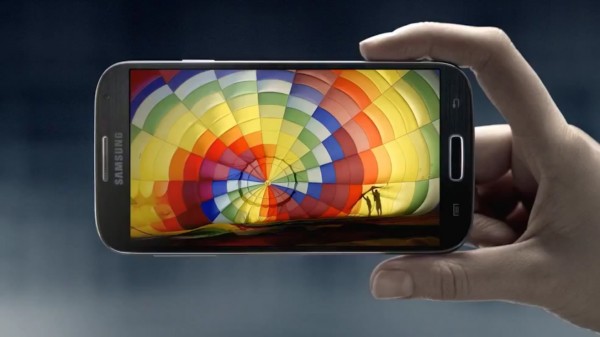
    The T-Mobile Galaxy S 4 will be receiving its first update today via OTA and over Samsung’s desktop application, Kies. The newly updated version, M919UVUAMDL, includes improvements to both visual-voicemail and the ISIS application, a Google Wallet competitor. There also may be some unannounced hidden bug-fixes as well.  If you received the update, let us know how it went!

    Source: T-Mobile


    Come comment on this article: T-Mobile ships out first update to Galaxy S 4 with minor improvements

  • Microsoft’s next-gen console reportedly called ‘Xbox Infinity’

    Microsoft Xbox Infinity Official Name
    Microsoft’s hugely anticipated next-generation console apparently has a name and it isn’t the Xbox 720. Unnamed sources have told the International Business Times that the new Xbox will be called the Xbox Infinity and that development kits for the new console “are already in the hands of studios.” Microsoft will formally unveil its new Xbox on May 21st and earlier reports have indicated that it will run on the “core” version of Windows 8 and will feature an 8-core 1.6GHz processor, 8GB of RAM, an 800MHz graphics processor, a 50GB 6x Blu-ray Disc drive and Gigabit Ethernet connectivity.

  • Researchers discover possible trigger for spread of head and neck cancer cells

    UCLA RESEARCH ALERT
     
    FINDINGS:

    Very little has been known about the epigenetic events — developmental and environmental factors affecting genes — that occur prior to the invasive growth of head and neck squamous cell carcinomas and their spread to other parts of the body, or metastasis.
    However, researchers from the UCLA School of Dentistry discovered what could be a crucial step toward understanding the process that activates the cancer cells. Squamous cell carcinoma is known for being one of the most deadly and debilitating types of tumors.
     
    Led by Dr. Cun-Yu Wang, a UCLA School of Dentistry professor and leading cancer scientist, the group identified the key epigenetic factor KDM4A, which modifies the molecular activation process of protein AP-1. AP-1 is known to regulate gene expression and promote metastasis of squamous cell carcinoma. Their findings show that squamous cell carcinoma’s invasive growth could potentially be repressed by targeting KDM4A.
     
    The research team compared two groups of mice with squamous cell carcinoma — one with low levels of KDM4A and one with higher levels of the enzyme. They found that the depletion of KDM4A significantly inhibited squamous cell carcinoma from invading and spreading into the mice’s lymph nodes.
     
    By understanding the mechanics behind the gene activation process of the AP-1 protein, the team was able to isolate the KDM4A enzyme. The team discovered that the enzyme is required for turning on the genes that promote the activation of AP-1, which is responsible for the growth of the squamous cell carcinoma tumors.


    IMPACT:
    Human squamous cell carcinoma is highly invasive and frequently spreads to cervical lymph nodes. Understanding the molecular and epigenetic mechanisms that control the metastasis of squamous cell carcinoma in humans will help scientists develop new therapies for treating cancer.  
     
    AUTHORS:

    Dr. Xiangming Ding, Dr. Hongya Pan, Dr. Jiong Li, Dr. Qi Zhong, Dr. Xiaohong Chen, all from the division of oral biology and medicine at the UCLA School of Dentistry; Dr. Sarah M. Dry of UCLA’s Jonsson Comprehensive Cancer Center; and Dr. Cun-Yu Wang, lead author of the study.
     
    Dr. Wang is the No-Hee Park Endowed Chair in Dentistry at the UCLA School of Dentistry, where he is also chair of the division of oral biology and medicine and the associate dean for graduate studies.

    FUNDING:
    This work was supported in part by grants from the National Institute of Dental and Craniofacial Research of the National Institutes of Health and the Shapiro Family Charitable Foundation.

    JOURNAL:
    Wang’s new research is published in Science Signaling — a peer-reviewed scientific journal published by the American Association for the Advancement of Science.

  • RunKeeper releases app for Pebble Smart Watch

    pebble_watch

    You may have noticed a big trend lately that involves pushing mobile computing onto wearable devices like Google Glass. RunKeeper is hoping to cash in on the growing popularity of wearable devices by releasing an app that runs on Pebble’s Smart Watch devices. The new app will let users control RunKeeper from their Pebble device instead of having to fish their smartphone out of their pocket during a workout. Users can access pace, mileage, workout start and workout stop functions via the Pebble Smart Watch and RunKeeper says other functions will be available.

    RunKeeper CEO Jason Jacobs says, “Pebble is such an exciting partner for RunKeeper; it is a great device and a powerful showcase of how your runs, walks and bike rides with RunKeeper can be enhanced by wearable device integration. We look forward to integrating with more wearable devices in the future.” RunKeeper indicates they will be announcing more partnerships in the coming months to help users with their fitness tracking.

    The Pebble Smart Watch is currently shipping to Kickstarter backers and pre-orders are now being accepted at getpebble.com. Check out the full press release after the break.

    Introducing RunKeeper for Pebble Smart Watch

    Kickstarter Phenomenon Is First of Many RunKeeper Wearable Integration Partnerships

    BOSTON, MA–(Marketwired – May 7, 2013) – Today, RunKeeper rolls out one of the first Pebble-connected apps for iPhone and Android, turning your smart watch into a personal trainer. The partnership with Pebble is just one of many integrations with hardware and fitness tracking devices in the coming months, supporting RunKeeper’s mission to become the fitness platform that makes the world healthier at scale.

    RunKeeper now allows you to control the app from Pebble, so you can leave your phone in your pocket during a workout. RunKeeper features such as pace, mileage, starting and stopping a workout, and more will be fully accessible on Pebble wearers’ wrists.

    “People are rightfully excited about wearables because they extend the experience of mobile apps like RunKeeper, so they can be enjoyed without taking your phone out of your pocket,” said Jason Jacobs, CEO, RunKeeper. “Pebble is such an exciting partner for RunKeeper; it is a great device and a powerful showcase of how your runs, walks and bike rides with RunKeeper can be enhanced by wearable device integration. We look forward to integrating with more wearable devices in the future.”

    “Pebble integrates tech into people’s daily lives in a fashionable and unobtrusive way. We’re excited that RunKeeper will be among the first apps to showcase our smart watch’s capabilities and how we support your day-to-day interests and activities,” said Eric Migicovsky, CEO, Pebble. “With the RunKeeper app, fitness enthusiasts can benefit from Pebble to track their workouts, get motivated and meet their goals.”

    Pebble’s smart watches have begun shipping to Kickstarter backers and are now available for pre-order at getpebble.com. Wearable technology companies interested in working with RunKeeper on custom integrations should contact [email protected].

    About RunKeeper
    Since 2008, RunKeeper has been turning your phone into a personal trainer in your pocket, using the built-in location technology to track workouts and keep you motivated. With more than 18 million users worldwide, RunKeeper’s mission is to use technology to help people lead more active lives. Visit us on Facebook and on Twitter @RunKeeper.

    About Pebble
    Launched on Kickstarter in 2012 with one of the most successful fundraising campaigns to date, Pebble is the first watch designed for the 21st century. Built to be a minimalist yet fashionable product that seamlessly blends into everyday life, the Pebble smart watch is infinitely customizable, with beautiful downloadable watch faces and useful internet-connected apps. Pebble connects to iPhone and Android smartphones using Bluetooth, and is available for preorder online at getpebble.com. Visit us on Facebook and on Twitter @pebble.

    Come comment on this article: RunKeeper releases app for Pebble Smart Watch

  • What do we mean when we talk about “messaging” services?

    The recent news that more messages are being sent over mobile chat apps than through SMS was, I think, quite significant. Not necessarily in terms of straight numbers — the analyst figures that sparked the story were certainly conservative, so the shift must have happened a while ago — but as a reminder of how one technical means of communication can supersede another, and also as an indication of the challenges that mobile operators currently face.

    Mobile analyst Dean Bubley, on the other hand, is clearly unimpressed with the coverage of this subject. In a somewhat irate blog post today, he attacked the notion that there is a simple dichotomy between SMS and “over-the-top” (OTT) apps such as WhatsApp, along with the idea that the carriers’ Joyn collaboration might save their bacon:

    “A central theme in these articles is a supposed battle for the ‘messaging market’, with lazy journalists or vendor marketeers painting a dark picture of mortal combat between the righteous fortress of SMS revenues, the marauding hordes of barbarian OTT players at the gates, and the Knights of Joyn riding to the rescue in their shining armour of interoperability.

    “This is all palpable nonsense — a strawman argument to reframe a complex and dynamic situation into the usual fatuous and imaginary Us vs. Them, Telcos vs OTTs narrative, coupled to a desperate attempt to make RCS and its GSMA-branded offspring look relevant. Not only is this argument flawed, the likely outcomes will in many cases be worse than useless.”

    What really gets Bubley’s goat is the idea that there actually is a “messaging market” as such. As he points out, there is little to compare between a WhatsApp chat and an embedded customer support IM conversation, or between an SMS exchange and an email with a document attached. They’re all messaging, but they’re not the same thing at all.

    And what’s more, each one of those scenarios could be supported by a variety of “messaging” technologies:

    “Any worthwhile analysis would look at various ways to slice up this supposed monolithic market into separate buckets reflecting context or intent. Perhaps social messaging vs. advertising vs. standalone information vs. gossip vs. B2B meeting arrangement vs. one-way app updates. Or sliced by length of a messaging ‘session’ or number of participants, or a hundred other ways.”

    This is very true, and it has me thinking about what we mean when we talk about messaging. But it also has me thinking about our use of other terms, in particular the word “social”.

    Facebook, for example, is a service we would think of as quintessentially social — but it’s also a messaging service. Just look at Facebook Home, where the social network takes over the user’s Android handset in a way that effectively melds Facebook messaging and SMS. When you’re sending a message through that interface, which medium are you using? Who cares?

    When I was talking to Viber CEO Talmon Marco ahead of today’s desktop app launch, he characterized his Skype-rivaling product in interesting terms:

    “We’re starting to see the lines between communication and social are breaking. Once you go into groups and larger groups — today we support groups of up to 40 people — and put a picture in there, is that a communication or social?

    “I exchange Viber messages hundreds of times a day. On Facebook I share something once a week, once every two weeks. I’m always thinking twice about what I put on Facebook. I find myself more engaged with an app like Viber than with Facebook. I create far more content for Viber than with Facebook and I think the same applies to most people.”

    Most people, of course, aren’t the CEO of Viber, but his underlying point is nonetheless valid. “Messaging” and “social” are merely two facets of modern communications (which can itself be a subset of some other service) and trying to tease the two apart is increasingly difficult.

    Which brings us back to Bubley’s post. As I suggested above, I don’t think it’s entirely fair to discount the recognition of OTT apps’ acceleration past traditional SMS. However, it is certainly true that clear-cut comparisons between the various messaging options out there today are near-impossible, if not futile.

    Ultimately, messaging is increasingly just a feature, as is the case with social. When you’re designing the communications services of the future, or even the services that make use of communications, context and intent are what count.

    Related research and analysis from GigaOM Pro:
    Subscriber content. Sign up for a free trial.


  • Dr. Phil Sues Over Manti Te’o Interview

    Dr. Phil is majorly mad that Deadspin posted a video clip of Ronaiah Tuiasosopo speaking in the voice he used to convince football star Manti Te’o he was a woman. So mad, in fact, that he wants to sue.

    Phil says that Deadspin–under the umbrella of Gawker Media–totally screwed him over when they posted the clip, because he was going to use it in the second half of his interview with Tuiasosopo after a “cliffhanger” in part one. The clip was posted before the second part aired to the majority of his viewers, he says, and that ain’t cool. Claiming that they stole the clip, he’s now suing the company for an unspecified amount.

    Tuiasosopo made major headlines last year when it came out that he’d been posing as a woman for over a year in phone conversations and online with former Notre Dame player Manti Te’o. Te’o claims he never realized he’d been talking to a man and had been calling Tuiasosopo’s character–Lennay Kekua–his girlfriend. Tuiasosopo eventually killed Lennay off in an elaborate story involving her having cancer, and, in a recent interview, claims he was molested as a child and that the experience changed him profoundly.

    “I felt that I couldn’t do things, accomplish things, pursue things, live out as Ronaiah,” Tuiasosopo said. “And I felt the need to create this. It has everything to do with what I went through as a child.”

    Image: CBS

  • Samsung Galaxy S4 32GB comes to AT&T on Friday

    Little over a month ago, AT&T announced that on a two-year contract the Samsung Galaxy S4 in 32GB storage trim will be available for $249.99. In the meantime the 16GB version hit the mobile operator’s stores for $50 less, but even today the 32GB Galaxy S4 is still nowhere to be seen.

    On its Twitter account, AT&T sheds some light on the matter and reveals that the 32GB Galaxy S4 is available starting this Friday, May 10. In just a couple of days prospective customers will be able to purchase the smartphone for $249.99 alongside a two-year contract and qualifying plans.

    The 32GB Galaxy S4 only runs for $50 more on top of what AT&T charges for the 16GB version, but provides twice the storage capacity. Considering that Android 4.2 Jelly Bean and adjacent apps can take a significant part of the built-in storage, the larger capacity model might make more sense for demanding users.

    By comparison the price difference between the 16GB and 32GB Apple iPhone 5 storage trims is $100 — twice as much. AT&T charges $199.99 and $299.99 for the 16GB and 32GB version, respectively, of the fruit-branded smartphone.

  • How Much Would You Pay For Google Glass? Most Say $200

    In its current state, Google Glass is incredibly expensive. Those who signed up for the Google Glass Explorers program last year had to fork over $1,500 to get a crack at the device. The price will come down when it’s made available to consumers next year, but a new survey suggests that the price will have to come down a lot before consumers bite.

    Last week, TrendBlog posed a question to its audience – “How much are you willing to pay for Google Glass?” The respondents were given a wide variety of price options ranging from below $100 to more than $2,000. The end result found that most were willing to pay near the bottom of the price spectrum.

    Overall, 48 percent of respondents would pay between $200 to $300 for Google Glass when it launches next year. Going lower or higher than that causes interest to drop dramatically with only 13 percent willing to pay less than $100 with only one percent willing to pay between $1,200 and $2,000. Unsurprisingly, nobody would pay more than $2,000.

    How Much Are People Willing To Pay For Google Glass by trendblog.net
    How Much Are People Willing To Pay For Google Glass by trendblog.net

    Pricing is incredibly important, especially when it comes to consumer electronics. Microsoft has learned this lesson the hard way as Windows 8 PCs have failed to take off partly due to the high cost. Apple was able to sell high priced electronics because it was able to convince consumers that its products contained exceptional software value. Google will have to do the same if Google Glass is priced above $300.

  • You wish you could fail like Microsoft

    The sharks are in the water smelling Microsoft blood. It’s the company’s “New Coke” moment. Windows 8 is too little too late (hey, that rhymes).

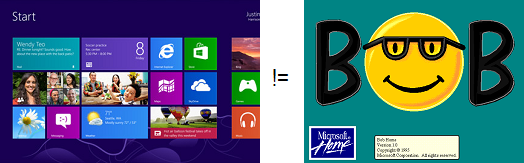
    Over the years Microsoft has had a number of true product failures, genuine losers, but fewer than you’d think. I’d certainly count Microsoft BOB as one of these; BOB was an attempt at a cartoony, fun interface to Windows that was laughed off the market in short order. (Microsoft reps told me at the time that the focus groups loved it.)

    But Windows 8? We should all fail like this. If the government failed like this we’d be running a trillion dollar surplus. Today Microsoft announced sales of more than 100 million Windows 8 licenses. (“This number includes Windows licenses that ship on a new tablet or PC, as well as upgrades to Windows 8.”)

    During last year’s Worldwide Developer Conference, Apple claimed there were 66 million Mac users. I don’t think there are 100 million Windows 8 users, maybe not even 66 million, but surely there are tens of millions by now. That’s a big market and translates to hundreds of millions of revenue for Microsoft.

    The latest NetMarketShare numbers tend to support this view. Windows 8 is already substantially ahead of any one version of OS X and on a trajectory to pass all of them combined before long. These numbers are for desktop operating systems:

    • Windows 7: 44.72%
    • Windows XP: 38.31%
    • Windows Vista: 4.75%
    • Windows 8: 3.82%
    • Mac OS X 10.8: 2.82%
    • Mac OS X 10.6: 1.82%
    • Mac OS X 10.7: 1.78%
    • Linux: 1.21%

    Before you say it, I know NetMarketShare’s numbers are somewhat opaque, but they’re pretty much all there is in the public domain and they roughly make sense to me. The biggest anomaly in the list above is that Linux has 1.21 percent of desktop users. That can’t be true. Another interesting, debatable point: NetMarketShare doesn’t include Windows 8 in the Mobile/Tablet numbers, so anyone using it as a tablet is counted as a desktop user. Microsoft’s convergence of the two uses in one operating system messes with NetMarketShare’s zeitgeist.

    By the way, back to the tablet numbers above: See the number just above Windows 8? That’s the near-universally reviled Windows Vista, still at 4.75 percent, more than Lion and Mountain Lion combined. Two years ago NetMarketShare had Vista at 10.46 percent of desktops. Many hundreds of millions of Vista licenses were sold. Sure, it was a bad version and generated ill-will, but Microsoft made a ton of money from the OS. Any other company would love to have a failure like Windows Vista.

    No doubt there are a lot of mistakes in Windows 8. But is any product that sells in the tens or hundreds of millions a failure? We should all fail this badly.

  • Steve Carell Returning For ‘The Office’ Finale After All?

    As the finale of The Office approaches, speculation is growing on where the show’s characters will end up and what the ending will be for what was once the most popular comedy on network TV.

    As a major part of the show’s success before leaving in 2011, it seemed like a given that Steve Carell would return to reprise his role as ineffectual manager Michael Scott. However, last week The Office Executive Producer Greg Daniels stated that Carell will not be a part of the show, saying that Carell felt it wouldn’t fit the character.

    Now, however, the rumor of Carell’s return is back, despite the denial. TVLine is reporting that Daniels’ statement was a ruse, and that Michael Scott will, in fact, be making a cameo in the final episode of The Office. The publication’s unnamed sources have stated that his appearance in the episode will be very brief.

    It seems only fitting that Carell should be seen in the series’ finale. His character was one of the most important on the show, a linchpin that held The Office together. Despite Will Ferrell coming on as the big-name replacement for Carell in the show’s seventh season, ratings for The Office have fallen since the departure of Michael Scott.

  • Green Courte Partners Promotes Rudolph to VP

    Green Courte Partners, a private equity real estate investment firm, has promoted Braden Rudolph to vice president, asset management. Rudolph joined Green Courte as a Senior Associate in June 2011.

    PRESS RELEASE
    Green Courte Partners, LLC (“Green Courte”), a private equity real estate investment firm targeting parking assets and land-lease/manufactured housing communities, announced today the promotion of Braden L. Rudolph to Vice President, Asset Management.

    Since joining Green Courte as a Senior Associate in June 2011, Mr. Rudolph has been involved in Green Courte’s acquisitions and asset management efforts. Mr. Rudolph was actively involved in Green Courte’s acquisition of The Parking Spot, one of the nation’s leading owner/operators of near-airport parking properties, with 35 locations and over 60,000 parking spaces. Most recently, Mr. Rudolph has been involved with implementing strategic initiatives at American Land Lease, Inc., an owner/operator of 50 land-lease communities with over 18,500 home sites. As a Vice President, Mr. Rudolph will continue his involvement in the firm’s asset management efforts, primarily focusing on the near-airport and urban parking sectors.

    Mr. Rudolph graduated from the University of Wisconsin in 2003 with a Bachelor of Science in Biomedical Engineering and from Northwestern University’s J.L. Kellogg Graduate School of Management in 2010 with a Masters of Business Administration.

    About Green Courte Partners, LLC

    Green Courte Partners, LLC is a Chicago-based private equity real estate investment firm targeting niche real estate sectors, including parking assets and land-lease/manufactured housing communities. The firm combines focused investment strategies with a disciplined approach to transaction execution and asset management. Green Courte’s goal is to invest in high quality assets that will generate attractive risk-adjusted returns over a long-term holding period. For additional information, please visit www.GreenCourtePartners.com.

    The post Green Courte Partners Promotes Rudolph to VP appeared first on peHUB.

  • How Should a Small Business Handle Parental Leave?

    Although the U.S. is a highly developed country, the US government’s work/family policies have not changed since 1993,when the Family and Medical Leave Act (FMLA) passed. We are the only developed country without any required paid parental leave. (FMLA entitles employees 12 weeks of unpaid leave with an equivalent position available on return.)

    Even so, most large companies provide six weeks of paid leave, usually covered by a short-term disability insurance plan. Such insurance only works economically for companies with an employee base so large that many people might be out at the same time. FMLA applies to companies with over 50 employees, so smaller enterprises, which comprise over 50% of US businesses, need to create their own policy.

    I run one such company — a growing, 11-person investment management firm — and this is a challenge I’ve been grappling with: how can we offer fair parental leave or flexible work policies to retain talented employees while also covering our costs and making sure our workflow remains on track?

    The research on this is inconclusive, and mostly focused on country-wide statistics or on large firms. Scandinavian policies provide evidence that generous parental leave and work schedule flexibility translates into greater participation of women in the labor force. While there is mixed evidence of this resulting in more female executives at top levels than the 14% in the US, the data does indicate that mothers do continue to work, at least part-time, in Norway, Sweden and Denmark. The debate rages about whether these policies discourage subsequent full-time employment or actually set women up to re-engage full time and move into higher level positions.

    Our company’s goals include retaining talent, preserving our investment in those people we have trained, and keeping those who work well with clients and colleagues. We also desire a diverse workforce, which we believe is preferable in making investment decisions, serving our customers, and building an enjoyable and well-rounded corporate culture. In a small firm, the retention of any one emerging key player can be more meaningful than for a large corporation. However, these goals come with costs.

    When I had four children, all under age four, my company gave me an eight month leave, after which I came back full time, eventually managing a $10 billion mutual fund. When Nancy, a managing partner of a major law firm, had her second child, she worked three and then four days per week for years, until she was comfortable returning full time. George, the CEO of a small investment company, offers mothers re-entering after a leave a reduced schedule. Three quarters of them eventually came back full time. This and many other examples suggest that employer flexibility does lead to women returning and advancing at the same company.

    The question is whether a small business should articulate a policy, or whether our best approach is to offer each person a customized plan. Spelling out all benefits in writing could be a useful recruiting tool, but could require delivery of equally generous plans to people of varying value to us. For that reason, we have chosen to explain that we offer a mix of set and customized work/family benefits. We see this as fair to our employees and to ourselves, as a small enterprise.

    In eight years, no woman at our firm has yet had a baby, although three men have become fathers. We have not had any explicit paternity leave, but I now feel that we should offer a fixed amount of time off for fathers, probably two weeks. Women physically bear the burden of having children, so although expensive, a six week paid leave is probably the appropriate level to be competitive.

    Greater complexity arrives after the initial leave, when the primary caregiver, either the mother or father, needs a longer leave or a more flexible or reduced schedule. Big corporations contain redundancies, which allow colleagues to cover for each other over a period of months. Without that luxury, small companies must hire long-term temp replacements for administrative, research, investment, trading, or other positions. Other costs include management time and effort and the risks of errors or a poor cultural fit.

    Since we and other firms offer an annual allowance for continuing education, we might offer the same amount for child care over a specific duration. The greater the expected value or contribution of that person to the organization, the more attractive the package. The government should consider a credit for firms offering these benefits despite the lack of legal requirement.

    Recently, a young woman in our office documented a cash withdrawal from an account in a thorough manner. There was a snafu at the custodian’s end that could have cost us many tens of thousands of dollars and might have been disputed, if our colleague hadn’t been so thorough. That expertise is very valuable, which we should keep in mind as we craft a policy for anyone needing leave or flexibility in the future. Particularly at a small company, the costs of being inclusive and pursuing an egalitarian ideal are more immediately tangible than the benefits. It’s up to the management to carefully weigh these expenses against intangibles that pay off handsomely in the long run.

  • Steve Papa Joins Infinio as Chairman

    Infinio, a provider of downloadable storage performance software, named entrepreneur Steve Papa chairman of the Infinio board of directors. Papa is best known as the founder of Endeca Technologies, acquired by Oracle in 2011 for $1.1 billion. Infinio is based in Cambridge, Mass., and is backed by investors including Highland Capital Partners, Bessemer Venture Partners, and Lightspeed Venture Partners.


    PRESS RELEASE

    Infinio, innovative provider of downloadable storage performance software, today announced that well-known investor and entrepreneur Steve Papa has agreed to chair the Infinio board of directors.

    Papa is best known as the successful founder and CEO of Endeca Technologies, acquired by Oracle in 2011 for $1.1 billion. Several members of the Infinio executive team helped build Endeca, including Infinio Vice President, Engineering Fritz Knabe as well as Infinio co-founder and CEO Arun Agarwal.

    “We’re honored to have Steve as our board chairman, and are excited about the value he brings as an advisor,” Agarwal said. “Steve has been a mentor and friend for many years, and his success speaks for itself. His counsel will be invaluable as we scale and grow.”

    Papa founded Endeca in 1999 and was CEO until its acquisition by Oracle in 2011 – at the time, Oracle’s 6th largest acquisition. Endeca enjoyed five consecutive years of 100%+ growth, culminating in $750M in cumulative worldwide revenue and 700 customers.

    Prior to Endeca, Papa was part of the original MIT $50K team that created Akamai, a member of the early team at Inktomi in charge of creating the company’s infrastructure caching business, and spent time at Teradata and also at Venrock, the Rockefeller Family’s venture capital arm.

    “Infinio is in its early days, but I believe the company is poised to disrupt the storage industry with an easy-to-try, easy-to-buy downloadable storage performance product for virtualized environments,” Papa said. “The first product launch will be later this year, and I look for great things from this team.”

    Infinio is developing software solutions to address the most expensive bottleneck in virtual environments: storage performance. Those interested in joining the company should email [email protected].

    About Infinio Infinio Systems, Inc. is building solutions that improve the data storage performance of virtualized environments. Based in Cambridge, Mass., with offices in New York, the company enjoys strong financial backing from tier-one venture capitalists including Highland Capital Partners, Bessemer Venture Partners, and Lightspeed Venture Partners. Infinio is an Elite-level member of the VMware Technology Alliance Partner program.

    The post Steve Papa Joins Infinio as Chairman appeared first on peHUB.

  • Look out Instagram, Camera360 reaches 100M users

    Instagram boasts 100 million users and it gets media attention, but the photo sharing service is far from being the only camera app available for mobile customers. In fact, while I use the service, I cannot say it is my favorite. That title belongs to Camera360, a photo app that brings all sorts of functionality to your smartphone.

    Camera360 recently upgraded to version 4.0, bringing along new shooting modes, scenes, cloud integration and more. The upgrade is a hit  and today the company announces that, like Instagram, it now has 100 million customers.

    In a statement, Pinguo tells us “Camera360, one of the world’s most popular camera apps for smart phones, announced today that it has become the first mobile photography app to pass 100 million global users”. The company goes on to explain “after reaching this major milestone, Camera360 will now aim to turn itself from a pure tool app into a multi-service provider to meet growing consumer demands”.

    The company has also opened Effect SDK to third-party developers and encouraged innovation. In fact, Pinguo claims “Camera360 is now even in talks with a number of smartphone manufacturers to integrate the Camera360 SDK into the stock camera, in order to make their handsets stand out from the crowd”.

    That last part is perhaps the best news. I discovered Camera360 several years ago and adopted it for the great HDR images it’s capable of snapping. Since then, many more shooting modes and filters have been added, and I am pleased to see this success because it means the app will stick around and continue to improve. Camera360 is available for Android and iOS and is free, though I had to pay back in the old days.

  • WordPress’ Share Of The World’s Top Blogs Increases

    The majority of the world’s top 100 blogs are using WordPress, according to a new report from Pingdom, and the content management system’s share of these blogs is on the rise.

    According to the firm, 51% of these blogs are using WordPress, up from 48% a year ago.

    To come up with the top blogs, Pingdom looked to Technorati, which is famous for its annual State of the Blogosphere report, which has transformed into the “Digital Influence Report“. It’s worth noting that Pingdom was only able to identify the platform in use by 94 out of 100 sites.

    WordPress

    As you can see, the next largest piece of the pie comes from custom systems, followed by Drupal, N/A, Gawker, BlogSmith, Movable Type, TypePad, Blogger, Ceros, Joomla, and Tumblr.

    Considering Tumblr’s rising popularity in recent months, it’s interesting to see it carry such a small percentage here (1 site).

    TypePad has increased from two sites to four sites, while Movable Type decreased from seven to four. Drupal dropped by one site. Google’s Blogger gained one site, reaching three.

    Here’s the list of blogs, and which platform each uses:

    Top 100 blogs and their blog platforms – complete list
    Technorati ranking Site Platform
    1 www.huffingtonpost.com Movable Type
    2 www.tmz.com Ceros
    3 mashable.com Custom
    4 www.techcrunch.com WordPress
    5 www.gothamist.com Movable Type
    6 www.mediaite.com WordPress
    7 www.theverge.com Custom
    8 www.gawker.com Gawker
    9 arstechnica.com WordPress
    10 www.buzzfeed.com Custom
    11 jezebel.com Gawker
    12 www.gizmodo.com Gawker
    13 bits.blogs.nytimes.com WordPress
    14 www.infowars.com WordPress
    15 laughingsquid.com WordPress
    16 theonion.com Custom
    17 www.theblaze.com WordPress
    18 hotair.com WordPress
    19 www.joystiq.com Blogsmith
    20 www.zerohedge.com Drupal
    21 www.scotusblog.com WordPress
    22 www.engadget.com Blogsmith
    23 googleblog.blogspot.com Blogger
    24 krugman.blogs.nytimes.com WordPress
    25 www.eurogamer.net N/A
    26 www.deadline.com WordPress
    27 politicalticker.blogs.cnn.com WordPress
    28 www.boingboing.net WordPress
    29 thenextweb.com WordPress
    30 www.deadspin.com Gawker
    31 9to5mac.com WordPress
    32 funnyordie.com N/A
    33 www.towleroad.com TypePad
    34 www.wired.com/wiredscience WordPress
    35 www.neatorama.com Custom
    36 www.neowin.net Custom
    37 www.businessinsider.com Custom
    38 www.macrumors.com WordPress
    39 www.slashgear.com WordPress
    40 thecaucus.blogs.nytimes.com WordPress
    41 americanthinker.com Movable Type
    42 www.redstate.com WordPress
    43 bleacherreport.com Custom
    44 mlbtraderumors.com TypePad
    45 www.sbnation.com Custom
    46 artsbeat.blogs.nytimes.com WordPress
    47 thisisnthappiness.com Tumblr
    48 marginalrevolution.com WordPress
    49 ycorpblog.com N/A
    50 blog.us.playstation.com WordPress
    51 blogs.reuters.com/felix-salmon/ WordPress
    52 www.extremetech.com WordPress
    53 www.dailykos.com N/A
    54 townhall.com Custom
    55 www.wired.com/threatlevel WordPress
    56 eurekalert.org Custom
    57 www.tor.com Joomla
    58 americablog.com WordPress
    59 sethgodin.typepad.com TypePad
    60 www.whitehouse.gov/blog Drupal
    61 www.autoblog.com Blogsmith
    62 thebiglead.com WordPress
    63 joemygod.blogspot.com Blogger
    64 www.refinery29.com N/A
    65 flavorwire.com WordPress
    66 www.lifehacker.com Gawker
    67 blog.twitter.com Drupal
    68 rightwingwatch.org Drupal
    69 www.tuaw.com BlogSmith
    70 thisiscolossal.com WordPress
    71 www.dlisted.com Drupal
    72 www.comicbookmovie.com Custom
    73 inquisitr.com WordPress
    74 economix.blogs.nytimes.com WordPress
    75 www.geekologie.com N/A
    76 www.geekosystem.com WordPress
    77 thelede.blogs.nytimes.com WordPress
    78 opinionator.blogs.nytimes.com WordPress
    79 directorblue.blogspot.com Blogger
    80 www.bleedingcool.com WordPress
    81 www.bostonherald.com/sports Drupal
    82 www.kottke.org Movable Type
    83 economistsviews.typepad.com TypePad
    84 blogs.the-american-interest.com/wrm/ WordPress
    85 consequenceofsound.net WordPress
    86 www.cinemablend.com Custom
    87 www.wired.com/dangerroom WordPress
    88 wattsupwiththat.com WordPress
    89 www.geek.com WordPress
    90 consumerist.com WordPress
    91 www.popsugar.com Drupal
    92 www.celebitchy.com WordPress
    93 trailblazersblog.dallasnews.com WordPress
    94 www.siliconera.com WordPress
    95 www.nakedcapitalism.com WordPress
    96 www.mediabistro.com/galleycat WordPress
    97 www.ubergizmo.com WordPress
    98 hip2save.com WordPress
    99 animalnewyork.com WordPress
    100 phandroid.com WordPress

  • Google Glass is no iPad

    Google Glass Analysis
    The consumer electronics industry has gotten pretty boring lately. That’s not to say the new products that have debuted recently are boring, but we’re definitely in a period marked by iteration. Each new smartphone closely resembles the smartphone that came before it, each new tablet is a tweak and a spec bump away from its predecessor, and Windows 8 hasn’t reinvented the PC like we had hoped. The timing couldn’t have been better for Google to shake things up with Google Glass, the curious connected eyewear that will launch next year. But is Glass really the next big thing or are we all just so bored that anything seems like a breath of fresh air?

    Continue reading…

  • Sponsored post: ShoreTel Dock turns workers’ iPads and iPhones into UC end points

    There’s little doubt a transformation is under way in the workplace as employees are bringing their personal mobile devices to the office so they can work with the device they prefer. This BYOD (bring-your-own-device) wave is sweeping the workplace and replacing traditional PCs, analysts say.

    While PC sales have dropped precipitously, Apple for its first fiscal quarter of 2013 announced iPhone sales of 47.8 million and iPad sales of 22.9 million. “Smartphones and tablets will be the two most widely used devices for UC in 2013, passing traditional computers and desk phones,” Infonetics Research said in a recent report.

    Addressing these changes, ShoreTel is offering an innovative solution, ShoreTel Dock, to transform Apple iPads and iPhones into unified communications end points. The industry’s first business-grade device, ShoreTel Dock transforms iPhones and iPads into desk phones integrating the convenience of mobile devices with the power of a business communications system.

    “ShoreTel Mobility is about helping workers to be more productive when away from their desks,” said Kevin Gavin, ShoreTel’s chief marketing officer. “Mobility workers want to have productivity tools to be effective with the devices they choose and carry around with them and now they no longer have to give up the convenience normally associated with traditional desk phones.”

    Employees can slide their iPhone or iPad into the ShoreTel Dock and get access to the battery life and call quality of a business desk phone. When combined with ShoreTel’s mobility and conferencing apps, users get a complete UC experience.