Category: News

  • Fullscreen BEAM app helps Google Glass users share videos

    fullscreen_beam_google_glass_app

    Although Google Glass is not yet in the hands of many owners and retail availability may be a year away, developers are moving full steam ahead with the development of apps. Fullscreen Labs has jumped into the fray with a new app called Fullscreen BEAM that enables users to upload videos from Google Glass directly to their YouTube account.

    Like other apps we have seen, the process of “installing” the app really just consists of visiting a web site, signing up, and associating your Google Glass device with your account. Once that step is completed, Fullscreen BEAM app users can upload their videos straight to YouTube. A couple options are available, including the ability to mark videos as private when uploaded. Doing so might be a good idea for users who can review the videos at a later time to decide whether it is really something they want out in public. The app also has options to configure a user’s Twitter account so links to new videos can be tweeted automatically.

    Check out the video below to see a small sample of how it works. If you are one of the lucky few with a Google Glass device, you can check out the app by visiting https://beam.fullscreen.net/about.

    Click here to view the embedded video.

    source: SlashGear

    Come comment on this article: Fullscreen BEAM app helps Google Glass users share videos

  • You can have iPhone 5, I’ll take HTC One

    Anyone moving up from a feature phone to smart one and considering iPhone 5 should look at HTC One. From a design perspective, both stand out for mostly metal enclosures, and they share similar design aesthetics. On T-Mobile USA, HD voice is available for both phones, too. Beyond that, their functionality couldn’t be more different, because of screen resolution, physical size and overall interaction — the latter more about operating systems than anything else.

    I probably would chose the One over S4 but haven’t used the Samsung. I reviewed iPhone 5 in September and one is in process for the HTC flagship. Simply stated: One is the best smartphone I have ever used. The device is so beautiful, the display equally so, that I want to hold and caress the device. Often. Social and news UI BlinkFeed changes how and how often I use a smartphone. More. More. More. The smartphone makes me happy in a way not since the original iPhone nearly six years ago.

    The One may be HTC’s last stand, and a helluva, well, one, too. Someone put great thought into the design — from hardware, software to services. The Taiwan-based company struggles of late, losing shipment and subscriber share in key geographies, and reporting disappointing financial results. The One needs to be a big hit — and it is with me. Magnanimously.

    As I write, HTC offers a trade-in promotion that ends May 5. Buyers get a prepaid Visa card when trading in their old handsets — $300 to $375 for iPhone 5 and $250 for BlackBerry Z10, for example, and $100 guaranteed. If you recently bought one of these handsets — or have iPhone 4S and Galaxy S III, among others — HTC offers buyer’s remorse cash so you can get the One. The manufacturer sells the unlocked One direct for $574.99. Locked prices start at $199. AT&T, Best Buy, Cincinnati Bell, Sprint and T-Mobile sell the smartphone.

    My HTC One arrived on Tuesday. I ordered from T-Mobile, paying $99.99 upfront before tax and shipping. The phone is sold-out locally and online when I purchased mine. I didn’t know that HTC sold unlocked phones, which probably would be better way to get faster Android updates.

    I started this post by suggesting the One is the choice for people coming from feature phones. I specify them for not having invested in a platform. Existing iPhone owners must justify buying new apps on Android. However, because Apple changed the connector on iPhone 5 and overall physical shape, upgraders must get new cases and replace some peripherals, which makes platform switch easier. They’re paying for add-ons either way. Android users thinking iPhone 5 absolutely should strongly consider the One. HTC’s flagship offers many of iPhone 5’s most-appealing attributes, starting with the striking design, but offer many more benefits.

    Hardware Lifestyle

    Specs. Smartphones are not just devices that should be compared spec-to-spec. They represent different kinds of digital lifestyles and pointed philosophies about what matters more to mobile users. I’ll start the lifestyle discussion with hardware.

    HTC One: 4.7-inch Super LCD3 display with 1920 x 1080 resolution and 468 ppi; 1.7GHz Qualcomm Snapdragon 600 quad-core processor; 2GB RAM; 32GB or 64GB storage; 4MP front-facing and 2.1MP rear-facing cameras; 1080p video recording; 4G: LTE (Asia 1800/2600 Mhz), EU (800/1800/2600 MHz), AT&T (700/850/AWS/1900 MHz), Sprint (1900 Mhz), T-mobile USA (1900 Mhz); HSPA/WCDMA (850/900/1900/2100 MHz); GSM/GPRS/EDGE (850/900/1800/1900 MHz); WiFi N; FM radio; GPS + GLONASS; Bluetooth 4; NFC (carrier chooses); DLNA; ambient-light and proximity sensors; accelerometer; digital compass; gyroscope; 2300 mAh battery; Android 4.1.2 with HTC Sense. Measures 137.4 x 68.2 x 9.3 mm and weighs 143 grams. In the United States, AT&T and Sprint: $199.99 for the 32GB model, with 2-year contract. AT&T sells the 64GB One for $299.99. T-Mobile: $99.99 upfront and 24 $20 monthly payments for 32 gigger.

    Apple iPhone 5: 4-inch display with 1136 x 640 resolution, 326 ppi; Apple A6 dual-core processor; 1GB RAM; 16GB, 32GB or 64GB storage (depending on model); 8MP rear-facing and 1.2MP front-facing cameras; UMTS/HSDPA/HSUPA (850, 900, 1900, 2100 MHz), GSM/EDGE (850, 900, 1800, 1900 MHz), LTE (bands vary by carrier model and region); accelerometer; ambient-light sensor; gyroscope; GPS; proximity sensor; digital compass; Bluetooth; WiFi N; 1440 mAh fixed battery; carrier locked; iOS 6. Measures 123.8 x 58.6 x 7.6 mm and weighs 112 grams. With 2-year contract sells for: $199 (16GB), $299 (32GB), $399 (64GB). Carrier locked, but in United States not Verizon model. T-Mobile: $99.99 upfront and $24 $20 monthly payments.
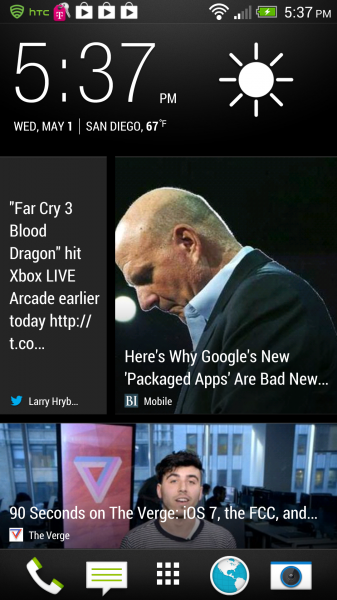
    Style. Aesthetically, I find iPhone and One to be the two most-pleasing smartphones currently available in North America, with BlackBerry Z10 also ranking highly. Both feel solid in the hand because of their aluminum enclosures. Metal gives the handsets a ruggedness uncharacteristic of a market so dominated by plastic. Fit and finish is striking on both phones in either color, black and white for iPhone 5, black and silver for HTC One.

    Carrying a handsome device is a lifestyle decision. How the phone looks says something about you. For some people, appearance doesn’t matter; for many others it’s all that matters. I like the aesthetic of both handsets. One is the first Android that looks as good, or better, than any iPhone.

    Size is a digital lifestyle choice. Which matters more to you: Having a more pocketable phone or one with larger display, which granted is better for viewing websites, photos or videos? Do you use handset-to-face rather than wired or Bluetooth earphones and does the appearance against the head matter to you? I don’t find One to be over-sized, but the device is larger in every way, including thickness and weight, than iPhone 5. HTC’s device is heftier by every measure (see full specs above).

    Screen. I’m simply stunned how good everything looks on the HTC handset. The screen is larger, 4.7 inches to iPhone’s 4 inches, but the measurement deceives. Screen size is a diagonal measure, and iPhone is unusually narrow, making that 4 inches in many ways less than handsets with comparable measure.

    One’s screen isn’t just bigger but offers higher resolution. Like the S4, full 1080p but more pixels per inch (468). iPhone 5 is 1136 x 640 resolution and 326 pixel density. The HTC’s screen is gorgeous, from virtually any viewing angle, with superb contrast and color accuracy — and it’s bright. I enjoy the screen so much, my tablet collects dust now. iPhone 5’s display, which is no slouch, can’t compare.

    Sound. The screen is an important part of the One’s aesthetic, but surprisingly so are the speakers, which grills flank the display and are pleasingly incorporated into the design. The One features Beats audio, which from front-facing speakers booms. For sheer sound volume and reach, iPhone 5 can’t compare.

    But there’s another measure, which is carrier specific. T-Mobile offers HD audio, which is fantastic. My daughter has iPhone 5, which also supports the capability. Calls are crystal clear. The audio is simply amazing. Both handsets have the feature, but only from select cellular providers.

    Shutter. Apple and HTC adopt very different approaches to the cameras. iPhone 5’s is 8 megapixels and pretty good. One is 4 megapixels, which deceptively looks like a step backwards. More megapixels isn’t necessarily better and often is worse. Manufacturers typically add more pixels to the same size sensor. They’re smaller and tend to introduce artifacts and other deficiencies, while performing poorly in low-light situations.

    HTC takes a different approach, by putting fewer pixels and larger (2 micron pixels) on the sensor. The lens is f/2 aperture, which is a little better than iPhone 5’s f/2.4. But it’s the sensor that makes the difference. HTC claims up to 300 percent more light sensitivity than 13-megapixel cameraphones. Oh, there is optical image stabilization, too, for when in low light shutter speed is slow.

    As a test, I snapped the photo of our cat in the living room around 12:30 am. There were three light sources: The 42-inch screen and two IKEA lamps — Stranne and Barometer — neither pointed at the feline. I switched to “Night Mode”. Auto ISO is 780.

    Connected Lifestyle

    Being I write on Saturday, I’ll restrain the rest, but not ignore other lifestyle benefits.

    Software. My last three smartphones all ran stock Android. But my newest is a step backwards to Jelly Bean 4.1.2, rather than current 4.2.2, the version on my Nexus 4 and what Samsung Galaxy S4 packs, too. HTC skins Android with Sense 5 UI. I expected to really loathe it, being a bit stuck up about stock and put off by Samsung’s garish ToucWiz UI. Instead, I rather like Sense, which is tasteful, uses attractive font and adds to Jelly Bean rather than truncate benefits.

    Jelly Bean and Sense 5 are killer combination, for simplicity and utility. iOS 6 feels five years too old, by comparison. There’s a vibrancy and vitality that iPhone 5 can’t match.
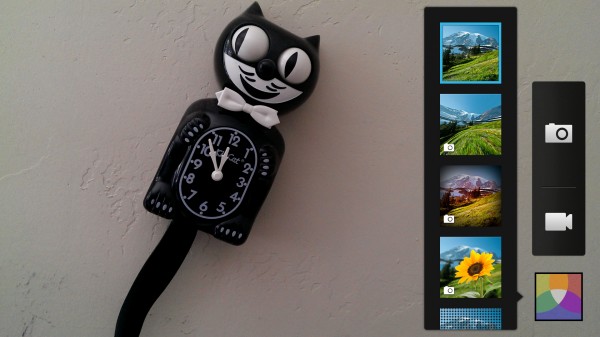
    Social. BlinkFeed delivers some of the vitality. The feature brings together social and news feeds into a full-screen Flipboard-like experience, only better. I’m using Twitter now again and even monitoring Facebook — plus being more informed, whether from social or news feeds. Presentation is excellent and immersive. My gripe: BlinkFeed offers too limited number of sources and no real customization. Why is Huffington Post there alongside AP as a news wire? Where are Google+, Instagram or Pinterest?

    Still, I wouldn’t give up BlinkFeed for anything. It’s an addiction now. Neither Apple, nor its app partners, offers anything comparable. HTC’s software/service is its own screen, and you won’t find that on iPhone 5 if for no other reason that Apple restrictions.

    Shooter. I wrap up returning to the camera, and one of HTC One’s unique capabilities. Briefly, as more will come in my actual One review: HTC adds feature call Zoe, essentially 3 seconds of video and 20 still images. If there’s a killer app here, Zoe is it along with companion Highlights Reel. The latter takes the Zoe and turns it into a 30-second clip with music — and the presentation is fantastic.

    Apple has got nothing like Zoe or Highlights Reel. I also prefer the overall software shooting experience. HTC keeps the process simple, like iPhone but unlike Galaxy smartphones, while offering meaningful and easily accessible controls.

    Photography is another lifestyle choice. I’d buy HTC One just for the camera, software and supporting services.

    That’s a wrap. I reached gadget nirvana this week. You can have iPhone 5 — Galaxy S4 or Nexus 4 — I’ll take HTC One.

  • For the wearable tech market to thrive, it needs to get in better shape

    Any attendee at this year’s CES couldn’t help but notice the sheer number of wearable health vendors in the health and fitness section of the convention floor. What was once a small corner at last year’s show has blossomed into a couple hundred exhibitors. Confirming the trend is real, ABI Research claims that nearly 30 million wireless wearable health devices were shipped in 2012 and that figure is projected to grow to 48 million in 2013. But with so many new companies producing their activity monitors, fitness trackers and calorie counters, what is the tangible future for this segment of emerging tech?

    Well, we may have gotten a preview of that recently with Jawbone’s acquisition of BodyMedia (Disclosure: the author’s company, Comcast Ventures, is an investor in BodyMedia). Coming on the heels of Zeo closing the doors on its innovative sleep tracking device, is it possible the pendulum is already swinging from proliferation and expansion to consolidation in just four short months since CES?

    I think it’s still too soon to make that call, but clearly market leaders like Jawbone are looking forward, identifying what still needs to be solved in this category, and acting strategically. It’s going to be a land grab for the right talent, intellectual property and data that can help.

    Below are three key components that companies in the wearable technology segment still need to address in order to produce positive results for today’s consumers and stay relevant:

    1. Accuracy and efficacy: The core sensing technology for many of these products is a three-axis accelerometer of the same sort found in our smartphones. A lot can be inferred from one sensor, but having a multitude of sensors sharpens the accuracy of what we think the body is doing. That’s why we are seeing additional sensors such as heart rate, skin temperature, galvanic skin response and heat flux becoming more prevalent in these devices. It’s also critical to appreciate the increased order of magnitude in difficulty when going from one sensor to multiple sensors.  Sensor fusion is the future, but sensor fusion is hard.  Only true data scientists need apply.When dealing with personal health, “close enough” is not good enough, and this class of product could be leading its consumers astray. The healthcare industry is accustomed to conducting clinical studies and publishing research findings. While that model is perhaps a little heavyweight for fitness trackers, there is still room for greater transparency on the accuracy and efficacy of these devices. Simply put, accuracy shouldn’t be in the eye of the beholder, and can only be achieved by benchmarking against voluminous amounts of data over a sustained period of time. In order to establish and justify widespread consumer trust, there needs to be independent analysis against gold standards, shared in a public setting.
    2. The right form factor for the occasion: At CES 2013, we witnessed new wristbands from Fitbit and Fitbug (Disclosure: see below), new forearm bands from Scosche and Wahoo, new clip-on units from Withings and GeoPalz, and new watches from Basis and Mio. The technology has also moved to T-shirts, headbands, hats and shoes and BodyMedia showed off a more jewelry-like form factor. Clearly there’s a lot of experimentation with form factor going on, and the question remains whether one dominant type will emerge that rules them all, or if instead manufacturers evolve to a product line strategy with a SKU that accompanies each corresponding daily activity.We’re accustomed to changing our clothes during the course of the day, so some would argue it’s not unreasonable to think we may some day adopt the habit of change our assemblage of devices, too. But a strong case can be made too that passive tracking may be the preferred long-term model over premeditated, active tracking – we’ve all witnessed too many New Year’s resolutions fall by the wayside to assume otherwise.
    3. Coaching and counseling: At its core, all these devices encourage behavioral change in an individual to lead a more active, healthy lifestyle. Any weight loss or fitness professional will tell you that maintaining a behavioral change is extremely difficult and so when left as a solo endeavor, the chances of long-term success are less than promising.Thus several companies have wisely paired their products with fitness services to increase consumers’ chances for success: Philips Active Link is available to Weight Watchers members, BodyMedia is a long-standing partner with 24 Hour Fitness, and Fitbit collaborates with Retrofit. Incorporating the use of these devices in a larger, more holistic program makes a lot of sense and may become the predominant model of engagement in the future. For sure, the data scientists can make the data dashboards coming off of these apps more intuitive, more actionable, more DIY, but the successful system of tomorrow may just need to expand its scope into “services” such as coaching and counseling.

    We are experiencing more consumerization of healthcare and this class of technologies engenders more knowledge and more transparency. For this category to have the long lasting affect we all hope for, however, the technology needs to evolve beyond simply measuring calories burned or steps walked. The market winners and losers are starting to take shape.

    Disclosure: Fitbit is backed by True Ventures, a venture capital firm that is an investor in the parent company of this blog, Giga Omni Media. Om Malik, founder of Giga Omni Media, is also a venture partner at True.

    Michael Yang is Managing Director of Comcast Ventures. 

    Have an idea for a post you’d like to contribute to GigaOm? Click here for our guidelines and contact info.

    Related research and analysis from GigaOM Pro:
    Subscriber content. Sign up for a free trial.


  • President Obama’s Visit to Costa Rica

    This week, President Obama traveled to Mexico and Costa Rica to reinforce the deep cultural, familial, and economic ties that so many Americans share with Mexico and Central America.

    President Barack Obama arrives in Costa Rica

    President Barack Obama arrives aboard Air Force One at Juan Santamaria International Airport, San Jose, Costa Rica.

    May 3, 2013.

    (Official White House Photo by Lawrence Jackson)

    President Obama arrived in Costa Rica on Friday — his first visit to the country — and participated in a bilateral meeting and joint press conference with Costa Rican President Chincilla, as well as a working dinner. During the press conference, the President spoke about the friendship and economic ties between our two countries:

    Costa Rica shows the benefits of trade that is free and fair. Over the last few years, under the Central America Free Trade Agreement, our trade with Costa Rica has doubled, creating more jobs for people in both of our countries. Our partnerships are creating more opportunities for small businesses and entrepreneurs, including young people and women. As I told President Chinchilla, the United States will continue to be your partner as Costa Rica modernizes its economy so that you’re attracting more investment and creating even more trade and more jobs.

    read more

  • $2 Million Ferrari: Prep + Polish (Part2)

    AMMO NYC

    Last week we brought you Part 1 of how to prep a $2 million Ferrari in regards to paint restoration. Well, now it’s time for Part 2. AMMO NYC founder and automotive detailer extraordinaire Larry Kosilla not only continues with the restoration, but tells us how to clean wire wheels with, get this… a steam cleaner! Check it out after the jump!

    Source: AmmoNYC.com

  • Careful: Your big data analytics may be polluted by data scientist bias

    Expectations surrounding the future of  big data range from the just huge to absolutely enormous – a reflection perhaps of both its real inherent potential and all the massive hype. Certainly though there is no dispute that companies can reap big benefits from exploring patterns found in the data they already generate and collect. Further, depending on the algorithms used, machine learning can even serve as a real world crystal ball: There are countless examples, but the story about Target’s ability to predict pregnancies by analyzing customer consumption patterns, or how well known mathematician Nate Silver predicted the winner in all 50 states during last November’s presidential election are two poignant examples.

    But the fact remains that big data can only ever be as good as the machine learning that is used to provide insight, and even the most sophisticated machine learning techniques aren’t omniscient – the old adage “garbage in, garbage out” sums up this dilemma perfectly. Businesses planning to invest in big data science, with the hopes of reaping the potential wealth of insights available, must at all costs avoid introducing bias into the process – or risk jeopardizing everything.

    Data bias syndrome

    Data bias comes in many forms. It can come from poorly defined business domain objectives. Or, it can come from opting to gather data that are easy to collect rather than data that are most informative. Data scientists can also receive data that have been biased by incorrect assumptions by the domain experts. (And as a footnote, the recent example of the austerity economics Excel scandal shows how a minute data error can have cascading and devastating effects.)

    Likewise, data scientists themselves are not immune to bias. Some can run afoul of their own preconceived notions about business domain – too much knowledge can cause one to filter out data that may actually be helpful.  Scientists with deep experience in a particular data set may develop too much reliance on pre-existing algorithms without re-examining validity for a particular use case.

    Finally, data quantity is a common problem. Intelligent learning requires abundant data, and often the data available are not sufficient to draw accurate conclusions – a problem known as data sparsity. This may sound unbelievable considering that data volume is doubling every two years according to an EMC study,  but there’s a difference between a dense data set populated by similar data points, and the far more diverse sets of user data points we find in the real world. In these cases, the gaps in the data are filled by machine learning algorithms that may inherently be biased, based on assumptions made by the data scientist when designing the algorithm. The trick is to find the right balance between unbiased data exploration and data exploitation.

    Removing bias

    As companies bring data science in-house or purchase tools that act as a data abstraction layer, the need to address data bias becomes more immediate. The smart move is to build bias-quelling tactics into the data science process itself. Here’s how:

    • Employ domain experts Rely on them to help select relevant data and explore which features, inputs and outputs produce the best results. If heuristics are used to gain insights into smaller data sets, the data scientist will work with the domain expert to test the heuristics and ensure they actually produce better results. Like a pitcher and catcher in a baseball game, they are on the same team, with the same goal, but each brings different skill sets to complementary roles.
    • Look for white spaces  Data scientists who work with one data set for periods of time risk complacency, making it easier to introduce bias that reinforces preconceived notions. Don’t settle for what you have; instead, look for the “white spaces” in your data sets and search for alternate sources to supplement “sparse data.”
    • Open a feedback loop This will help data scientists react to changing business requirements with modified models that can be accurately applied to the new business conditions. Applying Lean Startup like continuous delivery methodologies to your big data approach will help you keep your model fresh.
    • Encourage your data scientists to explore.  If you can afford your own team of data scientists, be sure they have the space and autonomy to explore freely. Some equate big data to the solar system, so get out there and explore this uncharted universe!

    Whatever you do, don’t ignore the issue: The last thing you want to do is implement a system that develops and propagates data, only to learn it’s hopelessly biased. If you don’t solve this problem sooner rather than later, your organization will miss out on what many analysts are calling the next frontier for innovation.

    Haowen Chan is currently a principal scientist at Baynote,  a provider of personalization solutions for online retailers. Robin D. Morris is a senior data scientist at Baynote; he is also associate adjunct professor in the Department of Applied Math and Statistics at the University of California, Santa Cruz.

    Have an idea for a post you’d like to contribute to GigaOm? Click here for our guidelines and contact info.

    Photo courtesy pzAxe/Shutterstock.com.

    Related research and analysis from GigaOM Pro:
    Subscriber content. Sign up for a free trial.


  • Top 5 Data Center Stories, Week of May 4th

    Microsoft-Boydton-ITPACs-47

    Some of the server-filled IT-PAC modules at a Microsoft data center in Boydton, Virginia, one of a handful of billion dollar data center projects. (Photo: Microsoft)

    For your weekend reading, here’s a recap of five noteworthy stories that appeared on Data Center Knowledge this past week. Enjoy!

    The Billion Dollar Data Centers – Your iTunes downloads, Facebook posts and YouTube videos travel through small rural communities that are home to billion-dollar data centers from the world’s largest cloud builders. Here’s a look at these facilities and how they’re changing these communities.

    Big in Texas: CyrusOne Sees Massive Growth in Dallas – Staffers at CyrusOne use scooters and golf carts to get around the company’s new Carrollton, Texas data center. It’s a sign of the scale of the company’s ambitions in the Dallas market, where the company has just opened its first phase of colocation space.

    USPS Leverages Big Data To Fight Fraud – When you think “big data,” you probably don’t think of the United States Postal Service (USPS). As it processes more than 528 million pieces of mail each day, the USPS has become an active participant in the big data revolution, and operates one of the most powerful non-classified supercomputing databases in the world.

    New QTS Lab Will Advance High-Security Federal Clouds – QTS (Quality Technology Services) wants to help federal agencies get comfortable with cloud computing, and is dedicating some of its data center space toward this goal. The company, in conjunction with i2 Sentinel Associates, has set up a testbed inside its massive data center campus in Richmond, Virginia that will focus on creating highly secure cloud computing capabilities.

    HP Unveils Complete Software-Defined Network Fabric – HP unveiled a series of hardware and software solutions Tuesday designed to make networks simpler, scalable and automated. HP (HPQ) launched a data center network fabric built on HP FlexNetwork architecture.

    Stay current on Data Center Knowledge’s data center news by subscribing to our RSS feed and daily e-mail updates, or by following us on Twitter or Facebook or join our LinkedIn Group – Data Center Knowledge.

  • 6 things iOS can learn from OS X

    The focus of Apple’s last two releases of OS X has been on incorporating features of iOS while refining the user experience, which has worked well so far. However, certain aspects of iOS, such as the lack of good inter-app communication, are making the platform look dated. Apple could solve that issue and others by bringing features from OS X back to iOS, starting with Services.

    Services

    One of the biggest differences between OS X and iOS is the way they treat inter-app communication. OS X’s little-known Services feature provides a way for applications to transfer data, such as currently selected text, between each other. Let’s say I’m typing a document and I want to search the web for a phrase I’m using. I can select the phrase, use the “Search With Google” service, and a new Safari window pops up with the results. Third-party apps can use Services as well, and users can create their own with the Automator app. This flexibility and customizability is what makes Services powerful.

    Let’s switch to iOS. Apps are sandboxed, which means they can’t share files between each other, and the only way to share text is through copy and paste. Third-party apps can’t process actions from other apps without using URL schemes, which isn’t an ideal solution.

    Implementing something as complex as OS X’s Services within iOS’s simplified UI isn’t easy. So far, Apple’s taken the approach of only including the most useful Services from OS X in its own apps. In iBooks, for example, I can select a word and define it, make a new email with it, or search the web for it: all the basic stuff you can do in OS X. It’s a sign that Apple’s at least thinking about the problem, and I’m hopeful that the coming iOS 7 update will address it more thoroughly.

    Multiple user accounts

    user_switchingMultiple user accounts were introduced with Mac OS 9, and they’ve evolved quite a bit since. Today, each user gets their own settings, files and associated iCloud account. If you click on the currently logged-in user’s name in the menu bar, a menu pops down with a list of other users. Choose one, and that user’s desktop rotates off the screen to be replaced by the other’s.

    It’s true that you can sign in and out of iOS with different Apple IDs, but this only lets you download another user’s content from iTunes and not much else. You don’t get your iCloud data or settings, and any changes you make outside of iTunes stay with the other account. Obviously, this isn’t ideal for families that share an iPad or iPod touch. The latest version of Android, Jelly Bean, includes multiple account support for tablets, giving Android users one more feature to tout that iOS doesn’t have.

    Slideshow wallpaper

    slideshow_walls

    “Slideshow” wallpaper — background images that shift after a set period of time — was introduced to OS X with 10.3 Panther. iOS 4 introduced homescreen wallpapers on the iPhone, but you could only set one at a time; it remains so today. Considering that you can already run a slideshow on an iPad’s lockscreen, doing the same thing with homescreen wallpaper doesn’t seem like much to ask.

    Mission Control

    mission_control

    Released with OS X Lion, Mission Control consolidates Exposé, Spaces and Dashboard into one UI. I’ll be talking about the Exposé part here, since I don’t see any need for Dashboard or something like Spaces on iOS. Exposé is the feature that zooms and arranges your open windows so you can see them all at once. Click on one, and Exposé switches you to it.

    In iOS, switching between apps is accomplished with the multitasking tray. Double-tap the Home button, and the tray pops up, showing your most recently used apps. Unlike Exposé, the multitasking tray only shows you the app’s icon and not the app itself. Apple actually experimented with a more Exposé-like interface in an early version of iOS 4, and Jailbreak tweaks, such as Multifl0w, bring a similar interface. Android and Windows Phone’s task switchers also use app previews and not just icons, and with the multitasking tray making its debut almost three years ago, it feels like it’s time for an overhaul.

    Gatekeeper

    By default, Gatekeeper locks down your Mac so it will only run apps from the Mac App Store and developers registered with Apple. However, you can turn Gatekeeper off on OS X. On iOS, there isn’t a choice: you can only download apps from the App Store. Because of this, and Apple’s policy of reviewing every app before approving it, there’s been a few incidents over the years, starting with the blocking of Google Voice, which damaged the company’s reputation with some developers. By implementing a Gatekeeper-like system, it would be easier for Apple to defend criticism of its approval policies, as developers could still sell their apps on the web. iOS developers would also be able to get out updates even if Apple rejects them.

    There are problems with this, however. Apple would have to allow downloading apps from Safari, which also means building an interface to manage them. App piracy, already an issue on jailbroken devices, would likely increase under such a system as well unless Apple implemented DRM. Malware is another possible concern, though as with Gatekeeper on the Mac, having the default be to only allow apps from the iOS App Store would leave people protected. With all of these negatives, I doubt we’ll be glimpsing over the walled garden any time soon.

    Versions

    versions_ios

    Versions, introduced with Lion, provides a Time Machine-like interface for looking through past revisions of a document. When you trigger it, the desktop slides away as the current app is placed next to its past versions, stacked together on the right. Browsing through past versions is accomplished by a timeline on the side. You can edit the current version right within the interface, as well as copy elements from past versions.

    Versions hasn’t made its way to iOS yet, and that’s understandable given the size of iOS devices. How would you fit something like Versions’ interface on the smaller screen of an iPhone or iPad? On OS X, an app’s window can resize to fit comfortably within Versions, but they can’t on iOS. Versions would have to be rethought significantly for it to work on smaller screens, so I’m not optimistic that it’ll be in iOS 7.

    Many of these features that work so well on OS X are admittedly a long shot for making it to iOS. However, with Craig Federighi placed in charge of both OS X and iOS software after the departure of Scott Forstall, there’s at least the possibility that OS X features may eventually find their way to the other side.

    What other features from OS X would you like to see in iOS? Tell us in the comments. 

    Related research and analysis from GigaOM Pro:
    Subscriber content. Sign up for a free trial.


  • Celebrate Star Wars Day By Blinding General Grievous, Losing R2

    3UP_R2A6_Photo_watermark

    Beep boop boop bee squeee! Happy May 4th aka Star Wars Day (say the date out loud and you’ll figure out why). In celebration, quite a few hardware vendors have released special gear for the day, thereby allowing you to celebrate the magic of George Lucas in proper Mandalorian fashion.

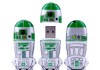
    First we have a charming facsimile of R2-A6, a green R2 unit that is a favorite of the Naboo security forces. Made by Mimobot, this sassy little droid you’re looking for comes with built-in content, including desktop backgrounds and icons. They also make a Jar Jar Binks USB key if you’re so inclined.

    Next we have something from Lucasfilm lawsuit recipient Wicked Lasers whose Arctic laser looks like everything but a replica of a light saber. To celebrate May 4th, the company has released the $75 Phosforce that turns the Arctic laser into a white LED flashlight that can pump out an Ewok-blinding 500 lumens, allowing you to swing your thing around in the dark swamps of Dagoba or the back alleys of Coruscant.

    To be clear, the Phosforce attachment must be purchased in addition to the $299 laser body and the adapter turns the Arctic’s decidedly dangerous blue laser light into eye-safe white light. It is not exactly an LED flashlight in the traditional sense but instead uses white-emitting phosphor. Also, to be clear, you can burn the heck out of your eyes if you mess with this thing wrong, so be careful.

    Happy fourth and remember: Han shot first. May you live long and prosper.

  • Web therapy: 4 startups overcoming mental health taboos with technology

    For a new generation of patients, could the laptop — or even cellphone — replace the stereotypical shrink’s couch? A crop of new startups wants to take psychotherapy into the 21st century.

    About one in five Americans will experience a mental health challenge during their lifetime, according to the Substance Abuse and Mental Health Association. But experts say that 60 percent of them will never seek help. The lack of available care, inconvenience and cost are all barriers to access, but so is the fear of prejudice and discrimination from friends, family and even employers.

    “Stigma and shame is a huge factor – maybe the most important one,” said Oren Frank, founder of mental health startup Talktala. “People who have been to regular therapy are less ashamed of it, but people who are newcomers are paralyzed by fear.”

    Online options enable people to receive therapy on their own turf and terms, without needing to update others on their whereabouts – and they offer the benefit of anonymity.

    For example, a study released last month from Case Western Reserve found that while many new moms suffering from postpartum depression wouldn’t seek help because of the stigma or lack of time, they would go online for support if providers were available and they could communicate anonymously.

    It’s still a new and relatively small field — therapists may worry about liability issues or misdiagnoses, patients may harbor concerns about privacy and security online and getting insurance to cover it is a challenge — but it’s gaining support among patients and providers.

    Here are four startups leading the way:

    TalkSession

    Launched last month, TalkSession’s goal isn’t just to provide online therapy; it has big plans to bust the stigmas surrounding it. “There are actually two stigmas — first the stigma against mental illness and then the stigma within the community against technology,” said founder and CEO Melissa Thompson.

    Through regular livestreamed online conversations with top experts in the field, policymakers and other medical and mental health leaders, the startup plans to start by tackling sensitive issues in mental health. And it intends to launch a digital magazine to give leading mental health providers a place to share best practices and build an online presence.

    Once it has established a strong network of providers, Thompson said, TalkSession plans to launch an OpenTable-like service to help patients find and book online therapy appointments. Already, the site has recruited 100 therapists and patients can complete a quiz that will help match them with their ideal therapist, but receiving the online therapy is still a little ways off.

    Talktala

    People readily tell friends (and even strangers) about relationship troubles or problems at work, but once you start dropping clinical terms, they’re often likely to clam up, said Talktala founder Oren Frank. That’s why his site is trying to build online therapy options that meet people where they are, in the language in which they want to speak.

    TalktalaInstead of offering services tagged with terms from the DSM (the Diagnostic and Statistical Manual of Mental Disorders), Talktala invites users to join online chats and forums with friendlier titles like “Relationships are complicated – some advice” and “How to communicate better with your partner?”

    In the forums, patients can speak freely and anonymously with others experiencing similar challenges, but a therapist hosts the discussion. During the chat, he can guide conversation in productive directions and if he observes anything significant, he can follow-up with patients individually.

    Patients can view any number of online forums and ask a limited number of questions for free, but if they want additional support — from asking unlimited online questions to participating in private and group chats or privately texting with therapists — they can pay up to $30 a month in subscription fees.

    Frank said the site isn’t trying to be a solution for people with serious mental health issues and it doesn’t provide services that are reimbursable by insurance. But the service appears to be attracting positive attention — he said it currently has 250 vetted therapists on the site and recently partnered with the Huffington Post’s GPS for the Soul initiative.

    iCouch

    iCouchiCouch launched as a service for U.S. patients and therapists but in the three years since its launch, co-founder and CEO Brian Dear said it’s actually attracted a strong international following. Not only has it recruited 165 therapists worldwide (from countries including the U.K., China and Australia), 30 to 40 percent of its clients are based outside the U.S.

    Through the site, people can search for therapists according to specialty and gender, scan each therapist’s bio and price and then book online appointments. Via computer or iPhone, they can they videoconference with vetted therapists through the site’s HIPAA-compliant system.

    The site helps people who want to receive therapy sessions in the privacy of their own homes but, Dear said, it can also be an advantage for people who live in areas where the culture may not be receptive to their particular issue. For example, the service has several clients from the Middle East who speak with their therapists about gender identity issues or homosexuality — topics that may be taboo in their cultures, he said.

    “It breaks down the geographic barriers — it allows people to go into another culture that may be more accommodating to their concerns,” he said. It also enables expats to receive care that might be more difficult to receive in their new home countries, Dear added.

    (While most therapists are only licensed to practice in a given state, Dear said that it’s not illegal for therapists to conduct inter-state or international sessions.)

    Breakthrough

    One of the earliest startups to bring mental health services online, Breakthrough is only available to residents of California for now, but it plans to expand to Texas and other states soon. Through its site, patients can connect with a network of certified mental health professionals and conduct appointments via chat, email, phone or a custom HIPAA-compliant video system.

    But while other services may not prioritize working with the insurance system, Breakthrough — which is backed by angel investors such as former Square COO Keith Rabois, PayPal director and former eHealth exec Avery Kadison, Charles River Ventures and others – aims to make online mental health services more mainstream by working with health insurers. Magellan, one of California’s largest health insurers, for example, last year agreed to extend coverage to Breakthrough.

    In addition to showing real-time available appointment slots for therapists (ZocDoc-style), the company shows which doctors are online now and plans to enable on-demand, off-hour services.

    Image by bloomua via Shutterstock.

    Related research and analysis from GigaOM Pro:
    Subscriber content. Sign up for a free trial.


  • Android this week: Nexus 11 leaked; Wii Fit turns into smart scale; LG Optimus Pro here

    Google’s I/O Developer event is fast approaching and expectations of a showcase new device are riding high. It’s likely that Google’s Nexus 7 tablet will see a refresh at the very least. And based on information of an alleged Samsung road map leak, Google could be introducing a new Nexus 11 tablet.

    Nexus 10 tabletThe details were found this week by the SamMobile site, which has a good track record for Samsung’s upcoming plans. According to the road map, the 11-inch tablet will use Samsung’s Exynos 5410 chip, which has one high performance quad-core processor for heavy duty tasks and a lesser quad-core processor for lighter tasks. This approach should offer power when apps demand it but be light on battery life due to offloading simpler tasks.

    No indication of the screen resolution appeared in the leaked data, but Google’s current Nexus 10 tablet offers a 2560 x 1600 resolution display. At the very least, I’d expect Google to use a 1920 x 1200 resolution screen for a Nexus 11, if not the same as what the Nexus 10 currently offers. The only reason I can think of using a lesser resolution is to keep the price down. The tablet will reportedly also offer a pair of cameras and — in a first for Nexus device — a micro SD expansion card slot.

    Fans of Android hardware will have to wait until May 15 to see if Google releases a new Nexus, but those looking for a new phone have another choice now. AT&T introduced the LG Optimus G Pro as an exclusive this week. I just received a review unit and my initial impressions are very positive.

    LG Optimus G ProI can already say this is the nicest phone hardware LG has designed and built. The device also reminds me of the Samsung Galaxy Note 2 that I own: Both have similar screen sizes, for example, although the LG Optimus G Pro is slightly narrower and has a full HD screen. LG’s user interface is also quite nice and polished. I’ll have a full review in the near future, but so far, LG has shown me it can build an Android phone that competes with the Samsung Galaxy S 4 and HTC One.

    New hardware is always nice but sometimes it’s better to re-purpose old devices. That’s exactly what I did with an old Nintendo Wii Fit Balance Board thanks to a free Android app called FitScales.

    The software lets you wirelessly connect an Android phone to the Balance Board via Bluetooth. When standing on the board, your weight and BMI are sent to your phone, where the data can be automatically synchronized with either a RunKeeper or FitBit account: no need to buy a new Wi-Fi scale!

    FitScales

    Related research and analysis from GigaOM Pro:
    Subscriber content. Sign up for a free trial.


  • Samsung releases another “Next Big Thing Is Here” commercial, showing what the Galaxy S 4 can do and the iPhone 5 can’t at a graduation pool party

     Samsung_Galaxy_S_4_Main_TA


    OK, so the Samsung Galaxy S 4 smartphone is finally available in stores now and as part of its massive marketing blitz, the Korean giant has started the next phase of its “Next Big Thing Is Here” advertising campaign— naturally showing off just a little of what the impressive smartphone can do and the iPhone 5 well… can’t do.  Taking place at a graduation pool party, a few of the party goers take the opportunity to impress others by showcasing things like the various photography modes, Air View and Air Gestures when your hands are full or messy from eating savory ribs, NFC S Beam to share photos with friends in an instant, and using the smartphone as a TV remote. Of course showing off that the phone is indestructible is not part of the ad, but hey— one step at a time, right?

    Click here to view the embedded video.

    Come comment on this article: Samsung releases another “Next Big Thing Is Here” commercial, showing what the Galaxy S 4 can do and the iPhone 5 can’t at a graduation pool party

  • Mustang Mach 1 Reunion

    Ford Mustang Mach 1

    It may sound a bit strange, but if you were to tell most people that you can have a relationship with your car, just as you do with say a dog or person, they probably laugh in your face. Automobile enthusiasts however see things differently, as our cars represent not only our freedom, but our memories. Take your first car for instance. You may not know where it is, or what’s become of it, but I can guarantee you’d like to see it again. One lucky father recently got this chance when his son actually hunted down, and bought back his old Mustang Mach 1. The car was far from perfect, but if you think that mattered to his Dad, well, you’d be dead wrong.

    Source: Youtube.com

  • TED Weekends emphasizes the importance of the student-teacher relationship

    Rita-Pierson-at-TED-Talks-Education

    Rita Pierson and Sir Ken Robinson both give incredible talks in the PBS special TED Talks Education. Photo: Ryan Lash

    As the daughter and granddaughter of educators, teaching is in Rita Pierson’s blood. In this talkRita Pierson: Every kid needs a championRita Pierson: Every kid needs a champion a teaser of next Tuesday’s TED Talks Education on PBS — Pierson is going to make you wish you had been lucky enough to be her student. Pierson believes deeply in forming strong bonds with her students: through simple things like apologizing, laughing and just acknowledging their successes, even in times when they are technically failing.

    Pierson challenges other teachers to understand the power of relationships. And this week’s TED Weekends on the Huffington Post explores the influence of connections in the classroom. We are especially excited about this edition because it contains not only a beautiful essay from Pierson, but also an offering from the most-watched speaker on TED.com, Sir Ken Robinson, who also appear in TED Talks Education. Read excerpts of both amazing essays below.

    Rita F. Pierson: This Will Make You Appreciate Your Elementary School Teacher

    Teachers don’t make a lot of money. They are usually not deemed worthy of news coverage unless there is a scandal or a strike. Most of the time, their major accomplishments are shared only with colleagues and family members and not the media. The celebration is often cut short by some catastrophe the next day. Yet, in spite of the highs and lows, I cannot think of another profession that brings both joy and challenge on a daily basis.

    In the spring of my career, I found myself questioning the choice of my life’s work. The students did not appear to be motivated, the paperwork was overwhelming and the constant change of educational direction was discouraging. But, I just could not seem bring myself to do anything else. “Next year”, I would say. “Next year I will switch jobs, make more money and have far less stress.”

    Next year just never came. I am now in year 40. And while I am no longer in the classroom or at the schoolhouse, I remain an educator. It finally dawned on me that there was no other profession that would let me change children’s minds and have an impact on their future, long after the school day and school year were over. For every student that finally “got it,” for every rookie teacher that said, “you inspired me to stay,” I get the raise that never quite made it to my paycheck. Read more »

    Sir Ken Robinson: Why We Need to Reform Education Now

    What should America do about its disastrous high school dropout rate? That’s the focus of TED Talks Education, the first ever TED/PBS television special, hosted by John Legend, the award-winning musician. The program looks not only at what’s going wrong in high schools, but how to put it right. As it happens, the solution is not a mystery; but putting it into practice will involve a major shift in current policies.

    In 1970, the U.S. had the highest rates of high school graduation in the world, now it has one of the lowest. According to the OECD, the overall U.S. graduation rate is now around 75 percent, which puts America 23rd out of 28 countries surveyed. In some communities the graduation rate is less than 50 percent. About 7,000 young people ‘drop out’ of the nation’s high schools every day, close to 1.5 million a year. The social and economic costs are enormous.

    Research indicates that in general, high school graduates are more likely to find employment, to earn at higher levels and to pay more taxes than non-graduates. They’re more likely to go on to college or other learning programs. They’re more likely to engage positively in their communities and less likely to depend on social programs. It’s not true, of course, that pulling out of high school inevitably leads young people into trouble. Many high school ‘drop outs’ have gone on to have extraordinary, successful lives. What is true is that a very high proportion people who are long-term unemployed, homeless, on welfare or in the correctional system do not have high school diplomas. Read more »

  • Weekly Address: Fixing our Immigration System and Expanding Trade in Latin America

    President Obama describes the incredible opportunities to create middle-class jobs in America by deepening our economic ties and expanding trade in Latin America and discusses a recent Senate bill that takes commonsense steps to fix our broken immigration system.

    Transcript | Download mp4 | Download mp3

  • NewFronts news roundup: a big week for Yahoo, AOL, Blip, Hulu and Crackle

    This week, major web video companies borrowed a tradition from the television world for the second annual NewFronts. The New York-based events brought together executives, advertisers and celebrities to preview shows, make announcements and celebrate 2013′s potential — here’s a round-up of just some of what was presented.

    Yahoo 

    Celebrity Presence: John Stamos, Ed Helms, Morgan Spurlock, Cheryl Hines, Rachael Harris, The Lumineers (who performed live).

    New Shows Presented: A mix of comedy and lifestyle programming, including Helms’s Tiny Commando, a show about the intersection of food and film, and a Spurlock-produced series where celebrities tell Stamos about the first time they had sex.

    Biggest News Announced: For wrestling fans, it was probably the announcement that Yahoo and the WWE will be “tag-teaming” video distribution. But Yahoo also announced plans to partner with Condé Nast and CNBC for shows.

    Money Quote: From Sam Gutelle at Tubefilter’s coverage, based off a comment by Yahoo COO Henrique de Castro:

    De Castro asked advertisers to sink 5% of their TV budget of just one brand into Yahoo. Clearly, he understands that while the online video space is growing in popularity, it is still an area meant to complement TV, not overtake it. Yahoo’s new shows should do just that by providing solid, accessible entertainment.

    My Take: None of the announced partnerships are as high-profile as Yahoo getting the exclusive rights to Saturday Night Live clips. That said, of all the new shows announced this week, I might be the most intrigued by Losing Your Virginity with John Stamos: It sounds like a lot of fun.

    AOL 

    Celebrity Presence: Sarah Jessica Parker, Nicole Richie, Baratunde Thurston, iJustine.

    New Shows Presented: A wide range of largely lifestyle-oriented programming, including the Gwyneth Paltrow-starring Second Chances, Hank Azaria’s Fatherhood, Webby co-founder Tiffany Shlain’s The Future Starts Here, and a show about ballet executive-produced by Parker.

    Biggest News Announced: To track who’s actually watching all that programming, AOL will be collaborating with Nielsen on a system that will “express audience measurement in the language of TV, enabling comparisons between the audience of AOL’s high-quality original programming and curated premium partner content to TV viewership” (according to the press release).

    Money Quote: From Video Ink’s coverage of the Nielsen deal, an interview with Nielsen SVP of Strategic Partnerships John Burbank:

    Ultimately, it’s not up to the Comscores and Nielsens of the world. “It’s really the market that has to decide, and we’re doing our best to make the measurement as robust and as fair for everybody so the buyer and the seller have to agree to transact on the data,” Burbank added.

    My Take: Some of AOL’s original programming sounds potentially interesting, but relying on celebrities and brands to drive web content is far from a fresh business model, and oftentimes doesn’t have much staying power. However, if the audience for that content finally gets properly measured, it could help advertisers better understand the potential impact of online video.

    Hulu

    Celebrity Presence: SNL‘s Seth Meyers (who hosted the event), Desperate Housewives star Eva Longoria, professional wrestlers Sergeant Slaughter and Rey Mysterio.

    New Shows Presented: Two new exclusives include Quick Draw, a comedy western, and high school drama East Los Angeles. Plenty of other series are on their way, and Hulu made note of One Life to Live and All My Children, which have performed well in their new digital iteration.

    Biggest News Announced: Hulu had some exciting numbers to report, most importantly that Hulu Plus has topped four million subscribers, and according to comScore, it’s number one in engagement among top ad-supported sites.

    Money Quote: From Variety’s coverage, a snippet from Meyers:

    “‘You might be wondering why someone who works for a traditional network like NBC is at the Hulu upfront,’ he said. ‘Simply put, I’m hedging my bets. I don’t want to be working for the steam-engine company and wondering if cars are going to work.’”

    My Take: It would have been interesting to see bigger-name content presented by Hulu this week, but with subscribers on the rise and the site bringing in more original series, things seem to be going well for the site.

    Blip

    Celebrity Presence: Rob Huebel (who hosted the event), Grace Helbig, Rooster Teeth’s Burnie Burns.

    New Shows Presented: The Huebel-starring comedy Mainly Murder, unscripted competition series Jewelry Star, The Great S. Cape!, created by Dark Knight producer Michael Uslan. (Full details presented on Blip’s site.)

    Biggest News Announced: Not only has Blip already announced a partnership with My Damn Channel to distribute original content, but on Wednesday they announced a production deal with hugely popular (and outspoken) YouTuber Ray William Johnson.

    Money Quote: From AdWeek’s coverage of the event:

    “‘Blip is the future of TV,’ said CEO Kelly Day. ‘We have the largest library of Web originals anywhere. And we are not a platform.’”

    My Take: Blip is currently in the midst of a massive sea change — so it was inevitable that this week’s news is a bit underwhelming in comparison to earlier shakeups. However, it’ll be exciting to see how the talent Blip’s brought in meshes together.

    Crackle 

    Celebrity Presence: Jerry Seinfeld, David Arquette, Missi Pyle.

    New Shows Presented: Plenty of them, including Extraction, a feature-length thriller starring Danny Glover and Vinnie Jones, Cleaners, an assassin action series with a cast including Arquette and Gina Gershon, and Strand Street, directed and produced by Milo Ventimiglia.

    Biggest News Announced: As previously announced, there will be a second season of Jerry Seinfeld’s extremely successful Comedians In Cars Getting Coffee, but more importantly the landmark 2010 web series The Bannen Way will return in 2013 for six new half-hour episodes.

    Money Quote: From the Hollywood Reporter’s coverage:

    “Crackle is for the new living room,” Eric Berger, executive vice president of digital networks at Sony Pictures Television and GM of Crackle. “It’s programmed, it’s everywhere and its easily accessible. We’re not a content aggregator but a programmer much like a cable network.”

    My Take: Anecdotal evidence suggests that Comedians In Cars has been huge for Crackle, introducing a whole new audience to the service, and the emphasis on thriller and drama programming is a positive step forward for those looking to see web original content mature.

    But there’s this line from the press release: “The long-awaited sequel to the cult favorite David Spade comedy Joe Dirt will break new ground as the first made for digital movie that is a sequel to a hit motion picture.” We might be looking at two steps forward, one step back.


    Related research and analysis from GigaOM Pro:
    Subscriber content. Sign up for a free trial.


  • Microsoft’s new plan to boost Windows Phone: Sell dirt-cheap Lumias at Walmart

    Nokia Lumia 521 Walmart Sale

    Windows Phone has been far from a rousing success so far, but that hasn’t stopped Microsoft from trying to goose sales of Windows Phone devices in any way it can. AllThingsD reports that Microsoft’s latest strategy involves pushing Nokia’s dirt-cheap Lumia 521 into Walmart and selling it for $150 off-contract. The goal is to undercut the appeal of subsidized devices such as the iPhone and the Galaxy S4, which both sell for $200 or more at most retail outlets if users sign two-year service contracts. But by offering the Lumia 521 through T-Mobile without a service agreement and at a comparatively low monthly rate of $70 for voice and data, Microsoft may have found a clever way to attract budget-conscious phone shoppers. The Lumia 521 features a 4-inch 800 x 480-pixel display, a dual-core 1GHz processor and a 5-megapixel rear camera.

  • Latest numbers show Android maintaining smartphone OS dominance in U.S. market for first quarter

    2013_q1_operating_platform_pie_chart

    comScore released smartphone manufacturer and operating system data today for the first quarter of 2013 in the U.S. market. The numbers show Android continuing to dominate with 52 percent market share for operating systems. This was down slightly from December 2012 when Android held 53.4 percent of the market. Blackberry also slid down to only 5.2 percent of the market and Symbian took a small dip. Apple’s iOS was the big gainer for the quarter jumping 2.7 percent to grab 39 percent of the market and Microsoft also gained slightly.

    While Android enjoyed  the top spot in terms of operating platforms, Apple continued to hold a grip in terms of manufacturer market share with their 39 percent share of the market. The 2.7 percent jump outpaced Samsung’s gain of 0.7 percent of the market. HTC, Motorola, and LG all saw their market share slide during the quarter.

    2013′s first quarter did not see any major smartphone releases from the major Android manufacturers. That situation will change during the second quarter with devices like the HTC One and Samsung Galaxy S 4 hitting the market. While Apple fans and investors will rejoice over this latest shot of positive news, the happiness may only last until second quarter numbers are released.

    comscore_2013_q1_operating_systems

    comscore_2013_q1_manufacturer_share

    source: comScore

    Come comment on this article: Latest numbers show Android maintaining smartphone OS dominance in U.S. market for first quarter

  • Mozilla shows off ported version of Unreal Engine 3 in Firefox browser [video]

    Mozilla Firefox Unreal Engine 3 Port
    Mozilla is out to show that it wasn’t just blowing smoke when it said it wanted to bring console-quality games directly to your web browser. Per Engadget, Mozilla has posted a demonstration video of Android game Epic Citadel that’s been ported over to Firefox using the Unreal Engine 3. While the video is just a straight scenic walk-through with no combat or interaction with non-player characters, it does show that it’s possible to have high-quality graphics run at a solid frame rate of 16 frames per second within a desktop browser. The Unreal Engine 3 is used to power such A-list games as Bioshock Infinite, Mass Effect 3 and Batman: Arkham City, and porting it to a browser would be a major accomplishment for Mozilla engineers. Mozilla’s full demonstration video is posted below.

    Continue reading…

  • Google Photo Spheres widget now available for any web site

    google_photo_sphere_widget

    Slowly but surely Google’s Photo Spheres continue the march toward general availability and usability throughout the web with Google’s release of a widget enabling them to be embedded on any web site. Up to now, Photo Spheres could only load on Google+ and Google Maps along with a couple third-party services that had figured out how to make them viewable. The new widget is not the easiest thing to deploy as web site owners will have to add a call to the Google+ API and then add some extensive code on their site where the Photo Sphere should appear. The Photo Spheres themselves have to be hosted on either Google+ or PicasaWeb. No doubt it will not be long before other developers streamline this process to make it easier for site owners to both deploy the widget and quickly grab the proper URL and parameters for a Photo Sphere.

    In the meantime, Android users continue to wait for progress on making Photo Sphere capable camera apps as widely available so they can start to contribute to the library of Photo Spheres.

    source: +Google+

    Come comment on this article: Google Photo Spheres widget now available for any web site