Category: News

  • Accel Partners Names Rob Solomon a Venture Partner

    Rob Solomon, the former president and chief operating officer for Groupon, has joined Silicon Valley venture firm Accel Partners as a venture partner. He will focus on evaluating early stage and growth equity opportunities with Accel. Prior to Groupon, Solomon was a venture partner at TCV and also worked as chief executive of travel-focused search engine SideStep.

    PRESS RELEASE
    Accel Partners, a leading Silicon Valley venture capital firm focusing on early stage and growth equity investments, today announced the addition of Rob Solomon as Venture Partner. Most recently, he served as President & COO for Groupon responsible for sales, marketing, business development, operations & international as the company experienced rapid growth going from 100 employees to 6,000.

    As Venture Partner, Rob will be evaluating early stage and growth equity opportunities with Accel. He will also play a major role in advising the firm’s portfolio companies on a wide range of strategic and operational issues like product management, scaling infrastructure, business operations, and mergers and acquisitions. Accel Partners has been an early investor in leading consumer internet companies including Dropbox, Etsy, Facebook, Kayak, Prezi, Rovio (Angry Birds), Trulia, and Vox Media.

    “Rob is a successful and proven executive and investor who adds tremendous value to our firm and we are excited to have him join us,” said Accel Partner Andrew Braccia. “He has been at the helm of some of the most high profile consumer internet brands and has demonstrated a unique ability to inspire and lead teams through both rapid growth and challenging times.”

    Solomon brings more than 18 years of experience as an investor and consumer technology executive to Accel. Prior to Groupon he was a Venture Partner at TCV and CEO of SideStep, the web’s first real-time vertical search engine in the travel category. Under his leadership the company experienced a successful turnaround and merger with Kayak. Prior to SideStep, Solomon was a member of Yahoo!’s executive management team and served as Senior Vice President, Commerce.

    “Accel has an excellent reputation for putting their portfolio companies at the center of everything that they do, and I believe that philosophy has been core to their success over the past 30 years,” said Solomon. “I’m very excited to be working along side the brightest investors and entrepreneurs around, to help identify and scale Internet technologies that will transform our world.”

    Over the course of his career, Solomon has served on a number of boards and currently sits on the board of directors for HomeAway AWAY -0.16% , HighGear Media (Accel Partners and Greylock) and the Peninsula Humane Society & SPCA. Solomon holds a bachelor’s in history from the University of California, Berkeley.

    Accel BackgroundFounded in 1983, and managing over $9.6 billion in capital, Accel Partners has a long history of partnering with outstanding entrepreneurs and management teams to build world-class businesses. Accel today invests globally using dedicated teams and market-specific strategies for local geographies, with offices in Palo Alto, California, New York City, London, and Bangalore, as well as in China via its partnership with IDG-Accel.

    Accel has helped entrepreneurs build over 300 successful technology companies, many of which have defined their categories, including 99designs, Actuate, AdMob, Agile Software, Alfresco, Angry Birds (Rovio), Atlassian, BBN, Bonobos, Braintree, Brightcove, Cloudera, ComScore, Diapers.com (Quidsi), Dropbox, Etsy, Exclusively.in, Facebook, Flipkart, Fusion-IO, Gameforge, GlamMedia, Groupon, Imperva, Infinera, Interwoven, IronPlanet, JBoss, Kayak, Lookout, Macromedia, metroPCS, MoPub, Myntra, OPOWER, Polycom/PictureTel, Playfish, Portal Software, QlikTech, Rapt, Real Networks, Redback, Responsys, Riverbed, Spotify, Squarespace, SunRun, Trulia, UUNet, Veritas, Walmart.com, Webroot, Wonga, XenSource and Zimbra.

    The post Accel Partners Names Rob Solomon a Venture Partner appeared first on peHUB.

  • Sponsored post: What’s So Big about Big Data

    Big Data is enabling organizations to create new products, outpace their competitors and save tens of millions of dollars. These innovations are not driven primarily by growing data volumes. Instead, they are fueled by the need to cope with increasingly complex data variety and velocity and to operationalize Big Data, building new applications that create better customer experiences. With Big Data, organizations:

    1. Build new applications that were not possible before, like a major US city that cuts crime with MongoDB using real-time analysis.
    2. Adapt and develop competitive advantages, like a global telco that built an online streaming video service on MongoDB to compete with Netflix and Amazon.
    3. Make customers happy, like a top 5 insurance company that improves customer service by generating a 360-degree view of over 100 million customers using MongoDB.
    4. Reduce costs, like a Tier 1 bank that saves tens of millions of dollars and meets new compliance standards by replacing legacy technology with MongoDB.

    Why are organizations using MongoDB?

    1. Online Big Data. MongoDB is the best database for taking your Big Data online.
    2. Open-Source. MongoDB’s open-source model lowers costs and accelerates time to market.
    3. Community. MongoDB has the largest developer community of any Big Data technology, and is the leading NoSQL database.
    4. Agility. With MongoDB your application development is agile so your business can be agile, too.
    5. General Purpose. Organizations use MongoDB to solve dozens of problems, building their expertise and amortizing their investment across the entire organization. 


  • Nielsen will roll out tool to track online TV viewing

    Nielsen is planning to announce a tool on Tuesday that will track online TV viewing, according to a report in the Wall Street Journal. The tool, called “Nielsen Digital Program Ratings,” will primarily allow networks track viewing of the shows that they stream on their own websites.

    Pilot partners include Fox, NBC, ABC, Univision, Discovery and A+E. AOL is the only digital video company participating in the pilot; Hulu and YouTube aren’t participating yet. The tool will open up to others this fall.

    The tool can’t be used yet to track viewing on mobile devices, though Nielsen said that capability is coming, and because it does not include many online sites, it can’t give advertisers and networks a full view of how viewers are watching TV online.

    Nielsen also announced in February that it plans to add cord cutters to the households whose TV watching habits it tracks.

    Photo courtesy of Shutterstock / Mehmet Dilsiz

    Related research and analysis from GigaOM Pro:
    Subscriber content. Sign up for a free trial.


  • Google Glass is modder-friendly

    Unlike many other Android devices, Google’s Nexus smartphones and tablets do little to spoil the fun for avid modders. The bootloaders are unlockable and root is a just few steps away. It’s no wonder then that the Nexus threads on forums are crawling with custom kernels and green droid distributions and all sorts of apps meant to provide even more functionality than what Google throws in out-of-the-box.

    As a result, the fact that Google Glass comes with a modder-friendly software shouldn’t come as a surprise to any Android enthusiast. The idea is fairly simple — get developers involved in the process of improving the pair of smart glasses. Why? If Android 4.2 is of any indication, the software giant can take some good custom bits and add then into what will be the next Android iteration available for Google Glass.

    Stephen Lau, who is a software engineer and technical lead working at Google’s Project Glass, sums it up nicely: “Not to bring anybody down… but seriously… we intentionally left the device unlocked so you guys could hack it and do crazy fun **** with it. I mean, FFS, you paid $1500 for it… go to town on it. Show me something cool”.

    The developer and enthusiast community provides more relevant feedback than Google can most likely ever get by asking customers. The former group doesn’t wait around for the search giant to release something new and often adds a feature or creates a new app that will be used by users everywhere. Ahead of the curve is where Google Glass aims to be, so this is a step in the right direction.

    Because Google posted the source code for the Google Glass kernel it shouldn’t take long for Android developers to fiddle with it and, judging by what’s out there at the moment for other devices, make Glass run faster, smoother and sip less power from the internal battery.

    What would you like to see being released by Android developers?

  • Consumer Reports: Apple outshines rivals once again in customer support

    Apple Customer Support Ranking
    Apple consistently ranks No. 1 in user loyalty and repeat business surveys, and one reason among many is the industry-leading technical support it provides its customers. Consumer Reports released the results of its latest survey of computer technical support this week and it found that Apple was ranked at the top once again. Even more impressive, perhaps, is the fact that Apple topped its score from last year, when it also lead the pack by a sizable margin.

    Continue reading…

  • Chad Johnson, Homeless Man Go Out On The Town

    Chad Johnson made quite a few headlines last year after being arrested for a domestic violence dispute–in which he was accused of headbutting his wife, sending her to the hospital–and subsequently being released from his contract with the Miami Dolphins. He went on Twitter around that time to vent about being unemployed, and it looks like things haven’t changed much on the job front…but he’s making the most of it.

    Johnson recently met a homeless man named “Pork Chop” and decided to buy him more than just the beer he asked for. The two hit the town, going on a shopping trip and then out to some clubs, with Johnson tweeting updates about it the entire time. When asked later if he had a long-term plan to help his new friend, Johnson said he’s doing everything in his power to change things for Pork Chop.

  • What do a tailor and a budget have in common? Impressions from a trip to Herat

    I recently travelled to Herat, a beautiful city in the west of the country, with my economist colleague Kevin. Kevin has kindly agreed to write a guest blog about our trip:

    Kevin, Economist in DFID Afghanistan. Picture: Christa Rottensteiner/DFID

    As someone returning to Afghanistan, I have found progress in the space of three years – the last time I worked here – extremely encouraging if signs are anything to go by. Literally. Outside our Embassy in Kabul, a giant TV screen advertising 3G mobile phone services acts as a makeshift street light. Other parts of the city too are bustling with growing Afghan consumerism – neighbourhoods specialising in the selling of toy cars, fast food and phone credit. All of this would not look too out of place in Piccadilly Circus!

    My day job can be best summarised as helping the Afghan government improve the nitty-gritty aspects of public finances. This includes raising more taxes and spending public money according to need. Or, as a colleague puts it, ensuring that the financial pipes work. Better services provided by government are expected to follow, such as in education, health, roads and access to water. Whilst it is fascinating to have a national perspective from Kabul, I occasionally yearn to see what is happening out in the rest of the country, just as I did when I was in Helmand back in 2009.

    You can imagine that I jumped at the chance to join Christa to discover ground truths in Herat. Together we flew on a freezing Saturday morning due west of Kabul. My first impression when we landed was how steeped in history the city is, like many other parts of Afghanistan. Some things have not changed – the remnants of a giant city wall, said to have been constructed by Alexander the Great, can still be seen. Interestingly, for me as an economist, Herat still is the trade route to Iran. Sadly, Herat still suffers from a significant number of landmines from a previous conflict though DFID is financing a project which will eventually make Herat mine-free.

    We packed in a lot during the visit. We built on lessons learned from Helmand, on issues that still persist in getting public money into the provinces. I recall a great discussion with provincial directorate officials on where they believe the blockages in the national budget lie. The health sector director eloquently and diplomatically likened this to a tailor having your measurements but giving you a random suit – budgets are not always based on local needs. On a more positive note, we also saw examples of local government and politics working very well, when locally-elected representatives outside the city showed us a school built and maintained by them. This is the water pump that serves the school and houses around it.

    Local representatives prioritised the building of a water pump, paid for by the UK via the World Bank’s National Solidarity Programme. Picture: Christa Rottensteiner/DFID

    When visiting the provincial tax office we also stumbled on a poster informing officials of an upcoming training event provided by DFID. This was a pleasant surprise and perhaps the most joy I have felt looking at essentially an official mandate. You can find out more about how tax collection is helping the country here.

    Village representatives of Baland shahi. Picture: Christa Rottensteiner/DFID

    One highlight I did not expect was culinary – we had lunch with Afghan counterparts in a restaurant overlooking the town, with delicious local food.

    We also met with the provincial governor during our visit, to talk about an existing DFID support to his office. The conversation was in English (Christa an Austrian, he an Afghan and me originally coming from Hong Kong) as he sat in front of a wall filled with pictures of the last two centuries of Herat’s governors. He wheeled out his economic strategy; music to an economist’s ears. We were even luckier to be invited by him to see the old citadel, used by previous emperors of the city before it was even part of Afghanistan. The panoramic views of the city on offer inside the fort are a sight to behold. This reminded me of something a colleague recently mentioned, having seen it inscribed on a stone outside the Kabul museum: a nation stays alive when its culture stays alive.

    The impressive Qala Iktyaruddin citadel. Picture: Christa Rottensteiner/DFID

  • Microsoft: Centralization is Driving Energy Efficiency

    microsoft-janous-1

    Microsoft’s Brian Janous was the keynote speaker at Data Center World Spring 2013, which got underway yesterday at the Mandalay Bay in Las Vegas. (Photo: Josh Ater)

    LAS VEGASMicrosoft is looking deeply into energy efficiency and insists that that its gaze must encompass the entire system – not just on a the level of the data center, but scrutinizing what it takes to create a unit of content.

    We are now in an era of centralization, Microsoft Director of Energy Strategy Brian Janous said yesterday in his keynote address at Data Center World Spring 2013 at the Mandalay Bay, drawing many parellels between the data center and energy industries at the turn of the last century.

    While the talk was dubbed “commoditization of the cloud,” a key theme was the centralization of data that is occurring thanks to cloud, and the efficiencies this is driving in terms of energy – the oxygen of the cloud.

    Energy is Critical

    Cloud is driving centralization, which is in turn driving the need for efficiencies. “There’s probably no other industry, at this point, where energy is more critical,” said  Janous.

    Janous oversees energy agreements for Microsoft, as well as strategic partnerships to make sure the company’s power supply is reliable and sustainable. Joining Microsoft in 2011, his career had largely been focused in the energy sector. Janous believes data center operators must look into the entire supply chain for opportunities. This includes “out of the box thinking” on topics such as fuel cells, methane, solar and everything in between.

    “Physicists believe it’s possible to create a perpetual motion machine, if this happens, everything I talk about will be irrevelant,” Janous joked.

    What Microsoft is Doing and How They’re Doing It

    Microsoft has been moving from a traditional box software company to an online services company. Microsoft runs 200 online services worldwide. Office365 is the fastest growing product in the company’s history, Janous said, serving more than 1 billion customers in the cloud. Janous provided a quick snapshot of where Microsoft’s data centers are and noted that the company is still in rapid expansion mode. ““It’s an exciting time to be on the forefront,” he said.

    The company sees the evolution of efficiency in the data center occurring over five generations. The first was colocation; multi-tenancy to take advantage of scale. The second generation was a focus on density. The third on containment. The fourth generation is modular. The fifth generation is Integration, is this is where Janous says PUE will approach the 1.0 mark.

    “Integration is thinking about system on a chip, and it’s a little broader than that. It’s about what it takes to make a data center work. “What integration means is thinking about upstream and downstream value chain and how we optimize it,” said Janous.

    In short, efficiency isn’t just about the facility. “Let’s figure it out all the way to creating a unit of content,” said Janous.

    Centralization Drives Efficiency

    Janous spoke of parallels between online services and the energy sector, particularly the electricity sector. “Beyond the dependencies, there are a lot of similarities: large centralized plants, a network, and we have a need to balance supply and demand on a near instantaneous basis,” said Janous. “There’s not a lot of industries that need to do this.”

    “On a macro level, I think of the development of the electricity sector and over the last 100-150 years, it developed as starting as bunch of components, and then became centralized in plants. This is what we’re seeing in data centers these days.”

    Janous notes that there were roughly 50,000 power plants distributed across the United States at the turn of the previous century. “Businesses didn’t trust utilities,” he said. “Then we had a massive revolution, not just on the tech side, but the business side. Centralization meant you could spread costs over customers, driving costs down and driving up demand.”

    Janous believes the data center industry needn’t fear commoditization. He uses the example of the light bulb. Electric companies believed that because the light bulb was 4 times more efficient, it would drive them out of business. Instead, it created 4 times more lights. The corollary: as we get more energy efficient in the data center, it creates a bigger demand.

  • DCIM: Inside the Information Bubble

    Gary Bunyan is Global DCIM Solutions Specialist at iTRACS Corporation, a Data Center Infrastructure Management (DCIM) company. This is the 11th in a series of columns by Gary about “the user experience”. See Gary’s most recent columns: Keep Your Servers Cool – And Your Business Hot, Turning DCIM’s Big Data into Actionable Insight and Unlock Your Capacity By Unplugging Your Ghost Servers.

    Gary-Bunyan-sm2GARY BUNYAN
    iTRACS

    If you’re like me, then the data center is the center of your professional universe. With tens of thousands of assets co-habitating in a vast web of inter-relationships and inter-dependencies, it’s one of the most complex entities on the planet and a simply amazing environment in which to work.

    But for the millions and millions of technology users and consumers out there, they barely know that we, and our data centers, even exist. And that’s the way it should be.

    Consumers can’t – nor should they — be bothered with the mind-boggling challenge of keeping all of those IT, facilities, and building management systems purring in harmony on the data center floor. All they want is the information those systems deliver in milliseconds so they can pursue their professional and personal lives with maximum freedom, choice, and success.

    And I don’t blame them.

    In fact, I’m very much like them.

    Immediate and Valuable Information

    I, too, want holistic information at my fingertips. But the information that I want, instantly and effortlessly, is a different kind of information. My colleagues and I want context-rich information about all of the assets, systems, applications, and workflows that feed into the operation of the data center so we can manage the physical infrastructure smarter.

    I don’t want to be buried in massive amounts of unrelated and indecipherable spreadsheets. I don’t want to be overwhelmed with tons of infrastructure-level minutia, literally trying to “connect the dots.”

    Instead, I want holistic management information – instantly – at my fingertips. Information that is already “connected” and is contextually-rich, meaningful, and actionable so I can clearly see the disposition of the entire physical ecosystem and how to optimize it.

    I want to be in what I call, the “Information Bubble.”

    The Information Bubble

    DCIM with interactive 3D visualization creates what I describe as an “information bubble” – a holistic, intuitive, real-time management environment, which, both literally and figuratively, immerses you in analytics, dashboards, and management tools giving you complete command-and-control over the physical ecosystem.

    I call it a “bubble” because all of the information you need is right at your fingertips – and all of underlying data that got you there is beyond the bubble, outside of your periphery. So you’re neither distracted nor confused.

    Inside the bubble:

    • You are navigating within a living, breathing 3D model of your infrastructure so you can see, understand, and manage it with unparalleled clarity.
    • You are immersed in deep-dive reports, dashboards, and analytics.
    • Information comes to you intuitively and holistically – you don’t have to go get it

    itracs-2The “information bubble” is like your own private operations center. Everything you need at your fingertips. Image courtesy of iTRACS software.

    The Value of Interconnected Data

    So how does DCIM take all of the underlying data about the infrastructure and present it contextually and holistically inside the “bubble?”

    By collecting, aggregating and analyzing data about both individual assets and the interconnected environment in which they are operating.
    itracs-chart

    Think of it this way:

    The amount of data collected from today’s physical infrastructure is increasing exponentially. This includes data about power, space, network connectivity, cooling, server utilization, business output, work-per-watt, facilities loads, and much more. But this data isn’t information. And the proliferation of this data isn’t insight. It’s the interconnectedness and context of the data that creates the value.

    Data becomes information when it is presented in context, with an awareness of the interconnected whole and a complete real-time view into the environment ¬– not just a portion of the environment over a “slice” of time.

    itracs1Inside the “bubble,” the exact disposition of your assets, and what you need to do about it, is crystal clear. Image courtesy of iTRACS software.

    Remember: Give someone a piece of data and you haven’t changed anything. Teach them how to turn it into information and you’ll change the world.

    Industry Perspectives is a content channel at Data Center Knowledge highlighting thought leadership in the data center arena. See our guidelines and submission process for information on participating. View previously published Industry Perspectives in our Knowledge Library.

  • Opera to power new Samsung Blu-ray players

    Opera may be thought of as just a web browser, but the company looks to change that by branching out to the connected devices market. This includes smart TV’s, Blu-ray players and set-top boxes and provides a path for Opera to become mainstream, even though many of those customers may never realize they are using it.

    Today the Norwegian company announces that it is partnering with Korean hardware maker Samsung to power the 2013 line of Blu-ray players. The Opera Devices Software Development Kit (SDK) will offer video support for YouTube, BBC iPlayer and more. “The new Opera-powered Samsung Blu-ray players provide viewers with the ultimate home entertainment experience by not only allowing viewers to watch their favorite Blu-ray Discs and DVDs, but also to enjoy various streaming video services with ease” Opera says in a statement.

    The Opera Devices SDK supports HTML5, CSS, JavaScript, SVG, 2D Canvas and WebGL and promises better web-content rendering and streaming performance. “Samsung’s Blu-ray players powered by Opera offer great performance and support for the latest web technology, resulting in easier and better access to popular online video services” Opera tells us.

    Meanwhile, Aneesh Rajaram, Senior Vice President of TV & Devices for Opera Software boasts “With best-in-class support for web and TV standards, plus unmatched rendering performance, the new Samsung Blu-ray players with popular web-based online video will make it even more tempting to stay on the couch”.

    The new Opera-powered Samsung 2013 Blu-ray players will be available globally soon, but an actual release date has not yet been announced. Samsung Blu-ray players support YouTube, Netflix, Hulu, Pandora and many more apps.

    Photo Credit: Mikael Damkier/Shutterstock

  • SoftLayer and Basho Team on Turnkey Big Data Solution

    Service providers are quickly coming up with big data solutions in a turnkey fashion, as cloud presents a massive opportunity for big data going forward. Global cloud infrastructure provider SoftLayer and distributed systems company Basho have teamed up on a big data solution. Riak and Riak Enterprise are now available on SoftLayer infrastructure on a consumption-based pricing basis. Riak is an open source, distributed database.

    The combination, dubbed SoftLayer big data solution: Riak, will provide database administration and infrastructure management with the flexibility of SoftLayer’s consumption-based pricing. Common use cases for Riak include content delivery platforms and global session stores; aggregating large amounts of data for logging, sear and analytics; and managing, storing and streaming unstructured data and general-purpose data stores.

    “The customer demand for easy to deploy and manage big data cloud-based solutions continues to rise,” says Duke Skarda, CTO of SoftLayer. “We are seeing substantial adoption through joint customers, such as Bump, who want to leverage this joint offering. Our SoftLayer big data solution: Riak offering is further validation of our commitment to deliver big data solutions that can run over our highly scalable, automated cloud platform.”

    The customer mentioned, Bump, is one of the most popular mobile apps on the market today. The app makes it easy for users to share their contact information, photos, and other objects by simply “bumping” their smartphones. Bump runs on SoftLayer’s infrastructure while using Riak to store user data including events, communications sent and received, handset information and tokens needed to authenticate using social networks.

    “Operational ease is key to our business success.” says Mark Smith, Operations Lead at Bump. “The combination of Softlayer, who we already trust with our business and data, and Basho, who makes the database that we trust at scale, saves us time and effort and allows us to focus on our business, not our data infrastructure.”

    The new solution makes it easier to create and configure customize Riak clusters at the push of a button. Deployment is standardized, reducing risk of human error. It uses pre-engineered systems that are optimized for Riak including dedicated bare metal servers, for high performance and high reliability. The solution uses best practices based on joint insights, expertise and experience. This allows Riak users to run optimized hardware and OS configurations, automated deployment of multi-data center fault-tolerant clusters, and integrated monitoring and support in the cloud.

    High Performance, Scalable Riak Environments in the Cloud

    The combination means a more accessible and more flexible, pay as you go option for Riak distributed databases. It’s purchasable in an a la carte fashion through SoftLayer, enabling organizations to quickly deploy big data applications. Organizations can start using Riak more quickly by provisioning a complete solution set through SoftLayer’s portal or API for ease of management, administration and support.

    “Basho and SoftLayer have long catered to innovative developers building the next generation of web, social and mobile applications. Today, enterprise customers are demanding the same, an architecture that provides for zero-data loss and ensures zero-downtime.” says Bobby Patrick, Executive Vice President and CMO of Basho. “We believe distributed systems software, such as Riak, and distributed infrastructure is required to help customers truly achieve these ambitions. Basho is excited to partner with SoftLayer to help
    companies easily deploy applications that are truly distributed, scalable, and always available.”

    Basho is a distributed systems company dedicated to making software that is highly available, fault-tolerant and easy-to-operate at scale. Basho’s distributed NoSQL database, Riak and Basho’s cloud storage software, Riak CS, are used by fast growing Web businesses and by over 25% of the Fortune 50 to power their critical Web, mobile and social applications and their public and private cloud platforms.

    SoftLayer’s Riak solutions are available immediately with prices starting at $359 per month. This price includes an Intel Xeon 1270-based server with 8GB of RAM and two 500GB SATA storage drives.

  • Big in Texas: CyrusOne Sees Massive Growth in Dallas

    cyrusone-dallas-expanse2

    The open space inside CyrusOne’s 680,000 square foot facility in Carrollton, Texas, along with one of the golf carts used to transport staff across the vast expanse of space. (Photo: Rich Miller)

    CARROLLTON, Texas – If the air is whooshing past your ears inside the data center, it usually means it’s time to turn down the airflow from the CRAC units.

    But in this case, at the CyrusOne data center north of Dallas, the whooshing noise is from the speed of the HoverBoard scooters that staffers use to zoom across the huge expanse of open space inside the 680,000 square-foot facility.

    The need for scooters and a brigade of golf carts is a sign of the scale of CyrusOne ‘s ambitions with the facility in Carrollton, which has just opened its first phase of colocation space. The 47,000 square-foot data hall is the first of six phases planned for the enormous facility. The data hall is housed in the rear of the building, hence the need for speedy transport across the nearly quarter-mile distance to the office space at the front of the building.

    Success Story Rooted in Texas

    Texans like to build big. And perhaps no company knows the Texas market better than CyrusOne, which operates nine data centers at campuses in Houston, Austin, San Antonio and Dallas.

    “We feel good about committing to an asset like this when we have a success story in a given market, and we have that in Dallas,” said Kevin Timmons, the CTO of CyrusOne.

    The Carrollton data center is the showpiece for Timmons’ “massively modular” approach to design, which seeks to take the scale and advanced design of the largest web-scale data centers and bring them to enterprise customers in a multi-tenant environment.

    It’s a large canvas on which to paint. The Carrollton data center is more than 1,428 feet long and 480 feet across. It’s large enough to house six 747 airplanes, four football fields, a dozen space shuttles, or two Washington Monuments. It could eventually support up to 60 megawatts of critical IT load.

    CyrusOne has moved quickly to bring the facility online and begin leasing space. It took just 14 weeks from the start of work to commissioning the first phase of the data center. Several customers have already been installed.

    Big Facilities for Growing Markets

    It’s been a whirlwind year for CyrusOne, which had its IPO in January and is making a big bet on big campuses. In Phoenix the company has opened the first data center on a new campus designed to house seven facilities and more than 1 million square feet of space. In Houston,CyrusOne has just purchased another 32 acres of land to expand its campus, which is being built around the infrastructure requirements of the oil and gas industry.

    And then there’s Dallas, where CyrusOne is rolling out a massive facility in one of the nation’s most competitive markets. The company offers both colocation and wholesale data center suites, and has recently introduced an interconnection offering, allowing it to play on several levels of the complex Dallas market.

    CyrusOne isn’t alone in its confidence in demand in the Dallas market  One of its major competitors believes that demand for wholesale space continues to outpace supply in Dallas.

  • SoftLayer adds Riak database service to its mix

    SoftLayer, the cloud and hosting provider that you may or may not know, has been busy again. It’s added a hosted Riak database service to its portfolio.

    Basho logoIt worked with  Basho, the Cambridge, Mass. company behind both the Riak NoSQL distributed database and RiakCS  storage to do the integration work.  Both Riak and Riak Enterprise now run on SoftLayer’s pay-as-you-go infrastructure.

    As GigaOM’s Jordan Novet recently reported, Riak is used by companies including Github because it stores, replicates and retrieves data, even when multiple nodes fail.

    According to a statement by the two companies, the Riak solution makes it easier and faster for companies to “deploy scalable production-grade systems”at the click of a button.”

    In March, Basho made its Riak CS distributed storage  available under the Apache 2 license. Late last year, Softlayer worked with 10Gen to put the popular MongoDB database on its infrastructure as an option. It’s clearly filling in its NoSQL check boxes here.

    Dallas-based SoftLayer’s been the subject of acquisition rumors lately. IBM is (or was) reportedly interested in buying the company.

    Related research and analysis from GigaOM Pro:
    Subscriber content. Sign up for a free trial.


  • Novell, eyeing brand revival, aims at on-premise sharing space

    There’s a new contender in the document-sharing space, with security features that should ingratiate it to businesses and differentiate it from Dropbox and other cloud-storage providers. But the name of the vendor is not new.

    Novell — the company that dominated the network operating system market with NetWare before running into the Microsoft Windows NT/Windows Server buzzsaw and coming out with open enterprise server and identity and access management software — is releasing Filr. It’s the first Novell product that doesn’t build on existing products since Novell was acquired by the Attachmate Group.

    Bob Flynn, Novell’s president and general manager, wants to reposition the company as lively and innovative but also reliable in its core strengths in networking and file management. Flynn sees the company’s software assets as strong but said the brand still suffers in the aftermath of the company’s rough patch. Whenever he hears from a company that doesn’t want to buy from Novell anymore, he asks why. It’s usually not the technology or the user experience that gets in the way. Rather, it’s the company itself. “Well, I haven’t heard from you guys in years, and you’re sitting right in the middle of my infrastructure, running mission-critical stuff for me. Where are you going? What do you expect me to do?” he said, representing the sentiments of an unhappy customer. That’s what Flynn is trying to change.

    So here comes Filr, which will be generally available on Tuesday. On the front end, browser, desktop, iPad, iPhone and Android applications keep files arranged in neat areas: those available inside an enterprise’s network, those that people have shared with a user and those that are exclusive to the user. On the back end, the software runs as a virtual appliance, files can sync up, and deployments can be made to comply with security standards a customer has in place.

    Novell Filr iPhone and iPad apps.

    Novell Filr iPhone and iPad apps.

    Companies that already pay Novell for maintenance of Open Enterprise Server software will get complimentary access to Filr. Others can get the product for $45 per user per year.

    Bringing a safe solution to the bring-your-own-device party isn’t the most surprising move. Arguably it should have come sooner. Flynn said the idea was on the drawing board soon after the Attachmate Group closed on its acquisition of Novell in 2011, but executives wanted to focus on rolling out additions to existing products first. Now that Novell has introduced Filr, it, along with a dozen other companies, will try to become the Dropbox of the enterprise, and with an on-premise option it will compete with Microsoft SharePoint, FileReflex, mobilEcho and others.

    Novell might not succeed at this — the company shuttered its Vibe Cloud collaboration offering a couple of years ago. Then again, maybe the company is different now. Flynn certainly seems up for leading the charge of a turnaround.

    Related research and analysis from GigaOM Pro:
    Subscriber content. Sign up for a free trial.


  • Verizon to spend $100M on solar panels, fuel cells for facilities

    Telecom giant Verizon is expected to announce on Tuesday that it plans to spend $100 million on clean power projects, including installing solar panels and fuel cells at 19 locations to help power its buildings and network infrastructure. Verizon’s Chief Sustainability Officer James Gowen plans to make the announcement at Fortune’s Brainstorm Green conference on Tuesday.

    ClearEdge PowerVerizon plans to buy fuel cells from ClearEdge Power and solar panels from SunPower. The amount of power from the solar panels and fuel cells, which will be installed across seven states, will be 70 million kilowatt hours of electricity. That’s enough to power 6,000 homes per year.

    Fuel cells look like industrial refrigerators, and they use a chemical reaction to produce electricity and heat. They are filled with large stacks that are lined with catalysts (a metal, sometimes platinum), and a fuel (commonly natural gas) is inserted in one side and runs over the stack. Electricity and heat flow out the other side. The benefits of fuel cells are that the electricity can be created on site where it is used, and if the fuel used is biogas, then the electricity is also free of carbon emissions.

    Verizon has been using a small amount of solar and fuel cell technology for awhile, but this move represents the company’s largest commitment to clean power projects to date. Verizon is looking to cut its carbon emissions footprint substantially by 2020.

    Gowen told me in an interview that this initiative is being driven both by the desire to add energy resiliency to Verizon’s facilities as well as the company’s sustainability goals. During superstorm Sandy, a fuel cell installation that Verizon had in Long Island that powered a switching station (using fuel cells from UTC Power, which was acquired by ClearEdge Power) never went down. Gowen said he wanted that type of off-grid resiliency through out Verizon’s facilities.

    All of the solar panel installations in 2013 will be pretty large ones. For example, Verizon is putting solar panels on the roof of a data center in New Jersey, as well as on the ground next to the data center. The return on investment for the combined clean power projects is supposed to be around ten years, said Gowen.

    Apple Solar Farm

    Deploying clean power technologies — both solar panels and fuel cells — at data centers is a growing trend for internet and telecom companies in the U.S. Apple (a AAPL), Google, eBay, and Microsoft are all deploying clean power at data centers to help add off grid resiliency, as well as lower carbon emissions.

    Apple is building its own solar panel farms and fuel cell farms at its data center in Maiden, North Carolina. Google has spent over a $1 billion investing in clean power projects and recently started working with Duke Energy on a clean power initiative in North Carolina. AT&T has large fuel cell farms powering its operations in California and Connecticut, using technology from Bloom Energy.

    In a call last week, ClearEdge Power’s CEO David Wright called Verizon’s commitment to clean power technology “a stake in the ground for other technology companies.”

    Related research and analysis from GigaOM Pro:
    Subscriber content. Sign up for a free trial.


  • When Visualizing Data, You Have to Fail to Succeed

    At 4:26 a.m. one morning last December, an email from our COO arrived in our inboxes. “Literally can’t sleep — thinking about [your data presentation]…” As a data scientist, if your data causes co-workers to lose sleep, you’ve done your job, perhaps too well. The rest of the email outlined new strategies for member acquisition and engagement that will save our organization over $200,000. The inspiration? One map. It was a simple depiction of the U.S., which showed member engagement by city, but also hinted at the potential of segmenting our users in order to give them the right content at the right time.

    Cities By Engagement

    Our data hasn’t always prompted action. There have been plenty of times when it has hit the cutting room floor, even if the insights were technically valuable (they would save us money or acquire members). But data is only valuable if people are willing to act on it. Which means, as a data analyst, you’ve got to sell it.

    Data visualizations are not art, they’re advertisements.

    Data presentations often feel like window-shopping — the data looks pretty, but co-workers aren’t buying. This is especially true when people feel like they’re at an art gallery looking at beautiful pictures rather than at a meeting discussing business problems. How do you make your data visually appealing, but also compelling enough that your colleagues are willing to spend their resources to act on it?

    The world of product design points to two different approaches. The first is the “predictive” black-box approach: Build a big, fancy visualization in private, release it to the world in your presentation, and assume it will succeed. This rarely works. Data scientists are not often trained artists or designers who know exactly what their audience wants. The second, more successful tactic is an “agile” approach, similar to how restaurants use test kitchens: Create variations on a theme and see what sticks. This means crafting and testing ten different scallop dishes and recognizing that at best, one will make it to the menu.

    Going with your first best idea is a high risk, low probability recipe for success. The sauce could be wrong, the portion size off, or the coloration may be unappetizing. Diners might love scallops, just not what you’ve created.

    At most companies, failing is risky, because failure can be read as weakness. But here’s a way to minimize risk: Make it part of your culture. We do that three ways at DoSomething.org:

    1. We hold an annual event called “Fail Fest,” during which staff members speak about what they learned from a failure while wearing a pink boa.
    2. We A/B test new product features.
    3. We test our content, including data visualizations. To create the one map that impressed our COO, we failed at least 10 times.

    Ten failures for one success. Quantity over quality is a common strategy in the natural world. When a fern unfurls in spring, it releases hundreds of thousands of spores, the vast majority of which never take root — some are caught by the wind, others stray onto tree branches. Of those that reach soil and germinate, many are trampled, eaten, or starved. Only a few reach adulthood and start the process again.

    The lesson from nature is simple: The more we try, the more we succeed, even if the quality of each subsequent attempt does not improve.

    It’s foolhardy to believe that your first best-effort attempt is going to be the right one. But producing many quality versions is resource intensive. So you’ve got to move from many possible versions to the right one in an efficient way.

    Sequence development to save time.

    We do this by sequencing development phases: First, we make prototypes. Second, we test them. Third, we go to production. Many of our prototypes are nothing more than sketches on a whiteboard. Often we test five versions of an idea on co-workers, see what resonates, and then create five robust versions of the best one. We minimize the risks inherent in making just one visualization, while effectively allocating time away from ultimately doomed iterations.

    For our engagement visual, we knew our goal was to convey that user segmentation is valuable. But which variable should we show: age, gender, mobile carrier, city, or first name? To answer this, we created simple chart visualizations of all five like this one:

    Bladt2.jpg

    Instead of perfecting the form, we showed these basic mock-ups to co-workers. Their responses were clear: the city data resonated most. So the next step was to create five more visualizations with that data, fleshing out the form.

    Here we struggled with questions like: Should we show data in a table, a bar chart, or on a map? Should engagement be represented by a two-color scale, or one? So again we created five rough versions, collected informal feedback from co-workers, and iterated quickly. In the end, we created 10 visualizations, but covered a multitude of possibilities.

    Below is the rough visual that resonated most with colleagues — they responded to seeing our membership engagement by city in a real-world context, but had trouble seeing patterns in the data.

    Cities By Engagement 2

    In our final visualization, we moved to a two-color scale to highlight relative differences in engagement between cities. We also added lists of the five most and least-engaged cities. The lists alone provide the insight; the map adds depth and credibility.

    There are lots of ways to sequence development. But the end principle is simple: create more data visualizations than you need to show, because your first idea is unlikely to be your best. Even for this article, we pitched five headlines and synopses to HBR editors. We then wrote five versions of their favorite. So, this article is one of the best of 25 permutations.

    But is it good enough to change your behavior?

  • EPA: 4-Cylinder, 8-Speed Turbocharged Toyota Tundra in 2025

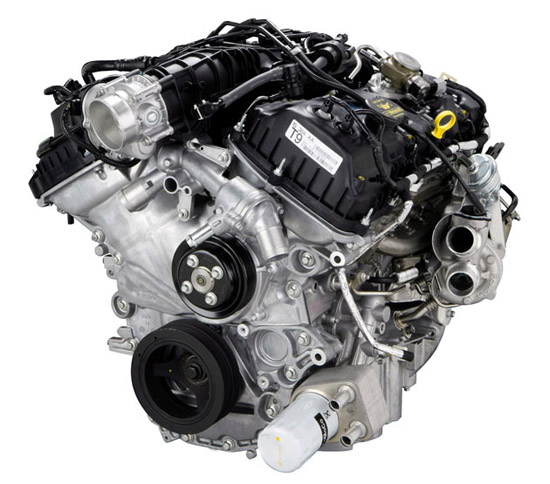
    An EPA official declared that by 2025, when the CAFE regulations take full effect, 90 percent of the vehicles on the market will have turbocharged engines. Is it EcoBoost or bust for the Toyota Tundra?

    EPA: 4-Cylinder, 8-Speed Turbocharged Toyota Tundra

    Will turbocharged engines like this Ford EcoBoost engine come standard in all 2025 Toyota Tundra pickups? The EPA says yes.

    Speaking at the recent SAE World Congress,  Edward Nam, director of the EPA’s Light Duty Vehicles & Small Engines Center in Ann Arbor, MI said that the current turbochargers generally are “limited to 261 psi (18 bar) of brake mean effective pressure, but that 348-psi (24-bar) units will be in the market by 2016 and used widely by 2025,” according to WardsAuto.com.

    The mean effective pressure is a measure of the average pressure over a cycle in the combustion chamber of the engine. By creating more pressure with less engine, the vehicle is more fuel efficient.

    By building and creating more powerful turbochargers the CAFE regulations will be more reachable for all manufactures. Nam says that 90 percent of all vehicles will have them paired with 8-speed transmissions.

    “We believe turbochargers will improve over time, and we believe engines will be able to improve over time,” Nam told WardsAuto.

    The improvement in turbocharged engines will ultimately create smaller and smaller displacement engines such as a 392-psi (27-bar) model.

    “So that means that a vehicle like a Ford F-150 or Chevy Silverado (pickup truck) being run with a 4-cyl. engine,” Nan told WardsAuto.

    The growth in turbocharged engines has been dramatic with Ford products who seemingly believe they are indeed the future. As we have documented though, there is some long-term concern about durability as well as questions over real-world fuel economy numbers (see: Consumer Reports story and video below).

    Click here to view the embedded video.

    If we are too believe the EPA fuel economy stats for turbocharged engines (raise your hand if you do … didn’t think so), these engines could save 4 billion barrels of oil and slash greenhouse-gas emissions by 2.2 billion tons (2 billion t) between 2017 and 2025.

    While that is nice, the numbers consumers care about are fuel savings. Nan believes this will translate into a lifetime fuel savings for consumers around $5,700 to $7,400. He bases these numbers on the fuel efficiency of smaller engines and the current gas price of $3.87 per gallon.

    Keep in mind though that the new CAFE regulations WILL make vehicles more expensive. Nan says that number should be around $1,800 more compared to the 2016 prices. This wild guess puts the average payback period of 3.5 years when buying a new vehicle.

    It isn’t just going to cost consumers though, automakers are expected to shell out a combined $136 billion in costs to meet these new regulations.

    Apparently, the EPA doesn’t think just a simple turbocharger will get the vehicles to obtain better MPG. The increases in electric and hybrid vehicles should help as well. Yet, Nan says their estimates are that less than 3 percent of vehicles in the market in 2025 will have a plug-in.

    “We believe most auto makers should be able to meet the standards largely through advancements in internal-combustion engines and improvements in emissions,” Nan told WardsAuto. There’s a wide range of technologies available to help meet the standards.”

    These advancements will come in the way of an increase in diesels, improved aerodynamics, and improved tires that have better rolling resistance.

    All of this translates into a light-duty, full-size truck market that has an incredibly similar aerodynamic look. The reality is that from a designers standpoint a truck is a box and there are only so many things you can do to make it look original while being aerodynamic. These trucks will either have a turbocharged or diesel engine, 8- or 9- speed transmissions and improved exhaust systems.

    What do you think? Do you agree with the EPA that turbocharged engines are the future? Your turn, sound off below.

    Related Posts:

    The post EPA: 4-Cylinder, 8-Speed Turbocharged Toyota Tundra in 2025 appeared first on Tundra Headquarters Blog.

  • Brocade unveils network virtualization software and gear

    Brocade on Tuesday unveiled new software following on its November acquisition of Vyatta, showing that the network vendor, like Cisco and others, is indeed going after higher layers of the networking stack.

    It sounds as if Brocade wants to bill itself as the company that can generate network resources on the fly, only when and where they’re needed. It’s also investing heavily in software, a move that could bring it into competition with giants such as VMware.

    Among the new products are a couple intended for network-function virtualization. Brocade’s Vyatta vRouter can virtually set up and configure networks on the fly. It’s available through Amazon Web Services’ marketplace. The Virtual ADX is intended for fast application delivery and control of application management.

    Brocade also has decided to make its VCS fabric for connections across hardware available as a plug-in for OpenStack, so users can scale out their networks across multiple clouds.

    While software is in the spotlight, Brocade also has a new four-port, 40 GbE card for its MLXe router. The card’s ports support both OpenFlow and traditional routing protocols.

    I expect more vendors could follow suit as hardware vendors continue to push their software lineups; hype surrounding software-defined networking and network virtualization continues, and companies wonder what they should try. That means we’ll see a lot of new products hit the market, even as customers try to hire to figure out how to wade through all the FUD.

    Related research and analysis from GigaOM Pro:
    Subscriber content. Sign up for a free trial.


  • BlackBerry Q10 now available at Vodafone UK

    Four days after the smartphone surfaced at UK retailer Selfridges, the BlackBerry Q10 is now also available through UK mobile operator Vodafone. Die-hard QWERTY fans in Canada are able to purchase the handset starting tomorrow.

    At Vodafone UK, the BlackBerry Q10 is available with no upfront costs alongside two-year contracts, starting at £37 per month. Customers who are willing to shell out £129 upfront can get the smartphone on a two-year plan with less costly £33 monthly payments.

    When purchased with no upfront cost, the two-year plans for the BlackBerry Q10 come with unlimited minutes and texts and 1 GB, 2 GB and 4 GB of cellular data for £37, £42 and £47 monthly payments, respectively.

    The less expensive £33 per month, two-year contract, only provides 600 minutes, unlimited texts and 500 MB of cellular data. If you’re willing to spend £5 more each month you’ll save £129 in upfront costs and get unlimited minutes and double the cellular data quota.

    At Vodafone UK the BlackBerry Q10 is available in either black or white and features a 3.14-inch Super AMOLED display with a resolution of 720 by 720 and 330 ppi (pixels per inch) density; 1.5 GHz dual-core Qualcomm Snapdragon MSM8960 processor; 16 GB of internal storage; microSD card slot.

    Other specs include: 4G LTE connectivity; Bluetooth 4.0; GPS; Wi-Fi 802.11 a/b/g/n; 8 MP back-facing camera and 2 MP front shooter. The device comes in at 119 x 66.8 x 10.35 mm and 139 grams.

  • As Apple readies entry-level iPhone, low-cost smartphone market predicted to explode

    As Apple readies entry-level iPhone, low-cost smartphone market predicted to explode
    Apple hasn’t announced any new smartphones yet this year, but the company’s plans seem like a matter of public record at this point. The “iPhone 5S” will reportedly be an incremental update that replaces Apple’s current flagship model in the late summer or early fall, and half a dozen solid reports suggest a new low-cost iPhone will debut in 2013 as well. Growth continues to slow at the high end of the smartphone market and a new opportunity is emerging at the bottom as feature phones become a thing of the past. It remains to be seen if Apple can build a phone that is affordable enough to compete in emerging markets, but market research firm ABI Research’s recent report might provide some incentive: Shipments of low-cost smartphones are expected to explode in the coming years.

    Continue reading…