Category: News

  • GM Could Export Chinese Built Cars to U.S. – Bailout Update

    In a rather shocking admission, GM China’s President says that they could export Chinese built cars to the U.S. market. Take that UAW and U.S. taxpayers – apparently we helped bailout Chinese built cars.

    GM Could Export Chinese Built Cars to U.S.

    Could this Chinese-built Buick concept be exported to the U.S.? You bet. How’s the bailout feel now?

    The admission came from Autoblog.com that was covering the Shanghai Motor Show, General Motors press conference. At the press conference, GM announced an aggressive plan to ramp up their presence by adding 400 dealerships in 2013 (4,200 total). It is planning on reaching 5,100 in 2015.

    Production of these vehicles will remain in China, however, they estimate exporting a record 100,000 to 130,000 cars this year. Plans are set to export even more.

    Autoblog naturally asked the follow-up question if this meant these cars could make their way to the U.S. GM China president Bob Socia responded with:

    “It could very well happen. It could very well happen. You know, I’m not sharing any plans with you, but we try to keep open as to what makes sense. And Tim [Lee – GM’s president of international operations] is the right guy to talk about your manufacturing footprint. If it make sense to tool up a vehicle in one location as opposed to two, from an economic perspective, Tim will say that’s what we should be doing. We’re open to be doing that. There’s no reason why we can’t be exporting to the States, and obviously the States are exporting here.”

    The thought would be that most of these vehicles would be Buick’s. The facts are that the Buick brand is a BIG seller in the Chinese market and a joint venture with the Chinese Automaker SAIC is creating an environment for SAIC to have more control. These factors along with new trade agreements could create this reality.

    Even with Socia ending the conversation by saying that there are no current export plans, it is amazing that a U.S. bailed out company would export Chinese built cars back to the U.S. This is a huge blow for the UAW and taxpayers who were wanted the bailout money to keep/create jobs in the U.S.

    With many, many GM plants sitting idle or downsized, the question is why you would import Buicks rather than build them stateside. We know the answer to that one – poor leadership (a hallmark of past GM failure).

    What do you think? Are you excited about GM exporting a Chinese-built Buick to the U.S.?

    Related Posts:

    The post GM Could Export Chinese Built Cars to U.S. – Bailout Update appeared first on Tundra Headquarters Blog.
  • Apple Patents Built-In iPhone Remote Unlocker, Engine Starter And Parking Locator For Cars

    Screen Shot 2013-04-25 at 7.33.44 AM

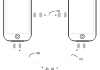
    The USPTO published a number of Apple patent applications Tuesday, including two related to automobiles (via AppleInsider). The car patents both describe systems that can be built into future iPhones, replacing most of the functionality of your standard key fob with the smartphone, and providing a way to help drivers navigate the often maze-like interiors of parking garages to find their ride.

    In one application, Apple describes what amounts to a series of different indoor positioning systems to help drivers locate their cars when parked. The system would involve pairing a car and an iPhone via Bluetooth, and then using that connection to automatically detect when a car ends up actually parking in a spot. Then, it uses sensor data communicated from the parking facility itself to peg a location.

    Once a user returns to the garage, they can trigger the phone to find their current positioning data from the same system, and then provide actual guidance or directions back to their car itself. The patent describes parking garages in which devices are placed at regular intervals throughout to help facilitate the indoor location portion. Apple’s recent acquisition of indoor positioning system company WiFiSLAM could also work very well in terms of helping provide a way to make this system work.

    The IPS element is interesting, but where Apple’s patent is really unique is in using on-board device sensors, including things like the camera and microphone, to determine automatically when a car parks to begin with to trigger the car location logging information. There are plenty of “where did I park my car” apps out there (though few boast IPS), but the automatic, fully-integrated way Apple’s system would work would make it so that you don’t even have to remember to activate it.

    The other car-related application describes a system that would turn the iPhone into a remote car starter, unlocker, and essentially a parental control device for a target vehicle. The patent talks about using Bluetooth to pair a car and a handset, then allowing a user to choose their level of security, making it possible to have the phone unlock the car automatically based on proximity, or require a PIN to even use any car control functions.

    Apple’s patent goes further than most remote starter/unlocker key fobs by allowing a user to set specific limits for particular devices, like making it possible to start the engine with a phone only during set hours, setting a max speed for use with a particular device, limiting access to infotainment services, and building in geofencing. All of these can be used in theft prevention, but also to set limits on say a teen child’s car permissions.

    It’s about time that cars got tighter integration with mobile devices, in ways that make the best use of all the tech on board our modern smartphones. Many car companies seem to be open to working closer with Apple, too, so while there’s a lot of infrastructure changes described in these patents, we still could see these features make their way to shipping devices over the next few years.

  • Verizon prepares $100 billion bid for Verizon Wireless takeover

    Verizon Wireless Acquisition Vodafone Stake
    Verizon Wireless is preparing to offer $100 billion to acquire Vodafone’s stake in the companies’ U.S. joint venture, Verizon Wireless. Verizon currently owns 55% of the nation’s top wireless carrier and it has hired advisors to help it prepare the bid for Vodafone’s 45% stake, Reuters reported. Earlier reports suggested Verizon and Vodafone were discussing various ways the two might resolve their relationship, but issues over valuation were holding up discussions. According to this new report, Verizon is now prepared to pursue Vodafone’s Verizon Wireless stake more aggressively. “It hopes to start discussions with Vodafone soon for a friendly agreement but is prepared to take a bid public if the British company does not engage,” an unnamed source told Reuters.

  • News story: PM letter to the EU on tax evasion

    Updated: Added EU member states as location tags

    The Prime Minister has written to Herman Van Rompuy, President of the European Council, setting out the case for radical global action to tackle tax evasion and aggressive tax avoidance.

    The letter, copied into leaders of all EU member states, sets out the PM’s ambition that the May European Council will inject the political will to tackle the problem and restore confidence in the fairness and effectiveness of our tax system, and calls for action in 4 key areas:

    • a new global standard for multilateral information exchange
    • action plans to increase transparency in beneficial ownership
    • reform of global tax rules through the G20 and OECD, including where we could go further, eg greater country-by-country company reporting on the tax paid in their countries of operation
    • improving the ability of developing countries to collect tax, building on the example of the government’s new joint unit

    Battling tax evasion and avoidance is a priority for the G8 summit that the Prime Minister will host at Lough Erne in June.

    The Prime Minister’s letter in full

    24 April 2013

    I welcome your proposal to discuss tax evasion and fraud at the May European Council. As you know, the loss of tax revenue resulting from tax evasion and aggressive avoidance is staggering. In a period of fiscal consolidation where hard-working citizens and businesses are being asked to bear extra burdens, we need coordinated, truly global action to address these issues. This is why I put tax transparency at the heart of the 2013 G8 agenda when I wrote to you and other G8 colleagues at the start of this year.

    I welcome the initiative of the Commission’s recent Action Plan on Tax Fraud and Tax Evasion, which sets out a range of proposals on which Europe can show leadership. As part of this, we very much support implementing existing measures, including the proposal for amending the EU Savings Tax Directive – where we appear closer than ever to reaching agreement – and proposals for reviewing the full range of tools to tackle evasion and avoidance.

    However, as the Commission’s Action Plan itself recognises, tax evasion and aggressive tax avoidance are global problems that require truly global solutions. Otherwise, tax evaders will simply play the system and arbitrage between one jurisdiction to another. There is now, ahead of the G8 Summit in June, a timely opportunity for the G8 and EU to inject the political will required to raise international efforts to a new level and take radical, rather than incremental, action in four areas.

    Firstly, on tackling tax evasion, the introduction of the Foreign Account Tax Compliance Act by the US could move us rapidly to a new global system of multilateral automatic exchange of information. This covers a wide variety of products and entities – and critically, includes requirements, which the UK is implementing, to ensure that we can collectively tackle tax evasion through the use of offshore trusts.

    The UK has also taken other concrete steps to clamp down on tax evasion. We recently concluded automatic information exchange agreements, based on our agreement with the US, with our Crown Dependencies – the Isle of Man, Guernsey and Jersey. We are also in advanced discussions with our Overseas Territories to do the same, and continue to work closely with them and the Crown Dependencies on further concrete steps they can now take to demonstrate their steadfast political and practical commitment to tackling tax evasion.

    The recent announcement by the UK with France, Germany, Italy and Spain to pilot multilateral automatic information exchange based on our agreements with the US is a significant step. I am delighted that other European countries, including Poland, have already signalled their willingness to join this initiative. And to support the development of a universal standard, the UK has also asked the OECD to report ahead of the G8 Summit on how to deliver this effectively. I hope that at our May Council we can give the strongest possible message of support from Europe for the rapid adoption of multilateral automatic information exchange as a new global standard, and encourage other jurisdictions to publicly commit to joining a multilateral system at the earliest opportunity.

    Second, we must break through the walls of corporate secrecy. A lack of knowledge about who ultimately controls, owns and profits from companies leads to aggressive tax avoidance, tax evasion and money laundering, undermining tax bases and fuelling corruption across the world. Therefore, the G8 and EU must work together to ensure full transparency in beneficial ownership.

    This means ensuring full and maximum implementation of the existing Financial Action Task Force standards on transparency in beneficial ownership. I hope G8 Leaders will consider publishing national Action Plans by June that set out concrete steps that their governments will take to achieve this – including, for example, by enhancing the availability of beneficial ownership information through central public company registries. Europe now has a real opportunity to be in the vanguard through the 4th EU Anti-Money Laundering Directive. But as ever, we must work with other countries and financial centres to ensure a level playing field.

    Third, I have always been clear that competitive national tax systems go hand in hand with individuals and corporates paying the taxes they owe. The majority of them do so, and make a valuable contribution to society and to the funding of our public services. But some are choosing to shift their profits artificially to ultra-low tax jurisdictions, distorting competition.

    Again, we need a truly global solution. As I am sure you will agree, the path to reform starts with the basic recognition that current global tax rules do not reflect the modern and globalised economy that our citizens live and trade in. The UK will, with the rest of the G8, seek to provide high-level political support to the ongoing efforts in the OECD and G20 to identify problems and gaps in these existing rules, and to work up options for reform. And I hope that the European Council can strongly support these efforts, which will reach a critical juncture this summer.

    But as part of these longer-term changes, there should be room for a serious debate about what further steps can be taken to address continued attempts at aggressive tax avoidance. For example, we should consider how the steps taken by some firms to undertake country-by-country reporting on the tax paid in their countries of operation can be further encouraged on a voluntary basis. This can hugely benefit tax authorities, especially those in developing countries that have limited capacity to collate this information themselves.

    The final theme of the G8 tax agenda is ensuring developing countries can collect the taxes owed to them. The UK is setting up a new unit, joint between our tax authorities and the Department for International Development, to improve the capacity of developing countries to collect tax domestically, including a fair share from multinational companies. I hope all G8 and EU countries can make a similar commitment to prioritise their development assistance in this way.

    Our recent success on the EU Accounting Directive will also enable developing countries to access information about payments made to their governments in the oil, gas and mining industries, improving the use of such revenues. To set an example to other countries that are considering similar legislation, I hope you will join me in urging EU partners to commit to early implementation of the Directive. And to complement company reporting, I hope that European countries can seriously consider – as the UK is actively doing – how to implement the Extractives Industry Transparency Initiative, which enhances governments’ own reporting of their extractive tax receipts.

    The UK looks forward to continuing to work with all Member States and the European Commission on this hugely important agenda and to addressing these global issues with global solutions. I am confident that the upcoming European Council and the G8 Summit will be remembered as the turning point in the battle against tax evasion and avoidance and the restoration of confidence in the fairness and effectiveness of our tax systems.

    I am copying this letter to the President of the European Commission and other members of the European Council.

  • Datalogix Raises $25 Mln Series B

    Datalogix has closed a a $25 million Series B round of equity financing led by Institutional Venture Partners. Existing investors include General Catalyst, Sequel Venture Partners and Costanoa Venture Capital.

    PRESS RELEASE

    Datalogix, the leading data platform for the digital era, announced today that it closed a $25 million Series B round of equity financing led by Institutional Venture Partners (IVP).  IVP joins existing investors General Catalyst, Sequel Venture Partners and Costanoa Venture Capital.  The financing will enable Datalogix to continue its rapid growth and accelerate adoption of its audience and measurement solutions across display, mobile, video, social and search channels.  This will include investment in scaling its industry leading technology platform and geographic expansion.

    The new funding round follows the closing of a record year for Datalogix, capped by a tripling of its digital business in March.  In the past year, Datalogix grew revenue by 50%, added over 100 employees and opened offices in Detroit, San Francisco and London.  In addition, the company was recently recognized as having the “Top Workplace” among Colorado technology companies by the Denver Post.

    IVP General Partner Sandy Miller commented, “Datalogix is playing a critical role in helping ad dollars move online effectively at scale.  They have a fantastic team, great technology, wonderful data and enviable relationships with many of the industry’s most important brands and publishers.  Seldom have we seen a company at their stage be this well-positioned to capture a market opportunity of this magnitude.”

    In conjunction with the financing, Datalogix announced that Sandy Miller and Paul Ostling would join its Board of Directors.  Ostling, former Global COO of Ernst & Young, joins as an independent director and will lead the Datalogix Audit Committee.

    Paul Ostling added, “I am very excited to work with such a dynamic and innovative enterprise, and look forward to working with the board and management to implement best practices of corporate governance and transparency.”

    “It’s great to have IVP on board to support our growth,” said Datalogix Chairman Rob Gierkink.  “It is an honor to join a portfolio that has included 93 IPOs and a lifetime IRR of 43% over 32 years.  We’re also thrilled to add Directors of the caliber of Sandy and Paul to the Board.”

    About Datalogix
    Datalogix® is the leader at connecting digital media and offline purchasing data.  Datalogix helps leading consumer marketers increase the effectiveness and measurability of their advertising.  DLX Platform®, encompassing over $1 trillion in consumer spending, powers campaigns for more than 75% of online media companies.  DLX ROI™ is rapidly becoming the industry standard for measuring offline sales lift for digital media.  The Company’s expertise spans the major consumer segments, including Retail, CPG, Automotive, Telecom, Travel and Financial Services.  Datalogix is based in Colorado, with offices in NYC, San Francisco, Boston, Chicago, Detroit and London.

    About Institutional Venture Partners (IVP)
    With $4 billion of committed capital, Institutional Venture Partners (IVP) is one of the premier later-stage venture capital and growth equity firms in the United States.  The partnership is currently investing IVP XIV, a $1 billion later-stage fund focused on investments in rapidly growing technology and media companies.  Founded in 1980, IVP has invested in over 300 companies, 93 of which have gone public.  IVP is one of the top performing firms in the industry and has a 32-year IRR of 43.2%.  IVP specializes in venture growth investments, industry rollups, founder liquidity transactions and select public market investments.  Since its inception, IVP investments include such notable companies as ArcSight (HPQ), Buddy Media (CRM), ComScore (SCOR), Concur Technologies (CNQR), Dropbox, Fleetmatics (FLTX), HomeAway (AWAY), Juniper Networks (JNPR), Kayak (KYAK), LegalZoom, LifeLock (LOCK), Marketo, MobileIron, MySQL (ORCL), Netflix (NFLX), Omniture (ADBE), One Kings Lane, Polycom (PLCM), RetailMeNot, Seagate (STX), Shazam, Synchronoss (SNCR), Tivo (TIVO), Twitter and Zynga (ZNGA).  For more information, visit http://ivp.com or follow IVP on Twitter: @ivp

    The post Datalogix Raises $25 Mln Series B appeared first on peHUB.

  • Pict announces new funding as it expands to tag photos for social shopping

    The importance of a strong visual component to social media and the profileration of shopping-oriented sites like Pinterest and Facebook have been great for retail brands, as consumers are spending a lot more time looking at potential purchases online. However, there are now a bunch of startups trying to fix an associated problem, which is that once a photo of a product gets tweeted out or shared on Pinterest, re-directing consumers back to the original site — and turning them into purchasers — can be a challenge.

    social photo tagging imagesI’ve written about photo-tagging startups in the past that attempt to add multimedia to points on images on the web, but Pict, a new company announcing funding on Thursday, has a particular focus on integrating catalog information into a retailer’s photos, and when viewed in Facebook’s timeline the photos will be totally interactive without the consumer having to leave Facebook.

    The company went through Angelpad as a company called Dropt in 2012. Dropt let designers create digital lookbooks that could be shared more easily than the traditional paper or PDF versions, but the founders realized there was an even greater opportunity when it comes to digital fashion sales. Fashion designer Steven Alan became one of the company’s first outside investors when it prepared to relaunch as Pict.

    As Pict is announcing $1.4 million in funding and opening up its registration more widely this week (although you still have to request an invite.) The company works to let companies from large retailers down to individual Etsy sellers can tag and share photos of their products across the web.

    “It’s really similar to tagging photos on Facebook,” CEO Brent Locks explained. “You can snap a photo on your phone, type in the names of products in the phone, and we pull in all of the relevant metadata from your uploaded catalog.”

    snap tag share Pict social shopping

    While there are a good number of startups that allow you to tag images to re-direct back to the seller, Pict is unique in that it just focuses on product details — not adding maps and videos and tweets on top of a photo — and it has a mobile app, which allows sellers to take photos from a smartphone and post to social media on the go.

    “It doesn’t require any kind of learning curve,” Locks said. “That’s the key that really differentiates us.”

    The company has brought in $1.4 million in funding so far, and while it’s not a huge amount of money in the realm of startups, the company does have notable investors like Kirsten Green’s Forerunner Ventures, a successful e-commerce investor who put money in companies like Birchbox, Hotel Tonight, Threadflip, Wanelo, Warby Parker and others. Other Pict investors include Lowercase Capital, Opus Capital, Angelpad, 500 Startups, Gary Vaynerchuk, Scott Belsky, Steven Alan, Seth Berman, and others.

    tagging Pict photo social shopping e-commerce

    Related research and analysis from GigaOM Pro:
    Subscriber content. Sign up for a free trial.


  • Nokia Chat for Windows Phone available in Beta Labs

    Today, through its Beta Labs blog, Finnish maker Nokia announces a new experimental app for the Lumia Windows Phone lineup. Available only in a select number of markets, Nokia Chat for Windows Phone is designed to connect Lumia users with “friends who use Lumia, Asha, S40, and Symbian devices, and those using Yahoo! Messenger on other mobile devices and platforms”.


    Nokia Chat for Windows Phone is available to Lumia users in Australia, Canada, India, Nigeria, South Africa, New Zealand, United Kingdom and United States. The Finnish manufacturer promises to expand availability “to more countries in the near future”. So what does Nokia Chat for Windows Phone bring to the table for us Lumia users?

    With no official Yahoo! Messenger app available on Windows Phone so far, Nokia Chat for Windows Phone allows users of the still popular instant messaging service to connect by using a Nokia account. The app scans your contact list for Yahoo! Messenger handles and you can also manually add them.

    Nokia Chat for Windows Phone supports push notifications, which inform you of incoming messages, live tiles, the ability to share a certain place, such as restaurants or shops, and can also share your location.

    For Windows Phone 8 users, the app can also take advantage of voice dictation, voice commands — example “Chat with Michael Jordan” — as well as lockscreen notifications. The last feature displays a counter informing you of the number of unread messages.

    Nokia Chat for Windows Phone joins other experimental apps designed for Microsoft’s smartphone operating system, such as Lumia Storage Check, Nokia Conference, Place Tag and Play To for WP8. I’ve detailed the four in a previous article dubbed “Empower your Lumia Windows Phone with experimental apps from Nokia Beta Labs“.

    Nokia Chat for Windows Phone is available to download through Nokia Beta Labs.

  • Google’s search concessions to the EU are now out and up for comment

    The European Commission has formally announced the measures that Google has offered to take in order to settle a major antitrust investigation into its practices. It now wants “interested parties” to have their say on the proposals over the next month, after which it will decide whether to make them legally binding on Google.

    The case followed complaints by Microsoft and others over Google’s treatment of rivals’ web services in its search results. These companies argue that Google favors its own services, which are not clearly marked as such, and also that it unfairly locks advertisers onto its platform and scrapes content from third-party search and comparison sites without consent.

    A recent leak outlined the terms of the proposed settlement deal, but here’s the official version:

    To address these concerns, Google offers for a period of 5 years to:

    (i) – label promoted links to its own specialised search services so that users can distinguish them from natural web search results,
    – clearly separate these promoted links from other web search results by clear graphical features (such as a frame), and
    – display links to three rival specialised search services close to its own services, in a place that is clearly visible to users,

    (ii) – offer all websites the option to opt-out from the use of all their content in Google’s specialised search services, while ensuring that any opt-out does not unduly affect the ranking of those web sites in Google’s general web search results,
    – offer all specialised search web sites that focus on product search or local search the option to mark certain categories of information in such a way that such information is not indexed or used by Google,
    – provide newspaper publishers with a mechanism allowing them to control on a web page per web page basis the display of their content in Google News,

    (iii) no longer include in its agreements with publishers any written or unwritten obligations that would require them to source online search advertisements exclusively from Google, and

    (iv) no longer impose obligations that would prevent advertisers from managing search advertising campaigns across competing advertising platforms.

    Authorities in the U.S. more-or-less cleared Google over similar complaints, but it’s important to note that Google’s share of the search market there is around 67 percent, whereas in the EU it’s around 90 percent. This gives it stronger market power in Europe, and forces the regulators’ hand somewhat (as do local laws).

    A Q&A document, which outlines the Commission’s concerns in detail, points out that “it does not seem likely that another web search service will replace [Google] as European users’ web search service of choice.”

    “In this context, it is important for the Commission to intervene in order to ensure that Google’s prominent market position in web search does not affect the possibility for other competitors to innovate in neighbouring markets, including in the long-term,” the document states.

    Related research and analysis from GigaOM Pro:
    Subscriber content. Sign up for a free trial.


  • Vapotherm Closes $29 Mln Round

    Vapotherm has closed a $29 million financing round led by the 3×5 Special Opportunity Fund L.P. and included new investor Morgenthaler Venture Partners L.P. Existing investors GE Asset Management, Kaiser Permanente, Integral Capital Partners, QuestMark Partners and Cross Creek Capital also participated. Exeter, N.H.-based Vapotherm makes advanced respiratory care devices.

    PRESS RELEASE

    On April 12, 2013 Vapotherm closed a $29MM financing round which was led by the 3×5 Special Opportunity Fund L.P. and included new investor Morgenthaler Venture Partners L.P.  Existing investors GE Asset Management, Kaiser Permanente, Integral Capital Partners, QuestMark Partners and Cross Creek Capital also participated in the current round. The proceeds from this financing will be used to fund the Company’s growth plans.
    Tony Arnerich , General Partner of the 3×5 Special Opportunity Fund, and Jason Lettmann , Principal of Morgenthaler Venture Partners, both join the Board of Directors.
    “We are delighted to be a part of the Vapotherm story,” said Tony Arnerich , General Partner of the 3×5 Special Opportunity Fund.  “The unique technology and its clinical benefit for patients with a wide variety of breathing disorders is what appealed to our group. We look forward to supporting the Company and its management team.”
    James “Jim” Liken, a board member since April 2010, has agreed to serve as Chairman of the Board of Directors.  Jim has extensive experience with respiratory technology companies, including Respironics Inc. where he served as President and CEO from August 1999 through December 2003 and as Vice Chairman until March 2008.
    “I have been part of the team for almost three years and am pleased to serve in this new capacity.  This is a very exciting time for Vapotherm,” said Jim Liken.
    Bill Niland , Founder of Vapotherm said, “We appreciate the support of new investors 3×5 and Morgenthaler and our existing investors, as well as Jim’s commitment to serve as Chairman of the Board.  He brings a wealth of knowledge and experience to our organization.”
    In addition to closing the financing Vapotherm opened new corporate headquarters in Exeter, New Hampshire at the start of the year.  The facility, located at 22 Industrial Drive, incorporates 14,400 square feet of office space and 12,000 square feet of manufacturing space.
    “One of the key reasons for moving corporate headquarters to Exeter was to have access to the New England medtech industry, including suppliers, partners, and the deep talent pool,” said Joe Army , President and CEO of Vapotherm.  “We look forward to expanding our operations in the New Hampshire seacoast region and having a positive impact in the community.”
    Vapotherm, Inc. is a privately held manufacturer of advanced respiratory care devices based in Exeter, New Hampshire.  The company develops innovative, comfortable, noninvasive technologies for respiratory support of patients with chronic or acute breathing disorders.  Over 500,000 patients have been treated with Vapotherm high flow therapy.  For more information, visit www.vtherm.com.

    The post Vapotherm Closes $29 Mln Round appeared first on peHUB.

  • Smartphones & Tablets To Be Primary Screen For Gamers, Says Analyst, Powering 64BN+ Games Downloads By 2017 (3X 2012 Figure)

    games apps

    Games app downloads to smartphones and tablets are set to grow significantly over the next four years, according to a new report by analyst Juniper Research which projects there will be 64.1 billion such downloads in 2017 — more than three times the 21 billion downloaded in 2012. Key drivers powering this high rate of growth are increasing numbers of free-to-play releases (aka the freemium business model), as well as more sophisticated devices and the continued global uptake of smartphones, says the analyst.

    The dominance of freemium as a games app business model is very evident from the analyst’s figures: in 2017, it expects just 7% of games to be paid for at the point of purchase, across smartphones and tablets. In-app purchases and/or advertising are presumably how games developers will be mostly earning a buck.

    Juniper says mobile will become the primary screen for gamers, thanks to an increase in the number of “sophisticated games, which allow for truly multi-platform gameplay through the use of cloud technology”. Growth in the quantity of memory on devices is also enabling consumers to download more games. And while Juniper is not expecting smartphones and tablets to kill off dedicated portable gaming devices, it says there’s no doubt consumer mobiles are challenging and eroding the latter market — with players such as Nintendo cutting its sales forecasts by 14% for its 3DS, and 27% for its Wii U.

    Social & Casual games will remain the most popular genre downloaded, according to Juniper’s forecast — with over half of all smartphone games downloaded fitting this genre. That’s in keeping with the key characteristics of mobile devices: always-on connectivity, which means being wired in to social services; and portability, meaning these devices are suited for short bursts of casual gaming to kill time.

    Looking specifically at tablets, Juniper found their users are especially keen on downloading games, with more than twice the number of games downloads to tablets than smartphones.  ”Tablet games are growing so much because they are such an accessible way for all consumer segments to access games. In particular mid-core gamers, who previously spent a lot of money and time playing games but now have jobs, families or other commitments, are driving this trend,” commented report author Siân Rowlands in a statement.  ”These people are really embracing the tablet form factor, and innovative gameplay devices such as the mobile based OUYA console, really appeal to them.”

  • Noble Investment Fund II Closes at $220 Mln

    Noble Investment Group said that its most recent fund exceeded its cap and closed $220 million. About 75% of  Noble Hospitality Fund II was committed by repeat investors. Nobe Investment Group is a lodging and hospitality real estate investment firm.

    PRESS RELEASE

    Noble Investment Group (“Noble”), one of the most experienced lodging and hospitality real estate investment firms in the U.S., is pleased to announce the successful  final closing of its most recent dedicated hospitality investment fund.  Noble Hospitality Fund II was significantly oversubscribed and exceeded its cap with $220 million of equity commitments from prominent state and corporate pension plans, leading university endowments and foundations, fund of funds and the principals of Noble.  Approximately seventy-five percent of the capital for Noble Hospitality Fund II was committed by repeat investors and those with a long term relationship with the firm. Noble Hospitality Fund II has a two-year commitment period.

    “We remain grateful for our investors’ continued trust and confidence in our Noble team and the differentiated value-creation strategy we have been successfully pursuing since 1993,” commented Mit Shah, Noble’s chief executive officer and senior managing principal. After making no new investments from May of 2008 through April of 2010, Noble has strategically increased its investment activity. In 2012, Noble fully invested their most recent hospitality real estate fund which had a three-year commitment period and $310 million in equity commitments. During the past twelve months, Noble has acquired or opened ten hotels representing approximately $300 million in investments.
    “We have been actively investing our new fund since the third quarter of last year and we will continue to utilize our exceptionally strong relationships throughout the lodging industry to source opportunities as well as our internal core competencies to execute our investment strategy,” added Rodney Williams ,  Noble’s chief investment officer and managing principal.
    About Noble Investment Group
    Founded in 1993, the Noble organization specializes in making value-added, opportunistic investments in the lodging and hospitality real estate sector.  Through its private equity real estate funds, Noble has invested more than $2 billion in upper upscale and upscale hotels located throughout the United States which are affiliated with premium brands by Marriott, Hyatt, Hilton and Starwood. For additional information, please visit www.nobleinvestment.com

    The post Noble Investment Fund II Closes at $220 Mln appeared first on peHUB.

  • Heroku comes to Europe, but data protection issues remain

    Heroku has opened up a European region to complement its existing U.S. region, in order to cut down on the latency experienced by customers running their apps from the platform for the benefit of European users. However, that doesn’t make Heroku entirely compliant with European data protection law – yet.

    In a blog post, Heroku’s Zeke Sikelianos said the platform-as-a-service oufit had been seeing great demand from the non-U.S. world, and its second region was now live as a public beta, following a private beta with customers such as Swedish television network TV4.

    “Deploying our app closer to our users in Heroku’s Europe region gave us a 150ms improvement in web performance. Based on this win for our users, we’re moving all of our apps to the Europe region,” the post quoted TV4 CTO Per Åström as saying.

    The European region, which runs out of Amazon’s Irish data center, comes with all the same features as the U.S. region. Over 60 add-ons are already available for the region, such as Heroku Postgres and ClearDB, and others are on their way. The company has introduced heroku fork to its command-line interface in order to ease the migration of apps from the U.S. region, by copying relevant data and configuration variables.

    Data location

    European data protection laws are more stringent than those in the U.S., so the two parties have set up a Safe Harbor program for American companies whose services involve the handling of EU citizens’ personal data. Heroku still isn’t part of that program, so technically it’s still not kosher to run services for EU citizens on the platform, even though it’s now using an EU data center.

    “Heroku is not yet a registered participant in the Safe Harbor program,” the post read. “We’ve laid the groundwork for becoming Safe Harbor certified and expect to have it soon.

    “The Europe region public beta is designed to let you build high-performance apps for European users. It does not currently address data residency or jurisdiction concerns. You should assume that some portions of your app and its data will be in, or pass through, data centers located in the U.S.”

    Related research and analysis from GigaOM Pro:
    Subscriber content. Sign up for a free trial.


  • Symantec: Majority of businesses believe BYOD is ‘worth the risks’

    Not every business embraces BYOD (Bring Your Own Device). The reasons for rejecting it are usually down to security concerns — firms are understandably worried about their data falling into the wrong hands if the device gets lost or stolen once it leaves the building.


    Security specialist Symantec surveyed 236 attendees at this year’s Symantec Vision, its annual user and technical conference held at the MGM Grand in Las Vegas, to find out how companies were handling BYOD, and despite the small sample size the results were interesting:

    59 percent of respondents report that while their employers encourage BYOD, they don’t allow them to run the same productivity apps used on corporate-owned devices.

    42 percent of employees use a personally owned mobile device for business, regardless of company policy.

    83 percent of organizations still allow employees to use personally owned devices (such as mobile phones) for business use.

    While 80 percent of organizations enforce their policies, only 68 percent use technology to do so and 11 percent rely on Human Resources, using an honor system or information supplied by other employees.

    The majority of organizations reported at least one security incident within the past 12 months, including:

    • Lost or stolen devices (60 percent)
    • Spam (60 percent)
    • Malware infections (43 percent)
    • Phishing attacks (40 percent)
    • Exposure of confidential information (19 percent)

    Despite this, Symantec says 70 percent of organizations felt that the benefits of mobility remain “equal to or greater than the risks and challenges associated with having mobile devices”.

    Photo Credit: olly/Shutterstock

  • Get started with BitTorrent Sync

    One of the big advantages of cloud storage is that most services make it easy to use themselves as a tool for effortless syncing of data between computers. Update a file on one device, and it quickly becomes available to everyone else.

    The problem with syncing via the cloud is that you usually have to pay for any meaningful amount of storage space, and that’s before you consider the potential implications of having a copy of your sensitive data stored in the cloud. However tight your cloud provider’s security is, there is always the nagging doubt that your files could be accessed by someone else.

    If you love the idea of syncing – particularly when it comes to huge amounts of data – but want to restrict your files and folders to your own hard drives only, then BitTorrent Sync is shaping up to be the perfect choice. Currently in alpha, it makes the task of sharing or syncing data across multiple computers (including Linux-based NAS drives) as simple, fast and secure as it can be.

    The service is capable of syncing locally using your own personal network, or utilising the internet to sync data remotely, with the data only in the cloud long enough to travel from A to B (or back again). The major drawback, of course, is that your computers need to be switched on and connected for any syncing to take place — with the cloud as an intermediary, this isn’t an issue for the likes of SkyDrive or SugarSync.

    Getting started is easy: with the client installed, create your first shared folder, making a note of the “secret” 32-character code required to sync with that folder from other devices. This is copied to your other devices, pasted into the BitTorrent Sync client there and then the sync connection is made. It’s also possible to generate read-only codes as well as those that expire after a set period for granting others — friends, family or colleagues for instance — limited access to folders.

    You can share as many folders as you like, and sync with as many other devices or people as you like too. Make sure you tweak the client’s preferences should your internet connection grind to a halt — thankfully, like BitTorrent itself, you can put a cap on download and upload transfer speeds.

    One immediate weakness with this first public build is the lack of differential sync — that means if a file is changed on one machine, the entire copy rather than just its changes are synced, which makes the process less efficient than it could be. Nevertheless, BitTorrent hopes to implement differential sync in a future build, which could prove to be the game changer in its favour.

    BitTorrent Sync 1.0.116 is available now as a freeware, but alpha, download for Windows, Mac and Linux. We recommend making separate copies of any files or folders you plan to sync with others in case of possible data loss while the program remains in alpha.

    Photo Credit: olly/Shutterstock

  • T-Mobile Samsung Galaxy S4 arrives in ‘select stores’ from May 8

    Yesterday we informed you that T-Mobile had announced a change of plan concerning its Samsung Galaxy S4 online availability. Due to an “unexpected delay with inventory deliveries”, the US mobile operator revealed that the smartphone will be available online starting Monday, April 29, instead of yesterday, April 24, as was previously planned.

    Because of the delay in inventory deliveries it looks as if T-Mobile customers will also have to wait a tad longer to actually purchase the Galaxy S4 from the mobile operator’s brick and mortar stores.

    Today, on its Twitter account, T-Mobile announced that Samsung’s Android flagship will be available in “select stores” starting May 8 and in “all stores” from May 15. T-Mobile replied to a question asked by a Twitter user concerning the store availability and the full-price of the Galaxy S4.

    For the Galaxy S4, T-Mobile charges $629.99 — customers can pay $149.99 upfront and the rest in 24 $20 monthly payments — which is a bit steep compared to what the mobile operator charges for other high-end smartphones like Apple’s iPhone 5 or HTC’s One. Both the iPhone 5 and the One run for $579.99 at full-price, which is $50 less compared to the Galaxy S4.

  • Deutsche Telekom’s ‘anti-net-neutrality’ plans alarm German government

    Users of Deutsche Telekom’s mobile services are used to the concept of data caps, but its fixed-line customers? Not so much. This is part of the reason why the German government is reportedly upset about the telco’s plans to drop flat-rate pricing for its DSL services – the most alarming part, however, is that Telekom apparently wants to exempt its own services from the cap.

    We’re into classic net neutrality territory here. As the company announced a few days ago, Telekom’s customers will be able to stream films from the carrier’s own T-Entertain service without any problem, but streaming a film from a rival would count towards the cap – effectively meaning Telekom’s caps will discriminate in favor of its own products. And all services, activists argue, should be treated equally on the open internet.

    Concerned citizens have already set up a Change.org petition that has garnered around 30,000 signatures at the time of writing, but now the German government itself has weighed in. This isn’t just a regulatory thing – the government is Telekom’s biggest shareholder, too.

    Der Spiegel claims to have seen a letter from Philip Rösler, the federal economics and technology minister, to Deutsche Telekom chief Rene Obermann, in which Rösler warns that the government and competition regulators will “very carefully follow ongoing developments with regard to a possible differential treatment of [Telekom’s] own and rival services under the aspect of net neutrality.”

    In a statement, Telekom claimed that “net neutrality is partly confused in the debate with a free internet culture” and that “T-Entertain is not a regular internet service, but a television service for which the customers pay separately.”

    “Regular internet services are not subject to discrimination,” Telekom added, while noting that the alternative to introducing the caps would have been to raise the flat-rate tariffs for all customers.

    Discriminatory caps

    Telekom’s proposed changes work like this: customers on the slowest DSL lines (up to 16Mbps) will get capped at 75GB a month; those on up-to-50Mbps plans will face a 200GB cap; an up-to-100Mbps plan will max out at 300GB; and an up-to-200Mbps plan at 400GB. After that, speeds will be throttled to 384Kbps, although customers could also pay extra for more usage at normal speeds. The carrier claims its customers typically use 15-20GB a month.

    On the face of it, these caps do appear reasonable, given the data volumes consumed by the average user, and they are supposedly aimed at stopping people from consuming extremely high data volumes at the standard rate — Telekom says only 3 percent of its customers will be affected. However, as those in the telecoms industry know all too well, data usage is only going one way: up, up, up.

    Ultimately, it’s the principle of the thing that seems to be the problem here. Once you establish a precedent that certain services can be freely used while others cannot, you potentially raise the barriers to entry for new players. After all, with Telekom being Germany’s biggest ISP, would you set up a competitor to T-Entertain once the discriminatory caps are in place?

    Yes, Germans are already used to data caps on mobile, and indeed Telekom itself has a cellular-centric agreement with Spotify that exempts traffic from that service from counting towards caps for customers on certain tariffs. The principle is already broken there. However, the way out of that for a Telekom mobile user who favors a rival to Spotify, is to offload as much traffic as they can onto their home Wi-Fi connection. If they’re also with Telekom for fixed-line services, as many are, now they’re going to face caps there too.

    So, with traffic volumes set to keep on growing on all fronts, it’s not hard to see why many of Telekom’s critics are spoiling for a fight.

    Related research and analysis from GigaOM Pro:
    Subscriber content. Sign up for a free trial.


  • Windows 8 Wins 7.4% Share Of Global Tablet OS Market In Q1 – “Niche” Portion Still Beats Windows Phone’s Smartphone Share

    surface-family

    Don’t write off Microsoft’s chances in mobile just yet. It may still be struggling to make itself count in the smartphone space but early signs are more promising for Windows plus tablets. Microsoft has gone from having no share of the global tablet OS market in Q1 last year to taking 7.4% one year later, with three million Windows 8 tablets shipped in Q1 2013, according to preliminary figures from Strategy Analytics‘ Global Tablet OS Market Share: Q1 2013 report.

    The analyst notes record tablet shipments in the quarter, with global branded tablet shipments reaching an “all-time high” of 40.6 million units in Q1, driven on by year-on-year growth of 117% (vs 146% in Q1 2012).

    Microsoft launched Windows 8, its touchscreen-friendly reboot of its desktop OS, last fall – so it’s swung from zero to a 7.4% share in just under half a year. Compare that to the Windows Phone OS, which launched more than two years ago, in fall 2010: Windows Phone took only a 4.1% share in the US smartphone OS market in the three months ending February, according to Kantar figures. Globally, its share is even smaller. Earlier this year ABI Research predicted Windows Phone will end 2013 with around 3% of the worldwide market.

    Returning to tablets, compared to the dominant players in the tablet OS market — iOS and Android — Microsoft’s share is still very modest. Strategy Analytics dubs it a “niche” portion, noting that “very limited distribution, a shortage of top tier apps, and confusion in the market, are all holding back shipments”. Microsoft has followed its Windows Phone strategy of paying developers to create apps for Windows 8 but it’s still got work to do in the quality vs quantity stakes. While “confusion in the market” likely refers to Microsoft’s decision to offer two flavours of tablet OS (Windows RT/Windows 8).

    According to Strategy Analytics’ figures, Apple retains its lead in the tablet OS space, with a 48.2% share in Q1 vs a “robust” 43.4% for Android on 19.5 million and 17.6 million unit shipments respectively. Apple’s tablet lead over Android is shrinking considerably, dropping to under half the market from 63.1% in the year ago quarter when Android took just over a third (34.2%).

    The analyst described Apple’s performance as “solid”, helped by its first full quarter with the iPad mini in its tablet portfolio. But Android is growing fastest, with global branded Android tablet shipments increasing 177% annually in the quarter. Add in budget white box tablets and Android becomes the market leader, taking a 52% share of the total tablet market while iOS slips to 41%.

  • Reuters – Germany’s Zalando Eyes Profitability in Core Markets

    The co-founder of German online retailer Zalando said the firm will focus this year on getting its core markets to profitability amid mounting speculation the fashion site could be ready for a listing as early as 2014, writes Reuters. Zalando is backed by JP Morgan Asset Management and Quadrant Capital.

    Reuters – The co-founder of German online retailer Zalando said on Wednesday the firm will focus this year on getting its core markets to profitability amid mounting speculation the fashion site could be ready for a listing as early as 2014.

    Online retailers have been giving their brick-and-mortar rivals in Europe a run for their money, taking advantage of what has been a slow shift by high street shops to the Internet.

    Zalando has been extending its lead over British rival ASOS Plc as Europe’s largest online fashion site, expanding from shoes to clothes and now selling over 1,000 brands. It doubled 2012 net sales to 1.2 billion euros ($1.6 billion).

    But the growth-oriented fashion site, founded in 2008, is still loss-making as it spends to boost brand awareness to get its name out on television shows like Germany’s Next Top Model.

    ASOS, which mostly targets young women, had sales of 538 million pounds ($870 million) in the year through August. Pre-tax profit was 40 million pounds.

    Zalando co-founder Robert Gentz said margins were stabilising and that the firm was working to get its core DACH region – Germany, Austria and Switzerland – to profitability.

    “The DACH area broke even last year and is working on a profitable path for this year,” he told Reuters at an investor day for Zalando’s biggest owner, Swedish investment firm Kinnevik.

    Kinnevik holds a 35 percent stake, of which 26 percent is held directly and 9 percent indirectly through venture capital firm Rocket Internet.

    Kinnevik, which has been raising its exposure to e-commerce, last year bought an additional 10 percent of Zalando at a price that valued the total company at 2.8 billion euros.

    Despite Zalando not being profitable, there has been much speculation amongst bankers and in the media about a possible listing of the firm as early as next year.

    Banks have started to contact Zalando in the hope of winning any mandate, banking sources have told Reuters.

    Gentz said there were currently no IPO plans in the works and that the focus would be on building up its presence in its 14 existing European markets.

    That may mean more investments in the year ahead.

    “It seems Zalando follows a similar approach to Amazon – they focus more on growing sales rather than profits for now,” said Christodoulos Chaviaras, a Barclays analyst.

    So while some may hope for an IPO which, a float may be a ways off. Based on Kinnevik’s investment, it would be Western Europe’s biggest tech offering since German internet service provider T-Online listed in 2000.

    “Zalando has great potential to become a successful IPO candidate, but in a first step the company must show it can make money,” said one banker.

    Zalando offers a free, but what analysts say is a costly, return policy in all markets. Gentz said an average of 50 percent of goods were returned, but that it was well worked into its business models.

    Zalando has no plans to launch in new countries this year and said it is backing off in Britain where competition has been fierce.

    “We’ve launched a UK website, but we do not focus on that market because it is an extremely different market from continental Europe,” Gentz said. “As long as we do not see very good (performance) in UK, we would not focus that much on getting that market. It is quite hard to compete if you are a new entrant coming from continental Europe.”

    The post Reuters – Germany’s Zalando Eyes Profitability in Core Markets appeared first on peHUB.

  • Reuters – GSK Puts Lucozade and Ribena Drink Brands Up for Sale

    GlaxoSmithKline is to sell soft drink brands Lucozade and Ribena in a move analysts believe will raise over 1 billion pounds ($1.5 billion) and focus its consumer health business on global products, writes Reuters. The plan was announced alongside first-quarter results that saw sales at Britain’s biggest drugmaker drop a slightly smaller-than-expected 3 percent from a year ago.

    Reuters – GlaxoSmithKline (GSK.L) is to sell soft drink brands Lucozade and Ribena in a move analysts believe will raise over 1 billion pounds ($1.5 billion) and focus its consumer health business on global products.

    The plan was announced on Wednesday alongside first-quarter results that saw sales at Britain’s biggest drugmaker drop a slightly smaller-than-expected 3 percent from a year ago.

    GSK launched a strategic review of the two drink brands earlier this year, ruling nothing in or out for their future. Most analysts had focused on the idea of a sale, which is likely to attract interest from private equity and trade buyers.

    Chief Executive Andrew Witty told reporters there had been significant interest in the products, though the decision to pursue a sale was “subject to appropriate value realisation”.

    Japan’s Suntory Holdings SUNTH.UL has been tipped as a possible buyer after previously buying soft drinks maker Orangina Schweppes for more than 300 billion yen ($3.0 billion) and New Zealand’s No. 2 beverage firm Funcor Group in 2009.

    A Suntory spokeswoman declined to comment on the company’s potential interest but, when asked about a recent report that it was in talks with banks about assembling a knockout bid, said: “We don’t acknowledge this report as factual.”

    Private equity firms are also hungry for deals and the strong cashflows generated by Lucozade and Ribena could attract the likes of Blackstone (BX.N), BC Partners BCPRT.UL, PAI, Lion Capital, Bain Capital, CVC Capital Partners CVC.UL and KKR (KKR.N).

    Officials at the private equity houses declined to comment.

    Lucozade and Ribena no longer fit well in GSK’s portfolio, since the company is focusing its consumer health operations increasingly on emerging markets, where both brands are relatively weak.

    Although GSK does not break out detailed sales for the two products, they bring in nearly 600 million pounds a year, with much of that generated in Britain.

    Both are veteran products – Lucozade was launched in 1927 and Ribena introduced just 10 years later – but remain popular. Assuming potential buyers are prepared to pay two times sales, that would point to a valuation of some 1.2 billion pounds.

    Analysts at Deutsche Bank said they believed the two brands should bring in more than 1.5 billion pounds.

    MATURE PRODUCTS SPIN-OFF?

    GSK also said it was creating a new global established products portfolio, consisting of around 50 medicines with annual sales of some 3 billion pounds, including stomach acid treatments Tagamet and Zantac, Imitrex for migraine, and anti-nausea treatment Zofran.

    Witty said placing these so-called “tail” products in a division that would report separately from next January opened various options, but he declined to say if the division might be sold off at a later stage.

    Jefferies analysts, however, said the formation of the portfolio “looks like a precursor to a spin-off to us”.

    GSK’s group sales in the first quarter fell 3 percent to 6.47 billion pounds, generating flat core earnings per share (EPS) of 26.9 pence.

    Analysts, on average, had forecast sales of 6.40 billion pounds and core EPS, which excludes certain items, of 25.0p, according to Thomson Reuters I/B/E/S.

    The three months to end-March were always going to be tough, due to a difficult comparison with a year earlier when GSK booked revenue from over-the-counter products and an incontinence drug that have since been sold.

    GSK is expecting better times ahead as its pipeline starts to deliver – and it reiterated its 2013 expectations for sales growth, at constant exchange rates, of around 1 percent and core EPS growth of 3-4 percent.

    Witty is banking on a number of new drugs to revive its fortunes in the next few years, including six that have already been submitted for approval in lung disease, melanoma, diabetes and HIV/AIDS.

    Hopes for its new drug pipeline received a boost last week when a U.S. advisory panel recommended approval of Breo for smoking-related lung damage. The Food and Drug Administration is due to decide on the drug – a follow-on to GSK’s top-seller Advair – by May 12.

    At 1230 GMT, GSK shares were little changed at 1,681 pence.

    (Additional reporting by Anjuli Davies and James Topham; Editing by Kate Kelland and Mark Potter)

    The post Reuters – GSK Puts Lucozade and Ribena Drink Brands Up for Sale appeared first on peHUB.

  • Reuters – PE firms Add Debt to Euro Businesses

    Private equity groups are paying themselves and their investors by getting the European firms they own to raise cash by issuing debt in volumes not seen since before the financial crisis, writes Reuters. This is common when the economy is healthy because companies can use profits to meet repayments but is controversial at a time when the economic environment in Europe is poor, writes Reuters.

    Reuters – Private equity groups are paying themselves and their investors by getting the European firms they own to raise cash by issuing debt in volumes not seen since before the financial crisis.

    This is common when the economy is healthy because companies can use profits to meet repayments but is controversial at a time when the economic environment in Europe is poor.

    Some European companies have even started issuing high-risk bonds known as payment-in-kind, or PIK notes to pay dividends to their private equity backers. They allow borrowers to defer interest payments, creating a major problem if they cannot repay in full when the bonds are due.

    The practice, known as dividend recapitalisation, has been widespread in the United States but data shows it has now taken off in Europe because debt markets are liquid and private equity groups have been unable to raise cash in more traditional ways, for example by selling stakes in a company.

    “You’ve had the perfect environment to get deals done…When the debt markets are so hot, you have to take advantage of the liquidity,” said David Parker, a partner at Marlborough Partners, which advises private equity companies.

    “Given the state of the market, it’s inevitable a few more will get done.”

    According to S&P Leveraged Commentary and Data, private equity owners have extracted 2.3 billion euros from their European businessesin the first quarter of 2013 through high-yield bonds and loans.

    Dividend recapitalisation volumes this year are on track to match the 10 billion euros seen on the eve of the financial crisis in 2007, the S&P data shows, and compare with just 1.9 billion euros for 2012 and 800 million euros in 2011.

    Firms to have made dividend recaps in 2013 include Advent and Bain’s WorldPay, KKR’s Pets at Home and Blackstone’s Spanish metal packaging firm Mivisa.

    Bridgepoint has also said it wants to raise additional debt for its German chemicals maker CABB and banking sources told Reuters LPC last week this would be used partly to fund a dividend payment. Shopping firm Global Blue’s owner Silver Lake is among others mulling a dividend recap.

    Orange Switzerland, owned by Apax Partners, and CVC Capital Partners-owned Sunrise Communications have issued euro-denominated PIK notes this year, to pay their private equity backers, and more are expected to follow.

    UNPOPULAR

    Existing company bondholders and bankers dislike dividend recapitalisations because it adds to a firm’s debt and reduces the private equity group’s exposure.

    PIKs are particularly controversial, even when used to raise general company debt rather than to pay private equity owners. For example, they contributed to the collapse of British clothing chain Peacocks last year.

    Using the debt markets for dividend recapitalisations is more common in the United States, where volumes hit $41.9 billion last year. High-yield bond markets are deeper and more developed in the U.S., and investors there have been hungry for the better returns high-yield and PIK notes offer over standard bonds.

    Loading companies with more, and riskier, debt is likely to spark criticism of the private equity industry if firms get into financial difficulties in future. But buyout houses will likely push ahead with recaps as long as the mergers and acquisitions and initial public offering markets remain shut.

    “Deals take much longer to get done than they have in the past. Investors want much more detail before committing and are still very nervous about the macro environment,” Adrian Balcombe, a partner at advisory firm Alvarez & Marsal, said.

    Industry executives say criticism of today’s dividend recap deals is unwarranted because the firms they own spent the recession paying down debt, leaving them in a stronger position to borrow more now.

    “We’ve considered a dividend recap for a couple of our companies which could certainly get one away. In many cases the recaps are taking leverage to 3 or 4 times (earnings) and not the 6 or 7 times before the crisis,” said one private equity executive at a London-based firm, asking not to be named.

    The post Reuters – PE firms Add Debt to Euro Businesses appeared first on peHUB.