Category: News

  • Fusion-io puts down $119M to pick up storage maker NexGen and add enterprise adoption

    In hopes of going beyond way beyond webscale computing and spurring wide enterprise adoption of flash memory, Fusion-io on Wednesday announced in a filing that it has paid around $119 million in total for NexGen Storage.

    The deal, which includes $114 million in cash and around $5 million in stock, expands the Fusion-io product line. NexGen makes hybrid storage arrays that incorporate solid-state storage and hard disk drives, which altogether can provide up to 192TB in total storage capacity. Fusion-io already provides the flash in the NexGen gear, and now Fusion-io will be able to move beyond the original-equipment manufacturer relationship and make revenue directly by selling these boxes.

    Jim Bagley, senior analyst at Storage Strategies NOW, thought it was a good move for Fusion-io. The market for hybrid storage arrays will see “several billion” in sales this year, compared with less than $1 billion for all-flash arrays, he said.

    The NexGen buy comes at a critical time for Fusion-io. Fusion-io’s revenue in the first quarter of the year — the company’s fiscal third quarter — declined 7 percent year on year to $87.7 million. Its net loss was $20 million, compared with $4.7 million a year earlier. Take those as signs that Fusion-io needs to expand its market.

    While Fusion-io can say that Apple and Facebook are big customers, it could face new challenges in widening adoption of its flash memory in the next year or two as big players move in to flash. IBM has gone off on a $1 billion flash campaign, and storage heavyweight EMC is coming out with a few new PCI-Express flash memory cards.

    Fusion-io knows this. It has added to its software holdings with IO Turbine in 2011 and with ID7 just last month. With more companies coming up with options for software-defined storage, Fusion-io might boost its software portfolio further this year while at the same time rolling out new lower-end hardware in the coming months thanks to the NexGen buy. At least Fusion-io knows it needs to act.

    Related research and analysis from GigaOM Pro:
    Subscriber content. Sign up for a free trial.


  • Fusion-io Buys NexGen Storage for About $119 Mln

    Fusion-io has acquired NexGen Storage for about $119 million, including $114 million cash and approximately $5 million in stock. Louisville, Colo.-based NexGen develops hybrid storage appliances. NexGen’s investors include Grotech Ventures, Access Venture Partners and Next World Capital.

    PRESS RELEASE

    Fusion-io, Inc. (NYSE: FIO) today announced that it acquired Colorado-based NexGen Storage. NexGen is a leading developer of hybrid storage appliances based on Fusion ioMemory for small to medium enterprises (SMEs). By using software in combination with ioMemory and standard disk drives, NexGen transforms industry-leading x86 server platforms into hybrid storage systems that provide the performance of an all-flash array at a fraction of the cost.
    This acquisition is a strategic expansion of the software-defined Fusion-io product portfolio, accelerating Fusion-io’s opportunity in the SME market with a solution built to allow customers to provision both performance and capacity according to their needs. The sophisticated ioControl management software at the core of the NexGen hybrid storage system transparently shares all storage resources and maintains simultaneous performance targets for multiple applications. With the ioControl software, customers can provision, prioritize and maintain predictable performance efficiently and cost effectively. The ioControl software also ensures that customers have a clear upgrade path to all-flash solutions as their data demands continue to grow.
    “Many SME businesses have lean IT teams and budgets, making it critical to offer an integrated and affordable entry point for flash powered application acceleration that delivers consistent performance, even under demanding workloads like VDI and analytics,” said David Flynn, Fusion-io CEO and Chairman.  “The hybrid NexGen solution combines memory attached flash and disk on leading server platforms to provide a system tuned to deliver performance, price and capacity. With this acquisition, we will maintain the current NexGen product model as we transition to supporting customers’ preferred server platforms with our OEM partners.“
    “We architected our solution around Fusion ioMemory because it offered the highest reliability, the most predicable performance, and because it is built as a platform for easy developer integration,” said John Spiers, co-founder of NexGen and new Fusion-io Senior Vice President and General Manager, NexGen Products. “The NexGen ioControl software uniquely eliminates the need for another layer of latency in storage tiering and the bottlenecks introduced by SSD storage controllers, making it the ideal hybrid system to evolve into an open, software defined platform at Fusion-io.”
    As data demands continue to expand for businesses of all sizes, the NexGen ioControl software enables IT teams to control and prioritize acceleration for mission critical, business critical, and even non-critical applications. Through the ioControl software, the NexGen system uniquely:
    · Enables customers to independently provision performance and capacity with a software defined architecture that provides the performance of an all-flash array at the price of a hybrid system;
    · Delivers dynamic real-time flash write caching, read caching and tiering with managed performance targets, providing sustained and predicable performance for multiple applications;
    · Provides enterprise reliability with Fusion ioMemory, which is estimated to support over 250 times more data written over a system’s lifetime compared to systems based on SATA and SAS SSDs;
    · Consistently accelerates application performance at least three times more than systems that integrate SSDs behind legacy storage controllers; and
    · Transparently moves data between high performance and low cost storage media, eliminating the need for another software layer to manage storage tiering
    Small to medium enterprises have strong relationships with their value added resellers (VARs). To continue supporting SMEs through their preferred IT providers and expand availability of the NexGen hybrid storage system to customers worldwide, NexGen’s network of VARs will be added to the global Fusion-io reseller channels.
    Fusion-io today adds approximately 50 NexGen employees to its team. Fusion-io paid approximately $114 million in cash and approximately $5 million in stock for all of the outstanding stock, warrants and vested equity awards of NexGen, subject to the adjustments and escrow and other provisions set forth in the agreement among the parties. In addition, Fusion-io assumed all unvested NexGen employee equity awards.

    The post Fusion-io Buys NexGen Storage for About $119 Mln appeared first on peHUB.

  • Cook: Phablet vendors make ‘tradeoffs’ that sacrifice quality for size

    Cook: Phablet manufacturers make 'trade offs' that sacrifice quality for size
    While some fans of larger screens may be clamoring for Apple to launch its own 5-inch “iPhablet,” Apple CEO Tim Cook doesn’t see his company releasing such a device unless it’s a significant improvement from the current selections being offered by the likes of Samsung and LG. MacRumors has spotted an interesting tidbit from Cook’s earnings call on Tuesday in which Cook criticizes phablet manufacturers for allegedly sacrificing quality for size in their quest to make the largest screens possible.

    Continue reading…

  • Forget touch screens or voice recognition, Thalmic Labs’ UI uses muscle movements

    The more places we add computing, the more tired keyboards, mice and even touchcreens look as interfaces, which is why the latest video from Thalmic Labs, showing off its MYO arm band is so cool. The MYO armband uses muscle movements to figure out what gesture the wearer is making, and then relays that back to software. The video shows people playing Tetris by waving their hands and playing with a Sphero waving their arms.

    The startup, founded last year and based in Waterloo, Ontario, reminds me of the Leap Motion guys, who are building a gesture-interface for PCs and laptops using sensors. Both are taking the relatively “flat” methods of motion-based input, such as touch or mice, and making them 3D. Now you can move not just left and right, but also above and below a plane.

    So far, the MYO bracelets will ship at the end of the year for the first 25,000 people who pre-ordered the armbands, with another batch coming in 2014. They cost $149, which is pretty compelling if even a few decent apps are available. Games are a good entry point for this type of gesture-based control with the MYO sold as an accessory of sorts.

    But if the company makes is SDK available, I can imagine it as a controller for a variety of things, including the connected home. Imagine wearing one of these armbands and using gestures to control your stereo from across the room or even as a way to lock the doors with a motion as you leave the house. Of course, that assumes a device that you’d wear constantly, which then gets us into the thorny UI issue of how to tell the device when you want it to pay attention and take action based on a motion, as opposed to when you are just scratching your nose or waving hello to a neighbor.

    For a taste of the device and possibilities, check out the video below:


    Related research and analysis from GigaOM Pro:
    Subscriber content. Sign up for a free trial.


  • Obama: Daughters’ Tattoos Come With A Price

    Obama said recently that if his daughters ever make the decision to ink themselves, he and Michelle will make them pay in the form of embarrassment.

    The president apparently isn’t a fan of tattoos–at least not on his kids’ behalf–and says that if they ever come home with one, he and their mother will get the exact same design in the same spot on their bodies before showing it off on YouTube as a “family tattoo”. Of course, for two girls whose parents are the most famous and recognizable people in the country, one would think their embarrassment tolerance is a bit more elevated than that.

    “Our thinking is that might dissuade them from thinking that somehow that’s a good way to rebel,” Obama said.

    Visit NBCNews.com for breaking news, world news, and news about the economy

  • 12 hours of Kevin Bacon: finding anyone in a social network

    Crowdsourcing as a method of locating important people or information has become a familiar accompaniment to the aftermath of disasters. But are people really effective at locating a target, or do they just throw out blanket broadcasts? How quickly can people mobilize their social networks? The answers to these questions have become even more relevant with the fervor displayed on Reddit during the search for the Boston bombing suspects.

    The small-world experiment that gave us the concept of six degrees of separation has a new counterpart in the internet age. The State Department’s Tag Challenge had teams search for five “thieves” (portrayed by actors, pictured below) in five international cities. The winning team, who found three of the five targets in less than 12 hours, have now released research analyzing their performance. They were interested in people’s mobilization efforts under time pressure, particularly whether messages were targeted (like @ mentions on Twitter) or whether social network participants engaged in a blind search.

    In their Tag Challenge data, the researchers found that geographically targeted tweets increased over time, especially as the deadline approached. They think this represents conscious mobilization efforts as time became critical to the task, similar to the locally targeted geographic mobilization seen during Occupy Wall Street. They also found that successful mobilization requires passive participants. These are people who don’t sign up or recruit their friends into the challenge, but are aware of the efforts and pass on this information in other ways.

    12-Hours-of-Separation

    In a simulation of how people choose to use their social network to locate someone, the proportion of messages reaching the target cities was about 0.46, higher than what would be expected with a random flow of messages. The simulation was based on the constraints of the Tag Challenge, where the targets’ geographic locations (but not identities, save for a mugshot) were known, so real world situations might play out slightly differently.

    The researchers think the fast discovery of people via social networking depends on thoughtful targeting. When people are being bombarded with news and social media, an @ mention may cause them to pay more attention, and a geographically targeted message may hit closer to home and give the recipient more of a reason to care. The recursive incentive scheme used by the winning team, which landed them 4,400 sign-ups within 48 hours, was also a crucial part of their success.

    There is no doubt that the world has shrunk with online social networking. “We can find any person (who is not particularly hiding) in less than 12 hours,” wrote the study’s authors; their claim seems to be borne out by other research showing only four degrees of separation on Facebook. Correct identification may not be as easy in the real world, though, where “suspects” don’t wear t-shirts identifying them as targets, and the wisdom of the crowd can degenerate into frenzied fingerpointing.

    Related research and analysis from GigaOM Pro:
    Subscriber content. Sign up for a free trial.


  • New Jaguars Uniforms Feature Military-Style Badge

    Following its recent reveal of a new logo, the Jacksonville Jaguars this week unveiled the NFL team’s new uniform, which includes a “military-style badge” on the front of the jersey.

    Unlike real Jaguars, the new uniform is mostly black, with teal and gold accents. There are stripes the team is calling “claw marks” on the shoulders and neckline of the jerseys. The helmet has a color gradient from gold on the back to black on the front. The team stated that the new uniform features an “aggressive, modern design.” It also emphasized that the badge on the front is an explicit call-out to the team’s “hard working military fan base.”

    “These uniforms balance our tradition with the future” said Shahid Khan, owner of the Jaguars. “The military-style badge on the front of the jersey speaks directly to the strong relationship we have with our hometown of Jacksonville. These new uniforms leave no doubt about our brand essence of being proud, bold and committed. I believe our new look will energize and inspire both our players and fans. It’s clearly a new era for the Jacksonville Jaguars.”

  • BlackBerry World Wednesday: Special BlackBerry Q10 Edition

    The BlackBerry Q10 Smartphone

    You’ve been following along on the blog and you definitely know that this week has been all about the new BlackBerry Q10. As we approach the launch of the next iconic BlackBerry, we’re excited to share with you apps that will be available from launch.

    Check out the following BlackBerry Q10 apps you’ll be sure to love:

    Social:

    Entertainment:

    Business Tools:

    News & Photography:

    Gaming:

  • Angry Birds (Rovio Entertainment Ltd)
  • Bejeweled 2 (Electronic Arts Inc.)
  • Need for Speed Undercover (Electronic Arts Inc.)
  • New York Time Crosswords (Magmic)

Keep an eye out for: ATP Tour, Cut the Rope and Viber apps which will be available on the BlackBerry Z10 and the Q10 in the upcoming weeks.

You can also submit your nominations for the Best Built for BlackBerry App from now until April 28th. The top 4 nominations will be voted on between May 1st and May 10th, and the winners will be announced at the BlackBerry Live Developer Tweetup on May 15, 2013 in Orlando, Florida.

For a look at all BlackBerry 10 apps, head to BlackBerry World

.

  • Google Launches New AdSense Ad Size

    Google announced the launch of a new ad size for AdSense ads today: the 970×90. This is a newly adopted IAB standard known as “super leaderboards”.

    “This larger ad size is another visually impactful placement for advertisers to promote their products and services even on wider screens,” says Google AdSense software engineer Omer Gimenez and AdSense product manager Johan Land in a joint blog post.

    AdSense ads get bigger

    “Please note that since the 970×90 unit is new to our network, you’ll currently see mainly text ads appearing in this format,” they say. “The new super leaderboard ad unit can show up to four text ads organized in a column layout but, as with other ad sizes, the number of text ads per unit may vary per impression. When enabling image and rich media ads for this unit, display ads in the size of a 728×90 unit will be displayed initially. Over time, we expect that the inventory of image and rich media ads for the 970×90 will grow and you’ll see more full-size display ads being served.”

    Back in November, Google introduced the 300×600 ad unit to positive feedback. Those who wanted larger ad sizes are truly getting their wish.

  • Video Sharing Can Help Developers Build A Community

    Back in March, YouTube announced that it was developing a live streaming API for game developers. The API, when integrated into games, would allow players to live stream their game straight to YouTube from game consoles. The API has already been incredibly successful in its first run on Call of Duty: Black Ops II and now more developers have come forward with success stories.

    Free Range Games and Kamcord Discuss building your community with video sharing. We will demo Free Range Games’ YouTube API integration in APO Snow

    Check out Google’s documentation for more on the YouTube API.

  • Samsung reportedly readying ruggedized Galaxy S4 variant

    Samsung reportedly readying ruggedized version of the Galaxy S4
    Samsung’s Galaxy S4 hasn’t even launched yet in the U.S. and there are already rumors suggesting that a new version of the phone is currently in the works. Middle Eastern tech blog Techview.me attended Samsung’s recent Galaxy S4 press conference for the region. During a question and answer session following the presentation, the site reports that Samsung Gulf president Young Soo Kim was asked why the company hadn’t launched a new waterproof smartphone recently. In response, the executive reportedly stated that a new ruggedized dust and water-resistant version of the Galaxy S4 is in development, though he did not indicate when it might launch. Samsung is also reportedly developing a smaller version of its new smartphone — the Galaxy S4 mini — that will be released this summer.

  • H.I.G. Buys Pegasus Financial

    H.I.G. Capital said Wednesday that it has completed its buy of Pegasus Financial Services. The seller was Pegasus Solutions. Financial terms weren’t announced. Dallas-based Pegasus Financial is a processor of commissions paid by hotels to travel agencies.

    PRESS RELEASE
    H.I.G. Capital, LLC, a leading global private equity investment firm, is pleased to announce that its affiliate has completed the acquisition of Pegasus Financial Services (“PFS” or the “Company”), the world’s largest processor of commissions paid by hotels to travel agencies, from Pegasus Solutions, Inc.

    Founded in 1992 and headquartered in Dallas, TX, PFS’s global payment network and technology solutions serve a large and diverse customer base of leading hotels and travel agencies worldwide. The Company provides a range of services to its hotel and travel agency customers, including commissions receipt and disbursement, foreign currency exchange, and reconciliation and tracking services.

    H.I.G. is joining Mark Dubrow, Chief Executive Officer, Monica French, Senior Vice President of Business Development, and Jennifer Sampson, Vice President of Product and Client Services in their efforts to transition PFS into a standalone company and strengthen its position as the leading provider of hotel commissions processing worldwide.

    Todd Ofenloch, Principal of H.I.G. Capital, said, “We are very excited to be working with Mark, Monica, and Jennifer and look forward to successfully carving out PFS and pursuing the Company’s next phase of growth. PFS is the industry leader and has developed strong customer relationships with both hotels and travel agencies worldwide. H.I.G. looks forward to supporting PFS’s growth while continuing the Company’s focus on providing its customers with exceptional services and solutions.”

    Mark Dubrow, who will lead the Company as CEO, commented: “We are excited about H.I.G. Capital’s investment and believe H.I.G.’s experience in corporate carve-outs will be valuable in establishing PFS as an independent company. With access to H.I.G.’s resources, we will be well positioned to continue to strengthen our service offering and leadership position in the industry.”

    About Pegasus Financial Services

    Headquartered in Dallas, TX, PFS is the world’s largest processor of commissions paid by hotels to travel agencies. PFS operates a global payment network and provides its hotel and travel agency customers with services including commission receipt and disbursement, foreign currency exchange, and reconciliation and tracking. The Company maintains offices in Dallas, London, and São Paulo.

    About H.I.G. Capital

    H.I.G. is a leading global private equity investment firm with more than $12 billion of equity capital under management. Based in Miami, and with offices in Atlanta, Boston, Chicago, Dallas, New York, and San Francisco in the U.S., as well as international affiliate offices in London, Hamburg, Madrid, Paris, and Rio de Janeiro, H.I.G. specializes in providing capital to small and medium-sized companies with attractive growth potential. H.I.G. invests in management-led buyouts and recapitalizations of profitable and well managed manufacturing or service businesses. H.I.G. also has extensive experience with financial restructurings and operational turnarounds. Since its founding in 1993, H.I.G. invested in and managed more than 200 companies worldwide. The firm’s current portfolio includes more than 70 companies. For more information, please refer to the H.I.G. website at www.higcapital.com.

    The post H.I.G. Buys Pegasus Financial appeared first on peHUB.

  • T-Mobile USA struts out HTC One

    HTC One gets no respect, and that’s not right. We’ve written stories up the river and down to the sea about Samsung Galaxy S4, and little about its rival. My colleague Mihaita Bamburic posts about the smartphone’s arrival on T-Mobile USA next week, for example. But HTC One is available there today. We shouldn’t mention the one and ignore the other.

    HTC One is available in Glacial Silver color for $99.99 upfront, plus 24 $20 monthly payments, or $579.99 outright. For a limited time, buyers get a free car dock with their purchase. AT&T’s upfront price is $199.99, or $599.99 outright. Sprint charges the same upfront, or $99.99 for those bringing a number from another carrier. Otherwise: $549.99.

    Last month, T-Mobile switched to no-contract plans where buyers pay full price for phones rather than subsidized and locked, with 2-year commitment and hefty data fees. The carrier passes savings to customers in cost for data plans and charges less upfront. I cut my family’s monthly bill by nearly a third switching from AT&T.

    HTC One’s big competitor is the S4. They’re both mighty Androids with 1080p screens. T-Mobile sells the 32GB phone, while AT&T also offers the 64GB model.

    HTC One specs: 4.7-inch Super LCD3 display with 1920 x 1080 resolution and 468 pixels per inch; 1.7GHz Qualcomm Snapdragon 600 quad-core processor; 2GB RAM; 32GB storage; 4-megapixel front-facing and 2.1MP rear-facing cameras; 1080p video recording; 4G: LTE; HSPA+ 42Mbps; WiFi N; GPS + GLONASS; Bluetooth 4; NFC; DLNA; ambient-light and proximity sensors; accelerometer; digital compass; gyroscope; 2300 mAh battery; Android 4.1.2 with HTC Sense. Measures 137.4 x 68.2 x 9.3 mm and weighs 143 grams.

    Galaxy S4: 5-inch Super AMOLED with 1920 x 1080 resolution and 441 pixels per inch; 1.9GHz quad-core; 2GB of RAM; 16GB storage (expandable up to 64GB with microSD card); 13MP auto-focus rear-facing and 2MP front-facing cameras; 1080p video recording; 4G: LTE HSPA+ 42Mbps (850/900/1900/2100 MHz); WiFi N/AC; GPS + GLONASS; NFC; Bluetooth 4; IR LED; MHL 2; accelerometer; barometer; gyroscope; geomagnetic, gesture, proximity, RGB light and temperature & humidity sensors; 2600 mAh removable battery; and Android 4.2.2 with TouchWiz UI. Measures 136.6 x 69.8 x 7.9 mm and weighs 130 grams.

    The One comes with a slightly higher pixel density and twice the storage as the S4, which storage can be increased with microSD card and battery swapped. Aesthetically, I prefer HTC’s phone. What would matter to me, and might not to you, are the cameras. Samsung packs in 13 megapixels to HTC’s 4MP. But don’t be fooled. Sensor and intelligent software and controls matter more. I expect the One to be the better shooter, but the S4 to offer cooler tricks (like removing your spouse’s mother from the photo).

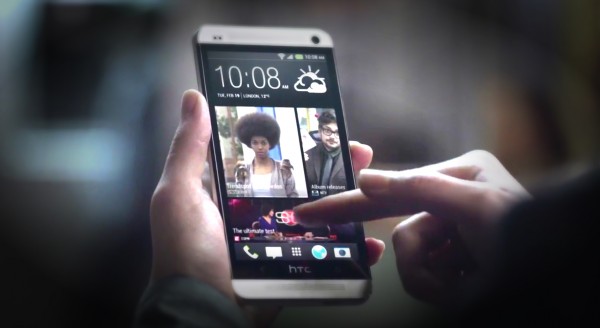
    Other features include HD Voice, which T-Mobile also offers for iPhone 5. BlinkFeed is HTC’s feature for consolidating social feeds — get them all on one screen. There are also front-facing speakers.

    I’ll probably haul down to my local T-Mobile store today for a looksee. And you?

  • The future of TV, according to Netflix CEO Reed Hastings

    Netflix CEO Reed Hastings laid out an ambitious plan for Netflix’s future in a paper published on the company’s investor relations site Wednesday that paints Netflix as one of the driving forces behind a transition from linear television to a world of internet-delivered on-demand content.

    The paper repeated some key points Hastings has been making in the past, but also included a number of noteworthy new insights, including some data points on what Netflix is spending its money on.

    Notably, Hastings said that Netflix is now spending over $2 billion a year on the licensing and creation of content. The company is spending another $350 million a year on improving its service and apps, including improvements to the streaming quality and customer service. And it is spending over $450 million per year on marketing in all of its markets around the world.

    Here are some other key highlights of the paper:

    On the future of TV

    People love TV viewing, but they hate linear TV, including DVRs and cable VOD services, argued Hastings: “The linear TV channel model is ripe for replacement.” Stepping up to replace it are apps from companies like Netflix, HBO and ESPN, which deliver programming to multiple screens.

    Technical advances, including 4k streaming and personalized advertising, will speed up the transition from linear TV to app-based on demand programming, and TV Everywhere will make it easier for cable networks to transition into this new world. And eventually, all of this will fundamentally change how TV is delivered:

    “Eventually, as linear TV is viewed less, the spectrum it now uses on cable and fiber will be reallocated to expanding data transmission. Satellite TV subscribers will be fewer, and mostly be in places where high-speed Internet (cable or fiber) is not available. The importance of highspeed Internet will increase.”

    On Netflix’s focus

    Hastings repeated in the paper that Netflix doesn’t want to compete with cable, but just become one more channel – or app – for consumers to choose from. That also means that the company will focus on a few key areas, and for example not venture into ad-supported programming:

    “We don’t and can’t compete on breadth with Comcast, Sky, Amazon, Apple, Microsoft, Sony, or Google. For us to be hugely successful we have to be a focused passion brand. Starbucks, not 7-Eleven. Southwest, not United. HBO, not Dish.”

    For Hastings, this isn’t just about doing what Netflix is best at. It’s also about offering consumers a clear idea what they can expect from the service, which is key to get them to tune in in what he described as “moments of truth”:

    “Those decision moments are, say, on Thursday 7:15 pm or Monday 2:40 am when our member wants to relax, enjoy a shared experience with friends and family, or is just bored. They could play a video game, surf the web, read a magazine, channel surf their MVPD/DVR system, buy a pay-per-view movie, put on a DVD, turn on Hulu or Amazon Prime Instant Video, or they could tap on Netflix. We want our members to choose Netflix in these moments of truth.”

    On licensing

    Hastings also shared some details about the company’s approach towards licensing, which has been shifting more and more towards exclusives. Guiding decisions on what to license is data, explained Hastings:

    “We might pay, for example, $200,000 for a 4 year exclusive subscription video-on-demand (SVOD) license for a given title. At the time of renewal, we evaluate how much the title has been viewed as well as member rating feedback to determine how much we are willing to pay. How many similar titles we have is also a consideration.”

    He didn’t mention it by name, but this reliance on data could be one of the reasons why Netflix decided to not renew a big licensing pact with Viacom. The company revealed earlier this week that its partnership with the cable programmer is about to expire in May. Netflix is now in discussions with Viacom to license individual shows instead.

    The paper also points out that Netflix has fundamentally changed the licensing of TV shows in particular:

    “It wasn’t easy for cable and broadcast networks to syndicate serialized storytelling to others, and we’ve pushed the price up considerably.”

    On HBO

    Hastings has long maintained that HBO is its biggest competitor. The company revealed Monday that it now has more domestic subscribers than the cable channel, and Hastings repeated in the paper that he wants to significantly outgrow HBO:

    “We have more content, more viewing, a broader brand proposition, are on-demand, on all devices, and are less expensive, so we estimate that we can be 2 to 3 times larger than current linear-HBO, or 60-90 million domestic members.”

    However, Hastings isn’t ready to count HBO out yet – and in fact argued that the competition from Netflix will actually help make HBO better as well:

    “While we are passing HBO in domestic members in 2013, it will be several years before we are peers with them in terms of Original programming, Emmy awards, and international members. It wouldn’t be surprising to us if HBO does their best work and achieves their highest growth over the next decade, spurred on by the Netflix competition and the Internet TV opportunity.”

    Related research and analysis from GigaOM Pro:
    Subscriber content. Sign up for a free trial.


  • Last call for comments on Lifeline

    I know I heard from folks who were glad to hear about the Lifeline program last time I posted something. So, I thought I’d post this too…

    The Rural Broadband Policy Group (RBPG), a working group from the National Rural Assembly, would like to make you aware of a last-minute opportunity to support the federal Lifeline program.

    Lifeline is a government benefit program that provides discounts on monthly telephone service for eligible low-income consumers to help ensure they have the opportunities and security that telephone service affords, including being able to connect to jobs, family, and 911 services. In rural, Tribal, and low-income communities, Lifeline is literally a lifeline for residents. However, Lifeline has recently come under attack and cuts to the program have been proposed.

    Tomorrow, the Subcommittee on Communications and Technology will host a hearing on the Lifeline program. RBPG would like to encourage you to share your opinion about the program and how it impacts your community.

    Annually, the program helps millions of families across the country afford a basic telephone line. Lifeline is essential to the success of our country because it ensures that even the most unserved areas are safe, able to communicate, and included. RBPG believes that any cuts to Lifeline will leave rural communities more vulnerable and locked out from full participation.

    Share your thoughts on Lifeline!

  • 9 ways that sound affects our health, wellbeing and productivity

    Julian-Treasure-at-TED

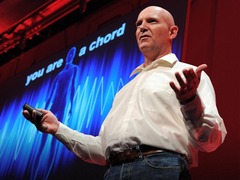
    Julian Treasure takes the stage at TEDGlobal 2009, sharing the shocking fact that — when you can hear others talking in an open office — productivity dips by 66%.

    Julian Treasure cares very deeply for your ears. That’s why he’s given TED talks like “The 4 ways sound affects us” and “Why architects need to use their ears.” Treasure is on a mission to make policymakers, engineers, architects and, well, Julian Treasure: Shh! Sound health in 8 stepsJulian Treasure: Shh! Sound health in 8 stepseveryone think more about what they hear around them — because the way things sound have a tangible, measurable effect on how we feel, how we heal, how we work and how we live.

    To this end, Treasure’s The Sound Agency has teamed up with Biamp Systems to create a whitepaper called “Building in Sound,” a look at the data linking sound and well-being.

    “This paper is based on exhaustive review of academic papers, and reports from national governments and multinational bodies, going back some 40 years,” it begins. “The research examines the causes and impacts of sound on our health, recovery from illness or surgery, our ability to absorb information and learn, our productivity, and general sense of wellbeing.”

    Read the paper in full, or check out some of the most fascinating facts below.

    1. The estimated cost of noise pollution is $30.8 billion a year — and that’s just in Europe.  The World Health Organization Europe’s 2011 report, “Burden of disease from environmental noise,” analyzes the relationship between environmental noise and health. In this study, they calculate the financial cost of lost work days, healthcare treatment, impaired learning and decreased productivity due to noise. The total they came up with is staggering, considering they’re looking at just one continent.
      .
    2. Each year, noise pollution takes a day off the life of every adult and child in Europe. This same study also looked at the cost of noise pollution in terms of lost life expectancy. Shockingly, they determined that every 365 days, one million years are taken off European’s collective life expectancy — averaging to a day per person.
      .
    3. If you can hear someone talking while you’re reading or writing, your productivity dips by up to 66%.  Open floor-plan offices distract workers without them even noticing it. In a classic study published in the British Journal of Psychology in 1998, researchers found that employers were highly distracted when they could hear conversation around them, and less able to perform their duties. Another classic study found that noise in the office also correlated to increased stress hormone levels and a lower willingness to engage with others. According to Sound Agency case study, when sound masking technology was used in an office, there was a 46% improvement in employees’ ability to concentrate and their short term memory accuracy increased 10 percent.
      .
    4. The average noise level in many classrooms is not just associated with impaired learning — but with permanent hearing loss. Noise can deeply affect learning too. The WHO recommends a noise level in classrooms akin to that you’d find in a library — 35 decibels. However, a study in Germany found that the actual average noise volume in classrooms is 65 decibels — a level associated with permanent hearing loss. As Treasure outlines in this talk, for a student sitting in the fourth row of a traditional classroom, speech intelligibility is just 50 percent — meaning that they only hear half of what their teacher says.
      .
    5. A 20 decibel increase in aircraft noise is enough to delay a student’s reading level by up to 8 months. A study published in the American Journal of Epidemiology in 2006 looked at 2000 students between the ages of 9 and 10 in schools in The Netherlands, Spain and the U.K. — many in schools near airports. They found that aircraft noise was associated with impaired reading comprehension.
      .
    6. 50% of teachers have experienced damage to their voice from talking over classroom noise. A study of teachers published in the Journal of Speech, Language and Hearing Research in 2004, noted another side-effect of noise pollution in classrooms — 50% of teachers have suffered irreversible damage to their voices. Why? Because as the environment gets noisier, we speak more loudly.
      .
    7. The average noise level in some hospital wards not only impedes healing — but could legally require hearing protection. The WHO recommends noise levels in hospital wards to stay around 35 decibels. But a study in the US found the average noise level in hospital wards is actually closer to 95 decibels — just 10 decibels beyond the noise level at which U.S. federal law requires ear protection for prolonged exposure. Sleep is crucial for patient recovery, and yet with the constant beeps, tones and shuffling, the body feels that it is under threat. Not to mention that staff errors increase the greater the level of distracting noise.
      .
    8. 3% of cardiac arrest cases in Germany have been explicitly linked to traffic noise. Treasure found this alarming fact in a 2009 press release from the Environmental Protection UK.
      .
    9. Noise pollution may possibly even contribute to crime. When the city of Lancaster, California, installed a sound system featuring birdsong along a half-mile stretch of a main road, there was a 15 percent reduction in reported crime, according to an article in The Wall Street Journal. Similarly, when the London Underground started playing classical music at a crime-heavy station, robberies fell by 33% while assaults on staff dropped 25%, says The Independent.

    Below, an infographic further outlining the problem.

    Building-In-Sound-infographic

  • Powerball Jackpot Up To $116 Million

    The Powerball jackpot is currently at $116 Million, as nobody won the jackpot prize on Saturday. The estimated cash value is $75.6 million.

    Saturday’s winning numbers were: 6,8,30,39,48, Powerball: 20.

    There were no winners for the $2 million Match 5 Power Play prize. The $1 million Match 5 prize saw winners in California, Illinois, Texas and Virginia.

    For Saturday’s drawing, there were a total of 630,441 winners winning non-jackpot prizes totaling $10,089,088.

    Odds of winning the jackpot, according to the Multi-State Lottery Association, are 1 in 175,223,510.

    The next drawing is tonight.

    As usual, people are talking about the drawing on Twitter:

  • Learn How To Make Interactive Google+ Posts On iOS

    Facebook may be integrated into iOS, but it doesn’t mean every developer wants to integrate Facebook into their app. In fact, some prefer Google+. For those developers, Google is now hosting a number of tutorials that teach developers how to get the most out of Google+ on iOS.

    Last week, Google showed developers how to integrate Google+ Sign-In on iOS. Now the Google+ team is showing developers how to integrate interactive posts in Google+ on iOS.

    Check out Google’s documentation if you want to learn more about integrating interactive Google+ posts into iOS.

  • Verizon confirms Samsung Galaxy S 4 pre-orders will begin on April 25th

    Samsung_Galaxy_S_4_Easy_Mode


    While we have an idea of when other carriers will open up the pre-orders for what should be this year’s hottest smartphone, Verizon has finally come clean and announced when its customers can expect the Galaxy S 4 to arrive in its stores. Using its Twitter page, Big Red will officially start taking in pre-orders for the device from this Thursday, April 25th, with the store being available in stores from May 30th. The 16GB version of the smartphone certainly won’t come cheap as it’ll launch for a standard $200 or if you’re feeling lucky… $650 full price.

    Let’s just hope that Verizon is able to keep up with demand because after all, we’re pretty sure it doesn’t want to be like other wireless carriers and let us down by delaying the smartphone’s launch.

    source: Verizon Wireless Twitter I | II

    Come comment on this article: Verizon confirms Samsung Galaxy S 4 pre-orders will begin on April 25th

    Visit TalkAndroid for Android news, Android guides, and much more!

  • McAfee working on software that finds and blocks all pirated content

    McAfee working on software that finds and blocks all pirated content
    McAfee may be about to become the best friend of copyright holders all over the world. TorrentFreak reports that McAfee “has patented a new technology that aims to prevent the public from accessing pirated movies and music online.” The content-blocking technology could be integrated with McAfee’s SiteAdvisor toolbar and would essentially create a blacklist that compiles reported pirated content from across the web and offer users alternative suggestions for how to legally buy the content they’re looking for. In its patent filing, McAfee writes that “by informing a user of illegal sources and possible alternatives, a user can obtain the desired electronic distribution without violating an author’s intellectual property rights.”