Category: News

  • New study says market for phablets, “superphones” to reach 825 million units globally by 2018

    phone phablet tablet

    You have no doubt noticed a trend amongst most smartphone manufacturers to push the boundaries of screen size with several models on the market in the 5-inch or larger range. Samsung’s Galaxy Note series really pushed the market into this “phablet” sized range with its success, demonstrating there was a market for large devices. Transparency Market Research has published a new report that puts some numbers to what we seem to be seeing and predicts sales of phablets and superphones will reach 825 million units by 2018, generating $116.4 billion for manufacturers that jump into the market. Although North America has been the leader in the market to date, Asian Pacific markets like Korea, India and China are expected to experience the largest and fastest growth rates over the next five years.

    According to Transparency Market Research, about 21 million Android based phablet devices were sold in 2012. By 2018, that number should reach 150 million on an annual basis. For Android superphones, Transparency Market Research expects the market to grow from 150 million Android powered units sold in 2012 to 400 million units in 2018. Currently Android phablets and superphones account for 82% and 87% of market share respectively. While Android devices will continue to dominate, Transparency Market Research does project Windows based devices will grow by huge amounts thanks to forthcoming Windows phablets from Nokia, HTC, Sony and ZTE.

    Transparency Market Research defines superphones as those with screen sizes between 4 and 5 inches. Phablets are devices with screens larger than 5 inches but smaller than a tablet device. Both types of devices are characterized by fast, powerful processors and other hardware that make them more suitable for navigating documents, surfing the web, watching videos, and gaming compared to normal smartphones whose screens typically range between 2.8 and 3.5 inches.

    Noticeably absent from the analysis is Apple, which has traditionally resisted pressure to produce larger devices. Should Apple ever change their strategy, that could have an impact on both market size and which manufacturers are able to succeed.

    source: Transparency Market Research

    Come comment on this article: New study says market for phablets, “superphones” to reach 825 million units globally by 2018

  • What I learned at paidContent Live: No one has all the answers on the future of media, and that’s good

    When we started to put together the paidContent Live conference, which we held in New York last week, one of the driving forces behind our selection of speakers was to find those who are doing interesting things — either in new or traditional media — so that we could try and figure out what the future of media is going to look like. As I said during my opening remarks, we may not have all (or any) of the answers, but we do have plenty of interesting questions, and that is a start.

    Among those questions are the following: Are people going to pay directly for content? Is native advertising going to subsidize media? Does sponsored content raise ethical issues for media companies? Are individual creators going to succeed by connecting directly with their audiences or by striking deals with existing media entities? And as far as I can tell, the answer to all of these questions is the same: Yes. And no. That may not seem very helpful, but I think it is.

    You have to try everything

    At one point during the panel on monetization — which also included Richard Tofel from ProPublica, Raju Narisetti from News Corp. and Bob Bowman from Major League Baseball — Atlantic Media president Justin Smith said that his organization didn’t really have a single answer to the question of how to monetize content, because it was more or less trying everything it possibly could (which is one of the reasons why I have said Atlantic is one of the media companies worth watching).

    paidContent Live 2013 Richard Tofel ProPublica Justin Smith Atlantic Raju Narisetti News Corp Bob Bowman MLB Advanced Media

    (L to R:) Richard Tofel, President, ProPublica; Justin Smith, President, Atlantic; Raju Narisetti,SVP and Deputy Head of Strategy, News Corp; Bob Bowman President and CEO, MLB Advanced Media paidContent Live 2013 Albert Chau / itsmebert.com

    For the Atlantic, that means experimenting with sponsored content (despite its potential pitfalls, which were highlighted during the Scientology incident) as well as doing live events, and introducing a premium offering — which Smith wouldn’t provide much detail about but is supposedly coming soon. As he put it:

    “To say that the ad model is going to win over the pay model is foolish. I think the solution will be multiple revenue streams, it will be how experimental, how creative you are in seeking out those revenue streams… we must try everything. And we must not believe that one thing is going to work over the other until we actually experience it and see it over a period of time.”

    The future isn’t going to be one model

    Even just on that panel, we had almost every model represented, with ProPublica — which is built on a donation model, one that Dick Tofel believes will be replicated in dozens of states and cities, in the same way most metropolitan areas have symphonies or ballet troupes — and the Atlantic, and then News Corp. with its variety of hard and soft paywalls, and MLB with its app-based and content-focused strategy. Bowman said everyone should have some form of pay model, because why not give your hardcore fans a way to pay you for what they value?

    paidContent Live 2013 Andrew Sullivan The Dish Andrew Ross Sorkin NYT Maria Popova Brain Pickings Tim Ferriss The 4-Hour Workweek

    (L to R:) Andrew Sullivan, Editor, The Dish; Andrew Ross Sorkin, Columnist, NYT; Maria Popova, Writer, Brain Pickings; Tim Ferriss, Author, The 4-Hour Workweek paidContent Live 2013 Albert Chau / itsmebert.com

    The “blogging superstar” panel also had a variety of models, none of which was obviously better than the other. Maria Popova of Brain Pickings said that she didn’t even think of herself as a business — she wrote “for an audience of one” and was happy to get whatever donations she could get. Andrew Sullivan has famously bet his future on a direct-to-reader model, but he also said he isn’t opposed to advertising either (although he is adamantly opposed to native advertising). And Andrew Ross Sorkin says he is happy to continue building a personal empire of sorts within the New York Times.

    Maybe that in itself is enough of a valuable insight, at least for now: that the future of media isn’t going to be one thing, or even a couple of obvious things — there is no one-size-fits-all solution (if there ever was) and waiting around for one to appear is a mug’s game. At least for the foreseeable future, the landscape of digital media is going to be a form of loosely organized chaos, with everyone trying whatever they can. As Clay Shirky said about newspapers two years ago, this chaotic environment is actually beneficial, because we need to try everything in order to figure out what works.

    Note: You can find streaming videos of each of the major sessions at paidContent Live in this post, and links to transcripts of those sessions in this post, as well as a roundup of our live-blogging of the event.

    Post and thumbnail photos courtesy of Flickr / Mark Strozier and Albert Chau

    Related research and analysis from GigaOM Pro:
    Subscriber content. Sign up for a free trial.


    • What is Bing’s China problem?

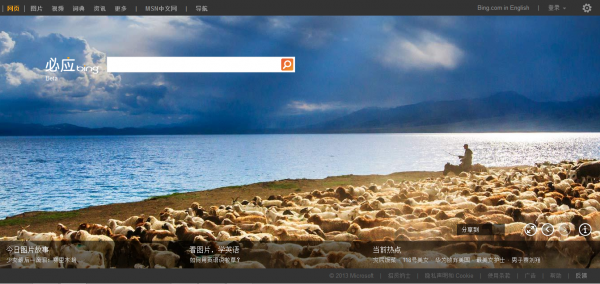
      A few weeks ago, while doing a bit of research for a story, I had occasion to visit the Bing search page. More importantly to this article, it was the Chinese version of Bing. Over the following days I forgot about this brief foray into Asia, but my web browser remembered.

      When I return to Bing several days later I am defaulted to the China site — it still says I am on www.bing.com, but all information is displayed in Chinese characters, which Chrome helpfully translates on the fly. I close the tab, re-open and try again with the same results. I close Chrome and try again — still nothing.

      After a few days (I do not use Bing often, though I do like it) I recall my trip to Bing.cn. I then check the cookies in my browser and find the site has set several of them — c.bing.com, Bing.com.cn and dict.bing.com.cn. Interesting. I delete all of them and Bing returns to normal. Then, perhaps because I am both adventurous and stupid, I recreate the steps and the same results occur. I try both Firefox and Internet Explorer and again the same thing.

      More interesting to this sordid little tale is that search results using Bing.cn are only somewhat different. I say “interesting” because I expected “somewhat” to actually be “radically”. I delete the Firefox cookies and begin comparing the same terms side-by-side. For instance, a search for Tianenman Square on Bing.cn results in two travel sites being ranked at the top, with a Wikipedia article about the protests at number three. Bing.com ranks the Wikipedia story at the top of the page.

      Other searches also result in similar outcomes, with rankings in different orders — Dalai Lama, Nepal (which completely strips out a U.S. Department of State travel advisory), Democracy and Freedom. The latter results in a Baidu article that begins “Freedom which is the name of Akon’s latest solo album” at the top, versus a link to a web site offering debt consolidation (Bing fails in both cases on this).

      I also check “safe search” settings. The short story of which is that it does not exist. Or, more to the point, it does and it cannot be turned off. I find only the following message (translated):

      “This setting will filter out adult content. If you are viewing adult material, please let us know so that we can in the future to filter out. For more information about your country / region safe search requirements”.

      The results, while re-ordered and somewhat stripped down, are not as devoid of real information as I had expected. Perhaps this is due to my actual location, which is not going through a filter — well, maybe but that is another story.

      If setting these cookies is the price of doing business behind the Great Firewall then I could give Microsoft’s search engine a pass, but a visit to Google.cn does not result in this settings change. This leaves me to wonder why the Redmond, Wash.-based company feels the need to track this information and, more importantly, what it is doing with those databases. Support for Chinese censorship?

    • The Mac didn’t do as bad as the PC last quarter, but it’s stopped growing

      If you’re looking for positive news in the world of desktops and laptops, the story of the Mac is about as good as it gets — and even that story is not that great. For the second straight quarter, Apple, which has regularly reported industry-beating growth rates over the past few years, again saw its Mac sales stall.

      Apple said it sold 3.95 million Macs during its second fiscal quarter, which is ever-so-slightly below the 4.01 million it sold a year ago. That followed its fiscal first quarter sales of 4.1 million Macs, which were down 22 percent from the 5.2 million sold a year prior.

      Quarterly Mac sales

      Now, the Mac’s quarter seems fantastic when compared to the global PC industry: between January and March, IDC found that just 76.3 million PCs shipped worldwide. That’s a 14 percent decline over a year and made for the worst quarter for the PC market since IDC started counting in 1994.

      While Windows-based PC sales have been dismal for several quarters, if not years, the last two quarters have been an aberration for Apple. Before then the company had consistently seen the Mac grow faster than the broader PC market, and CEO Tim Cook has predicted for many quarters on end that PC sales were being replaced by iPad sales.

      It’s looking like this is now happening to Macs as well. Cook said of the PC industry, “it’s the largest decline I can remember” while pointing out that “at the same time we sold almost 20 million iPads.” But he admitted that the Mac is not immune.

      Still, he tried to put a positive spin on things:

      That said, I don’t think this market is dead or a bad market by any means. I think it has a lot of light to it. We’re going to continue to innovate. We think huge growth in tablets may wind up benefiting the Mac. It pushes people to think about the product they’re buying in a different manner.

      But a careful listen to other comments about the quarter’s Mac sales made by his colleague show that he probably shouldn’t sound so happy. CFO Peter Oppenheimer noted on the same earnings call that the nearly 4 million Mac sales included “strong desktop sales” but those were “offset by weaker portable sales.”

      Strong desktop sales signals that Apple has finally caught up with demand for its new iMac models —  they debuted in October, but supply chain problems meant they didn’t hit store shelves until early December — and that’s good. But desktop sales have not been a consistent relied-upon source of growth for Apple; the Mac’s growth in unit sales has come from the popularity of the MacBook. That sales of notebooks were “weaker” this quarter is potentially worrisome for the overall trajectory of the Mac over the next few quarter when iMac sales drop back to normal levels, given that desktop sales have been on the decline for years across the broader PC market.

      So while Apple is still managing to do better than most of its Windows PC brethren, it appears that, if not for problems Apple had during the holiday quarter, Mac sales during this quarter could have seen an even bigger drop in growth.

      Related research and analysis from GigaOM Pro:
      Subscriber content. Sign up for a free trial.


    • Gentical Raises $23.7M From Wellington, EdRIP, InnoBio, Others

      Wellington Partners said it is the lead investor in a $23.7 million Series C financing round for Genticel which was closed this week. Wellington Partners committed about $5 million and the remaining came from existing shareholders, including EdRIP, IDInvest, InnoBio, IRDI and Amundi. The funds will be used primarily to finance a phase II program for the Toulouse, France-based HPV- vaccine developer’s lead product ProCervix.

      PRESS RELEASE

      Wellington Partners leads € 18.2 million financing round at Genticel

        First investment of new Wellington Partners IV Life Science Fund

        Financing for phase II program of ProCervix, a therapeutic HPV 16/18 vaccine

        Dr. Rainer Strohmenger will join Genticel Board

      Munich, April 24, 2013. Wellington Partners today announced that it acted as lead investor in a € 18.2 million series C financing round at Toulouse/France-based therapeutic HPV- vaccine developer Genticel which was closed earlier this week. Wellington Partners committed € 4 million to this financing, the remaining € 14.2 million were provided by the existing shareholders including EdRIP, IDInvest, InnoBio, IRDI and Amundi. The funds will be used primarily to finance a phase II program for Genticel’s lead product ProCervix. Dr. Rainer Strohmenger, General Partner at Wellington Partners, will join the Supervisory Board of Genticel.

      Genticel is developing therapeutic vaccines against HPV infection with high-risk types, which in case of persistent infection may lead to cervical cancer, the second most frequent type of cancer in women. About 250,000-300,000 women die from cervical cancer every year, typically at a relatively young age. It is assumed that 80% of all women become infected with HPV once in their lives and more than 300 million women at the age of 25 years and over carry an HPV infection, thereof approx. 50% with a high-risk type. The most predominant high-risk types are HPV 16 and 18, which are the cause for 70% of all cervical cancers. 
With more than 140 million

      Pap tests and a quickly increasing, double-digit million number of HPV tests performed every year in the developed countries, the diagnostic market in cervical cancer screening is already well established. In 2006 the first preventive vaccines against HPV 16/18 infections were introduced into the global markets and became commercially very successful products. However, there is still no effective treatment available against established infection with high-risk HPV types. 
ProCervix, Genticel’s lead product, is a proprietary, first in class therapeutic vaccine for the treatment of women infected with HPV types 16 or 18 who have not yet developed high-grade cervical lesions or cancer. The Phase Ib trial (47 patients) displayed no dose limiting toxicity and no patient drop-out. ProCervix induced a dose-dependent immune response as well as viral clearance in a substantially larger percentage of patients as compared to placebo. 
“The field of cervical cancer screening and treatment is an area in medicine that we know very well from our involvement in mtm laboratories AG, which we successfully sold to Roche 20 months ago”, commented Dr. Rainer Strohmenger.

      “We are highly excited about Genticel’s lead project ProCervix, which has demonstrated in the phase I clinical trial that it can cure infections with high-risk HPV types 16 and 18 in 3 out of 4 treated patients, thus effectively preventing progression to high-grade cervical disease. There are more than 90 million women in the world infected with HPV types 16 and 18 who could benefit from this treatment, making this market a clear blockbuster opportunity.”

      Benedikt Timmerman, founder and CEO of Genticel, added: “The commitment from Wellington Partners, one of the most reputable life science investors in Europe, is further endorsement of Genticel’s therapeutic HPV vaccine development. The Wellington life science team members are bringing outstanding clinical development and medical expertise to our shareholder base, both from therapeutic vaccines and from cervical cancer screening. They have immediately understood the unique properties of our lead product ProCervix. This investment will allow us to take ProCervix through a multi-center multi-national phase II program. It will further strengthen our database supporting the efficacy and safety of this highly novel, curative treatment for high-risk HPV-infections.”

      About Wellington Partners
      Wellington Partners is among the most successful pan-European Venture Capital firms. With more than € 800 million under management and offices in Munich, London and Zurich, Wellington Partners invests in start-up companies throughout Europe that have the potential to become global leaders in the areas of digital media, resource efficiency and life sciences.

      Since 1998, Wellington Partners has invested in more than 100 companies, including publicly listed firms like Actelion, Evolva, Wavelight (acquired by Alcon) and Xing as well as privately held companies like AyoxxA, Grandis (acquired by Novartis), immatics, implanet, invendo medical, mtm laboratories (acquired by Roche), Oxagen, Oxford Immunotec, Quanta, Sapiens, Sensimed, Supersonic Imagine, Symetis and Spotify. For further information, please visit www.wellington-partners.com.

      The post Gentical Raises $23.7M From Wellington, EdRIP, InnoBio, Others appeared first on peHUB.

    • Porsche 959: “You Cannot Do It Alone”

      Porsche 959

      Helmuth Bott was the former director of Porsche’s research and development division and the man responsible for the iconic Porsche 959. This car was a new genesis for Porsche and was packed with more technology than any other car of its era. From its masterful four-wheel drive and sequential turbo systems, it has contributed more to Porsche’s evolution than any car produced before it. This particular car is 1 of 6 prototypes, and is currently part of the Brumos Collection. Check it out after the jump.

      Source: eGarage.com

    • Windows tablets make big share gains

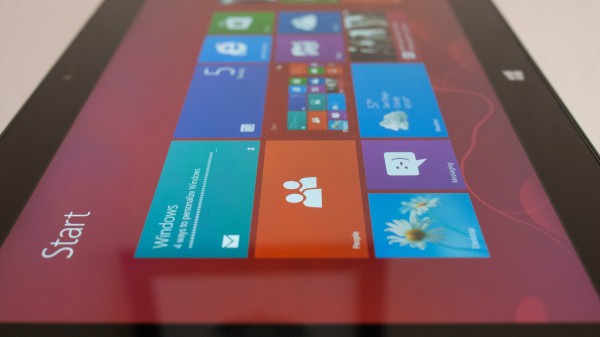
      Back in December, I explained: “Surface RT sales are quite good, you just don’t know about it“. The Internet Idiocracy called the tablet a failure, while based on sales per store I saw success. Surface Pro shipped the following month. Now there are real numbers, and they’re quite good — for all Windows tablets — validating touch-focused Modern UI.

      During first quarter, Windows captured 7.5 percent global branded tablet market share, according to Strategy Analytics. That’s up from zero a year earlier. Unit shipments: 3 million. Right now, Microsoft is the major seller of branded Windows tablets. Granted there are others, like Acer, ASUS, Dell, HP and Samsung.

      Actually, Strategy Analytics notes that limited distribution, apps selection and market confusion — not Android or iOS competition — hold back Windows tablets. If Microsoft and partners get their ducks in a row, the tablet market could look dramatically different in a year. The point: The software giant may prove to be right after all; many buyers want to run a real operating system, one proven to handle the tasks of robust applications, rather than one migrated up from smartphones.

      In February, Microsoft extended Surface RT distribution to more than a dozen new countries and yesterday announced Pro expansion, too. That’s sign of changing times.

      The ecosystem around Windows 8, and RT, is far from mature, which is the barrier to bigger sales success. There, despite all the controversy about Modern UI, Microsoft made the right choice — that is if Windows tablet share gains continue.

      “We built Windows 8 with touch and mobility at the center of the experience, which positions us well in this new era”, Microsoft CFO Peter Klein tells financial analysts last week. “However, the transition is complicated, given the size of our hardware and software ecosystem. We still have an immense amount of work to do, yet we feel good about the foundation we have laid and are optimistic about the long term success of Windows”.

      Something else: Windows 8/RT will come to smaller devices this year, which, according to NPD DisplaySearch is where the tablet market is headed. Microsoft is “working closely with OEMs on a new suite of small touch devices powered by Windows. These devices will have competitive price points, partly enabled by our latest OEM offerings designed specifically for these smaller devices, and will be available in the coming months”, Klein says.

      Strategy Analytics data shows there is demand for Windows tablets and validates Microsoft’s emphasis on touch. Klein is right: “Consumers and businesses are increasingly shifting their focus to touch and mobility”. I love Surface Pro, which experience is so good, I came to really like Windows again.

      As Microsoft ramps up Surface distribution and partners bring more touch-Windows devices to market, greater share gains are attainable. How much depends on other factors. My expectation is with autumn release of Windows 8.1 nearly certain, Microsoft and partners will invade the market with many touch devices for Christmas.

      Global Tablet Operating System Shipments and Market Share

      Global Branded Tablet OS Shipments (Millions of Units) Q1 ’12 Q1 ’13
      Apple iOS 11.8 19.5
      Android 6.4 17.6
      Windows 0.0 3.0
      Others 0.5 0.4
      Total 18.7 40.6
      Global Branded Tablet OS Marketshare % Q1 ’12 Q1 ’13
      Apple iOS 63.1% 48.2%
      Android 34.2% 43.4%
      Windows 0.0% 7.5%
      Others 2.7% 1.0%
      Total 100% 100%
      Growth Year-over-Year % 146% 117%

      Challenges are ahead. During first quarter, iPad captured 48.2 percent tablet market share, according to Strategy Analytics, while Androids took 43.4 percent. However, when including unbranded, white-box devices, Android tablets lead with 52 percent share to iPad’s 41 percent. Windows slates face an uphill road, and yet seen another way downhill.

      The discreet tablet market isn’t the only measure of success. Most analysts agree that tablets are a major reason for about 10 quarters of PC shipment declines, with Q1 being the worst since IDC started tabulating numbers in 1994. Given that the majority of PCs sold or in-market run Windows and the majority of tablets do not, Android and iOS gains take away from Microsoft’s platform. So the measure of that 7.5 percent market share, and any gains to follow, is an iceberg. The number is bigger than it appears. Sales below the surface represent people going from Windows to Windows rather than Windows to something else.

      Photo Credit: Joe Wilcox

    • Microsoft to announce next-gen Xbox on May 21st

      Microsoft to announce next-gen Xbox on May 21st
      In line with earlier rumors, Microsoft on Wednesday invited members of the press to an event next month for its next-generation Xbox gaming system. The new console is rumored to be equipped with an 1.6GHz 8-core AMD processor, 8GB of RAM, an 800MHz graphics processor, a Blu-ray Disc drive and Gigabit Ethernet connectivity. The next-generation Xbox is expected to be released in time for the holiday season. Microsoft will announce the system at a press event on May 21st in Redmond, Washington at 10:00 a.m. PDT.

    • I want my Kindle TV: report confirms Amazon’s set-top box plans

      Amazon is building a TV set-top box, which it plans to introduce this fall, according to a BusinessWeek report. The device will heavily focus on Amazon’s Prime Instant video streaming service as well as the company’s pay-per-transaction VOD titles, and directly compete with streaming devices such as Apple TV and Roku.

      The device is being built by Amazon’s secretive R&D unit Lab126. Lab126 has been experimenting with streaming devices for years, according to BusinessWeek, which said it was able to confirm Amazon’s plans with three unnamed sources. Some of the folks involved in the project previously worked for TiVo, Vudu and the DVR pioneer, ReplayTV.

      The revelation of an Amazon set-top box shouldn’t come as a big surprise to GigaOM readers: We reported in September that Lab126 had hired a number of employees with a connected device background, including much of the team behind Logitech’s failed Google TV device, the Logitech Revue.

      BusinessWeek didn’t go into details about the technology at the core of Amazon’s device, but it would make sense for the company to build it on top of Android, essentially re-purposing Google TV’s technology. That’s the same strategy Amazon used successfully for its Kindle Fire tablets, which run on a highly customized version of Android that’s been stripped of all obvious ties to Google.

      Related research and analysis from GigaOM Pro:
      Subscriber content. Sign up for a free trial.


    • Tumblr turns toward user-driven discovery with improved sharing, Pocket and Instapaper support

      Tumblr is making it easier to save content to read for later, with updates to its iOS app released Wednesday. The updated version of the app now lets users save Tumblr posts to Pocket and Instapaper and share them via Facebook, Twitter and other services. Users can also email the full text of a post to someone else.

      The iOS app’s improved sharing features are likely intended to help users drive discovery. Tumblr shut down its Storyboard project, which was designed to surface interesting editorial content, earlier this month. Tumblr CEO David Karp said at the paidContent Live conference last week that the company wants to help users discover this content themselves, but “we don’t want to say what great content is, or these are our favorite blogs.” And the integration with Pocket and Instapaper suggests that Tumblr sees itself not just as a platform for short, image-heavy posts and videos but also as a home to longer text-based content that people will want to stick around and read for awhile.

      Separately, Pocket rolled out its own send-to-friend feature last week. The feature lets users email content directly from Pocket’s apps, and if the recipients are also Pocket users, the shared articles will show up within their app.

      Related research and analysis from GigaOM Pro:
      Subscriber content. Sign up for a free trial.


    • To Be Authentic, Look Beyond Yourself

      Authenticity — what is it, who has it, and how do you get it? Most people associate authenticity with being true to oneself — or “walking the talk.” But there’s a problem with that association; it focuses on how you feel about yourself. Authenticity is actually a relational behavior, not a self-centered one. Meaning that to be truly authentic, you must not only be comfortable with yourself, but must also comfortably connect with others.

      Take one of our coaching clients, Mark, the COO of a private equity firm. One hour into our kick-off meeting, he asked what we thought of him. It was a risky question to answer so early in the process — yet a very important one given what we had observed thus far. Here was our response: “Clearly you are intelligent, ambitious, and passionate about the work that you do. You seem to always have the ‘right’ answer to our questions — yet we get the sense that they aren’t your ‘real’ answers. It feels like you’re telling us what you think we want to hear. We’ll be curious to find out if others in your organization are experiencing you the same way.” This response was foreboding — Mark’s 360 review bore low marks in integrity and trust, and follow-up interviews with his peers and boss drove the point home.

      Mark’s colleagues didn’t trust him because they were never sure if what he said was truly what he meant. To have leadership presence, others need and want to know where you stand — they don’t want to have to guess or be blindsided midstream. While there isn’t a quick fix or a one-size-fits-all solution to increasing one’s authenticity, there are several focus areas that will certainly help:

      Point of View: Having a point of view is critical to being authentic. Being open and willing to engage in exchanges on that point of view accentuates your leadership and demonstrates both strength and flexibility. By articulating his point of view on firm issues, challenges, and disagreements, Mark became more comfortable speaking his mind.

      Positioning: While taking a position is important, over-positioning yourself is detrimental. Know the difference between navigating the political waters of your organization and actually becoming the politics itself. Get support for your initiatives but be transparent about what you are doing, why you are doing it, and how you are doing it. Rather than working primarily behind the scenes, Mark became more forthright in his efforts to implement change in his organization.

      Personal History: At the core, you need to connect with your personal history and identify the key events, messages, and people that shaped who you are today. Mark grew up in difficult, under-privileged circumstances that he learned to navigate. When he was sent to elite schools at a young age, the message he got was “to survive this system, you need to watch your back and not rock the boat.” While that message might have served him well then, it was no longer serving him in the corporate leadership world. Exploring your personal history will often surface messages that are worth reexamining in order to truly express your authentic self.

      As Robert Goffee and Gareth Jones point out in their book, Why Should Anyone Be Led By You?: “To attract followers, a leader has to be many things to many people. The trick is to pull that off while remaining true to yourself.” While it’s easy to sniff out who’s authentic and who’s not, it’s not so simple to recognize it in ourselves.

    • Missing Student: Body Found In Providence River

      The body of a young man that was pulled out of Providence River in Rhode Island on Tuesday could be that of missing Brown student Sunil Tripathi, who went missing on March 16th.

      Tripathi’s family says he was acting normally during the days leading up to his disappearance, but hinted that he was going through a tough time, although just what that is hasn’t been reported. The 22-year old was falsely accused of being a suspect in the Boston bombings last week, shocking and enraging those who knew him.

      “Someone will tweet, then retweet, and completely unsubstantiated things can proliferate so rapidly and destructively,” his sister, Sangeeta Tripathi, said. “Those night hours were horrible.”

      The mystery of what happened to Tripathi will likely haunt his family if the body does indeed turn out to be his. They say he left his wallet and phone at his apartment, taking with him only a key and his glasses. After several text conversations with family members on a Friday night–in which he seemed normal–he didn’t respond to messages the next morning. What happened in the intervening hours is crucial, but if the body in the river turns out to be his, it’s likely it will not yield any answers. Officials say it appears to have been in the water for several days, if not weeks. An autopsy has yet to definitively reveal an identity.

      Image: WPRI

    • Amazon is reportedly developing an Apple TV rival

      Amazon is reportedly developing an Apple TV rival
      Amazon is getting ready to make its biggest push yet into consumers’ living rooms. Unnamed sources have told Bloomberg Businessweek that Amazon is planning to release a set-top box that “will plug into TVs and give users access to Amazon’s expanding video offerings” including “its a la carte Video on Demand store, which features newer films and TV shows, and its Instant Video service, which is free for subscribers to the Amazon Prime two-day shipping package.” Businessweek’s sources say that Amazon is building its own dedicated set-top box to draw more traffic to its own content offerings since Amazon is just one of many video streaming apps available on consoles such as the Xbox and Sony’s PlayStation. However, Businessweek’s sources say that the set-top box will “likely” offer access to competing streaming apps such as Netflix and Hulu even though it will be primarily centered around Amazon’s video services.

    • The ex-MySQL gang is back together, pushing MariaDB as a neutral ‘bridge’

      Bad news for Oracle, maybe: some of the key pre-Sun-takeover MySQL players are back together, and their MariaDB fork of MySQL looks like it’s gaining serious traction.

      The reunion comes courtesy of a merger between open source database services firm SkySQL (which supports both MySQL and MariaDB deployments for customers ranging from Harvard to Shutterstock) and a company called Monty Program — yes, as in Monty Widenius, who named MySQL after his oldest daughter My and its fork after his younger daughter, Maria.

      So now we have Widenius and other ex-MySQLers such as Colin Charles back together with players such as MySQL co-founder David Axmark and former MySQL sales director Magnus Stenberg. Actually, that’s underselling the magnitude of what’s happened here: out of the 70 employees of the fused operation (which is continuing under the SkySQL name), 50 used to be at the original MySQL firm.

      Open appeal

      At the same time, MariaDB seems to be capitalizing on the disillusionment of some in the open source community with Oracle’s stewardship of MySQL — doing things like releasing extensions for the commercial version but not the free version was never going to win favor in that scene. Wikipedia migrated to MariaDB in the last few days, and the Fedora and OpenSUSE Linux distros will both make the jump in their next releases.

      The MariaDB Foundation, which is busy sorting out its governance structure and which now claims SkySQL as an early member, also took on former Sun Chief Open Source Officer Simon Phipps as its CEO a week ago.

      “It is a pleasure to have a company representing the reunited core team of our code base joining the Foundation at its inception,” Phipps said in a statement this week.

      MariaDB the “bridge”

      The fused team has a unique NewSQL proposition: not only is MariaDB fully compatible with MySQL, but it can also interface with newer NoSQL databases such as Cassandra and LevelDB. According to SkySQL CEO Patrik Sallner, SkySQL will continue to service both MySQL and MariaDB customers and won’t be forcing anyone to jump to MariaDB — but he expects many customers to make that leap nonetheless:

      “Right now, because MySQL belongs to Oracle, it’s not necessarily perceived as independent. Linux is the default operating system in most enterprise contexts. Oracle, IBM and Microsoft control the vast majority of business in databases and most companies have at least two of these, which are not compatible with each other. And, as companies deploy new applications, they use new [NoSQL] database technologies to meet their needs.

      “We believe that MariaDB has an opportunity to become a truly independent and interoperable open source database, meaning we can provide a solution that’s a neutral ground for companies. … Our aspiration is to start building this into a new form of database platform that ties together other databases in a seamless manner. By providing a bridge, we believe we can create more innovation.”

      Sallner noted that there isn’t currently a great deal of difference between MySQL and MariaDB, apart from the latter’s “pluggable” approach to storage engines. “Using the SQL language allows us to be compatible with other databases, and we have a connect engine which allows us to add on-the-fly support for other data formats,” he said.

      As a next step, Sallner said he hoped to see other database providers join the MariaDB Foundation, in order to maintain this open common ground. “We’re not competing against DB2 or Oracle or Microsoft today — we’re all serving different needs,” he said. So does he want to sign up Oracle itself? “That’ll be a stretch, but it would be a huge sign of success,” he laughed.

      It’s not all bonhomie, though — Sallner reckons large internet companies will engage with MariaDB in a way that they haven’t with Oracle’s MySQL.

      “We believe those companies are willing to contribute the work they’ve done back to MariaDB,” he said. “Facebook and Twitter have contributed substantial new features to MariaDB. They probably wouldn’t have contributed that to Oracle.”

      UPDATE (10.55am PT): This piece originally and incorrectly stated that Widenius is the new SkySQL CTO, whereas he is in fact the CTO of the MariaDB Foundation. Widenius is on the board of SkySQL, but his role is non-operational.

      Related research and analysis from GigaOM Pro:
      Subscriber content. Sign up for a free trial.


    • Testimony of Daniel Simmons: Subcommittee on Energy and Mineral Resources

      Before the Subcommittee on Energy and Mineral Resources

      Committee on Natural Resources

      Hearing on U.S.-Mexico Transboundary Hydrocarbon Agreement and Steps Needed for Implementation

      April 25, 2013

      Testimony of Daniel R Simmons

      The Institute for Energy Research

      The Institute for Energy …

    • More Far Cry 3: Blood Dragon Is Always A Good Thing

      Since being announced earlier this month, Far Cry 3: Blood Dragon has become one of the most anticipated games of the year. We still have to wait a few weeks for the game’s release, but Ubisoft has released a new walkthrough to tide us over.

      Blood Dragon’s creative director walks us through the game with a wonderful narration that’s littered with expletives and buzzwords delivered with sarcasm. Check it out:

      Far Cry 3: Blood Dragon releases on Xbox 360, PS3 and PC on May 1. Best of all – players don’t need to own Far Cry 3 to enjoy the mayhem of Blood Dragon.

    • Jenelle Evans Arrested For Heroin Possession

      Jenelle Evans, one of the troubled stars of “Teen Mom 2″, was arrested in North Carolina on Tuesday after police were called to her home for a domestic dispute claim. When they arrived, officers found 12 bindles of heroin in her possession, as well as drug paraphernalia and prescription painkillers.

      Evans claims she and husband Courtland Rogers got into a fight and that he punched her on the head and neck; he claims she threw furniture at him. Rogers was also found to be in possession of heroin and has been charged with intent to manufacture, sell, and distribute the drugs.

      The young mom has made headlines involving Rogers before, most notably when she married Rogers after just a few months of dating and then claimed they were split up soon after due to his unfaithfulness. The pair have had it out several times on Twitter, and Evans has a long history of trouble with the law, including prior problems with drugs. This time around, she was also charged with failure to pay child support. Despite a stint in rehab, it seems the drug problem isn’t something she’s beaten.

      “I simply feel as if I didn’t need to go to treatment if my problem isn’t drugs anymore, and never will be again,” she said in March. “I need individual counseling and therapy if anything for being addicted to relationships. I can honestly admit this about myself and can’t seem to help it unless I continue to get the help I need through therapy. Maybe instead of voicing what REALLY happened I’ll just stay silent because silence is golden. But I will let everyone know that I AM SINGLE and I AM NOT DATING ANYONE. I’m focusing on myself and my son’s life, nobody else’s.”

    • Apple’s March quarter in charts

      Apple's March quarter in charts
      Apple’s earnings report was as action-packed as ever on Tuesday evening. The company’s stock soared as it beat the Street’s consensus and announced that it will return $100 billion to investors by end of 2015, and then it got pummeled when CEO Tim Cook suggested that we won’t see any big new product launches in the June quarter this year. Volatility in the market aside, Apple still turned in a huge, huge quarter despite seeing profits plunge 18% thanks to tightening margins. Looking at the numbers on paper is one thing, but SplatF’s Dan Frommer put together put together a quick “Apple earnings dashboard” that charts key data points as compared to historical data to help tell a more complete story. A few charts follow below and the full dashboard can be found on Frommer’s blog.

      Continue reading…

    • Sprint Losses Drop, But So Do Subscribers

      Sprint, the third largest wireless carrier in the U.S., today released its first quarter 2013 financial results. The report shows that the company’s net losses have decreased from the fourth quarter of 2012, though it also shows worrying trends, such as falling subscriber numbers.

      Sprint reported a net loss of $643 million, compared to the $863 million net loss it posted for the fourth quarter of 2012. However, this small victory was tempered by the news that the carrier lost 560,000 postpaid subscribers during the quarter.

      Many of Sprint’s revenue and subscriber losses come from its Nextel platform, which the company is currently in the process of shutting down. Sprint stated that it is on-track to shut down Nextel at the end of the second quarter 2013.

      In the meantime, Sprint announced it has formed a committee of independent directors to review a proposed $25.5 billion merger with Dish. The merger would provide Sprint shareholders with a greater payout than an alternate $20.1 billion proposal from Softbank.

      Back in December, Sprint fully acquired Clearwire for $2.2 billion.

      “This is a transformative year for Sprint and we’ve gotten off to a good start,” said Dan Hesse, CEO of Sprint.

    • A Look at the Best Way to Build a Cloud

      Business agility and the needs of today’s business environment have pushed organizations into new technological areas. This includes deploying cloud computing platforms to help meet the needs of market. Currently, there are more users, more devices, more data and lot more reliance on the data center. All of these new demands require an agile infrastructure built on intelligent systems and a solid design. In working with unified, intelligent designs, administrators are able to deploy platforms which are capable of high-density user scalability. Furthermore, these systems simplify management create direct benefits for a cloud-ready environment.

      One of these technologies, as outlined by the white paper, is the HP Converged Infrastructure. This type of platform helps organizations overcome the rigidity and high cost created by IT sprawl. In this white paper by IDG Tech and HP, you will see how the HP CI architectural blueprint eliminates silos and integrates technologies into shared pools of interoperable resources, all managed from a common management platform and all based on standards and customer choice. The result is a data center that delivers a new level of simplicity, integration and automation. More resources can be applied to innovation to deliver your desired business outcomes, including faster time-to-revenue, lower acquisition and implementation costs, flexibility to respond to business changes, and lower risk.

      In deploying an agile cloud environment, organizations should work with platforms which unify technologies and simplify the entire cloud deployment process. Download this white paper to learn how working with technologies like the HP CloudSystem and the HP 3PAR Storage platform can help create a formula directly built around efficiency.

      By unifying cloud-ready technologies, your organization can find benefits in numerous different ways. This includes:

      • Save Time: Minutes, not hours or days to provision a service
      • Be Efficient: Provision and grow resources on demand
      • Stay Secure: Role based access
      • Avoid Errors: SPM discovers and verifies configurations
      • Provision Services: Includes Storage and SAN Fabric

      When it comes to cloud computing – the best deployment method will revolve around a solid cloud foundation, good planning, and an eye towards the future.