Category: News

  • Nokia will launch another ‘hero’ Lumia device this quarter, says Elop

    Nokia intends to release a new flagship Lumia phone in the U.S. during this quarter, CEO Stephen Elop has said.

    Elop predicted the launch in an earnings call on Thursday, after the release of Nokia’s results for the first quarter of the year. He said to “expect to see another hero move” during the quarter – a reference to the strategy of arranging strong promotion with a particular carrier, as happened with the Lumia 900 and AT&T last year.

    All the rumors point to this hero phone being the Verizon Lumia 928. The Financial Times has also reported that Nokia will soon launch a large-screened Lumia to rival Samsung’s Galaxy Note II, as well as a Lumia phone with the high-quality camera of the Symbian-toting Pureview.

    “The next hero move in the U.S. kicks off a season of new product introductions,” Elop added. “We have a lot of juice ahead as it relates to the Lumia product line.”

    Elop also addressed falling sales of Nokia’s most low-end “smartphone” line, the full-touch Asha range, noting how the Lumia 520 demonstrated the company’s intention of “driving lower and lower with Lumia products as well”.

    Related research and analysis from GigaOM Pro:
    Subscriber content. Sign up for a free trial.


  • Zonoff gets $3.8M to connect the smart home with super software

    Zonoff, a Malvern, Pa. company building software for the connected home, has raised $3.8 million in venture capital funding led by Valhalla Partners and Grotech Ventures. The Series A round will allow Zonoff to build its technical team and support existing customers — which it can’t yet disclose.

    Zonoff was founded in 2011, when it spun out of a company called BuLogics. The core technology platform Zonoff offers has been in development for roughly 10 years, and it has 18 employees. Yet, in talking with Zonoff CEO Mike Harris, I found myself wondering where the connected home and the internet of things overlap and where they diverge.

    Harris explained that the company wants to offer software to retail customers and big consumer brands that will help those companies offer a simple connected device experience for consumers. So, an automated climate control system might come with a Zonoff software supporting the app that controls a variety of devices that will make up the climate control system. He was less clear about building a true internet of things offering with the concept of a service built around open and easily shared data.

    Harris, who helped found Anysource, a company that let people access web content on their TVs and was later sold to DivX, explained that consumers will likely go to a trusted brand for a connected home solution as opposed to buying a hub and doing it themselves. This runs counter to the go-to-market strategy that companies like SmartThings and Mobiplug seem to be pursuing.

    Yet there are similarities. Mobiplug, for example, wants to let consumers add their existing devices to its app and control them from one place. It has a hub, but that’s not central to the consumer experience, that’s just needed to get everything connected. And SmartThings is also trying to build a platform where existing connected devices are represented online and can be controlled from an app or site. The difference is a consumer initiates and controls the experience.

    So far Zonoff’s only named customer is a company called Somfy, which makes a home automation system called TaHoMa. That system uses Z-Wave and requires a customer to buy Somfy parts and controller programmed by a Somfy technicians. That’s a more expensive proposition.

    I’m not sure if that will be indicative of all of Zonoff’s deployments, and certainly some consumers want someone else to take care of this for them, but it’s still seems closer to high-end home automation than the open services I’m hoping come with the internet of things.

    This story was updated at 7:15 AM to correct the CEO’s name and the company’s employees. His name is Mike Harris, not Matt Harris. The company has 18 employees.

    Related research and analysis from GigaOM Pro:
    Subscriber content. Sign up for a free trial.


  • Understanding Customers Is Everyone’s Job

    Going to market effectively these days, no matter what business you’re in, means relating to customers as individuals — even if there are millions of them. In a previous post, I described how U.K. retailer Tesco built detailed profiles of customers and then used these insights and a flexible supply chain to customize their products and offers.

    How, precisely, did they do this? Creating products and services for market segments of one (“mass customization“) isn’t easy. The only way it can happen: marketing, IT, operations, and human resources functions must collaborate in unprecedented ways. As John Kennedy, vice president of corporate marketing at IBM, told me, success requires that companies execute the marketing basics they’ve always done — getting to know customers better; helping them in the buying process and tailoring offerings; and developing their trust — but, crucially, updating and amplifying them in light of new technologies. The biggest changes, not surprisingly, are in the marketing function, itself — the source of these new, more detailed customer insights. But the insights won’t be useful unless companies change core business processes and employee behavior. Here are some illustrative ideas in each of the three areas:

    Getting to know customers better depends on getting them to share more information, as Tesco did with its Clubcard. It means building a profile of each customer, based on transaction and social media data (e.g., their comments on Facebook and LinkedIn). IBM has built a customer database called Blue Insight, an analytics cloud computer system that unifies hundreds of software applications for more than 200,000 IBM consulting, sales, technical and marketing people. Blue Insight integrates marketing campaigns (and the customer inquiries they spawn) across digital, social, mobile and traditional marketing channels. It provides sales and marketing professionals with insights on customers, which in turn helps IBM tailor communications based on this deep customer knowledge.

    Helping customers includes offering information to make their buying process easier, as, for instance, Netflix and Amazon do with their product recommendations. They’re using tailored suggestions to drive customer loyalty. When done well, it feels like a service. For example, Marcus Sheridan, an owner of River Pools and Spas, a 20-employee installer of in-ground fiberglass pools in Virginia and Maryland, overhauled his company’s marketing by shifting almost exclusively to using educational blog posts and videos. In a recent article, Sheridan described how he answered customers’ most common questions about fiberglass pools regarding prices, problems, and competitors. Now when you enter these questions in a search engine, River Pools web pages appear prominently. Clicking on these pages shows a company that is educating customers, not hawking products. By addressing common (and often difficult) questions in such an up-front way, the impression customers get, said Sheridan, is “Oh my gosh, these guys are so honest.”

    Developing customer trust requires managing interactions sensitively in an environment of increased transparency. This transparency works both ways. Companies know far more about their customers by analyzing all the data they collect on them. In turn, customers know far more about the companies they buy from through social media — their family, friends and work colleagues talk about companies and their products every day, often not in flattering ways. How a company behaves, and how it responds to this new customer knowledge, have now become moments of truth, as well as the coin of the realm in customer interactions — adding to or subtracting from brand equity. Disgruntled customers can make a video on YouTube to broadcast their tale of mistreatment, as Jarrett Seltzer did when Verizon billed him $2,345 for its equipment when his home burned down. The video went viral, and caused Verizon to change its policies.

    But enhanced marketing capability, by itself, is not sufficient for gaining maximum customer intimacy. All the company functions must collaborate towards this goal. Leading marketers are looking to influence all their customer interactions by working closely with operations and their chief human resource officers on the company culture. IBM is analyzing its brand using a “Corporate Reputation and Brand Analysis” system, and it has launched an initiative to address the full range of interactions with customers.

    The IT organization is also crucial in becoming intimate with customers. Besides helping analyze customer data, IT can also increase the number and value of online customer interactions. Consider the Cleveland Clinic, the multispecialty academic medical center rated one of the top hospitals in the United States. In a recent HBR video, Paul Matsen, chief marketing and communications officer, and CIO Dr. Martin Harris described how the marketing team works with IT to deepen online relationships with patients by using the web more effectively. For example, marketing wanted to attract patients who need very specialized medical procedures. So it worked with IT to place online ads when people use key words in online searches. The ads steer patients to information relevant to specific medical needs and provide the ability to schedule a consultation from the Cleveland Clinic’s specialists. While this may be seen as a pretty basic story of paid advertising, it also highlights the necessity of collaboration across functions in order to achieve close knowledge of, and high value for, the customer.

    As I’ve said previously, translating customer data into insights is hard. But turning these insights into new customer experiences and revenue is even harder. An even bigger challenge is getting all the functions of the organization to work together to create the most value from detailed customer insights.

  • Twitter Music Launches to the Masses

    After a week or so spent as the plaything of a select famous few, Twitter is now releasing their standalone music discovery app Twitter Music to the masses. At launch, the app is available on the web and on iOS only. It’s also only available in the U.S., the U.K., Canada, Ireland, Australia, and New Zealand right now. Twitter promises that further expansion is coming, including an Android app.

    Ok, so what is Twitter Music? At its core, it’s a music discovery app that lets users find songs based on their own Twitter activity and the popular activity of others. Twitter says that it will “change the way people find music.”

    “It uses Twitter activity, including Tweets and engagement, to detect and surface the most popular tracks and emerging artists,” says Twitter. “It also brings artists’ music-related Twitter activity front and center: go to their profiles to see which music artists they follow and listen to songs by those artists. And, of course, you can tweet songs right from the app.”

    The app is broken down into four major sections: Popular, Emerging, #NowPlaying, and Suggested. All of them are about discovery. The Popular and Emerging sections simply display music that is, well, popular and emerging on the network. Pretty simple. The Suggested tab puts Twitter’s algorithms to work, recommending songs and artists using your Twitter data – who you follow, and who the people you follow follow. #NowPlaying lets you play music that has been tweeted out by people in your network who have used the #NowPlaying hashtag. That hashtag has been a popular one on Twitter for years, but Twitter Music is finally making it useful.

    Once you find a song you want to listen to, you have a few options. If you have a Spotify or Rdio account, you can log into those and play the full song using your subscription-based service. If not, you can still listen to previews of track using iTunes. Early rumors of Twitter Music said that it wouldn’t launch with integration into a full subscription-based streaming service, but I’m sure we can all agree that it’s great that those were wrong.

    Twitter says that they will “continue to explore and add other music service providers.”

    The applets you follow artists, view their tracks, and tweet out what you’re listening to. The latter is especially important for the service as a whole, as the #NowPlaying aspect of the app is probably the most interesting.

    Here’s what it looks like when you’re playing a track. Note the tweet button at the top right:

    “Twitter and music go great together. People share and discover new songs and albums every day. Many of the most-followed accounts on Twitter are musicians, and half of all users follow at least one musician. This is why artists turn to Twitter first to connect with their fans — and why we wanted to find a way to surface songs people are tweeting about,” says We Are Hunted’s Stephen Philips. Twitter recently acquired We Are Hunted, a music discovery app, and they’re the ones who helped build Twitter Music.

    As of this morning, Twitter Music is not yet up and running. The web app still says “coming soon” and the iOS ap has yet to appear in the App Store. But it will launch later today. We’ll let you know when that happens.

  • Can we accept negative feedback on our knowledge?

    A good friend of mine has started advertising her flat on Airbnb, a website that allows anyone that has a spare bedroom, owns a second property, or just want to rent their place out while they are on holiday to market it to others. Airbnb says its aim is to build a “trusted, collaborative marketplace”, and one of the main tools for doing so is their system of rating and reviews.

    Rating and review systems aren’t new. They are the backbone of websites like Tripadvisor, Ebay and Amazon, to name a few. Amazon’s Founder and CEO, Jeff Bezoz has argued that these websites don’t just succeed because they have the rating and review systems – they succeed because they allow negative feedback as well. In the early days, Amazon was under pressure to delete negative customer reviews. But he took the view that customers would not come to Amazon to buy products if they didn’t trust Amazon, and knowing that negative feedback was displayed was critical to building that trust. Now that sellers know that they can get negative feedback, they have adjusted their strategies and improved their performance. They no longer put pressure on Amazon to delete comments, yet continue to advertise through Amazon.

    My friend has had a similar experience with Airbnb. Initially, she was worried that she would get negative reviews from her guests because the water pressure in her flat wasn’t good. But, rather than wait for negative reviews, she decided to be upfront about the water problems when she welcomed the new guests. Now, all she gets is good reviews on her flat once her guests leave. By being open about the good and the bad, she’s now making a tidy little sum to pay for her holidays.

    A few days ago I wrote a blog post about knowledge sharing, a topic that Indonesia has put on the agenda of the Global Partnership. Indonesia wants to stimulate the international community to find innovative ways to scale up and make knowledge sharing (known in some circles as technical assistance) even more effective in delivering development.

    Sharing knowledge on health in northern Nigeria, credit: Lindsay Mgbor, DFID, 2012

    Since I wrote the post, and discussing it with others, I’ve been wondering whether, in many ways knowledge sharing has marketplace-like properties – as experts have a clear product, their knowledge. In her 2010 Ted Talk, Noreena Hertz laments a number of problems with relying on experts. But whether or not we like experts, the fact is, that like many of the products Amazon sold or my friends flat, there’s an information gap (or, in economic speak, an asymmetry). Experts might have a view about good they are, but those trying to get the knowledge – such as government officials in developing countries – can’t easily assess their quality. Experts themselves also have no real idea how good they are in comparison to others. And there’s no “central list” of who are the best global experts on different policy areas like tax, or the environment.

    If a lack of information about the quality of knowledge shared or technical assistance is a problem in development, then the system of inviting open feedback and review may be useful to emulate – creating an open marketplace for experts from all over the world and rating them online, based on real feedback from the users, particularly officials from developing country governments. Experts could even be organised in “hubs” for different policy areas, such as food security or green growth.

    Does anything exist like this in development? I haven’t come across it. The South South Opportunity website has a great set of case studies with lessons learnt for each, but it doesn’t quite get to the heart of who was behind each project, or set out actual feedback.  Perhaps its because there are barriers to opening up such information, such as data protection or competition rules. That said, barriers might be overcome by looking in more depth at what Airbnb and Amazon have done to overcome similar issues. A truly “trusted, collaborative marketplace” might be well worth exploring, even if people are initially a little scared of negative feedback.

  • Google Kills Affiliate Network

    Google announced that it is shutting down the Google Affiliate Network. The news came in an email to users, as well as in a post on the Affiliate Network blog.

    “Our goal with Google Affiliate Network has been to help advertisers and publishers improve their performance across the affiliate ecosystem,” writes Google Affiliate Network head J.J. Hirschle. “Cost-per-action (CPA) marketing has rapidly evolved in the last few years, and we’ve invested significantly in CPA tools like Product Listing Ads, remarketing and Conversion Optimizer. We’re constantly evaluating our products to ensure that we’re focused on the services that will have the biggest impact for our advertisers and publishers.”

    “To that end, we’ve made the difficult decision to retire Google Affiliate Network and focus on other products that are driving great results for clients,” Hirschle added.

    Google says it will continue to support customers as the product winds down over the next few months.

    “And there are other products that can help you achieve your goals,” says Hirschle. “Affiliate publishers can continue to earn AdSense revenue through the AdSense network. And marketers can take advantage of other CPA-oriented Google tools like Product Listing Ads, remarketing and Conversion Optimizer to drive valuable online sales and conversions. These areas are growing rapidly and we’re continuing to invest heavily in them.”

    Google will disable publisher relationships from advertiser programs on July 31, according to the email. Publisher payments will be disbursed for network activity generated through that date, and Google will continue to make “certain functionality” available through the end of October. This includes retrieving reports, reconciling orders, and processing payments.

    Google has killed its affiliate network in the past, before opening the current one.

  • Verizon Activated 4M iPhones In Q1 2013: 50% iPhone 5, And 50% Older Devices

    iphone-family

    Verizon said today on its earnings conference call that it had activated 4 million total iPhones during Q1 2013, of which half were LTE devices, and half were 3G-only. That means 50 percent, or around 2 million were iPhone 5, with the remaining 2 million making up iPhone 4 and 4S devices.

    iPhones represented a little over half of its total smartphone sales for the quarter, or 55.6 percent. Verizon activated 7.2 million smartphones in total in Q1 2013, and 5.9 million LTE devices, which means iPhones accounted for around one-third of all LTE device sales at the carrier during the three-month period.

    Last quarter iPhone represented 64 percent of all smartphone sales by comparison, with 6.2M devices sold. As with this quarter, around half of those were iPhone 5, with older models making up the rest. The dip is mostly in keeping with past iPhone sales performance at the carrier, though it likely was higher last quarter due to strong interest in the still newly-launched iPhone 5 heading into the holiday shopping season.

    The decrease in share of total smartphone sales is consistent with past performance, but it’s worth watching those numbers over the next couple of quarters as new flagship Android devices like the Galaxy S4 make their way to market. And if Apple is indeed planning an iPhone revision in June as many now expect, we could see more changes, though based on current data it looks like iPhone sales share might be settling in to a regular pattern, at lest at Verizon.

  • Fostering Independence, Participation, and Healthy Aging Through Technology: Workshop Summary

    Prepublication Now Available

    The Institute of Medicine (IOM) and the National Research Council (NRC) have had prominent roles in discussions of aging, disability, and technology for decades. In 1978, Aging and Medical Education (IOM, 1978) raised national awareness of the challenges to physicians posed by the aging of the U.S. population. Thirty years later, Retooling for an Aging America highlighted concerns for the entire health care workforce in view of the aging of the population, including the role of technology in caring for older populations. The 1988 report The Aging Population in the 21st Century examined social, economic, and demographic changes among older adults, as well as many health-related topics: health promotion and disease prevention; quality of life; health care system financing and use; and the quality of care— especially long-term care. In 1991, the landmark report Disability in America laid out a national agenda to prevent disability and improve the lives of people with disabling conditions. The 1997 report Enabling America: Assessing the Role of Rehabilitation Science and Engineering examined the knowledge base of rehabilitation science and engineering and proposed ways to translate scientific findings into interventions that produce better health. And the 2007 report The Future of Disability in America examined progress made since the earlier reports and looked at continuing barriers that limit the independence, productivity, and participation in community life of people with disabilities.

    All these reports were produced by committees appointed in accordance with guidelines of the National Academies and met multiples times to compile and review evidence, reach consensus on conclusions and recommendations, draft a report of the committee, and then modify that draft report in response to comments from outside reviewers. The IOM and NRC have also held several workshops related to aging, disability, and technology and published summary reports, such as Technology for Adaptive Aging and Grand Challenges of Our Aging Society. The IOM and NRC also convene groups that take a different approach to issues of pressing national and international importance. Often known as forums or roundtables, these groups meet regularly to foster dialogue and confront issues of mutual interest and concern among a broad range of stakeholders. They can convene workshops, initiate cooperative projects among members, commission independently authored articles, and generate ideas for independent consensus studies.

    In 2012 the IOM and NRC joined together to establish the Forum on Aging, Disability, and Independence to provide a neutral venue for broad-ranging discussions among the many stakeholders involved with aging and disability. The goals of the forum are to highlight areas in which the coordination of the aging and disability networks is strong, examine the challenges involved in aligning the aging and disability networks, explore new approaches for resolving problem areas, elevate the visibility and broaden the perspectives of stakeholders, and set the stage for future policy actions. Forum sponsors and members include federal agencies, health professional associations, private sector businesses, academics, and consumers. Fostering Independence, Participation, and Healthy Aging Through Technology summarizes this workshop.

    [Read the full report]

    Topics: Health and Medicine

  • Women Drivers – Dangerous or not?

    A study by UK Driving Standards Agency found that 40,863 women failed their driving test due to a “lack of control”while in reverse—only 18,798 men failed for the same reason. Case closed, right? Men are superior drivers. Well, not so fast…

    About 94 percent of all crashes involving death or bodily harm involve male drivers. Women tend to be better than men at centering their vehicles while in reverse—3 percent of women can do it properly, compared to only 25 percent of men. Women are even 27 percent less likely than men to cause auto accidents. Men are more prone than women to receive the following violations: reckless driving, DUI, seatbelt violations, speeding, failure to yield, and stop sign/signal violation. Men are also more likely to drive 25 mph over the speed limit and get on the roof of a moving car—no respectable lady would ever do such a thing, right? The most aggressive drivers are men between ages 17-35. Men honk their horns three times faster than women when drivers ahead do not move on a green light. Unfortunately for men, they have more crashes due to driving violations that tend to be more deliberate and risky.

    So, case closed. Women are actually the superior drivers. Well, hold up there for a minute. Women are actually more likely to use a cell phone while driving, and 20 percent of all women have admitted to (many are probably lying) putting on makeup while driving. Women also have more crashes than men as a result of lapses in judgment while driving.

    The truth of the matter is that both men and women have dangerous flaws when it comes to driving. Men are more agressive (but more decisive). Women are more careless (but also more restrained). What’s your take on this? Please share in the comments! If you need more information to reach a verdict, check out the infographic below:

    Are Women Bad Drivers?
    courtesy of: Shift Insurance.

  • Twitter rolls out #Music app for iPhone and web, with iTunes, Spotify and Rdio integration

    twitter music appTwitter plans to launch its music discovery app, #Music, Thursday after a few weeks of rumors. The free app, which Twitter announced Thursday morning on ABC’s Good Morning America, will be available starting later today on the web and in Apple’s iTunes store as an iPhone app. It was built by the team behind We Are Hunted, which Twitter acquired last year.

    In a post on its blog, Twitter explained how the app works:

    “It uses Twitter activity, including Tweets and engagement, to detect and surface the most popular tracks and emerging artists. It also brings artists’ music-related Twitter activity front and center: go to their profiles to see which music artists they follow and listen to songs by those artists. And, of course, you can tweet songs right from the app.

    The songs on Twitter #music currently come from three sources: iTunes, Spotify or Rdio. By default, you will hear previews from iTunes when exploring music in the app. Subscribers to Rdio and Spotify can log in to their accounts to enjoy full tracks that are available in those respective catalogs. We will continue to explore and add other music service providers.”

    #Music will be available today in the U.S., Canada, U.K., Australia and New Zealand. Twitter says that “over time” it will expand to Android and to other countries.

    Related research and analysis from GigaOM Pro:
    Subscriber content. Sign up for a free trial.


  • Twitter reimagines Apple’s failed ‘Ping’ experiment, launches Twitter Music

    Twitter rethinks Apple's failed 'Ping' experiment, launches Twitter Music
    Apple’s artist-driven music network “Ping” was basically dead on arrival, but Twitter thinks it has what it takes to make a successful social music service. The company on Thursday unveiled Twitter Music, the worst-kept secret in social networking. The service helps users discover music based on what their friends are listening to, along with recommendations from popular artists. “It uses Twitter activity, including Tweets and engagement, to detect and surface the most popular tracks and emerging artists,” Twitter said in a blog post. “It also brings artists’ music-related Twitter activity front and center: go to their profiles to see which music artists they follow and listen to songs by those artists. And, of course, you can tweet songs right from the app.” Twitter Music will be available on the web and on Apple’s iPhone at launch, but Twitter plans to expand it to other platforms moving forward.

  • Give your Android smartphone a new lease of life with these free apps

    If you don’t look after your computer, it will start to slow down and misbehave. Smartphones too can get clogged up and begin to lag as the amount of storage space and available memory starts to diminish with use.

    There are lots of good, free apps available that you can use to make sure your Android (or iOS) device is running at peak performance. Here are some of the more recent.

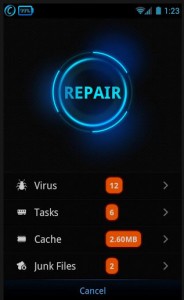
    IObit, which is best known for its excellent Advanced SystemCare suite for Windows, has a useful all-in-one Android security and performance optimization app called Advanced Mobile Care.
    This performs real-time virus scans and offers a range of handy tools including Anti-theft, Battery Saver, Game Speeder, App Manager, Task Killer, Privacy Locker, Privacy Advisor and Cloud Backup. It works with most devices running Android 2.2 and up.

    I generally have to charge my smartphone pretty much every day, which can get annoying. Battery Doctor, available for both Android 2.2+ and iOS 4.3 and later, can help prolong battery life. There’s a one-tap power saving option which will automatically optimize battery usage, and the app can tell you exactly how many more minutes of battery life you have left. You can also use it to turn off power draining features to give you an extra boost.

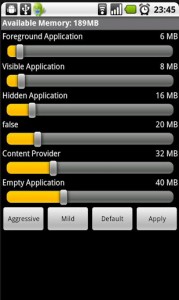
    Iolo, the developer responsible for System Mechanic, has an Android app called Auto Memory Manager. As you can guess from the name, this lets you customize the out-of-memory manager settings on Android phones and tablets so you don’t have to do it yourself with task killers. The new release shows how much memory has been freed, and how many times it has killed off troublesome apps. It should work on any device running Android 1.6 onwards.

    Clean Master, which I covered previously, does a good job of freeing up space and resources on your Android device. It can clean the cache, remove unused files, clear the search history, uninstall unused apps and free up RAM by killing running tasks. It requires Android 2.1 and up.

    Piriform also has an Android version of CCleaner in development which should be available soon.

    Those of course are just some of the many system cleaning apps available for Android. Do you have any favorites that you use? Share your recommendations in the comments below.

    Photo Credit: Kirill__M/Shutterstock

  • Is Windows tracking every folder you open?

    Every time you create, modify or access a folder on your PC, Windows records these details in the Registry. There’s nothing shady about this — the action is a key part of recording your folder view settings, and maintaining a list of your favorite folders — but it does introduce a privacy risk, as snoopers can use the data to track some of your PC activities.
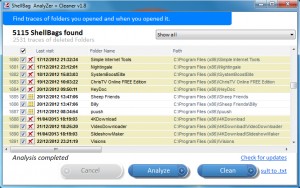
    Exactly how much information is exposed here will vary, but if you’re not already familiar with the issue then it makes sense to check your PC with the free ShellBag AnalyZer & Cleaner. There’s no adware, no installation required, just download and launch the program and in a few seconds you’ll have the full picture.

    The initial report presents you with a simple table, listing each opened folder, its name, path, and last visit date. You can click any column header to sort by that field, too, so for instance clicking “Last visit” will show you the folders you’ve browsed in time order.

    It’s surprising how much data can be available here. On one test PC, ShellBag AnalyZer & Cleaner found traces of over 5,000 folders opened, stretching back for years (although you can filter the report in various ways if you’d like to make it more manageable).

    What’s more, this list also includes deleted folders. And so while you might think you’ve removed any trace of something sensitive by deleting the folder where it was stored, that’s not necessarily the case: dates and times when you opened that folder may still be visible here.

    If you’re worried about any of this, though, clicking Clean will provide some possible solutions. The program can delete references to particular folder types, scramble dates and times, even securely overwriting this information so there’s no way it can be recovered later. (Which seems like overkill to us, but it’s good to have the option.)

    It’s important to be careful about the options you select, however. If you delete the references to folders which still exist then you’ll lose their Explorer view settings, for instance — perhaps not what you want. And ShellBag AnalyZer & Cleaner can also delete references to system folders, but says that’s “not recommended”.

    Neither of these options is selected by default, so don’t let that put you off using the program — just be sure to pay attention when you’re exploring what it can do.

    Photo Credit: Brian A Jackson

  • Pantech Vega Iron is official, features 5-inch 1080p display with a very small bezel

    Pantech_Vega_Iron

    Pantech plans on giving Samsung, HTC, and LG a run for their money with the Vega Iron. We told you about this one last week, but Pantech just made it official. It will come with a 5-inch 1080p display, a 1.7GHz quad-core Qualcomm Snapdragon 600 CPU, 2GB of RAM, 32GB of storage, 13MP rear camera, 2150mAh battery, WiFi that supports 1 gigabit, and Android 4.1.2.

    The Vega Iron sports a metal frame and the smallest bezel ever in a smartphone, at 2.4-millimeters. Look for this one to go on sale in Korea, but we have no word on if it will appear in other areas.

    source: Pantech

    Come comment on this article: Pantech Vega Iron is official, features 5-inch 1080p display with a very small bezel

  • Nokia sells an encouraging 5.6 million Lumias

    Have you ever heard the saying “Better late than never”? After a string of modest (and even disappointing) quarters, Nokia’s Windows Phone bet is starting to pay off as Lumia sales finally show noticeable signs of improvement.

    In Q1 2013, the Finnish manufacturer managed to sell a not-so-shabby 5.6 million Lumia smartphones, roughly two-thirds of which are Windows Phone 8-based devices such as the Lumia 920 and Lumia 820. Lo and behold, Lumia sales even surpassed those of the low-end Asha and Symbian smartphone series, with Nokia managing to move just five million of the former and 0.5 million of the latter. Considering the price difference between Windows Phone devices and Asha and Symbian-based ones, that is impressive.

    Windows Phone Rises

    “We have areas where we are making progress, and areas where we are further increasing the focus. For example, people are responding positively to the Lumia portfolio, and our volumes are increasing quarter over quarter”, says Stephen Elop, Nokia’s CEO.

    Quarter over quarter sales of Lumia devices have increased by 27 percent from 4.4 million in Q4 2012, to 5.6 million in Q1 2013. That is impressive considering that this is the first quarter after the Winter shopping season.

    Nokia is positive about the next quarter as well. “In the second quarter 2013, supported by the wider availability of recently announced Lumia products, Nokia expects the sequential growth in Lumia unit volumes to be higher than the 27 percent sequential growth in the first quarter 2013”, says the Finnish manufacturer.

    The “recently announced Lumia products” include the Lumia 720, Lumia 520 and Lumia 620, all of which are designed to expand Nokia’s reach to a wider variety of market segments. The other two Windows Phone 8 devices in its lineup are the Lumia 920 and Lumia 820, which are aimed at the high-end and mid-range smartphone buyer, respectively.

    The average selling price of Lumia devices was EUR182 in Q1 2013, down by 5.2 percent from EUR192 in Q4 2012. The gross margin on Windows Phone 8-based Lumia smartphones is “somewhat above the overall Smart Devices gross margin of 20.7 percent”.

    But Sales of “Smart Devices” are Down

    Sales of smart devices have decreased by 49 percent year over year, from 11.9 million in Q1 2012, to 6.1 million in Q1 2013, and by eight percent quarter over quarter, from 6.6 million in Q4 2012 to 6.1 million in Q1 2013″.

    “The year-on-year decline in our Smart Devices volumes in the first quarter 2013 continued to be driven by the strong momentum of competing smartphone platforms and our portfolio transition from Symbian products to Lumia products. The decline was primarily due to lower Symbian volumes, partially offset by higher Lumia volumes”, says Nokia.

    “On a sequential basis, the decrease in our Smart Devices volumes in the first quarter 2013 was primarily due to lower Symbian volumes, partially offset by higher Lumia volumes as we started shipping the Lumia 620 in significant volumes and broadened the geographical distribution of the Lumia 920 and Lumia 820. On a geographical basis, Lumia volumes increased sequentially in all regions except for North America”, the Finnish manufacturer adds.

    Stock Market Impact

    Yesterday, before Nokia announced the Q1 2013 financial results, stock traded for $3.58 per share at market closing time. At the time of writing this article, in pre-market trading, Nokia’s stock is trading for $3.12 per share, down by 12.29 percent from yesterday, likely due to the lower overall sales of smart devices.

    Photo Credit: suphakit73/Shutterstock

  • Verizon profit climbs to $1.95 billion in Q1 on solid subscriber growth

    Verizon profit, sales climb in Q1
    Verizon Communications posted its first-quarter earnings results on Thursday, showing solid income and revenue growth. The nation’s No.1 carrier reported EPS growth of 15.3% in the first quarter as Verizon earned $0.68 per share, or $1.95 billion, compared to $0.59 in the same quarter last year. Sales also climbed 4% to $29.4 billion, narrowly missing the Street’s $29.54 billion consensus. Smartphones accounted for 61% of Verizon’s postpaid customer base which grew by a net 677,000 subscribers in the first quarter. The carrier also said it activated 4 million iPhones during Q1 2013, beating Wall Street’s 3.5 million-unit consensus. Verizon shares climbed 1.94% during Thursday’s pre-market session. The carrier’s full press release follows below.

    Continue reading…

  • Microsoft ranked second on EPA green list

    A company that operates huge data centers around the world is probably not the thing that springs to mind when you think ‘green’. But that is exactly the case in the latest Green Power Partnership Top 50 List released by the United States Environmental Protection Agency.

    The EPA rankings of usage figures are based on annualized partner contract amounts (kilowatt-hours). Microsoft’s Josh Henretig announces “According to the EPA, Microsoft is purchasing nearly 1.9 billion kWh of green power, which is enough energy to meet 80 percent of Microsoft’s electricity use in the US”.

    The number is a 70 percent increase over the previous year when Microsoft used 1.1 billion kWh of green energy. The company puts it in perspective as being the equivalent of avoiding the carbon dioxide emissions of nearly 285,000 passenger vehicles.

    Henretig goes on to boast that “our green energy use also qualifies Microsoft for EPA’s Green Power Leadership Club, a distinction given to organizations that have significantly exceeded EPA’s minimum purchase requirements”.

    This is the second consecutive year in which Microsoft has made the EPA top 50 list, but moving up to number two was a major accomplishment for the software giant. The company also ranked second on the Top 20 Tech & Telecom list, behind Intel. A big portion of this success is down to the company’s move to “smart buildings“.

    Photo credit: Jannoon028/Shutterstock

  • Chrysler Touts Quality in New Ad Campaign, Attacking Toyota’s Brand – Seriously?

    Chrysler, the perennial bottom feeder on quality awards and reports, is planning on embarking on an Ad campaign highlighting their quality. Apparently, they think they can compete directly with Toyota’s known reputation for quality. Seriously.

    Chrsyler Touts Quality in New Ad Campaign - Seriously?

    Reports say that Chrysler’s new Ad campaign will highlight their quality while attacking Toyota’s reputation. Really.

    This shocking news comes from a Forbes story where Chrysler’s Group’s head of marketing, Olivier Francois reportedly said that he “wants to attract import owners to Chrysler vehicles by focusing on quality, technology, fuel economy and style,” but to “take back the lead in these four things.”

    Apparently, the plan is to alter the “Imported from Detroit” campaign to just be “Imported” as a way to position Chrysler as a genuine competitor for imports makers like Toyota or Audit.

    While it is true that the “Imported from Detroit” campaign has been great marketing for Chrysler as a reminder to the American public that they survived the bailout and haven’t closed, attacking Toyota’s quality reputation as a next step seems like a stretch. As has been reported on this site several, several times, Chrysler products are rarely known for quality. Rather they are known for quality lapses and poor ratings.

    In fact, there have been many comments on forums that point to the Ram 1500 – Truck of the Year – being delayed due to “constrained” parts supplies. These parts shortages are linked to the new truck features like the air suspension and eight-speed transmissions. The fact is that other truck makers have considered using these “innovations,” but decided against them with quality concerns (like Toyota).

    Chalk this story up to another interesting (stupid) move by the twice-bailed out Italian owned car maker.

    When you think of Chrysler, do you think “quality?”

    Related Posts:

    The post Chrysler Touts Quality in New Ad Campaign, Attacking Toyota’s Brand – Seriously? appeared first on Tundra Headquarters Blog.

  • Languages Your Company Should Speak (But Has Never Heard)

    A few months ago, Microsoft announced the release of Windows 8 in a language that many tech analysts found to be a surprising choice — Cherokee. Just a decade ago, this Native American language had no speakers under the age of 40 with conversational fluency. Today, it has a speaker base of around 16,000 people.

    In a similar vein, Google announced last year that it was supporting the Endangered Languages Project, an initiative to allow people to share resources and information about languages on the verge of extinction. Of around 6,500 languages spoken today, approximately 3,000 are considered to be endangered. Google has a history of launching products in languages that fall outside of the mainstream. Its flagship search product has been available in Irish Gaelic for many years, even though the language has only about 133,000 native speakers, all of whom also speak English.

    Why do organizations like Microsoft and Google care about languages with so few speakers? Without a doubt, providing members of linguistic minority groups with access to technology in their native tongues is very important. It empowers these communities, enabling their languages to survive and thrive in the digital age. However, before we jump to the conclusion that Microsoft and Google’s efforts are solely altruistic, let’s consider some important facts.

    Back in 2003, Mark Davies carried out an important analysis of gross domestic product (GDP) by language use. He found that speakers of English and Chinese had the most purchasing power, followed by other languages used within major world economies, such as Japanese, Spanish, and Russian. However, the amount of spending power represented by the remaining thousands of languages was significant — accounting for 12.5% of the world’s GDP. In other words, according to his analysis, $12.5 out of every $100 corresponds to someone who does not speak a major world language.

    More recent data from Internet World Stats displays a similar trend. Of nearly 2 billion internet users estimated in 2010, 82% spoke one of 10 macro-languages — English, Chinese, Spanish, Japanese, Portuguese, German, Arabic, French, Russian, and Korean. And the remaining 18%? They speak one of the world’s remaining 6,500 micro-languages.

    Less common languages might not seem that important individually, but when you take them collectively, they pack a powerful economic punch. What’s more, their force only stands to grow stronger as time goes on. Meanwhile, the relative importance of English in the world is set to decline. According to research from Brookings Institution scholar Homi Kharas, the global middle class will double in size, from 2 billion people today to 4.9 billion in 2030. The European and American middle classes currently account for 50 percent of the global total, but by 2030, will account for 22 percent. Asia, where more than 2,000 languages are spoken, will account for 64% of the global middle class.

    Much of that growth will come from people living in China and India. China has 292 living languages, many of which have millions of native speakers. You might never have heard of Uyghur, for example, but it has 10 million speakers, or about three times the number of residents of Chicago. In India, where 415 different languages are spoken, there are 30 languages that each has more than a million native speakers, such as Kannada, with 38 million speakers (or 12 Chicago’s).

    It might seem baffling for us to consider that English may no longer dominate in commercial and online worlds. Yet, a prominent British linguist, Nicholas Ostler, highlights the same trend. In his book, “The Last Lingua Franca: English Until the Return of Babel,” Ostler examines the conditions that led other languages, like Latin, to fall out of widespread use, arguing that English and its global dominance are currently in decline.

    This phenomenon also echoes the findings of the business writer and entrepreneur Chris Anderson, who wrote about the growing importance of niche markets in his book, “The Long Tail: Why the Future of Business is Selling Less of More.” Eric Schmidt commented that Anderson’s insights “influence Google’s strategic thinking in a profound way.” That influence apparently extends into Google’s view on the long tail of languages and targeting niche linguistic markets, especially as more people around the world come online.

    Companies like Microsoft and Google care about less common languages, but not out of charity alone. If you want to maintain your status as a market leader and secure it for the future, one of the savviest options is to develop the market itself. This involves not just taking your product or service into a new market with known demand, but creating conditions that will enable demand to emerge in the first place. One of those conditions? The ability to offer your products and services to people directly, and in a language they call their own.

  • Discovering Species – Just a Click Away

    The USGS makes finding the locations (and more) of U.S. species a lot easier with the new digital resource – BISON

    Biodiversity Information Serving Our Nation or BISON is the only system of its kind; a unique, web-based Federal resource for finding species in the U. S. and territories.  Its size is unprecedented, offering more than 100 million mapped records of nearly every living species nationwide and growing. And the vast majority of the records are specific locations, not just county or state records.

    What’s more, BISON provides an “Area of Interest” search capability in which users can query by drawing the exact boundary around their area of interest, down to and including towns, villages, or even much smaller areas such as parks. For instance, New York City’s Central Park has more than 100,000 “species occurrences” recorded in BISON, with each species noted in detail. Other BISON search options include querying the species by scientific or common name, year range, state, county, basis of record, or provider institution.  

    As for the results, BISON displays them in both an interactive map and a list format. Users can click on each species occurrence point to retrieve more information, such as the institution providing the data, the collector, the date collected, and whether it was from a collection or an observation.  Further, occurrences can be dynamically visualized with more than 50 other layers of environmental information in the system. Extensive web services are also available for direct connections to other systems.

    “The USGS is proud to announce this monumental resource”, said Kevin Gallagher, Associate Director, Core Science Systems,” and this is a testament to the power of combining the efforts of  hundreds of thousands of professional and citizen scientists into a resource that uses Big Data and Open Data principles to deliver biodiversity information for sustaining the Nation’s environmental capital”.

    “BISON is destined to become an indispensable toolkit to manage species occurrence data to support scientific, educational, and policy-making activities in the US”, Dr. Erick Mata, Executive Director of the Encyclopedia of Life explained.  “This is highly complementary and synergistic with EOL’s efforts to raise awareness and understanding of living nature.”

    “With BISON, the USGS takes a big step toward making biodiversity data held within Federal agencies easier to find and use”, added Mary Klein, President & CEO of NatureServe. “I am enthusiastic about future opportunities to work with USGS to increase collaboration among Federal, state and private data holders.”

    USGS Core Science Systems Mission Area, which developed the resource, expects that BISON users will be broad-based and include land managers, researchers, refuge managers, citizen scientists, agriculture professionals, fisheries managers, water resource managers, educators, and more.

    Land managers, for instance, might be looking for a piece of land to purchase for conservation—but first they want to know what species have been documented for that parcel. BISON will tell them after only a few mouse clicks.

    BISON serves as the U.S. Node of the Global Biodiversity Information Facility (GBIF) and will form an integral part of EcoINFORMA, the information delivery strategy in “Sustaining Environmental Capital: Protecting Society and the Economy,” a recent report by the President’s Council of Advisors on Science and Technology (PCAST).

    “BISON responds directly to a key need PCAST pointed out in ‘Sustaining Environmental Capital’ – to make Federal environmental data available, inter-operable, and usable to the public,” said PCAST member Rosina Bierbaum, “We look forward to this ‘biodiversity’ hub being supplemented by complementary ecological data hubs by other Federal partners, to further the goal of helping communities across the Nation make increasingly wise planning and management decisions.”

    BISON already includes millions of points from the Federal investment in biodiversity research. It is formally cooperating with other Federal agencies to greatly expand the delivery of federally funded biodiversity data for the greatest possible good. Hundreds of thousands of citizen and professional scientists have collected the data in BISON. Non-governmental organizations, state and local governments, universities, and many others are also participating in this enormous undertaking.

    The USGS has built and maintains BISON, which is hosted on the massive Federal computing infrastructure at Oak Ridge National Laboratory.

    To learn more, visit: http://bison.usgs.ornl.gov or contact the USGS BISON Team at [email protected].

    The USGS Core Science Analytics and Synthesis program within Core Science Systems is home to BISON and focuses on innovative ways to manage and deliver scientific data and information. The program implements and promotes standards and best practices to enable efficient, data-driven science for decision-making that supports a rapid response to emerging natural resource issues. One of the ways this is accomplished is by developing national data products that increase our understanding of the Earth’s natural systems.