Category: News

  • DISH Network targets Sprint with competing $25.5B bid to trump SoftBank offer

    dish_network_sprint_logos_combined

    DISH Network announced today that they have submitted a merger proposal to Sprint with a value of $25.5 billion. The offer consists of $17.3 billion in cash and another $8.2 billion in stock. According to DISH Network’s news release, the cash portion of the deal represents an 18% premium over the offer currently on the table from SoftBank. DISH Network also points out that the ownership proposal for stockholders is a better deal as Sprint stockholders will end up with a 32% in the entire merged company whereas SoftBank is only offering a 30% stake in the Sprint portion of the company if they buy it up. According to DISH Network, the merger with Sprint will create a unique company that can offer customers video, broadband, and voice services both in-home and out-of-home.

    Keep in mind Sprint is also in the process of acquiring full ownership of Clearwire, but that deal is contingent on the closing of the SoftBank deal. With a competing offer now on the table, it is not clear how that might impact the acquisition of Clearwire. Sprint has not yet issued a response to this latest offer. Hit the break for the full press release issued by DISH Network.

    DISH Network Proposes Merger with Sprint Nextel Corporation for $25.5 Billion

    U.S. technology leader with track record of disrupting entrenched incumbents presents superior alternative to pending SoftBank proposal – DISH offers more cash and a greater ownership stake
    Sprint shareholders would receive $7.00 per share, consisting of $4.76 in cash and stock representing approximately 32% in a company with a significantly enhanced strategic position
    Creates an industry-leading spectrum portfolio and the only company that can offer customers a fully-integrated, nationwide bundle of in- and out-of-home video, broadband and voice services
    Delivers substantial synergies and growth opportunities estimated at $37 billion in net present value, including an estimated $11 billion in cost savings

    ENGLEWOOD, Colo.–(BUSINESS WIRE)–DISH Network Corporation (NASDAQ: DISH) today announced that it has submitted a merger proposal to the Board of Directors of Sprint Nextel Corporation (NYSE: S) for a total cash and stock consideration of $25.5 billion. The DISH proposal clearly represents superior value to Sprint shareholders, including greater ownership in a combined company that is better positioned for the future with more spectrum, products, subscribers, financial scale and new opportunities.

    DISH is offering Sprint shareholders a total consideration of $25.5 billion, consisting of $17.3 billion in cash and $8.2 billion in stock. Sprint shareholders would receive $7.00 per share, based upon DISH’s closing price on Friday, April 12, 2013. This consists of $4.76 per share in cash and 0.05953 DISH shares per Sprint share. The cash portion of DISH’s proposal represents an 18% premium over the $4.03 per share implied by the SoftBank proposal, and the equity portion represents approximately 32% ownership in the combined DISH/Sprint versus SoftBank’s proposal of a 30% interest in Sprint alone. Together this represents a 13% premium to the value of the existing SoftBank proposal.

    “The DISH proposal clearly presents Sprint shareholders with a superior alternative to the pending SoftBank proposal,” said Charlie Ergen, Chairman of DISH Network. “Sprint shareholders will benefit from a higher price with more cash while also creating the opportunity to participate more meaningfully in a combined DISH/Sprint with a significantly-enhanced strategic position and substantial synergies that are not attainable through the pending SoftBank proposal.”

    Mr. Ergen continued, “A transformative DISH/Sprint merger will create the only company that can offer customers a convenient, fully-integrated, nationwide bundle of in- and out-of-home video, broadband and voice services. Additionally, the combined national footprints and scale will allow DISH/Sprint to bring improved broadband services to millions of homes with inferior or no access to competitive broadband services. This unique, combined company will have a leadership position in video, data and voice and the necessary broadband spectrum to provide customers with rich content everywhere, all the time.”

    The proposed combination will result in synergies and growth opportunities estimated at $37 billion in net present value, including an estimated $11 billion in cost savings.

    DISH has provided additional information regarding the proposed merger via a dedicated transaction microsite that can be accessed at http://www.CompleteDishSolution.com.

    Barclays is acting as financial advisor to DISH.

    Following is text of the letter that DISH sent to Sprint Nextel Corp. Board of Directors on April 15, 2013.

    Board of Directors
    Sprint Nextel Corporation
    6200 Sprint Parkway
    Overland Park, KS 66251
    Attn: James H. Hance, Jr., Chairman of the Board

    Dear Jim:

    On behalf of DISH Network Corporation (“DISH”), I am submitting this proposal for a merger between DISH and Sprint Nextel Corporation (“Sprint”). Our proposal provides Sprint shareholders with a superior alternative to the pending SoftBank Corporation (“SoftBank”) proposal. It provides more cash and affords your shareholders the opportunity to participate more meaningfully in a combined DISH/Sprint, which will benefit from a significantly enhanced strategic position and substantial synergies that are not attainable through the pending SoftBank proposal.

    We are offering Sprint shareholders a total consideration of $25.5 billion, consisting of $17.3 billion in cash and $8.2 billion in stock. Sprint shareholders would receive $7.00 per share, based upon DISH’s closing price on Friday, April 12, 2013. This consists of $4.76 per share in cash and 0.05953 DISH shares per Sprint share. The cash portion of our proposal represents an 18% premium over the $4.03 per share implied by the SoftBank proposal, and the equity portion represents approximately 32% ownership in the combined DISH/Sprint versus SoftBank’s proposal of a 30% interest in Sprint alone. Together this represents a 13% premium to the value of the existing SoftBank proposal.

    Our proposal provides a highly-compelling and unique opportunity for Sprint shareholders. We are offering an ownership interest in a combined company with a comprehensive product and services suite, a significantly enhanced subscriber base, considerable financial and operating scale, as well as a spectrum portfolio that would lead the industry. As a result, this merger creates sizable cost and CAPEX savings and promises extensive new revenue opportunities.

    Leveraging both companies’ existing assets and expertise, we will be the only company able to offer a fully-integrated, nationwide bundle of in- and out-of-home video, broadband and voice services to meet rapidly evolving customer preferences. The new company’s assets will immediately establish national cross-platform leadership and will position the company to deliver innovative services while expanding our collective subscriber base.

    The proposed combination will result in synergies and growth opportunities estimated at $37 billion in net present value. This includes an estimated $11 billion in cost savings, representing approximately $1.8 billion in annual run-rate cost synergies by the third year after closing.

    Further, our combined national footprints and scale will allow us to efficiently develop our joint spectrum assets to provide advanced services to the millions of homes with inferior or no access to competitive broadband services.

    I am proud of the company we have built and believe we will be an excellent partner to Sprint. Like Sprint, DISH possesses a strong tradition of innovation and industry leadership. We created the third largest pay-TV provider while competing with incumbent cable monopolies and other entrenched operators. DISH has consistently led our industry in service and technology delivery with award-winning innovations like Hopper® with Sling®. Our history of value creation is outstanding. Investors in our 1995 initial public offering have enjoyed a total return of 27 times their original investment, significantly outperforming the broader markets and our peers. We also have a proven track record of responsible capital management.

    DISH has significant experience structuring and consummating strategic transactions and only needs to complete confirmatory due diligence, which we believe can be done quickly with your cooperation. We have examined your merger agreement with SoftBank and we would be prepared to execute a definitive merger agreement on substantially similar terms and conditions. Though not a condition of our proposal, we anticipate that the pending transaction with Clearwire would be completed. We are confident that we can obtain all necessary approvals within a reasonable timeframe.

    We intend to fund the $17.3 billion cash portion of the transaction using $8.2 billion of our balance sheet cash and additional debt financing. We have a proven track record in raising capital to fund strategic initiatives and have received a Highly Confident Letter from our financial advisor, Barclays, confirming our ability to raise the required financing.

    We would be pleased to discuss our plans for the combined company and we are available at any time to meet with the Sprint Board, management and advisors to answer any questions about our proposed merger. We are confident that the Sprint Board will share our view that this proposed merger offers an excellent opportunity for the equity holders of Sprint to realize a superior value for their shares that is unavailable to them under the SoftBank proposal.

    While it would have been our preference to have confidential discussions regarding this proposed merger, your existing agreement with SoftBank and the impending deadlines associated with your shareholder vote, will compel us to confirm our intentions publicly. We look forward to hearing from you.

    Very Truly Yours,

    DISH Network Corporation

    Charlie Ergen
    Chairman

    Come comment on this article: DISH Network targets Sprint with competing $25.5B bid to trump SoftBank offer

  • Liquid server cooling gains a few more backers, and enterprises could follow

    In the next few months, two webscale companies will make announcements about plans to immerse their servers in mineral oil and set them in special racks on production scale, which could help operators save on energy costs, according to a recent report from Quartz. Meanwhile, the company with the mineral oil and special racks, Green Revolution Cooling, is in talks with a number of other webscale companies about production-scale implementation, CEO Christiaan Best told me. The news is a sign that more commercial data center operators are getting over their fears of mixing servers and liquid.

    Interest in liquid cooling — as opposed to standard air cooling — in applications other than high-performance computing has been slowly rising since Austin, Texas-based Green Revolution and another provider, Iceotope, came out of stealth mode in 2009, but Green Revolution in particular has seen a tidal wave of inquiries in the past nine months or so, Best said.

    Google has shown interest; the company got a shout-out from Amazon Web Services Distinguished Engineer James Hamilton and Intel also liked the results of a year-long test of servers inside the Green Revolution gear. Since the Intel news, there were “a couple big people who started testing us, and those people have been talking,” Best said.

    Enterprises are more risk-averse than webscale companies and don’t care as much about cost savings, but Best said he thinks wider enterprise adoption could be just three to five years away.

    The question is whether more data center administrators will be able to wash their hands of concerns about removing fans from servers, making hard disk drives liquid-resistant (or just using solid-state drives), bringing in specialty racks and — not to mention — splattering oil on themselves. GigaOM Research Analyst Pedro Hernandez pointed out these issues (subscription required) in late 2009.

    But webscale companies can skip the process of modifying servers to fit liquid-cooled racks and just buy custom servers through legacy vendors or lesser known manufacturers with original-design roots that are emerging as direct sellers, such as Quanta. And with more webscale companies rolling up their sleeves, Best’s enterprise forecast isn’t so hard to believe.

    Related research and analysis from GigaOM Pro:
    Subscriber content. Sign up for a free trial.


  • Verizon’s Droid DNA gets updated to fix SIM card detection

    HTC_DROID_DNA_TA_Front_01

    The Verizon Droid DNA has a new update out that improves SIM card detection. We don’t have much more information other than “Verizon Wireless and HTC encourage you to download this update”. The update is 2.06.605.1 710RD and is available now.

    That’s it folks, as there isn’t much more to add. Let us know if you have received this update and if it made things better or worse.

    Source: Verizon Wireless

    Come comment on this article: Verizon’s Droid DNA gets updated to fix SIM card detection

  • Boston Marathon: Explosions Rock the Finish Line; Injuries, Deaths Reported

    (Image courtesy Dan Lampariello)

    [UPDATE 3:] Amateur video of the explosions is now beginning to appear online:

    [UPDATE 2:] It is now being reported that the explosions were caused by bombs and that more explosive devices have been found. Police are currently dismantling them. Police are treating bags abandoned at the scene as potentially dangerous.

    Marathon runners who have not completed the race have been diverted to Boston Common

    [UPDATE:] The Boston Police Department is currently reporting that 23 people have been injured and two people have died as a result of the explosions.

    [ORIGINAL]
    Two explosions have reportedly gone off near the finish line of the Boston Marathon. The cause of the explosions, which occurred near viewing stands on Boylston Street, has not yet been determined.

    Reports from the scene of the explosions indicate that several people have been injured, some of them severely. Sean Kelly, a reporter for Boston news station WCVB has been tweeting updates on the situation since the explosions occurred and revealed that at least some of the injured have lost limbs:

    Other citizens who were at the scene also took to social media, sharing video of the explosion and graphic pictures of the aftermath:

  • Windows 8 is the new XP

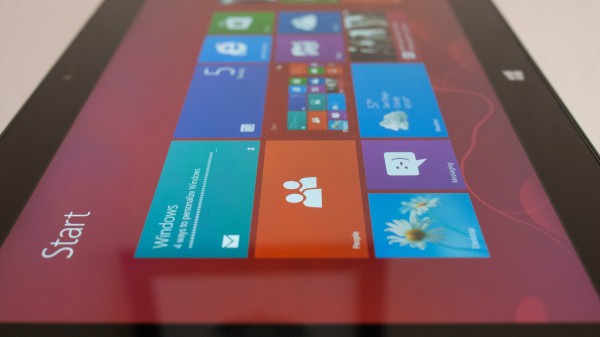
    Microsoft’s newest and oldest supported PC operating systems share some strange similarities. Windows 8 and XP launched during times of tepid computer sales, forecasts of low adoption and initially weak sales. Neither lifted PC shipments during the launch quarter. Yet the older software went on to be such a workhorse, as much as 40 percent of the install base clings to the OS — nearly 12 years after launch. That’s the future I see. Windows 8 isn’t the new Vista, as so many pundits proclaim, but the new XP.

    I am quite vocal about the changing of computer eras, a position taken up before Apple started selling iPhone in early summer 2007. But the change is a process gradual at first that accelerates over time. In the case of Windows or the typical personal computer set against cloud-connected devices there can be redefinition, and, with it, renewed relevance. No one should underestimate Microsoft or ignore the past when evaluating present trends. The PC and Windows died before and resurrected.

    Two Peas in a Pod

    The PC market in 2001, when XP launched, bears stark similarities to 2012, when Windows 8 debuted. Among them:

    1. PC shipments collapsed — in 2001, falling 4.6 percent globally year over year and by 11.1 percent in the United States, according to Gartner, which called performance the worst since 1985. For 2012, shipments fell 3.5 percent worldwide. IDC says first quarter 2013 was the worst since 1994.

    2. What analysts say is striking. “Economic conditions combined with saturation issues in developed markets continue to impact PC market growth rates”, Gartner’s Charles Smulders says — in January 2002. That should sound familiar to the statements made this year by Gartner and IDC analysts, who fret saturation and slow weak global economies sap PC shipments.

    Predictions are similar: “While there is a mood of optimism in the industry, having made it through the bloodbath that was 2001..we do not expect to see a significant upturn in growth until the fourth quarter of 2002” (Smulders, January 2002).

    “IDC expects the second half of 2013 to regain some marginal momentum partly as a rubber band effect from 2012, and largely thanks to the outcome of industry restructuring, better channel involvement, and potentially greater acceptance of Windows 8” (Rajani Singh, March 2013).

    3. Windows XP and 8 launched during holiday quarters, with high sales expectations. Terrorist attacks and recession muted XP, while cloud-connected device competition and global economic woes hurt Windows 8.

    4. Neither operating system lifted slumped PC shipments. Reasons differ and overlap, and many armchair pundits today fail to recognize the now hugely popular XP had a tough start, just like Windows 8.

    5. Analysts predicted slow sales for both platforms. Concurrent with XP’s October 2001 launch, Gartner predicted sales would not exceed older operating systems for two years.

    Last week, Bob O’Donnell, IDC vice president, made startling proclamation: “At this point, unfortunately, it seems clear that the Windows 8 launch not only failed to provide a positive boost to the PC market, but appears to have slowed the market”.

    Into the Crystal Ball

    Windows XP and 8 are, in their respective release frames, major upgrades. XP brought the NT kernel and true 32-bit computing to Microsoft consumer operating systems along with changes to the user interface. The change caused compatibility problems with many existing apps, with games top of list. Meanwhile, at a time of falling PC prices, XP system requirements demanded costlier computers at a time when many businesses and consumers couldn’t or wouldn’t pay more.

    Fast-forward to 2012-13, Windows 8 brings a new touch-oriented user interface that requires costlier PCs that manufacturers are reluctant to ship and consumers are cagey about buying. For example, touchscreen notebooks accounted for just 3 percent of all models last year, according to NPD DisplaySearch.

    “The majority of consumers remain unwilling to pay the price premium for touchscreen capabilities on PCs at this stage”, Isabelle Durand, Gartner principal research analyst, says. “But, even so, touchscreens and Windows 8 will represent key opportunities for PC manufacturers in the second half of 2013”.

    Something else: “Touch-screen and PC manufacturers are looking carefully at how successful these initial Windows 8 touch-screen notebook models are in the market, as the touch-screen module requirements for Windows 8 increase module costs, and those requirements are difficult to meet in high volume production”, Calvin Hsieh, NPD DisplaySearch research director, says. So, even if consumers would pay, logistical roadblocks prevent rapid rollouts.

    As such, the analyst firm sees just 12 percent penetration for touchscreen PCs this year — remember that’s the sweet spot for truly maximizing Windows 8 benefits. Meanwhile, touch panels have 100 percent penetration on tablets, the majority of which sell for less than PCs with similar capability. That makes Windows 8’s real sales success a 2014 story, like 2003 was for XP.

    But the older operating system’s sales surge came in 2004, after Microsoft released a major service pack that should have been designated a new OS version for all the changes. The software giant isn’t waiting three years to make changes that matter. Windows 8.1 is expected to ship before holiday 2013.

    When I look at XP and Windows 8, I see so many similarities about the state of the PC market, predictions about its future and what pundits say about either platform’s failures. Then there is global economic uncertainty, PC saturation and shifting buying habits — money going during 2001-03 to music players like iPod and big-screen TVs rather than new computers. Consumers displace PC spending for smartphones and tablets today. The devices are different, but the trend is the same.

    Judging these market similarities and just how good is the new OS, my guess is that Windows 8, like XP, will become Microsoft’s workhorse operating system — even more than version 7 looks like today. Critics called Windows XP and Vista failures, but only the latter flopped. Windows 8 is the new XP, and that’s a good place to be.

    Photo Credit: Joe Wilcox

  • Featured Android Game Review: Mr. Eyes [Sports & Puzzles]

    Mr.Eyes_Splash_Banner

    Are you looking for a new game to play that is not only challenging, but very, and I mean very addictive? Then look no further than Mr. Eyes from Laurent Bakowski. This one is part basketball, part physics, and part puzzle. Mr. Eyes is an alien that loves basketball and has removable eyes. Since his eyes are nice and round he uses them to score baskets. You can even change his outfits. I know all of this sounds very odd, but visually it’s pretty cool.

    Now this isn’t a “stand in front of the basket and shoot” kind of game. Each level consists of a basket that might be fixed or moving along with different obstacles. You can move Mr. Eyes from right to left via tilting your device and you shoot with a swipe-like fashion. Basically you hold your finger down and move it in the direction that you would like to shoot. You can see a line that will represent the direction the ball, I mean eye, will go in. You’re going to have to figure out the right angle to toss the eyes because you won’t be able to get a direct shot at the basket. You will probably have to bounce the eyes off either the walls or other objects. When you’re happy with the direction of your shot, you simply release your finger. Each level gives you four eyes, and your goal is to get all four in the basket. There is one huge caveat though as you only have 24 seconds to get the job done.

    You’re able to unlock the next level by scoring one basket, but you aren’t truly satisfied unless you sink all four. In this manner, it’s much like the star system found on many games like Angry Birds and Cut the Rope. There are five chapters in all with twelve levels per chapter, which will keep you really busy. This game is totally addicting and an absolute blast, not to mention very attractive looking. The only issue I have is the movement of Mr. Eyes seems a little sensitive, but I have been working with Laurent, and he’s already made a few adjustments. Right now it’s just a matter of finding the right setting to satisfy everyone. Other than that, the game is absolutely superb. If you like physics type games, you’re going to love Mr. Eyes.

    You can try Mr. Eyes for free right now, which will give you the first six levels. This will give you a very good idea of the gameplay, and if you become as addicted as I think you will, you can buy the full version for $1.19, which is peanuts for such a great game. Check out my hands on video below and hit one of the download links to get started. As always, let me know what you think.

    Features:

    • completely new, unlike anything else;
    • a precise and very handy trajectory line;
    • a selection of funny characters;
    • an original soundtrack;
    • an innovative HD graphics;
    • a full operation of the laws of gravity.

    Mr.Eyes.01
    Mr.Eyes.02
    Mr.Eyes.03
    Mr.Eyes.04
    Mr.Eyes.06
    Mr.Eyes.05
    Mr.Eyes.07
    Mr.Eyes.08

    Click here to view the embedded video.

    QR Code generator

    Play Store Download Link – Free

    QR Code generator

    Play Store Download Link – Paid

    Come comment on this article: Featured Android Game Review: Mr. Eyes [Sports & Puzzles]

  • Pica8 Launches Open Data Center Framework

    As the Open Networking Summit 2013 gets underway this week in Santa Clara, Pica8 announced its Open Data Center Framework. The framework is designed to provide the essential building blocks toward an eventual transformation to programmable data center networks, including OpenFlow 1.2 and Open vSwitch. Designed for cloud and data center service providers, the framework is an extension of its Open Networking vision, blending the conceptual benefits of the server and conventional networking worlds.

    “Server best practices are now also driving initiatives for networks, in particular, simplifying the planning and execution of upgrade processes,” said Seamus Crehan, President of Crehan Research. “Pica8’s framework for a programmable network strives to lay the foundation for an improved way to upgrade network devices, paralleling what is coined a ‘rip and replace’ model on the server side.”

    The Pica8 Open Data Center Framework will continue to leverage SDN to develop components needed to manage and provision the network. OpenFlow 1.2 and Open vSwitch bring capabilities such as GRE tunneling for overlays, traffic engineering to optimize network resources and SDN-based network taps for ensuring application flow performance.  Software release 1.7 leverages these resources, and is available immediately on all four of Pica8′s 1 GbE and 10 GbE open switches.

    “For many, utilizing SDN in their data center represents the future. And the proof in the proverbial pudding will be when managers can centrally define the application flows as needed so that applications run faster and more efficiently,” said Brad Casemore, Research Director, Datacenter Networks at IDC. “Pica8 is seeking to address this challenge, looking to provide IT shops with reduced operating costs while offering network managers greater control and flexibility.”

  • We can make our government work: A Q&A with TED Books author Lawrence Lessig

    BLOG Q-A larrylessigWhen it comes to US politics, many are frustrated that gridlock and grandstanding so often substitute for the hard job of getting things done. Just 14% of Americans say they approve of the work that Congress is doing, according to a recent Gallup poll. (Which, as a recent TED speaker notes, is lower than the approval rating for cockroaches, though higher than meth labs.)

    Underlying that disappointment is a central corruption in our electoral system, says legal activist Lawrence Lessig: the fact that Congressional candidates depend on funding from a tiny percentage of citizens, who in turn control what the rest of us get to vote on. Lawrence Lessig: We the People, and the Republic we must reclaimLawrence Lessig: We the People, and the Republic we must reclaim That’s the argument at the core of his blistering talk from TED2013. In his new TED Book, Lesterland, Lessig takes a deeper look at the problem and describes a powerful method for fixing this broken system.

    In the great literary tradition of metaphors, Lessig has created Lesterland, a large country run by a small group of people named Lester. In the book, he uses Lesterland to describe what happens when the wealthy control the powerful. While political corruption is not new, Lessig believes we now have both the technology and the social media tools needed to expose and strike at the root of this corruption. To hear more about his ideas, and how he arrived at this metaphor, we caught up with Lessig and asked him a few questions.

    Your book paints a pretty grim view that our political system is undermined by money and corruption. How did we allow this to happen? 

    We allowed it to happen simply because we’re busy with our lives: We’ve got jobs, or kids, or hobbies — maybe all together! We expect the Congress to do their job. Most of us don’t have the patience to try to keep up.

    Why has this system of corruption taken hold so firmly?

    Because it pays so well. K Street — where most lobbyist offices are in Washington, D.C. — has become one of the most profitable businesses in America. And they have convinced other businesses across America that they need K Street. So the cycle feeds itself: businesses pay lobbyists; lobbyists channel money to politicians; politicians reward the businesses.

    What gives you hope that we can change this cycle?

    The only hope is that most Americans get this and — if pushed — will create the political force to change it. What we need to do now is to push them.

    How do we do that? What can the average person do?

    The first step is to get involved. I started an organization called Rootstrikers — inspired by Thoreau’s quote: “there are a thousand hacking at the branches of evil to one striking at the root” — which recruits citizen teachers: people who recognize the corrupting influence of money and who are willing to help spread this message. At Rootstrikers you can be assigned tasks to help do that essential work. If we’re successful, then we will create the political conditions necessary to make reform possible.

    Any other specific ideas you have for how we can turn things around?

    The problem isn’t simple, but the first step is a no-brainer: We have to change the way elections are funded. If we change that, we make every other change possible. If I were King for a Day, at a minimum, I’d enact John Sarbanes’ Grassroots Democracy Act. More ambitiously, I’d enact the American Anti-Corruption Act put forwarded by the Represent.us organization.

    What are the consequences of the corrupt and money-driven system we live with?

    It’s very simple — a government that doesn’t work, or if it does, not for us. None of the most important issues facing us today can be addressed sensibly given the senselessness of this system: climate change, health care, financial reform, food safety, a tax system, the debt, inequality. You name it, and I’ll tie it to the money.

    The folks who are pulling the strings — the Lesters — have a lot to lose if your ideas are implemented. Do you expect to see an active quashing of your ideas?

    The closer we get, the more they will squeal. We need to have in place the political force that can overcome that squeal.

    Lesterland is available for Kindle and Nook, as well as through the iBookstore. Or download the TED Books app for your iPad or iPhone. A subscription costs $4.99 a month, and is an all-you-can-read buffet.

    Read an excerpt »

  • Dickens Joins Shearman & Sterling

    Jeremy Dickens has joined Shearman & Sterling’s private equity practice as a partner in New York. Most recently, Dickens was a member of the private equity practice at Weil, Gotshal & Manges where he was co-founder and co-head of its global capital markets practice.

    Shearman & Sterling Expands Private Equity Capabilities and Strengthens Capital Markets Practice with Addition of Dickens

    Shearman & Sterling has furthered its commitment to build a market-leading private equity practice with the addition of veteran lawyer Jeremy Dickens, who will join the firm as a partner in New York.
    Mr. Dickens comes to Shearman & Sterling with law firm and corporate experience. At Weil, Gotshal & Manges, he was a member of the private equity practice and co-founder and co-head of its global capital markets practice. During his 18 years with Weil, in both London and New York, Mr. Dickens represented leading private equity firms and their portfolio companies in a wide range of matters, including M&A, corporate governance, corporate restructurings, securities offerings, compliance, shareholder litigation, and SEC and corporate investigations. He also was widely respected as a top high yield debt and IPO lawyer, primarily acting as underwriters’ counsel. Throughout his career, global, UK, and US peer- and client-nominated ranking guides repeatedly named him a leading lawyer.

    In 2007, after representing Riverdeep Group in the $3.7 billion reverse acquisition of Houghton Mifflin, he left Weil to become President of the resulting company, Education Media and Publishing Group (EMPG). In that role, he was responsible for M&A, corporate finance, joint ventures, and other strategic initiatives. He served on EMPG’s board of directors and worked closely with its private equity backers. After shepherding EMPG through an out-of-court restructuring in 2009, he founded a company providing outsourcing services to large nonprofit organizations and served as an independent director of a private equity-backed bank holding company.

    “Jeremy’s arrival significantly strengthens our private equity capabilities and enhances our already well regarded leveraged finance practice,” said Shearman & Sterling global managing partner David Beveridge. “He has exceptional credentials in both areas and is highly regarded by his clients.”

    Added Shearman & Sterling Americas capital markets leader Antonia Stolper, a New York-based partner, “Our Capital Markets Americas practice already has a market-leading reputation, and having Jeremy come on board will certainly solidify our standing among clients and the broader business community.”

    Mr. Dickens will focus on expanding the firm’s private equity practice, which draws upon asset management, capital markets, mergers & acquisitions, executive compensation, bank finance, and tax groups and also provides opportunities for litigation and restructuring assignments. He also will advise Shearman & Sterling’s corporate and investment banking clients.

    “Shearman & Sterling’s long history, great reputation across critical practice areas and global footprint make it the ideal platform from which to build a private equity practice,” Mr. Dickens said. “I am honored to join a firm I have admired for so many years and I am very excited about the opportunities ahead.”
    *****
    Shearman & Sterling LLP is a global law firm with approximately 900 lawyers in 20 offices in 12 countries around the world. The firm is a leader in mergers and acquisitions, capital markets, project development and finance, complex business litigation and international arbitration, asset management and tax.

    The post Dickens Joins Shearman & Sterling appeared first on peHUB.

  • U.S. State Department To Kick Off Google+ Hangout Series

    Google announced today that the U.S. Department of State is launching a series of Google+ Hangouts, starting Friday, April 19 with one featuring Secretary of State John Kerry.

    The series follows various hangouts this year from members of the Obama administration, including the president himself.

    Google’s Ramya Raghavan writes on the official Google blog:

    Over the past year, Google+ has been used across the globe to connect people and enable free expression—from Syria Deeply, an independent news site which regularly uses Google+ and Hangouts to report about the crisis in Syria to Tom Fletcher, the British Ambassador to Lebanon, who issues dispatches from one country to another via Hangout.

    Today, the U.S. Department of State is building on this trend by announcing a new series of discussions called “Hangouts at State.” Each month, these conversations will bring people together across global boundaries to discuss the most pressing U.S. foreign policy issues, like democracy promotion, human rights, counterterrorism efforts, economic development, climate change and drug interdiction.

    Kerry’s hangout will begin at 1:00 PM E.T. on Friday. You can catch it on the Google Politics and Elections page.

  • Samsung Galaxy S 4 Lands on Telus April 27th

    Samsung_Galaxy_S_4_battery_life

    April 27th is a day to mark on your calendar my friends, that is if you live in Canada. Telus just issued a press release with all the juicy details about the Galaxy S 4. I’m getting a little ahead of myself here, because the date is only important if you preordered the device. If not, you are going to have to wait until May 3rd when the phone becomes available in stores.

    The phone will cost you $700 off contract, or $199 with a standard three year Canadian contract plus an additional $50 data plan. You have your choice of white frost or black mist.

    Continue on past the break for all the details from the Press Release 

    TELUS and Samsung Canada announce the Canadian availability of the GALAXY S4

    With the GALAXY S4 Canadians can experience more, live more and accomplish more than ever before

    TORONTO, April 15, 2013 /CNW/ – TELUS and Samsung Canada are pleased to announce that the Samsung GALAXY S4 is available at TELUS for pre-order today at www.telusmobility.com/GALAXYS4.  Customers who pre-order the GALAXY S4 will be the first to receive their devices starting on April 27 with in-store availability beginning May 3. The Samsung GALAXY S4 will be available on TELUS’ blazing fast 4G LTE network for $199 on a 3-year term with a minimum $50 monthly plan before tax or $700 month-to-month. TELUS’ 4G LTE service now covers more than 70 per cent of the Canadian population across approximately 170 markets.

    The fourth generation of the successful GALAXY S family was designed with insight from consumers to truly understand what matters most in their lives.  With an enhanced feature set, the technologically innovative GALAXY S4 truly enables Canadians to live in a world of infinite possibilities.

    Designed to get Canadians closer to what matters and make every moment meaningful, the GALAXY S4 gives consumers great enjoyment through enhancements to the user interface.  New navigation features include ‘Smart Pause’, which allows users to scroll the screen based on where they are looking.  Another feature is ‘Air View’ which allows users to hover their fingers over the screen to preview the content of an email, S Planner, gallery image or video without having to open it. And with ‘Air Gesture’, users can change the music track, scroll up and down a web page, or accept a call with a wave of the hand.

    The device features a highly crafted design that surrounds a larger screen size and battery, minimized bezel; all housed in a light (130g) and slim (7.9mm) shape. The Samsung GALAXY S4 is slimmer yet stronger, with less to hold yet more to see, with the world’s first Full HD Super AMOLED display. Equipped with 13 megapixel rear camera, the GS4 also boasts a ‘Dual Camera,’ that allows simultaneous use of both front and rear cameras and enables functions such as ‘Dual Video Call’, allowing users to make and receive a video call with friends and family while showing what you are looking at during the call.

    “Samsung is a consummate innovator and their dedication to delivering devices that enrich people’s lives shines brightly in the new GALAXY S4,” said Dave Fuller, Chief Marketing Officer, TELUS. “Our customers demand more from their phones today. They want devices that keep them connected and enable them to balance their personal interests while helping them to be more efficient – all this from a service provider that listens to them and provides an outstanding service experience on a fast and reliable network – a service provider like TELUS.  We combine the awesome GALAXY S4 with programs such as TELUS Learning Centres and the largest 4G LTE network in Canada.”

    “Samsung is proud to bring the highly anticipated Samsung GALAXY S4 to Canadians on the TELUS network,” said Paul Brannen, Vice President, Enterprise Business Solutions at Samsung Canada. “The GALAXY S4 was developed based on consumer insights and needs and this device is a proof point of people inspired innovation.  We feel that the GS4 will truly enhance the way Canadians live, inspiring them to capture unforgettable moments in more ways than ever before.”

    Availability
    The Samsung GALAXY S4 is available to pre-order today from TELUS with device delivery commencing on April 27, and in-store availability starting May 3.  At Canadian launch, two color options will be available – Black Mist and White Frost; with additional color options to follow later this year.  For further product and availability information, please visit www.telusmobility.com/GALAXYS4.

    Come comment on this article: Samsung Galaxy S 4 Lands on Telus April 27th

  • Verizon confirms 12-month smartphone payment plans beginning April 21st

    Verizon confirms upcoming 12-month smartphone payment plans
    Following Verizon CEO Lowell McAdam’s comment that his company would happily follow in T-Mobile’s footsteps and offer contract-free smartphones with payments spread out over time, the carrier announced that it is taking the first steps toward that goal — sort of. In an update to Verizon’s original announcement that it will abandon early upgrades, the company has confirmed that beginning April 21st, it will make select smartphones and tablets available on a 12-month payment plan that does not require a new service contract. This is great for customers who plan to upgrade to the latest and greatest each year, but Verizon is the real winner here: The carrier’s service pricing will remain unchanged, which means users who opt for the 12-month payment plan will also still be forking over the device subsidies that are built into the cost of Verizon’s smartphone plans.

  • Paris Jackson: Surgeon Could be Her Career Choice

    While her brother Prince has begun a career on-screen as a correspondent for Entertainment Tonight, Paris Jackson still has a few years to decide where she wants her life and fame to take her. The 15-year-old high school student this week spoke with The Daily Mail about what she hopes to do in the future.

    Jackson, who is already receiving ‘offers’ from NFL cheerleading squads based on blurry footage of her performance cheering at a basketball game, told The Daily Mail that she really wants to be a heart surgeon. The ambition comes, she says, from her impulse to help people.

    Jackson also described to the publication what it was like to grow up with her father, pop star Michael Jackson. In particular, she stated that her father made her and her brothers cover their faces in public so that they “could have what he didn’t, which was a normal childhood.”

    Jackson also expressed a desire to renovate her father’s infamous Neverland estate, saying that she could use it to benefit “less privileged children.” Paris and Prince have stated in the past that they intend to purchase the property with their inheritance.

  • Samsung Galaxy S4 Launches April 26 On AT&T [Rumor]

    AT&T will be opening up pre-orders for Samsung’s latest flagship device – the Galaxy S4 – tomorrow. There still isn’t a launch date for the device just yet, but rumors from last week suggested that we’d be seeing it sooner rather than later. A new leak says just as much.

    Engadget received an internal memo from an anonymous source that lists the S4 release date across three major carriers – AT&T, Verizon and T-Mobile. As expected, the Galaxy S4 will be hitting AT&T first on April 26. T-Mobile subscribers won’t have to wait much longer as the device will launch for them on May 1. Those with Verizon will unfortunately have to wait a month as its launch is scheduled for May 30.

    The memo says the above launch dates are tentative at the moment so things can change. The whole thing could be fake as well, but it certainly fits with previous comments from T-Mobile’s CEO when he said that the S4 would be coming to the network on May 1.

    If these tentative launch dates stay the same, we should start seeing the Galaxy S4 going up for pre-order on T-Mobile and Verizon shortly. The leaked memo doesn’t mention any other carriers though so those waiting for word on Sprint’s pre-order and launch plans will probably have to wait a little longer.

    On a final note, those interested in the S4 should probably get their pre-order in as soon as they open for your respective carrier. The memo says that inventory will be “highly constrained” at launch. We can hope that a repeat of last year’s Galaxy S III launch won’t be repeated, but Samsung may very well run out of stuck as soon as it launches.

  • Lightroom 5 Beta Now Available On Windows, Mac

    Are you a professional photographer traveling the world looking for that perfect shot? Or are you an amateur photographer taking pictures of your dog on the weekends? In either scenario, you’re going to need some photo editing software to really bring out the life in your photos. Adobe might just have what you need.

    Adobe announced that Lightroom 5, the successor to its popular Lightroom 4 photo editing software, will be available through a free public beta starting today. Fans of Lightroom will be able to test all the new features in the latest version of Lightroom before it becomes commercially available later this year.

    “Lightroom is the essential tool for busy professional and discerning amateur photographers, who are uncompromising in the pursuit for image quality or searching for artistic expression,” said Winston Hendrickson, vice president of digital imaging products, Adobe. “The Lightroom 5 beta is highly valuable in ensuring the new features support and address the needs of our customers and we look forward to hearing feedback.”

    Lightroom 5 has a number of new features and enhancements that promise to make the photo editing process easier than ever:

  • Advanced Healing Brush allows customers to heal imperfections and remove distracting elements
  • Upright tool analyzes an image to automatically level horizons and straighten objects like buildings to correct a keystone effect
  • Radial Gradient tool creates off-center or multiple vignette effects
  • Smart Previews allow customers to edit images without needing the original raw file
  • Video slideshow enables customers to combine still images, video clips and music in a creative HD slideshow
  • Upgrades to the Book module enhancing the ability to create, customize and order elegant photo books using a variety of tailored templates
  • The Lightroom 5 beta will be available on machines running Windows 7 SP1/8 and Mac OSX 10.7/10.8. You can grab the free beta here.

  • HTC One Hitting T-Mobile April 24, Reveals Leaked Photo

    HTC One

    The HTC One release date for other carriers has already been revealed, and now thanks to a leaked planogram, the One is expected to launch on T-Mobile April 24. The leaked planogram reveals “Stores that are carrying the HTC One” with the supposed launch date. Not all stores will be carrying the One, but this is hopefully a sign that T-Mobile customers can also get their hands on it online. Since the official unvieling of the HTC One, numerous delays have plagued the upcoming flagship device. Although this leak doesn’t make an April 24 release date official, at least T-Mobile customers now have somewhat of an idea.

    Source: TmoNews

    Come comment on this article: HTC One Hitting T-Mobile April 24, Reveals Leaked Photo

    Visit TalkAndroid for Android news, Android guides, and much more!

  • YouTube for iOS Finally Gets Live Streaming

    YouTube has just released version 1.3 of their iOS app, and it finally brings live streaming to the mix.

    Along with live streaming users can now enjoy their “My Subscriptions” feed on the Guide, which gives them access to the latest videos from all of the channels they follow.

    Back in February, YouTube updated its iOS app, adding the “Send to TV” feature which lets users seamlessly connect their app with connected televisions. Today’s update allows users to queue up videos to play on TV.

    Here’s the full list of updates with version 1.3:

    • Quick access to new uploads from subscriptions via “My Subscriptions” feed on the Guide
    • Access to Live streams
    • Queue up videos to play on TV
    • One Channel branding for video creator channels
    • Stability and performance improvements

    Streaming video is a growing aspect of the YouTube experience, and it’s great that its now available on your iOS mobile device. It’s kind of strange that YouTube unveiled this update just a day after streaming Coachella’s first weekend on the site (iOS users couldn’t stream it), but oh well. Look to the future.

    A few weeks ago, YouTube announced that they were now serving over a billion unique users a month – an incredible milestone.

    You can snag the update over at the App Store right now.

  • Bing Rolls Out Updates To Windows 8 Apps

    Microsoft announced that it is rolling out updates across its six Bing apps for Windows 8 (News, Finance, Weather, Sports, Maps Travel). The updates focus on personalization.

    Users can now customize the Bing News app to keep track of specific story categories, topics or news sources. In what is likely a play to become your alternative to Google Reader, it also now supports RSS (and offline reading).

    The Maps app now has improved driving, transit and walking directions and “up-to-the-minute” traffic incident notifications. This even includes construction. You can also save places as favorite or pin them to your start screen.

    With the Finance app now includes an updated watch-list, real-time U.S. stock updates and customizable interactive charts.

    The Sports app had added 29 sports leagues bringing the total to 65.

    The Travel app has additional content from Lonely Planet, Frommer’s and Fodor’s.

    The Weather app now has dynamically moving weather maps for cities and regions in satellite, temperature, precipitation, cloud cover and radar layers. Users can also get weather conditions for ski resorts in 24 countries.

  • Mozilla CEO: Firefox OS will work because the web is different now

    Mozilla is just a few months away from releasing its first mobile operating system and it’s still facing lots of skepticism, considering Apple and Google’s domination of the devices out there. Gary Kovacs, Mozilla’s outgoing CEO, defended the company’s move to turn the web into a third mobile operating system, one where people won’t have to choose apps over web content.

    He’s fighting public perception that native development for specific platforms isn’t working the way it was initially promised with HTML5 development. Facebook, which famously tried to embrace the open web with its HTML5-based apps, has said that was a mistake and  re-embraced native development for iOS and Android. At the Dive into Mobile conference in New York City on Monday, Kovacs said when Facebook tried it the web was different:

    “The web is much different today than it was two years ago,” he said. Important things have changed that make it easier for developers to work with the open web, including “much better GPUs on the device, better javascript performance, better APIs,” and more.

    Kovacs said offering a third option is in keeping with the company’s ethos of openness, giving more options to more device users (and by definition, carriers). That means going to countries where Apple and Google aren’t as strong: the first Firefox OS devices  countries will be where Mozilla and Firefox are known brands, and in the developing world where people are going to be buying their first mobile devices in the next few years. The first launch countries in June are Spain, Portugal, Brazil, Poland and Venezuela, Kovacs said.

    The U.S. will eventually get Firefox mobile devices, and Sprint will be a partner — but not until 2014. “We have to get to version 2, version 3 first,” he said.

    But whether it’s a developing country or ones with more established mobile consumer bases, Kovacs said he believes it can’t just be about two companies: “It’s impossible for me to beleive 5 billion people [coming online in the next few years] will get the same apps from one [app] store or one ecosystem.”

    Related research and analysis from GigaOM Pro:
    Subscriber content. Sign up for a free trial.


  • Spring iPhone sales could be further ‘depressed’ by later-than-usual iPad launch

    Later next-gen iPad launch could further hurt spring iPhone sales
    With Apple increasingly unlikely to release a new version of its iPad until the fall, at least one analyst is worried that it will spell trouble for sales of the iPhone 5 this spring. Per Barron’s, R.W. Baird analyst William Power projects “a sharper fall-off in iPhone sales due in part to heightened competition, and the lack of a March/April iPad refresh to depress this year’s sequential comparison relative to a year ago” when Apple released its third-generation tablet. Power’s remarks come amid reports that Foxconn earnings have been hurt by “disappointing” iPhone 5 sales over the past couple of months despite the fact that the iPhone 5 has been the best-selling smartphone in the world since its launch last fall.