Category: News

  • Twitter Adds Trends to 160+ New Countries and Cities

    Twitter trends let users know which topics and hashtags are the most popular at any given time. Although they can often be manipulated to boost the popularity of a Twitter-heavy contingent (looking at you, Justin Bieber fans), trends usually give a pretty good gauge of what people are talking about – you know, what’s important.

    Trends can be broken down by country and even city. So instead of looking at the trends worldwide, I can look at the trends in Chicago only. This helps users target the conversation and gives the service a more local feel.

    And now, Twitter has announced that their Trends are available in a number of new countries and cities.

    In all, Twitter has added trend support for over 160 different locations. Some of these are entire countries which have never had Twitter trends before, like Belgium, Greece, Kenya, Norway, Poland, Portugal, and Ukraine. The rest (around 130 locations) are cities getting support for the first time (inside countries that already have Twitter trends).

    “Trends are an easy way to find out what people are talking about right now –– around the world, in your country, or in your city. By checking out Trends, you can easily find breaking news and current hot topics that are most relevant to you. To find these new locations, click “Change” in the Trends sidebar on twitter.com, and select the city or country you’re most interested in,” says Twitter.

    If you don’t yet have trends in your city of country, don’t worry. Twitter says they are constantly looking to expand trends to more locations. Just last December, Twitter added trend support for 100 new cities.

  • Amazon takes another step to suck up more enterprise data

    Face it, for all the drama around Microsoft’s recent travails, it owns a good chunk of today’s enterprise. I would wager even most Google Apps shop also run Microsoft Office, for example. And then there’s the tons of corporate data living in Windows-centric IT shops– in SQL Server and SharePoint. That’s why Amazon, in its push to draw more enterprise customers, had to make sure the Amazon Storage Gateway will  run in Microsoft Hyper-v virtualized shops. Which it now does. awslogojpeg

    The news, released on the AWS blog, means the year-old storage gateway — a key bridge between in-house company data and Amazon’s cloud — already supported VMware’s popular ESXi hypervisor. As the AWS blog explains, the gateway:

    ” … combines a software appliance (a virtual machine image that installs in your on-premises IT environment) and Amazon S3 storage. You can use the Storage Gateway to support several different file sharing, backup, and disaster recovery use cases. For example, you can use the Storage Gateway to host your company’s home directory files in Amazon S3 while keeping copies of recently accessed files on-premises for fast access. This minimizes the need to scale your local storage infrastructure.”

    If companies are to trust more of their data to a cloud — any cloud — they need to see that pumping their data in and out of it is: a) easy as pie; b) secure.  That’s the reason Microsoft  snapped up StorSimple last October. And that’s the idea behind such slick services as Nasuni and Panzura. Face it, it’s in Amazon’s best interest to blur the line between in-house data and data that lives in its cloud — and that’s the idea behind the storage gateway.

    Related research and analysis from GigaOM Pro:
    Subscriber content. Sign up for a free trial.


  • T-Mobile finally debuts iPhone 5: $99 down, or free up front for defectors

    T-Mobile iPhone 5 Release Date
    It might have taken six years to get there, but Apple’s (AAPL) wildly popular iPhone lineup is now available from T-Mobile USA. The world’s top-selling smartphone and its two predecessors can now be purchased off-contract from the “UNcarrier,” which recently gave its business model a big overhaul and did away with traditional contracts and subsidies. Under T-Mobile’s new model, the iPhone 5 can be had for just $99 down and 24 monthly payments of $20 — or, for users defecting from another carrier, the latest iPhone is available for no money down by trading in an older iPhone model. Apple’s iPhone 4S and iPhone 4 are also both available at T-Mobile stores and online beginning Friday.

  • Research Cloud Powered By SeaMicro, OpenStack

    seamicro-sm15000

    The AMD SeaMicro SM15000 many-core server has been deployed by the University of Texas at San Antonio in a research cloud.

    AMD announced that The University of Texas at San Antonio (UTSA) has deployed SeaMicro SM15000-OP servers with a combined 1,024 AMD Opteron processor cores in 20 rack units. The servers are the foundation infrastructure for a new computing cloud, powered by OpenStack, and will be used for cutting edge research and computational biology.

    For a university research staff, procuring and managing computing and storage infrastructure creates overhead that takes up valuable time and energy. The new SeaMicro deployment allows the broader UTSA community to realize the benefits of cloud computing by making it more widely available and easier to use. The SeaMicro SM15000 server has been certified to be Private Cloud ready, and Rackspace Private Cloud Software will be deployed at UTSA to provide a flexible and efficient computing cloud.  This will serve as the basis for a managed, private computing and storage cloud, accessible by the entire UTSA research community.

    “As the computing backbone of UTSA’s cloud infrastructure, AMD’s SeaMicro SM15000 server will provide researchers tremendous computing power and storage to help them make breakthrough discoveries in a variety of disciplines,” said Dhiraj Mallick, Corporate Vice President and General Manager, Data Center Server Solutions, AMD. “This infrastructure will help the university attract top talent, increase competitiveness for research funding, and advance towards designation as a premier research institution. Whether the project is to do a large scale study of proteins, simulate high throughput biochemical systems, or analyze computational fluid dynamics, the SM15000 server provides a powerful and flexible cloud computing platform.”

  • O2 UK moves away from handset subsidies with decoupled Refresh tariffs

    Much as various carriers have done in other European countries, and as T-Mobile has done in the U.S., O2 has become the first in the UK to decouple the cost of the handset from its service contracts. The operator has done so through a new option called O2 Refresh, which will launch this coming Tuesday.

    It works like this: customers sign up for separate phone and airtime plans at the same time, with the duration of the plans being 24 months. If the customer wants to upgrade their phone within that period, they can simply pay off the remainder of the phone plan, with no further penalty. O2 will then unlock their phone, unless the device is exclusive to O2′s network.

    Similarly, if customers hit the end of the two years and don’t want a new handset, they only have to pay the monthly airtime fee from that point on. This is a lot fairer to the user than the traditional system, where the benefit to the operator of not having to provide an expensive new device after two years isn’t necessarily passed on to the customer in full.

    Bye-bye “free”

    By adopting this sort of interest-free financing scheme, O2 is effectively moving away from the traditional, opaque model of subsidising the handset up-front, then burying the true cost of the device in monthly contract payments. That’s not to say customers will pay more under the Refresh scheme — it just means they will more accurately see what they’re paying for, and will no longer be under the illusion that the handset they’re buying is “free”.

    In the words of an O2 spokesman today:

    “This isn’t about subsidies. Our main reason for doing this is to give people more freedom to get the latest phone whenever they want without paying any extra charges — our customers are telling us they don’t want to be tied to their current phone for up to two years.

    “By allowing customers to pay for their phone and tariff in this way, we are also able to more responsibly manage our costs, which will mean a better service for our customers and greater investment in future products and services.”

    That is indeed a problem carriers have these days with the subsidized model: people are increasingly adopting smartphones, which are complex and therefore quite expensive. By encouraging people to upgrade more often, O2 is making it likely that customers will pay it back for their phones more quickly than previously. It is surely no coincidence that the Refresh focus is on high-end devices such as the iPhone 5 and Samsung Galaxy S4.

    The move also handily pre-empts Ofcom’s probable introduction of new rules for carriers around price hikes and letting customers leave early. The telecoms regulator is annoyed with the operators for raising their prices, then penalizing people who subsequently want to end their contracts before the term is up.

    The Refresh airtime plans start at £12 ($18.43) a month, which will get you 600 minutes of call time, unlimited texts and 750MB of data. The phone plan pricing depends on the phone, obviously, but O2 said by way of example that the HTC One would cost £49.99 up-front, then £20 a month. The carrier said customers would end up paying the same amount as they would on a combined tariff.

    So how will this pan out for O2 and its customers? For that, we can turn to an admirably frank post on O2′s The Lab blog from last month, written in response to T-Mobile USA’s similar move, and bearing in mind the experience of O2 parent Telefonica in Spain, where subscriber numbers subsequently increased:

    “Could it work in the UK? Would customers be willing to pay up-front for their handsets? Would customers rather take out a loan from their mobile network and pay for the handset separately? Would customers compare prices across networks and simply choose the one which is cheapest today rather than looking at the [total cost of ownership]?

    “I think moving to removing subsidies is great for consumers. It lowers the price they pay and means that they’re not beholden to an evil operator gouging them for two years. And, if at any point the customer wants the latest phone – they don’t have to go through a complicated upgrade procedure – just slap down the cash.

    “For the operator, I think it’s also good news. It forces them to concentrate on customer service. They don’t need to extend large loans to the customer, nor do they need to compete on up-front cost. The downside, of course, is that the monthly revenue generated by the customer could be lower.”

    Related research and analysis from GigaOM Pro:
    Subscriber content. Sign up for a free trial.


  • iPhone 5 goes on sale at T-Mobile

    Little over two weeks ago, with much fanfare, T-Mobile announced that the iPhone 5 officially arrives in its smartphone portfolio. And, today, after a week of pre-orders, the Apple-branded handset finally goes on sale at the fourth-largest US mobile operator.

    T-Mobile is the last of the four major mobile networks in the US to get the iPhone 5, after AT&T, Verizon and Sprint. Also, the iPhone 5 is the first fruit-branded smartphone to officially reach the “un-carrier” — as T-Mobile likes to call itself — little short of six years after the first iteration came to market.

    This is a big moment for the mobile operator and Apple, but more so for T-Mobile which has announced that the iPhone 5, in both color choices — white and black — is available for the lowest upfront cost at any of the four major carriers in the US. Furthermore, unlike other major players, T-Mobile automatically lowers the total monthly fees after the smartphone is paid for, subtracting the cost of the installments.

    When purchased alongside the Simple Choice Plan, the 16 GB iPhone 5 runs prospective customers $99.99 upfront and $20 per month over the course of two years. For the 32 GB and 64 GB versions of the iPhone 5, customers have to shell out $100 and $200 more, respectively, upfront with the monthly fees remaining unchanged.

    T-Mobile also provides a trade-in offer, which eliminates the upfront cost for the iPhone 5 if customers hand over an iPhone 4 or iPhone 4S. They can also get up to $120 in credit, depending on the condition of the device that is traded-in.

    Prospective buyers can purchase the iPhone 5 outright at $579.99, $679.99 and $779.99 for the 16 GB, 32 GB and 64 GB versions, respectively. T-Mobile’s pricing is $70 lower than Apple charges for the iPhone 5, off-contract, in each of the three storage trims.

    T-Mobile also offers the iPhone 4, in white and black, with 8 GB of internal storage for $18 upfront and 18 per month over the course of two years or $450 outright. The iPhone 4S is available as well, in the same traditional color trims, with 16 GB of internal storage for $69 upfront and $20 per month for two years or $549.99 outright.

  • Salesforce.com Launches Mobile Services Platform

    Targeting the mobile application developer, Salesforce.com, HP and Rackspace all have announcements catering to their needs.

    Salesforce.com launches mobile services platform. Salesforce.com (CRM) announced new Salesforce Platform Mobile Services, the latest in a series of innovations to empower customer companies to transform for the mobile era. The platform includes a Mobile SDK 2.0 to assist in securely connecting enterprise data to any mobile app, and enabling native, hybrid, or HTML5 on any iOS or Android device. It also includes Developer Mobile Packs to enable any web developer to build highly responsive HTML5 or hybrid mobile apps on any platform and access real-time Salesforce data. Salesforce.com has also added a partner accelerator program and mobile developer week – launching across 39 cities worldwide the week of April 21. “With these new mobile services, CIOs can immediately accelerate every mobile app dev project in their backlog,” said Mike Rosenbaum, EVP of Salesforce Platform, salesforce.com, “By combining the world’s leading customer platform with the mobile tools and frameworks developers love, we have made it possible for CIOs and web developers to deliver the mobile apps their customers, partners and employees are screaming for.”

    HP Enterprise cloud services – Mobility. HP (HPQ) announced a cloud-based management solution that delivers secure anytime, anywhere access to applications and data from any mobile device. As a part of the HP Converged Cloud portfolio, Enterprise Cloud Services – Mobility will give enterprises the essential foundation of technologies and services to confidently build, operate and consume IT services. The solution also allows users to download approved enterprise applications from a secure storefront, upload files to support collaboration and synchronize files between the HP cloud infrastructure and any mobile device. Mobile data is encrypted in transit and at rest, covering the device as well as the cloud infrastructure. The solution also provides the ability to configure cloud file storage that can scale up and down, and offers local storage options that address data sovereignty and compliance requirements. “Mobility in the workplace continues to be a key focus and concern for IT executives,” said Pete Karolczak, senior vice president, HP Enterprise Services. “HP Enterprise Cloud Services – Mobility leverages HP’s strong cloud portfolio by providing clients with a mobility service that provides the highest level of user experience and productivity while minimizing risk for IT.”

    Rackspace launches mobile cloud stacks. Rackspace (RAX) announced the release of its new mobile cloud stacks for developers. These stacks are purpose built to help developers design, build, test, deploy and scale mobile apps in the hybrid cloud. Hoping to provide a frictionless environment for developing mobile apps the stacks minimize upfront configuration time  for developers and allow them to focus more on designing applications while Rackspace manages the backend operations. Rackspace is also launching a new ecosystem of industry leading partners that will give developers access to robust software developer kits (SDK), push services, mobile backend-as-a-service, testing and monitoring capabilities from industry leaders such as FeedHenry, New Relic, Sencha, SOASTA, StackMob, and Trigger.io. “Mobile technology is disrupting all industries.  Businesses, from startups to enterprises, are aggressively building out their mobile presence. By launching a powerful new ecosystem, we are enabling mobile developers to innovate faster,” said John Engates, CTO of Rackspace.  “Our pre-configured mobile stacks were developed based on our experience with hosting thousands of complex applications. These stacks are reducing complexity for mobile developers who no longer have to reinvent the wheel every time they build and deploy mobile apps. By wrapping Fanatical Support around these new mobile tools and capabilities, we’ve created a unique developer experience that’s unmatched in the market.”

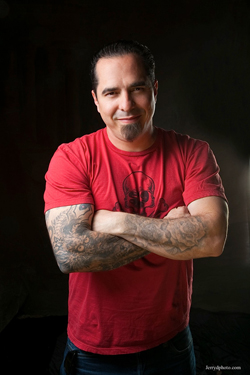
  • Tattoo Artist Corey Miller Will Customize 2014 Toyota Tundra

    Well-known Southern California tattoo artist Corey Miller will be applying his trade to sheet metal as part of an online contest. We can’t wait to see what he will come up with!

    Tattoo Artist Corey Miller - 2014 Toyota Tundra - Truck

    As part of a contest with Raybestos, well-known Tattoo Artist Corey Miller will customize a 2014 Toyota Tundra. No word on what edition if will be, but our money is on Platinum.

    Tattoo Artist Corey Miller - 2014 Toyota Tundra

    Well-known Tattoo Artist Corey Miller and Raybestos has teamed up to offer a one-of-a-kind 2014 Toyota Tundra giveaway.


    Custom trucks like this have also gained a lot of attention for their uniqueness and often downright coolness. The combination of an experienced tattoo artist and a great looking truck should result in a really sweet looking ride.

    If you don’t know Corey Miller, he has been featured on the TV-show L.A. Ink and his Southern California Six Feet Under tattoo shop is known around the world.

    Miller told Trucktrend.com that even though he hasn’t worked on a vehicle before he is excited and motivated to get started. In regards to his design ideas, he said “I’m thinking of a dragon peeling out…this truck is going to be gritting its teeth and screaming forward just like a dragon does – absolutely shredding it.”

    Why the Tundra? As stated on Raybestosgarage.com, Corey says that he’s always been an unapologetic truck guy and, when Toyota began making the Tundra larger, he took notice. “When I saw this truck, I realized how much they’d changed it, made it cooler,” he remembers.

    “This is a Toyota but it is big and bitching [bad]. When something looks good, looks natural, like the new Tundra does, it is easy to be inspired. Honestly if this was another type of car, I wouldn’t be inclined to do it. But this is such a bold vehicle.”

    The plan it seems is to take one of the first 2014 Tundra pickups off the line and immediately let Miller have free reign over its design.

    The online contest is with Raybestos Brake and Chassis shop and will include a giveaway of the truck at the 2013 SEMA Show in Las Vegas. It will start on July 1, 2013, and run through October 15, 2013. Raybestos says the truck will be awarded to a lucky winner at the 2013 SEMA Show in Las Vegas. For more information, and to enter the contest, visit raybestosgarage.com/contest/.

    Related Posts:

    The post Tattoo Artist Corey Miller Will Customize 2014 Toyota Tundra appeared first on Tundra Headquarters Blog.

  • Conversations Can Save Companies

    Each period of business history has its own representative corporate type. The 1960s were the age of the conglomerate. In more recent decades, the startup has achieved iconic status. But the kind of organization that marks our own historical moment is, arguably, the turnaround company. In almost every sector, there are once-dominant enterprises that find themselves on the wrong side of a shift in customer demand or the emergence of a disruptive technology. You know their names: Hewlett-Packard. Starbucks. Best Buy. Research in Motion (Blackberry). RadioShack. And, most recently, JC Penney.

    So what does it take for a leader to pull a company out of the doldrums, or indeed out of real or potential bankruptcy? It starts, no doubt, with a sense of urgency. In that respect, a turnaround effort differs from a standard organizational change initiative. Change happens slowly, whereas, in a turnaround situation, time is of the essence. A company that’s going in the wrong direction or losing money needs to change, and change fast, or soon it will be past the point of no return. Decide, act, decide, act: That must be the order of the day.

    Or so it might seem, anyway. In fact, while the need for speed is undeniable, effective turnaround leaders also keenly appreciate the need to stop — to stop and talk with the people in their company who must do the day-to-day work of moving the organization in a new direction. Such leaders understand that a push to undertake a new strategy or to redirect operational performance depends pivotally on how well they communicate with employees. Equally important, it depends on how well they manage communication throughout their organization. Successful transformations require many people pulling together.

    Consider the example of Starbucks. In 2008, the coffee chain was struggling to maintain its market position and to ward off a growing set of competitive threats. So Howard Schultz, the company’s founder, retook the reins as its CEO and launched a drive to revitalize its operations from the ground up. As reports on that effort demonstrate, Schultz placed communication at the center of his turnaround strategy.

    “Schultz'[s] capacity for hands-on communication is impressive,” one writer observes. “He blitzed each core constituency — senior managers, store managers, customers, media, analysts, shareholders, and employees — with various communications concisely presenting the case for change or a particular decision.” Another commenter, drawing upon a published interview with Schultz (subscription required), highlights several principles and practices that Schultz has sought to pursue: “Share the Vision.” “Clearly Lay Out the Plan.” “Let Employees Know How They Can Help.” “Foster Two-Way Communication.”

    Yet a focus on enhancing communication isn’t enough. It has to be communication of the right sort. In normal times, leaders can allow ideas and information to move across their organization in a deliberate, structured, layer-by-layer fashion. In a turnaround scenario, however, leaders must do whatever they can to make that process nimbler and smoother — more dynamic and more immediate. In many successful turnarounds, the best ideas and important strategic information comes from front-line workers. “Corporate communication,” as businesspeople have traditionally understood and practiced it, must give way to organizational conversation.

    That’s our term for an approach to managing communication that draws upon the immediacy of personal conversation. Our model features four distinct elements: intimacy, interactivity, inclusion, and intentionality. Here, in the spirit of that model, we present four steps toward powering a turnaround project through conversation.

    Talk straight. Conversational intimacy involves efforts by leaders to create and maintain a close connection with employees at every level of their company. And it requires leaders to be honest and authentic, especially when it comes to sharing bad news or addressing difficult topics.

    In 2000, when Anne Mulcahy took charge of operations at Xerox, there were plenty of difficult topics to confront. Xerox was deeply in debt, its stock was plummeting, and its core business model showed every sign of being unsustainable. In that role and at that moment, Mulcahy focused on getting out into the field and talking with people. A study of her tenure during this period quotes a colleague of hers as follows: “Anne appealed to employees with missionary zeal, in person and through videos.” According to the study, Mulcahy herself said, “I’m never happier than when I’m milling around with a group of Xerox people, in a town hall meeting, or a Q&A. I don’t like giving speeches, but I love dialogue.”

    It wasn’t all happy talk — far from it. In talking to fellow top executives, in particular, Mulcahy was blunt about reckoning with points of potential conflict. “I knew there would be people who certainly wouldn’t be supportive of me,” she recalled. “So I confronted a couple of them and said, ‘Hey, no games. Let’s just talk.’” She also put forth a more general rule: “When there are tough messages to deliver, it’s important to communicate the good and the bad. Respect people by delivering the truth.”

    Make talk happen. When a company enters a turnaround crisis, it’s often in part because people in the organization have lost the ability to interact with each other. So conversationally adept leaders find ways to promote interactivity, critical debates, and relationship building. They deploy communication channels that allow for back-and-forth discussion, and they build a culture that fosters that kind of discussion.

    That’s what Carlos Ghosn did after he became president and CEO of Nissan in 1999. The Japanese automaker had seen its performance deteriorate over the preceding decade, and a shake-up was clearly in order. Among the first items that Ghosn changed was a protocol that had been in place for meetings of top executives. In a study of Ghosn’s turnaround leadership, a fellow executive offered this observation: “In old Nissan, there was hardly any discussion in most senior management meetings. . . . Today our meetings are different. We actually debate issues. We openly disagree with one another. It took some time for all of us to get used to it, but our meetings are much more productive.”

    Ghosn also initiated practices that enabled greater interactivity throughout Nissan. Instead of relying on memos — or on middle managers — to convey his message, he used a companywide video hookup to present his transformation plan to employees. “This was the first time in the company’s history that the president spoke directly to everyone in the organization,” one Nissan executive explained. And the organization responded.

    Let everyone talk. Conversation inclusion exists where leaders adopt measures that enable employees to participate fully in the communication process. By including people at all levels of a company in the organizational conversation, leaders can achieve a more intense quality of engagement among those who must carry out a turnaround project.

    HCL Technologies wasn’t at a point of crisis in 2005, when Vineet Nayar took on the role of president, but right away Nayar saw the need to initiate a major transformation effort. The company needed to move up the value chain in the technology services industry and reposition its customer offerings, and making that shift would require HCL employees to change how they related to each other — and to the company. Toward that end, Nayar and his team launched a internal communication initiative that featured the tagline “Employees First, Customers Second” (EFCS). In a study of his early push to transform HCL, Nayar explained the EFCS theme: “The idea behind Employee First was that as a services business, the employee interface with the customer was critical. … I wanted value-focused employees who were willing and able to drive an innovative, sophisticated experience for customers.”

    Elements of the EFCS project included the launch of a new, “employee-friendly” intranet portal and the creation of an intranet-based service called U&I, which empowered employees to engage directly with Nayar. “Communications at HCL used to be handed down from up high,” a senior manager at HCL noted. “Vineet replaced that with lots of direct contact through video conferencing, online tools, and face-to-face talks.”

    Talk strategy — and talk strategically. Only when leaders approach communication with intentionality can they ensure that smart talk will result in sustained action. By carefully building communication efforts around a clear organizational vision, and by taking care to follow an overarching strategy for those efforts, a leader can pursue a turnaround conversation that will keep a company on message and on track.

    Consider the turnaround push that Jan Carlzon undertook at Scandinavian Airlines Systems (SAS) in the early and mid-1980s. To improve the company’s ability to attract business customers, Carlzon aimed to improve the level of service that frontline employees could offer. The best way to do so, he concluded, was to empower those employees — to give them greater autonomy and flexibility in how they did their job. Yet they could exercise that autonomy fruitfully only if SAS leaders also gave them a big-picture sense of what the company was aiming to achieve. Carlzon, in a study of his early work as CEO, put it this way: “Anyone who is not given information cannot assume responsibility. But anyone who is given information cannot avoid assuming [responsibility].”

    According to that study, Carlzon and his team went so far as to create a booklet for employees that used cartoon imagery — a smiling airplane, for example — and “simple, direct language” to tell “the story of the company to date.” Employees came to call it “the little red book,” and it exemplified Carlzon’s theory of turnaround communication: “Rather than merely issuing your message, you have to be certain that every employee has truly understood and absorbed it.”

    Here’s what Ron Ullman, the newly rehired CEO of JC Penney needs to understand: In the 21st century, it is becoming harder and harder to orchestrate a successful turnaround without turning around the firm’s employee engagement and communication practices. And that means making them more intimate, more interactive, more inclusive, and more intentional.

  • Reuters – Seibu Opposes Cerberus Bid

    Japanese railway and real estate group Seibu Holdings said on Friday it opposed Cerberus Capital Management LP‘s renewed attempt to boost its stake in the company to 44.7 percent, heating up a public battle between the two parties. Cerberus last week said it wanted to increase its stake to 44.7 percent from 32.4 percent, a higher target than the U.S. investment fund had initially set. Cerberus has been in the process of buying Seibu shares through a public tender offer. Seibu also opposes Cerberus’s plans to send eight members that they recommend to Seibu’s board, saying that some of the candidates are not independent from Cerberus.

    (Reuters) – Japanese railway and real estate group Seibu Holdings said on Friday it opposed Cerberus Capital Management LP’s renewed attempt to boost its stake in the company to 44.7 percent, heating up a public battle between the two parties.

    Cerberus last week said it wanted to increase its stake to 44.7 percent from 32.4 percent, a higher target than the U.S. investment fund had initially set. Cerberus has been in the process of buying Seibu shares through a public tender offer.

    Seibu also opposes Cerberus’s plans to send eight members that they recommend to Seibu’s board, saying that some of the candidates are not independent from Cerberus.

    If Cerberus succeeds in the tender offer, it will have not only a larger stake but 9 of 18 directors on an expanded board in which it already has one director. The new board candidates include former U.S. Vice President Dan Quayle, who is now chairman of Cerberus Global Investments.

    Cerberus’s attempts “actually means that it is trying to control our company”, Seibu said.

    The U.S. private equity firm had in March proposed lifting the stake to 36.44 percent and nominated three new directors, as it attempts to shake up Seibu’s corporate governance.

    In 2005 Cerberus led a bailout of Seibu after Seibu Railway, a predecessor to the current company, was delisted as a result of making a false entry in its securities report.

    Cerberus, which spent more than 100 billion yen ($1 billion) to become the largest shareholder in Seibu, is willing to spend an additional 60 billion yen to gain a larger control.

    The post Reuters – Seibu Opposes Cerberus Bid appeared first on peHUB.

  • LG adds Galaxy S4 features to Optimus G Pro [video]

    LG Value Pack Update Optimus G Pro
    Samsung (005930) showcased a number of unique feature at its Galaxy S4 press event last month in New York City. The company touted the smartphone’s ability to pause a video when a user looked away from the screen and its new camera technology that allowed for the front and rear-facing cameras to operate at the same time. The Galaxy S4 is expected to shatter all sorts of records when it is released later this month, however one company is trying to get in Samsung’s way.

    Continue reading…

  • Reuters – KKR Buying Controlling Stake in Alliance Tire

    U.S. buyouts firm KKR & Co L.P. has agreed to buy a controlling stake in Alliance Tire Group from Warburg Pincus, the three companies said on Friday, without disclosing details of the transaction. The deal would be the biggest private equity transaction in India after Bain Capital paid about $1 billion to buy a 30 percent stake in business process and technology services provider Genpact in August 2012. The U.S. private equity firm will put in slightly over $300 million of its own money to buy an over 75 percent stake in Alliance, a source familiar with the matter told Reuters on Friday.

    (Reuters) – U.S. buyouts firm KKR & Co L.P. has agreed to buy a controlling stake in Alliance Tire Group from Warburg Pincus LLC, the three companies said on Friday, without disclosing details of the transaction.

    The deal would be the biggest private equity transaction in India after Bain Capital paid about $1 billion to buy a 30 percent stake in business process and technology services provider Genpact (G.N) in August 2012.

    Reuters reported on Tuesday, citing sources with direct knowledge, that KKR would pay around $500 million for the controlling stake from Warburg, which invested in the tyre maker Alliance in 2007.

    The U.S. private equity firm will put in slightly over $300 million of its own money to buy an over 75 percent stake in Alliance, a source familiar with the matter told Reuters on Friday.

    Alliance Tire will be the last new investment from KKR’s debut Asia fund, a $4 billion fund raised in 2007. The firm is near to a final close on a new $6 billion Asia fund, the largest ever buyouts fund raised for the region.

    KKR’s capital markets team put together the financing package for the deal, the source said, which included financing from Crescent Mezzanine and Ivy High Income Fund.

    Alliance owns two manufacturing plants, one each in Israel and India, and has a sales presence in more than 120 countries, according to its website. Alliance’s tyres are also made at contract manufacturing facilities in China and Taiwan.

    The group had sales of more than $500 million in 2012.

    Warburg Pincus, which invested over $3 billion in India, will be exiting its 6-year-old investment in the company.

    Yogesh Mahansaria, founder of ATG, will continue to maintain a stake in the company and partner with KKR to continue to grow the business, the statement said.

    Credit Suisse advised Alliance on the deal while Nine Rivers Capital advised the founders. Barclays Capital and JPMorgan advised KKR.

    (Additional reporting by Sumeet Chatterjee in MUMBAI; Editing by Jeremy Laurence)

    The post Reuters – KKR Buying Controlling Stake in Alliance Tire appeared first on peHUB.

  • PrePlay Seals $4.7M Series B

    PrePlay Inc. has raised $4.7 million in Series B financing. Lead investor Trilogy Equity Partners was joined by RSE Ventures in the round. PrePlay is a New York based mobile games company.

    PRESS RELEASE

    On the heels of PrePlay, Inc.’s
    (www.preplaysports.com) Opening Day re-launch of MLB PrePlay v2.0 for iOS and
    Android, the company is announcing the closing of a $4.7M Series B Financing.
    Lead investor Trilogy Equity Partners, LLC was joined by RSE Ventures, the
    venture capital fund founded by Miami Dolphins’ owner Stephen Ross and Matt
    Higgins.

    PrePlay is a New York based mobile games company that has found early success
    among sports fans and gamers with its baseball, hockey, and football titles. The
    company also has coveted commercial partnerships with Major League Baseball
    Advanced Media and the National Hockey League.

    PrePlay’s core competency is creating apps that enable fans to do what they
    already do – make and share simple predictions for every play of every game
    they watch. Add the right mixture of game mechanics and social hooks, and you’ve
    got a winning suite of evergreen game titles. Through cross-marketing and
    PrePlay credentials supported platform-wide, the games are able to support and
    reinforce each other as a network in spite of the seasonality of sports.

    The company measures its success based on how many predictions fans make each
    day on the platform. On Baseball’s Opening Day (April 1st), users made over
    200,000 play-by-play predictions on the platform, doubling the company’s
    single-day record to that point.

    PrePlay CEO Andrew Daines – recently named one of Forbes’ 30 Under 30 – says,
    “We think the whole social TV, second-screen business is upside down. It’s
    currently dominated by generic one-size-fits-all check-in apps and by TV
    programmers who want you to watch their shows, but have no feeling for games, no
    feeling for great mobile product. We fit into the category of ‘second-screen’,
    but we’re tackling the problem of engagement from a mobile-first, gaming
    perspective. We care deeply about creating rich, high-quality game experiences,
    and believe TV tune-in and engagement with content and brands flow naturally
    from there.”

    The company will use the new funds to grow its Ruby on Rails and native iOS and
    Android teams in an effort to add more sports and grow its advertising, in-app
    purchase, and platform licensing businesses.

    Methuselah Advisors acted as Financial Advisor and Sheppard Mullin Richter &
    Hampton represented the company in the transaction.

    QUICK FACT SHEET

    * Founded in 2010 by undergraduate student at Cornell
    * Announced its’ 100,000th registered user yesterday
    * Now receiving 1 Million fan predictions on the platform per week
    * 30,000 social media messages + chats made per day
    * 8 million predictions made on the platform all-time
    * Grown from 12 to 20 employees in past 6 months
    * Commercial partner of MLBAM and NHL
    * Offices in NYC & Paris, France
    * Top 25 on Apple App Store Sports, Top 25 on Google Play Sports
    * Industry-leading average engagement of 50 minutes per user session

    TRILOGY EQUITY PARTNERS, LLC

    Established by a team of Seattle wireless and technology entrepreneurs,
    including John Stanton, Trilogy Equity Partners, LLC invests private capital in
    areas where in-house expertise and market growth promise superior financial
    returns. The firm’s partners have long been at the center of the global wireless
    revolution as founders of Voicestream (T-Mobile) and Western Wireless in
    addition to previously holding pivotal roles at McCaw Cellular (AT&T).

    RSE VENTURES

    Stephen M. Ross and Matt Higgins co-founded RSE Ventures in 2012. The firm
    builds and invests directly in companies specializing in audience engagement,
    combining in-venue content, curated events, and strategic partnerships to build
    the best possible fan experience.

    The post PrePlay Seals $4.7M Series B appeared first on peHUB.

  • Podcast: Bitcoins bite the dust? Uh-oh, Aereo and Austin’s fiber

    Whether you think they are a Ponzi scheme or the future of money, Bitcoins were all over the news this week as the value of the digital currency crashed. Hard. We get to the bottom of what Bitcoins are and what this grand financial experiment is all about. Speaking of crash, Aereo would like to crash the traditional broadcast TV party with a new way to get over-the-air TV and the big networks are none too happy about it. And speaking of happy, Stacey Higginbotham is ecstatic that Google will soon be putting her on an all fiber (to the home) diet.

    (Download this episode)

    Subscribe to RSS

    iTunes

    Stitcher Radio

    SHOW NOTES:
    Hosts: Chris Albrecht, Tom Krazit
    Guests: David Meyer, Janko Roettgers, Stacey Higginbotham

    Why you should care about Bitcoin

    Aereo’s court victory and what it means for the TV business

    AT&T and Google’s plan to give Austin a Gigabit

    PREVIOUS EPISODES:
    Facebook’s phone-y home, Tesla rides the lease lightning

    Samsung Galaxy S 4 blasts off, RIP Google Reader

    Related research and analysis from GigaOM Pro:
    Subscriber content. Sign up for a free trial.


  • Riverstone Holdings Backs Ridgebury Tankers

    Riverstone Holdings has put $200 million into Ridgebury Tankers, a new tanker company focused on the acquisition and operation of vessels in the tanker sector. Ridgebury management invested $5.7 million as part of the deal. The Connecticut-based company will use the capital to acquire clean product carriers of all sizes and in the crude sector will focus primarily on Suezmax vessels.

    PRESS RELEASE

    Ridgebury Tankers LLC (“Ridgebury” or “the Company”), a new tanker company focused on the acquisition and operation of vessels in the tanker sector, today announced a $200 million commitment from Riverstone Holdings LLC (“Riverstone”), the energy private investment firm, alongside a $5.7 million commitment from Ridgebury management. The Connecticut-based Company will use the capital to acquire clean product carriers of all sizes and in the crude sector will focus primarily on Suezmax vessels.

    Ridgebury is led by its Founder and CEO, Bob Burke, who has been involved in the shipping industry for over 30 years in a variety of capacities. Mr. Burke’s extensive executive shipping experience includes tanker operations, chartering activities for vessels, direct equity investments and financings, and the ownership and operational management of companies across several shipping sectors.

    “Our strategy is to invest in modern tonnage either currently on the water or on resales of vessels that will enter service shortly,” said Mr. Burke. “We believe that the next 12-24 months will present an attractive entry point for investment in the sector. Although distressed opportunities may present themselves, our primary focus will be the pursuit of quality modern tonnage. We are not in a rush to invest, and we want to focus our efforts on opportunities with a high certainty of closing. With Riverstone’s equity commitment and sensible financial leverage, we believe we have a great opportunity to build a highly successful company in the tanker sector.”

    In addition to Mr. Burke, the management team includes Kevin Bavolar as CFO, as well as Hew Crooks and Steve Fitzgerald. Messrs. Burke, Bavolar and Fitzgerald worked together at GE Capital, and Mr. Crooks worked with Mr. Burke at Great Circle Capital, a Maritime equity investment fund. “In a small organization such as Ridgebury it is imperative to have a team that has worked together before,” said Mr. Bavolar.

    John Lancaster, a Partner at Riverstone added, “This investment is consistent with Riverstone’s model of partnering with proven management in focused strategies in specific segments of the energy industry. Crude oil and product tankers are an essential component of the rapidly evolving and critical global energy logistics system, and we believe the sector’s immediate and long-term fundamentals provide the potential for entry, growth and attractive returns. We are excited to partner with Bob and his team in this new venture.”

    About Riverstone Holdings LLC
    Riverstone is an energy and power-focused private investment firm founded in 2000 with approximately $24 billion of equity capital raised across seven investment funds, including the world’s largest renewable energy fund. Riverstone conducts buyout and growth capital investments in the midstream, exploration & production, oilfield services, power and renewable sectors of the energy industry. With offices in New York, London and Houston, the firm has committed approximately $21.6 billion to 97 investments in North America, Latin America, Europe and Asia.

    The post Riverstone Holdings Backs Ridgebury Tankers appeared first on peHUB.

  • PayPal Buys Iron Pearl

    PayPal has acquired Iron Pearl, a Palo Alto, Calif.-based startup focused on tools for customer acquisition and engagement. The company’s founders – Stan Chudnovsky and James Currier – will stick with the new company. Chudnovsky will assume the role of VP of Growth, and Currier will serve as “Growth Advisor.”

    BLOG POST

    At PayPal, we’re seeing rapid and exciting growth. More than 5 million people joined PayPal in the last three months of 2012—the most in a quarter in over 8 years. We now serve more than 123 million active PayPal customers around the world.

    But we can do more. And grow faster. That’s why I’m thrilled to announce that we just acquired Iron Pearl, a Palo Alto startup that is at the forefront of the science of customer acquisition and engagement. Iron Pearl has developed groundbreaking tools, methodologies and intellectual property, built on a new understanding of the social and cultural factors that drive the viral spread of products, combined with new approaches to data analysis and predictive modeling.

    Iron Pearl was founded by Stan Chudnovsky and James Currier. Effective immediately, Stan is assuming the role of Vice President of Growth and James will serve as a Growth Advisor to the company.

    Stan is a visionary in the emerging science of growth and he has a remarkable track record of success as an entrepreneur. James and Stan started and ran Tickle, one of the first social media companies and an early explorer of the possibilities of online viral marketing. After Tickle was acquired by Monster in 2004 for more than $100 million, they founded Wonderhill, a developer of family-friendly social online games that was acquired by Kabam in 2011. Stan was also instrumental in designing growth for companies like GoodReads, Path, BranchOut and many others.

    The new Growth team at PayPal will focus on growing our customer base and engaging existing customers more actively by leveraging data to develop innovative marketing approaches and product initiatives. There are only a handful of world-renowned “Growth Hackers” with amazing track records and Stan is one of them. He managed to create genuine and sustained viral growth and retention for his own startups, and has advised others to grow at a tremendous pace, leading to hundreds of millions of unique new users. We’re confident that applying this unique, and highly effective skill set to PayPal will lead to making our groundbreaking payments experiences even more ubiquitous for our merchants and consumers.

    The post PayPal Buys Iron Pearl appeared first on peHUB.

  • Biodesix Adds $8.8M in Financing

    Biodesix Inc., a molecular diagnostics company, has added $8.8 million in a follow-on sale of its Series D preferred shares. The money came from existing investors, Biodesix said. Specifics were not released.

    PRESS RELEASE

    Biodesix, Inc., a molecular diagnostics company advancing the development of innovative products for personalizing medicine, announced today that the company closed on $8.8 million in a follow-on sale of its Series D preferred shares. All funds were provided by existing shareholders of the company. The investment will be used for ongoing development of the company’s technology platform and expansion of sales and marketing efforts to support Biodesix’ first product, VeriStrat®. VeriStrat is a serum protein test that helps physicians guide therapy for patients with advanced non-small cell lung cancer (NSCLC).

    About Biodesix

    Biodesix is a molecular diagnostics company advancing the development of innovative products for personalizing medicine. The company provides physicians with diagnostic tests for earlier disease detection, more accurate diagnosis, disease monitoring and better therapeutic guidance, which may lead to improved patient outcomes. Biodesix discovers, develops and commercializes multivariate protein diagnostics based on their proprietary mass spectrometry-based discovery platform. VeriStrat, a multivariate serum protein test, is Biodesix’ first product developed with this technology. The commercially available test provides oncologists with information to help them select between erlotinib and single-agent chemotherapy for advanced lung cancer patients. Tests are processed in Biodesix’ CLIA-certified laboratory and results are reported in less than 72 hours. In addition to developing novel diagnostics independently, the company also partners with biotechnology and pharmaceutical companies to develop companion diagnostics to improve utility of therapeutic agents. For more information on VeriStrat, please visit www.VeriStratSupport.com. For more information about Biodesix, please visit www.Biodesix.com.

    This press release contains statements that are hereby identified as “forward-looking statements” for purposes of the safe harbor provided by the Private Securities Litigation Reform Act of 1995. Such statements are based on management’s current expectations and involve risks and uncertainties. Actual results and performance could differ materially from those projected in the forward-looking statements as a result of many factors, including, without limitation, the Company’s inability to further identify, develop and achieve commercial success for products and technologies; the risk that the Company’s financial resources will be insufficient to meet the Company’s business objectives; uncertainties relating to the regulatory approval process and changes in relationships with strategic partners. We disclaim any intent or obligation to update these forward-looking statements.

    The post Biodesix Adds $8.8M in Financing appeared first on peHUB.

  • Reuters – LinkedIn Buys Pulse for $90M

    Professional social network LinkedIn Corp said it will buy Pulse, a news reader and mobile content distribution platform, for $90 million in cash and stock. More than 30 million users have activated Pulse news reader apps on Apple Inc’s iOS and Google Inc’s Android operating systems. LinkedIn will pay about 90 percent of the deal value in stock.

    (Reuters) – Professional social network LinkedIn Corp said it will buy Pulse, a news reader and mobile content distribution platform, for $90 million in cash and stock.

    More than 30 million users have activated Pulse news reader apps on Apple Inc’s iOS and Google Inc’s Android operating systems.

    LinkedIn will pay about 90 percent of the deal value in stock.

    The post Reuters – LinkedIn Buys Pulse for $90M appeared first on peHUB.

  • Reuters – J.C. Penney Hires Blackstone as Advisor

    J.C. Penney Co Inc. has hired the financial advisory arm of Blackstone Group LP as it explores ways to bolster its balance sheet, a source familiar with the matter told Reuters Thursday. The ailing retailer is seeking to raise about $1 billion in cash, according to the Wall Street Journal, which reported the news earlier. Citing sources familiar with the matter, the paper said options could include selling a minority stake in J.C. Penney and that J.C. Penney has already reached out to possible investors including private equity firms.

    (Reuters) – J.C. Penney Co Inc has hired the financial advisory arm of Blackstone Group LP as it explores ways to bolster its balance sheet, a source familiar with the matter said on Thursday.

    The ailing retailer is seeking to raise about $1 billion in cash, according to the Wall Street Journal, which reported the news earlier. Citing sources familiar with the matter, the paper said options could include selling a minority stake in J.C. Penney and that J.C. Penney has already reached out to possible investors including private equity firms.

    A J.C. Penney spokeswoman said that over the last several months, the company has hired outside advisors to provide it with “expertise about how to best position the company from a financial standpoint during the transformation.”

    “It is safe to assume this will continue as part of the work now underway to develop a game plan for the company going forward,” the spokeswoman said in an email without confirming Blackstone as the adviser.

    Blackstone declined to comment.

    The post Reuters – J.C. Penney Hires Blackstone as Advisor appeared first on peHUB.

  • Reuters – Republicans Accuse SEC of Dragging Feet on JOBS Act

    Republican members of the U.S. House of Representatives criticized top officials at the U.S. Securities and Exchange Commission on Thursday for missing congressionally mandated deadlines to complete new rules designed to help small businesses raise capital. In a hearing that at times grew tense, several Republicans on a House small-business panel vented their frustrations after they did not get clarity from the SEC on when the rules would be completed, Reuters reported. The rules at the center of Thursday’s hearing stem from the 2012 Jumpstart Our Business Startups, or JOBS Act.

    (Reuters) – Republican members of the U.S. House of Representatives criticized top officials at the U.S. Securities and Exchange Commission on Thursday for missing congressionally mandated deadlines to complete new rules designed to help small businesses raise capital.

    In a hearing that at times grew tense, several Republicans on a House small-business panel vented their frustrations after they did not get clarity from the SEC on when the rules would be completed.

    “The SEC expects reporting companies as their regulator to respect their deadlines. Congress is your regulator. Is it fair for us to expect you to respect our deadlines?” asked Michigan Representative Kerry Bentivolio.

    “We do, congressman,” said Lona Nallengara, acting director of the SEC’s Division of Corporation Finance.

    Bentivolio later quipped: “No date. No real deadline. Just when you get around to it. I’m getting a lot of verbal moonwalking, but I’m not getting anywhere.”

    The rules at the center of Thursday’s hearing stem from the 2012 Jumpstart Our Business Startups, or JOBS Act.

    Signed into law roughly one year ago, the JOBS Act was designed to spur small business growth by relaxing federal securities regulations to make it easier for companies to raise capital and eventually go public.

    It received wide bipartisan support, but has also faced criticism from some Democrats and investor advocates who say it causes critical information to be withheld from investors and could expose them to fraud.

    Many of the provisions of the JOBS Act went into effect when it was signed into law, but several key sections still require rule-writing by the SEC.

    One rule, for instance, would lift a long-standing ban on general advertising for private placement offerings, making it easier for hedge funds and others to reach new investors.

    Another rule would establish a new regulatory regime for intermediaries that offer crowdfunding, a capital-raising strategy that lets investors take small stakes in private start-ups over the Internet.

    The general solicitation rule has so far generated the most controversy.

    SEC staff had initially recommended issuing it right away as an “interim” final rule and tweaking it later as needed. But investor advocates decried that approach, saying the SEC needed to take its time and add critical investor protections before lifting the ban.

    Ultimately, however, the SEC decided to propose a draft rule to give the public a chance to comment before adopting a final regulation.

    Representative Patrick McHenry of North Carolina later lashed out at the agency for its change in approach after e-mails obtained by a U.S. House panel showed that former SEC Chairman Mary Schapiro delayed immediately implementing the rule amid concerns it might tarnish her legacy as a pro-investor leader of the agency.

    Schapiro departed the SEC shortly thereafter, leaving a divided four-member commission unable to agree on a final rule.

    The back story of what happened with the general solicitation rule at the SEC was still fresh in many Republicans’ minds on Thursday.

    “It doesn’t seem to be a priority to the SEC. This is a really big deal,” said Representative Blaine Luetkemeyer of Missouri. “I don’t think you see the importance of your job. You help create economic activity in this country, sir.”

    Mary Jo White, who was sworn in on Wednesday as the SEC’s new chairman, has said JOBS Act rulemaking would be among her top priorities, but she has not yet revealed her thinking on how the rules should be crafted.

    Nallengara and the SEC’s acting trading and markets director, John Ramsay, who both testified before the House panel on Thursday, declined to provide specific timetables to lawmakers.

    But they stressed the agency is trying to get things done.

    “The staff…is working as if their rulemaking is the first one to go,” Nallengara said. “The staff is working very hard to get these in place.”

    The post Reuters – Republicans Accuse SEC of Dragging Feet on JOBS Act appeared first on peHUB.