Category: News

  • Dave O’Hara Dies; Sports Reporter Was 86

    Longtime Boston sports writer Dave O’Hara has died at the age of 86.

    According to a report from the Associated Press, O’Hara died of cancer at his home in Winter Haven, Florida.

    O’Hara spent 50 years writing for the Associated Press. Much of that career was spent in Boston, where he covered sports, including the Celtics, the Red Sox (including the infamous ‘Buckner’s folly’ incident during the 1986 World Series), Ted Williams, and Larry Bird.

    According to the AP, O’Hara began his career in 1942 as a copy boy in the AP’s Boston bureau. He was 15 at the time. Aside from his time in the Korean War and a short stint covering Milwaukee sports in the early 60s, O’Hara covered Boston sports and became the AP’s New England sports editor in 1965. O’Hara retired in 1992

  • How technology can empower patients, including 4 diagnostic tools for your iPhone

    Eric-Dishman-at-TED@Intel

    Eric Dishman is used to thinking about how technology can transform the world of health care. As an Intel Fellow and general manager of the company’s Health Strategy & Solutions Group, his job is all about finding innovative new approaches to healthcare. Eric Dishman: Take health care off the mainframeEric Dishman: Take health care off the mainframe And he’s no stranger to talking about them. At TEDMED 2009, in the talk featured to the left, Dishman asked us to “Take health care off the mainframe,” boldly comparing the current American health care system to mainframe computers circa 1959.

    But just two weeks ago, at TED@Intel, Dishman tells the much more personal story of his battle with kidney disease.

    To say that his battle is with disease isn’t the full story. Instead, as he describes in this second talk, his fight is not only with faulty kidneys, Eric Dishman: Health care should be a team sportEric Dishman: Health care should be a team sportbut also with a flawed healthcare system.

    Two decades ago, when he was a college student, Dishman had several fainting spells. This kicked off months of testing by six different doctors, in what he describes as a “clash of medical titans.” Dishman was told he would not live longer than two or three years.

    The doctors were wrong — but not because they weren’t good doctors. Instead, they were stuck in an old-fashioned system that lacked technologically advanced tools and a culture of communication.

    With smartphones and tablets becoming increasingly ubiquitous, and social networks connecting us more and more, Dishman sees three major steps to achieving better, individually-tailored healthcare that takes pressure off of brick-and-mortar hospitals and clinics, and empowers a patient to be the captain of a team working toward their well-being: Care anywhere, care networking, and care customization. To hear what each means, watch this talk.

    On the stage, Dishman demonstrates MobiSante’s smartphone-based ultrasound imaging system, called MobiUS, which he used to scan his newly donated kidney. A doctor hours away at Legacy Good Samaritan Hospital in Oregon examined the kidney live over the Internet, dispelling worry over a few dark spots and noting they’d double check them at Dishman’s next scheduled appointment.

    Here is a round up of other disruptive products and projects that could hugely impact the way we think about our health care. Have more to add? Put them in the comments.

    Health tests on your smartphone
    MobiSante’s affordable, portable ultrasound isn’t the only medical device to take advantage of mobile networks and the power of smartphones. Some other examples:

    The doctor isn’t in… but that’s okay
    InTouch Health’s RP-VITA Remote Presence Robot is the first-ever that will connect doctors to patients across the world.Daniel Kraft: Medicine's future? There's an app for thatDaniel Kraft: Medicine's future? There's an app for that Doctors can do rounds in a hospital across the country or the world, controlling Jetson-like robots that show their faces on a screen. Through the robots, the doctors can visit with and diagnose patients from afar.

    Another less-futuristic option: as Daniel Kraft, the chair of the FutureMed program at Singularity University, mentioned in the TED Talk, “Medicine’s future? There’s an app for that,” the website AmericanWell.com can connect you to physicians and specialists in your state who do appointments over secure chat, Skype or the telephone.

    Health care at your local drugstore
    While it isn’t tech-heavy, the move towards what this recent article from The Economist calls “retail clinics” is taking some health services out of hospitals and doctor’s offices and into malls and popular pharmacy chains. The article details how CVS and Walgreens are bringing basic care clinics to many stores – 640 and 372 of them respectively.

    Medical devices that can leave the hospital
    The U.S. Department of Health and Human Services put out a recent request for information seeking new approaches for smart medical hardware that can remain on even during power outages in natural disasters. The goal is to to protect hospital patients on life-saving medical devices — including ventilators or IV pumps — by keeping the machines on and mobile if there is need for evacuation.

    Are you interested in where health care is going? Watch the TED Playlist, the Future of Medicine, below.


  • ‘Ivanovs’ keen on new cars despite high inflation – Sberbank

    Sberbank’s hypothetical Russian middle-class family metric – the ‘Ivanovs’- shows the average Russian family is concerned about high inflation, though that is still barely denting some peoples’ aspirations of getting behind the steering wheel of a new car.

    April’s Ivanov index, a survey of more than 2,300 adults across 164 cities in Russia with a population of more than 100,000, notes people are still concerned about persistently high inflation, which in Russia is at around 7 percent.

    Household budgets are most concerned by this factor (70 percent), up 1 percent from two months ago, as the average family spends around 40 percent on food. To put that in context, consumers in western Europe spend on average between 15 and 20 percent of income on food, according to the research. But more than 40 percent of respondents still plan to spend on one big-ticket item – to replace their car within the next two years. That is slightly down from 42 percent in the previous survey in February. Car markers have invested heavily in Russia, with sales growing more than 10 percent in 2012 according to AEB, the Association of European Business, as a relatively low level of car ownership and large numbers of older vehicles need replacing.

    The Ivanovs’ worries are not surprising, given 10 percent of corporates are hiring new employees versus 47 percent seeing a headcount reduction.

    A dent in consumer confidence has had a knock-on effect on the X5 retail group, according to the research. Shares in London-listed X5 retail group have shed 63.74 percent from a peak peak in Jan. 2011, but are still well above the post-crisis trough hit in 2008. The effect, the analysis concludes, is seen more in average spend, rather than because of reduced footfall. That is mainly because of a more limited assortment range, quality and freshness of the products.

    The survey was carried out on behalf of Sberbank by market research firm Cint.


  • Secure cloud storage outfit Tresorit posts $10K hacker bounty

    Popular cloud storage services such as Dropbox and Google Drive are terrifically easy to use, but only boast middling security (hence the existence of third-party client-side encryption services such as BoxCryptor). However, there are many rivals out there that offer much stronger client-side security and anonymity — Lacie’s Wuala, Spideroak and Kim Dotcom’s Mega all spring to mind.

    So, if you’re an upstart in this business with serious security chops, how do you set yourself apart? Do what Tresorit is doing, and offer a bounty to any hacker who can breach your cryptography.

    Tresorit was founded in 2011, received $1.7 million in funding last year from Euroventures and nine private investors, and is now freshly out of closed beta, with its storage being based on Azure. The firm has strong security cred as a spinoff of Hungarian security outfit CrySys Lab, which was responsible for identifying the notorious Duqu worm. And Tresorit is so sure of itself that, from April 15th, it will offer a $10,000 reward to any hacker that busts its cryptography.

    “We’re positioning ourselves as an enterprise or small and medium business solution, but right now we’re targeting consumers too, because we need to reach credibility,” CEO István Lám explained to me. “That’s why we’re starting this campaign where we offer $10,000 to the first one who can hack this encryption.”

    Crypto challenge

    One issue with some  Tresorit rivals, such as Mega and Wuala, is that they use something called “convergent encryption”, which essentially means they can deduplicate the stuff their customers are storing on their systems. In the case of Mega, whose customers frequently use the service for storing movie files (entirely legally, of course), this helps avoid a situation where the same multi-gigabyte file is stored thousands of times, thereby keeping down Mega’s costs.

    Some security specialists are wary of this approach because they fear it can undermine user privacy.

    “If 10,000 people upload the same movie to Mega, they only have to store one file,” Lám said. “That leaks information about who has the same file – you can track one [piece of] information from another. So, from the very beginning, we dropped the idea of convergent crypto because that’s simply unacceptable for us.”

    Of course, Tresorit is ultimately going for a somewhat different user base; one that demands secrecy but that isn’t necessarily going to be uploading dozens of bulky movies. As such, while Mega famously offers 50GB of free storage, Tresorit’s free option maxes out at 5GB…

    … Although, if you’re reading this before 23:59 GMT on May 20th 2013, you can get a free 50GB Tresorit account for life by signing up here. Just thought I’d mention that. Anyway…

    In terms of business-friendly features, Tresorit uses public key cryptography to establish keys between people, so users can share access to files without sharing passwords. There are no master keys for bosses, but Lám said the company will soon introduce a “threshold cryptography” system, where at least two managers will need to be present in order to decrypt and open an employee’s account.

    Right now the client is only available for Windows, but OS X, iOS and Android versions will arrive before June, as will the first paid-for premium Tresorit accounts. Lám declined to reveal the pricing or capacity for these accounts ahead of that launch.

    Related research and analysis from GigaOM Pro:
    Subscriber content. Sign up for a free trial.


  • Apple needs an ‘iPhad’ to combat phablets, according to biggest Apple bull

    5-inch iPhone Analysis
    Topeka Capital Markets analyst Brian White pulled back a bit when he finally trimmed his $1,111 price target on Apple shares this past January, but his current $888 target is still among the highest on the Street. White is obviously thoroughly impressed with Apple’s (AAPL) current lineup and the new products currently in its pipeline — he sees an iPhone 5S coming in multiple colors this summer, as well as an “iTV” and an “iWatch” later this year — but he got the feeling during his current trip to the Far East that it’s time for Apple to embrace the current trend toward larger smartphones. To combat these monstrous Android handsets, White believes Apple needs to launch an “iPhad.”

    Continue reading…

  • Google Map Maker Heads To The UK

    Google announced the launch of Google Map Maker in the UK, kicking it off with a MapUp workshop in Bletchley Park.

    Program Manager Satish Mavuri writes in a post on the Google Maps blog:

    More than 40,000 people around the world are making contributions and improving Google Maps through Google Map Maker each month. Now it’s your turn to help, whether marking the trails throughBrecon Beacons National Park in Wales, adding all your favorite shops in London’s Soho Square, or improving driving directions to St Ives in Cornwall. Drawing from your knowledge about world famous tourist destinations or the streets of your hometown, you can now use Google Map Maker to make the map of the United Kingdom (along with Isle of Man, Jersey and Guernsey) more comprehensive and accurate than ever before. Once approved, these improvements will appear across Google Maps,Google Earth, and Google Maps for Mobile.

    Krzysztof Przygoda, a Poland native who’s actively contributed to the map of that country via Map Maker, has since relocated with his family to the UK. Now, he’s looking forward to enriching the maps of both his homeland and his new stomping grounds. Krzysztof is particularly eager to map the narrow network of paths that wind through his new neighborhood, with the goal of improving directions and navigation for local cyclists and pedestrians in Gloucester.

    Google is calling upon people familiar with particular places in the UK to join Map Maker and engage with the community.

  • Don’t blame Windows 8 for weak PC shipments

    Well, well, perhaps Windows 8 isn’t cause for all the PC market’s woes, as IDC strongly stated yesterday. Gartner’s first-quarter assessment is grim but no reaper. The analyst firm lays blame partly on consumers unwillingness to pay more for touchscreen models and asserts that the business market actually grows. Also, the firms released contradictory data, with Apple showing glaring and shocking differences.

    Mikako Kitagawa, Gartner principal analyst, doesn’t blame Windows 8: “Consumers are migrating content consumption from PCs to other connected devices, such as tablets and smartphones”. The first factor pulling down PC shipments, which by Gartner estimates fell 11.2 percent globally during Q1, is tablet competition, then. Not Windows 8.

    Cause and Effect

    “Touchscreen-based Ultramobiles offer PC manufacturers an opportunity to recover market share from media tablets, but Windows 8 PCs with touchscreens accounted for only a small percentage of consumer PC shipments in the first quarter of 2013”, Isabelle Durand, Gartner principal research analyst, says. Microsoft Surface Pro is in this category.

    The problem: “The majority of consumers remain unwilling to pay the price premium for touchscreen capabilities on PCs at this stage”, Durand says. “But, even so, touchscreens and Windows 8 will represent key opportunities for PC manufacturers in the second half of 2013”.

    Gartner’s read is remarkably different from IDC’s. “At this point, unfortunately, it seems clear that the Windows 8 launch not only failed to provide a positive boost to the PC market, but appears to have slowed the market”, Bob O’Donnell, IDC vice president, asserts.

    “While some consumers appreciate the new form factors and touch capabilities of Windows 8, the radical changes to the UI, removal of the familiar Start button, and the costs associated with touch have made PCs a less attractive alternative to dedicated tablets and other competitive devices”, he asserts.

    IDC blames Windows 8, singling out Modern UI, while Gartner focuses on price competition. As someone who really likes the new operating system — and never expected to — and who worked as an analyst, Gartner’s assessment is more credible. That’s something Microsoft’s leadership should consider while developing Windows 8.1 and its successors. Windows 8 isn’t a bad operating system, but backpedaling could make it one.

    Demand for traditional PCs is weak, which makes sense given it’s a mature product category. Touchscreen models, whether true tablet or hybrids, offer something different, but not necessarily more enough. They compete with media tablets like Apple’s iPad that offer similar top-line functionality for hundreds of dollars less. For many consumers, iPad, or even smaller tablets, is good enough. So on a touchscreen-to-touchscreen comparison, media slates win, and that phenomenon has little to do with Windows 8 or changes Microsoft made to the user interface.

    Preliminary Worldwide PC Vendor Unit Shipment Estimates for 1Q13 (Units)

    Company

    1Q13 Shipments

    1Q13 Market Share (%)

    1Q12 Shipments

    1Q12 Market Share (%)

    1Q12-1Q13 Growth (%)

    HP

    11,687,778

    14.8

    15,301,906

    17.2

    -23.6

    Lenovo

    11,666,400

    14.7

    11,652,664

    13.1

    0.1

    Dell

    8,734,892

    11.0

    9,838,121

    11.0

    -11.2

    Acer Group

    6,843,184

    8.6

    9,582,046

    10.9

    -29.3

    Asus

    5,360,470

    6.8

    5,552,329

    6.2

    -3.5

    Others

    34,914,286

    44.1

    37,170,712

    41.7

    -6.1

    Total

    79,207,010

    100.0

    89,197,778

    100.0

    -11.2

    Note: Data includes desk-based PCs and mobile PCs, including mini-notebooks but not media tablets such as the iPad.
    Source: Gartner (April 2013)

    Emerging Woes

    But the PC isn’t a mature product category everywhere. “Even emerging markets, where PC penetration is low, are not expected to be a strong growth area for PC vendors”, Kitagawa says. The trend among emerging markets is most disturbing for computer manufacturers and Microsoft, which had banked on continued growth there to offset sluggish refresh cycles elsewhere.

    “Consumers’ content consumption was, and still is, moving from PCs to other types of connected devices”, Durand says. “Even in Central and Eastern Europe and the Middle East and Africa, where PC penetration is low, growth in PC shipments was down as first-time device buyers chose other devices”.

    Price sensitivity is even greater in most emerging markets, where a low-cost touchscreen media tablet or smartphone has more obvious utility than costlier — and more-stationary — PCs. Surface RT competes in that category, but is a costly alternative to smaller slates, like Google Nexus 7.

    Preliminary U.S. PC Vendor Unit Shipment Estimates for 1Q13 (Units)

    Company

    1Q13 Shipments

    1Q13 Market Share (%)

    1Q12 Shipments

    1Q12 Market Share (%)

    1Q13-1Q12 Growth (%)

    HP

    3,447,894

    24.2

    4,493,572

    28.5

    -23.3

    Dell

    2,956,661

    20.8

    3,459,925

    22.0

    -14.5

    Apple

    1,650,012

    11.6

    1,535,951

    9.8

    7.4

    Toshiba

    1,278,883

    9.0

    1,349,900

    8.6

    -5.3

    Lenovo

    1,265,902

    8.9

    1,112,582

    7.1

    13.8

    Others

    3,623,468

    25.5

    3,788,927

    24.1 -4.4
    Total

    14,222,820

    100.0

    15,740,856

    100.0 -9.6

    Note: Data includes desk-based PCs and mobile PCs, including mini-notebooks but not media tablets such as the iPad.
    Source: Gartner (April 2013)

    The measure is always this: What’s good enough for the lowest price — among most buyers. There is always a smaller percentage of people willing to pay more, as they do for Macs. Tablets’ big benefit is touch; apps the other.

    While the broader PC market is in crisis, there is a bright spot that is hugely important to Microsoft and Windows. “Unlike the consumer PC segment, the professional PC market, which accounts for about half of overall PC shipments, has seen growth, driven by continuing PC refreshes”, Kitagawa says. “Despite the fact that some regions already passed the peak of PC refresh, overall professional PC demand continued to grow”. Businesses are Microsoft’s core market.

    This difference in emphasis — tablets and price as decline’s cause and business PC demand — isn’t all that separates Gartner and IDC assessments of Q1 shipments. IDC says they declined the most ever, since the firm starting tabulating numbers in 1994. EMEA — Europe, Middle East and Africa — is the worst by Gartner’s reckoning, rather than the whole world. The firm sees an 11.2 percent year-over-year decline, while IDC claims 13.9 percent. U.S. market contradiction is 9.6 percent according to Gartner, while IDC sees a 12.7 percent decline.

    But nowhere do the differences stand out more than for Apple. IDC reports U.S. shipments falling 7.5 percent year over year, while Gartner sees them increasing by 7.4 percent. As such, market share estimates don’t jive either — 11.6 percent (Gartner) and 10 percent (IDC). Fifteen points separate growth estimates, which is huge and raises legitimate concerns that one of these analyst firms makes grave mistakes counting and interpreting the data’s meaning. Whom do you believe?

    Photo Credit: Joe Wilcox

  • DT gets nervous over T-Mobile-MetroPCS vote; tweaks the deal’s terms

    The final vote on T-Mobile USA’s big merger deal with MetroPCS was supposed to take place Friday, but given mounting Metro shareholder opposition, T-Mo parent Deutsche Telekom appears a bit skittish over its outcome. MetroPCS has now rescheduled its shareholder vote for April 24, while DT has submitted a new offer that might make the merger more palatable to its opponents.

    The revised deal would still create a publicly traded company, and DT would still maintain its originally proposed 74 percent ownership. But DT offered to slice $3.8 billion off of the debt the combined company would carry, dropping it to $11.2 billion. DT also said it would drop the interest rate on that debt by half a percentage point and agree to a longer lockup period of 18 months in which DT couldn’t sell it shares.

    Merger ahead sign acquisitionMetro’s owners wouldn’t get additional stock, nor would their $4.09-per-share buyout increase, but the DT tweaks ultimately would make the equity they do receive more valuable. DT estimates the lower debt level and lower interest rates would add $3 in value to Metro stockholders’ shares.

    At first, the T-Metro deal looked like it would sail through the approval process. It encountered no antitrust opposition form the U.S. Department of Justice and the Federal Communications Commission found no regulatory reason to hold it up. The Committee on Foreign Investment in the U.S. raised no national security concerns.

    But Metro’s institutional shareholders led by hedge fund Paulson & Co. claimed they were getting a raw deal and tried to recruit other stockholders to its side. DT at first stood its ground, saying the original offer was the best deal shareholders would get. Why did it change its mind? Well, according to Bloomberg, DT got a sneak peak at the absentee proxy ballots as they came in before Friday’s meeting. Apparently it didn’t like what it saw, leading to its decision to delay the vote and sweeten the pot.

    Sign image courtesy of Shutterstock user Gary Paul Lewis

    Related research and analysis from GigaOM Pro:
    Subscriber content. Sign up for a free trial.


  • Redditor Handcrafts Fallout Monopoly for Incredibly Lucky Wife

    So, reddit user XsimonbelmontX has made me extremely jealous, as he has created a undeniably awesome Monopoly-like board game based on Fallout. Did I mention it was awesome?

    “I spent about 8 months making this. It is a birthday gift for my wife, who is a huge Fallout fan. It is based on Monopoly, but aside from purchasing properties, collecting rent, and a few other things, the mechanics of the game are completely different,” says user XsimonbelmontX.

    Nuka Cola and Sunset Sarsaparilla caps serve as the currency, with Nuka Cola Quartz worth $1 – all the way up to Sunset Sarsaparilla Star caps being worth $500.

    And here are the seven game tokens:

    The “Chance” and “Community Chest” cards:

    The wife chimed in on the reddit thread, adding this little tidbit:

    “He was working on this for 8 months and I had no idea what it was. He would take people into our music studio to show them and I would piece together the things that I knew and still had no clue!”

    When another user asked if they could marry him if they ever divorced, she responded “I wasn’t planning on it even before this, he’s a keeper!”

    Yeah, dude scored some major points.

    You can check out the whole Imgur album of photos here.

  • Personal assistant iOS app Donna puts your phone to work for you

    Siri, meet Donna.

    Donna is the name of a new iOS app that blends location services, calendaring, reminders and push notifications to embody an actual personal assistant that keeps your schedule for you. It was created by the four founders at San Francisco’s Incredible Labs: former Twitter product lead Kevin Cheng, along with Scott San Filippo, Arshad Tayyeb and Spence Murray, who arrived from Gracenote, DoubleTwist and Netscape, respectively.

    home-radial DonnaSiri is a voice-powered assistant — you ask Siri questions about anything, from directions to making reservations for dinner. Donna’s creators are less focused on search; this app asks the questions and triest to anticipate what you need before you even have to ask what’s next on your personal schedule.

    In developing the app, they talked to personal assistants, executive assistants, and people who employ them to understand the attributes that makes for a good assistant. They didn’t just pick a random woman’s name — the app is named after an iconic television assistant: Donna Moss, the assistant to the Deputy White House Chief of Staff Josh Lyman on The West Wing –  and someone they think reflects the best qualities of a person in that position: proactive, strong, intelligent, Cheng said.
    home-screen Donna

    “Good assistants seem to be people who, you ask them something, and they give the information back to you,” Cheng told me in a call earlier this week. “But really great assistants are the ones that are a step ahead of you and gave you the information before you realized you even needed it.”

    In that way Donna shares similarities with Google Now — which is Android-only at the moment. That’s a search product, but it also uses location and user habits to anticipate what you want. But it doesn’t quite mimic the schedule-keeping of an assistant.

    Putting an app to work for you

    Based on all the stuff she does, it’s clear Donna is intended for really busy people — people who use an app like AnyDO or Wunderlist may see similarities, but with an added proactive element. It takes your appointment details from your phone’s calendar, uses your contacts, your location and the location of where you need to be next to tell you where and when you need to leave to make your next appointment on time. It cuts out fiddling with your phone to figure out directions, the weather or what’s coming next on your calendar.

    It does other things to mimic a real human assistant too: you get a push notification when it’s time to leave for your next meeting; you get an update at the end of the day about what’s on the schedule for tomorrow; and if it’s raining at the location you’re heading too it’ll let you know to bring an umbrella.

    But the app is designed so that you actually don’t spend that much time in it: you simply get a notification for what’s next (or a call, which is in the works). And in order to not be annoying it only notifies you with something that immediately needs your attention — time to leave, time to get on a Skype call or Webex discussion, time to wake up, etc.

    From there it does a lot of work for you: swipe the notification for a conference call and it will not only automatically dial you in, it will put in the conference code and mute you as well — to mimic a personal assistant dialing you in.

    The app is free and the company won’t have any ads in Donna — the info you share with your personal assistant should stay personal, Cheng said — but they do have a business plan in mind: subscription access. But that’s only if they can make themselves “valuable” enough someday to charge, he said.

    Donna is launching in private beta starting Thursday, so you’ll have to sign up for an invitation. Cheng says he hopes to open the app to the public soon after.

    Incredible Labs has raised $2.5 million in seed funding so far from Khosla Ventures, Betaworks, Maynard Webb, Crunchfund, Ashton Kutcher and others.

    Related research and analysis from GigaOM Pro:
    Subscriber content. Sign up for a free trial.


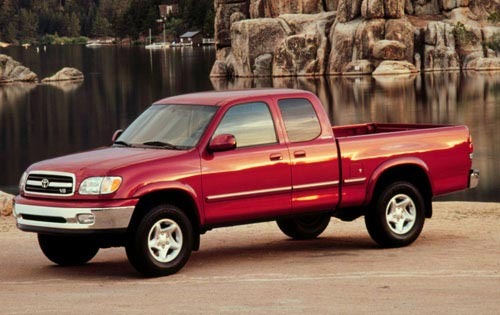
  • Toyota Recalls 2001-03 Tundra Pickups Over Faulty Front Passenger Airbag

    Toyota is recalling certain 2001-03 Tundra pickups due to faulty front passenger airbags. These airbags were manufactured improperly by an outside supplier.

    Toyota Recalls 2001-03 Tundra Pickups

    A third-party supplier of airbags is being blamed for the recall on 2001-2003 Toyota Tundra pickups.

    The vehicles Toyota is recalling include the Toyota Corolla, Corolla Matrix, Sequoia, and Tundra and Lexus SC 430 models. In all there are about 510,000 vehicles in the U.S. affected – 1.73 million globally.

    Toyota says, in a press release, that the vehicles have “front passenger airbag inflators which could have been assembled with improperly manufactured propellant wafers. Improperly manufactured propellant wafers could cause the inflator to rupture and the front passenger airbag to deploy abnormally in the event of a crash.”

    Much like other recalls, owners will receive a letter detailing the recall and local dealer information. Dealers will inspect and replace the airbag at no charge.

    According to Toyota, “Detailed information is available to customers at www.toyota.com/recall, the Toyota Customer Experience at 1 800-331-4331, www.lexus.com/recall and Lexus Customer Satisfaction (1 800-255-3987).”

    Also recalling faulty airbags is Honda, Nissan and Mazda. The supplier Takata is being cited as having improperly built the airbags and is the reason for the recall.

    While unfortunate that these recalls happen, a safety recall like this one is best to get it resolved ASAP.

    Related Posts:

    The post Toyota Recalls 2001-03 Tundra Pickups Over Faulty Front Passenger Airbag appeared first on Tundra Headquarters Blog.

  • Facebook Retires The REST API For New Apps

    In late 2011, Facebook said that it would retiring the REST API to focus all of its efforts on the Graph API. Developers had over a year to make the jump, and now Facebook is finally pulling the plug.

    Facebook announced today that the REST API no longer available for new apps. Going forward, all new apps on Facebook must use the Graph API. Apps created after April 10 will receive an error code 3 upon trying to call the REST endpoints.

    So what does this mean for all the currently existing apps using the REST API? Facebook says those apps won’t be affected, and can continue to use the API. Of course, Facebook would really like it if developers made the jump to the Graph API. If enough developers make the jump, Facebook may even be able to fully retire the REST API so that all apps are on the same page.

    If you have yet to make the switch to the Graph API, you might want to check out the stellar improvements and features Facebook has been introducing to it lately. In fact, Facebook just launched a few more Open Graph tools to help make users’ timelines more interesting.

    As per tradition, Facebook also released its latest bug report. Since last week, 70 bugs were fixed, and 72 were accepted for further review. You can check out the full bug fix list at the blog post.

  • Apple reportedly prepping new ‘killer app’ and another new service for 2013 launch

    Apple Predictions Killer App
    Apple (AAPL) is reportedly getting ready to make some “surprise” announcements later this year, including the unveiling of a new streaming music service or perhaps a mobile payment system set to debut at the annual WWDC conference this summer. Following a meeting with Apple executives, Morgan Stanley analyst Katy Huberty told clients in a note on Thursday that Apple has some new announcements brewing. While Apple’s Internet Software and Service boss Eddy Cue is hard at work trying to improve iCloud and the company’s iOS Maps app, he’s also reportedly working on a few new products that will launch later this year.

    Continue reading…

  • Kate Upton, Diddy Dating Rumors Denied

    Rumors this week surfaced that supermodel Kate Upton and producer Sean “Diddy” Combs could be an item. The New York Daily News reported that the two were spotted at club LIV in Miami Beach, “sucking face.” The pair also reportedly had an “intimate” dinner in New York.

    Now, however, it seems that the mystery girl seen making out with Diddy may have been a Kate Upton look-alike. The model’s representative has told the New York Post that the reports of Upton-Diddy sightings are “laughable.” Upton was, according to her rep, “on vacation with her family” during the times she was reported to be in New York and Miami. Also, the rep added that the pair “don’t know each other at all.

    Both Upton and Diddy have also refuted the rumors on their Twitter accounts. Upton calls the stories “not at all true” while Diddy has stated that he doesn’t “even know Kate Upton personally.”

  • Foursquare closes $41M debt financing, ups the ante on a high-risk gamble to own local recommendations

    Foursquare announced on Thursday that it has raised $41 million in financing from a group of venture funds, but in an interesting twist the funding is convertible debt rather than equity. To some, that reinforces just how much pressure the company is under to show that it has an actual business, and that it can someday generate enough value to justify the financing it has already raised. In other words, the company and its investors have upped the ante on an ambitious bet.

    BusinessWeek broke the news of the Series D funding round early on Thursday, an article that was quickly followed by a post from founder Dennis Crowley on the official Foursquare blog — entitled “Continuing Foursquare’s Growth” — and posts from two separate partners at one of the company’s main financial backers, New York-based Union Square Ventures.

    Crowley compares the challenges to Google

    In his post, Foursquare founder and CEO Crowley describes the challenges ahead — including some fairly dramatic technical challenges, such as the need to index and filter more than 3.5 billion check-ins and other location data in something approaching real time, in order to successfully recommend to users a restaurant or other business that fits their needs. Crowley compares it to the kind of data wrangling that Google has to do in order to provide search results:

    “To us, this is like when Google came and revolutionized web search. Suddenly, you could find things on the internet. The real world is the same way. Four years ago when we started Foursquare, it was really hard to discover a new retro arcade that opened up on a side street, or to make sure you weren’t overlooking the best dish on the menu, or to know a good friend was just around the corner. Sometimes, we think of Foursquare as having the ability to give people superpowers for exploring the real world.”

    location

    In a post at the Union Square Ventures blog, Albert Wenger talked about the potential for Foursquare to capitalize on its new focus as a platform for discovering local businesses — something GigaOM’s Eliza Kern highlighted in her post on the newly redesigned Foursquare app, which launched on Wednesday. In effect, the company is going head-to-head with local recommendation services like Yelp, and giving up its earlier focus on “gamification” elements like mayorships and badges.

    Debt instead of a lower valuation

    Union Square Ventures partner Fred Wilson, meanwhile, wrote a post on his own blog about the fact that Foursquare chose to (or was forced to) use convertible debt rather than equity. As Wilson explains, this kind of late-stage debt issue is often used when a company doesn’t want to (or can’t) raise equity because doing so would involve a “down round” — in other words, raising money at a lower valuation than it was given in earlier rounds. As he described it:

    “Both of our firms have been investors in Foursquare for several rounds and both of us own a meaningful stake in the company. Valuation is somewhat immaterial to us as our stake in the company is not going to increase much in this round of financing. But valuation is very material to the Foursquare management team because $41mm of capital is going to be dilutive at any valuation that would make sense here.”

    As Foursquare has evolved from being a fresh young startup with the hot iPhone app — which it was in 2009, when it launched at the SxSW festival — into a four-year-old company that has raised a total of $70 million in three separate rounds, it has faced increasing pressure to prove that it has a real business, along with questions about whether it can ever justify its earlier valuation, which was in the $600 million range. In a report in January, private-company research firm PrivCo argued that Foursquare could go out of business by the end of the year unless it raised more money.

    In a much-publicized spat on Twitter last month, investor Keith Rabois — a former PayPal founder who is a backer of Foursquare competitor Yelp — said Foursquare’s only option was to be acquired, because it had failed to back up its valuation with any real business success.

    Foursquare needs to prove it is a business

    foursquareradar

    Foursquare’s biggest problem is that it hasn’t been able to generate any meaningful revenue from the millions of users and partnerships it has announced over the past couple of years — according to an anonymous source quoted in the BusinessWeek article, the company had revenue last year of just $2 million, which makes a $600-million valuation look almost ridiculous. According to Crowley, much of the new financing will be used to develop advertising products that can run next to Foursquare’s local recommendations.

    Despite its inability to produce revenue, the company’s supporters remain optimistic about its chances of building a truly large-scale and profitable local recommendation service. Hunter Walk, a former YouTube staffer turned venture capitalist, said on Twitter “All I know is the financing allows them to continue building a product I love,” and Shai Goldman of the 500Startups angel fund said: “I hope they figure out how to monetize, I’m a fan.” Even John Lilly of Greylock Partners, which didn’t invest in the company, said on his blog that he thinks Foursquare has a chance to build a real business:

    “What does matter is that they raised the money they need to give this a real go. I have high confidence in these guys that they’ll do well and build interesting products and a great business for a long time.”

    Others, however, were less complimentary — and many seem to see Foursquare as a high-risk bet, much like email-offer flameout Groupon:

    Post and thumbnail photo courtesy of Pinar Ozger

    Related research and analysis from GigaOM Pro:
    Subscriber content. Sign up for a free trial.


  • Super-size me: Samsung Mega phone tops 6 inches in size

    Confirming leaks and rumors from last month, Samsung officially introduced two new Android smartphones on Thursday, the Galaxy Mega 5.8 and Galaxy Mega 6.3. The Galaxy brand tells you they’re going to look like most other Galaxy phones and the numbers actually indicate the screen sizes. I guess Samsung didn’t read how some people are leaving Android because the phones are getting too large!

    Both devices share design cues with the new Samsung Galaxy S 4, so most of the differences are on the inside. Here’s a quick rundown of the specs on each:

    The Galaxy Mega 5.8 uses a 960 x 540 display, 1.4 GHz dual-core chip, 8 GB of internal storage expandable up to another 64 GB, 1.5 GB of memory, a 2600 mAh battery and the typical assortment of wireless connectivity. Samsung’s Galaxy Mega 6.3 bumps the display to 720p resolution, uses a 1.7 GHz dual-core chip, 8 or 16 GB of internal storage plus the microSD slot, 1.5 GB of memory and a 3200 mAh battery. It also adds NFC and support for 802.11 a/c Wi-Fi, which the Mega 5.8 doesn’t have.

    Galaxy Mega 6.3

    At this point, there are few screen sizes Samsung’s Galaxy brand doesn’t have covered. And while some disagree with the strategy of similar smartphones in a dizzying array of sizes, I can understand Samsung’s approach.

    One of the appeals of the Android market as a whole is the choice of phone design and size. Samsung is not only taking over Android with its own TouchWiz interface, software and stores, but it mimics one of the best qualities of Android: a phone in the size that fits you best.

    Related research and analysis from GigaOM Pro:
    Subscriber content. Sign up for a free trial.


  • To Strengthen Your Confidence, Look to Your Past

    Confidence. It is an attribute we seek to have and look for in others, especially those in positions of leadership. Yet, time and time again, we meet executives who lack a confident presence. (We also encounter those who are overly confident — to the point that they are blinded by it — but that is a topic for another time). What many fail to realize is that confidence is dynamic and not a static emotion. Just like a physical muscle that needs exercise to grow stronger, a leader’s confidence requires continuous attention.

    Face the Facts: To strengthen your confidence, first face the facts. When you look to your past, you’ll realize that successes often outweigh failures. And, more importantly, that you survived through the failures and gleaned priceless lessons along the way. Your track record provides an inventory of what has happened over the long run, which you can then balance against what you fear may happen in the short term.

    Take for example, an executive we coached in a global marketing service — we’ll call him Dave. Having recently been promoted to a senior vice-president position (the third person to take the post in two years), Dave found himself facing new challenges: turning around a low-morale staff, driving new initiatives, and rebuilding the reputation of the department. He also had a whole new set of relationships to manage; he was now part of the executive team and frequently sought for advice by the CEO. “I often feel like I am going to get caught — that someone is going to realize that they made a mistake by promoting me into this position,” said Dave at one of our coaching meetings.

    When Dave stepped into the executive suite, his confidence stepped out the window. After taking inventory of the various promotions that he had received throughout his career, Dave realized that he had successfully faced new, albeit different, challenges before. His track record served as a basis of truth against the uncertainty he currently felt. While a cliché of sorts, there is truth in the saying “confidence starts from within.” Ultimately, confidence is the counter to the fears we face — fear of failure, fear of change, fear of inadequacy.

    Focus: With your track record as a foundation, it is helpful to focus on your strengths while managing your weaknesses. Most leaders are very strong in a few competencies, average in the majority of competencies, and weak in a few. Successful leaders focus on leveraging their strengths and managing their average/weak areas so that they do not become a deterrent to their effectiveness. Dave accepted that he was not going to be great at everything (nor did anyone expect him to be). With the help of a 360 assessment, he identified his strengths in “managing others” and “creating vision.” By focusing on what he knew he could contribute, Dave grew more confident in his ability to tackle the challenges ahead.

    Faith: It is not by accident that the Latin root of the word “confidence” is con fidere, which translates to “with faith.” The ultimate faith is a belief in the unseen. Leaders are called to create vision and change for the future out of uncertainty — fundamentally, they operate on a level of faith that helps give purpose, strength, and trust to the path that they carve out for their organizations. Dave’s fear of failing obstructed his ability to succeed. By shifting his attention to the excitement of building, creating, and leading something new, he tapped into a deeper purpose, beyond his day-to-day successes and failures.

    Confidence is a constant strengthening exercise. Like a well-conditioned muscle, it needs to be challenged and it also needs relaxation. Facts, focus, and faith each on their own may not get you there. But when you leverage all three in an integrated way, your confidence will absolutely grow.

  • Far Cry 3: Blood Dragon Brings The Best Of The 80s To Videogames

    Ubisoft had me worried when it seemed like Far Cry 3: Blood Dragon was just an April Fools joke, but it’s thankfully a real game. The spin-off of last year’s incredible open world shooter takes players back into an 80s infused alternate reality 2007 that looks parts Terminator, Escape From New York and G.I. Joe. The result is something that can only be described as incredible.

    To celebrate the game’s announcement, Ubisoft released a trailer today that combines old VHS footage, G.I. Joe-style animation, and gameplay footage into what must be the greatest game trailer released in the past five years:

    Far Cry 3: Blood Dragon will be assaulting your eyeballs on May 1. It will be available on Xbox 360, PS3 and PC. The best part – it doesn’t require Far Cry 3 to play. It’s an entirely separate experience that’s a love letter to everything children of the 80s grew up with.

  • Pantech working on new flagship device based on Snapdragon 600

    Pantech_Vega_No.6_02

    South Korean manufacturer Pantech is reportedly on the verge of releasing a new high-end device that will run on a Qualcomm Snapdragon 600 quad-core chip. The device will come with a 5-inch screen and a “bezel-less” design to help keep the overall device size down. The smartphone is model number IM-A870 and will be part of the Vega R Series of devices. According to sources, the device will support “giga Wi-Fi” at speeds equal to four times normal WiFi. The only other detail provided is that the device is expected to run Android 4.1 Jelly Bean.

    The new phone is Pantech’s attempt to compete with the Samsung Galaxy S 4. No pricing or market information was provided, although the device is expected to be released by the end of April.

    source: etnews
    via: phoneArena

    Come comment on this article: Pantech working on new flagship device based on Snapdragon 600

  • Cloud adoption: It’s not about the price, stupid

    Don’t look now, but there has been a shift in thinking around why companies move — or should move — workloads to the cloud. A few years ago, most of the talk was all around saving money. Look at how cheap Amazon Web Services are! Pennies per hour to spin up instances! We don’t need to buy more servers!

    But over the last year, the discussion has morphed more into how cloud offers companies flexibility and agility and there’s growing realization that for stable, non-variable workloads, cloud — even public cloud — is not the cheapest option at all– especially if you’re dealing with non-variable workloads taht might actually be cheaper to run in house. But that flexibility for occaional or variable workloads remains the public cloud’s siren call. Check out posts from Virtual Geek and Cloudave for more thinking on this trend.

    So the reason to go to cloud is no longer price but being able to move fast — deploy, re-deploy, and un-deploy workloads as needed without having to buy servers and software that could become shelfware next week or next month.

    IaaS follows SaaS arguments of the past

    What’s interesting to me is that this debate is evolving much like the discussion around Software as a Service (SaaS) did a decade or so ago. Initially, when Salesforce.com was coming into its own, most of the sales pitch was around price. Salesforce was so much cheaper than Siebel Systems. (Remember Siebel Systems? It’s now part of Oracle).

    At that time, Microsoft was getting into the CRM business with its own on-premises edition. It’s counter-pitch was: “Sure, Salesforce.com may be cheaper at first, until you use it for three years. Then Microsoft on-premises CRM is cheaper.”

    Of course, when Microsoft started rolling out its own cloud-based CRM, that price-based argument dissipated. The new thinking was that “cloud” CRM is better because everyone’s on the same, latest release and you can add/subtract users easily. Salesforce.com’s message likewise evolved to mirror that same message — especially as the more feature-rich Salesforce.com package options started to get um, quite pricey. Then Salesforce’s benefits became that it freed companies from the tedium and expense of on-site server and software upgrades. You could focus on business and leave the IT heavy lifting to your provider.

    Everest Group partner Scott Bils agrees that the thinking around cloud deployment motivation is happening. “No doubt the conversation has shifted from [total cost of ownership] to agility,” he said. A survey Everest conducted of about 350 attendees at last week’s Cloud Connect show reflects that trend.

    Cloud Connect 2012 Enterprise Cloud Adoption Survey

    Cloud Connect 2012 Enterprise Cloud Adoption Survey

    Customers surveyed cited reduced time to provision applications and infrastructure as their primary reason to move to cloud, followed by the cloud’s overall flexible capacity. TCO, on the other hand, came in way down the list. Now, remember, these people were at a cloud computing conference, so they may be more up to speed on these issues than the average IT user. But as Bils noted: “Interestingly, vendors still mistakenly believe [cost remains] the most important factor.”

    Related research and analysis from GigaOM Pro:
    Subscriber content. Sign up for a free trial.