 |
In an interview with ABC News April 2, Gen. James Thurman, the top U.S. commander in South Korea, said the current tense situation on the peninsula is the worst it’s been since he assumed command of the 28,500 U.S. forces there two years ago. Describing the state… |
Category: News
-
Globalists are leading us into nuclear war with North Korea
-
Top ten ways humanity is being murdered in the name of ‘evidence-based science’ (#4 Pharmaceuticals)

Drug companies are not in the business of health. They are in the business of marketing disease then offering their patented, overpriced chemical medications as a “treatment” for disease. But their treatments never cure the disease. They only “manage” it, leading… -
Top ten ways humanity is being murdered in the name of ‘evidence-based science’ (#9 Cosmetics)

Non-organic cosmetics and personal care products are loaded with “scientifically-formulated” chemical ingredients that cause cancer, liver damage, kidney damage, neurological disorders and even skin diseases. A typical “skin lotion” or cosmetic base is made with a… -
Top ten ways humanity is being murdered in the name of ‘evidence-based science’ (#7 Chemotherapy)

Many modern-day chemotherapy chemicals are derivatives of mustard gas chemical weapons used in World War I. The Nazis got their hands on the technology, and through chemical / pharma companies such as Bayer (whose co-director was convicted of crimes against humanity… -
NetConnectChoose lives up to its name
 NirSoft’s prolific Nir Sofer has announced his latest release,NetConnectChoose. And it’s a tiny tool which displays all your active internet connections, and allows you to choose one that Windows should use by default.
But if that doesn’t sound relevant to you, don’t worry: despite the program being as compact as ever (a 60.6KB download, including the Help file), Softer has still managed to cram in some useful extra functionality, and NetConnectChoose will also display a host of statistics on every connection it finds.
Browse the table and you’ll find your network adaptor’s MAC address, for instance. The length of time the connection has been running. Its current send and receive data speeds; the number of bytes and packets sent and received; your IP address, default gateway, name servers and DHCP server; your MTU setting, interface speed and more.
This information isn’t just static text, either. Leave the program open while you start a download, say, and you can watch as the “received data speed” (and other figures) update in real time.
Unusually for NirSoft tools, NetConnectChoose can be accessed from a system tray icon, allowing you to view this data — or change your default internet connection – in a couple of clicks.
And if you need to refer to the connection details later, they can be saved as a report in various formats (TXT, CSV, HTML and more).
Sofer reports that NetConnectChoose does have one significant issue. If you use it to change the default internet connection on a Windows XP system, then all existing TCP connections will stop working. That’s obviously going to be a little annoying, if, say, you’re half way through some bulky download, so use the program with care.
NetConnectChoose doesn’t have the same problem on Windows Vista, 7 or 8, though, where it works very well. The connection statistics it displays can be useful, too, and on balance it probably deserves a place in your troubleshooting toolkit.
Photo Credit: Sergej Khakimullin/Shutterstock
-
Gulf War and Health: Treatment for Chronic Multisymptom Illness
Final Book Now Available
Chronic multisymptom illness (CMI) is a serious condition that imposes an enormous burden of suffering on our nation’s veterans. Veterans who have CMI often have physical symptoms (such as fatigue, joint and muscle pain, and gastrointestinal symptoms) and cognitive symptoms (such as memory difficulties). For the purposes of this report, the committee defined CMI as the presence of a spectrum of chronic symptoms experienced for 6 months or longer in at least two of six categories—fatigue, mood, and cognition, musculoskeletal, gastrointestinal, respiratory, and neurologic—that may overlap with but are not fully captured by known syndromes (such as CFS, fibromyalgia, and IBS) or other diagnoses. Despite considerable efforts by researchers in the United States and elsewhere, there is no consensus among physicians, researchers, and others as to the cause of CMI. There is a growing belief that no specific causal factor or agent will be identified. Many thousands of Gulf War veterans1 who have CMI live with sometimes debilitating symptoms and seek an effective way to manage their symptoms. Estimates of the numbers of 1991 Gulf War veterans who have CMI range from 175,000 to 250,000 (about 25-35% of the 1991 Gulf War veteran population), and there is evidence that CMI in 1991 Gulf War veterans may not resolve over time. Preliminary data suggest that CMI is occurring in veterans of the Iraq and Afghanistan wars as well.
In addition to summarizing the available scientific and medical literature regarding the best treatments for chronic multisymptom illness among Gulf War veterans, Gulf War and Health: Volume 9: Treatment for Chronic Multisymptom Illness recommends how best to disseminate this information throughout the VA to improve the care and benefits provided to veterans, recommends additional scientific studies and research initiatives to resolve areas of continuing scientific uncertainty and recommends such legislative or administrative action as the IOM deems appropriate in light of the results of its review.
Topics: Health and Medicine
-
Apple’s hire of top robotics engineer sparks speculation about ‘fantastic’ future projects

“Since Apple discloses very little about upcoming projects, it’s anyone’s guess what Morrell is actually working on,” Ashlee Vance of Business Week explained. “My roboticist friends think he must be working on something pretty fantastic to have quit the Yale post. My great hope is that he is indeed building a robot that transforms health care, or crafting the first mind-bending consumer 3D printer, or devising something far more spectacular.”
Morrell’s hiring at Apple has reunited him with other members of the Segway team, such as former CTO Doug Field. Vance admits, however, that it’s possible Morrell may have “become just another member of a giant consumer electronics company.” Most of his former colleagues are said to be working on Apple’s flagship devices and not some sort of Segway offshoot, while Morrell is believed to be working in the Mac software group.
With its share price plummeting in recent months and more than $130 billion in cash, Vance suggests that it may be time for Apple to begin investing more in research and development, especially with “all-stars” such as Morrell on staff.
“A new TV could be a big win. So could a wristwatch. And since Apple is so darn secretive, it may once again surprise us all. It’s certainly possible that Apple has some top-secret skunkworks cooking up amazing things,” Vance concluded. “It would be a shame if a company with hundreds of all-stars, such as Morrell, isn’t working on something more daring than the next gadget. Apple has so much cash on hand and imagination at the ready that it ought to be able to think up a truly bold idea worth its effort.”
-
Flipboard gets minor update to support hover actions

Flipboard, the incredibly popular news app, has gotten a slight update in the Play Store today. The biggest improvement? Support for hover actions. It’s a cool feature, but it’s clearly a preemptive update for the Galaxy S 4′s hover features, although it should work with AirView on the Galaxy Note. It does also add the option to create an account with Facebook login, so that’s a feature everyone can get some use out of.
We’ve already seen Samsung and Flipboard buddy up before now, but this is definitely solidifying their relationship. Of course, the S 4 is likely to be a pretty popular phone, so it does make sense for Flipboard to support it above other less popular phones. Hopefully we’ll see more apps take advantage of the hovering actions in the future. Hit the links below to get your hands on the update.
Come comment on this article: Flipboard gets minor update to support hover actions
Visit TalkAndroid for Android news, Android guides, and much more! -
ASUS Transformer Pad Infinity to receive Android 4.2 Jelly Bean update

It’s been a good day for Android updates, and ASUS is joining the club with a Facebook announcement for their Transformer Pad Infinity. The powerful tablet will be updated to Android 4.2 over the air starting today. ASUS does a pretty good job of keeping their devices updated, and this just keeps up that trend.
The update includes all the 4.2 goodies we’ve grown to love, including lock screen widgets and multi-user support, so definitely keep checking to see when you’ll be able to download the update. You definitely won’t want to skip this one.
source: Facebook
Come comment on this article: ASUS Transformer Pad Infinity to receive Android 4.2 Jelly Bean update
Visit TalkAndroid for Android news, Android guides, and much more! -
LG Optimus G on AT&T beginning to receive Jelly Bean update

Not too long ago Sprint began updating its version of the Optimus G to Jelly Bean, and AT&T looks to be following suit. It’s almost a month late, but hey, better late than never. AT&T hasn’t officially announced the update, but many members on the carrier’s own community forums are beginning to receive the update, so it’s definitely happening. The update comes in at 336 MB and brings your device up to Android 4.1.2, Build E97020j. Anyone receiving that coveted update on their Optimus G yet?
source: Android Central
Come comment on this article: LG Optimus G on AT&T beginning to receive Jelly Bean update
Visit TalkAndroid for Android news, Android guides, and much more! -
Huawei doesn’t expect to gain any ground in the U.S. this year

-
Twitter Goes Holo in New Update

It’s about time. While others have been making Twitter look good, the official Twitter app has taken its sweet time doing the same. Well today marks a new day for Twitter for Android as it brings a new version to the Play Store. In this update we see a whole lot of holo and it looks good. Besides the makeover the app comes with the following changes:
– It’s easier to connect with friends and join conversations with @username and #hashtag suggestions that appear as you search or compose a Tweet
– Discover, install and launch your favorite apps from Tweets
– Other bug fixes and improvementsFor those of you that still use the official app, this should be exciting news. You can hit the break to get your download links and QR Code. You can also check out Twitter in all its glory. While it took the folks at Twitter plenty of time to get the update out, it looks like it was worth the wait. Enjoy!


Come comment on this article: Twitter Goes Holo in New Update
Visit TalkAndroid for Android news, Android guides, and much more! -
LinkMe Is An LED Smart Bracelet That Displays Scrolling Lines Of Text
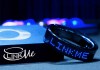
LinkMe is an LED smart bracelet that connects to your smartphone via Bluetooth and displays SMS and social media updates in text that scrolls across your wrist.
Smartwatches and smart bracelets promise convenience – it’s easier to glance at a device on your wrist than it is to dig out your buzzing smartphone from your tightly fitting jeans. But so far, many of them have had boring, uninspired designs. For example, the Pebble smartwatch has an amazing complement of features. But it looks plastic and boring. I’d never be caught wearing that on my wrist.
LinkMe is unabashedly beautiful. It’s a single chrome ring that clips around your wrist. The smart bracelet has a curved LED display that seamlessly blends in with the rest of the device. The display streams long lines of text in red or blue letters, like one of those big news tickers in Times Square.
LinkMe can display anything that be relayed in a stream of text – SMS, social media updates, flight information, personal reminders and alerts. When it isn’t displaying messages, LinkMe defaults to displaying the time, so you can easily use it as a watch.
But when it comes to functionality, the Pebble outstrips LinkMe in a number of ways. With its e-ink display, the Pebble can offer multiple watch faces and display limited graphics. It also can flash multiple lines of text at once. With LinkMe, you have to wait until the message or alert finishes scrolling across the bracelet.
Still, there’s just something about LinkMe that makes me want to have it around my wrist. Maybe it’s just another case of aesthetics trumping functionality. Maybe this feeling will go away if/when Apple releases a smartwatch that fuses beauty with a healthy complement of features.
But for now? I’m sold.
A LinkMe can be had for a $99 contribution at their KickStarter here. They’re pushing to raise $100,000 by May 5th.
-
Rovio’s social-based Angry Birds Friends game officially on the way to mobile devices

If you’re a Facebook fanatic, chances are that you’ve played Rovio’s hyper-addictive Angry Birds Friends at some point recently. As slick and cool as that spinoff of the game is, gamers have been limited to playing the game on a desktop computer as opposed to on our mobile devices. Fortunately Rovio realized that 60 million installs and a 15 million active user base must be tapped into just a wee bit further– and that’s why it used a Facebook event in Helsinki to announce a mobile version of its Angry Birds Friends game— which is inspired by the popular Supercell in-app store services to gain extra revenue.
Many of you are probably wondering why it took so long for Rovio to
finallycome out with a mobile version of the game, right? Well it’s quite simple really: up until recently, Rovio has been reluctant to monopolize revenues and sources of income in areas like paid apps, but with the paid apps business and merchandising taking off, Rovio is taking a chance by being open with free creative spinoffs of its games like Angry Birds Friends. Looking at the bigger picture, the developer sees this latest installment of the series as more exposure for its brands, while simultaneously tapping into the up-and-coming freemium business model.Be on the lookout for the game to hit Android devices soon. Oh— and please don’t blame us for any lost time in productivity.
source: TechCrunch
Come comment on this article: Rovio’s social-based Angry Birds Friends game officially on the way to mobile devices
Visit TalkAndroid for Android news, Android guides, and much more! -
Facebook, mobile games account for half the time spent on iOS, Android devices

-
What you need to know about the T-Mobile Simple Choice Plan

T-Mobile made a splash announcing its new no-contract Simple Choice plans and we here at Talk Android are wondering: Can they actually save you money? For the longest time, the wireless industry here in the U.S. has been dominated by two-year contracts. Whether you go with Sprint, Verizon or AT&T, the only way to get a solid smartphone at a lower price ($99 to $299), is by signing a two-year contract. Many Americans simply don’t have the cash to pay full price for an unlocked smartphone or tablet.
T-Mobile wants to change that with Simple Choice. There are no contracts and kicking off with the HTC One and Samsung Galaxy S 4 for just $99, it sounds like a great deal. First, let’s see what Simple Choice has to offer and at what prices:
 There are two plans to choose from, which in many ways complicates things rather than “simply” things. The new Simple Choice plan has a capped and throttled data plan, which starts at $50 per month (1 line) for unlimited minutes/texts and 500MB of data that you can use for either your phone or hotspot. You won’t be charged a dime if you go over 500MB, but you will be throttled to 2G speeds. If you need more than 500MB of data, it will cost you an additional $10 per month for every 2GB. Sounds simple enough, but here’s where things get complicated. The Classic unlimited plan starts at $70 per month (1 line) and includes unlimited minutes, texts, and data. There is one caveat, and that is that the unlimited data is only for your phone. They do include 500MB of hotspot only data, and if you need more it will cost you an additional $10 per month for every 2GB of data.
Now, without contracts means you’ll have to pay for the device over time. Depending on the device, it’ll cost an additional $5 to $20 per month over 24 months for either plan, and you always have the option to just buy the device upfront. For example, let’s say you get two lines and two Samsung Galaxy S III’s with Classic unlimited 4G (500MB tethering). You’re looking at $120 per month plus $40 per month over two years just for the phones themselves. If you know you won’t use more than 2.5GB of data, you can opt for the capped Simple Choice plan, which would cost $100 per month plus $40 per month over two years for the phones. You would be capped at 2.5GB, but you would also have access to that entire amount of data via hotspot.
T-Mobile’s Simple Choice plans aren’t “technically” no-contract because if you opt to pay for a device over time and terminate your service before the 24 months, you still have to pay off the device. It’s a bit of a catch 22. Now, looking at pricing for three other carriers, Sprint, Verizon, and AT&T, let’s see how much it would cost for at least 2GB of data:
- Verizon: $60 per month for 2GB shareable data plus $40 per smartphone. Includes unlimited talk and text.
- AT&T: $70 per month for 4GB shareable data plus $40 per smartphone. Includes unlimited talk and text.
- Sprint: $109.99 per month for unlimited everything on one device, $209.98 for two devices, and additional $99.99 per month for each device up to five devices.
If you just have one line, on Verizon it would cost you $100 per month, on AT&T $110 per month, and Sprint $109.99 per month. However, taking into consideration the average family has three lines, you’re now looking at $180 per month on Verizon, $190 per month on AT&T, and $309.97 per month on Sprint. With T-Mobile’s capped and throttled Simple Choice plan, you get 2.5GB of data at 4G speed per line for a cost of $120 per month plus $5-$20 per month per device over 24 months. With T-Mobile, you’re getting a total of 7.5GB of data (2.5GB per line) while the Verizon example only includes 2GB of shared data, and the AT&T example includes 4GB of shared data.
What about the unlimited Classic plan? Neither Verizon nor AT&T offer unlimited data so we’re only left to compare to Sprint. For just one line, it’ll cost $109.99 per month on Sprint while it’ll cost $70 per month plus $5-$20 per month per device over 24 months on T-Mobile. Your data is unlimited, but if you need more than 500MB of hotspot data, you’ll have to pay $10 per month for every extra 2GB. For say three lines, Sprint will, again, cost you $309.97 per month while on T-Mobile it’ll cost $150 per month plus $5-$20 per month per device over 24 months. This pricing is even on par with AT&T and Verizon’s capped and shared plans.
Verdict
If you’re an individual who is satisfied with at least 2.5GB of data, T-Mobile is the cheaper option. Opting for T-Mobile’s 2.5GB plan plus paying $20 per month for a premium device will come out to $80 per month. Even if you wanted an extra 2GB of data which comes out to a total of 4.5GB, your plan will only go up to $90 per month. That’s still cheaper than Verizon or AT&T.
For families, you can’t beat T-Mobile’s Classic unlimited 4G data plan. Up to five lines, it’ll cost you $210 per month plus $5-$20 per month per device over 24 months. Even if you get five premium devices that will cost $20 extra per month each, that’s $310 per month. With just 4GB of shareable data on Verizon across five lines, you’re looking at $270 per month with AT&T costing the same. Sprint’s Unlimited Everything with five lines will cost a whopping $509.95 per month.
However, if your family spends less time making calls and more time using data, you could get Sprint down to just $239.96 per month for five lines, unlimited text and data included. If you’re a family who will use a lot of hotspot access, the fact that data on T-Mobile Simple Choice isn’t shared across all devices, is a major benefit. Even if you have five premium devices at $20 extra per month on the 2GB plan and added an extra 2GB to each device, you’re looking at $310 per month. While Verizon and AT&T will cost you around $40 less per month, you’re getting more data per device with T-Mobile.
Moving forward, the biggest obstacle that T-Mobile faces is building out its 4G LTE network. Launching 4G LTE in six new U.S. cities is a good start, but carriers such as Verizon and AT&T are still winning at that game. As with any carrier, you also have to take into consideration service beyond just high speed data coverage. T-Mobile doesn’t have the best track record when it comes to reception so before making any decisions, research your area and see what other people are saying.
Come comment on this article: What you need to know about the T-Mobile Simple Choice Plan
Visit TalkAndroid for Android news, Android guides, and much more! -
Reuters – Clear Channel Agrees to Settle Shareholder Lawsuit
Clear Channel Outdoor Holdings Inc. agreed to settle a shareholder lawsuit seeking to rescind an allegedly improper loan that the billboard advertising company made to its ailing parent Clear Channel Communications Inc. The loan “so significantly” depleted Clear Channel Outdoor’s cash reserves that the company was forced to borrow $2 billion to fund a special dividend, according to the lawsuit filed in Delaware’s Chancery Court in March last year. Clear Channel Communications Inc and its owners, private equity firms Bain Capital and Thomas H Lee Partners, were also named as defendants.
(Reuters) – Clear Channel Outdoor Holdings Inc agreed to settle a shareholder lawsuit seeking to rescind an allegedly improper loan that the billboard advertising company made to its ailing parent Clear Channel Communications Inc.
The loan “so significantly” depleted Clear Channel Outdoor’s cash reserves that the company was forced to borrow $2 billion to fund a special dividend, according to the lawsuit filed in Delaware’s Chancery Court in March last year.
Clear Channel Communications Inc and its owners, private equity firms Bain Capital LLC and Thomas H Lee Partners LLC, were also named as defendants.
As part of the agreement entered into on March 28, Clear Channel Outdoor will demand payment of $200 million under the revolving promissory note from its parent company, and pay a special dividend of the same amount from the proceeds of the repayment. ()
Clear Channel Holdings Inc – the outdoor company’s direct parent and a subsidiary of Clear Channel Communications – would receive 89 percent of such a dividend, to be paid out the day the note is repaid.
Clear Channel Communications, which owns 89 percent of Clear Channel Outdoor, was bought by Bain and Thomas H Lee in 2008 for about $18 billion.
Clear Channel Outdoor’s shares were flat at $7.38 in mid-day trading on the New York Stock Exchange on Wednesday.
The post Reuters – Clear Channel Agrees to Settle Shareholder Lawsuit appeared first on peHUB.
-
Reuters – Carlyle’s Rubenstein Says Cyprus Scaring Depositers
Carlyle Group co-Chief Executive David Rubenstein said on Wednesday that inflicting losses on deposits at Cypriot banks has had a chilling effect across the world and could drive investors to pull their money from banks in other countries. A European Union bailout deal to save Cyprus from bankruptcy came with a raid on deposits over 100,000 euros in Cypriot bank accounts, an unprecedented move that has sent jitters across the single currency euro zone and beyond.
(Reuters) – Carlyle Group LP co-Chief Executive David Rubenstein said on Wednesday that inflicting losses on deposits at Cypriot banks has had a chilling effect across the world and could drive investors to pull their money from banks in other countries.
A European Union bailout deal to save Cyprus from bankruptcy came with a raid on deposits over 100,000 euros in Cypriot bank accounts, an unprecedented move that has sent jitters across the single currency euro zone and beyond.
“Cyprus is 0.2 percent of the EU’s gross domestic product so it’s insignificant. The real thing that has resonated around the world is that for the first time, people realized that governments could come in and wipe out their bank accounts,” Rubenstein told Reuters Editor in Chief Stephen Adler at the Thomson Reuters Buyouts East conference in Boston.
“Even in the United States people are beginning to wonder, could the government do that to me someday. It’s unlikely that would ever happen here but the idea that a government could just push a button and all of a sudden 10 percent of your bank account is wiped out, is something that has scared people,” Rubenstein added.
While a much feared run on Cypriot banks did not materialize when they re-opened last week, the country has imposed capital controls to stem a flight of euros from the island.
A lawyer by training, Rubenstein served as a domestic policy adviser to President Jimmy Carter between 1977 and 1981 and in 1987 founded Washington, D.C.-based Carlyle together with William Conway and Daniel D’Aniello.
“If you are in a bank that is not all that strong, in a country that is not all that strong, you might not keep your money there any longer. That’s the real impact of Cyprus; it’s scaring to death a lot of depositors all around the world,” Rubenstein said.
Thanks to support from the European Central Bank, however, the existence of the euro is currently not at threat, Rubenstein added.
Rubenstein, whose net worth is pegged by Forbes at $3 billion, has given away hundreds of millions of dollars to charitable and educational causes and is a signatory to the 2010 Bill Gates-Warren Buffett “Giving Pledge,” having committed to dedicate most of his wealth to philanthropy.
Rooted in private equity, Carlyle has in recent years expanded in other alternative asset classes including corporate credit, real estate and even commodities. It now boasts more than $170 billion of assets under management.
The post Reuters – Carlyle’s Rubenstein Says Cyprus Scaring Depositers appeared first on peHUB.
-
Reuters – SEC Needs Better Protections for Data
Sensitive non-public information could be compromised if the U.S. Securities and Exchange Commission fails to take additional steps to improve its internal controls, an agency watchdog has found, Reuters reported. In two separate audits completed late last month, the SEC’s new inspector general, Carl Hoecker, found vulnerabilities in the SEC’s information technology system. The first audit, dated March 25, examined how well the SEC maintains controls to protect sensitive information that it shares with the U.S. Financial Stability Oversight Council, or FSOC, a body of regulators that guard against systemic risks.
(Reuters) – Sensitive non-public information could be compromised if the U.S. Securities and Exchange Commission fails to take additional steps to improve its internal controls, an agency watchdog has found.
In two separate audits completed late last month, the SEC’s new inspector general, Carl Hoecker, found vulnerabilities in the SEC’s information technology system.
The first audit, dated March 25, examined how well the SEC maintains controls to protect sensitive information that it shares with the U.S. Financial Stability Oversight Council, or FSOC, a body of regulators that guards against systemic risks.
The second audit, dated March 29, reviewed the SEC’s compliance with the Federal Information Security Management Act, a federal law that lays down a framework for government agencies to protect themselves against threats and ensure data is secure.
Both audits were conducted as routine reviews to ensure compliance with federal rules and regulations, and were not investigating any wrongdoing.
The inspector general’s audits come as Congress and the White House are restarting negotiations on legislation aimed at improving U.S. defenses against cyber attacks.
The White House wants critical companies to comply with minimum security standards and also wants to help protect private information turned over to the government.
Protection of private company data is particularly important for financial market regulators, who routinely use it to help police the marketplace.
Hoecker’s March 25 audit found that the SEC needs to take more steps to safeguard critical information that companies such as hedge funds provide to the SEC on a confidential basis.
That information, which often includes proprietary data, is later reviewed by the FSOC.
The audit found that the SEC does not have controls to restrict or prevent employees and contractors who are accessing their e-mail remotely via the Internet from uploading or saving non-public information to a non-government computer.
“As a result, sensitive or nonpublic information could potentially be saved to a non-SEC computer,” Hoecker wrote. “There is a risk that an unauthorized person could gain access to sensitive or nonpublic SEC information.”
The SEC said the audit did not inquire whether any information was actually compromised.
The second audit found that generally the SEC needs to do more to continually monitor the security of its systems. It also found the SEC did not always properly disable network accounts for employees or contractors who have left the SEC.
“By not disabling these accounts, unauthorized employees/contractors can have access to the SEC’s network,” the report said, adding it was “putting the SEC at a higher risk for malicious acts.”
SEC spokesman John Nester declined to comment beyond the agency’s comments attached to the two audits.
The SEC concurred with the recommendations and said it would take steps to correct the problems. (By Sarah N. Lynch)
The post Reuters – SEC Needs Better Protections for Data appeared first on peHUB.
-
Cisco Buys Ubiquisys
Cisco will pay $310 million in cash to buy Ubiquisys, a privately-held company headquartered in Swindon, UK. Ubiquisys is a provider of 3G and LTE small-cell technology.
PRESS RELEASE
Today, I am pleased to announce Cisco’s intent to acquire Ubiquisys, a privately-held company headquartered in Swindon, UK for $310 million in cash and employee retention incentives. Ubiquisys is a leading provider of intelligent 3G and LTE (Long-Term Evolution) small-cell technologies that provides seamless connectivity across mobile heterogeneous networks for service providers.The acquisition of Ubiquisys exemplifies Cisco’s innovation framework based on a build, buy and partner approach. The Ubiquisys acquisition also complements Cisco’s mobility strategy along with the recent acquisitions of BroadHop and Intucell, reinforcing in-house research and development, such as service provider Wi-Fi and licensed radio. These technologies will tie together the mobility architecture that leverages the intelligence of the network from the wireless edge of the network into the wired core.
As carriers around the world increase cellular data capacity to serve the rapidly growing population of smartphone and tablet users, adding small cells is one of the most cost-effective ways to multiply data capacity and make better use of scarce spectrum assets. Ubiquisys’ indoor small cells expertise and its focus on intelligent software for licensed 3G and LTE spectrum, coupled with Cisco’s mobility portfolio and its Wi-Fi expertise, will enable a comprehensive small cell solution to service providers that supports the transition to next generation radio access networks.
The acquisition of Ubiquisys further reinforces Cisco’s commitment to service providers and strengthens Cisco’s mobility capabilities to continue to extend the intelligent mobile network.
Ubiquisys’ product portfolio and team will be integrated into our Small Cell Technology Group led by Partho Mishra.
The post Cisco Buys Ubiquisys appeared first on peHUB.