Category: News

  • Social Enterprises Need a Solid Measurement System

    Companies seeking to create scalable social businesses need a measurement system that monitors their progress in delivering social benefits and economic value. Only by tracking both the social and business results and how they’re connected can firms hope to have a large-scale social impact.

    The problem is there is not yet a universal system for doing this. The Sustainability Accounting Standards Board is trying to create industry-based standards that will allow investors and other stakeholders to compare firms’ environmental and social impacts, but it remains to be seen whether it will be able to tie its standards to value creation. The International Integrated Reporting Council is developing a common framework for companies to submit “integrated reports” on their financial, environmental, social, and governance performance. But it, too, remains very much a work in progress.

    We applaud these efforts. However, even if they do succeed in creating standards, we doubt that they will be sufficiently granular and tailored to be of use in devising and implementing “shared value” strategies for generating social benefits and profits.

    There is a remedy. It’s a straightforward process that our firm deduced from studying over a dozen major corporations — including Alcoa, Coca-Cola, Intel, InterContinental Hotels, Nestlé, and Novo Nordisk — that seem to be well along the way to building shared value enterprises at scale. It involves four steps described below. To illustrate them, we describe how Coca-Cola Brazil measures its Coletivo initiative, which has the twin goals of increasing the employability of low-income youths and young adults and strengthening the company’s retail distribution channels and brand strength. (See our report on the topic for other examples.)

    Identify the Social Issues to Target
    Start by identifying and prioritizing specific social issues that represent opportunities to increase revenue or reduce costs. This requires a systematic screening of unmet social needs and gaps and an analysis of how they overlap with the business. The result of this step is a list of prioritized social issues that a shared value strategy can target.

    In 2008, Coca-Cola, after six months of studying the needs of Brazil’s growing lower-middle-class population, identified a core social issue — skills development among low-income young people — as a strategic focus that could improve the company’s profitability. Most had little or no opportunity to find jobs due to their lack of skills and limited employment opportunities in their communities.

    Make the Business Case
    Develop a solid business case based on how social improvement will directly improve business performance. This step includes specifying the targeted social and business benefits and understanding the activities and costs needed to achieve them.

    To improve the skills and employability of these young people, Coca-Cola, in partnership with local NGOs, sought to train local youth for two months in retailing, business development, and entrepreneurship. Coca-Cola hypothesized that the training program, which includes pairing the young people with local retailers to get some job experience, could help the small businesses significantly improve their operations in areas like stocking, promotions, merchandising, and pricing, increasing sales of Coca-Cola products — especially in the emerging lower-middle-class segment.

    Track Progress
    Using the business case as a road map, track progress against the desired targets.

    Coca-Cola’s Coletivo initiative measures and reports progress on a monthly basis. It tracks the number of participating young people and retailers and the performance of retailers over time. The company also closely monitors the costs associated with the effort to ensure its cost effectiveness and efficiency.

    Since its launch in 2009, the initiative has trained more than 50,000 young people in retailing, business operations, and basic entrepreneurship concepts. The company now operates the Coletivo initiative at over 150 low-income communities across Brazil.

    Reassess the Concept and Identify New Value
    Use the results to validate (or invalidate) the anticipated link between social and business results. Determine whether the outlay of corporate resources produced sufficient social and business value. Insights and lessons from this analysis will help you refine the strategy and execution.

    Coca-Cola assesses four key measures: job placement; self-esteem of the young participants; company sales; and brand connection.

    The initiative has been highly successful so far: After being trained, approximately 30% of the young people immediately have landed their first job with Coca-Cola or one of its retail partners (small shops to large companies like McDonald’s and Walmart). And more than 10% have set up their own businesses with microcredit support from the company. An investment in a Coletivo site is profitable in only two years.

    Coca-Cola’s measurement system also identified continuous improvement opportunities, such as revising the training program to put more emphasis on soft skills, including leadership and presence, instead of only technical merchandising skills.

    If the world is going to reap the promise of shared value — sustainable, scalable approaches to solving social problems — then companies need robust measurement systems to help them learn what works.

    Please join the conversation and check back for regular updates. Follow the Scaling Social Impact insight center on Twitter @ScalingSocial and give us feedback.

  • What You Need to Know About President Obama’s Plan to Improve American Infrastructure

    Over the last four years, construction crews have built or improved more than 350,000 miles of road – enough to circle the world more than 14 times. We’ve upgraded more than 6,000 miles of rail – enough to go coast-to-coast and back. And American workers have repaired or replaced more than 20,000 bridges.

    But we still have a long way to go.

    While our national infrastructure got its best grade in 15 years from the American Society of Civil Engineers' annual report card in 2013, that grade is now a D+ instead of a D. We don’t have to accept that for America — we can do better. And in a time of tight budgets, we can do it in a way that makes sure taxpayer dollars are spent wisely. Additionally, there are few more important things we can do to create jobs right now, and strengthen our economy than to put people back to work rebuilding America – our roads, bridges, schools, and ports.

    In his 2013 State of the Union address, President Obama announced a three-part plan to encourage private investment in American infrastructure that will make our roads, bridges, and ports safer, give our businesses and workers the tools to compete successfully in the global economy, and create thousands of much-needed jobs in cities and towns across the country. Here’s how it works:

    read more

  • The most likely buyer of Nokia or BlackBerry now in talks to acquire NEC’s handset unit

    Lenovo NEC Rumor
    Reuters is reporting that Lenovo (LNVGY), the Chinese electronics giant, is in talks to acquire NEC’s mobile phone unit. Lenovo has been speculated to be in talks with both Nokia (NOK) and BlackBerry (BBRY) over the past two years. Various brokerages have claimed that it is negotiating to buy Nokia’s feature phone unit, Nokia’s Lumia phone unit or BlackBerry’s hardware operations. If Lenovo ends up buying the NEC handset operations, it would acquire a technologically highly sophisticated operation with a minuscule annual production volume of roughly 4 million units.

    Continue reading…

  • Will “hybrid public” cloud give VMware its mojo back?

    It may be a cliche, but it’s also true: VMware is at a crossroads. The company, which dominates server virtualization in company data centers, continues to struggle for credibility in the cloud — and it’s new plans for hybrid vCloud service hasn’t done much to fix that.

    VMware CEO Pat Gelsinger

    VMware CEO Pat Gelsinger

    This “VMware vCloud Hybrid Service,” to be run from partner data centers and sold by VMware’s channel but managed by VMware, is slated to come online later this year. VMware pitches it as a way for the company’s 480,000 customers “to reap the benefits of the public cloud without changing their existing applications while using a common management, orchestration, networking and security model.”

    But VMware faces a raft of challenges.

    Too little too late?

    First of all, many of those VMware customers have already tested out other cloud offerings — Amazon Web Services, or a third party service provider, MSP or hosting company, they’re already in the cloud in some way. AWS, for better or worse, has set the bar high when it comes to pay-as-you-go services for developers and higher-level managed services for other constituencies in the enterprise. Even solid VMware shops are testing out alternatives for different use cases, as we learned in last week’s big PayPal does/doesn’t dump VMware for OpenStack kerfuffle.

    Fractious partner relationships

    Second, VMware’s existing cloud partners — including big service providers and telcos offer VMware’s vCloud Director as an option but several of those partners, speaking privately, aren’t wild about it. They say it’s under-featured and expensive. And, nearly all of them offer other — less costly — options to vCloud Director including OpenStack.

    The fact that VMware will pick certain service providers over others to host this cloud means it will tick off others.

    “Nearly all of the service providers were already hedging on vCloud Director because of cost issues and now all those that weren’t already hedging are aggressively moving in that direction,” said an exec with one vCloud Director partner who requested anonymity for obvious reasons.

    Forrester cloud analyst James Staten agreed that VMware stepped on “xSP” partner toes, but said it had no choice.  ”None of its partners — not even the vCloud Data Center partners —  were really offering the full vCloud Director cloud experience as VMware views it. And it felt it needed to do this to really help educate buyers on the full capabilities of vCloud Director,” he said via email.

    The bigger problem, is that VMware is behind the curve when it comes to full pay-as-you-go cloud capabilities. And the claim that customers running vSphere internally and vCloud Director in the cloud get fully interoperable elastic cloud services across sites,  is, untrue, said Carl Brooks,  internet infrastructure services analyst at The 451 Group.

    “If you run vSphere in house and vCloud outside, you can get very basic capabilities — virtual storage and virtual servers– but that’s very little compared to what you get from any other hoster these days,” Brooks said. With vCloud director, “it’s like VMware is giving you a 1978 Pinto and saying it’s a Formula 1 car.”

    VMware would argue that the level and type of services that a third party service provider offers depends on the service provider itself, not on VMware, which supplies the software stack and tools. That’s one big reason that VMware will manage and run this new hybrid cloud, but proof will be in the pudding.

    And VMware’s biggest problem — the perception that its software is a proprietary and expensive — remains unchanged.

    Banking on the brand

    But, VMware has its advantages. For one thing, there are all those customers. If it can stem defections to OpenStack or other cloud technologies and convince enterprise customers that its cloud is a more secure but also cost competitive alternative to AWS, it has a shot. VMware also spun off a bunch of projects to the Pivotal Initiative so it can better focus on its priorities — although Pivotal is also focusing on cloud initiatives.

    The problem there is AWS has a 7-year head start and rolls out new services (and price cuts) practically every week. And it’s getting more enterprise savvy and is showing more interest in co-existence with private clouds preferred by regulation-constrained industries.

    OpenStack remains a wild card. VMware CEO Pat Gelsinger was careful to talk about the company’s commitment to heterogeneous environments when he outlined the new strategy. And, after all, VMware is a member of OpenStack now, a development that caused a lot of head scratching.  One big reason for OpenStack momentum is that VMware’s rivals and enterprise customers alike have vested interest in preventing VMware from parlaying its on-site virtualization dominance into the cloud.

    Staten maintains that VMware’s hybrid-public cloud is trying to be bold without being too bold. ”Any way you look at this, it seems like a half-hearted effort which means its likelihood of success is low,” Staten said.

    Feature photo courtesy of Flickr user fontplaydotcom

    Related research and analysis from GigaOM Pro:
    Subscriber content. Sign up for a free trial.

  • Porsche 911 PDK vs. Lotus Evora IPS

    Porsche 911 PDK VS Lotus Evora IPS

    It used to be that if you were a sports car enthusiast that you lived and breathed manual transmissions. Nowadays though, manual shifted automatics like Porsche’s stellar PDK system have started to sway even the most die-hard drivers. These system shift faster and are more efficient then any manual transmission could ever hope to be. They allow you to keep both hands on the wheel, and on the race track there is no question that they’re the way to go. However what about driver involvement? Do they keep you as engaged as a pilot, or are they pulling some of the enjoyment out of driving. Road and Track recently pitted a Porsche 911 PDK and a Lotus Evora IPS in a head-to-head battle to answer this very question.

    Source: RoadandTrack.com

  • Samsung Exynos 5 Octa Will Support All 20 LTE Bands

    Samsung Exynos 5 Octa

    While those of us in the U.S. will just get the Galaxy S 4 with a quad-core Snapdragon processor, other countries are fortunate enough to get the Exynos 5 Octa on-board. If you are able to get your hands on the S 4 or future Samsung device with an Octa processor, there is some good news when it comes to LTE support. According to the official Samsung Exynos Twitter page, the Exynos 5 Octa will support all 20 LTE bands allowing fast data speeds worldwide. As far as what modem it will be paired with and how many bands will be supported on a single device, Samsung has yet to release more information.

    Source: Official Samsung Exynos Twitter page

    Come comment on this article: Samsung Exynos 5 Octa Will Support All 20 LTE Bands

  • How to send SMS or MMS text messages from your PC or tablet using your Android phone number

    android-sms-01

    Our little Android devices can do almost as much as some PCs, but it’s easy to forget that your smartphone is still a phone at heart. And with all the instant messaging services available for you to communicate, sometimes text messaging gets put in the backseat to the more robust features of something like Google Talk. Being able to keep up a conversation across multiple devices is incredibly handy, and it’s often much easier to type on a full computer keyboard as opposed to a smaller smartphone keyboard.

    Using instant messaging isn’t without it’s flaws, however. If you have friends that all use different IM services, or friends without smartphones, it can be difficult to keep up with all of them in different programs and browser tabs on your desktop, and in the case of messaging someone without a smartphone, you’ll have to use your phone to send traditional text messages anyway. With this guide, we’re going to get into a few different apps that add many of those instant messaging features to your SMS text messaging, including being able to send texts from different devices and syncing conversations across devices.

    desksms

    DeskSMS is an application developed by Koush, who’s also responsible for a handful of other extremely useful Android applications, like Carbon, which we’ve discussed as one of the best ways to backup your phone data. The premise of DeskSMS is simple; you link your phone to your Google account, and sign into a website (or browser extension) with your Google account, and you immediately have access to your SMS logs and can freely send and receive texts, all from the comfort of your full-sized keyboard.

    DeskSMS is great for a number of reasons. First, it’s simple to set up, and simple to use. Sending texts is just like opening up an app on your phone, typing away, then hitting enter to send the text. The devices don’t need to be connected to the same WiFi network or through Bluetooth. As long as they’re tied to the same Google account, you’re in business.

    Second, DeskSMS offers many ways to send text messages. Want a browser extension for Chrome or Firefox? No problem. Would you rather use a website? You can do that. Maybe you want your texts to link into your Google Talk account or Gmail account? You can do that, too. Possibly the coolest feature of DeskSMS is text forwarding to Google Talk (or any third party IM application that supports Talk), so you can essentially turn a text conversation into an instant messaging conversation without the other person doing anything differently. Koush also offers a TabletSMS app, which syncs and pushes your text messages to any tablet with the app installed. Of course, you may not even need to do that if you’re using the Google Talk or Gmail forwarding, but we’re never going to complain about having more options.

    DeskSMS itself is free, but the service costs $4.99 per year. Of course, for the convenience of being able to send text messages from any internet enabled device, it’s definitely an app worth passing up on coffee one day for.

    QR Code generator

    Play Store Download Link

    mightytext

    SMS Text Messaging ↔PC Texting from MightyText is similar to DeskSMS. It’s an easy to use, free app that syncs SMS from your phone onto your computer or tablet. It works very similarly to DeskSMS by syncing through your Google account, but it does also offer a handful of extra features, like the ability to see your phone’s battery level and see who is calling you on your phone before answering. It also lets you securely back up your SMS and even MMS messages to MightyText’s servers, which is handy for extra data backup. MightyText also offers tablet texting via an extra app just like DeskSMS. Plus, there’s no monthly or yearly service charge to pay for here.

    MightyText is extremely functional, but it is a bit more bloated than DeskSMS. If you’re looking for all the extra features, you’ll definitely want to give this app a shot. Below is the main app to download, and the companion tablet app. You’ll only need the tablet app if you want to text message from your tablet.

    QR Code generator

    Play Store Download Link

    QR Code generator

    Play Store Download Link (Tablet App)

    tablet-talk

    If you’re not much on communicating on your computer, and it’s more about the tablet for you, then Tablet Talk might be the way to go. It’s more lightweight than either of the first two options and doesn’t need to latch onto your Google account to make things work.

    Essentially, Tablet Talk tethers your tablet and your phone together, either through a WiFi network or Bluetooth. Once connected, Tablet Talk becomes a fully functional SMS application for your tablet and automatically syncs up with your phone messages. It also adds in the ability to make phone calls through your tablet, which neither of the other options can do. While holding a tablet up to your face isn’t practical, if you use a Bluetooth headset and would prefer to do everything through your tablet, this is a great option.

    Tablet Talk is completely free, and there’s only one app you need to install. It automatically detects if it’s installed on a phone or tablet and sets up accordingly. And if you’re into extreme customization, there’s plenty of themes for Tablet Talk in the Play Store.

    QR Code generator

    Play Store Download Link

    verizon-messages

    If you’re a Verizon customer, you have access to a solution for cross-device text messaging through your Verizon phone number. Their Verizon Messages application is a simple way to enable that functionality; install the app and link up your Verizon phone number and you’re good to go. You can use the app on your PC or tablet and see up to 90 days of saved messages, and freely send and receive SMS.

    The Verizon app also has a few other unique features, like the ability to set up an auto-reply, report spam messages, full group messaging support, and even a widget with a badge counter for unread messages. It’s definitely a robust app, and if you’re already a Verizon customer, this one is definitely worth checking out.

    QR Code generator

    Play Store Download Link

    These are three extremely simple-to-use apps to enable text messaging across multiple devices to help SMS keep up with instant messaging. A few OEMs do offer this functionality through other services on their products, (Samsung’s KIES software comes to mind) but in many cases, it’s easier to pick your own software for compatibility and flexibility. Are there any apps you use that didn’t make the list?

    Come comment on this article: How to send SMS or MMS text messages from your PC or tablet using your Android phone number

  • Watch: Celebrating Women’s History Month at the White House

    In honor of Women’s History Month, last week, we welcomed a group of high school students to participate in a conversation with a mentoring panel at the White House. It was followed by a celebration in the East Room with President Obama and the First Lady. Here are some of the highlights and interviews from the panelists and attendees:  

  • Google’s Babble is actually Google Babel and will come to Android, iOS, Chrome, Gmail, and G+

    babble_geekdotcom

    If you’ve been keeping up at home, we’ve heard a ton of reports lately that Google is releasing a unified chat client called “Babble.” Well, turns out that client is actually called Babel, but many of the other rumored features were right. Babel will be available cross-platform on Android, iOS, Chrome, Gmail, and Google Plus, but as of right now, Google Voice isn’t part of the list. It may come at a later point, but not right out of the gate.

    Babel will allow you to access the same conversation list from any of those platforms, and features a new, conversation based UI, picture messaging, improved cross-device notifications, and picture messaging. That’s a pretty fully featured app, and it’s definitely going to improve our communication experience as a whole.

    Babel as a name does make sense for Google’s project, though, especially if you consider the Biblical meaning of the word and the story of the Tower of Babel. However, it still might not be the official name of the app, whenever it’s released, so take it with a grain of salt. Personally, I think Google will opt for something a bit more accessible and catchy, but I guess we’ll find out soon enough.

    source: Droid Life

    Come comment on this article: Google’s Babble is actually Google Babel and will come to Android, iOS, Chrome, Gmail, and G+

  • How to Write the Dreaded Self-Appraisal

    No one likes review time. For many, self-appraisals are a particularly annoying part of the process. What can you say about your own performance? How can you be honest without coming off as arrogant, or shooting yourself in the foot?

    What the Experts Say
    Dick Grote, author of How to Be Good at Performance Appraisals, has a lot to say about self-appraisals and most of it isn’t good. “I’ll admit it’s important to get the employee’s point of view in the process but this is the wrong way to do it,” he says. In his view, since study after study has shown that we are horrible judges of our own performance, any self-evaluation should focus exclusively on positives; people should not be self-critics. Timothy Butler, a senior fellow and the director of Career Development Programs at Harvard Business School, agrees that self-assessments aren’t the best way to evaluate performance, but believes they do serve a purpose: “They’re an important source of information about what happened in the past year,” Butler says.

    No matter where you stand on their value, self-appraisals are a staple of office life. So the question is how to handle them. Here are some principles to help you when review time rolls around.

    Know how your boss will use it
    Before you put pen to paper, ask your boss how he plans to use the self-appraisal. Will it play a key role in his review? Will he use it to make decisions about promotions and bonuses? Will he share it with anyone else? Knowing these things will inform what and how you write. “Many lazy bosses see it as an easy way to shuffle off the difficult task of writing a review,” says Grote. If that sounds like your manager, write your appraisal in a way that allows him to copy and paste from your form to his, replacing every “I” and “my” with “she” and “her.”

    Emphasize your accomplishments
    Both Grote and Butler agree that you should emphasize your achievements. Don’t be arrogant but don’t downplay your successes either. “If you’ve had a great year, you should talk explicitly about your accomplishments,” says Butler. “Be very clear about what contributions you’ve made to the business unit.” Grote adds there is no shame in being political. “It’s OK to put the best face on what you did,” he says.

    Acknowledge mistakes — carefully
    Of course, unless you’re the best thing that ever happened to your office, you’re likely to have faults or have made missteps too, and you should mention those, even if it’s only in passing. Grote again advises to put the best possible spin on problem areas so you don’t give your boss “the noose with which to hang you.” Butler suggests using developmental language. “You don’t want to say, ‘Here’s where I really fall down.’ Instead, say ‘Here’s an area I want to work on. This is what I’ve learned. This is what we should do going forward.’”

    Keep the focus on you
    It can be tempting to talk about others in your appraisal — particularly if they’re hindering your progress — but remember this is about you, not them. “Don’t use defensive language or criticize other parties. That doesn’t move things forward,” Butler says. “If you’re having a significant problem with a co-worker, talk to your manager long before the review — with the door closed, not in a written document.”

    Ask for what you need
    Smart employees use self-appraisals to lobby for career development opportunities. Even if your boss doesn’t explicitly ask for this, Butler says you should include it anyway “because if you don’t ask, it’s not going to happen.” Be specific. Explain the aspects of your job that most excite you and suggest ways you can become more involved in those things. You might ask to be included in certain brainstorming meetings or request funding to take a class on data analytics. Just remember to make sure these requests reflect what your business unit needs as well.

    Managers: Work to improve the process
    Both Butler and Grote believe there are ways for managers to make self-appraisals more effective. Butler would like to see managers ask more about employees’ motivations and interests so they can create jobs that are better suited for them. He suggests asking questions like, “Where do you think you can make your biggest contributions in the coming year?” and “Which types of projects and activities would you like to see more of in your day-to-day work?” Grote recommends focusing on the positive. Maybe ask for a “good stuff list,” where employees can write down what they’re really proud of. “That puts a very appropriate, positive view on the process,” he says.

    Principles to Remember

    Do

    • Understand how your self-appraisal is going to be used
    • Focus mostly on what you’ve accomplished in the past year
    • Try to improve the process if you’re a manager — ask about your employees’ motivations and interests

    Don’t

    • Harp on your weaknesses — talk about them carefully, using developmental language
    • Be defensive or criticize others — this is about your performance
    • Forget to ask about growth opportunities — be specific about what you need

    Case Study #1: Take it seriously and they will too
    Darin Freitag has filled out six self-appraisal forms in his time at Ryan Associates, an employee-owned construction company based in San Francisco. The company uses a standard form that includes a handful of questions such as, “What are your job responsibilities and have you gone above and beyond them this year?”

    Darin spends between two and four hours filling out his form each review time. “I make sure my managers know that I take this seriously,” he says. He knows that his immediate boss (the company’s COO), the CFO, and the head of HR all review his form and he gears it toward them. “This is my one time of year to push for my career growth,” Darin says. He’s explicit about how they can help. In the past, he’s used the form to request new responsibilities and exposure to different types of projects. But he’s honest about his performance as well. “I know that I have characteristics that require some comment. For example, I often get sucked into the details,” he says. “I don’t make a big deal about it but I recognize that’s what I’m working on.”

    Case Study #2: Be honest when you can be
    Two years in a row, Liz Steele*, a senior HR partner at a global non-profit, didn’t achieve the goals she set for herself. “I was just too optimistic about what I could accomplish,” she says. Since her self-appraisal required that she assess her performance against those objectives, she struggled with what to do. “Most people just talk about their accomplishments but I didn’t feel comfortable doing that,” she says. After carefully thinking it through, she decided to list each goal, explaining which ones she didn’t meet. She also highlighted work she delivered that wasn’t part of her original plan. She admits that it was a risky move: “I knew that it could backfire. In some cultures that would’ve been equivalent to career suicide.” But she was confident in the security of her role and knew she was well-respected by her manager and her clients. Plus she felt her integrity mattered more. As an HR partner, Liz’s success relies on her ability to influence others. “I can’t influence if people don’t trust me,” she says.

    Her immediate boss and the Head of HR reviewed her self-appraisal and were surprised. “They were amused but they also appreciated that I was willing to call myself out on my own failures,” she explains. Her manager specifically noted on this year’s evaluation that she was not afraid to admit her own mistakes. She knows she took a calculated risk by being so truthful, but in this case, her honest and careful approach paid off.

    *not her real name

  • Kardashian Baby Names Discussed on Leno

    Reality TV actress and amateur porn star Kim Kardashian‘s pregnancy has been the subject of much speculation these past few weeks. In particular, the rumor that the baby’s father, R&B star Kanye West, might name the baby “North” has enthralled the tabloid media.

    This week, Kardashian went on The Tonight Show to promote Keeping Up With the Kardashians. She and Jay Leno, of course, spoke about her pregnancy, which Kardashian revealed was a “pleasant surprise” that “wasn’t really planned.”

    She goes on to say that she has a list of baby names, and that some of them don’t start with a k. Kardashian then emphatically shot down the “North West” rumor, stating that North is not a name on the couple’s list. However, she followed up by suggesting that another joke name, “Easton,” might actually be suitable.

  • Is Native WebGL Support Coming To Internet Explorer 11?

    For all of its talk of supporting open Web standards, Internet Explorer 10 still lacked one important part of the open Web ecosystem – WebGL. Sure, you could add it with a plugin, but Microsoft refused to add native support while Mozilla and Google do amazing things with it. That all may change, however, with Windows Blue.

    Fremycompany reports that Internet Explorer 11, as seen in the recent leak of Windows Blue, contains hints in its code that Microsoft will finally be adding native support for WebGL. The only problem is that it’s not entirely functional yet:

    I didn’t get webgl working, even by trying using iesl, hlsl and other combinations. So, it seems like WebGL interfaces are defined but not functional at this time.

    As CNET points out, Microsoft did have a good reason to keep WebGL out of Internet Explorer until now. The company called it out as a security risk, and was concerned that malicious actors could hijack browsers using the technology. Still, this latest hint of incoming support may mean that Microsoft has patched up all the security holes it was concerned about.

    There’s not much more to go on at this time beyond the initial hints, but it would be incredibly advantageous for the Web if Internet Explorer finally added native WebGL support. It’s quickly becoming one of the more important open Web standards as more people use it to make games and other graphic intensive content on the Web without plugins.

    We’ve reached out to Microsoft to see if the Internet Explorer team is working on native WebGL support. We’ll update this story if they get back to us.

  • Google’s ‘Babble’ cross-platform messaging service gets detailed in purported leak

    Google Babel Messaging Service
    Earlier this month it was reported that Google (GOOG) has been working on a cross-platform messaging app called Babble that would unify its messaging platforms into a single service. According to Droid-Life, the service is known internally as Babel, rather than Babble, and is currently being tested by Google employees. The service is expected to include several keys features that provide users with a seamless messenger experience across Android, iOS, Chrome, Google+ and Gmail. Babel is said to feature advanced group conversations, access to conversations across multiple platforms, the ability to send pictures, improved notifications across a variety of devices and a new conversation-based user interface. Earlier reports suggested that Google will announce the messaging service at its annual I/O Developers Conference in May

  • Lohan Triangles Tattoo Meaning Revealed

    As Lindsay Lohan strives to piece back together her career while avoiding further legal troubles, the tattoos on her body have become the subject of much internet speculation.

    Today, the New York Post is reporting that Lohan’s triangles tattoo has some sort of “spiritual” meaning to the actress. Lohan reportedly received the tattoo last year, getting a tattoo artist to come to her mother’s house for the job. She and “close friend” Liam McMullan are reported to have gotten identical tattoos at the time to symbolize some sort of “deep spiritual bond.” The Post’s unnamed sources told the paper that the tattoos supposedly symbolize the “dangers out there” and “two spiritual energies inside each other.”

    The tattoo in question is of two thin red triangles, one inside of the other. Below the triangles is the phrase “What Dreams May Come” – a reference to Shakespeare’s famous Hamlet soliloquy.

    Besides having the personal meaning of her tattoo leaked, Lohan has hopped into bed this week with Charlie Sheen on the TV series Anger Management. She also, like many celebrities, tweeted her support for same sex marriage:

  • Grey’s Anatomy has a TED moment

    Grey's-Anatomy

    Photo courtesy of: ABC

    Has a TED Talk ever happened live from a hospital? Well, not in real life — but yes on television. Last night on Grey’s Anatomy, TED became a part of the surgical action when Dr. Callie Torres was prepping to give a talk on the wonders of cartilage. But when a leaking tanker led to extensive injuries and burns, she’s was unable to leave the Grey Sloan Memorial Hospital ER to get to the conference. In the emotional peak of the episode, she delivers her talk via livestream from the hospital conference room.

    Watch the full episode on ABC.com. And fast forward to 35:50 to see Callie Torre’s TED Talk. It begins, “I had a pretty bad year…”

  • Khan Academy’s Advice For Scaling Your Startup To Millions Of Users

    Google interviewed Ben Kamens, lead developer at Khan Academy, about scaling a startup to millions of users, which the popular online learning site has been able to do. Google uploaded the video to its Developer YouTube channel this week.

  • New Trojan can hack you in a Flash

    Are you sitting down? I know this will come as a shock, and I want to prepare you. Adobe Flash is the source of a new attack against PCs. Honestly, in this case it really is not Adobe’s fault (unlike some other past cases), but the software is still the vehicle used in this drive-by. Microsoft reports that Trojan:Win32/Preflayer is in the wild and changes the home page for Internet Explorer, Google Chrome, Mozilla Firefox, or Yandex.
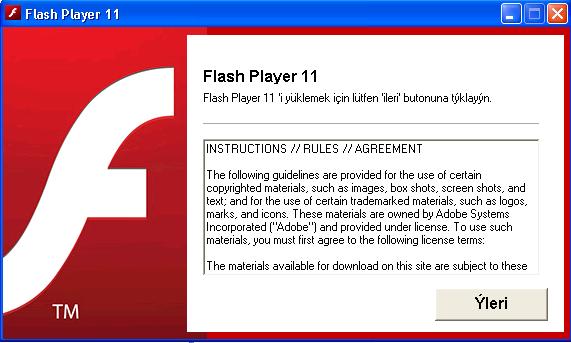
    “These sites appear to be a type of search engine, but there are pop-up advertisements displayed on the pages, and there was an instance where I was redirected to a different page not of my choosing”, Jonathan San Jose, Microsoft antivirus researcher, says.

    The Trojan attacks in the guise of a fake Adobe Flash update that pops up on the user’s screen. According to the software giant’s threat report “to trick you into thinking that it’s a legitimate installer, it also downloads and runs the actual Flash Player installer”. That makes this a bit scarier than the average fake Flash updates that we have grown accustomed to encountering over the past few years.

    The browser home page is changed to one of the following addresses:

    • www.anasayfada.net
    • www.heydex.com

    Microsoft details how the Trojan works in its threat report, including the attacks on Chrome, Firefox, Yandex and, of course, Internet Explorer. Microsoft also outlines steps to remove the virus, but users should probably be clued in to not get it, given that the pop-up box for installation is written in Turkish.

    Folks, Flash is dangerous. It also causes non-critical, but still annoying, browser problems. Many web sites have moved on to HTML5, but for those that have not, do yourself a favor — enable click-to-run in your web browser and pick and choose carefully where you make that click. By all means, do not trust pop-up ads. If you need to update, then visit the official Adobe site and do so manually. It really is a jungle out there.

    Photo Credits: maraga/Shutterstock

  • Change Management Is Bigger Than Leadership

    If an organization needs to undergo significant change, that’s a leadership issue, right? Old dogs will learn new tricks when the lead dog — or ape, or penguin, depending on the management fable of the moment — shows them off. Leaders need to craft compelling elevator speeches, relentlessly deliver the message of change, and above all, walk the talk.

    That is all well and good for animal packs, and it helps with humans, too. But by itself, the lead-animal theory is woefully insufficient for changing large organizations or large parts of organizations. Leaders modeling behavior and talking the case for change can indeed help enterprises transform. But how often is that corporate alpha dog actually sitting among the pack? Most people in large organizations catch a glimpse only briefly, via dispatch or WebEx or the rare visit. Soon, the appearance fades and the banners droop. The workers, the managers, and even the executives look around to see if their environment has changed, if the tried-and-true behaviors that made their world work will continue to do so. If the environment has changed, fine; it’s time to adapt. If it hasn’t, then why bother to change?

    How, then, does one lead the changing of an organization, whether it is a company, business unit, service line, department, or work unit? By changing the work systems that comprise the work environment around the people whose behavior is supposed to change. Therein lies the key to successful, embedded, and sustained change: alter the environment, and people will adapt to it. Call it a species strength. We behave based on the reality around us.

    Eight aspects comprise our world at work and, therefore, patterns of behavior at work: organization (organizational chart), workplace (its physical or virtual configuration), task (work flow or processes), people (specifically the skills and orientation), rewards (and punishments), measurement (the metrics employed), information distribution (who gets to know what when), and decision allocation (who is involved in what way in which decisions). A skilled change leader can convert these eight aspects into eight levers for change.

    That is just what Hyundai’s Chung Mong-Koo did and the results speak for themselves. He took a carmaker arguably within sight of going out of business in 1998 and led the creation of what Bill Holstein (writing in Strategy+Business) describes as “a coherent mix of quality improvement, design, and marketing that gives Hyundai a clear advantage over its industry competitors.” A remarkable feat made only more remarkable by the fact that it occurred in a highly competitive, well-established global industry.

    This change took time and far more than an inspired “motivational” leader. It took a concerted, coordinated, and sustained reworking of multiple work systems. For instance, Hyundai established a new and powerful quality division along with a Global Command and Control Center and brought transmission design and manufacturing in-house, implemented many Deming and systems-oriented approaches to task or work flow, flattened organizational hierarchies to drive more collaborative decision-making, made far more production information available throughout the organization in real time, significantly upgraded the level of technological tools available (especially on the production floor), altered measurement to include “qualitivity” (a unique combination of quality, productivity, and customer satisfaction) and rewards (e.g., good pay by local standards in Alabama plant), and hired outside designers leading to a new approach to design termed “fluidic sculpture.”

    At another global organization, the Roman Catholic Church, a change in leadership has many hoping for the revitalization of what some see as a scandal-ridden, unresponsive, and secretive organization. What might a change-minded pontificate learn from Hyundai? Do the aforementioned levers of change apply? They might start by articulating what scenes they want to see occurring regularly and reliably within the church that currently do not, and, conversely, what now-common scenes they wish would stop. That work done, they might step back and look across the scenes and ask questions such as the following:

    1. What changes in the organizational chart or in supporting structures (such as meetings) would support the scenes occurring? For example, does the traditional parish structure facilitate or hinder the scenes occurring?
    2. What design of physical or virtual space would make the desired scenes more likely? For example, would easy access to global digital connections serve to build a larger sense of community?
    3. What protocols might ease realization of desired scenes? For example, how standardized should the handling of financial or educational tasks be?
    4. What skills and orientation should people playing key roles in the desired scenes bring to their roles? For example, what attributes should qualify someone for hire into those roles?
    5. What rewards or punishment should depend upon people acting consistently with the desired scenes? For example, on what basis should disbursement of church funds occur?
    6. What measurements would foster the regular unfolding of the desired scenes? For example, is there a RCC version of Hyundai’s qualitivity?
    7. What distribution of information would facilitate desired scenes occurring and frustrate the occurrence of undesired scenes? For example, would greater transparency be a goal? If it is, with whom would RCC wish to be more transparent and how would this work, from speed of message delivery and method of communication?
    8. What allocation of decision making roles would serve to bring desired scenes to life? For example, what role should clergy and laity play in which decisions to support the occurrence of desired scenes?

    Watch the Roman Catholic Church. The more that it approaches the need for change strictly as a need to “get a different leader,” the less real change will occur, let alone endure. The more that it approaches change as a concerted, coordinated, and sustained reworking of multiple work systems, the more real change will occur…and endure, as it has at Hyundai, and as it would for your organization.

  • Hands on: Audiobus and GarageBand on iOS

    Audiobus ($4.99) is an interesting concept on iOS. It’s a program that acts as a bridge between several compatible audio apps — you can find a complete listing of compatible apps here. Add in the apps you want into the Audiobus interface and you can have a drum track from a drum machine playing along to your heavy metal guitar. Up until now, what’s been missing is support for GarageBand, Apple’s iOS recording software. But now, with a recent update for GarageBand, the app will work with Audiobus-enabled apps. I’ve never been thrilled with GarageBand’s built-in amps, so I love that I can use a different amp modeling package.

    I’m going to walk you through how to integrate GarageBand, Audiobus and Audiobus-supported apps. Since I’m a guitar player, I’ll be focusing on how I use it for guitars, but any instrument you can hook into your iOS device will do.

    Hooking it all together

    The first thing you’ll need to do is launch AudioBus. You’ll see a screen with three boxes labeled Input, Effects and Output. Tap on Input to select the apps you want to feed into Audiobus. I’ve chosen Amplitube and Pocket Beats (you can have up to three inputs). Pocket Beats is a drum machine with a heavy techno feel, and combined with my blues/classic rock playing style certainly yielded an interesting jam track. Then tap on Outputs and choose GarageBand.

    Crump-audiobus-01

    You can probably do the next steps in any order, but I like to go from start to finish. I open up Pocket Beats and start the drum machine. I then launch AmptiTube and find a preset I like. Then I tap on GarageBand from the Audiobus app to launch it.

    GarageBand is going to ask you what input source to use for your instrument. Note: this isn’t the Audiobus feed, but how the instrument is getting jacked in. Since I’m not using GarageBand’s craptastic amps, I choose Audio Recorder. If you don’t find the built-in amps as displeasing as I do, you can choose Guitar Amp as your input.

    crump-audiobus-2

    Now, GarageBand takes an extra step, which I found out the hard way. By default, GarageBand records in eight-measure increments. So, I was jamming along to my unholy union of blues rock and house dance beat when I noticed the whole shebang had stopped recording. So be sure to tap on the Plus icon in the upper right of the measure ruler and extend the measure as far as you need.

    Next I went to AmpliTube to start the actual recording. On the righthand side of the screen you’ll see a floating palette. From here you can either change the apps Audibus is passing or start the recording. It’s important to note that you will want to start the recording here; not in GarageBand. Play along to your heart’s content.

    Once you’re done, open up GarageBand, and you’ll see the Audiobus track.

    crump-audiobus04

    How I plan on using Audiobus

    The Fender Squire USB Guitar is the guitar I take when I’m traveling or practicing outside. The USB 30-pin connector combined with an amp app is all I need to practice or write with when I’m not in my studio. I usually have some backing tracks I play along with and I’m getting in the habit of recording most of my practice sessions to help me get better. Now, I can use some MP3 I’ve uploaded into iOS GarageBand, get an amp sound that I’m happy with in an app like AmpliTube and record, and write when I’m sitting by the lake this summer.

    Apple including Audiobus support in its own apps is an interesting sea change. It’s not often Apple includes support for a third-party service in an iOS app. I hope this is a sign of things to come. Now that Apple has increased awareness of Audiobus, I’m hoping we’ll start to see some great apps become available that will really fuel my creativity.

    Related research and analysis from GigaOM Pro:
    Subscriber content. Sign up for a free trial.

  • Google+ Engineers Tell You How To Get People To Your App

    Google developer programs engineers Silvano Luciani and Joanna Smith put out a video this week, discussing how to use interactive posts to “bring the people who care” to your apps. The two explore how to find the best audience when prefilling recipients, and build a widget to demonstrate how to help users pick the right people for interactive posts.