Category: News

  • 80 Million Hours of Digital Rendering Produce “The Croods”

    The-Croods

    DreamWorks Animation SKG and HP have a long history of pushing the boundaries of hardware and animation innovation with a partnership that delivers computing power  to render digital effects for films such as “Rise of the Guardians” and “Kung Fu Panda 2.” DreamWorks’ latest movie, “The Croods,”pushed the boundaries of high-performance workloads, requiring more than 80 million render hours to generate visual images from 3-D models.

    HP said its  converged infrastructure rose to the challenge, enabling DreamWorks Animation to render the large amount of data required to produce the film. The studio increased render capabilities to an average of 500,000 jobs a day with the use of HP ProLiant BL460c Gen8 server blades.

    “Cutting-edge digital manufacturing requires a huge amount of compute power and orchestrated collaboration across our studios,” said Derek Chan, head, Technology Global Operations, DreamWorks Animation (DWA). “HP Converged Infrastructure ensures that our filmmakers have the technical resources they require to bring their creative vision to life and deliver amazing films to our audiences.”

    Serving as a foundation for the new movie were HP servers, storage, networking, services, management software and workstations, as well as HP printers and digital rendering.  DreamWorks relied on ProLiant servers and HP Enterprise Services in render farms across four geographic locations.

    Additionally, HP Z820 workstations with dual Intel Xeon processors helped artists work on large, complex scenes, HP Z800 workstations were used  in the new DreamWorks Animation state-of-the-art recording studio, and HP Remote Graphics Software allowed  artists across studios in Glendale, Redwood City and Bangalore to collaborate in real time on a single desktop display.

    HP hardware, software and services were used from start to finish in the making of “The Croods”, building on a relationship with DreamWorks that began in 2001. Through that relationship DreamWorks takes advantage of HP FlexNetwork architecture, HP Managed Print Services, HP 3PAR StoreServ Storage, HP Remote Intelligent Management Center, and HP DreamColor professional displays and printers.

  • Apple’s Latest Acquisition Puts Them Inside the Building

    Apple acquired a company last week. It’s something to pay attention to.

    There is still one slightly uncharted territory that will — without question — be the last mile in marketing. It is the ability for a brand to deliver contextual and highly targeted marketing at the local retail level. We may be inching ever-closer to this reality.

    On March 23rd, 2013, The Wall Street Journal reported that Apple acquired a company called WiFiSLAM for an estimated $20 million (not bad for a two year old company with just a handful of employees that includes some ex-Googlers). WiFiSLAM is billed, according to AngelList, as a technology that, “allow(s) your smartphone to pinpoint its location (and the location of your friends) in real-time to 2.5m accuracy using only ambient WiFi signals that are already present in buildings. We are building the next generation of location-based mobile apps that, for the first time, engage with users at the scale that personal interaction actually takes place. Applications range from step-by-step indoor navigation, to product-level retail customer engagement, to proximity-based social networking.”

    If you can get beyond the marketing jargon, WiFiSLAM is, essentially, GPS for the indoors. It is able to triangulate the location of consumers, track their every move and deliver contextual marketing messages to them while capturing a tremendous amount of consumer data. Does that creep you out?

    It turns out that consumers are looking forward to more technologies at the physical retail level. In December of 2012, under the headline, “Smartphone Owners Want More Mobile Information in Stores,” Internet Retailer reported: “80% of smartphone owners want more mobile-optimized product information while they’re shopping in stores, finds ‘The Shopping Experience in a Smartphone World,’ a study conducted by ad agency Moosylvania. The agency surveyed 1,874 U.S. adult Smartphone owners. 97% of respondents have access to a personal computer and 43% have access to a tablet.”

    While it’s not a massive sample and the research was done by a digital marketing agency with a vested interest in these types of technologies creeping their way into the physical stores that ran the research, there is a high temperature to capture both the mapping of these physical retail spaces and connecting the consumers who are in them. In short, retailers want to capture this new, connected and highly untethered consumer.

    For Apple, this is more than a defensive move. Pundits have a hard time grasping why Apple would make a move like this in a world where Google has made several dominating moves in the mapping space (hint: Apple stores!). Some speculate that Apple will try to grab the mapping of the inside spaces while Google continues to map the oceans and the arctic. The truth is that Google is just as busy trying to capitalize on this idea of mapping the inside of spaces as well. But it’s not just a game for Apple and Google. Amazon has been hard at work capturing tons of consumer information at the retail level.

    Look no further than their Price Check for iPhone app that enables consumers to scan a barcode, snap a picture of a product or use text/speech search to find out how much the product is on Amazon. This business of showrooming has become a contentious talking point in the retail sector, as more and more consumers are using their smartphones and tablets to find a better price at the physical location. These consumers are using the stores as a showroom, but completing their purchases on their mobile devices and having the products shipped to their homes. What we don’t hear much about is the data and information that Amazon is capturing about consumers, how they walk through stores, what they’re price checking, the price variances from store to store, trends in merchandising and more. All of this (and more) is being captured, each and every time a consumer uses the app to find a better price. While it’s not real-time information like WiFiSLAM is offering, Amazon still has tremendous information about consumers and how they make their way through many different retail environments.

    We live in exciting times. This is just the beginning. Having GPS capabilities inside businesses is still in its nascent stage. Whether it’s WiFiSLAM or another startup with similar technology (look no further than Nomi as a close contender) that is going to partner with retailers to provide contextual marketing services within a physical location, this ability to understand the consumer in a aisle to aisle manner is going to change the retail landscape as we have seen it to date. This aisle by aisle, real-time ability to flip offers, while getting a better understanding of how foot traffic flows, where consumers stop and engage is going to affect everything from pricing to shelf space to how end-cap placements are sold.

    It looks like stores are going to become as dynamic and intelligent as their e-commerce counterparts. So long as retailers seeks permission from their consumers and use this technology to drive more value to the consumers, these types of technologies could well be the linchpin that secures the future of retail.

    So long as it doesn’t get creepy.

  • Sysinternals updates Autoruns and Process Monitor

    Sysinternals has announced updates for Autoruns and Process Monitor, as well as the release of a new command line tool, Registry Usage.

    The Autoruns tweaks are the most significant. In particular, all reports now include a timestamp for executable files, folders or Registry keys. And so if you browse to HKLM\SOFTWARE\Microsoft\Windows\CurrentVersion\Run in the Everything view, say, you’ll now see a timestamp which tells you when that Registry key was last modified.

    Of course, while this is a welcome addition, it does highlight one current failing of the program: you can’t simply click a column header to sort entries by date (or any other field). Perhaps that will be next.

    Elsewhere, Process Monitor gains support for Windows 8 file information query types, as well as having a minor bug fix in its tooltip handling.

    And the new Registry Usage (RU.exe) is a simple command line tool which give you details on the size, value and subkey counts of a specified Registry key.

    To try the program out, just open a command line at the folder where it’s located, and launch it with a suitable path (short and long forms are supported: “ru hkey_current_user” or “ru hkcu”, for example). After a pause you’ll see a report listing the number of values and keys within that path, and their total size in bytes.

    Other options allow you to itemize subkeys, as well as control the number of levels the program will browse, as well as exporting the details as CSV for easy reference and analysis later.

    And, as usual, launching Registry Usage without any command line switches will display information on the program’s various options.

    Photo Credit: andrea michele piacquadio/Shutterstock

  • Dear Windows Phone, Evernote 3.0 just arrived with a revamped interface and new features

    Whenever I want to jot down a couple of ideas for a new story, write some of my thoughts for posterity, or create a shopping list, Evernote is my favorite cloud-based note-taking app. It looks great and is available across all my devices, so I don’t have to worry about forgetting important personal things when I’m on the go. Everything that I have is there, everywhere.

    What I value the most is the cross-platform spread, as Evernote is available on Android, iOS, BlackBerry, Mac OS X, Windows 8/RT and Windows Phone. And, to get me hooked some more, Evernote 3.0 just arrived on Windows Phone with a revamped home screen, improved tag lists and the ability to use shortcuts, among the most noteworthy new features.

    The new home screen is very pleasant to look at, in the typical white and green Evernote tradition with gray status and menu bars. There are big and intuitive buttons that allow users to add a new note, take a picture with the built-in cameras, record a voice note and add a photo from the device’s gallery.

    Evernote 3.0 uses the current camera configuration and does not allow you to change settings, so that’s something to keep in mind for more artistic shots. The app, however, allows users to retake a shot. The remaining two tabs — recent and notebooks — take users to the latest notes and the entire collection, respectively. For tag users there’s a tab for those which shows up before home.

    Evernote 3.0 also adds shortcuts which appear on the home screen after long tapping on a note, notebook or tag and selecting “add to shortcuts” from the drop-down menu. It’s a very nifty little feature which might save some time in the long run, especially for folks with large collections.

    The latest iteration of the note-taking app now touts the tags tab as “significantly more compact” due to a higher number of visible items on the screen. And, borrowing from Windows Phone itself, Evernote 3.0 has implemented the ability to jump straight to a particular letter in the tag list after selecting an item from the alphabetical grid.

    Users who like to tick items now have the ability to use checkboxes inside notes, which can of course be both created and edited. For more organized minds Evernote 3.0 now allows you to “visually group similar notebooks”. Users can open and close stacks simply by tapping and view the notes from a particular stack with a long tap on the item.

    The note-taking app also adds a premium feature — document search — which allows users to search for any attached and indexed iWork, Microsoft Word or OpenOffice file. Results will be displayed for documents, spreadsheets and presentations. The app also brings some performance enhancements, per the usual.

    Evernote 3.0 is available to download from Windows Phone Store.

    Three days ago, Evernote 5.0 arrived on Android with a new multi-shot camera (lets users add multiple pics), page camera (users can align an on-screen rectangle with the page to take photos), and support for Evernote Smart Notebooks by Moleskine.

    There is also support for shortcuts, document search (premium feature), tags (for business users) and tweaked UI (User Interface), as well as the usual performance and bug fixes.

    Evernote 5.0 is available to download from Google Play.

    Considering where Evernote is right now in regard to design, features and availability across multiple platforms I can only wonder what chances Google really has with Keep, its recent attempt to invade Evernote’s turf . It’s not on Windows Phone, Windows 8, Mac OS, BlackBerry, only on Android, iOS and the browser, and it’s way too basic for anything other than simple notes. Like my colleague Alan Buckingham says, “Google can keep Keep, I will stick with Evernote“, that is despite Evernote’s recent security mishap.

  • Citrix: Windows Phone is barely making a dent in the workplace

    iOS Android Windows Phone
    If Citrix’s mobile device management customers are any indication, then Microsoft (MSFT) has its work cut out for it in making Windows Phone devices staple features of workplaces. Citrix, which specializes in developing cloud, networking and virtualization technologies, reports that 62% of its North American MDM customers use iOS as their mobile platform of choice versus 35% for Android and just 3% for Windows. Although Citrix’s picture of mobility in the enterprise is incomplete since it doesn’t measure BlackBerry (BBRY) use, it does give an interesting glimpse into what industries use which platforms for their mobile computing needs. Among all the industry categories surveyed, Citrix found that only the oil and gas industry used primarily Windows-based mobile devices while iOS or Android topped every other industry.

  • After sorting out mobile carriers’ APIs, Apigee targets healthcare and the airlines

    I don’t travel by air that often, but I fly enough that I’ve managed to build up quite the collection of airline apps on my phone. Every time I find myself trying to remember my Delta or United password to download my boarding pass, I can’t help wondering why someone doesn’t make a single app incorporating the mobile features of every airline. If Apigee has a say in the matter, some day someone will.

    Apigee manages, monitors and optimizes mobile application programming interfaces (APIs), which act as the glue connecting technologies, services and data sources across networks. So far Apigee has focused on the mobile industry, attempting to whip into shape the different network APIs used by hundreds of different carriers and present them to developers as a simple common interface.

    Boarding Pass TelloNow Apigee plans to go after other industries such as healthcare and the airlines. Those industries have a lot of useful information, from frequent flier miles to health records, that developers would love to access if only it weren’t so fragmented. On Thursday Apigee announced what it’s calling the API Exchange, which essentially takes the model it’s devised for telecom and applies it to any other industry.

    Healthcare companies and airlines actually have a lot in common in mobile carriers, said David Andrzejek, who heads up the Exchange for Apigee. Their industries are highly regulated and dominated by multiple, very large, vertically integrated companies using proprietary technology that is unfathomable to all but the most committed developer. “The barriers are normally just too high for any developer to build anything against,” Andrzejek said.

    For the mobile carriers, the problem has always been that developers couldn’t just tap into a single API to use their location, presence or payment services – developers have to tap into the separate APIs of hundreds of carriers around the world. Consequently no developer wanted to deal with carriers, further marginalizing them. The mobile industry spent years trying to develop a common set of APIs that would present a unified front to the developer world. They failed spectacularly.

    When Apigee took over the GSM Association’s OneAPI program, it pretty much gave up on the dream of standardizing under a single set of carrier APIs (which makes the program’s name a bit outdated). Instead, Apigee took to aggregating all of the carriers’ different APIs onto a single platform and then translating them into a single meta-interface that any developer could hook into. At Mobile World Congress this year, Apigee and the GSMA presented the initial fruits of that labor: an identity-management API any app developer could use to authenticate users via their phone numbers.

    It’s still early days for the OneAPI project, but Apigee feels it’s learned enough dealing with the fickle mobile carriers to take on other big complex industries. Just like the carriers, airlines and insurance companies haven’t standardized under any common APIs, and for competitive reasons they’re unlikely to do so.

    Related research and analysis from GigaOM Pro:
    Subscriber content. Sign up for a free trial.

  • With Presence app, People Power pulls a pivot

    People Power, a company that since 2009 has managed to make open-source home-energy tracking hardware and software, an enterprise-focused energy-tracking cloud service, and a consumer-facing mobile app that tracked home energy usage, has a new plan for itself. A plan that involves the internet of things.

    The company is launching Presence, an iOS app that converts an existing iPod Touch, iPad or iPhone into a remote camera. The idea is that people have older versions of Apple devices lying around and this app can help people put them to use in a new way — as a home-monitoring service. Eventually, People Power’s CEO Gene Wong hopes the app becomes a control point for other connected devices in the home.

    presence-market-listTo that end, the firm already has deals with SimpliciKey, a connected lock company, and Monster, the cabling company that has a line of connected plugs that are similar to the Belkin WeMo. While the app is free for consumers to download, the hope is that manufacturers will strike deals to connect other devices through the app and sell them to customers there as well.

    Already the Presence app offers a list of accessories that will help in the process of turning a portable device into a stationary remote camera. Stands, tripods, extra-long cables and extra chargers are all offered through the app. As for the rationale behind this switch from helping customers conserve energy to helping them monitor their homes (or pets), Wong said:

    “One of the things we discovered is people don’t care enough about saving a few bucks and they don’t care about saving the planet. So what we have done by moving to Presence is we are tapping into things that people really care about: their family, their pets, their elderly parents, and … improving their safety and security.”

    And what about the app? It’s incredibly simple to install and set up a camera. I was sharing my iPad as a remote camera with a colleague in less than 3 minutes. I don’t have any unused iOS products lying around, so my tests weren’t exhaustive by any means, but it has some nice features that are simple to enable.

    presence-device-view-ipad
    Likes:

    • It has a simple user interface that allows you to set your camera up to share video and audio or video but not audio and vice versa. This is nice if you want to enable a picture but not have people overhear your conversations.
    • There’s a simple rules option that lets you set up if/then statements to “program” how the camera works.
    • You can darken the screen if you want to make the camera unobtrusive.
    • When someone logs into the account and can watch you, a message flashes on the screen letting those around the remote camera know it’s being monitored (this is printed in white so if the background is white, it doesn’t show up all that well).
    • The motion detection works well. When it’s triggered it will send a five-second video of whatever triggered it to your email. At that point you can log in and view the camera if you’d like.

    Dislikes:

    • I worry about having any remote-controlled camera attached to the public internet in my home. Wong assures me the People Power cloud is safe, but I’m always cautious.
    • Wong detailed how one could use this as an easy way to create a videoconference for someone who isn’t technically savvy enough for Skype. Just load the app on an old device and ship it to grandpa with the log in and password. With a shared account you can create a face-to-face conversation. In practice though, finding the right buttons to share the video wasn’t easy.
    • This is a battery hog, so you do need to plug it in if you want this to run more than an hour or so. The company is clear about that, but it bears repeating.

    presence-rule-edit-ipad

    So will People Power’s pivot help it conquer the internet of things after it couldn’t gain traction in the energy-management space? The app is nice and an Android version of it should come out later this year. I do know several people who have older iPhones or iPod Touches lying around the house that might get upcycled into the home monitoring job, but I don’t know how big that market is.

    As far as home monitoring, it competes with Dropcam, new IP-based alarm system Scout, and apps like AirBeam. And its one-app-to-control-all plan is one that several companies from MobiPlug to SmartThings all have in their own sights.

    In the meantime, Wong says People Power will continue to support those “thousands of customers” who use the energy-monitoring app until he can fold them gracefully into this new app if it succeeds. Perhaps the third (or fourth) time is the charm for People Power.

    Related research and analysis from GigaOM Pro:
    Subscriber content. Sign up for a free trial.

  • Apple Patents iPhone With Wraparound Display, Including Designs That Plug Together Voltron-Style

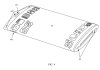
    iphone-wraparound

    Apple has a new patent filing just published by the USPTO today, first spotted by AppleInsider, which details a wraparound-style AMOLED display that could make it possible to create an iPhone that’s almost entirely screen, with touch gestures and virtual buttons replacing physical ones completely. The patent describes designs that could have a seamless, continuous surface resembling the fourth generation iPod nano, as well as other shapes closer to the current iPhone, but with every surface a touch-sensitive glass display.

    The patent is a fairly comprehensive one, and even mentions built-in facial recognition as well as a method of layering flexible, see-through displays on top of one another in order to produce different visual effects, including the appearance of 3D. The glass used to encase the display is described as either seamless, or featuring small design elements to hide where one piece joins another. One major advantage is that glass is relatively radio transparent, which is why the current generation iPhone 5 has top and bottom glass “window” panels on the backside of its casing, and another, says Apple in the filing, is the aesthetic advantage.

    Apple suggests a number of different device designs representing different geometric shapes that could be used with an all-encompassing external glass display, but even more interesting, in some it talks about removable end caps that could allow more than one device to be joined together. Like Voltron, when combined these iPhones or iOS mobile devices would become greater than the sum of their parts.

    Another neat trick is the way in which the proposed device would recognize what touch to treat as important, and which to ignore, since the entire phone is essentially one big touchscreen. Apple describes a way of detecting how a user is actually handling the device to solve that problem, using on-board cameras and facial recognition to figure out where to display content, and where to register touch.

    The final element of the patent is a version that contains layered, transparent displays that can each show different content, or layers of a single image to achieve 3D effects. It could also be used to place a HUD or additional information on top of another image, essentially building a second-screen or augmented reality experience into a single device.

    This is one of the more exciting Apple patents that has surfaced lately, as it demonstrates essentially a completely re-imagined next-generation iOS smartphone. But the technology is probably still a ways off from being economically practical, and the battery demands of a completely wraparound display would also likely be astronomical. So while I wouldn’t expect this in iPhone 6 (or even 7), it’s a good look at how the company is thinking about innovation behind the scenes.

  • IoT Podcast: Why the Hue internet light bulb is a bright idea

    If you visit the Apple store you might see a sleek, black package of three lightbulbs by Philips that advertise themselves as being colorful and connected. You might then look at the $200 price tag and walk away. But as George Yianni, the creator of the Hue and a systems architect at Philips says in this week’s podcast, that price tag isn’t too crazy when you look at what you get.

    When Philips asked Yianni to create a connected light bulb in 2011, his response was to wonder why people might need or want such product. In the interview he explains what he discovered, how people are using it (both the mundane and the wacky) and talks about how Philips is thinking about adding connectivity to other products. I got the sense that a connected Sonicare toothbrush might not be in the cards. Check out the podcast for all that and some insights from Kevin Toms, the Hue’s SDK designer and developer advocate on the Hue’s newly created developer program.

    (Download)

    Subscribe to RSS

    iTunes

    Stitcher Radio

    Show notes:
    Host: Stacey Higginbotham

    • Why Philips created the Hue and why it’s so expensive
    • Philips’ view on why the internet of things should be open
    • How can you tell when you should you add connectivity to a product?
    • Why Philips built a formal developer program

    SELECT PREVIOUS EPISODES:

    Call in podcast: T-Mobile iPhone and the best Android keyboard

    Podcast: How IBM uses chaos theory, data and the internet of things to fix traffic

    Podcast: How Indie Game stayed “indie” and became a hit

    Call in podcast: T-Mobile iPhone and the best Android keyboard

    Samsung Galaxy S 4 blasts off, RIP Google Reader

    Electric Imp aims to make the Internet of Things devilishly simple

    Call-In: Galaxy S 4 predictions, Chromebook Pixel cloud storage

    Podcast: Facebook’s feedin’; Lean In’s meanin’; and everyone’s Hadoop-in

    IoT podcast: When devices can talk, will they conspire against you?

    Call in podcast: Galaxy S 4 predictions and Chromebook Pixel cloud storage

    Internet of things Podcast – Almond+’s nutty idea: Making sensor connectivity a snap

    Yahoo’s WFH Boo-Boo

    Podcast: Why the internet of things is cool and how Mobiplug is helping make it happen

    Related research and analysis from GigaOM Pro:
    Subscriber content. Sign up for a free trial.

  • With Switch Light, Big Switch Looks to Boost Open Source SDN

    bigswitch-switchlight

    A diagram of the three-tier network featuring Switch Light, an open source effort that provides thin switching based on the OpenFlow project.(Image: BigSwitch Networks)

    Big Switch Networks this week introduced introduced Switch Light, an open source thin switching software platform that can be deployed as a virtual switch for server hypervisors. BigSwitch’s ambitious goal is to accelerate the adoption of OpenFlow-based networking, providing more choices in networking hardware and reducing the cost of operating virtual and physical networks.

    As a part of the Big Switch Networks Open SDN Suite, Switch Light will include both open source and commercial solutions for the community and enterprise customers. Initially it will be available to run on a range of merchant silicon-based physical switches (Switch Light for Broadcom) and virtual switches (Switch Light for Linux), and will be ported to other data plane devices in the future. Switch Light will be available for free, with Big Switch Networks offering technical support and commercial services when it is deployed with other products in the its suite.

    “In making our open-source thin switching platform available to the market, we aim to accelerate the development of OpenFlow-based switches, both through ODM and OEM partners, thereby catalyzing the deployment of OpenFlow networks,” said Guido Appenzeller, CEO of Big Switch Networks. “Customers are demanding choice in Open SDN hardware and want to unite their physical and virtual platforms. Switch Light is an important step down that path.”

    Among those welcoming the arrival of Switch Light was Quanta Computer, the Taiwan-based original design manufacturer that is moving into direct sales of servers based on designs developed by the Open Compute Project. Quanta could benefit from the development of open networking alternatives such as Software Defined Networking (SDN), just as it has from open server and storage designs.

    “Quanta has a proven record of success and leadership in deploying servers, storage and top of rack switches to big data centers,” said Mike Yang, general manager and vice president of Quanta QCT. “We see demand for a similar model in the networking market that keeps growing but has traditionally been dominated by proprietary vendors.  Partnering with an SDN innovator like Big Switch gives our clients a reliable choice with a complete open SDN stack.”

    Switch Light is based on the open source Indigo Project, a sub-project within Project Floodlight, an open source SDN community project that was launched this week.

    Project Floodlight

    Big Switch also announced that Project Floodlight has grown to be the world’s largest open source SDN community, already encompassing over 200,000 lines of code, 15,000 downloads of the Floodlight controller, and contains contributions from more than 10 ecosystem institutions and vendors around the world. The updated open source community website replaces OpenFlowHub.org. Big Switch Networks open source community initiatives date back to Stanford University and the Clean Slate Project, which was led by Appenzeller, the company’s CEO and co-founder.

    At the core of Floodlight is the Indigo Project, which produces open source software that is used by developers and vendor partners to implement the OpenFlow protocol on physical and hypervisor switches. A growing list of innovative users and ecosystem vendor partners around the world are building applications and deployments on open source SDN projects including the Floodlight controller and the Indigo OpenFlow agent. Companies include 6WIND, Canonical, Caltech/CERN, FireMon, Overture, Radware, and SRI International.

    “Ubuntu is the most popular platform for OpenStack because of its ability to integrate cutting edge technologies,” said Kyle MacDonald, Canonical VP of Cloud. “Our enterprise and carrier customers are already demanding advanced networking solutions based on open standards, so we are supportive of Big Switch’s commitment to Open SDN and Project Floodlight, as they provide our customers the flexibility needed to build dynamic cloud infrastructure while simplifying network operations.”

    Head of Open Source at Big Switch Networks Paul Lappas writes the introductory blog post about Project Floodlight and its transition from OpenFlowHub.org, which launched in January 2012.

  • MidOcean Partners to Acquire EDAC Technologies

    MidOcean Partners has made a proposal to the board of directors of EDAC Technologies Corporation to acquire all of the outstanding shares of EDAC for $18.25 per share in cash. The proposal, which is being made jointly with a large North American pension plan investment manager, is not subject to a financing condition.

    PRESS RELEASE

    MidOcean Partners (through one of its affiliates), a leading private equity firm, today announced that it has made a proposal to the board of directors of EDAC Technologies Corporation (Nasdaq: EDAC) to acquire all of the outstanding shares of EDAC for $18.25 per share in cash.

    The proposed transaction represents a $0.50 per share premium to the price offered by GB Aero Engine LLC, an affiliate of the Greenbriar Equity Group, in a transaction announced on March 18, 2013. It also represents a 23.2% premium to the average closing per share price of EDAC over the 30 trading days ending March 15, 2013 which precede the announcement of the deal with Greenbriar.

    The proposal, which is being made jointly with a large North American pension plan investment manager, is not subject to a financing condition.

    In its letter to the board of directors of EDAC, MidOcean and its co-investor have stated that they would be prepared to enter into an agreement to acquire EDAC on terms that are substantially similar to, and in the aggregate at least as favorable to EDAC as, those in EDAC’s existing merger agreement with Greenbriar, including structuring the transaction as a cash tender offer.

    “We have full confidence that the board of directors of EDAC Technologies will see the merits and strength of our proposal, and determine that it is a ‘Superior Proposal’ under their existing merger agreement with Greenbriar. We look forward to a constructive dialog with the board and to quickly reaching an agreement to acquire the company.”

    Gibson, Dunn & Crutcher LLP is acting as legal counsel to MidOcean and its co-investor.

    About MidOcean Partners
    MidOcean Partners is a premier private equity firm headquartered in New York focused on the middle market. MidOcean is committed to investing in high quality companies with stable market positions and multiple opportunities for growth. Targeted sectors include consumer, business services, and industrial services. MidOcean utilizes a broad foundation of expertise in its focus industries to create value for its investors and partners.

    This press release does not constitute and should not be construed as an offer to purchase or a solicitation of an offer to sell any securities of EDAC Technologies Corporation. There can be no assurance that the proposal to the board of directors of EDAC Technologies Corporation will result in a definitive agreement with EDAC Technologies Corporation with respect to any transaction, or of the timing or terms of any such agreement.

    Contact:
    MidOcean Partners
    Chris Tofalli
    Chris Tofalli Public Relations, LLC
    [email protected]
    (914) 834-4334
    # # #

    The post MidOcean Partners to Acquire EDAC Technologies appeared first on peHUB.

  • BlackBerry turns surprise profit in Q4 despite missing revenue estimates

    BlackBerry Q4 2012
    BlackBerry (BBRY) on Thursday reported a surprise profit of $0.22 earnings per share despite generating lower-than-expected revenues of $2.7 billion in its fourth fiscal quarter. All the same, the company should be pleased to turn a profit since consensus expectations for the firm were a net loss of $0.39 EPS on revenues of $2.84 billion. On the quarter BlackBerry shipped 6 million total smartphones, including 1 million BlackBerry Z10 devices, although its subscriber base shrank to 76 million from 79 million in the previous quarter. But despite the erosion in its subscriber base, BlackBerry’s return to profitability on the quarter is a significant achievement, especially considering that it posted a yearly a net loss of $646 million for the full year in 2012.

  • Simon Clark Takes Over BVCA Chairmanship

    Simon Clark is to take over as chairman of The British Private Equity & Venture Capital Association (BVCA) on 2 April 2013. Clark is managing partner at Fidelity Growth Partners Europe.

    PRESS RELEASE

    The British Private Equity & Venture Capital Association (BVCA) is pleased to announce that Simon Clark is to take over as Chairman on 2 April 2013.

    Mr Clark is Managing Partner at Fidelity Growth Partners Europe. Mr Clark said:

    “I am genuinely delighted to take on the Chairmanship of the BVCA because I firmly believe private equity and venture capital have a huge contribution to make in driving the British economy forward.

    During my year in the role I aim to focus on three core areas. Firstly, attracting capital to our industry from global investors by making a robust case for the asset class; secondly, ensuring we remain actively and constructively engaged in the European regulatory debate, building alliances and partnerships with fellow institutions; and thirdly, demonstrating how private equity and venture capital skills can be applied to solve social problems.

    Our industry has a tremendous opportunity to make a real difference to both the economy and society at large. We need to tell that story and I look forward to helping the BVCA lead the way.”

    Mark Florman, Chief Executive of the BVCA, said:

    “Simon has an unwavering belief in the positive contribution private equity and venture capital can make to business and society. He has been involved with the BVCA for many years and I am delighted he is taking on the role of chairman at a time when the industry is so well-placed to demonstrate its worth to the economy. I look forward to continuing our work together.

    I also wish to thank our out-going chairman, Robert Easton, for all his hard work over the past 12 months. His admirable dedication to finding solutions to the UK’s growth problems found a fitting testament in The Growth Initiative, a BVCA publication which provided a framework for encouraging innovation and investment.”

    Mr Clark succeeds Robert Easton, a Managing Director and Co-Head of Carlyle Europe Technology Partners. Tim Farazmand, a Managing Director, at LDC has been appointed vice-chairman and will take over as chairman in April 2014.

    Mr Clark is available for interviews.

    FOR FURTHER INFORMATION PLEASE CONTACT
    Tom Allchorne, BVCA, +44 (0)20 7420 1807, [email protected]
    Notes to editors:
    1. Simon Clark is Managing Partner at Fidelity Growth Partners Europe where he focuses on investments in software, healthcare IT and data services. He is currently on the Board of Directors of Asset Control, Neverfail, and Qumas and is a board observer at GoodData. Prior to joining Fidelity in 1999, Simon was Chief Financial Officer and General Manager, International of TheStreet.com, (NASDAQ: TSCM) a leading financial news website. In this role he managed two rounds of venture fundraising, a strategic investment and the IPO process and was responsible for the company’s IT infrastructure and its international operations. He spent over seven years at Reuters in various finance, IT and general management positions and, in 1995, established and ran Reuters.com, the company’s first website. He also built Alert.Net, an online information service for journalists and aid workers in conflict zones. He qualified as a Chartered Accountant at Price Waterhouse and has previously served as Chairman of the BVCA’s Venture Capital Committee. Simon holds an MA in Politics, Philosophy and Economics from Wadham College, Oxford
    2. The British Private Equity & Venture Capital Association (BVCA) is the industry body for the UK private equity and venture capital industry. The BVCA has over 500 member firms, representing the vast majority of UK-based private equity and venture capital firms and advisors.

    Tom Allchorne |Public Relations Manager
    BVCA – The British Private Equity and Venture Capital Association | Brettenham House | Lancaster Place | London | WC2E 7EN | +44(0)20 7420 1807 |

    The post Simon Clark Takes Over BVCA Chairmanship appeared first on peHUB.

  • GSO Capital Partners Backs Beazer Homes

    GSO Capital Partners LP, the credit arm of The Blackstone Group is providing $150 million as part of a land banking arrangement to Beazer Homes USA. Funds managed by GSO will acquire new land parcels identified by Beazer Homes.

    PRESS RELEASE

    Beazer Homes USA, Inc. (the “Company”) (NYSE:BZH) and GSO Capital Partners LP (“GSO”), the credit arm of The Blackstone Group (NYSE:BX), announced today that GSO will make available up to $150 million as part of a land banking arrangement. Funds managed by GSO will acquire new land parcels identified by Beazer Homes and option finished lots on a pre-determined takedown schedule to the Company.

    “I’m very pleased that GSO has agreed to make available to the Company additional capital to enhance our land acquisition and development activities,” said Allan Merrill, CEO of Beazer Homes. “Expanding our active community count beginning in fiscal 2014 is a key part of our path-to-profitability plan and will enable us to more fully participate in the strengthening housing market.”

    Doug Ostrover, Senior Managing Director of Blackstone and Co-Founder of GSO, said, “As the housing recovery continues to gain momentum, we are excited to partner with Beazer and extend our land banking business. GSO has a long history of working with Beazer, and we have great confidence that the management team is positioning the company well in order to capitalize on the recovery and regain profitability. We look at this incremental capital as just the first step in what we hope to be many successful future ventures with Beazer.”

    ABOUT BEAZER HOMES:

    Headquartered in Atlanta, Beazer Homes is one of the country’s 10 largest single-family homebuilders. The Company’s homes meet or exceed the benchmark for energy-efficient home construction as established by ENERGY STAR® and are designed with flexible floorplan options to meet the personal preferences and lifestyles of its buyers. In addition, the Company is committed to providing a range of preferred lender choices to facilitate transparent competition between lenders and enhanced customer service. The Company offers homes in 16 states, including Arizona, California, Delaware, Florida, Georgia, Indiana, Maryland, Nevada, New Jersey, New York, North Carolina, Pennsylvania, South Carolina, Tennessee, Texas and Virginia. Beazer Homes is listed on the New York Stock Exchange under the ticker symbol “BZH.” For more info visit Beazer.com, or check out Beazer on Facebook and Twitter.

    ABOUT GSO CAPITAL PARTNERS LP:

    GSO Capital Partners LP is the global credit platform of The Blackstone Group L.P. (NYSE:BX). GSO, together with its affiliates, has approximately $55 billion of assets currently under management and is one of the largest credit-oriented alternative managers in the world and a major participant in the leveraged finance marketplace. GSO seeks to generate superior risk-adjusted returns in its credit business by investing in a broad array of strategies including mezzanine, distressed investing leveraged loans and other special situation strategies.

    This press release contains forward-looking statements. These forward-looking statements represent our expectations or beliefs concerning future events, and it is possible that the results described in this press release will not be achieved. These forward-looking statements are subject to risks, uncertainties and other factors, many of which are outside of our control, that could cause actual results to differ materially from the results discussed in the forward-looking statements, including, among other things, (i) economic changes nationally or in local markets, including changes in consumer confidence, changes in the level of housing starts, declines in employment levels, inflation and changes in the demand and prices of new homes and resale homes in the market; (ii) a slower economic rebound than anticipated, coupled with persistently high unemployment and additional foreclosures; (iii) estimates related to homes to be delivered in the future (backlog) are imprecise as they are subject to various cancellation risks which cannot be fully controlled; (iv) a substantial increase in mortgage interest rates, increased disruption in the availability of mortgage financing or a change in tax laws regarding the deductibility of mortgage interest; (v) factors affecting margins such as decreased land values underlying lot option agreements, increased land development costs on communities under development or delays or difficulties in implementing initiatives to reduce production and overhead cost structure; (vi) our cost of and ability to access capital and otherwise meet our ongoing liquidity needs including the impact of any downgrades of our credit ratings or reductions in our tangible net worth or liquidity levels; (vii) our ability to comply with covenants in our debt agreements or satisfy such obligations through repayment or refinancing; (viii) increased competition or delays in reacting to changing consumer preference in home design; (ix) shortages of or increased prices for labor, land or raw materials used in housing production; (x) additional asset impairment charges or writedowns; (xi) the cost and availability of insurance and surety bonds; (xii) delays in land development or home construction resulting from adverse weather conditions; (xiii) potential delays or increased costs in obtaining necessary permits and possible penalties for failure to comply with laws, regulations and governmental policies; (xiv) effects of changes in accounting policies, standards, guidelines or principles; or (xv) terrorist acts, acts of war and other factors over which the Company has little or no control. Under the terms of the land banking arrangement, GSO retains the right to approve the terms of each land parcel acquisition. Accordingly, there can be no assurance that all or any portion of the $150 million described herein will be funded.

    Any forward-looking statement speaks only as of the date on which such statement is made, and, except as required by law, we do not undertake any obligation to update or revise any forward-looking statement, whether as a result of new information, future events or otherwise. New factors emerge from time to time and it is not possible for management to predict all such factors.

    The post GSO Capital Partners Backs Beazer Homes appeared first on peHUB.

  • Tommy G. Thompson Appointed as Poliwogg Chairman

    Tommy G. Thompson, who served four terms as Governor of Wisconsin and served as the Secretary of Health and Human Services under president George W. Bush, has accepted an appointment as chairman of the Board of Poliwogg Holdings effective immediately. Poliwogg is developing an online marketplace that matches emerging privately held companies with individual accredited investors.

    PRESS RELEASE

    Tommy G. Thompson, who
    served four terms as Governor of Wisconsin and served as the Secretary
    of Health and Human Services under President George W. Bush, has
    accepted an appointment as Chairman of the Board of Poliwogg Holdings,
    Inc. effective immediately. Gregory C. Simon, the CEO of Poliwogg,
    announced the appointment of Gov. Thompson today:

    “Governor Thompson brings a wealth of experience to the Poliwogg team,”
    said Simon, who collaborated with Thompson on global health issues as
    head of FasterCures. “Governor Thompson is one of the nation’s leading
    advocates for the health and welfare of all Americans and we are
    gratified that he has agreed to lead our Board. All of us at Poliwogg
    look forward to working with Governor Thompson to develop innovative
    solutions to the healthcare and economic challenges facing American
    families, businesses, communities, states and the nation as a whole.”

    Tommy Thompson has devoted much of his life to public service. He was
    first elected to the Wisconsin State Assembly in 1966 and then served
    as Wisconsin’s first four-term Governor from 1987-2001. He then joined
    the U.S. Cabinet as Secretary of Health and Human Services, holding the
    seat from 2001-2005. After leaving government service he became a
    senior partner at the law firm of Akin, Gump, Strauss, Hauer & Feld LLP
    from 2005 through early 2012. From 2005 to 2009 Governor Thompson was a
    senior advisor at the consulting firm Deloitte and Touche USA LLP and
    was the founding independent chairman of the Deloitte Center for Health
    Solutions. Governor Thompson currently serves on the Board of Directors
    of the following public companies: CareView Communications, Inc., as
    Chairman of the Board; Centene Corporation; C.R. Bard, Inc.; United
    Therapeutics Corporation; Cytori Therapeutics, Inc.; and,
    TherapeuticsMD, Inc.

    “I am pleased to be working with Greg Simon again, and look forward to
    assisting him and Poliwogg founder Jeff Feldman on the launch of one of
    the most important developments in capital formation in the past 80
    years,” says Thompson. “I believe that the JOBS Act, which creates the
    ability for accredited investors to participate directly in the private
    economy and crowdfunding, will provide the fuel to fund the innovation
    economy and will put America back to work and drive a new prosperity.”

    Poliwogg is developing an online marketplace that matches emerging
    privately held companies with individual accredited investors. It will
    be an introducing broker/dealer as envisioned by the JOBS Act.
    Poliwogg’s crowdfunding marketplace will go live once the SEC adopts
    funding portal rules and approves regulations governing this new and
    exciting means of capital formation for small- and mid-sized private
    companies. Poliwogg will initially focus its efforts on investment
    opportunities with innovative companies in healthcare and the life
    sciences, community-based businesses and projects, and in portfolios of
    high-yielding investment grade assets.

    Private investment marketing and other broker-dealer services are
    currently offered through a partnership with SDDCO Brokerage Advisors,
    LLC, member FINRA/SIPC (“SDDCO-BA”). Poliwogg and its affiliates are
    independent and unaffiliated with SDDCO-BA. All such services offered
    by Poliwogg-associated persons are done so in their capacities as
    registered representatives of SDDCO-BA.

    CONTACT: Gregory C. Simon, CEO
    (212) 370-0535
    [email protected]

    The post Tommy G. Thompson Appointed as Poliwogg Chairman appeared first on peHUB.

  • Sungevity Raises $1m

    Global residential solar business Sungevity has raised over $1 million for its nonprofit partners through the company’s Sungevity.org partner initiative. Through the program, over 100 nonprofit organizations including Sierra Club, The Wilderness Society and most recently, National Wildlife Federation and National Parks Conservation Association, have all partnered with Sungevity to offer their members a tangible way to fight climate change and save money by adopting solar power as the primary electricity source for their homes.

    PRESS RELEASE

    Sungevity®, Inc., a recognized leader in the global residential solar market, today announced it has raised over $1 million for its nonprofit partners through the company’s Sungevity.org partner initiative. Through the program, over 100 nonprofit organizations including Sierra Club, The Wilderness Society and most recently, National Wildlife Federation and National Parks Conservation Association, have all partnered with Sungevity to offer their members a simple and tangible way to fight climate change and save money by adopting solar power as the primary electricity source for their homes. Sungevity provides referral bonuses for each nonprofit member who goes solar through the program, which has helped these organizations gain a new funding stream. Sungevity co-founder Danny Kennedy launched the program in 2010 with Academy Award-winning actress and environmental activist Helen Hunt, as a way to simultaneously help scale his business and raise much-needed funds for social change organizations.

    “The Sungevity.org program has helped grow our business by keeping us connected to our roots as a mission-driven, social change company,” said Danny Kennedy, Sungevity co-founder and lifelong social change activist. “Our results show that the ‘market’ can support the ‘movement’ and vice versa.”
    “It’s amazing how far Sungevity.org has come since we launched it,” said Helen Hunt. “I love that a company like Sungevity can spread solar power to rooftops across America and raise over one million dollars for nonprofits at the same time.”

    Sungevity.org’s funding has come at a vital time for the nonprofit sector hit hard by the most profound economic downturn since the Great Depression. Studies show that most nonprofits have been in difficult financial straits, and many report that the decline in the U.S. economy continues to impact their operations. At a time when the financial future of many nonprofits remains uncertain, Sungevity has injected over one million dollars of unrestricted funds to support its partners’ principal operations. While the financial windfall is significant, the impact extends beyond economic: by offering solar power to their members, these organizations have offset over 85,000 metric tons of carbon dioxide emissions, the equivalent effect of planting over two million trees.

    “The Sungevity.org program provides our members with another way to reduce their carbon footprint and also provides direct financial support for our work – everyone wins,” said Larry Schweiger, President and CEO of National Wildlife Federation.

    “We greatly appreciate the generous donations Sungevity makes to The Wilderness Society to support our mission of protecting our nation’s wild places,” said Jamie Williams, President of The Wilderness Society. “Sungevity also offers a wonderful opportunity for our members to act on their beliefs and generate renewable energy from their own homes.”

    Sungevity.org is a concrete extension of the company’s vision – Solar for Universal Need, or “SFUN” – which strives to address climate change through the mass adoption of solar power. The program also serves as an integral component of Sungevity’s Solar Social Strategy, which has helped the company effectively lower the residential solar sector’s common hurdle of high-cost customer acquisition.

    “Sungevity has always been a standout leader in clean-tech and by partnering in the Sungevity.org program, we’ve demonstrated that nonprofit and for-profit organizations can push forward with our separate initiatives and achieve success for our common goals,” said Michael Brune, Executive Director of Sierra Club.

    ABOUT SUNGEVITY

    Sungevity’s online iQuote process and solar lease program make it easy and affordable for homeowners to benefit from solar power. Leveraging web-based solar analytics and satellite imagery, Sungevity can deliver a firm quote within 24 hours without a home visit and provide homeowners with immediate savings on their electricity bills. This affordability and ease of use, combined with Sungevity’s Solar Social Strategy, is all part of Sungevity’s mission to accelerate solar into the mainstream. Aligned with Sungevity’s mission and values, the company is recognized as a B Corp, a new type of corporation that harnesses the power of private enterprise to create public benefit for all stakeholders, not just shareholders. Sungevity was recognized by B Corp as one of the “Best for the World” companies for using the power of business to solve social and environmental problems.

    # # #
    CONTACT:
    John Ordona
    Sungevity, Inc.
    (510) 496-5673
    [email protected]

    The post Sungevity Raises $1m appeared first on peHUB.

  • Oracle to Acquire Siris’ Tekelec Global

    Oracle Corporation is to acquire Tekelec Global, a portfolio company of Siris Capital Group. Terms of the transaction were not disclosed and closing is subject to certain closing conditions and regulatory approvals. Tekelec is a provider of network signaling, policy control, and subscriber data management solutions to both wireless and wireline service providers.

    PRESS RELEASE

    On March 25, 2013, Tekelec Global, Inc. (“Tekelec” or the “Company”), a portfolio company of Siris Capital Group, LLC (“Siris”), announced that it has signed a definitive agreement pursuant to which Oracle Corporation (“Oracle”) will acquire the Company. Terms of the transaction were not disclosed and closing is subject to certain closing conditions and regulatory approvals.

    Tekelec is a leading provider of network signaling, policy control, and subscriber data management solutions to both wireless and wireline service providers. The Company’s intelligent mobile broadband solutions enable service providers to manage and monetize mobile data and voice services in LTE, IMS and 3G networks.

    The original “take-private” acquisition of Tekelec in January 2012, by a consortium led by Siris, including affiliates of Comvest Partners, funds and accounts managed by GSO Capital Partners LP, Sankaty Advisors LLC, ZelnickMedia and other Siris limited partners and affiliates, was the result of a targeted search led by the Siris principals and Executive Partners – Merle Gilmore, Roderick Randall and Richard Mace.

    Siris’ investment thesis was focused on the explosive growth in mobile data traffic and identifying telecommunications and technology businesses that were making the transition from providing technology for the existing 2G/3G networks to the higher growth 4G LTE networks. During Siris’ ownership, the Company has successfully implemented operational and structural improvements, including disposing of non-core assets, refocused the Company’s R&D and strategic roadmap, and increased the Company’s visibility and industry profile in the dynamic and expanding 4G LTE Diameter signaling network ecosystem.

    Goldman, Sachs & Co. and Evercore Partners are acting as financial advisors and Simpson Thacher & Bartlett LLP and Smith Anderson are acting as legal counsel to Tekelec.

    The post Oracle to Acquire Siris’ Tekelec Global appeared first on peHUB.

  • Weekly Radar-”Slow panic” feared on Cyrprus, as central banks meet and US reports jobless

    US MARCH JOBS REPORT/THREE OF G4 CENTRAL BANKS THURS/NEW QUARTER BEGINS/FINAL MARCH PMIS/KENYA SUPREME COURT RULING/SPAIN-FRANCE BOND AUCTIONS

    Given the sound and fury of the past fortnight, it’s hard not to conclude that the messiness of the eventual Cyprus bailout is another inflection point in the whole euro crisis. For most observers, including Mr Dijsselbloem it seems, it ups the ante again on several fronts – 1) possible bank contagion via nervy senior creditors and depositors fearful of bail-ins at the region’s weakest institutions; 2) an unwelcome rise in the cost of borrowing for European banks who remain far more levered than US peers and are already grinding down balance sheets to the detriment of the hobbled European economy; and 3) likely heavy economic and social pressures in Cyprus going forward that, like Greece, increase euro exit risk to some degree. Add reasonable concerns about the credibility and coherence of euro policymaking during this latest episode and a side-order of German/Dutch ‘orthodoxy’ in sharp relief and it all looks a bit rum again.

    Yet the reaction of world markets has been relatively calm so far. Wall St is still stalking record highs through it all for example as signs of the ongoing US recovery mount. So what gives? Today’s price action was interesting in that it started to show investors discriminating against European assets per se – most visible in the inability of European stocks to follow Wall St higher and lunge lower in euro/dollar exchange rate. European bank stocks and bonds have been knocked back relatively sharply this week post-Dijsselbloem too. If this decoupling pattern were to continue, it will remain a story of the size of the economic hit and relative underperformance. But that would change if concerns morphed into euro exit and broader systemic fears and prepare for global markets at large to feel the heat again too. We’re not back there yet with the benefit of the doubt on OMTs and pressured policy reactions still largely conceded. But many of the underlying movements that might feed system-wide stresses – what some term a “slow panic” like deposit shifts etc – will be impossible to monitor systematically by investors for many weeks yet and so nervy times are ahead as we enter Q2 after the Easter break.

    Cyprus and European banks aside, next week will be about the US employment report and three of the Big Four central banks meeting Thurs. Will the ECB respond to the banking sector and consumer sentiment threats and ease rates or monetary conditions? It has plenty of real sector and inflation evidence already that Q1 underwhelmed in euro. The BoJ meeting will be as important with new governor Haruhiko Kuroda at the helm for the first time amid intense interest in how he will pursue the bank’s new aggressive reflation mandate.

    Next week’s big events and data points:

    Kenya Supreme Court rules on election outcome Sat

    US/China March final manufacturing PMI Mon

    Australia rate decision Tues

    European March final manufacturing PMI Tues

    EZ/Italy Feb jobless Tues

    UK Feb mortgage and credit data Tues

    German March CPI Tues

    Thailand rate decision Weds

    US ADP jobs/March final services PMIs Weds

    European March final services PMIs Thurs

    Spain/France government bond auction Thurs

    ECB/BOJ/BOE decisions/pressers Thurs

    EZ Feb retail sales Fri

    US March employment report Fri


  • Reuters – Nordic Capital Sells Permobil to Investor AB

    Nordic Capital has sold Permobil to Investor AB. The transaction values the company at SEK5,500 million ($842 million).

    Reuters – Nordic capital divests global market leader permobil to investor * Nordic capital- transaction values the company at an enterprise value of SEK5,500 million (EUR 655 million).

    The post Reuters – Nordic Capital Sells Permobil to Investor AB appeared first on peHUB.

  • GTCR’s Aligned Appoints Director of Institutional Investments

    Aligned Asset Managers, a portfolio company of private equity firm GTCR, has appointed R. Barney Walker the director of institutional investments. Walker will drive Aligned’s distribution and client service activities for its member firms. He has extensive industry contacts in the institutional marketplace and will also assist Aligned in sourcing new potential investments.

    PRESS RELEASE

    Aligned Asset Managers, LLC (“Aligned”), a portfolio company of leading private equity firm GTCR, announced today that it named Mr. R. Barney Walker the Director of Institutional Investments. Mr. Walker will drive Aligned’s distribution and client service activities for its member firms. He is focused on implementing Aligned’s strategic marketing plan across all institutional and retail distribution channels. Aligned expects to add additional resources to the distribution activity as it increases its member firms and products. Mr. Walker has extensive industry contacts in the institutional marketplace and will also assist Aligned in sourcing new potential investments.

    Mr. Walker was previously a Senior Vice President and Director of Institutional Investments at Artio Global Management LLC, the former US institutional asset management arm of Julius Baer Holdings, where he joined in 2002 to help build an institutional asset management business. Artio Global Investors Inc. managed over $70 billion at its peak on behalf of its clients. Prior to Artio, Mr. Walker was a Senior New Business/Client Service Manager at Ark Asset Management LLC, where he started his career in 1996. He has a BS in Business Administration from Boston College.

    About Aligned Asset Managers

    Aligned Asset Managers is building a leading multi-strategy asset management platform through substantial equity investments in firms across alternative and traditional asset classes. Aligned provides managers with many options for realizing liquidity, re-equitizing their business and enhancing distribution capabilities while maintaining a stake in the upside growth of the firm. Aligned completed its first investment in The Townsend Group in late 2011.

    About The Townsend Group

    The Townsend Group (“Townsend”) is a global real asset investment advisory firm providing discretionary and non-discretionary investment solutions to more than 90 clients and $115 billion of assets. Townsend’s investment solutions range from strategic advisory services to fully customized discretionary segregated mandates, including primary funds, co-investments and secondaries. With offices in Cleveland, San Francisco, London and Hong Kong, Townsend is able to provide its clients global perspective and locally sourced execution in the real estate, infrastructure, timber and agriculture asset classes.

    About GTCR

    Founded in 1980, GTCR is a leading private equity firm focused on investing in growth companies in the Financial Services & Technology, Healthcare and Information Services & Technology industries. The Chicago-based firm pioneered The Leaders Strategy(TM) – finding and partnering with management leaders in core domains to identify, acquire and build market-leading companies through transformational acquisitions and organic growth. Since its inception, GTCR has invested more than $10 billion in over 200 companies. For more information, please visit www.gtcr.com.

    For more information about Aligned or Townsend, please contact Barney Walker at 203-504-3204 or [email protected].

    SOURCE: Aligned Asset Managers, LLC

    The post GTCR’s Aligned Appoints Director of Institutional Investments appeared first on peHUB.