Category: News

  • IER President Urges U.S. Governors To Support Pro-Growth Energy Policies

    WASHINGTON D.C. — IER President Thomas Pyle sent letters to all 50 U.S. governors this week, detailing how pro-growth policies for energy development on federal lands could redound to the economic prosperity of their states.

    The letters represent the next …

  • Pandora Is Now Available On Windows Phone 8, Will Be Ad-Free For The Rest Of 2013

    Slowly but surely, Windows Phone 8 is starting to build out its app ecosystem to include some of the heavy hitters in the mobile scene. Just last month, Windows Phone 8 users got Spotify, and now Internet radio fans can enjoy Pandora from the comfort of a Windows Phone.

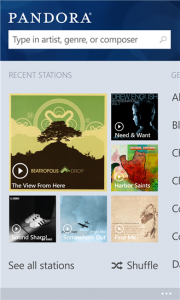
    So what sets Pandora on Windows Phone 8 apart from the same app on iOS or Android? For one, Pandora for Windows Phone is integrated into live tiles to provide a quick look at what’s currently playing right from the home screen. Users can also pin individual radio stations to the home screen for easy access to specific stations.

    Another Windows Phone exclusive feature is integration with Kid’s Corner. Pandora will automatically filter explicit song content when its switched over to the kid friendly portion of the OS.

    To give the Windows Phone app a leg up on the competition, Microsoft will be providing Pandora ad-free throughout the rest of the year. It’s definitely a major advantage over the other versions, but it’s hard to see how a free year of Pandora will convince people to switch to Windows Phone.

    Those will already own a Windows Phone, however, are in for a treat. You can grab the new Pandora app here.

  • WWE Star Saves Mom From Burning House

    Wrestling stars are known for their large bodies and intimidating monologues, but one former WWE star demonstrated this week that he is able to come to the rescue outside of the ring as well.

    TMZ is reporting that Chris “The Masterpiece” Masters, born Christopher Mordetzky, saved his mother from her burning house this week.

    The report states that a “neighbor” had barricaded himself in the house, threatening to burn down the house if anyone came in. Masters called the police, which caused the man to make good on his threat.

    As the house began to burn, Masters, according to TMZ, uprooted a “tree” and used it to break one of the house’s windows, from which his mother was able to escape. Police then entered the house and apprehended the arsonist.

    Masters Tweeted about the incident in the days following his rescue:

    Masters began wrestling for the WWE in 2005, though he returned to the independent circuit in 2007 for violating the organization’s substance abuse policy. He returned to the WWE briefly in 2009, but was released from his contract in 2011.

  • Simon & Schuster will give authors direct access to piracy data for their books

    Simon & Schuster will offer authors data on how and when their books are being pirated online, CEO Carolyn Reidy said Thursday.

    Simon & Schuster, like many other publishers, works with a company called Attributor “to track and remove infringing copies of digital, audio and print titles published by Simon & Schuster from online sites.” Authors will now have access to Attributor’s data through the Simon & Schuster Author Portal, which also lets them track their book sales. Literary agents will have access to the data as well.

    Reidy laid out the piracy info that authors will receive:

    “The reports that you will see provide information about the number of infringements identified and takedown notices sent to infringing sites, success rates in removing infringements, the types of sites where infringement is occurring, the specific urls and geographic distribution of sites where unauthorized copies are offered and more.  (We expect that in the future we will expand upon the information currently available.)”

    A screenshot of the type of data that authors will get is below.

    Simon & Schuster’s move could lead the other publishers that work with Attributor to make piracy data available to publishers as well. Attributor was acquired by digital watermark company Digimarc in December.

    attributor screen

    Photo courtesy of Shutterstock / Ilona Baha

    Related research and analysis from GigaOM Pro:
    Subscriber content. Sign up for a free trial.

  • Ah Yes, the Ol’ Imaginary Friend Photo Prank [VIDEO]

    Sometimes, the ability to trick someone has less to do with the trick itself and more to do with the presentation. Here, we see a very simple trick that should have been figured out by at least 90% of the victims. But, as you may have guessed, everyone falls for it. Otherwise, we wouldn’t have a video to show you, right?

    Dude, I’m so ‘ella mad at you.

    [MagicofRahat]

  • Big data analytics is great but it’s no a silver bullet

    A lot of the talk around big data analytics focuses on the sheer amount of data, the speed of inputs and the glitzy visualizations that can result from analysis. But if you focus on all those bells and whistles before really thinking through the problems you need to solve, you’re putting the cart before the horse, according to two business users of the technology.

    “It’s about putting the business question first. In marketing, where my experience is, it’s clear if you’re driving program success by leveraging vast volumes of data, having the correct problem and … then having an answer that can show why you did what you did,” Mohan Namboodiri, VP of customer analytics at Williams-Sonoma, told attendees of GigaOM’s Structure Data event in New York.

    John Sothan,  VP of finance for BuildDirect, agreed. “The way to turn data into insight is to squash the notion that big data is a silver bullet. We preach that data and analytics is important but then we empower people to be curious and ask questions and get involved in big data analytics.

    “We need to teach users to cut into the data and be curious — that helps validate the data and without that people have a hard time trusting it,” Sothan added.

    Both speakers said analytics help optimize their supply chain and better target their marketing, with the hopeful end result being more business going to existing customers and attracting new customers.

    Ensuring that people are involved in the data and analytics process has been a recurring theme at Structure Data, with speaker after speaker talking about the need to incorporate human expertise into the whole process.

    Check out the rest of our Structure:Data 2013 live coverage here, and a video embed of the session follows below:


    Related research and analysis from GigaOM Pro:
    Subscriber content. Sign up for a free trial.

  • Rand: the only way is south

    Any hopes of policy support for the rand from the South African Reserve Bank (SARB) have vanished.  The currency fell 1 percent after yesterday’s SARB meeting where  Governor Gill Marcus made it clear she would not be standing in the way of the rand’s move south. It is now trading at 9.32 per dollar.

    More losses look likely, especially if foreign bond investors throw in the towel, a move which analysts at Societe Generale liken to “the market equivalent of a volcanic eruption”. Foreigners, after all, own more than 36 percent of the 1 trillion-rand market in local currency sovereign bonds.

    Bearishness appears to have escalated since a Reuters poll of 32 analysts conducted in early-March.  Back then the mean forecast for the rand’s exchange rate in a month’s time was 8.94 per dollar, the poll found.  The 12-month mean forecast was for 8.787.

    In a note this morning, Societe Generale said there was  “considerably more pain coming now that the central bank is not ready to provide some sort of backstop”.

    Clearly, markets had expected a stronger statement from Marcus, who did recently say she thought the rand move looked “overdone”.  But the SARB has typically taken a more laissez-faire approach towards currency weakness. And right now there is another reason for this attitude — there is very little ammunition to mount any sort of defence of the rand.

    Slowing capital and trade inflows have blown out the current account deficit, but the SARB’s reserve growth has also stalled.  This graphic from UBS shows how unfavourably South Africa’s reserve cover ratio  compares with most other emerging markets — only five other countries fare worse on this indicator:

    Also,  liabilities against this war chest have been mounting,  driven up partly by corporate and bank borrowing.  Central bank data shows gross external debt as a percentage of GDP now stands at almost 35 percent, up more than 10 percentage points since early-2010.

    SocGen (which had predicted a 1-month exchange rate of 9.2 per dollar in the Reuters poll) now sees the next stop for the rand at 9.60.  It also recommends selling 10-year rates to position for a bond market downtrend.

  • Pandora arrives on Windows Phone 8

    Back when Microsoft launched Windows Phone 8, in late-October last year, the company promised that Pandora would arrive on the smartphone operating system sometime in early 2013, bringing along with it a year’s worth of free music with no ads.

    Today, Microsoft has kept its promise and delivered the popular app on the Windows Phone store. On Twitter, Microsoft’s Joe Belfiore announced: “Oh heck, been dying to share PANDORA! Totally free, no ads through 2013. Best Pandora on any phone, IMO”.

    And the app, indeed, touts “no ads and no monthly streaming limit…for FREE”. On Windows Phone 8, Pandora allows users to pin favorite stations on the homescreen and see what is playing by looking at the Pandora live tile. Other exclusive features include filtering explicit content using Kid’s Corner to keep the youngsters away from sensitive music and the ability to access a recent stations page and look at the current favorites.

    Upon starting the app, Pandora allows users to sign in using an existing account or sign up for a new one, create and manage a maximum of 100 stations, personalize shuffle settings, fine tune stations by moving tracks up and down, buy albums and songs, filter explicit content and listen to high-quality playback content.

    Pandora is available to download from the Windows Phone Store. Market restrictions apply.

  • Why Nuance sees the semantic web as a key to smarter natural language interfaces

    Natural language user interfaces – think Siri – promise to revolutionize everything from call-centers to hospitals, but what about their data sources? How do the companies and organizations deploying them ensure real choice, rather than just assuming a certain one or two sources will do the job? These are questions that came up today at GigaOM’s Structure:Data conference in New York and, according to Nuance Communications CTO Vlad Sejnoha, the answer may lie in the semantic web.

    The semantic web, a term coined by Tim Berners-Lee, is an initiative being developed under the auspices of the World Wide Web Consortium (W3C). It aims, through the use of standardized tags and formats, to build a framework where content on the web has machine-understandable meaning, rather than simply being searchable by keyword.

    Asked by GigaOM Research analyst George Gilbert how best to tap a variety of information repositories without having to “hardwire” the language interface into each one separately, Sejnoha said the answer lies in an open approach:

    “The conversation stack… has to interact with content sources, other services, applications and devices. Today, integrating those interfaces into those resources is a one-off job. Some applications on the market make choices on behalf of the user, and this brings important questions about openness. I do think the promise of the semantic web remains very important there.

    “I hope we get to the point where people who have important services or content on the web publish them in standard formats that we can connect to and [use] almost automatically… I am hopeful that this will gain greater support in the industry as these folks realize without something like this the interface might become opaque to new entrants.”

    However, Gilbert demurred, suggesting that incumbents have “no incentive to make a common interface.”

    Check out the rest of our Structure:Data 2013 coverage here, and a video embed of the session follows below:


    Related research and analysis from GigaOM Pro:
    Subscriber content. Sign up for a free trial.

  • A Bizspeak Blacklist

    It’s mission-critical to be plain-spoken, whether you’re trying to be best-of-breed at outside-the-box thinking or simply incentivizing colleagues to achieve a paradigm shift in core-performance value-adds. Leading-edge leveraging of your plain-English skill set will ensure that your actionable items synergize future-proof assets with your global-knowledge repository.

    Just kidding.

    Seriously, though, it’s important to write plainly. You want to sound like a person, not an institution. But it’s hard to do, especially if you work with people who are addicted to buzzwords. It takes a lot of practice.

    Back when journalists were somewhat more fastidious with the language than they are today, newspaper editors often kept an “index expurgatorius”: a roster of words and phrases that under no circumstances (except perhaps in a damning quote) would find their way into print.

    Here’s such a list for the business writer. (Thanks to my Twitter followers for their contributions.) Of course, it’s just a starting point — add to it as you come across other examples of bizspeak that hinder communication by substituting clichés for actual thought.

    Bizspeak Blacklist
    actionable (apart from legal action)
    agreeance
    as per
    at the end of the day
    back of the envelope
    bandwidth (outside electronics)
    bring our A game
    client-centered
    come-to-Jesus
    core competency
    CYA
    drill down
    ducks in a row
    forward initiative
    going forward
    go rogue
    guesstimate
    harvesting efficiencies
    hit the ground running
    impact, vb.
    incent
    incentivize
    impactful
    kick the can down the road
    let’s do lunch
    let’s take this offline
    level the playing field
    leverage, vb.
    liaise
    mission-critical
    monetize
    net-net
    on the same page
    operationalize
    optimize
    out of pocket (except in reference to expenses)
    paradigm shift
    parameters
    per
    planful
    push the envelope
    pursuant to
    putting lipstick on a pig
    recontextualize
    repurpose
    rightsized
    sacred cow
    scalable
    seamless integration
    seismic shift (outside earthquake references)
    smartsized
    strategic alliance
    strategic dynamism
    synergize
    synergy
    think outside the box
    throw it against the wall and see if it sticks
    throw under the bus
    turnkey
    under the radar
    utilization, utilize
    value-added
    verbage (the correct term is verbiage — in reference only to verbose phrasings)
    where the rubber meets the road
    win-win

    Many of these phrases have become voguish in business — abstain if you can. Sometimes people use them to enhance their own sense of belonging or to sound “in the know.” Or they’ve been taught that good writing is hyperformal, so they stiffen up and pile on the clichés.

    Hunt for offending phrases: Start looking for bizspeak in all kinds of documents, from memos to marketing plans, and you’ll find it everywhere. You’ll eventually learn to spot it — and avoid it — in your own writing. You’ll omit canned language such as Attached please find and other phrases that only clutter your message.

    translateyourbizspeak.gif

    Writing plainly means expressing ideas as straightforwardly as you can — without sacrificing meaning or tone. Think of it as bringing your written voice into line with your spoken voice.

    Bizspeak may seem like a convenient shorthand, but it suggests to readers that you’re on autopilot, thoughtlessly using boilerplate phrases that they’ve heard over and over. Brief, readable documents, by contrast, show care and thought — and earn people’s attention.

    This is the fifth post in Bryan A. Garner’s blog series on business writing. The series draws on advice in Garner’s new HBR Guide to Better Business Writing.

    Post 1: Don’t Anesthetize Your Colleagues with Bad Writing

    Post 2: A Well-Crafted Letter Still Gets the Job Done

    Post 3: Write E-Mails That People Won’t Ignore

    Post 4: Those Grammar Gaffes Will Get You

  • How the Data Center Has Evolved to Support the Modern Cloud

    cloud-rows-dreamstime

    There’s little argument among IT and data center professionals that over that past few years, there have been some serious technological movements in the industry. This doesn’t only mean data centers. More computers, devices, and the strong push behind IT consumerization have forced many professionals to rethink their designs and optimize to this evolving environment.

    When cloud computing came to the forefront of the technological discussion, data center operators quickly realized that they would have to adapt or be replaced by some other provider who is more agile.

    The changes have come in all forms, both in the data center itself and how data flows outside of its walls. The bottom line is this: If cloud computing has a home, without a doubt, it’s within the data center.

    There are several technologies that have helped not only with data center growth, but with the expansion of the cloud environment. Although there are many platforms, tools and solutions which help facilitate data center usability in conjunction with the cloud – the ones below outline just how far we’ve come from a technological perspective.

    • High-density computing. Switches, servers, storage devices, and racks are all now being designed to reduce the hardware footprint while still supporting more users. Let’s put this in perspective. A single Cisco UCS Chassis is capable of 160Gbps. From there, a single B200M3 blade can hold two Xeon 8-core processors (16 processing cores) and 768GB of RAM. Each blade can also support 2TB of storage and up to 32GB for flash memory. Now, if you place 8 of these blades into a single UCS Chassis, you can have 128 processing cores, over 6TB of RAM, and 16TB of storage. This means a lot of users, a lot of workload and plenty of room for expansion. This holds true for logical storage segmentation and better usage around other computing devices.
    • Data center efficiency. To help support larger amounts of users and a greater cloud environment, data center environments had to restructure some of their efficiency practices. Whether through a better analysis of their cooling capacity factors (CCF) or a better understanding around power utilization, modern technologies are allowing the data center to operate more optimally. Remember, with high-density computing we are potentially reducing the amount of hardware, but the hardware replacing older machines may require more cooling and energy. Data centers are now focusing on lowering their PUE and are looking for ways to cool and power their environments more optimally. As cloud continues to grow, there will be more emphasis on placing larger workloads with the data center environment.
    • Virtualization. Virtualization has helped reduce the amount of hardware within a data center. However, we’re not just discussing server virtualization any longer. New types of technologies have taken efficiency and data center distribution to a whole new level. Aside from server virtualization, IT professionals are now working with: Storage virtualization, user virtualization (hardware abstraction), network virtualization, storage virtualization, and security virtualization. All of these technologies strive to lessen the administrative burden while increasing efficiency, resiliency and improving business continuity.

    More appliances can be placed at various points within the data center to help control data flow and further secure an environment.

    • WAN technologies. The Wide Area Network has helped the data center evolve in the sense that it brings facilities “close together.” Fewer hops and more connections are becoming available to enterprise data center environments where administrators are able to leverage new types of solutions to create an even more agile infrastructure. Having the capability to dedicate massive amounts of private bandwidth between regional data centers has proven to be a huge factor. Data center resiliency, recovery and manageability have become a little bit easier because of these new types of WAN services. Furthermore, site-to-site replication of data and massive systems is now happening at a much faster pace. Even now, big data has new types of developments to help large data center quantify and effectively distribute enormous data sets. Projects like the Hadoop Distributed File System (HDFS) are helping data center realize that open-source technologies are powerful engines for data distribution and management.
    • Distributed data center management. This is, arguably, one of the biggest pieces of evidence in how well the data center has evolved to help support the modern cloud. Original data center infrastructure management (DCIM) solutions usually focused on singular data centers without too much visibility into other sites. Now, DCIM has evolved to help support a truly global data center environment. In fact, new terms are being used to help describe this new type of data center platform. Some have called it “data center virtualization” or the abstraction of the hardware layer within the data center itself. This means managing and fully optimizing processes running within the data center and then replicating it to other sites. In some other cases, a new type of management solution is starting to take form: The Data Center Operating System. The goal is to create a global computing and data center cluster which is capable of providing business intelligence, real-time visibility and control of the data center environment from a single pane of glass.

    The conversation has shifted from central data points to a truly distributed data center world. Now, our information is heavily replicated over the WAN and stored in numerous different data center points. Remember, much of this technology is still new, being developed, and is only now beginning to have some standardization. This means that best practices and thorough planning should never be avoided. Even large organizations sometimes find themselves in cloud conundrums. For example, all those that experienced the recent Microsoft Azure or Amazon AWS outages are definitely thinking of how to make their environment more resilient.

    The use of the Internet as well as various types of WAN services is only going to continue to grow. Now, there are even cloud API models which are striving to unify cloud environments and allow for improved cloud communication. More devices are requesting access to the cloud and some of these are no longer just your common tablet or smartphone. Soon, homes, entire business, cars, and other daily-use objects will be communicating with the cloud. All of this information has to be stored, processed and controlled. This is where the data center steps in and continues to help the cloud grow.

  • YouTube reaches one billion unique monthly visitors

    Despite our recent disdain for Google, there’s no denying the Mountain View, Calif.-based company is a juggernaut when it comes to web traffic. It totally dominates search and its YouTube subsidiary, which has just announced a brand new milestone, is equally unstoppable in the online video market.

    The YouTube team claims the service “now has more than a billion unique users every single month”, which is a phenomenal figure. The service, which was started back in 2005, has been growing steadily since inception and was purchased by Google in 2006, perhaps saving the video company from being litigated out of existence.

    While that number of regular visitors is huge, the breakdown provided with the announcement is even more staggering. Consider what the numbers really mean — one out of every two people on the Internet visits YouTube. The company further puts it in perspective this way — “Our monthly viewership is the equivalent of roughly ten Super Bowl audiences. If YouTube were a country, we’d be the third largest in the world after China and India”.

    The team wraps up with a message to all of its users “From the aspiring filmmaker in his basement and the next great pop musician, to the fans all around the world who tune in, subscribe and share their favorite videos with the planet, thank you for making YouTube what it is today”. Now where can the company go from here?

  • iPhone 5S said to launch in Q3 with upgraded camera, new chipset

    iPhone 5S Release Date
    Apple’s (AAPL) next-generation iPhone 5S will reportedly launch in the third quarter with several upgrades compared to the current model. Digitimes cited sources from Apple’s supply chain on Thursday when it reported that components for the next iPhone will begin shipping to manufacturers this coming May ahead of a third-quarter launch. According to the report, the iPhone 5S “will not receive a major update” and will instead be an incremental bump, as expected. The report did note that the new model will feature “a higher-end processor as well as higher-megapixel camera modules.” The launch timing aligns with an earlier report from the most reliable source yet that pointed to a late-summer launch for Apple’s iPhone 5S and its much rumored low-end iPhone.

  • Boy Killed by Dad’s Plow Truck in Accident

    A Maine family is in shock this week after a father accidentally ran over his 6-year-old son with a snow plow truck.

    The Portland Press Herald is reporting that Kevin Capponi of Greene, Maine was plowing snow from his driveway on Wednesday when he backed over his son, Nathan. The accident occurred at around 6:45 am.

    Nathan is reported to have been playing with a scooter in the driveway at around 6:45 am when the accident took place. The child was later pronounced dead at a Lewiston hospital.

    The family has not yet given interviews to the media about the event, but Kevin Capponi has updated his Facebook page to reflect the tragedy. He updated his cover photo and profile picture, which are now both pictures of Nathan. He also linked to a story about the incident, saying: “here is the story everyone…please forgive me and my family…I love him with all my heart…it is now broken.”

    In response to his Facebook post Capponi has received well-wishes and reassurance from friends and family.

  • SugarSync now a little sweeter on Mac and Windows

    Cloud backup, sync and sharing tool SugarSync 2.0.9 has been released for Windows and Mac. The tool, which provides desktop access to SugarSync cloud storage, has gained three notable feature improvements alongside general performance and stability tweaks.

    Chief among these are drag-and-drop improvements alongside better visibility of features for showing folders from a specific computer. Windows users also get to choose which drive letter to assign to the SugarSync virtual drive.

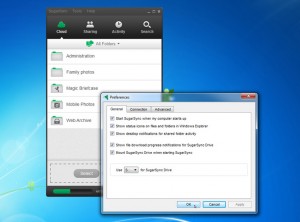
    SugarSync 2.0, released last month, added a number of new features, including an option to view which folders are synced with which computer. After users complained of difficulty accessing this feature, version 2.0.9 has made the Device Filter more visible. Now users will see “All Folders” displayed prominently below the application’s four navigation tabs: clicking this reveals options for selecting a different computer to view alongside an option for viewing cloud-only folders.

    Version 2.0.9 also debuts significant improvements to the application’s drag-and-drop capabilities. Now users can simply drag a folder on to the Sharing or Cloud tabs and wait — after a brief pause the app will automatically switch to the appropriate view if it’s not already visible.

    The final improvement concerns Windows users: version 2.0 introduced support for mounting the SugarSync cloud drive as a virtual drive. Version 2.0.9 allows users to designate a specific drive letter for the virtual drive — the option can be found on the General tab of SugarSync’s Preferences dialog.

    The update is rounded off with a range of unspecified bug fixes, which SugarSync claims will improve stability, plus address various formatting and display issues. SugarSync 2.0.9 is available now as a freeware download for Windows and Mac users. SugarSync for iPad and iPhone, and SugarSync for Android are also available. SugarSync offers a free 5GB storage plan, as well as paid-for plans, with prices now starting from $7.49 a month ($74.99 a year) for 60GB.

    Photo Credit: Picsfive /Shutterstock

  • Facebook Releases SDK Updates For Android And iOS

    Facebook has recently updated its Android and iOS updates to include a number of useful features for users. To compliment those releases, Facebook is also updating its Android and iOS SDKs to make developers’ lives easier.

    The Facebook SDK for iOS has been updated to version 3.2.1. As the version number suggests, the latest updates is mostly about bug fixes. The update does bring a new feature, however, in the form of support for frictionless requests using the SDK’s FBWebDialogs class. The feature will let your app “use frictionless requests without importing the deprecated headers.” You can download the latest Facebook SDK for iOS here.

    Much like its iOS brother, the Facebook SDK for Android has received a small update pushing its version number to 3.0.1. The update includes a number of enhancements based upon feedback received by developers, as well as the usual bug fixes and improvements. You can grab the latest Facebook SDK for Android here.

    Aside from new Facebook SDKs, the social network is also introducing changes to mobile app bookmarks. On June 5, the company will only display mobile bookmarks for games that can be played across both desktop and mobile. It’s part of an initiative to better support cross-platform Facebook games. Those who relied on mobile app bookmarks will want to “consider alternative ways to reengage users,” like App Center or mobile app install ads. The good news is that this isn’t a breaking change as it requires no code change on the part of developers.

    As for breaking changes, there’s only one that developers should be aware of. Starting April 3, Facebook will be removing the ability to ask questions from the Graph API after removing the same functionality from users late last year.

    Finally, the weekly bug report reveals that Facebook squashed 31 bugs this week. You can check out the full list of fixes at the blog post.

  • Data Darwinism: reactions & reflections

    When I was writing Uber, Data Darwinism and the future of work, I was essentially penning what had been on my mind for awhile, though a series of news events helped coalesce the arguments and the narrative. But at no point when flying from San Francisco to New York did I realize that it would strike a chord with so many people. Many of you wrote publicly, a few hundred of you responded via tweets or retweets. Others wrote private notes. Many agreed with my thesis, but some disagreed.

    Nevertheless, what amazed me was that there was such amazing conversation about the topic on the web. In a way, this is what blogging was and is always about — discussion. I am aggregating a few responses just to highlight what people were thinking.

    Ariel Seidman, founder of Gigwalk, pointed out that not all data is created equal.

     As an Uber driver optimizing to maintain a 5-star rating, which job would you rather do? Drive four drunk and angry customers to a club at 1 a.m., or drive a kind and generous venture capitalist from downtown Palo Alto to Sand Hill Road at 2 p.m.? Uber has no idea that your customers were drunk and nasty. All they know is that you got a 1-star rating.

    Nick Brisbourne drew the parallels between the dilemmas faced by the workforce and the privacy debates:

    The same point can be made about the current battle raging between privacy advocates and big online advertising companies like Google and Facebook. As a society we need to figure out what constitutes acceptable practice for the harvesting and use of personal data for advertising purposes. In both these debates there is much to be gained from getting it right and much to lost by getting it wrong.

    My favorite response came from Fred Wilson, who is co-founder of big-time venture capital firm Union Square Ventures. He writes on his blog:

    This redrawing of societal expectations is likely to be the political battle of our time. Om goes on to talk about this in the context of the labor issues that Uber is having in San Francisco. That is a good example of what happens when networks and the data they produce reshape a market that has been operating in a traditional framework. We are at the start of this battle between incumbents, be they black car drivers or cable companies or government itself, and the network-driven upstarts. And we have many of those upstarts in our portfolio.

    P.S.: If you don’t have time to read the article, here is a tl:dr version of it. Damn, this is one useful service.

    Related research and analysis from GigaOM Pro:
    Subscriber content. Sign up for a free trial.

  • Google Re-Indexes Digg After Spam Removal Screwup

    Wednesday afternoon, Digg disappeared from Google. Vanished. Gone. It was clear that Google had de-indexed Digg, but why? To what end?

    Was it because Digg had just announced plans to build a Google Reader clone to satisfy angry users when Google kills the product on July 1st? Was Google just being a dick?

    No, conspiracy theories were put to rest when Google released a statement, saying that it was all just a big screwup.

    We’re sorry about the inconvenience this morning to people trying to search for Digg. In the process of removing a spammy link on Digg.com, we inadvertently applied the webspam action to the whole site. We’re correcting this, and the fix should be deployed shortly.

    And fixed it they have. Digg is back up in Google:

    Digg back indexed in google

    It’s not like being de-indexed in Google was really a killer for Digg, considering the majority of their traffic is direct. But for Digg, you’d at least want digg.com to show up in a search. Thankfully, Google has fixed the screwup and everyone can carry on.

  • Microsoft offering Windows Phone 8X, Lumia 920 and 820 for free

    If you are in the market for a Windows Phone 8 smartphone in the US, then the Microsoft Store should be your first stop. Why? Because the software giant is currently offering a number of devices running the mobile operating system for free on a two-year contract.

    The list of devices on offer includes the 8GB HTC Windows Phone 8X (in California Blue and Lime), the Nokia Lumia 920 (in Black, Red and Yellow) and the Lumia 820 on AT&T. And those savings are not to be sniffed at. When purchased from AT&T, the 8GB Windows Phone 8X and Lumia 820 both go for $49.99, while the Lumia 920 runs for $99.99.

    The Nokia Lumia 810, which runs on T-Mobile, is also free from both the Microsoft Store and the US carrier. The offer does not extend to other devices, however, which are currently available on both the software giant’s online store, as well as carriers for a similar price.

  • Google Fiber set to expand to Olathe, Kansas

    Google_Fiber


    Well the inevitable has happened folks: Google has expanded its Fiber service to the other side of the Kansas City area. From this week, residents in Olathe, Kansas were the lucky recipients of an approval from the City Council which allows for the construction of the hyper-fast network to be used by residents and businesses. Google saw this as a prime opportunity to expand especially since Olathe has become one of the fastest-growing cities in Kansas, has attracted an influx of new businesses and residents— while also creating the golden opportunity to bring in new jobs, grow local and businesses.

    Naturally the planning and engineering of the infrastructure still needs to be done, but the hope is that construction will get underway and folks out in Olathe will be able to get in on the pre-registration for the service soon.

    source: Google Fiber Blog

    Come comment on this article: Google Fiber set to expand to Olathe, Kansas