Category: News

  • Lazarus: The other side of club sports at Stanford

    I play on the Stanford Club Baseball team. We face other club teams from California and Nevada. Our hats have the National Club Baseball Association logo on the back. In other words, I am a club athlete.

    Of course, Stanford University doesn’t see it that way. Ask the Athletic Department about a club baseball team and they will give you a blank stare.

    That’s because according to the University, I am part of an ASSU Voluntary Student Organization (VSO) athletic club. In a move that can only be explained by an attempt to increase the size of its mind-numbingly slow bureaucracy, Stanford decided to separate club teams that do or do not have a Division I affiliate.

    For example, since Stanford has a DI baseball team, club baseball is a VSO. Same thing for basketball, soccer, volleyball, tennis, water polo, women’s lacrosse and other sports that Stanford already has.

    What is the significance of the separation? Well, it means that club baseball stores its gear in the back of a player’s car, while ultimate frisbee has three coaches and annually travels to a tournament in Las Vegas.

    Sorry, that was an unfair jab. I’m sure frisbee needs those three coaches to instruct them on the intricate art of a sport that grandmothers play with their grandchildren on beaches in Hawaii.

    The biggest difference and the only practical one, is that VSOs receive much less money from the University. Club sports and VSOs both receive money from The Stanford Fund, normally around $1,500 per quarter. Both normally charge member dues (Club Baseball is $200 per year). What VSOs do not receive, however, are special fees — the fees students vote on and can request refunds from. Currently, club sports collectively receive $8.23 per student per quarter and that money is then split between the teams based on such factors as budget and need.

    That’s a lot of frisbees.

    By funding club sports more heavily than VSOs, the University is sending a clear message: It has no use for student-athletes who cannot compete at the DI level.

    In the eyes of the University, VSO athletes do not contribute to the school. Unlike club cricket, frisbee or rugby, VSO teams do not bring another sport to the Athletic Department’s vast lineup of teams. Stanford already has a baseball team and a basketball team, so why should it fund another one?

    This line of thinking is a mistake. VSOs are much more valuable to the University than club sports are.

    VSOs are one of the best recruiting tools Stanford has to attract high school athletes. VSOs are full of players who were very good high school players, but not quite good enough to play for a DI school, especially for one as good as Stanford.

    When these students apply to different schools, they have a choice to make. Do I go to a smaller school where I can continue playing the sport I love, or do I go to Stanford and completely stop playing?

    VSOs offer a compromise — the ability to attend a school like Stanford and still compete in the sport you have been playing your entire life. I know I can’t speak for every VSO athlete, but I was seriously considering going to another school where I knew I could make the varsity baseball team. While club baseball isn’t the same as varsity college baseball, I still didn’t have to quit baseball cold turkey to attend Stanford.

    Stanford’s actual club sports do not have this recruiting power. How many diehard cricketers or archers do you know whose college choice would be shaped by the existence of a club cricket or archery team? Probably none.

    Yet, these are the teams who receive the most money from Stanford. Something doesn’t add up.

    These club sports definitely contribute to the atmosphere of Stanford. How many campuses can you walk around and see students play taekwondo or rugby?

    But to argue that they contribute more and are worth more than VSOs is irrational. Give VSOs the respect and funding they deserve and treat them as full-fledged club sports.
    Mike Lazarus just lost any chance he ever had of making the Frisbee team. Console him at mlazarus “at” stanford.edu.ߴ

  • Atlanta Centre | San Juan City | 179m |35 fl |

    Atlanta Centre
    San Juan City, Philippines

    Height 179 m / 587.3 ft.
    Floor: 35 floors
    completion:???
    Architect:???
    Owner Atlanta Land Corporation
    Use: office

    The Atlanta Centre is an office skyscraper in San Juan City, Philippines. It is also the highest building in the city with a total height of 179 metres from the ground to its architectural spire.

    The building has 35 floors above ground, including a 10-level parking area. It has 6 Otis elevators, and is equipped with a centralized PABX/ LAN communication networks plus a Building Management System (BMS).

    Location

    The Atlanta Centre is located along Annapolis Street, well inside the Greenhills area and the city’s only skyline area. It is also just a stone throw away from the well-known Greenhills Shopping Center.

  • [Urbanistyka] Centrum – życie na poziomie parteru

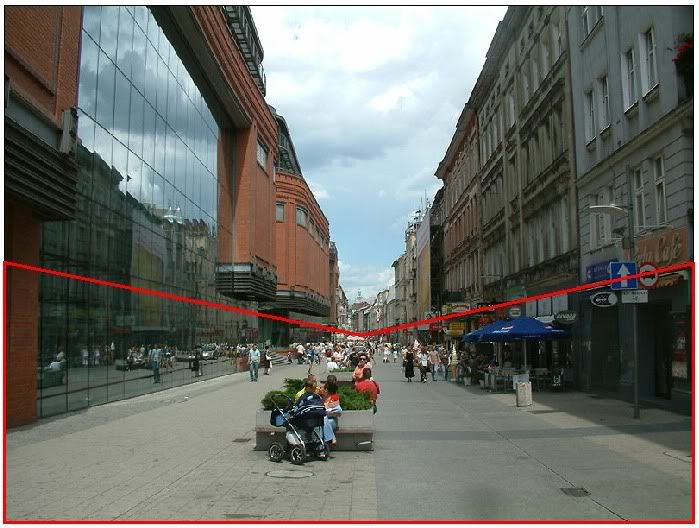
    Celem tego wątku jest dyskusja na temat tego, co dzieje się na ulicach w śródmieściach miast(polskich i zagranicznych). Jeśli są pomysły na lepszy tytuł, to proszę o propozycję.

    Problemy:
    – "wymieranie" miast w godzinach wieczornych
    – wypieranie handlu i gastronomii przez usługi finansowe
    – rewitalizacja
    – zarządzanie centrum miasta
    – itp.

  • Alfa Romeo MiTo “Nine” kit

    Alfa Romeo MiTo

    We saw the Alfa Romeo MiTo “Nine” video over on Blogdolcevita.com and here is some more information on the MiTo Nine package courtesy of our colleagues at Autoblog.it. The package is named after the upcoming movie musical from Rob Marshall, based on the Federico Fellini film, 8 1/2.

    The “Nine” package is available for all versions of the MiTo, except the Quadrifoglio Verde equipped with the 1.4-litre TB MultiAir engine with 170 hp. The Nine kit on the “Progression” range offers “Elegante” 16-inch alloy wheels, black tint roof and brushed finish for door handles, mirrors, and headlight frames – at a cost of about 1,400 euros.

    For the “Distinctive” range of the MiTo, the special kit includes 17-inch wheels, leather seats, lumbar back adjustment in the rear passenger seats, and the same black roof and brushed satin finish. The cost on this range is 1,700 euros. Check out the MiTo product placement if you’re going to see the film, and see the “Nine” with the Alfa MiTo preview video on Blogdolcevita.

    Alfa MiTo Multiair Alfa MiTo Multiair Alfa MiTo Multiair Alfa MiTo Multiair


  • Performable Wants to Take the Guesswork Out of Web Marketing

    Performable Logo
    Wade Roush wrote:

    Being a large Web company has its benefits. If you have hordes of visitors to your website and hordes of programmers on staff, you can afford to study potential site changes using “multivariate testing”—a fancy term for presenting different pages to different visitors and measuring which ones induce the behaviors you want, be it clicking on an ad or signing up for a newsletter.

    Really big Web companies like Google take multivariate testing to an extreme, relying on user data for the tiniest of decisions. Indeed, visual designer Douglas Bowman left the search giant in a huff last March because, he claimed, the company studies everything to death—including, at one point, testing 41 different shades of blue for the toolbar on Google pages.

    But most companies don’t have the technical or financial resources to test even two variations on a theme, let alone 41. Making multivariate testing more accessible to the masses [tweet] is the mission that Performable, a new startup based in Amesbury, MA, has chosen for itself. Created by David Cancel, the founder and former chief technology officer at Boston-based Web marketing firm Compete, Performable has spent the last several months introducing beta clients to its platform, which automates the creation and testing of “landing pages” designed to help with customer acquisition or lead generation.

    Cancel says the platform allows users to test as many variations as they want. The more they try, the more traffic is required to generate usable data. But Cancel says you don’t need Google-scale traffic to do the simplest form of multivariate testing—comparing just two options, a practice also known as A/B testing. “In reality, most people just want to do a simple A/B test, looking at one variable on a page and then refining and iterating on that,” Cancel says. “It depends on the number of variables, but as long as you have monthly page views in the hundreds or more, it’s feasible.”

    David Cancel, CEO of PerformableLast week Performable revealed that it has raised $3 million in Series A funding from Waltham, MA-based Charles River Ventures. The startup doesn’t really need that much money, since it has only three employees, four contractors, and no formal office, Cancel says. But he says he agreed to take the whole $3 million after CRV partner Izhar Armony—who also funded Cancel’s previous company, a Facebook ad network called Lookery—promised not to pressure the startup to spend it.

    “We really need to focus on finding a scalable model, making sure the product fits the market, and finding the right price point and the features and options that have to be there, before we step on the gas pedal and hire a bunch of people,” Cancel says. “Luckily we found Izhar, who wanted to build the business this way and supported us. We didn’t pitch anybody else.”

    Cancel says the idea for Performable came from his work at Compete, which he left in 2007. Most people know Compete as a source of Web traffic comparisons, but the company’s real focus is on services to improve the performance of clients’ online marketing campaigns. Says Cancel, “One of the most frustrating things on the services side of Compete was when we’d go into a client, and they would pay us a ton of money, and we would tell them things like, ‘You need to change the copy on this microsite.’ And they’d always say the same thing: ‘We can’t. We have no control.’”

    To make substantive, or even trivial, changes to their websites, Cancel says, clients had to work through layers of Web designers, developers, and outside advertising agencies—which usually meant the changes never happened. “It’s great to talk about marketing tactics, but the truth is that even at the high end, most marketing departments can’t do any of that on their own,” Cancel says.

    That suggested an opportunity. After leaving Lookery—a company that Cancel says he and former Compete colleague Scott Rafer started “as a project, not a business,” and that eventually spun down after selling off its ad network to Adknowledge—the serial entrepreneur was ready for …Next Page »


  • Worker Productivity Grows in Emerging Markets

    For many years now, emerging economies like China and India have been able to draw business from the developed world by promising multinational companies cheap labor. A new report by the Conference Board shows the competitive threat is taking on a new dimension: Workers in emerging markets aren’t only cheap, their productivity is growing by leaps and bounds.

    The Conference Board compared productivity trends across 111 countries and found an upsurge in output per worker in developing economies while developed country productivity slows. Between 2005 and 2009, for instance, the research group finds output per worker in emerging economies grew at a 5.9% annual rate. In the U.S. it grew at a 1.5% annual rate during the same period, while it grew 0.8% in Japan and 0.5% in the Euro area. In each of the developed markets, worker productivity slowed while it sped up in developing economies.

    Emerging economies are charging ahead on one especially important measure of worker productivity called “total factor productivity,” which teases out productivity improvements that come from firms investing in new technology or hiring better-educated workers. What’s left is a pure measure of workers and firms learning to operate more efficiently. In emerging economies, TFP rose at an annual rate of 2.4% from 2005 to 2008, compared to 0.2% in advanced economies.

    Bart van Ark, the Conference Board’s chief economist, sees two reasons for the productivity gains. First, he says, poorly run firms in emerging markets are shutting down and being replaced by more efficient firms. Second, many firms are opening up with capacity to produce on a large scale and as these economies grow swiftly firms are reaping benefits from these “economies of scale.”

    “This raises their competitive strength, as it helps these countries to match higher costs, such as rising wages, by their ability to lower costs and prices through efficiency gains,” the report concludes.

    Last year was an especially difficult one for developed economies, especially Europe. Output per worker hour grew at a much faster rate in the U.S. (2.5%) than in Europe (-1.0), the Conference Board estimates. But it came at the expense of huge job losses in the U.S. Slow productivity growth in Europe in 2009 portends an especially slow jobs recovery in 2010. Mr. van Ark expects the U.S. job rebound to be a long, slog too.

    Click here for more data from the Conference Board.


  • Rotterdam: Jaffa

    Herstructurering Jaffa-Zuid (Kralingen-West)

    Plangebied:

    Jaffa is een van de slechtste wijken in Kralingen, veel woningen hebben funderingsproblemen, de wijk kent smalle straten zonder groen en het aanbod woningen is eenzijdig. De komende jaren gaat dat veranderen. In Jaffa-Zuid (gelegen tussen Berkelplein, Sophiakade, Goudse Rijweg en Vlietlaan) worden 348 woningen gesloopt. Daarvoor in de plaats komen 130 koopwoningen (180.000-300.000 euro) en 60 huurwoningen.

    Eind 2009 is het Masterplan definitief goedgekeurd door de deelgemeente Kralingen-Crooswijk, het college van B en W en Woonstad Rotterdam. Vanaf februari beginnen de gesprekken met bewoners die moeten uitverhuizen. Dit gebeurt in fases waardoor niet alle huishoudens tegelijk op zoek hoeven naar een nieuwe woning.

    Het volledige masterplan is hier te vinden.

    Opdrachtgever: Woonstad Rotterdam

    Masterplan: Architectenbureau Marlies Rohmer

    Ontwerp: nog niet bekend, maar geen Marlies Rohmer. Waarschijnlijk wordt er voor een historiserende bouwstijl gekozen, om aansluiting te vinden bij de bestaande bebouwing in Kralingen.

    Hoogte: 3-5 lagen

    Start bouw (fase 1): 1e kwartaal 2012
    Start bouw (fase 2): medio 2013
    Start bouw (fase 3): begin 2016

  • Less Than Three Babydoll

    <3 for you valentine

    Valentines is around the corner and you know what that means!

    So be smart and start getting the perfect gift for you geeky lady friend today.

    Now you can get her the perfect shirt with <3 on the front.

    Order her the perfect Less Than Three Babydoll and to impress her even more order yourself the Less Than three T-Shirt to show how cute you guys are as a couple.

  • Dilbert fails to apologise

    Dilbert fails to grasp the distinction between brevity (a syntactic property of a locutionary act) and brusqueness (a pragmatic property relating to a perlocutionary effect), and fails to draw the distinction between sorry with clause complement and the same word employed in a speech act of apology (see here and here and here and here and other places); and more office discord results…

  • Record Drive for Techart GT Street RS

    After securing a new speed record for fullsize-SUVs at the High Speed Event in Nardo/Italy at the beginning of December 2009, the tuners at Techart Automobildesign broke the former lap record at the Sachsenring race track. The performance was achieved with their GT Street RS vehicle, based on the Porsche 911 GT2.

    Before the record drive on the 3,671-meter circuit in the comparison carried out by AutoBild SPORTSCARS, the GT Street RS have already demonstrated its sprinter qualities by getting … (read more)

  • FOTA Confirms Martin Whitmarsh as New CEO

    McLaren Mercedes’ team principal and CEO Martin Whitmarsh was finally confirmed by the Formula One Teams Association (FOTA) as their new chairman for a full mandate. Following Ferrari’s CEO Luca di Montezemolo stepping down from that position at the end of last season, it was only a question of time for the teams’ alliance to name a new head.

    Although rumored by the media for a while now, Whitmarsh was now officially confirmed as new CEO of the FOTA, this being only one of the new appointment… (read more)

  • Download Firebug 1.5.0 for Firefox

    Firebug, the popular web development and debugging add-on for Firefox, has gotten a major update reaching version number 1.5.0. It’s probably the biggest update since 1.0 and after six months of work and 36 alpha and beta releases, users should definitely be looking forward to the new release.

    The dev team is especially proud of the new Inspec… (read more)

  • Marchionne confirma que Chrysler y Lancia se unirán del todo para finales de este año

    Chrysler_lancia_delta

    Aunque a muchos les pese, el “Chrysler Delta” presentado en el pasado Salón del Automóvil de Detroit, en el que los grupos estadounidense e italiano volverion a compartir espacio, es solo el principio de la reforma total que sufrirán Chrysler y Lancia durante el 2010. El consejero delegado de ambos grupos, Sergio Marchionne, declaró en una entrevista a la revista británica Autocar que esos dos fabricantes terminarán de fusionarse del todo a finales de este mismo año.

    Se trata de una idea que lleva en el aire incluso antes de que la compra del grupo estadounidense por parte de Fiat se hiciera efectiva, y que ha estado creando mucha polémica desde entonces. Chrysler y Lancia tienen tradiciones y formas de construir vehículos muy distintas, pero, según Marchionne, la fusión tiene sentido porque las gamas de ambas marcas tienen huecos que podrán cubrirse la una a la otra.

    Para concretar más esta afirmación, Marchionne dijo: “En Europa, Lancia es una marca pequeña y sin desarrollar que no tiene nada mayor que el Delta. Chrysler, la cual tiene un verdadero alcance global, no posee nada menor. Ponlas juntas y tienes una gama completa.” Lo que no concretó es la forma con la que ambas marcas acabarán por complementarse: si con modelos nuevos pero basados en los que tiene la marca opuesta, o sencillamente con productos del tipo del “Chrysler Delta” que consisten únicamente en cambiar los logotipos.

    Y hablando del Chrysler Delta, Marchionne confirmó que probablemente acabe por comercializarse y pasar a formar parte de la familia de Chrysler en Norteamérica, alegando que “no habría ningún conflicto con Lancia”. Por último, subrayó: “no voy a vender Lancias en los Estados Unidos“. Todo un gran cambio para Chrysler, que finalmente recibirá la por algunos temida transfusión de “sangre italiana” a sus venas.

    Vía | Autocar


  • The Luggage Cart

    It’s January and we’re already comfortably installed in our office chairs. Planning fever doesn’t leave us alone, but I’m convinced that each and every one of you has enough time to think about the holiday that has passed for some time now.

    I was chatting with a friend of mine and nostalgia suddenly took over. Every January, I’m sick with memories. I miss the blue water, I miss the fluffy clouds in the sky, I miss the warm, inviting, Asian rain…

    Before the vacation I was asking Santa f… (read more)

  • No Hope For Haiti Without Justice

    Tuesday, January 19, 2010
    14:55 Mecca time, 11:55 GMT

    No ‘hope for Haiti’ without justice

    By Mark LeVine

    Relief may be arriving but distribution to Haiti’s shocked population is difficult

    On Friday, the US’ leading entertainers will once again organise a star-studded telethon in order to raise money for victims of an almost incomprehensible tragedy – the third time they have done so in less than a decade.

    The first, in the aftermath of the September 11 attacks, understandably avoided any sort of critical political imagery or discourse in favour of uniting the country in support of the victims.

    The 2005 telethon in response to the devastation of New Orleans by Hurricane Katrina occurred at a tenser political moment, as violence was flaring in Iraq and Americans were beginning to question President Bush’s true motives for invading the country.

    The massive incompetence surrounding the government relief effort was already apparent, but apart from rapper Kanye West declaring – to much criticism – that “President Bush doesn’t care about black people,” none of the artists who performed or spoke addressed the glaring structural problems that allowed the hurricane to produce such unprecedented damage.

    Four-and-a-half years later, the endemic problems that exacerbated the hurricane’s damage remain largely unaddressed.

    But they are far from public view (aside from the poor and working class public of New Orleans, that is) and outside the cheery narrative of rebuilding and recovery symbolised by the success of the New Orleans’ football team, The Saints, who will host the city’s first Conference Championship game in the refurbished Superdome, which during the height of the Katrina disaster housed thousands of flood refugees.

    As the carnage of the largest earthquake to hit Haiti in 200 years comes into full view, the biggest stars of Hollywood and the music industry are coming together for a “Hope for Haiti” telethon.

    But there can be no hope for Haiti without justice, and no justice without an honest appraisal of the centuries-long history that set the country up for such a devastating political and social collapse in the wake of the earthquake.

    A history largely ignored

    The roots of this collapse are as deep as they are unknown – or unappreciated – by the majority of Americans – although it is widely discussed across the globe.

    Haiti, then Saint Dominigue, was among the first islands “discovered” by Columbus, and became France’s – and likely Europe’s – most profitable colony. Its more than 800,000 slaves produced upwards of half the sugar and coffee consumed in Europe.

    The discourse of freedom and equality underlying the American and French revolutions had a profound impact on the island’s African slave population, who led the first successful slave revolution in the Western hemisphere, creating the first free black republic in the wake of their successful independence struggle against Napoleon’s army.

    Far from embracing the new republic – the second independent country in the Americas – the administration of President Thomas Jefferson, under pressure from southern slave-holding politicians, refused to recognise Haiti.

    Just as Communist Cuba was deemed to constitute a grave threat to capitalist America a century and a half later, a revolutionary republic of free Africans set a very bad precedent for its huge neighbour to the Northeast, where slavery was still a major component of the economy.

    Rather than finding an ally in the still young US, Haiti was shackled with a crushing debt by France as the price of independence.

    From democracy to dictatorship

    After a century of alternating democratic and dictatorial rule, Haiti was invaded and occupied by US marines from 1915 to 1934, during which time the US overturned laws that restricted foreign ownership, allowing American corporations to gain a permanent foothold in the country’s agriculturally dominated economy.

    The first two decades of post-occupation politics saw as many coups, until stability of a sort was attained with the election of Francois Duvalier, known as “Papa Doc”, in 1957.

    But his rule quickly deteriorated into a brutal dictatorship, equalled in its corruption and violence only by that of his son, Jean-Claude (“Baby Doc”), who ruled from 1971 until 1986.

    Despite the intense brutality and corruption of the regime, the US supported Duvalier as a counterweight to neighbouring communist Cuba and because of his friendliness to US corporate interests.

    After widespread protests forced Duvalier from power, a series of military caretaker government reforms eventually led to the election of the former priest, Jean-Bertrande Aristide, in 1990 on a platform that included land reform and reforestation as well as aid to poor farmers and increased wages and rights for the increasing number of sweatshop workers.

    However, Aristide’s radical economic reforms alienated the country’s elite, who supported his overthrow and exile the next year, likely with US backing or at least acquiescence.

    Aristide returned to power under a US-backed UN mandate in 1994, and turned over power to a democratically elected successor, Rene Preval, in 1996.

    Aristide once again became president in 2000 under a cloud of political infighting and election irregularities.

    His new term was marred by violence and opposition accusations of violence and corruption, and he was ousted again in 2004 with the support of the administration of George Bush, who provided a military and diplomatic “escort” for his departure from Haiti, from which he still remains in exile in South Africa.

    Price of economic liberalisation

    As with most parts of the developing world, the present-day concentration of urban poverty in Haiti, which led to millions of people living in the ramshackle slums that literally disintegrated during the earthquake, owe their origins to policies of economic liberalisation and privatisation begun in the mid-1980s.

    Their goal was to open Haiti even further to foreign economic penetration and control in the age of globalisation (Jamaica underwent a similar process, as did other Caribbean countries, with almost as bad results).

    Repeating a process as old as industrial capitalism itself, the degradation of Haitian food production and the increased foreign control of land through peasant indebtedness led to the creation of a huge surplus labour pool that would become the engine of a low-cost labour-led export oriented economy controlled by the country’s elite and their US and European allies (particularly USAID) by the 2000s.

    Privatisation programmes imposed by the IMF, World Bank and other international lenders led to even greater control of the country’s agricultural sector land by US and other multinational corporations.

    This process was epitomised by the shift in agriculture from local production to export oriented crops and to the break-down of Haiti’s rural economy with the import of heavily subsidised American products – exemplified by “faux-cheap” American rice with which the locally produced rice could not compete.

    Even aid programmes intended to help desperately poor Haitian women provided credit to buy cheap foreign products, further undermining the fragile agricultural economy in the name of progress.

    One of the most fertile lands in the Western hemisphere suddenly became a net importer of many basic foodstuffs, leading to even more widespread poverty, malnutrition and an exodus of increasingly landless farmers to the cities in search of any kind of work. The growing unrest produced by this process was one of the factors that forced Baby Doc from power in this period.

    The first Aristide government tried to change this situation by coordinating rice production, providing seed and fertiliser to poor farmers, and managing imports so as to mitigate the impact of cheaper US-grown rice on the local market, but these policies were heavily opposed by American corporations operating in Haiti, backed by the US government and lenders such as the IMF.

    Together, they oversaw a regime in which Haitian peasants grew ever more indebted and, after Aristide was ousted, were according to analysts, “driven into the ground” as what little state support there was ended.

    This dynamic continued after his return, part of the price of which was clearly his markedly toning down his reform agenda and acquiescing to US-backed reforms that many Haitians deride as the “plan of death”.

    With his reform agenda crippled, his government became marred by charges of violence and toleration of drug-running and other criminal activities.

    A disappearing state

    Once of the most striking things about the aftermath of last week’s earthquake is the almost total absence of the Haitian state, which seemed to collapse with the parliament and presidential palace.

    But the absence of any kind of effective state response is not surprising; indeed, it is the result of deliberate policies set in place during the last three decades under the neoliberal structural reforms supervised by the US and international lenders.

    As one local agronomist put it 15 years ago: “In the neoliberal system they say the state should ‘be efficient,’ but that is not what they really want. They want the state to disappear.”

    Disappearing states is one of the hallmarks of the structural adjustment programmes pushed by the “Washington Consensus” model of liberalisation of economies across the developing world precisely because a robust state beholden to its people would never tolerate such policies.

    In Haiti this process has led to increased poverty, degradation of land (foreign corporations have much less interest in preserving the integrity and sustainability of the land and surrounding ecosystems then local farmers) and inequality almost everywhere it has been practiced.

    As in the “banana republics” of Central America in the first half of the 20th century, the overwhelming power of the “big brother” to the north – the US government and corporations tied to it – has made creating a healthy, balanced and self-sufficient economy impossible to imagine.

    And so, despite the fact that for centuries Haiti’s land has been among the richest and most fertile in the world, it remains “the poorest country in the Western hemisphere,” as foreign media routinely describe even in the best of times.

    Aristide’s US-backed removal in 2004 came on the heals of a US-imposed trade embargo after he began to balk at continuing to implement the demanded reforms which drove peasants and workers alike into even deeper poverty.

    The governments installed by the US – and, disgracefully, backed by the United Nations and an increasingly corporatised international NGO system that is largely unaccountable to ordinary Haitians – have proved even more corrupt than those of the pre-Aristide era.

    New vision, same old vision

    This dynamic is crucial, for when former US President Bill Clinton and other officials involved in Haiti’s perpetual “development process” speak of how the country was “turning a corner” or “on the verge” of renewed growth and stability, what they mean is that internal opposition to the disastrous neoliberal programmes supported by Presidents Bush, Clinton, Bush and now Obama, has been tamped down to the point where they can be implemented without too much resistance – in part by a UN ‘stabilisation mission’ that has been marred by violence against Haitians and the support of the country’s elite.

    Indeed, the Clinton-Obama vision for Haiti’s future, already in play before the earthquake, is to transform Haiti into another Caribbean US-satellite country, with a largely privatised and deregulated economy based on low-wage, ecologically dubious tourism and sweatshop industries and where, like its neighbour Jamaica, increasing poverty and inequality are largely hidden from view.

    Rather than invest in capital and local infrastructure to help build a self-sufficient economy, Clinton and other foreign policy-makers want to create “more jobs by lowering the cost of doing business,” which inevitably includes lower wages and relaxed labour and environmental laws.

    The last coup union organisers and other activists are routinely and often violently attacked by the government, while Aristide’s Lavalas party, the most popular in the country, remains barred.

    Ultimately, the policies of the last four US administrations have been successful in crushing most opposition to the reforms that laid the foundation for the disastrous consequences of the earthquake.

    In the wake of this unprecedented destruction what best-selling Shock Doctrine author Naomi Klein has described as “disaster capitalists” are already hovering like vultures over the human, ecological and economic wreckage, waiting to come in and complete the transformation of Haiti into another Caribbean theme park-slash-sweatshop, with an unprecedentedly desperate population unable to offer even the modicum of resistance offered during the last decade.

    Whitewashing history

    Haiti’s complex and, from an American point of view, largely unpleasant and unedifying history must be acknowledged if there is to be any hope that the country’s internationally financed reconstruction will not merely lay the groundwork for more poverty and disasters.

    Sadly, Obama, who famously admitted in his 2009 Cairo speech that the US had in fact overthrown the elected government in Iran, has so far said nothing about the even more extensive US history of meddling in Haiti.

    Instead, writing in Newsweek, the president declared that “at long last, after decades of conflict and instability, Haiti was showing hopeful signs of political and economic progress”.

    Needless to say, if there was any substantive progress, the state would not have utterly disappeared in the rubble of the temblor.

    Seemingly oblivious to the role of the US and UN in producing Haiti’s current woes, Obama declared that: “The United States will be there with the Haitian government and the United Nations every step of the way.”

    If the past is any guide, this does not augur well for the country’s future.

    Indeed, Gerald Zarr, the former USAID Haiti director, was more honest in explaining that “Haiti’s going to have to change” – which is code for being even more acquiescent to the kinds of reforms that helped produce the disastrous consequences of the earthquake in the first place.

    If there is a moment when the American and global publics could be forced to confront this dynamic it will be when George Clooney and other often-outspoken Hollywood stars, joined by Haitian-born hiphop legend Wyclef Jean and other musical artists, take to the airwaves to raise money for the country.

    Illusion of reconstruction

    Haiti certainly needs all the foreign aid it can get in this time of desperation. But if the telethon limits itself to showing heartbreaking images and calling for humanitarian aid without calling on the Obama administration, the UN and the world more broadly to address the structural dynamics that produced this disaster and radically reorient their policies towards Haiti, there is little doubt that most of the funds raised will wind up lining the pockets of the corrupt local elite and their US and international corporate and NGO allies.

    Ordinary Haitians will continue to suffer, reconstruction will be an illusion or confined to tourist destinations far from Port-au-Prince and the country will be ripe for the next man-made natural disaster.

    Friday is a chance for artists to assume their historically crucial role of speaking the truth to power and to the people, even when it is hard to digest.

    It will be interesting to see if Clooney, and artists such as Bono and Sting who have advocated so eloquently in the past for the rights of the poor and oppressed, use their immense social capital to educate the public and challenge political and corporate leaders finally to behave in a morally responsible manner towards a country that has known little hope, and even less justice, since its people began their still unfinished struggle for freedom and independence over two centuries ago.

    Mark LeVine is currently visiting professor at the Center for Middle Eastern Studies at Lund University, Sweden. His books include Heavy Metal Islam: Rock, Resistance, and the Struggle for the Soul of Islam and Impossible Peace: Israel/Palestine Since 1989.

    The views expressed in this article are the author’s own and do not necessarily reflect Al Jazeera’s editorial policy.

    Source: Al Jazeera

  • Tony George Quits IMS Board Completely

    Tony George decided that he had enough with the Indy Racing League – a business that he actually founded and led for the past two decades – and yesterday confirmed that he has given up all official positions within the board of the Indianapolis Motor Speedway.

    Following the IMS’ hosting Formula One races in the early 2000s, his decisions at the helm of North America’s leading open-wheel racing series have been contested by the members of the IRL and IMS board continuously. All dissatisfaction… (read more)

  • In five days, Zynga raises $1.5M for Haiti via Facebook games

    zynga reliefZynga’s gamers have donated more than $1.5 million in the past five days for Haitian earthquake relief. They did so by making donations directly from within Zynga’s top four games on Facebook.

    Zynga, the biggest maker of social games on Facebook, said that some 300,000 Zynga game players from 47 countries have purchased virtual goods inside the games, with all of the proceeds for the specific game item sales going to the U.N.’s World Food Programme. FarmVille users, including me, donated a total of $1 million. Users in FishVille, Mafia Wars, and Zynga Poker were also able to donate money. Donations were also promoted via all of Zynga’s games, which reach 227 million monthly active users.

    The donations reinforce the notion that social networks such as Facebook are extremely well tuned for rallying people around causes. And Zynga’s integration of the donation into the actual game play makes it easy for players to do good while they’re having fun. In FarmVille, for instance, i bought some white corn seeds with real money for the benefit of Haitian relief. Meanwhile, I can now plant those sees in the game to grow crops and make virtual money faster than I could before. For more information, check out Zynga.org.


    Buy This Item: [Click here to buy this item]

    Read Original Article

  • Michelle Obama Tackles Children’s Diets

    This is possibly the best possible use that Michelle Obama can make of the bully pulpit afforded her.  Everyone acknowledges the issue itself and yet it is difficult to divert political attention directly to it.


    The press of course jumps on the story line that food woes are the direct result of ‘industrial agriculture”.  This is complete hooey.  To the extent that a problem exists it is because of choices.  If you are stupid enough to supply children with food that lacks nutrition and promotes obesity, then who is at fault.


    Why does it take a national regulation to avoid loading up kids with sugar and starch?  Would you allow your own diet to be so dominated?


    It does take a national initiative to support parents in determining what is appropriate.


    In my own experience we rarely brought classic junk food into the home for our children.  In fact, I never understood why parents ever stocked most of this stuff in their homes.  Our children then at least had to walk (or run) many blocks to make such a purchase.  I also quickly got the children to man paper routes to produce the coin needed to actually buy the stuff.


    It is not difficult to provide inexpensive and nutritious school lunches if you use some imagination.  Legumes are invaluable to support a properly balanced diet and allow expensive meat products to be eased out of the budget.  Much of the problem in the present day regime is adherence to far too many theoretical goals when what is normally called for is a filling comfort food able to carry the child to suppertime when the parents take over.


    Recall how the simple expedient of enriching corn meal for tortillas in Mexico largely eliminates a major source of malnutrition.


    It is not a case of money but of making sure good sense rules.  This is something Michelle is in position to possibly deliver with a first lady’s children’s initiative or foundation if necessary.  Go for it!


    Michelle Obama vows to “move the ball” on kids’ diets

    19 JAN 2010 9:00 AM
     
     
    BY TOM PHILPOTT
    Her husband got dealt a difficult set of cards in taking over the post-Bush II presidency—and has arguably played them quite badly. He now finds himself in a tight political corner: caught between an emboldened Right, an angry Left, and a shrivelled middle.
    But Michelle Obama abides, as fabulous and beloved by the electorate as ever. She has built up a tidy store of political capital. She plans to spend it “by spearheading an initiative to reduce childhood obesity that, she hopes, will create a legacy by which she can be remembered,” reports Sheryl Gay Stolberg in The New York Times.
    Reducing childhood obesity is a goal that few could argue with. But really it’s an appealing way to frame a massive problem with powerful vested interests behind it: a food system that churns out low-quality, environmentally ruinous food and robust profits for a few companies.
    If the First Lady plans to confront the issue in a serious way, she’ll soon be knocking heads with those very companies. She has already gotten a taste of the coming pushback, just by planting an organic garden.
    It will take every iota of Ms. Obama’s considerable grace, smarts, and popular appeal to “move the ball” (as she puts it) on the diet-related maladies that confront the nation’s children. The sustainable food movement has never had a more appealing or high-profile champion.
  • Chrysler Recalls 24,000 Vehicles on Brake Issue

    American manufacturer Chrysler, together with the National Highway Traffic Safety Administration (NHTSA), announced the recall of no less than 24,177 of the carmaker’s Chrysler, Dodge and Jeep vehicles.

    The recall, as posted on the NHTSA website, states "Chrysler is recalling model year 2010 Chrysler Sebring, Dodge Avenger and Nitro, Jeep Liberty, Commander and Grand Cherokee and model year 2009-2010 Dodge Ram truck. These vehicles may have been built with an improperly formed or missin… (read more)

  • Solar-Powered UAV Under Development

    Solar-Powered UAV Under DevelopmentIf UAVs starts running on the solar system, then it will save lots of expensive fossil fuel and the add-ons in the form of greenhouse effects. Researchers at the Queensland University of Technology are working on a model of a solar-powered unmanned flight system for round-the-clock surveillance. They have christened their baby as the […]
    Posted in: Inventions, Solar Power, Transportation