Category: News

  • The BlackBerry Band Gets Back Together For One Final Performance

    Last year, the company formerly known as RIM put together a “band” of sorts to tell developers that it was going to keep on loving them. It was probably the most cringeworthy corporate promo released in 2012, and the company is apparently competing for the same honor in 2013.

    BlackBerry got its band back together for a final performance in honor of BlackBerry 10′s launch. We won’t be seeing BlackBerry 10 until March 22, but at least you have a song to listen to until Friday’s launch.

    Let’s hope that BlackBerry doesn’t use this as its TV ad in the U.S. unless it intends to market to the hipsters whom ironically like bad things.

    [h/t: AllThingsD]

  • Microsoft updates Windows Azure with Hadoop and Dropbox deployment support

    Microsoft’s ongoing process to improve the company’s cloud platform, Windows Azure, has reached a new phase. The software giant has, yet again, introduced a number of new features for Windows Azure, including the HDInsight service for Hadoop clusters, support for Dropbox deployment and Mercurial repositories, as well as enhancements to Mobile Services.

    Windows Azure Mobile Services can now be used as a backend by “pure” HTML5/JavaScript clients, Apache Cordova/PhoneGap apps and Windows Phone 7.5 clients. The feature complements the previously-introduced Android Client SDK (Software Development Kit) and support for iOS, Windows 8 and Windows Phone 8.

    Microsoft has also introduced a new web client library for Mobile Services that supports Internet Explorer 8 and newer, Google Chrome, Mozilla Firefox and Safari, as well as PhoneGap 2.3.0 and newer. There is additionally support for Cross Origin Resource Sharing (CORS) — for cross-domain Ajax requests, portable library as well as Json.Net and HttpClient.

    On top of CodePlex, Git, GitHub and Team Foundation Server, Windows Azure users can now use Mercurial (Hg) repositories when setting up continuous deployment of websites from CodePlex or Bitbucket repositories. Websites/apps can now be deployment from Dropbox to the InterWebs, a feature available from the cloud platform’s management portal.

    Windows Azure now features an improved user interface (UI) for easier deployment from source-control, and  Microsoft has also added the ability to renew the Team Foundation Service certificate for continuous deployment from the management portal and to download a publish profile from the Web Sites dashboard in Windows Azure.

    Available as a public preview at the moment, the newly-introduced HDInsight service allows Windows Azure users to deploy, manage and use Hadoop clusters that run on the cloud platform.

  • Sony is going after HTC with all guns blazing

    Sony Xperia Price
    Sony’s (SNE) Xperia Z was probably the biggest surprise hit of February. It sold out substantial early shipments from Japan to France and is currently dominating the U.K. smartphone market outside the Apple (AAPL) – Samsung (005930) axis. This has been a very painful experience for HTC (2498). The launch of the new flagship HTC One was recently delayed until the end of March and it looks like April shipment volumes are going to be very thin, most likely due to camera module sourcing problems. Wasting no time, Sony is now rolling out its cheaper Xperia models at lower than expected price points. The Xperia SP will launch in some European countries below 400 euros and the Xperia L will debut below 300 euros in Netherlands and Italy.

    Continue reading…

  • ICV Partners Acquires Atlantis Healthcare Group Puerto Rico

    ICV Partners has acquired Atlantis Healthcare Group Puerto Rico Inc., a provider of kidney dialysis services. With this acquisition, ICV is forming a kidney dialysis treatment platform, American Alliance Dialysis Holdings, to identify other investments in the sector. Terms were not released.

    PRESS RELEASE

    ICV Partners (ICV), a leading investment firm focused on lower middle market companies, announced today that it has established a kidney dialysis treatment platform with the acquisition of Atlantis Healthcare Group Puerto Rico, Inc. (“Atlantis”), one of the island’s leading providers of kidney dialysis services.

    Concurrent with the transaction, ICV, in partnership with Dr. Randall Maxey, Dr. Otegbola Ojo, and Ms. Ruby Harford, is forming American Alliance Dialysis Holdings, LLC (“AAD”) to identify and evaluate strategic investment opportunities in North America and the Caribbean. Dr. Maxey, a noted nephrologist who has nearly 40 years of nephrology experience and developed a series of successful dialysis centers in both the private and non-profit sectors, will become Chairman and CEO of AAD. Ms. Harford, who brings over 30 years of administrative nursing and executive healthcare experience, will be Chief of Clinical Operations and Regulatory Affairs of AAD.

    Atlantis, headquartered in Trujillo Alto, was founded in 2000 by Dr. Otegbola Ojo and has since grown into Puerto Rico’s second largest provider of kidney dialysis services for patients suffering from end-stage renal disease (“ESRD”). With 13 facilities strategically located throughout the island of Puerto Rico, Atlantis provided approximately 200,000 treatments last year and currently has a patient census of nearly 1,400. Atlantis also contracts with 12 hospital networks to provide inpatient acute dialysis services.

    Dr. Ojo, a leading nephrologist who prior to founding Atlantis established several dialysis programs in Canada and the Caribbean, retains a significant ownership position. He continues with the new organization as President and Chief of Operations and Strategy of AAD and maintains his role as President of Atlantis.

    Cory Mims, Managing Director of ICV, said, “We are excited to have AAD as our first investment for ICV Partners III. Dr. Ojo has built Atlantis into a strong player within its current market. We look forward to leveraging Dr. Maxey’s medical expertise and strong relationships with nephrologists throughout the U.S. to develop a significant position for AAD in the U.S. dialysis market over the next several years. AAD is now well-positioned as a platform investment and we expect to grow the business by pursuing a number of strategic and organic expansion opportunities while, at the same time, identifying new ways to continue providing the highest quality patient care.”

    Dr. Maxey said, “Atlantis has a successful track record of growth in Puerto Rico and integrating new facilities into its network. We will continue to grow in Puerto Rico by adding new dialysis treatment facilities. In addition, because of the fragmented nature of the industry in the U.S., we will be able to tap into a rich pipeline of opportunities as we execute strategic acquisitions and grow AAD into new geographic areas.”

    Dr. Ojo, said, “Atlantis is an outstanding company and our highly skilled management team, outstanding physicians, and compassionate medical staff provide the highest standards of patient care with a unique integrated focus on quality of life to over one thousand patients each year. There continues to be a growing need for dialysis treatment and I believe our new partnership with ICV will prove to be extremely valuable as we seek ways to ensure better patient outcomes.”

    The post ICV Partners Acquires Atlantis Healthcare Group Puerto Rico appeared first on peHUB.

  • Microsoft opens new online store in virtual Chinese mall

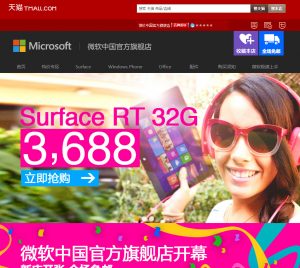
    Microsoft is making another attempt to get into the Chinese market by way of something other than piracy. China is the world’s largest market for computers, but many of the customers run pirated versions of software, including Windows and other Microsoft products. Now the company is attempting to provide users with a legitimate way to get their hands on its wares, and not just software.

    In October 2012 Microsoft opened a version of its online store in the Chinese language, and now Tmall, one of largest online shopping malls in the People’s Republic of China, has just added an official Microsoft retail point.

    The new online store not only features Microsoft’s own software, like Windows and Office, but also Microsoft branded hardware, such as Surface, and the firm’s popular range of mice and keyboards. The store additionally offers hardware from Microsoft partners for computers, tablets and Windows Phone handsets.

    “We are excited to be working with Tmall.com  for the official launch of Macrosot’s flagship store” said Kevin Egan, the vice president of E-commerce for Microsoft retail stores. “Chinese consumers’ appetite for brand-name, quality products is surging and they are increasingly making purchase decisions based on experience, value, and service quality”.

    So, is this enough to stop the rampant piracy that Microsoft and other software makers face in this market? Probably not, but it is a great outlet for the hardware and perhaps will provide the opportunity for Surface and Windows Phone to get a toehold within one of the world’s largest economies.

  • A Simple Ritual for Harried Managers (and Popes)

    Pope Francis and I have something common. He was a Jesuit seminarian; so was I. He eventually became a Jesuit superior, bishop, and now Pope. I eventually discerned that my path in life was not the priesthood, and, after six years of seminary, I traded in my priestly garb for pinstripes and entered JP Morgan’s training program. During seventeen subsequent years there, I was lucky enough to serve as a Managing Director on three continents.

    To be sure, my head was often spinning during early days at Morgan. The Jesuit Constitutions didn’t equip me to do present value calculations. Nor did I know about managing my career by clever networking; Jesuits are constantly cautioned against pursuing self-interested ambition. (I smiled with approval upon learning that after reportedly finishing second in the last papal conclave, then-Cardinal Bergoglio had not hung around Rome to build his network for the next conclave; instead, he beat a hasty retreat back home to work with Argentina’s poor, who don’t get to vote for Pope.)

    Still, if much of Jesuit life doesn’t much prepare one for the corporate arena, a few of the most foundational Jesuit practices turned out to be quite relevant. One discipline in particular proved far more valuable than anything I learned in JP Morgan’s superb training program. Ignatius of Loyola, founder of the Jesuits, called it the “examen.” It would be equally useful to anyone else who must engage a complex, fast-paced world each day. (I think that means all of us, right?)

    The English word examine roughly conveys the concept: to examine your day and take stock. With apologies to my spiritual father Ignatius, I often refer to it more colloquially as a “mental pit stop.” I recommend two of them daily — one at midday, for example, and one at the end of the day — completely dedicating at least five minutes to each one. (Sorry, multi-taskers — listening to sports radio, texting, or listening to cell phone messages would not qualify for completely dedicated.)

    During those few minutes, do three things. First, remind yourself why you are grateful as a human being. Second, lift your horizon for a moment. Call to mind some crucial personal objective, or your deepest sense of purpose, or the values you stand for. Third, mentally review the last few hours and extract some insight that might help in the next few hours. If you were agitated, what was going on inside you? If you were distracted and unproductive, why? Those who are spiritually inclined might also reflect on how God (or a higher power) was present in the people and challenges you encountered over the last few hours.

    The genius of this simple practice becomes obvious when we consider the environments that executives (or Popes, or parents) must navigate every day: we surf a tide of emails, texts, meetings, calls, day-to-day problems, and distractions. We never find time to step back. The fallout is obvious: I’m stressed about a bad meeting an hour ago and end up lashing out at a subordinate who had nothing to do with it; I finish the work day without attacking my number one priority, because I was swept along by lesser day-to-day concerns; I never focus my best thinking in a concentrated fashion on any one issue, because three or four issues are always rambling around my head; or, we slowly drift into an ethical mess of a transaction because I never stopped along the way to ask myself, “Hang on, is this the kind of thing we really should be doing?” The Jesuit tradition is giving us (and the Pope) a very simple tool to cope with these varied business problems, which all happen to be rooted in self-awareness lapses.

    A final word: don’t overlook the first step of this simple, three-step examen: gratitude. I suspect most of those reading this post happen to be “Type A’s.” We’re good at tackling problems and multi-tasking. That’s why we get ahead, and that’s why we spend downtime reading journals like Harvard Business Review. That intensity makes us productive but also can drive us and everyone around us nuts. The research field of positive psychology is demonstrating, however, that people who take time to be grateful are more productive and physically healthier than the general populace.

    So, we Type A’s can become even more productive by spending a few daily minutes in quiet reflection instead of banging through to-do lists. Popes, Jesuits, and JP Morgan executives have lots on their plates each day. We might cope better with our 21st challenges by adopting a best practice from a 16th century saint.


  • Polaris ATVs Feature Non-Pneumatic Tires in 2014 – Trucks Next?

    A new breed of airless, virtually indestructible tires are coming to the ATV world, will cars and trucks be next? Probably sooner than we think.

    Polaris ATVs Feature Non-Pneumatic Tires in 2014

    Polaris is planning on using these Non-Pneumatic Tires staring in 2014.

    For a few years now, we have been talking about new tire technologies. These new ideas have the goal to make flat tires, heavy gas guzzling tires and our normal everyday tires a thing of the past. Unfortunately, all of these new ideas, haven’t correlated with any new products. That is until now, the Michelin Non-Pneumatic Tires that will be used by Polaris starting in 2014.

    These revolutionary tires were actually created by Resilient Technologies which was bought by Polaris last year. The simpleness of the design should remind you of a bicycle tire. What’s really cool about them is that you won’t need to carry any spare tire or jack to change a wheel. This translates into significant weight savings (can you say MPG full-size truck fans?).

    As with all new things it seems pricing has not yet been announced. What’s your guess?

    Related Posts:

    The post Polaris ATVs Feature Non-Pneumatic Tires in 2014 – Trucks Next? appeared first on Tundra Headquarters Blog.

  • Big Data Means More Than Big Profits

    Big Data is all the rage in Silicon Valley. From Facebook to Netflix, companies are tracking and analyzing our searches, our purchases, and just about every other online activity that will give them more insight into who we are and what we want. And though they use the massive sets of data they collect to help create a better experience for their consumers (such as customized ads or tailored movie recommendations), their primary goal is to use what they learn to maximize profits. But can Big Data also create positive social change?

    Many activities in the social sphere also generate lots of information. Massive amounts of data are collected on the pollution in our cities and the changes in our climate. The more we use technology in our education and health systems, the more data we collect about how people learn and what keeps us healthy or makes us sick. These information-centric areas are built for Big Data — data that if better understood could help provide a pathway to maximize our human potential, instead of maximizing profits.

    Now, as a pragmatic idealist I’ve always believed that technology could be an immense force for good in the world, but I’ve also recognized that great technology wouldn’t get developed — no matter how beneficial — if it was missing one important factor: big profits. That’s what inspired me to start Benetech, a nonprofit tech company, over 20 years ago. I knew we could help a lot of people if we focused on finding a sustainable — instead of a highly profitable — way to develop technology for the social good. As we build new enterprises, our goal is for them to break even from revenues (or come close), while also making the maximum positive impact.

    Let me share two examples of the Big Data opportunities we’ve seized at Benetech: a long-standing use of data that has global implications and a nascent one that has just launched.

    First, we’ve been using data to aid the human rights movement, especially in providing evidence for truth commissions and war crimes tribunals, for a decade. Human rights workers collect massive amounts of information about abuse that occurs in their countries — the individual stories are compelling, but scientific analysis of the collective data can inspire action. For example, Benetech’s recent analysis for the UN High Commissioner for Human Rights — using information from six databases compiled by Syrian human rights monitors and one database collected by the Syrian government — found that at least 60,000 people have been killed in Syria’s civil war. This number was significantly more than the existing estimates that had dominated news and policy discussions. The analysis made news globally and expanded an international conversation. Here big data affected a global policy debate — and will hopefully make a big difference.

    Second, Bookshare, a social enterprise operated by Benetech, last year processed requests for more than 1.3 million downloads of accessible books through its online library, to over 200,000 people with disabilities such as blindness and severe dyslexia. We already collect a great deal of information like which books are downloaded most, but our delivery model has been similar to that of print textbooks: “Here it is; hope it’s useful!” We don’t know if the student ever gets past Chapter 1.

    Last month we launched a new feature for Bookshare that allows students to read books within a web browser, instead of needing additional software or tools. Over the next few years, we’ll be able to collect (ethically and legally with proper respect for privacy) and analyze the many millions of interactions our users are having with these books. Talk about Big Data! We’ll learn much about things like how (or whether) textbooks get used and which approaches to a specific learning objective work best. Just like data has been used to understand why online shoppers often abandon their shopping carts without completing their purchase, perhaps we could use the same techniques to understand why students abandon learning. Looking forward, we can imagine a world where content is matched to the learner because we’ll be able to tailor education to the individual and how they best learn.

    Social entrepreneurs should focus on Big Data for the social good. Of course, data has to be collected in ways that match our value systems and respect ethics, privacy, and informed consent. Benetech’s experience collecting information about human rights violations and about people with disabilities, two highly sensitive areas, shows that this can be done.

    I urge social entrepreneurs and mission-driven businesses who have developed a solution that involves digital information to think about what Big Data will mean to their efforts: How can it make your services or products better, solve more of the problem, or do more with the same or less money? Working together, we can show how Big Data makes more than big profits — it can make a big difference.

    This post is part of an online debate about How Big Data Can Have a Social Impact, which we’re hosting in partnership with the Skoll World Forum on Social Entrepreneurship. You can view the entire debate here.

  • Apple Patents An Augmented Reality System That Turns The World Into A Shareable ‘Pop-Up Video’

    Screen Shot 2013-03-19 at 7.50.17 AM

    Apple has been awarded a patent today (via AppleInsider) that describes an augmented reality (AR) system that can tag real-world items in a live video stream and display information about them in a HUD overlay. It sounds exactly like Pop-Up video in practice: turn your device to focus on Rick Astley, for instance, and get a pop-up picture of the singer belting out “Never Gonna Give You Up.”

    The patent describes an AR system for iOS devices, which can be used in a variety of different ways. At its most basic, it works by labeling elements of an image in a live video feed, as when it names the parts of a circuit board being shot with the rear-facing camera on an iPad-like device in Apple’s patent. But it has more advanced features, too: Apple describes a user being able to edit the supplied data in case of inaccuracies or incorrect matches, and also includes various means for sharing the information between users and devices.

    Apple’s system involves a collaboration aspect, as one user can annotate or edit the information being presented on their own view, and send it to a second user’s device. The iOS device employing the AR tech is also described as being able to show both the straight image itself, and the version with overlaid information at once in windows side-by-side, allowing both an unobstructed view and one with all the contextual information. In Apple’s provided example, a real-world view of San Francisco is paired with a computer-generated model of the same. The user can interact with the CG model to navigate through streets, and modify points of interest in case they’re traveling, something which sounds like it would add considerably to the current iOS Maps experience.

    This type of dual-view could then be shared live with a second user, Apple says in the patent. So one user could build a virtual map and highlight important POIs, and then sync that with a second user’s device to help them navigate. It could also be used to collaborate in various professions, including doctors comparing x-rays or other medical imaging.

    This AR system is mostly unique because of its sharing and collaboration features, but it also includes techniques that could easily be at home in a wearable AR display like Google Glass. But even as just a simple extension to Maps, it has value, and as an API built into iOS, the possibilities really start to take off. AR is getting more advanced, but we’ve seen players like Layar pivot away from similar products. Still, Apple would have different goals with such an invention, so it’s still possible this could make its way to shipping product.

  • Samsung confirms smartwatch in development to take on unannounced Apple ‘iWatch’

    Samsung Smartwatch Confirmed
    It’s not every day an executive at a major public technology company will go on record and confirm an unannounced product, but Samsung’s (005930) mobile boss seemed happy to be the exception to the rule on Tuesday. Speaking with Bloomberg, executive vice president of Samsung’s mobile business Lee Young Hee confirmed that Samsung is developing a smartwatch to take on the unannounced “iWatch” that Apple (AAPL) is reportedly developing.

    Continue reading…

  • NewsCred gets new $15M investment, adds New York Times as a partner

    NewsCred has become a quiet force in media by offering brands and publishers an easy way to acquire high quality news content from brands like Bloomberg and Economist. In a further sign of its growing influence, the company on Tuesday announced a major investment that will help drive its global ambitions.

    The investment will see NewsCred receive $15 million in Series B funding led by Mayfield Fund, a prominent west coast venture capital firm. The company also revealed on Tuesday that the New York Times, which it has long courted, has signed on as one of its more than 2500 syndication partners.

    For anyone unfamiliar, NewsCred uses technology to place a stream of relevant, licensed news content onto the websites of clients like the New York Daily News and Pepsi. NewsCred shares the revenue with its publishing partners.

    CEO Shafqat Islam said in a phone interview that the new investment will allow NewsCred to grow its salesforce and expand its presence in non-English speaking markets. The plans follow NewsCred’s recent acquisition of cloud publisher DayLife and its decision to create a human editorial team to complement its algorithm-driven news service.

    “Our ambitions are global,” he said. “Our ultimate ambition is to license and curate the world’s top publications.”

    Islam said that licensing to brand clients, which also include Toyota and GE, now make up 50% of NewsCred’s business but that publishers remain the company’s core focus.

    In an email statement, a New York Times spokesperson said, “We have our own very successful syndication business, which we are continuing to grow.  This agreement with Newscred is one way we think we might be able to expand opportunities.”

    The investors taking part in the new Series B round also include Greycroft Partners whose managing partner, Alan Patricof, is a fixture of the New York media scene. NewsCred has raised $5M in previous rounds of funding from FirstMark Capital, IA Ventures, Floodgate Fund, Lerer Ventures, AOL Ventures and others.

    Disclosure: NewsCred is a publishing partner of GigaOM/paidContent

    Related research and analysis from GigaOM Pro:
    Subscriber content. Sign up for a free trial.

    • Samsung Confirms It Will Build A Smart Watch As Speculation About Apple’s iWatch Continues

      20090721_01M

      Samsung is indeed working on a smart watch, the company’s Executive Vice President of Mobile told Bloomberg in an interview today. “We are preparing products for the future, and the watch is definitely one of them,,” Hee told the publication in no uncertain terms, adding that between itself and Apple, the “issue here is who will first commercialize it so consumers can use it meaningfully.”

      Hee provided no further details about what a Samsung smart watch would look like, what features it would offer consumers or when it would go on sale, but he did say that the South Korean company has been working on a watch product for “so long,” and patents back up that assertion. Samsung has patents related to wrist watch tech spanning nearly a decade, as Unwired View notes, covering various types of wearable phone designs.

      In fact, Samsung has even produced some of its creations, including the S9110, a smartphone in the shape of a watch it actually shipped in 2009. In fact, Samsung created the first-even watch phone back in 1999, when it created the SPH-WP10. That predated the smartphone, of course, but it did indeed ship.

      Bloomberg also reiterated that Apple plans to introduce its own smart watch design as early as this year, citing an anonymous source in what is likely a reference to an earlier report that said the same. The report also included information about what Apple’s watch might do, which includes displaying caller information and map data, as well as being able to make calls and track health-related information.

      Samsung has created smart watch tech in the past, but this might be another case where Apple takes the tech and leads the way in terms of building a device that actually works with a user’s existing workflow, popularizing the concept before Samsung and others move to follow its lead. At any rate it’s definitely an area of renewed interest for the Korean electronics manufacturer.

    • Android 4.1 Jelly Bean rolls out for Motorola Droid 4

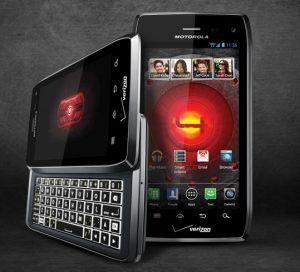
      US mobile operator Verizon has announced that Android 4.1 Jelly Bean will be rolling out in stages for the Motorola Droid 4, starting Tuesday. The smartphone, which was released in February 2012, originally shipped with Gingerbread and was upgraded to Ice Cream Sandwich in mid-August, last year.

      The Android 4.1 Jelly Bean upgrade bears the “98.72.18.XT894.Verizon.en.US” name and comes in at a massive 356 MB in size. According to the big red, the software update takes between 35 to 60 minutes to download and approximately 15 to 20 minutes to install on the Droid 4. So what can you expect from Google’s first Jelly Bean iteration?

      Android 4.1 features a plethora of improvements over its predecessor, including Google Now with contextual cards and improved voice search capability, revised notification panel with expandable notifications, enhanced keyboard with a higher number of dictionaries and offline voice dictation, among other new features such as Project Butter for improved responsiveness.

      On top of the aforementioned features, Verizon says that the software update also comes with enhanced voice and data connectivity, improved Calendar settings, better connectivity and reliability for Back Up Assistant Plus and Visual Voicemail, improved connectivity for Mobile Hotspot and the removal of the Sling and MOG application “preloads”.

    • Google expands Chromebook availability to six more countries while doubling down in U.S.

      Google’s cloudy Chromebooks must be doing well. The company has just extended their availability to six new countries, namely Australia, Canada, France, Germany, Ireland and the Netherlands, and doubled the number of Best Buy stores in the U.S. in which the Chrome OS laptops are sold.

      According to a blog post early on Tuesday, Samsung’s Chromebook has been a best-seller on Amazon U.S. for 150 days, and over 10 percent of laptop sales in the UK electricals stores Currys and PC World have been Chromebooks.

      Chromebooks go on sale from Tuesday in the aforementioned countries, where Google will also be pushing the devices on businesses and schools. Availability will differ somewhat from country to country, although generally the Acer and Samsung Chromebooks are on sale now, with HP’s effort on its way soon.

      I get the feeling that Google has spotted a gap in the market here. At the size and price point we’re talking about (roughly between $250-$350), people will most likely be buying and using Chromebooks as they would have netbooks. With the manufacturers having more-or-less abandoned the netbook market, those who want a cheap, portable, notebook-format device may very well find themselves looking in Chrome OS’s direction.

      Related research and analysis from GigaOM Pro:
      Subscriber content. Sign up for a free trial.

    • Sift Science says it can sniff out cyber fraud — before it gets expensive

      Sift Science, the startup forged by a gaggle of former Googlers, is ready for its close up. As of Tuesday, the company is opening up the testing of its fraud-detection service for e-commerce and other sites to the public and has $5.5 million in funding from some heavy-hitter investors to back its play.

      The San Francisco company, which we covered in October, claims it can scope out more fraudsters before they do harm because it is not constrained by the finite number of rules that most vendors use to flag suspicious activity. “Many anti-fraud technologies follow a set number, maybe 175 to 225 rules, against which to measure user behavior —  the problem is fraudsters don’t follow the rules and change all the time,” Sift Science co-founder Brandon Ballinger said in a recent interview.

      Customers can flag users as fraudsters in order to train Sift Science’s algorithm to spot patterns unique to their site.

      Customers can flag users as fraudsters in order to train Sift Science’s algorithm to spot patterns unique to their site.

      “We take a machine learning approach to learn from patterns early as they form to predict whether a new user is fraudulent,” he said. Sift Science’s machine learning algorithm has automatically learned one million patterns that predict fraud, and as more sites join the network, it will learn more patterns to help everybody fight fraud more accurately, he said.

      Speeding up fraud defense

      “You might expect the worst type of users to sign onto a site and make an immediate purchase [with a stolen credit card] but in reality if they wait an hour or so they’re more likely to be a fraudster than a fast buyer,” Ballinger said. “Or, if you’re an auction site and a seller posts an item where the text is all in caps, the user is four times more likely to be a fraudster — they’re not posting real items, it’s usually some sort of money laundering scheme, they’ll have 100 stolen credit cares and create a seller account and a bunch of buyer accounts then they post fake items and buy them.”

      But the bad guys are always going to change things up to avoid detection. An example,  in the past, the most popular time to conduct online fraud was at 3 a.m. local time but now it’s midnight to 1 a.m., Ballinger said. And, while a large percentage of traffic coming out of Nigeria remains fraudulent, a whopping 81 percent of fraud comes from U.S.-based IP addresses. “That means either they’re in the U.S. or are smart enough to use a proxy,” Ballinger said.

      Applying webscale data and analytics to fraud detection

      That fluidity and flexibility is important as is the company’s Google DNA. Ballinger said 8 of the company’s 9 employees are engineers and 5 are ex-Google engineers. “We’re taking the Google approach of large-scale machine learning,” he said. Except Sift Science is running on Hadoop, Hbase and MapReduce on Amazon’s public cloud.

       Network funneling is one of the million fraud patterns identified by Sift Science, which uses symmetry to detect when a fraudster is funneling money through a large network of accounts.

      Network funneling is one of many fraud patterns identified by Sift Science, which uses symmetry to detect when a fraudster is funneling money through a large network of accounts.

      It is thus able to use Amazon Web Services huge scale –and the network effect of all the companies on it — to build its knowledge base. “If someone attacks AirBNB and Affirm we can apply that knowledge and use it elsewhere,” Ballinger said.

      Sift Science, which relies on what Ballinger calls a dead-simple REST API,  will face off against in the fraud detection space including Silver Tail Systems, which EMC bought last year and which watches and tracks user navigation trends; and Threatmetrix which watches device IDs.

      Early customers include payment processors, online retailers, and some name brands including Airbnb and AffirmMax Levchin’s latest startup.

      The $5.5 million in funding comes from some big names including Union Square Ventures; Max Levchin of PayPal, Slide and Affirm fame; Marc Benioff of Salesforce.com; Kevin Scott of AdMob, Google and LinkedIn; Alexis Ohanian (Reddit and YCombinator); and Rich Barton (Zillow and.)

      Prospective customers can sign up on Sift Science’s site for the service, which is free of charge for their first 5,000 users, the service is free; after that it’s 10 cents per user.

      Related research and analysis from GigaOM Pro:
      Subscriber content. Sign up for a free trial.

    • Morning Advantage: We Should Be Able to Unlock Everything We Own

      The cartoon at the top of this Wired article says it all: A man is kneeling on the side of the road, changing a flat tire on his car, while a police officer points a gun at him saying: “You are under arrest for circumventing a technological measure that controls access to this tire. It looks like you’ll be needing a new car.”

      Kyle Wiens posits that once we buy something, we should actually own it, and therefore we should be free to lift the hood, modify it, or repair it in any way that we see fit. But that’s often not the case, as more and more of the physical objects we buy (cell phones, our cars, even farm machinery) become increasingly digital — and therefore subject to copyright laws. The question of who owns what is blurring as the lines between hardware and software blur. Wiens argues that as Congress works on legislation to re-legalize cellphone unlocking, they’re missing the bigger picture: “Senators could pass a hundred unlocking bills; five years from now large companies will find some other copyright claim to limit consumer choice. To really solve the problem, Congress must enact meaningful copyright reform. As long as we’re limited in our ability to modify and repair things, copyright — for all objects — will discourage creativity. It will cost us money. It will cost us jobs. And it’s already costing us our freedom.”

      NO VIRUSES THOUGH, I HOPE

      Soon, You May Download New Skills to Your Brain (The Atlantic)

      Forget about those piano lessons. Soon, you’ll be able to just download the ability to play the piano straight to your brain. Yes, just like in The Matrix. Using functional MRI technology, researchers from Boston University and Japan’s ATR Computational Neuroscience Laboratories showed that it may be possible to learn complex new tasks with little to no conscious effort by stimulating the brain with visual perceptual learning. The most interesting part? The researchers’ experiments worked especially well when the subjects were unaware of what they were learning.

      IT’S A MAD, MAD, MAD, MAD WORLD

      March Madness: The School Tuitions of the NCAA Bracket (The Awl)

      The Awl has published its annual NCAA bracket by tuition, which shows that while winning a basketball title may be worth bragging about, “we all know the real champion is the institution of higher education that can charge the most tuition and still have enough students to keep its rejection letter printer warm.” Finalists included Duke, Villanova, Georgetown, LaSalle, and Notre Dame. But, congratulations go to those of you who put your money on Bucknell — the winner, with an annual tuition of $45,132 (about the cost of all four years at either UCLA or the University of Illinois). The school with the lowest tuition? North Carolina A&T State University, in Greensboro, coming in at an annual tuition of $2,791.

      BONUS BITS:

      It’s Called Brogurt

      Yogurt for Men: A Review (NPR)
      There Aren’t Nearly Enough Women on the Internet (Bloomberg Businessweek)
      Amazon’s New Imprints Give Opportunities to Debut Authors, Short Story Writers (The Christian Science Monitor)

    • End of an era at ARM, as CEO Warren East retires

      ARM, the British chip architecture firm responsible for powering the vast majority of mobile phones and tablets, will soon have a new CEO: Simon Segars, currently the company’s president. Warren East will retire at the end of June.

      East, 51, has been CEO at ARM since 2001, although he has been at the firm since 1994 (he was originally head of ARM’s consulting business, then business operations chief, then COO). Segars, 45, has been at the company even longer – since 1991, shortly before Apple incorporated the ARM6 design into its Newton PDA. Like East, Segars is an engineer who evolved into sales and business development roles.

      Both men are largely responsible for turning ARM, once a mere spinoff of Acorn Computers, into what it is today: Intel’s nightmare. For not only does ARM dominate in the mobile device, which is in itself supplanting Intel’s desktop base, and in embedded processors, but it is even squaring up to the x86 crowd in the server space.

      Here’s ARM chairman John Buchanan:

      “Warren has transformed ARM during his time as CEO. In 2001 ARM had one processor product line found mainly in mobile phones. Now ARM provides the broadest portfolio of technologies in the industry, used by more than 300 semiconductor customers in nearly 9 billion chips last year.

      “During Warren’s tenure the company has received royalties for over 40 billion ARM-based chips. As CEO he has created a strong platform for growth and consistently created value for shareholders even in a challenging external environment. On behalf of the Board, and the wider ARM team, deep thanks are due to Warren for his passion, service and leadership.”

      So, will the leadership change affect ARM’s strategy? Right now ARM is safe in its mobile stronghold, although Intel’s efforts there are not the joke observers once suspected they might be – Intel’s mobile processors are surprisingly capable when it comes to raw performance and power efficiency, although ARM still edges ahead in the graphics department.

      We can glean a strong sense of continuity from the words of East and Segars themselves. According to East, the two men “share a global perspective and belief in the ARM approach to partnership and collaboration”. Segars said East’s “vision of the ARM business model and commitment to the ARM partnership has been inspirational and has created a tremendous platform for future growth”.

      Related research and analysis from GigaOM Pro:
      Subscriber content. Sign up for a free trial.

    • Wacom Unveils The Cintiq 13HD, A Compact Drawing Tablet/Display Combo With Full HD For $999

      Cintiq 13HD Left View

      Wacom’s Cintiq line of drawing tablets is the cream of the crop when it comes to digital graphics editing and creation, and the 12WX long reigned as an impressive entry-level option for those with limited budgets and/or available work space. But the 12WX is over five years old, and both display and drawing tablet tech has advanced, which is why it’s excellent news that Wacom is introducing the all-new Cintiq 13HD today.

      The 13HD has more in common with the recently-launched and larger 22HD and 24HD tablets than the outgoing 12WX; it features 2048 levels of pressure sensitivity on its 1920×1080 HD LED 13-inch display, versus just 1024 on the 12WX, which had a maximum resolution of 1280×800. The 13HD crams as many pixels as the 22HD boasts into a screen that’s 40 percent smaller, resulting in a much higher pixel density for crisper text and image rendering.

      The Cintiq 13HD also comes with an integrated stand, which locks in at four viewing angles, including flat, 22 degrees, 35 degrees and 50 degrees, and can be used on either a hard flat surface like a desk or your lap. It’s the only Cintiq that’s really lap-appropriate, in fact, so if you’re looking for something with relative portability this is the way to go.

      Wacom will begin selling the Cintiq 13HD direct from its own online store and through select partners at the beginning of April, and it will retail for $999.95. That might sound like a lot to pay for a drawing tablet that still requires either a Mac or PC to work, but it’s a bargain compared to the $2,000 you’ll pay for the next-level-up 22HD. I owned the 12WX myself, and was a huge fan, so I can’t wait to get one of these in for testing closer to launch.

      Remember that Wacom has also teased a standalone drawing tablet to be unveiled later this year, so combined with this 13HD release, which has been hotly anticipated in the digital arts community, the company is shaping up to have a very big year indeed.

    • Better manage your files with DropIt 5.0

      Open-source Windows file management tool DropIt 5.0 has been released. Also available as a 64-bit build and in portable form, DropIt allows users to process folders and files quickly via drag-and-drop, with up to 15 different actions (including move, copy, send by mail and upload) supported.

      Version 5.0 improves the way DropIt handles relative paths, tweaks the main context menu and Options windows and promises better performance, minor feature additions and a number of bug fixes.

      Once installed or launched, DropIt displays a floating icon on your desktop. Drag a file on to this icon, and DropIt will ask you what you want to do with it: 15 actions are supported, including copying or moving the file to a specific location, opening it in a particular application, attaching it to an email, copying it to the clipboard or changing specific properties.

      DropIt can make any of these actions the default for your files based on their properties: name, size, date, properties, content or regular expressions. You can save sets of associations in profiles and then associate a profile with a particular folder, allowing you to place files in folders and wait for DropIt to automatically process them for you at a specified time.

      After a short period, you can even drag an entire folder packed full of different files on to the DropIt floating icon and the program will automatically process them according to whatever filters and actions you’ve defined.

      What’s New

      Version 5.0 represents a major update, with a number of improvements and new features. Top of the list is the fact that relative paths in destination folders are now relative to each loaded file.

      Additions include %Counter% and %UserInput% abbreviations for adding file enumeration and customized input when processing files. A Duplicate button has also been added to the Associations context menu to allow new associations to be created using existing ones as a template.

      Filtered text is now highlighted in HTML lists, and support for creating PDF and XLS lists has also been added to the program. Users can now set different HTML themes for each new Create List association created.

      Folders can now be processed as files if required, and a list of loaded items is now displayed in the Processing window. Users can now define a minimum size when scanning folders, and profiles can be exported via the context menu.

      Two options, considered redundant, have been removed: “Check moved/copied files integrity” and “Enable associations for folders”.

      Improvements have been made to the performance of various actions as well as the Options dialog and context menu, while the Compress action now merges items added to existent archives.

      Also improved are the process that loads all dropped files at the beginning and support to Import profiles from the context menu.

      DropIt 5.0DropIt 5.0 64-bit and DropIt Portable 5.0 are all available now as free, open-source downloads for PCs running Windows XP or later.

      Photo Credit: Liv friis-larsen/Shutterstock

    • BPA exposure linked to asthma early on in kids

      Early-age exposure to the chemical bisphenol A (BPA), a component found in soup and other food can liners, and in some plastics, can increase the possibility of asthma in children. First to report this BPA-exposure and childhood-asthma connection are researchers at the…